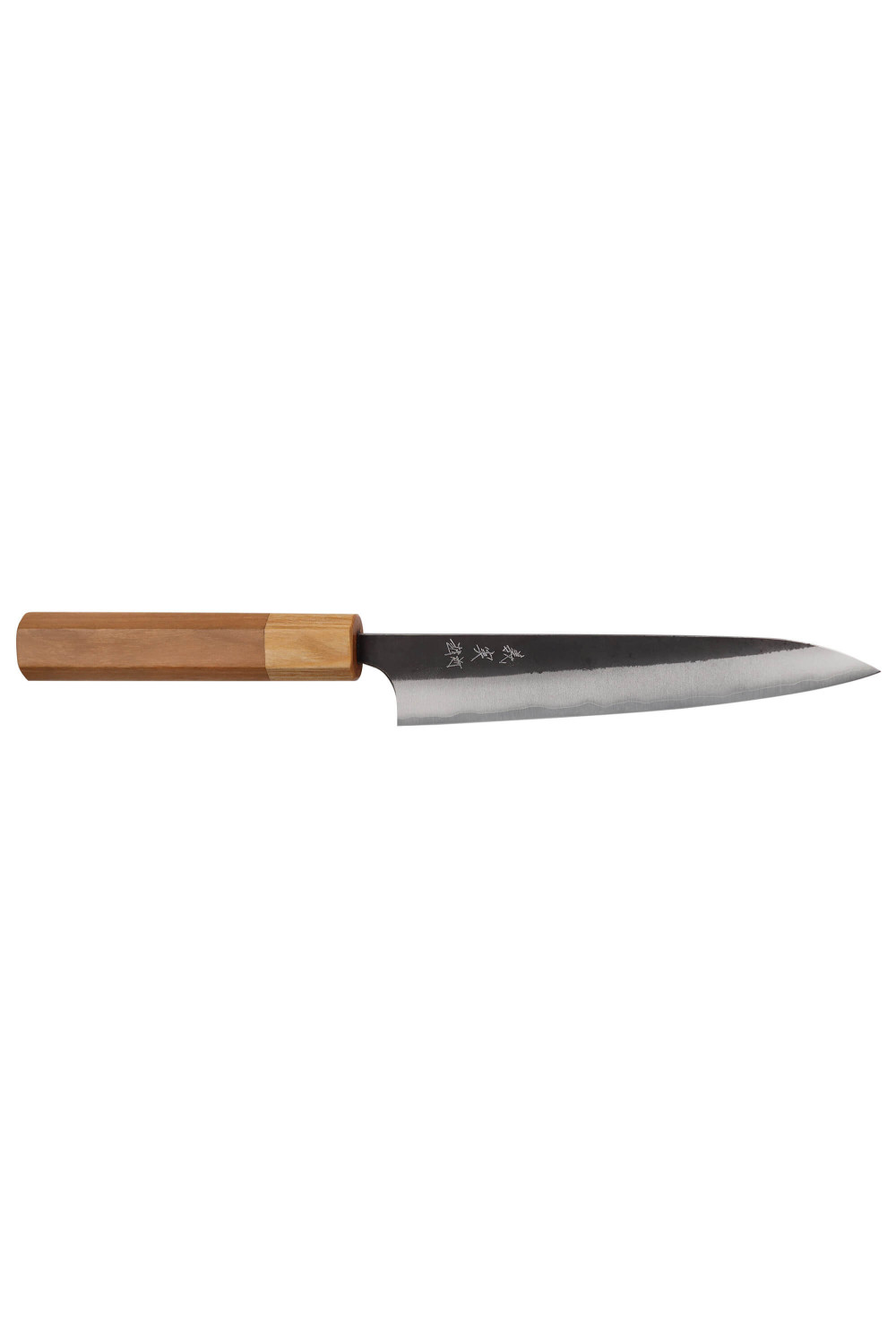
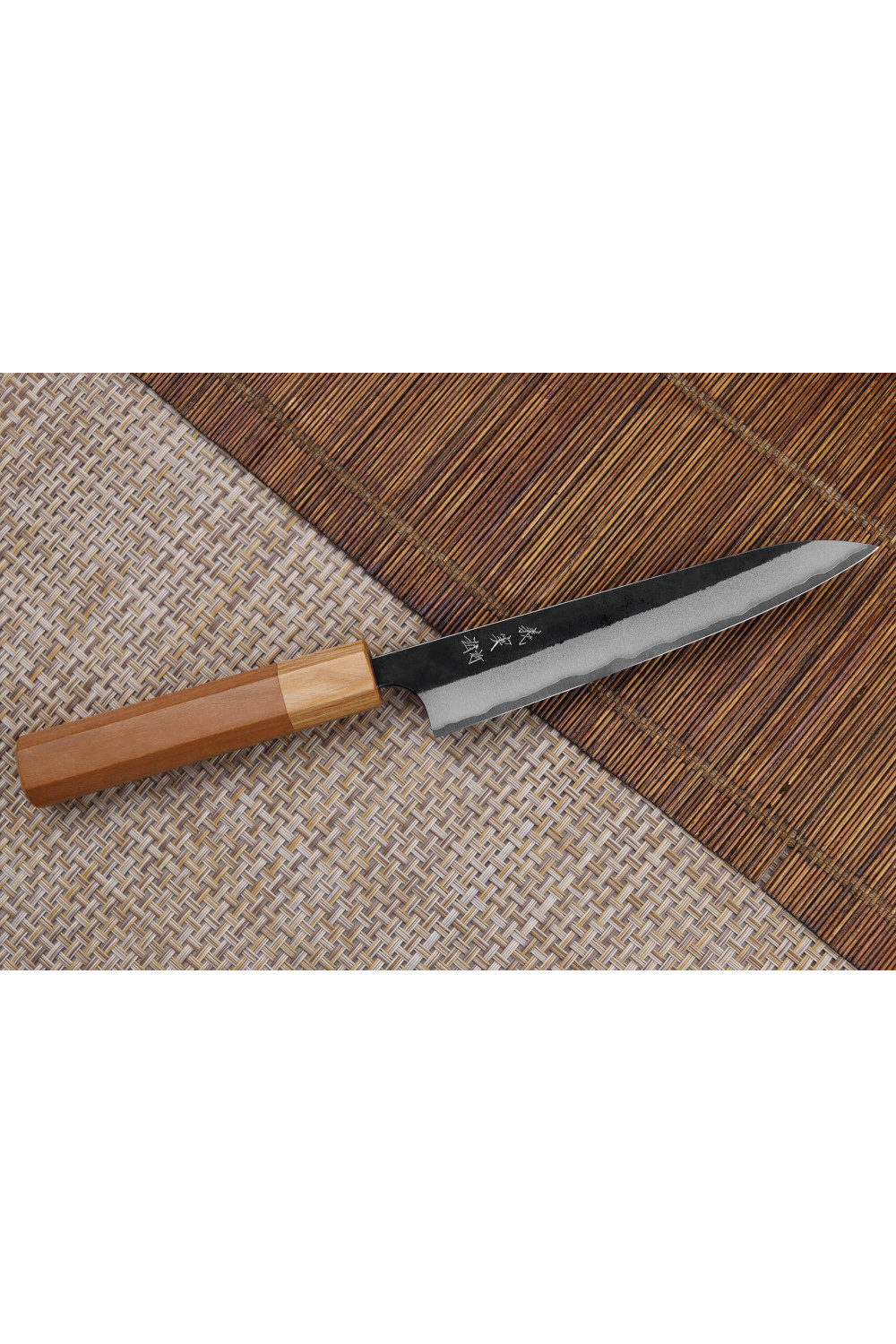
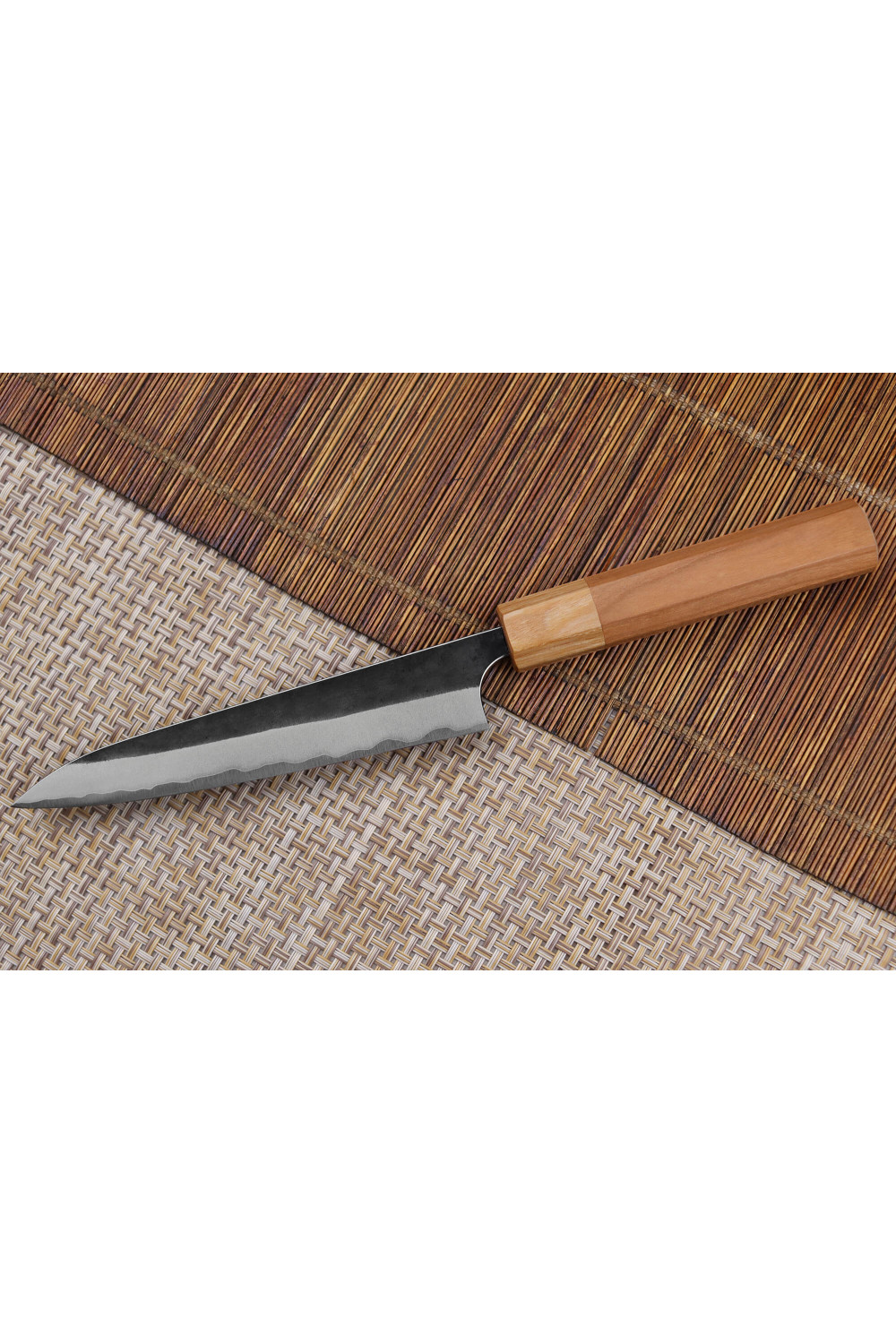
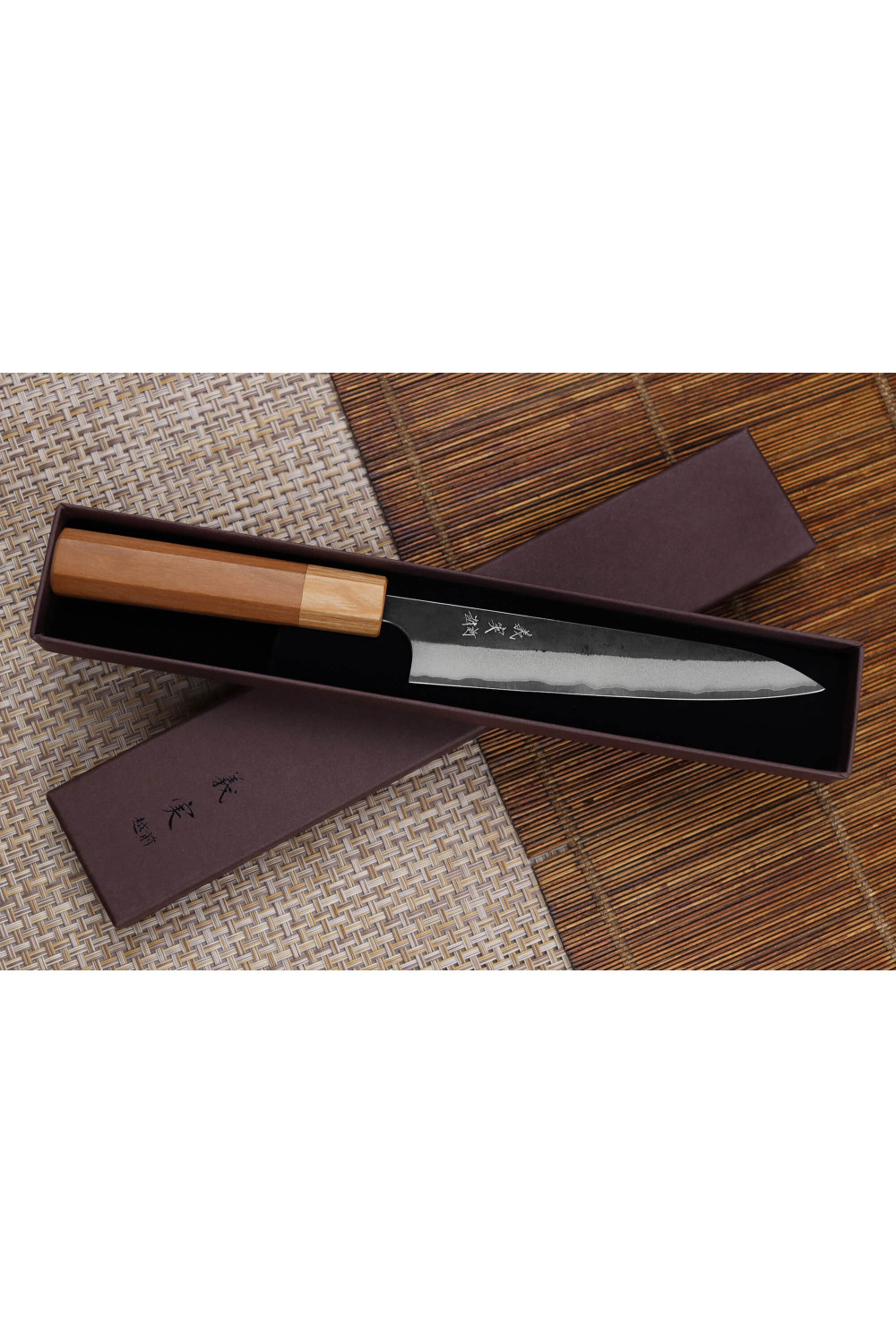
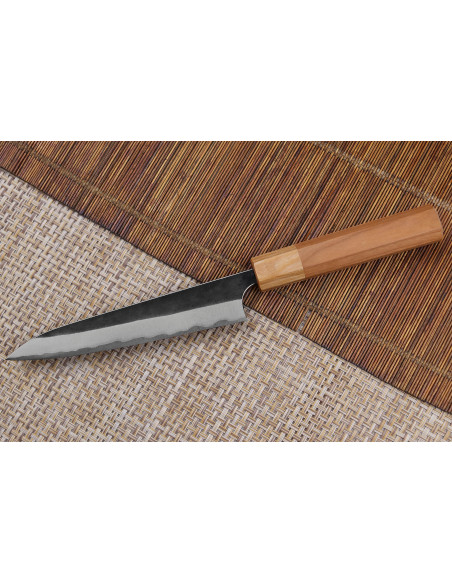
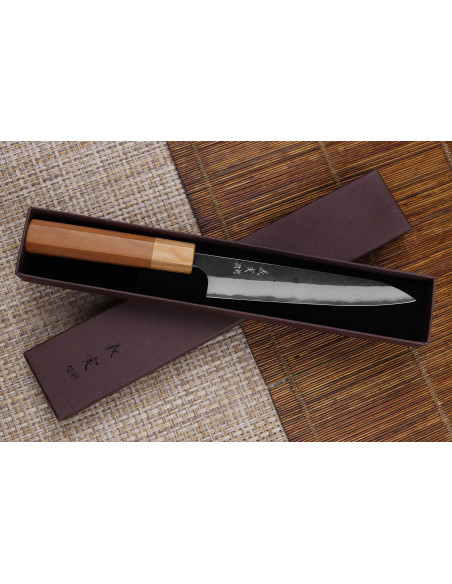
A handmade knife forged by a Japanese blacksmith
This Universal knife is the work of a talented young Japanese craftsman: Yoshimi Kato, a certified blacksmith from the town of Takefu. He was trained by eminent masters, including Hiroshi Kato San, his father-in-law, a respected figure in the field of cutlery in Japan and internationally.
(Hiroshi san is on the left; Yoshimi san is on the right)
Hiroshi Kato, one of the greatest master blacksmiths of our time, has devoted decades to the daily creation of knives. As a founding member of the Takefu Cutlery Village, he was instrumental in bringing together numerous cutlery workshops, creating a place for blacksmiths to exchange experiences and develop and preserve Japanese craftsmanship. Today, Hiroshi Kato is passing on his know-how to the next generation.
Yoshimi San has taken over his master's workshop, continuing to make his master's knives (now retired) as well as his own creations. He began his apprenticeship in 2013 and quickly demonstrated exceptional talent in the craft. By continuing to produce Hiroshi Kato's creations and adding his own designs, Yoshimi is helping to perpetuate the art while bringing innovations appreciated by chefs and knife enthusiasts alike.
Kato knives are made according to Japanese know-how, respecting traditions and using techniques that demand great precision. Each piece is unique, and will be appreciated by chefs and Japanese knife collectors alike.
A blade in high-performance Blue Super Steel
The blade of your handcrafted Japanese knife is designed according to the San Maï (meaning "3 layers") structure, a typically Japanese method: a rigid steel core is forged, then covered with a softer layer of steel to achieve optimum balance. This outer layer is then folded on itself to form the two outer layers.
To create the core of your Universal knife, Japanese Aogami Super steel (also known as AS or Blue Super Steel) was used. This is an alloy produced by the famous steelmaker Hitachi, composed of chromium, tungsten, but above all carbon, with a content of around 1.5%. Carbon is the key element in increasing the alloy's hardness, and in comparison, a Western knife generally has a carbon content of between 0.5 and 1%.
Blue Super Steel is a very hard steel, reaching 65HRC on the Rockwell scale. This alloy offers an extremely fine cutting edge, giving your Japanese kitchen knife excellent cutting capabilities.
Thanks to this high level of hardness, your knife retains its sharpness for a long time, and wears less quickly. As a result, it stays sharp for a long time and needs sharpening less frequently (for domestic use, you'll probably only need to sharpen it 2 or 3 times a year). What's more, this steel is appreciated by the Japanese for its ease of sharpening.
The core is then enveloped in a layer of softer stainless steel, ensuring its protection and giving the blade a certain suppleness. This knife does not become flexible, but its blade is less prone to breakage in the event of small impacts.
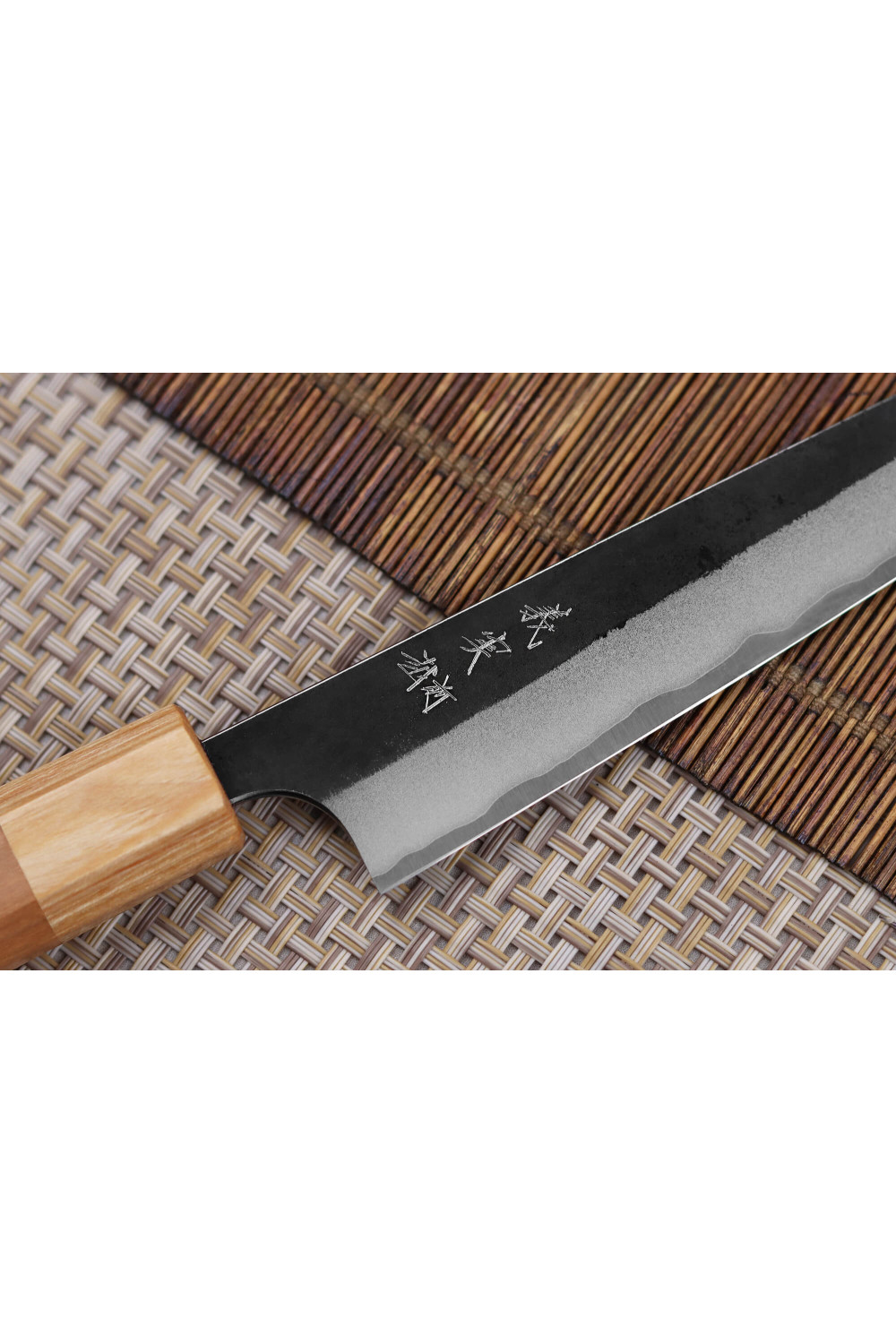
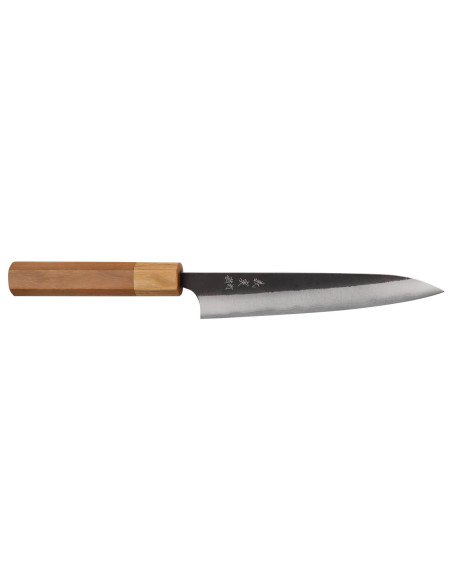
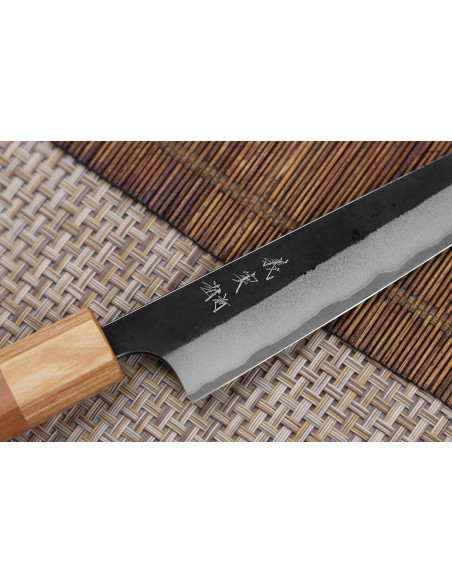
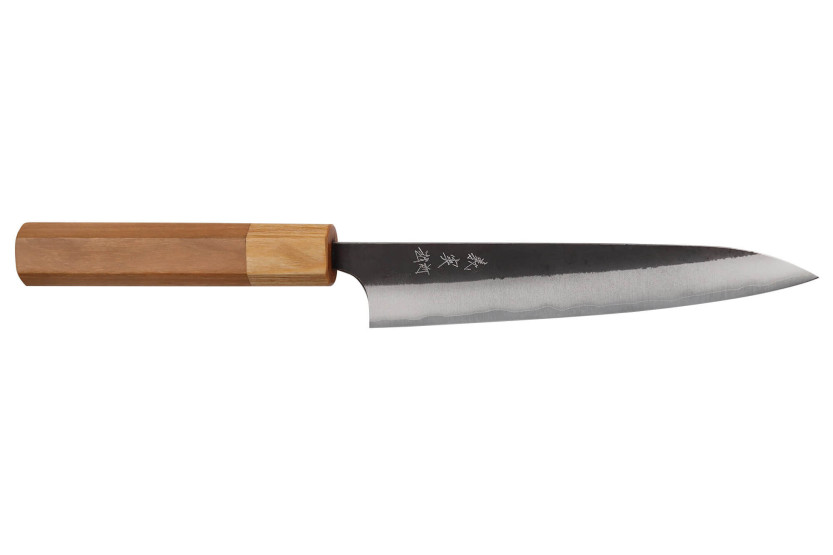
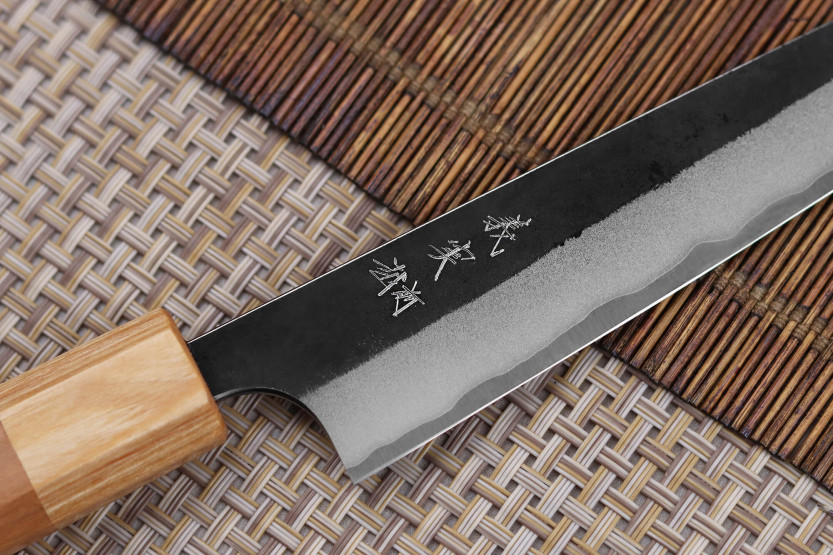
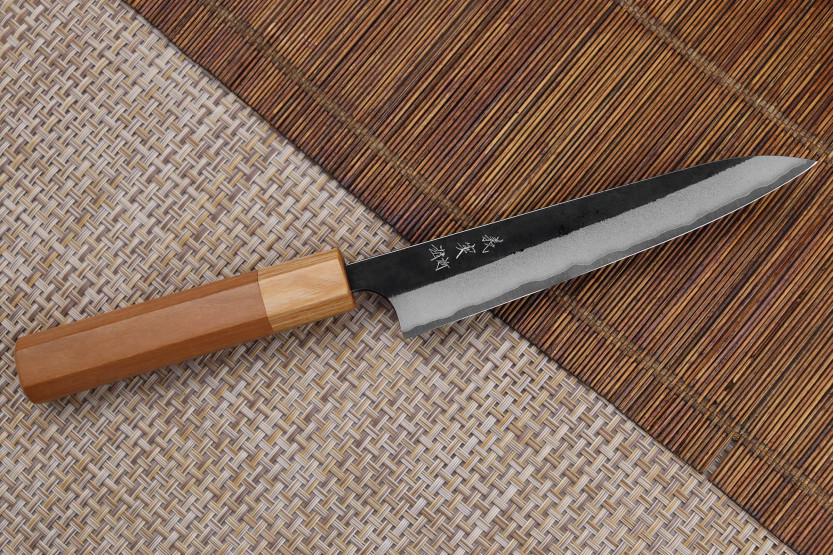
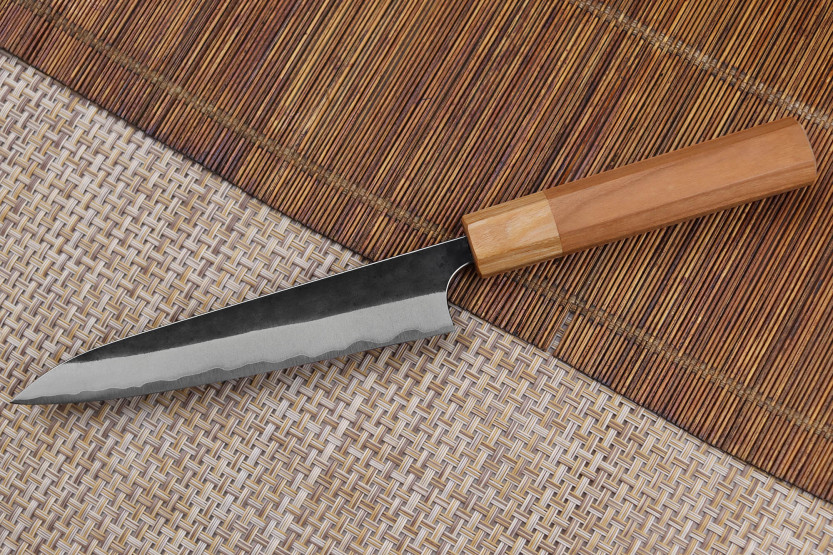
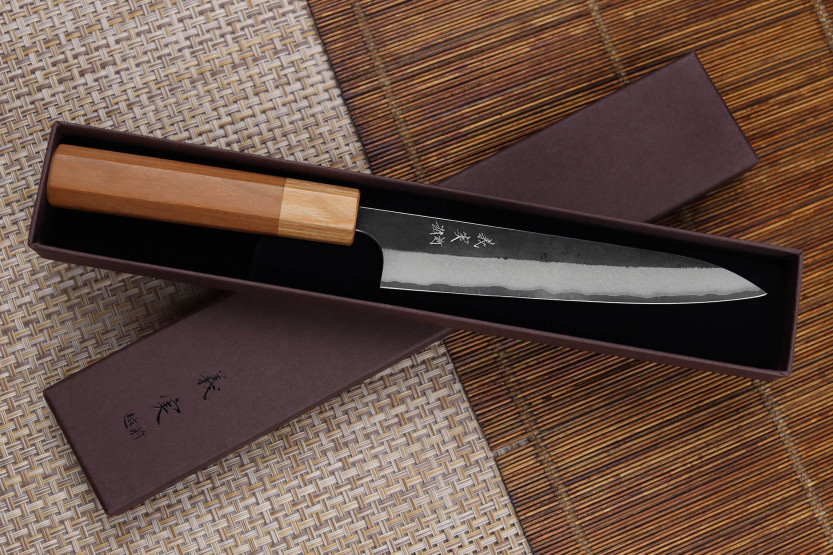
The blade is then given a dark forged finish, adding character to your knife and giving it a traditional look appreciated by Japanese cooks.
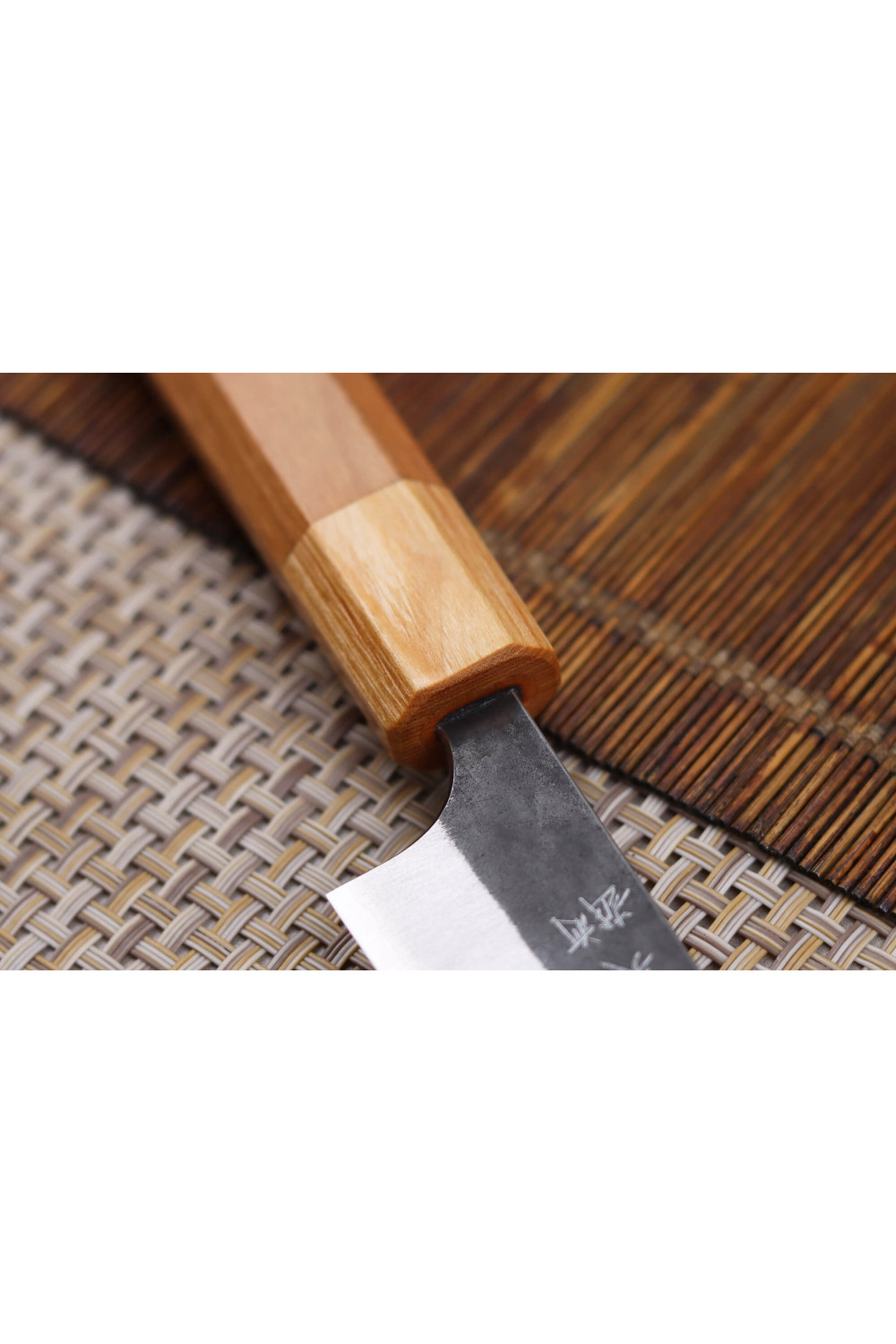
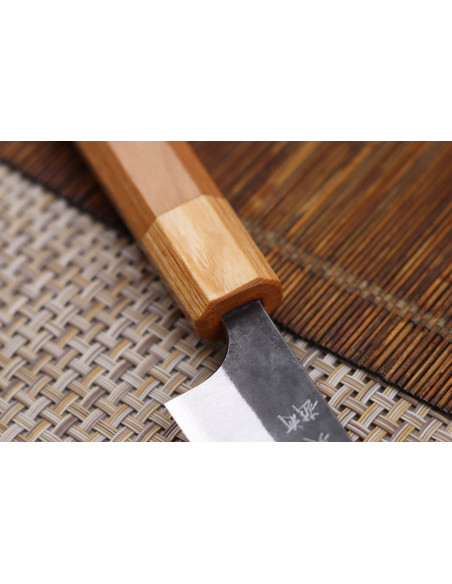
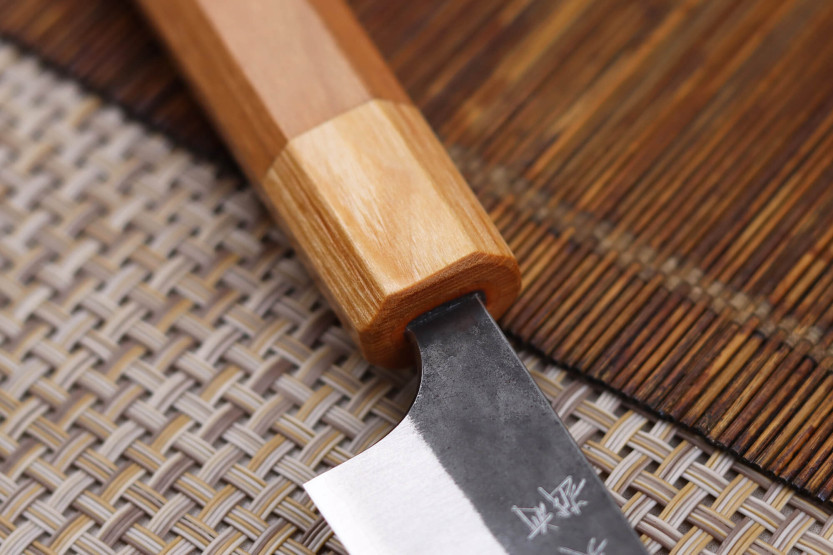
For optimum cutting performance, the blade has been sharpened by hand. The Japanese characters on the blade have been hand-engraved to add a touch of authenticity.
Sturdy cherry wood handle
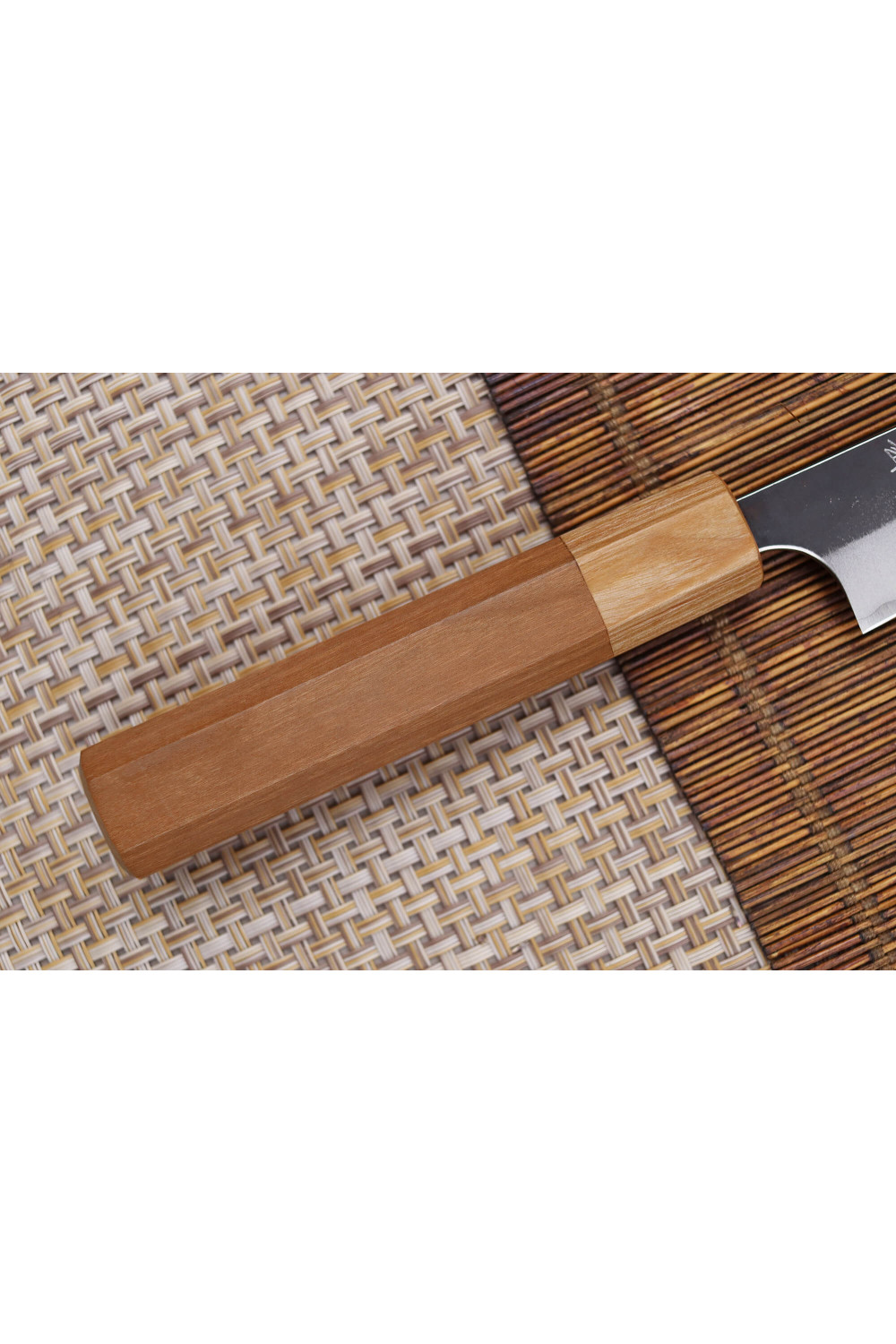
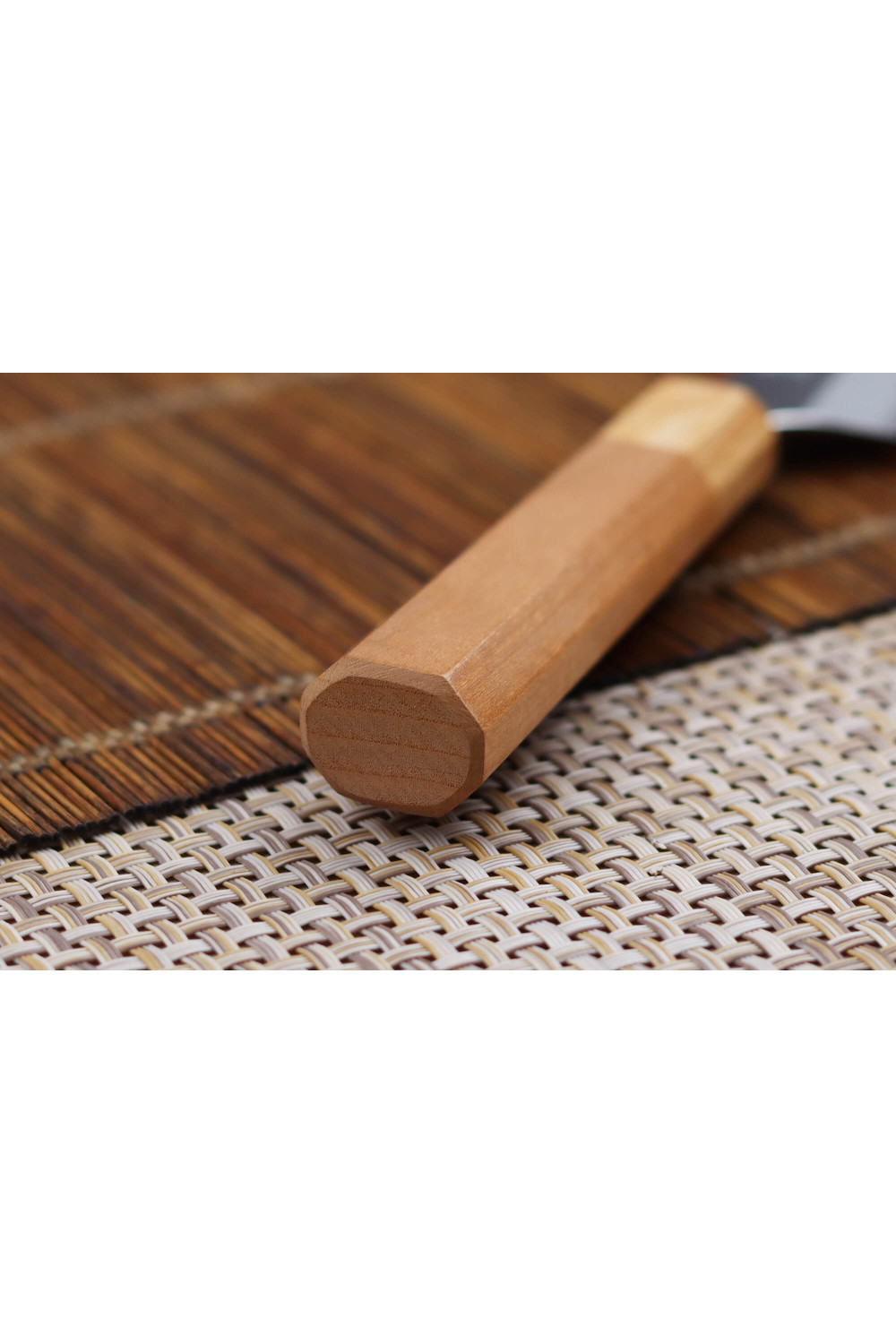
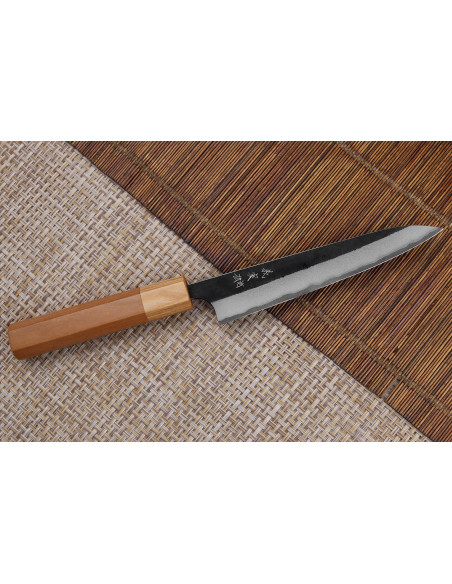
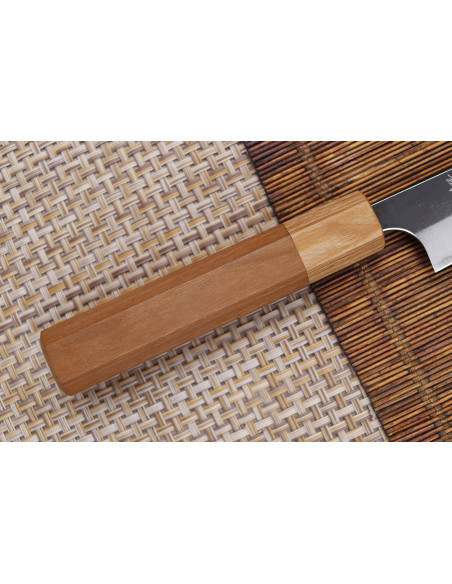
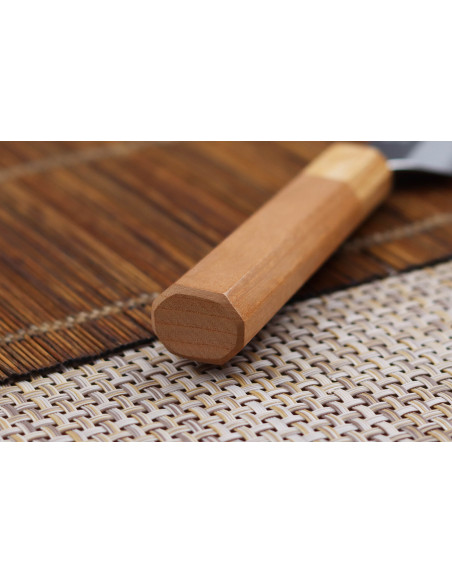
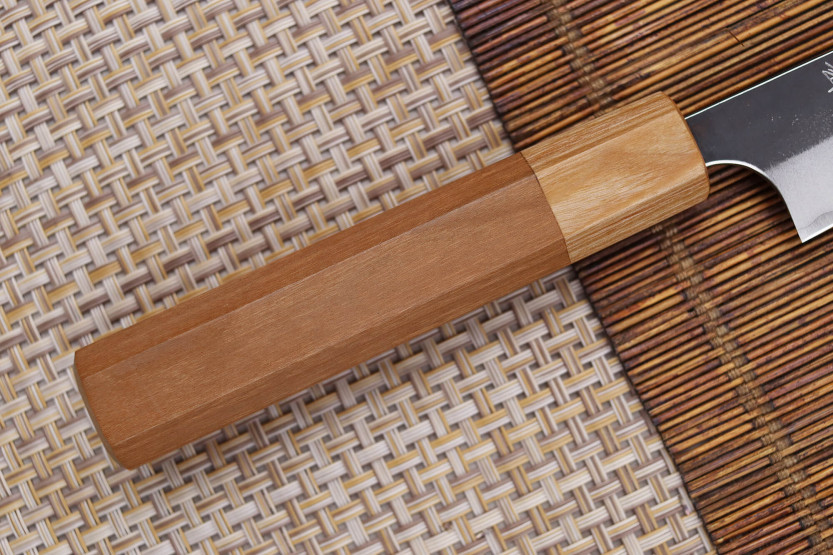
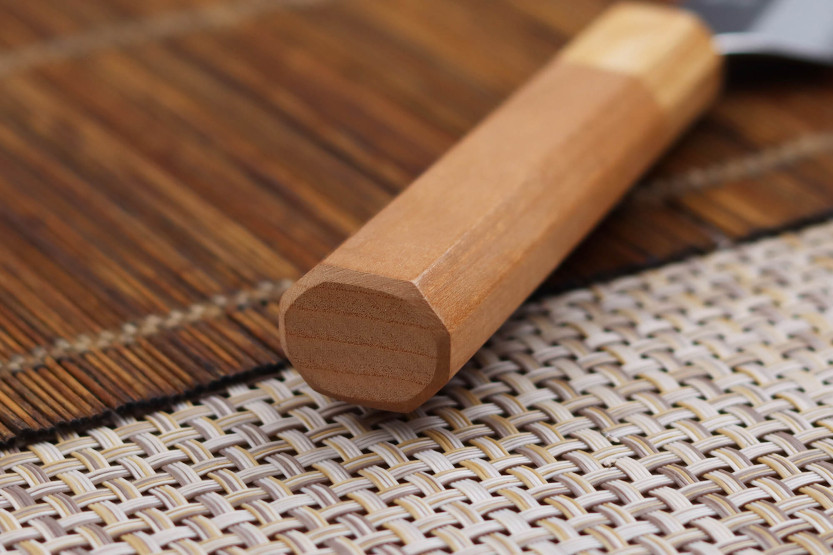
The handle of your knife is made of cherry wood, a robust and long-lasting species. Its octagonal shape makes it suitable for all cooks, whether right- or left-handed, offering a comfortable grip for optimum maneuverability.
To complete the handle, a clear pakkawood bolster has been added. This is a composite material made of resin and laminated wood, highly resistant to temperature variations. This bolster contrasts perfectly with the darker shade of the rest of the handle.
To fill the gaps where the blade meets the handle, wood paste has been added. It ensures optimum watertightness and prevents the infiltration of water or small foodstuffs.
To care for your handcrafted Japanese knife, we recommend washing it exclusively by hand, using a sponge and mild detergent. After washing, be sure to dry it immediately and store it in a dry place. Do not soak in the sink or put in the dishwasher.
Despite careful maintenance, it is normal for the blade to change color over time. This is a natural reaction of the carbon, caused by the humidity in the air and the acidity of the food being cut. These variations have no effect on the knife's performance and pose no risk to its use.
Find many high-quality Japanese knives on KnifeLeader.eu!




 By buying this product you can collect up to