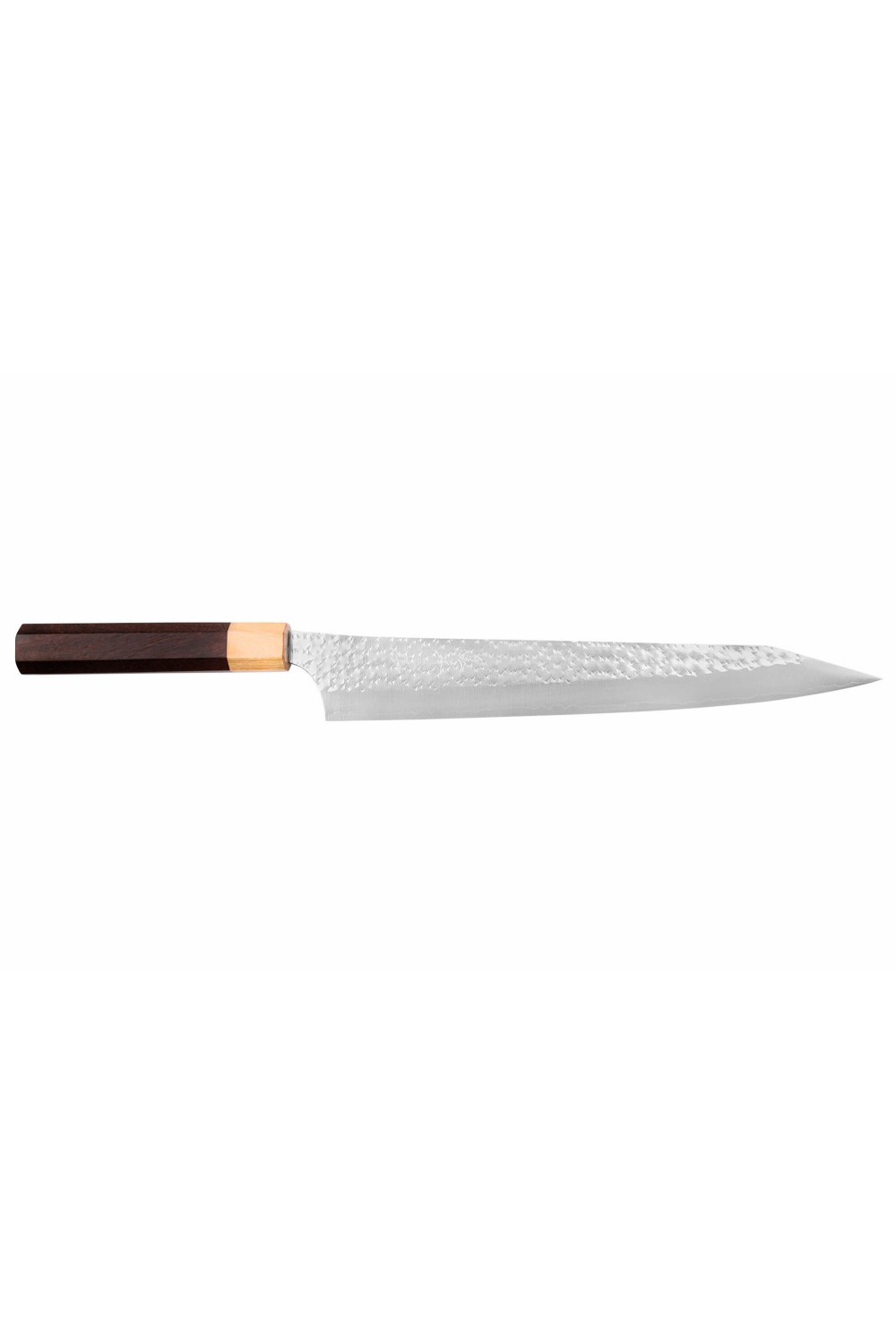
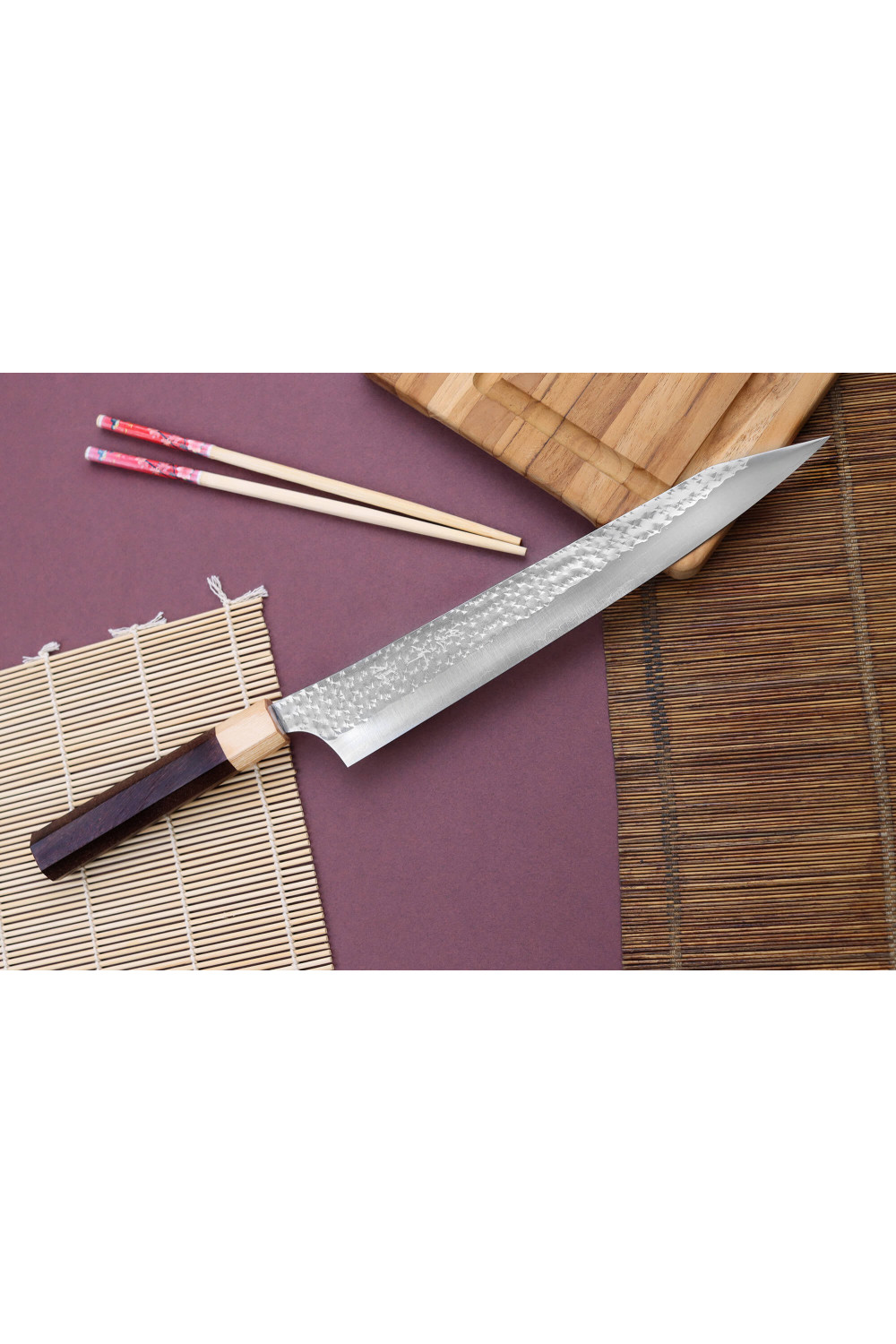
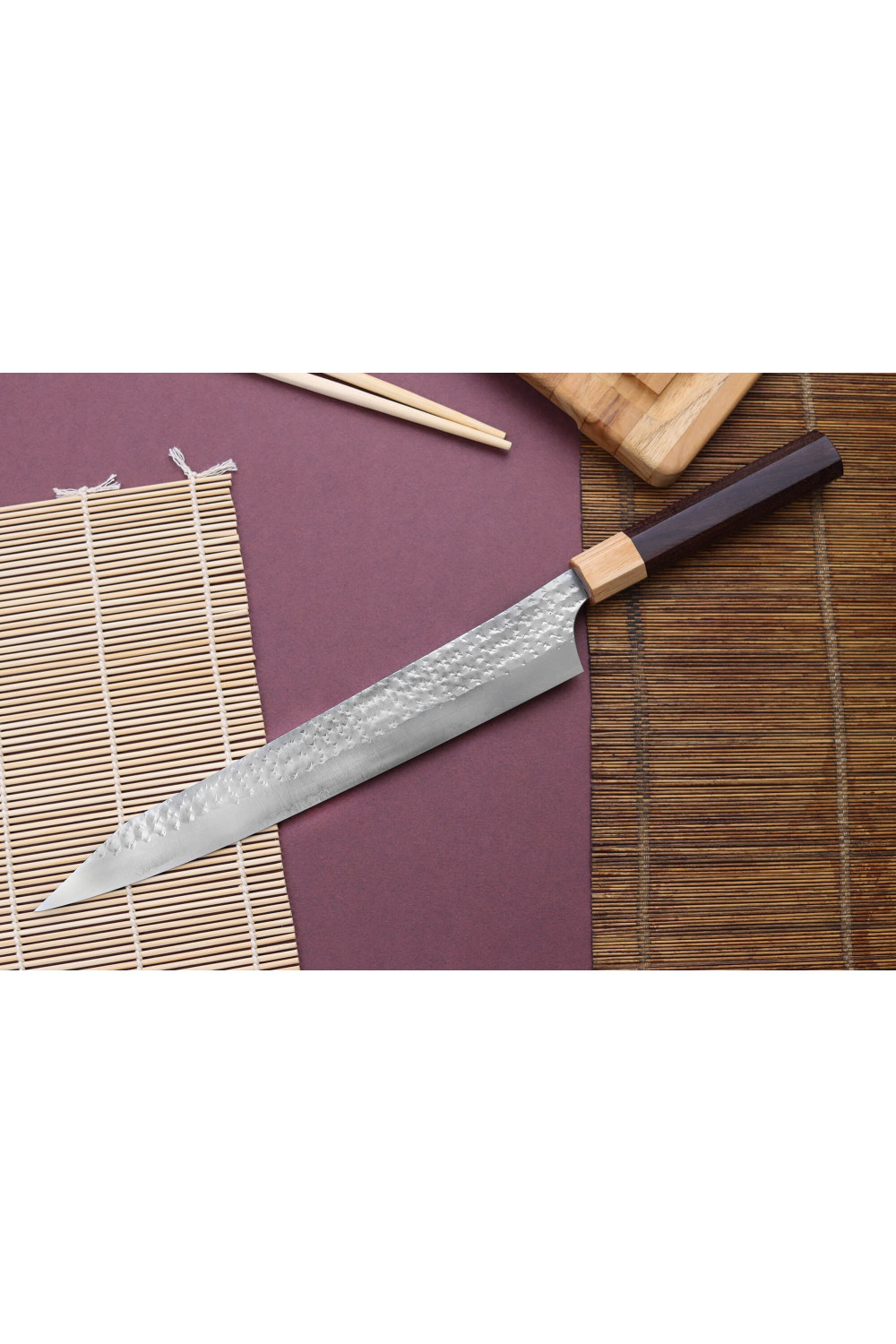
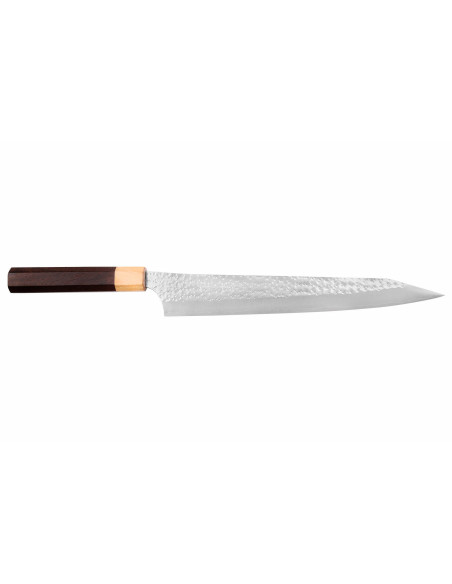
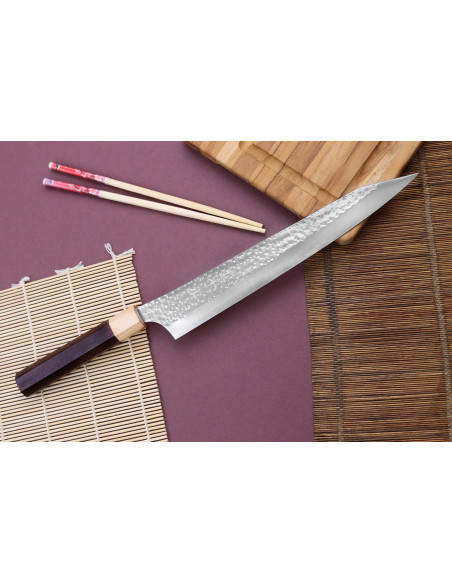
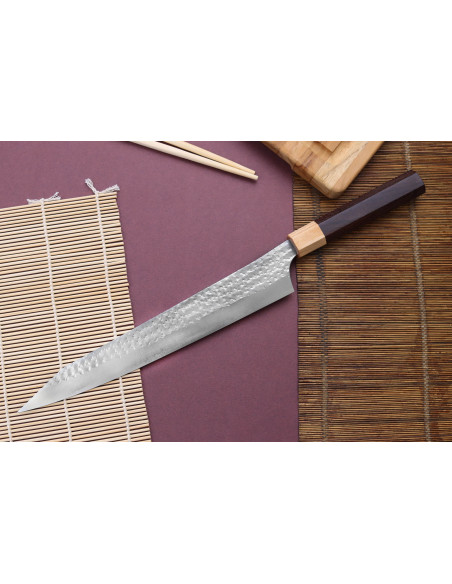
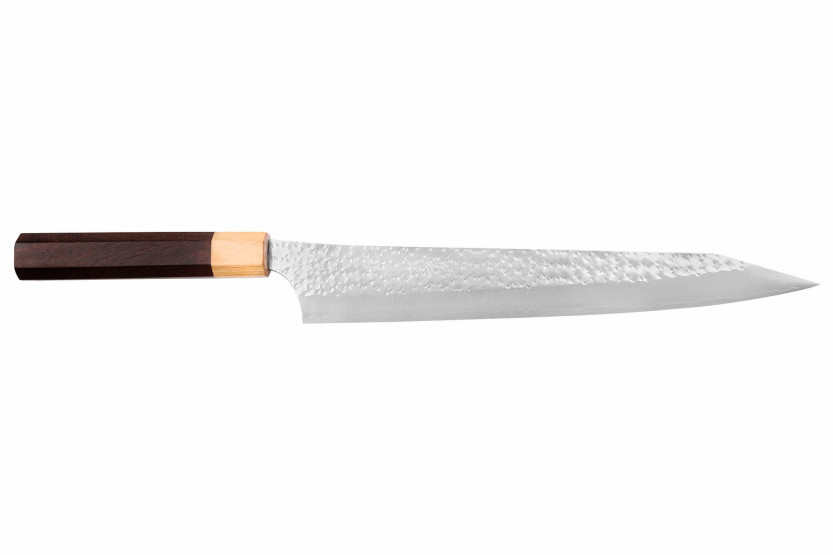
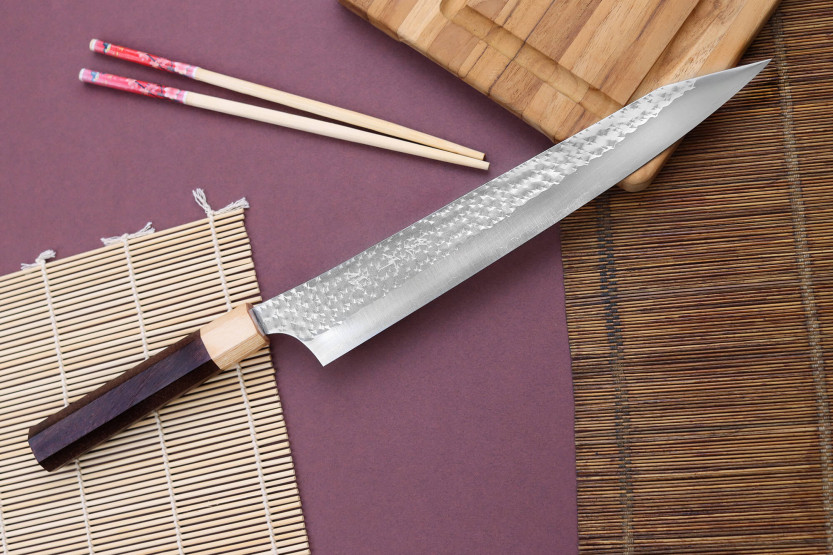
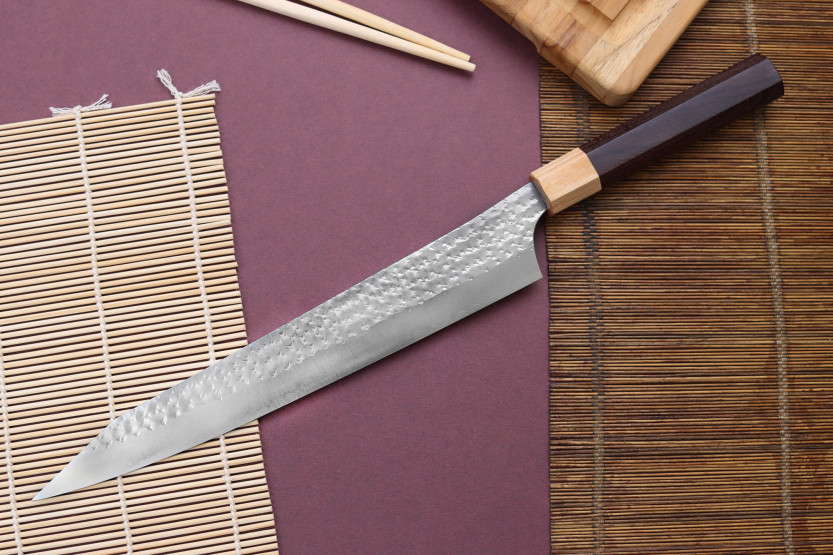
This 27cm sujihiki knife comes from the Senko series. First of all, its blade is hand-forged by the Kurosaki san blacksmith. To do this, he uses a single piece of steel, which is pressed into the shape of the knife. As a result, the piece is stronger: it has no sticking points that could weaken it.
The structure of the blade is typically Japanese: it is called San Maï, meaning that it is built from 3 superimposed layers of steel. You could say it's a simplified damascus.
The core is made of SG2 stainless steel. This expensive alloy has a hardness of around 63 HRC. This level of hardness ensures excellent wire retention. It can also withstand razor-sharp sharpening, to guarantee impeccable cuts. Another advantage of "powder" steel is its microscopic structure: it is more homogeneous, which reduces the risk of chipping during use.
This hard core is then surrounded by a layer of stainless steel that sandwiches it (it folds around it, which is why we end up with 3 layers). This protects it better, and gives it a slight suppleness (it doesn't make it flexible, but rather a little more resistant to breakage).
The alloy of the Kurosaki Senko Japanese knife remains easy to sharpen, despite its rigidity. Simply use a Sharpening stone, and you're done.
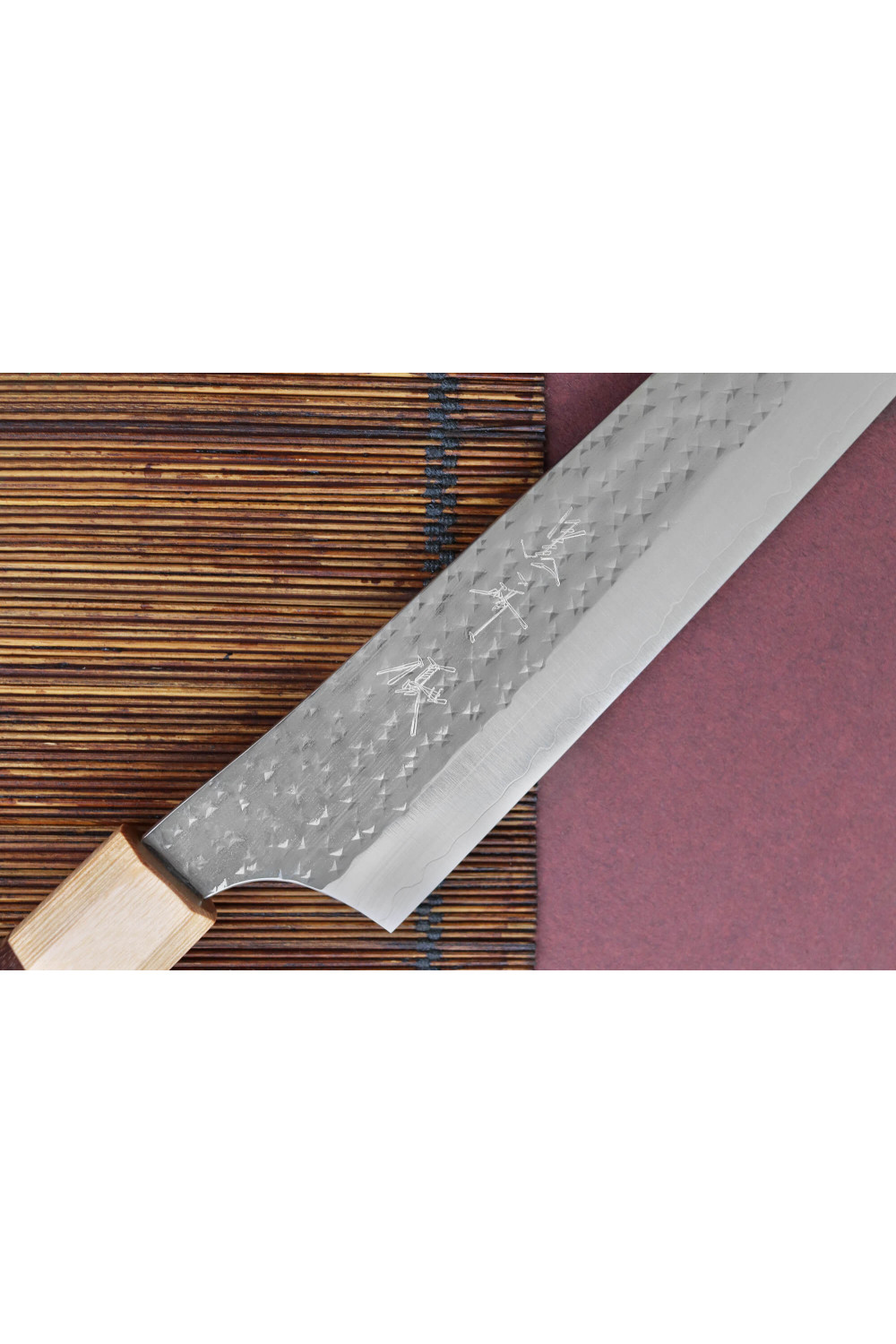
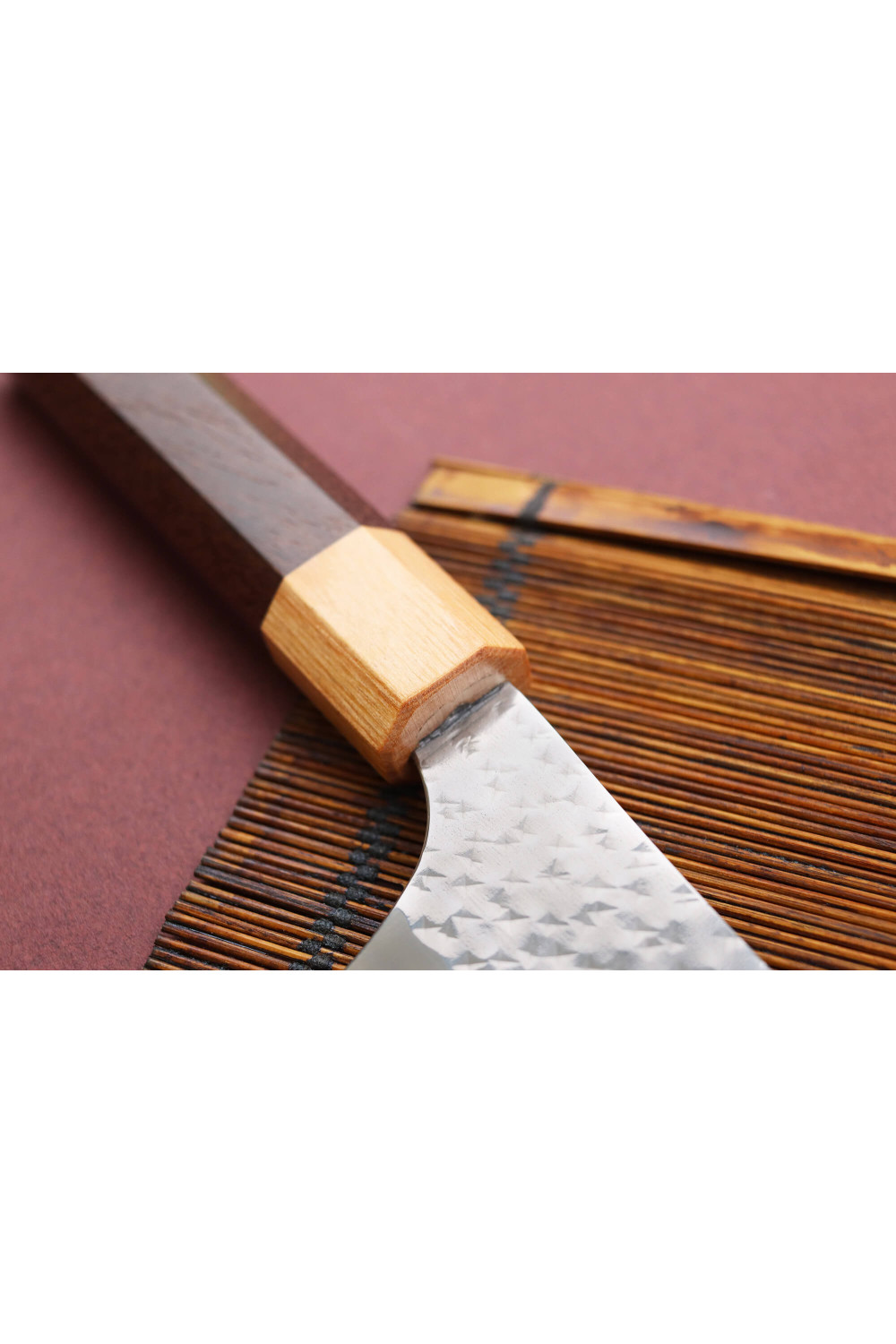
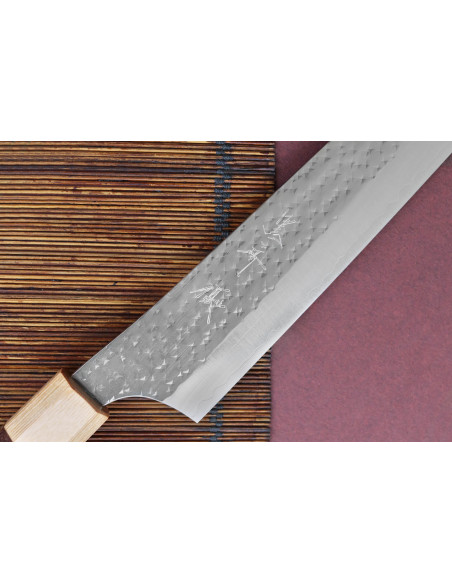
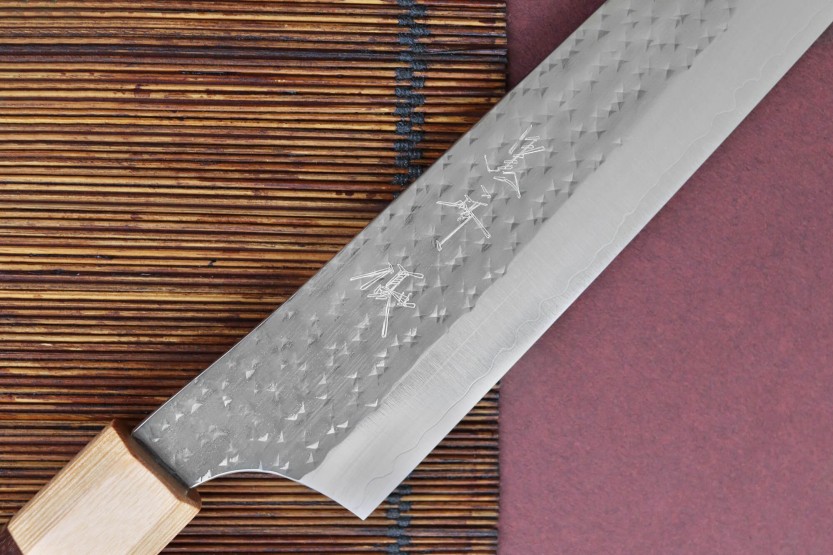
For perfect cutting performance, the knife has been hand-sharpened on a grinding wheel. You can also appreciate the unique punched hammering. It is visible on both sides of the blade, and adds a great deal of originality.
The brand name has been engraved on the cutting surface, for even greater authenticity. Finally, the whole is enhanced by a mirror polish.
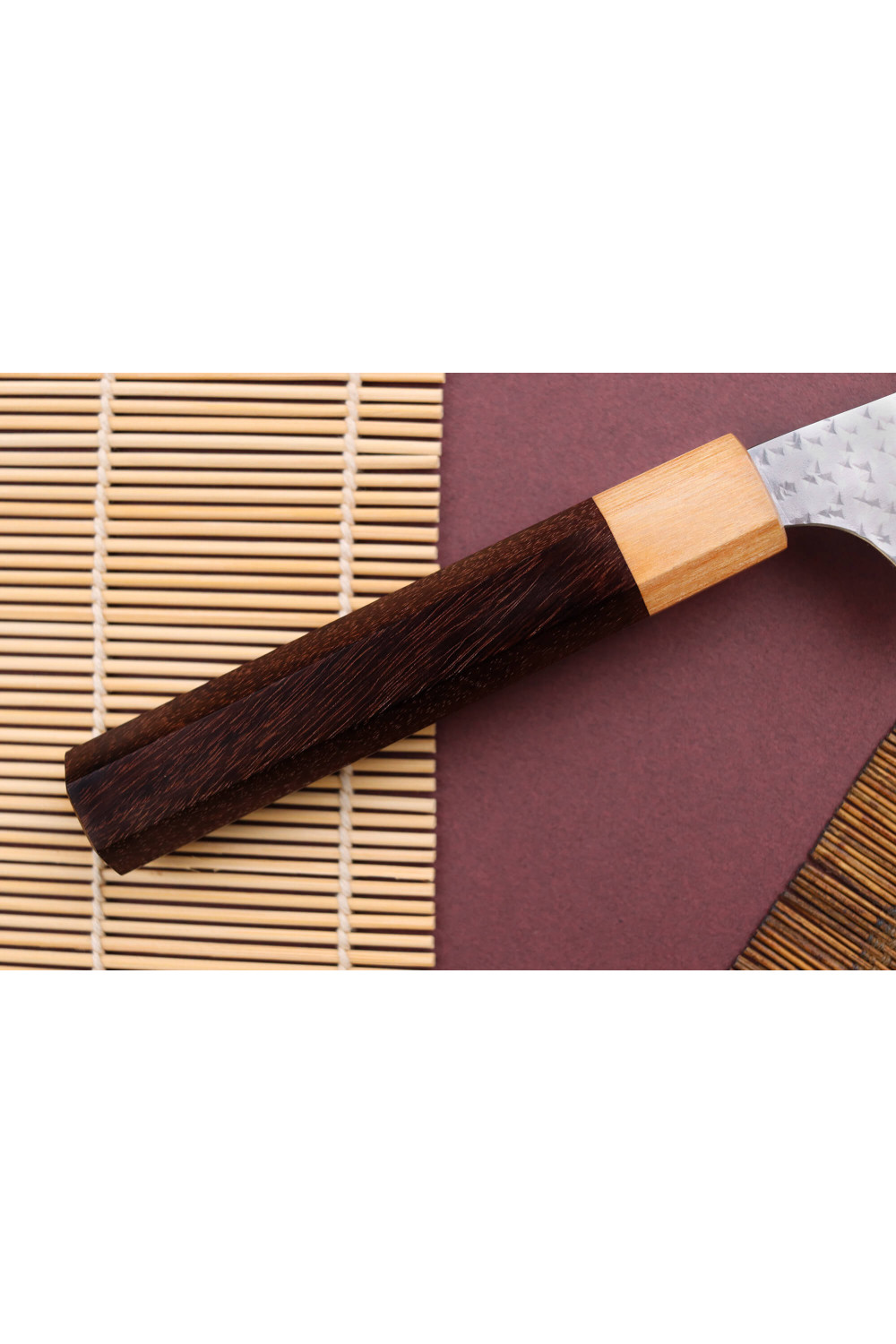
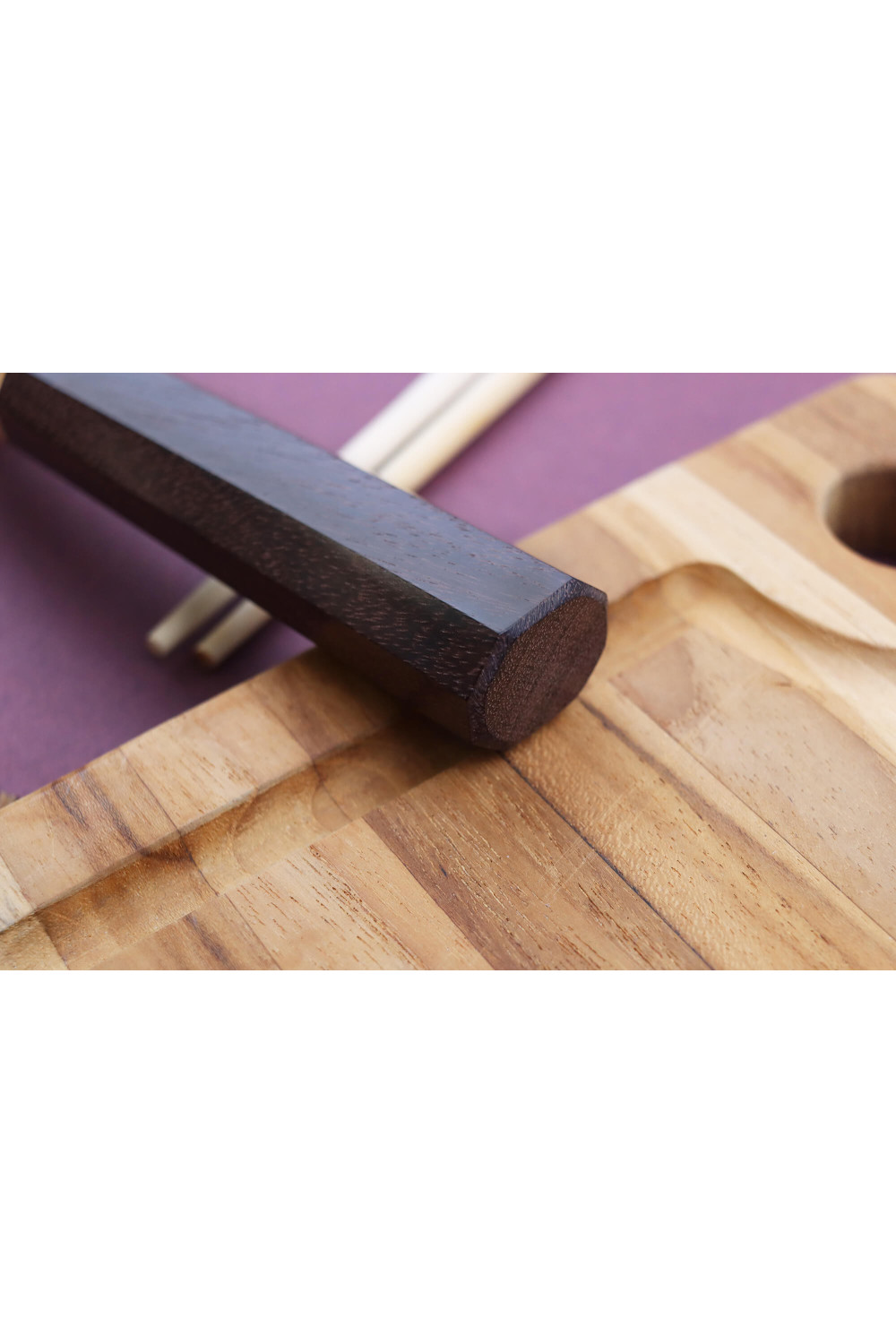
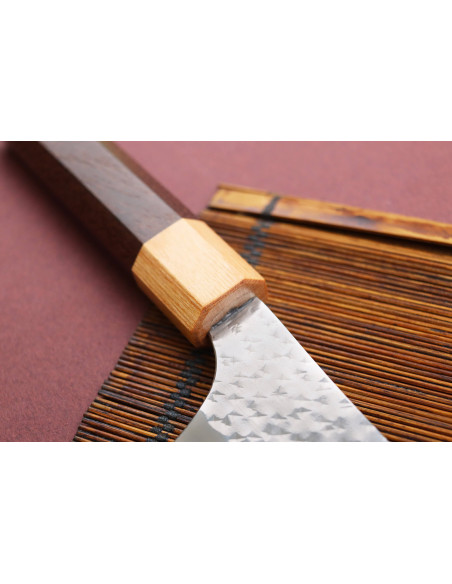
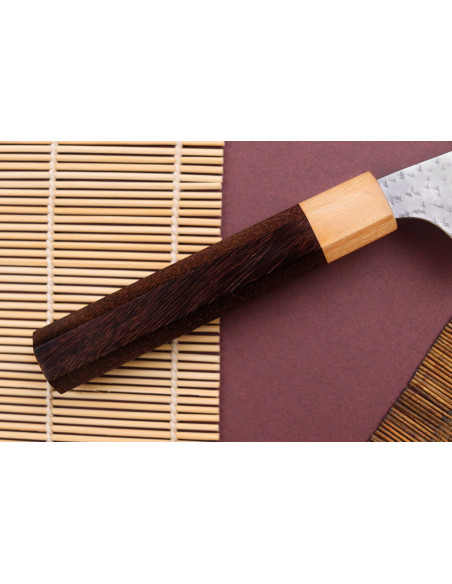
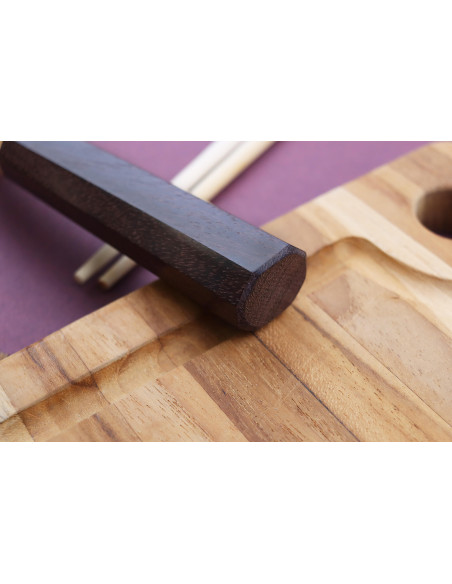
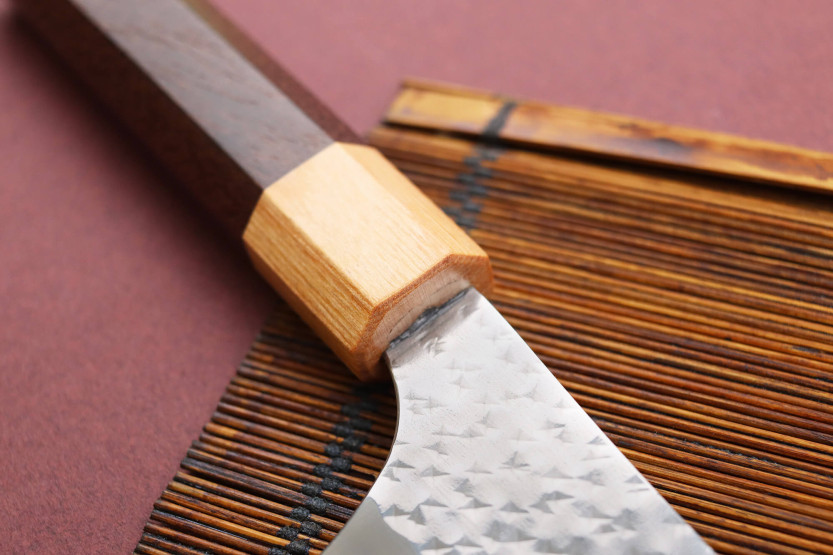
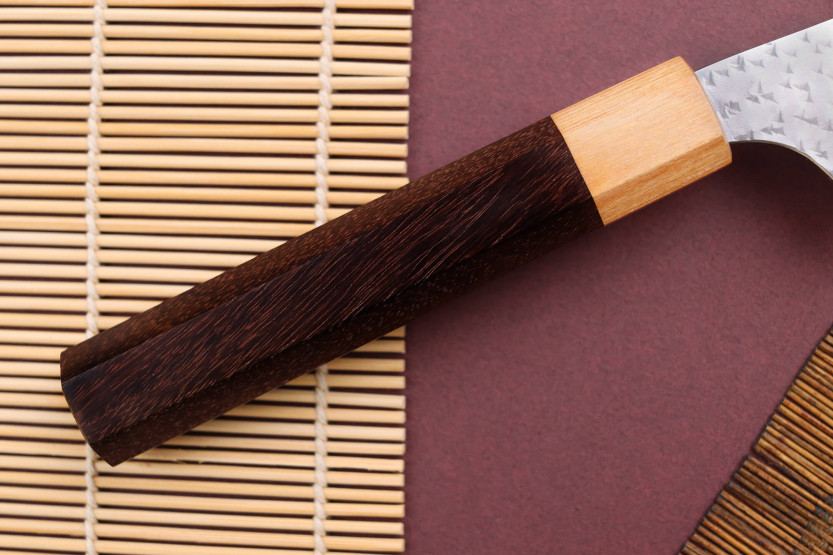
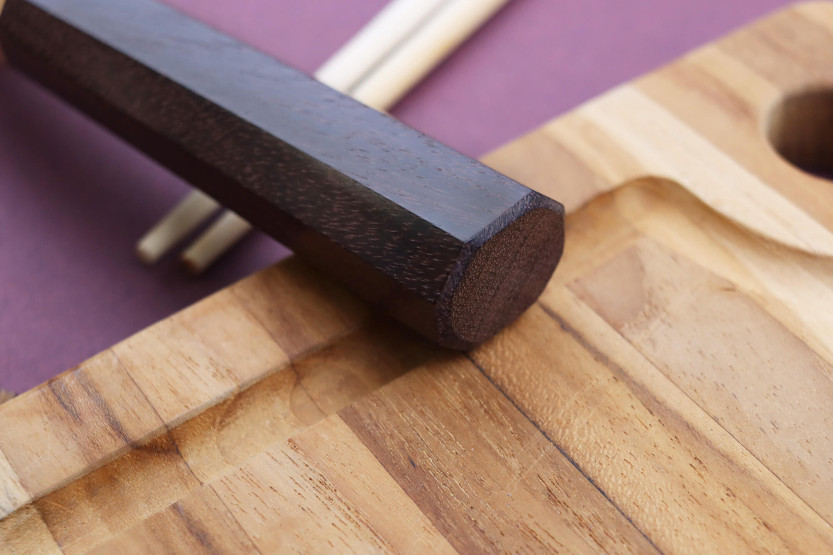
The handle is made of sandalwood, a dark, light wood of great finesse. Its octagonal shape allows ambidextrous use. It is complemented by a bolster in Pakkawood, a material resistant to shock and temperature variations. Its white color contrasts superbly with the sandal.
Finally, wood pulp fills the space between blade and handle, protecting the heart of the knife from moisture.
The color of the handle may vary slightly (darker or lighter) depending on the knife, as wood is a natural material.
Care and maintenance :
The knife should be washed by hand, then wiped dry with a soft cloth before storing away from moisture. It is delivered in a cardboard box with protective foam.
Please note that quantities are limited, due to the origin of the knives and the production capacity of the blacksmith, who carries out all operations manually.
Find out more about Kurosaki san and its environment:
Yu Kurosaki Japanese knives are highly appreciated by connoisseurs. They are made by the blacksmith of the same name, who owns a workshop in the heart of the TakefuKnife Village, a hotbed of artisanal knife production. The area is home to a large number of artisan blacksmiths whose methods are based directly on ancestral know-how. Gathered together in the same place, they are able to share their techniques, while preserving Japan's internationally recognized heritage.
This craftsman has been officiating since the 2000s, and was a pupil of renowned master blacksmiths. He is particularly renowned for the original work he does on his blades, whose hammerings are each more beautiful than the last.
See also our selection of sharpening stones to maintain your beautiful knife!


 By buying this product you can collect up to