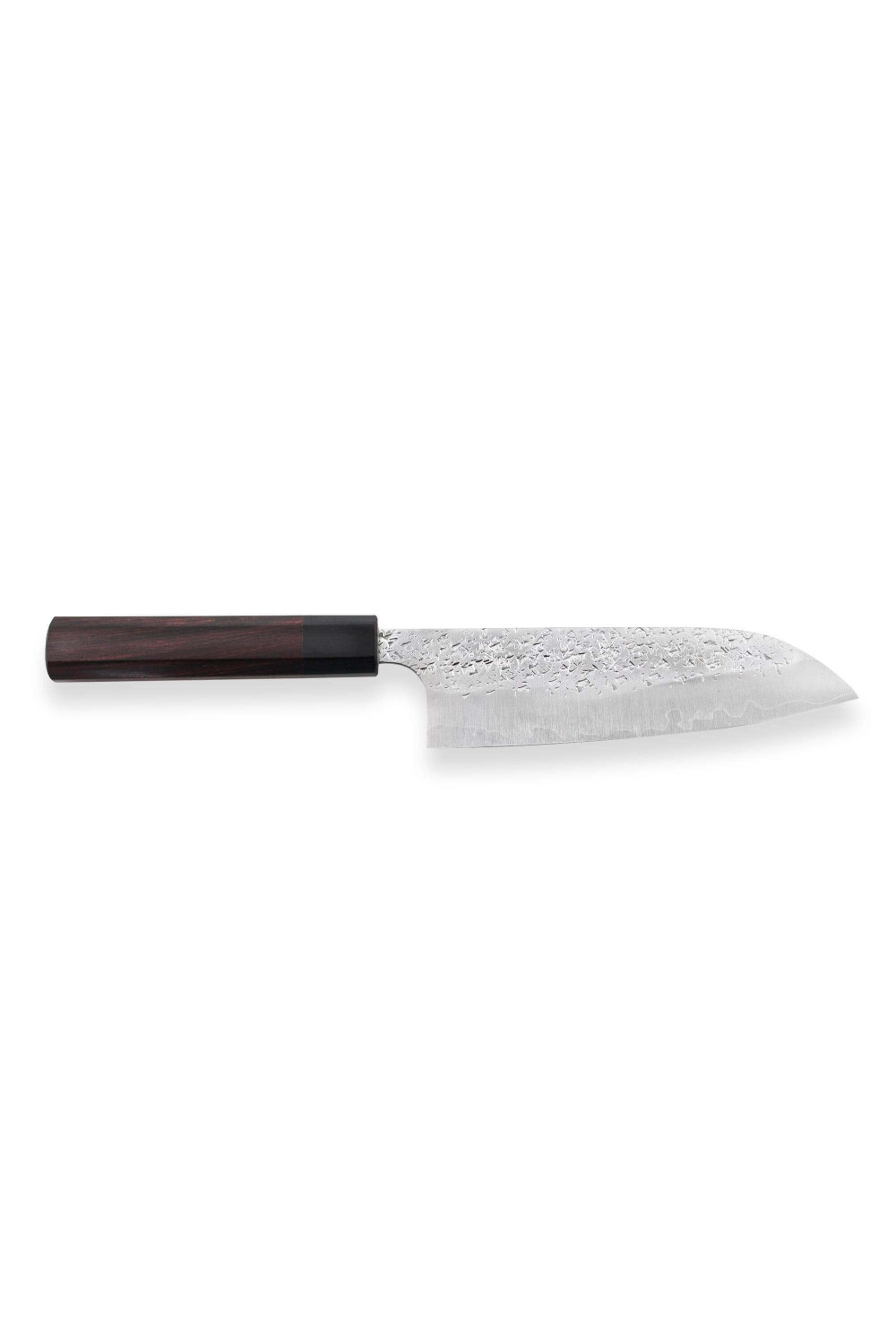
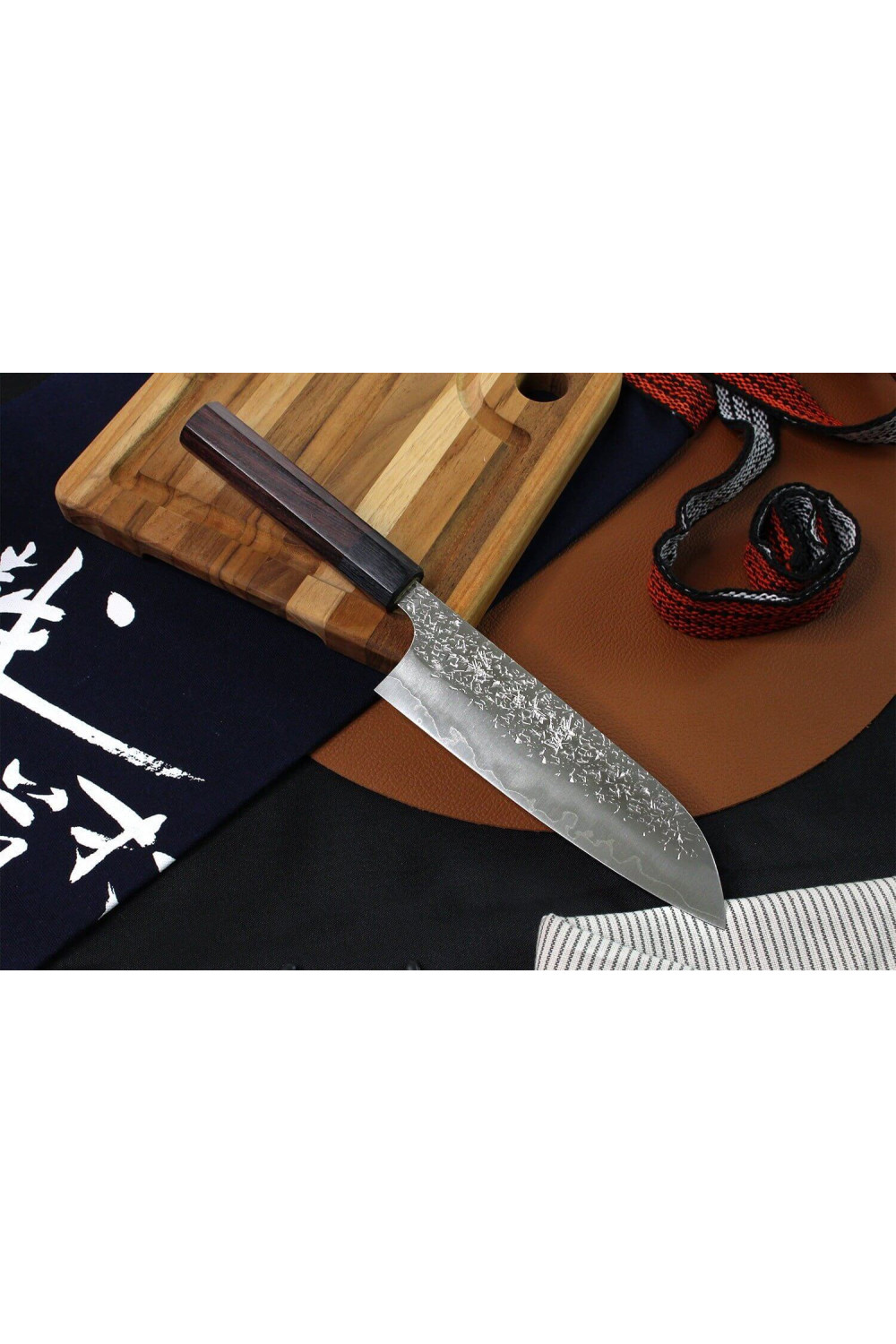
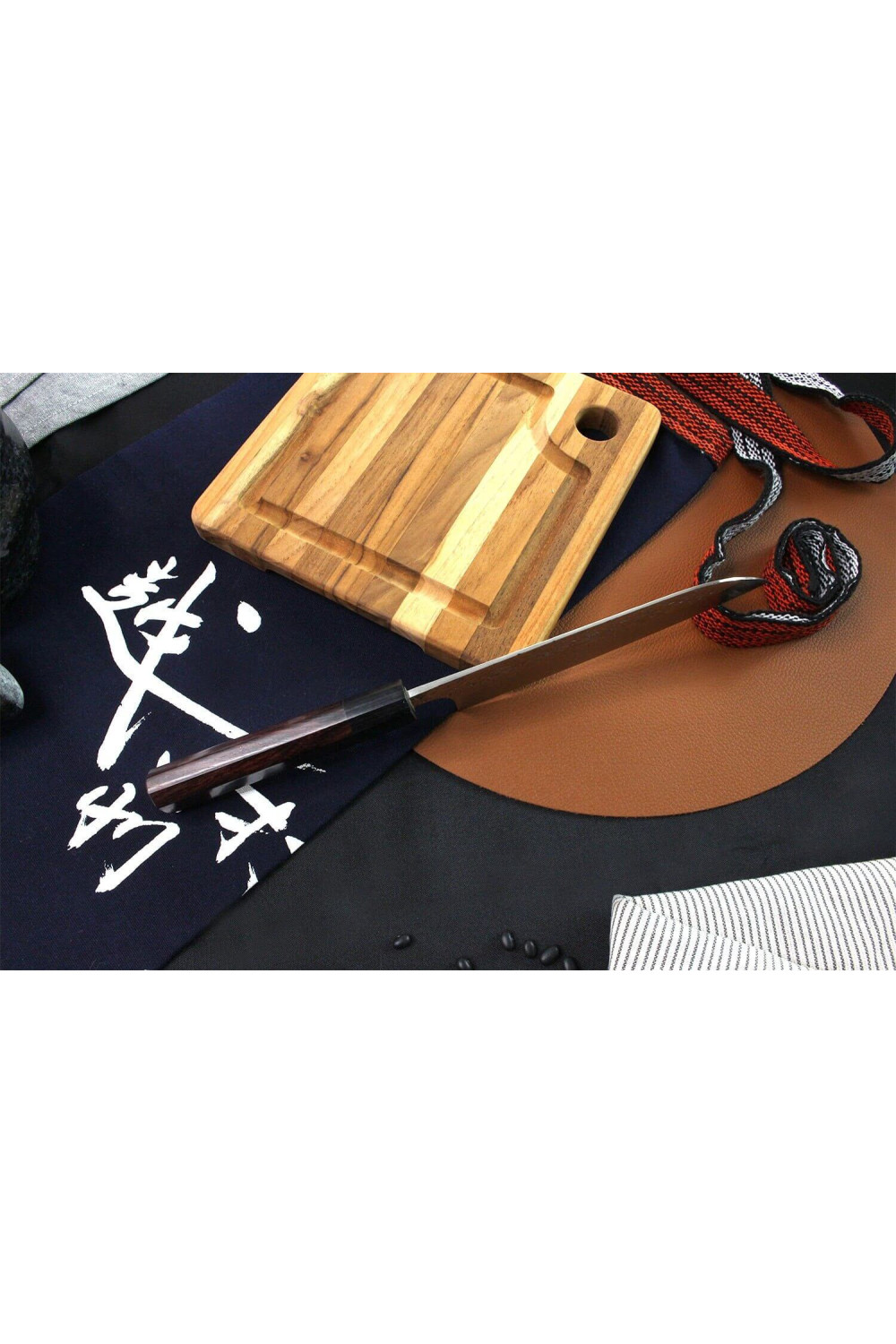
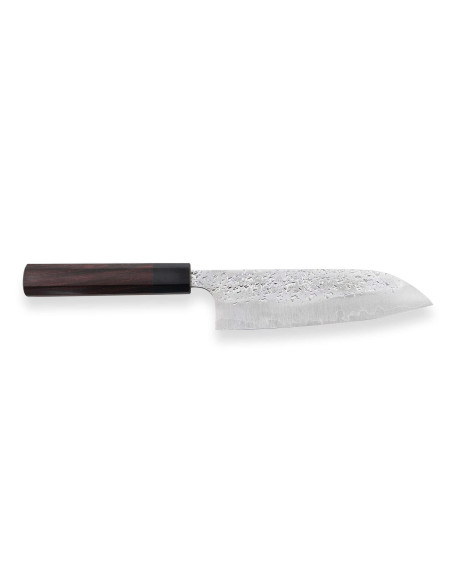
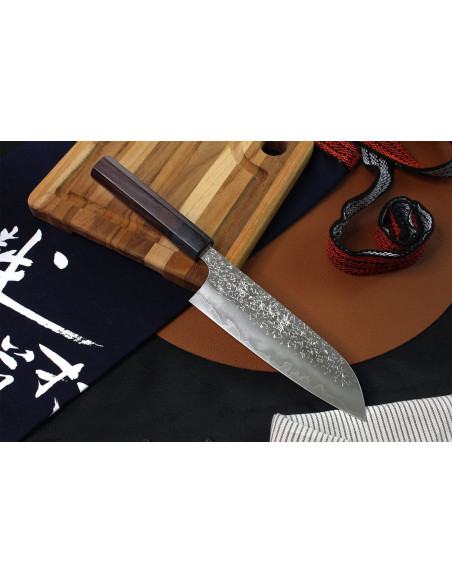
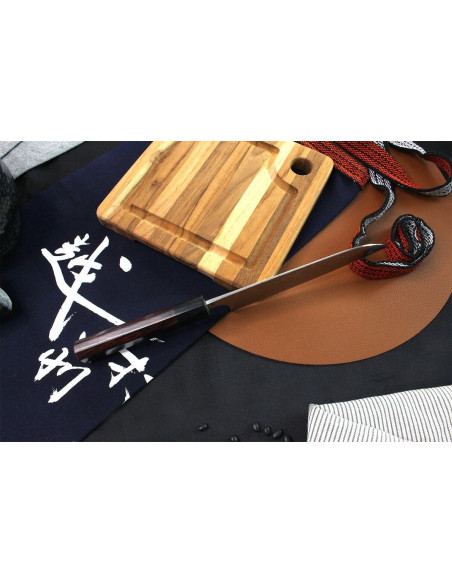
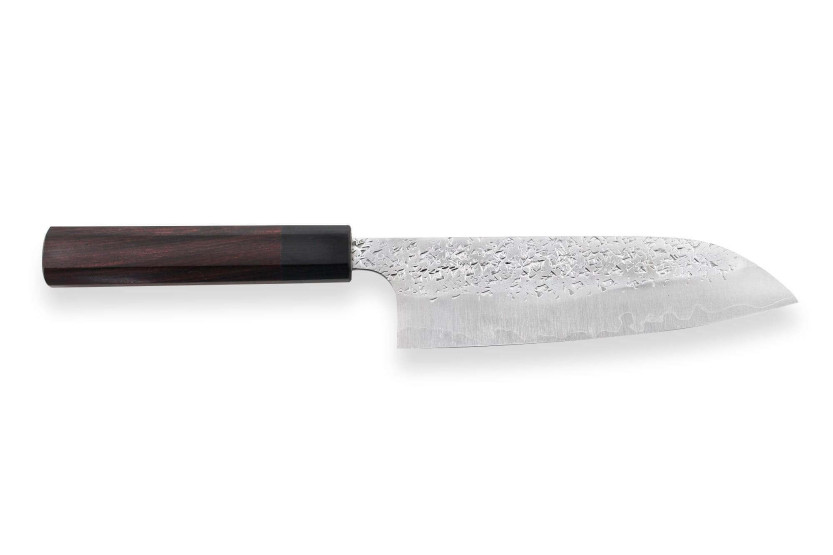
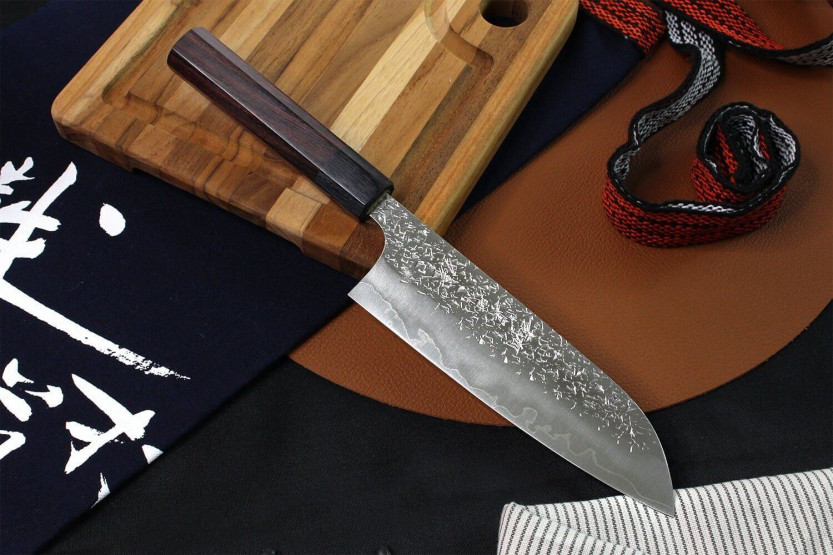
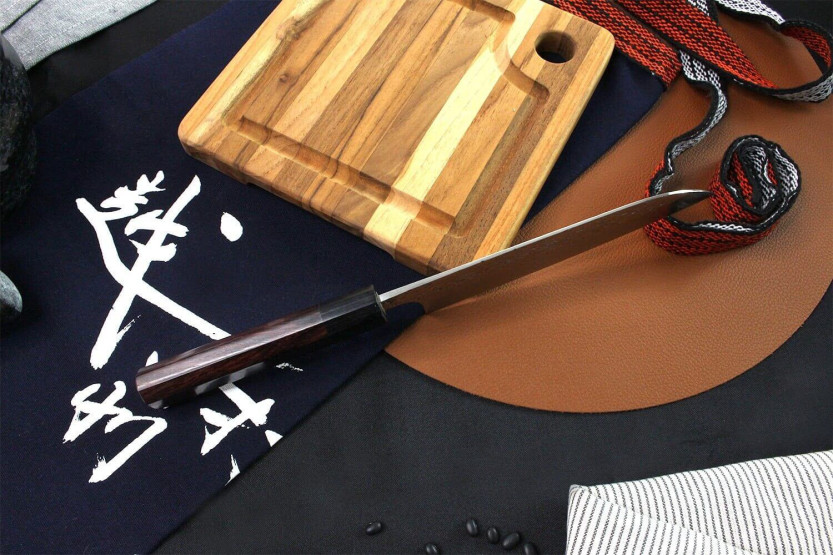
This 16.5cmsantoku knife is a versatile knife that's a pleasure to use. It enables you to perform a wide range of tasks, such as cutting meat (boneless), slicing fruit and vegetables, or chopping herbs. Multifunctional, you could say it's the equivalent of a Western chef's knife. Its curved blade creates a rocking motion that facilitates cutting.
Let's take a closer look at each part of the Yu Kurosaki Shizuku knife:
Blade:
The Kurosaki Shizuku knife features a forged blade, i.e. it is formed from a single piece of steel. The piece of steel is heated, then gripped by the blacksmith with a pair of tongs and passed under the mechanical press, turning regularly to gradually form the blade. This precision work results in a stronger knife, as there are no sticking points between the pieces.
The steel used is SG2 powder steel (also known as R2), a very expensive high-end alloy rarely found in cutlery. With a hardness of around 63 HRC on the Rockwell scale, it holds its edge over time, so you don't have to keep sharpening it. What's more, despite its hardness, SG2 steel is easy to maintain if the need arises, which is a plus for such a rigid alloy. You can also use a Sharpening stone to maintain its incredible cutting capacity. Its razor-sharp edge will surprise you from the very first use (be careful with your fingers).
SG2 steel has another advantage: its purity. At microscopic level, its structure is very homogeneous, making it more resistant (for example, there's less risk of chipping).
Finishes :
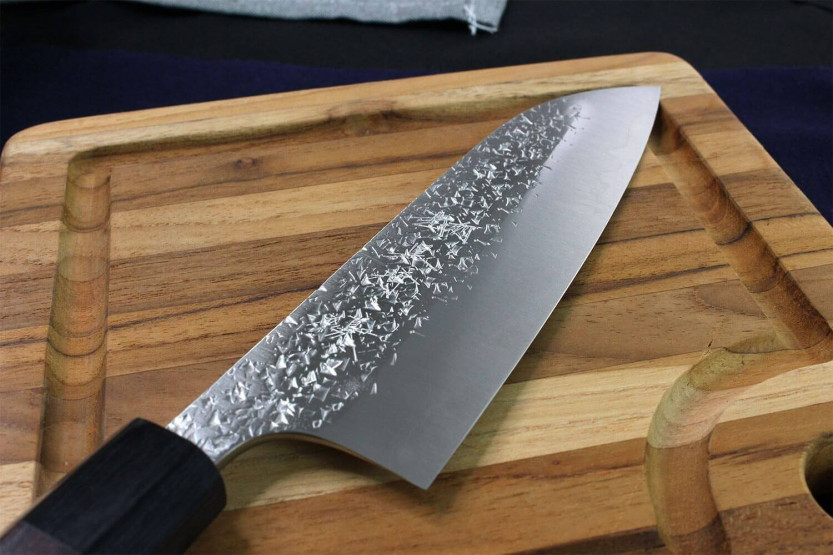
The cutting edge is hand-finished on a grinding wheel to guarantee excellent cutting quality.
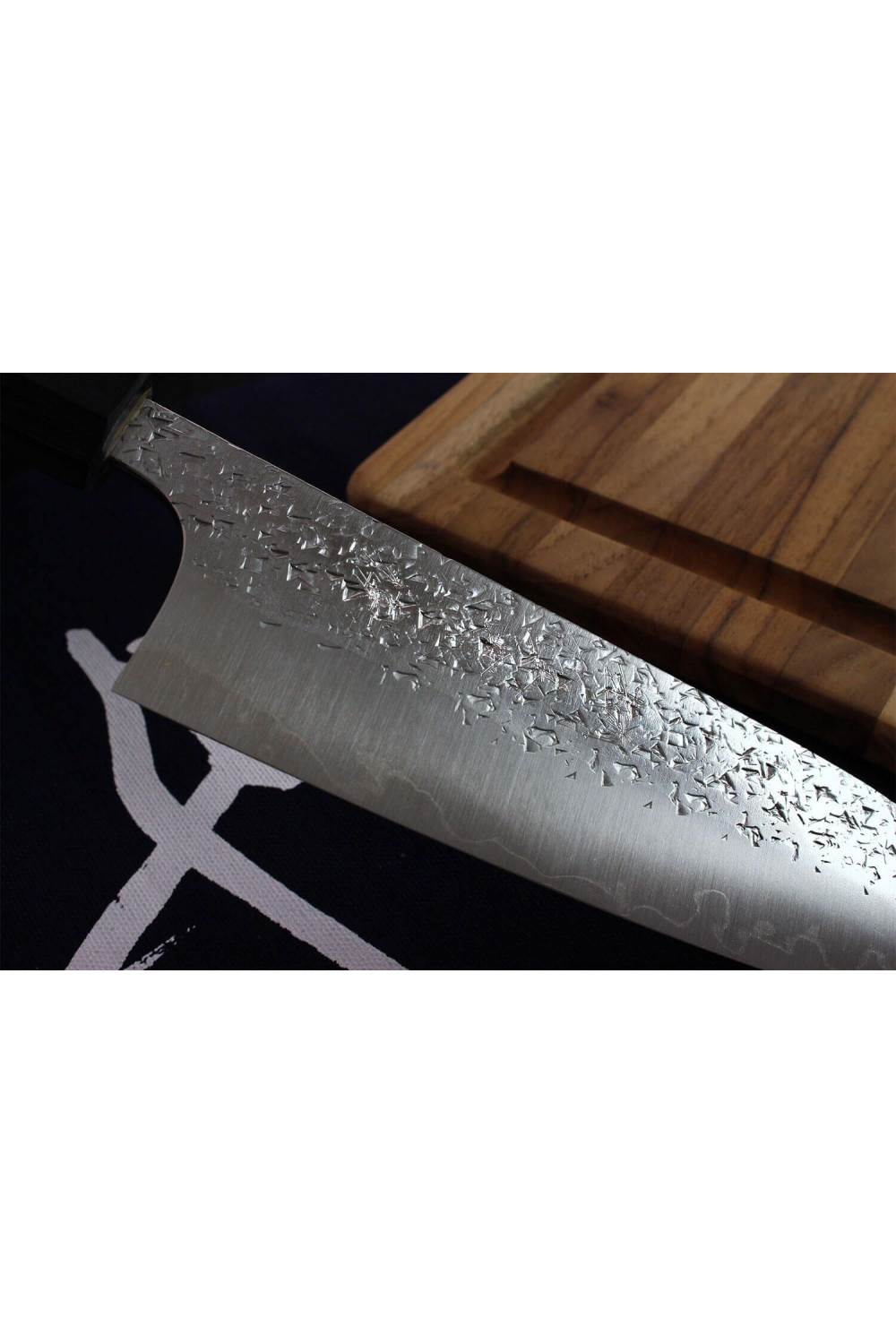
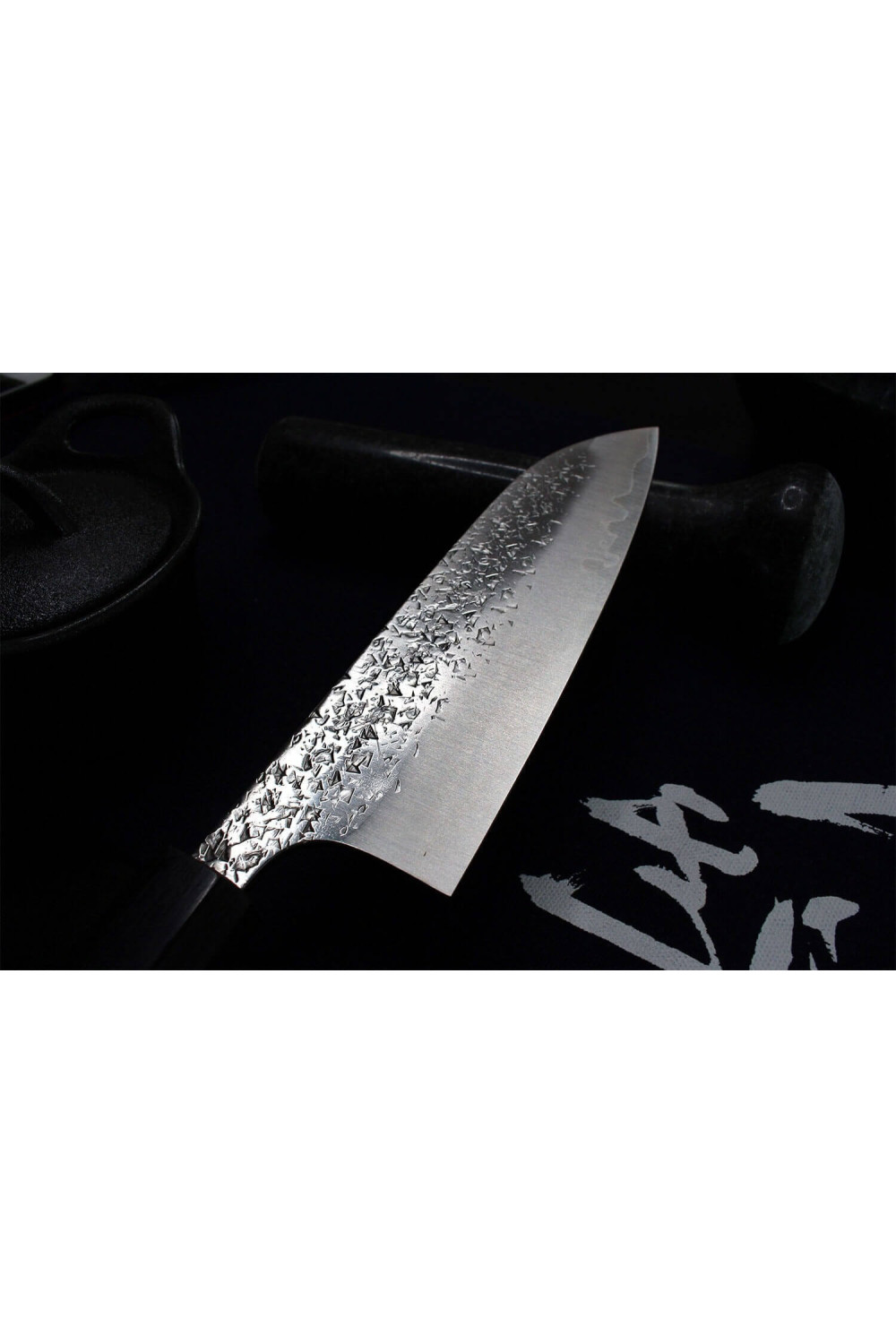
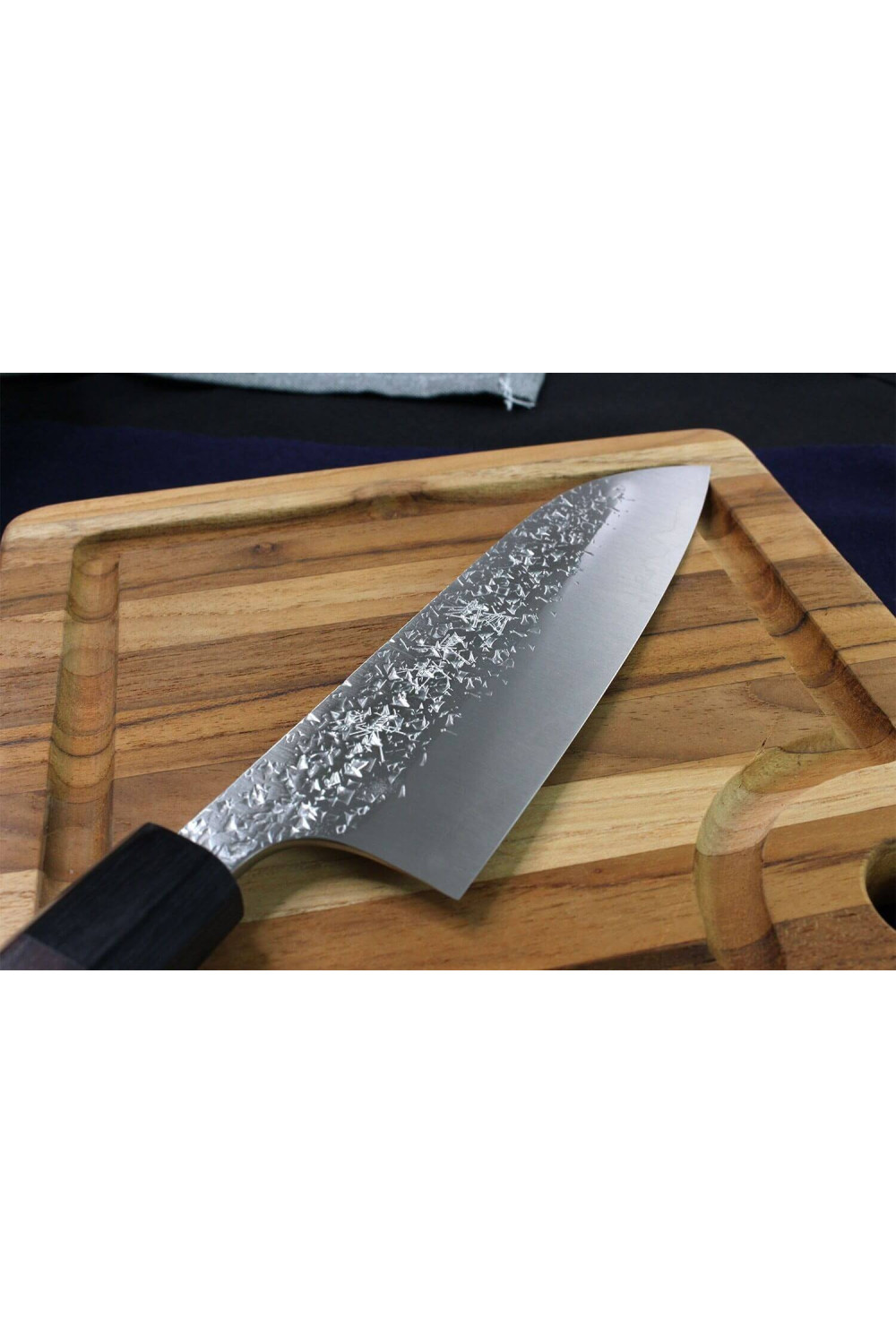
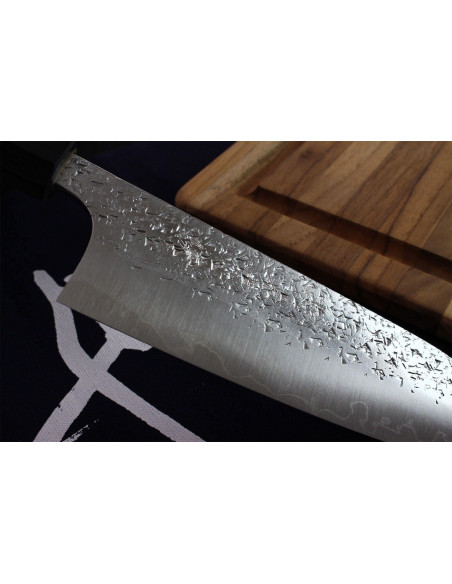
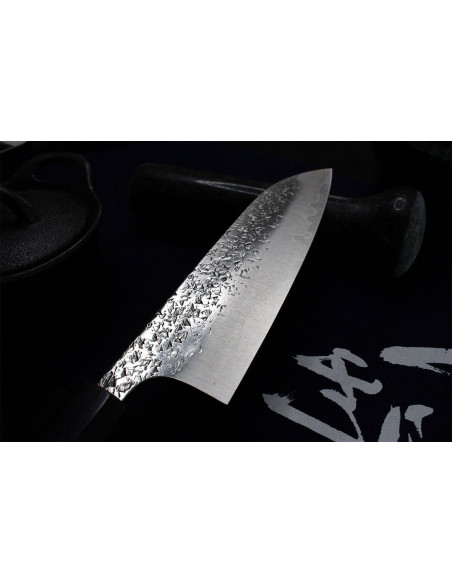
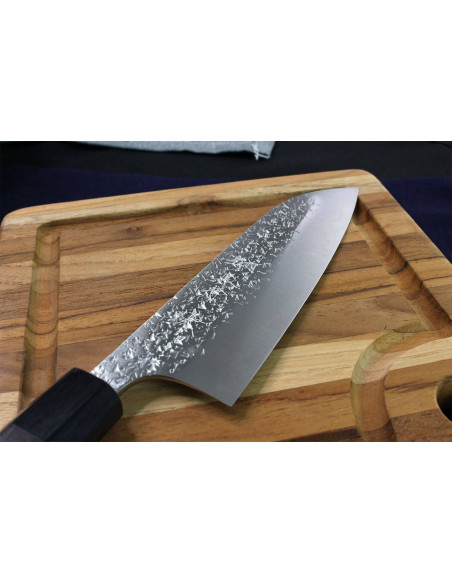
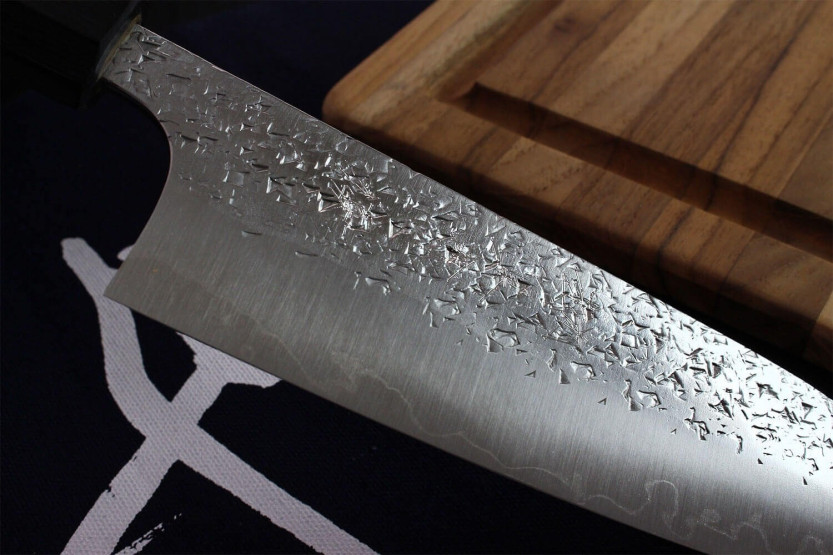
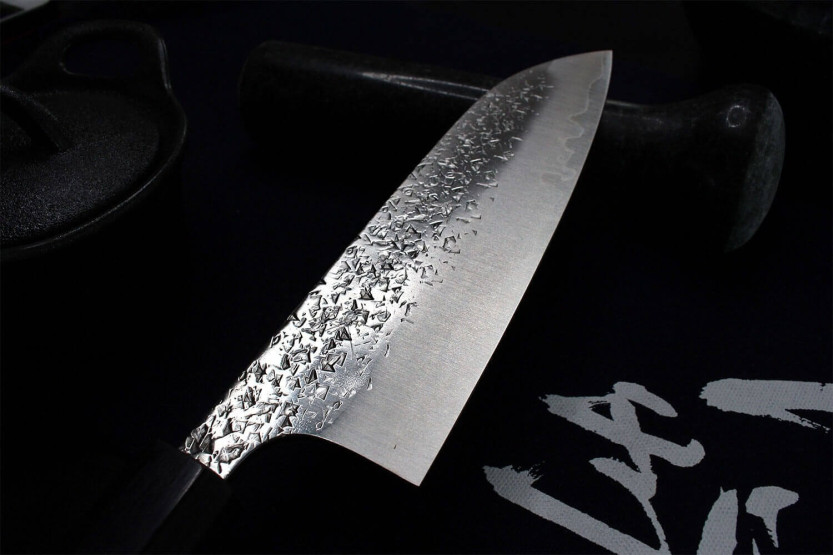
The upper part of the blade has been hammered with a highly original pattern. This is what makes Kurosaki knives so special. It's as if the steel is slightly wet, as if small drops of water are mixing together. This is where the series gets its name, Shizuku meaning "drop" in Japanese.
The brand name has been engraved for added authenticity. Finally, the whole is enhanced by an elegant mirror polish, which brings light to the aforementioned hammering.
The handle:
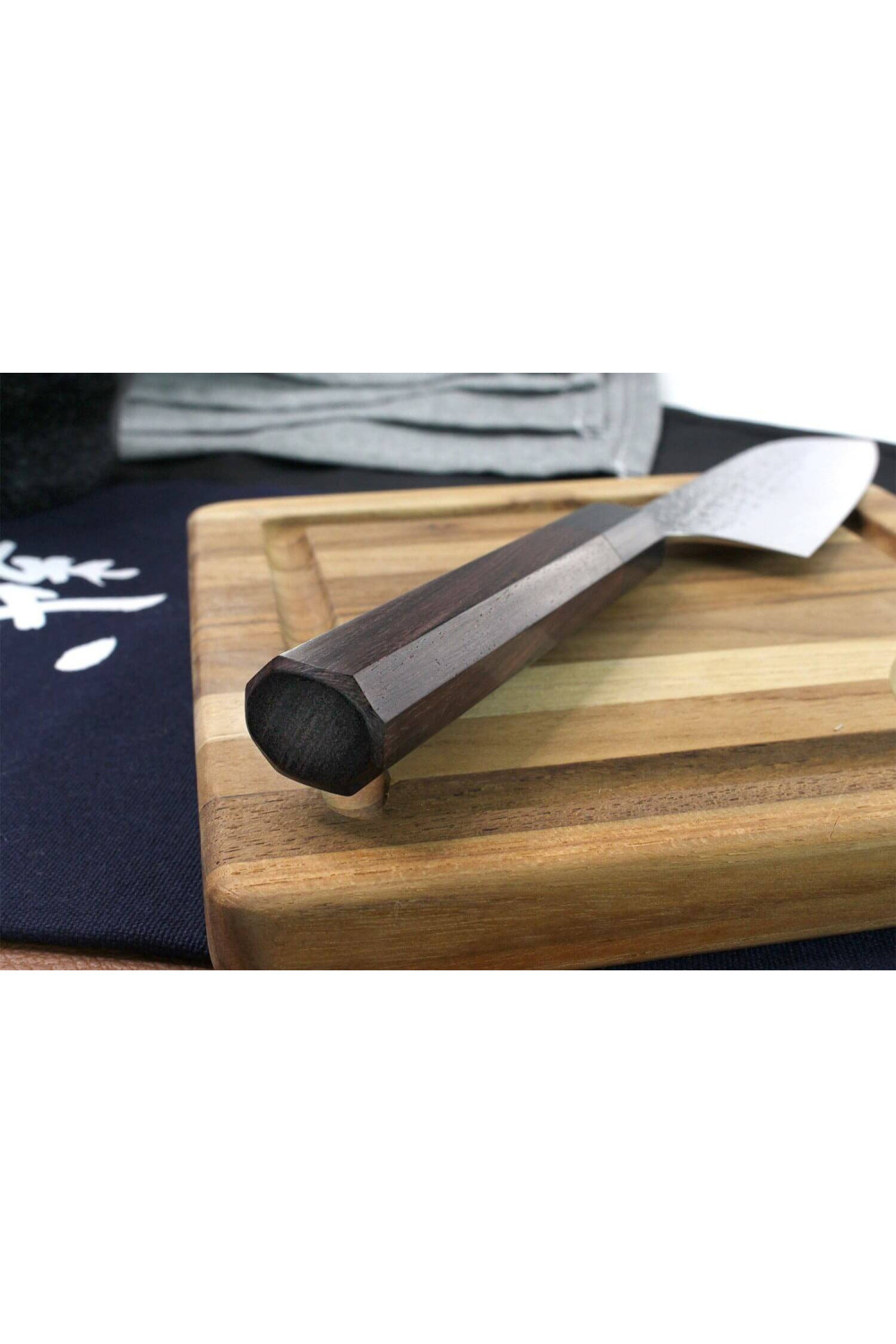
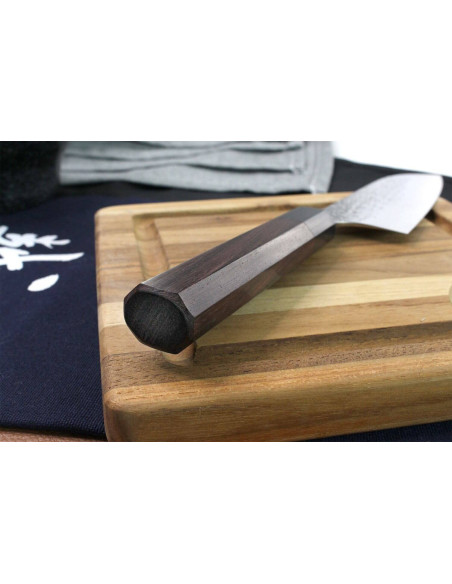
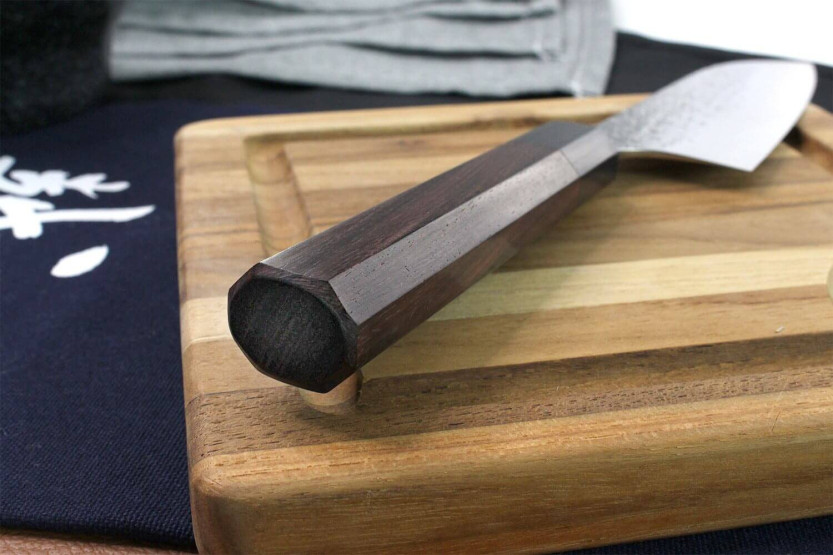
The handle is made of Sandalwood, a grit wood that is pleasant and light in the hand. Its octagonal shape hugs your palm, for marked control of the knife. A black Pakkawood bolster links the blade to the handle. The whole contrasts very well.
Care and availability :
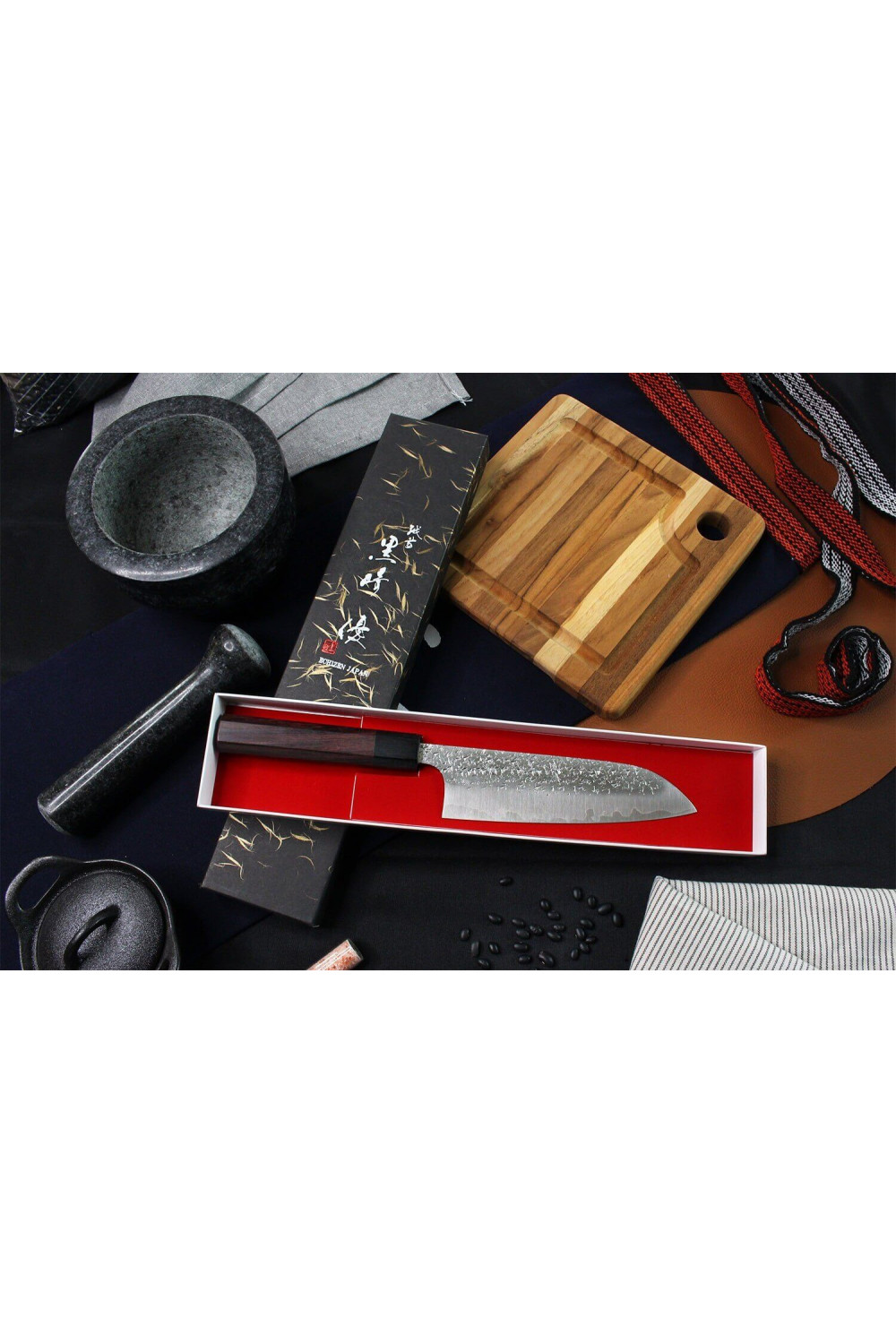
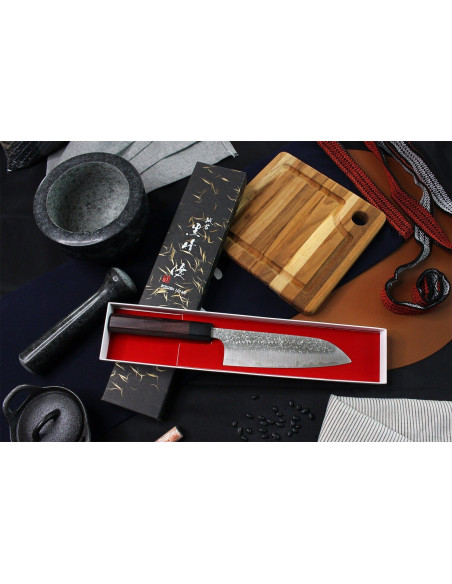
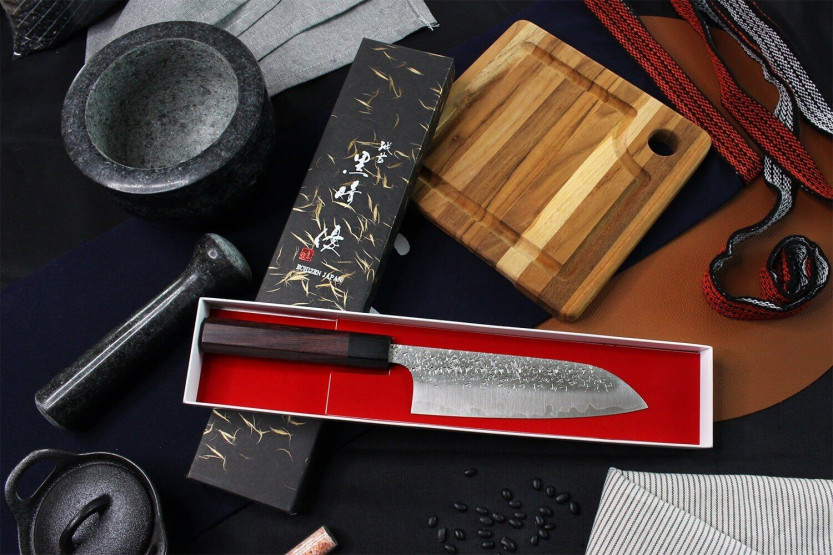
The knife should be washed by hand, then wiped dry with a soft cloth before storing away from moisture. It comes in a Japanese-style cardboard box.
Please note that quantities are limited, due to the origin of the knives and the production capacity of the blacksmith, who carries out all operations by hand.
A few words about the blacksmith:
Yu Kurosaki is a blacksmith who makes knives in Echizen, Japan. His workshop is located in the famous Takefu Knife Village , which is home to a large number of expert blacksmiths who can share their know-how with each other. It's also a very popular area for apprentices, who can be looked after by a master who will teach them everything they need to know.
Kurosaki San began his training in the early 2000s, and worked with master Kanehiro for 12 years. Master Kanehiro taught him everything: how to forge a knife, how to sharpen it to perfection... It was after receiving orders from customers who were very satisfied with his blades that he decided to set up his own workshop, encouraged by his master. He also trained with the famous Hiroshi Kato San, a renowned master blacksmith and one of the founding members of Takefu Village. Now it's Yu Kurosaki San's turn to train his apprentice, so that one day, he himself can open his own workshop!
To discover our selection of Kurosaki knives, click here!




 By buying this product you can collect up to