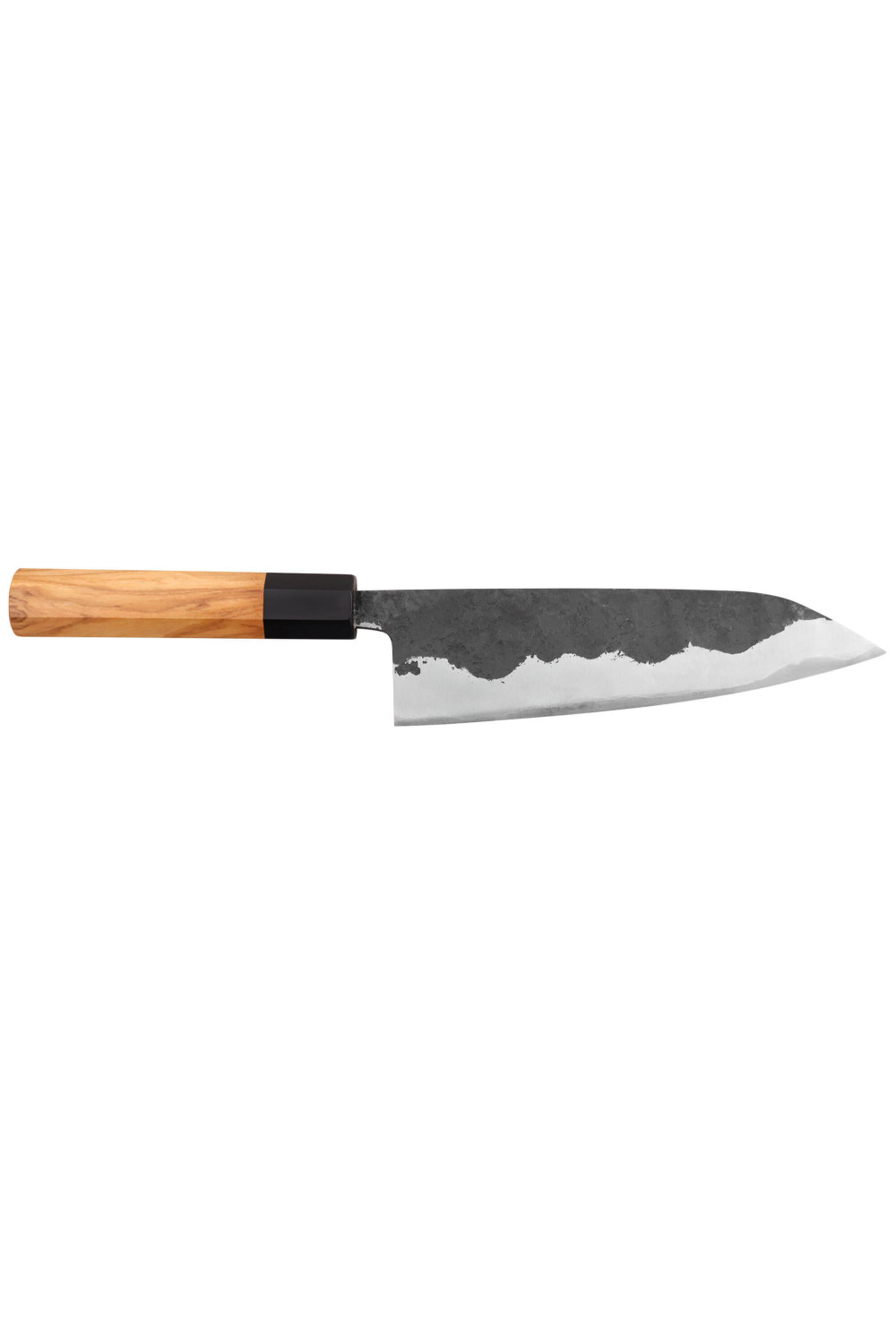
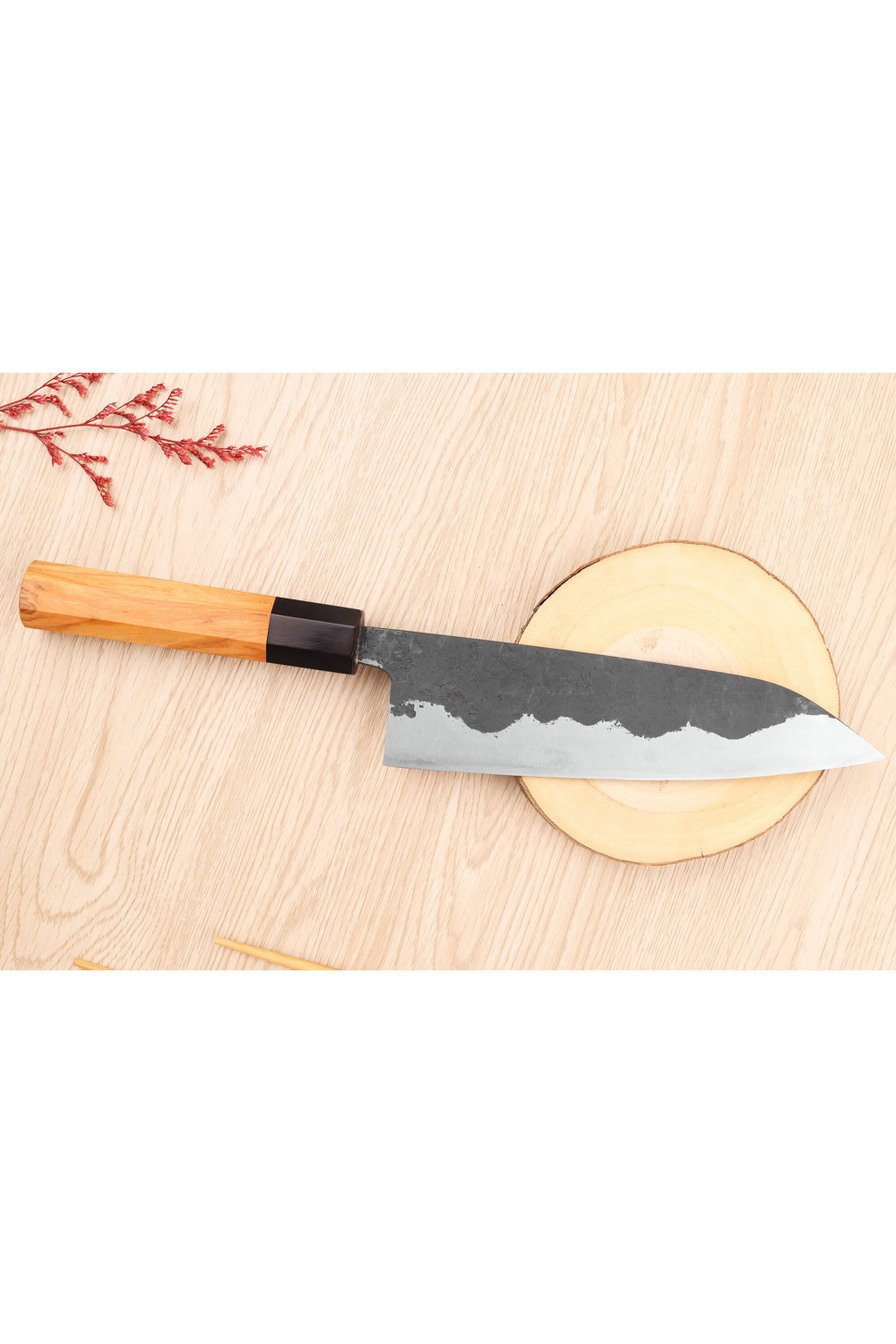
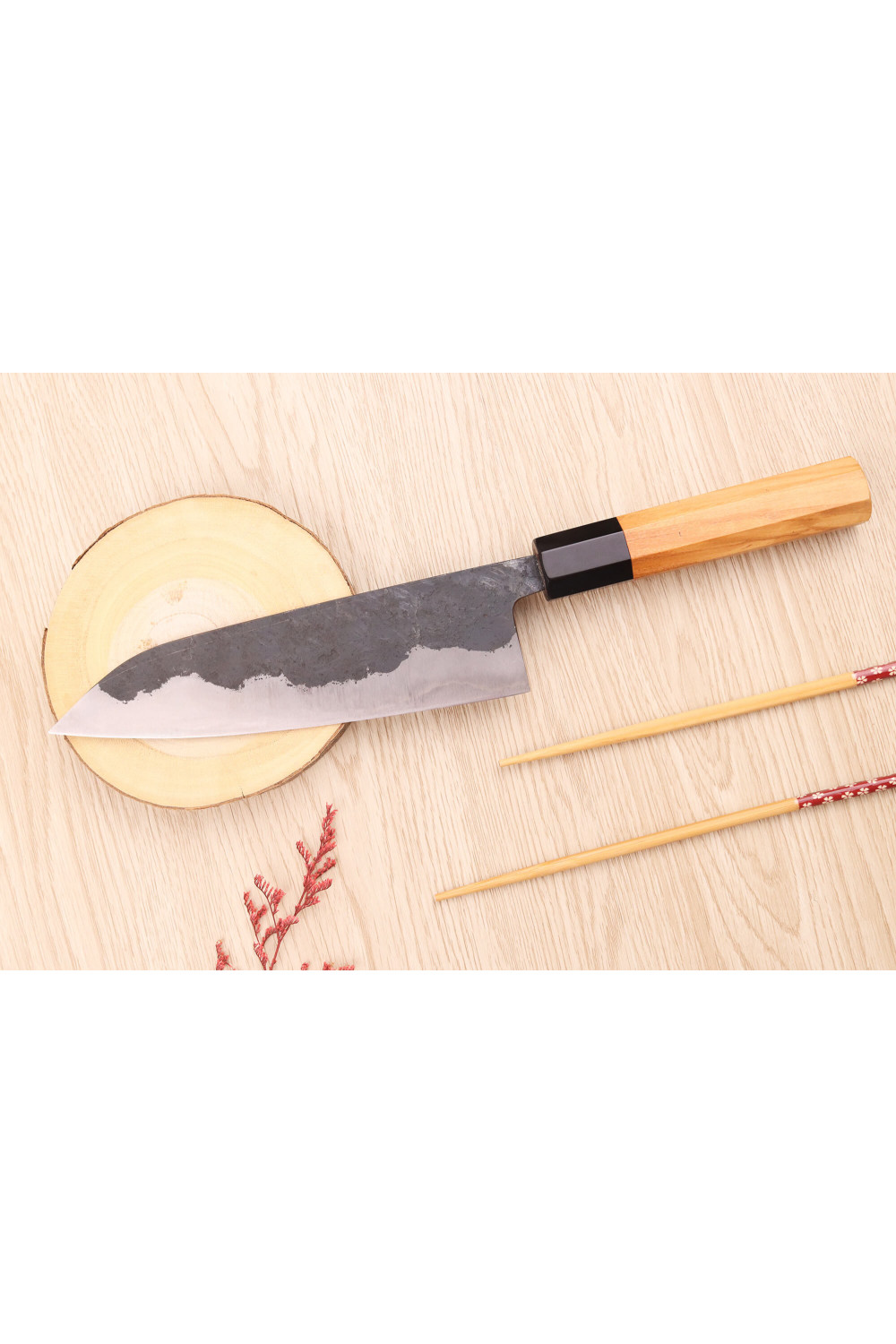
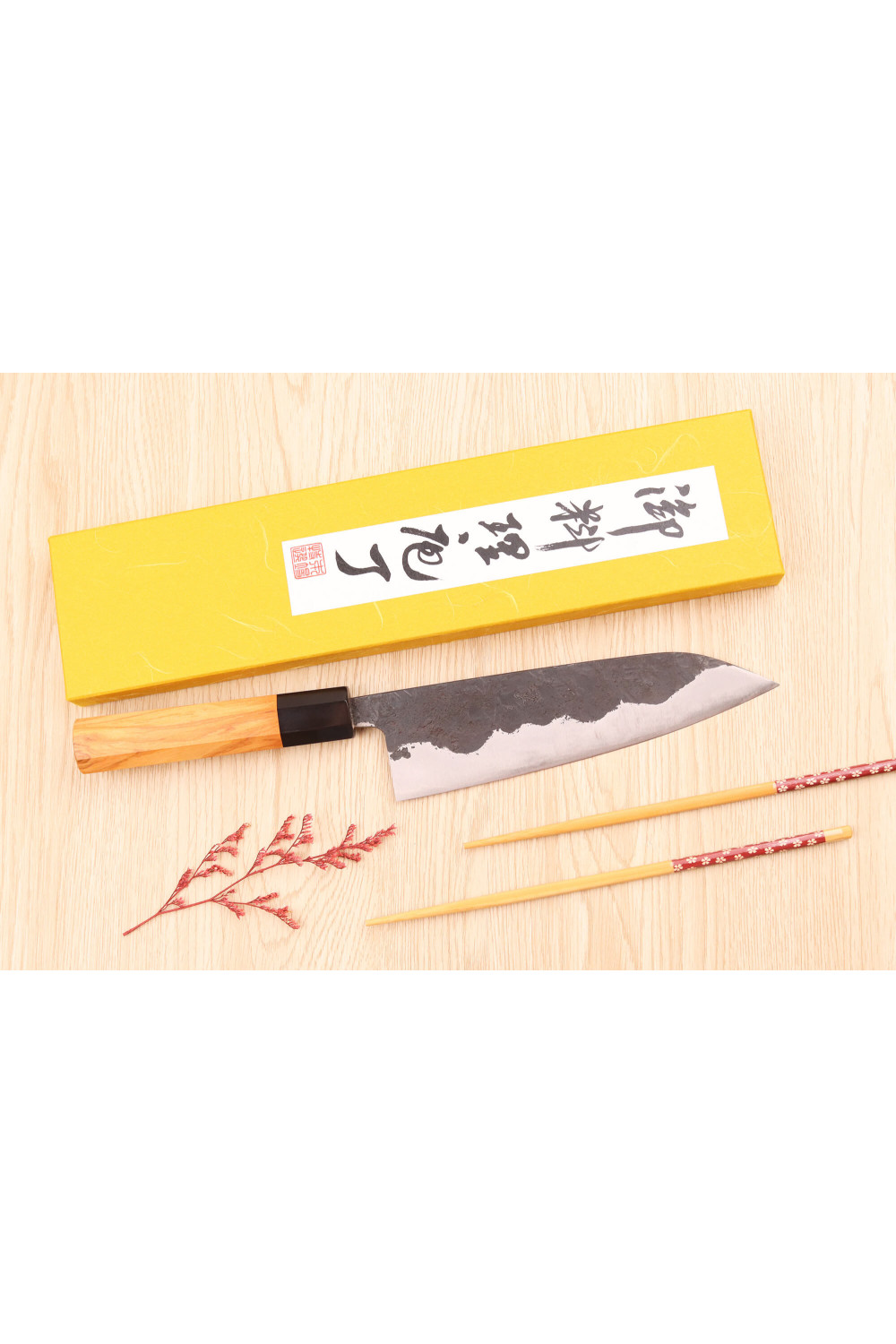
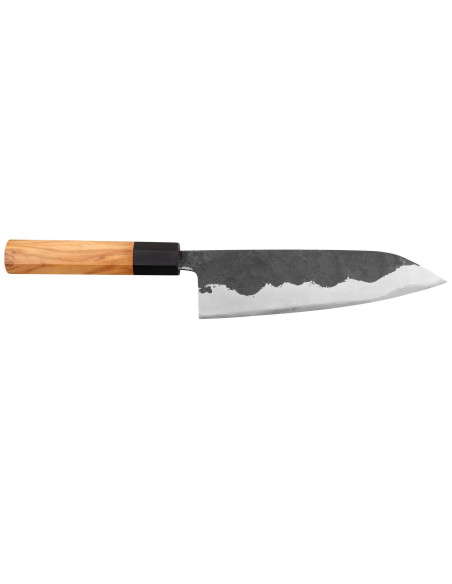
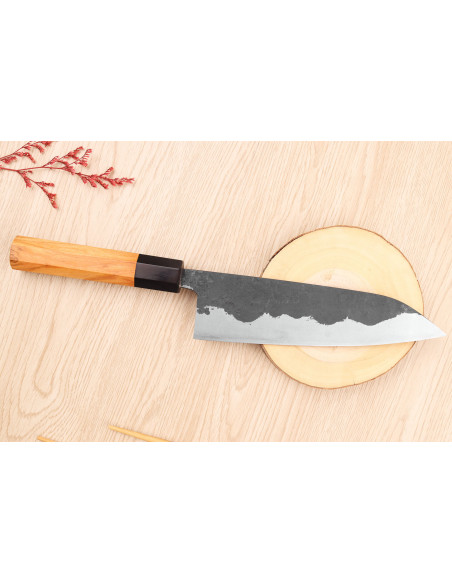
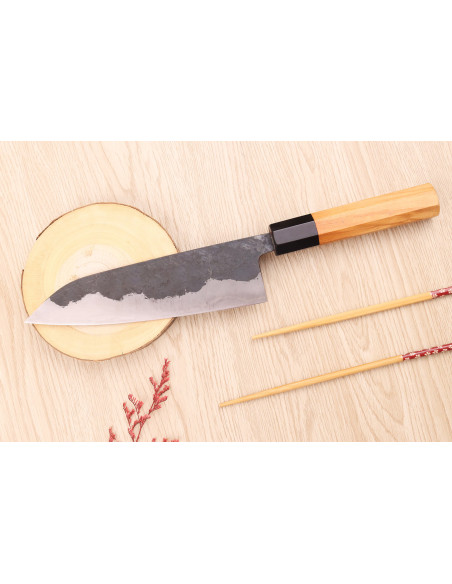
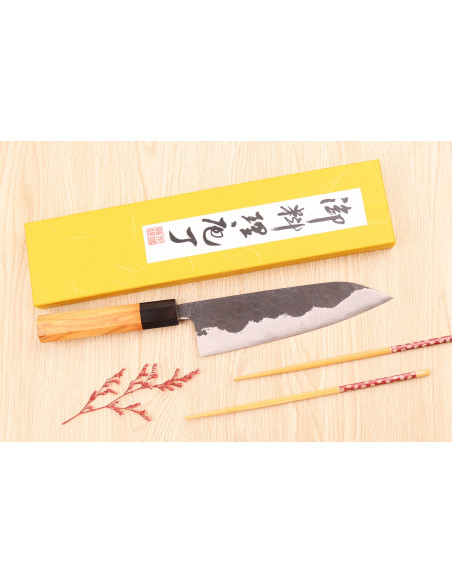
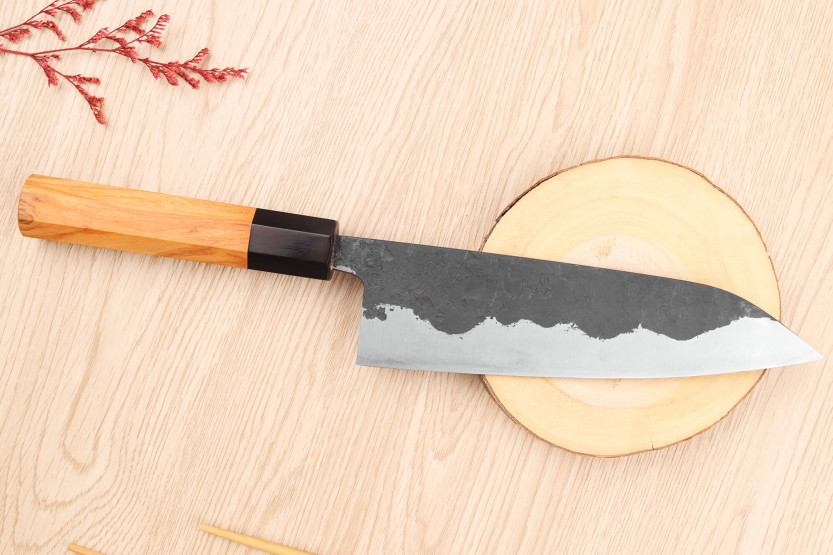
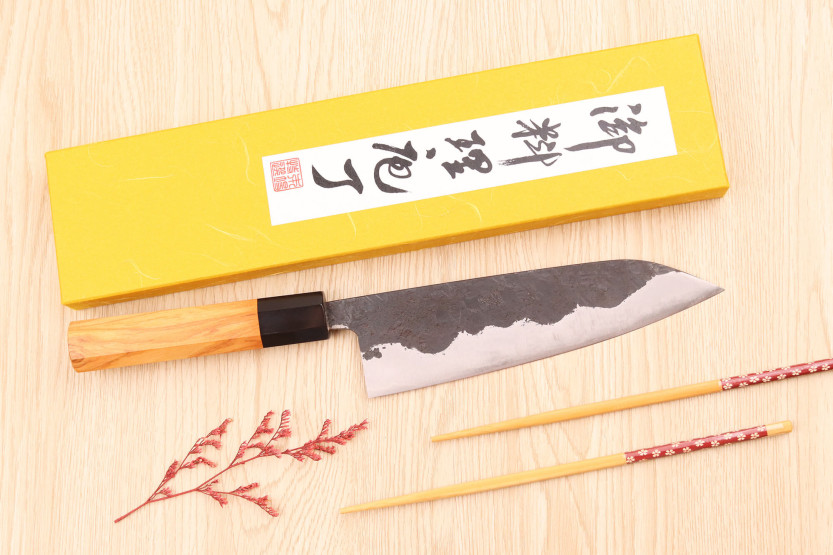
This Japanese kitchen knife was handmade by Sumio Kawamura for the Yoshimune brand. A renowned craftsman, Sumio Kawamura has been forging Japanese knives for over 50 years, benefiting from exceptional cutlery expertise. His workshop, located in Sanjo, Japan, is the place where he alone creates many of the traditional, rustic designs that are his specialty.
A handcrafted knife with an olive wood handle
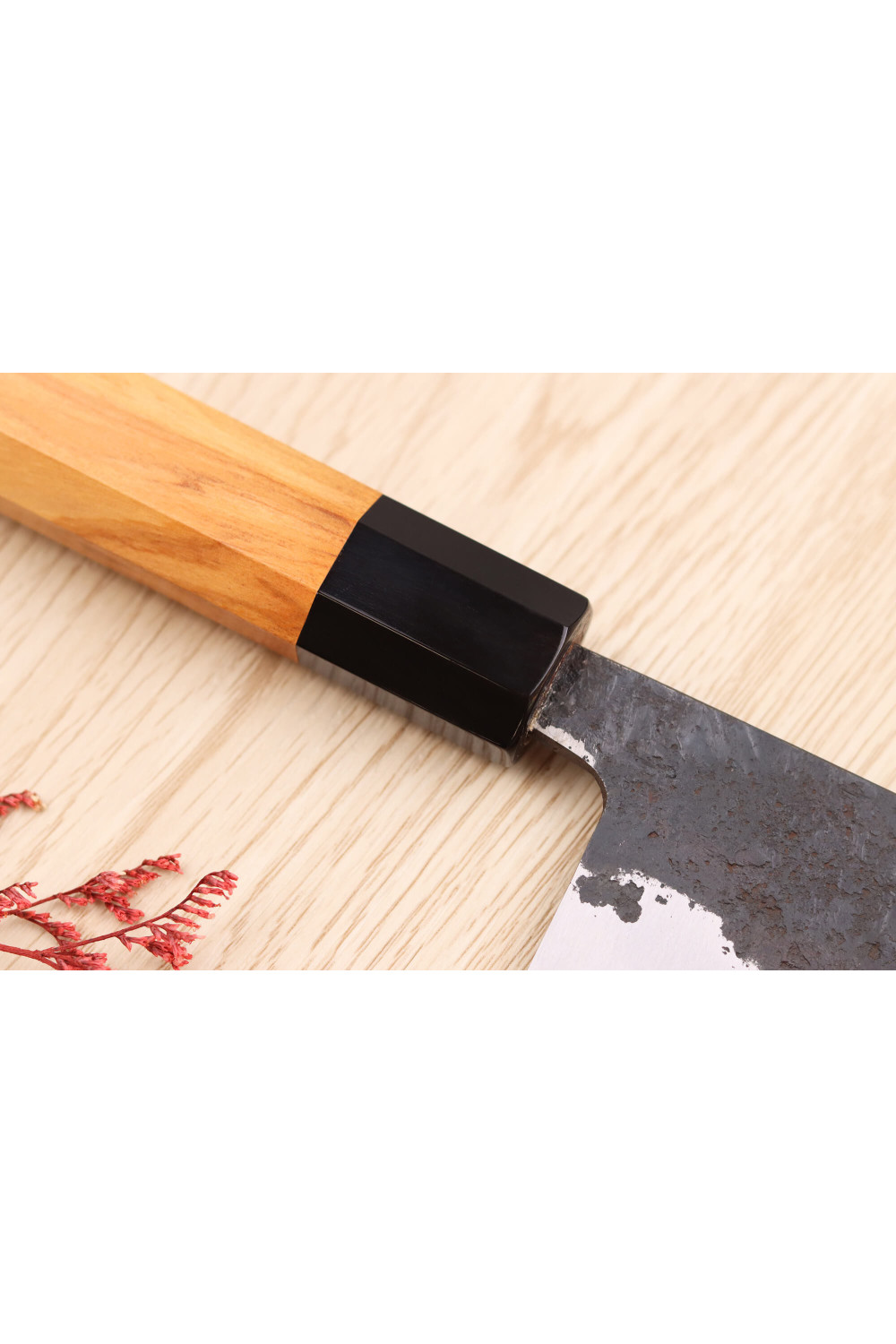
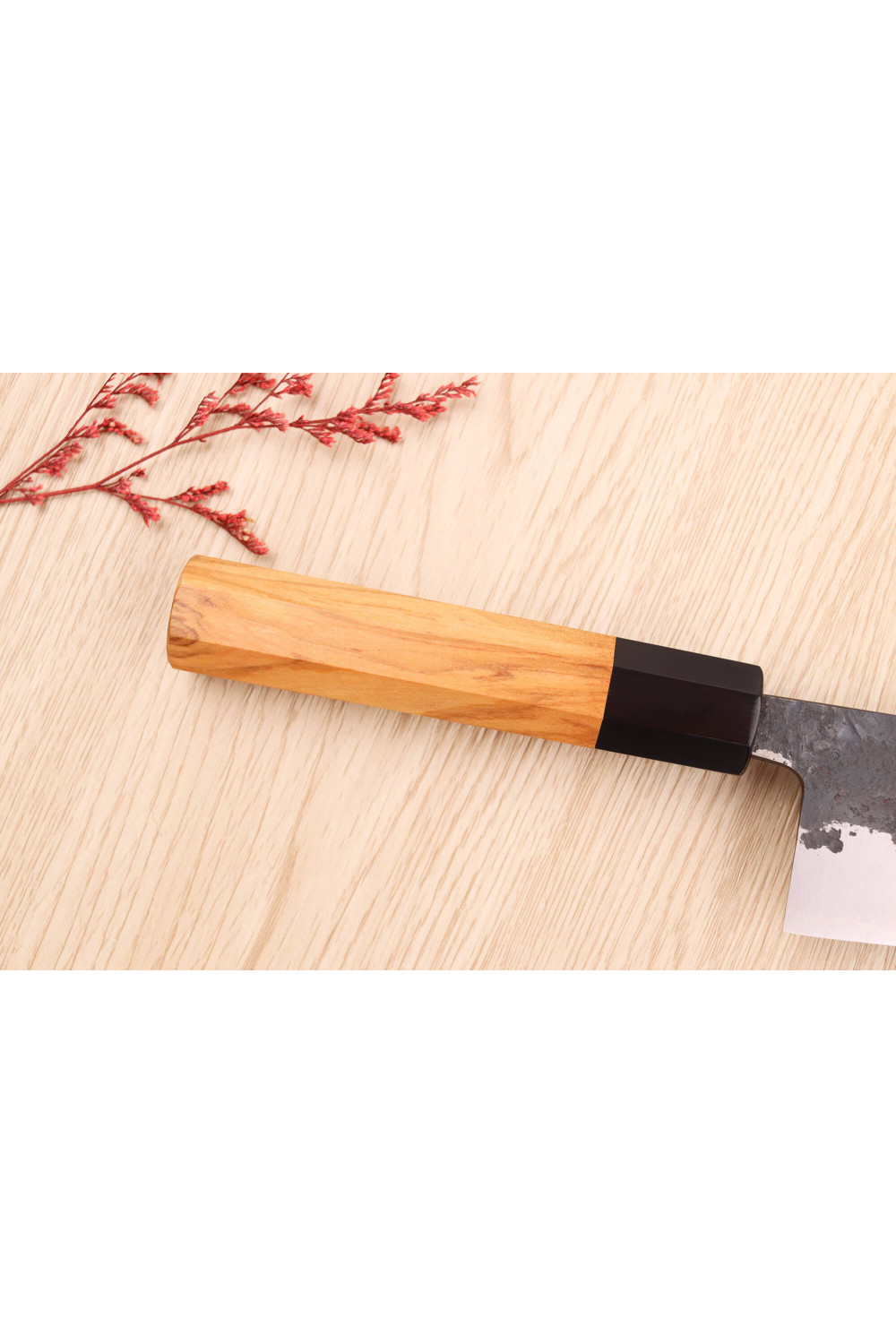
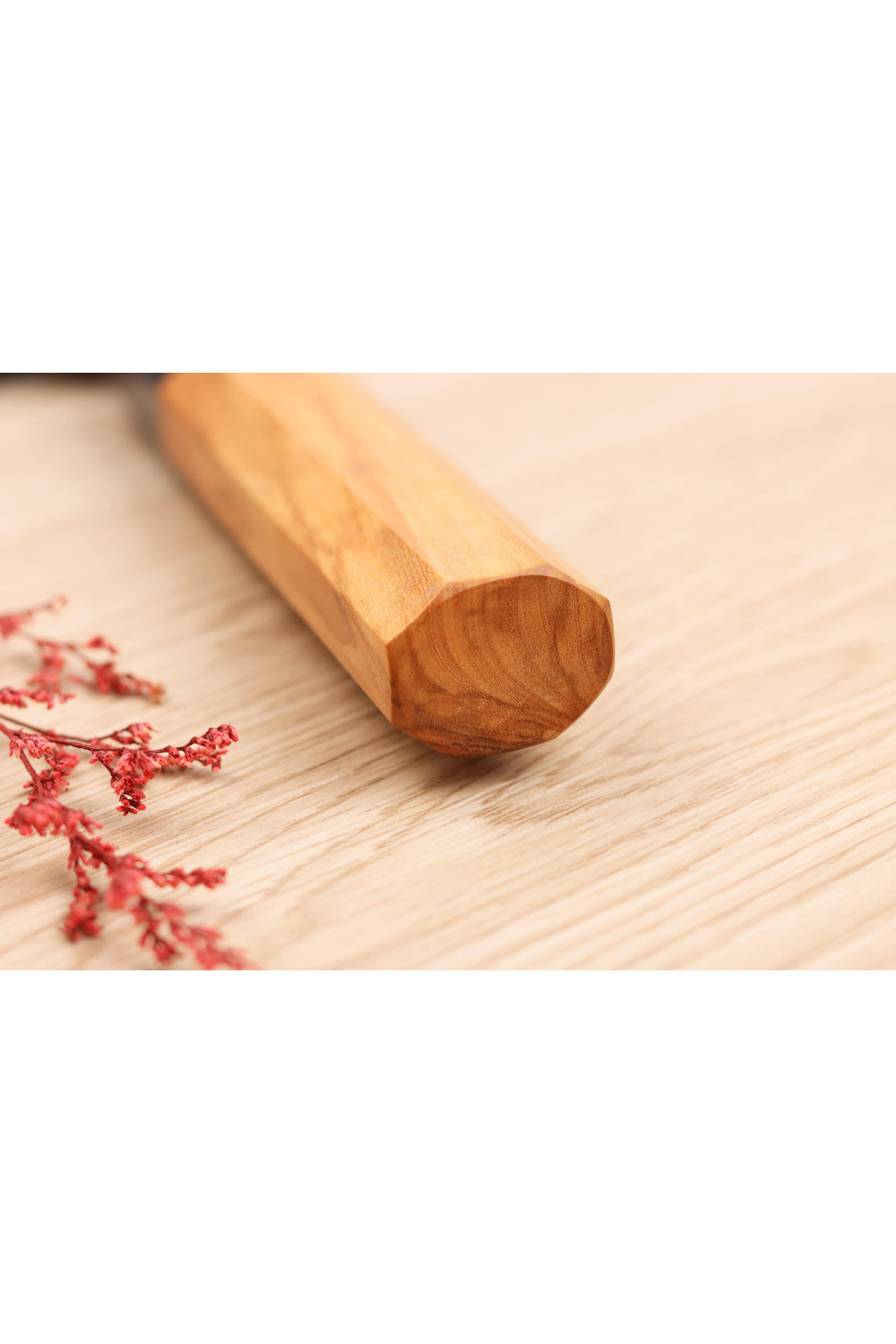
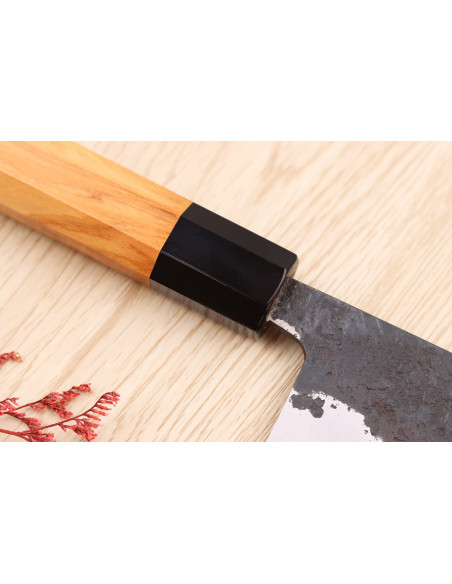
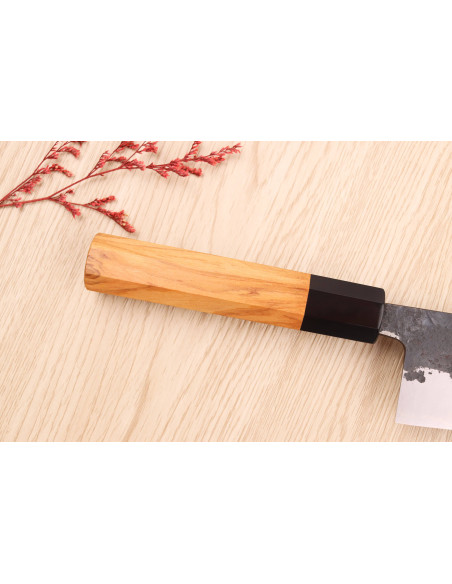
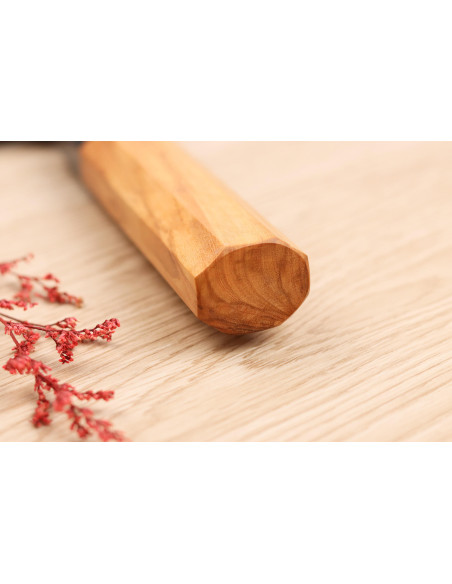
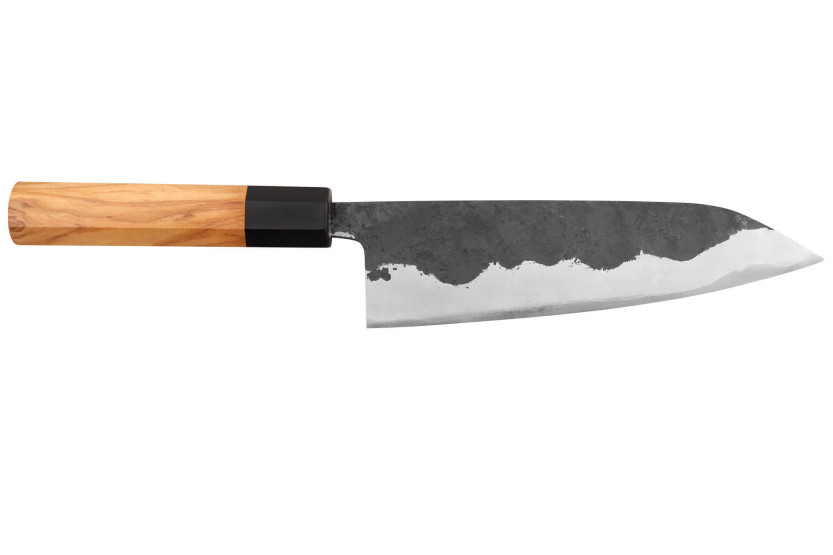
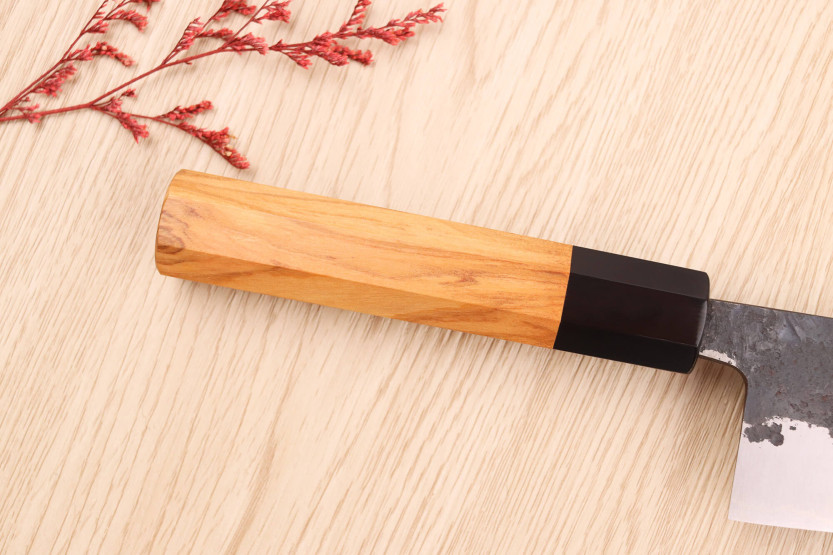
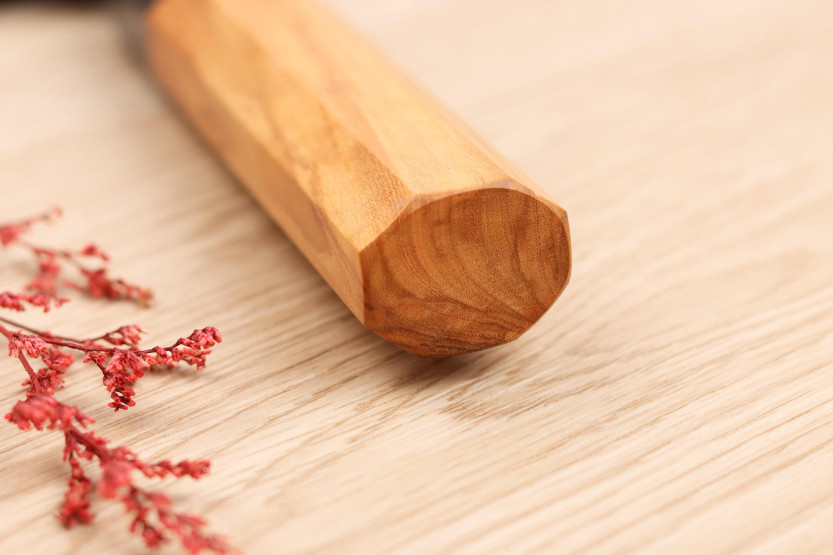
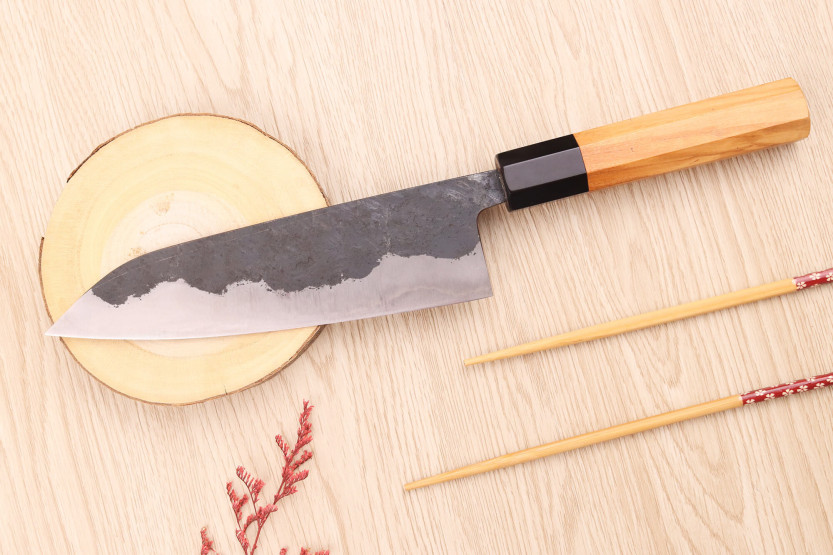
The gyuto knife has a handle made from olive wood, a solid, high-density species that resists moisture, shock and deformation. The wood's warm hue and elegant grain give it a natural, aesthetically pleasing appearance.
The octagonal handle is ideal for both right- and left-handed cooks. It offers an ergonomic grip and controlled handling, which is particularly appreciated during prolonged use.
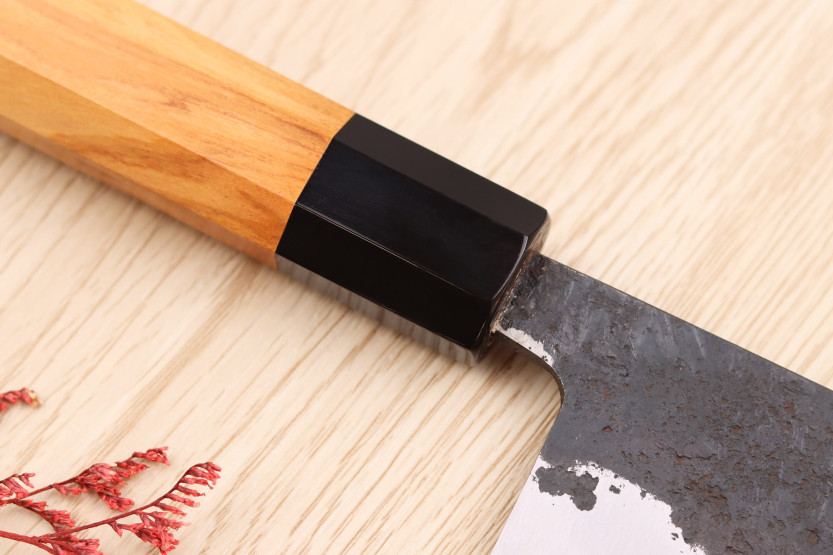
The handle is fitted with a black horn bolster that serves as a link to the blade. Horn is a natural, resistant material that makes each knife unique.
Finally, wood pulp fills in the places where the blade fits into the handle. This ensures a perfect seal, preventing water from seeping in.
High-grade steel blade for perfect cuts
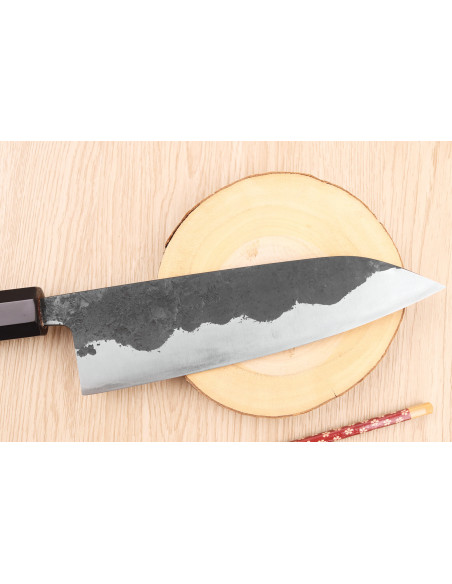
This chef's knife features a blade made using the Japanese structure known as San Maï. This method consists of forging a core of rigid steel, which is then surrounded by a layer of softer steel folded in on itself. This technique balances the blade's hardness while protecting its core.
The core of the blade is made from Japanese Shirogami 2 steel, also known as White Paper Steel 2, produced by Hitachi, the internationally renowned steelmaker. This alloy contains a high carbon content, reaching 1.2%, which increases the steel's hardness. The blade has a hardness of 62 HRC on the Rockwell scale, offering excellent edge retention and exceptional cutting capacity.
One of the main advantages of Shirogami 2 steel lies in its "pure" micro-structure. It contains micro-carbides that are evenly distributed, reducing the risk of micro-cracking due to impact and wear.
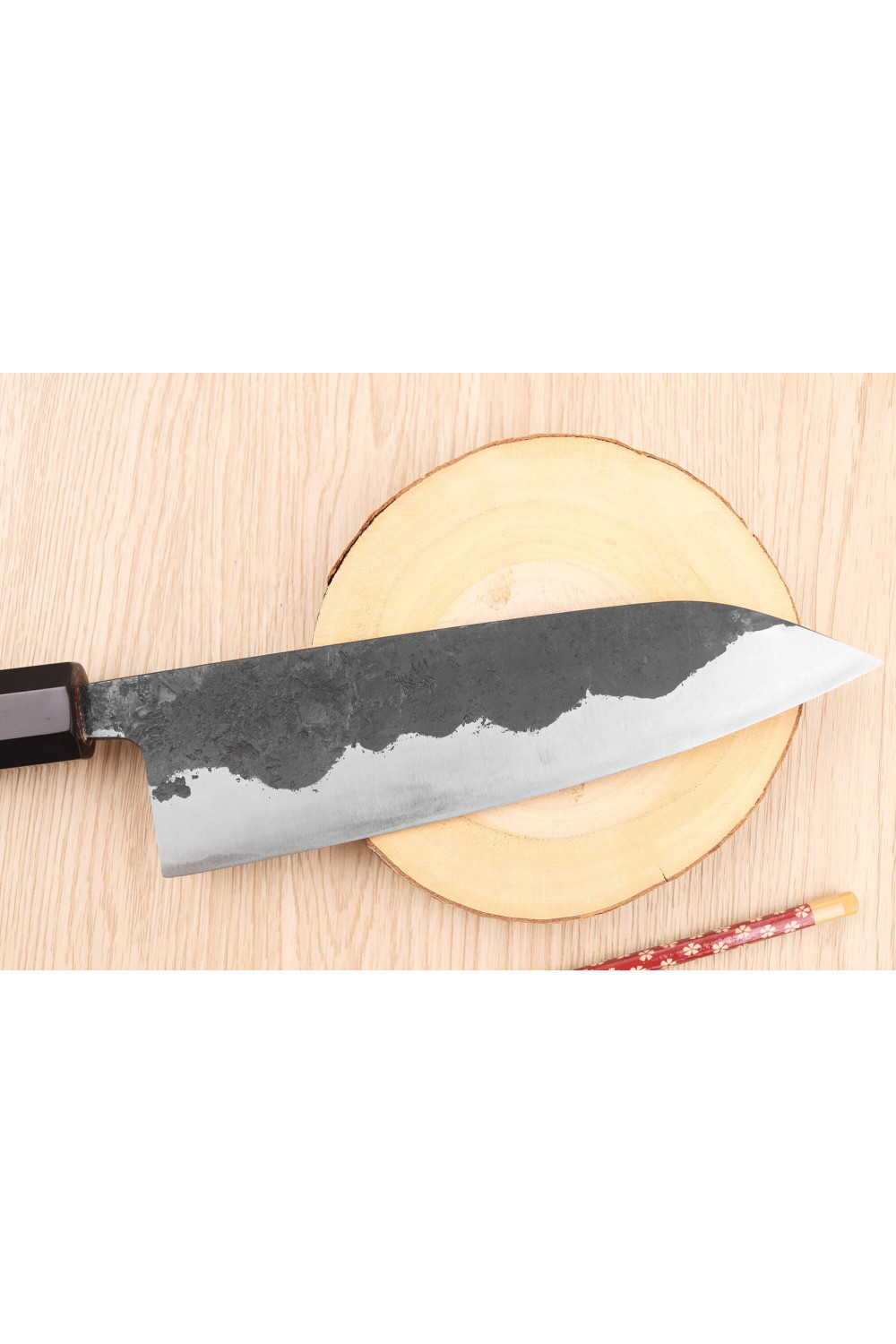
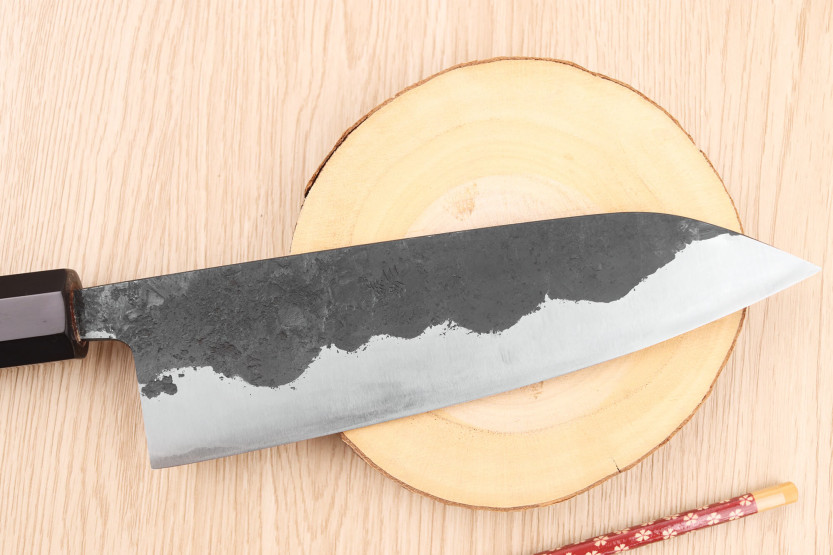
To create the San Maï, a softer layer of stainless steel envelops the core for optimum protection. You can also see the superimposition of the steel layers, which creates a fine, random undulation along the edge.
The blade of this handcrafted Japanese knife has a rough forged finish, retaining its distinctive dark look. This unpolished finish gives it an authentic character, much appreciated by Japanese chefs for its rustic, raw appearance. What's more, it has been delicately hammered to accentuate its authenticity and artisanal charm.
How do I care for a handcrafted Japanese knife?
To care for your carbon knife, it's essential to wash it exclusively by hand, using a soft sponge and taking care not to get the handle wet. After cleaning, wipe the knife dry immediately to remove all traces of water, before storing it in a dry place. Never put in the dishwasher or leave to soak in the sink.
Even with meticulous care, the color of the blade may change slightly over time. This is normal and is due to the carbon that naturally reacts to the acidity of the food you're cutting and the ambient humidity. This in no way affects the performance of your Japanese knife!
Find Yoshimune knives on Knifeleader.eu!




 By buying this product you can collect up to