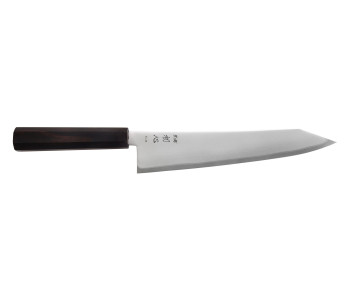
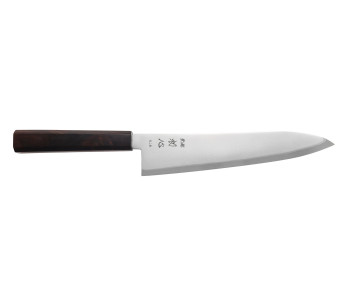
A hand-forged chef knife from Sakai, Japan
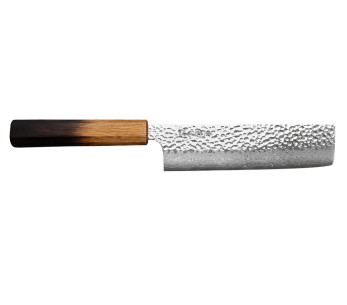
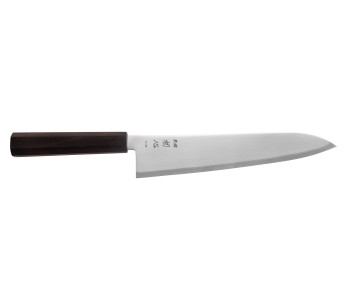
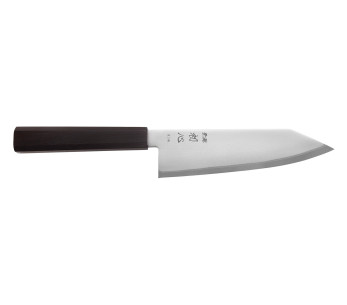
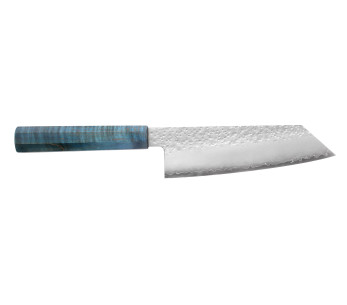
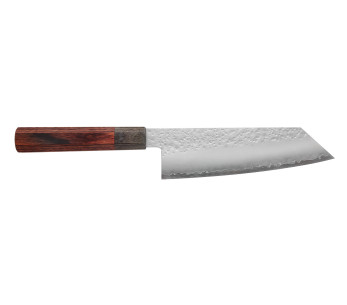
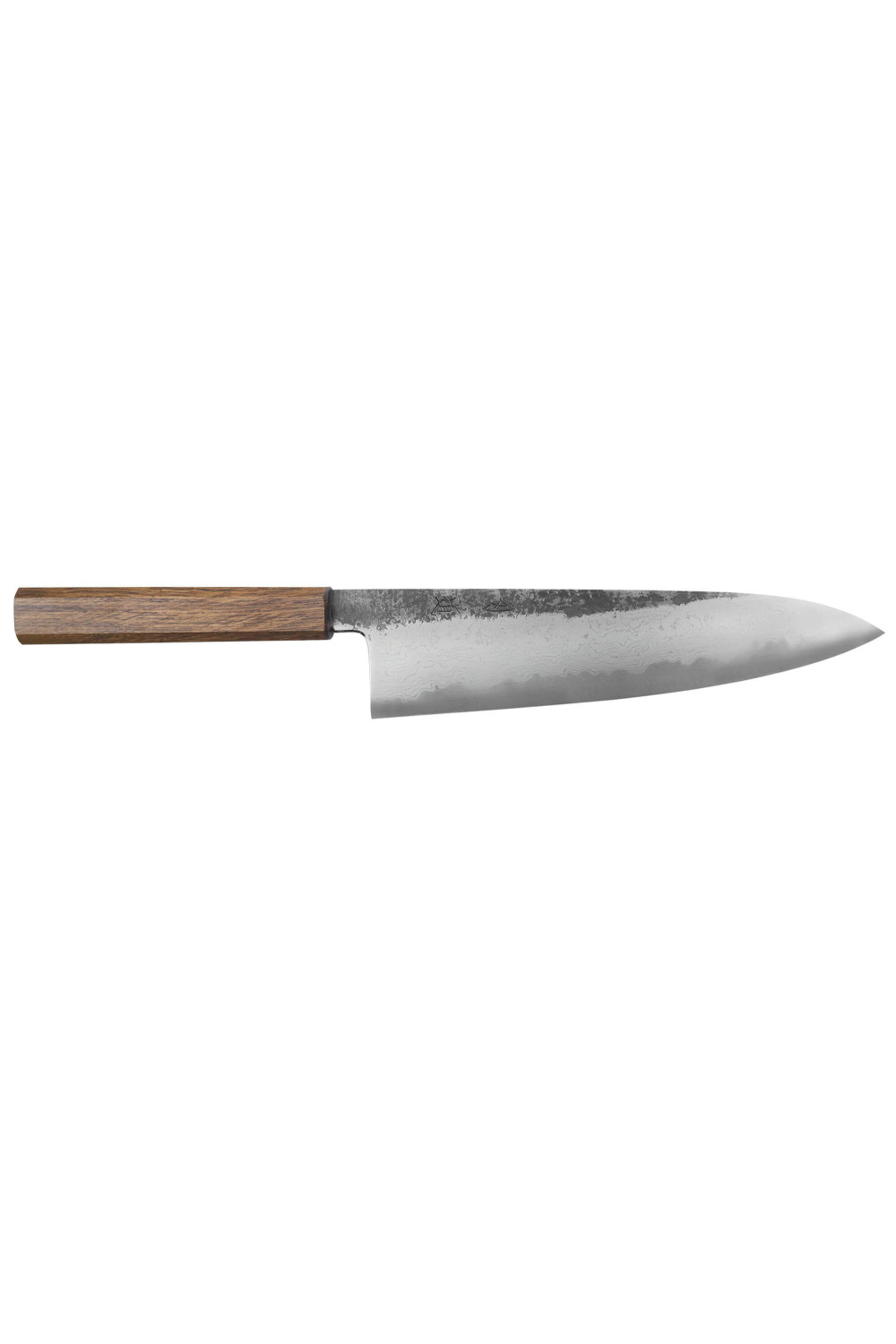
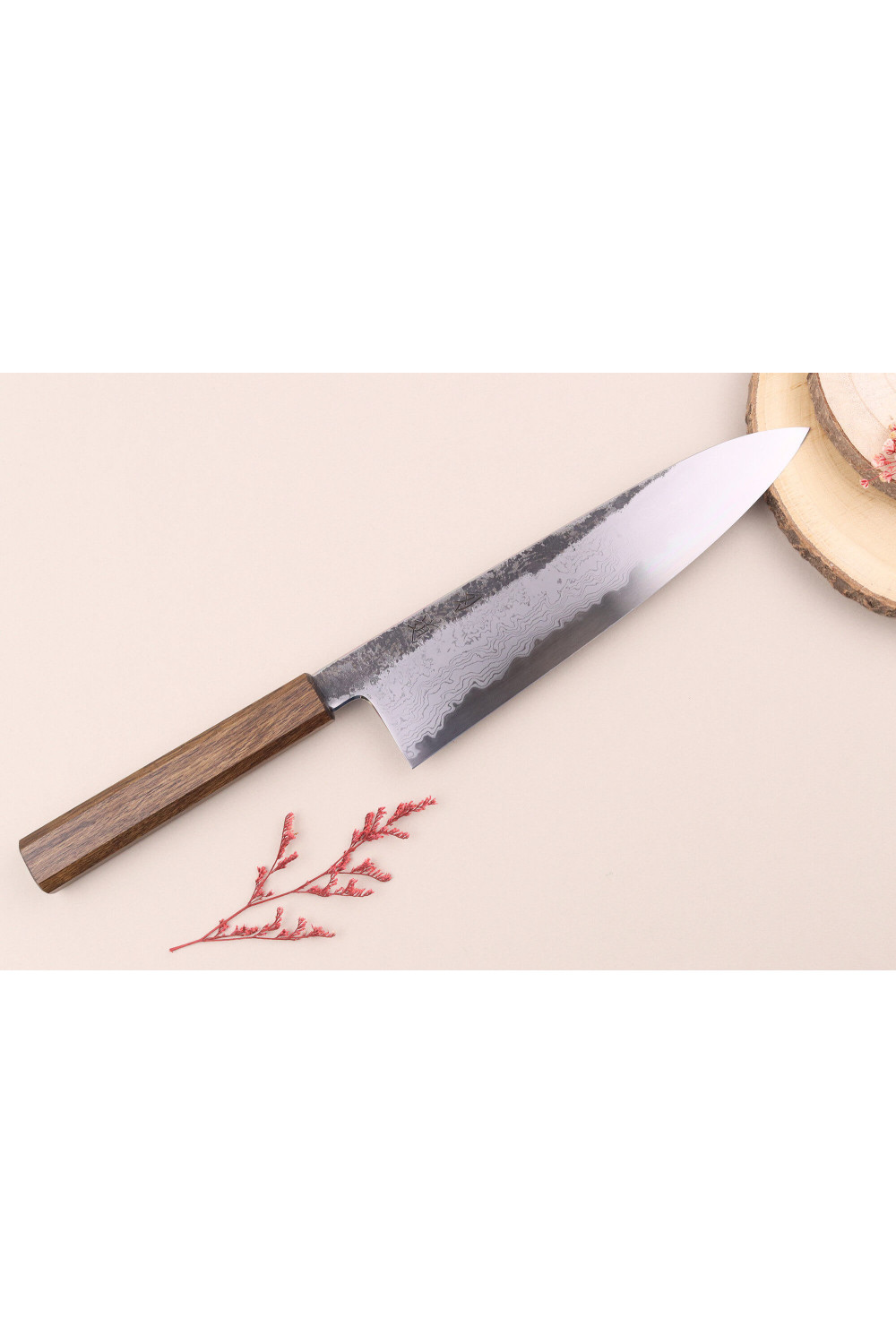
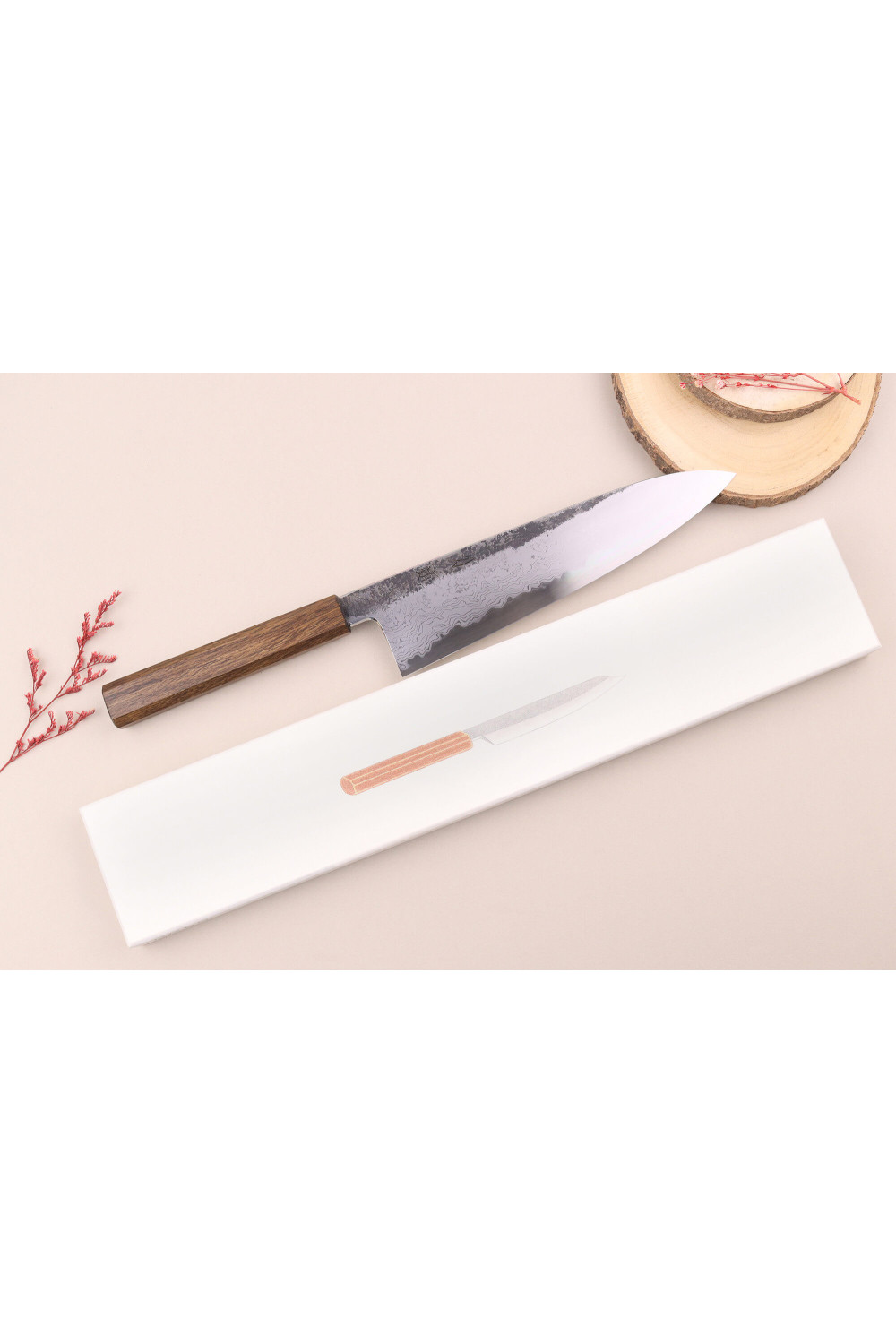
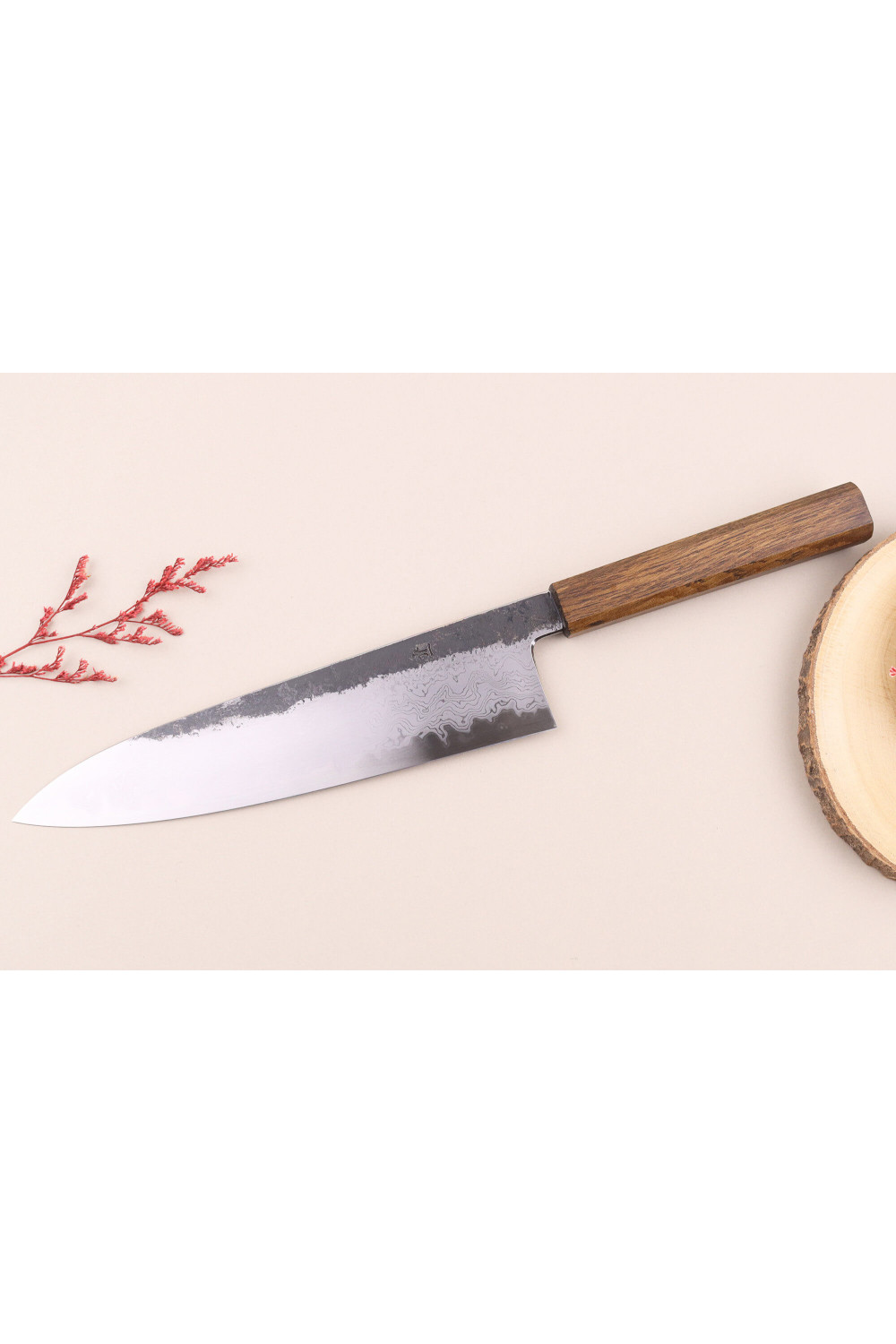
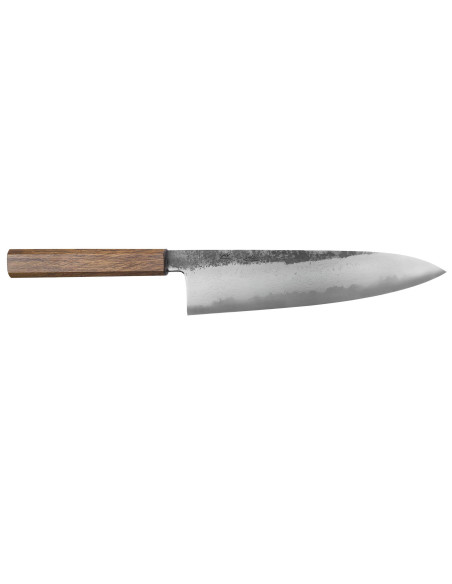
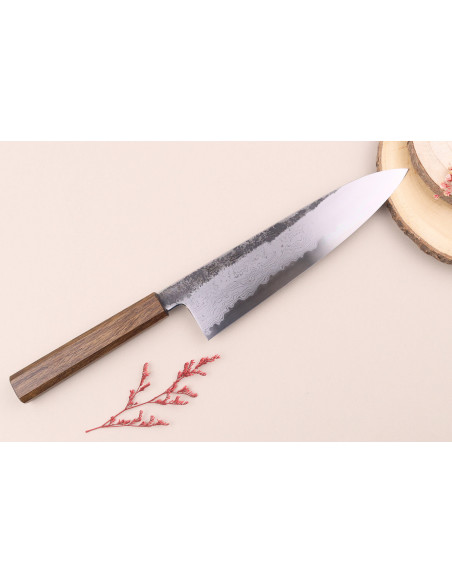
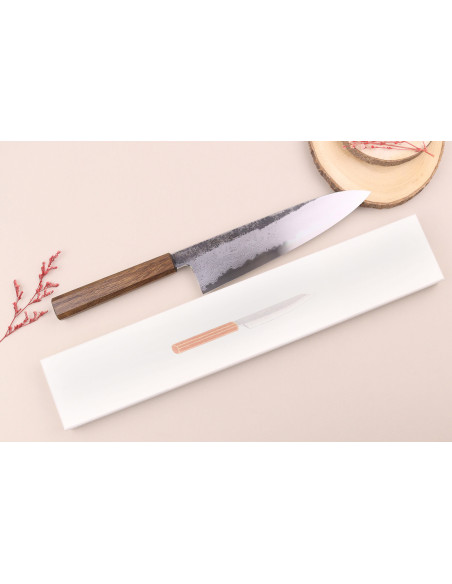
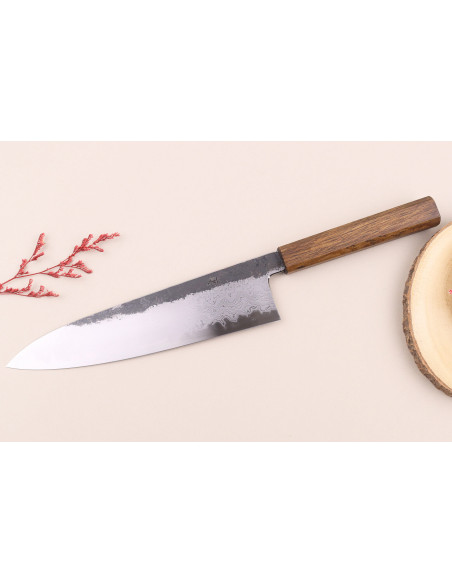
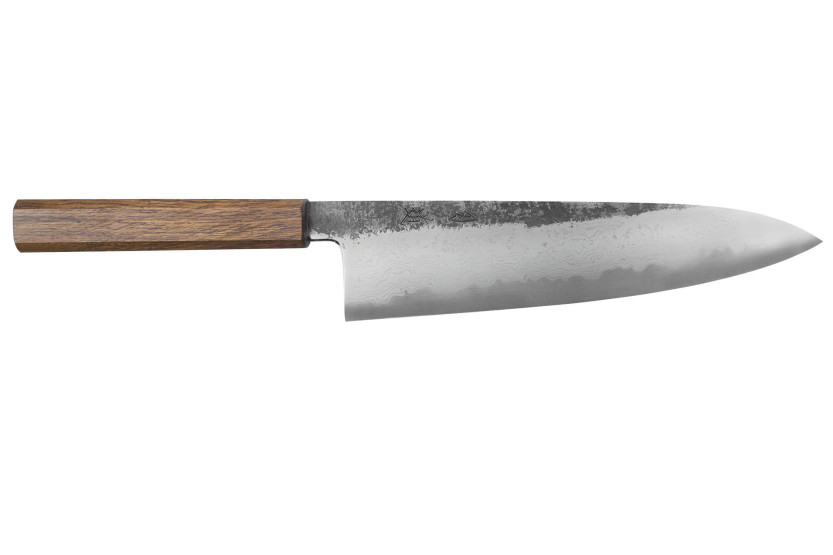
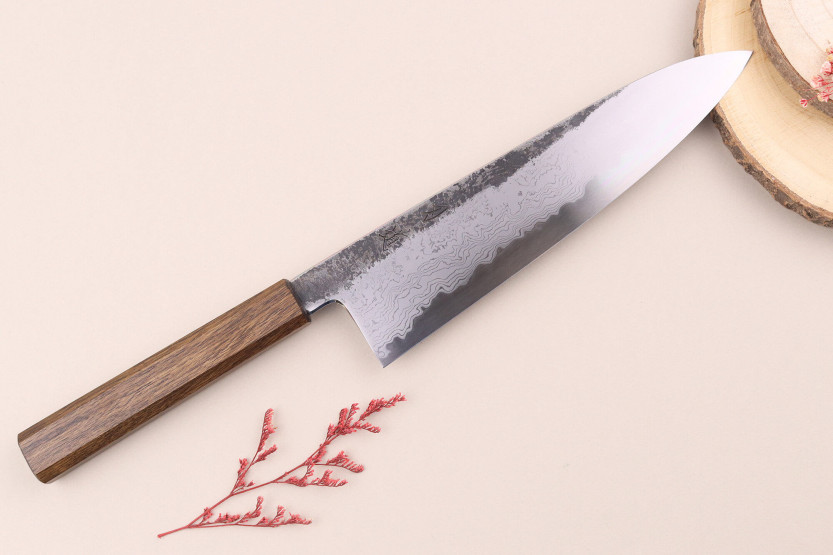
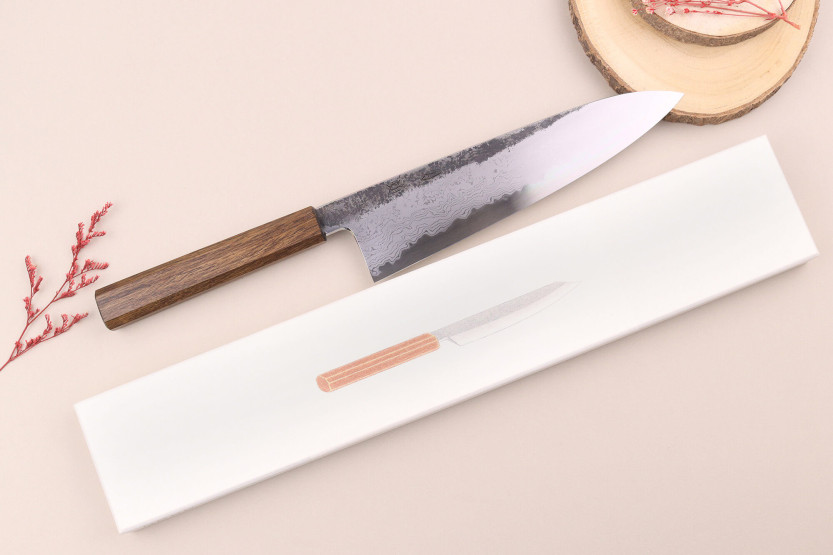
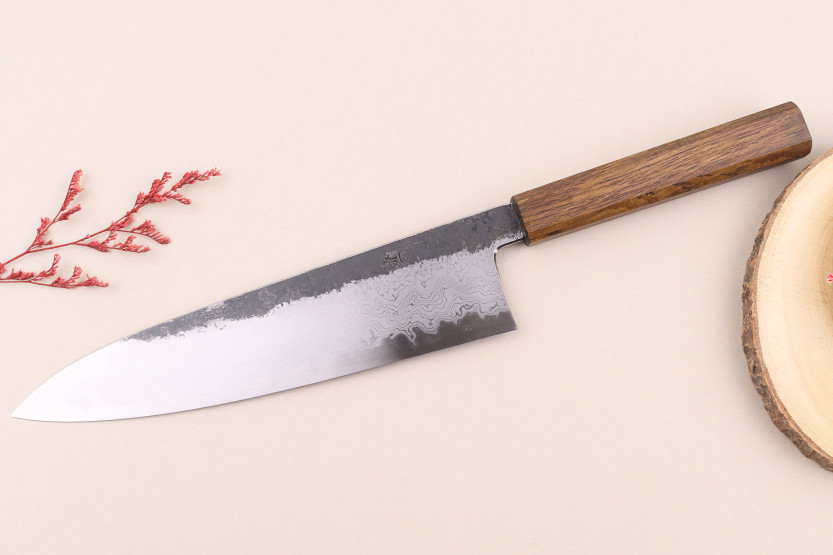
The Hado Sumi B1D 24cm chef's knife is a must-have in the kitchen, designed to accompany all your everyday cutting needs. Versatile and powerful, it is the result of the combined expertise of two leading figures in Japanese cutlery: Yoshikazu Tanaka, certified master blacksmith, and Tadataka Maruyama, master sharpener and head of the Hado workshop in Sakai. This handcrafted gyuto is distinguished by its perfect balance of performance and aesthetics, and meets the most exacting requirements. It combines a high-precision blade with refined ergonomics, embodying all the richness of Japanese tradition.
A versatile, efficient damascus blade
This Japanese chef's knife features a 24cm hand-forged blade made from Aogami #1 steel, also known as Blue Paper Steel #1. Produced by Hitachi steel mills, this top-quality steel contains around 1.3% carbon, giving it an exceptional hardness of 63 HRC on the Rockwell scale. Thanks to this hardness, the blade benefits from a long-lasting cutting edge, capable of remaining sharp even after many uses.
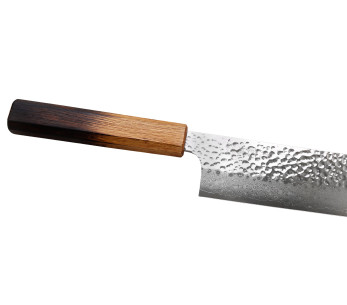
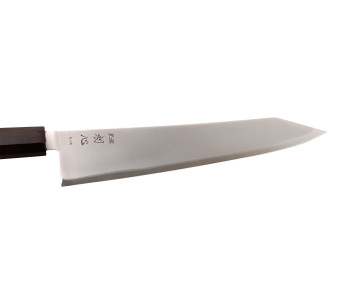
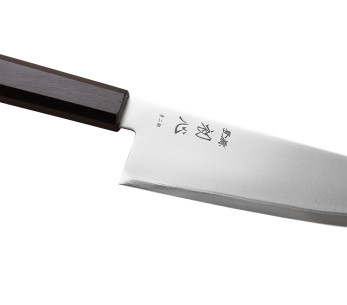
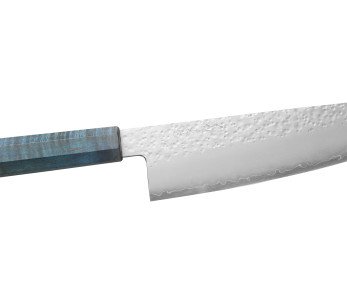
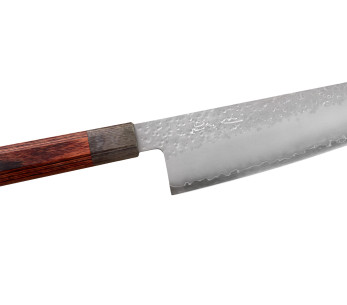
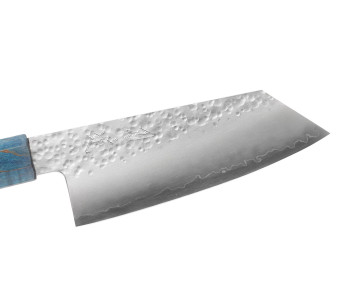
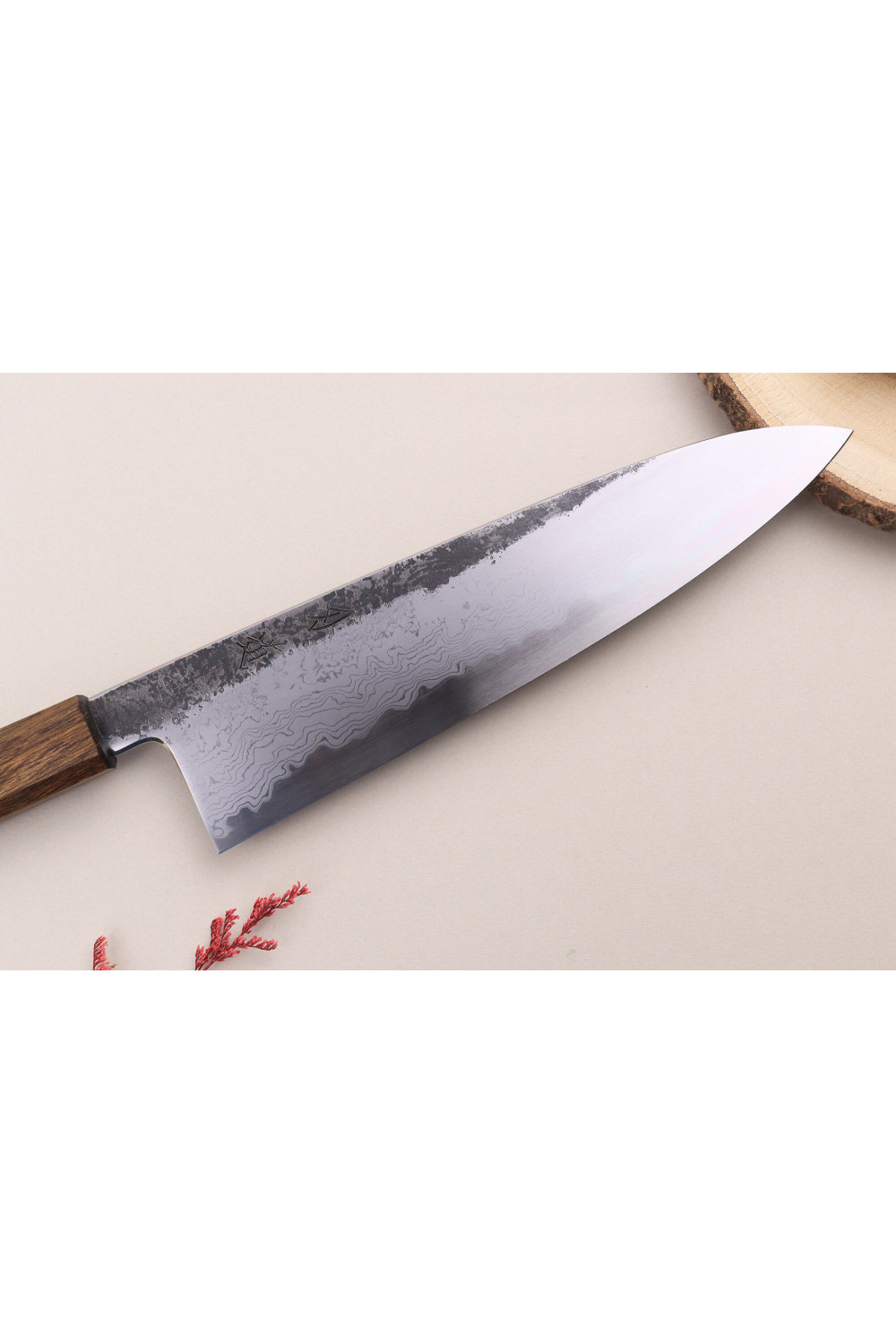
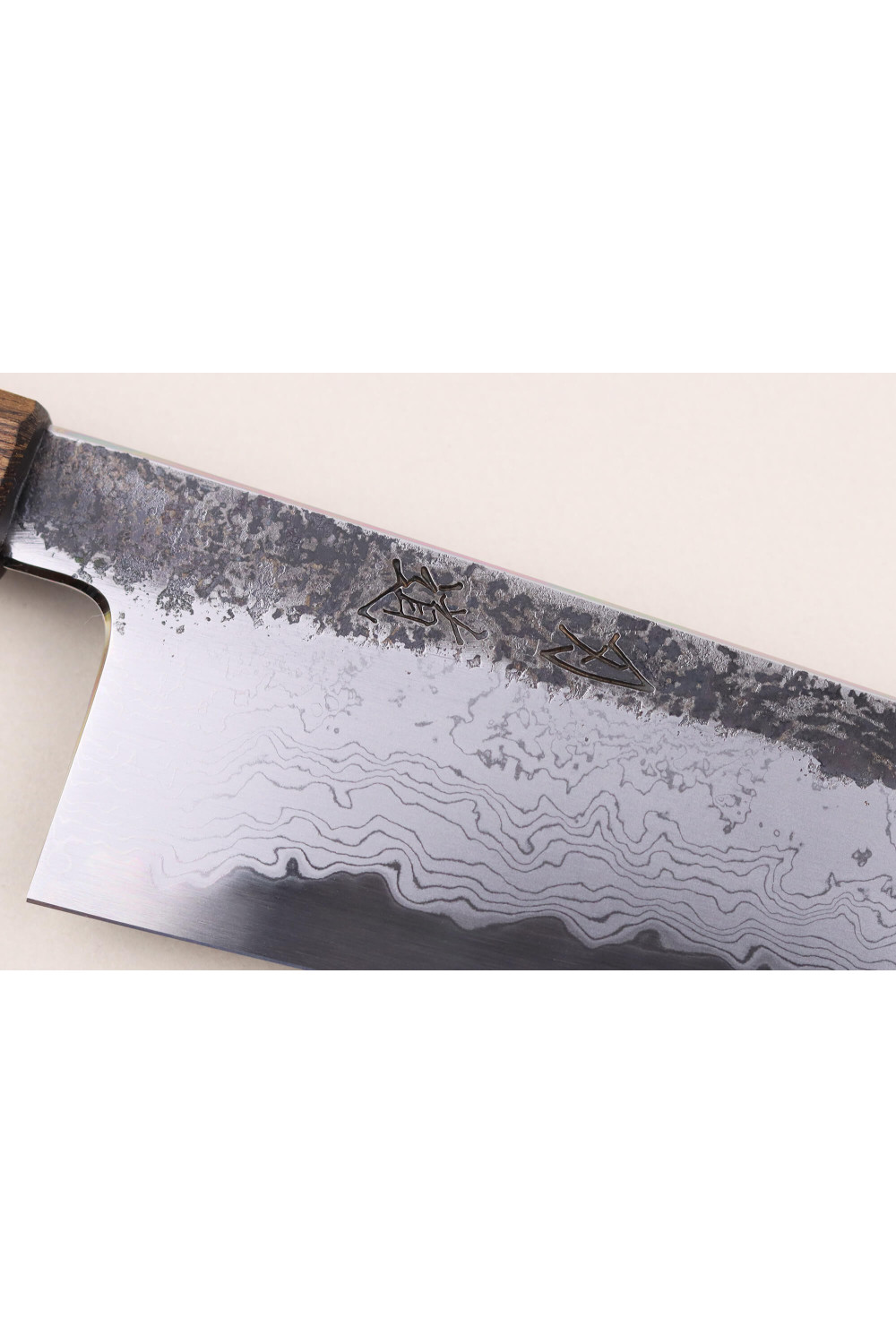
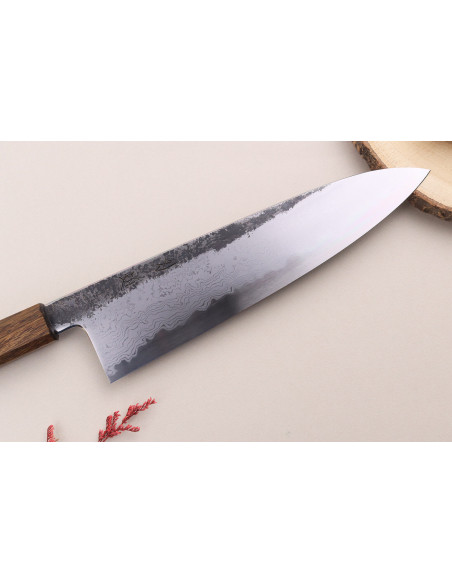
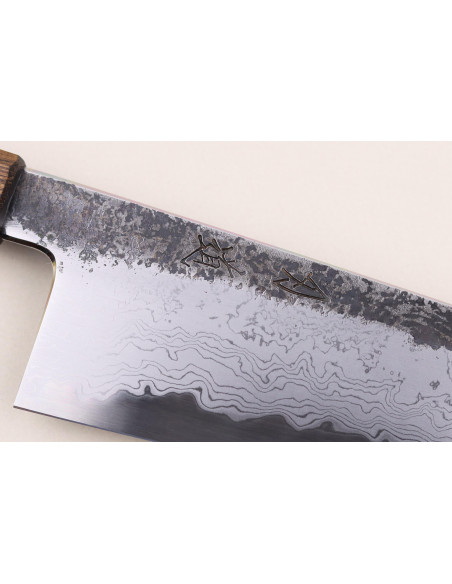
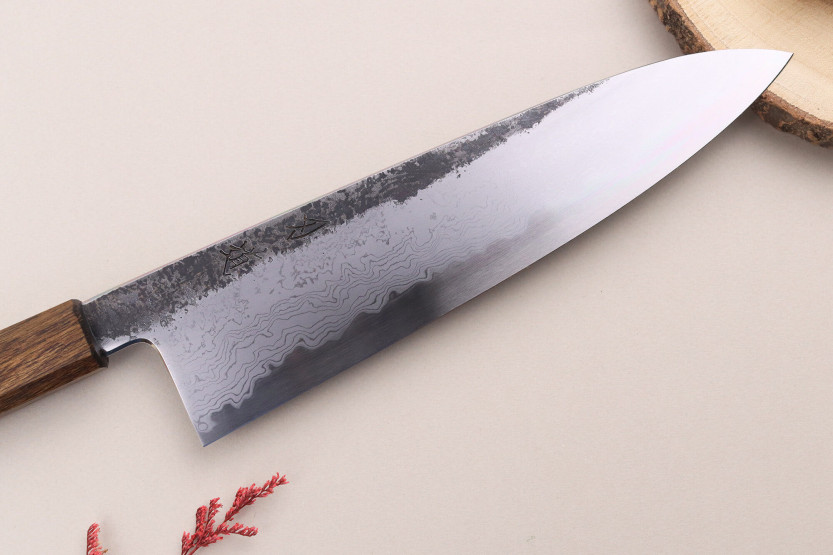
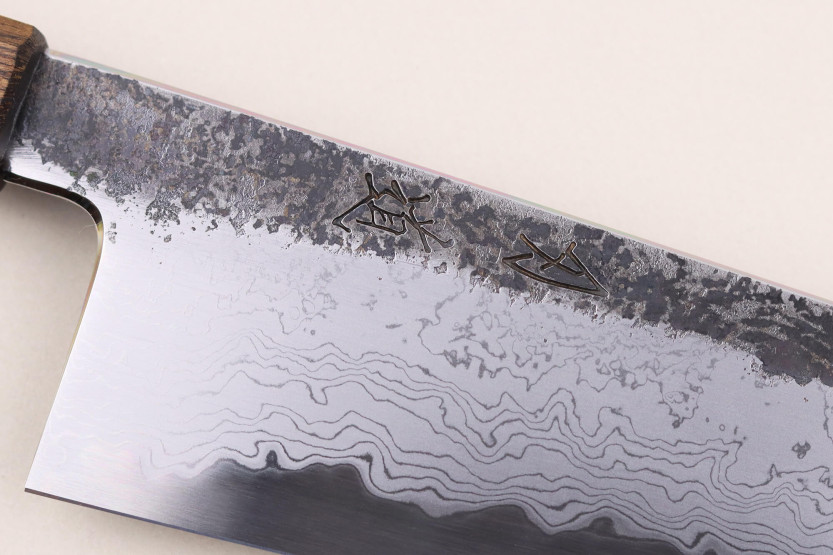
The structure of the blade is based on a hard core surrounded by layers of damascus steel, offering both refined aesthetics and a certain suppleness. The superimposition of the layers creates unique wavy patterns, visible all over the blade surface. Each knife has its own unique pattern, the result of handcrafting.
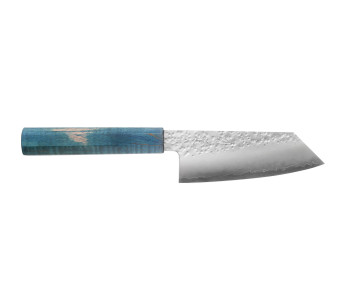
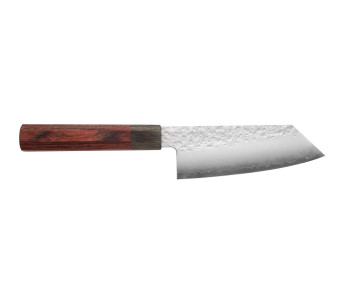
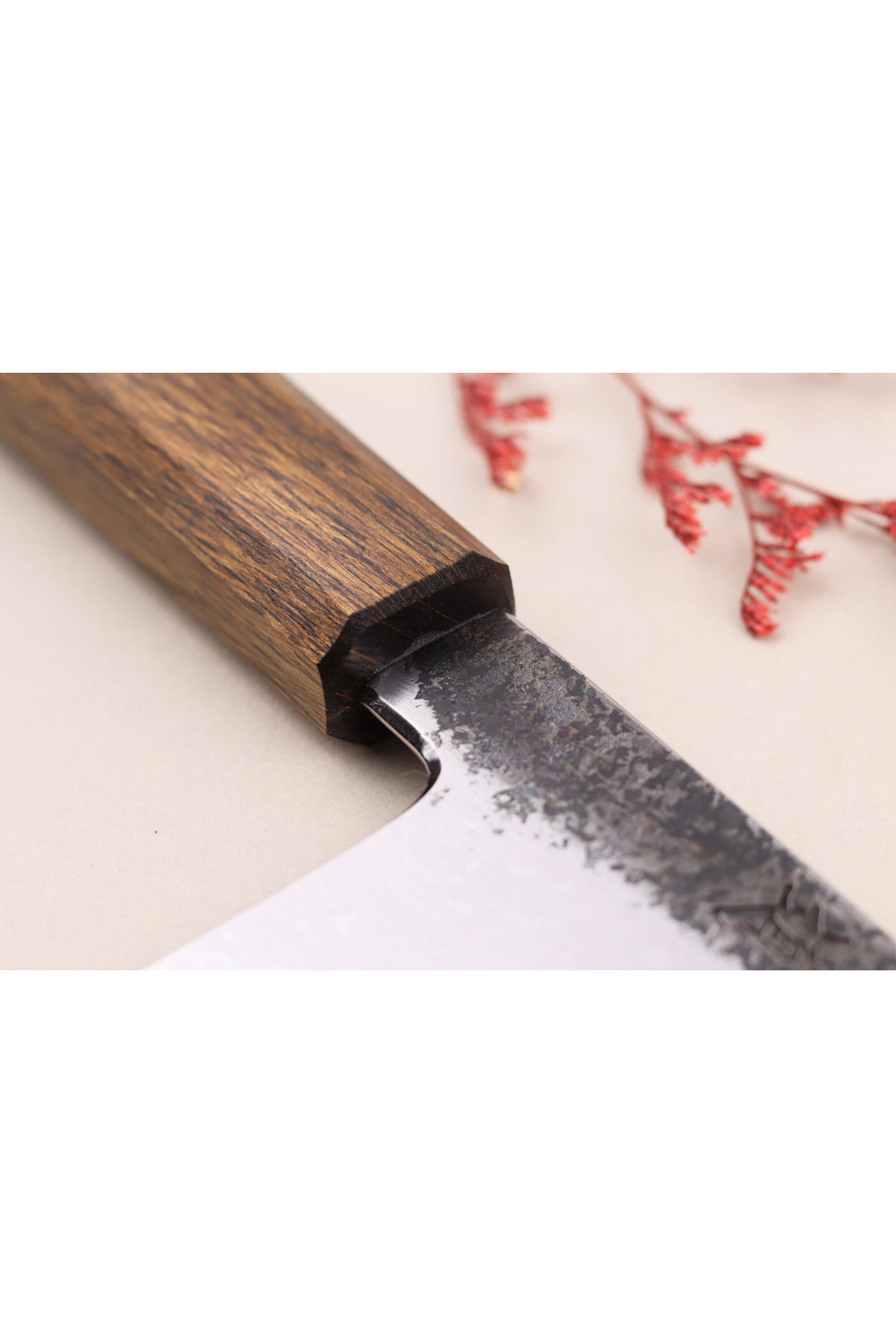
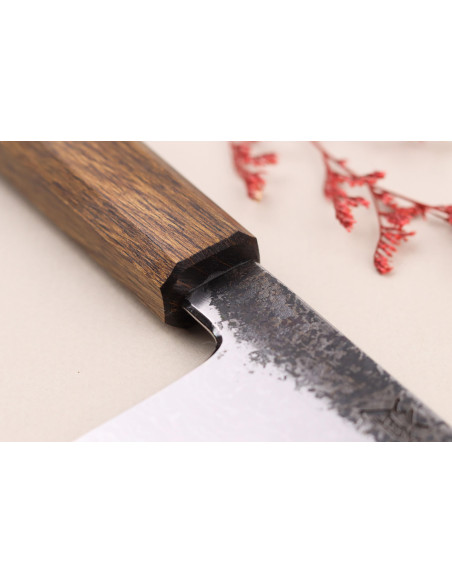
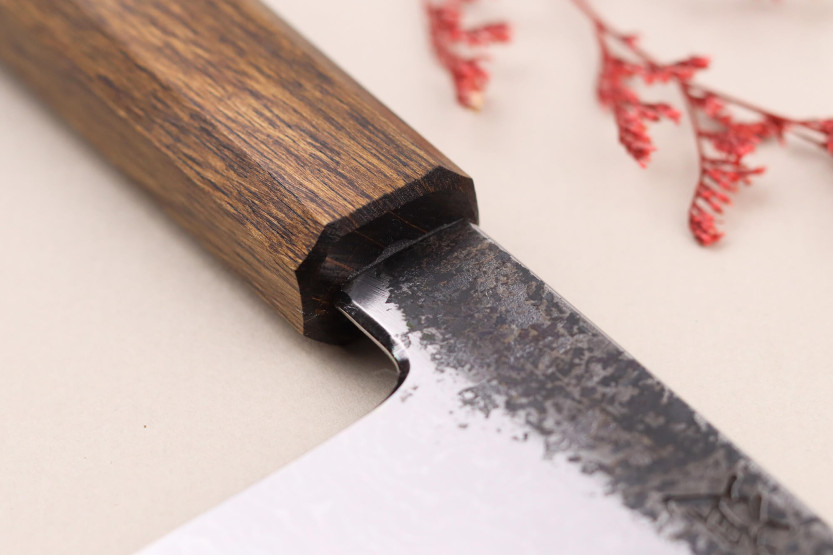
The contrast is enhanced by the rough forged finish visible on the upper part, which retains the raw appearance of the metal. The polished underside displays the damascus pattern in all its finesse.
Blade features and benefits:
- Aogami #1 steel: high carbon content (nearly 1.3%) for a long-lasting cutting edge
- Damascus structure: core surrounded by protective and aesthetic steel layers
Hardness- 63 HRC: excellent cutting edge retention
- Forged finish: authentic, hand-crafted look
- Polished damascus patterns: elegant, individual aesthetics
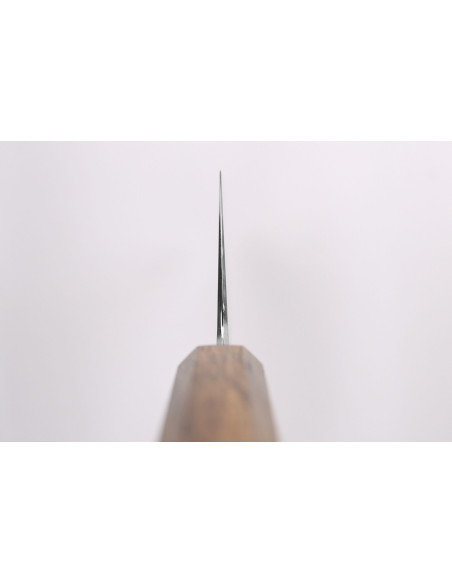
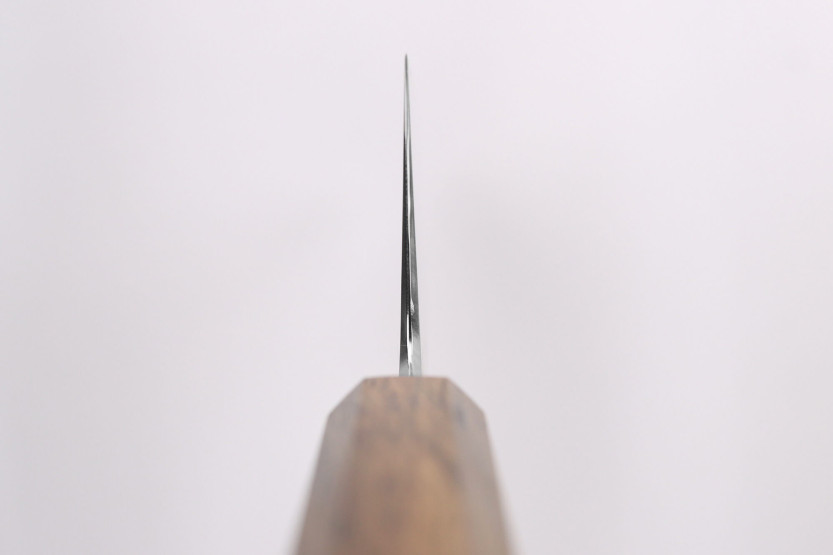
- Flat grind: robust, fine-cut and easy to re-sharpen
The gyuto artisanal is designed for versatile use: you can chop, slice, chisel or mince with ease. It accompanies the cook in all daily gestures with comfort and precision.
This model belongs to the Sumi range, a name that refers to the black ink used in the art of Japanese calligraphy. This reference is reflected in the visual aspect of the blade, dressed in a deep, matte black that recalls the sober elegance of this ancestral ink.
Traditional black oak handle
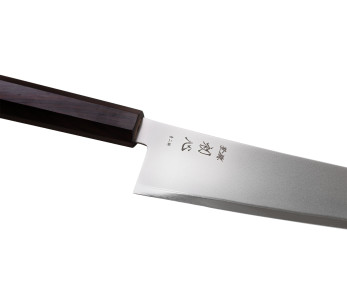
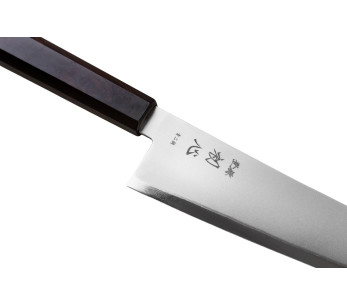
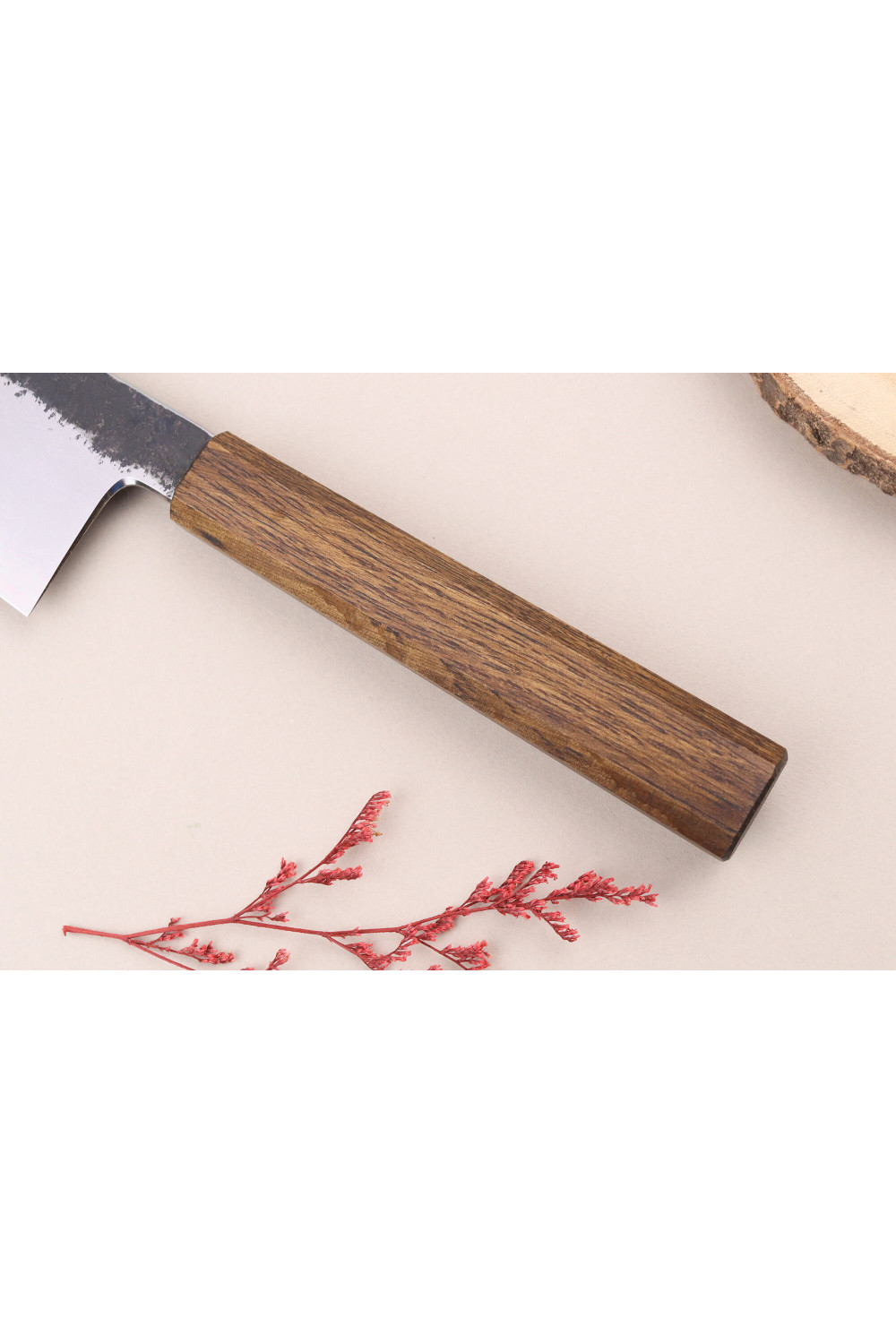
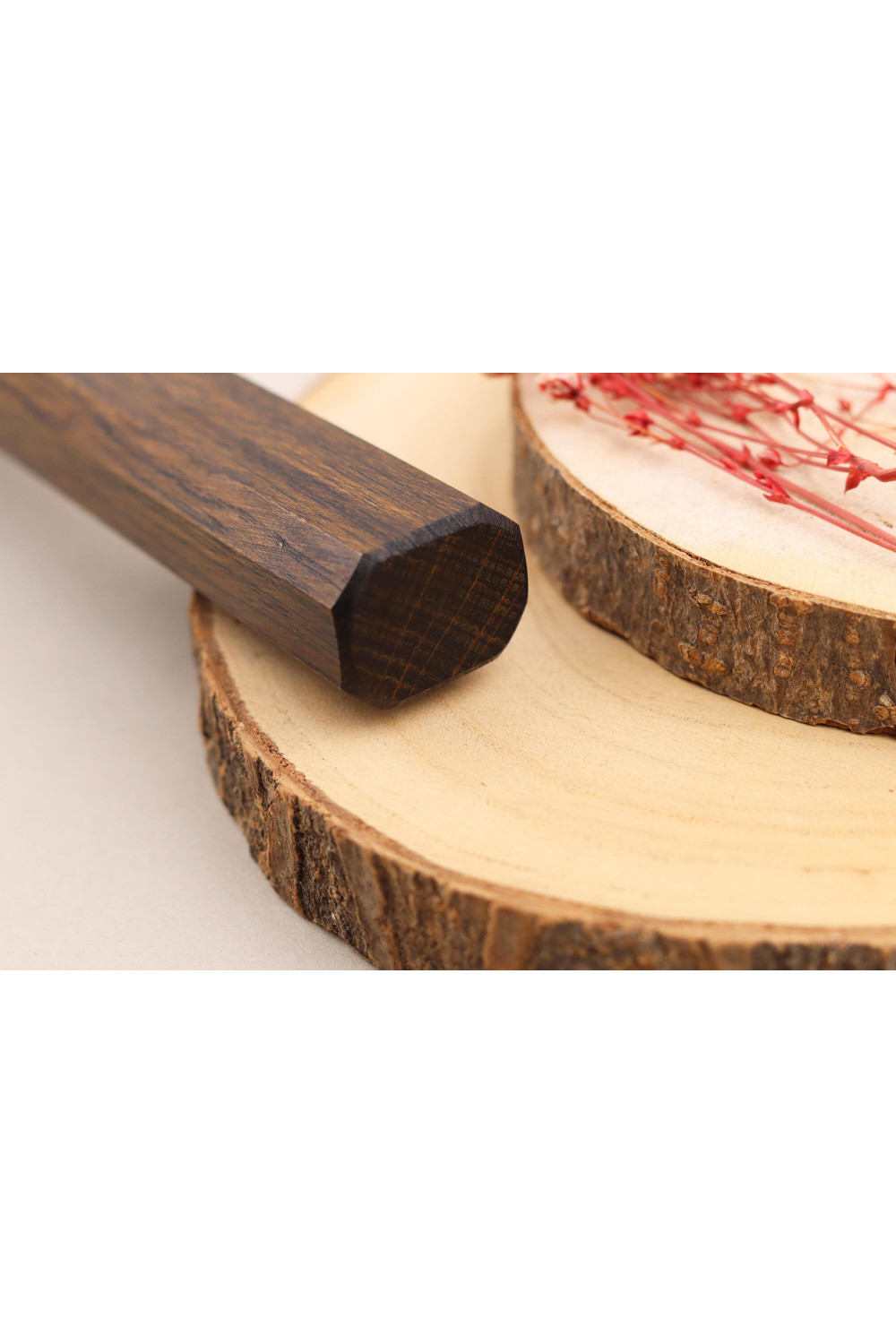
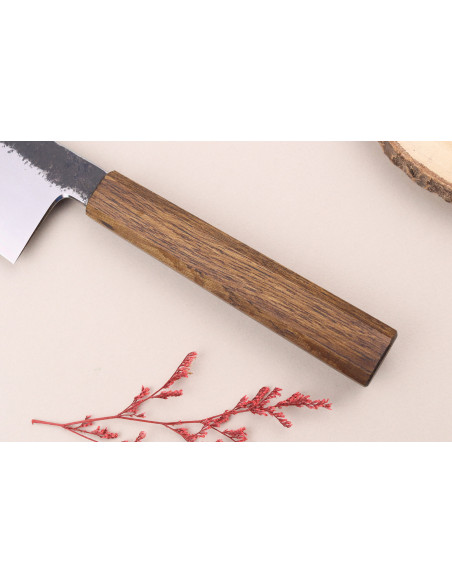
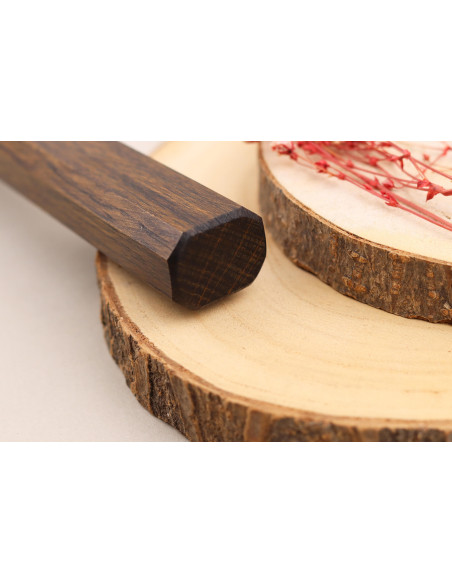
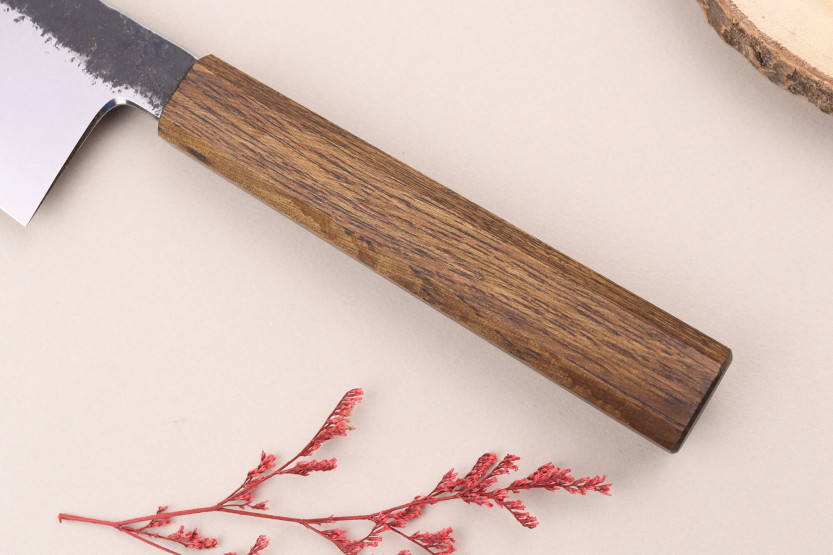
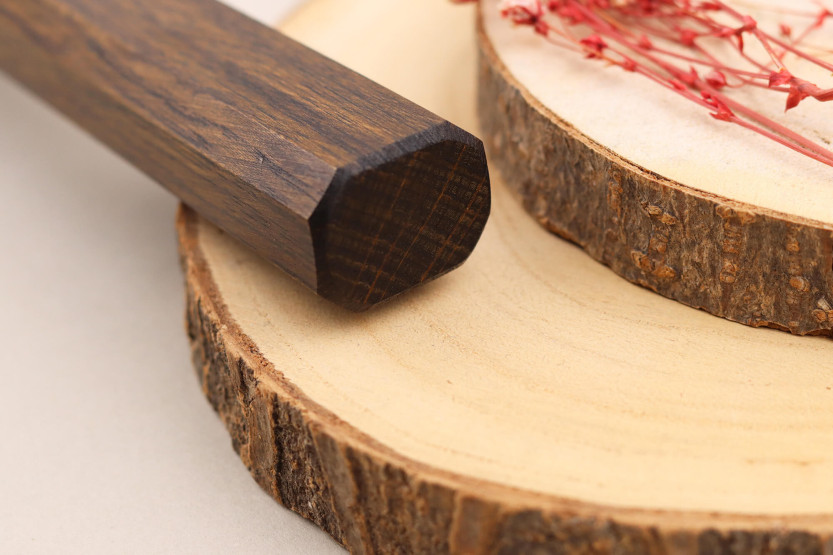
This handcrafted Japanese knife features a handle made from black oak wood, a noble species renowned for its natural robustness. Black oak is dense and stable, making it particularly resistant to humidity, shock and deformation due to temperature variations. Its dark color and deep grain give a unique character to every room.
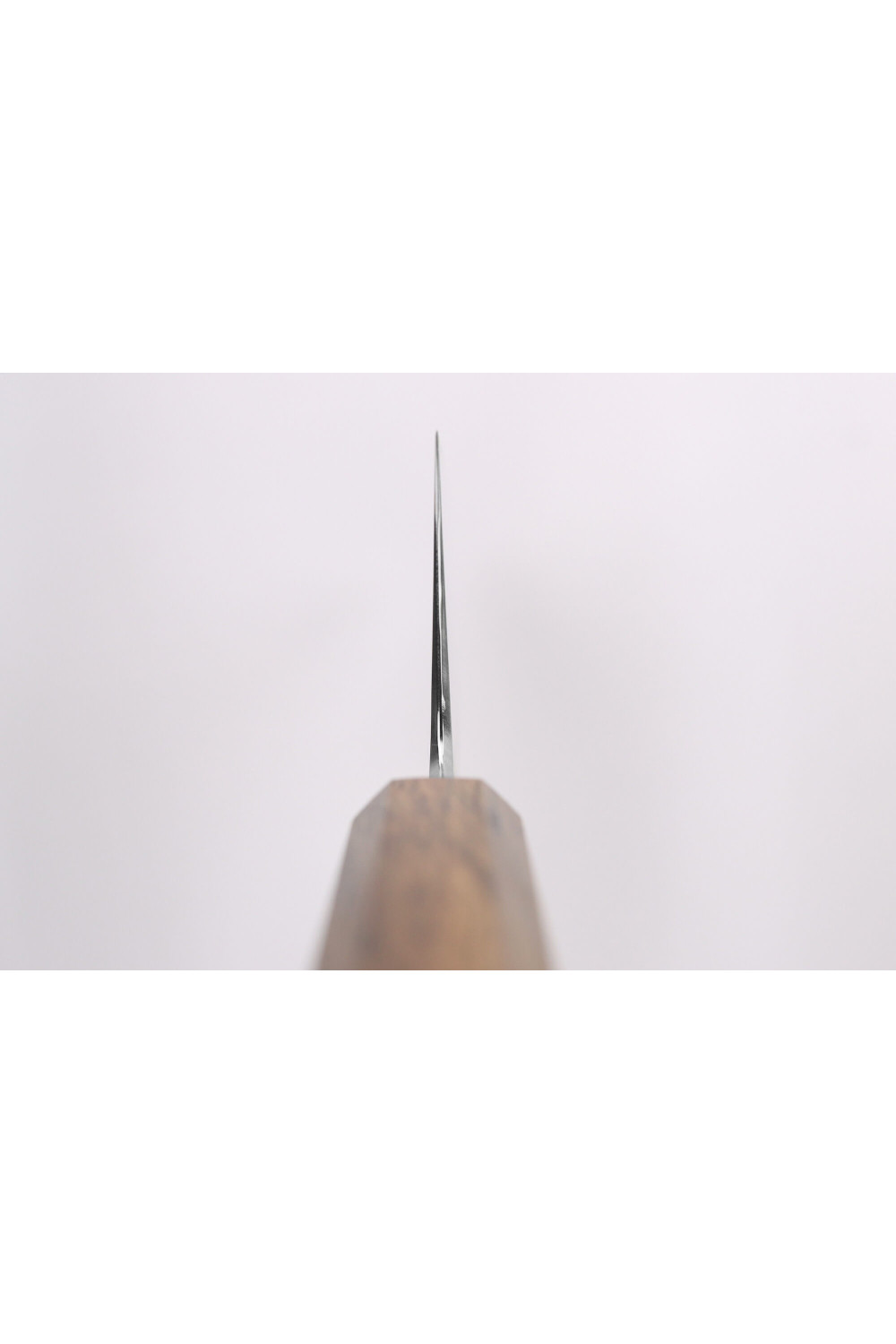
The wood is cut in the octagonal shape traditional in Japan, ensuring an ambidextrous, ergonomic grip. It is suitable for both right- and left-handed users, for optimum comfort even during prolonged use.
Handle advantages :
- Black oak wood: durable, dense and moisture-resistant
- Unique grain and hue: each handle features distinct natural patterns
- Octagonal shape: comfortable grip for right- and left-handed users
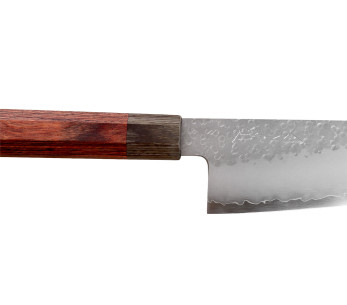
To provide you with a perfectly hygienic knife, wood paste is applied to the junction between blade and handle. It fills the interstices and prevents any infiltration of water or food residues.
Taking care of my handcrafted Japanese knife
The Hado chef's knife has a high carbon content in its blade. It therefore requires careful maintenance on your part to maintain its efficiency and appearance over time.
Ideal care :
- Hand wash only, with a non-abrasive sponge and mild soap
- Dry immediately with a clean cloth
- Store in a dry place, on a magnetic bar or in a case
Do not:
- Put the knife in the dishwasher
- Soak it in the sink
- Keep it in prolonged contact with acidic foods or moisture without prompt cleaning
Over time, a natural patina may appear on the blade. This is due to the reaction of the carbon to humidity or acidic foods. This phenomenon is normal and in no way affects cutting performance. In fact, it's part of the charm of carbon-rich steels.
Yoshikazu Tanaka left; Tadataka Maruyama right
The Hado workshop: the path of Japanese artisan blades
The Hado artisan workshop, located in Sakai, was born of the joint initiative of Tadataka Maruyama, a former Sakai Fukui salesman with a passion for cutlery, and Ryuichiro Fukui, its president. Starting in 2019, these two Japanese cutlery enthusiasts have decided to relaunch in-house handcrafted production, as the company has until now focused mainly on industrial manufacturing. To achieve their goal, Tadataka underwent an intensive three-year training course in the art of cutlery, becoming an expert able to pass on and perpetuate ancestral know-how.
The vision of enthusiasts:
- Tadataka Maruyama: a passionate former salesman, he embraced the craft and became a master sharpener, bringing rigor and precision to every blade
- Ryuichiro Fukui: at the helm of Sakai Fukui, he embodies the vision of an artisanal revival within a modern industry, banking on the excellence of traditional techniques
The name "Hado", literally meaning"the way of the blades", symbolizes this commitment to excellence and the transmission of a precious craft heritage. Each Hado artisan knife is forged with exemplary rigor and meticulously sharpened to offer unrivalled quality right out of the workshop.
For the Sumi B1D range, forging is carried out by Yoshikazu Tanaka, Master Traditional Craftsman and heir to a four-generation line of blacksmiths, while sharpening is entrusted to Tadataka Maruyama, who performs it by hand on a grinding wheel with exceptional attention to detail.
Discover all our handcrafted Japanese knives on our website!




 By buying this product you can collect up to