A large blade with a Japanese flair
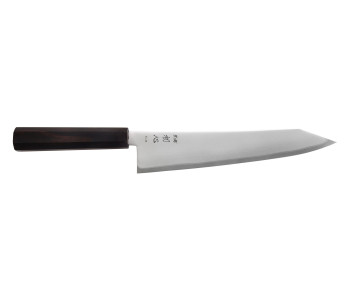
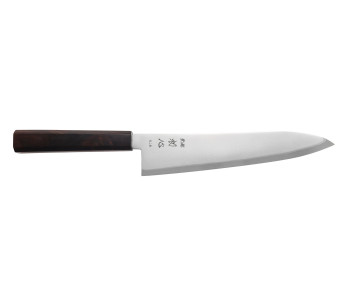
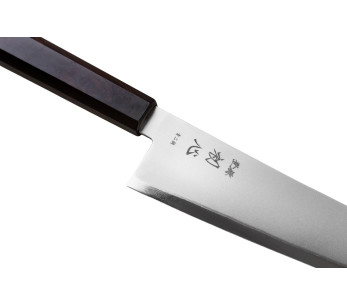
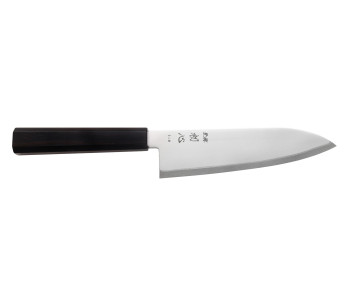
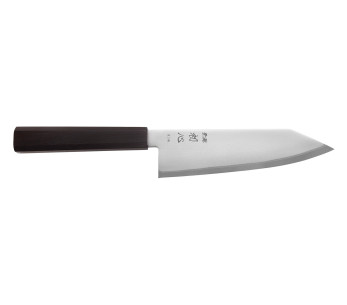
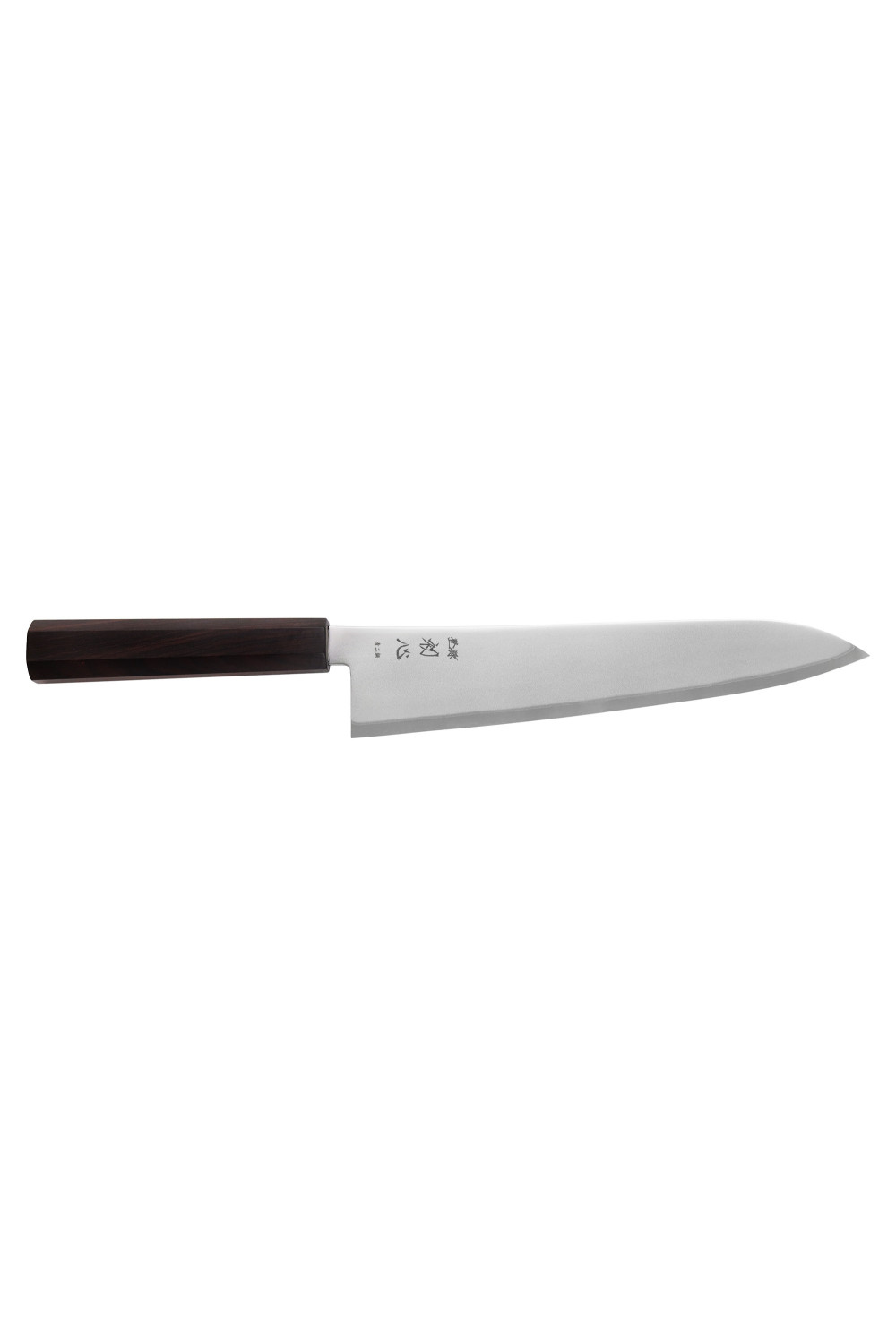
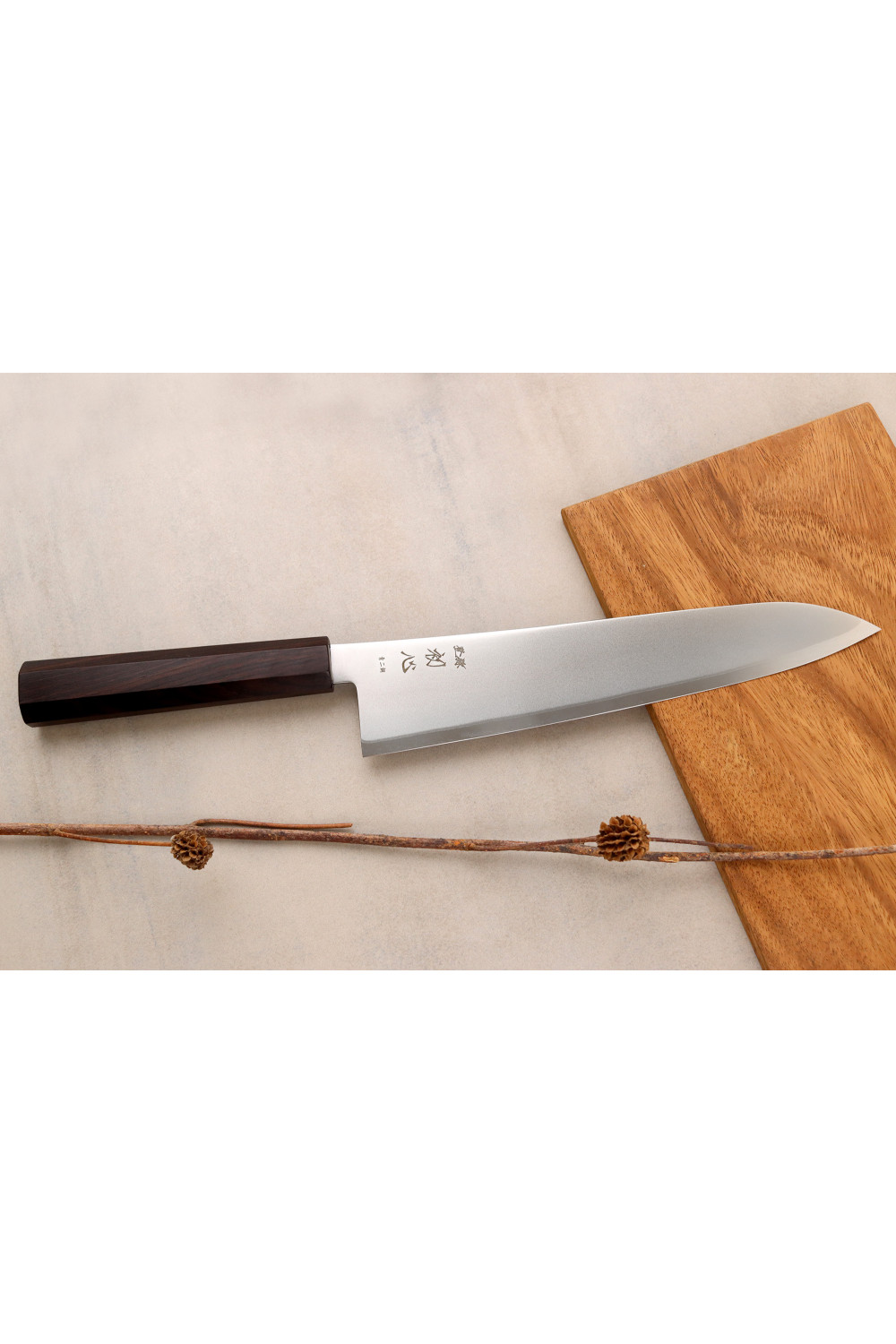
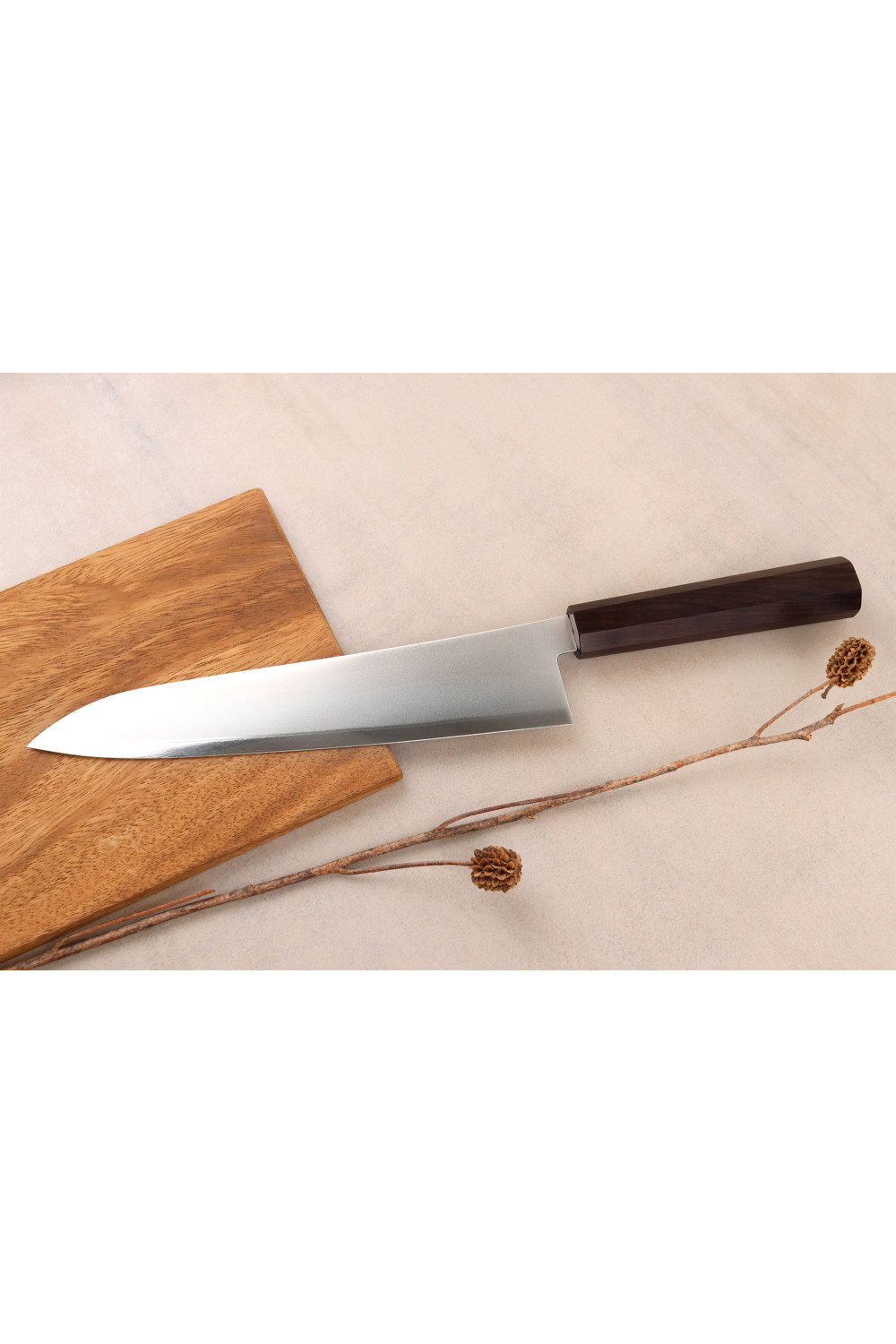
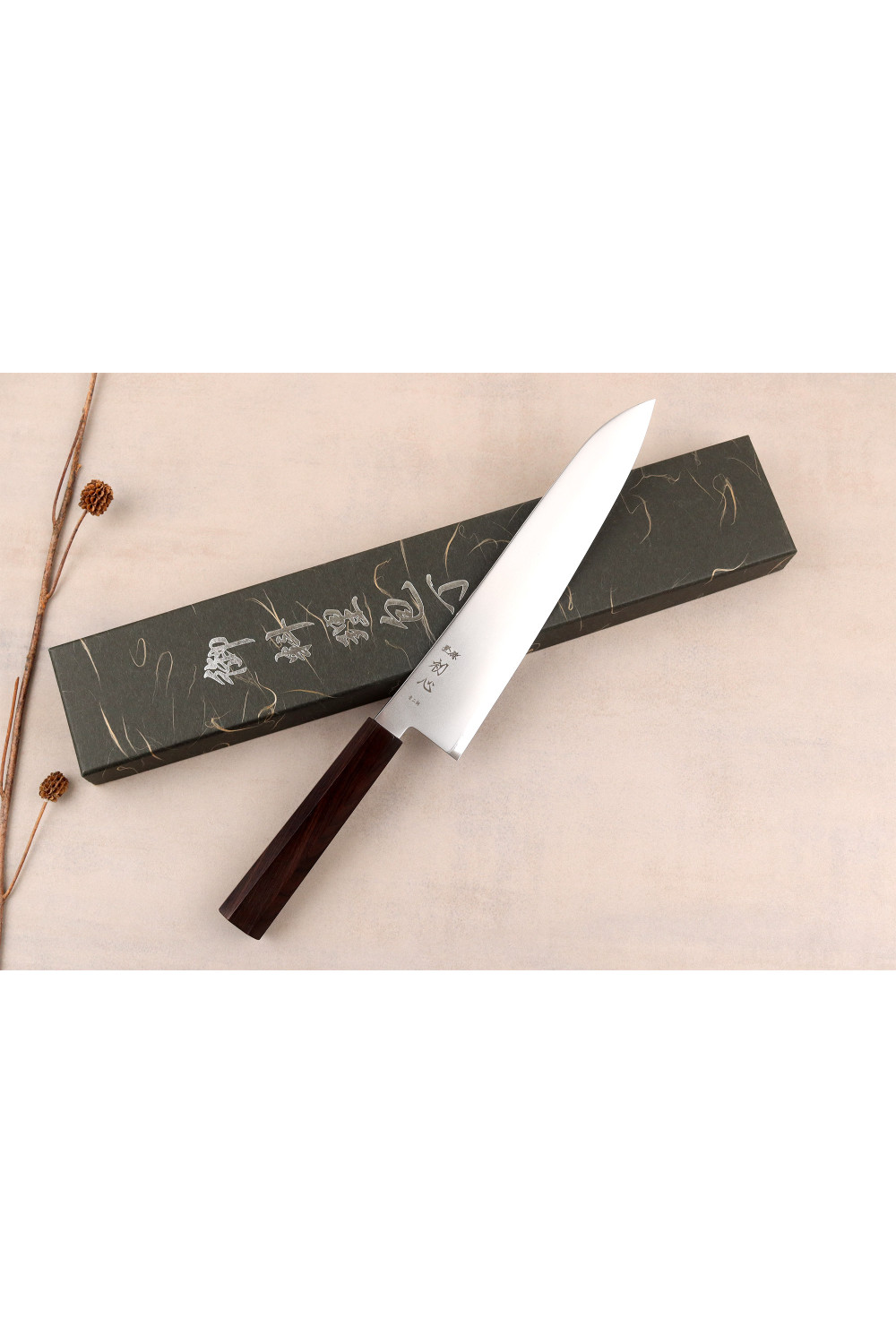
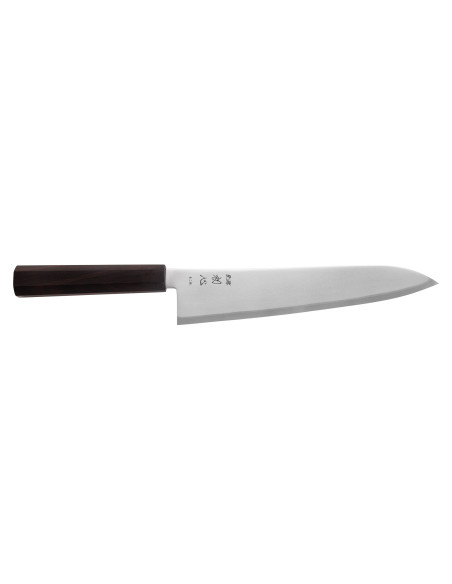
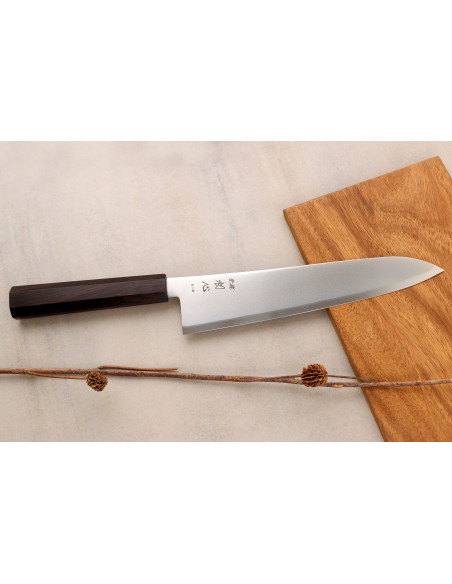
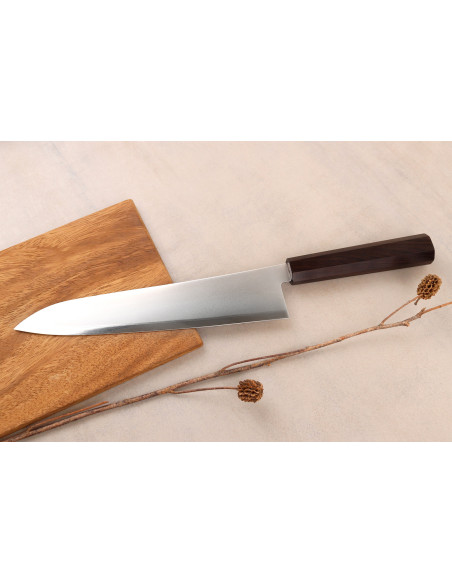
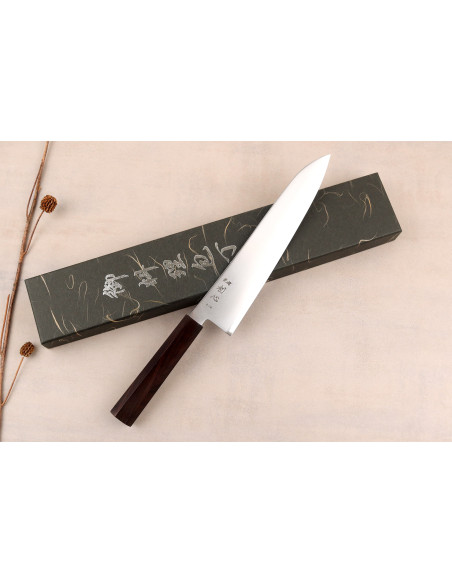
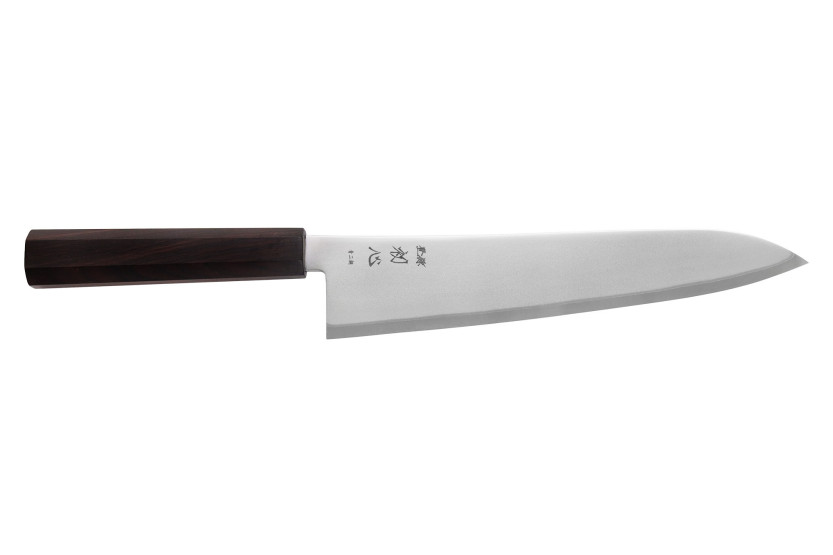
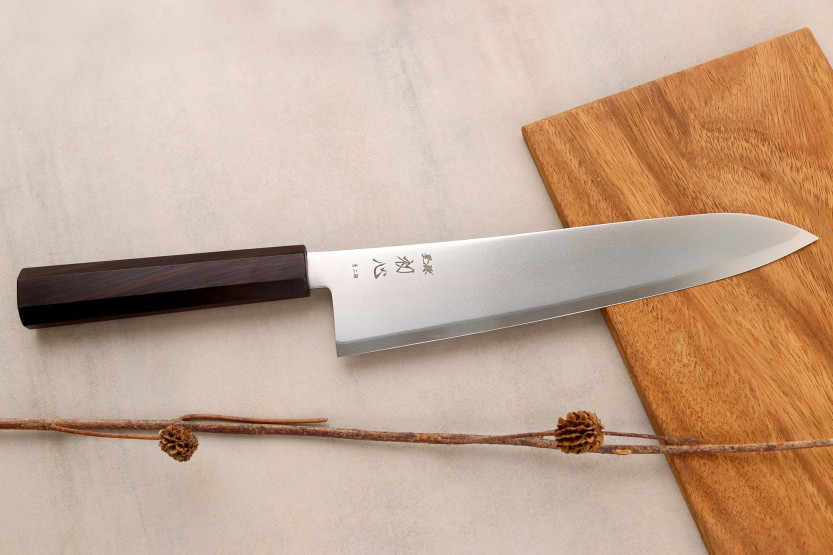
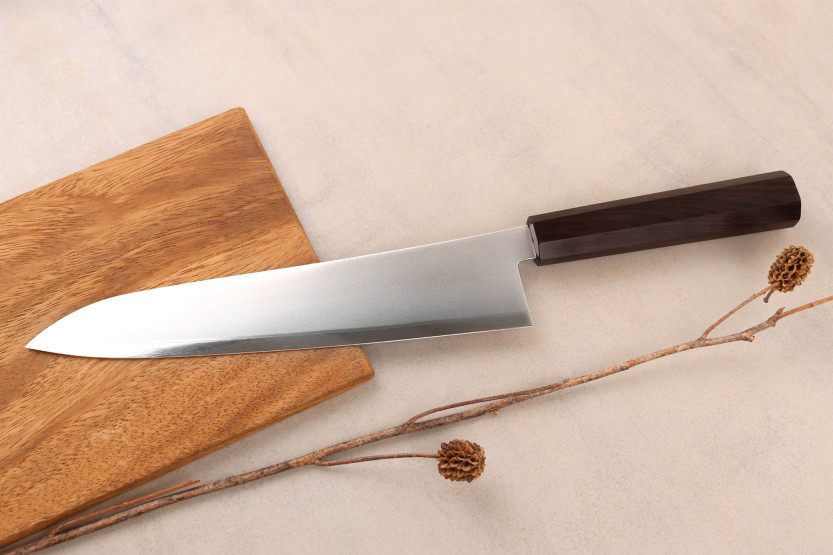
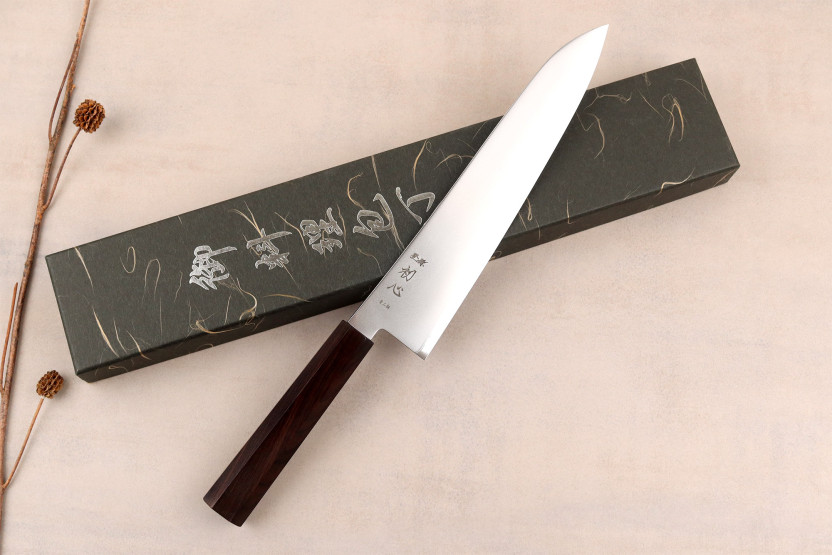
Crafted in Japan using traditional artisanal methods, thisHatsukokoro Kaijin BS2 ebony gyuto chef’s knife is ideal for tasks requiring precision, a wide range of motion, and consistency. Its blade is suitable for a wide variety of foods: vegetables, meats, fish, fruits, herbs, and large cuts. Its length allows for continuous cuts, minimizing the need to move the knife back and forth across the cutting board.
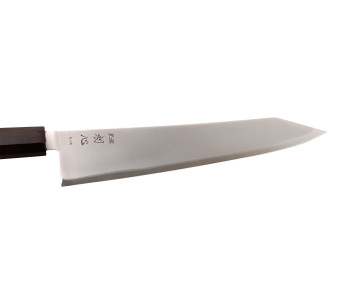
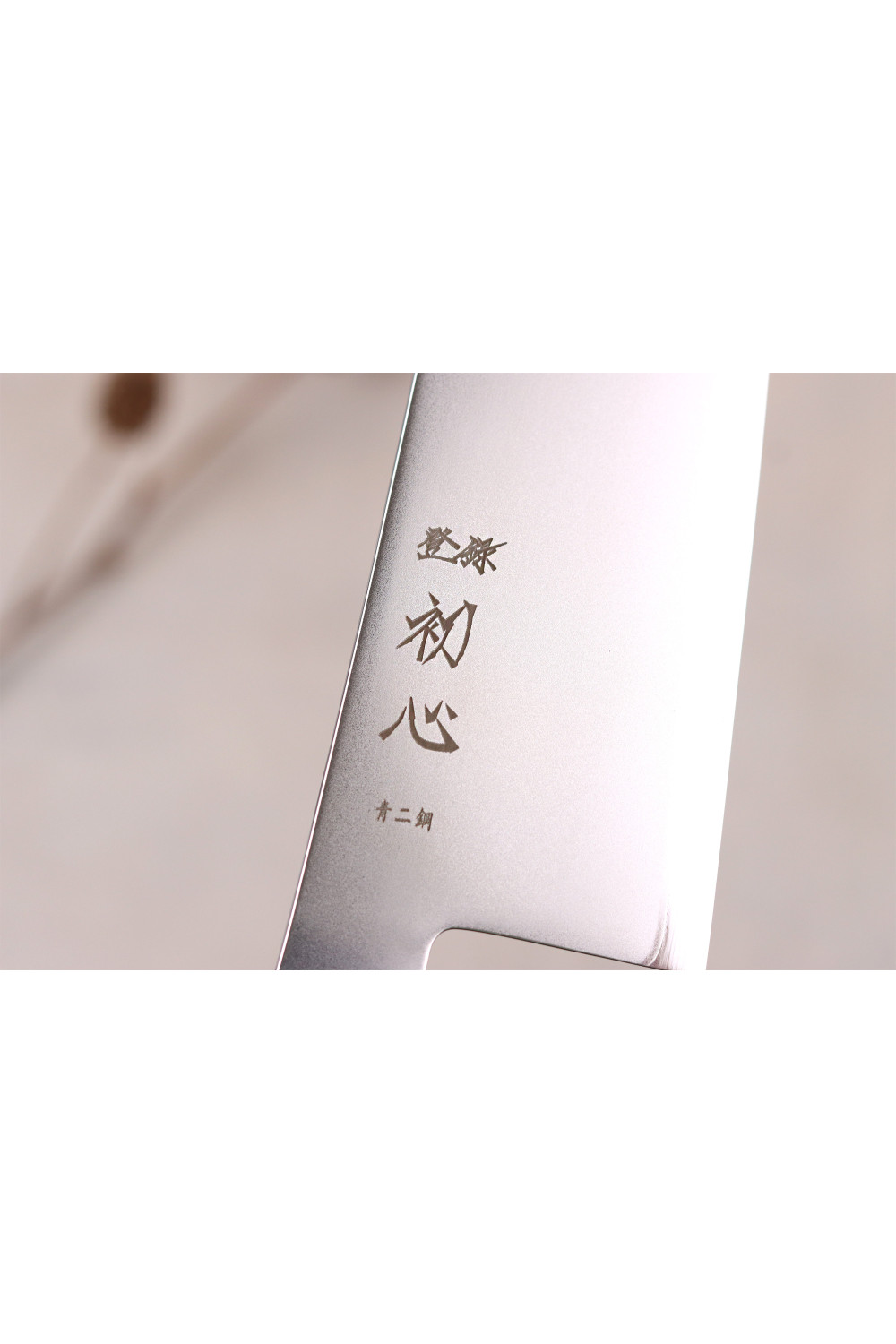
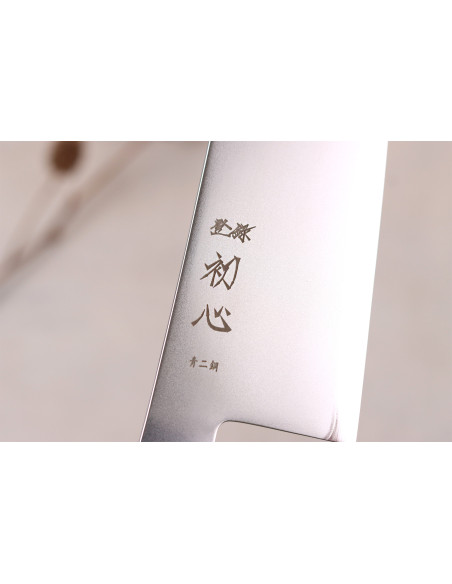
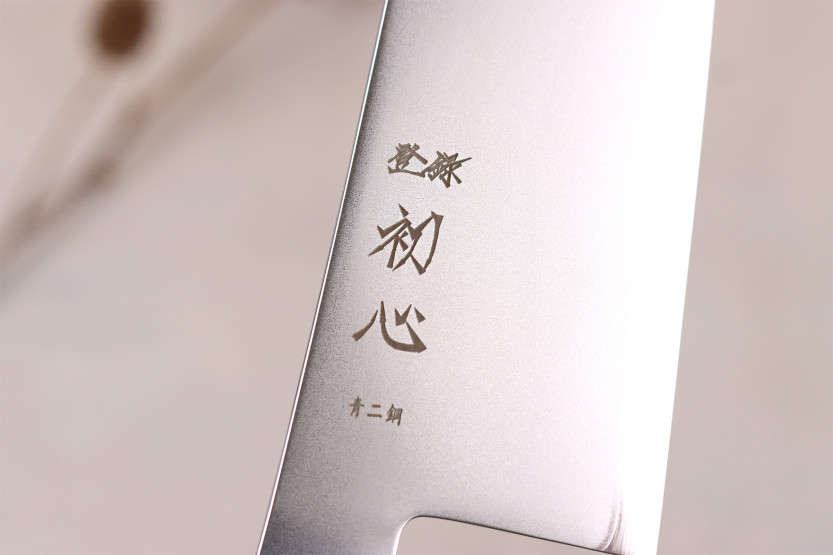
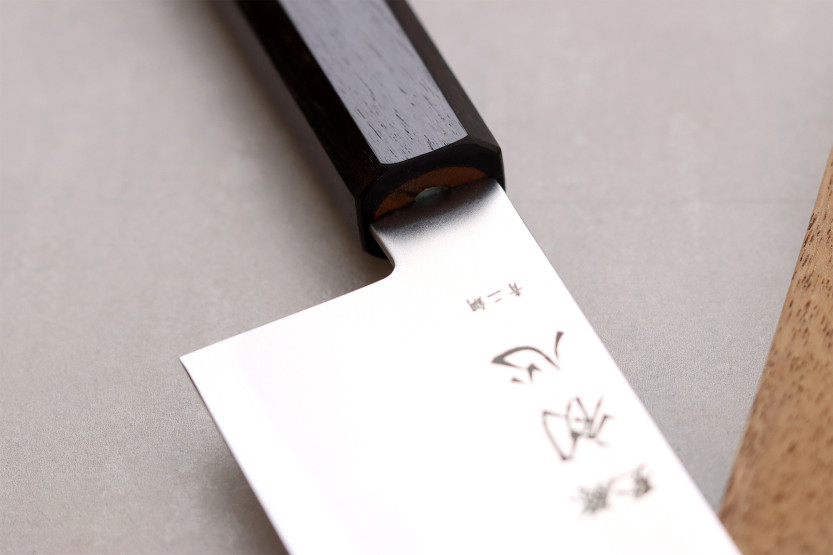
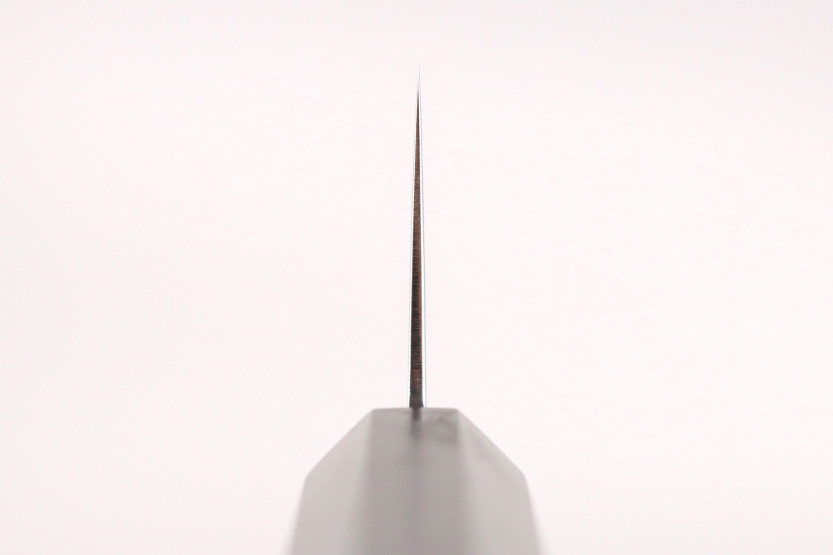
The blade features a San Mai construction consisting of three layers of steel bonded together. The core is made ofAogami 2, a Japanese carbon steel also known as Blue Paper Steel No. 2, containing approximately 1.1% carbon. This composition results in a fine, sharp edge that is particularly pleasant to use for precise cuts.
With a hardness of 62 HRC, the cutting edge retains its sharpness for a long time.
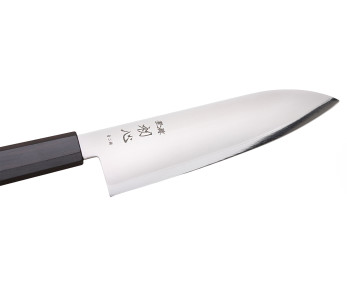
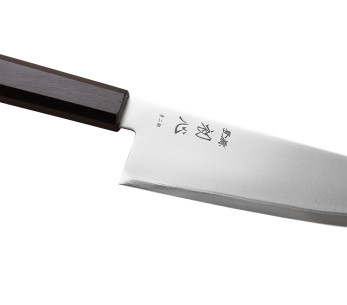
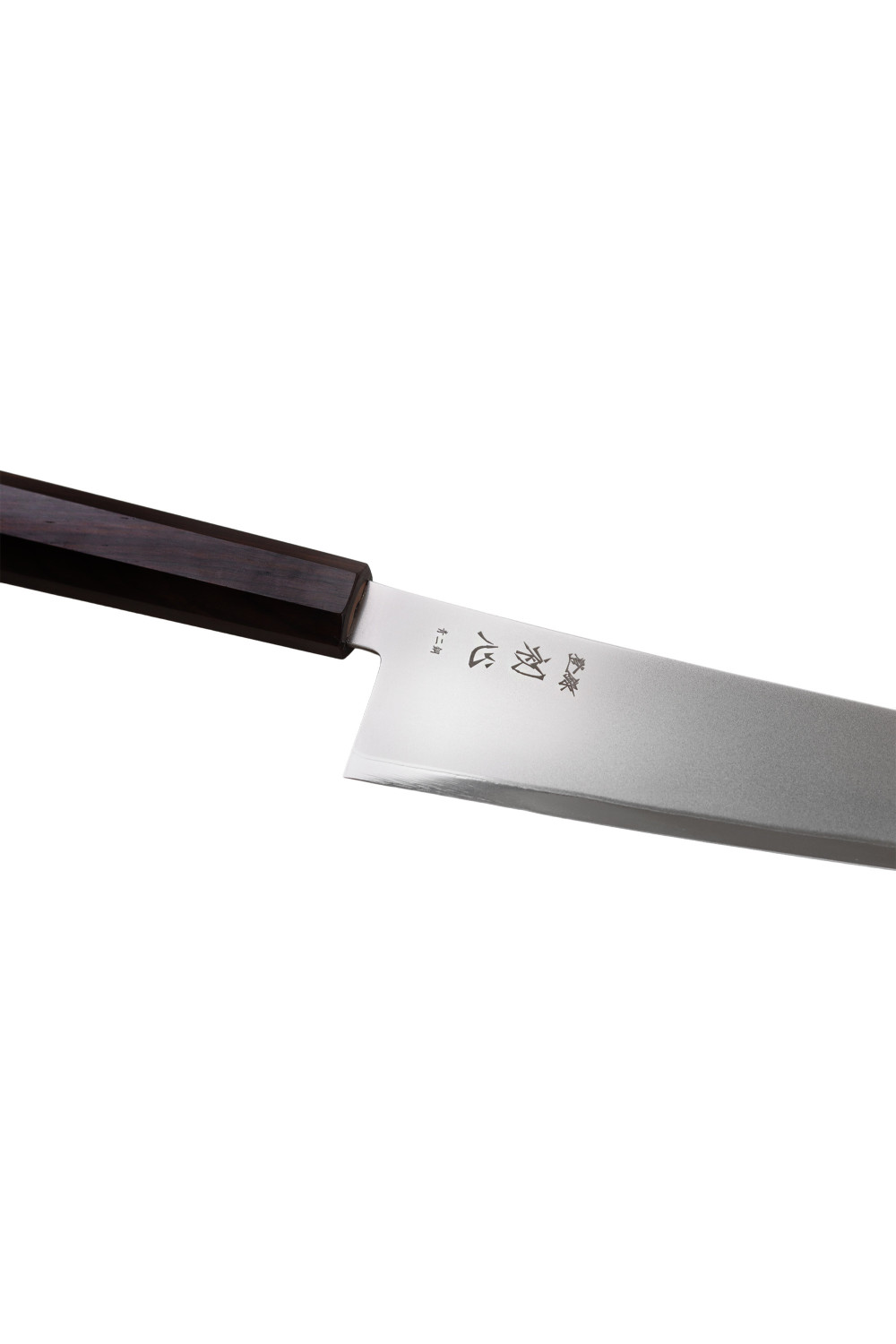
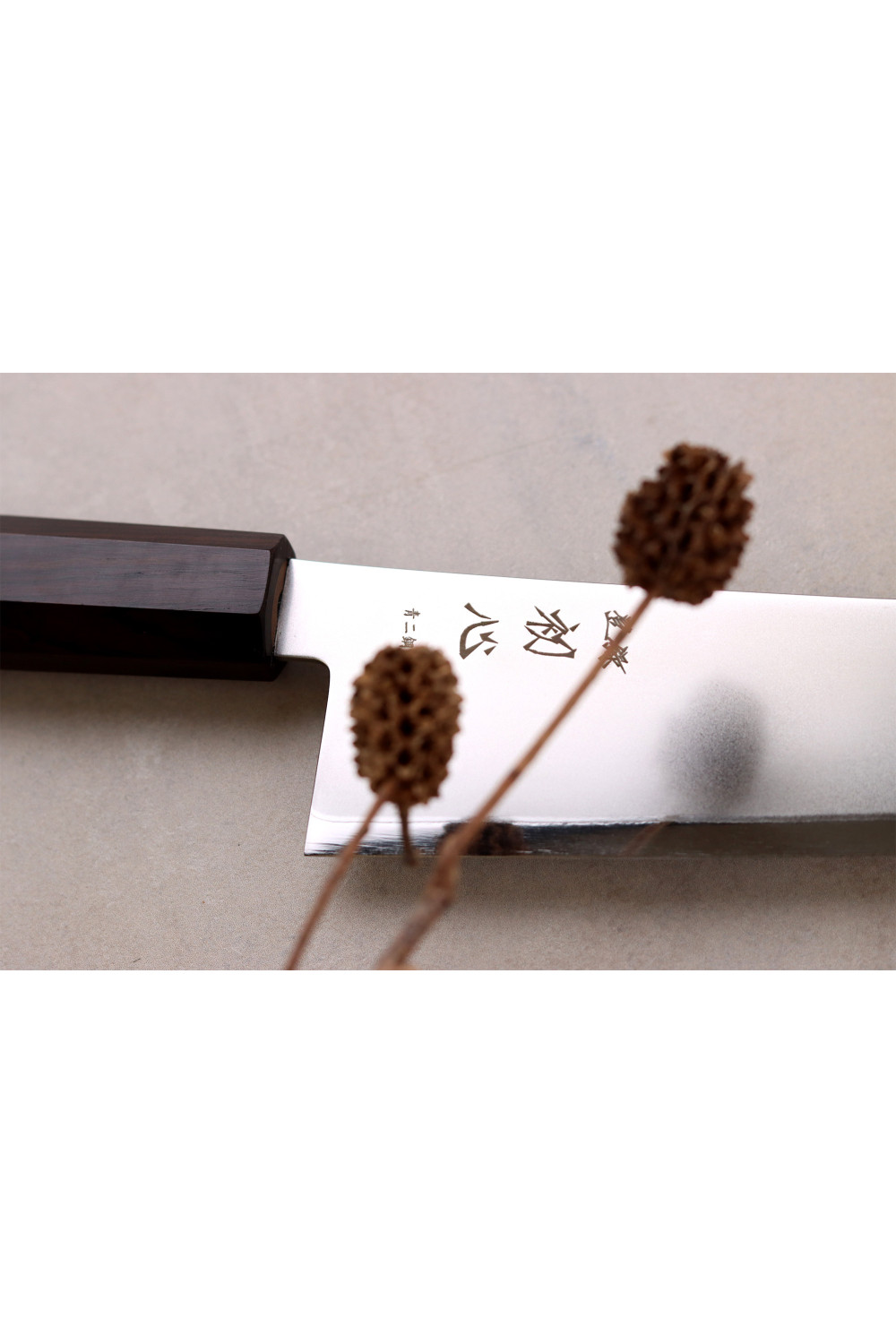
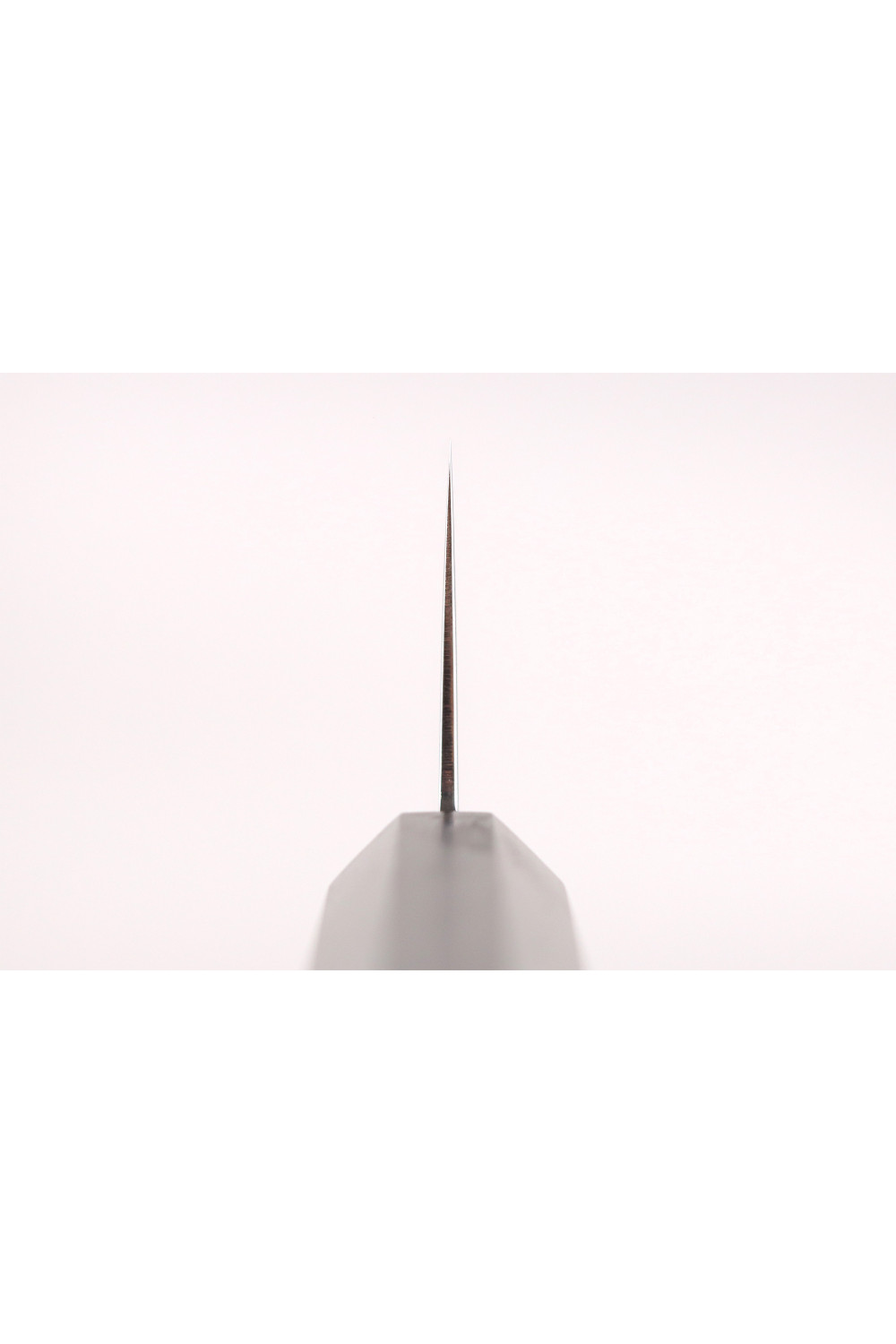
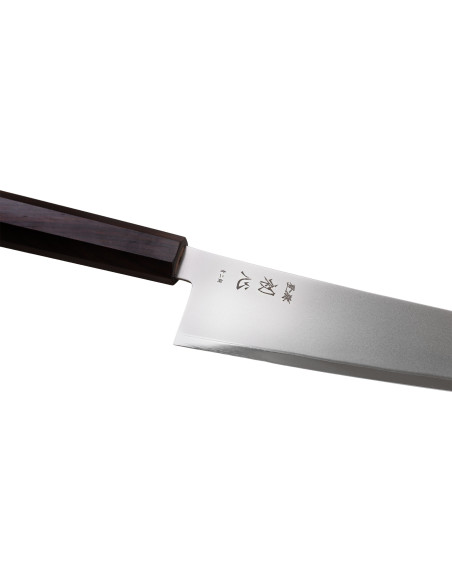
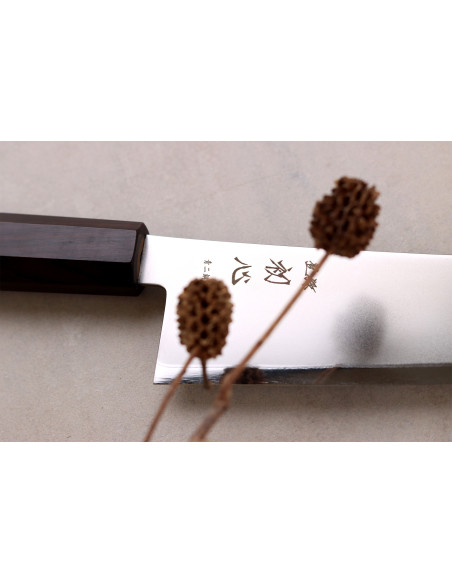
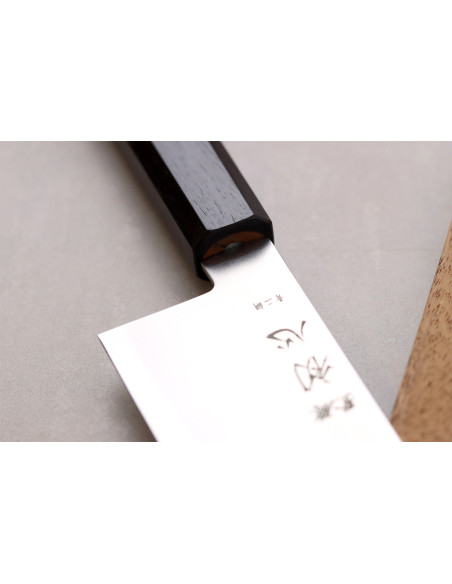
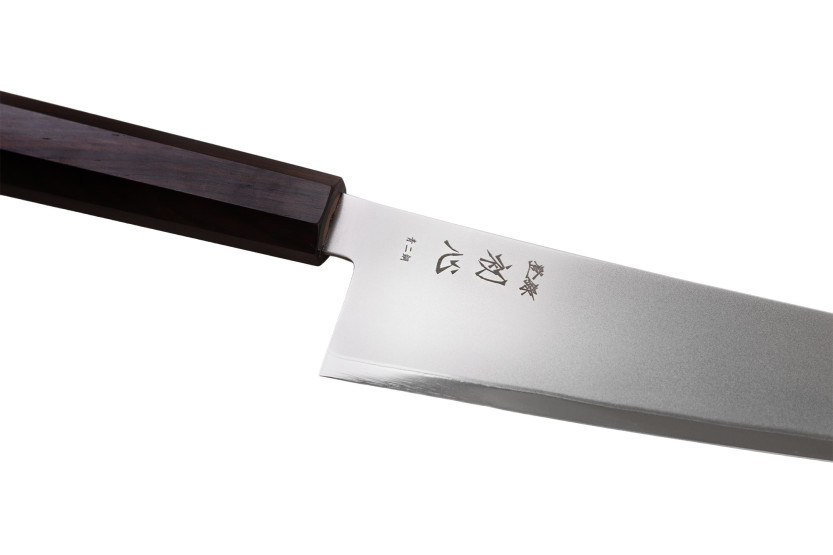
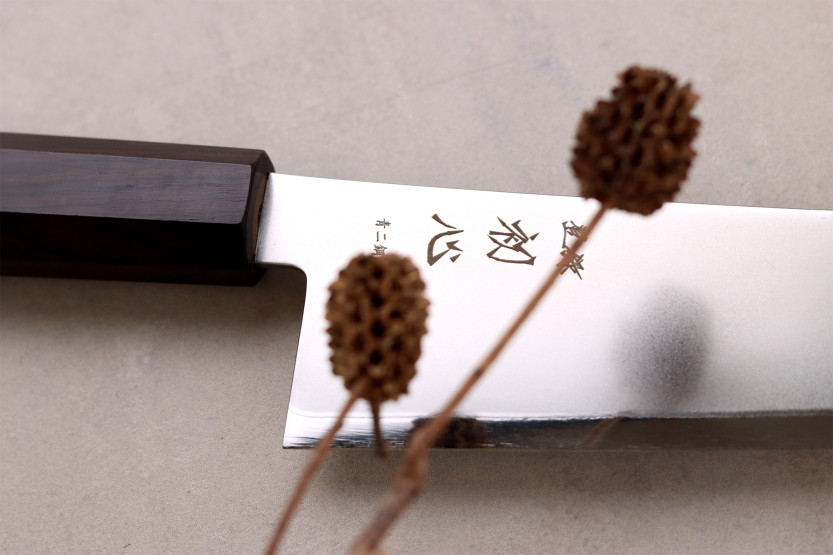
The sides of the blade are coated with stainless steel. This feature reduces the need for maintenance on the sides, while the Aogami 2 edge remains sensitive to moisture. The polished cutting edge glides easily through food. The sandblasted surface gives the blade a matte, balanced, and subdued appearance.
A dark, ergonomic handle
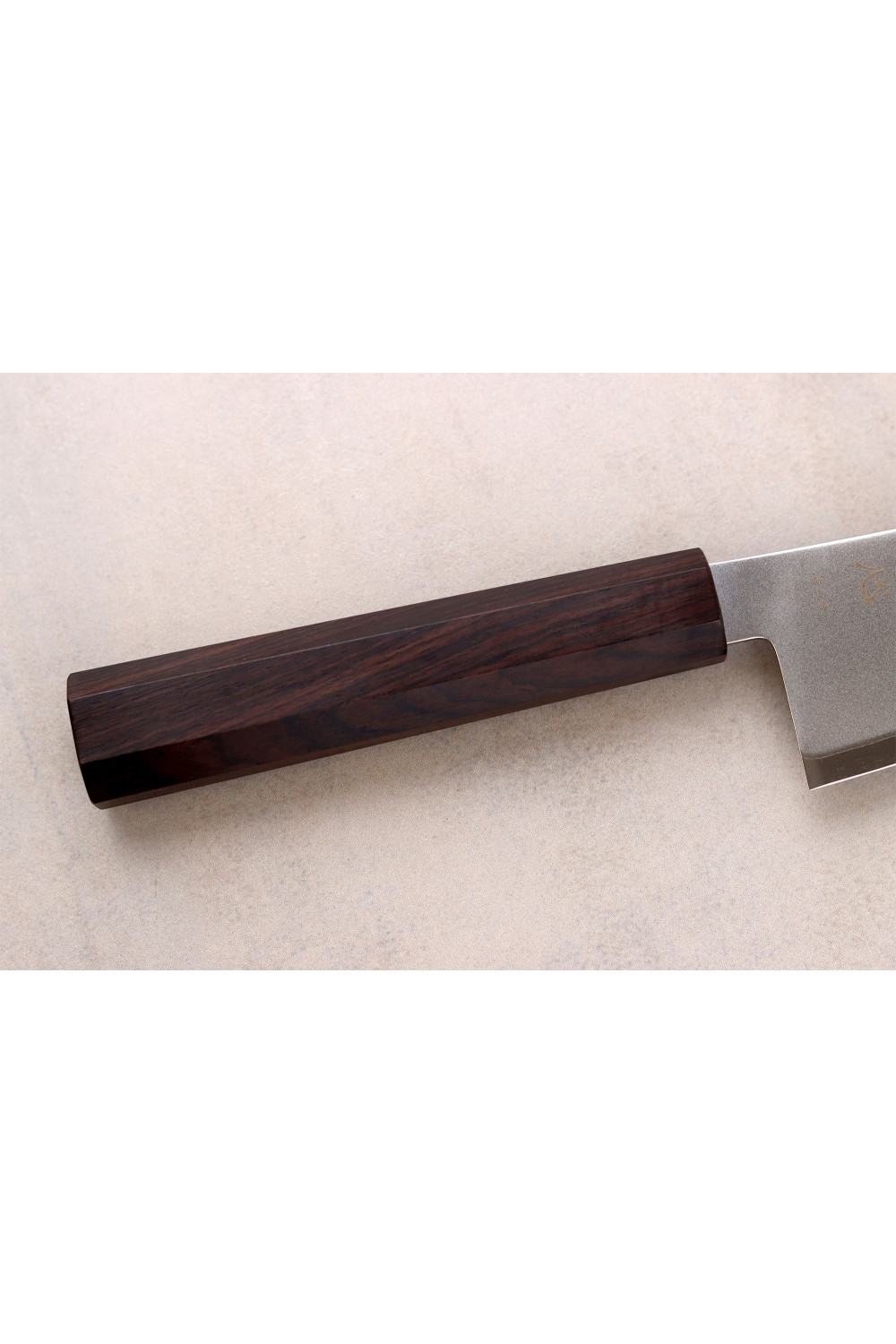
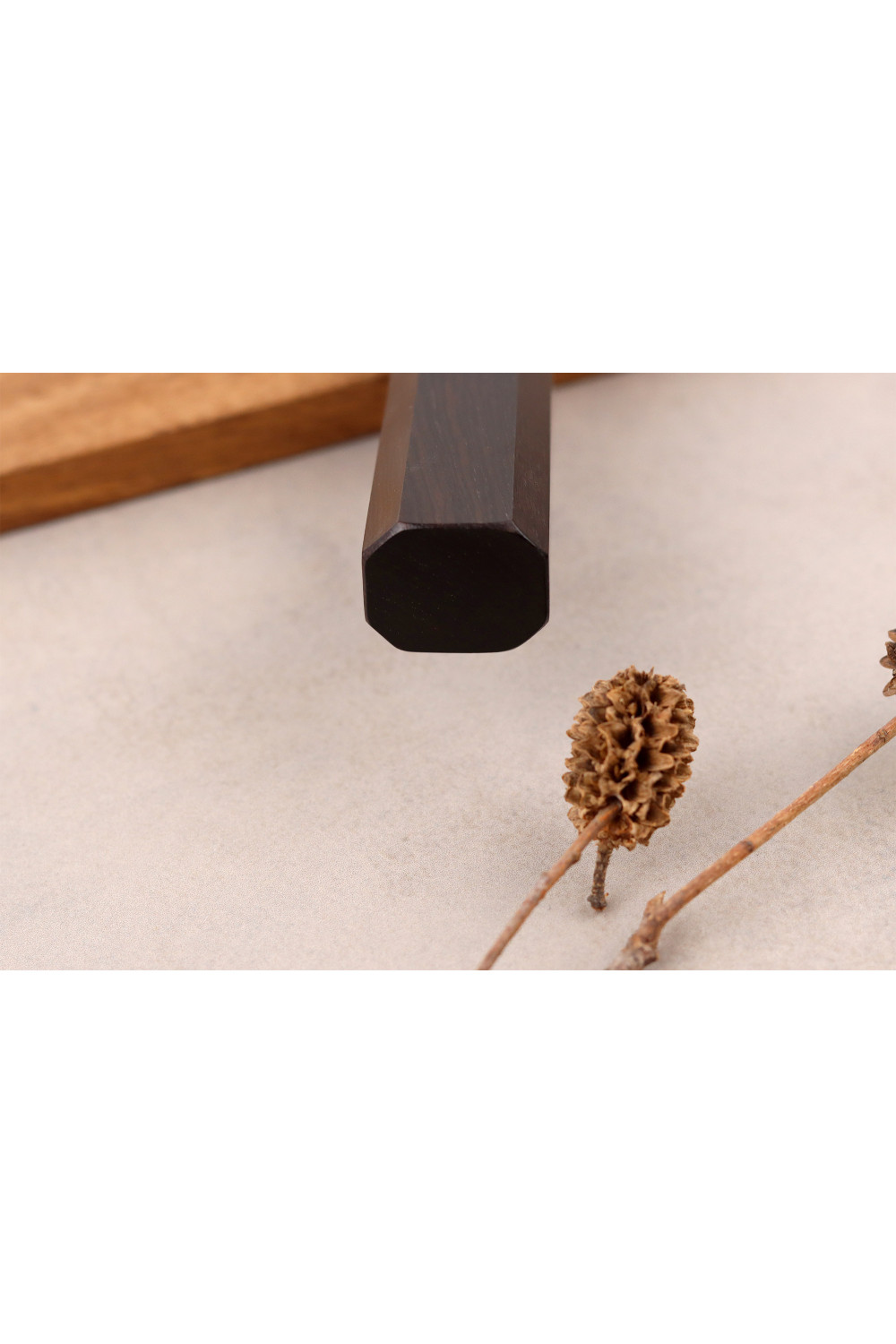
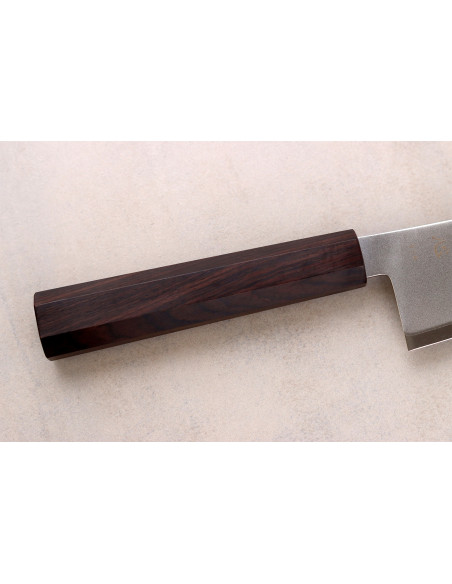
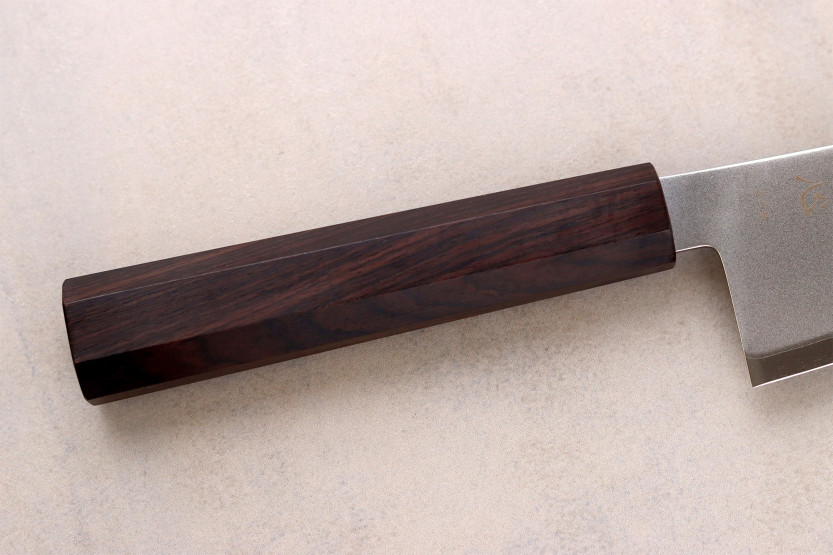
The handle is crafted from ebony, a naturally dense wood recognizable by its dark hue. Since each piece is made from a natural material, slight variations in color or grain may occur. These variations contribute to the unique character of each knife.
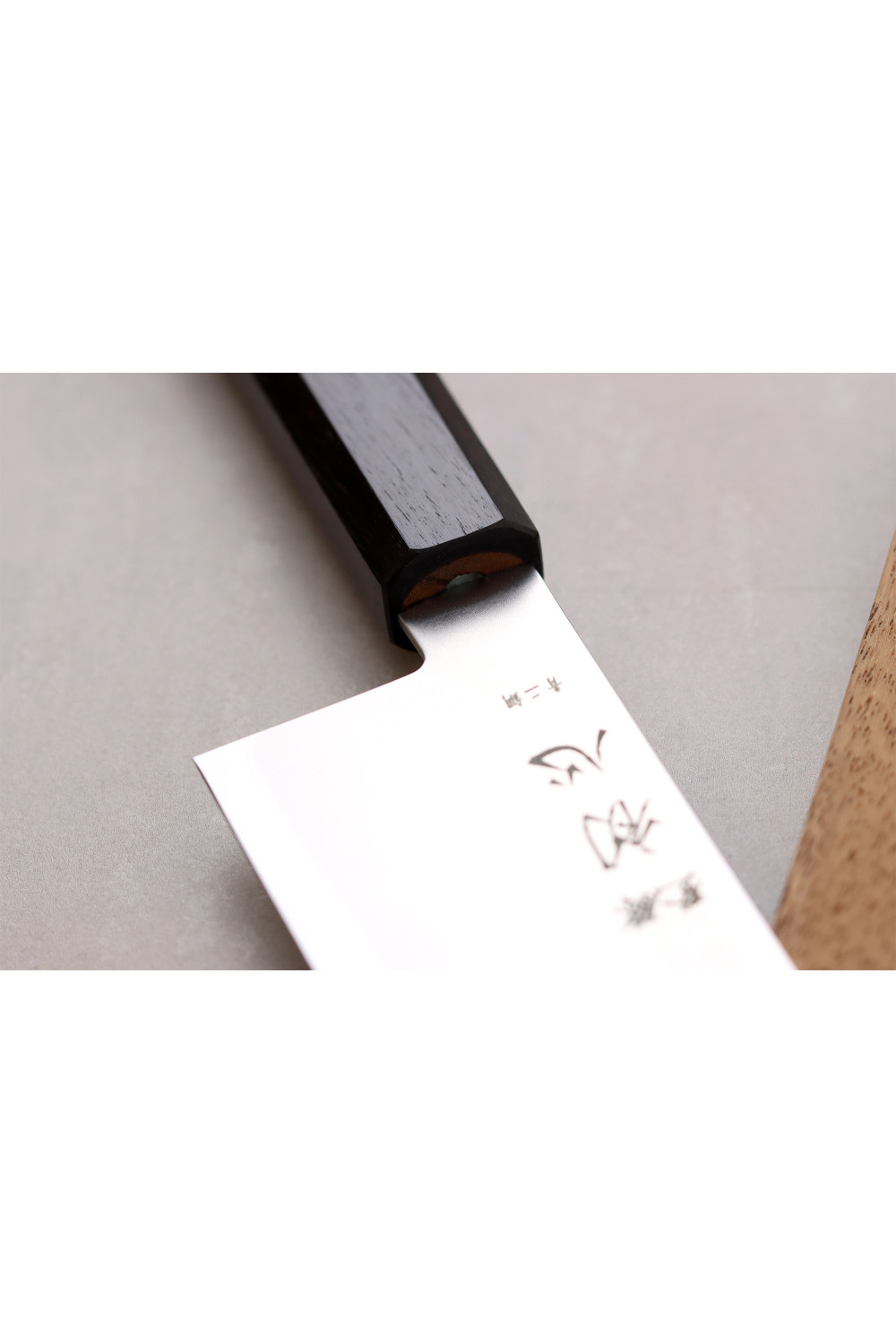
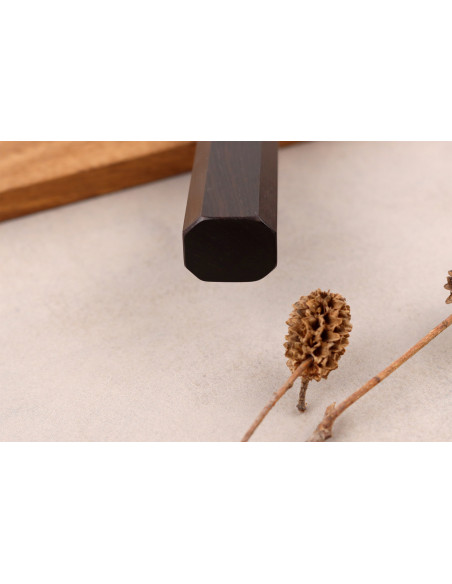
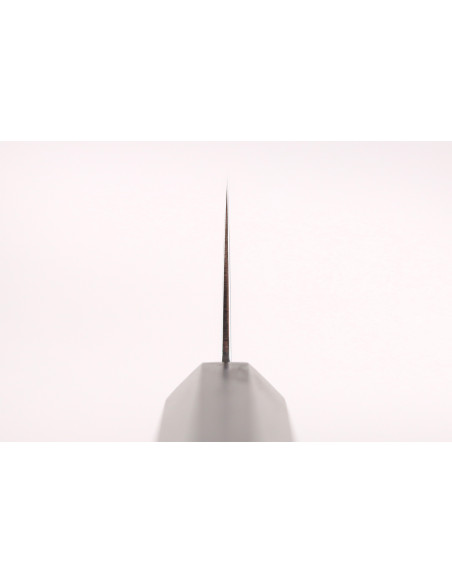
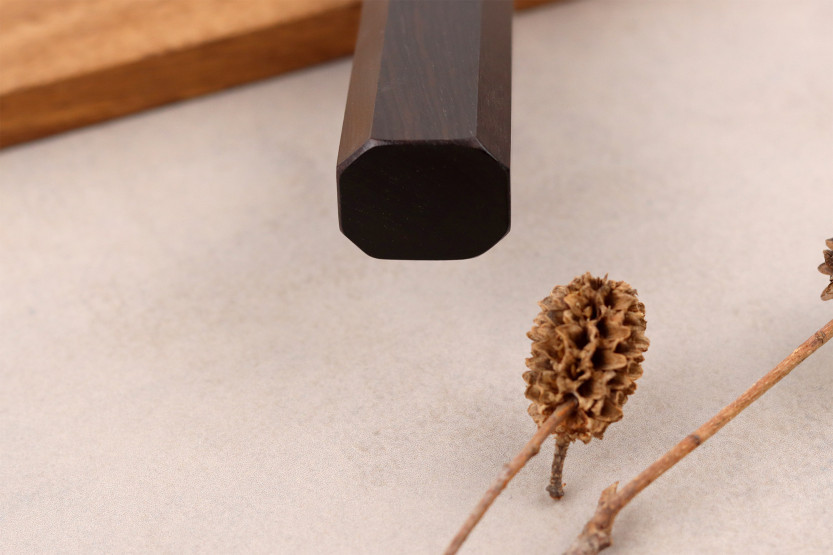
Its octagonal shape follows the traditional form of Japanese “Wa” handles. The different facets provide useful reference points for finger placement and blade orientation. This design ensures comfortable use for both right- and left-handed users.
Key Features
-
- 24 cm blade: suitable for tasks requiring a large cutting surface.
-
- San Mai construction: a three-layer assembly for a structurally robust blade.
-
- Aogami 2 core: carbon steel that allows for a very fine edge.
-
- Carbon content of approximately 1.1%: precise sharpening and a sharp cutting edge.
- Hardness of 62 HRC: good long-term edge retention.
- Stainless steel outer layers: easier-to-maintain sides.
-
- Polished blade: clean cut and smooth glide through food.
-
- Sandblasted finish: matte, understated, and contemporary look.
-
- Octagonal ebony handle: natural grain and ambidextrous grip.
-
- Handcrafted in Japan:made using traditional methods.
Use, Cleaning, and Sharpening
After each use, clean the blade by hand with lukewarm water and a non-abrasive sponge. Dry it immediately to prevent streaks or oxidation on the carbon core. Do not put it in the dishwasher, and avoid using metal sponges or harsh cleaning products.
Use a wooden or soft plastic cutting board. Do not use this knife on bones, frozen foods, pits, or shells. A whetstone is suitable for maintaining the edge. The blade may develop a patina over time; this natural process does not affect its cutting performance.
For storage, choose a dry place. A magnetic strip, a suitable block, or a sheath will effectively protect the cutting edge.
Hatsukokoro: A Japanese Approach to Cutlery
Hatsukokoro is a Japanese brand that offers knives crafted in various specialized regions across the country. It collaborates with selected artisans and workshops to create models featuring a variety of steels, blade shapes, and handle materials.
The brand places great importance on traditional Japanese craftsmanship, while offering designs adapted to modern uses. The Kaijin collection, in particular, combines Aogami 2 carbon steel, a stainless steel outer layer, and handles crafted from carefully selected woods.
The name “Kaijin” evokes the idea of a mysterious figure. This line features a understated aesthetic, with a sandblasted finish and a dark ebony handle.
Discover our selection of handcrafted Japanese knives by clicking here!




 By buying this product you can collect up to