Find out more about Masashi Yamamoto san
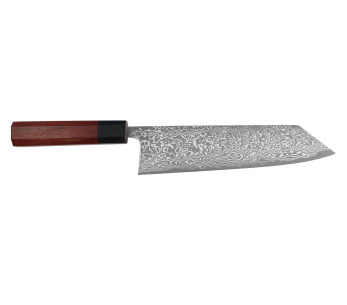
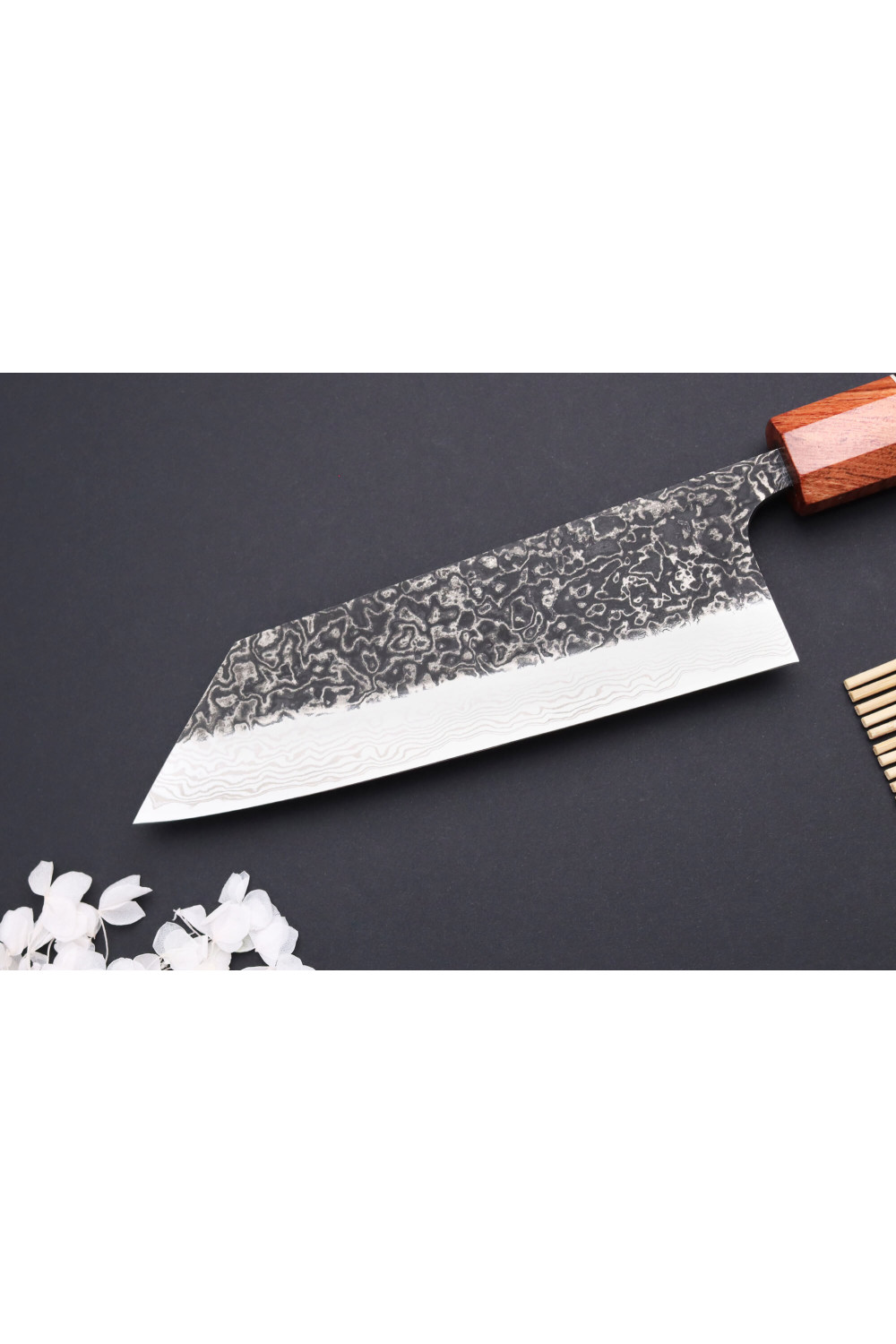
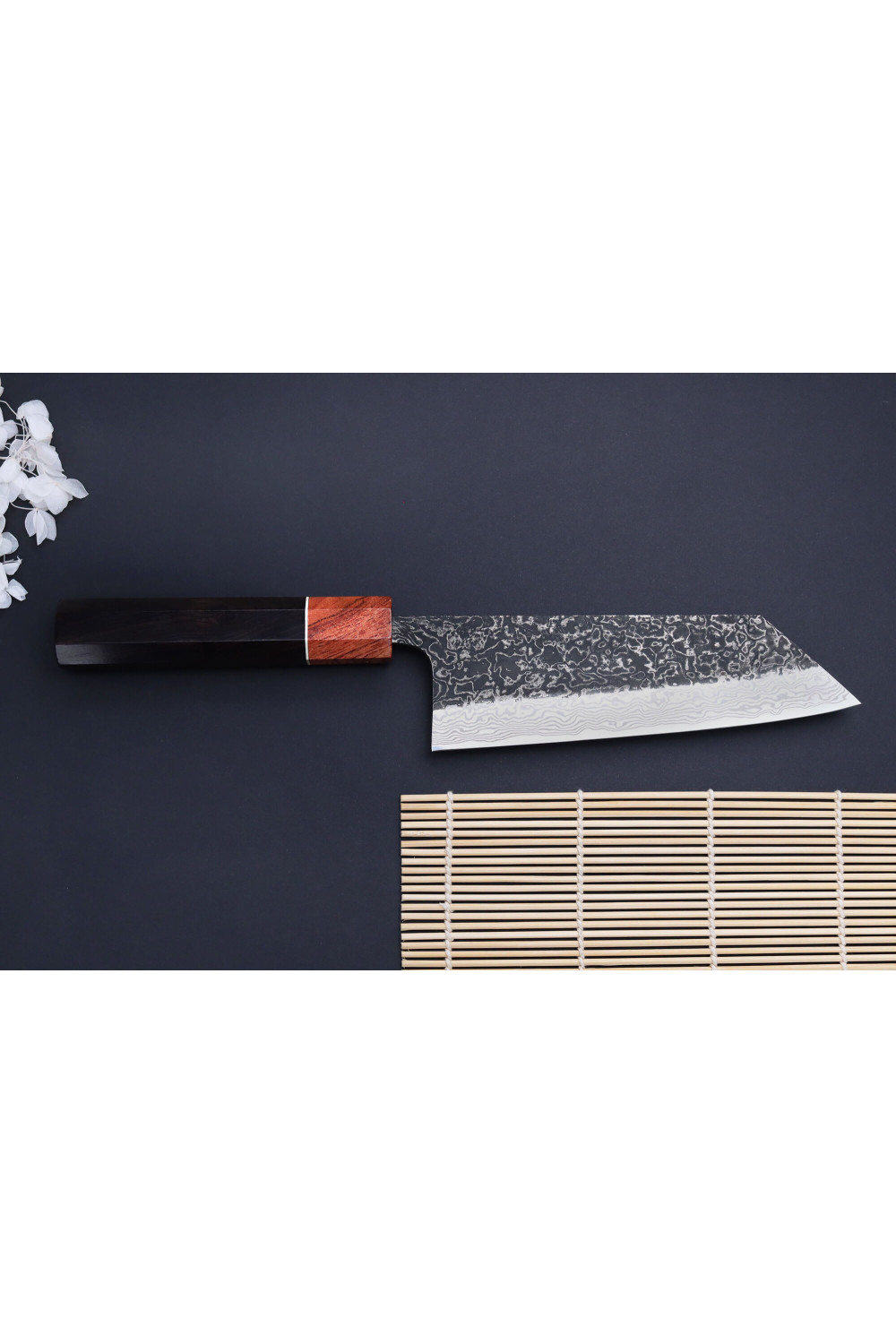
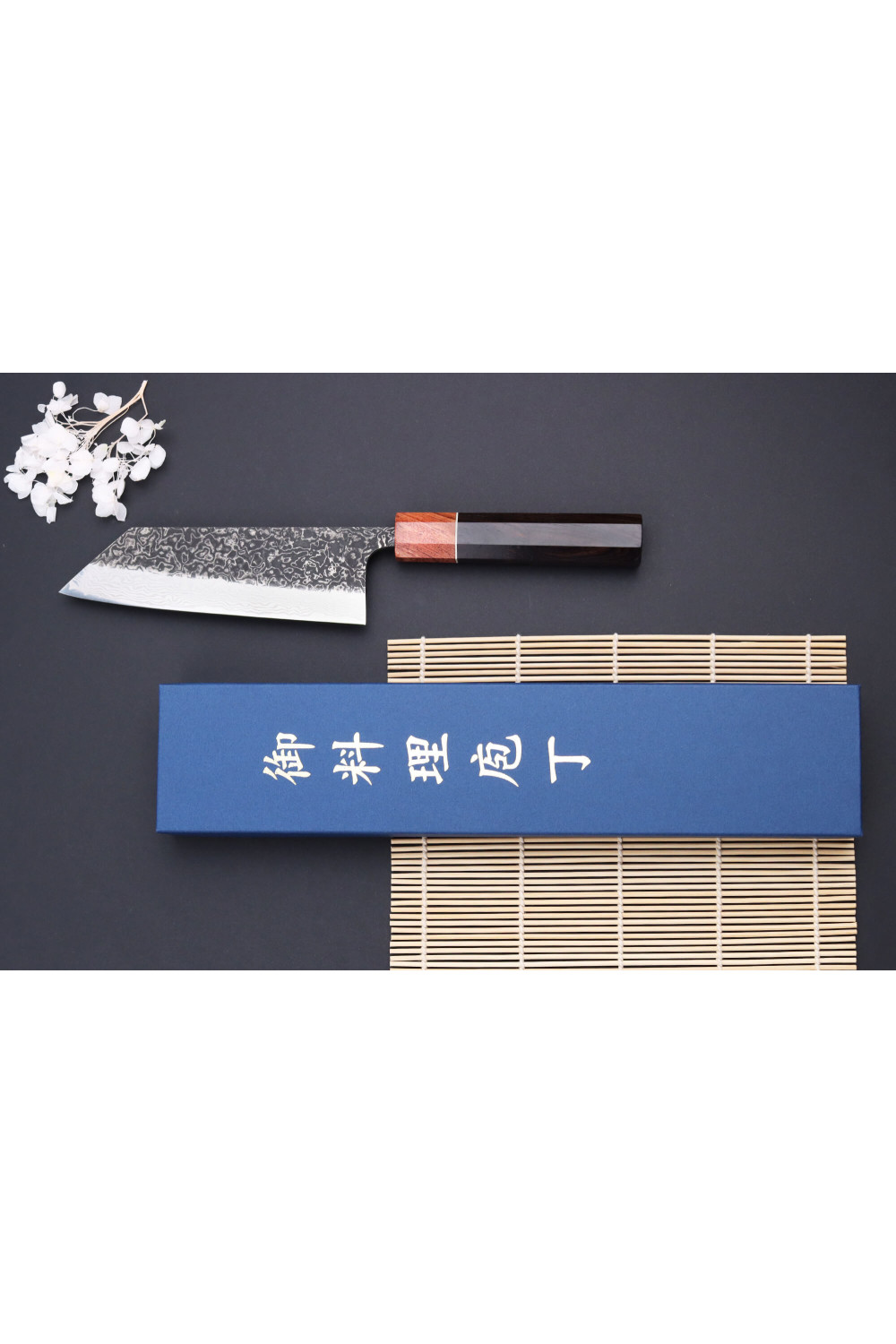
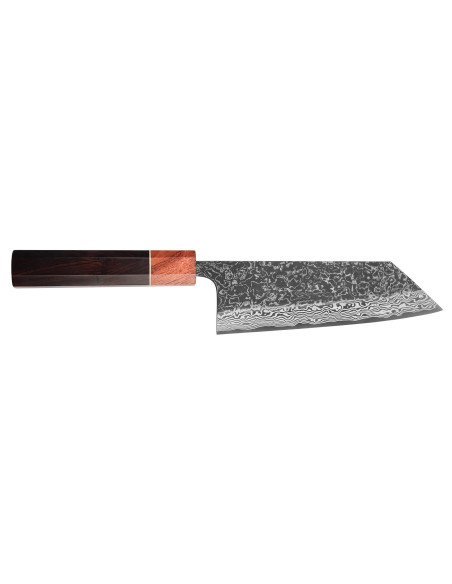
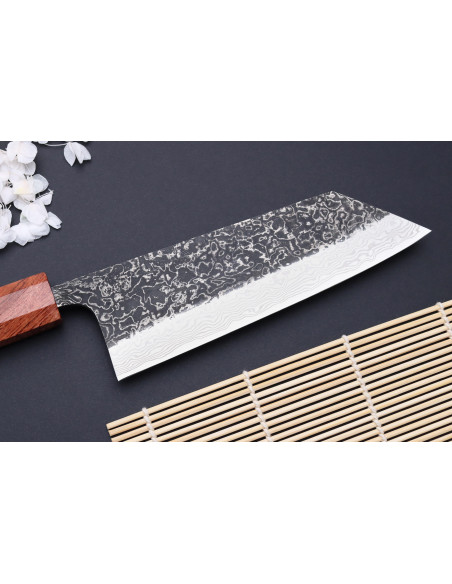
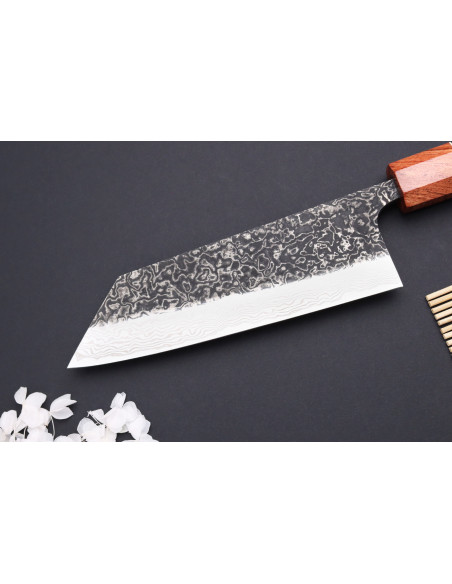
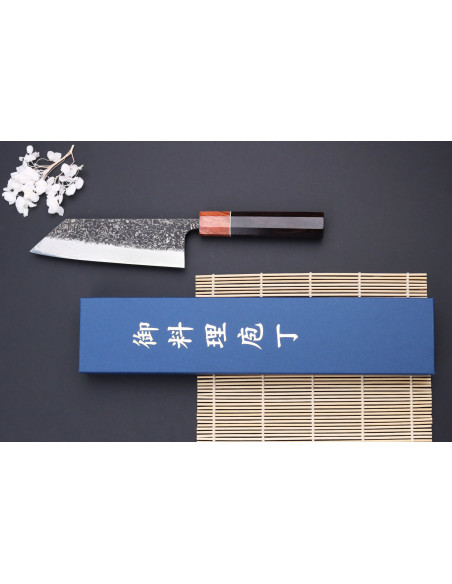
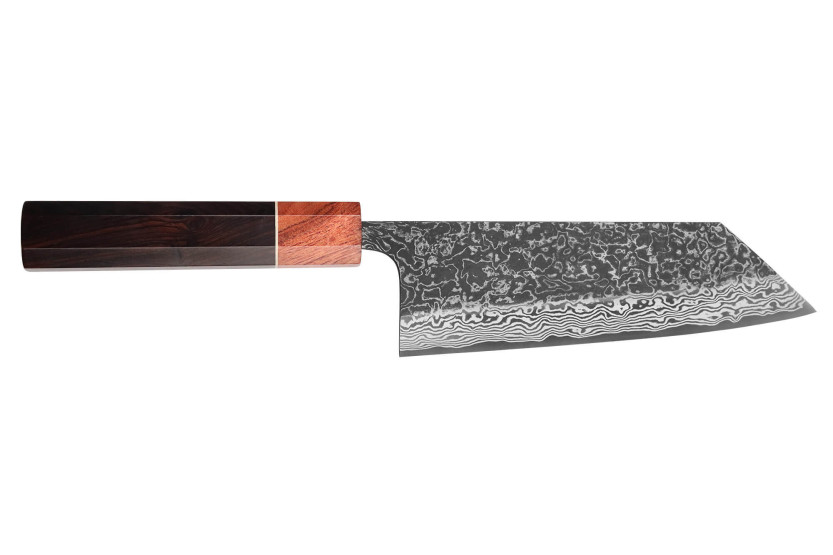
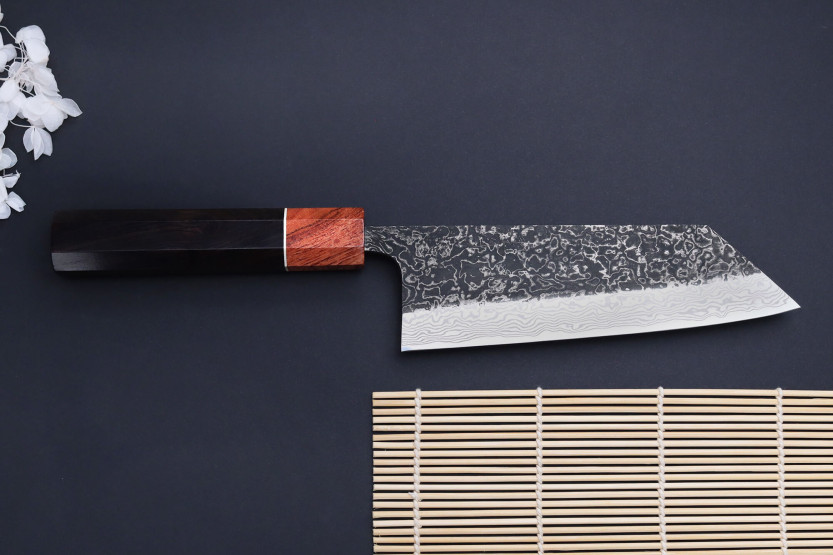
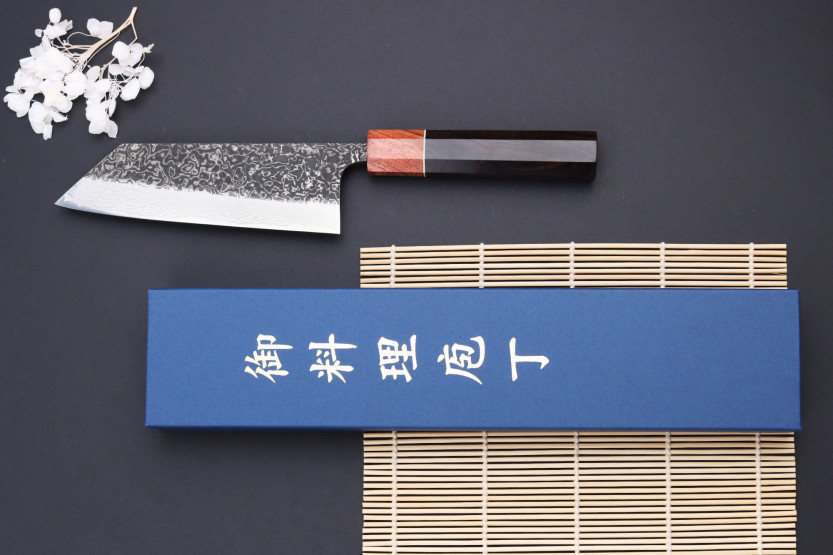
The Masashi Yamamoto Japanese bunka knife lets you cut many types of food. It's a versatile model that's easy to use and adapt to your recipes. It's a little like a santoku knife, but with a less rounded blade. As a result, you can cut meat and fish (boneless), but also vegetables, fresh herbs...
Beyond its function, it's important to talk about the person who forges it! His name is Masashi Yamamoto san. He's a modern-day blacksmith who learned the trade from his older brother. After training, he launched his workshop in 2013.
The knives he designs and creates are superb pieces with an impeccable finish. He is also known for the hardness of his blades, which he achieves through special, technical heat treatments. Despite his youth, he now teaches his skills to two apprentices! His unique style is also emblematic: he forges in flip-flops, often with a cigarette in his mouth. He's got a style all his own.
Details of your Masashi Japanese knife
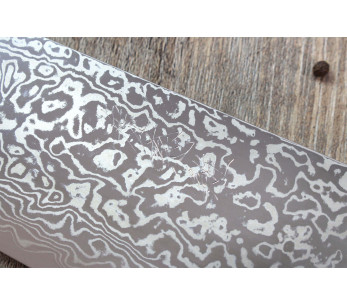
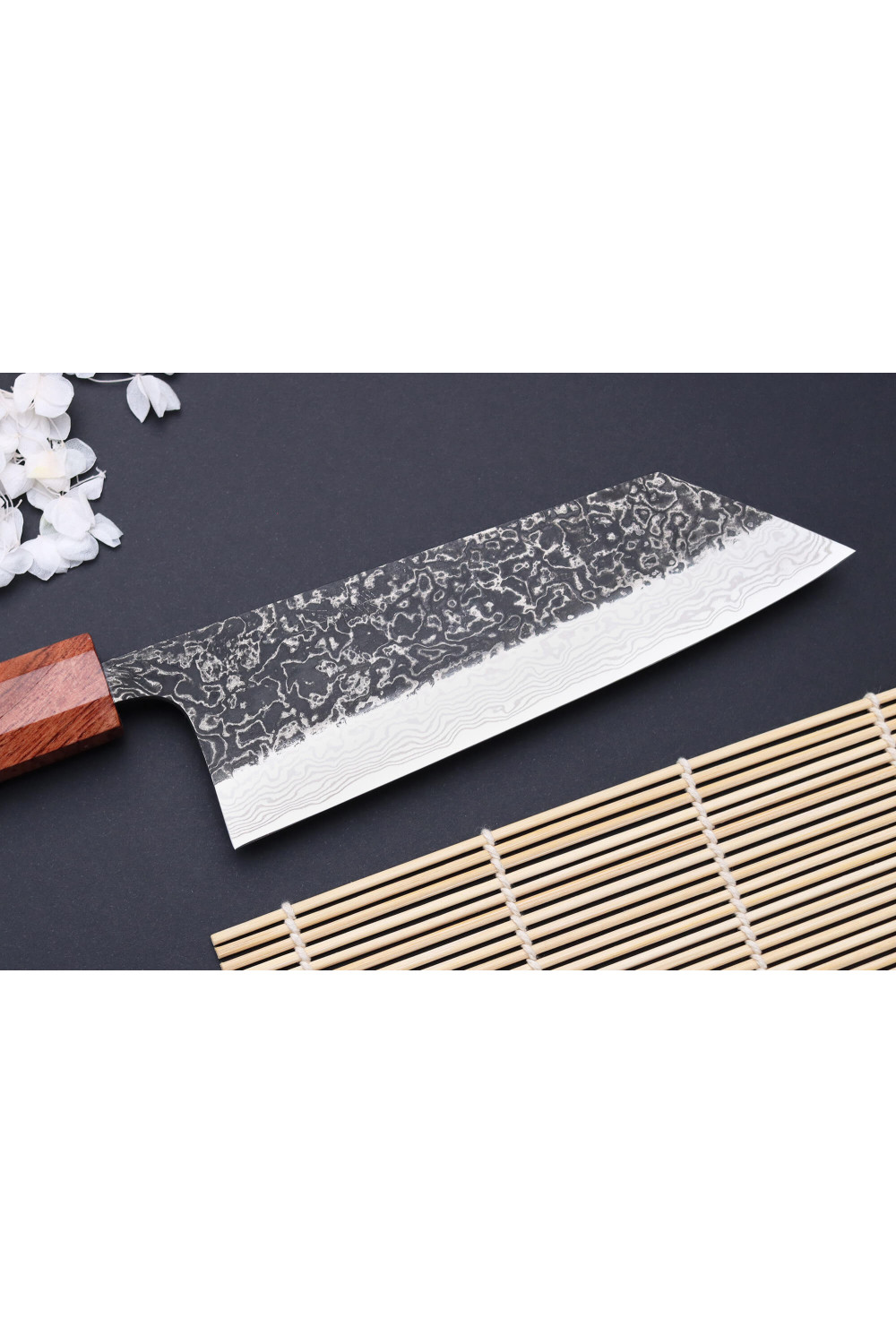
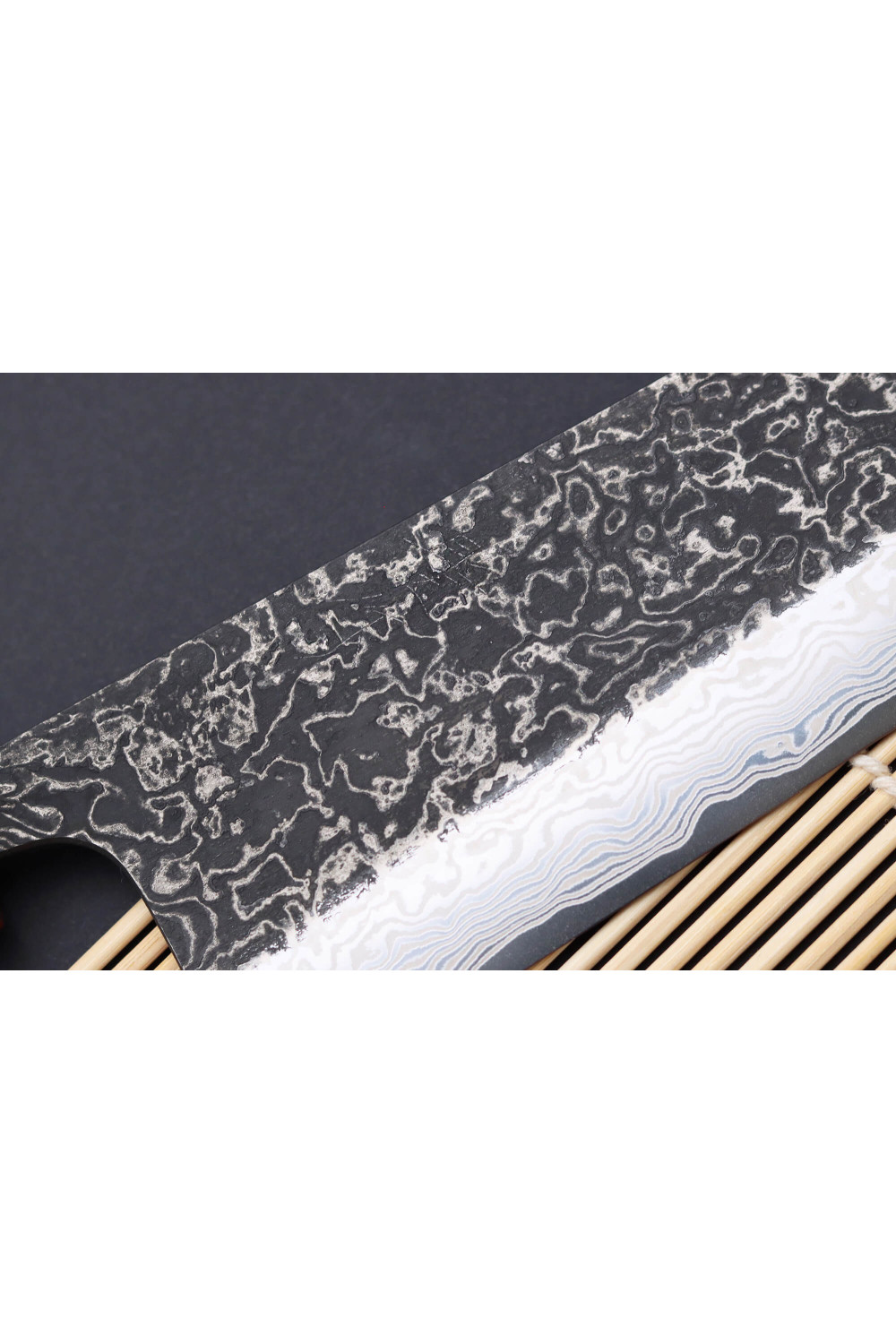
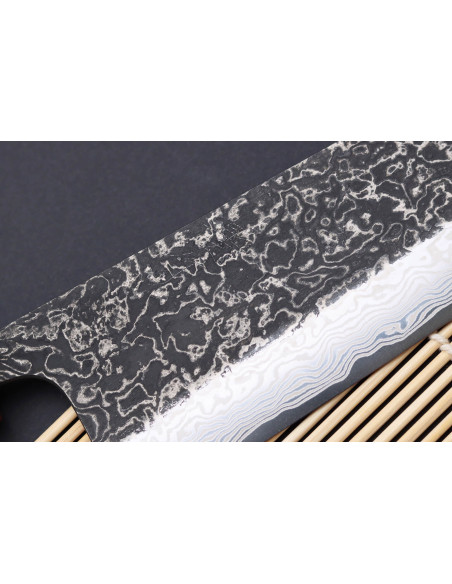
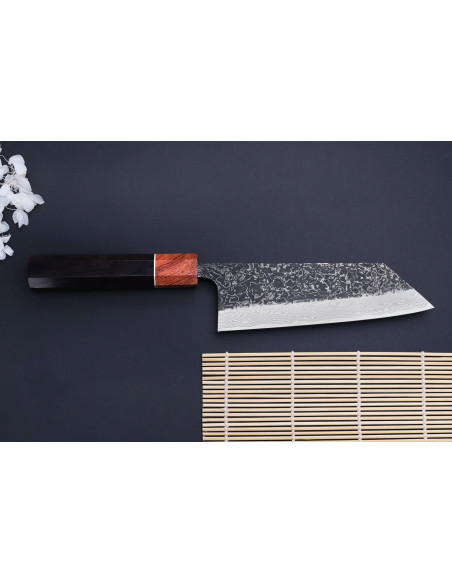
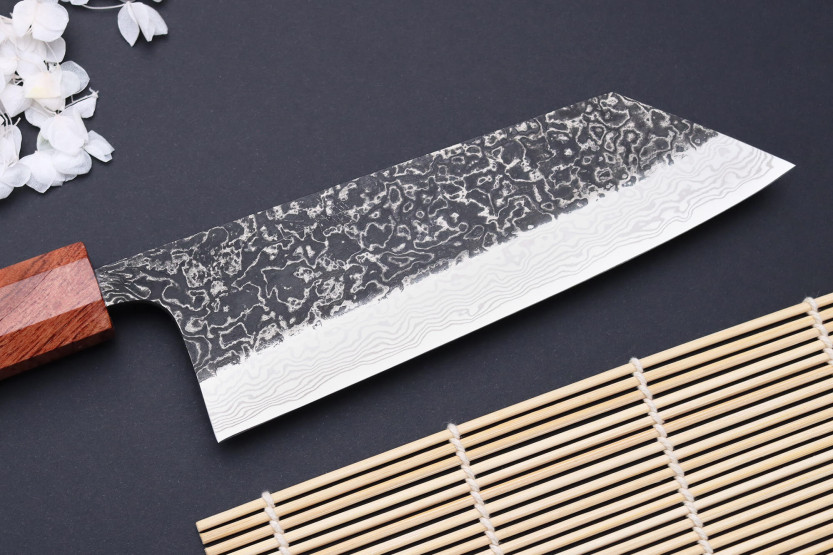
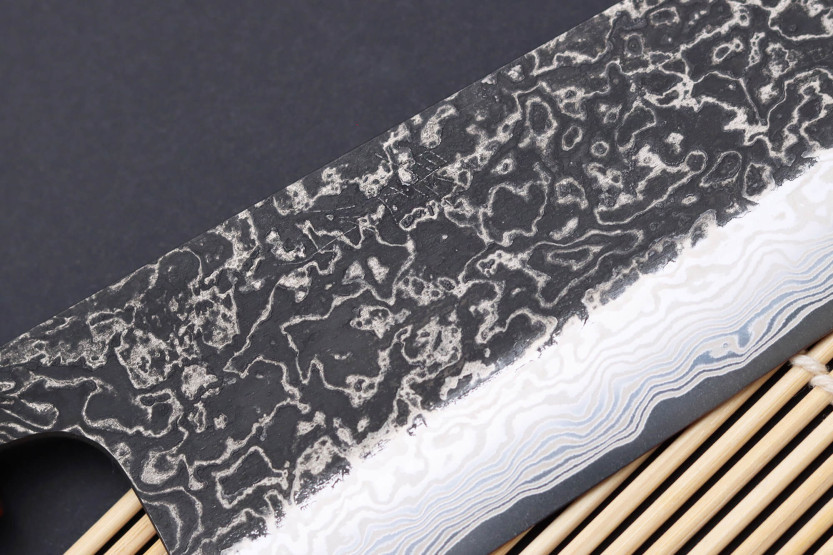
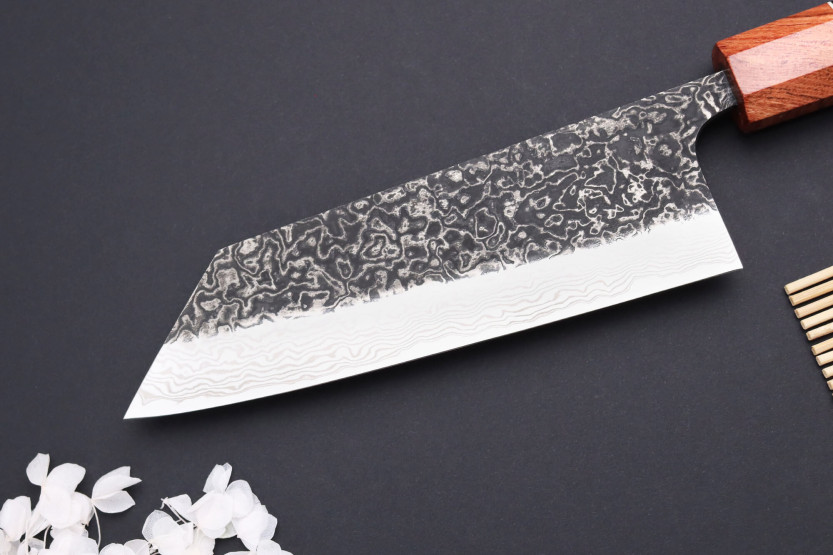
Your Japanese knife features a superb damascus blade. Damascus requires a special blade construction, a technical process that makes a blade both technically and aesthetically interesting. To put it simply, the blade is built with a rigid core surrounded by several layers of softer steel, which balance it (i.e. make it more supple, less brittle) and protect it.
For this particular knife, Masashi san chose SLD steel to form the damascus core. SLD is a Japanese steel, produced by the world-renowned steelmaker Hitachi.
This alloy is highly enriched in carbon, up to 1.6%. This element is essential to the blade's rigidity, since a hard alloy is one that will hold its edge for a long time, despite use. This is a real advantage. Thanks to its high carbon content, the blade achieves 63 HRC on the Rockwell scale.
This alloy also contains 13% chromium, making it more resistant to corrosion.
It is important to note that SLD is a hybrid steel, half carbon, half stainless steel. However, in view of its very high carbon content, it's best to maintain it with the same care as a carbon knife.
The structure of the alloy is also a real asset: it is very well balanced and the micro-carbons are evenly distributed. This increases its resistance to wear and micro-cracking.
Then, to meet damascus criteria, this top-of-the-range core is surrounded by several layers of softer steel, which protect it and balance out the high rigidity created by the carbon. The steel on top is enriched with nickel, which is what creates the color difference between the different damascus layers.
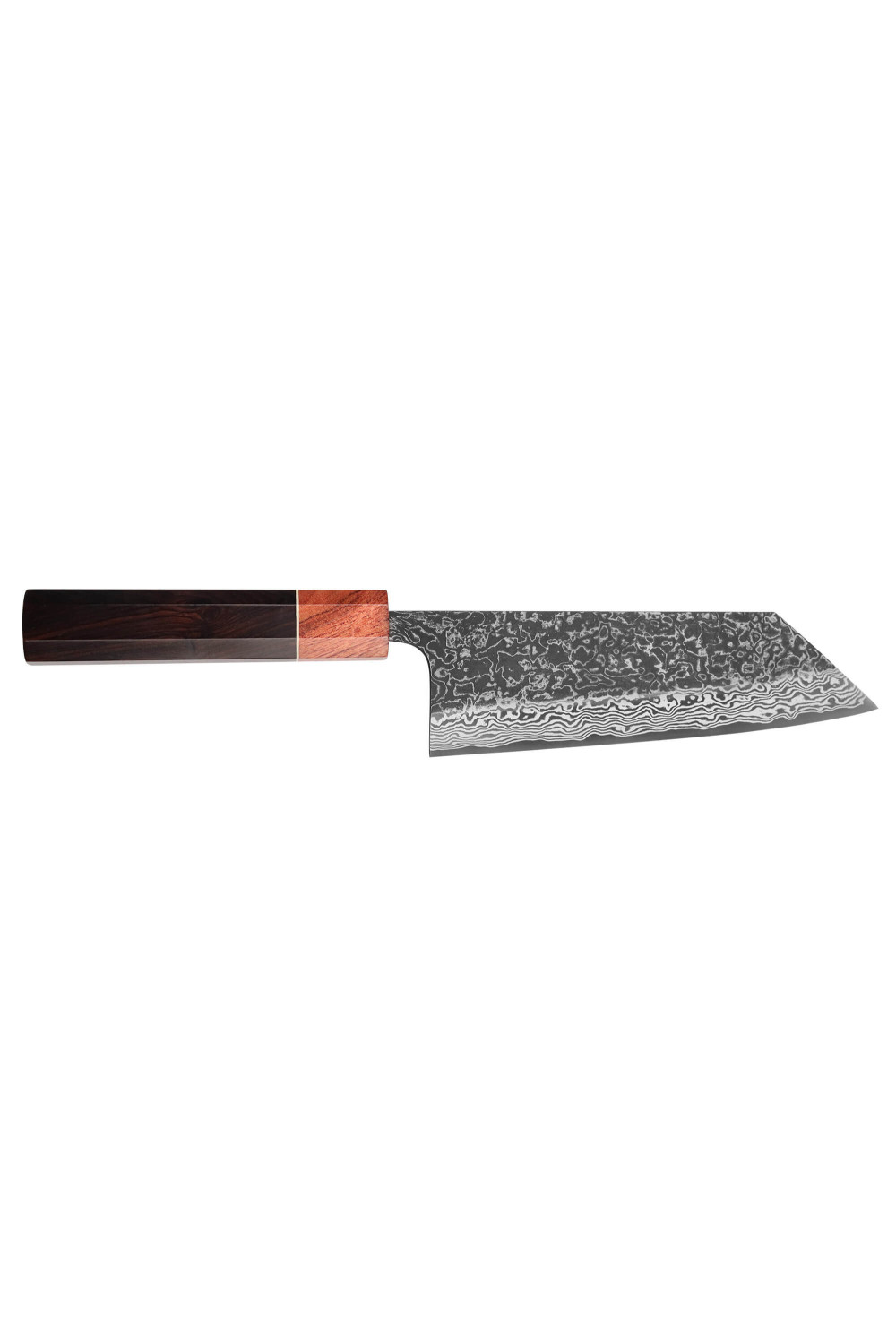
The upper part of the blade has a beautiful dark finish, which is why the name of the knife indicates"kuro", which means "black" in Japanese. The contrast created on the blade, in addition to the unusual look of the damascus, gives it a lot of character.
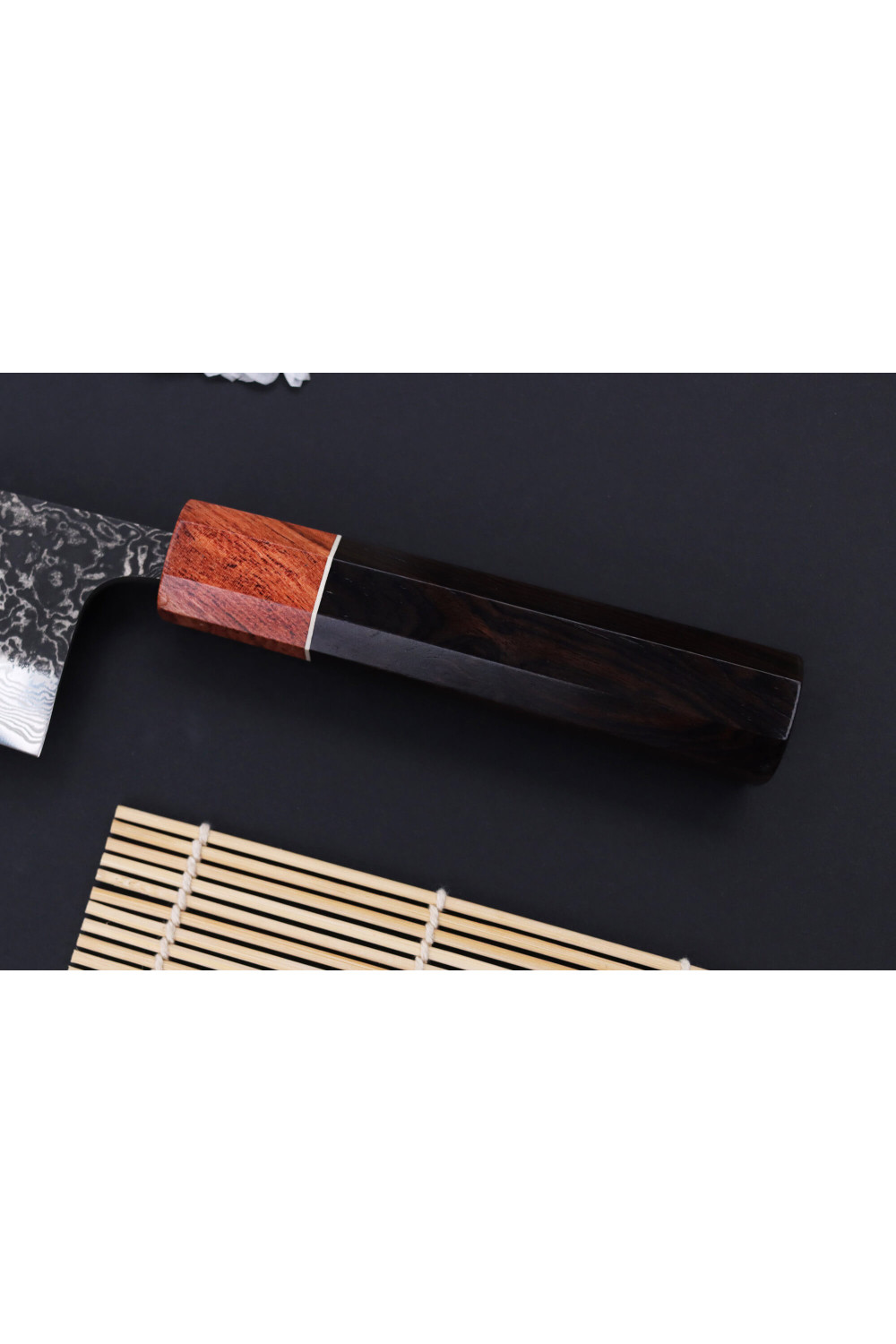
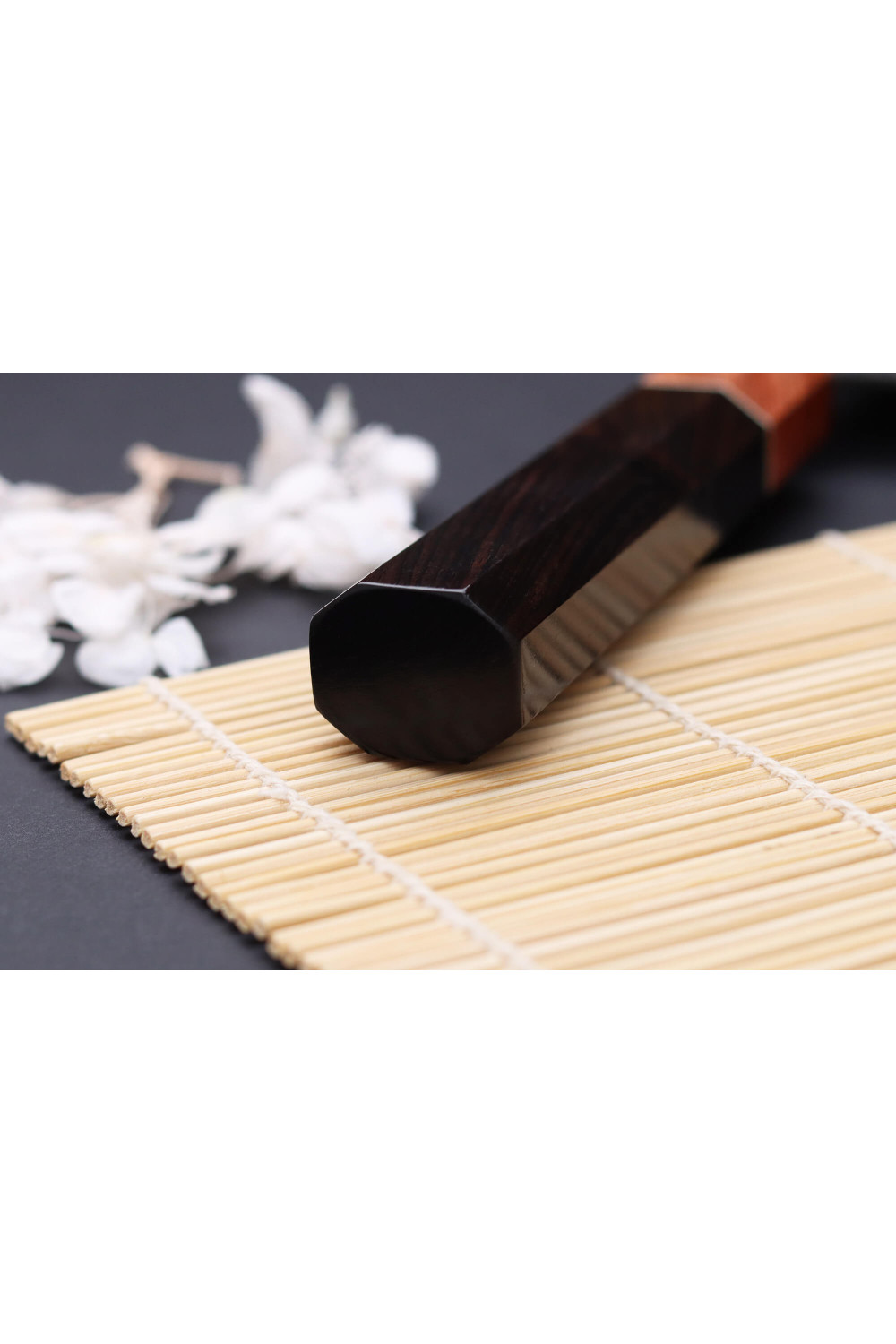
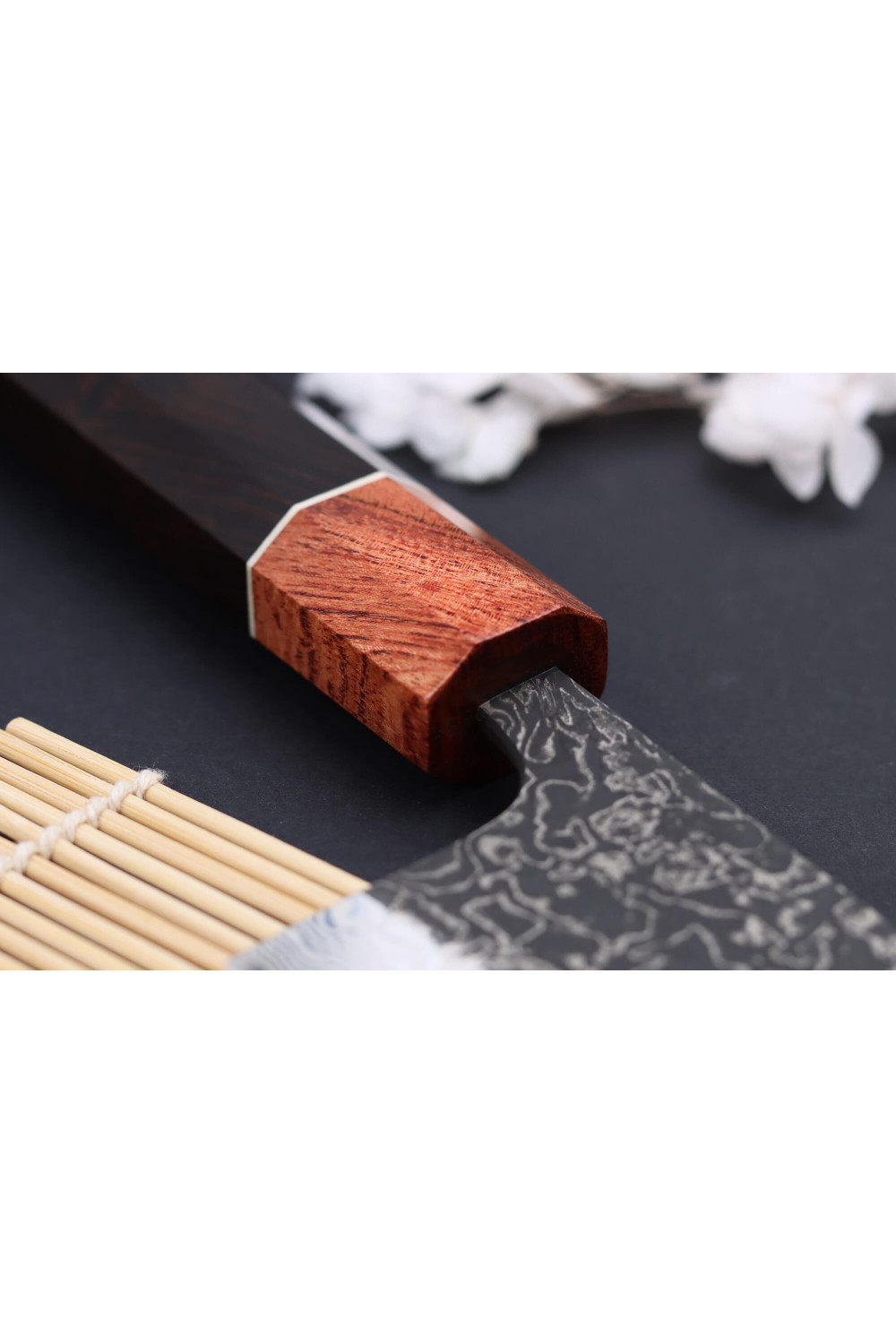
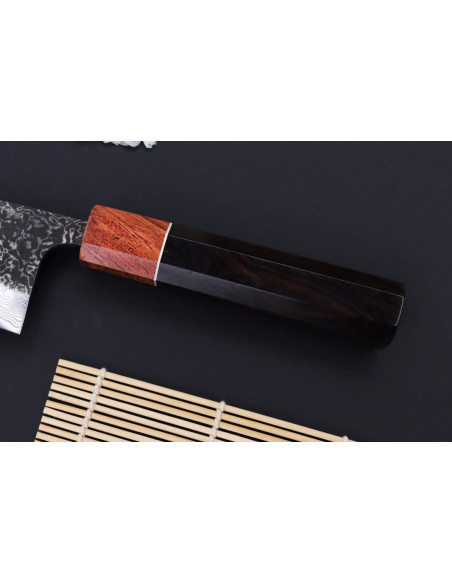
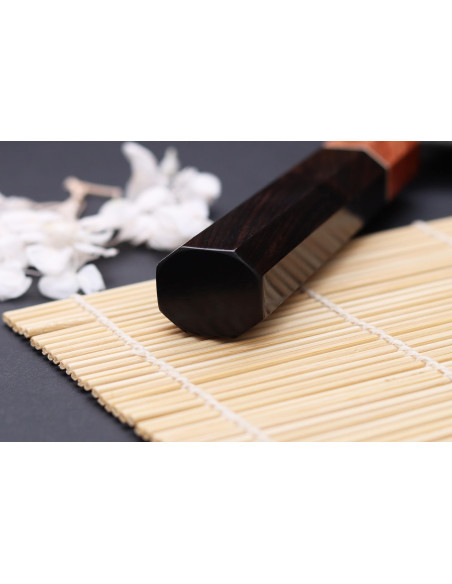
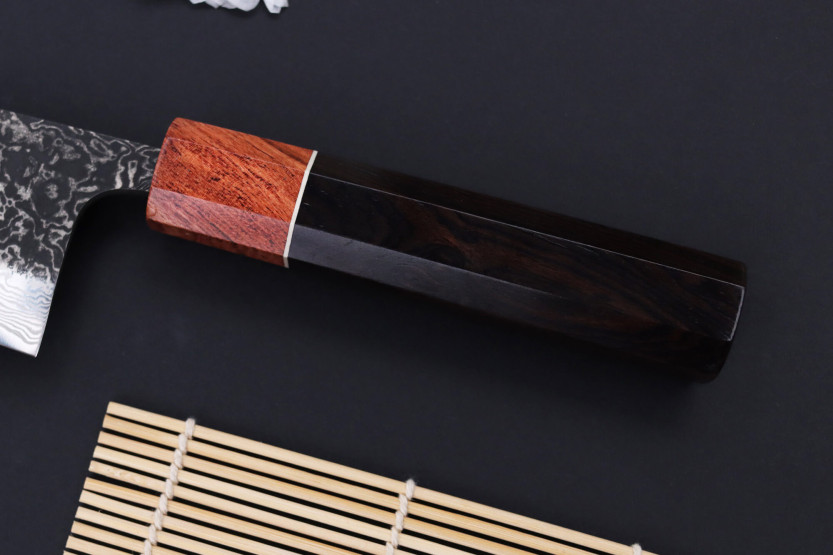
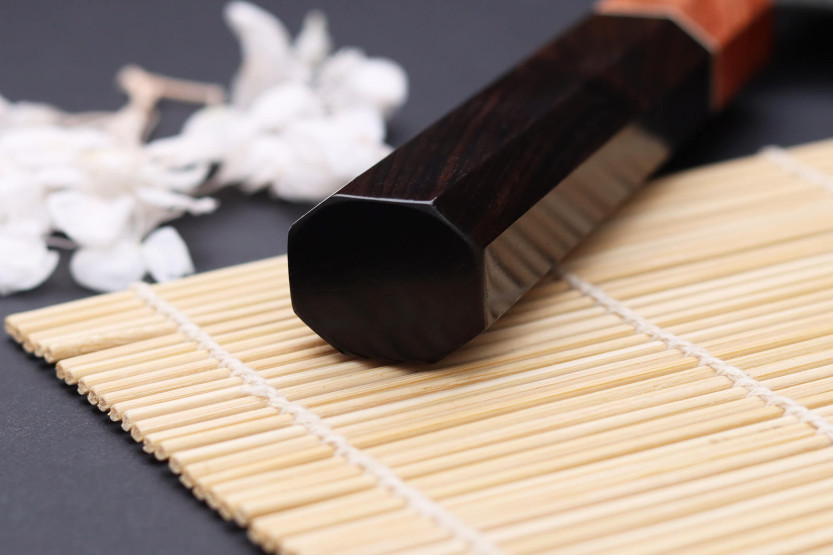
The handle is made of ebony. This beautiful, warm-tinted wood is considered dense, which means it is better protected from cracking than other woods. It is well suited to regular, even daily use. It's durable, which is an asset in the kitchen! Its octagonal shape ensures a comfortable grip and ambidextrous use.
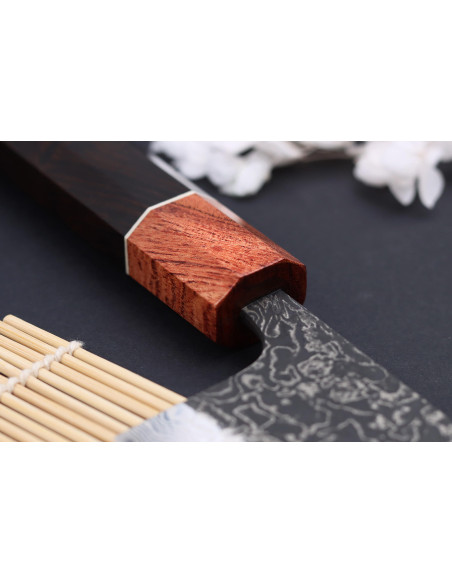
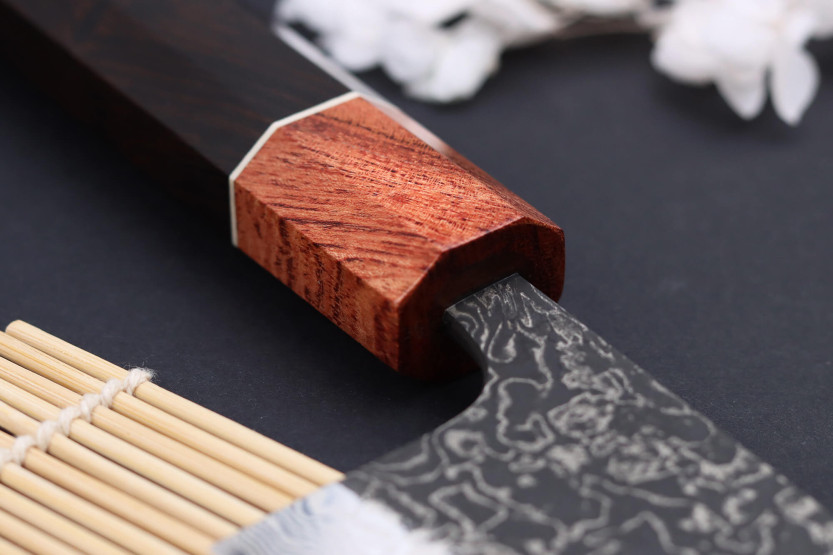
It is complemented by a bolster in quince, a resistant wood that also adapts well to temperature changes. Its lighter color contrasts well with the darker ebony.
An elegant white micarta ring links the two woods.
The blade is fixed to the handle with wood paste, which fills the space between the different materials to prevent water from seeping in, or small food cuts from entering.
Caring for your masashi Japanese knife
Your knife is made from high-quality, elegant materials. So don't put it in the dishwasher or let it soak in the sink. Wash it by hand immediately after use, and dry it. And don't soak the handle too much, as wood is not fond of water. Finally, you can store it in a dry place, once you've checked that there are no traces of moisture.
As previously mentioned, knives are considered oxidizable (via carbon), so it's important to store them without any trace of moisture. Also, over time, the blade may change color, and this is perfectly normal! In fact, the acidity of food and the humidity of the air can have an impact on its color.
See all Masashi forged knives selected by our team!




 By buying this product you can collect up to