Bring Japanese performance right into your kitchen!
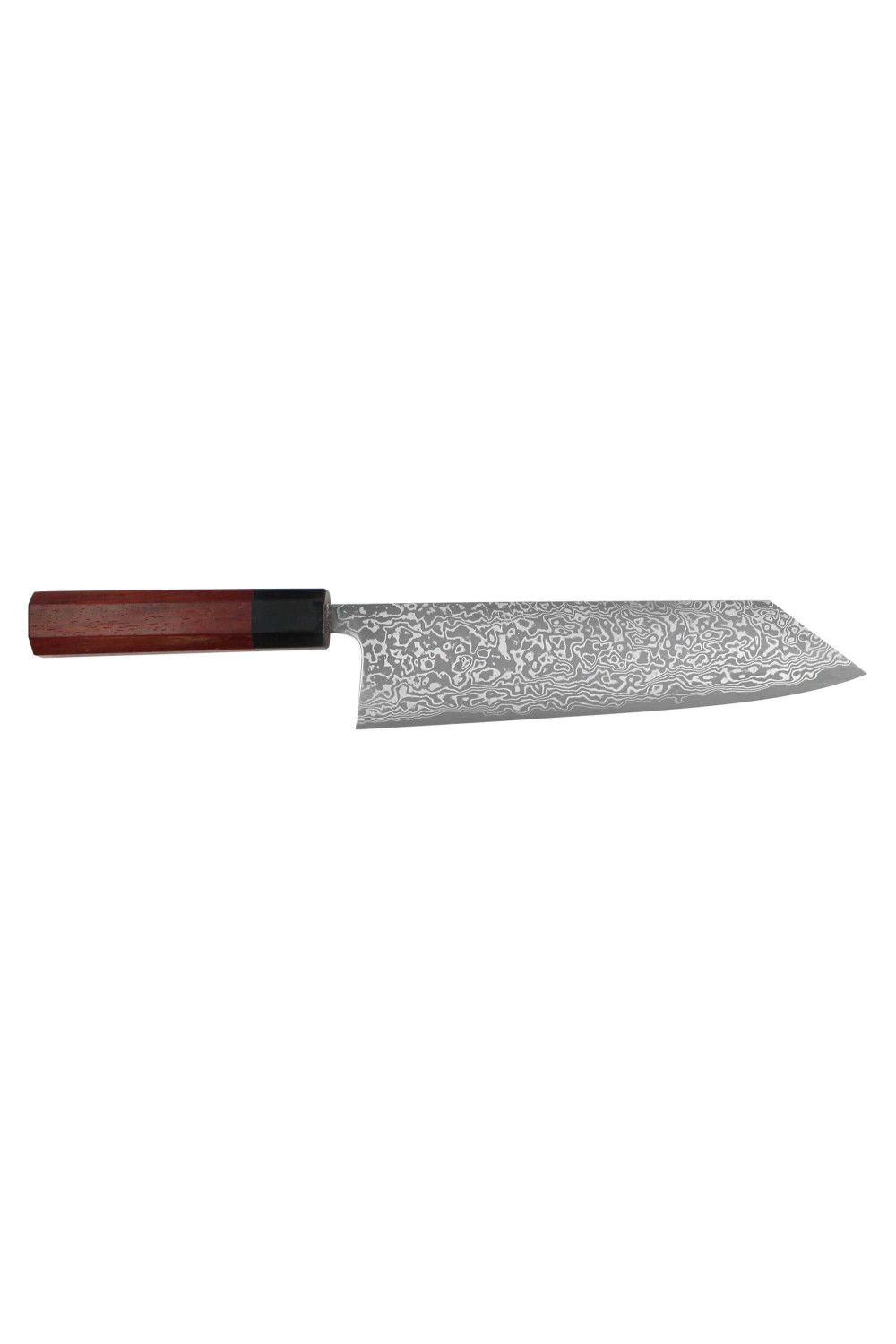
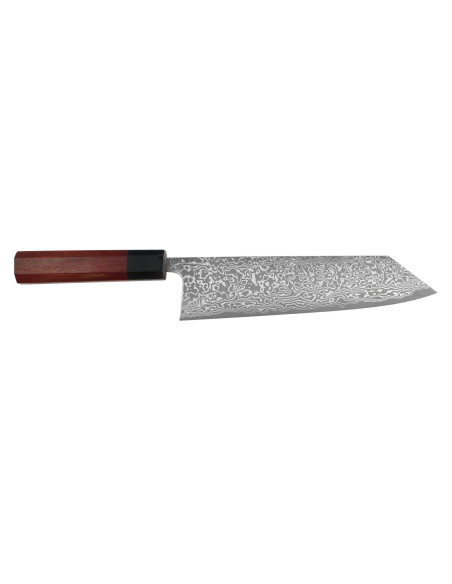
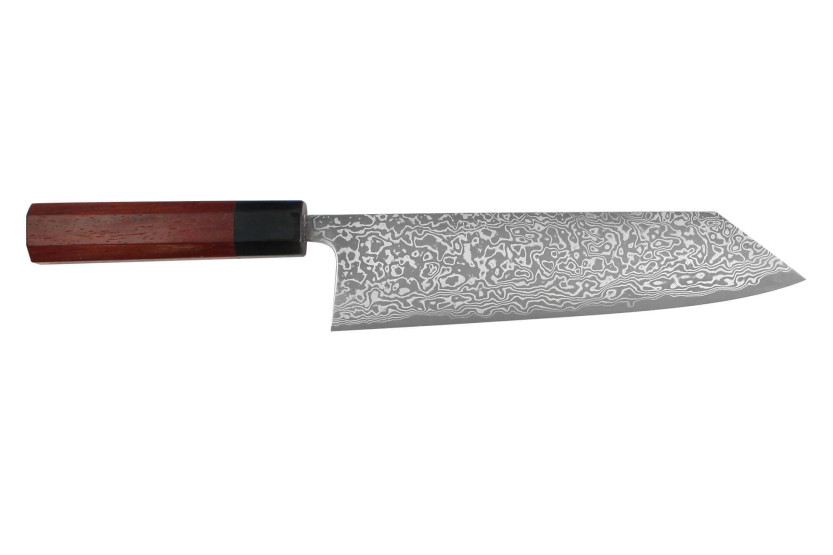
The Kiritsuke Masashi Yamamoto Japanese knife is no exception. It makes cutting easy, and even adds a touch of poetry. Beautiful, efficient and durable, it's here for the long haul. Not only can you use it to cut large fruit and vegetables, but also to mince meat and chop fresh herbs. This is a versatile model, similar to the Western chef's knife, but with an original shape reminiscent of traditional Japanese swords. However, it should not be used to cut excessively hard foods (squash, bones, frozen foods...) to avoid damaging the cutting edge!
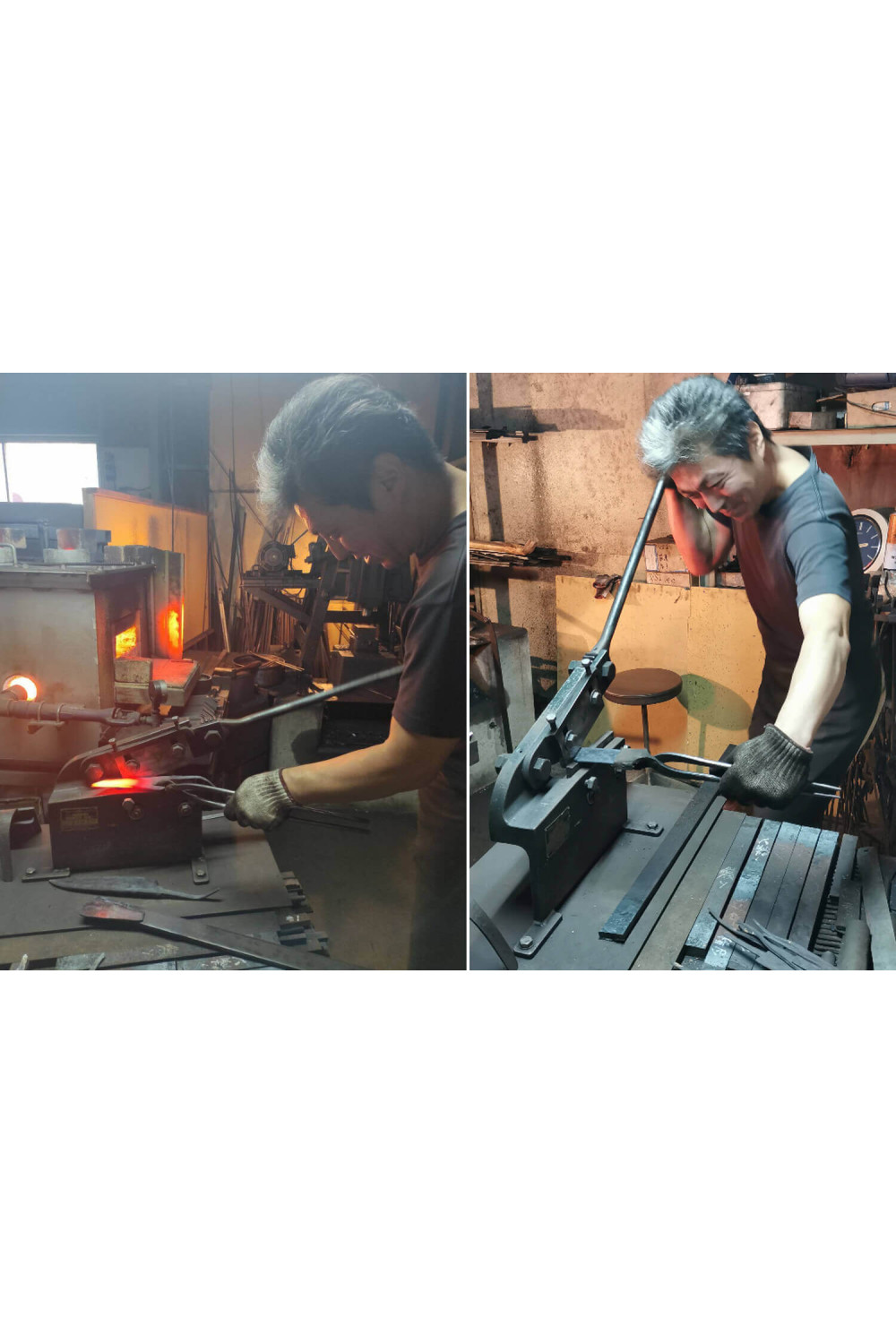
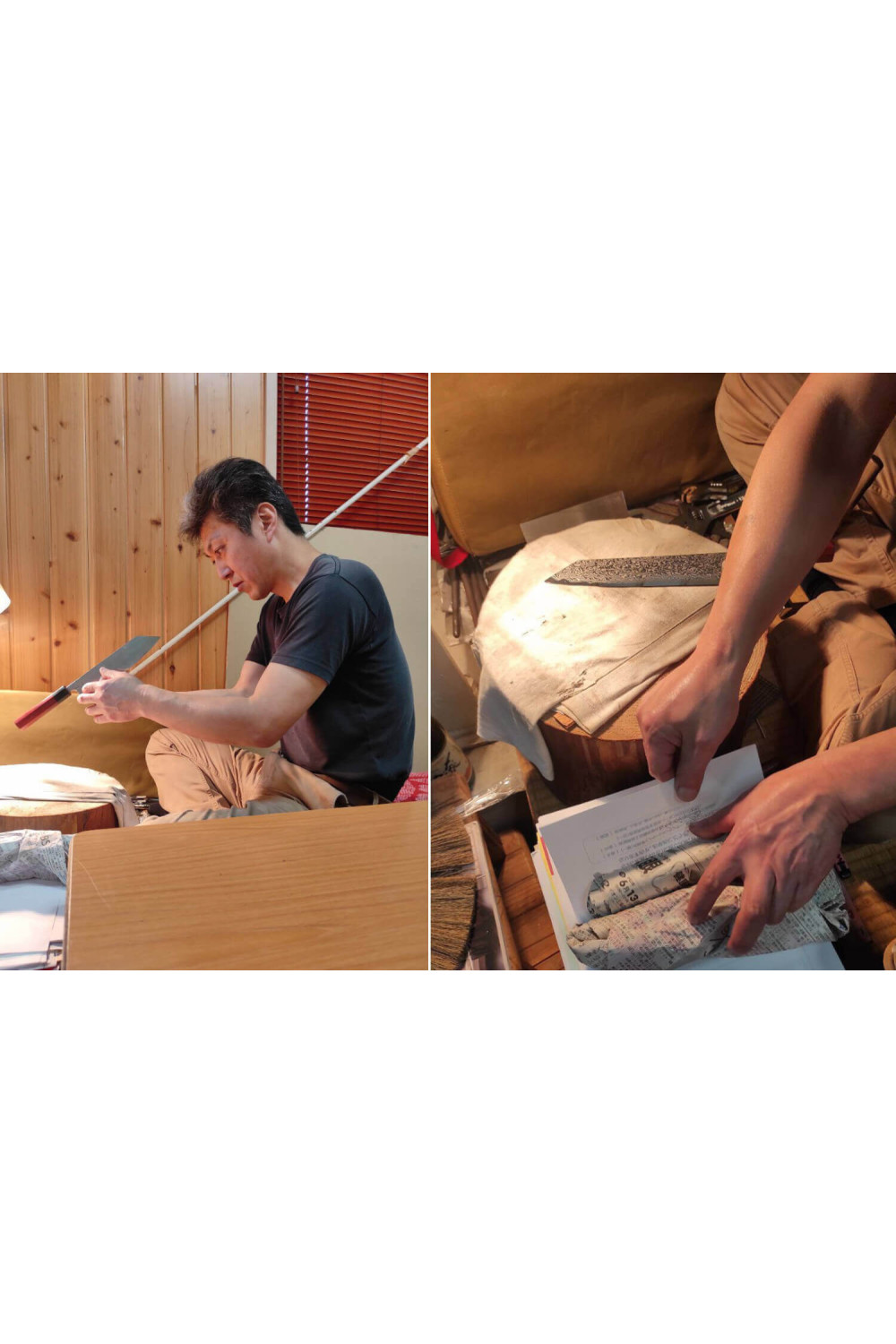
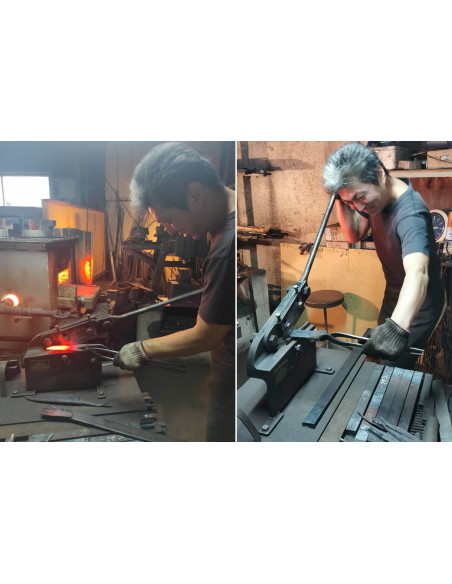
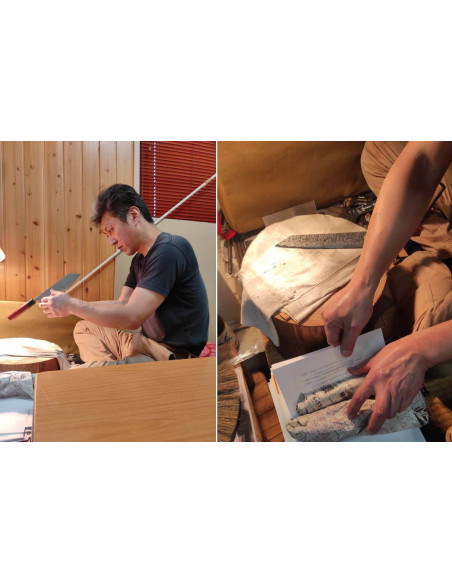
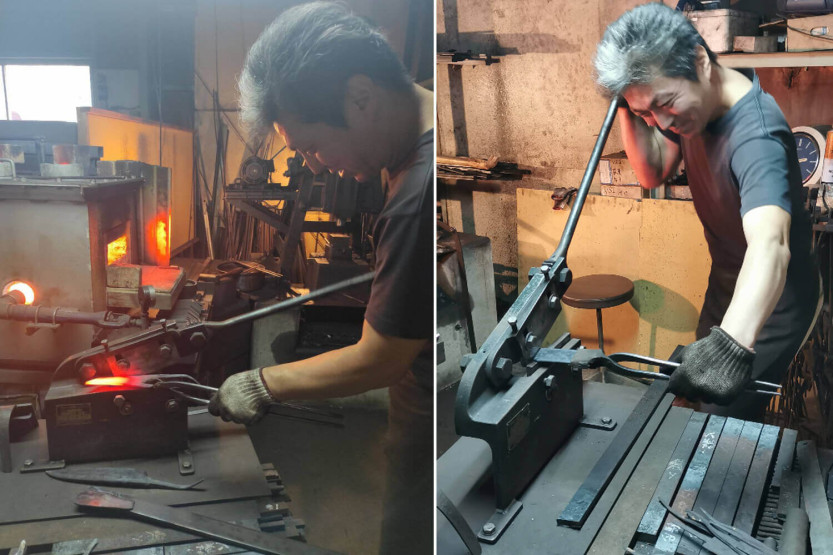
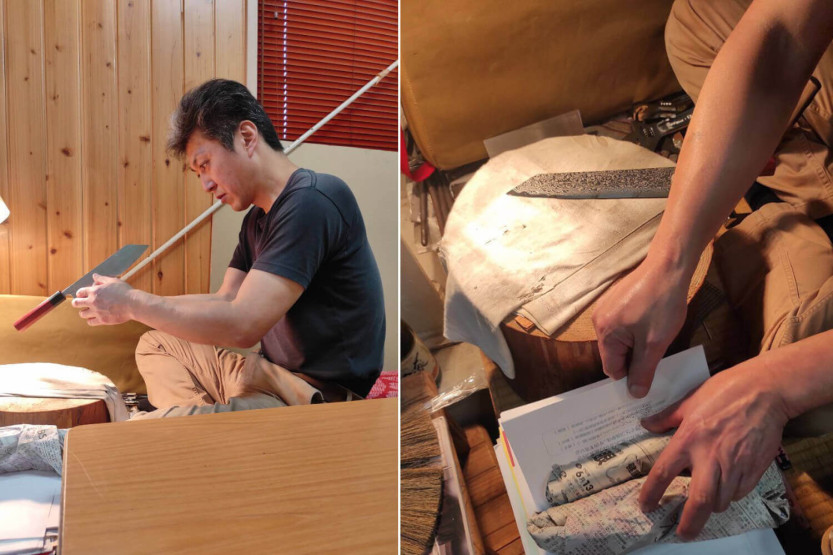
We'd also like to tell you more about the blacksmith who makes this knife: Masashi Yamamoto san launched his workshop in 2013, after learning the trade from his older brother. Even though he's still young, Masashi creates magnificent models with sharp edges and superb polish. He's also known for achieving harder-than-average blades thanks to interesting special heat treatments. Despite his youth, he now teaches his skills to two apprentices! His unique style also makes him an icon: he forges in flip-flops, often with a cigarette in his mouth. He's got a style all his own.
This knife features a damascus blade. Damascus is a blade construction process: a rigid core is surrounded by several layers of softer steel, which balance it (i.e. make it more supple, less brittle) and protect it.
For this particular knife, Masashi san chose SLD steel for the heart of the blade. This is a Japanese steel, produced by the world-renowned steelmaker Hitachi. It is enriched with 1.6% carbon. Carbon is an essential element for increasing the hardness of an alloy, since a hard alloy is one that will hold its edge over time. So it's a real advantage. Here, thanks to this high carbon content, the blade reaches 63 HRC on the Rockwell scale, proof that the core of the blade is ultra-hard and that the knife will perform well over time, despite use.
It also contains 13% chromium, making it more resistant to corrosion. Note, however, that this steel is still considered carbon steel. In fact, even though it has a good chromium content, it is still oxidizable (but a little less so than carbon knives, which do not contain as much chromium).
Another advantage of SLD alloy lies in its micro-structure: it is very well balanced and the micro-carbides are evenly distributed. This increases its resistance to wear and micro-cracking.
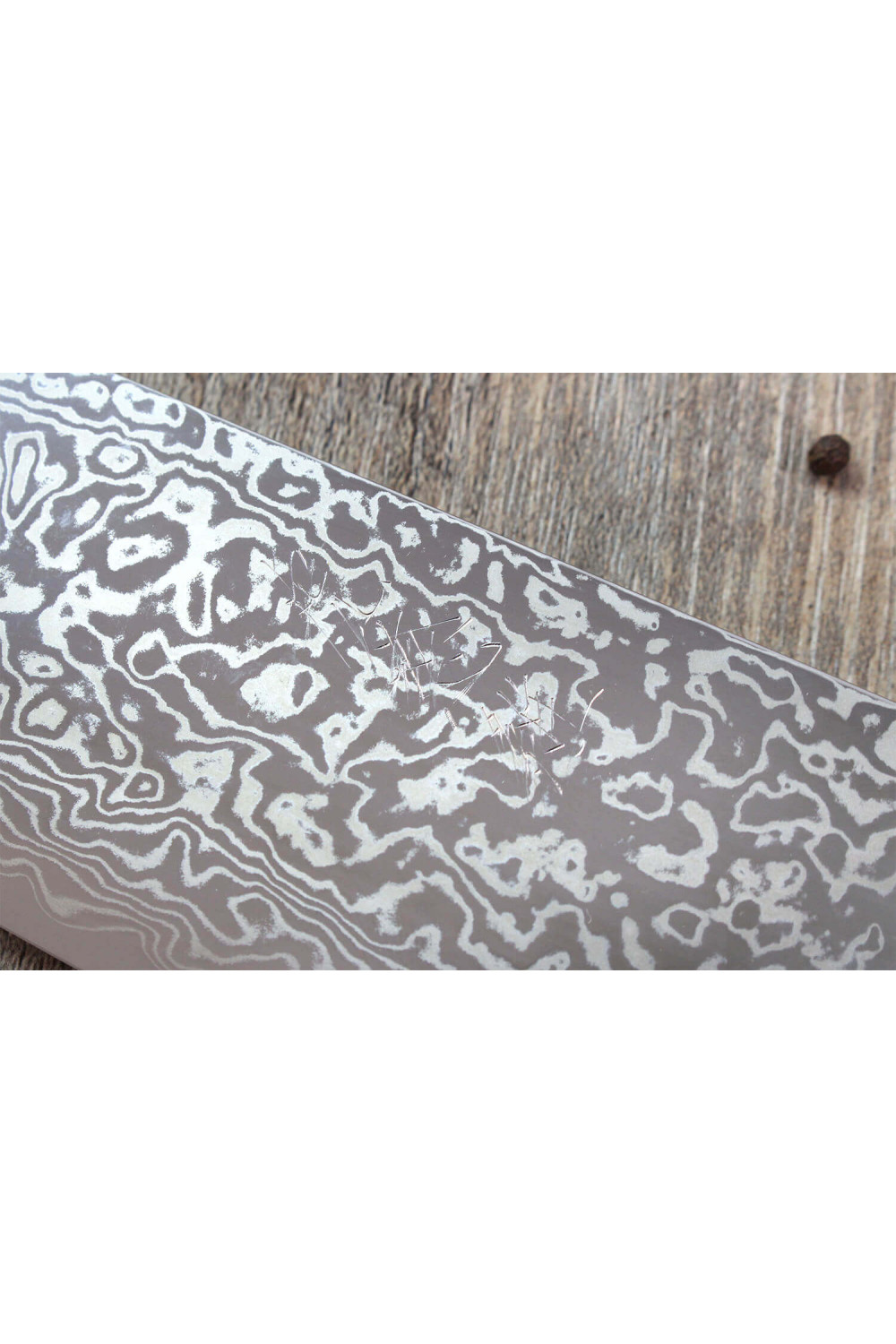
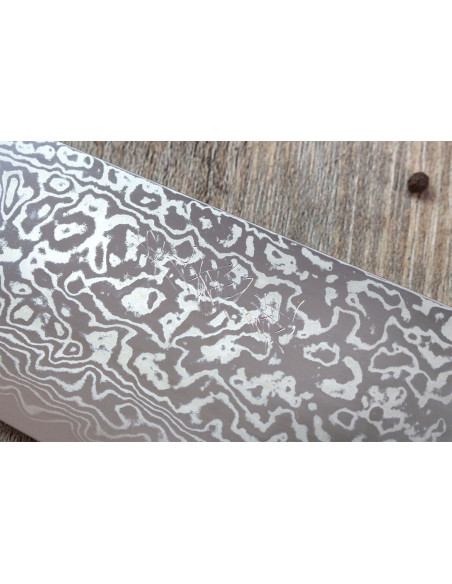
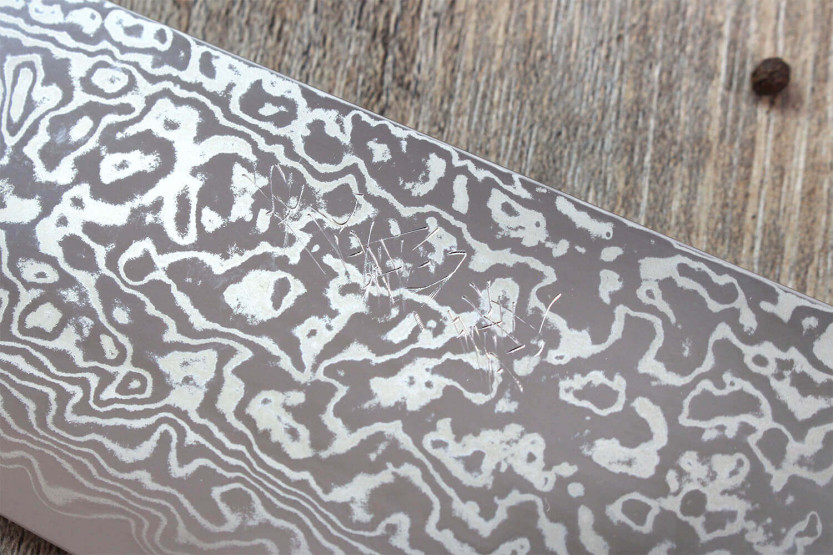
Then, to meet damascus criteria, this SLD steel is surrounded by several layers of softer steel, which protect it and balance its hardness. The steel applied on top is enriched with nickel, which is what creates the color difference between the different damascus layers. The effect is unprecedented!
The blade has been mirror-polished for even greater elegance, and you can see the kanji hand-engraved by Masashi san.
Note that Masashi Yamamoto knives have a thinner tip than the average knife. In fact, the thickness of the blade narrows as you reach its tip, making it more flexible and therefore easier to cut, with a more pleasant, natural feel in use. This is further proof of the expertise of this outstanding blacksmith. However, be careful not to press too hard, as flexibility has its limits!
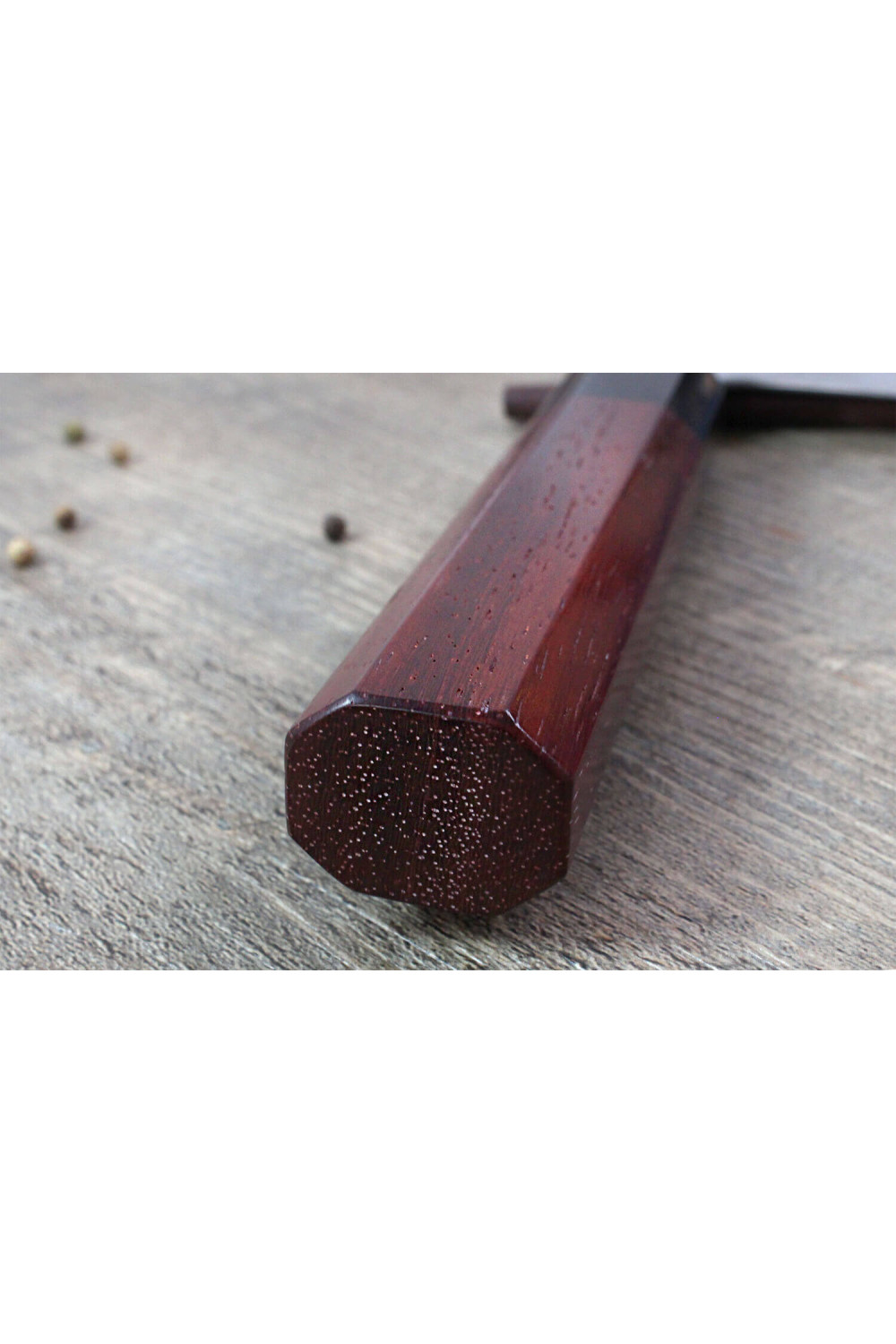
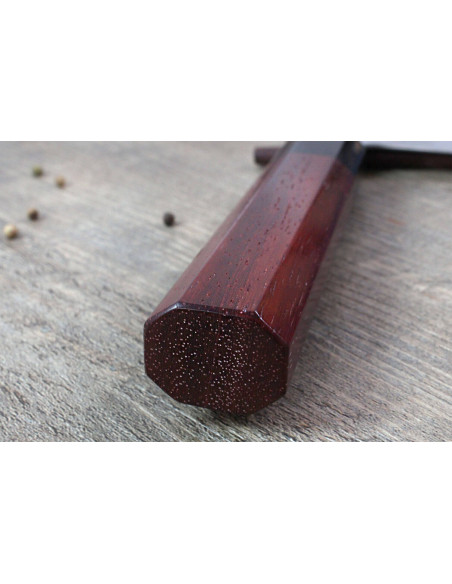
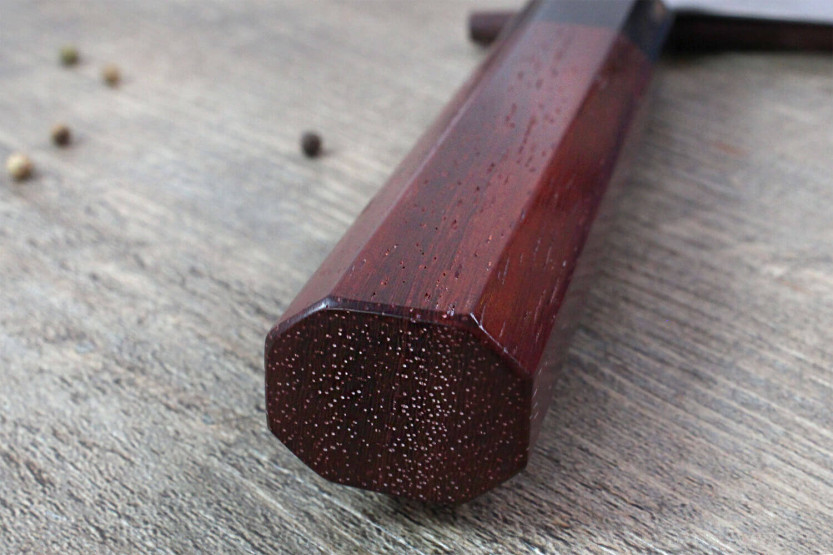
For the handle, Masashi chose mahogany. This brown wood ranges in hue from dark red to pinkish, with a fine, even grain. Considered soft, it is nevertheless highly shock-resistant, making it a pleasure to use in the kitchen. It is also lightweight, which enhances the knife's ergonomics. Its octagonal shape makes it practical for both right- and left-handed cooks.
It is completed by a black Pakka wood bolster. Despite its name, Pakka wood (or Pakkawood) is not a pure wood, but rather a laminated wood heat-hardened with resin. It's a composite material that looks like wood, but is much stronger.
The blade is attached to the handle with wood pulp, which fills the space between the different materials to prevent water from seeping in, or small food cuts from entering.
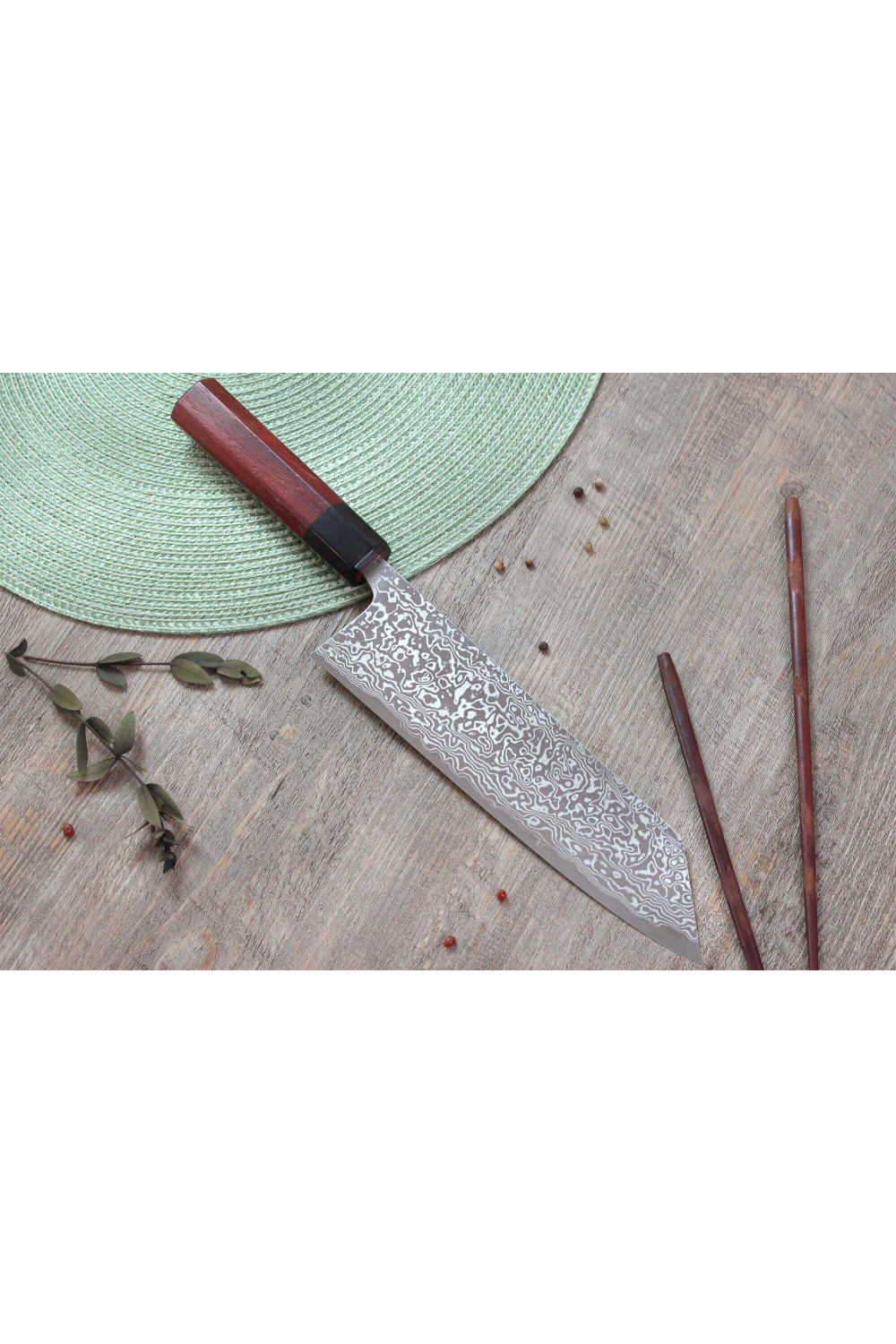
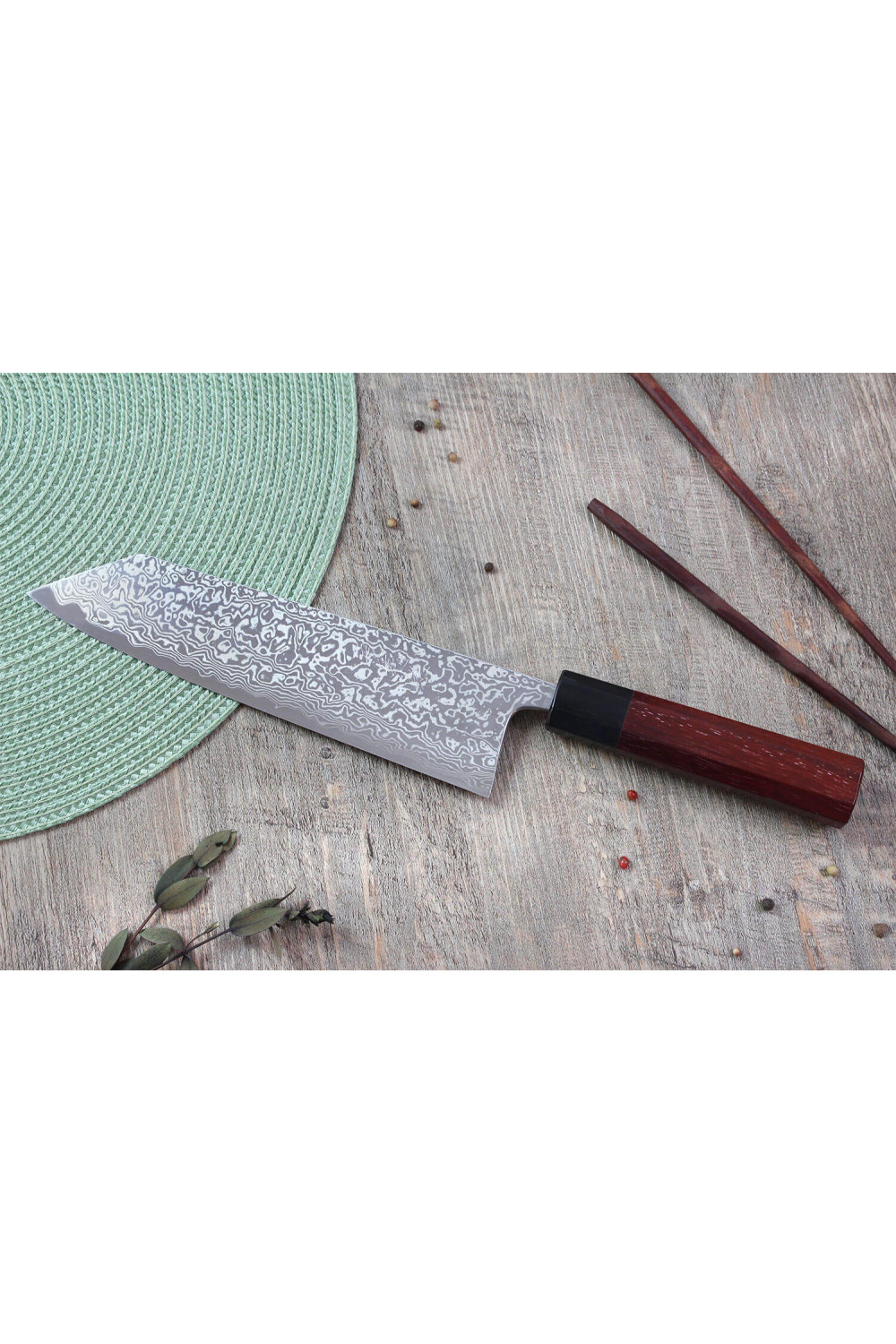
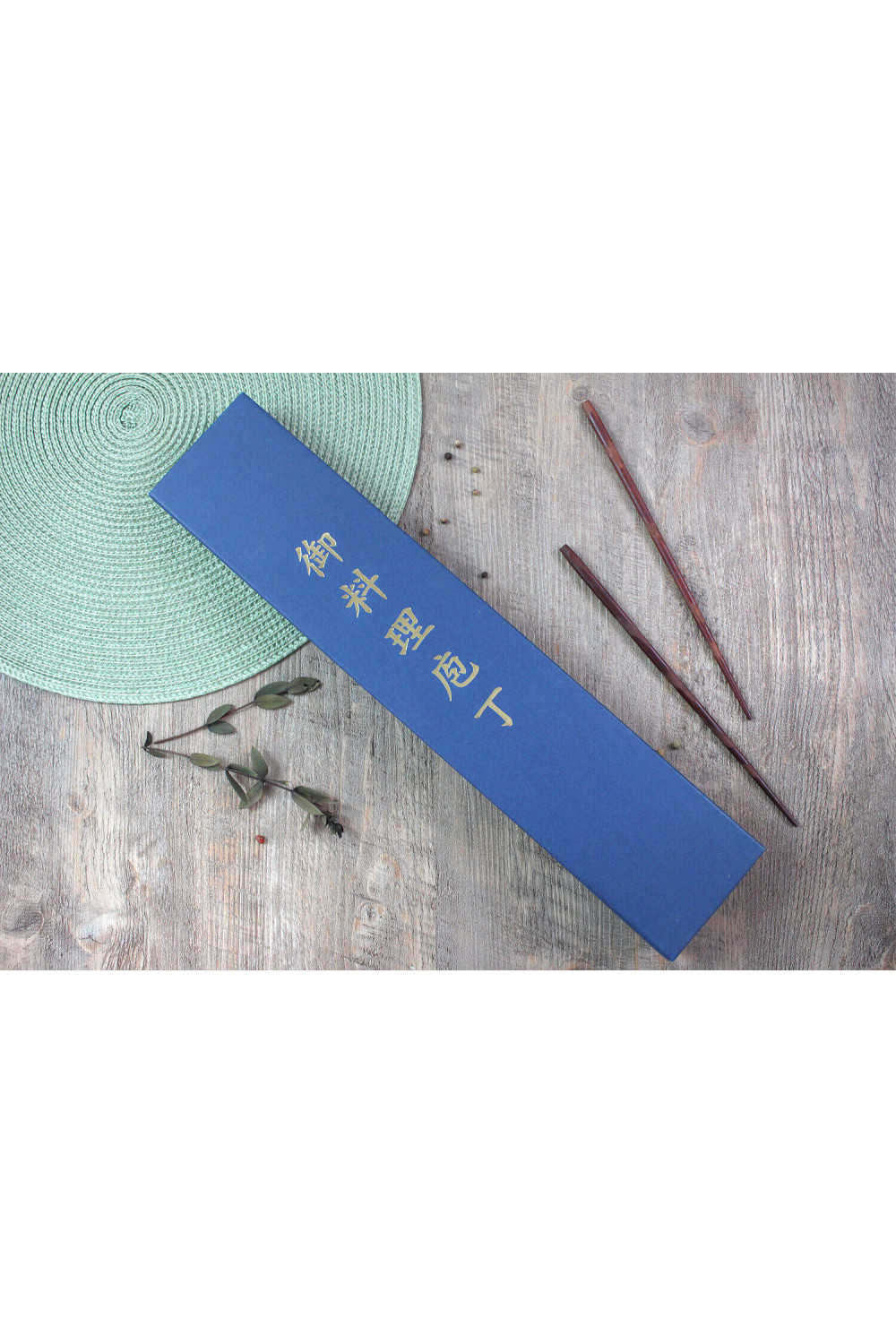
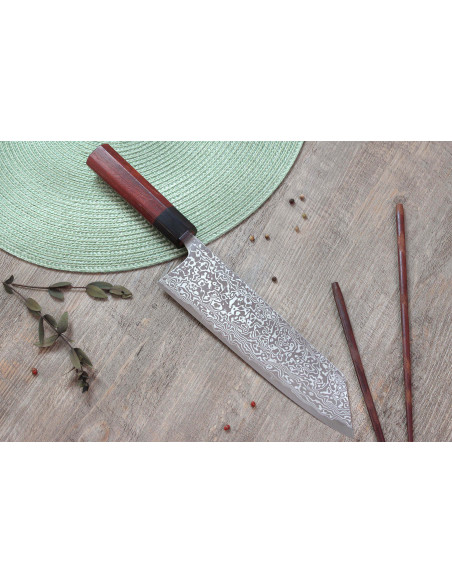
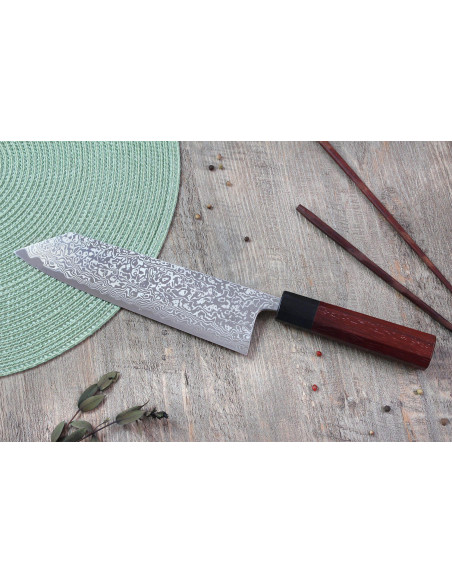
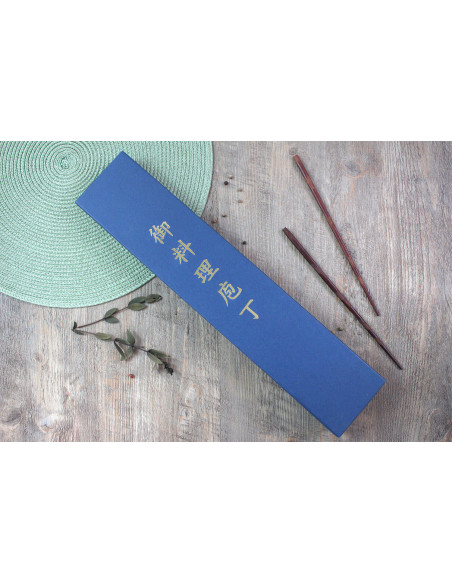
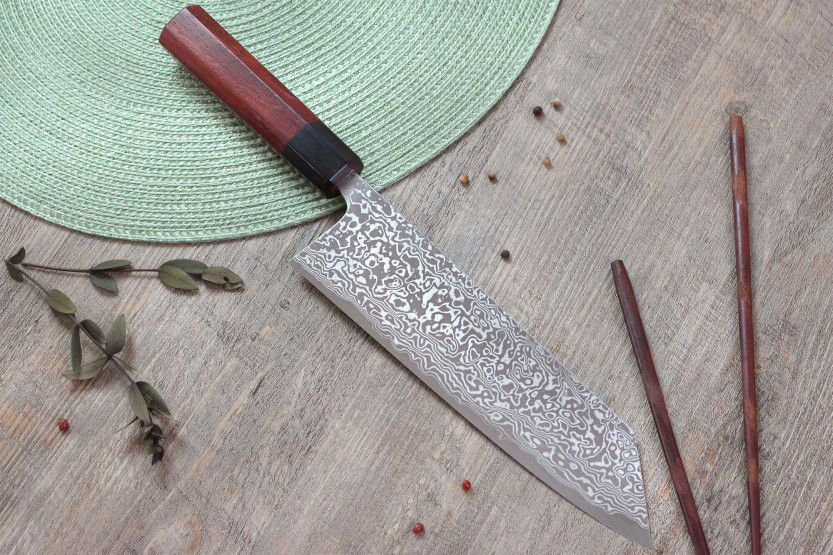
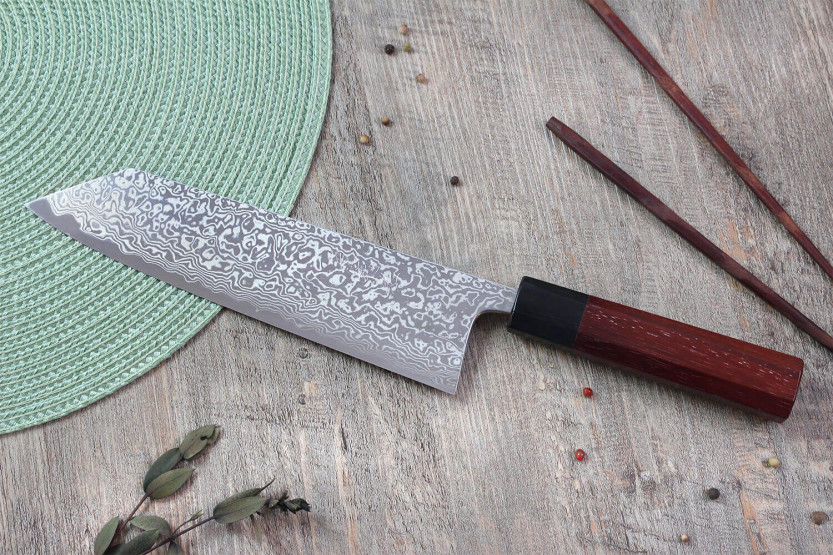
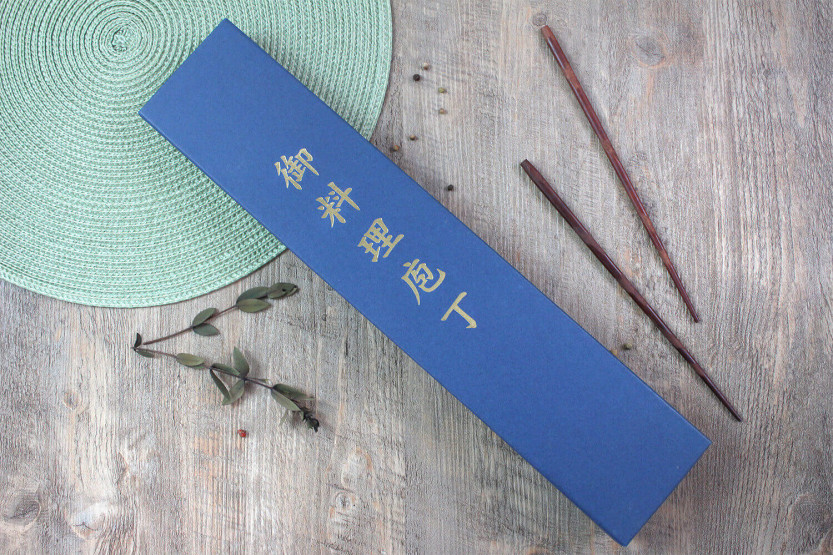
The contrast between the nickel damascened blade and the warm-toned handle is striking! This unique knife comes in a blue cardboard box. You can give it as a gift and please a passionate cook!
Care: the knife should be washed by hand, using a mild detergent and a soft sponge. Do not put it in the dishwasher or soak it in your sink. What's more, mahogany wood is not very fond of moisture, so avoid getting the handle too wet. Once the knife has been washed, wipe it dry before storing it in a dry place.
As previously mentioned, knives are considered oxidizable, so it's important to store them without any trace of moisture. Also, over time, the blade may change color, and this is perfectly normal! In fact, the acidity of food and the humidity in the air can have an impact on its color.
Don't hesitate to browse our superb selection of handcrafted Japanese knives!




 By buying this product you can collect up to