Masakage Koishi knives are handcrafted by the talented blacksmith Yoshimo Kato san. With an impeccable reputation, this craftsman offers Japanese kitchen knives that are unique and of superior quality.
He had the privilege of learning from renowned masters such as Hiroshi Kato San, his father-in-law, an internationally respected cutler. He is a founding member of the Takefu Cutlery Village, a place where blacksmiths share their know-how and experience to develop their skills. Following his master's retirement, Yoshimi Kato took over his workshop, continuing to produce his knives while launching his own models of Japanese knives.
(Hiroshi san on the left and Yoshimi san on the right)
A handcrafted Japanese knife made by a renowned Japanese blacksmith
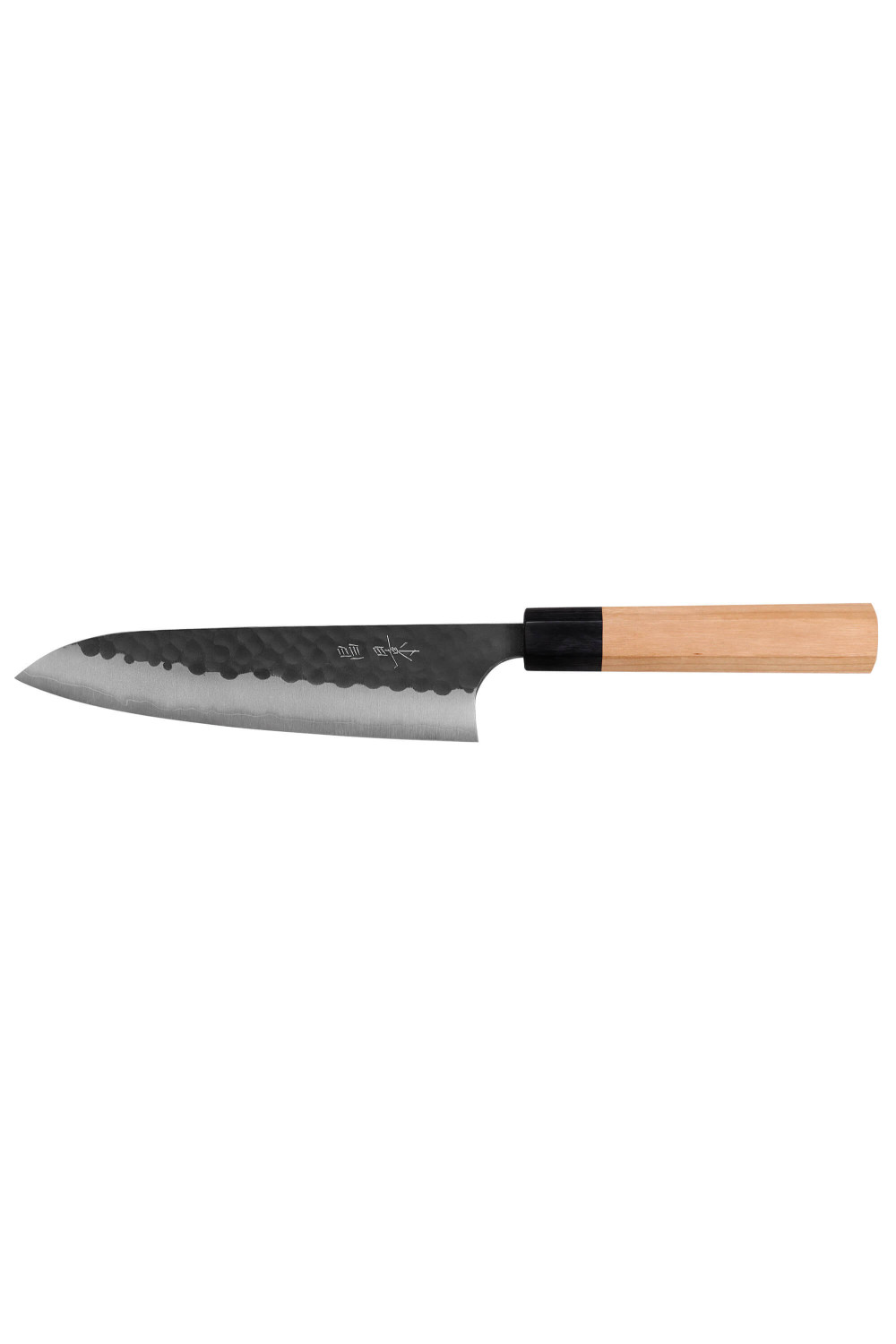
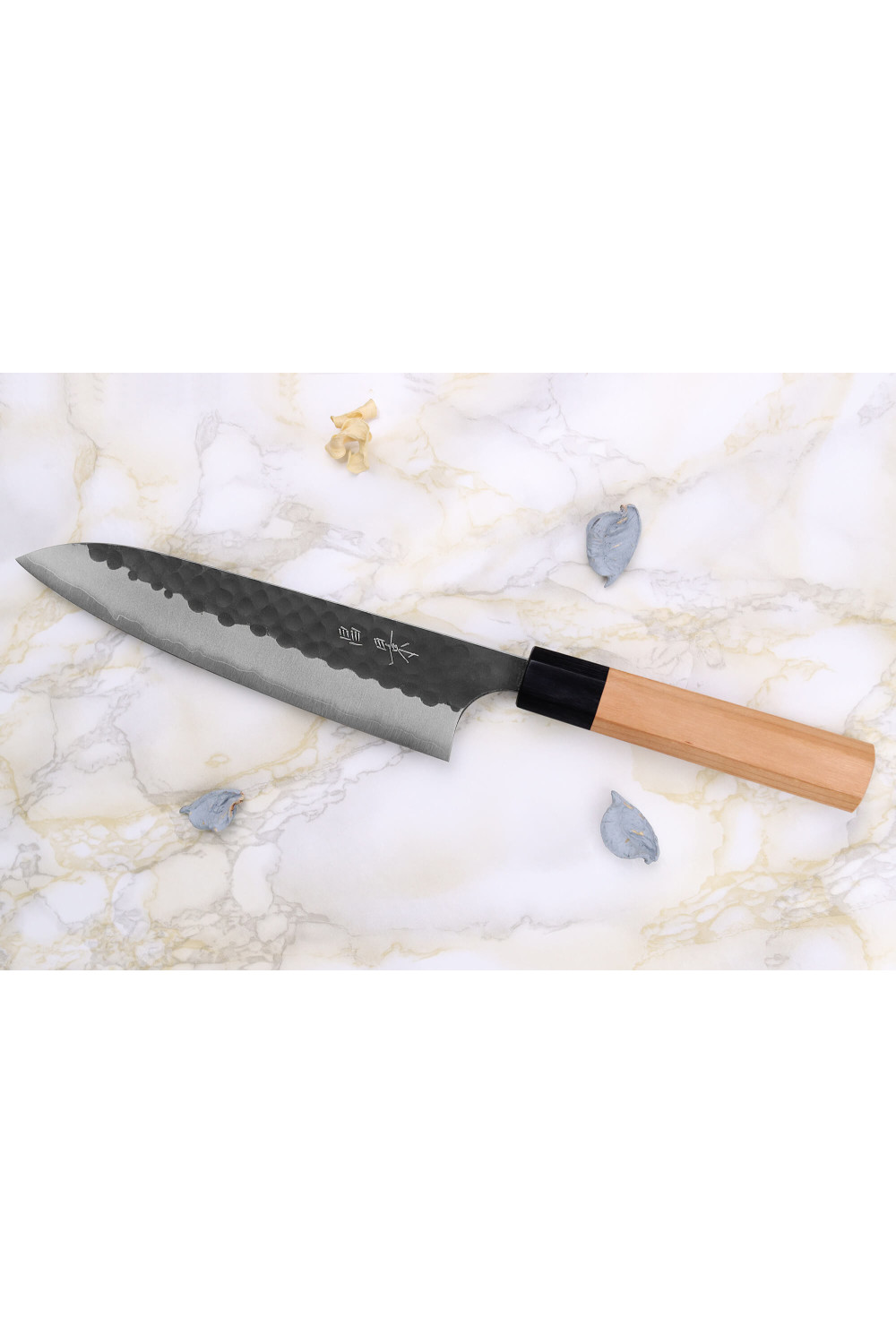
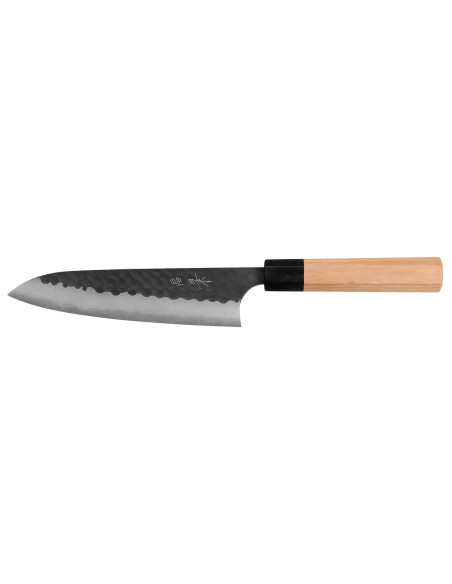
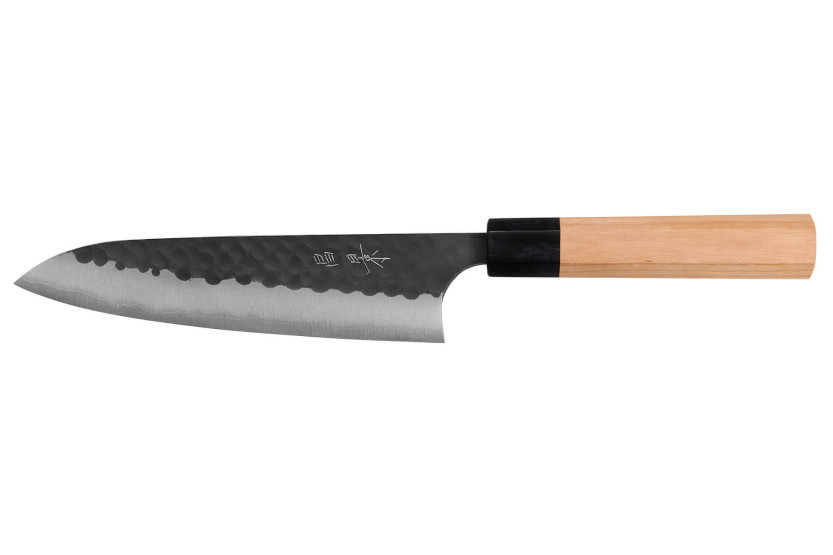
Yoshimi Kato forged this Japanese chef's knife, featuring a blade forged according to the San Maï structure, resting on three superimposed layers of steel. At the heart of this typically Japanese structure is Aogami Super steel (also known as Blue Super Steel). This steel is produced by Japan's renowned Hitachi steelworks, internationally renowned for the quality of their alloys.
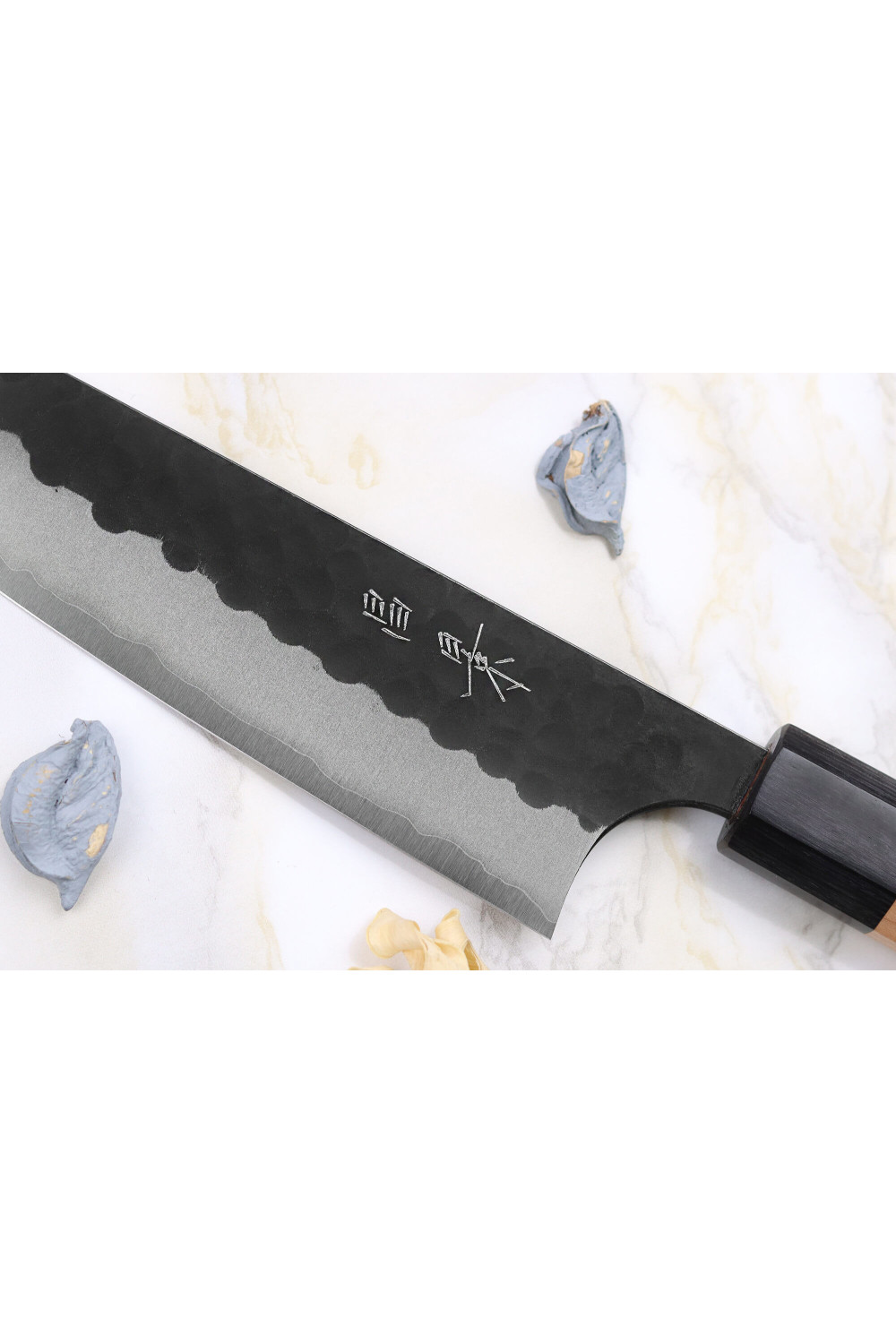
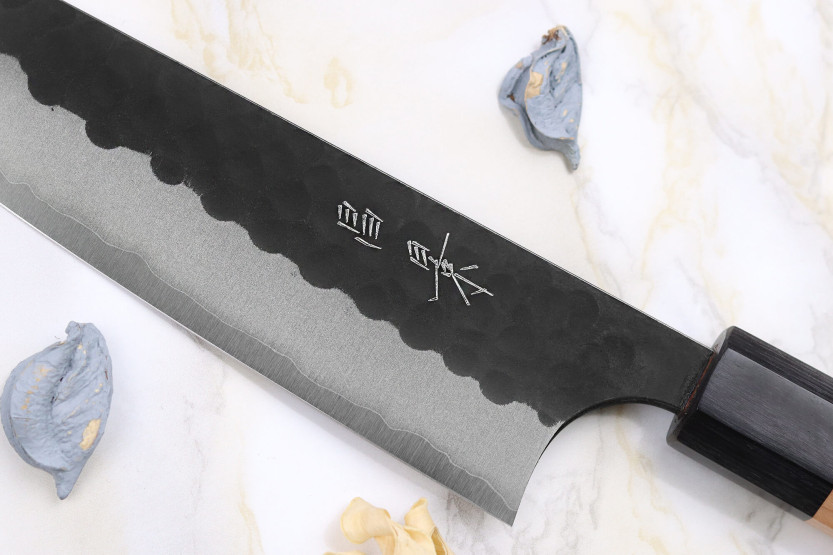
Around this Aogami Super core, a layer ofstainless steel is carefully folded in half, creating the three distinct layers of the blade. This outer layer of stainless steel plays an essential role in balancing the rigidity of the Aogami, providing a slight suppleness (this knife is not flexible, but balanced), without compromising its strength.
Blue Super Steel, with a carbon content of around 1.5%, stands out clearly from the Western average of around 0.5% for kitchen knives. This high carbon concentration gives the alloy a high degree of rigidity, which is important for maintaining an optimum cutting edge over time. Aogami Super steel is particularly effective for cutting fibrous foods, making this handcrafted Japanese knife an ideal choice for a variety of kitchen tasks.
It's also important to note that, despite its rigidity, Aogami Super steel remains relatively easy to sharpen.
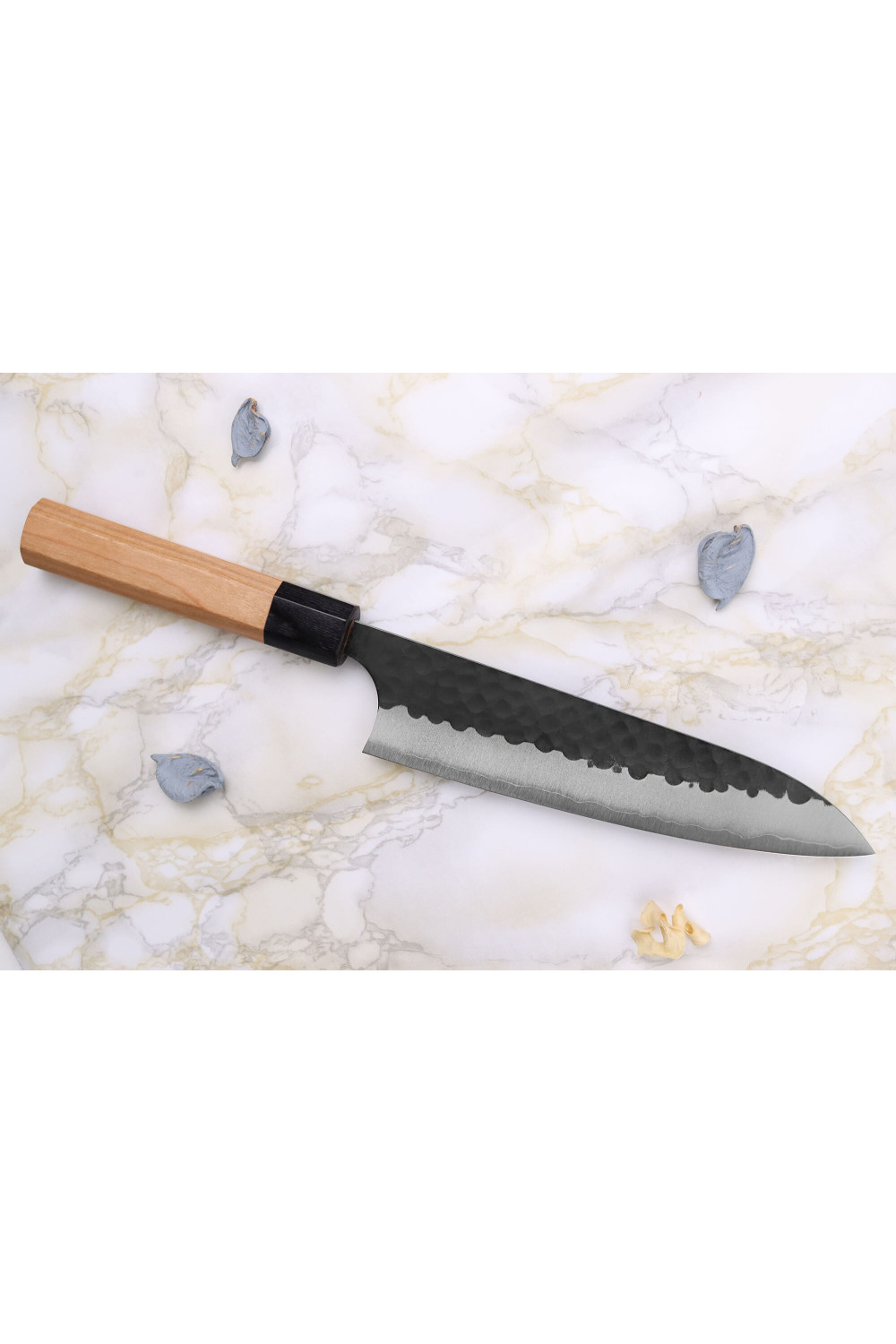
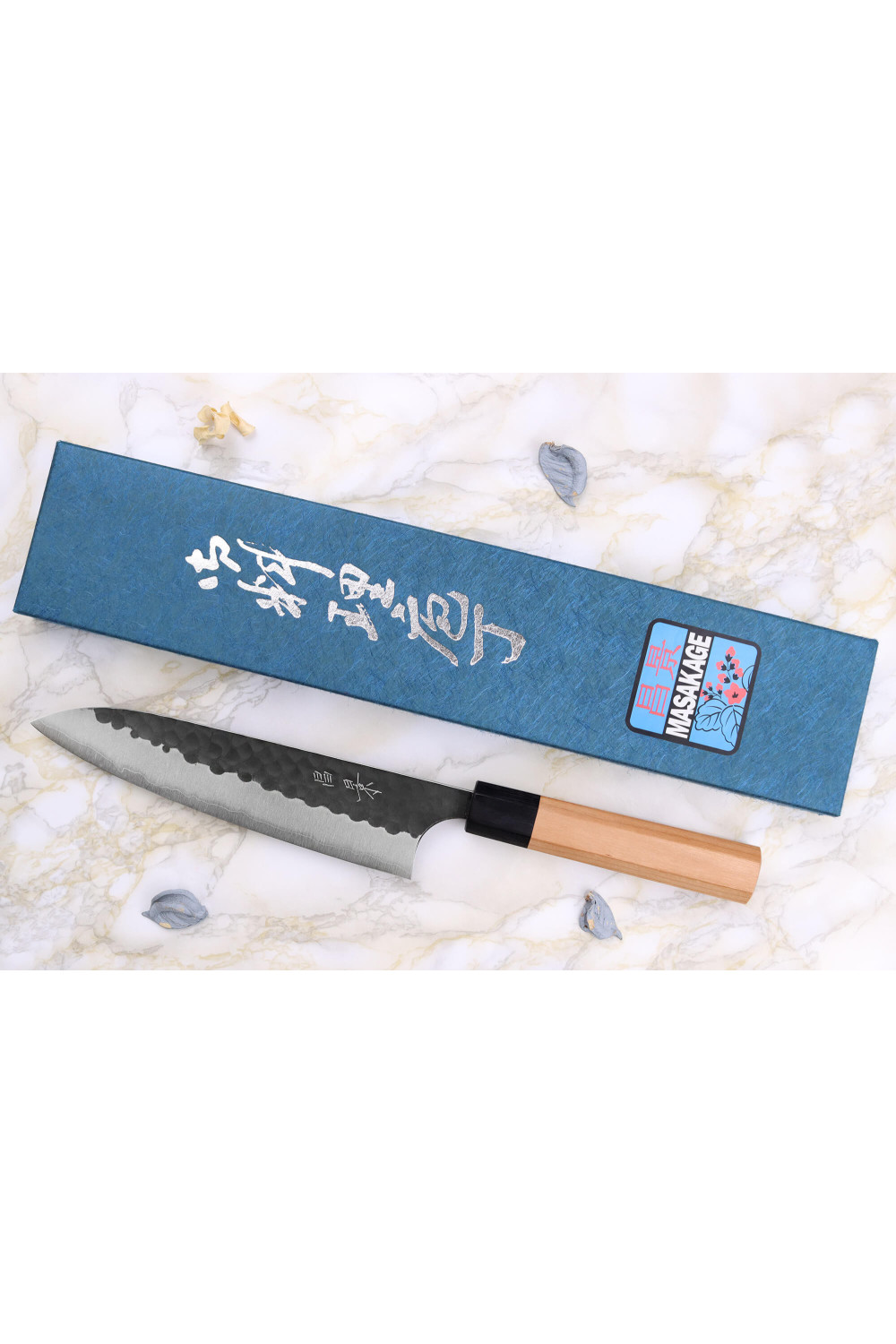
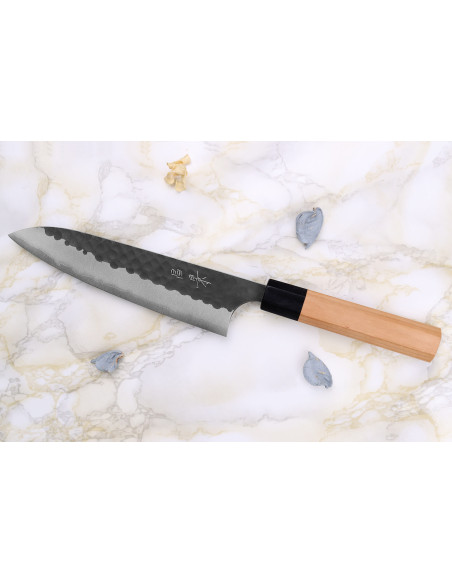
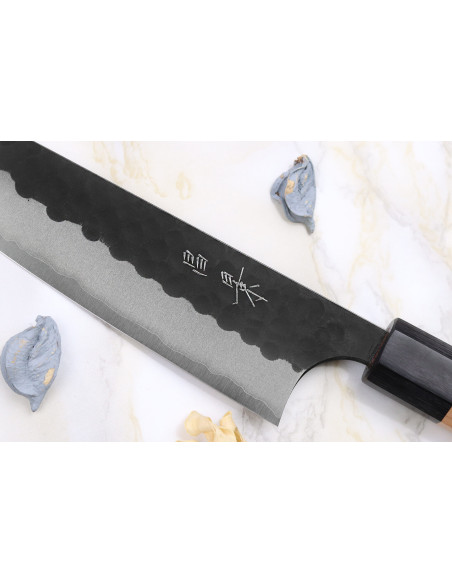
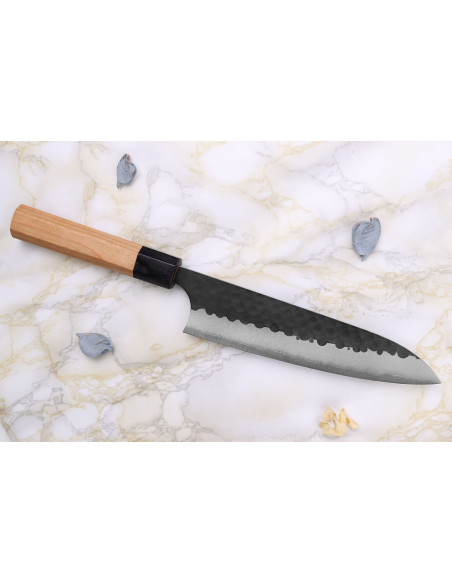
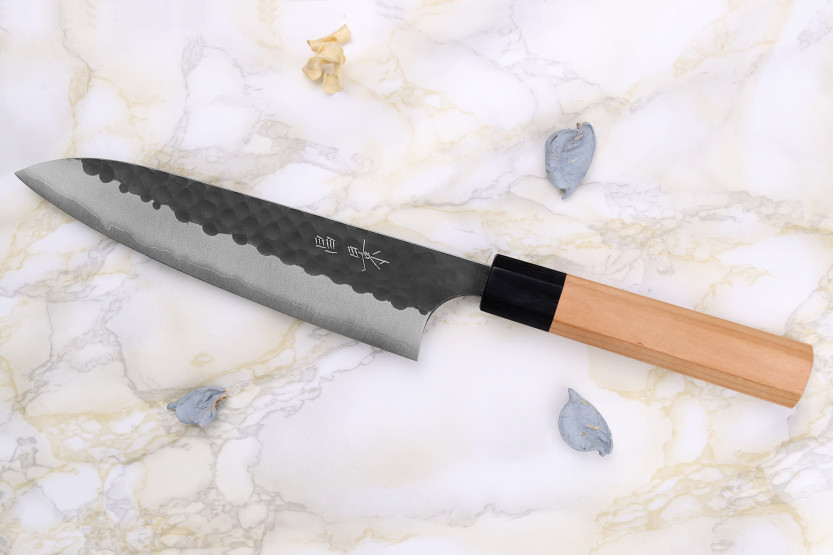
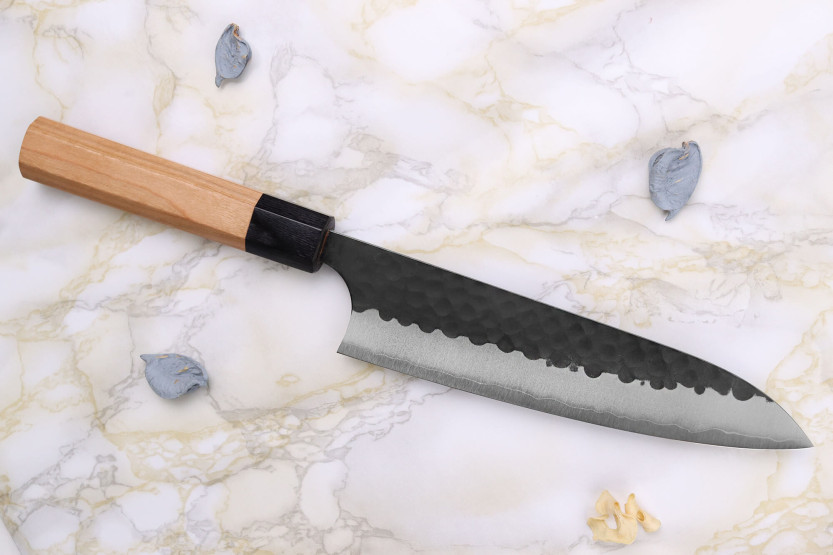
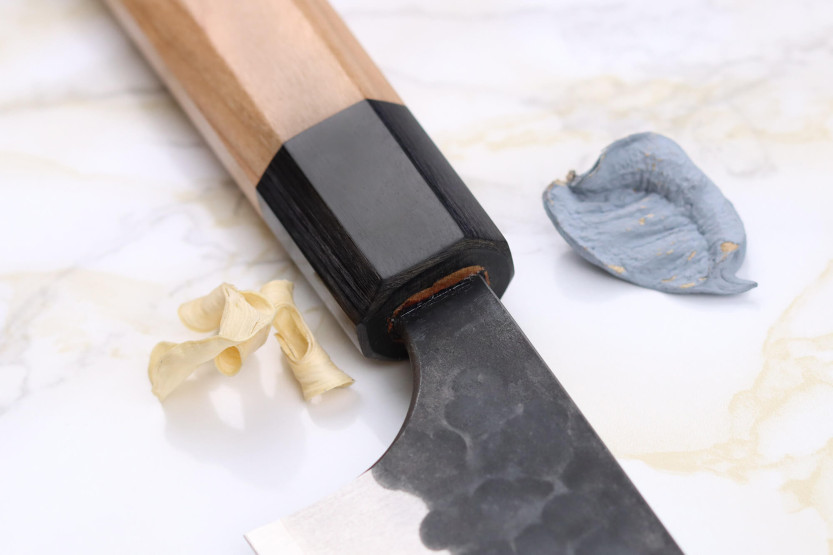
The blade of this artisan knife features a rough forged finish, adding a unique, traditional touch. The special hammering contributes to the blade's dark, raw appearance, giving character to your Japanese kitchen knife. Indeed, the name of this range, Koishi, means "pebbles", in reference to this original hammering.
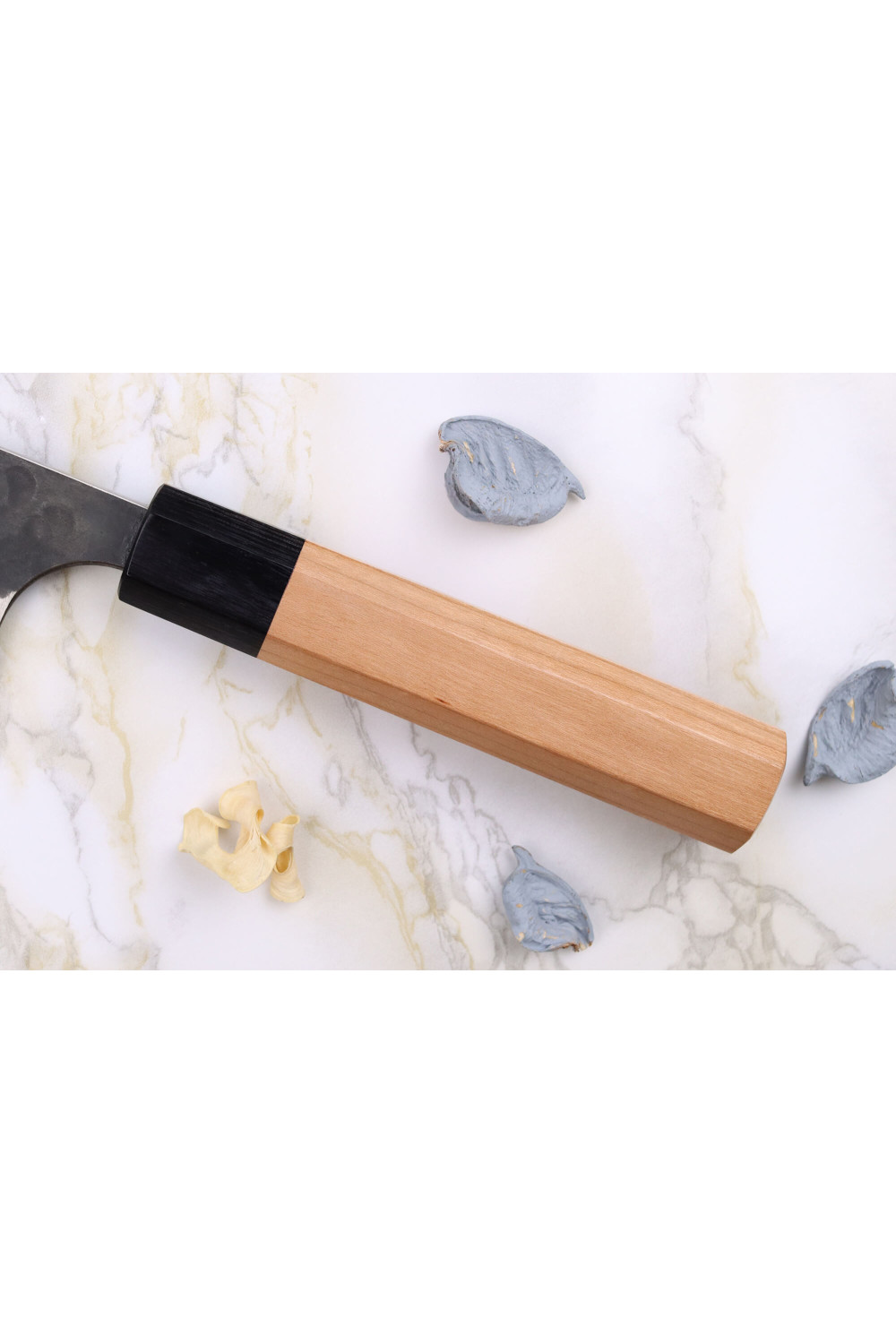
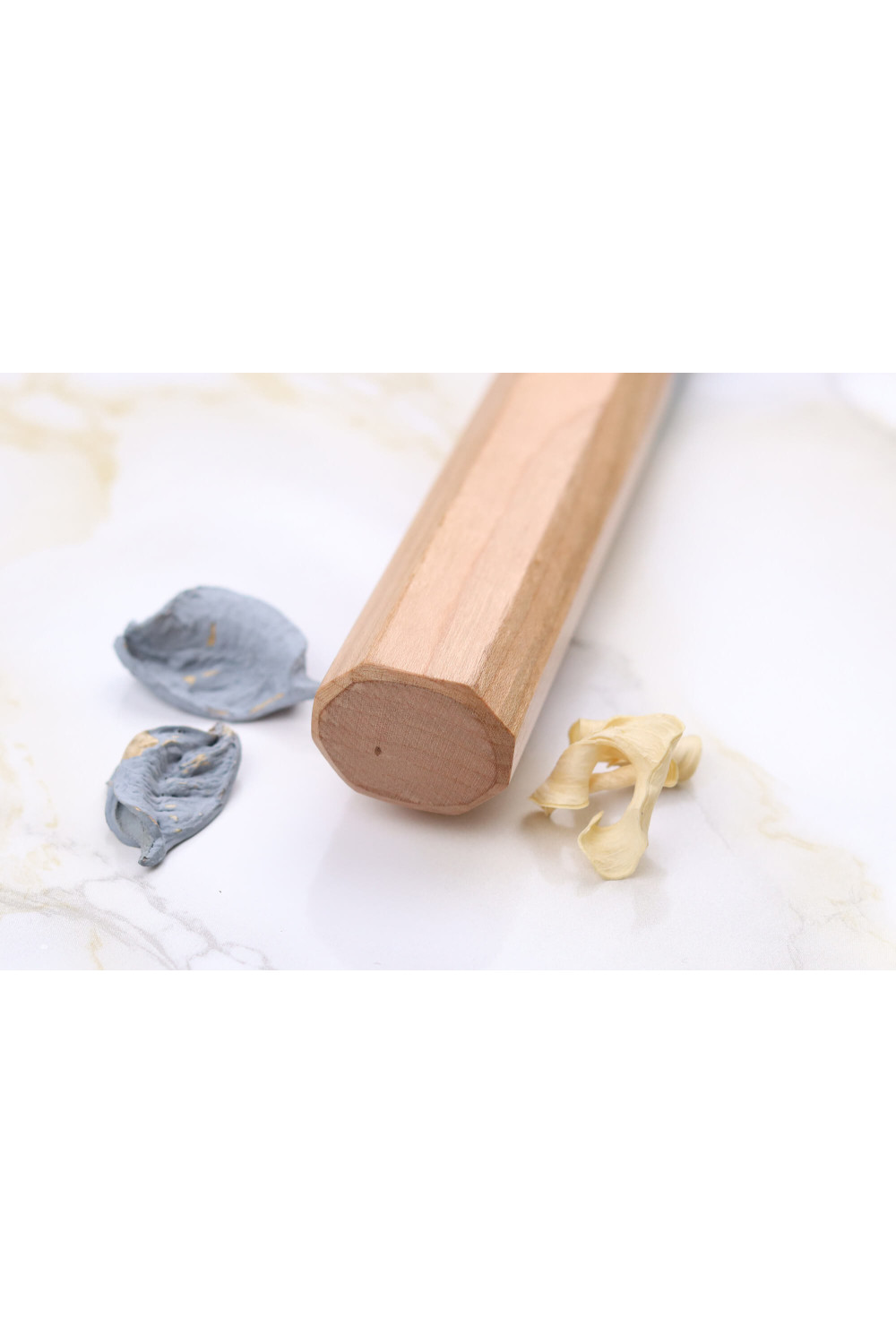
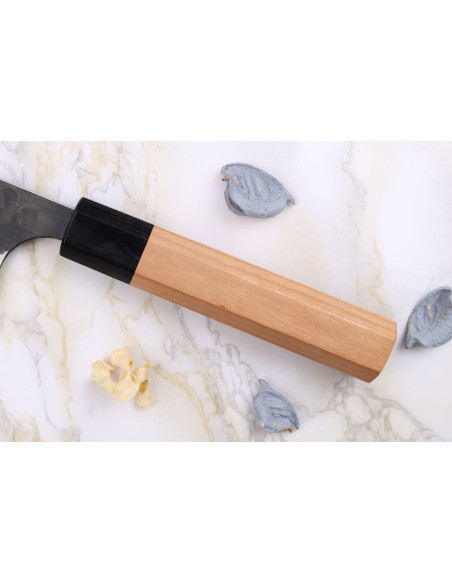
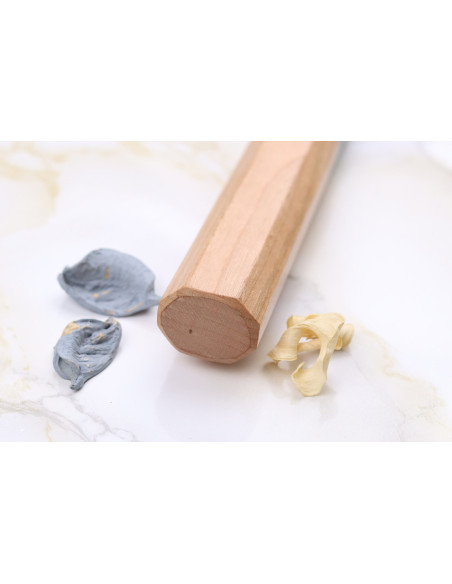
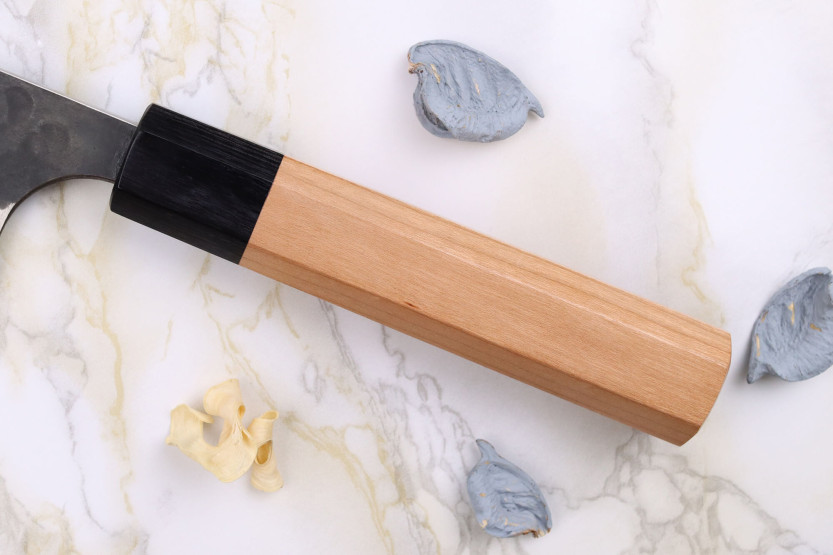
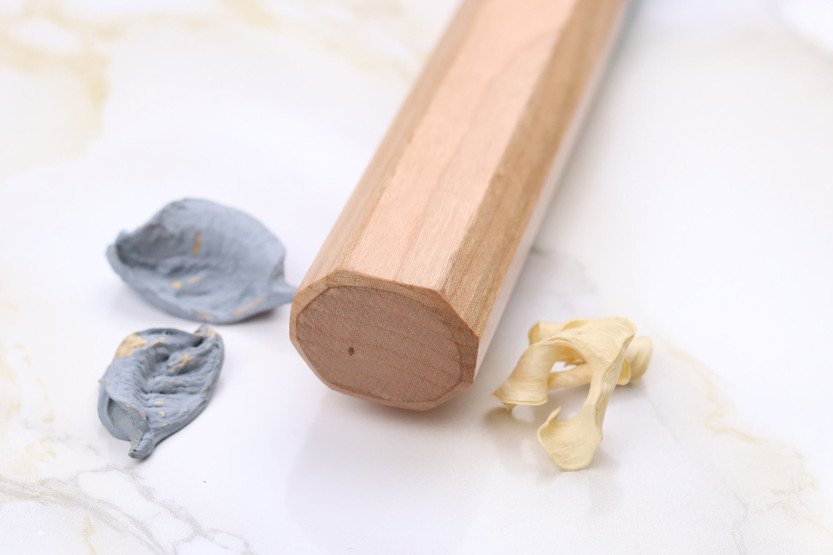
The handle is crafted from cherry wood, a species renowned for its longevity and appreciated for its aesthetic appeal. Its octagonal shape ensures a comfortable grip, suitable for both right- and left-handed users.
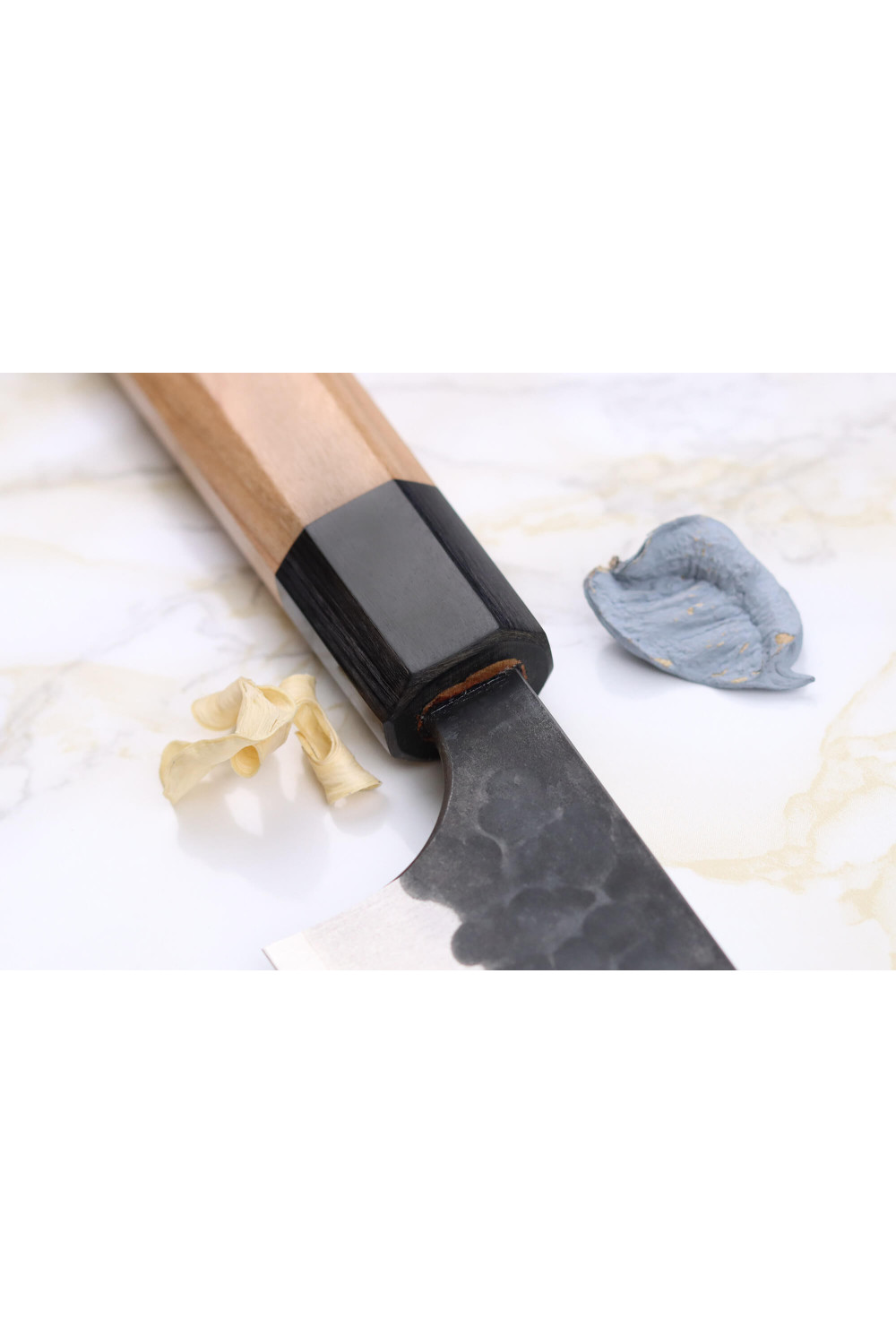
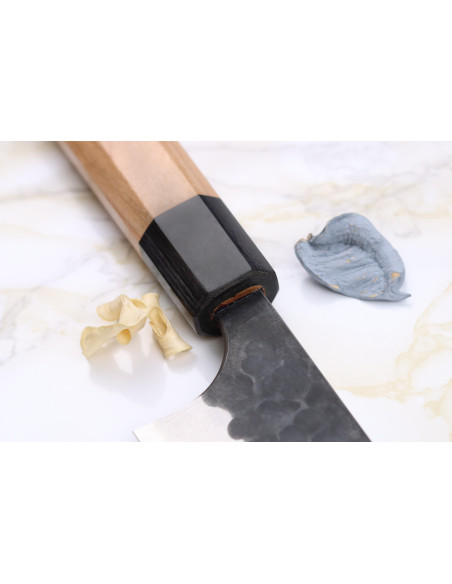
A bolster in black pakka wood, a moisture-resistant, antibacterial composite material, creates an elegant transition between blade and handle. Wood pulp has been added to this junction to fill the small gaps, protecting the handle from food residues and water infiltration.
Care and maintenance of a Japanese forged knife
To care for your carbon knife, wash only by hand with a non-abrasive sponge and mild detergent, avoiding wetting the handle. Once washed, dry immediately to remove all traces of moisture and store in a dry place. Do not use the dishwasher or leave your knife to soak in the sink.
Between cuts, we recommend wiping the blade with a paper towel to prevent the acidity of the food from attacking the blade.
As time goes by, the color of your Japanese knife may change slightly: this is normal! This is a natural carbon reaction caused by the acidity of the food being cut and the humidity in the air.
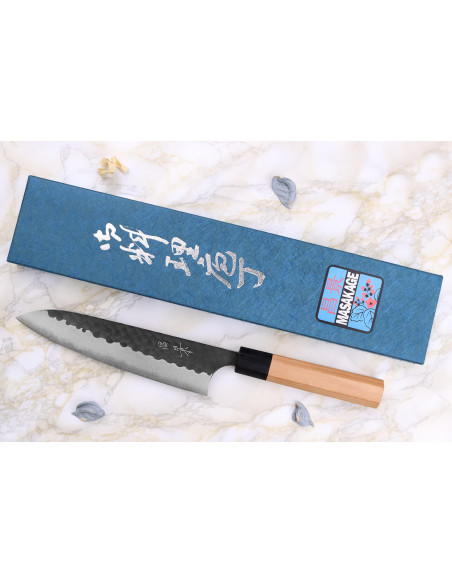
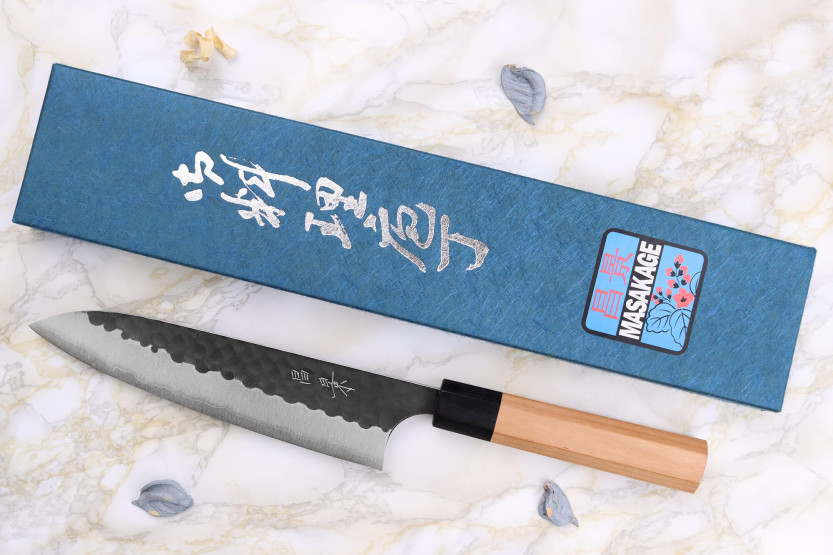
The knife comes in a sober, traditional blue box.
Discover many Masakage knives on KnifeLeader.eu!




 By buying this product you can collect up to