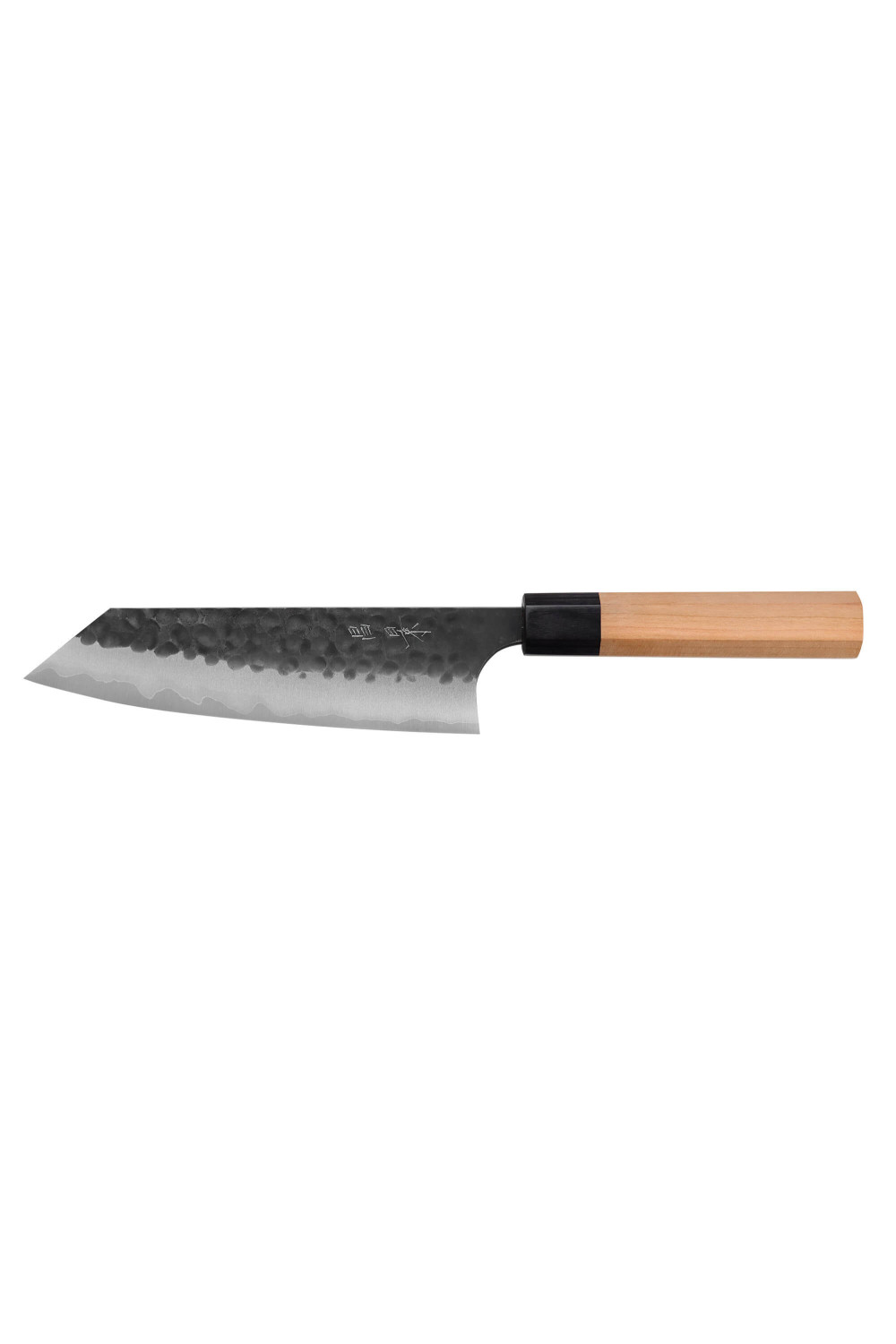
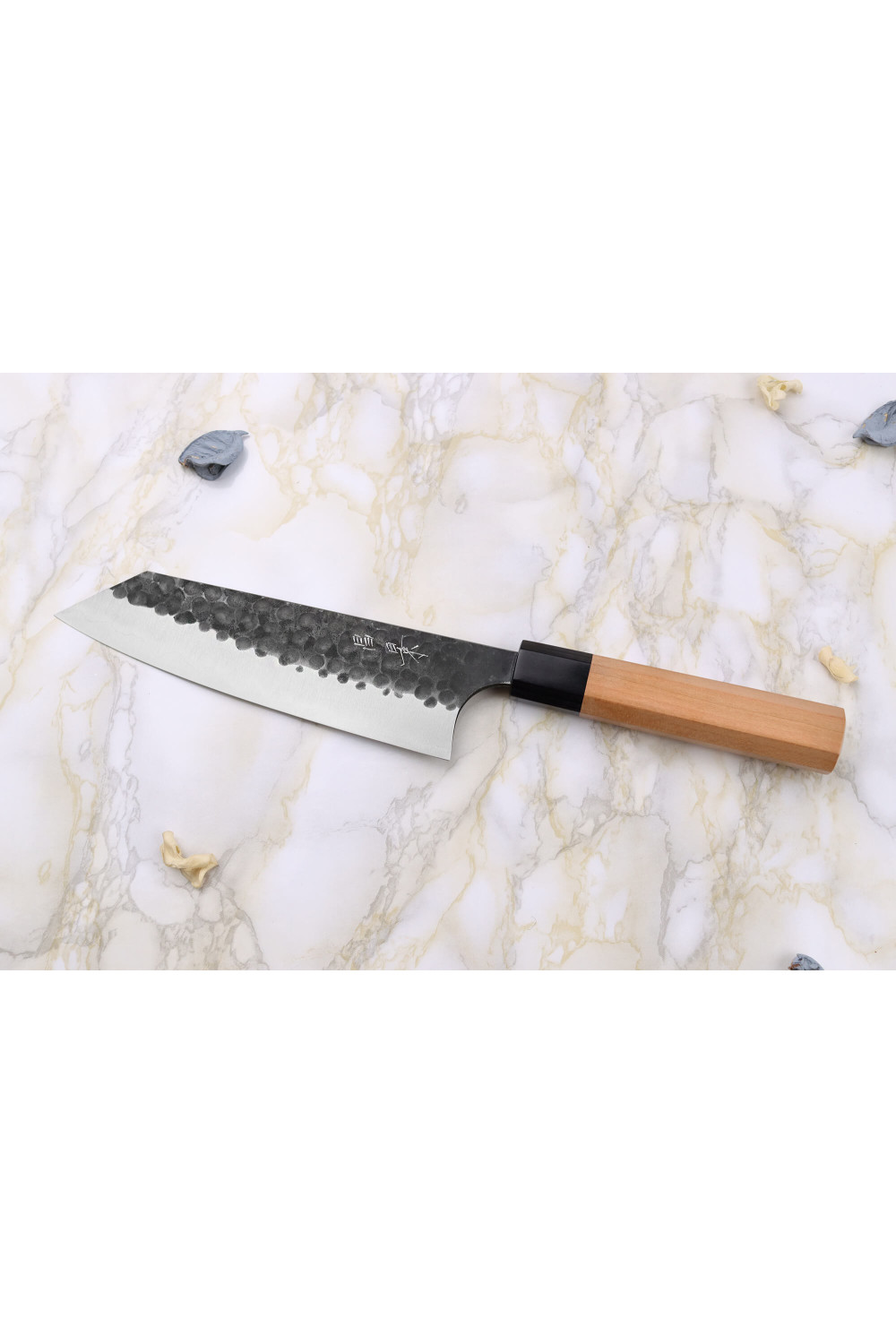
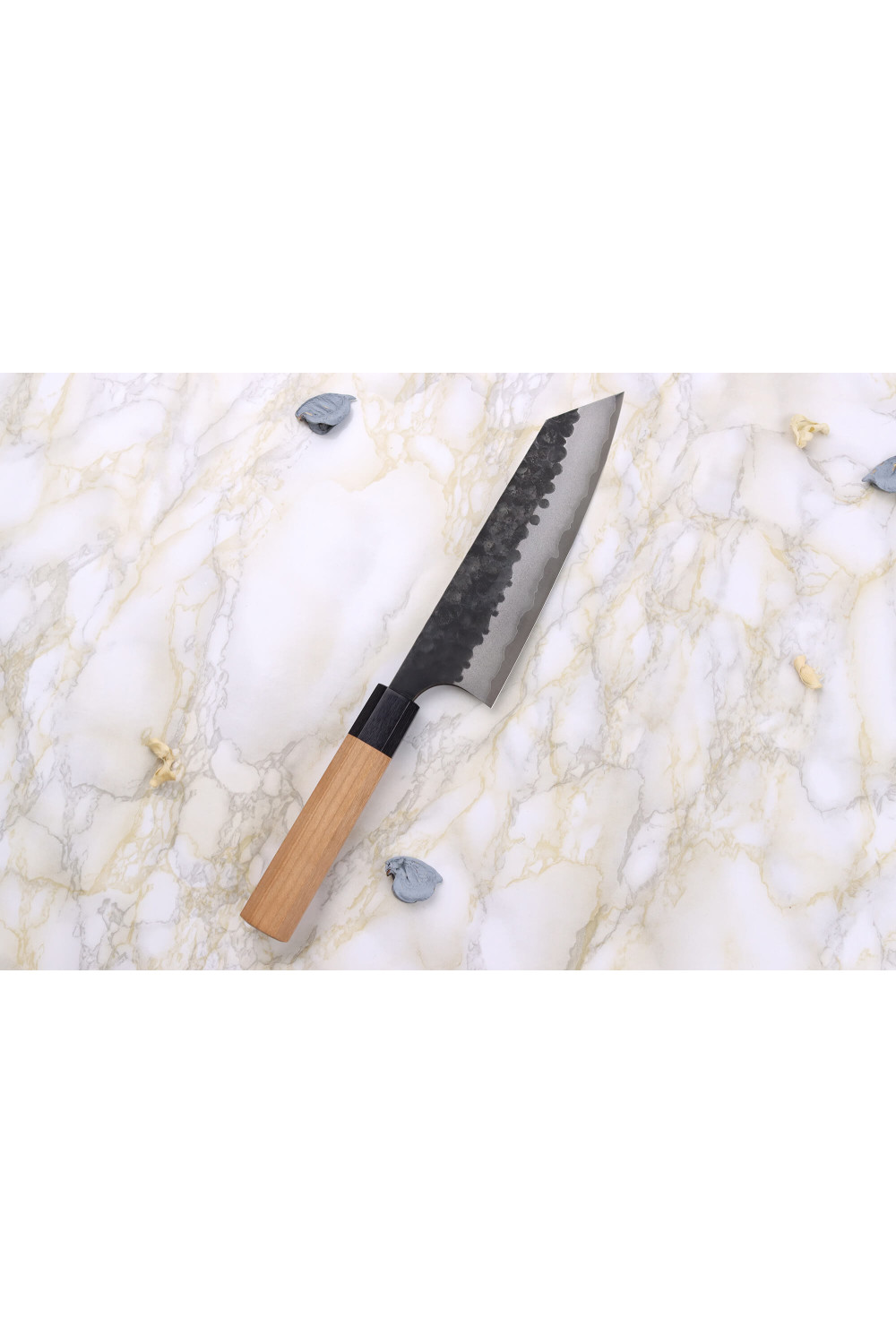
Masakage Koishi knives are handcrafted by blacksmith Yoshimo Kato san. This craftsman with an impeccable reputation offers unique, top-of-the-range kitchen knives.
He was a student of renowned masters such as Hiroshi Kato San (his father-in-law), an internationally respected cutler. He is one of the founding members of the Takefu Cutlery Village , where blacksmiths can share their skills, materials and ideas. Yoshimi Kato has taken over his workshop and continues to create his master's knives (now retired), while also launching his own designs.
(Hiroshi san on the left and Yoshimi san on the right)
The Masakage Koishi Japanese knife in detail
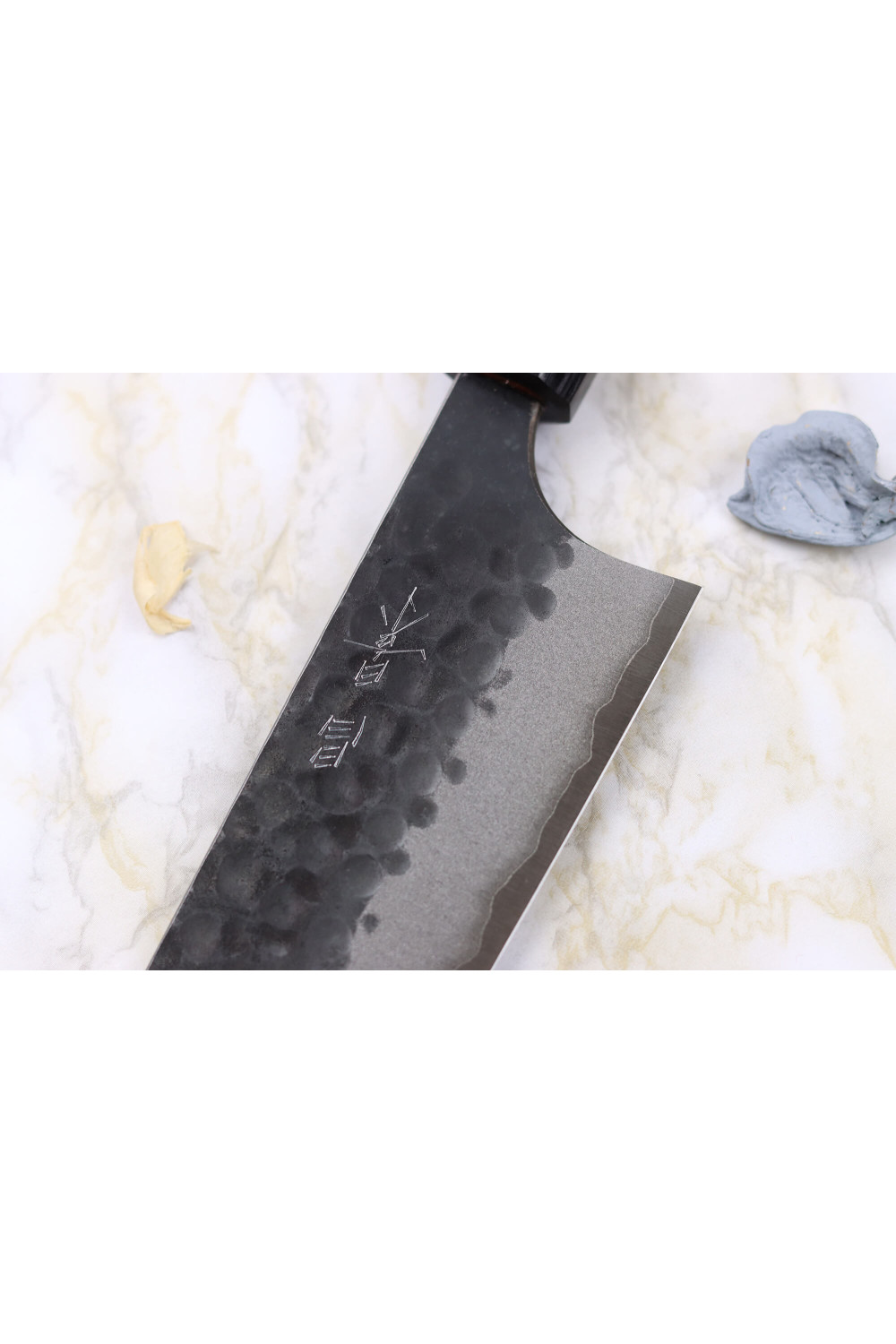
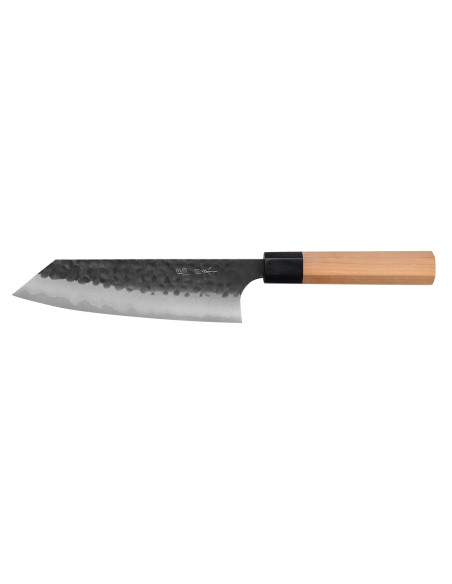
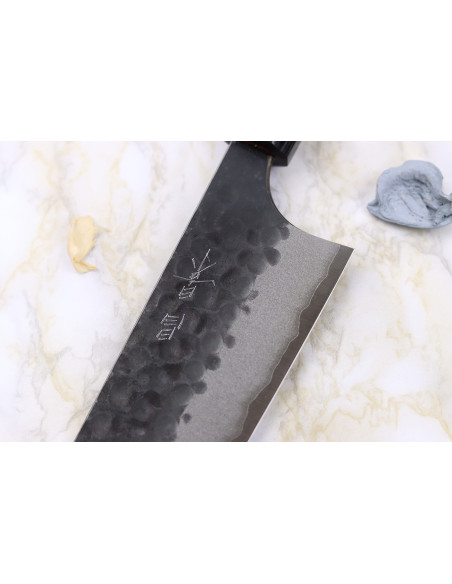
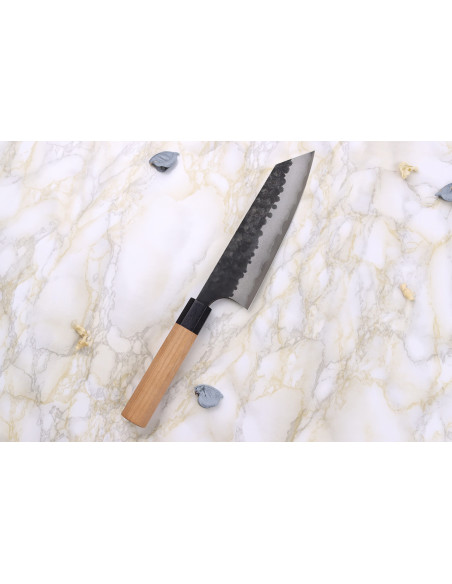
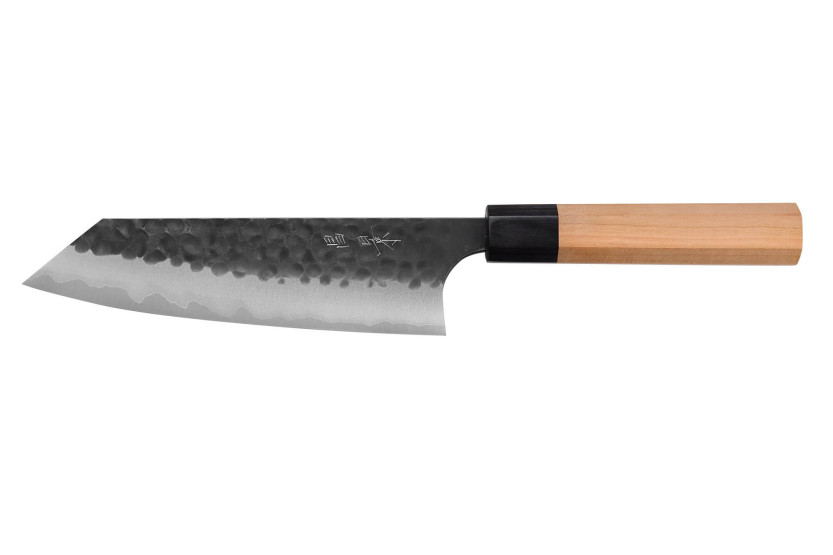
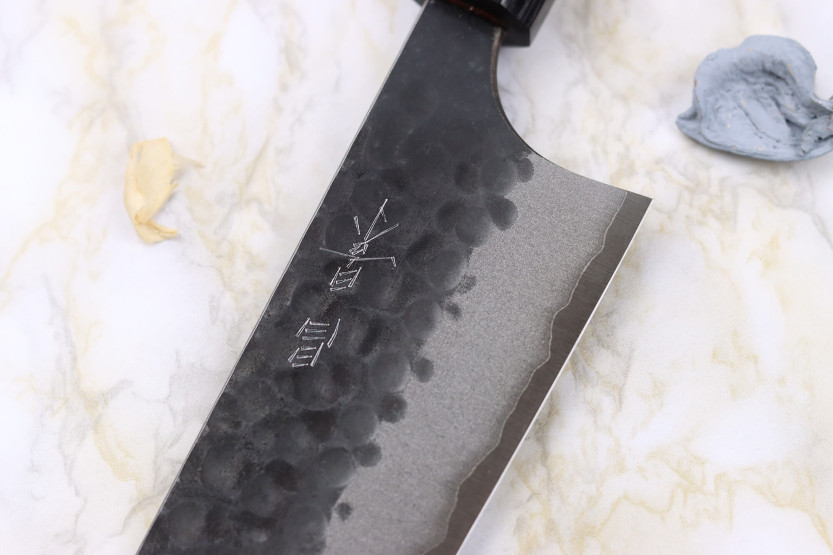
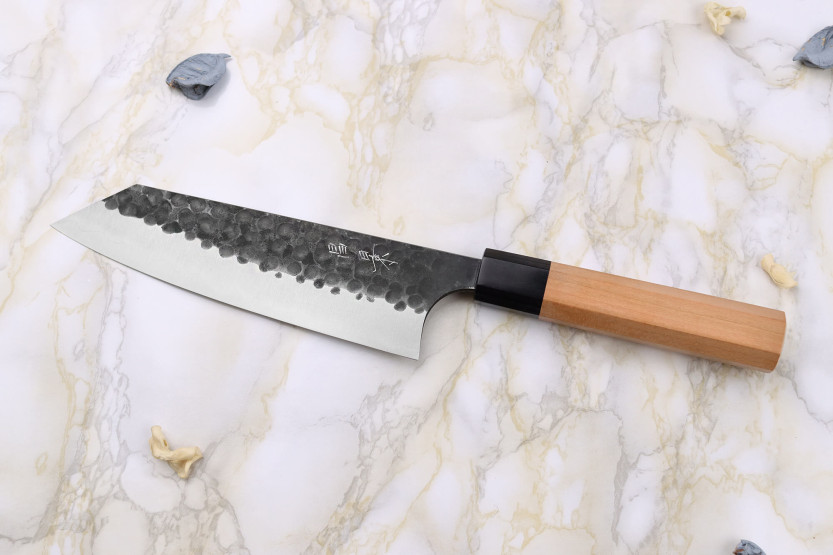
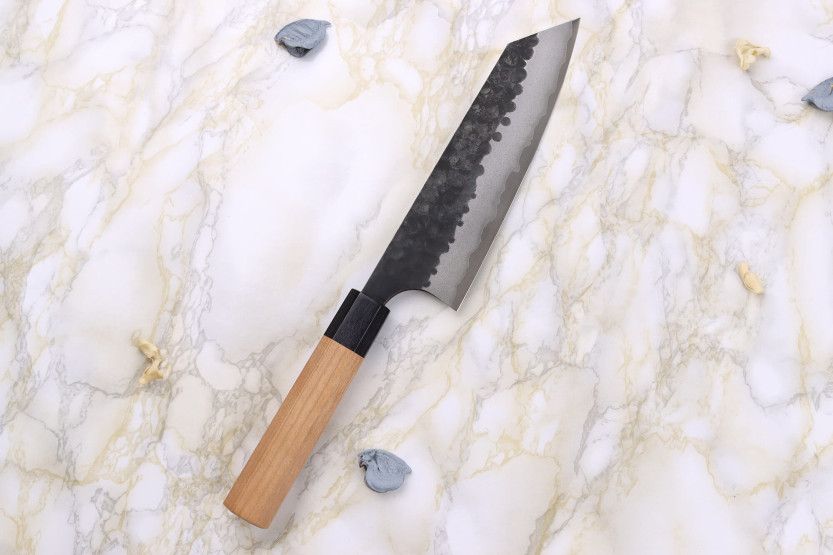
Here he signs the Masakage Koishi 17cm bunka knife. Its forged blade is based on a San Maï structure, i.e. it rests on 3 superimposed layers of steel. The center of this typically Japanese structure is made of highly carbon-enriched Aogami Super steel (also known as Blue Super Steel). It is produced by Japanese steelworks Hitachi, internationally renowned for the quality of its alloys. Around this core is a layer of stainless steel folded in two (hence the 3 layers). This top layer balances the Aogami, which is very rigid. In fact, the top layer gives it a slight "suppleness" (not in the sense of flexibility, but rather in the sense that the alloys balance each other).
Back to Blue Super Steel: its carbon content is around 1.5%. When you consider that the Western average for a good kitchen knife is around 0.5%, it's clear that the steel used here is not just any steel! Carbon is an essential element for increasing the rigidity of an alloy, bearing in mind that a rigid alloy is one that will hold its edge for many uses. Aogami steel is reputed to be particularly effective on fibrous products.
Note also that, despite its high rigidity, Aogami steel remains pleasant to sharpen when the need arises.
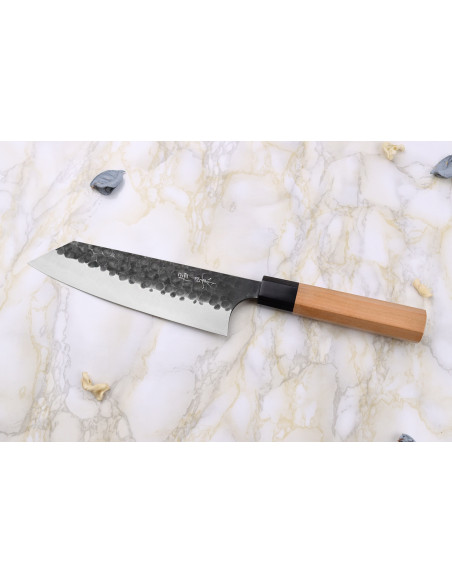
Surrounded by its layer of stainless steel, it has a beautiful rough-forged finish. This gives it a traditional touch that adds to its cachet, and is much appreciated by Japanese chefs. Beautiful hammering adds to the dark, raw look of the blade. The knife has real character. Incidentally, Koishi means "pebbles", and it's the special hammering on this knife that gives it its range name!
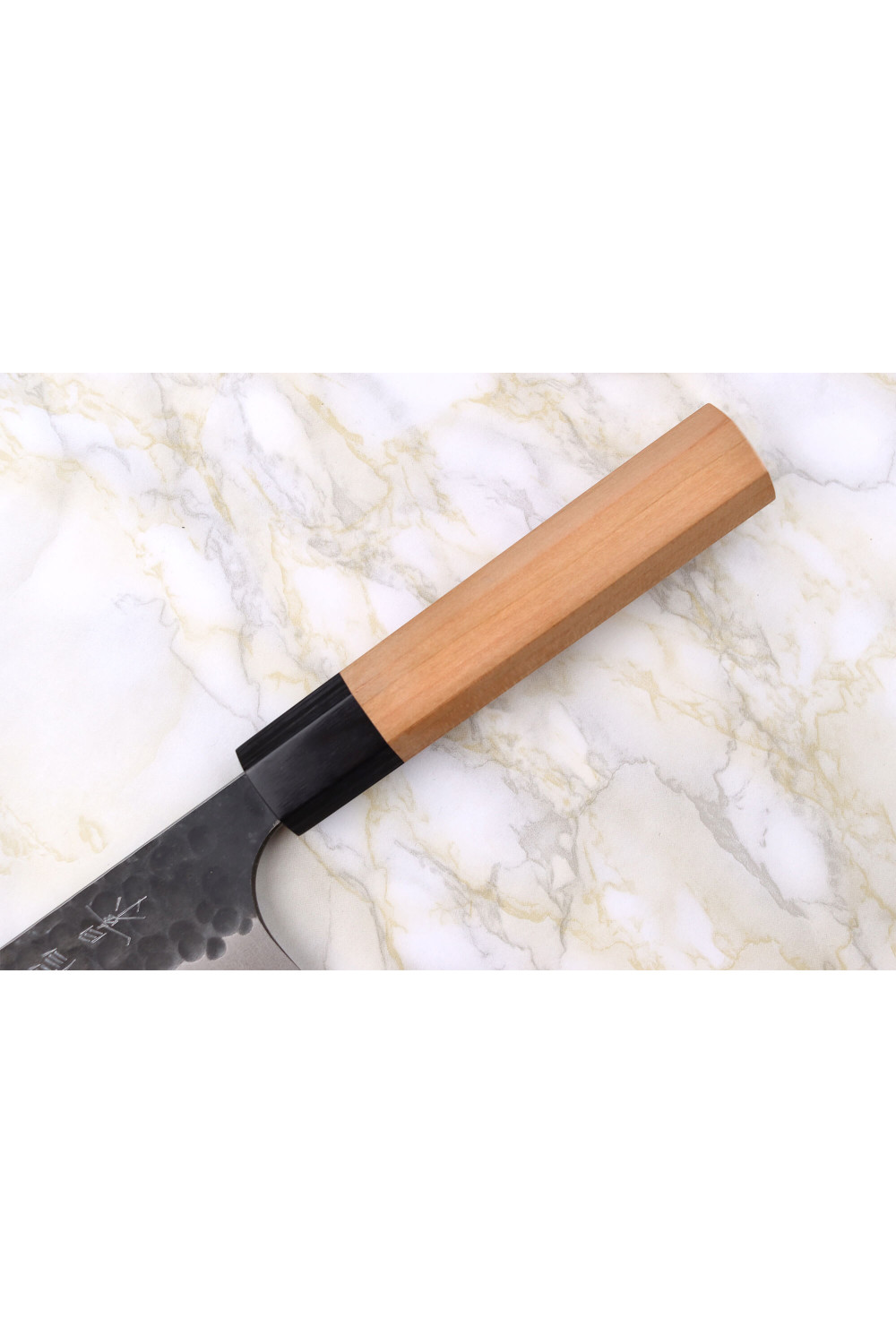
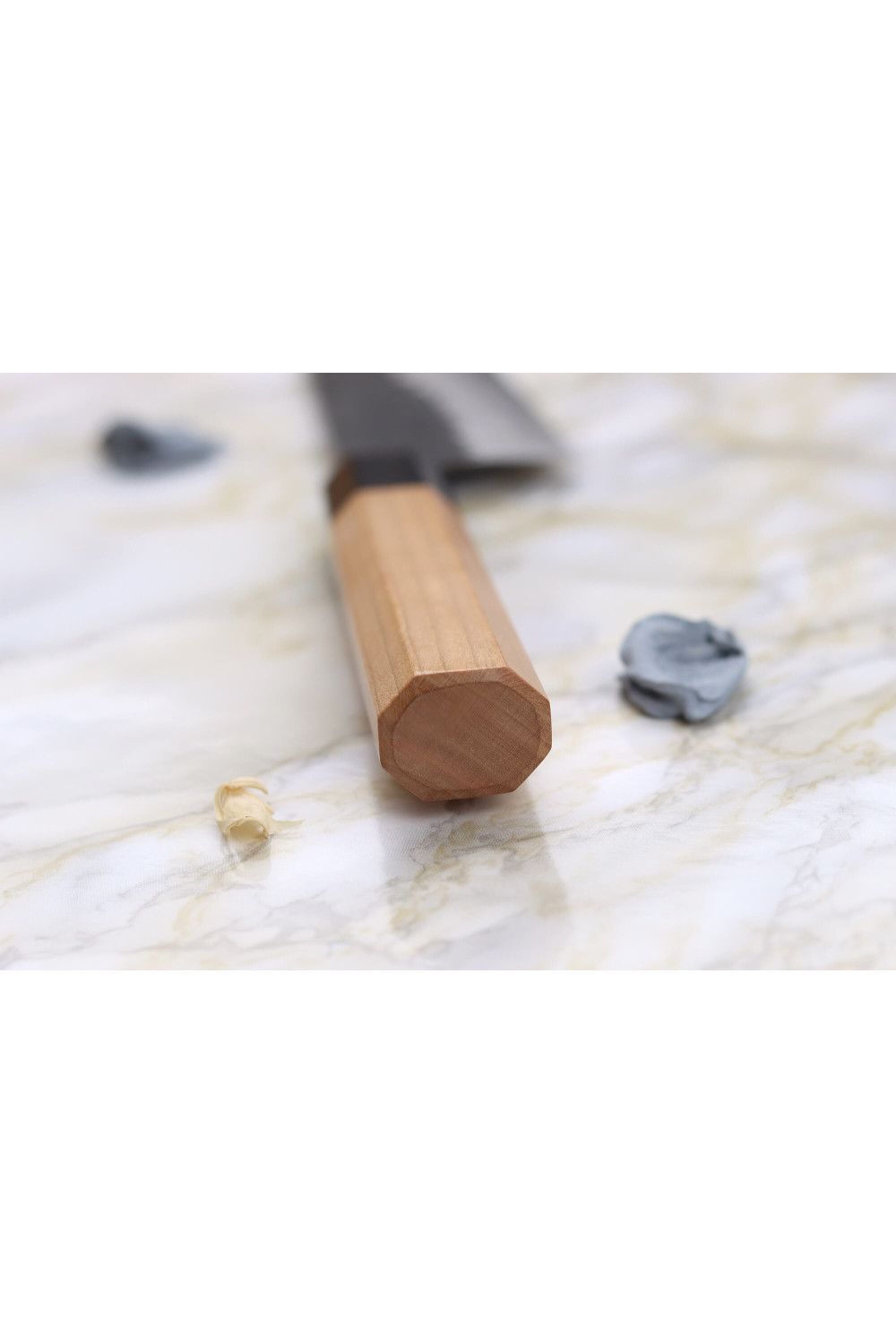
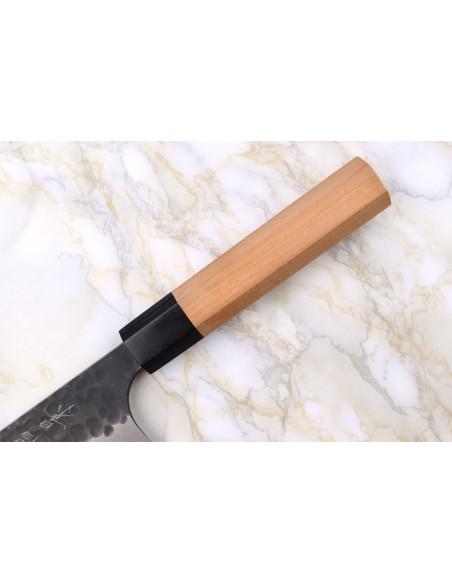
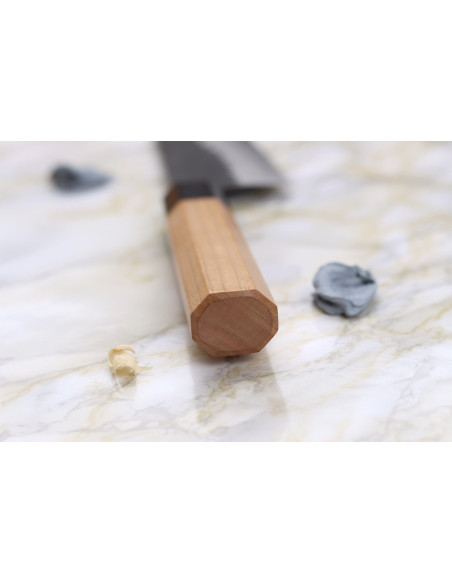
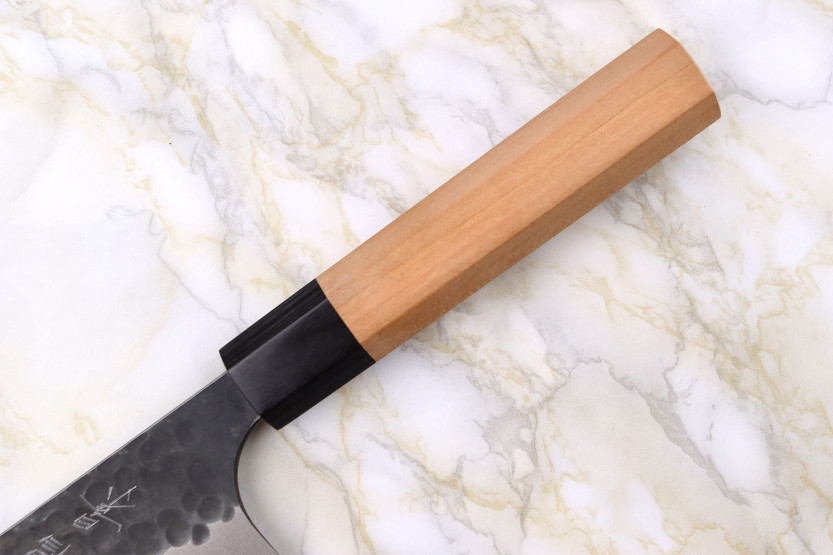
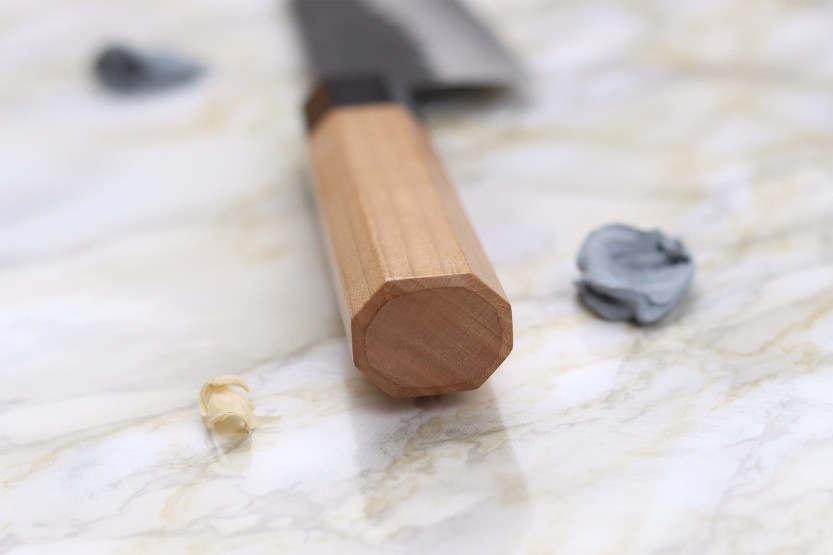
The handle of this knife is made of cherry wood. This is a long-lasting species, much appreciated for its aesthetic appeal. Its octagonal shape fits snugly in the palm of your hand, whether you're right- or left-handed.
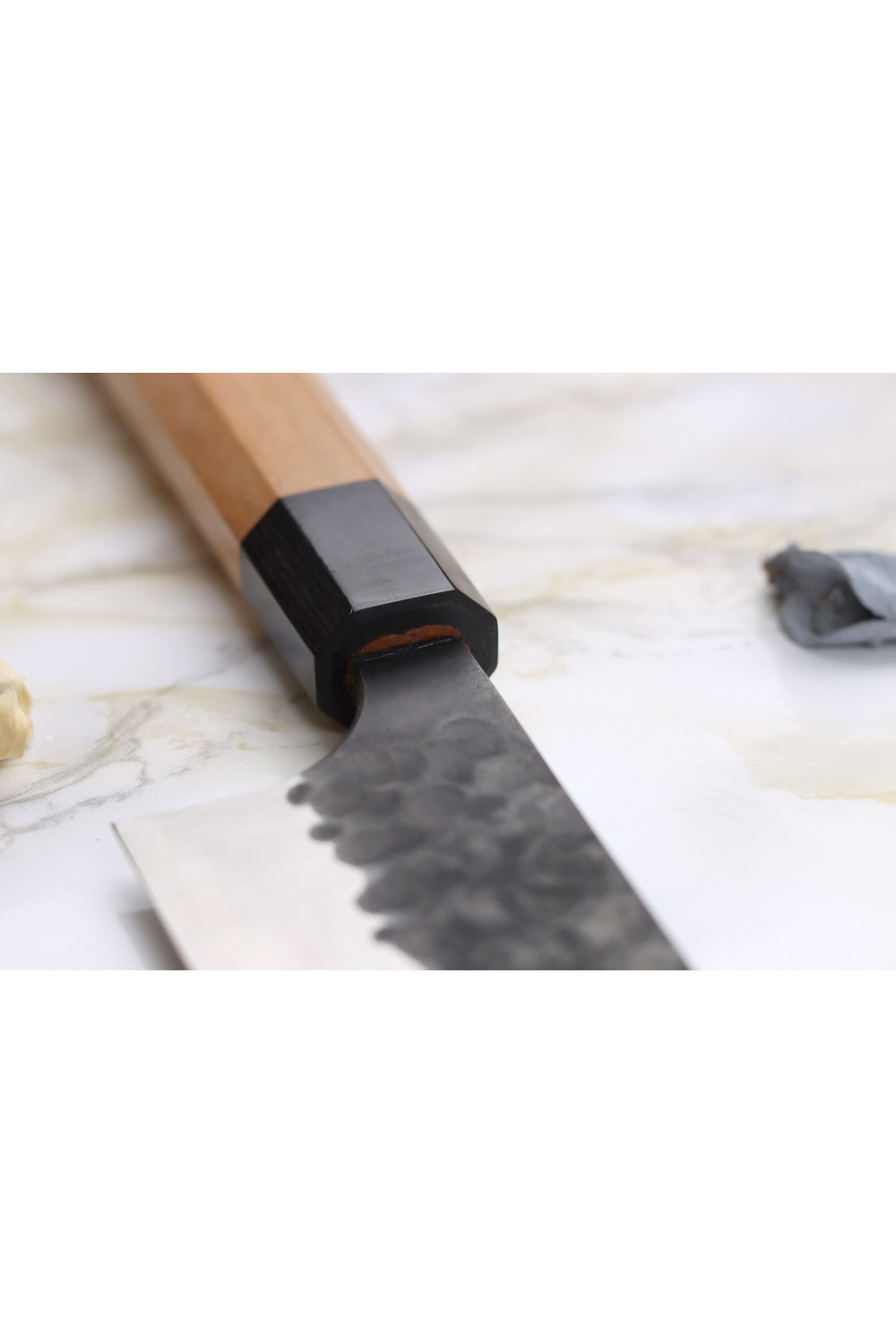
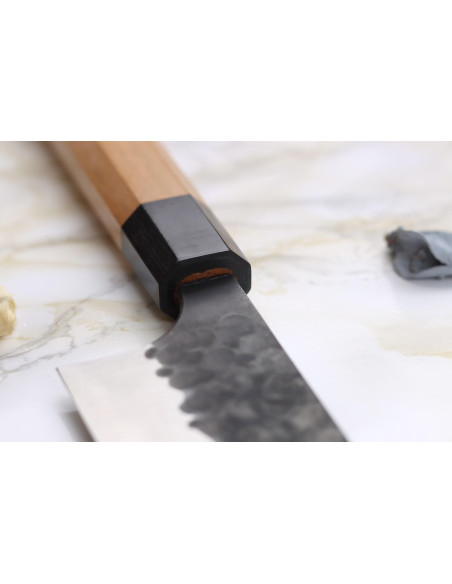
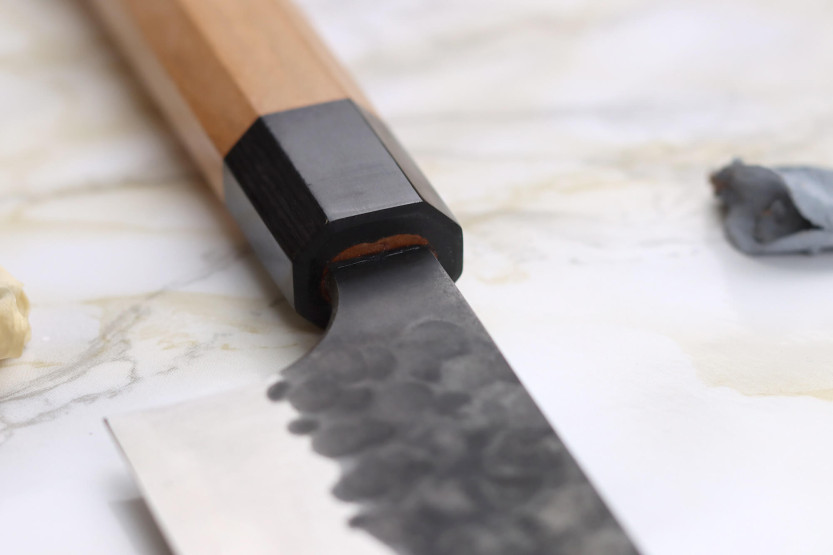
A black pakka wood bolster (a moisture-resistant, antibacterial composite material) links the blade to the handle. The junction between the blade and the bolster is filled with a wood paste that seals the whole, and prevents small scraps and cleaning water from penetrating the inside of the handle.
How to look after your Japanese knife
As the knife has a high carbon content, it is said to be oxidizable (despite the stainless steel coating on the top). As a result, it's imperative to wash it by hand, and not to soak it in the sink or put it in the dishwasher. Also, when cutting with it, wipe it regularly to prevent the acidity of food from attacking the blade. You can use a mild soap and run it under lukewarm water, without using an abrasive sponge. Then wipe with a soft cloth to remove all traces of moisture from the blade and wooden handle.
Note also that a carbon blade may change color over time (or show small stains); this is quite normal (contact with the acidity of food, humidity of the ambient air...). For a more thorough treatment, you can dip the blade in mineral oil from time to time.
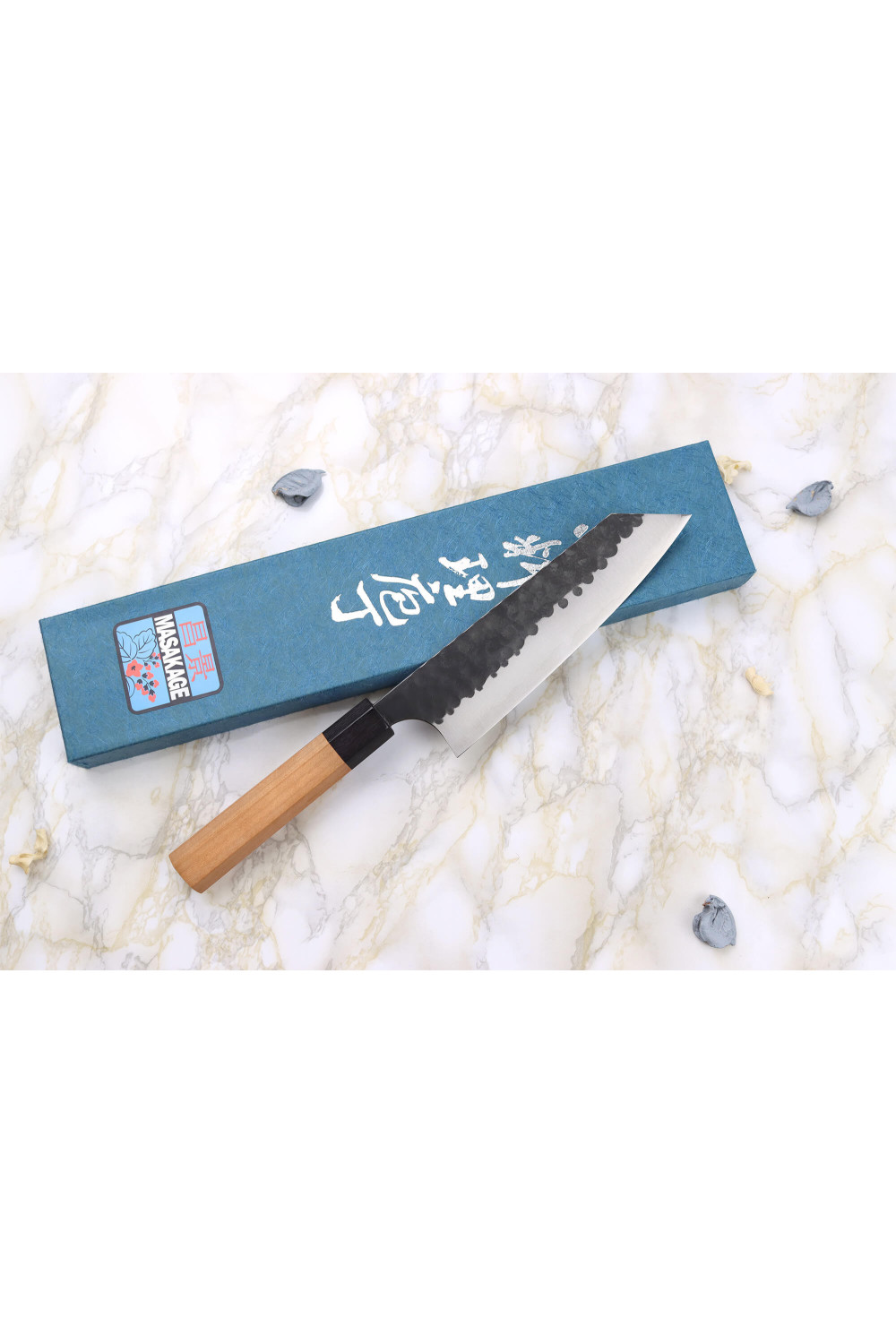
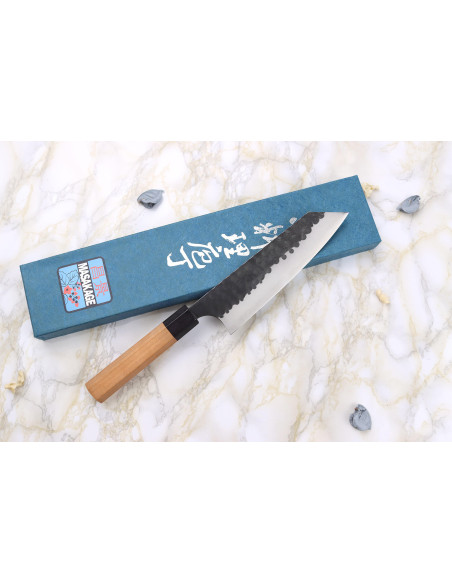
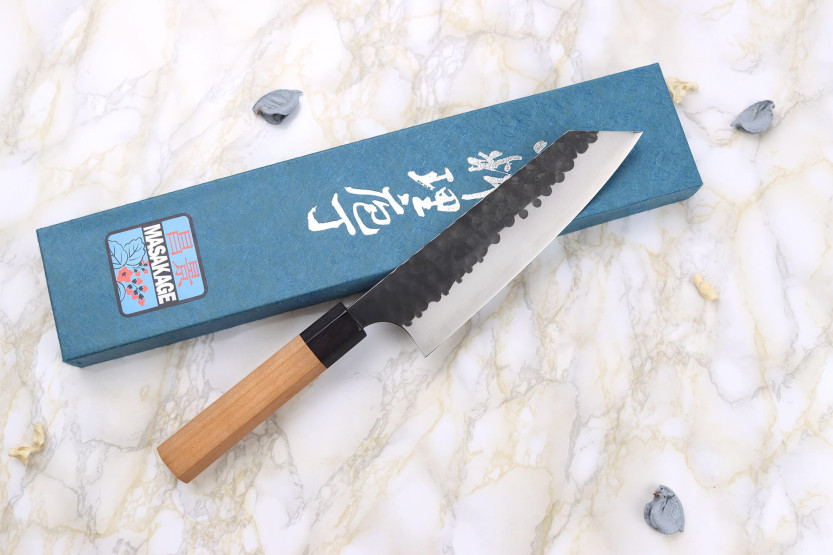
The knife comes in a sober, traditional blue box.
Find out more about Masakage knives on our website!




 By buying this product you can collect up to