Masakage Kumo kitchen knives are handcrafted models, created by master blacksmith Katsushige Anryu san and then by Takumi Ikeda. They have a workshop in the Takefu Knife Village , home to a large number of artisan blacksmiths. Gathered in the same place, they can share their know-how with each other. That's why it's such a popular area for apprentice blacksmiths, who can be taken in hand by a master who will teach them everything they need to know.
Katsushige Anryu san has been forging knives for over half a century. He began his apprenticeship in the 60s with his father, himself a blacksmith, to continue the family tradition (Katsushige Anryu currently represents the 4th generation of the family).
At the end of his career, Katsushige didn't know who to pass on his forge to. Japanese tradition dictates that the workshop should be passed on to the eldest son, but he has only had daughters. Wishing to respect tradition as best he could, he turned to his nephew: Takumi Ikeda.
Takumi began training in the world of artisan forging in the 2000s. His apprenticeship would take some fifteen years to acquire the meticulous techniques and know-how of his uncle. In 2021, he took over the forge and became a traditional blacksmith, offering exceptional knives that will delight the most uncompromising of cooks.
Ikeda san on the right and his uncle Anryu san on the left.
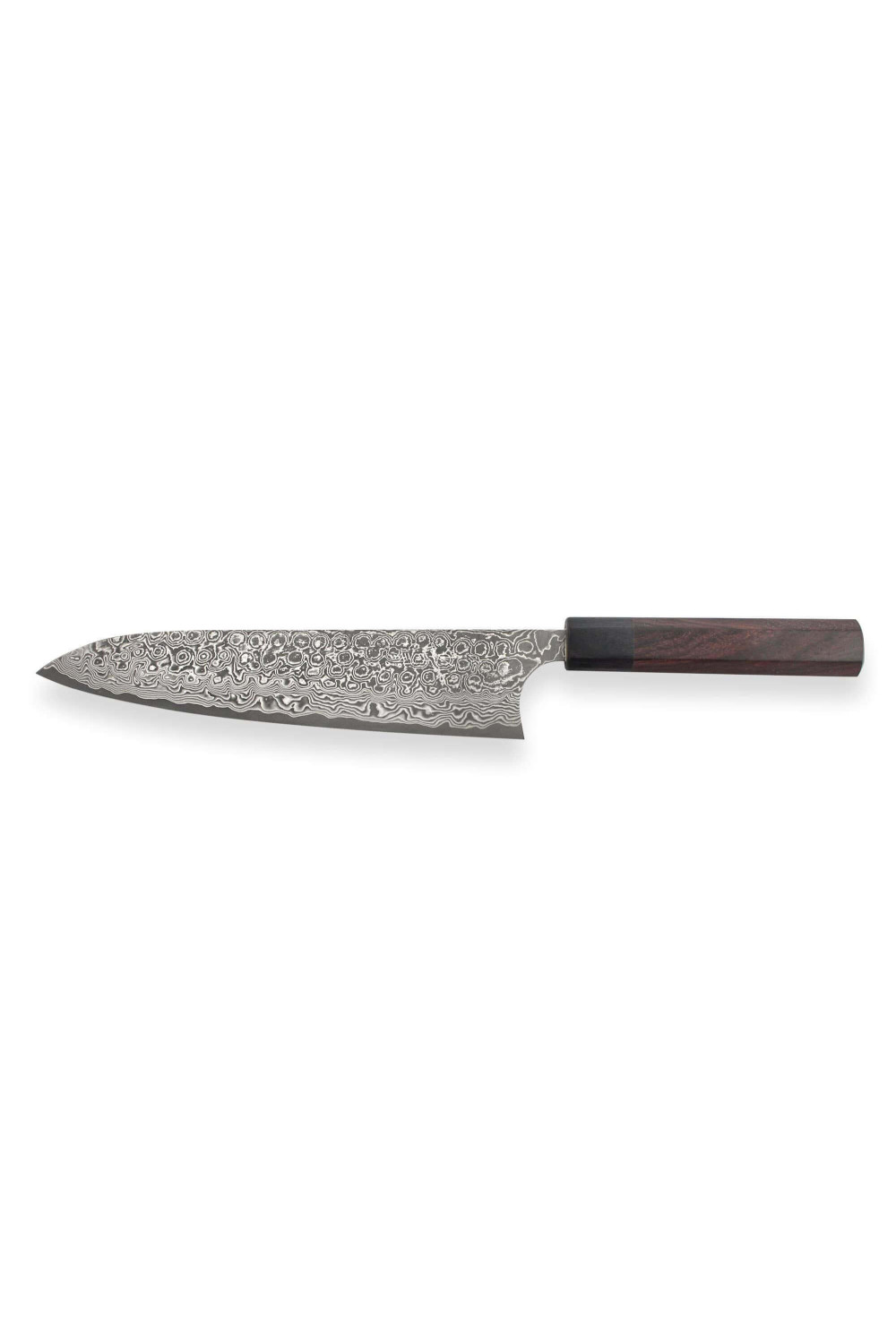
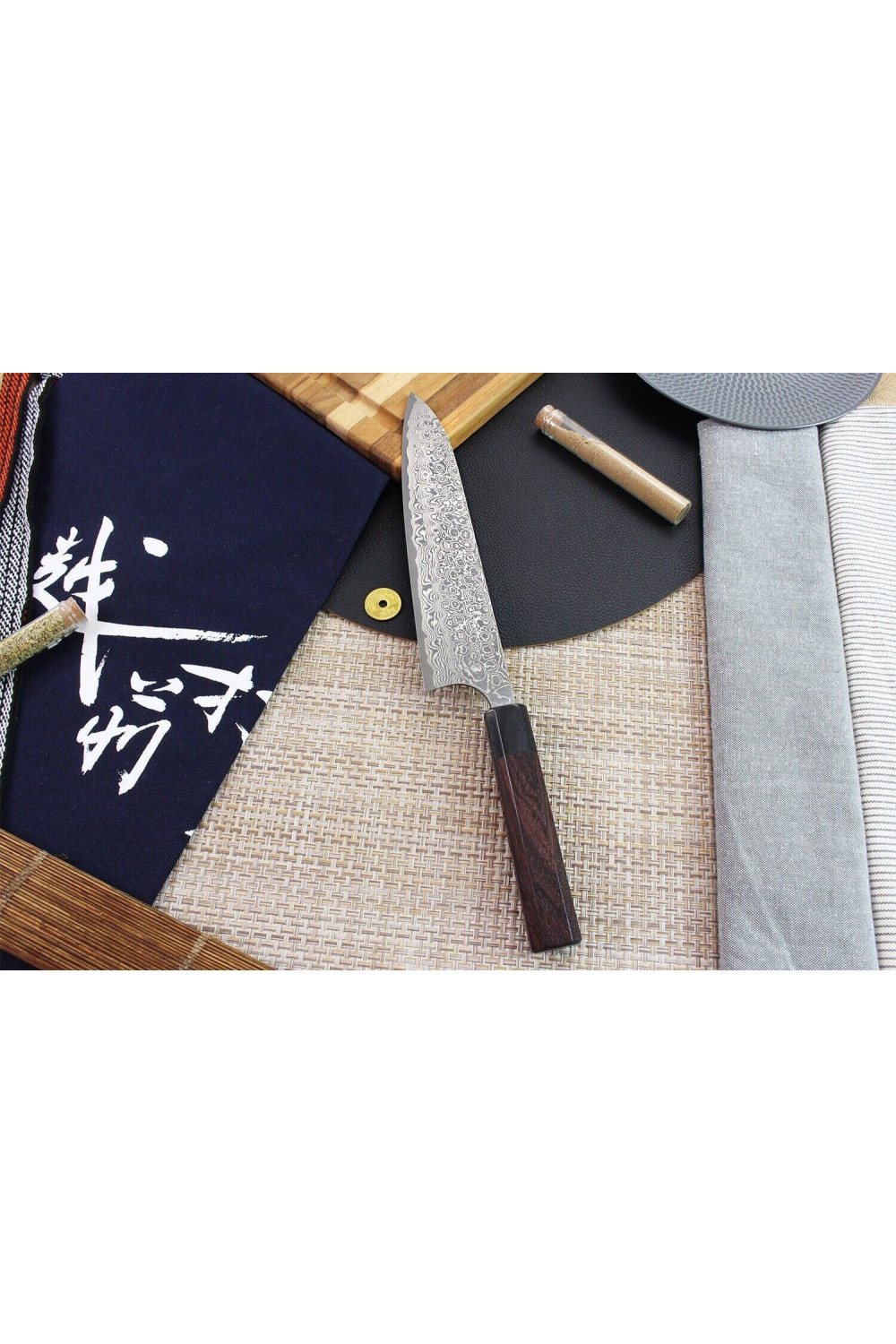
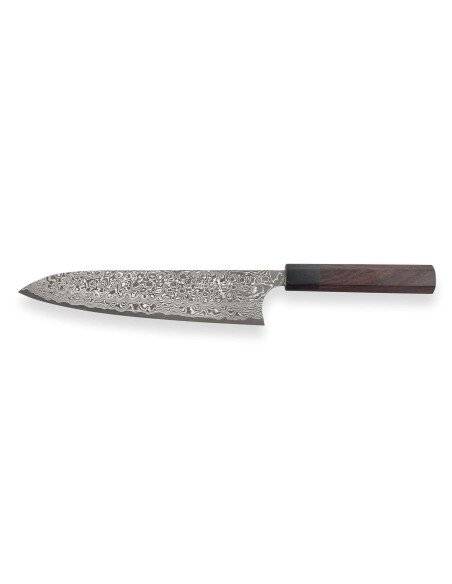
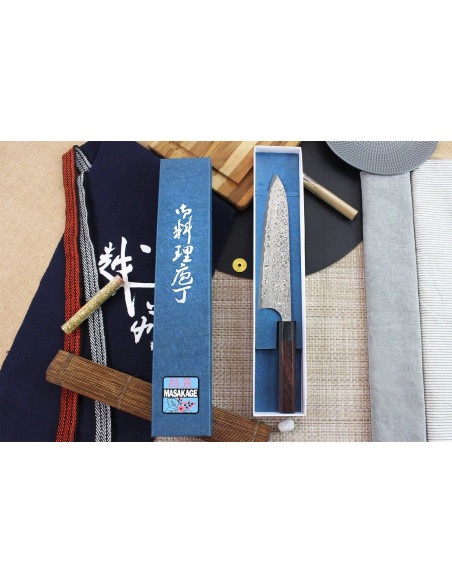
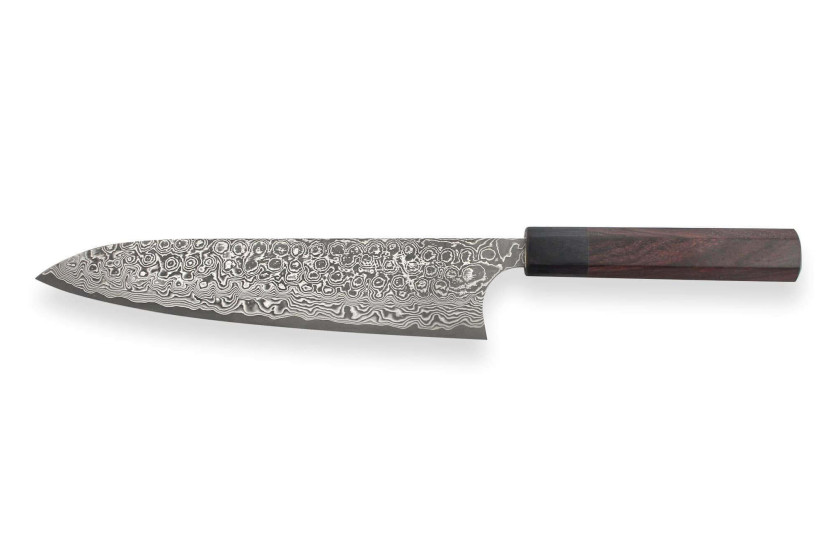
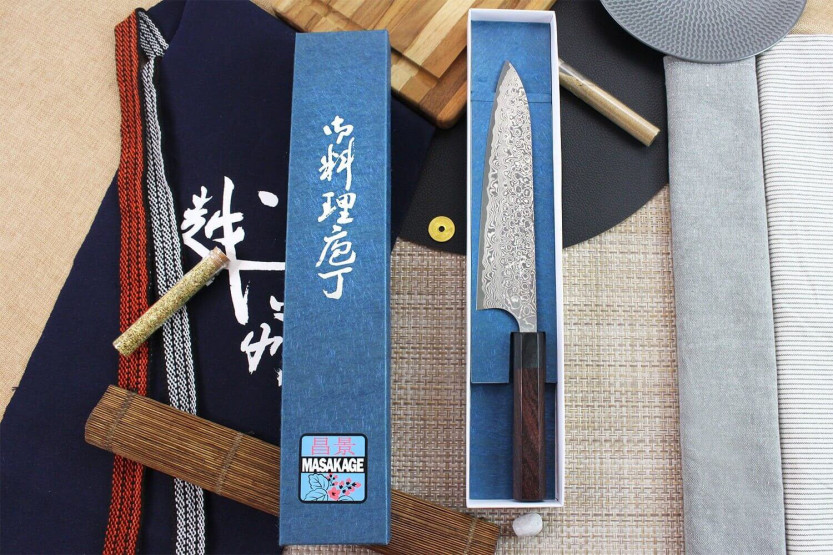
The Masakage Kumo 21cm chef's knife lets you cut meat, vegetables, herbs...It's an all-purpose knife that's perfect if you're just starting out and are lost among all the models on the market.
Its forged blade has a core of VG10 Japanese steel, an alloy much appreciated by blacksmiths for its many advantages.
VG10 contains 1% carbon, for example, enabling it to achieve a Rockwell hardness of around 60/61 HRC. The result is a rigid wire that can withstand further sharpening to a razor-sharp edge.
The VG10 also has the ability to hold its edge longer, so you space out sharpening sessions. Finally, thanks to its high chromium content, it is also more resistant to corrosion than other carbon steels.
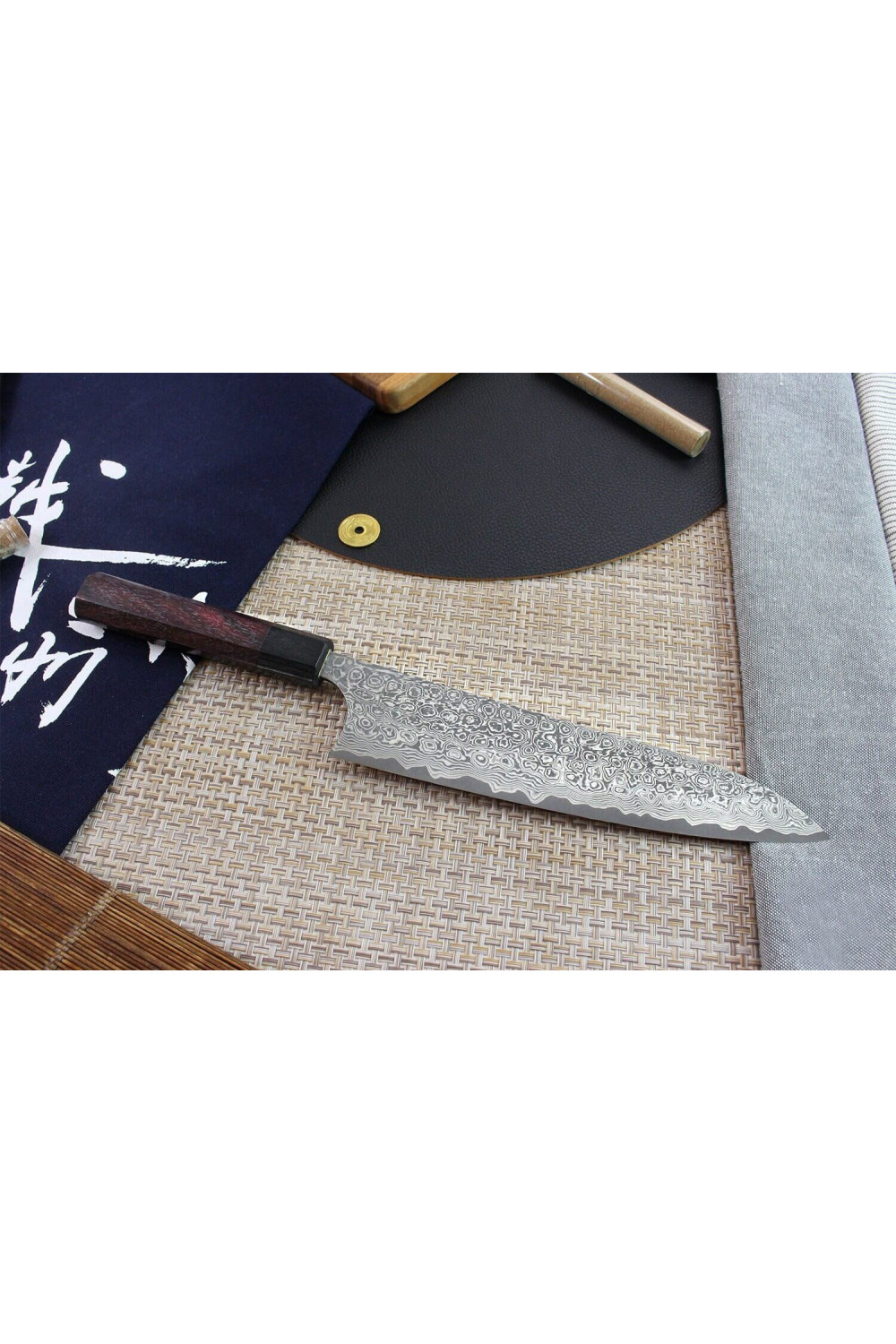
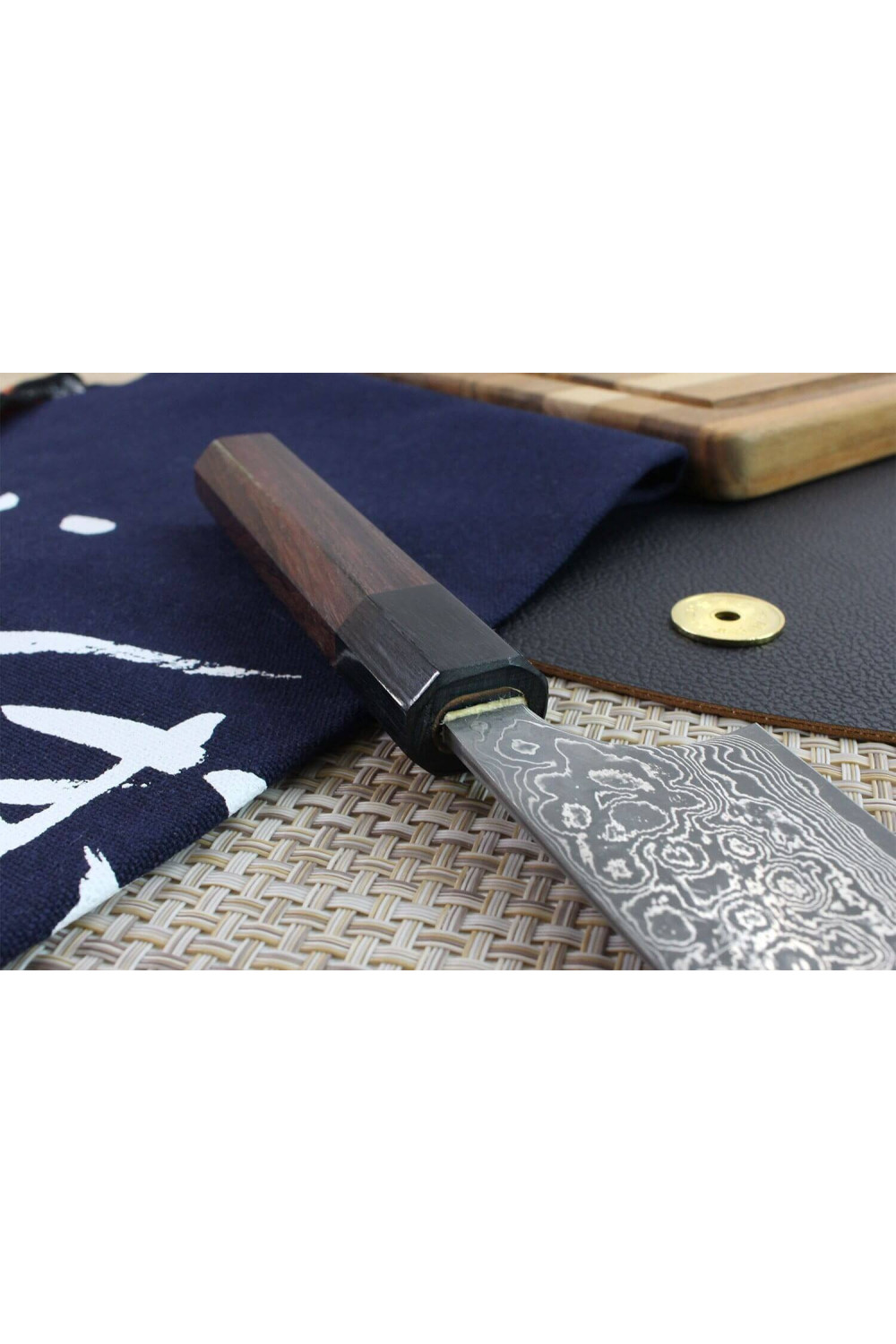
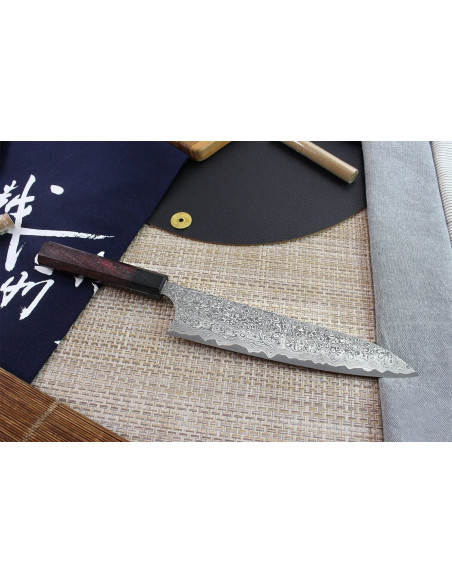
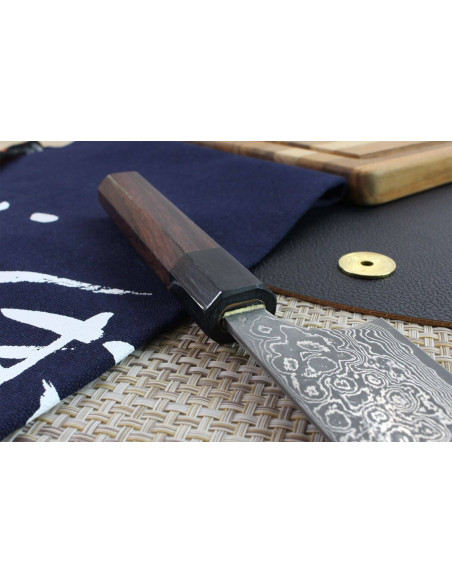
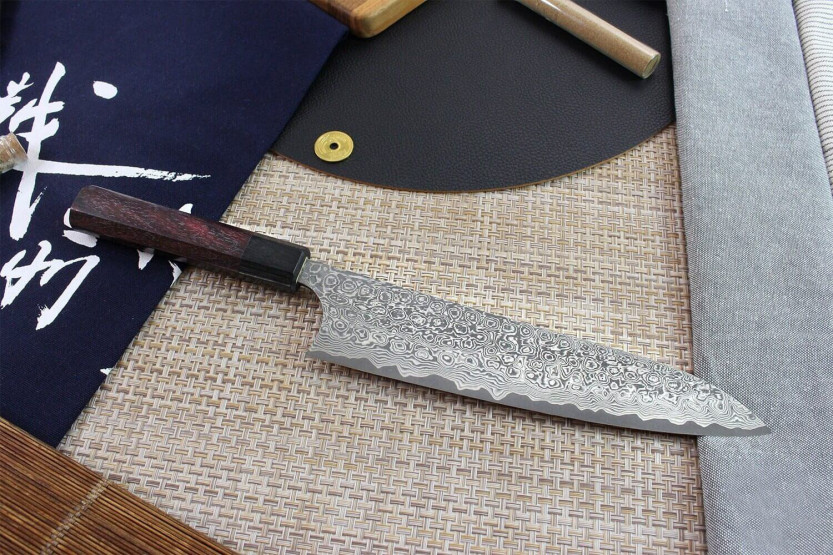
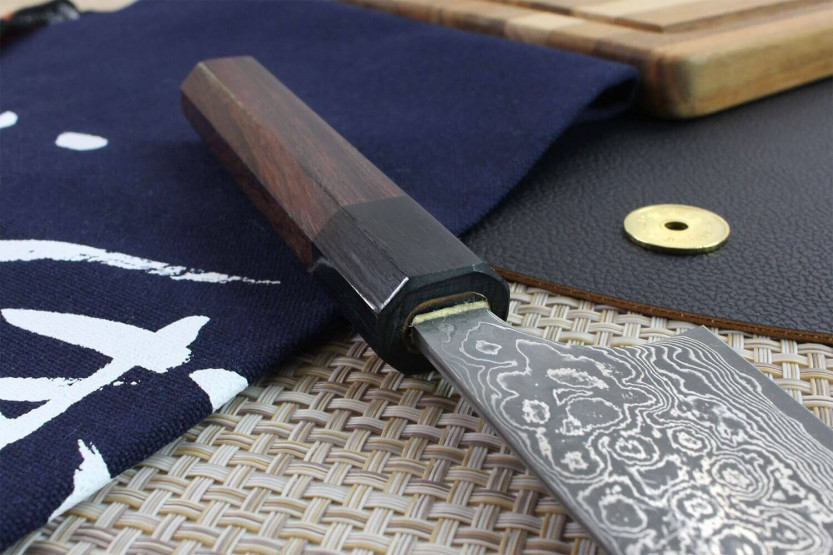
The VG10 core is then surrounded by several superimposed layers of softer steels: this is damascus. The Masakage Kumo knife has a 63-layer damascus (31 layers folded into 2 on the core + the core, which is counted in the calculation).
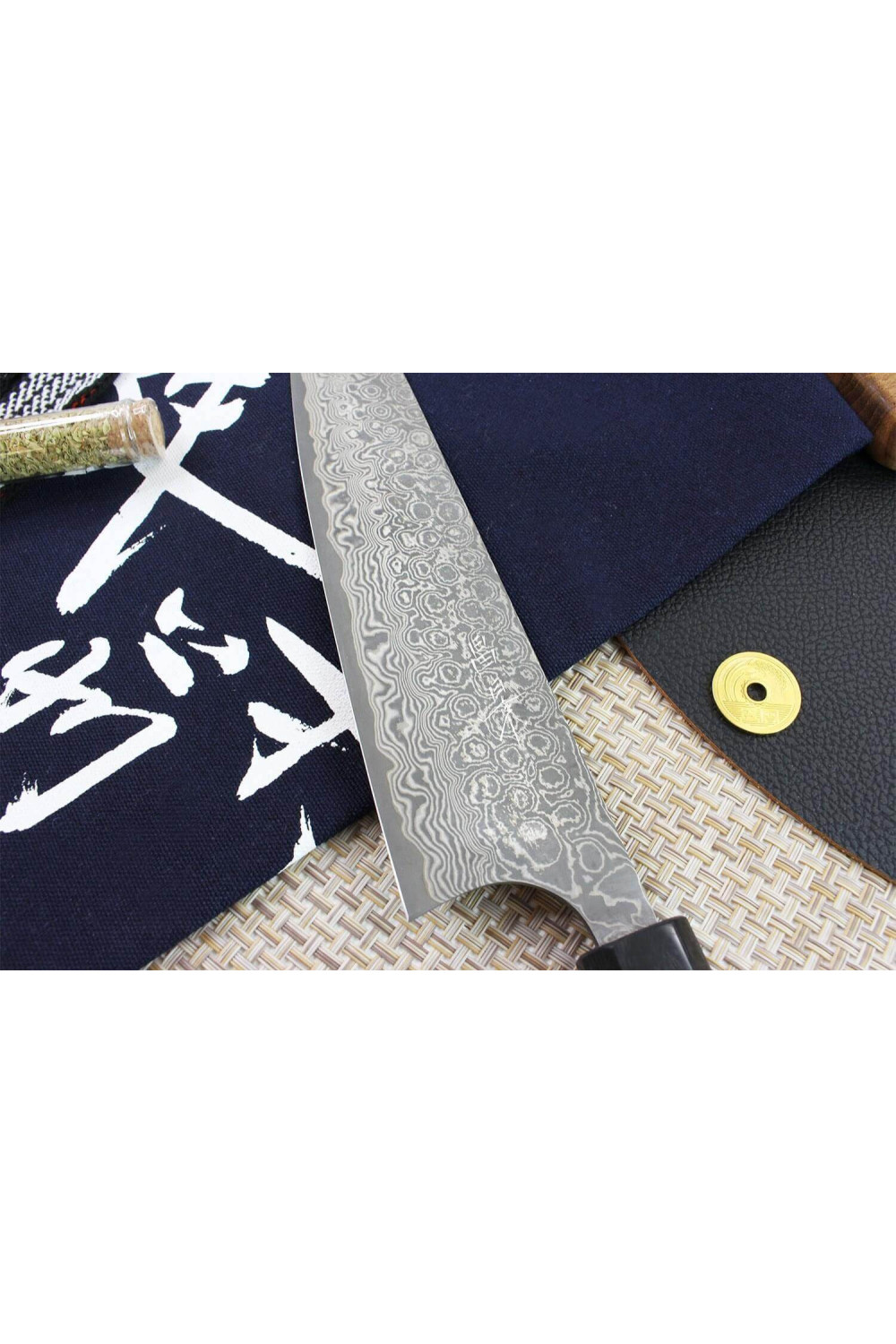
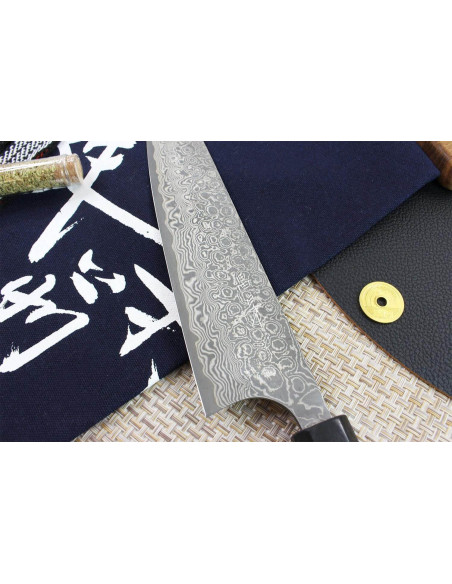
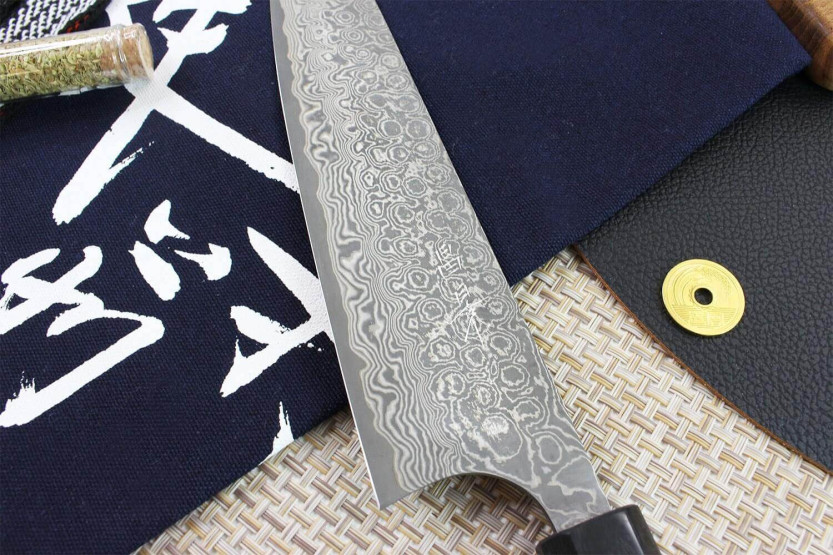
To create such a nuanced effect, Takumi Ikeda san used a stainless steel and a nickel steel. It's the variation in steels that creates the unique waves rippling across the cutting surface. The stainless steel has the advantage of increasing the steel's corrosion resistance, while the nickel steel gives it greater mechanical strength. The contrast in color brings a great deal of originality to the knife. The mix of steels can also be seen on the back of the knife.
Kumo" means "cloud" in Japanese, and this range is aptly named, as the random damascus patterns are reminiscent of clouds blending together in the wind just before a storm.
The brand name has been engraved on the cutting surface for even greater authenticity. It blends harmoniously with the various damask colors and remains discreet.
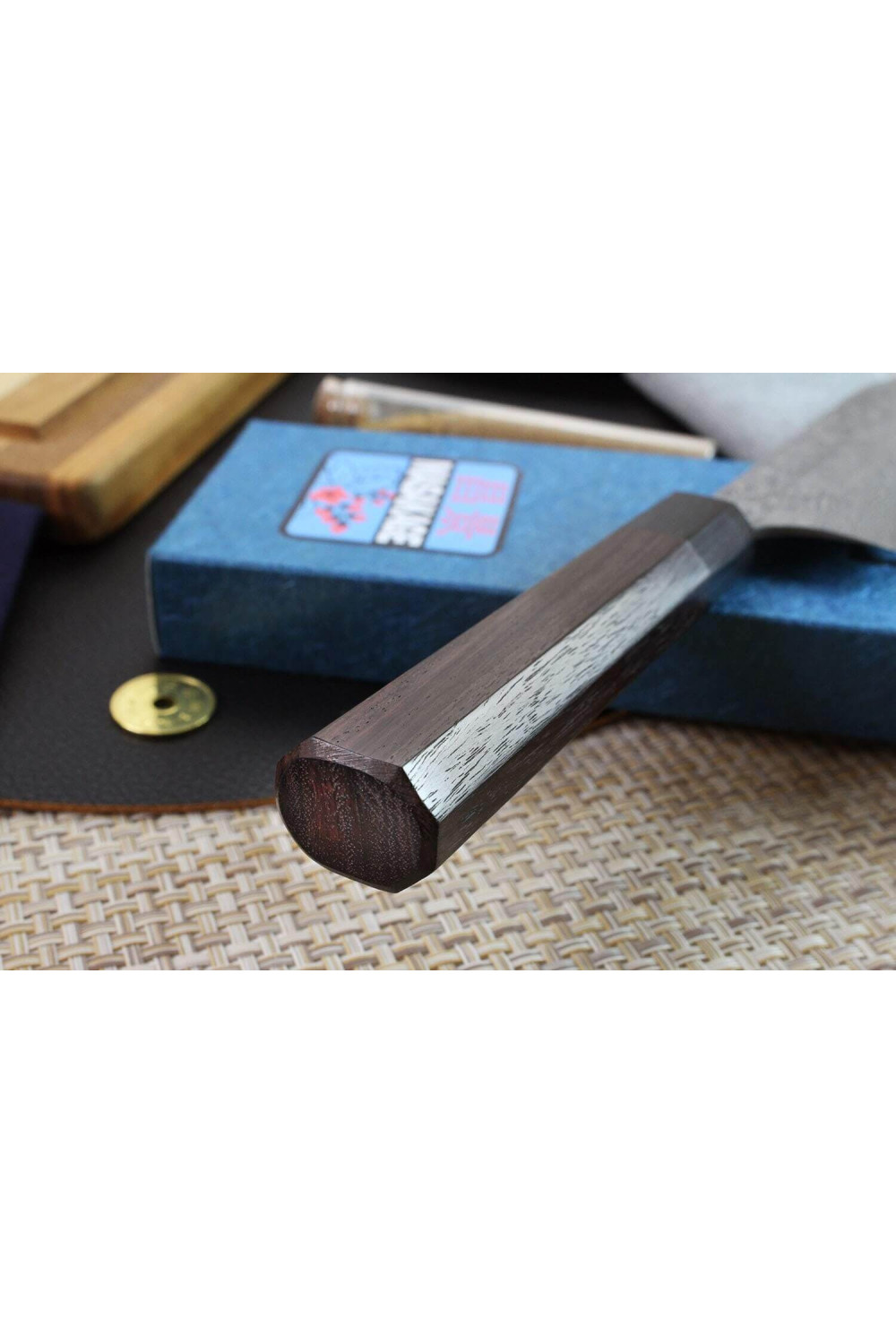
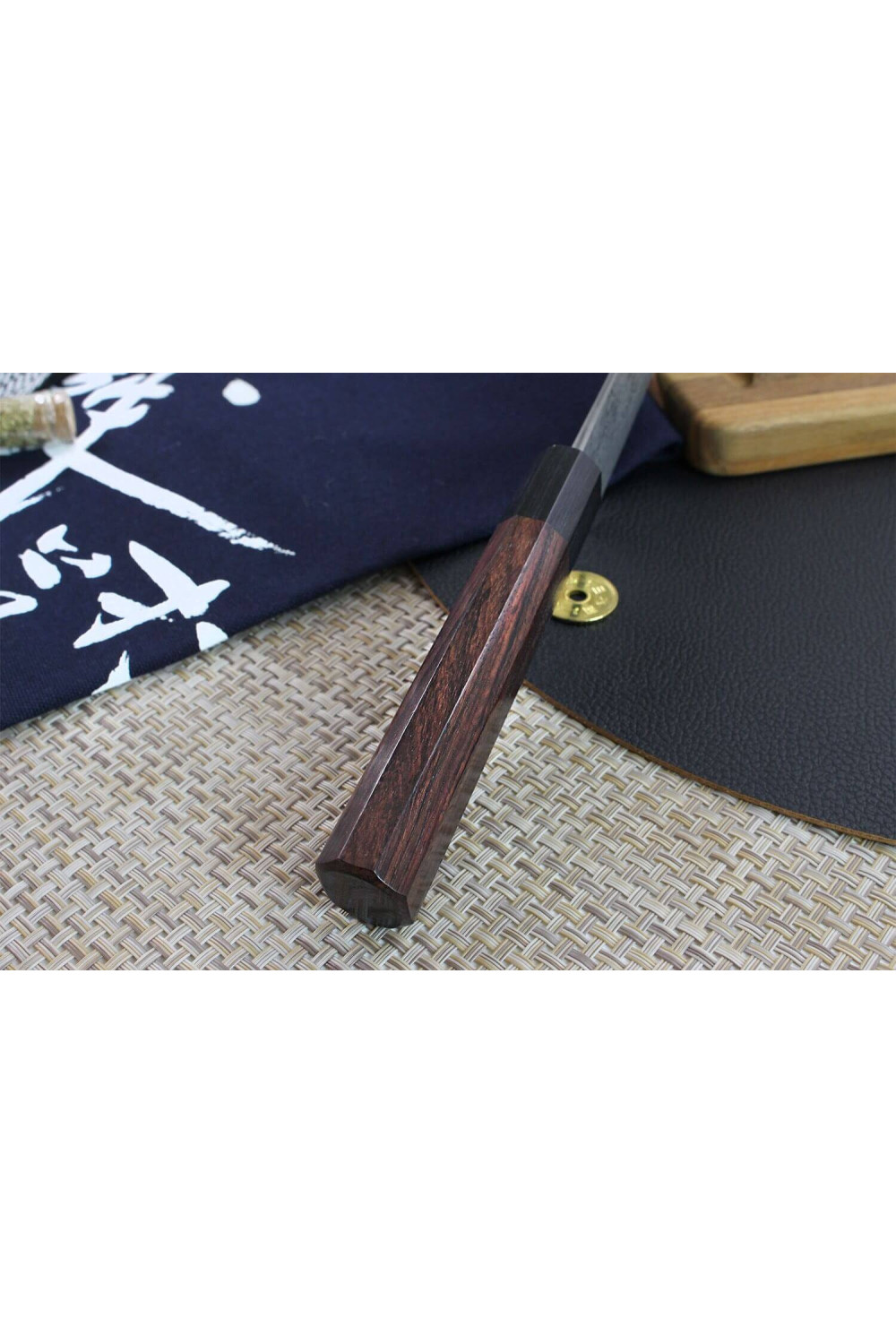
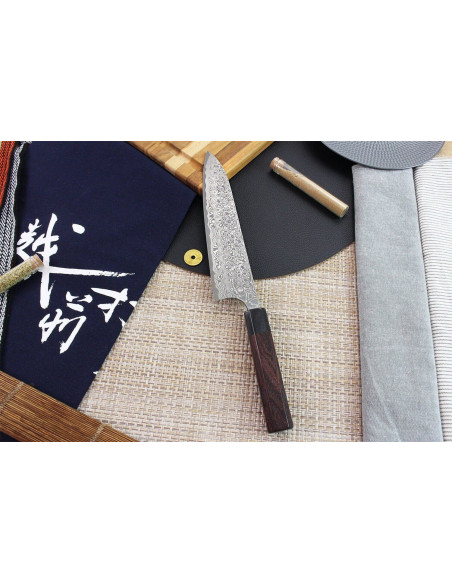
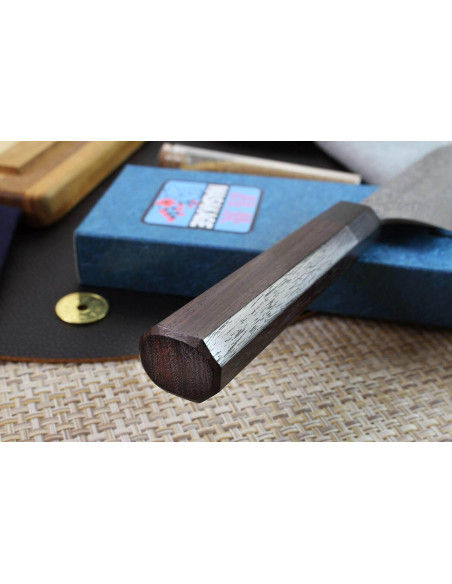
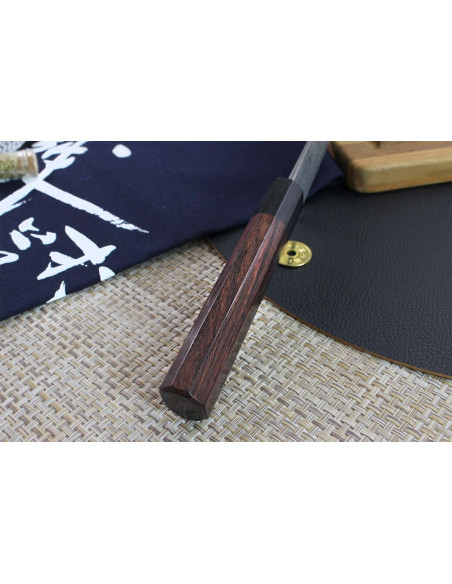
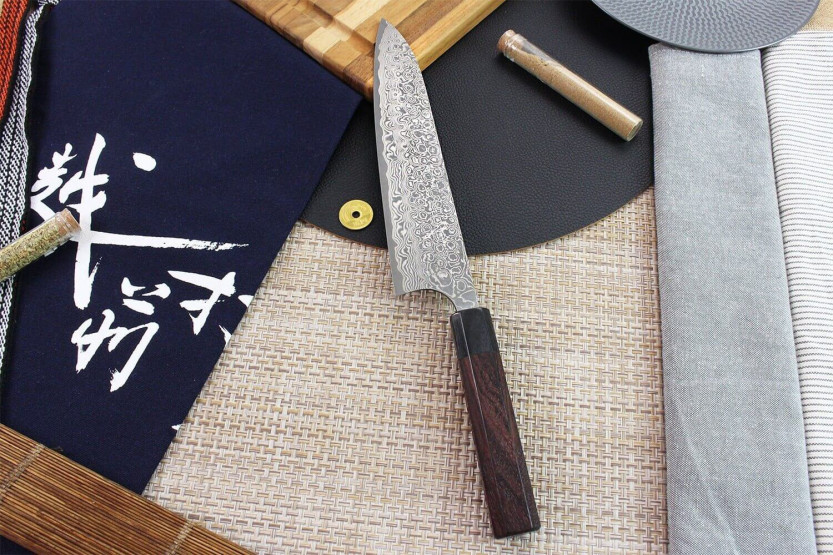
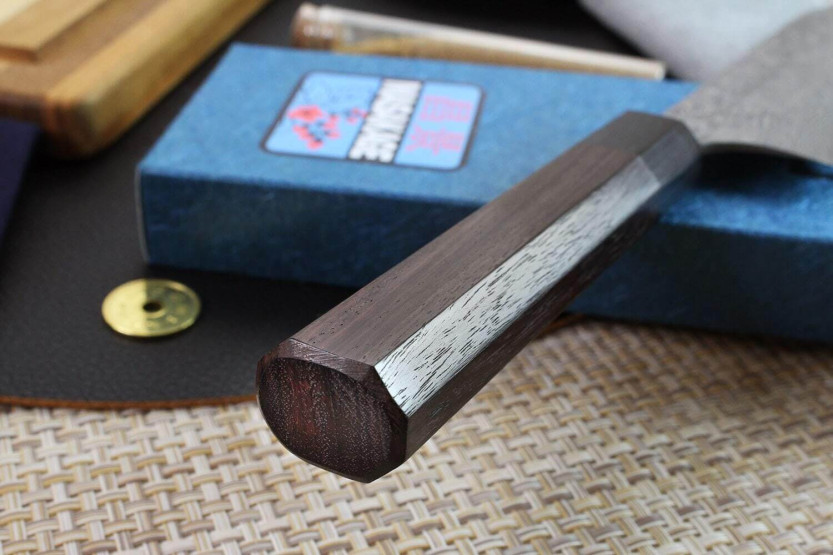
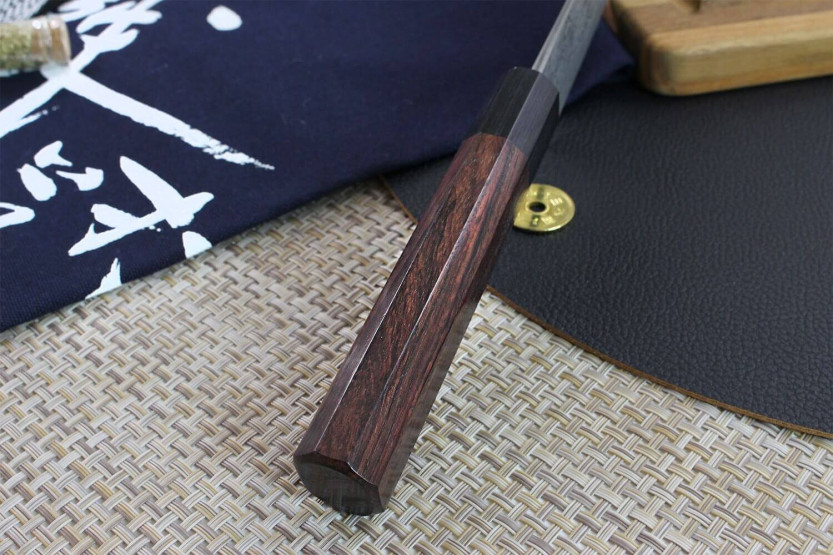
The handle is made of Sandalwood, a pleasantly light, grit wood. Its octagonal shape hugs the palm of your hand, so it's comfortable to hold whether you're right- or left-handed. A black Pakkawood bolster (a moisture-resistant, antibacterial composite material) links the blade to the handle. The junction between the blade and the bolster is filled with a wood paste that seals the whole, and prevents small scraps and cleaning water from penetrating the inside of the handle.
The knife can be maintained by hand. You can use a mild soap and run it under lukewarm water, without using an abrasive sponge. Then wipe with a soft cloth to remove all traces of moisture from the blade and wooden handle.
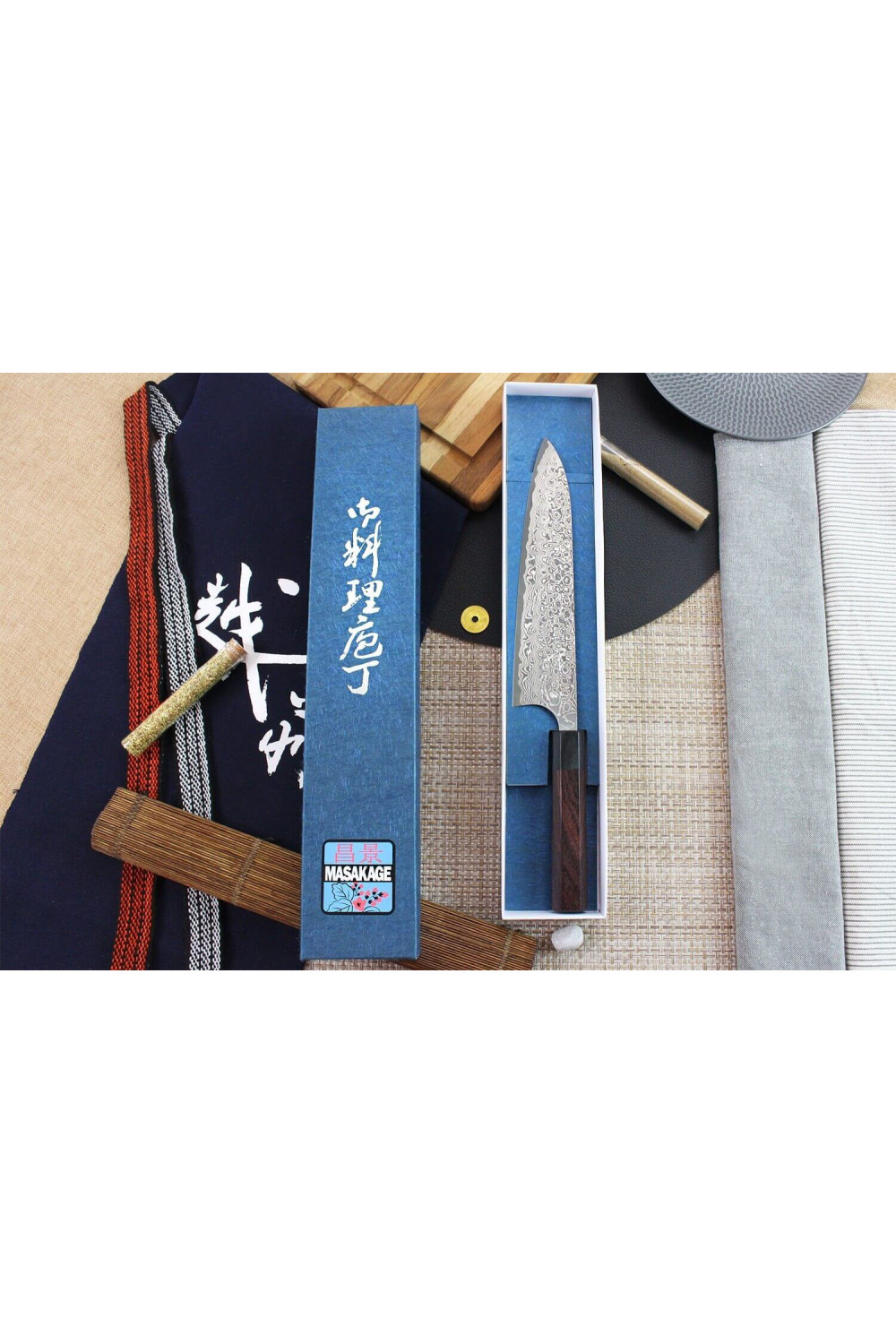
It comes in a sober, traditional blue box, perfect for gift-giving.
Find Masakage knives on Couteauxuduchef.com!


 By buying this product you can collect up to