Masakage Shimo knives are the result of the craftsmanship of master blacksmith Yu Kurosaki. His forge is located in the Takefu Cutlery Village, a renowned gathering place for blacksmiths specializing in the traditional art of cutlery. This is an ideal place for master blacksmiths to exchange know-how and pass on their knowledge.
Yu Kurosaki began his apprenticeship in the 2000s under the tutelage of master Kanehiro, with whom he worked for 12 years. During this period, he acquired complete expertise, from forging to sharpening. Encouraged by his master and after satisfying his first customers, Kurosaki decided to open his own workshop. He subsequently honed his skills by training with the renowned Hiroshi Kato, a renowned master blacksmith and one of the founding members of the Takefu Cutlery Village. Today, Yu Kurosaki continues this tradition by training an apprentice in his own right, ensuring that his skills are passed on.
 Yu Kurosaki san" width="750" height="290" />
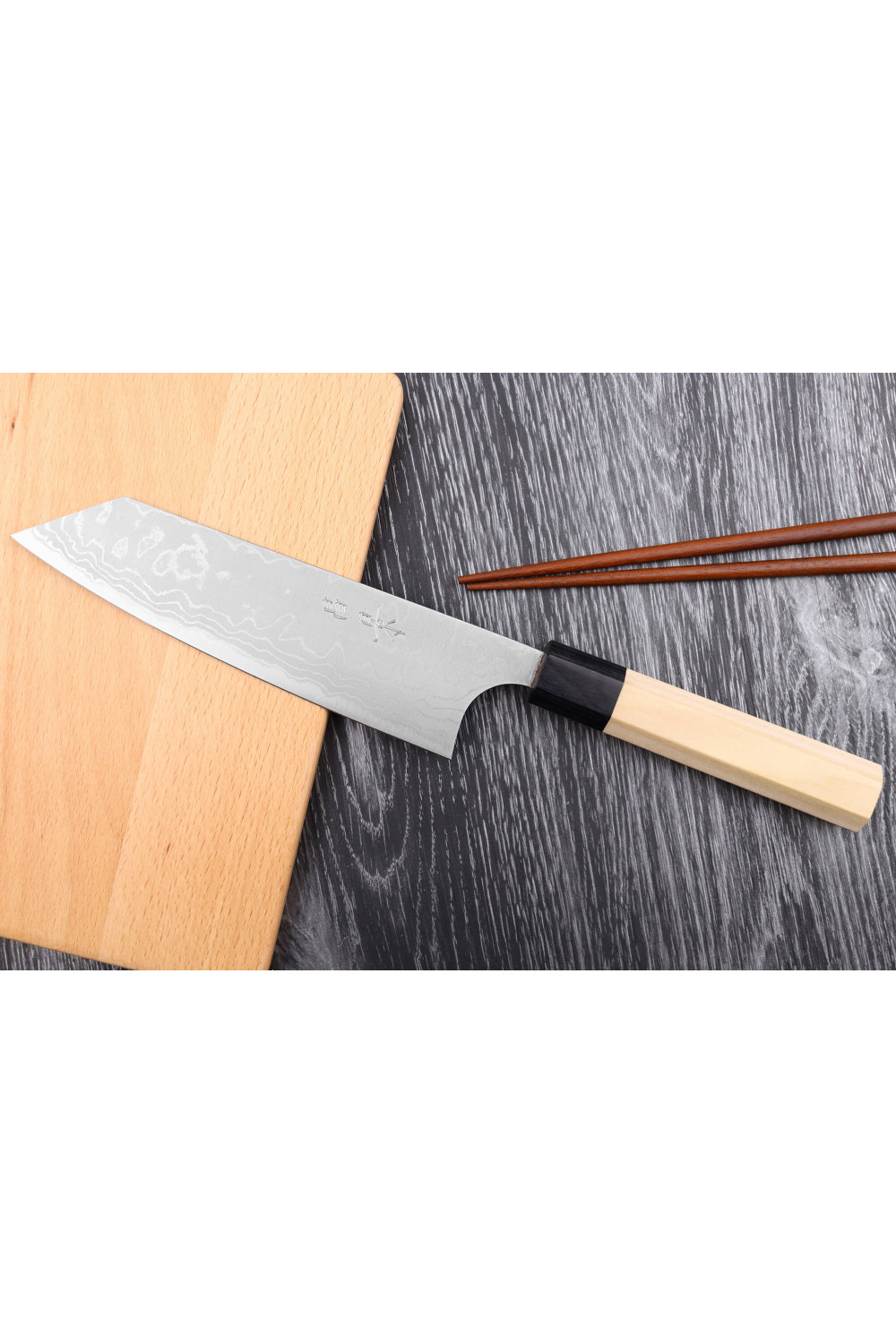
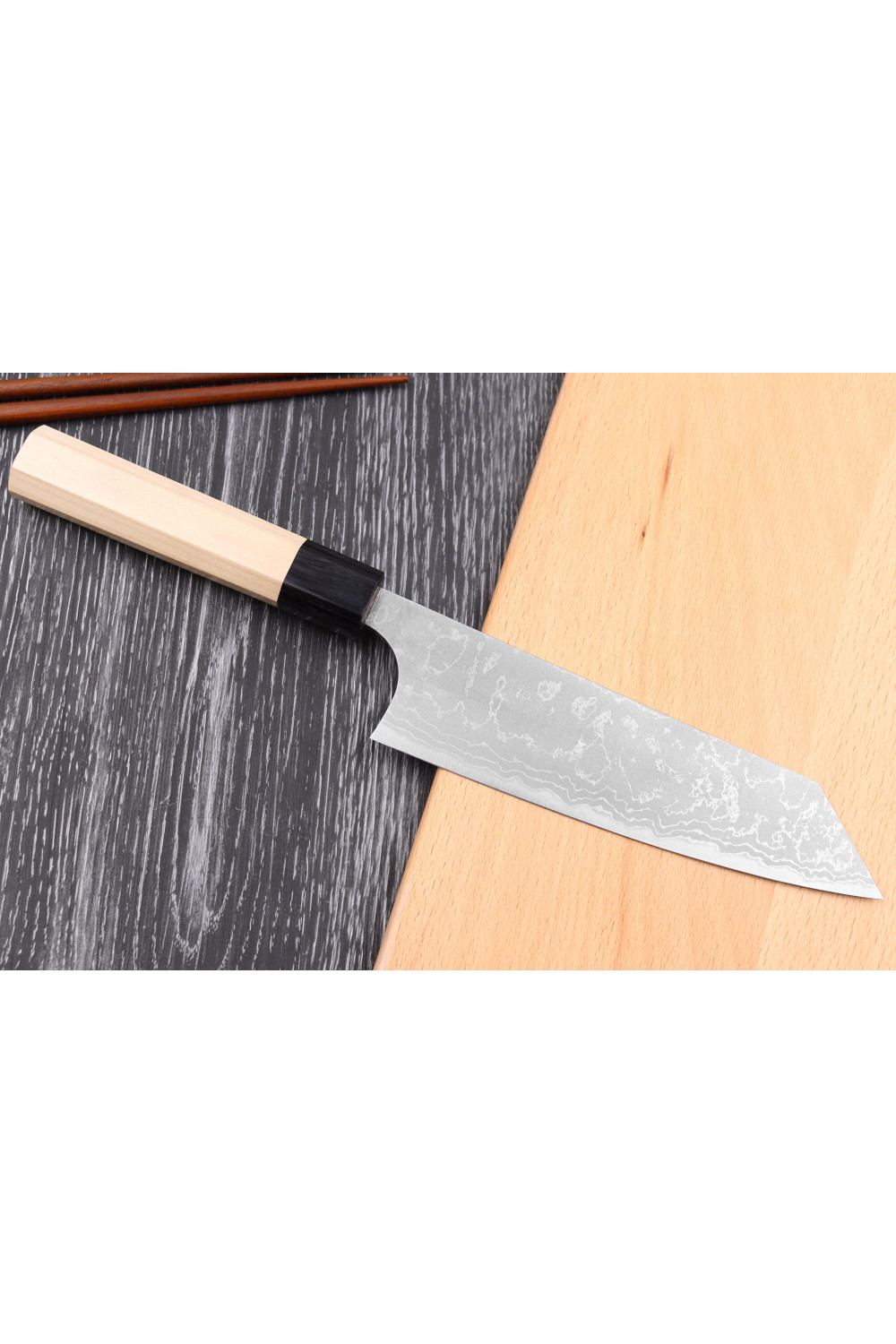
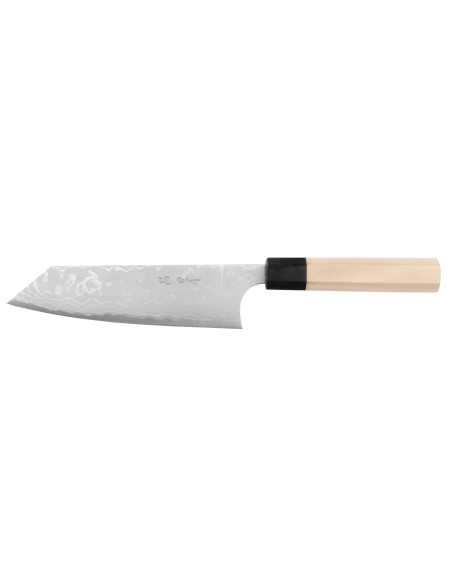
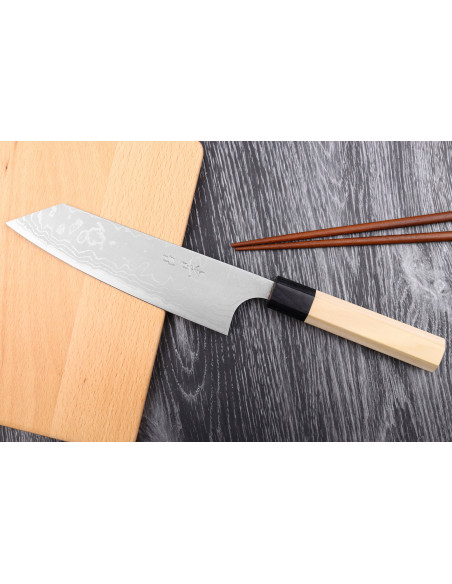
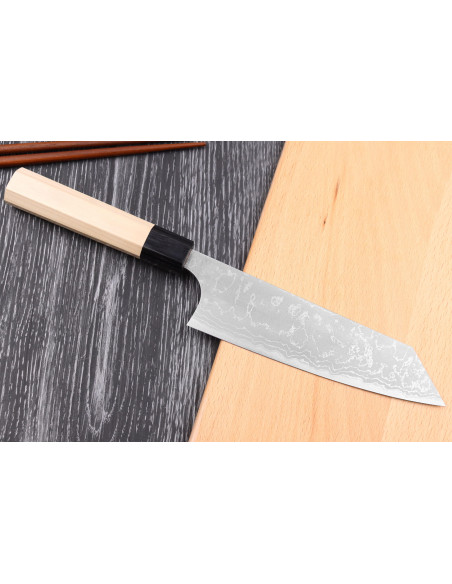
A Japanese kitchen knife with an elegant blade
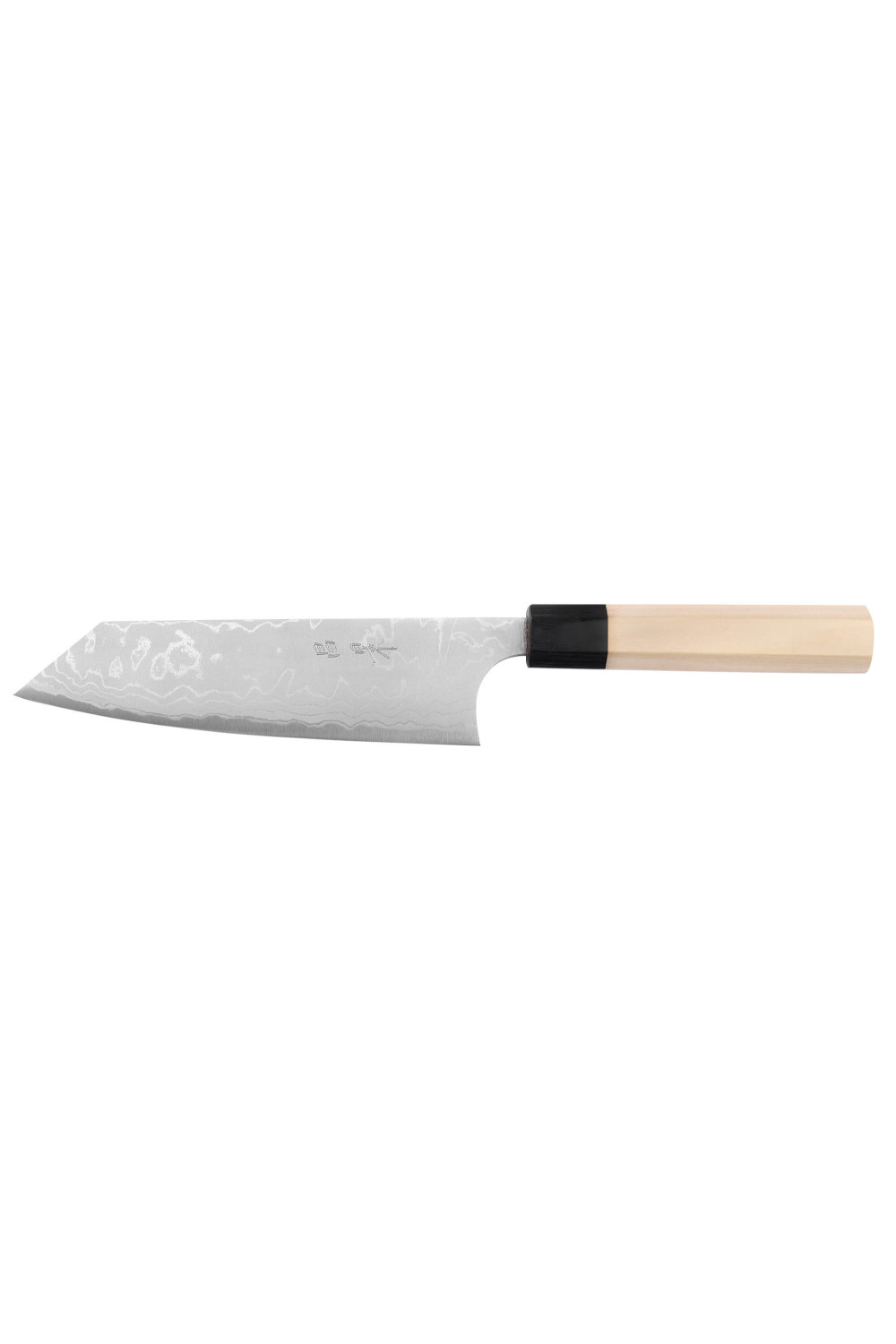
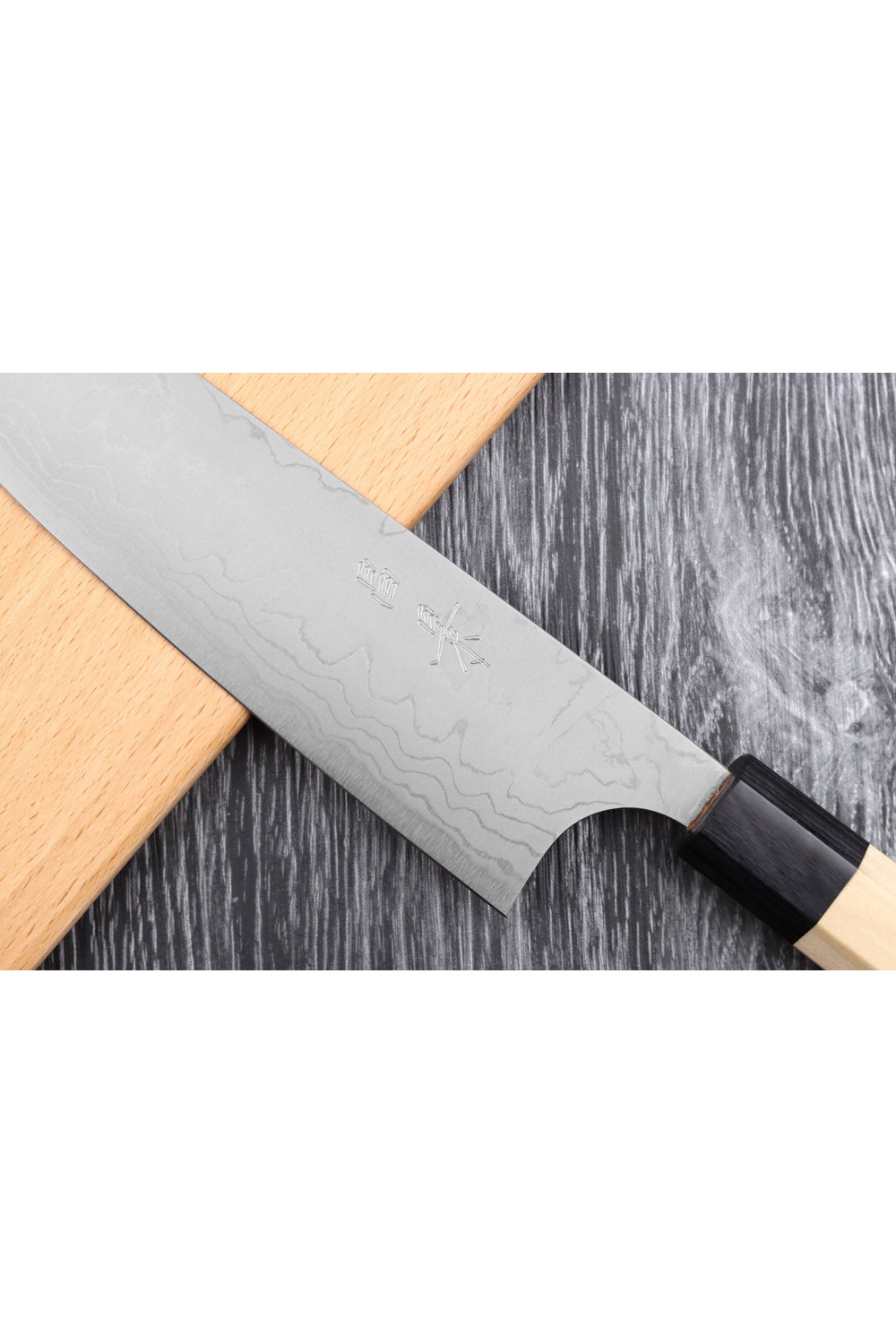
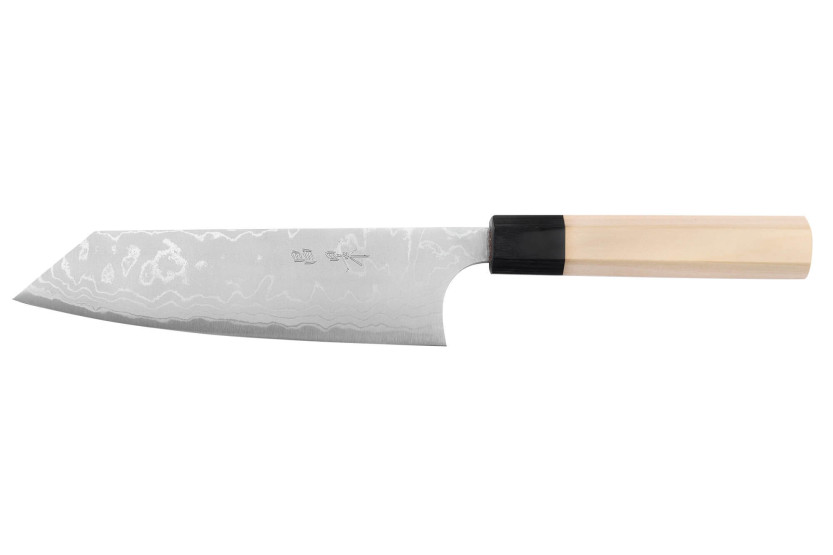
This damascus knife has a very specific blade structure: a rigid steel core is covered by several layers of softer steel. This technique balances the blade and provides optimum protection for the core.
This Japanese kitchen knife features a magnificent blade forged from Japanese White Paper Steel, an alloy produced by Hitachi, renowned as the steel supplier of many Japanese manufacturers. This steel is particularly pure, with a carbon content of 1.2% and a hardness of around 61HRC on the Rockwell scale.
Thanks to this composition, your blade offers a remarkable sharpness and a cutting edge that lasts over time! What's more, this alloy is easy to sharpen when necessary.
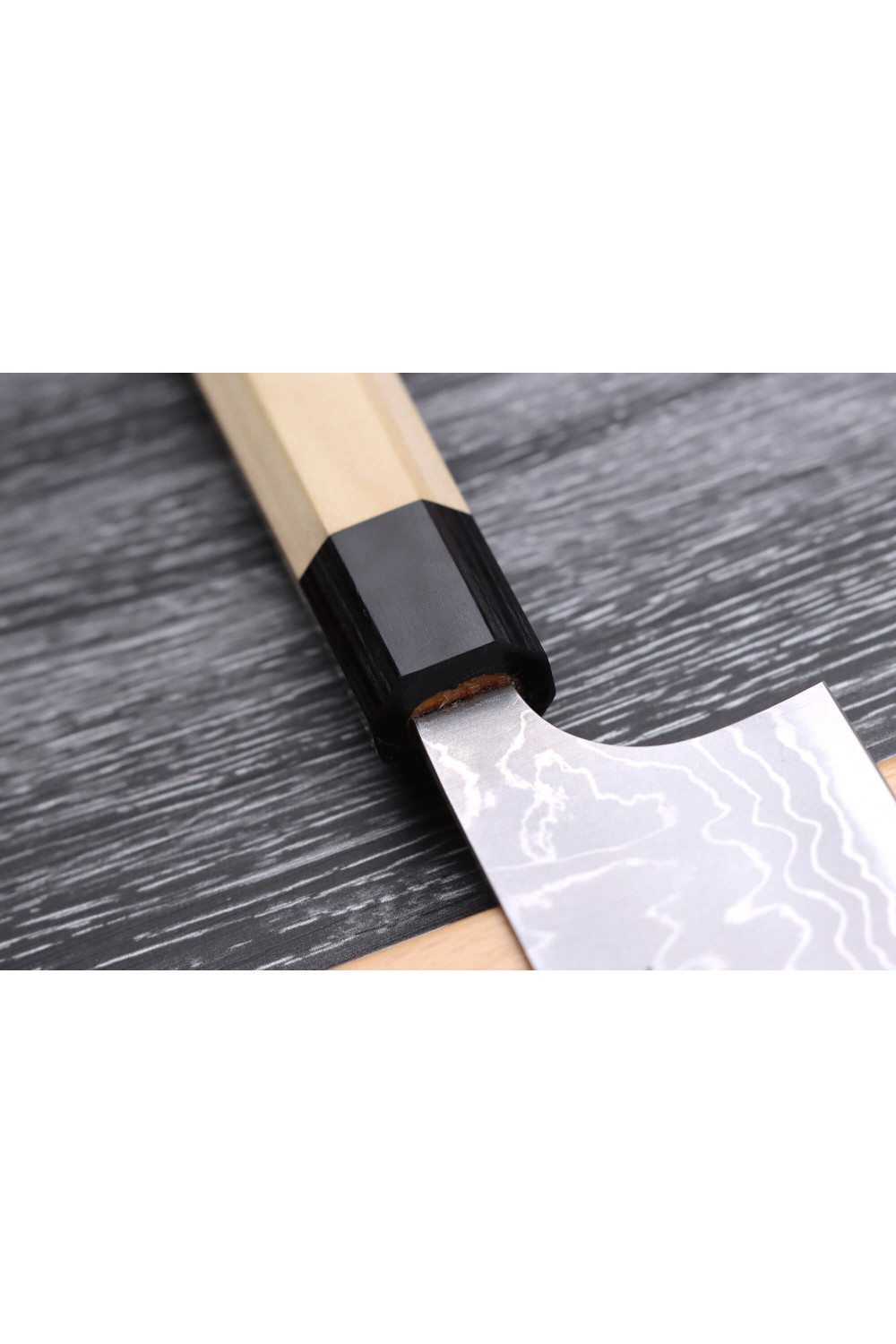
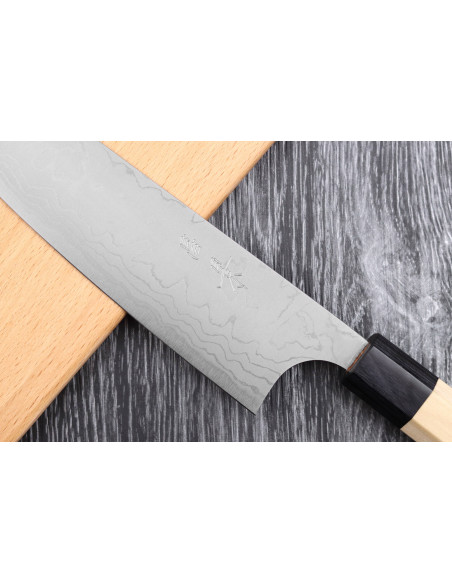
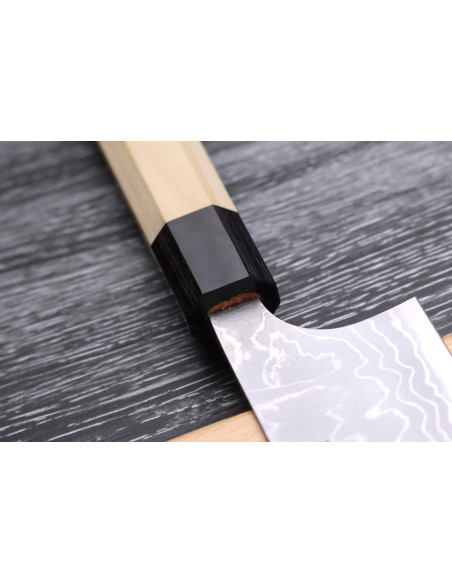
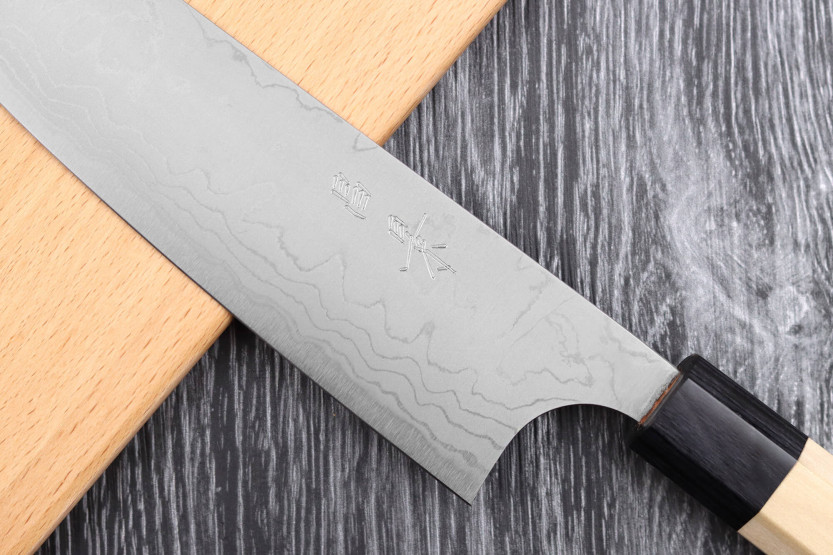
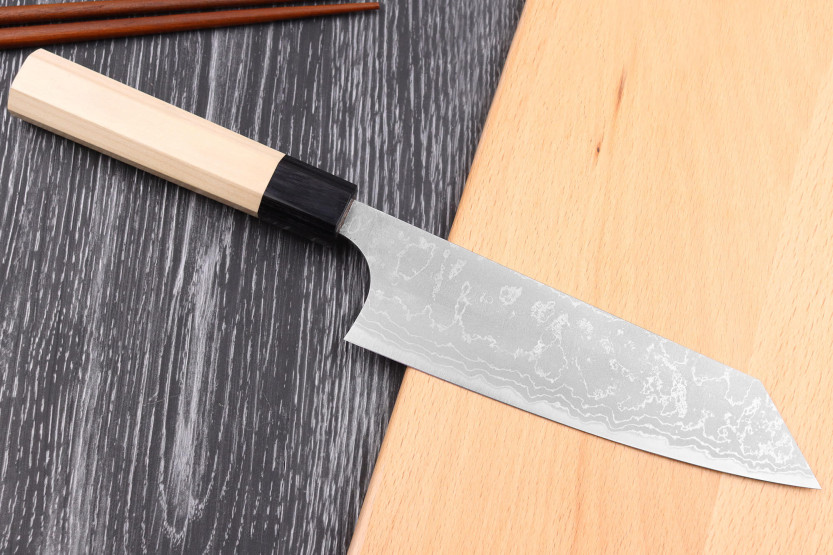
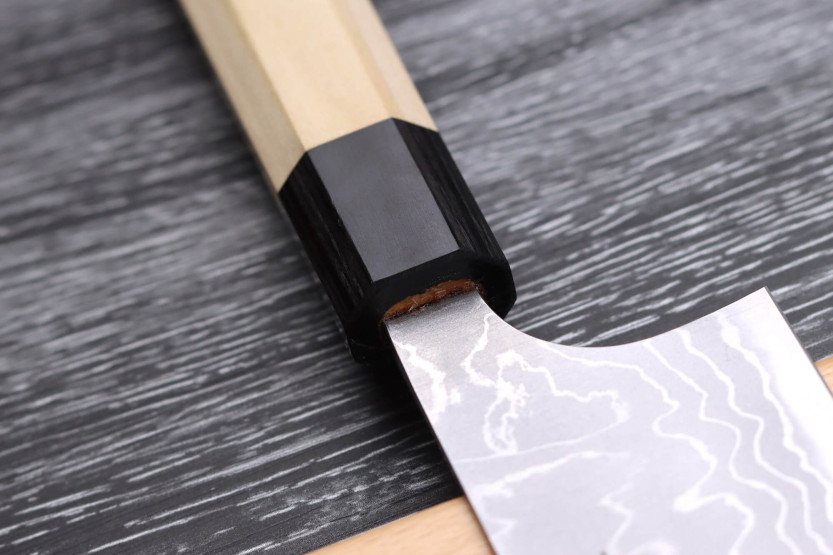
In addition to the quality of the steel, the blade features a delicate damascus pattern, alternating betweensteel and iron, giving it a refined appearance. The name of the range, "Shimo", which means "frost" in Japanese, reflects the slightly icy appearance of these handcrafted knives.
The brand name is discreetly engraved in kanji on the cutting surface, adding a touch of authenticity.
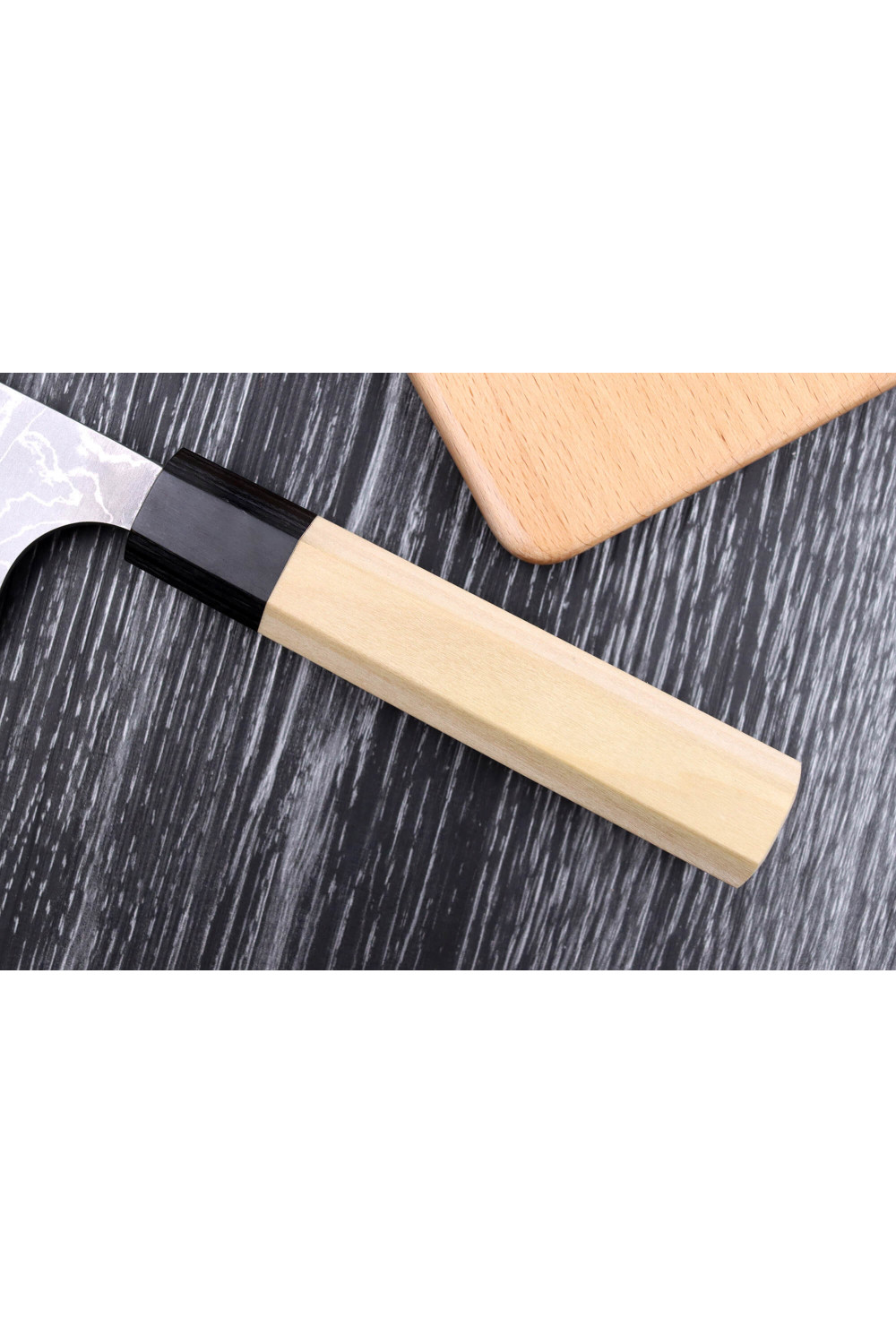
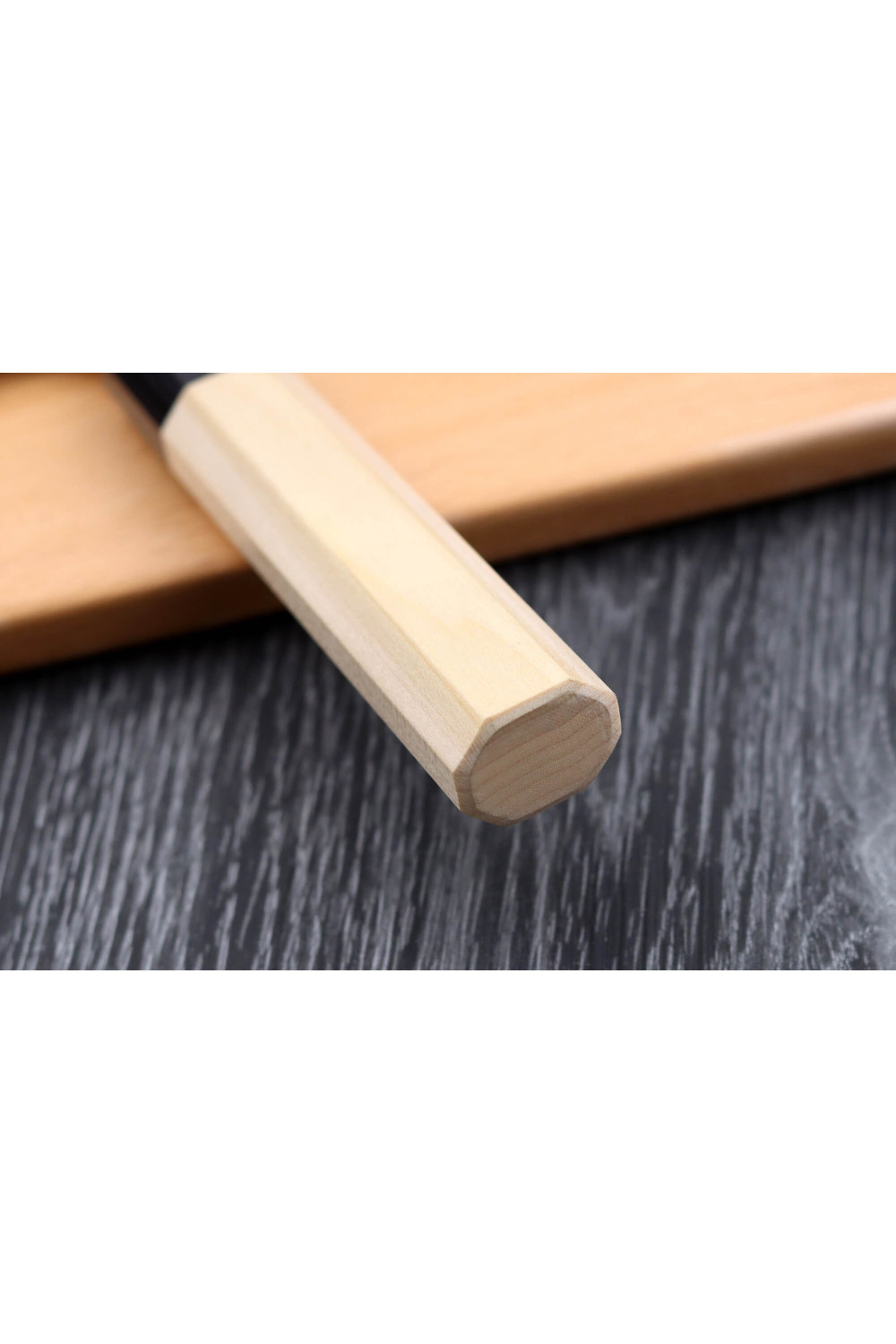
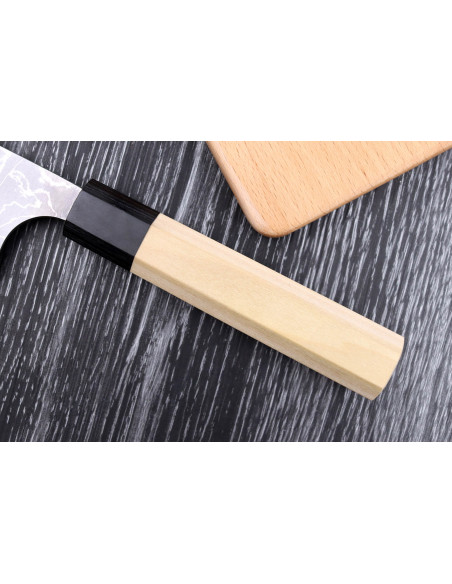
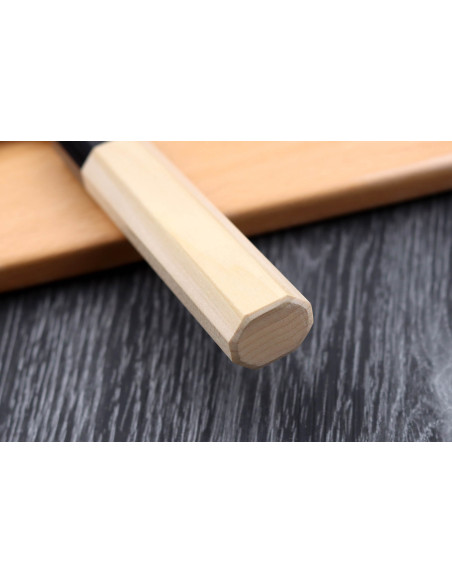
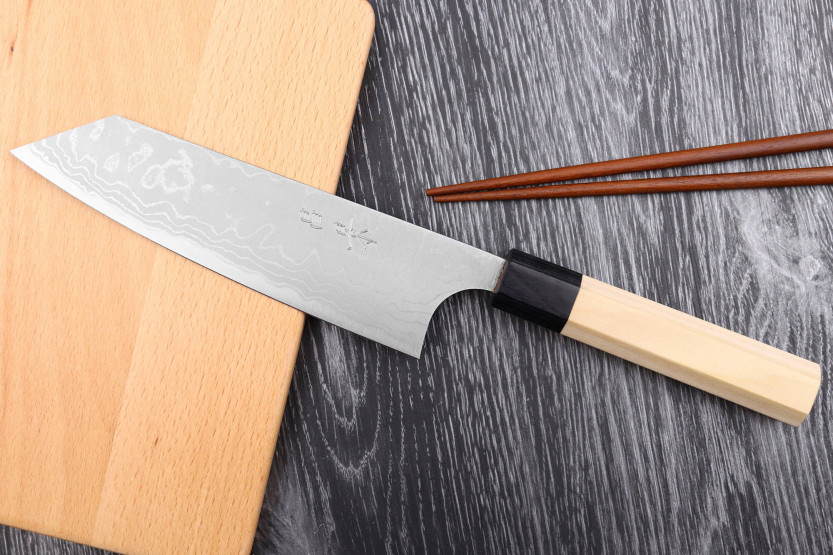
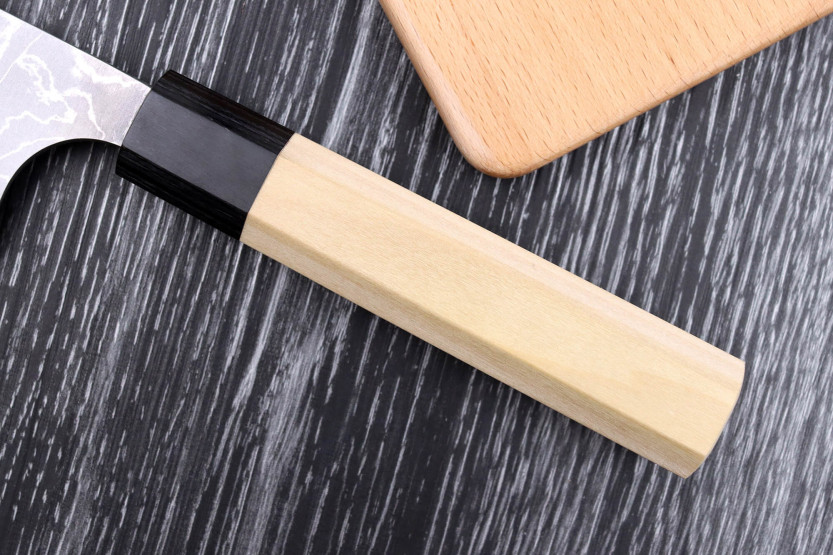
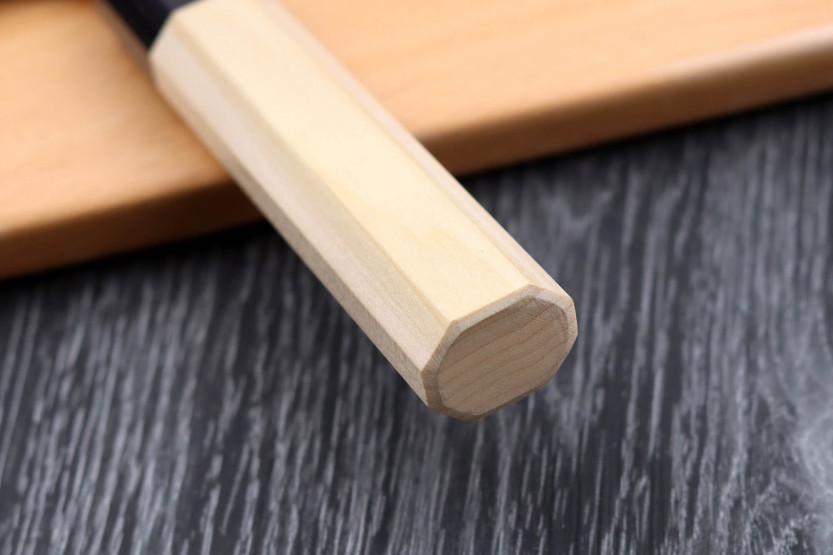
The handle is made of magnolia wood, a light, fine-grained species. Its octagonal shape ensures a comfortable grip for both left- and right-handed users, and optimal ergonomics even for prolonged use!
The bolster, which connects the blade to the handle, is made of black pakka wood, an antibacterial composite known for its resistance to moisture. Its dark color creates an elegant contrast with the light-colored blade. To ensure an ideal seal, wood putty has been applied where the blade joins the handle, preventing infiltration.
Caring for your Masakage knife
To care for your handcrafted knife, wash only by hand in lukewarm water with mild soap and a non-abrasive sponge, avoiding wetting the handle. Then wipe carefully with a cloth to remove any moisture, and store in a dry place.
Note that the knife is sensitive to oxidation due to its carbon steel, which contributes to a sharper, longer-lasting edge. It should therefore not be left to soak in the sink or put in the dishwasher.
Carbon steel can also change color naturally over time due to contact with food acidity and ambient humidity. For more thorough maintenance, we recommend the occasional application of mineral oil.
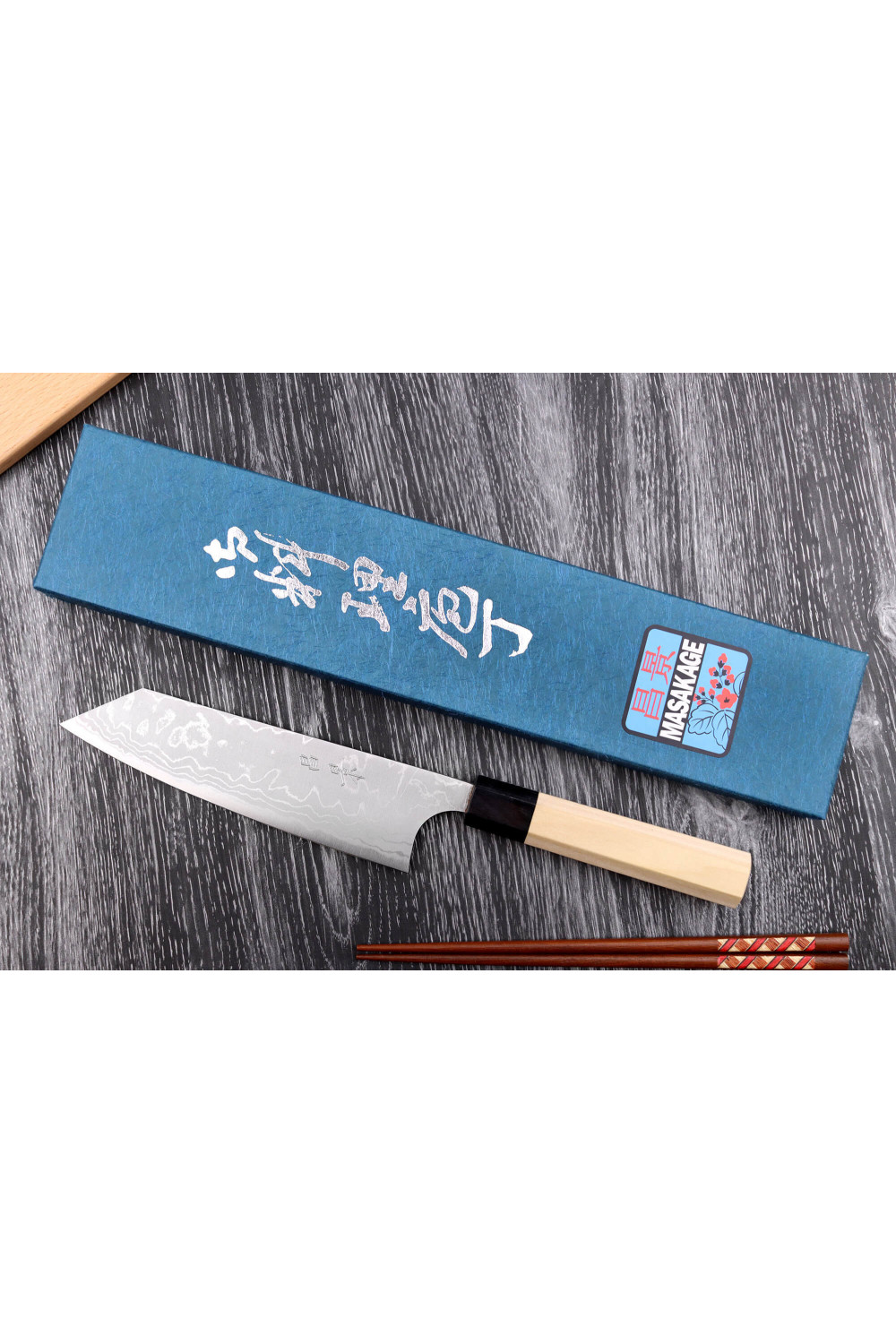
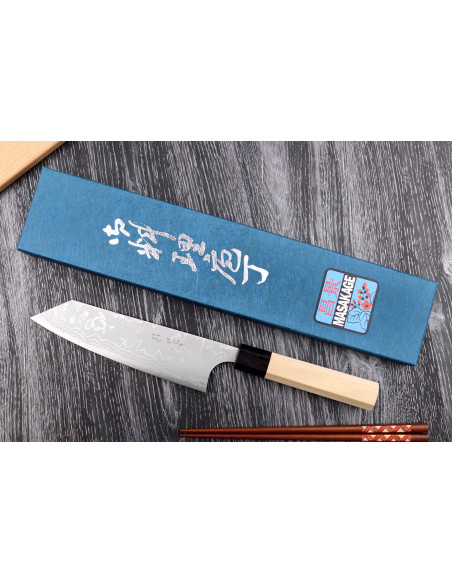
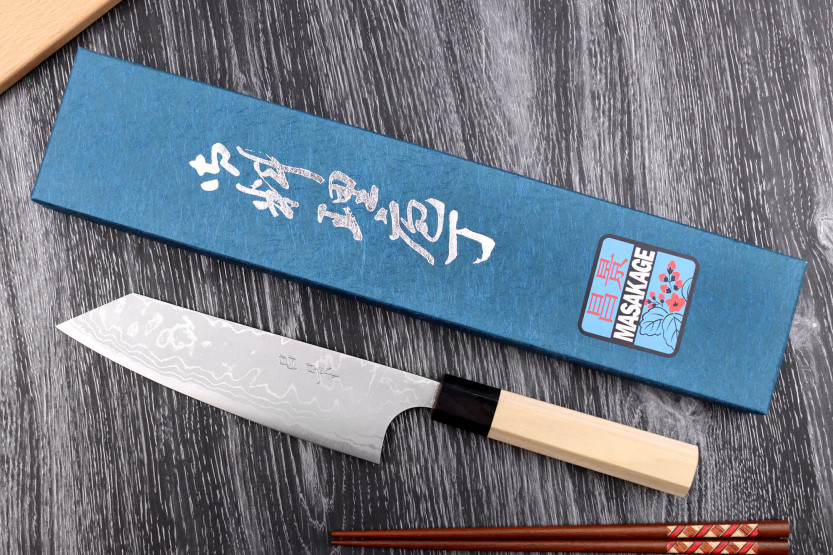
The knife is neatly presented in a sober, traditional blue box.
Discover a wide range of handcrafted Japanese knives on Knifeleader.eu!




 By buying this product you can collect up to