Misono Japanese knives are a trusted name in the kitchens of chefs around the world.
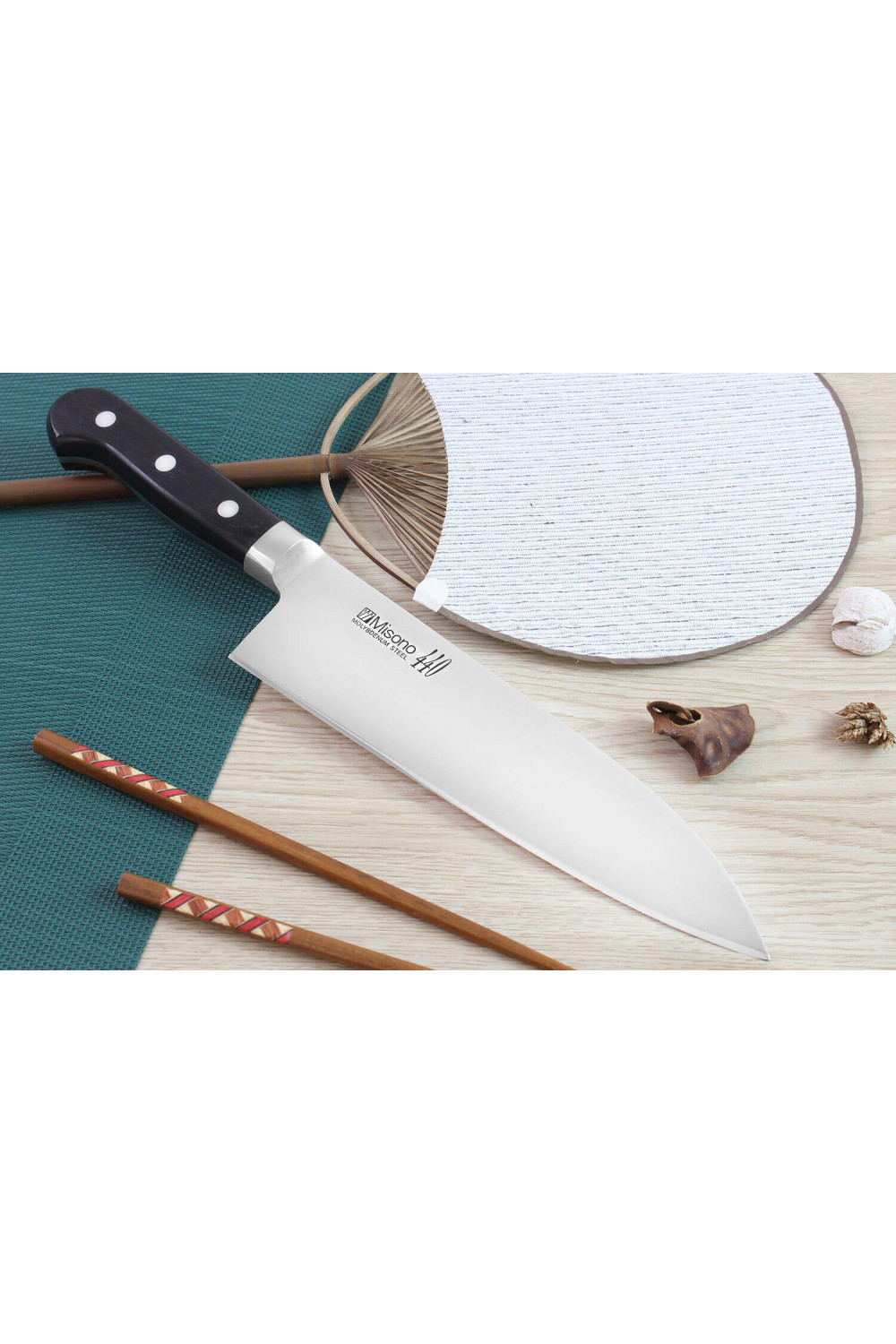
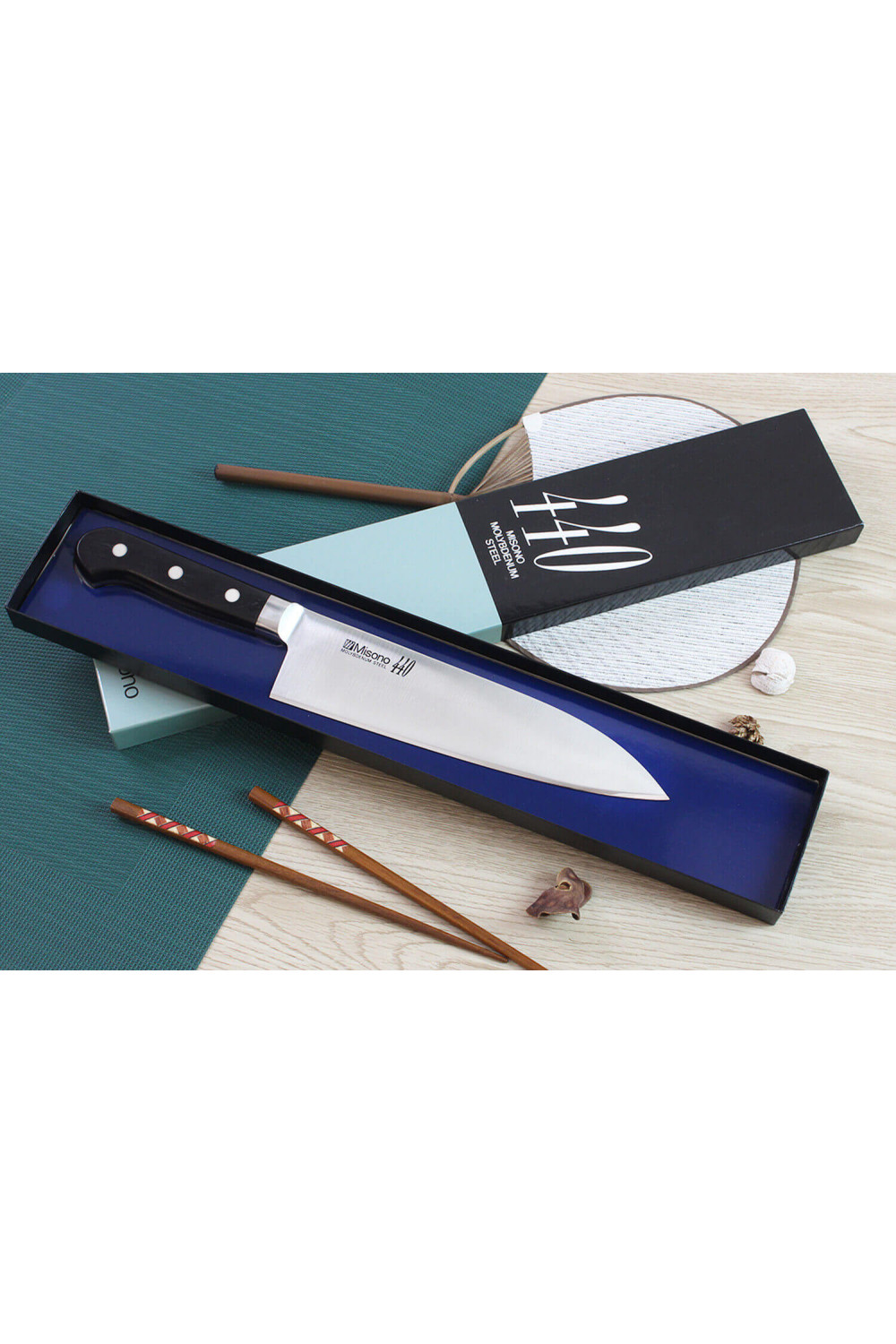
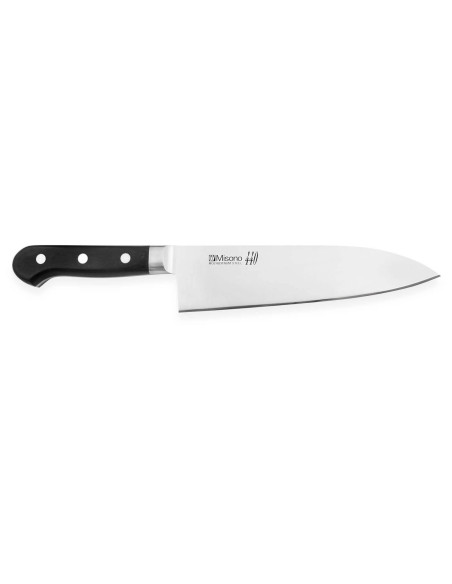
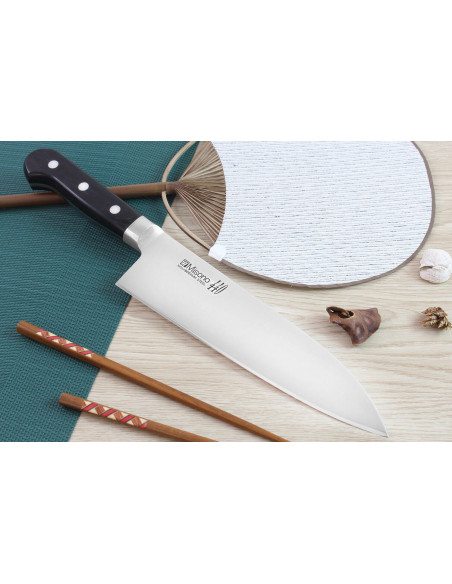
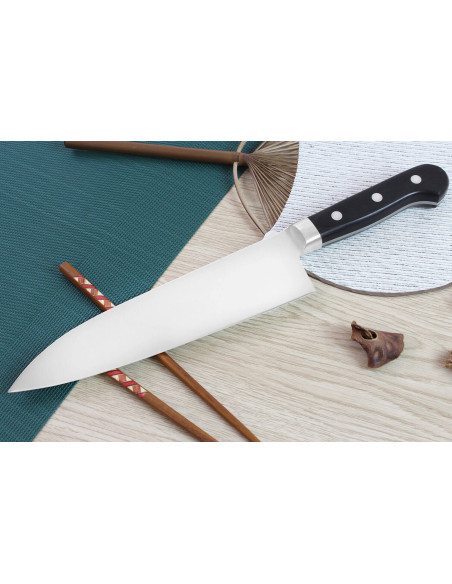
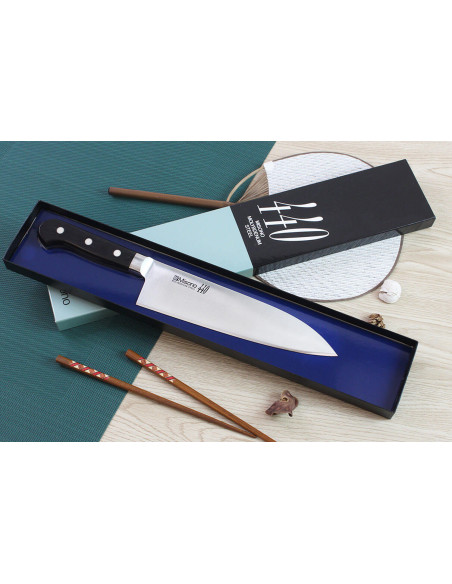
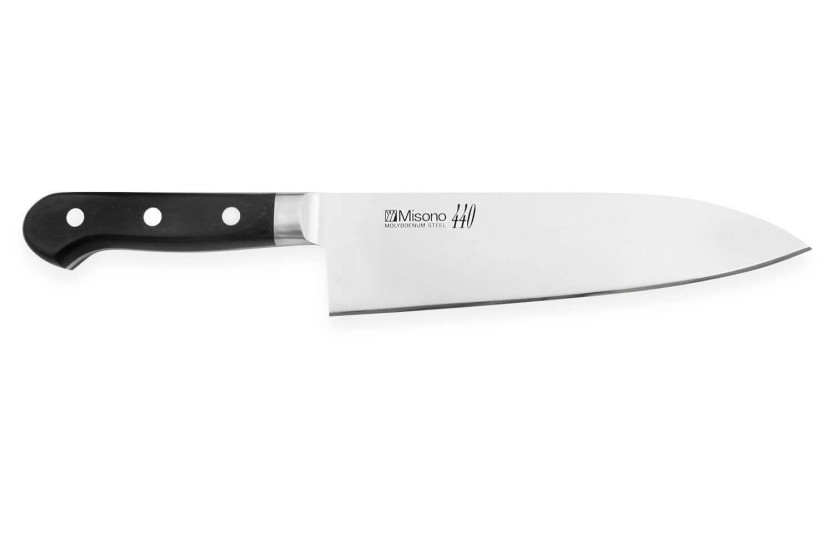
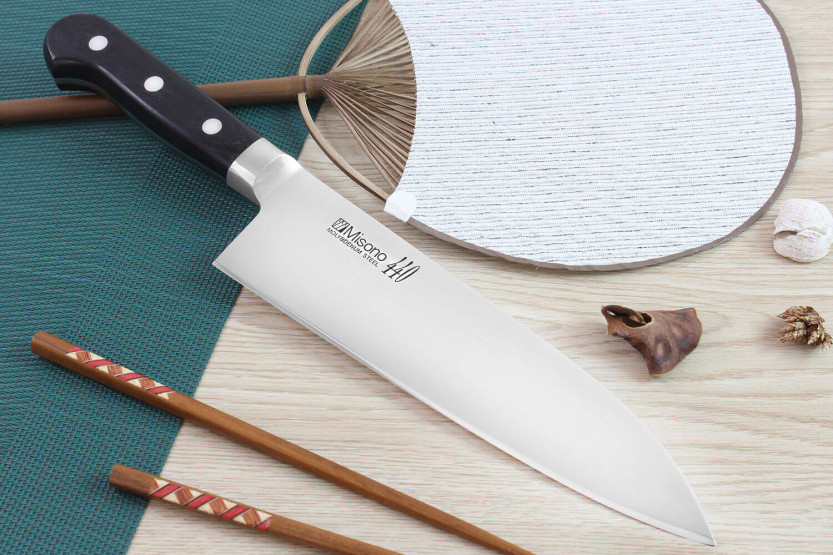
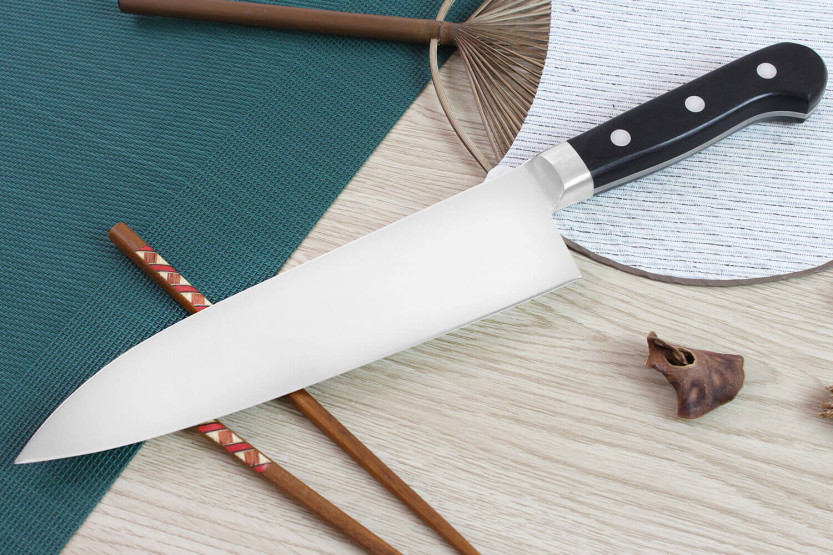
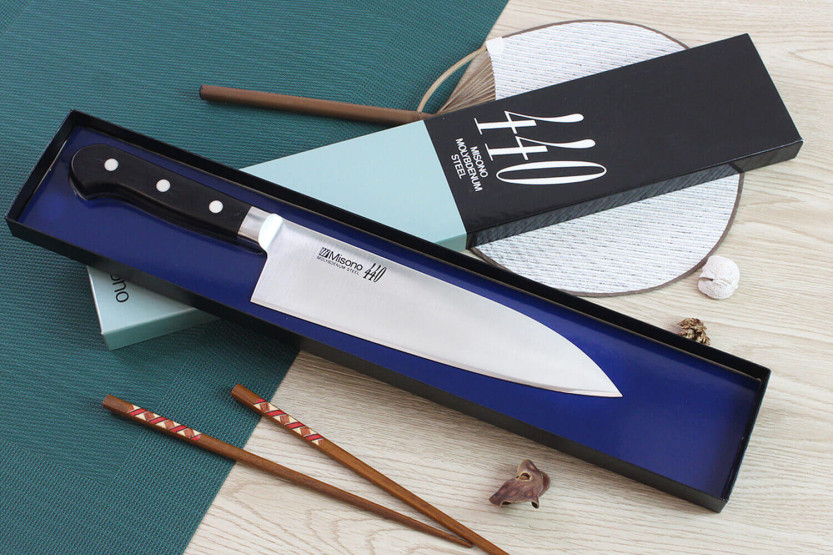
This Deba 22cm knife is part of the Misono 440 range, renowned among food professionals for its long-lasting sharpness and corrosion-resistant blade. Note that while the traditional Deba has a beveled blade, this is not the case for the knife shown here, which has been "westernized". In fact, its cutting edge is not bevelled per se, and both left- and right-handers can use it.
Technical details :
The alloy used to design the blade is 440C (which, by extension, gives the range its name). It's stainless and resembles VG10, but enriched with chromium and molybdenum. The result is something that will resist oxidation really well (with standard use and maintenance). That's why it's so attractive to restaurant chefs!
The cutting angle of its edge is asymmetrical (without being one-sided). This ensures a clean cut, and food is not damaged as the blade easily penetrates the flesh.
With a hardness of 58/59 HRC on the Rockwell scale, the blade is effective in many cuts. However, in view of its special composition, you should bear in mind that the alloy takes a little longer to sharpen (this is due in particular to its chromium content, which on the other hand makes it much more resistant to oxidation, as explained above).
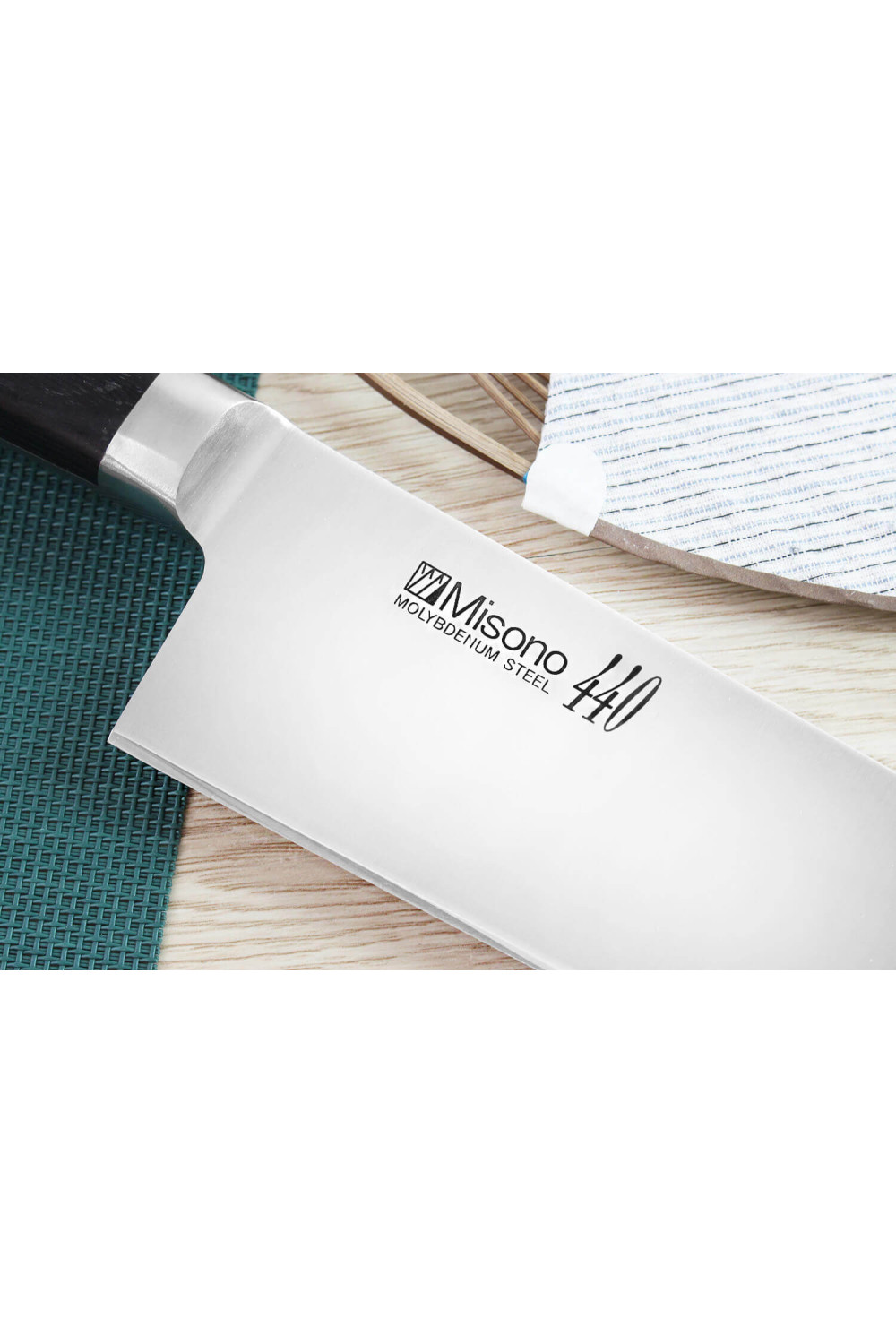
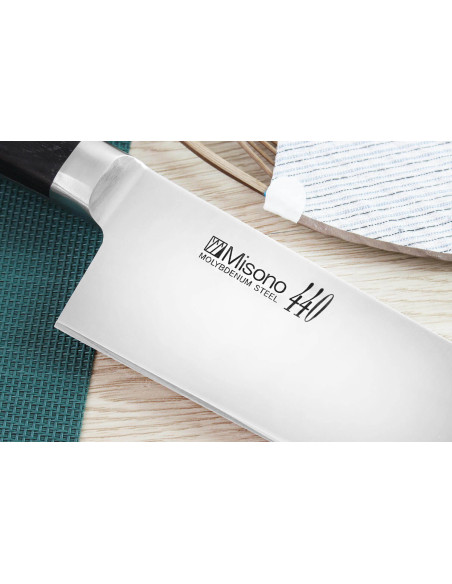
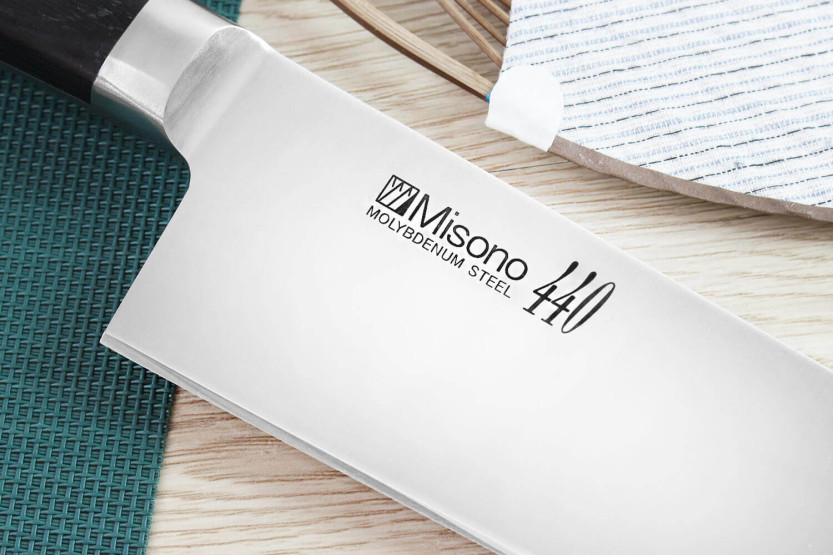
Finally, you'll find the brand and range name embossed on the cutting surface.
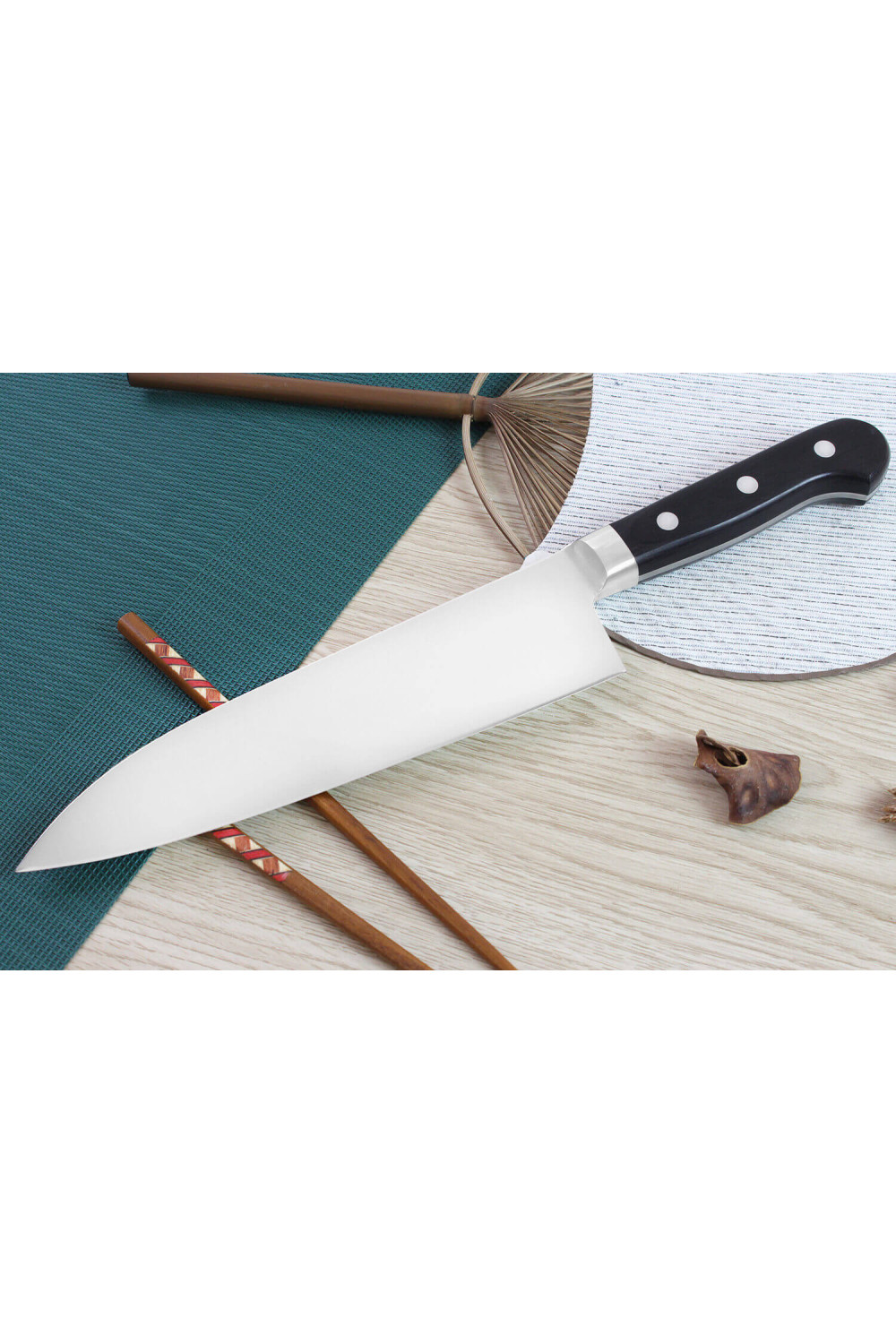
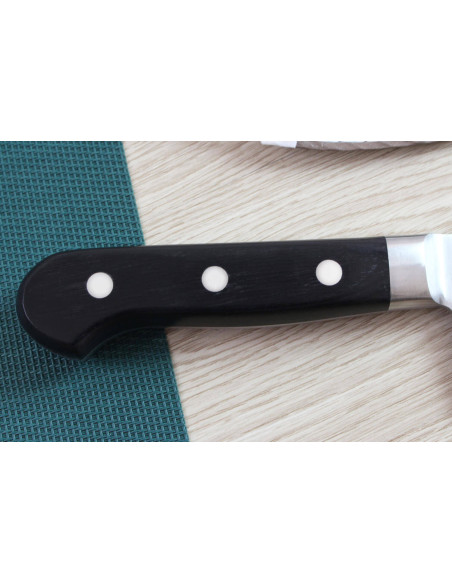
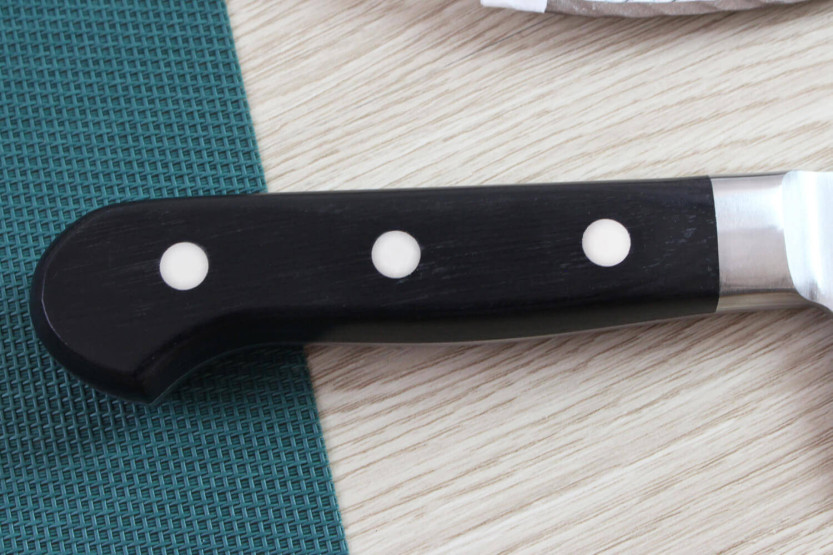
Thanks to the handle, your work is pleasant and fatigue is reduced, even over repeated use. Its shape and components are adapted to Western chefs, so it can be used all over the world without difficulty.
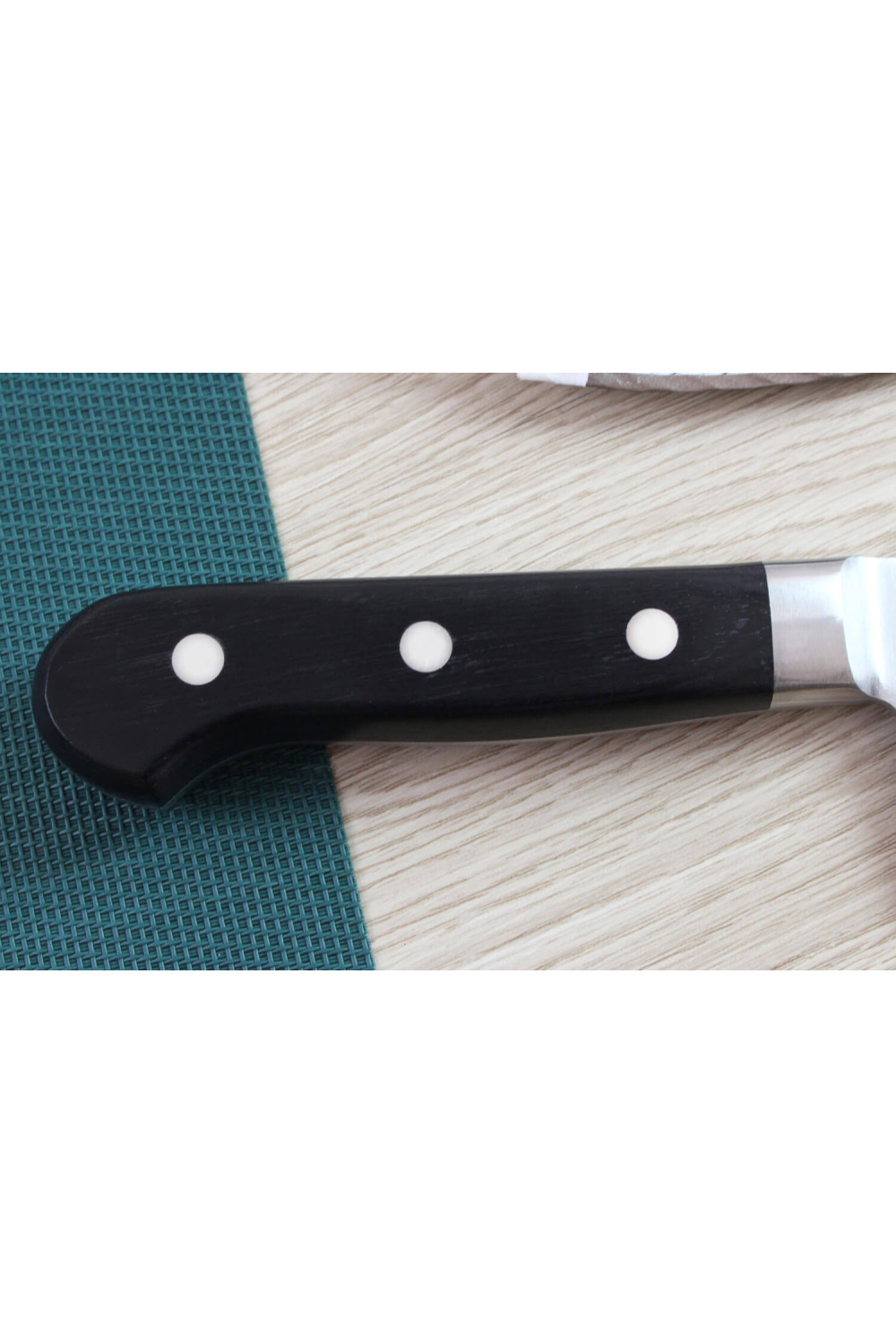
The black part of the handle is made of lightweight Pakkawood: this material feels good in the hand and reduces fatigue. This antibacterial composite material is resistant to temperature variations and humidity, making it a real asset in the culinary world. The slightly recessed shape of its base allows you to grip and handle it with control, and its use is ambidextrous.
In addition, stainless steel rivets attach the Pakkawood handle to the full tang blade (which extends to the end of the handle), and a stainless steel bolster links the blade to the handle. It balances the knife.
Caring for my knife :
As the Misono knife is suitable for professional use, it is considered hard-wearing. It still needs to be cleaned by hand, using a soft sponge and washing-up liquid. When you've finished, wipe it dry and store it in your block, Bag or magnet bar.
A few words about the manufacturer:
Misono began production in 1935, in the town of Seki (renowned for its knifemaking expertise over many centuries). Initially, the family business designed specialized blades for peelers, but in the 1960s it diversified into the world of knives!
It is the oldest manufacturer of Western-style knives in Japan, and employs some fifty experts who make 150,000 knives a year, which is no mean feat.
It's worth noting that at Misono, 100% of the manufacturing steps are carried out in-house, from the design of the blade to that of the handle (as many producers of this size have certain parts of their knives made by other companies, more specialized in particular fields).
Last but not least, the company's production techniques are based on those of the Japanese master blacksmiths of yesteryear, and several stages are actually carried out by hand.
A wide choice of whetstones awaits you on our site!




 By buying this product you can collect up to