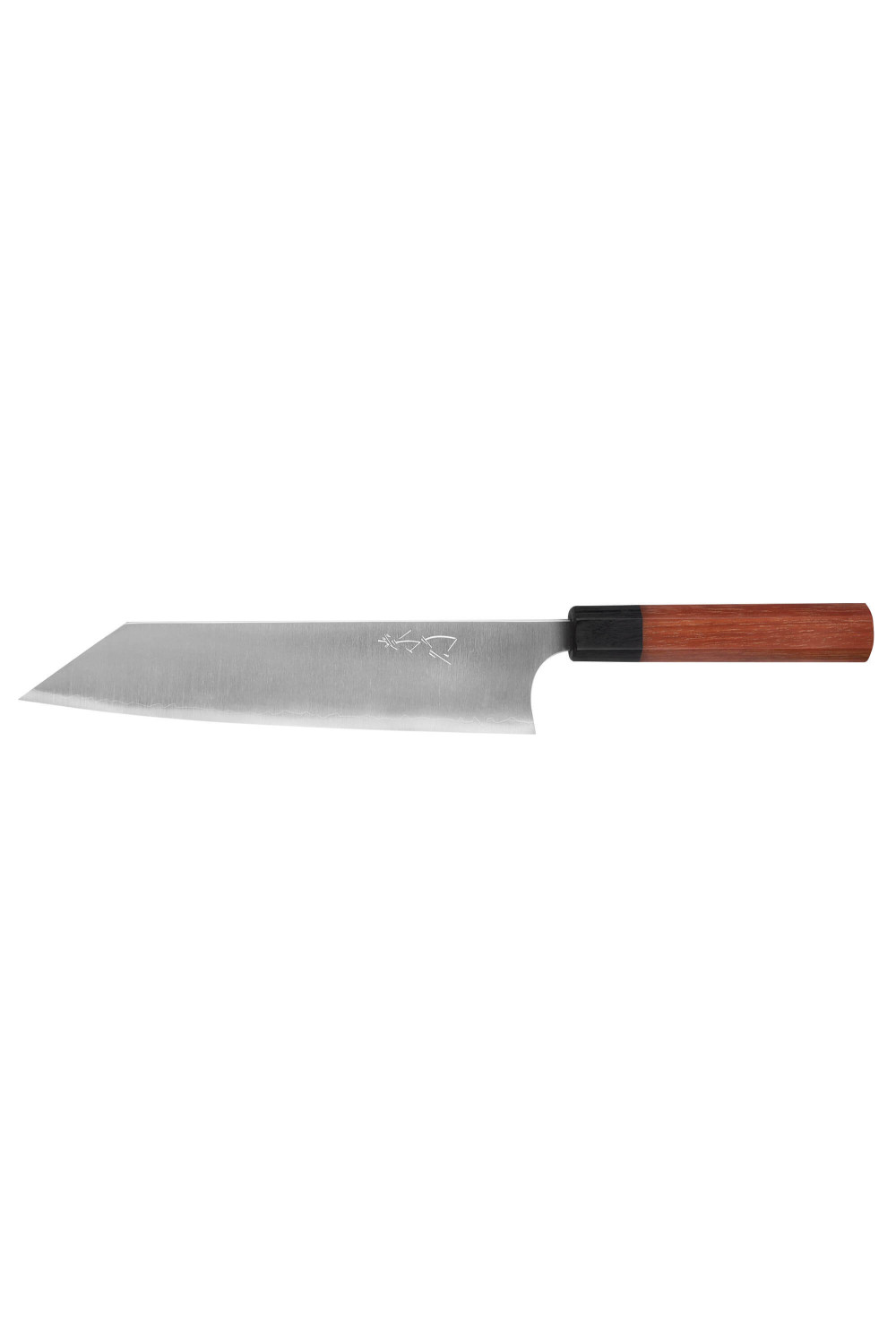
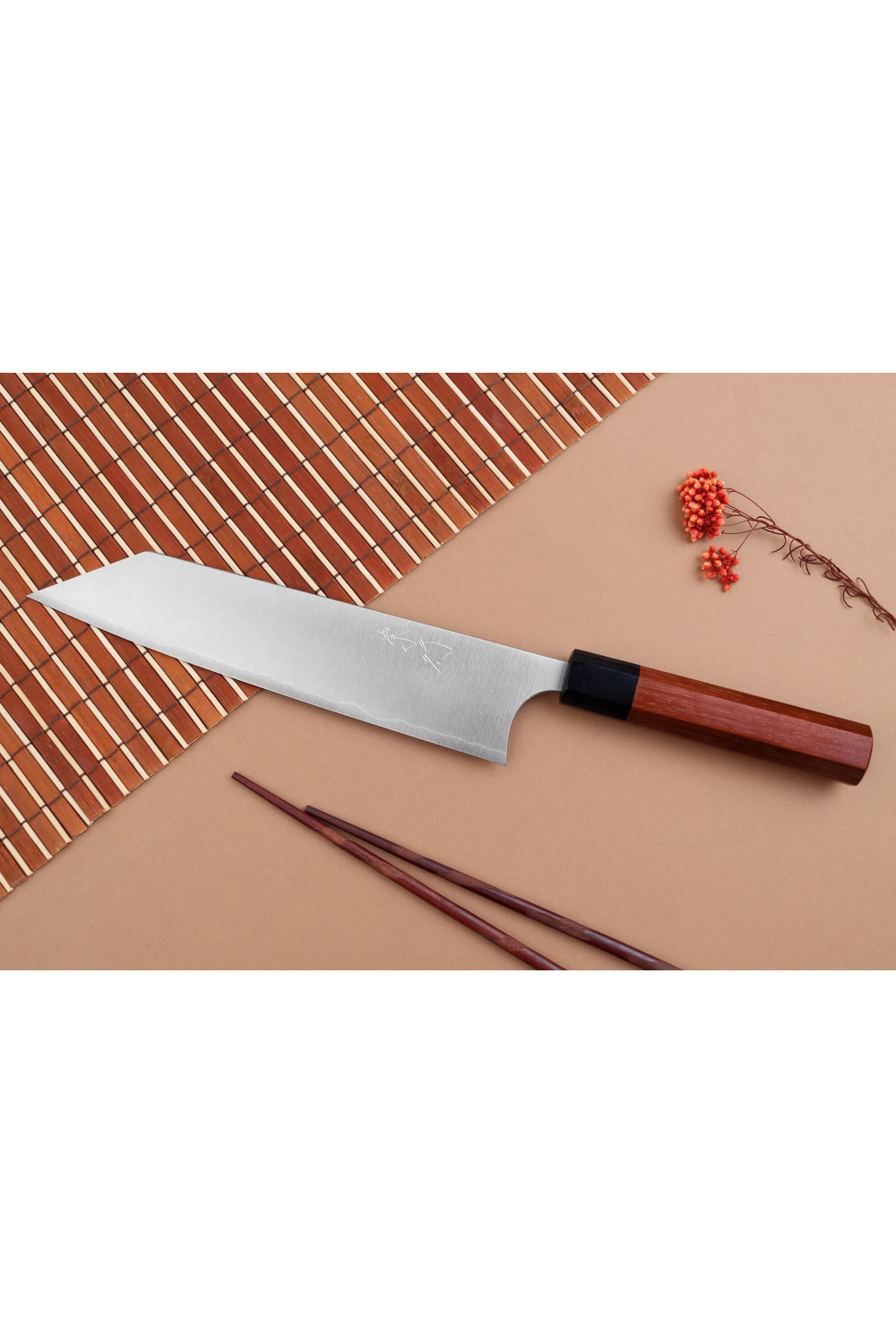
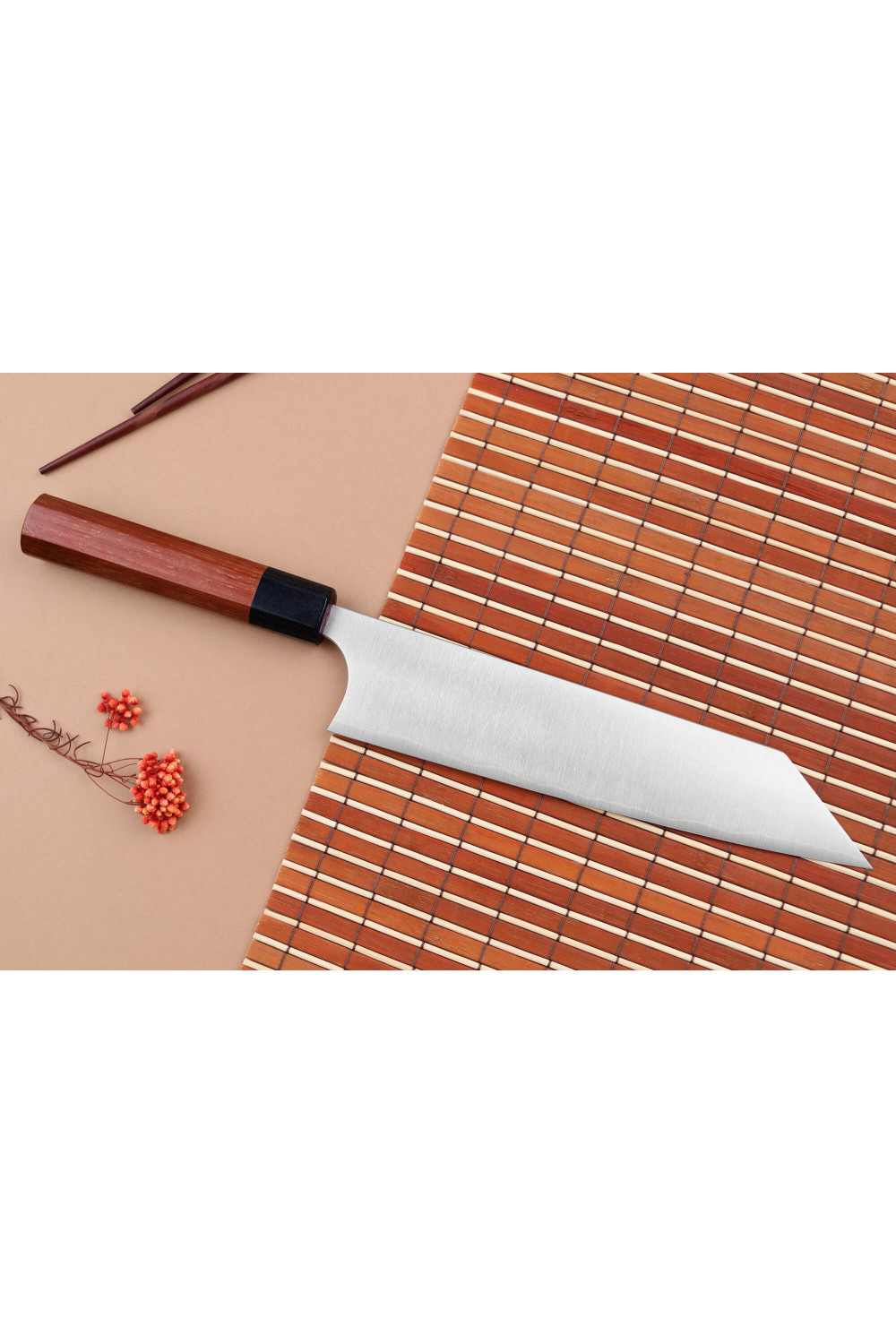
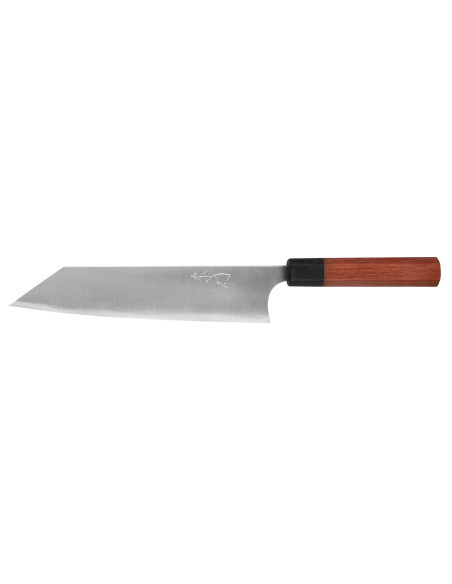
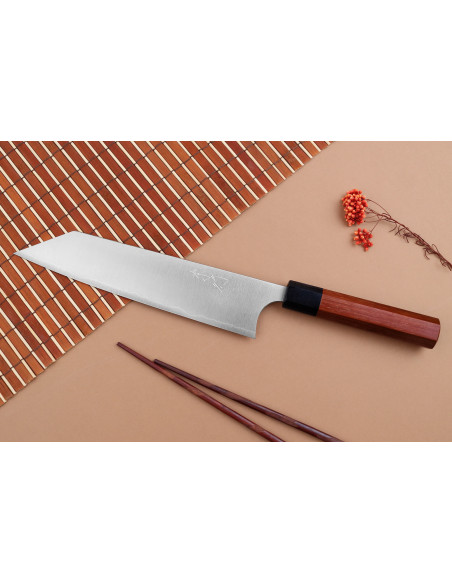
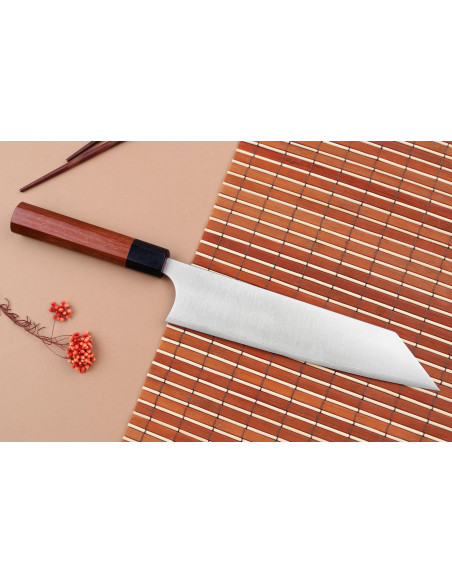
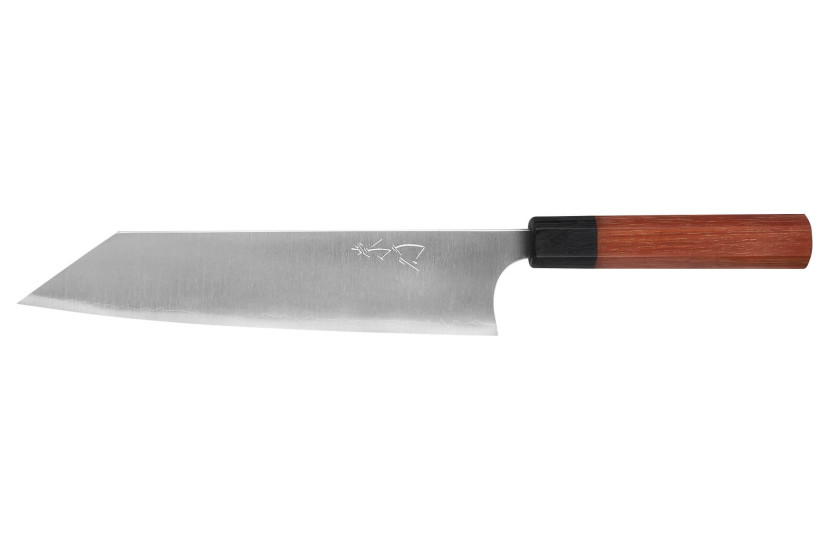
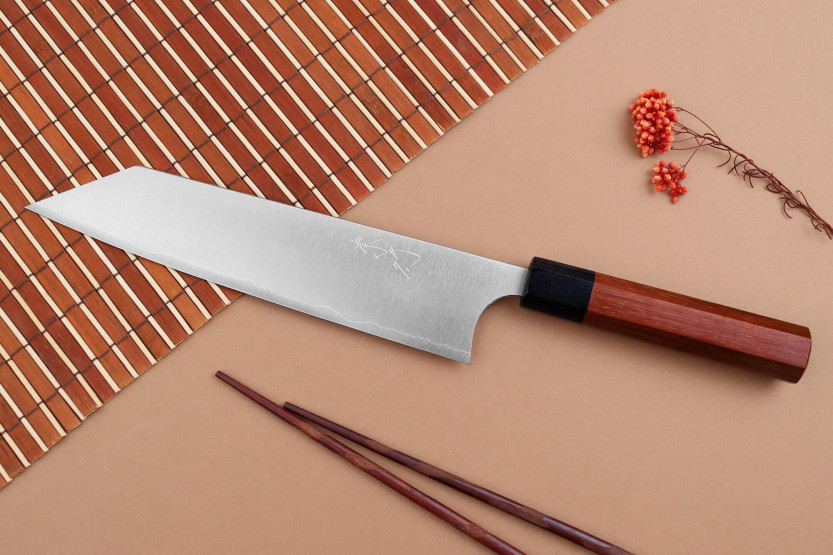
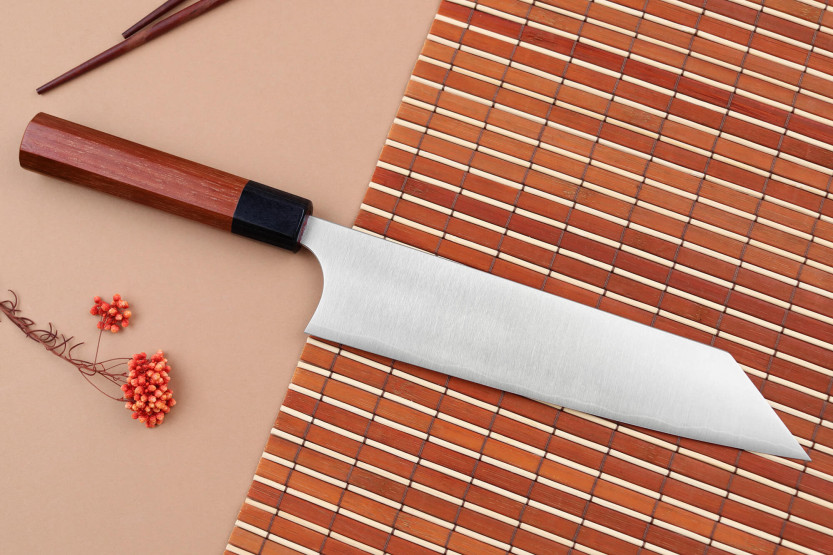
This Japanese chef' s knife (also known as a gyuto) can be used for a wide variety of cuts! Chop vegetables, mince meat and chop herbs effortlessly. Its kiritsuke tip lets you work with precision and efficiency! Be careful not to use it on too hard foods such as squash or bones, ...
Shibata knives are renowned above all for their performance in the kitchen. Each knife is designed for a specific use, to suit all users. Materials are selected according to cutting needs. They are produced in the Takefu knife-making village. In fact, Takayuki Shibata san sharpens his own knives before inspecting them in detail, after receiving them from the village.
Shibata san also works as a master sharpener for Masakage knives, which are also produced by the Shibata brand. Thanks to his work, Masakage knives are renowned for their high performance!
The name of the Shibata Koutetsu range of Japanese knives is inspired by the shape of the Japanese ship Koutetsu, built in 1864. Emblematic of the Japanese naval fleet, it was one of their best boats thanks to its inclined shape, ideal for ramming other ships. It is in reference to this efficiency that this range of Shibata knives bears its name.
A high-performance blade in SG2 Japanese steel
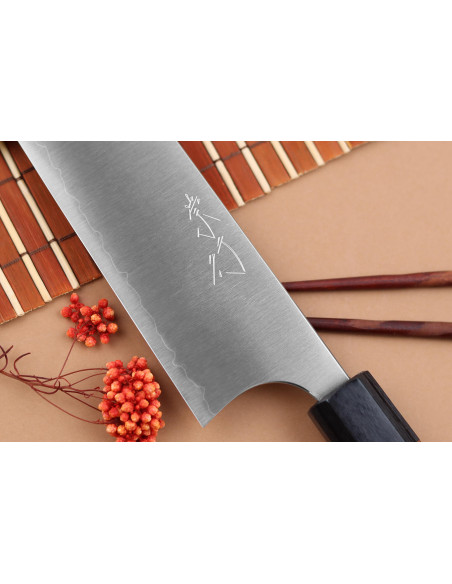
This gyuto knife features a blade with a typically Japanese San Maï (meaning "3-layer") structure: this technique consists of forging a rigid steel core which is then surrounded by a softer, folded-over steel layer. This process protects the core of your blade, making it less brittle, while balancing out its hardness.
For the core of this blade, we have chosen powder-metallurgyJapanese R2 steel (also known as SG2). This alloy is rare and expensive, which is why it is rarely used in cutlery: only experienced blacksmiths use it to forge their blades.
R2 steel has a high carbon content of up to 1.3%: this element is essential for increasing a steel's hardness, since high hardness means excellent edge retention. As proof, the hardness of this Japanese knife is 63HRC on the Rockwell scale. So it's an efficient, durable cutting edge that you can sharpen quite easily with a Sharpening stone when necessary.
Another advantage of this steel is its microscopic structure, known as "pure" because its micro-carbides are evenly distributed. As a result, your Japanese kitchen knife is unlikely to suffer from micro-cracking or wear.
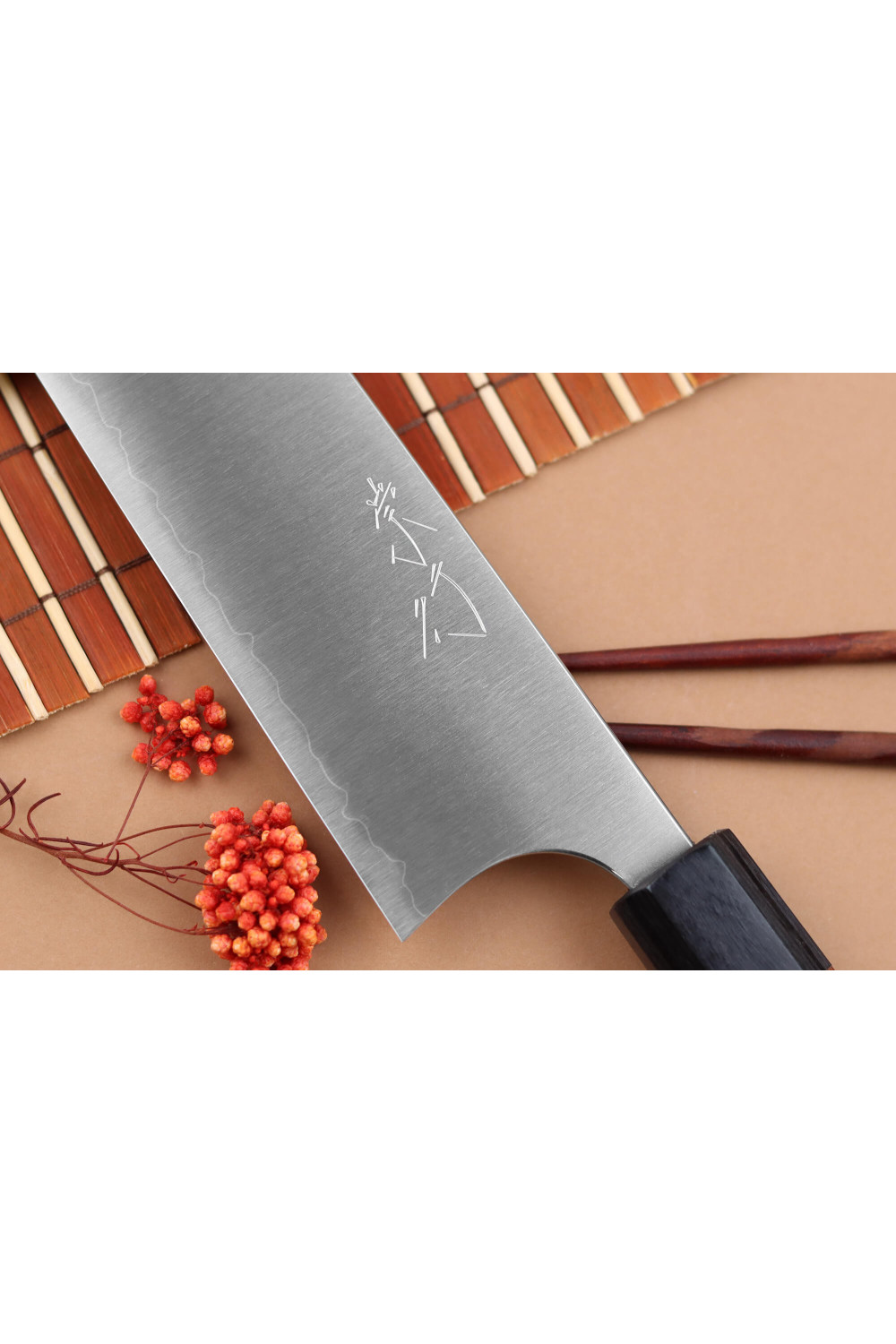
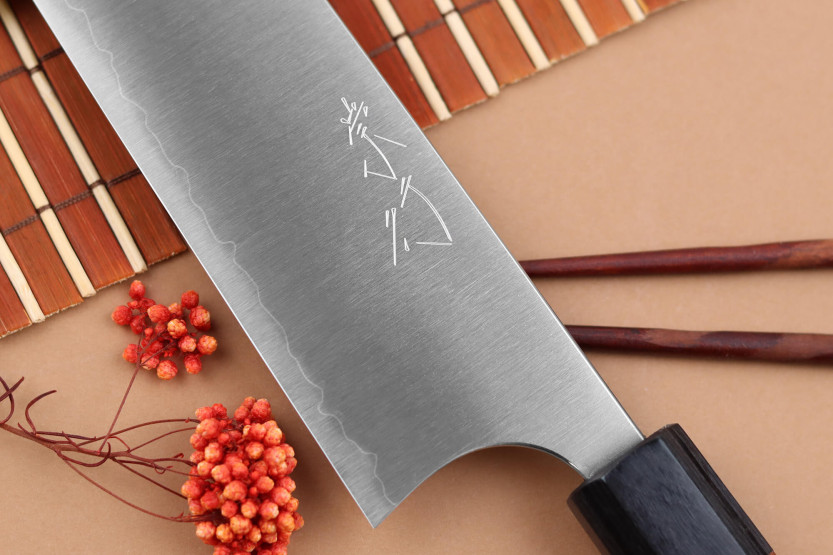
Next, the core of your blade is coated with a layer of stainless steel for added protection. You can observe the superimposition of the different layers of steel all along the blade, where they form a fine wave with random patterns for a unique rendering of each piece!
A durable, ergonomic wooden handle
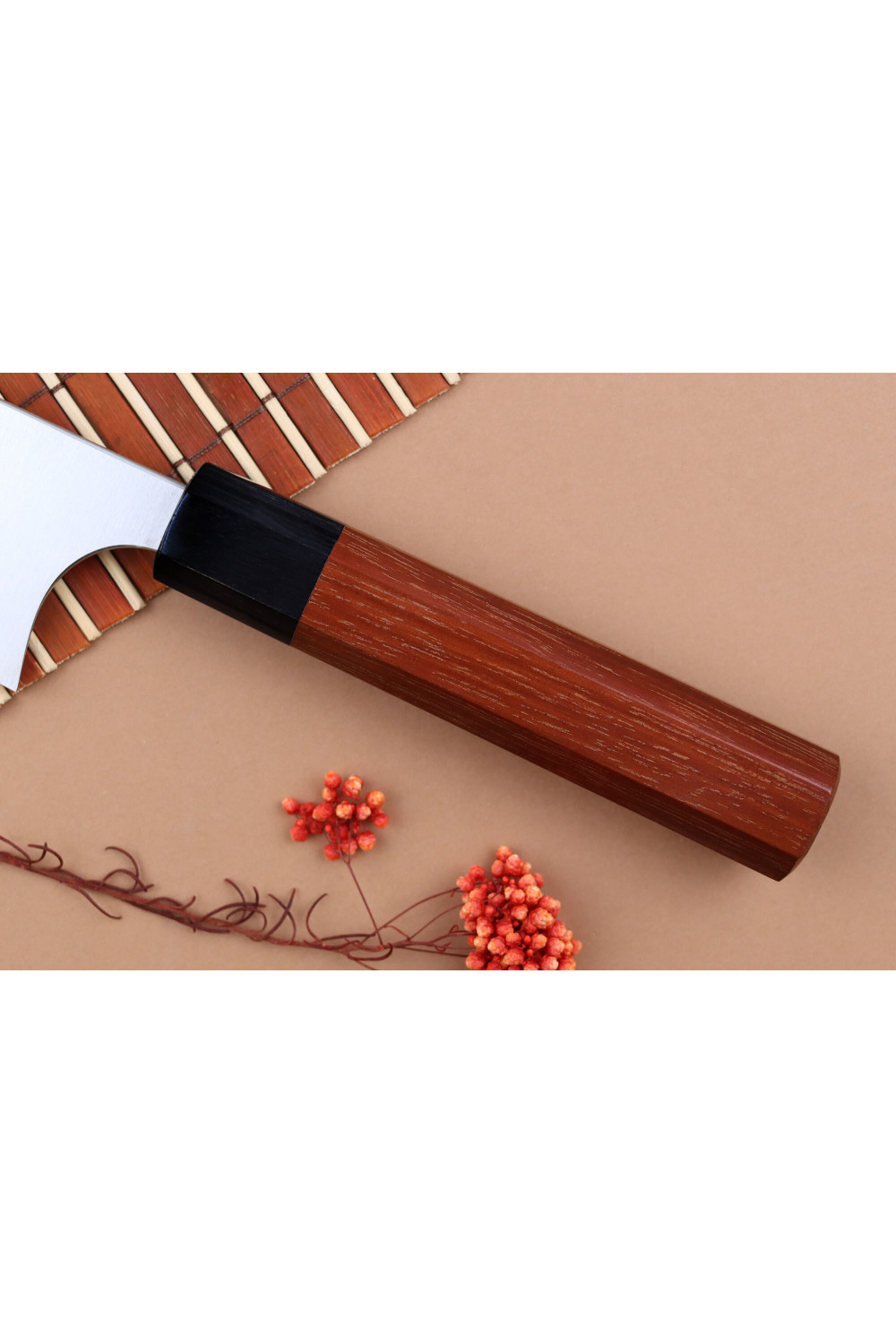
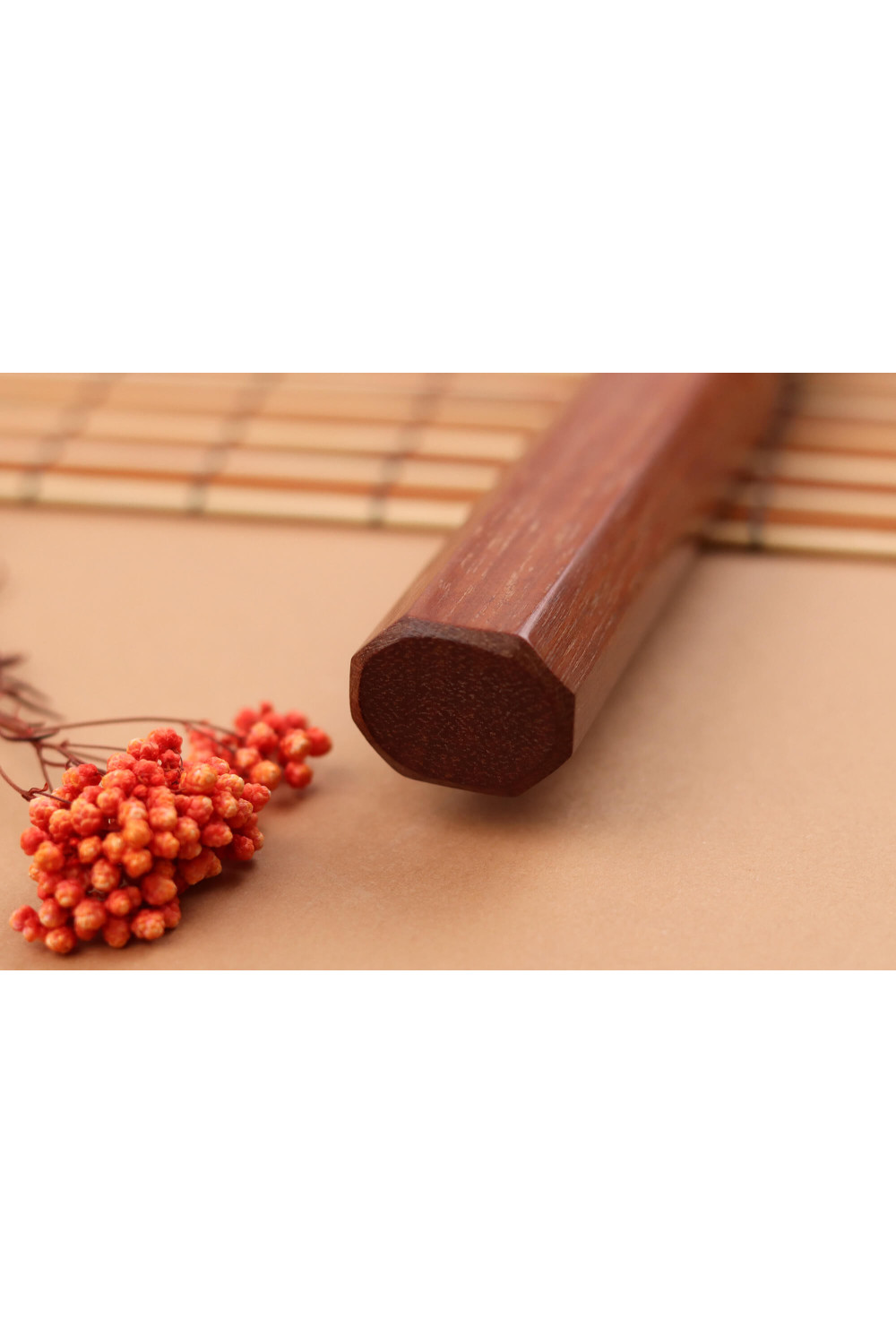
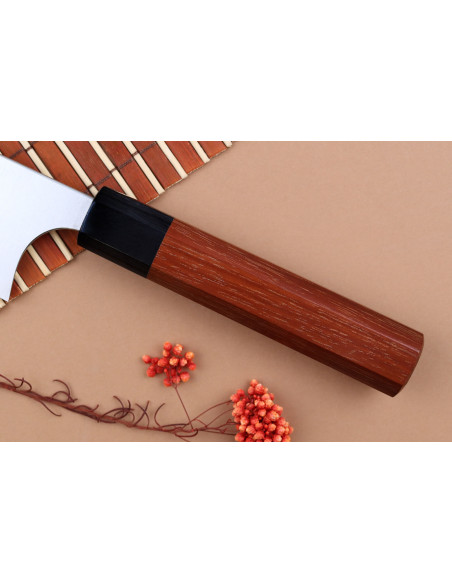
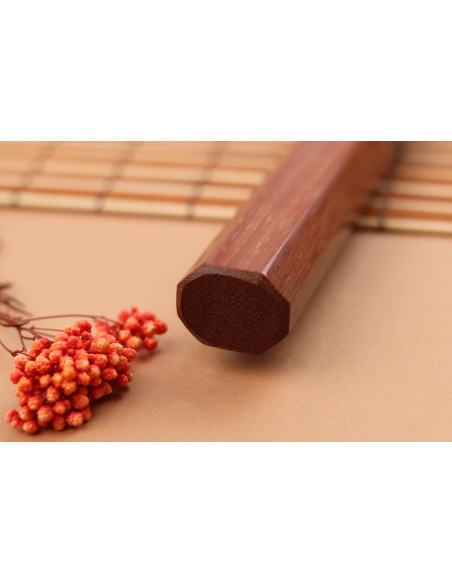
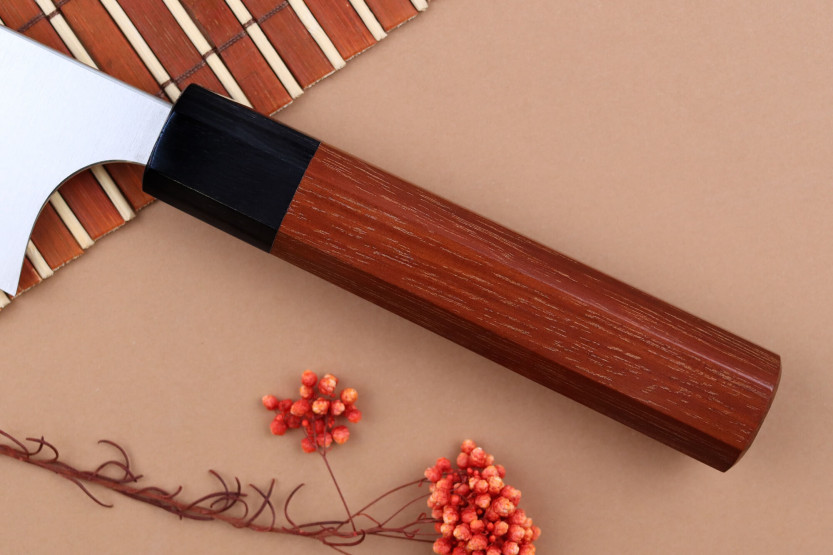
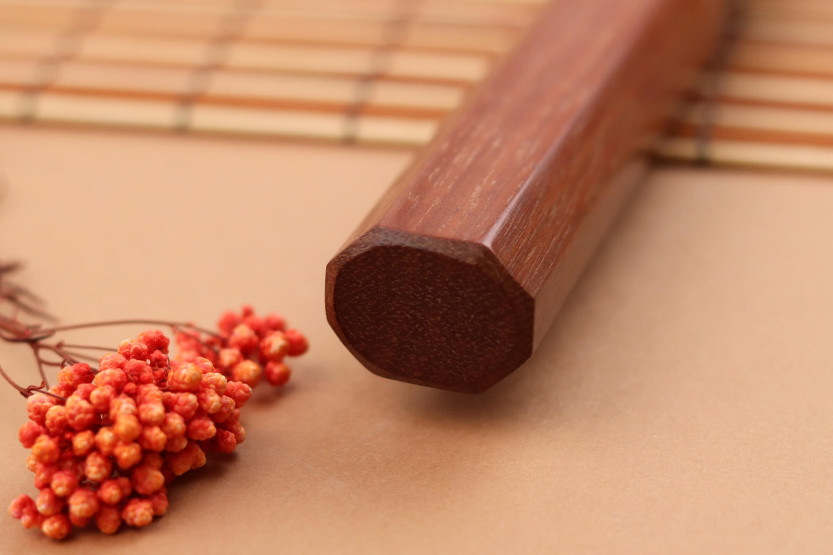
The handle of this Japanese chef's knife is made from tropical jarrah wood, a strong, moisture-resistant and durable species. Its brown hue and warm nuances make for a warm design that's much appreciated!
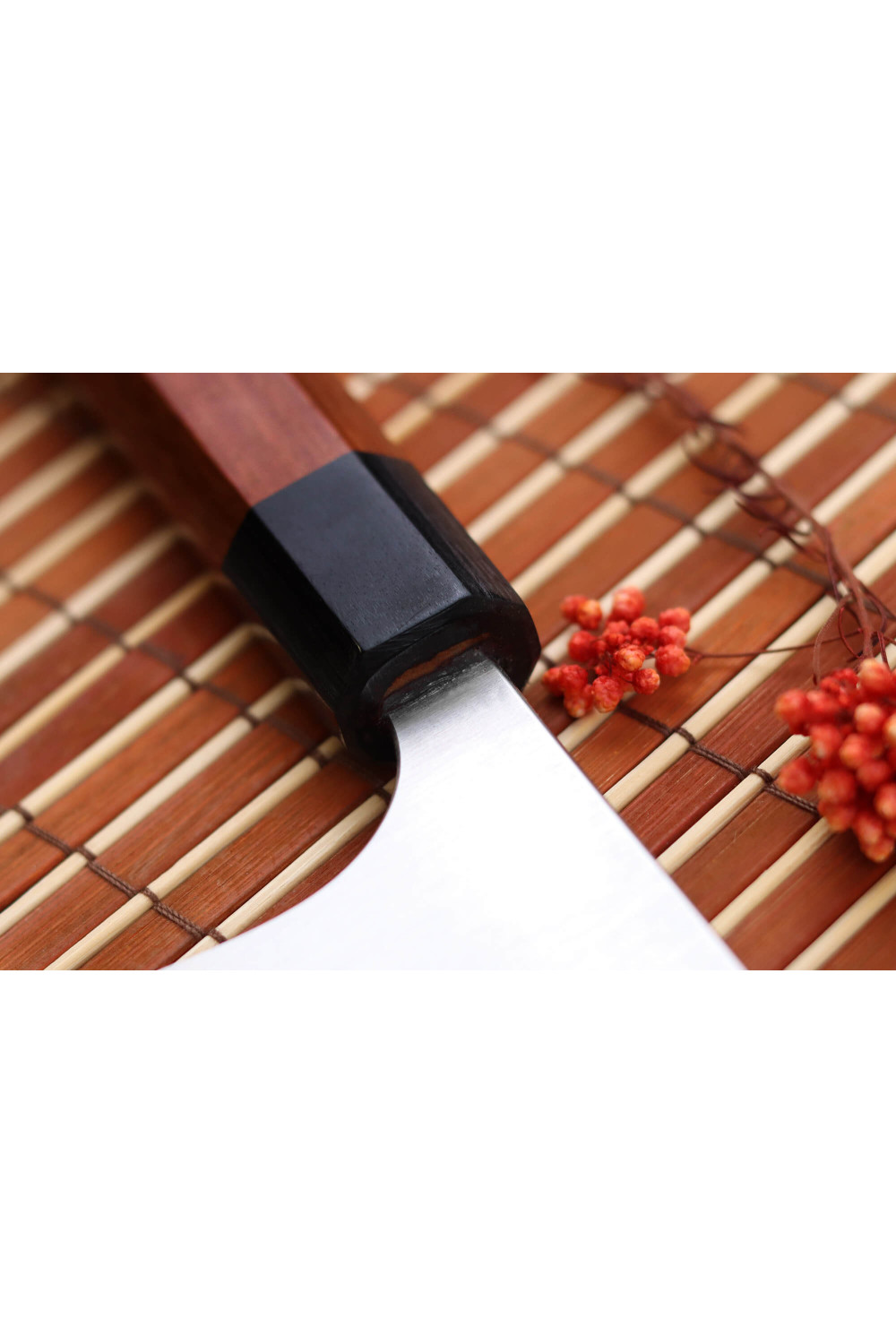
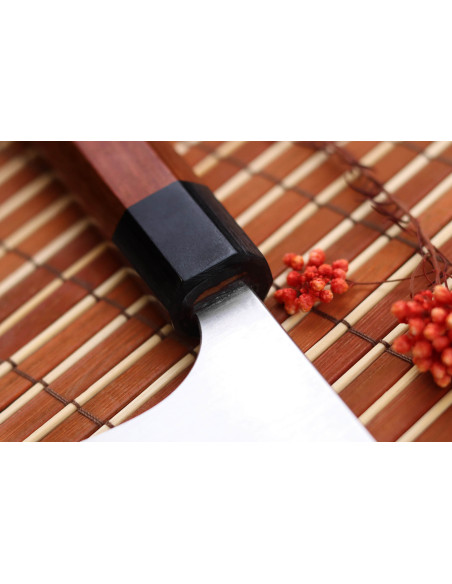
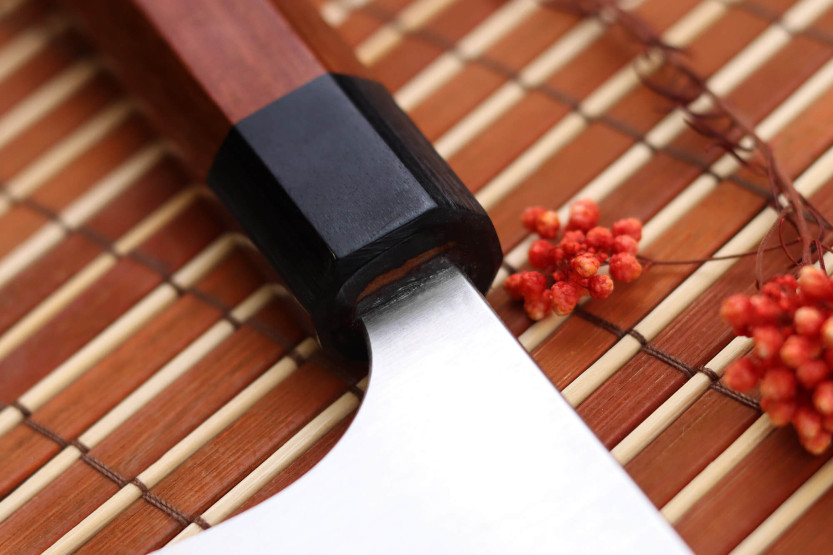
To complete the handle, a black pakka wood bolster is added. Pakkawood is a composite material made from laminated wood and resin, all heat-hardened. The result is similar to wood, with a unique grain pattern.
The handle is octagonal in shape to suit all cooks: right- or left-handed! Its ergonomic grip is ideal for long-term use.
To fill the small gaps where the blade meets the handle, wood paste is added. It makes the whole thing watertight and prevents water from seeping in.
Care and maintenance of a carbon-enriched Japanese knife
To best care for your Shibata knife, wash by hand only, using a non-abrasive sponge and a mild detergent, avoiding over-wetting the handle. Once washed, dry immediately and store in a dry place.
Do not put your knife in the dishwasher or leave it to soak in the sink.
To maintain it, discover all our sharpening stones on KnifeLeader.eu!




 By buying this product you can collect up to