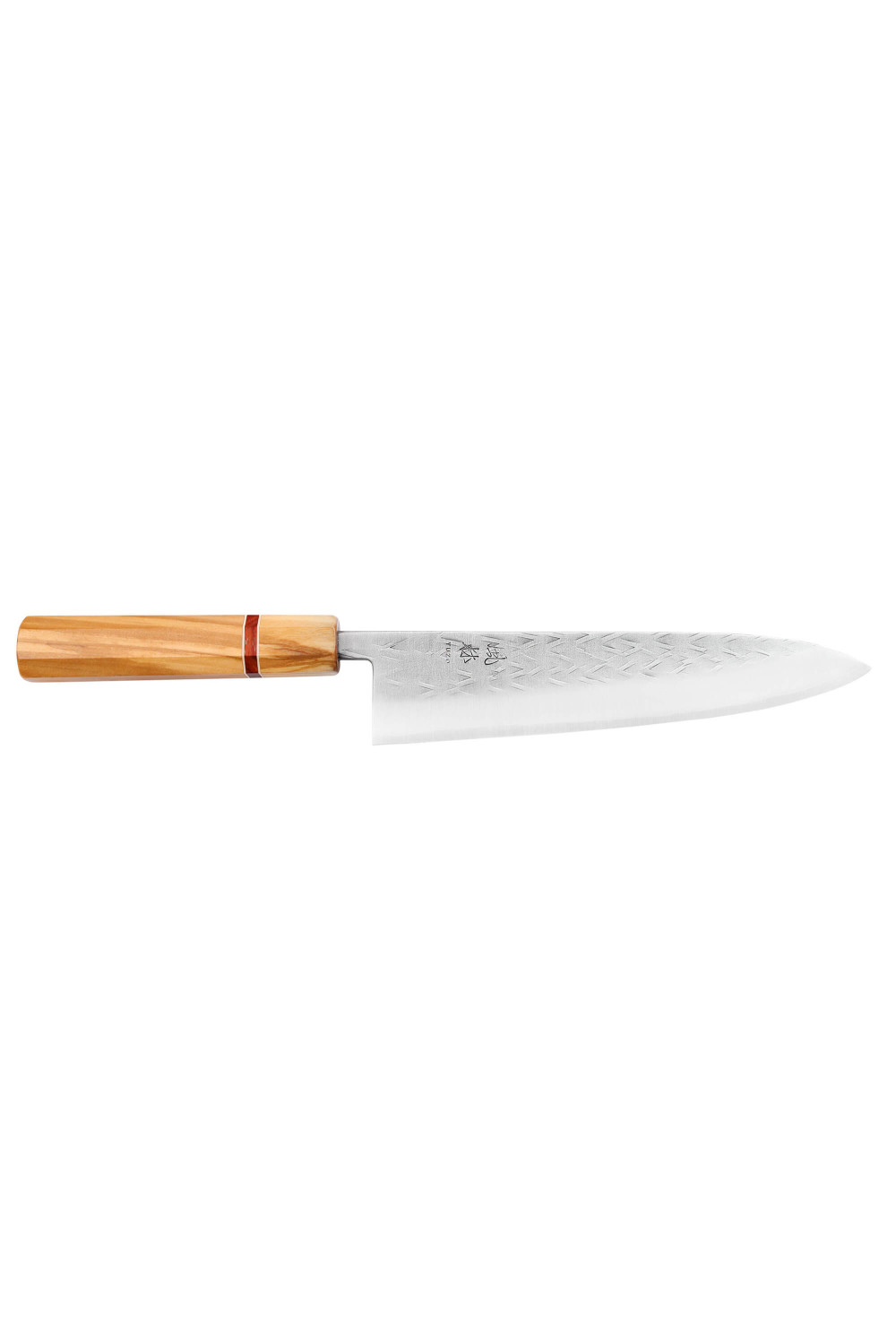
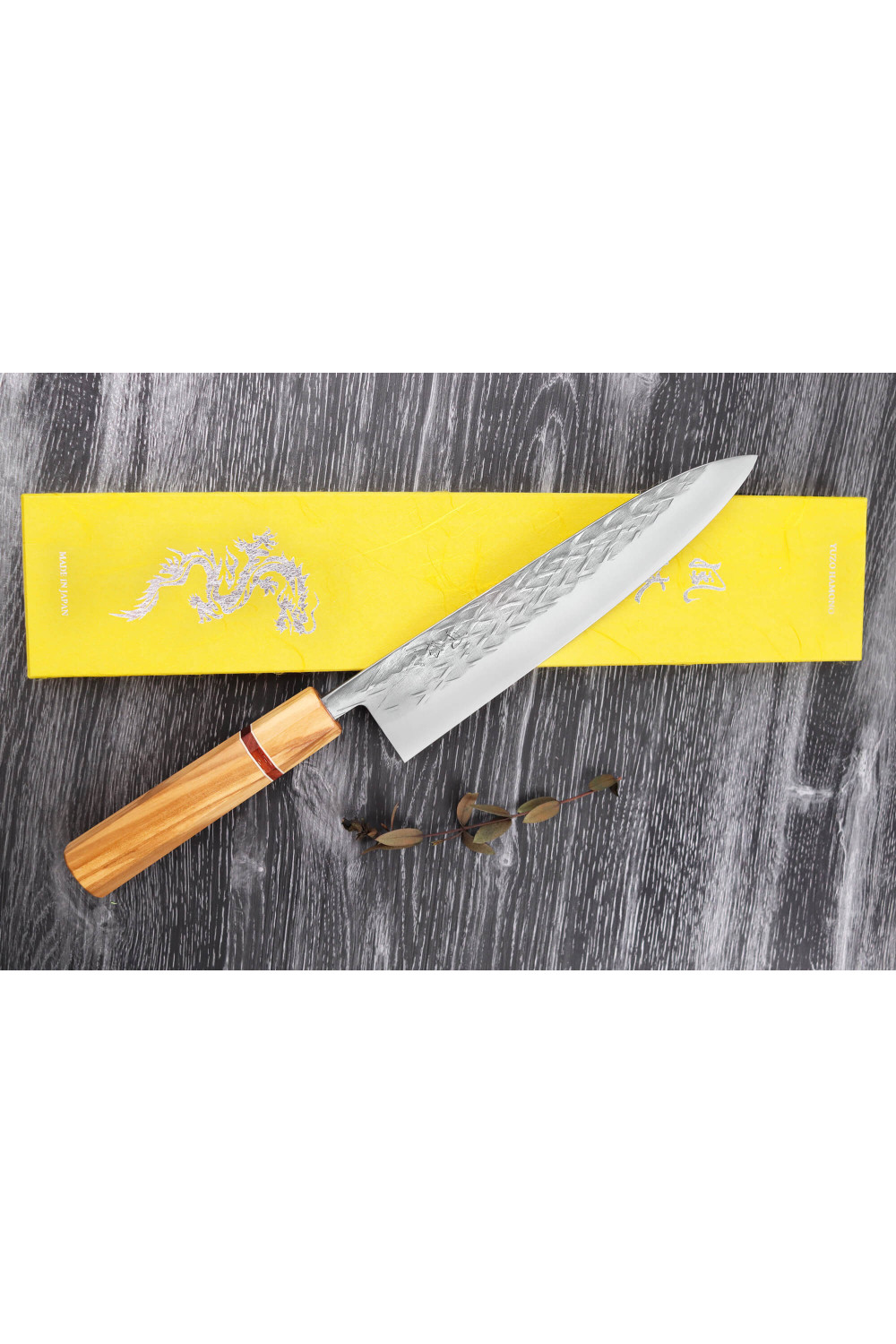
The chef knife, a much-used multi-purpose model
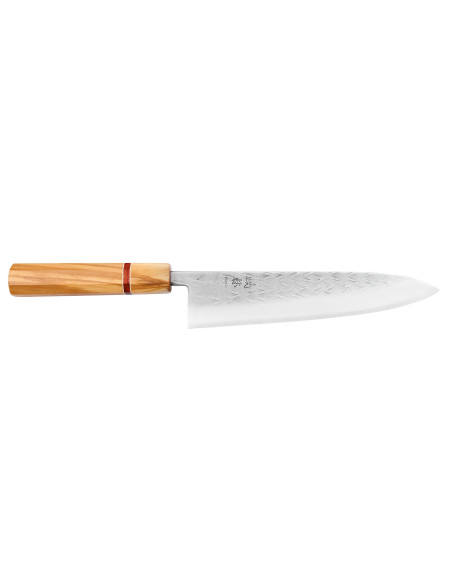
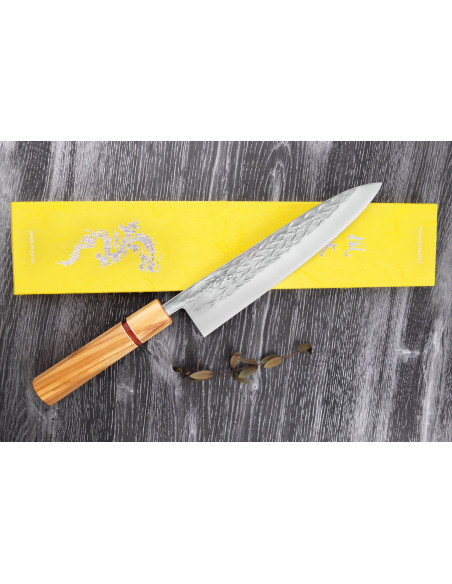
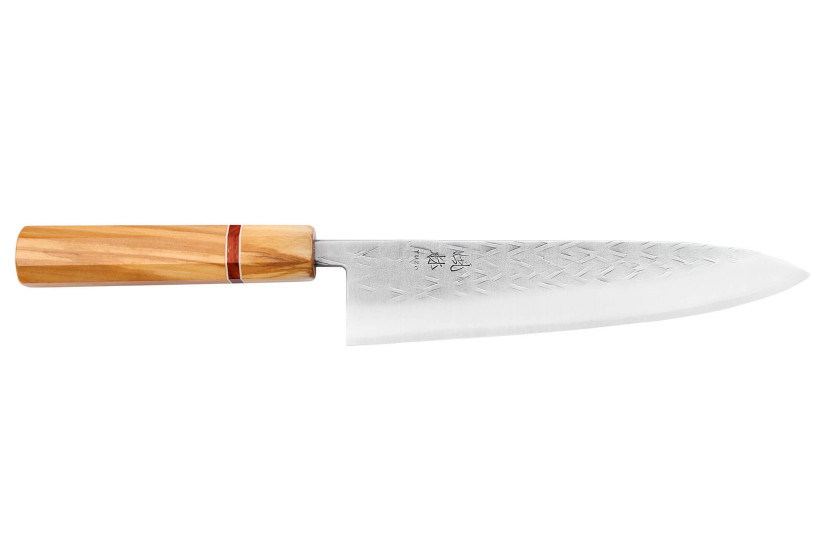
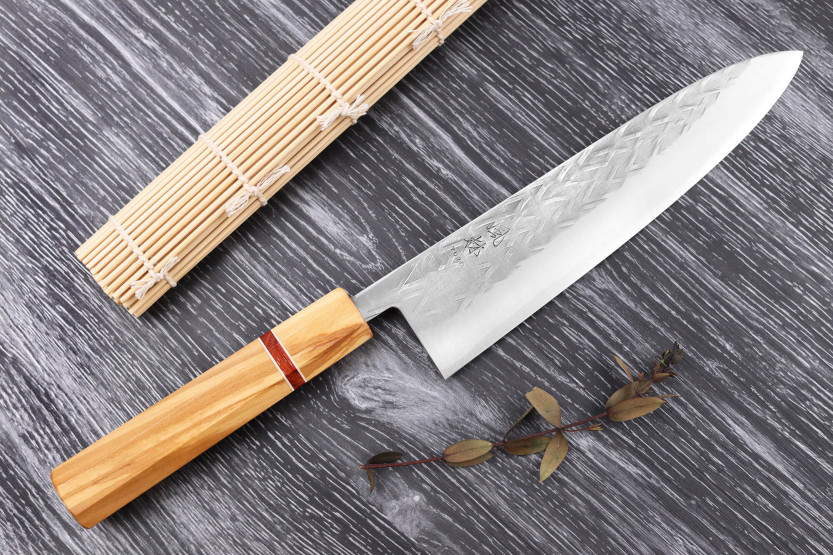
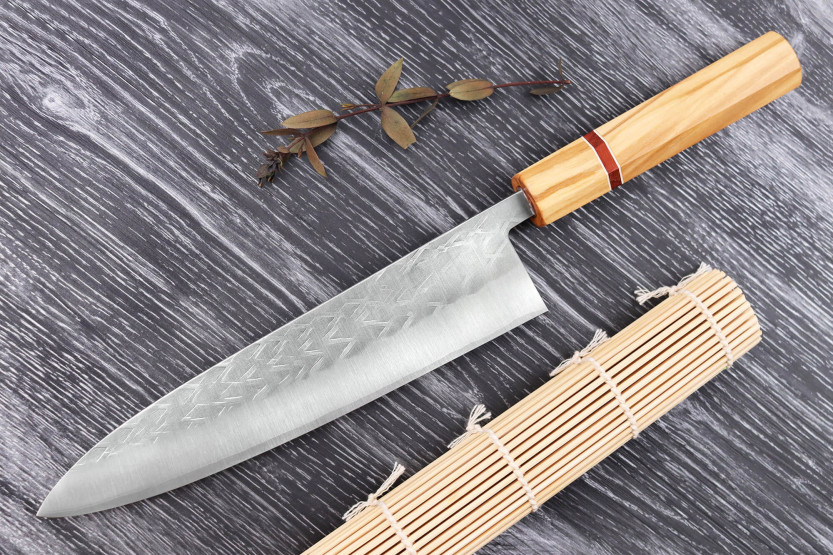
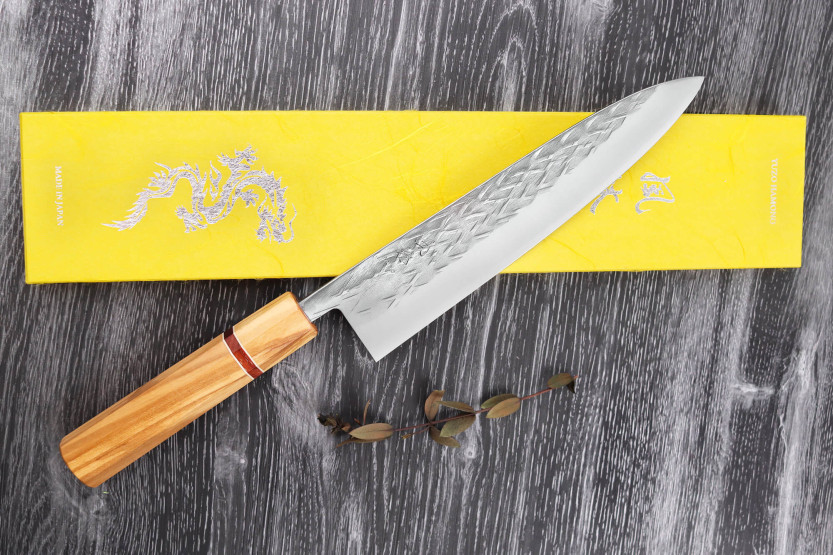
The Yuzo SLD Polished Chef's Knife is a highly versatile knife. If you had to choose just one, this would be it! It's ideal for chopping fresh herbs, mincing vegetables and even mincing meat. Just don't use it on hard foods like squash, cheese wheels or bones.
Quality materials for a durable kitchen knife
Your Yuzo artisan knife is forged by the Japanese cutlery company Tadafusa, whose workshop is located in Sanjo.
With its San Maï structure, the blade is typically Japanese. These words mean "3 layers" in Japanese. The three layers are explained as follows:
- The rigid core forms the base of the blade
- It is then surrounded by a softer layer of steel, which protects it.
As the core is surrounded by this second layer, we speak of 3 layers (including two layers of the same steel). Thanks to this composition, the blade is more balanced between hardness and flexibility (due to the different alloys).
The Yuzo SLD Poli knife series features a core of Japanese SLD steel. This alloy was developed by the internationally renowned Japanese steelmaker Hitachi.
Initially, SLD was an alloy developed for the sole purpose of cutting other steels. In fact, it was intended for use in machines capable of cutting different alloys, in order to produce a variety of parts (for mechanical engineering or for use in other machines). However, in view of its advantageous characteristics, Hitachi decided to make it an alloy in its own right! For example, SLD holds its edge for a long time, but is easy to sharpen when the need arises. So it would be a shame to do without it in cutlery.
This steel has several advantages, such as its high carbon content of around 1.6%. Carbon is an essential element for increasing the hardness of an alloy, since a rigid alloy has a marked cutting edge over the long term. So it's a real advantage. Here, thanks to this high carbon content, the blade reaches 63 HRC, proof that the core of the blade is extremely hard and that the knife will be effective for a long time, even if you keep cutting.
This steel also has around 13% chromium, which is useful for resisting corrosion. Note, however, that this steel is still considered oxidizable. In fact, it's a hybrid steel, somewhere between stainless and oxidizable, but one for which special care must be taken, as if it were entirely carbon.
Another advantage of SLD alloy lies in its micro-structure: it is very well balanced and the micro-carbides are evenly distributed. This increases its resistance to wear and micro-cracking.
On top of the very good SLD is a layer of stainless steel that gives it a little more resistance to oxidation (without making it stainless). As previously mentioned, this extra layer also balances the blade and gives it more "flexibility". The knife doesn't become flexible per se, but it is more resistant to possible shocks (because if the steel is too hard, it breaks more easily).
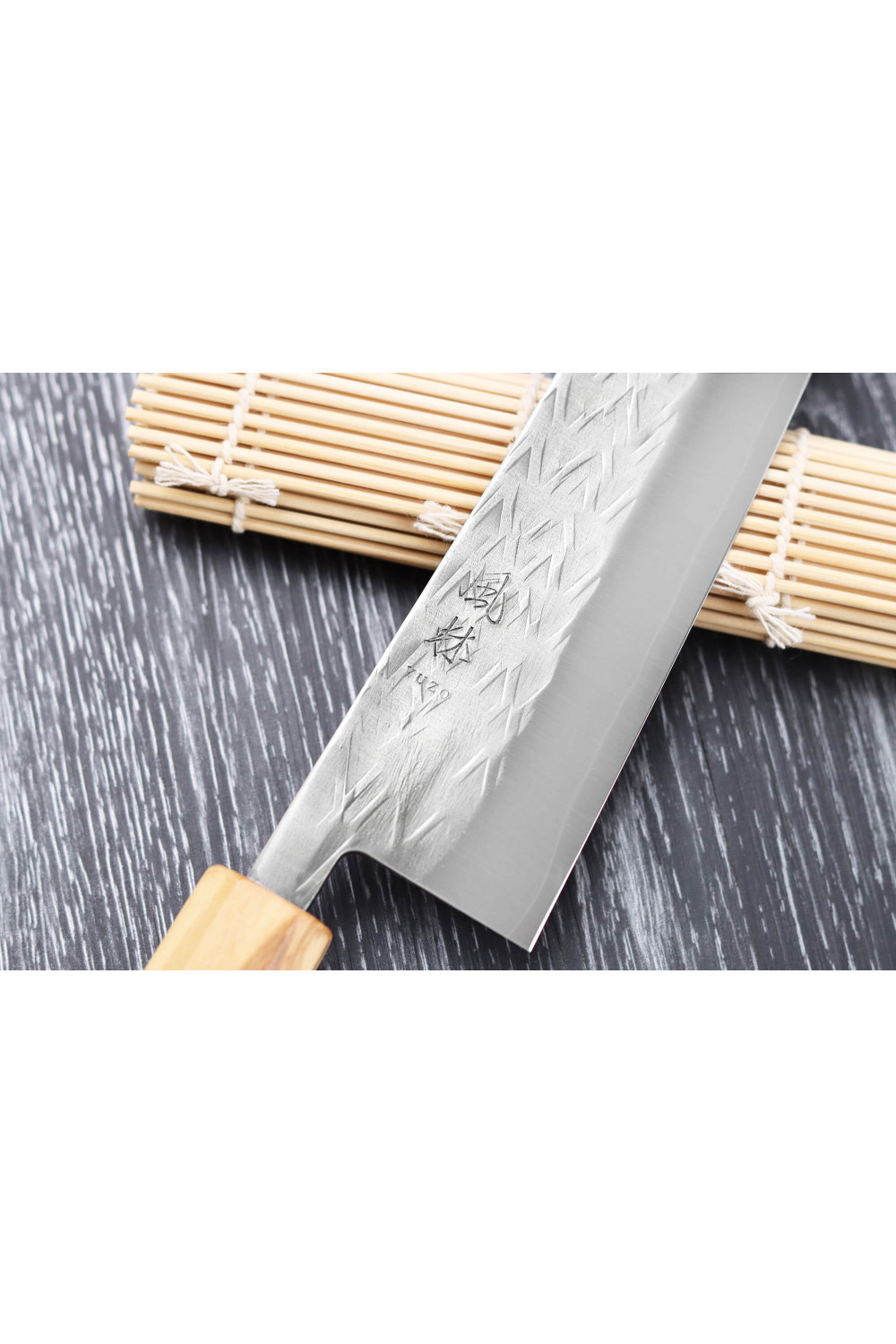
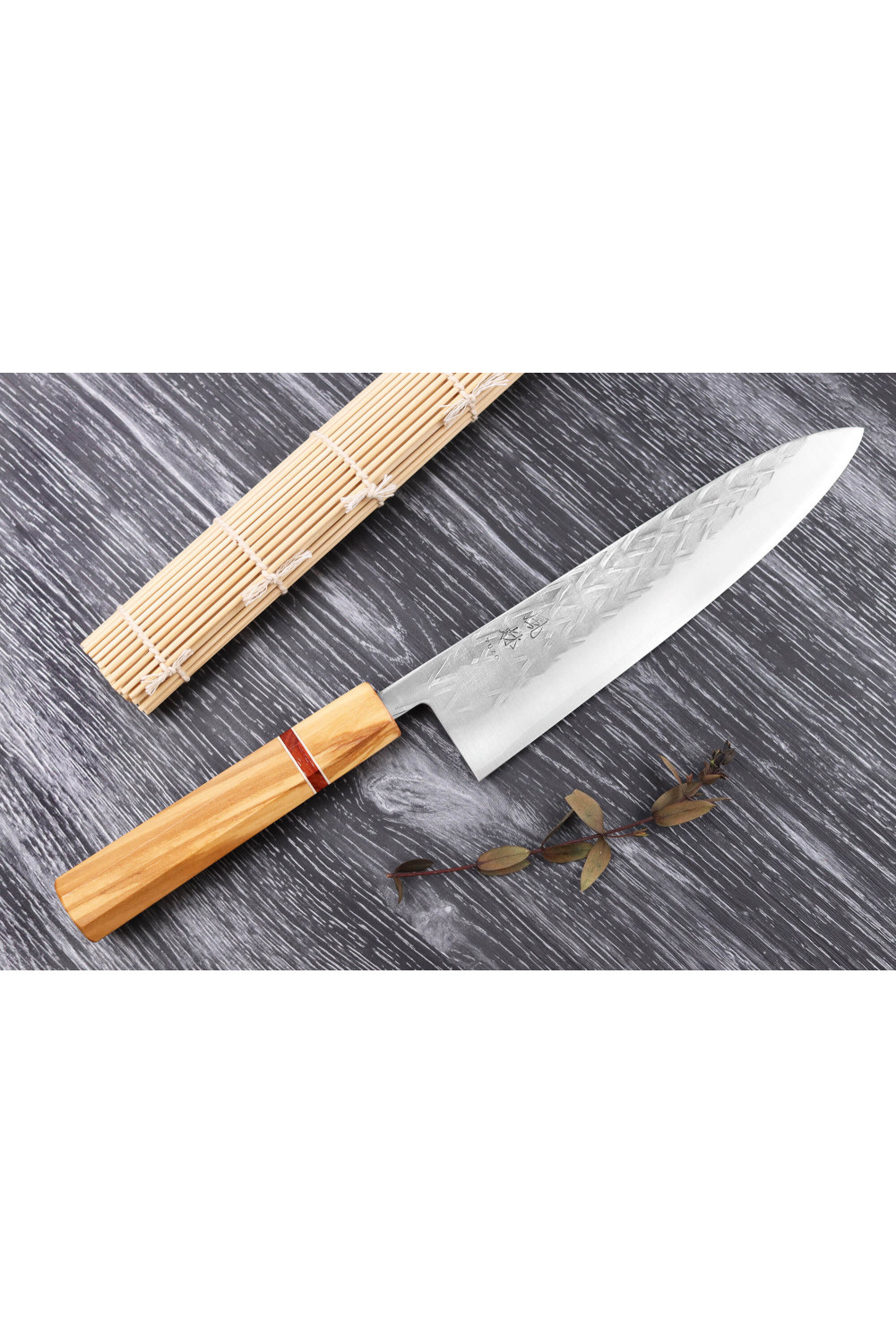
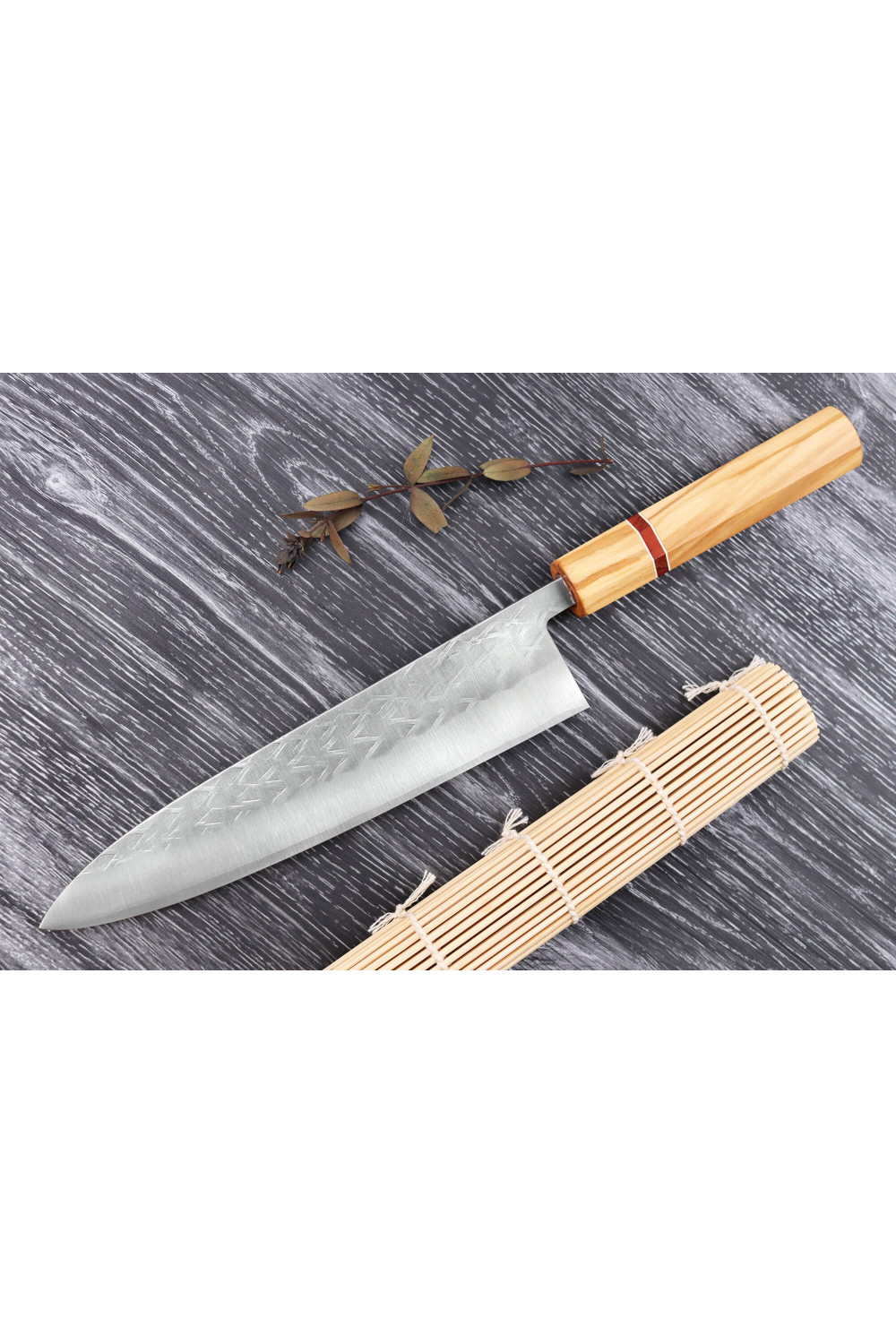
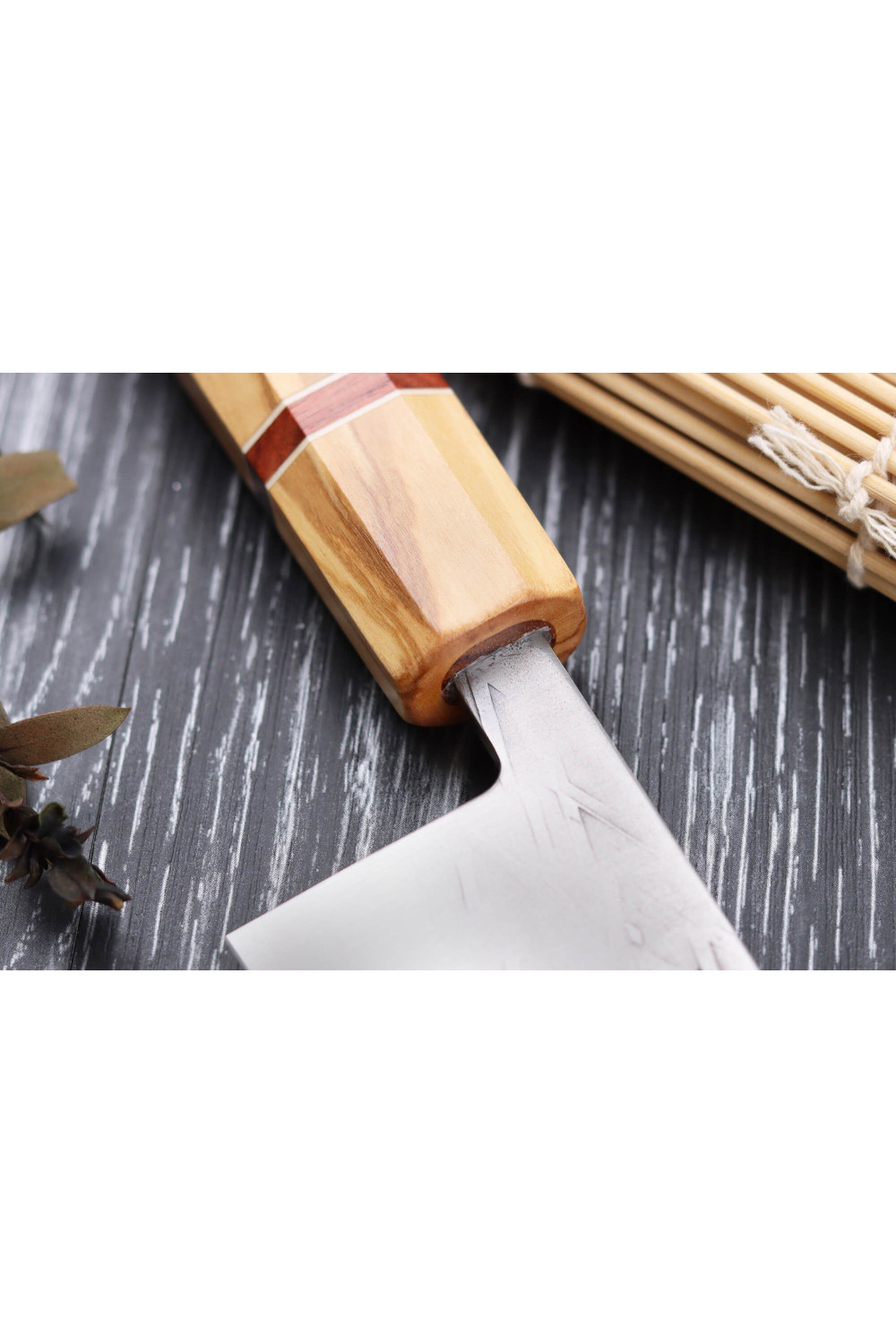
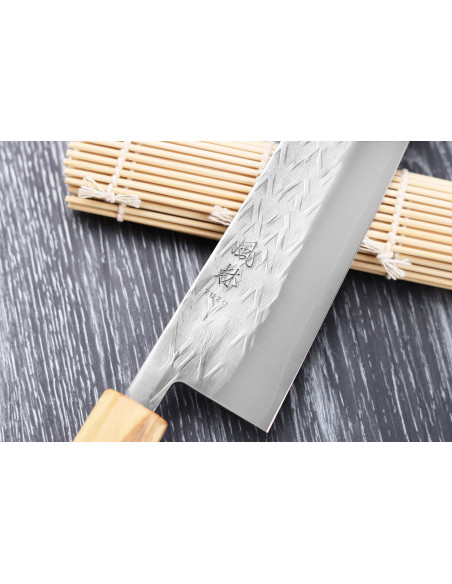
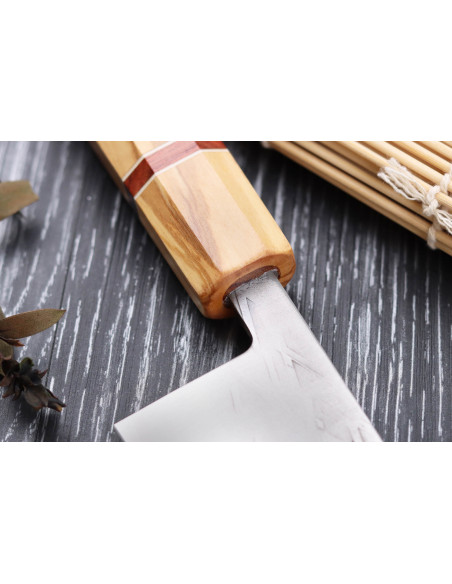
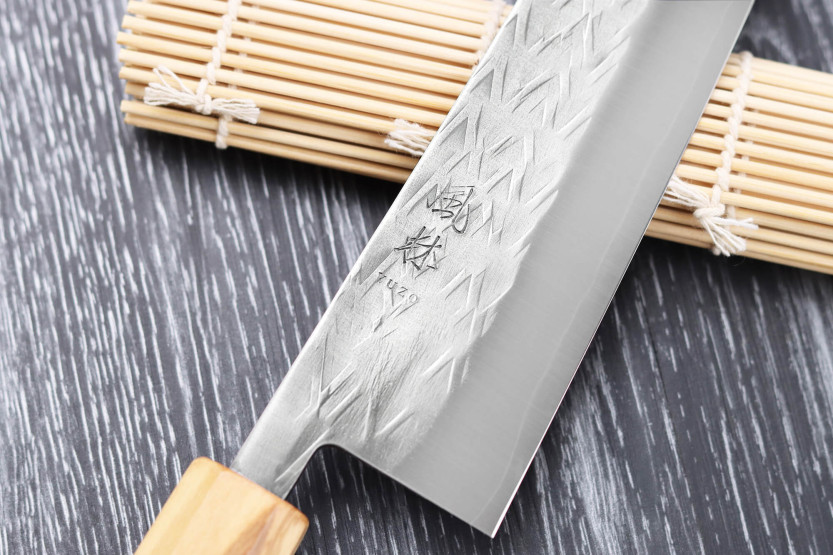
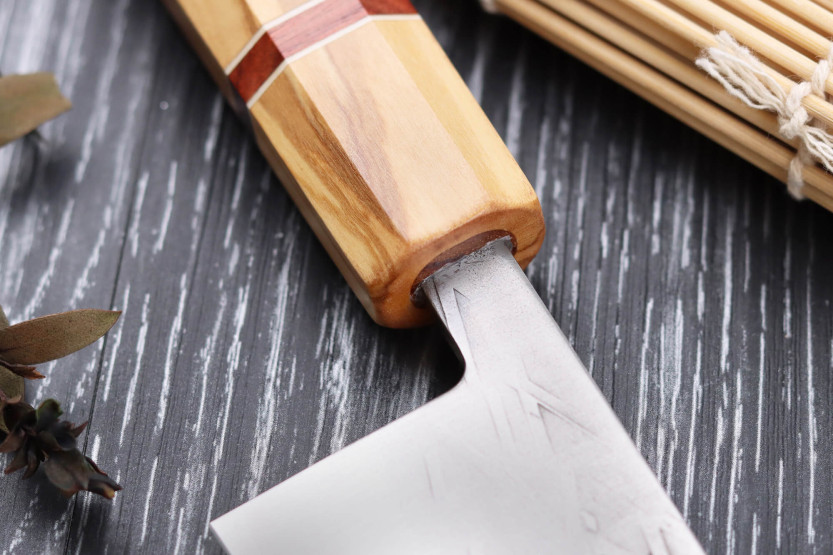
Last but not least, the blade has been hammered with a new cross-hatch pattern, to give it even more character. The hammering is enhanced by a polished finish, which also protects the blade surface and makes it less porous (the latter is smoothed).
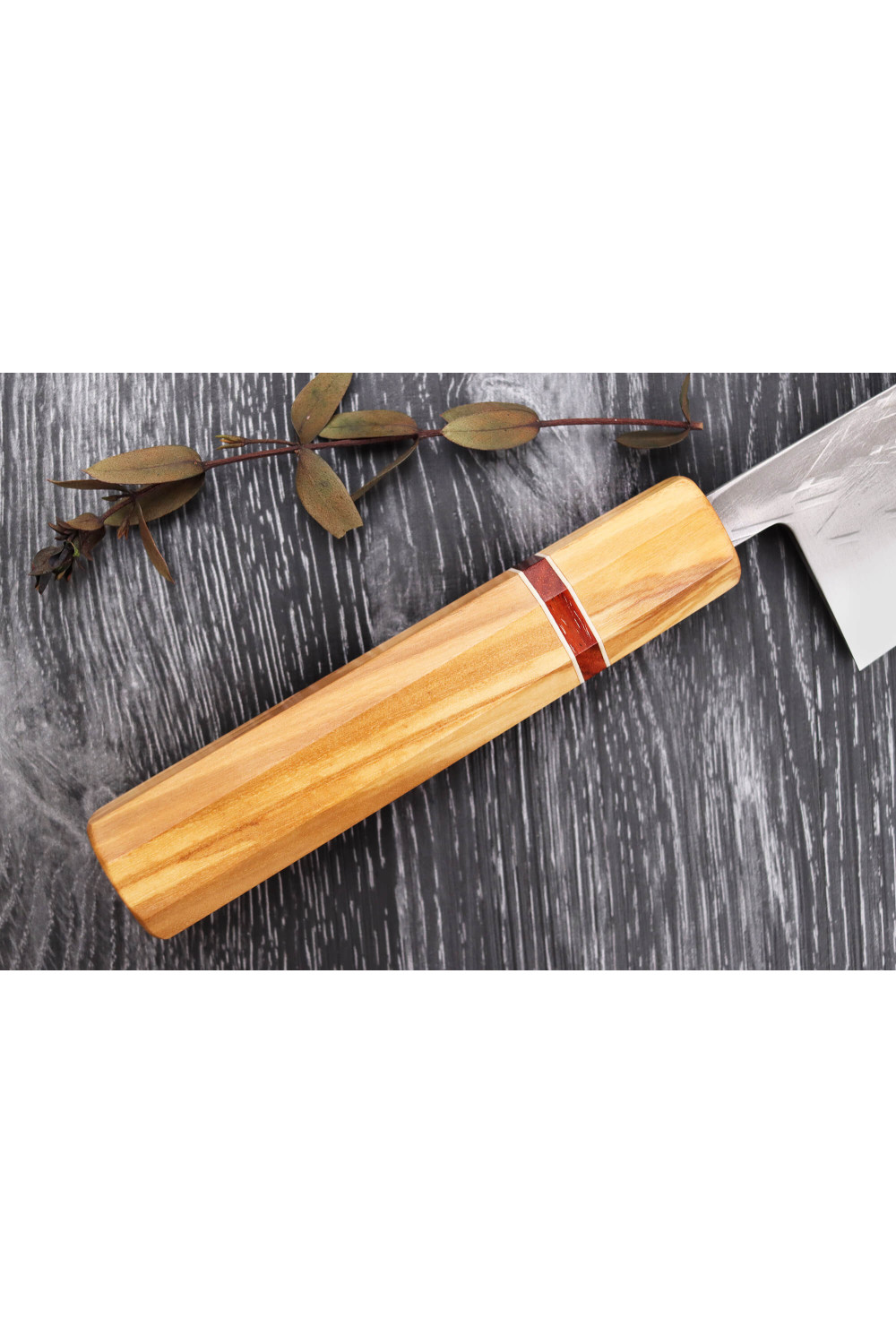
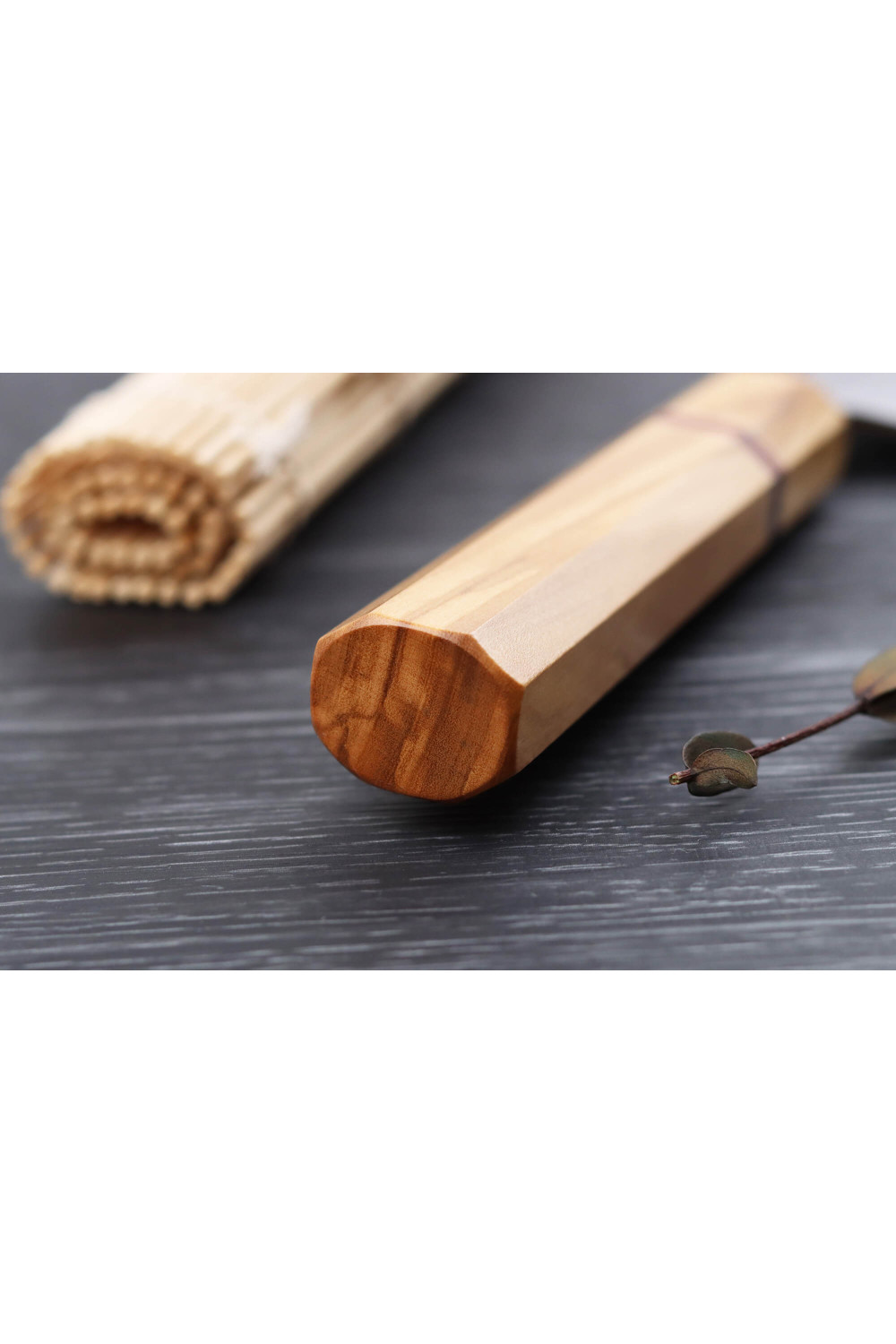
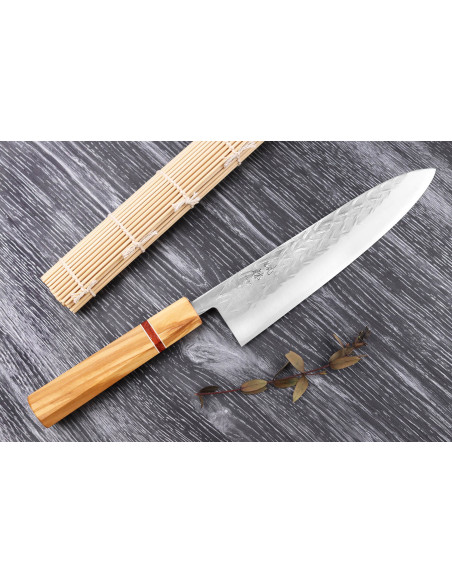
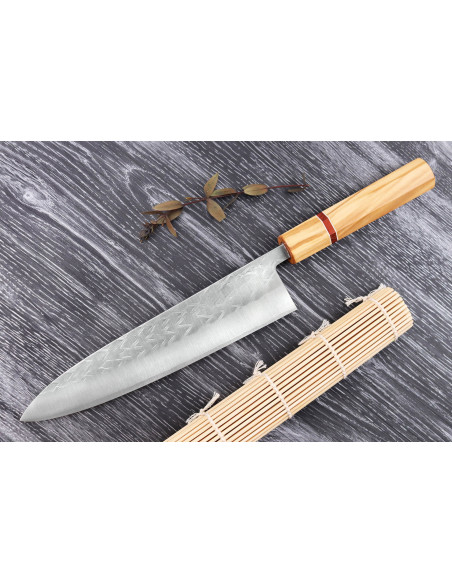
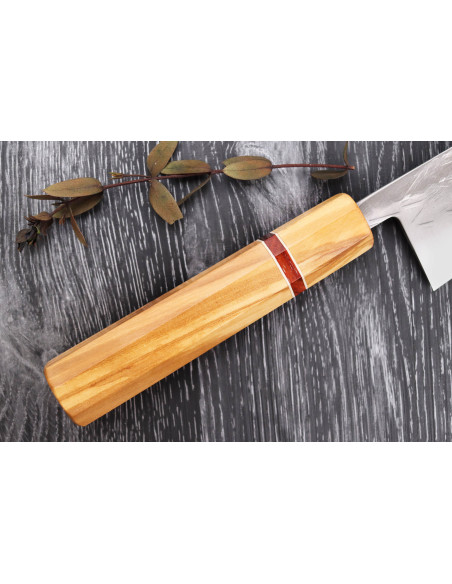
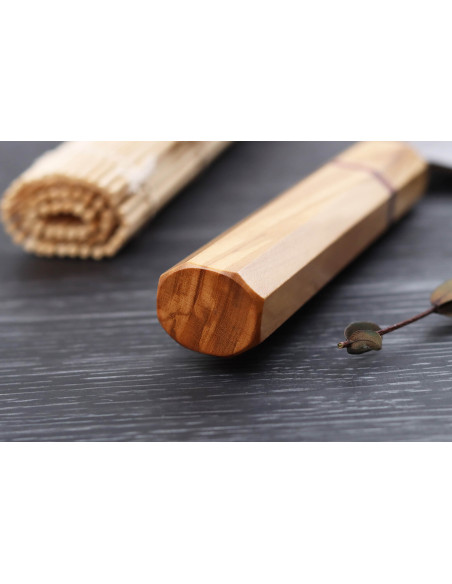
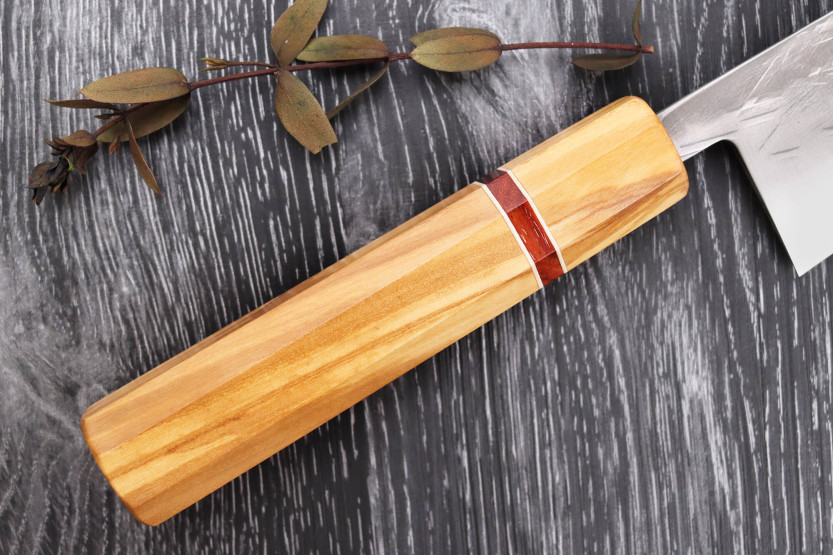
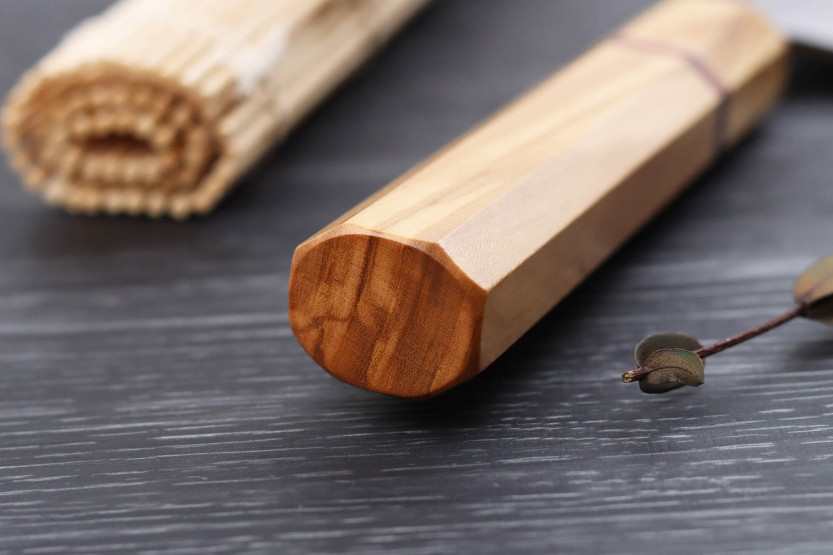
The handle of this knife is made of olive wood, a durable species that is pleasant to the touch. This wood, with its distinctive scent, has beautiful veins that are unique to each knife. It is very dense, which makes it more resistant to shocks. This capacity also makes it more waterproof than average, so it will be more resistant to humidity. We also appreciate its antibacterial properties.
With its octagonal shape, it is suitable for all cooks, whether right- or left-handed.
It also comes with an olive-wood bolster.
Between the two olive parts is a sequoia ring. This wood is resistant to humidity and bacteria. It is durable and therefore a good choice for a kitchen knife.
Finally, two elegant white micarta edgings surround the sequoia.
To fill the space where the blade fits into the handle, wood pulp has been integrated into the interior.
Care of a handcrafted Japanese knife
Knives are considered oxidizable, so it's important not to leave them in prolonged contact with moisture. Note also that over time, the blade may change color, and this is perfectly normal! In fact, the acidity of food and the humidity of the air can have an impact on its color. The alloy reacts naturally.
To preserve it at its best, wash it by hand with a sponge and a mild detergent. Don't put it in the dishwasher or soak it in the sink. When you've washed it, wipe it dry and store it in a dry place.
See also our complete selection of sharpening stones to maintain your knife!




 By buying this product you can collect up to
.png)