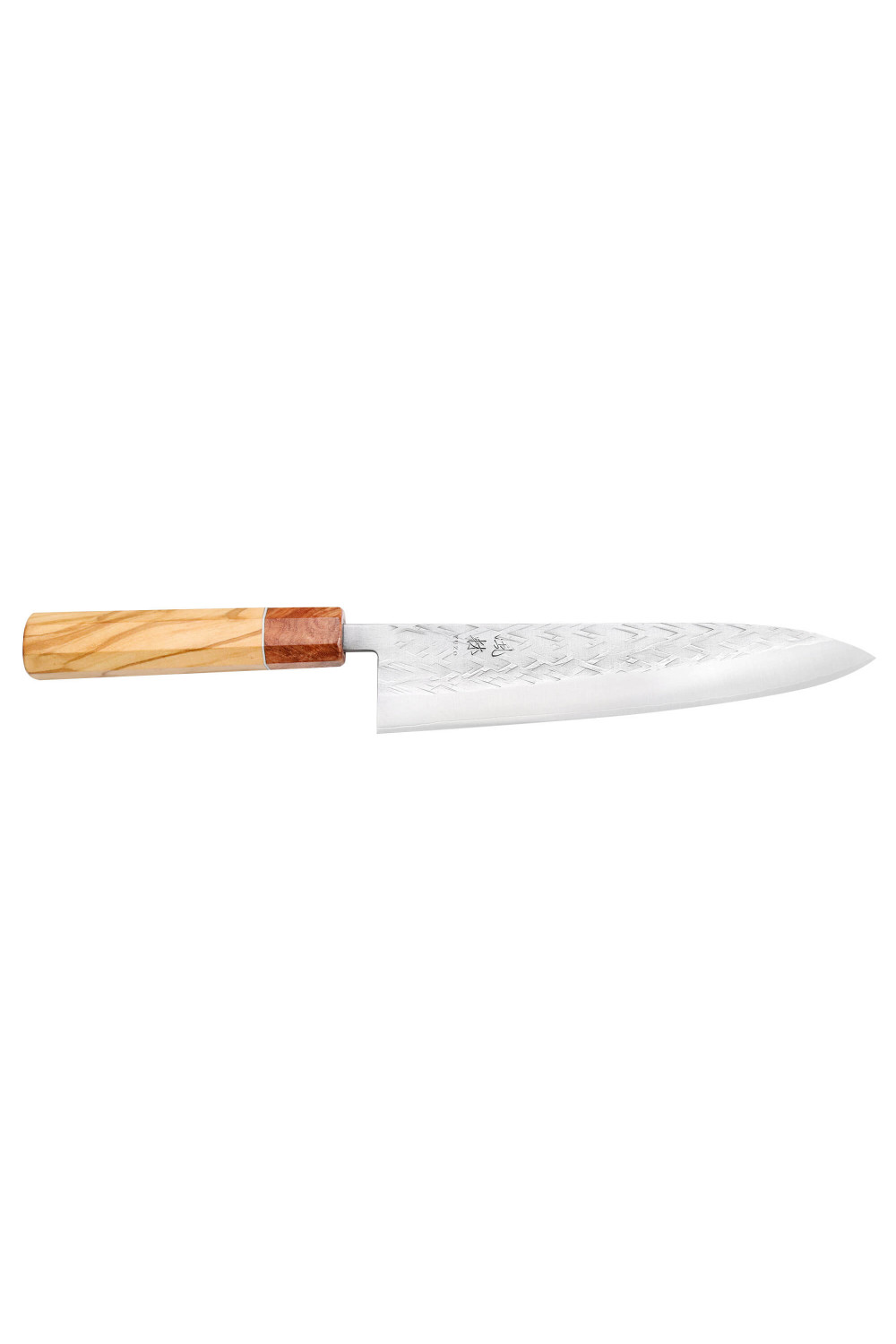
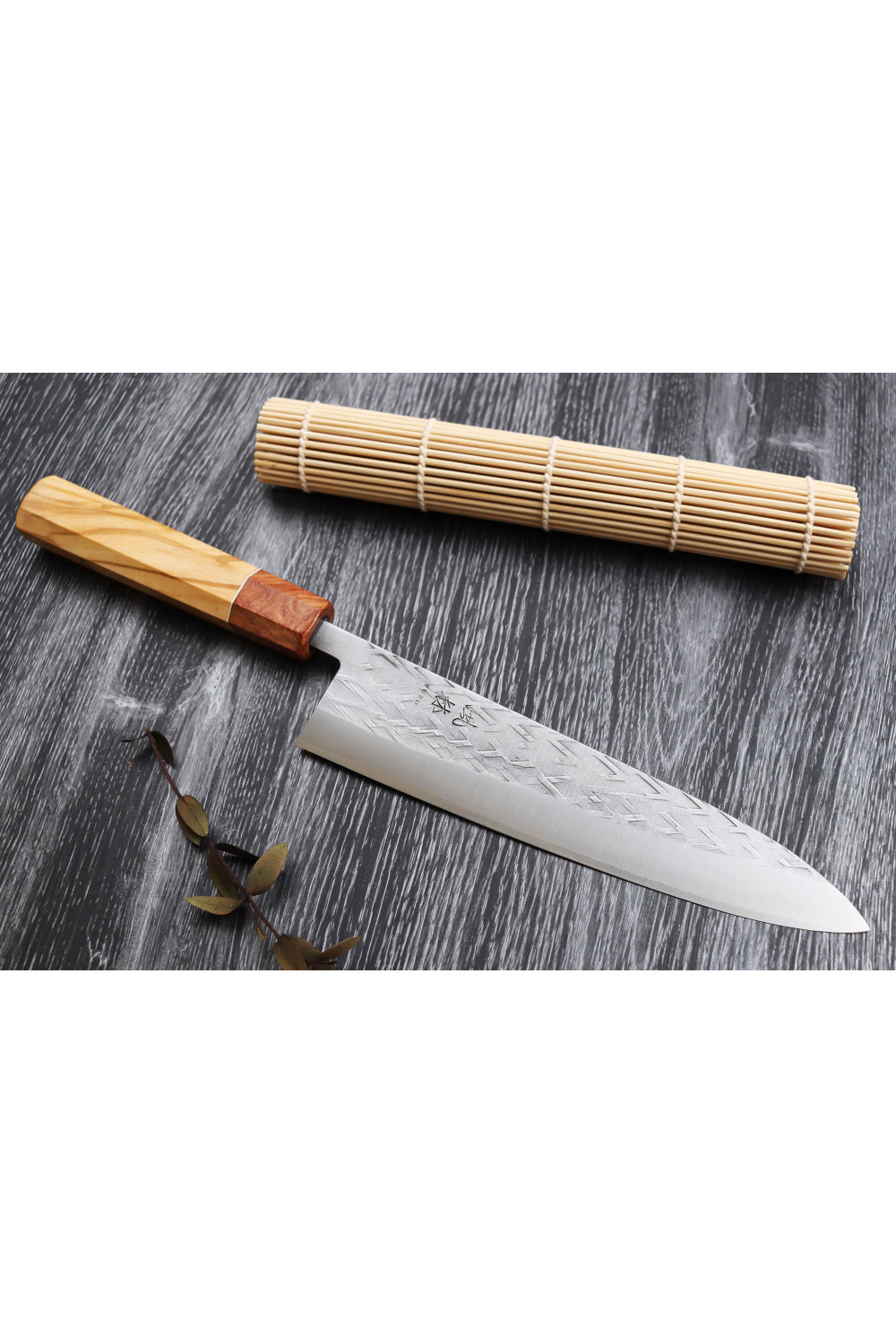
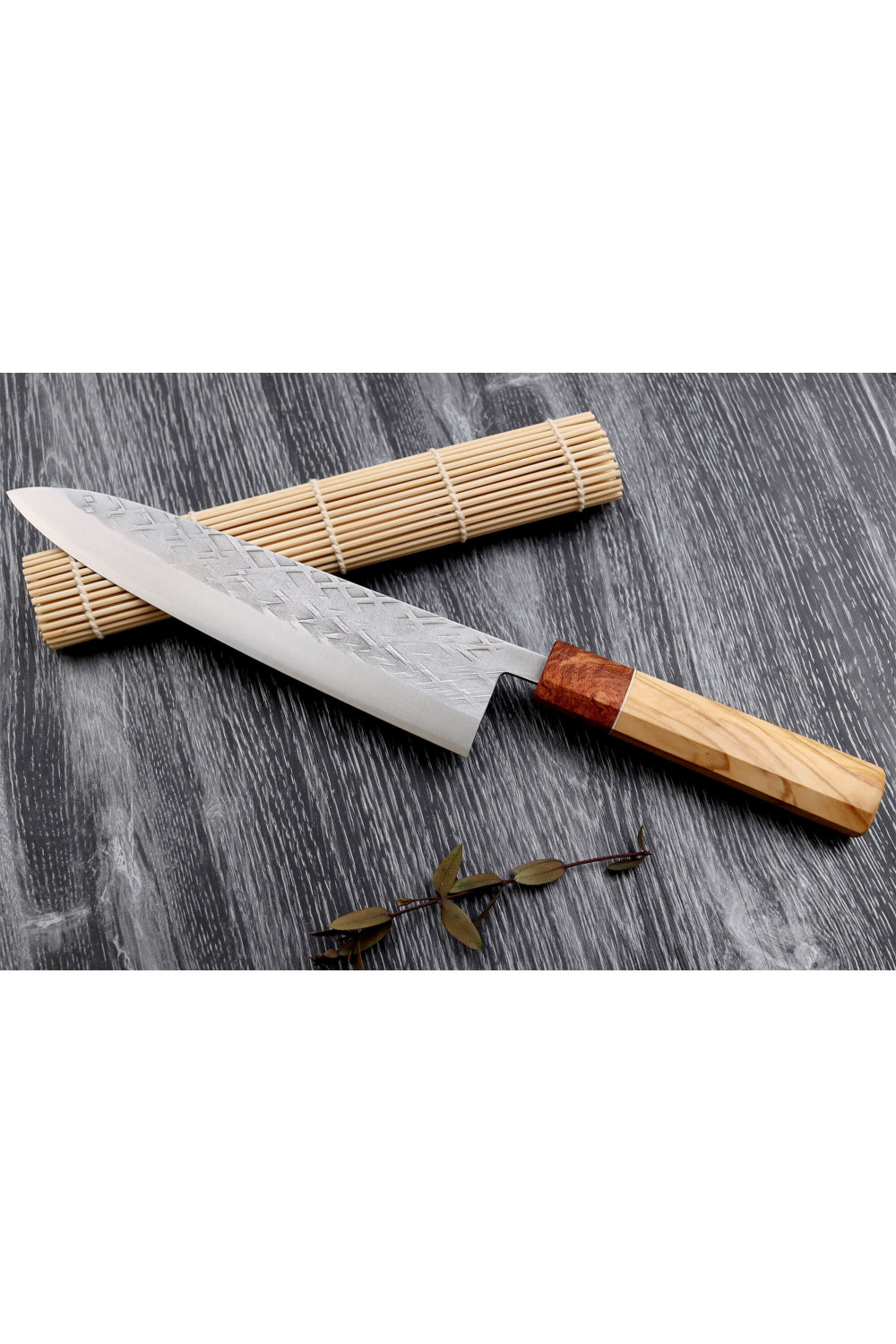
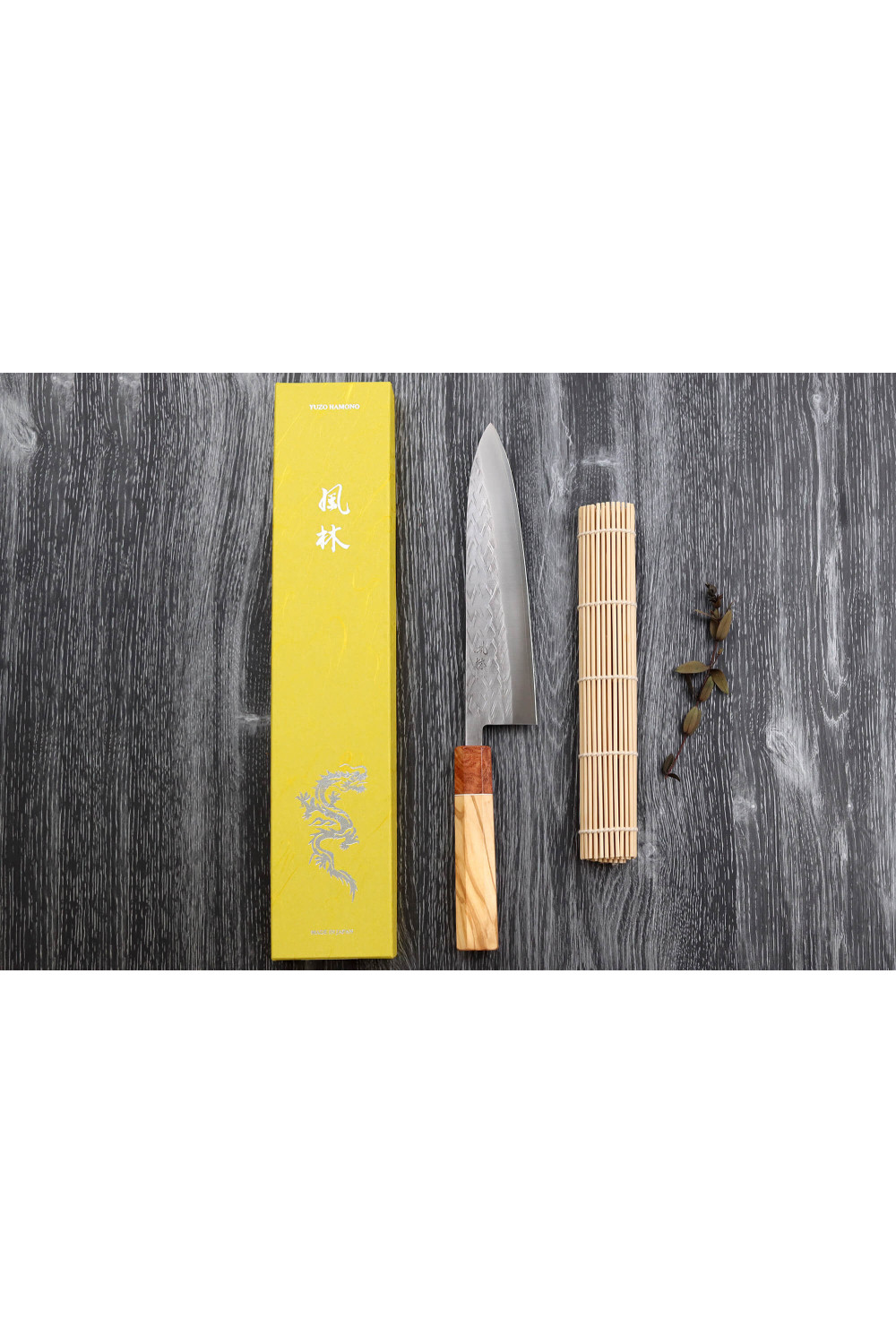
The Yuzo chef knife, a real asset in your kitchen
The structure of its blade is already a real advantage. It's called San Maï, and is typically Japanese. These words mean "3 layers" in Japanese. So why do we say it has three layers? It's because it has a core made from one type of steel, which is then surrounded by a layer of another steel (which folds around it, hence the three layers). The advantage of a steel mix lies in the balance of the properties of the said steels. Indeed, they complement each other to offer you a durable, high-performance blade.
For this range of Yuzo Hamono kitchen knives, the blade core is made from Japanese SLD steel. This alloy was developed by the Japanese steelmaker Hitachi, known internationally for its quality products.
SLD steel was originally designed by Hitachi to cut other steels. Indeed, it was intended for machines capable of slicing different alloys, in order to produce various parts (for other machines). However, Hitachi realized that it would be a shame to assign a single purpose to such an alloy, and decided to use it for cutting Utensils.
This steel has several advantages, such as its high carbon content of around 1.6%. Carbon is an essential element for increasing the hardness of an alloy, since a rigid alloy will remain sharp longer than a "softer" one. A steel's rigidity can be measured using the Rockwell scale. Here, our knife reaches 63 HRC, proof that the core of the blade is extremely hard and that the knife will be effective for a long time, even if you keep cutting (as the average Western knife is around 58 HRC).
This steel also contains around 13% chromium: this element provides better defense against oxidation. Note, however, that this steel is still considered oxidizable. In fact, it's a hybrid steel, somewhere between stainless and oxidizable, but for which you should apply the same care instructions as for a knife fully considered oxidizable.
The micro-structure of SLD steel is also noteworthy: it is very well balanced, and the micro-carbides are evenly distributed. This increases its resistance to wear and to micro-cracks caused by small impacts during cutting.
As previously mentioned, the San Maï structure requires an additional outer layer. Here, the SLD is covered with stainless steel, which gives it a little extra resistance to oxidation (without making it stainless, let's not forget). This extra layer ensures that the blade is well-balanced, giving it greater "flexibility". Strictly speaking, the knife doesn't become flexible, but it is more resistant to possible shocks (because if steel is too hard, it breaks more easily).
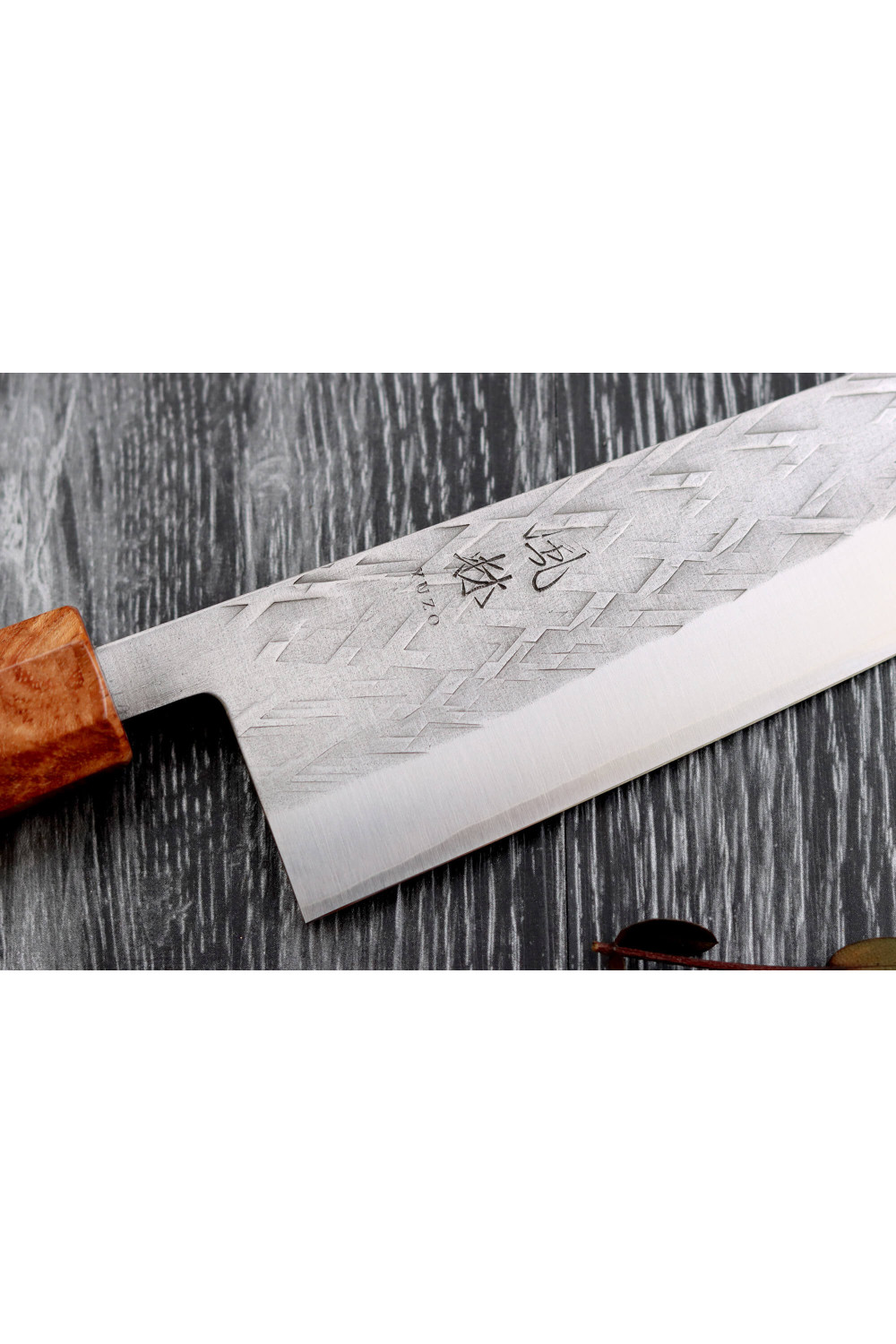
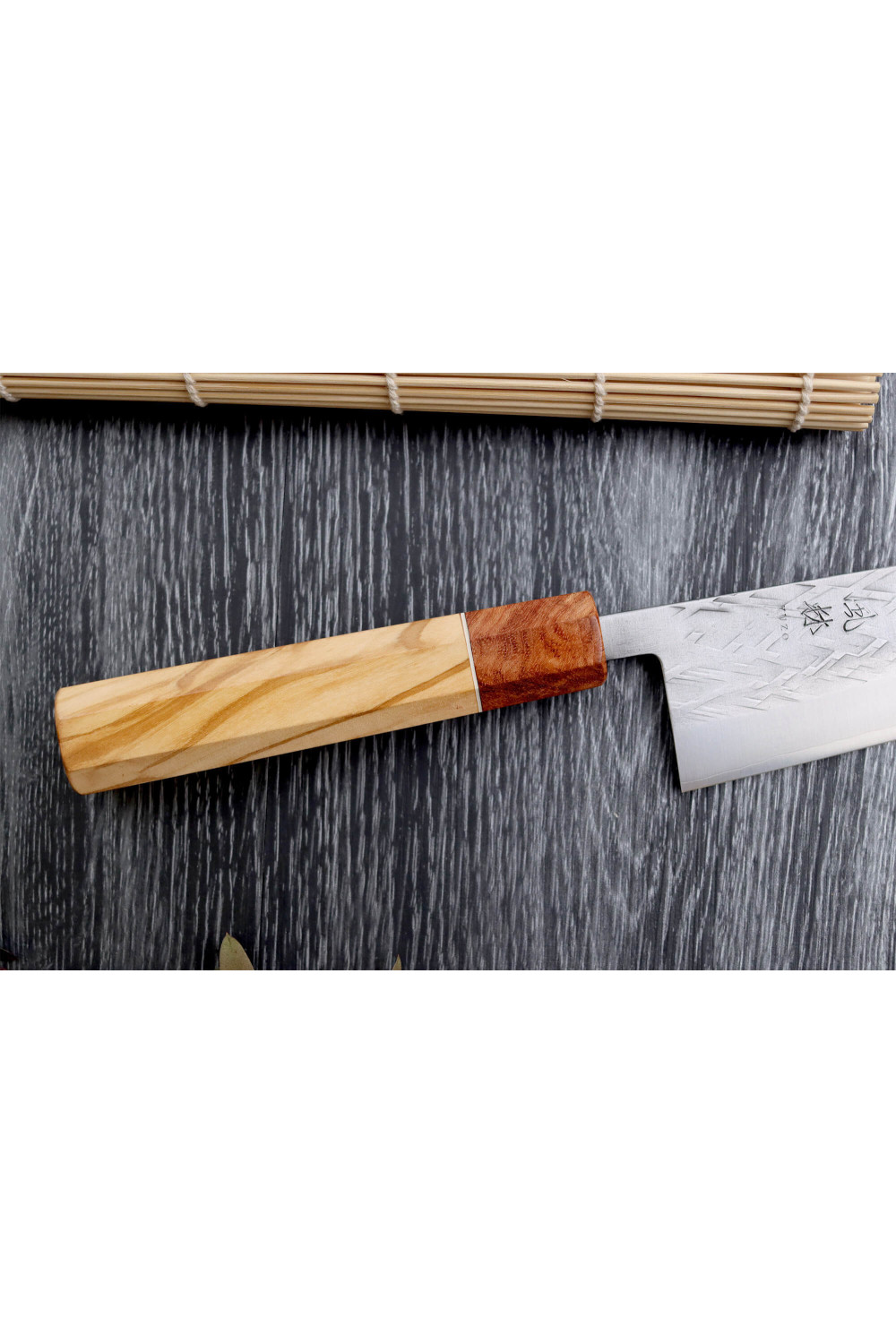
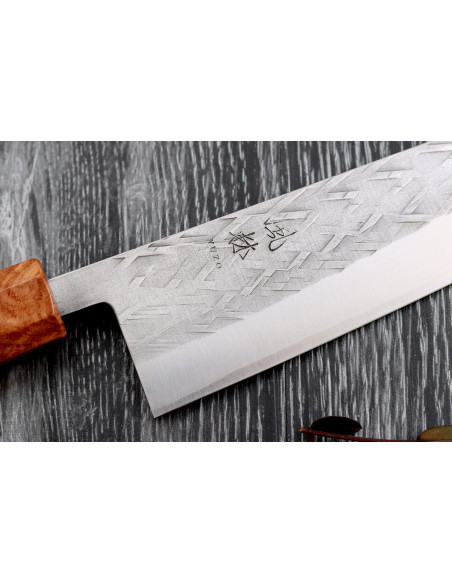
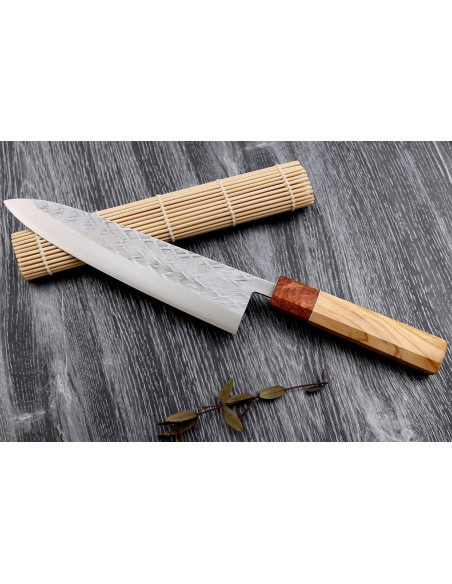
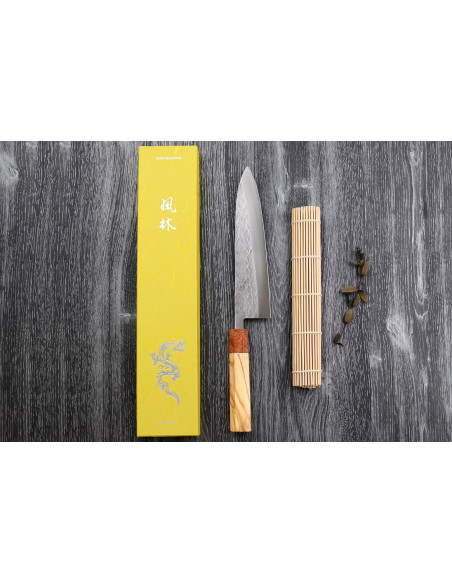
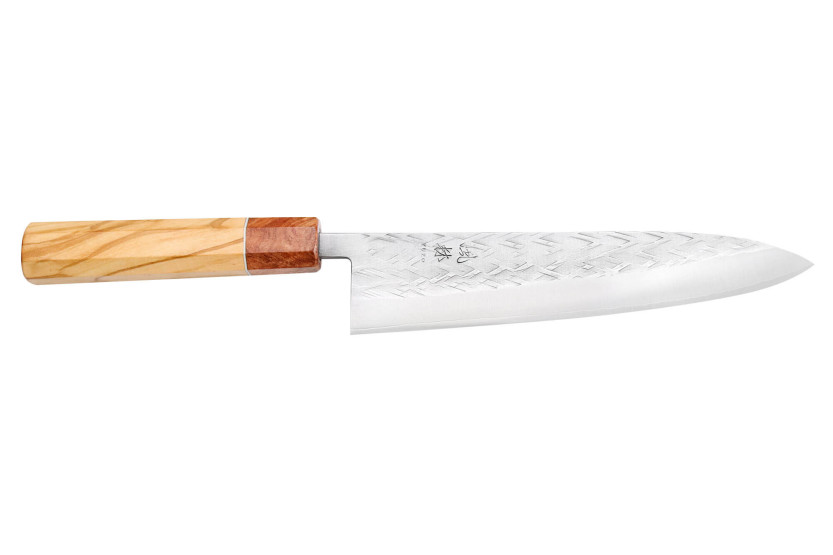
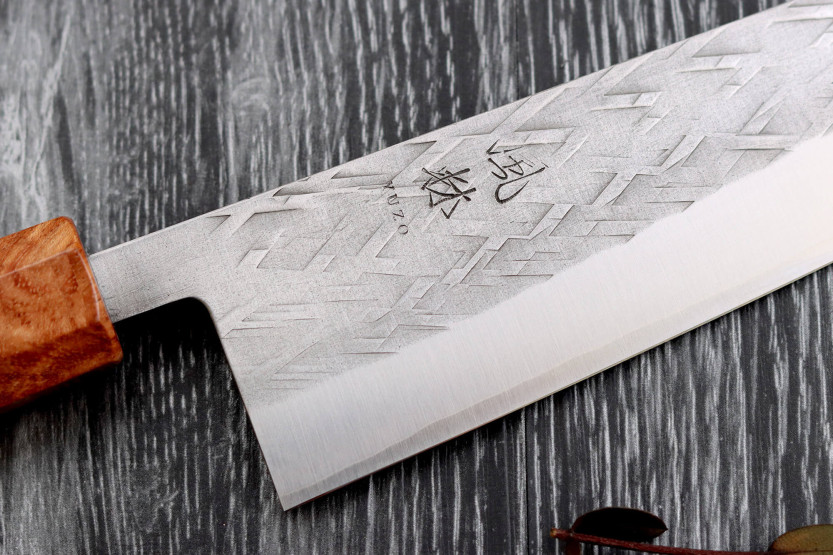
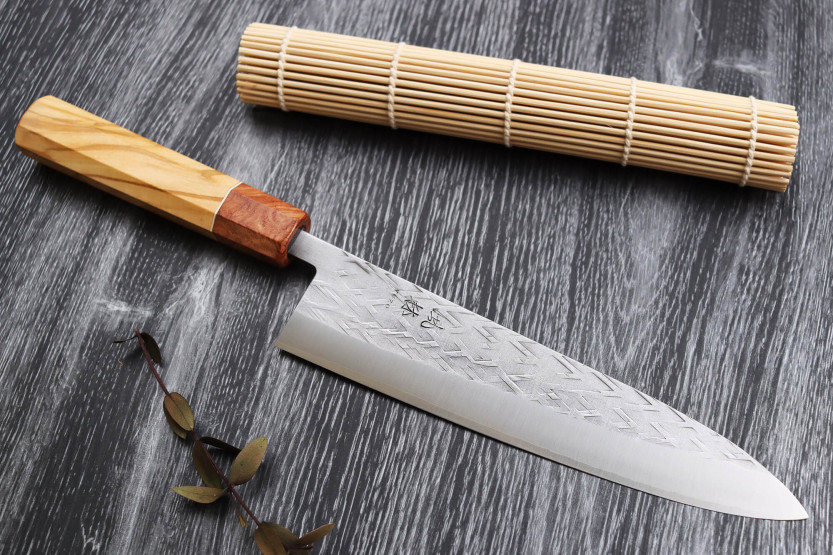
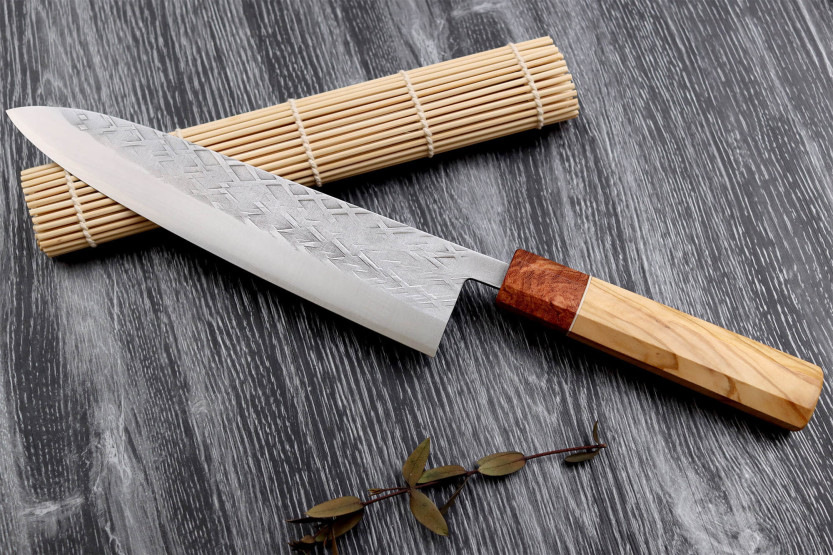
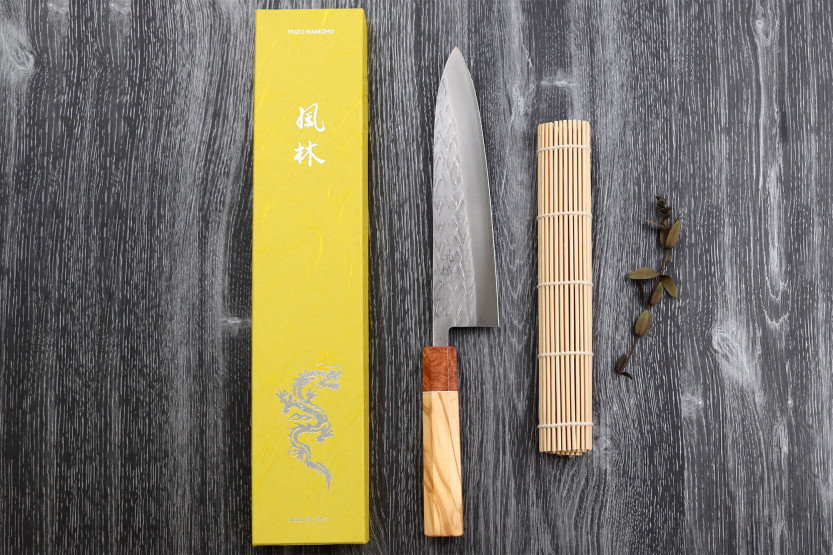
For an impeccable, original finish, the blade has been hammered in a novel, criss-cross pattern. The hammering is enhanced by a polished finish, which also protects the blade's surface and makes it less porous.
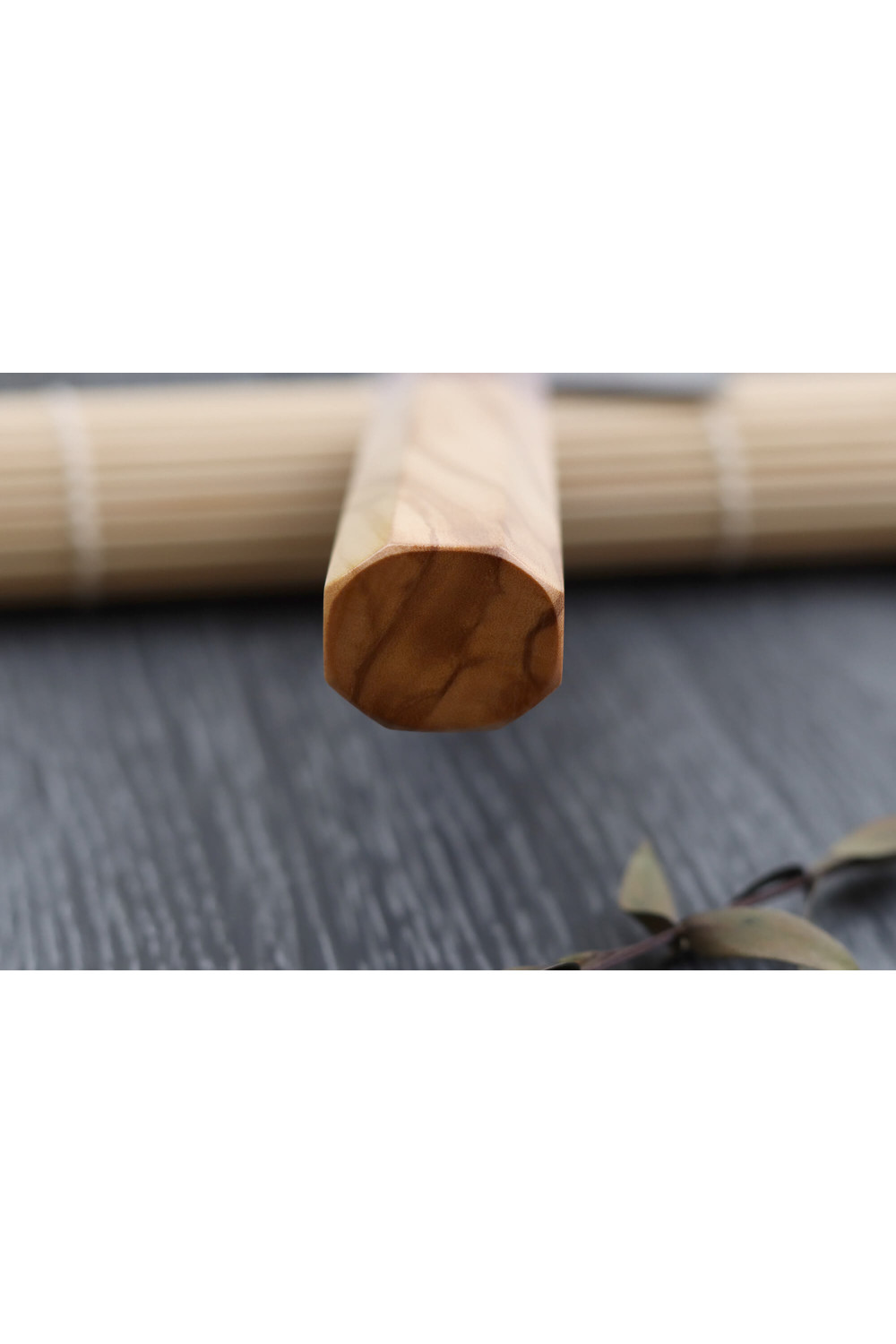
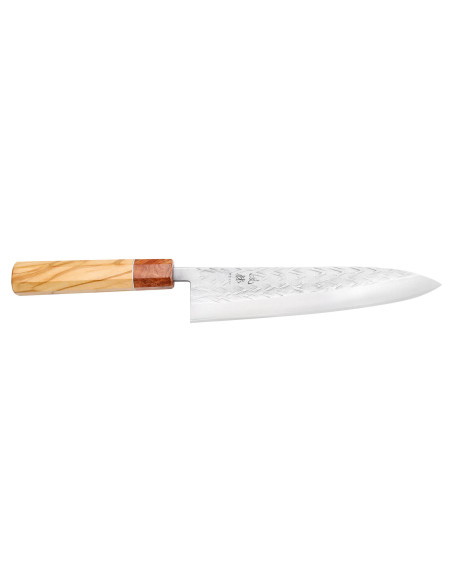
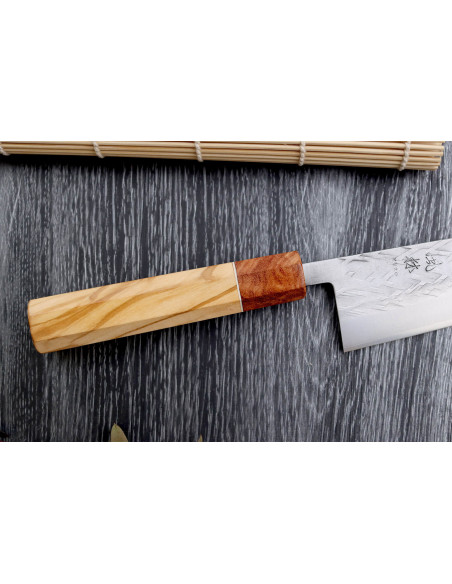
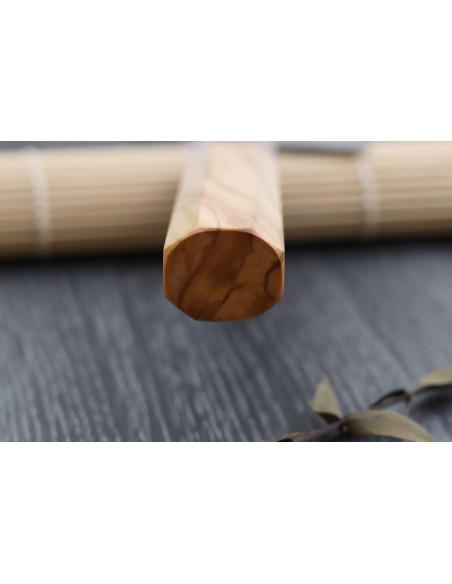
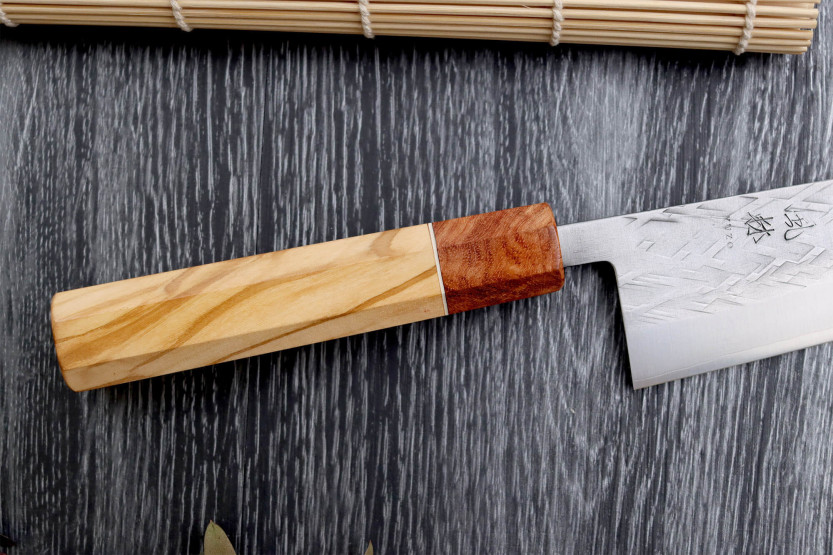
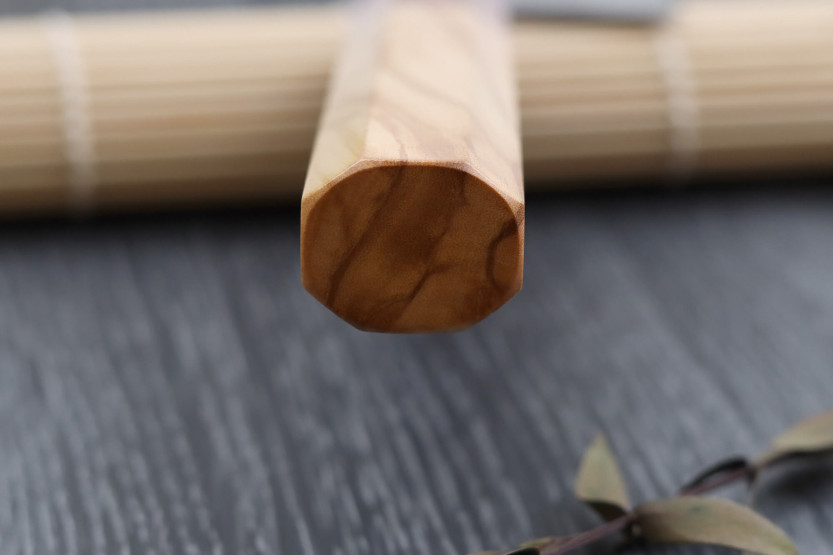
The handle is made ofolive wood. Olive wood is durable and pleasant to the touch. These veins are unique to each knife. It is also very dense, making it more resistant to impact. This capacity also makes it more waterproof than average, so it's better able to defend itself against humidity. We also appreciate its antibacterial properties.
With its octagonal shape, it is suitable for all cooks, whether right- or left-handed.
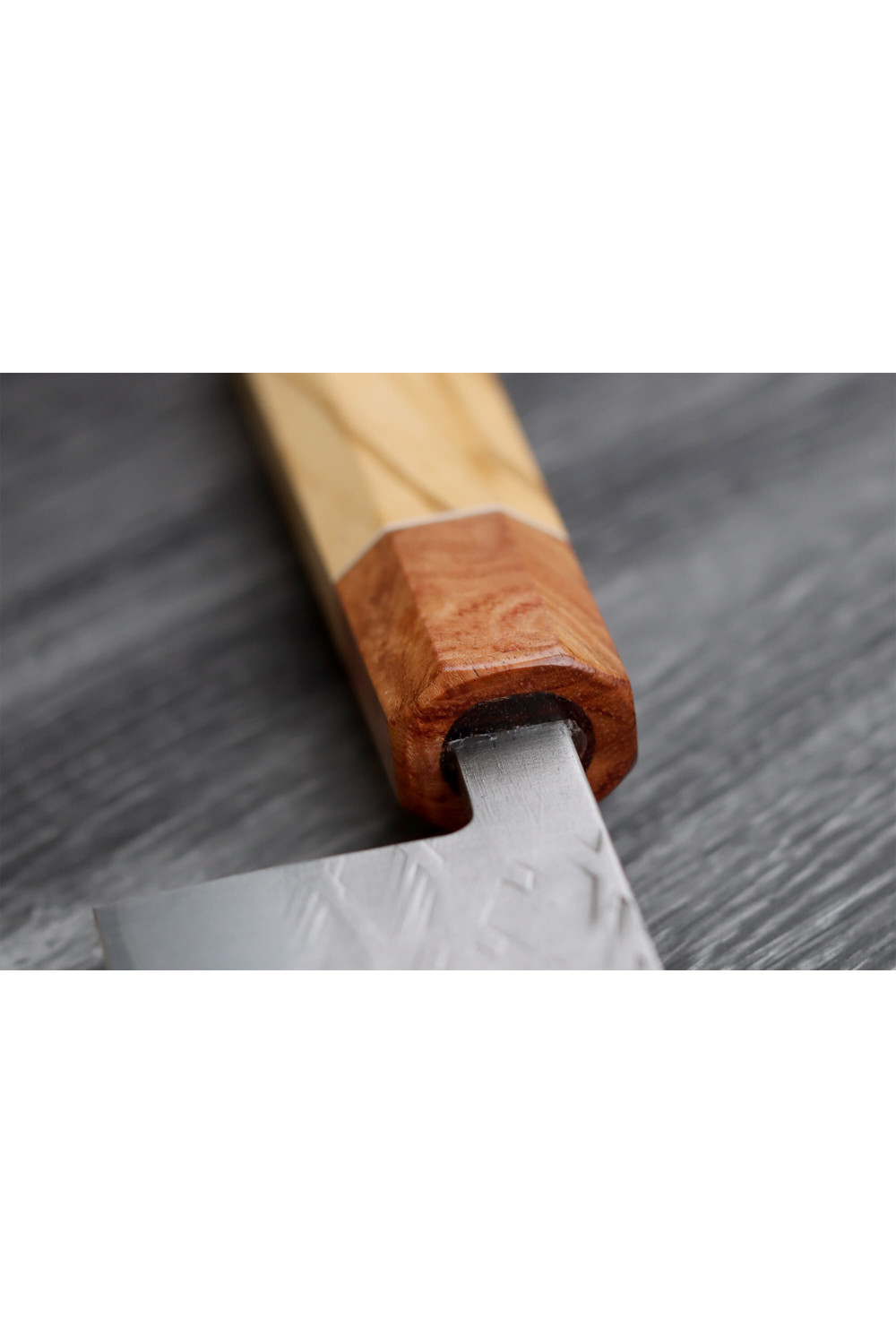
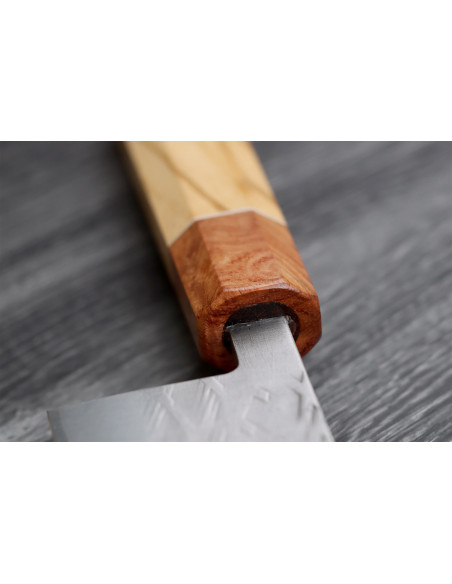
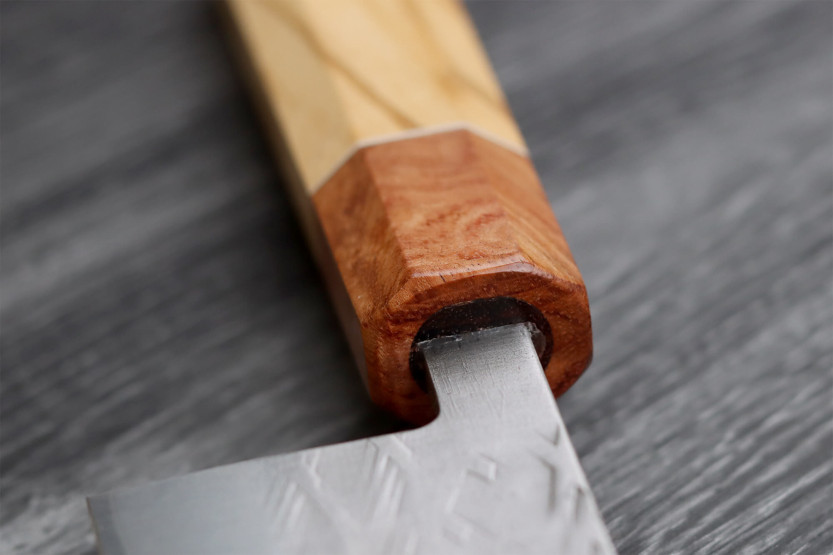
The bolster is made of quince wood. This wood is also resistant, and complements the olive tree well. For example, it is able to cope with temperature variations.
An attractive white micarta border links the two woods. It adds a touch of originality and refinement!
Finally, to fill the space where the blade fits into the handle, wood paste has been incorporated.
What's your Japanese chef's knife for?
This Yuzo SLD Polished chef's knife is forged by the Japanese cutlery company Tadafusa, whose workshop is located in Sanjo. It's a highly versatile knife. If you had to choose just one, this would be it! It's perfect for chopping fresh herbs (parsley, chives...), mincing vegetables (eggplants, carrots...), and even mincing meat. Do not use it on hard foods such as squash, cheese wheels or bones.
For the record, note that its Japanese name is"gyuto".
Care and maintenance
As mentioned above, the knife is considered oxidizable, so it's important not to leave it in contact with moisture for long periods. For this reason, don't soak it in the sink, and don't put it in the dishwasher.
To preserve it at its best, wash it by hand with a sponge and a mild detergent. When you've washed it, wipe it dry and store it in a dry place.
Note also that over time, the blade may change color, and this is perfectly normal! In fact, the acidity of food and the humidity of the air can have an impact on its color. The alloy reacts naturally.
Want to discover other Yuzo SLD models? Click here!




 By buying this product you can collect up to
.png)