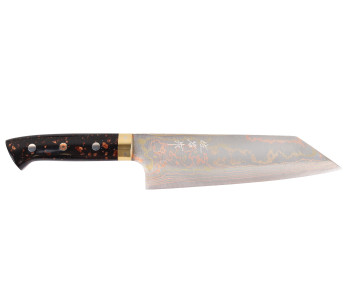
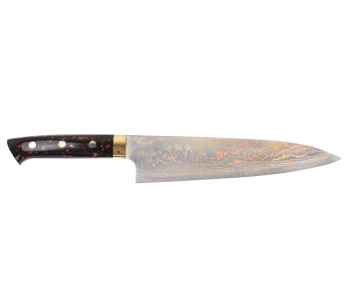
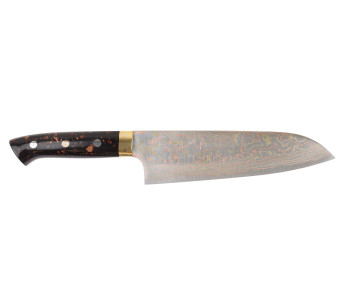
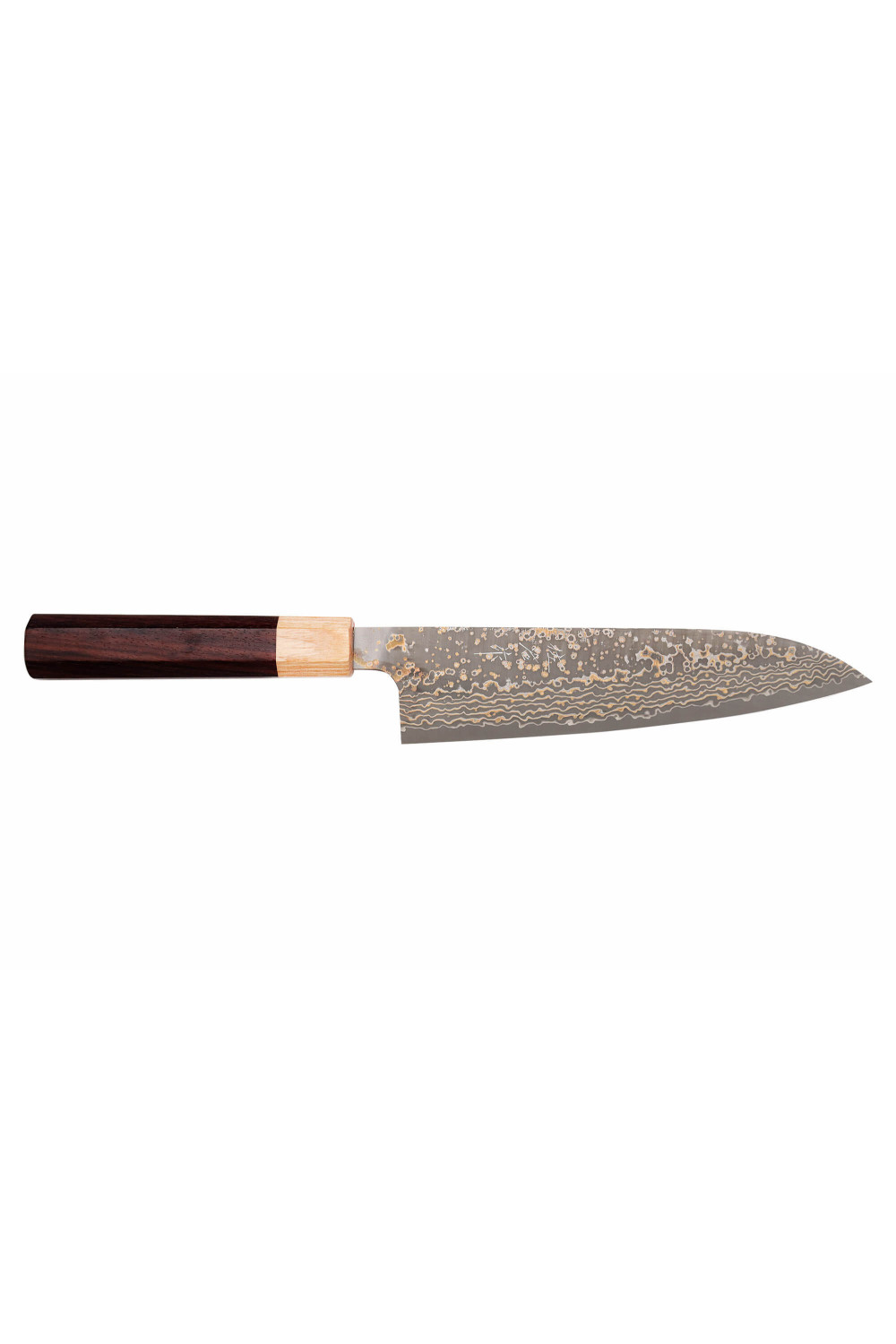
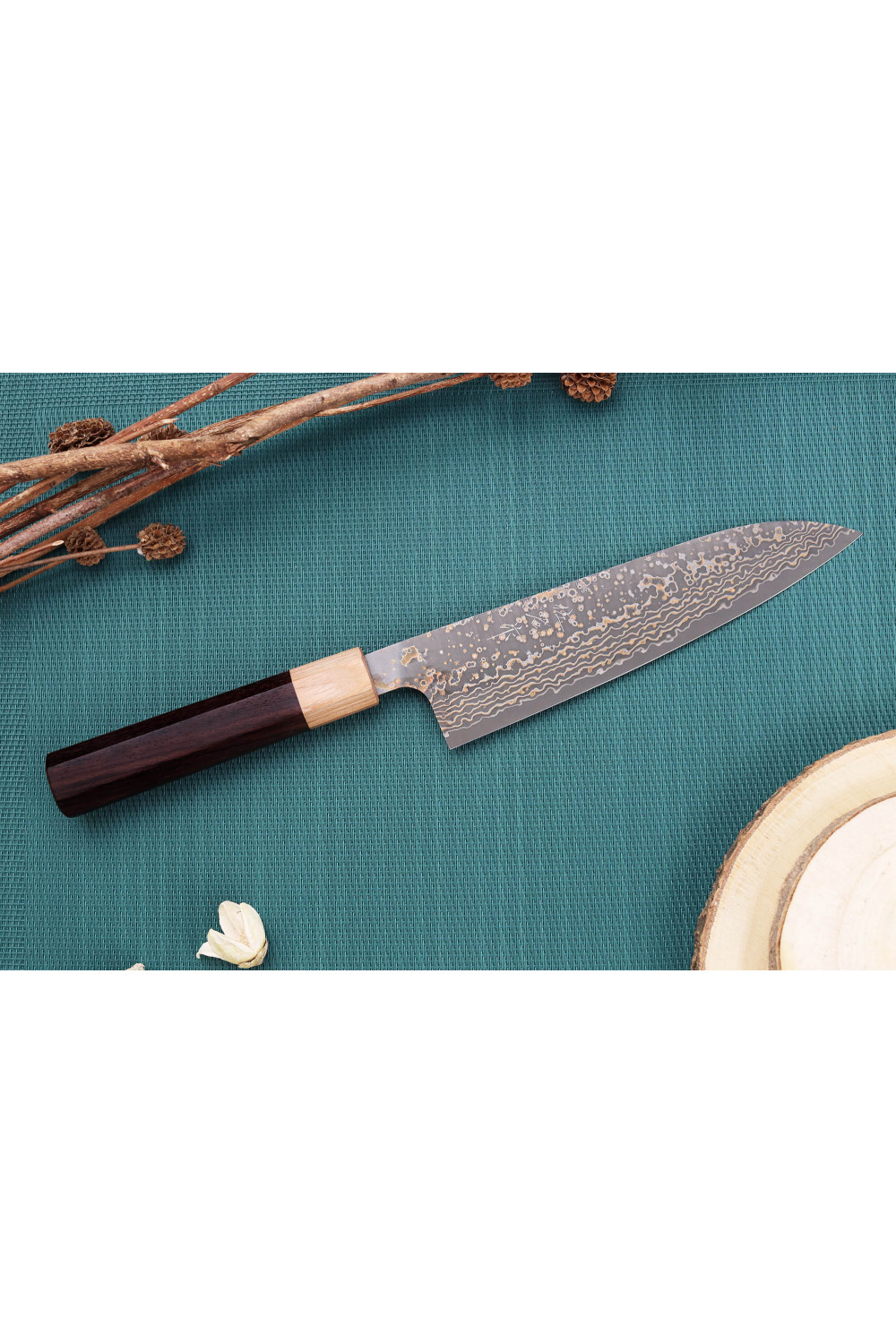
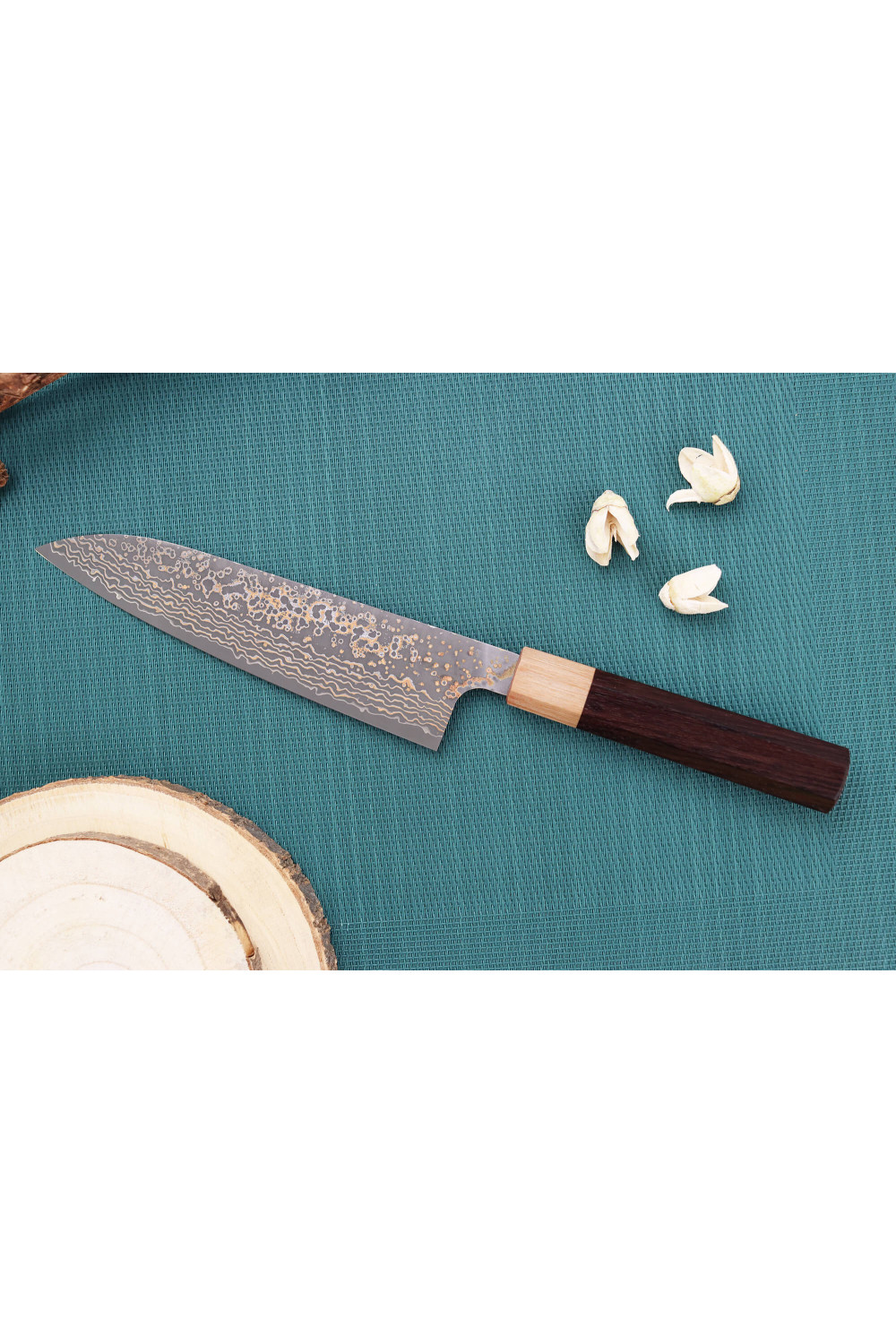
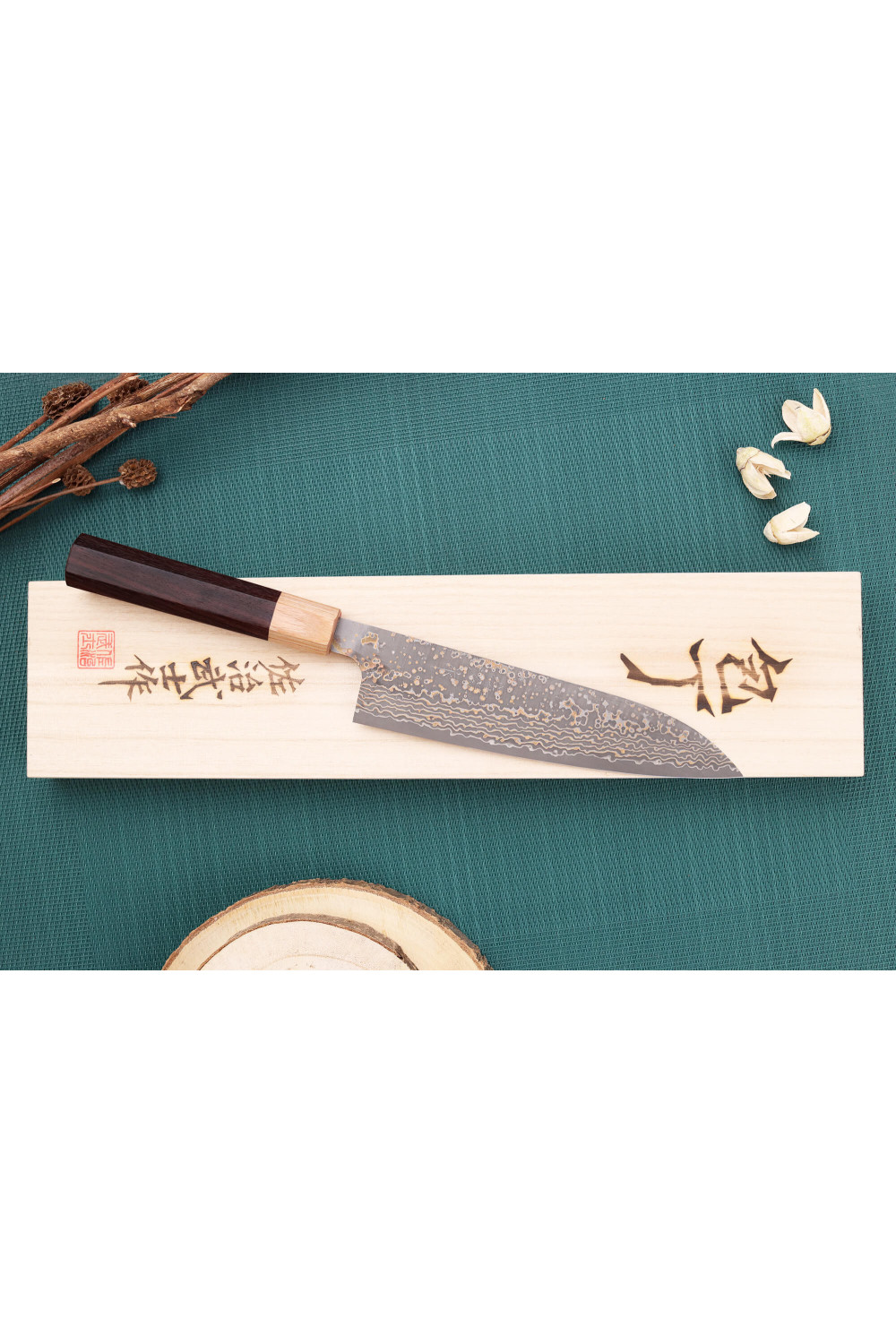
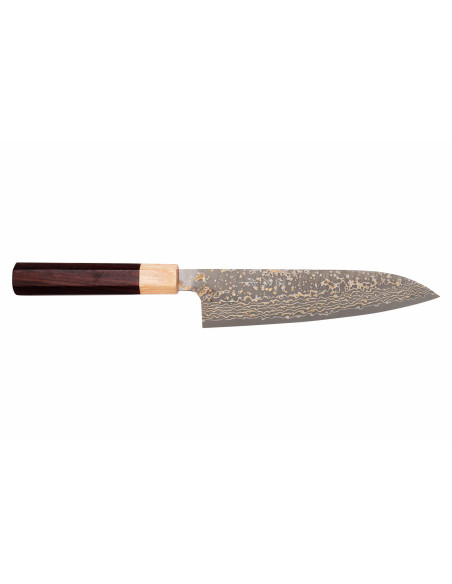
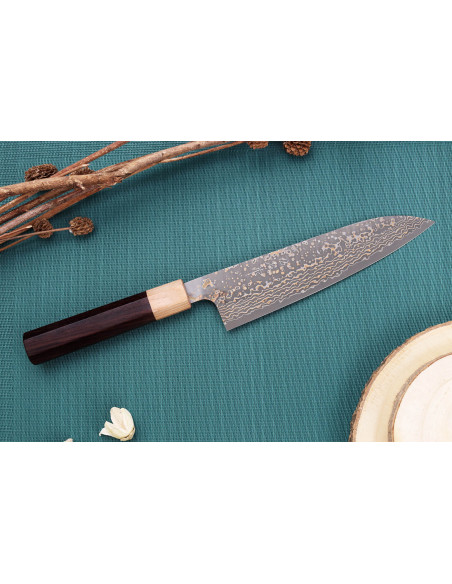
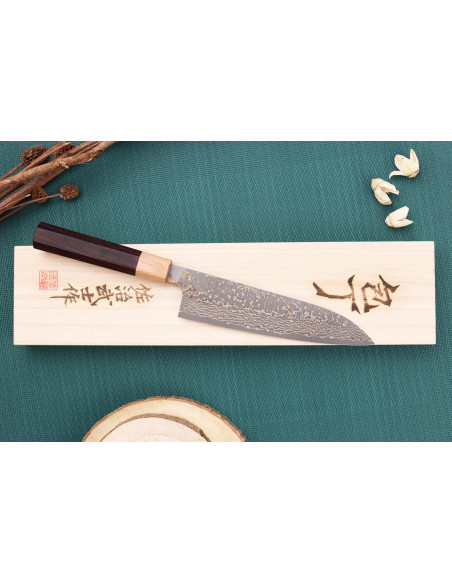
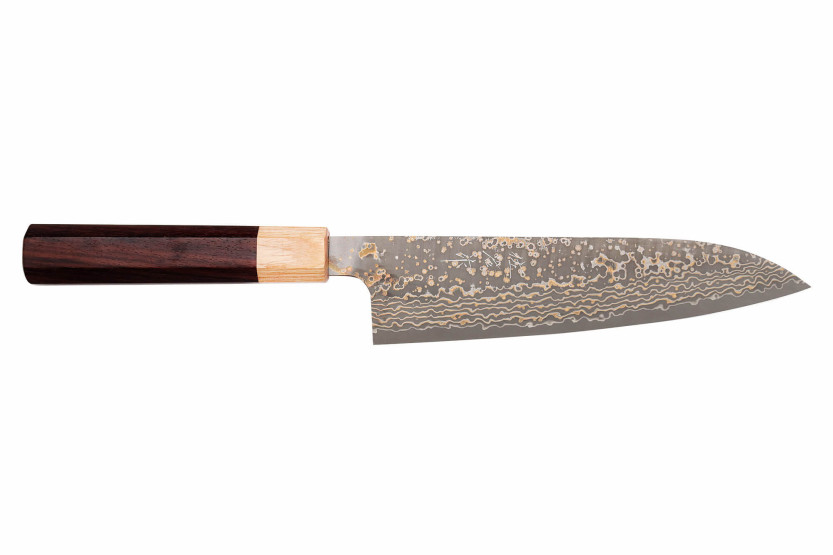
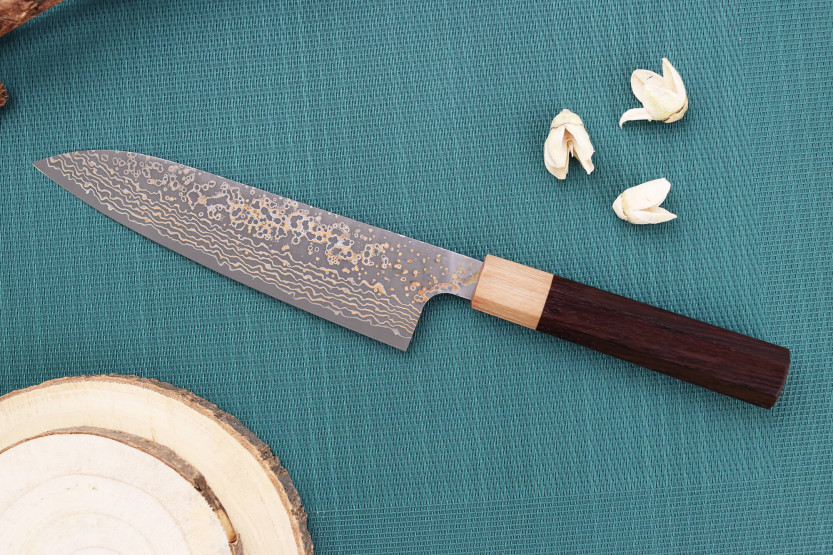
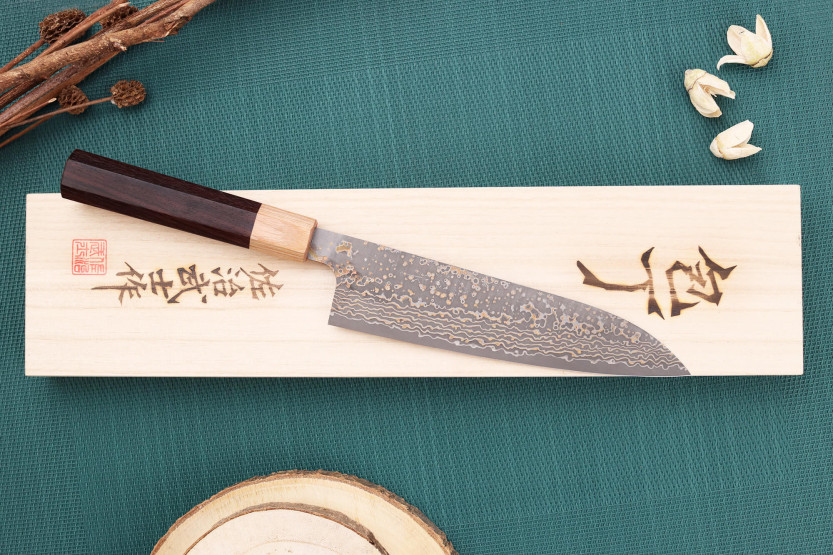
This chef knife, also known as a Gyuto, is a versatile model that can be used for a wide range of cutting tasks! With it, you can slice your vegetables, mince your meat or chop your herbs with ease. Its razor-sharp cutting edge helps you cut with precision and efficiency.
The expertise of Japanese blacksmith Takeshi Saji
VG10 Gold Japanese knives are entirely handcrafted by renowned blacksmith Takeshi Saji, who is recognized as a true expert in the world of cutlery. His skills are highly appreciated and he is respected for his ability to skilfully combine ancestral forging methods with innovative techniques. For some thirty years, Takeshi Saji has been certified as a "traditional master craftsman".
This master blacksmith's workshop is located in the Takefu Cutlery Village, a place where the most talented Japanese cutlery craftsmen gather. A real place of learning, it enables blacksmiths to share their knowledge, techniques and equipment. By coming together in one place, they ensure the continuity of traditions by passing them on to new generations of apprentices, who in turn will perpetuate this heritage.
A damask knife in unique shades
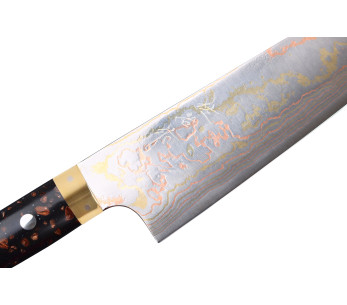
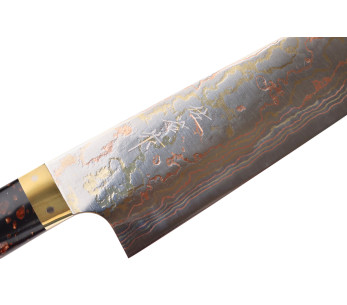
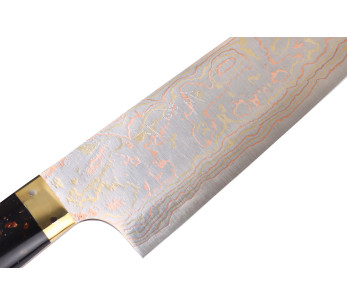
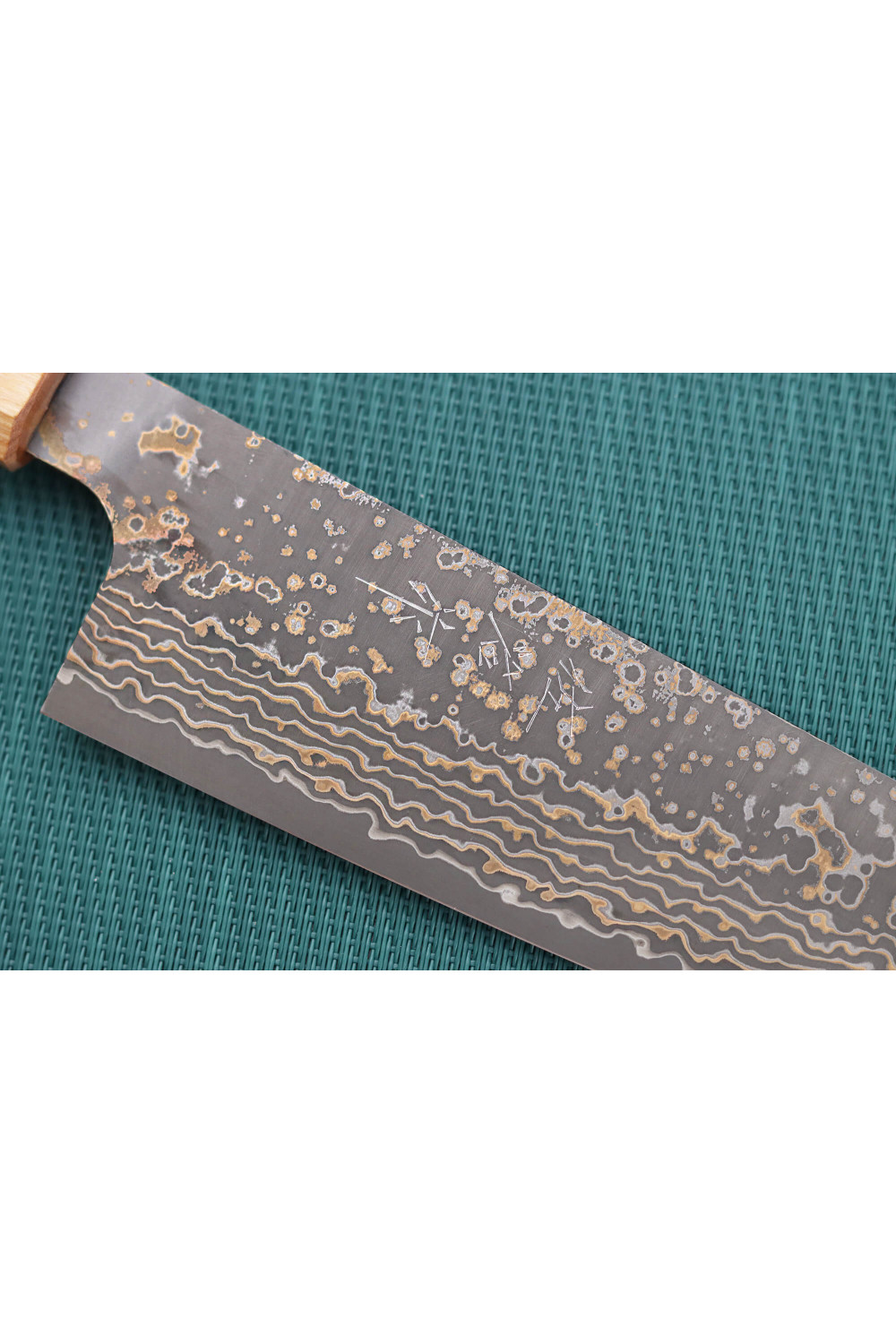
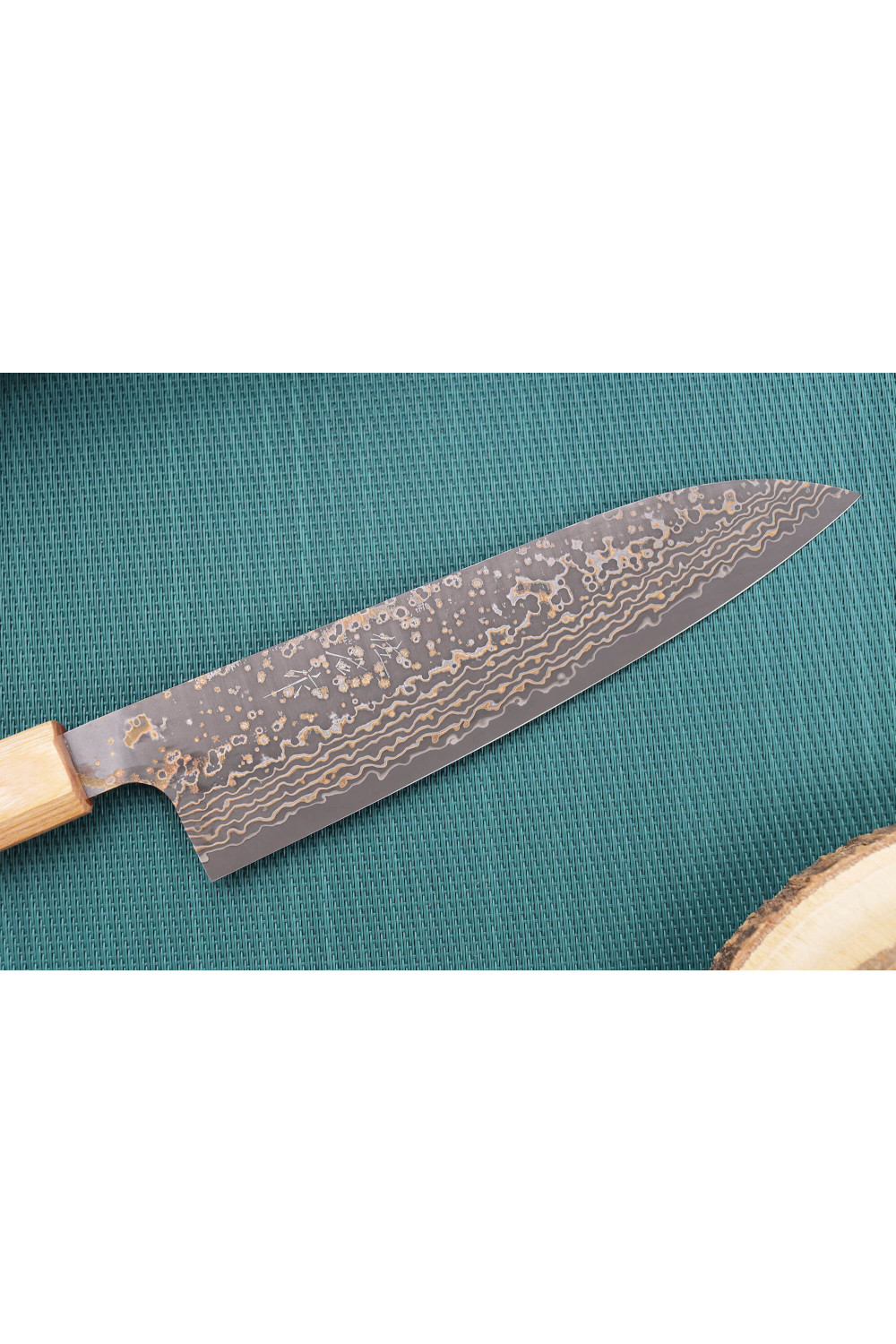
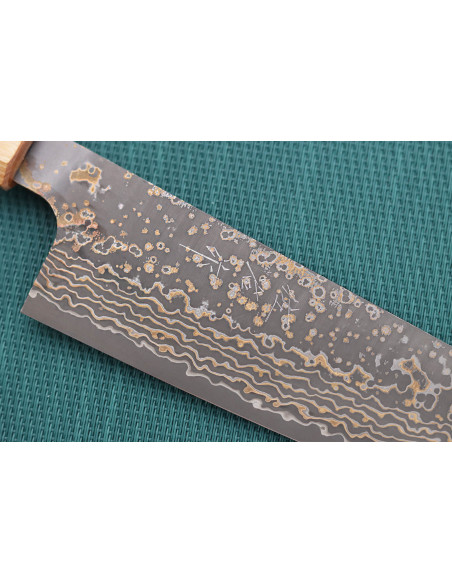
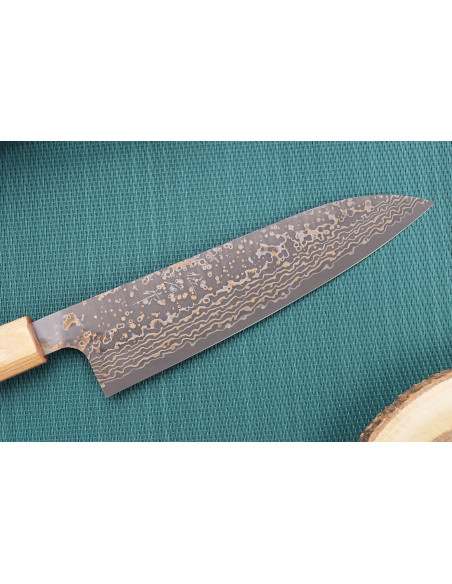
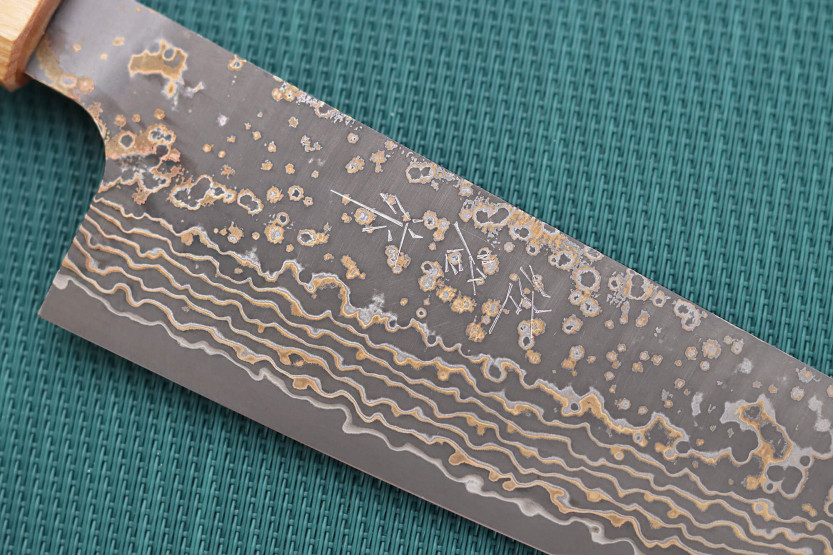
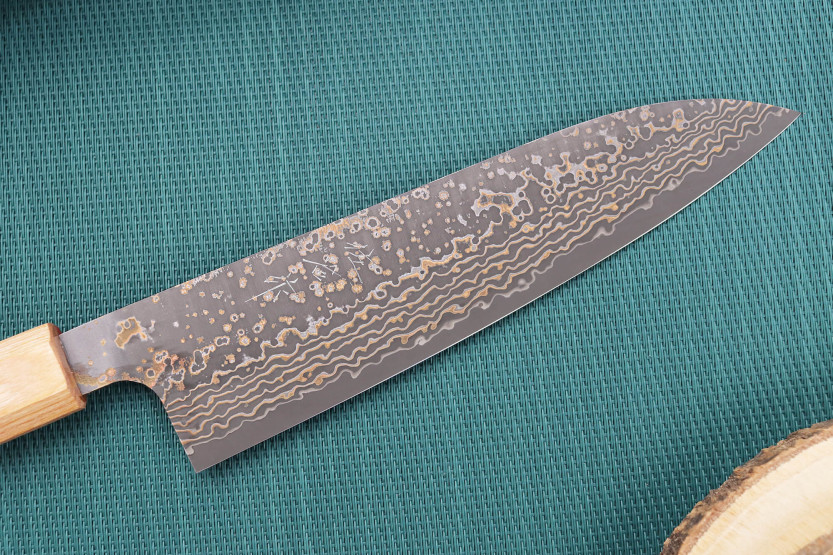
This chef's knife features a blade constructed from several layers of steel superimposed around a rigid core: a damascened blade. Mild steel covers the rigid core to make it more supple and less brittle in use.
The core of this blade is made of Japanese VG10 steel, an alloy offering excellent cutting capacity and durability. With its carbon content of around 1%, it achieves a hardness of 60HRC on the Rockwell scale for a high-performance, long-lasting cutting edge. So you can space out sharpening sessions while retaining the razor-sharp finish of VG10 steel.
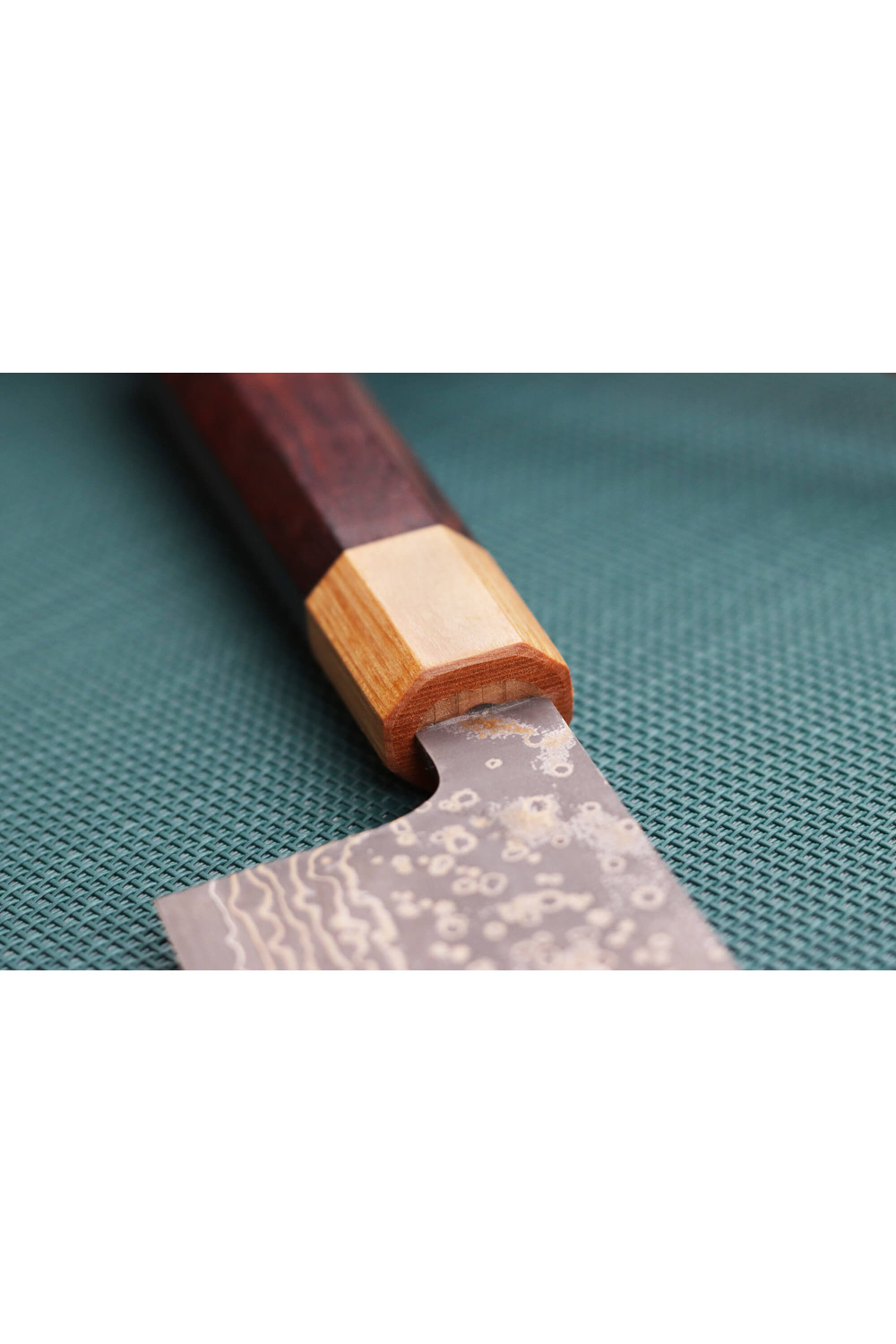
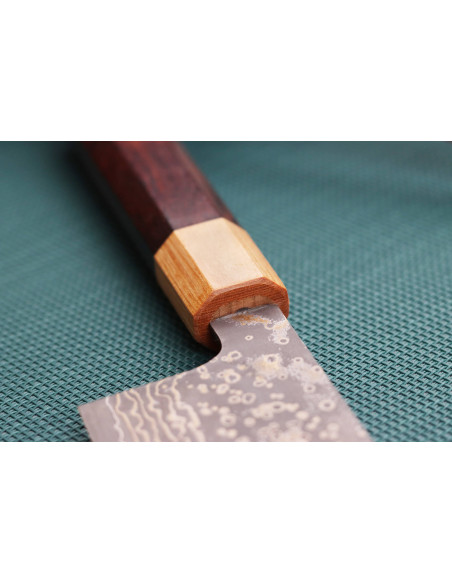
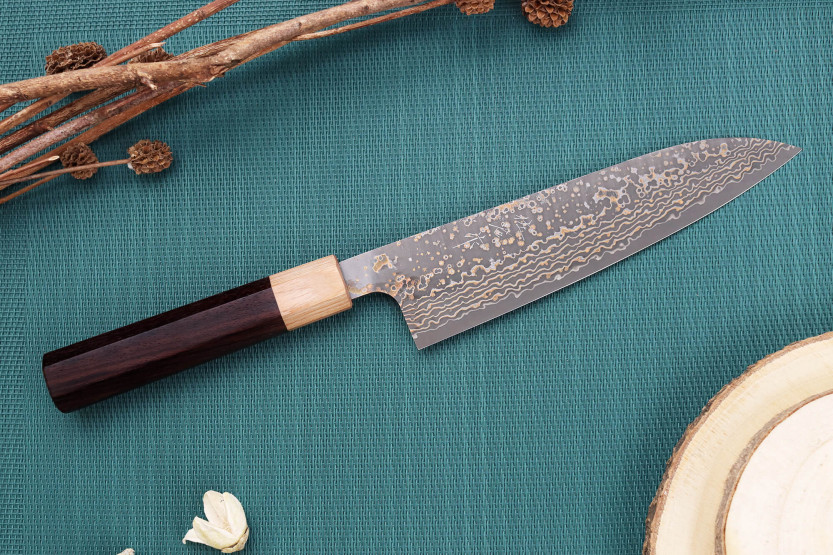
Next, this core is surrounded by several alternating layers of steel to form the damascus. In fact, you can see the superimposition of these different layers on the cutting surface, as they form waves with random, aesthetically pleasing patterns. This type of damascus stands out from other types because of its superb, slightly coppery hue.
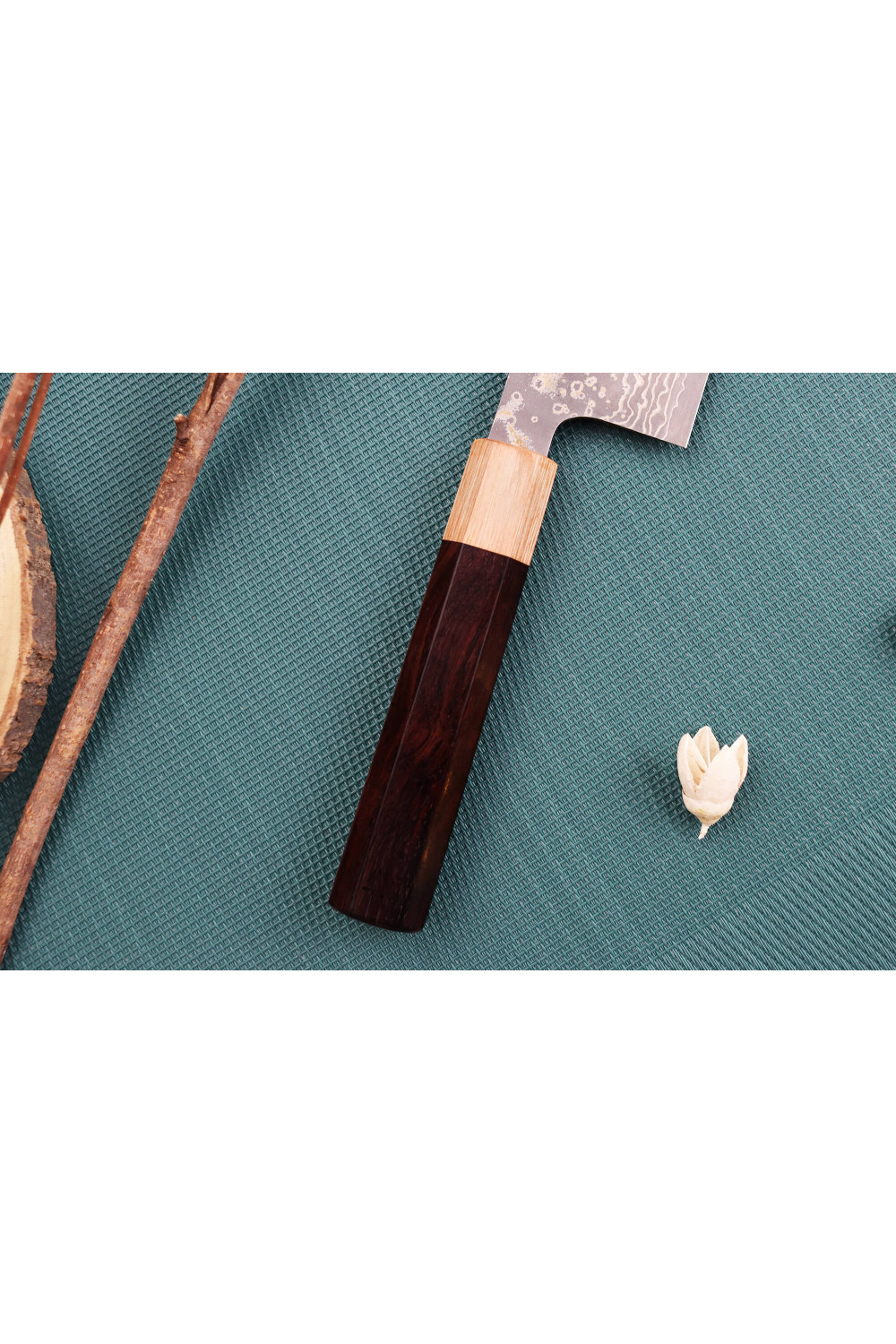
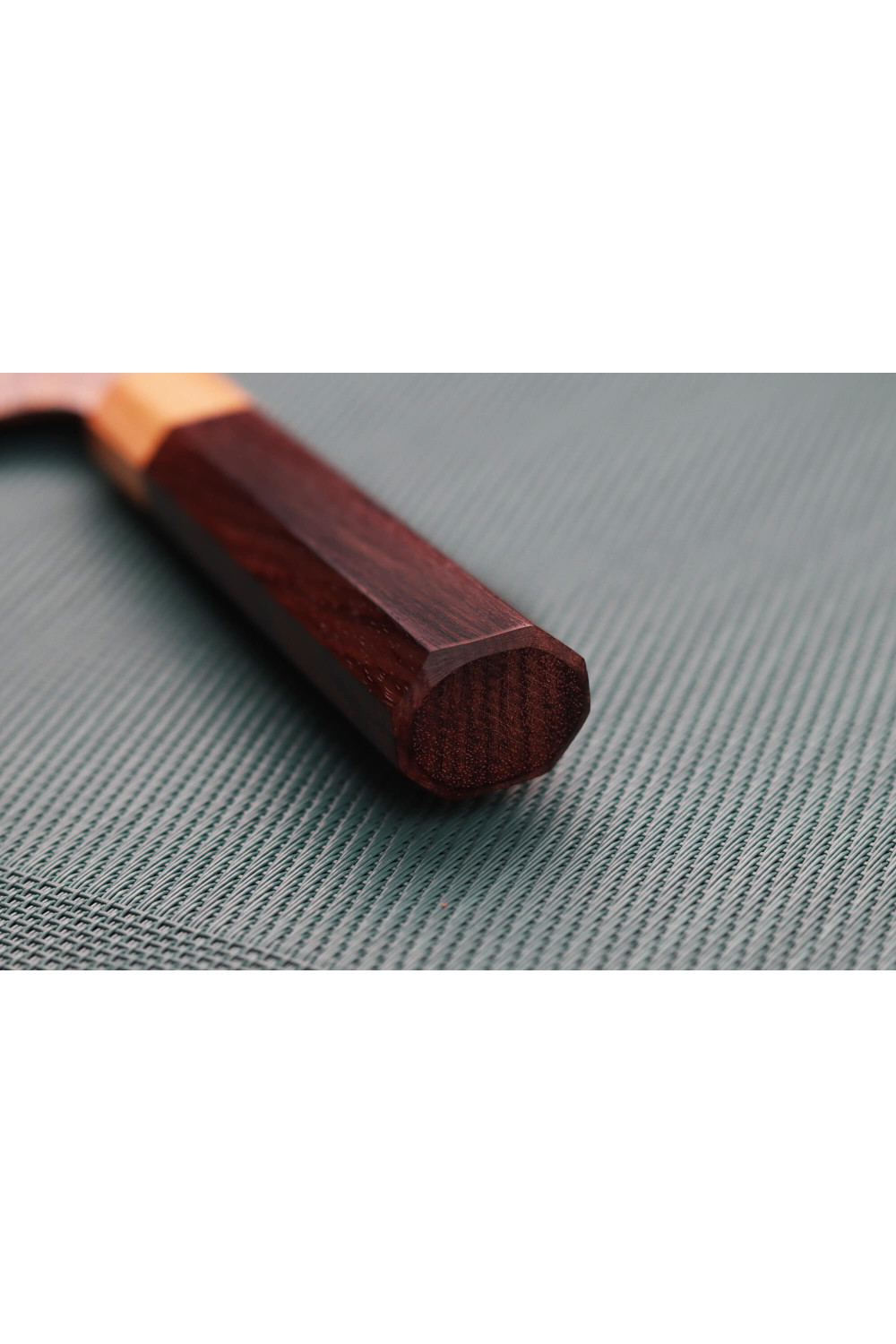
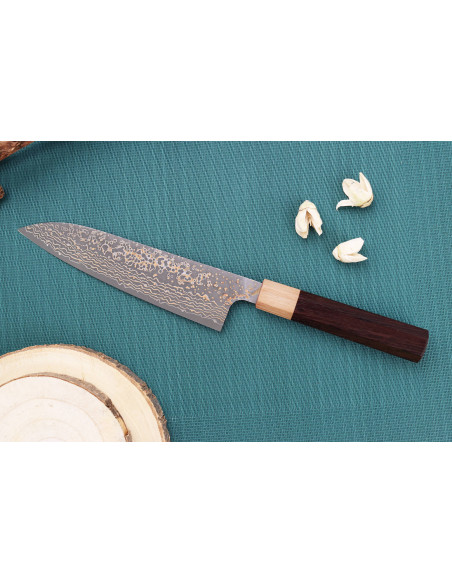
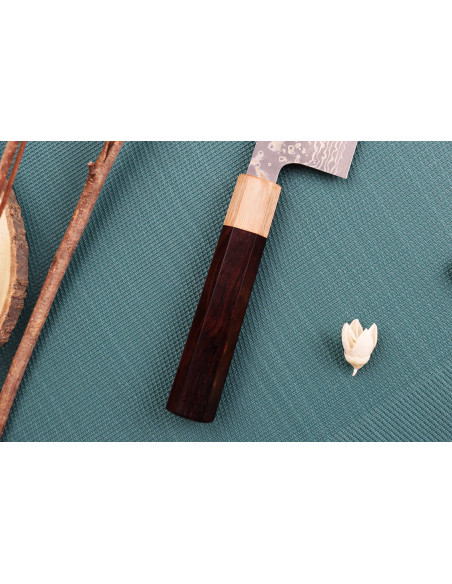
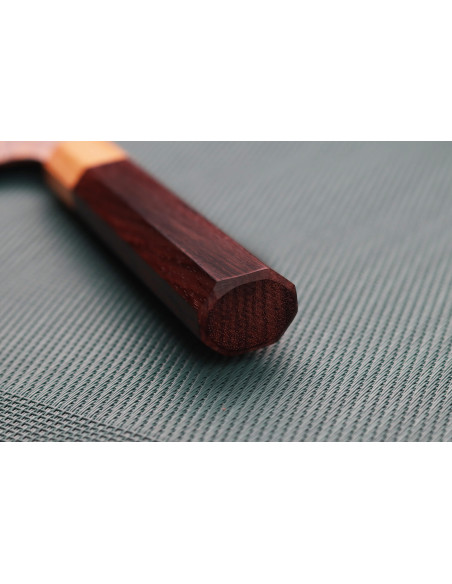
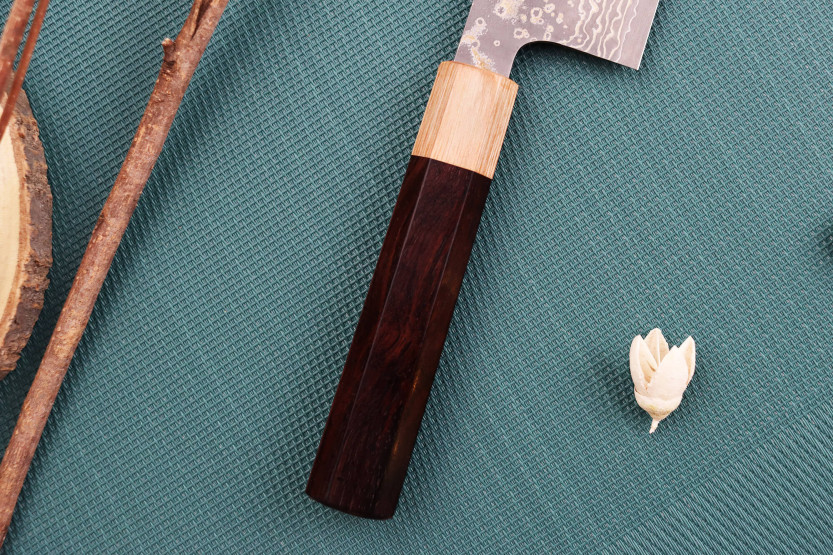
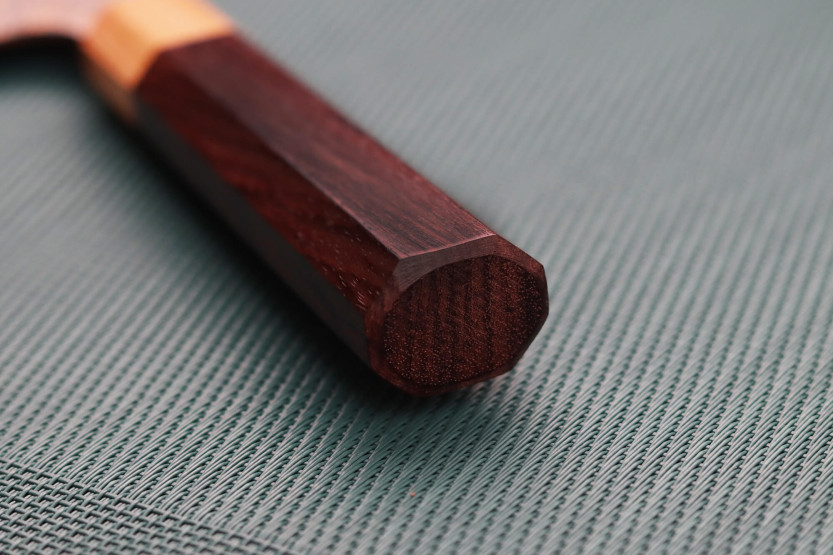
This gyuto knife has a handle made from rosewood, an exotic species that is resistant to humidity and renowned for its strength. Each knife is a unique visual thanks to the different shades of brown in the wood.
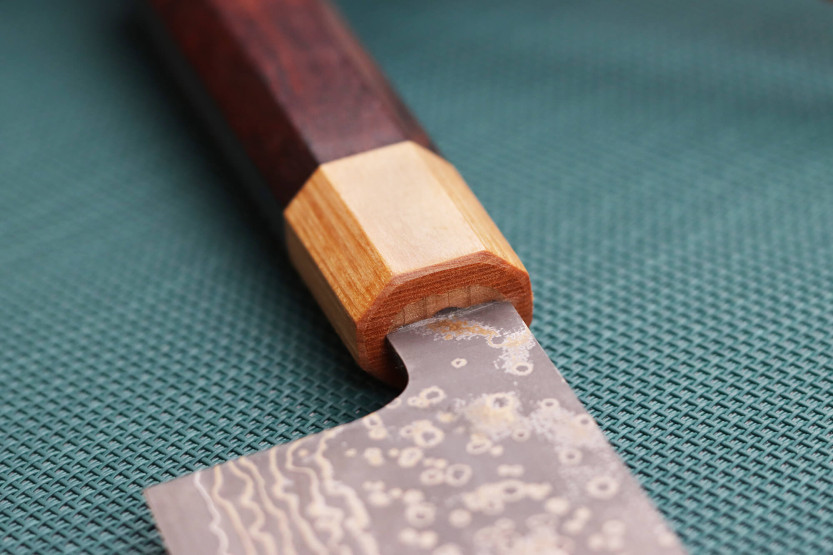
To complete the handle of your Japanese knife, a pakka wood bolster is added. This is a composite material created from resin and laminated wood that are heat-hardened. This material therefore resists temperature variations well, while being antibacterial. In a lovely light shade, the bolster complements the darker rosewood for a successful contrast!
The handle of this Japanese kitchen knife is octagonal to suit all cooks: right- or left-handed!
Finally, wood paste is added where the blade joins the handle to fill in the small gaps. This makes it watertight and prevents water from seeping inside.
How do I care for a handcrafted Japanese knife?
This handcrafted knife should be washed only by hand with a non-abrasive sponge and mild detergent. Once washed, dry immediately with a cloth and remove all traces of moisture, before storing in a dry place.
It should never be put in the dishwasher or left to soak in the sink.
Stocks of this knife are limited, as they depend on their provenance and the blacksmith's ability to manufacture them. This knife is entirely hand-assembled, which requires a great deal of time to produce perfect knives.
Discover other knives by Takeshi Saji on KnifeLeader.eu!




 By buying this product you can collect up to