A typically Japanese San Mai blade
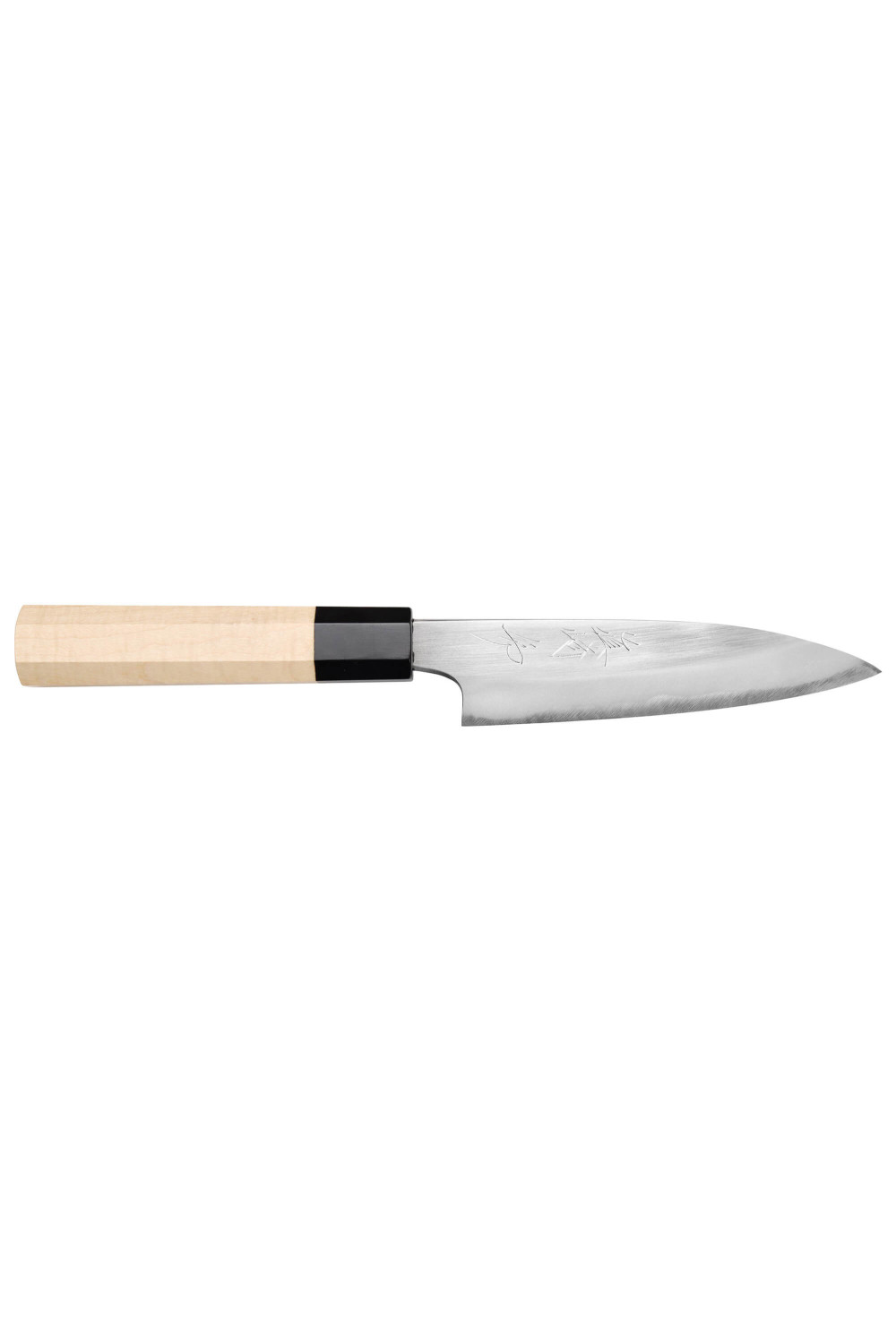
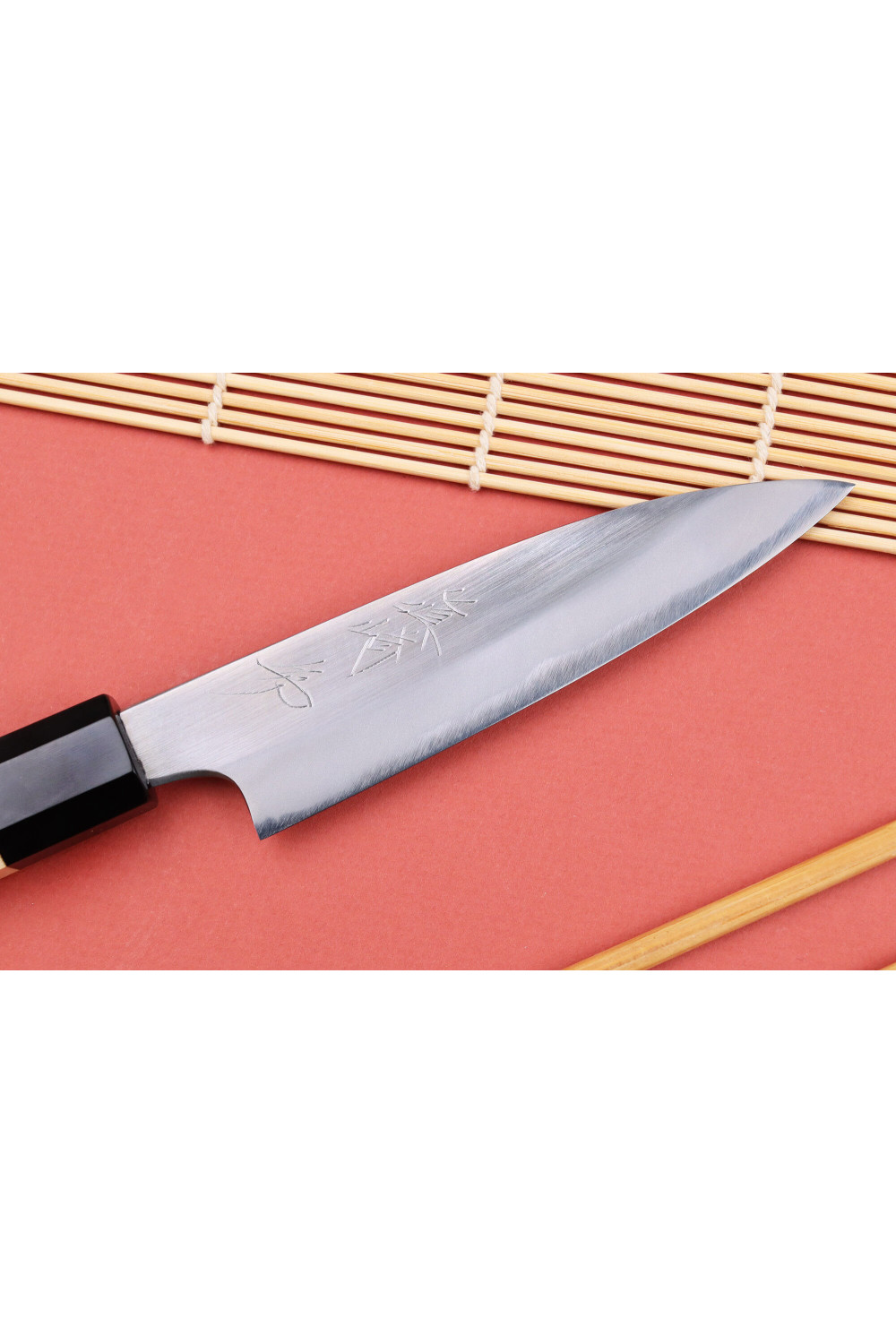
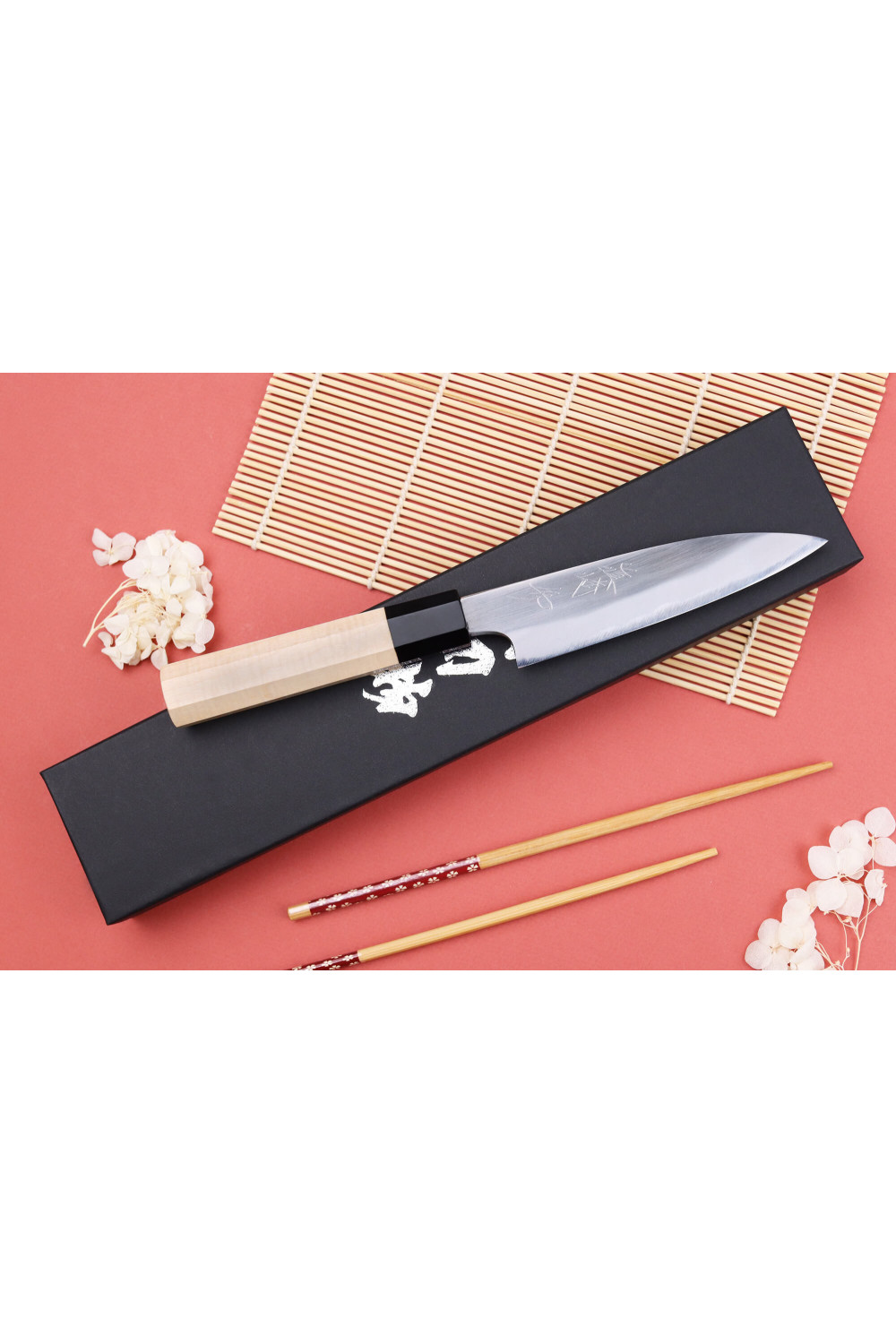
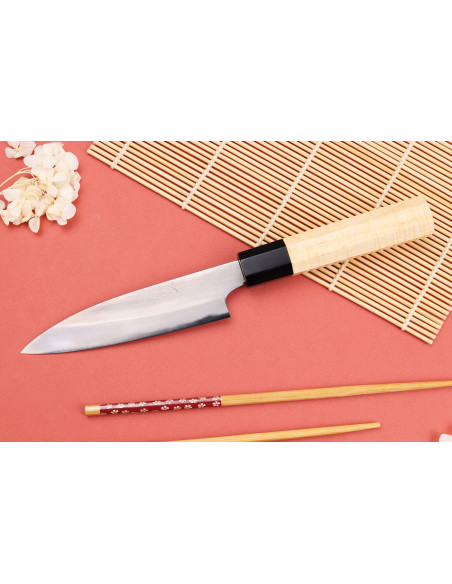
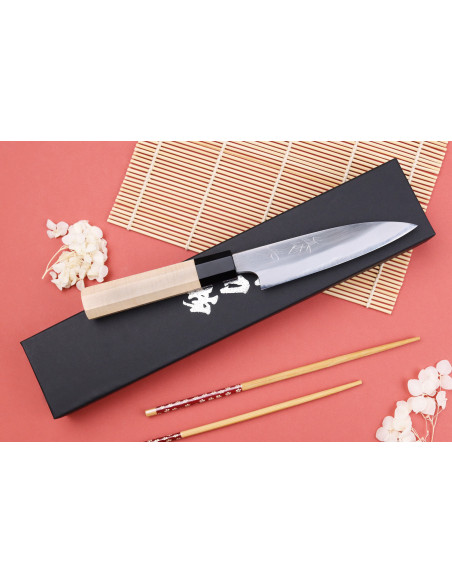
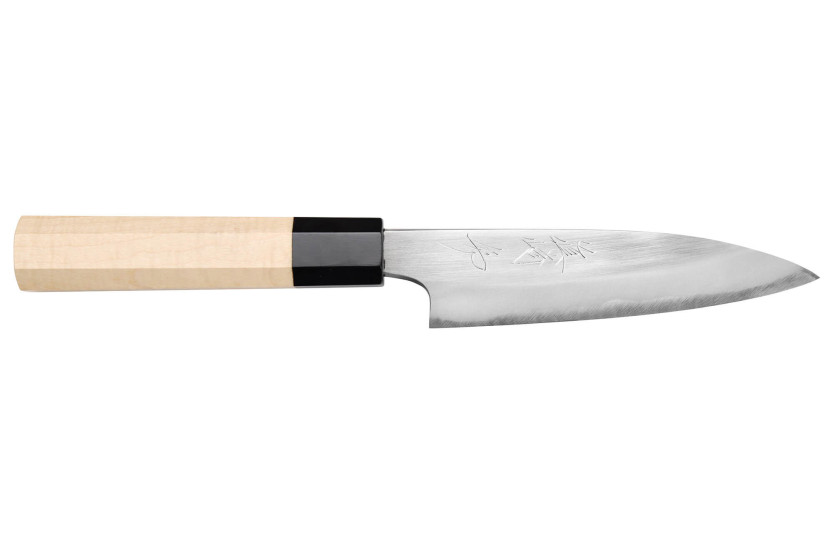
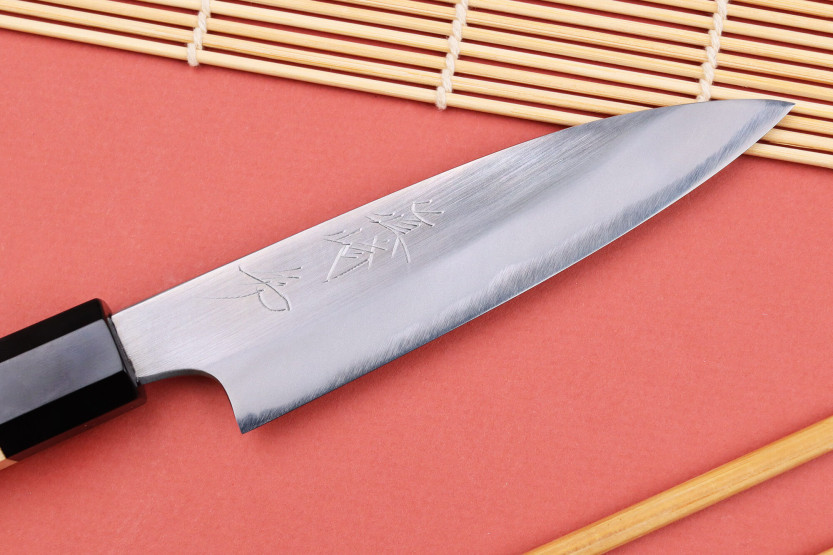
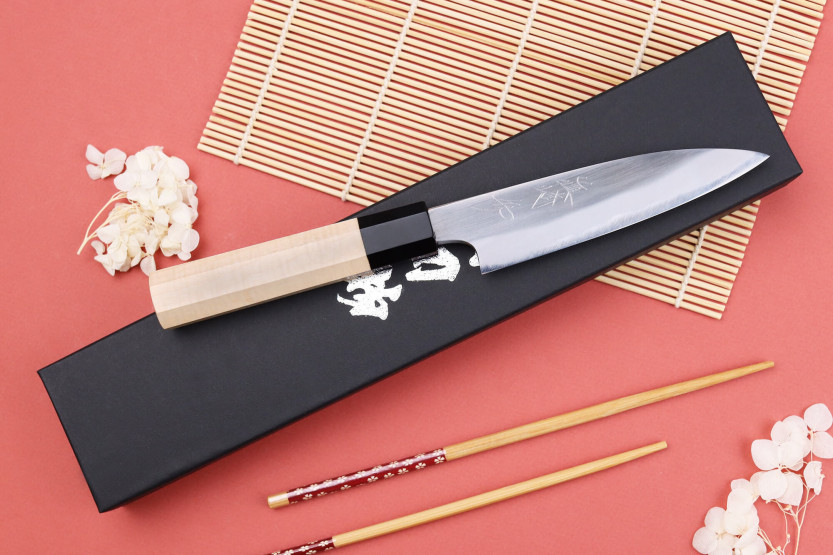
The Universal knife 's blade measures 12cm and features a Japanese structure known as San Maï. This term means "3 layers" and clearly shows how the blade is constructed. It consists of a core of rigid steel, which is wrapped on either side by a layer of softer steel. This construction enables the blade to offer perfect balance while protecting the steel core.
To manufacture the knife's core, Naoki Mazaki chose Shirogami #2 steel. This alloy, also known as White Steel 2, is renowned among chefs and is produced by Japanese supplier Hitachi, which supplies many blacksmiths. Shirogami #2 steel is known for its high purity: its highly uniform structure can be observed under a microscope. It is considered to be the closest steel to tamahagane, used for forging traditional swords. This alloy remains easy to sharpen, offering the possibility of obtaining an extremely precise cutting edge. With a carbon content of between 1.2% and 1.4%, it achieves almost 62 HRC on the Rockwell scale.
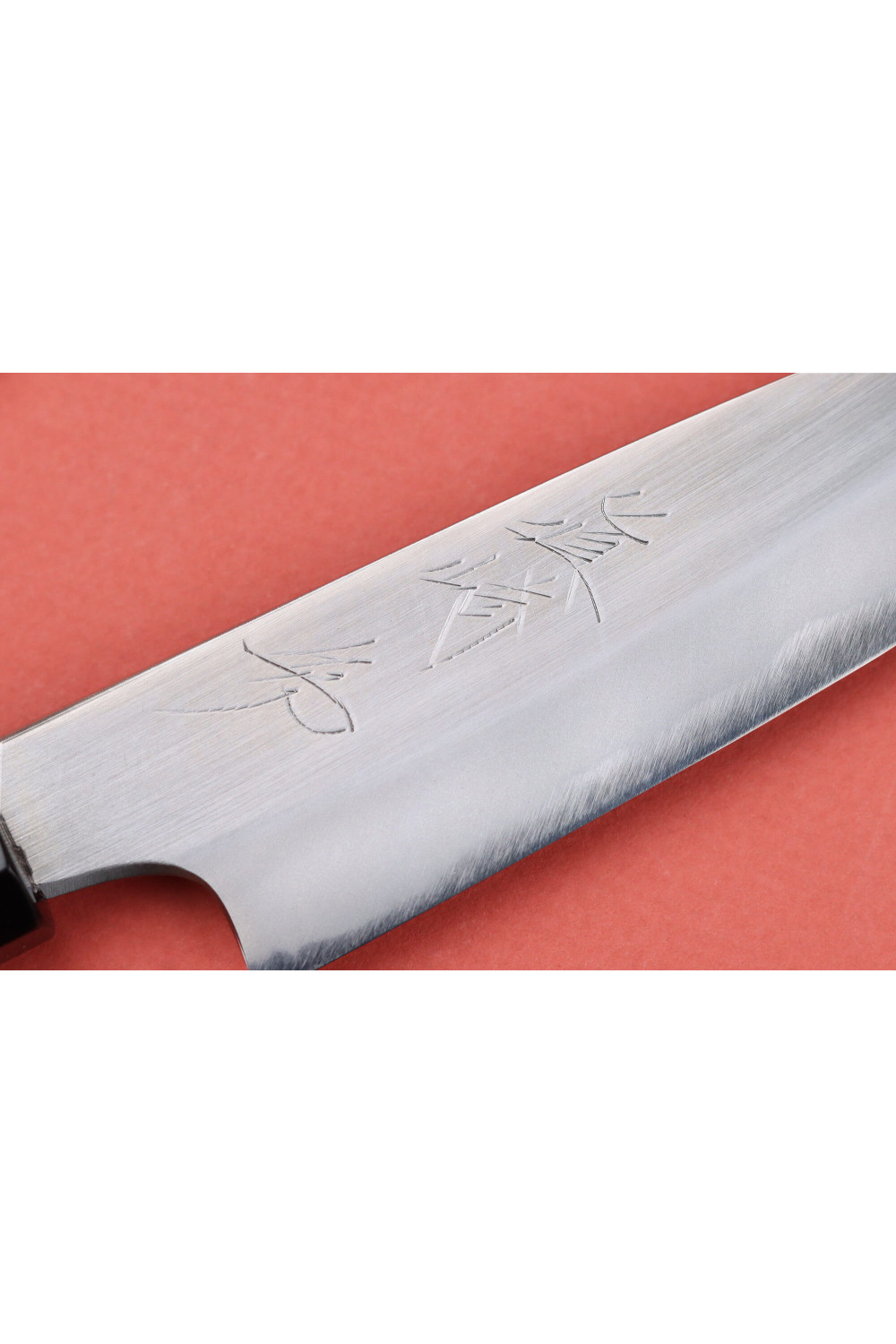
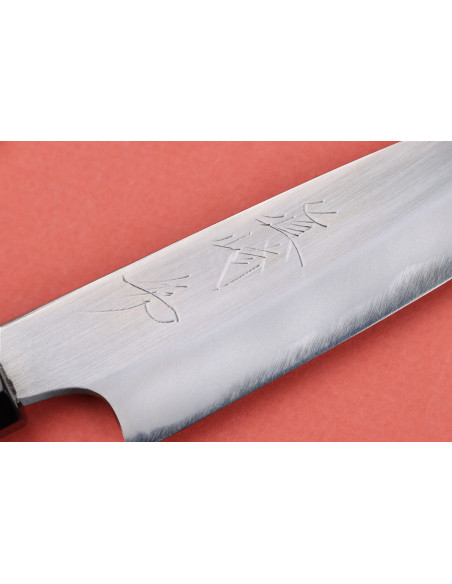
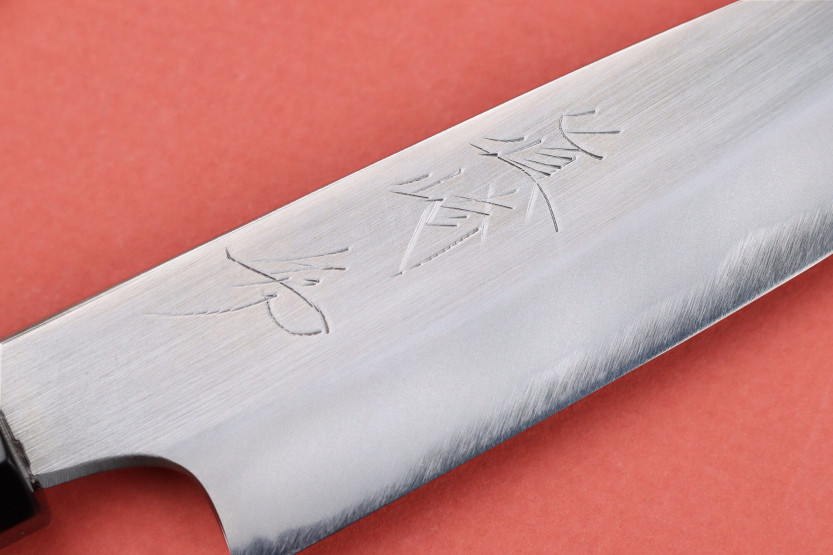
The blade's rigid core is wrapped in a layer of softer iron, which protects it by forming a folded sandwich on each side. This top layer adds flexibility to the core while preserving it. As a result, the knife becomes less sensitive to impact and breakage when cutting. The various superimposed layers of steel are visible along the cutting edge, creating a random wavy pattern.
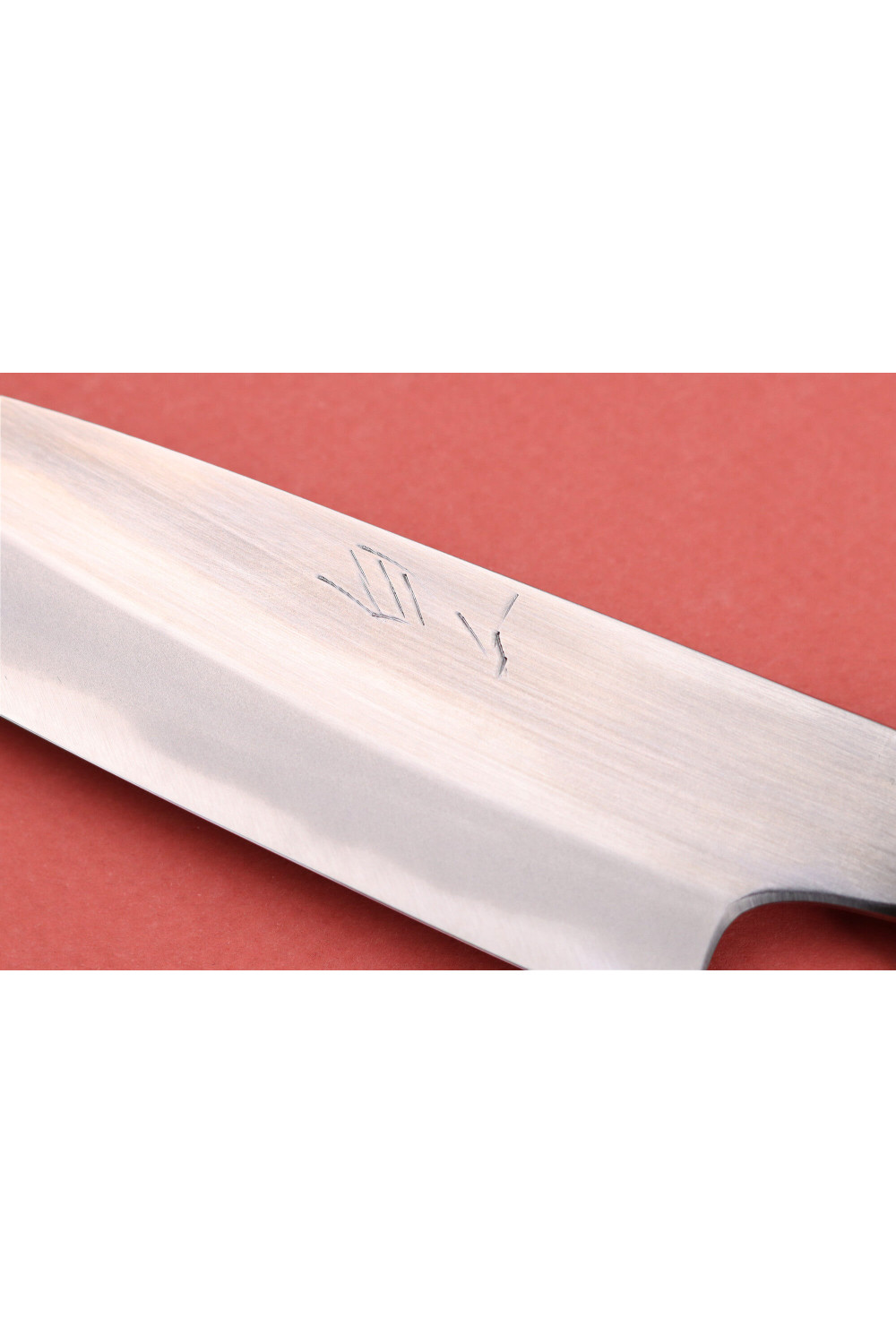
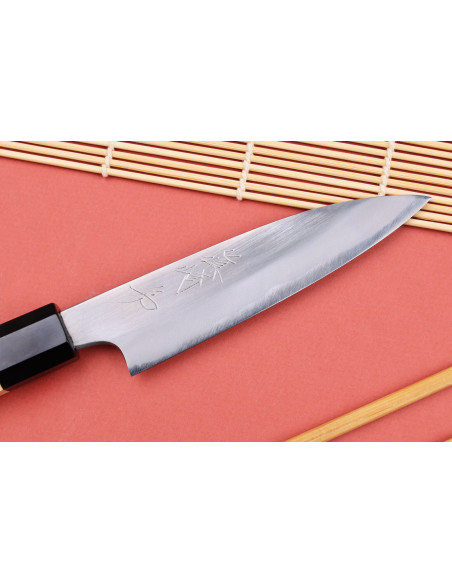
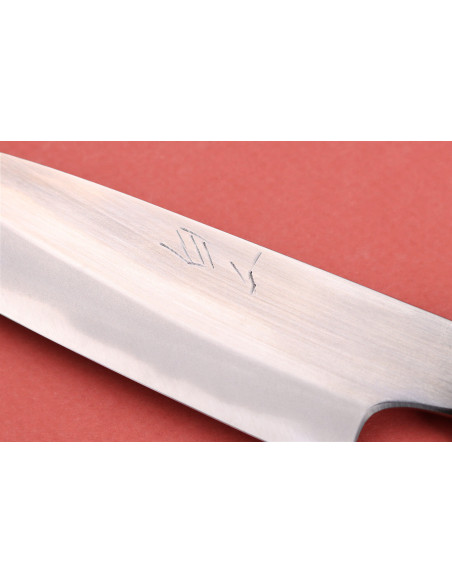
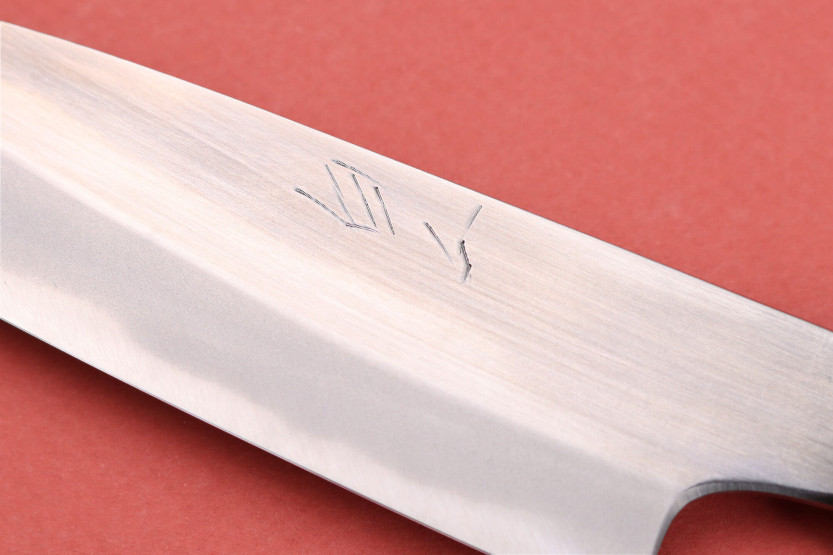
Beautiful, authentic kanji have been hand-engraved on each side of the blade, adding an extra touch of character. The blade has then been carefully hand-polished to an elegant mirror finish.
As Naoki Mazaki is also a master sharpener, he sharpened the knife himself using several whetstones to achieve an impeccable edge. In fact, whenever the need arises, we recommend sharpening your knife with a stone.
An original laurel wood handle
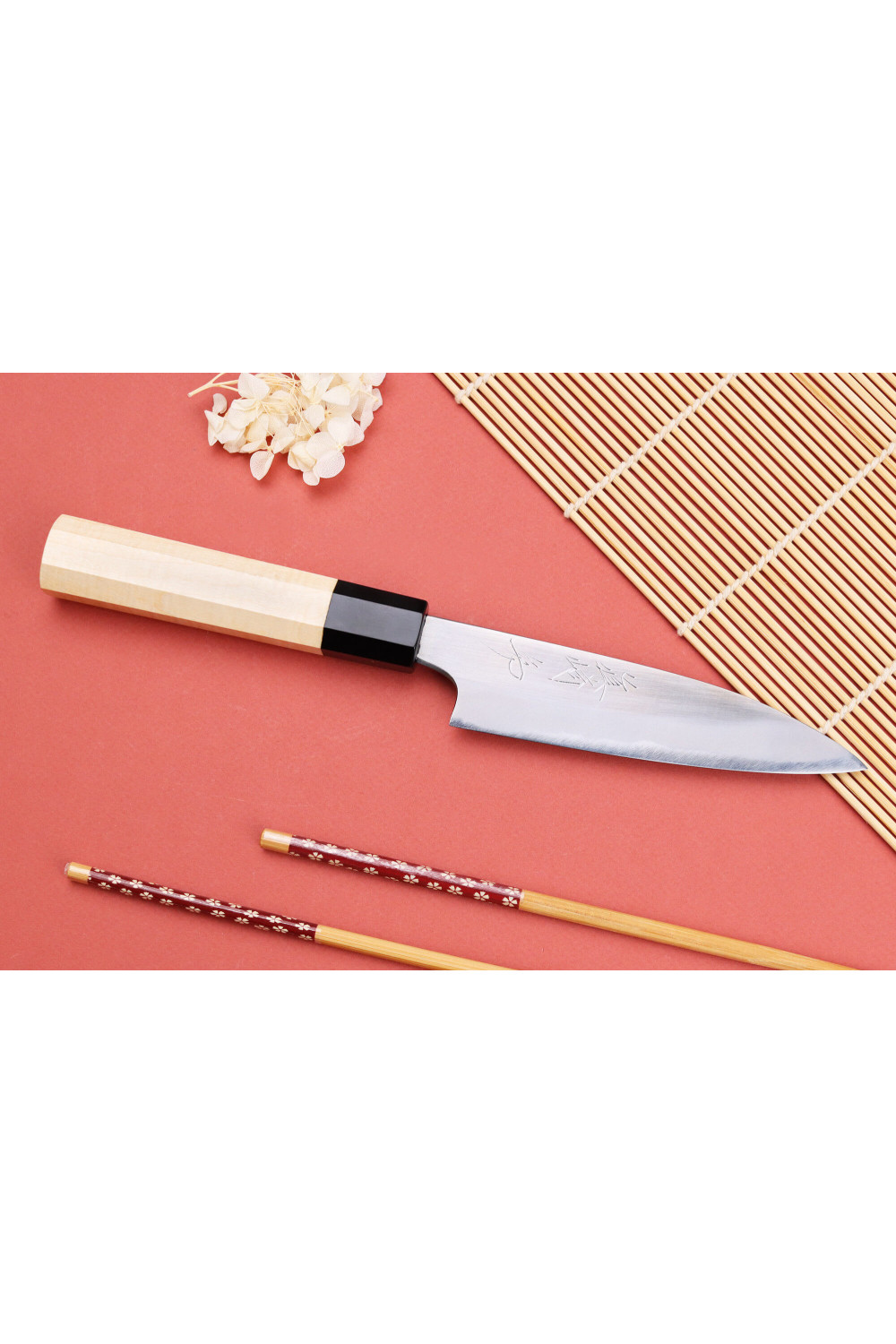
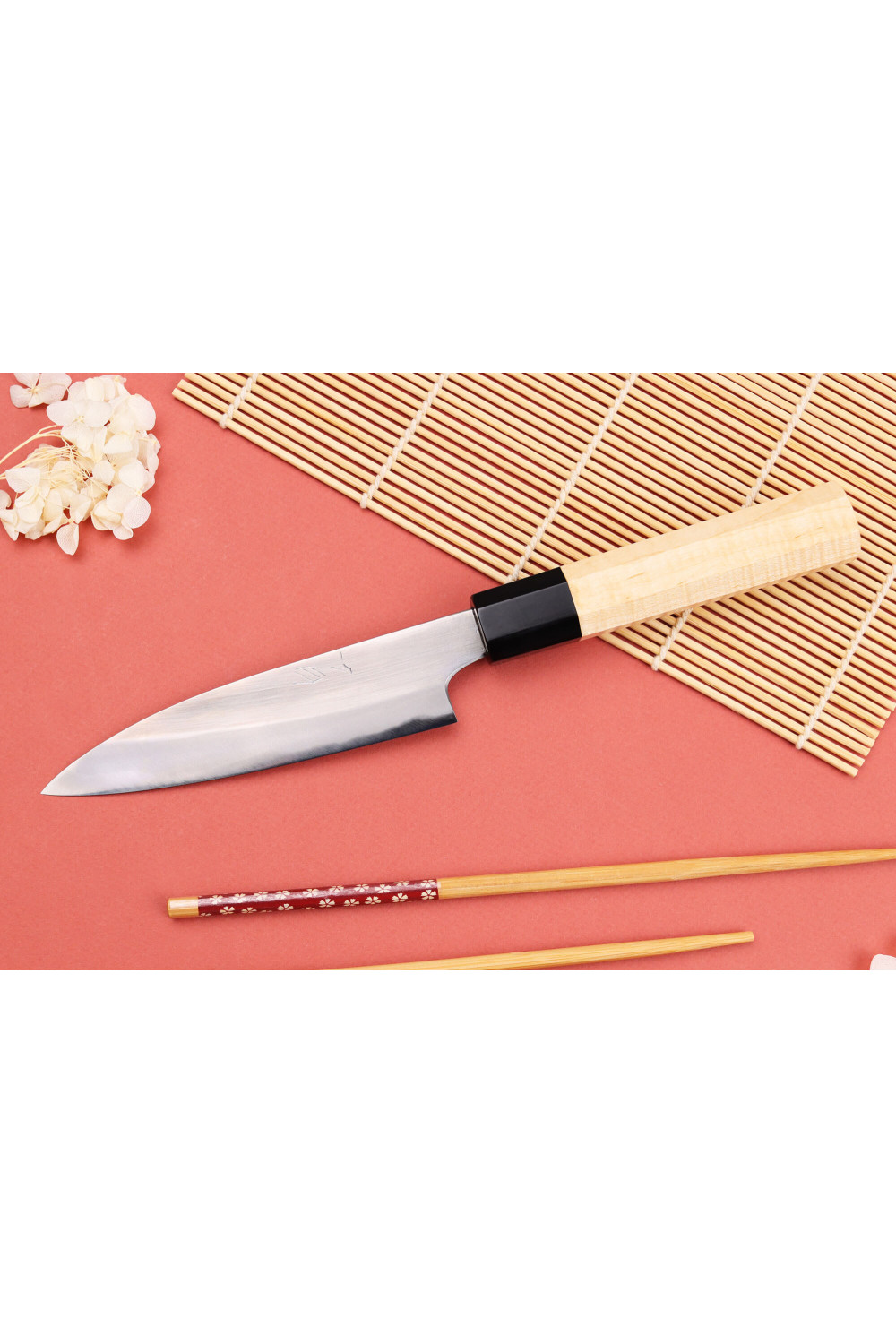
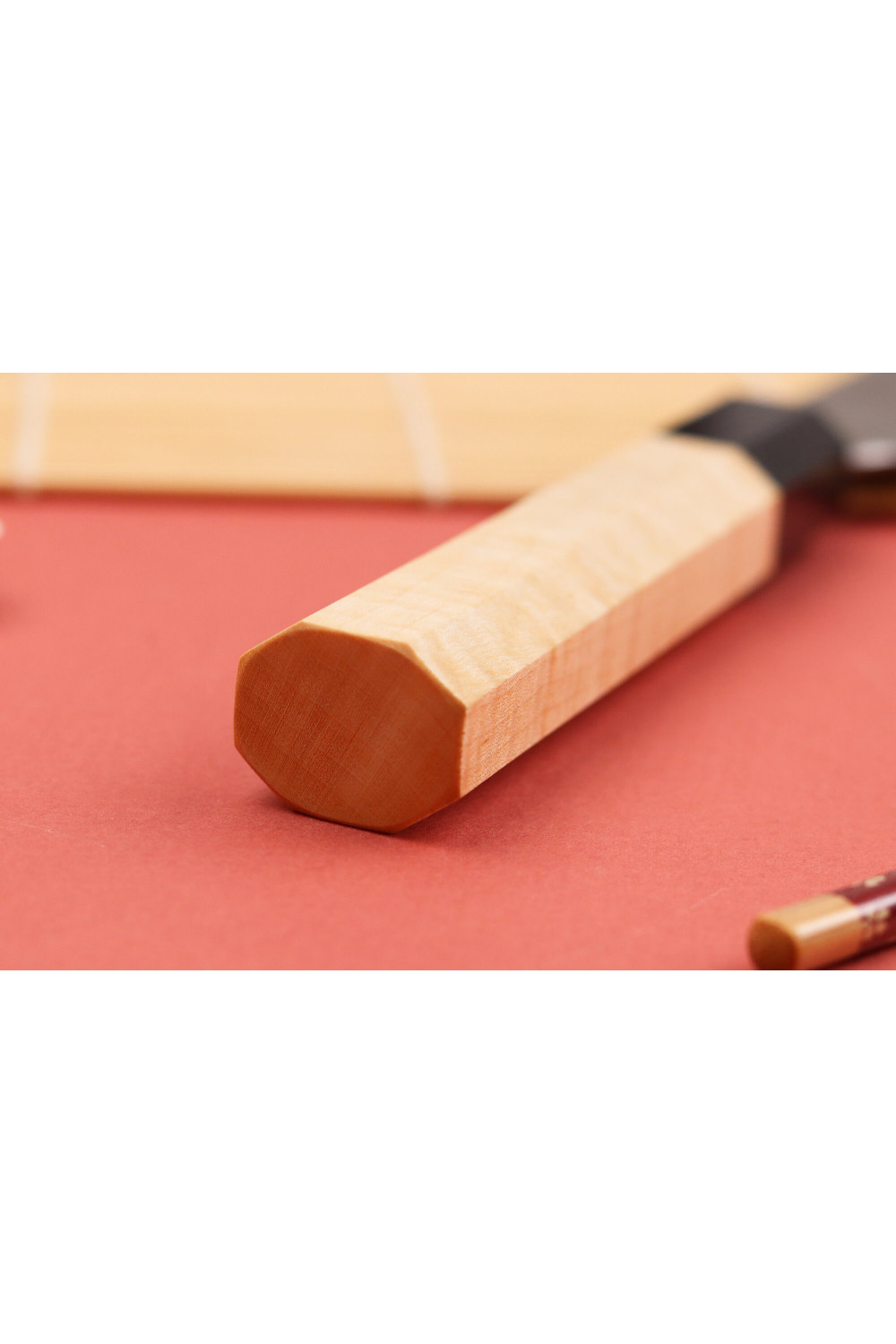
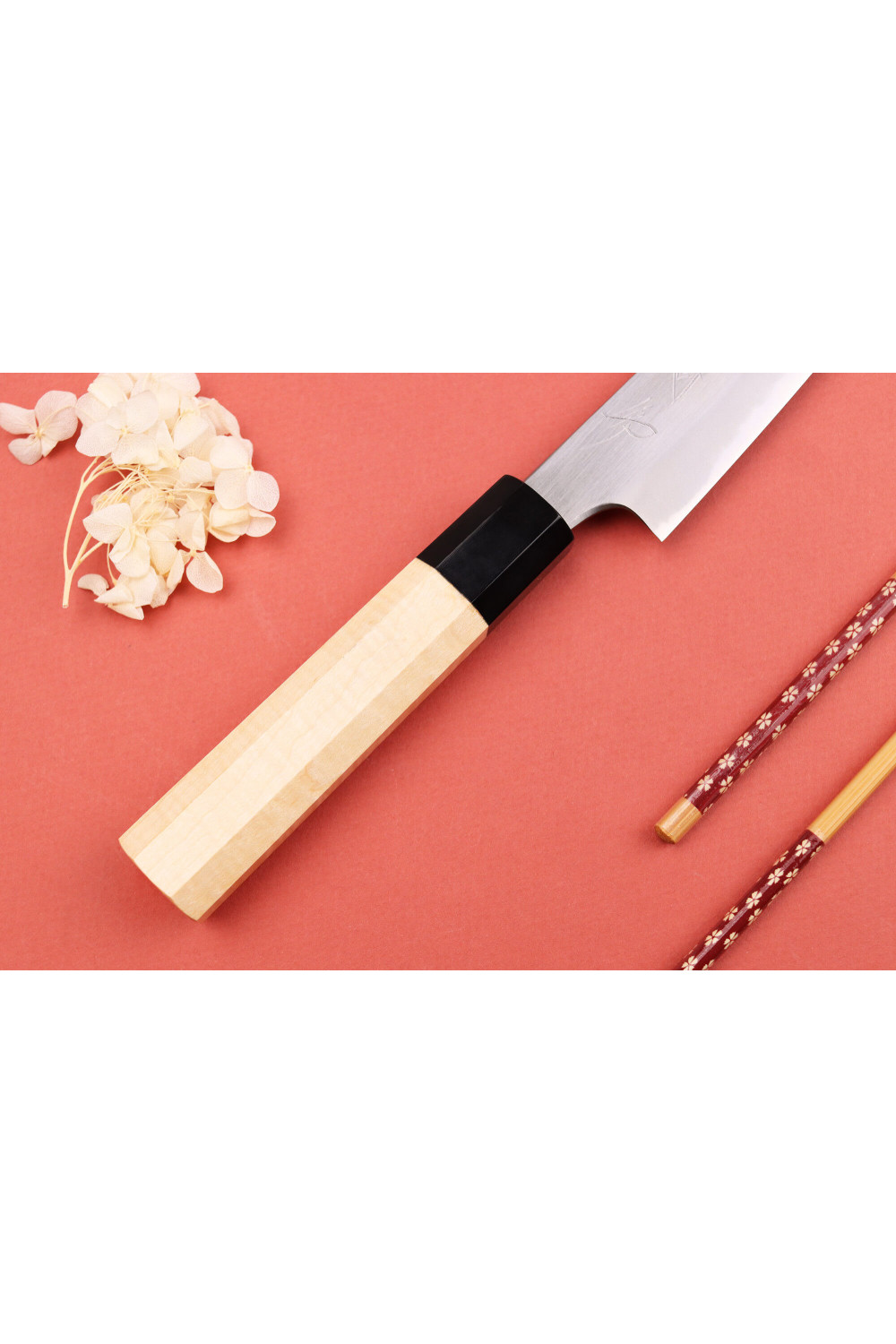
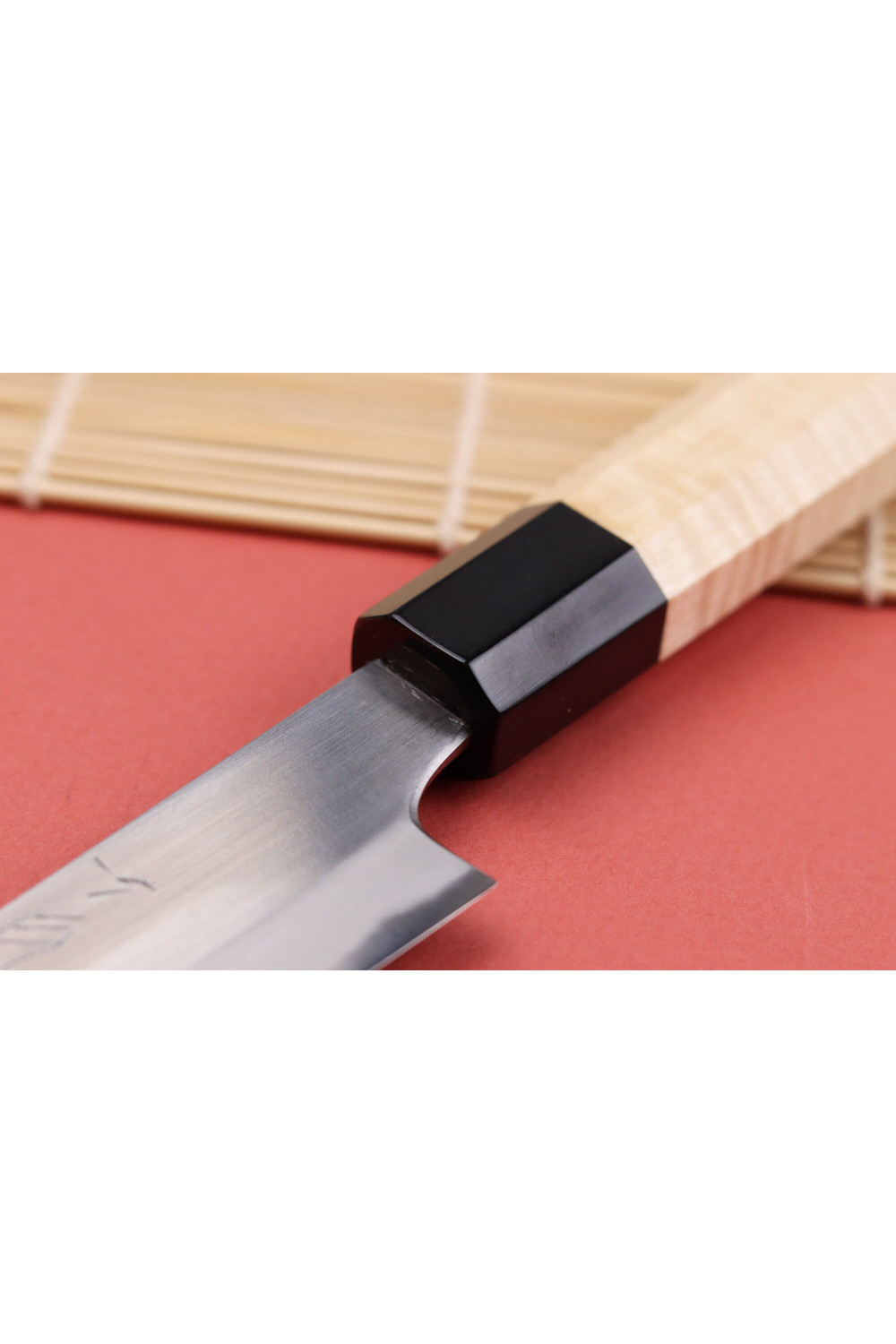
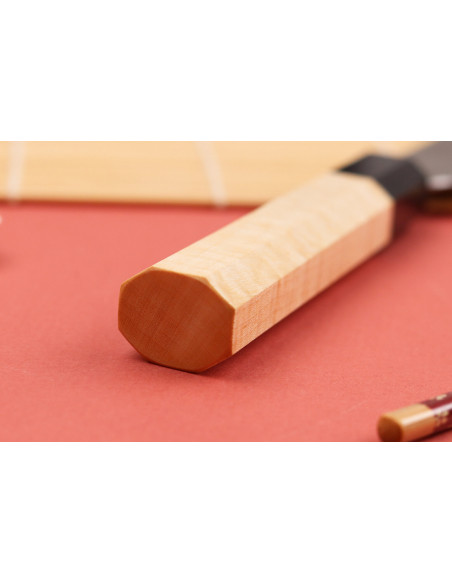
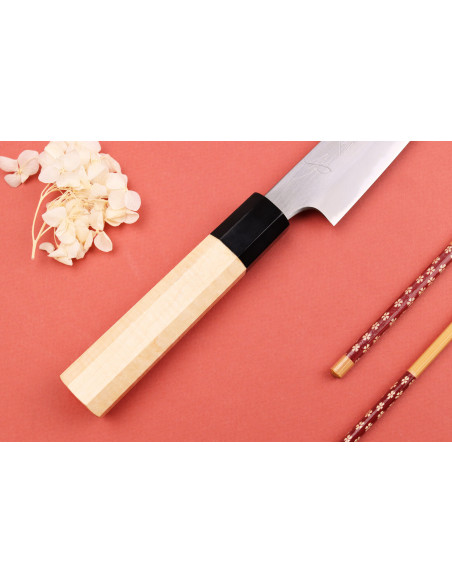
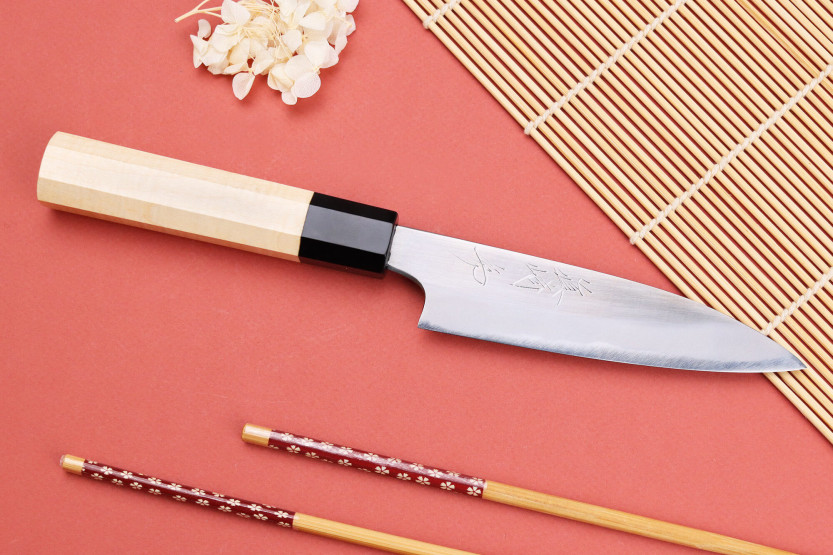
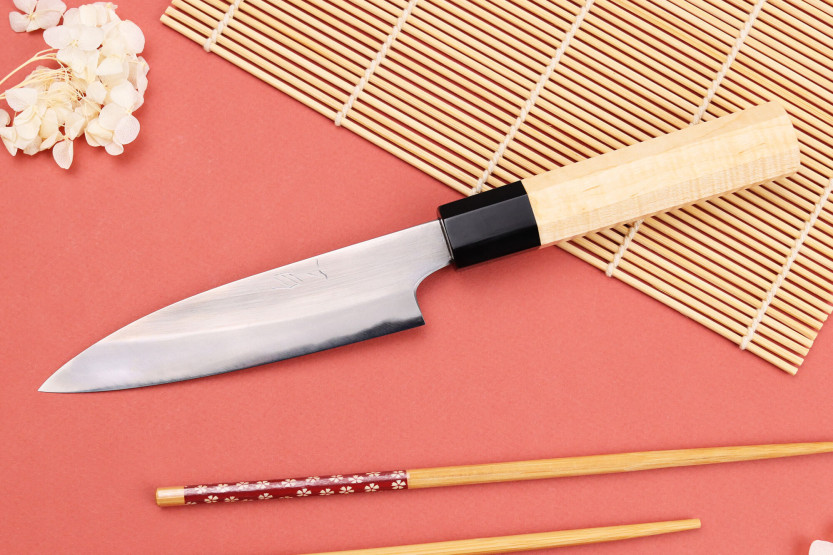
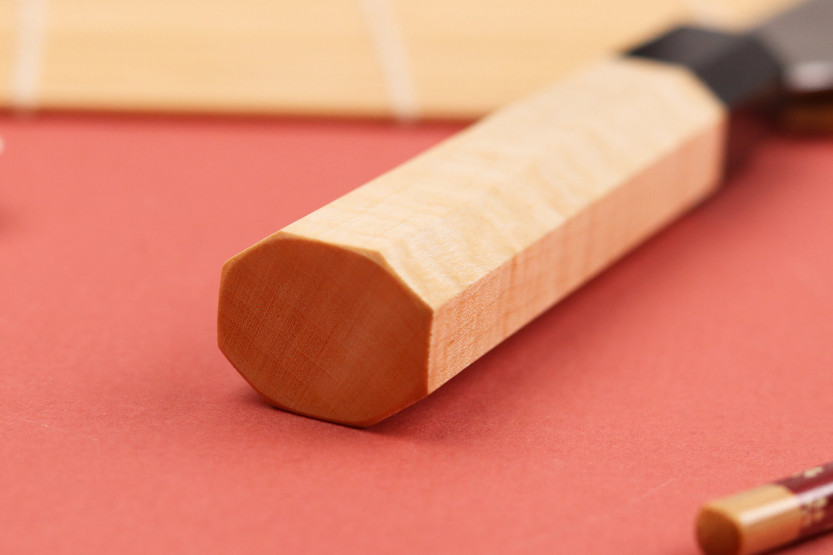
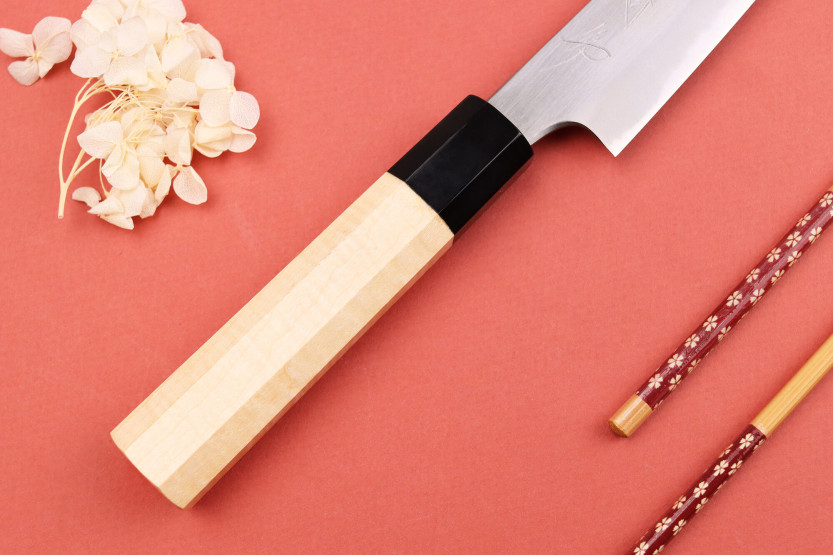
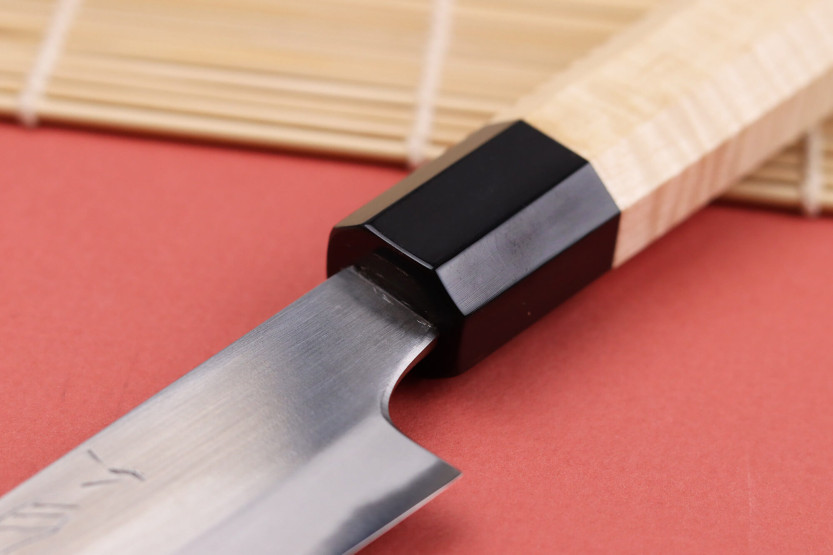
This handcrafted Japanese knife has an octagonal handle, making it very comfortable to hold and suitable for all cooks, whether left- or right-handed. This shape offers excellent maneuverability and is ideal for intensive cutting sessions.
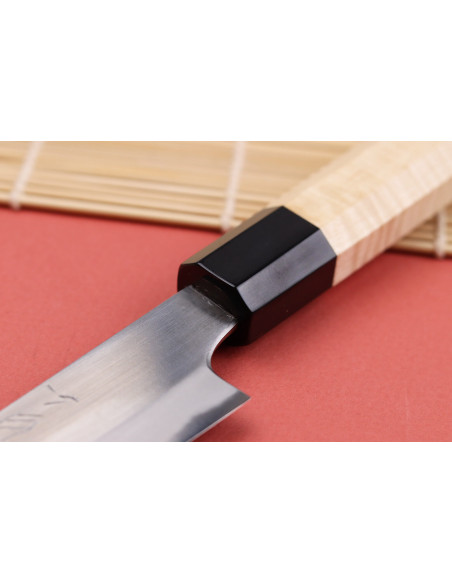
The handle is made from laurel wood, a species distinguished by its light color and subtle grain. Laurel is both strong and easy to work with, making it an ideal choice for knife handles. What's more, its soft texture is much appreciated. To complete the look, a black buffalo horn bolster has been added to the handle, creating harmony with the blade.
Finally, wood pulp has been used to fill the spaces where the blade fits into the handle. This ensures a perfect seal, preventing water from penetrating and cut food from accumulating inside.
Naoki Mazaki's work
Your handcrafted knife was forged by Naoki Mazaki san, a young Japanese blacksmith. He practises his craft in his own workshop in Japan's Niigata province. His unique journey is worth recounting: when he was young and undecided about his future profession, he decided to travel the length and breadth of Japan by motorcycle to find his calling! When he stopped in Sanjo, Niigata province, he was captivated by the work of the local blacksmiths, and it was then that he decided to make blacksmithing his profession.
After five years' training with the Yoshikane brand, Naoki Mazaki decided to set up his own workshop, focusing on traditional techniques. Today, he makes his own knives using mainly Shirogami 2 and Aogami steels, to which he gives a traditional finish, giving his creations an authentic look that is particularly close to his heart.
The blacksmith's reputation is such that it takes an average of 2 years to obtain one of his knives! This just goes to show the quality of his craftsmanship.
How do I care for my Japanese knife?
Your top-of-the-range Japanese knife is made from high-quality materials. Careful maintenance is essential to preserve it.
As the blade contains a high carbon content, it's important to clean it by hand only, avoiding the dishwasher and soaking it in the sink. Use a non-abrasive sponge and mild soap, taking care not to wet the knife handle. After washing, wipe the knife dry immediately to remove all traces of water, then store it in a dry place.
It's important to note that even if you take impeccable care of your knife, it's normal for the blade to change color slightly over time. This is due to the presence of carbon in the alloy, which makes it highly reactive to external elements such as humidity or the acidity of certain foods. To protect the blade, a littleoil can be applied from time to time.
Find Naoki Mazaki knives on our site!




 By buying this product you can collect up to