The art of cutting at its finest
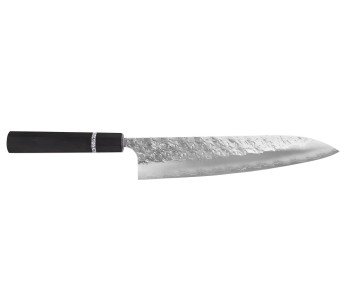
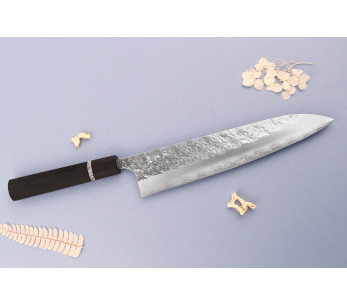
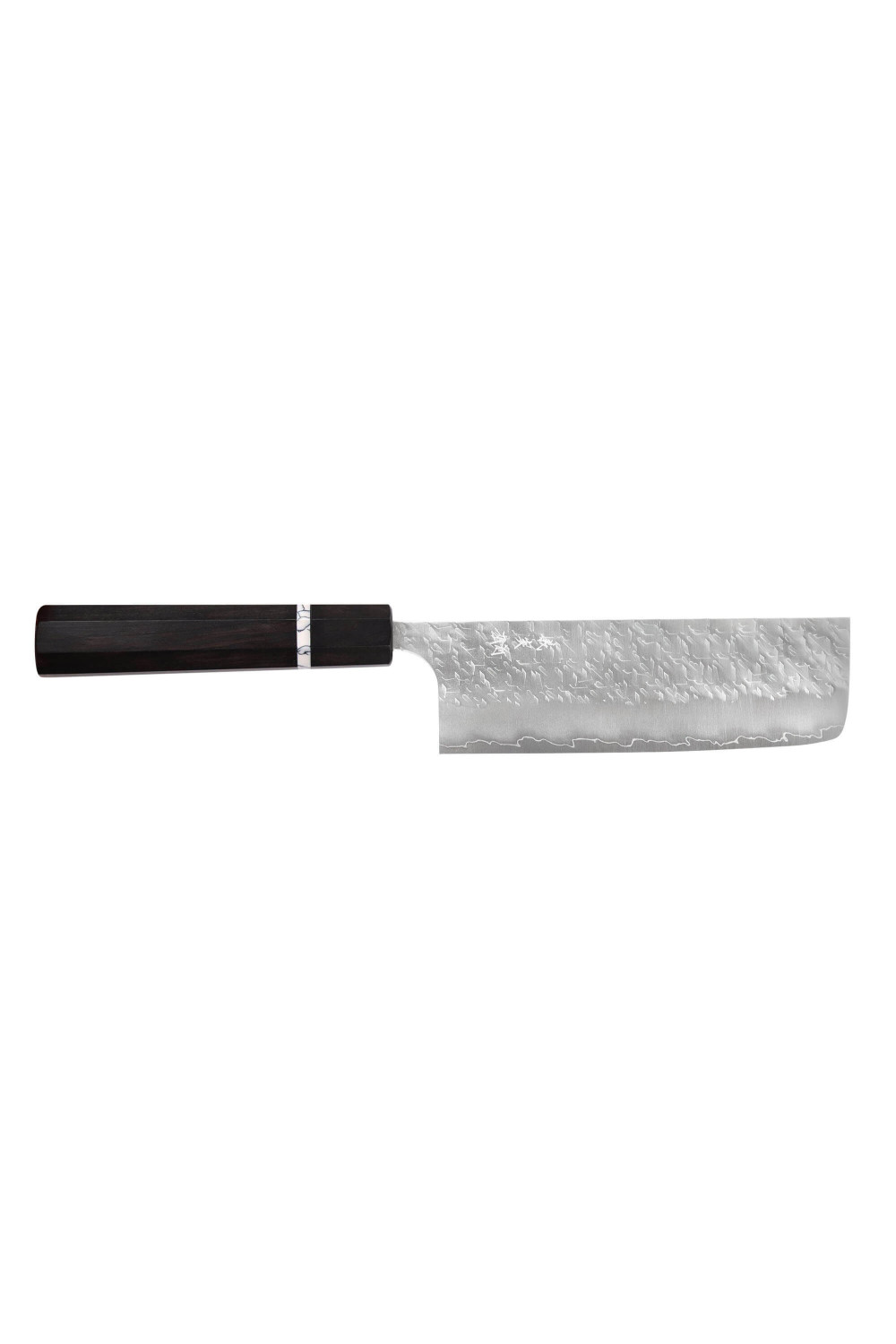
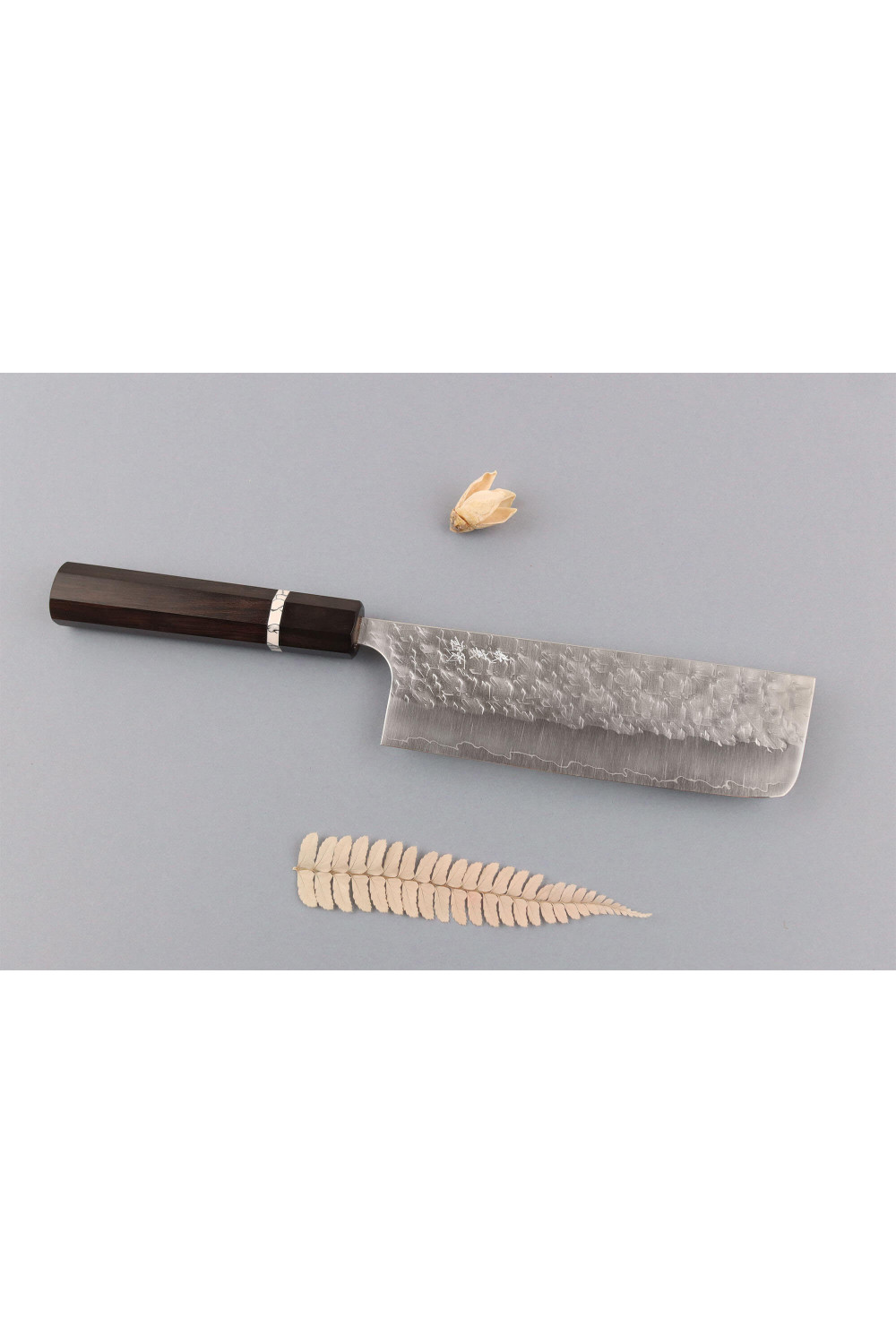
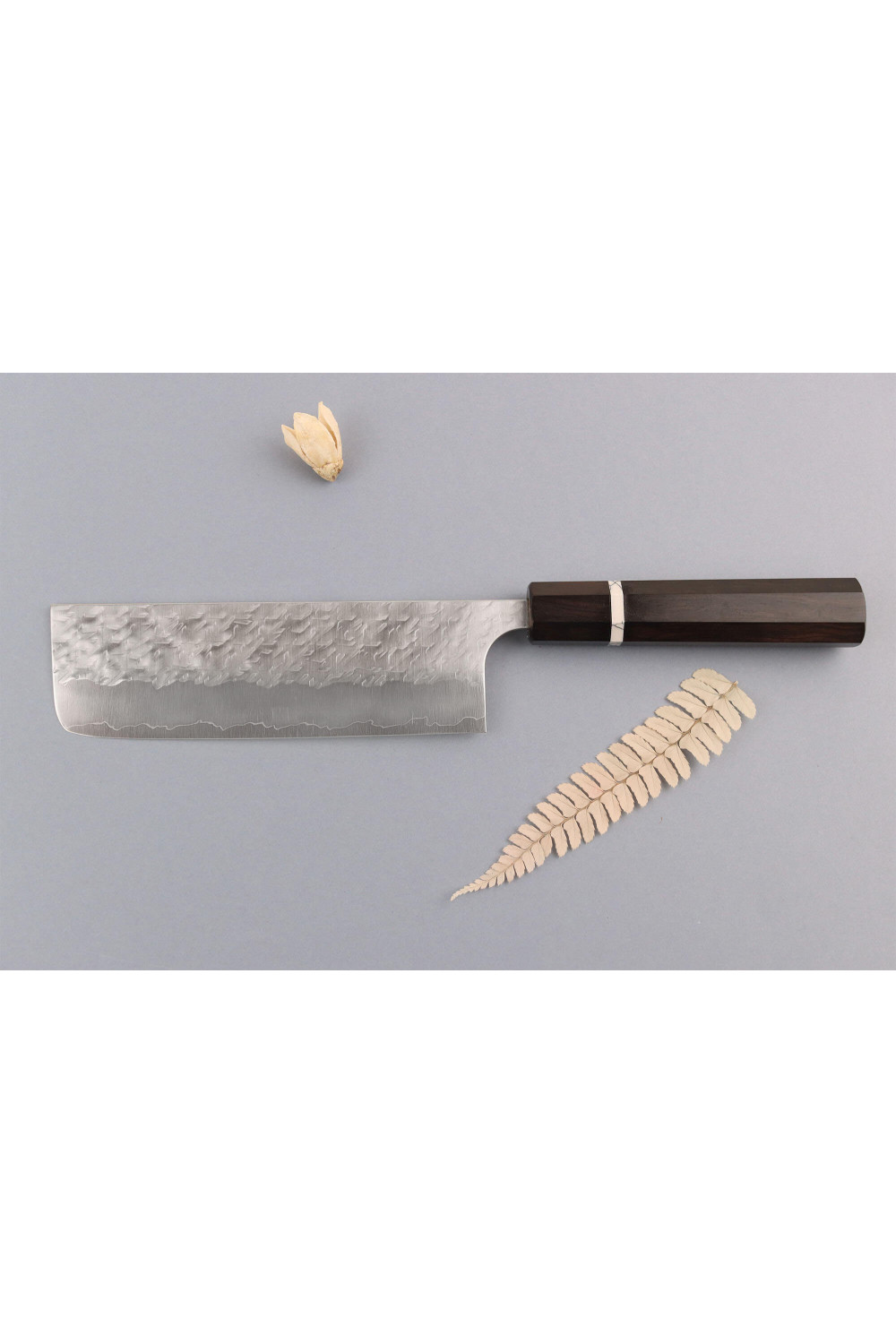
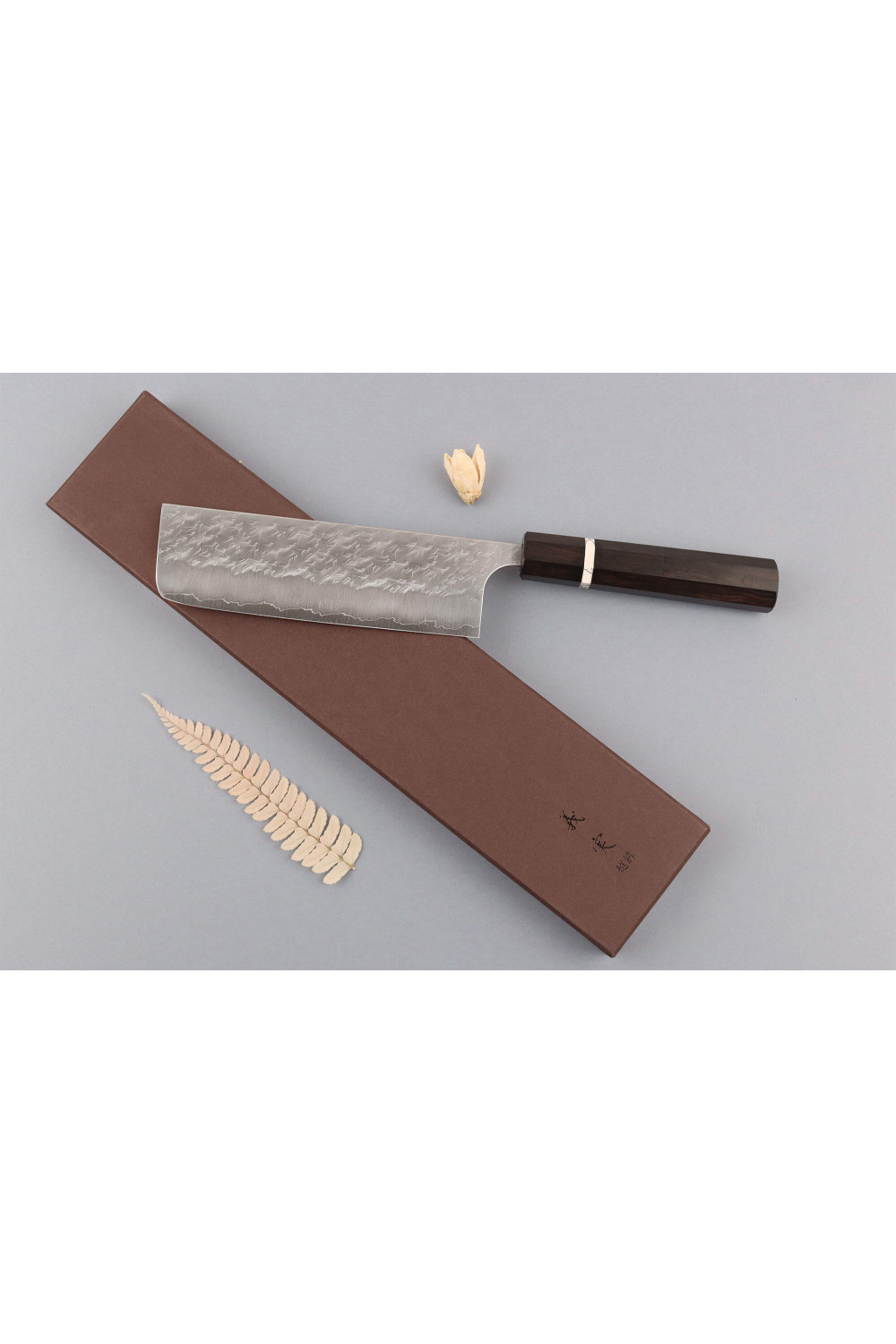
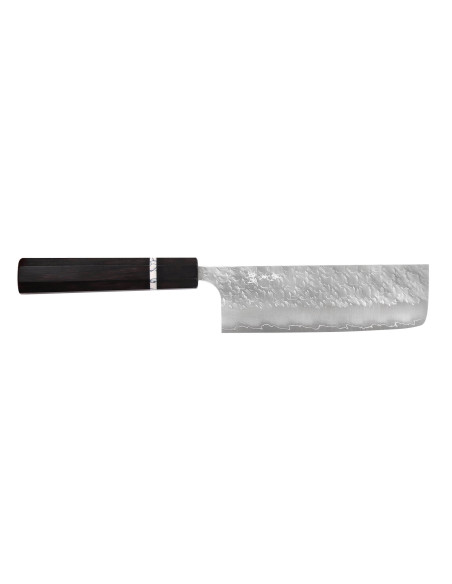
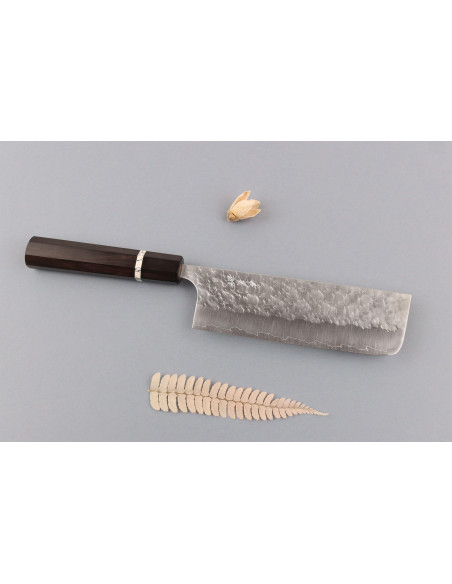
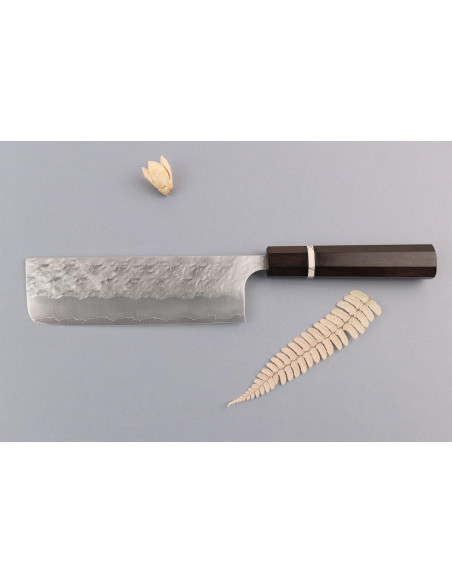
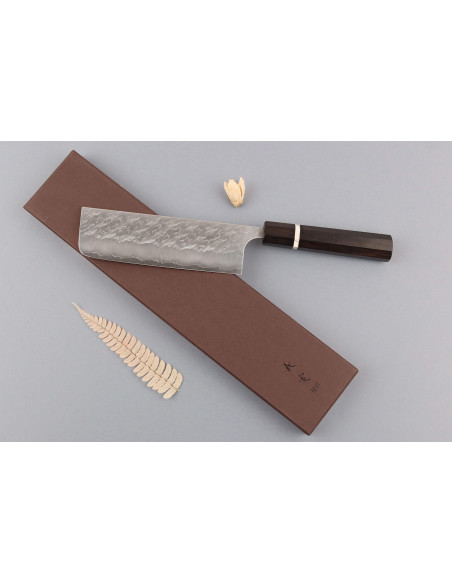
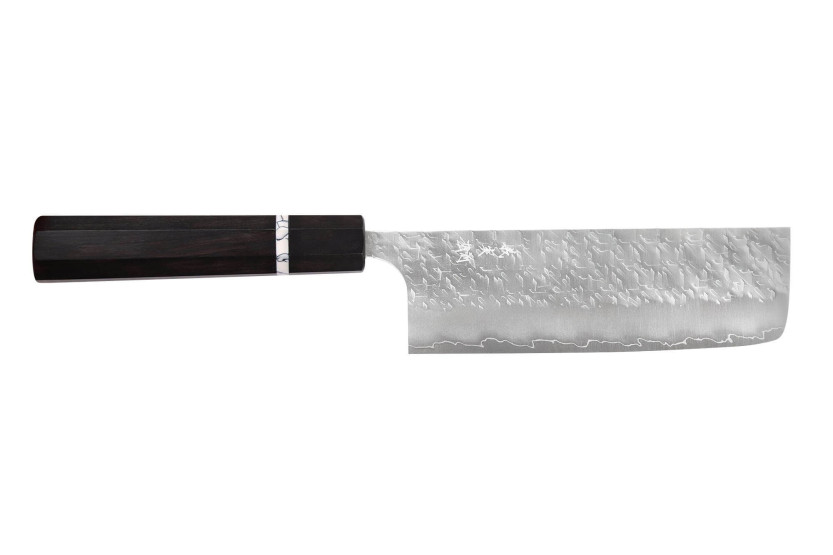
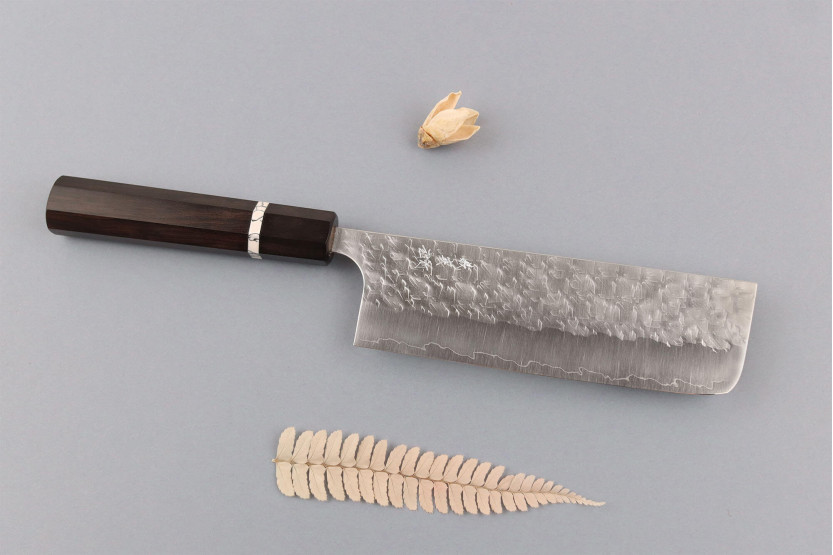
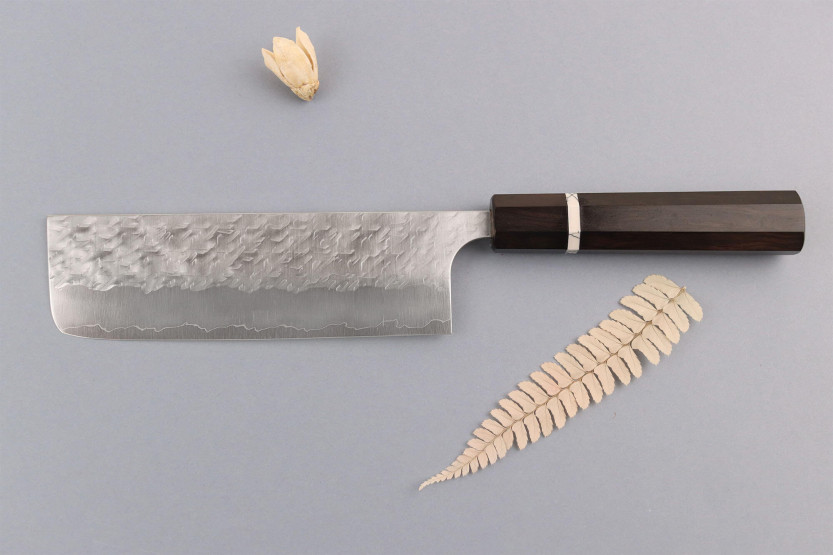
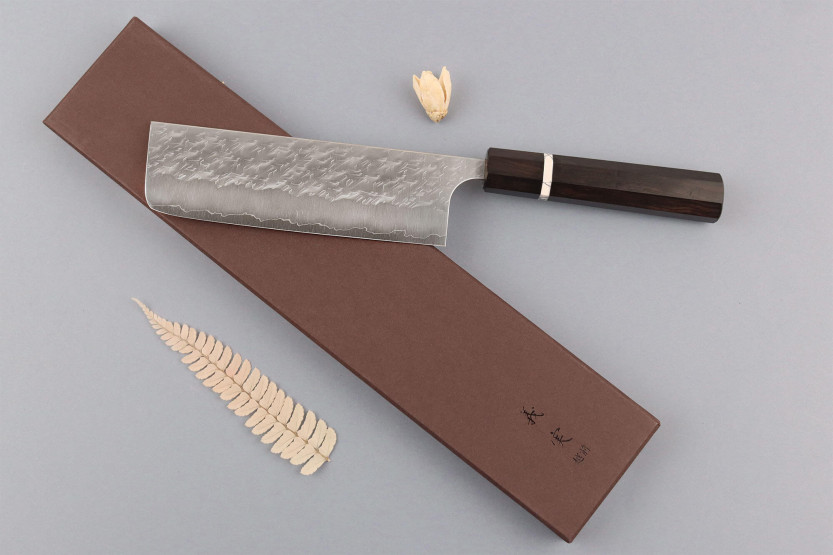
Let yourself be seduced by the raw elegance and precision of this handcrafted Japanese nakiri knife by Yoshimi Kato. Made entirely by hand in the legendary cutlery village of Takefu, this model embodies all the richness of traditional Japanese know-how. Designed for cutting vegetables, it offers exceptional cutting performance combined with original, elegant aesthetics.
Yoshimi Kato, master blacksmith from Takefu
Yoshimi Kato is the successor to a great line of Japanese blacksmiths. He forges his knives in the famous cutlery village of Takefu, a veritable sanctuary for artisanal Japanese cutlery located in Fukui prefecture. Here, several master blacksmiths work together to perpetuate the traditional techniques handed down for generations, never to be forgotten.
Trained by his father-in-law, Hiroshi Kato, he took over the family workshop in 2013. Since then, he has been forging his own ranges with a constant demand for quality and a marked attention to detail. Today, he is recognized for the precision of his blades, the aesthetics of his patterns and the finesse of his finishes.
Performance and precision at the heart of the SG2 steel blade
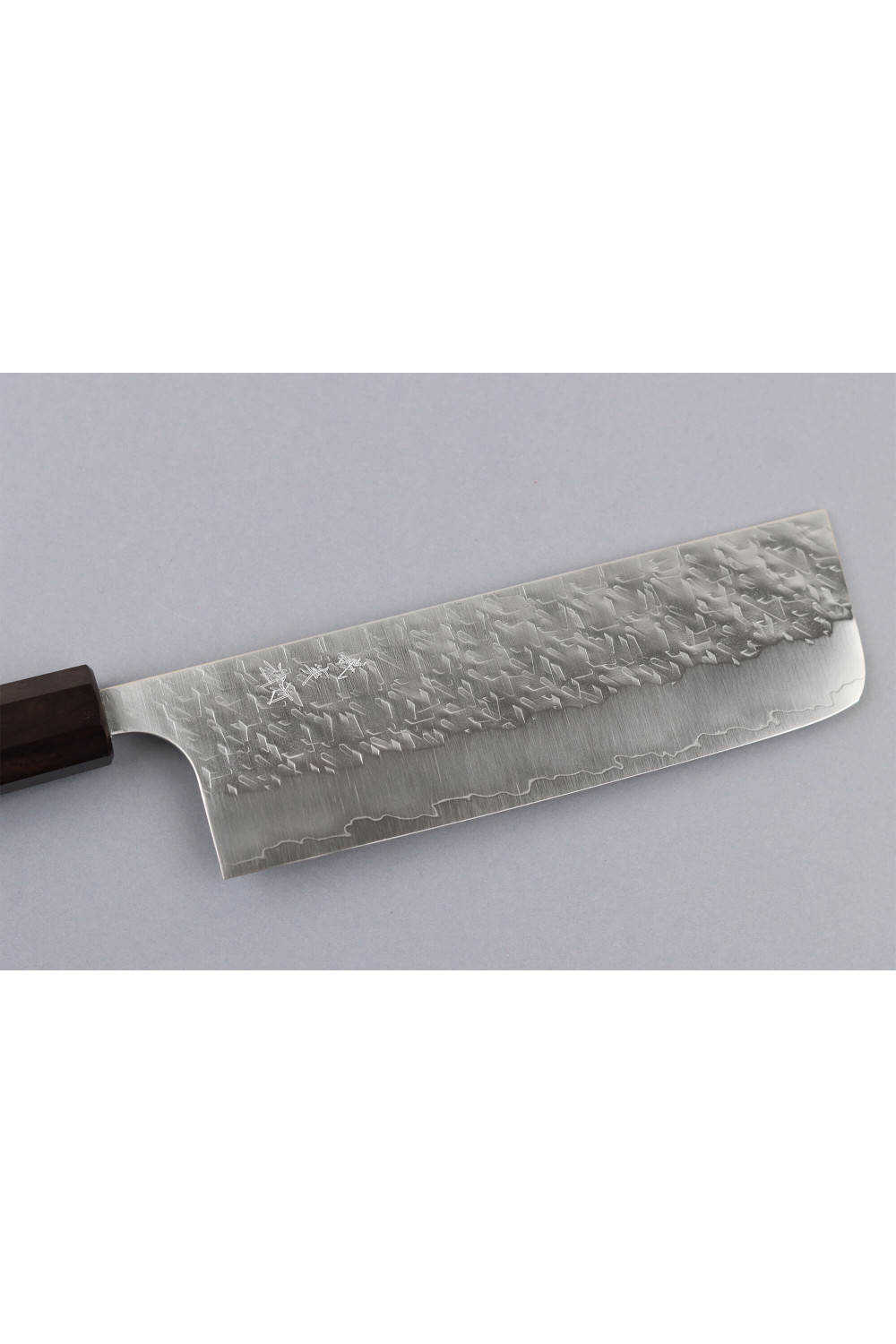
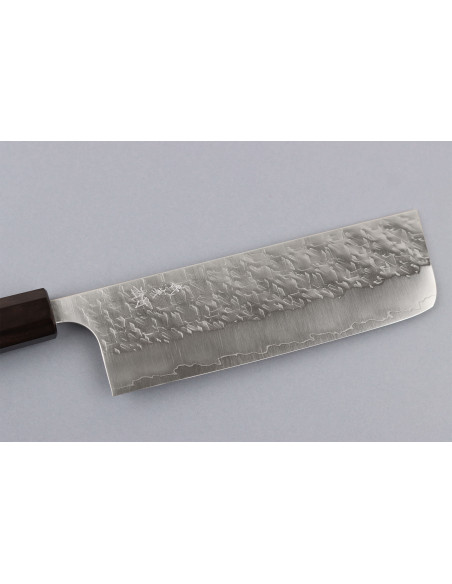
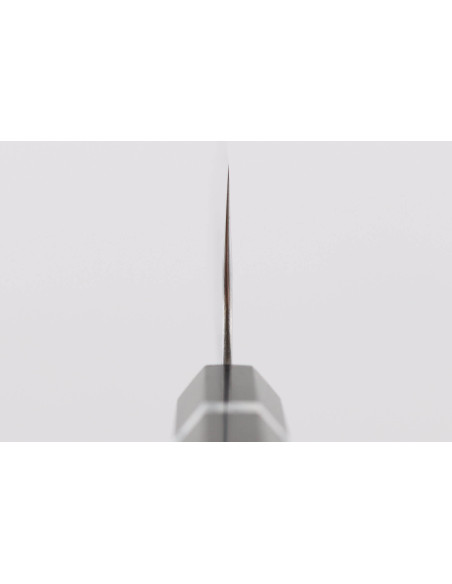
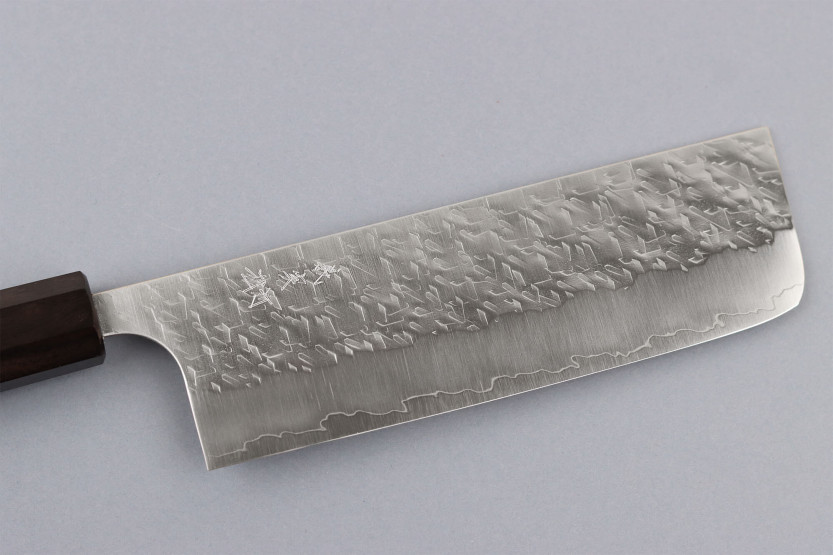
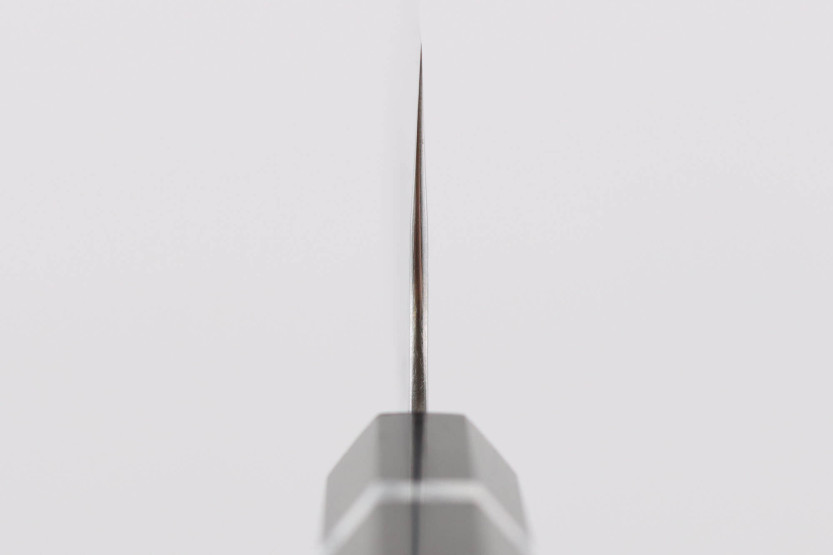
The 16.5cm blade is forged using the San Maï method, a traditional Japanese technique in which a hard core is sandwiched between two layers of softer steel. This 3-layer blade guarantees exceptional hardness (thanks to the core) while retaining a certain suppleness (thanks to the surrounding soft steel). And, of course, a knife with a "hard" blade has a much more effective cutting edge over time.
The core is made ofSG2 powdered steel, a high-end alloy rich in carbon (1.3%) renowned for its high stability. This steel achieves a hardness of 63 HRC on the Rockwell scale, synonymous with a long-lasting, precise cutting edge that requires little sharpening.
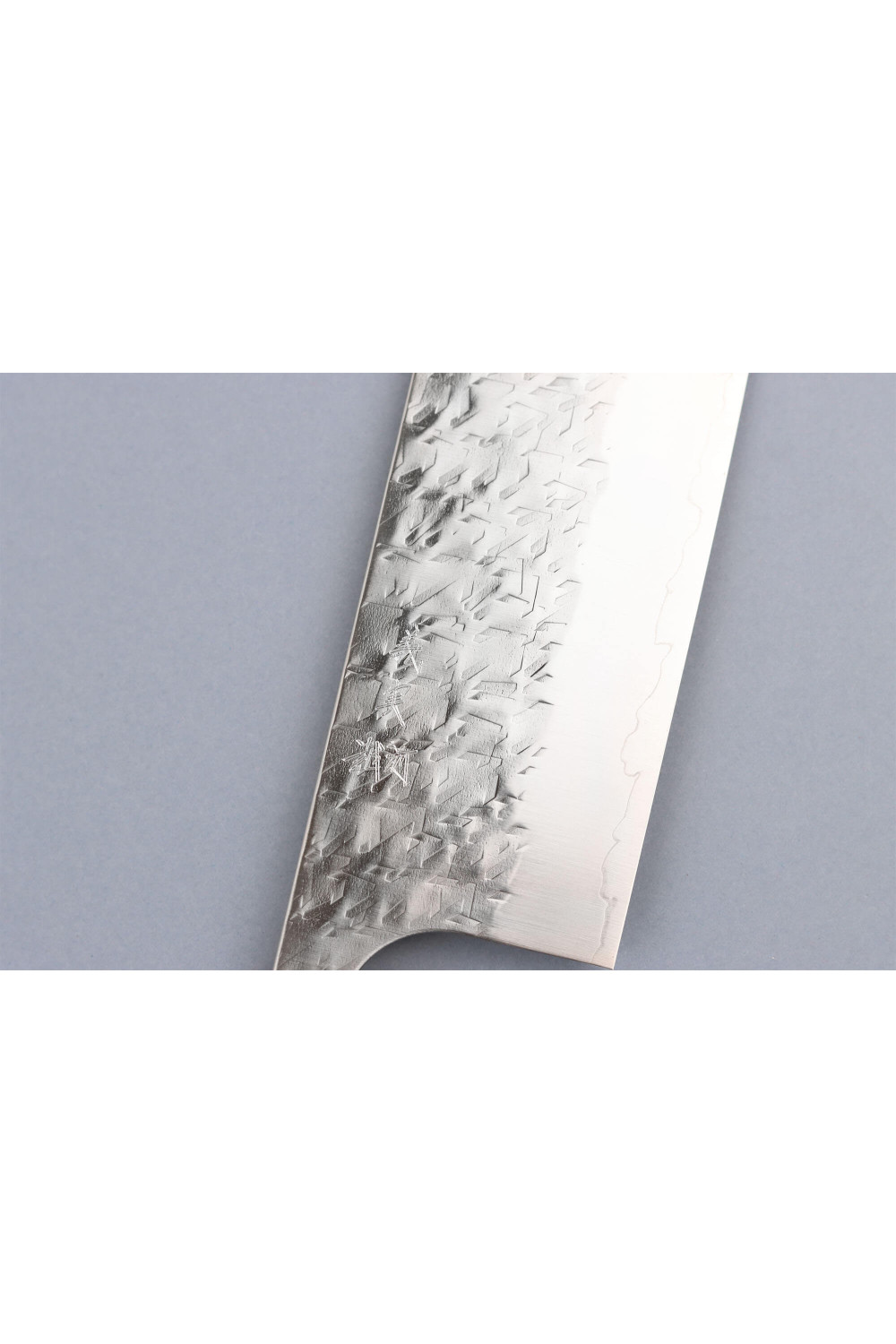
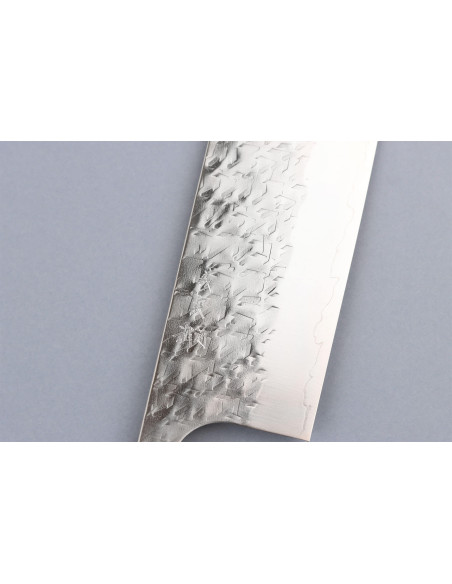
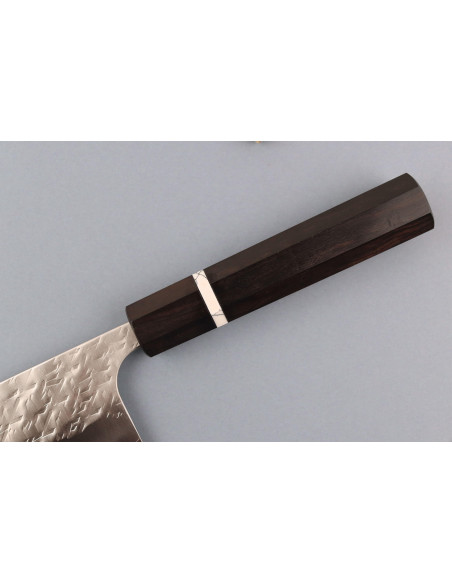
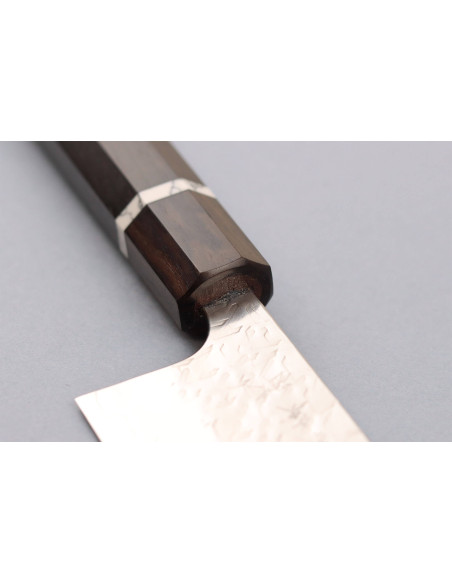
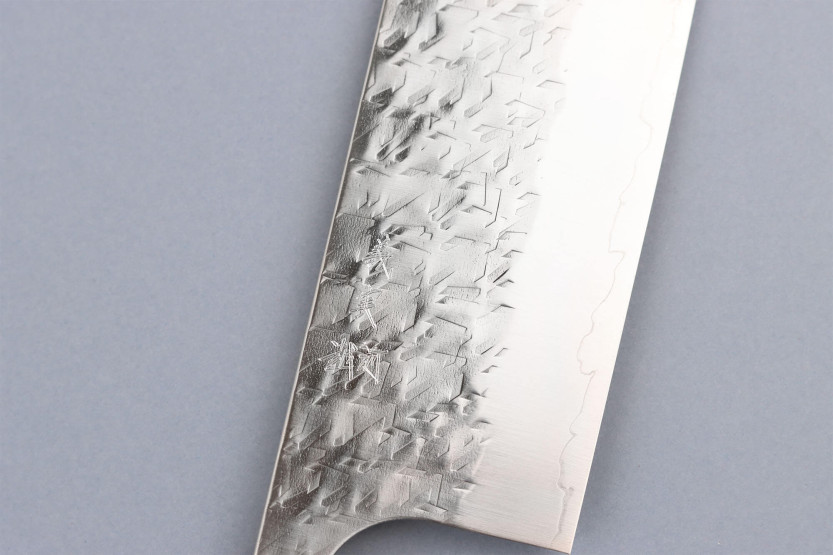
The hammering is both aesthetic and functional: each knife is embellished with a unique pattern that helps food to glide more smoothly by limiting its adherence thanks to microscopic air pockets. What's more, hammering is a real advantage in terms of aesthetics. Finally, a polished finish enhances the overall appearance, while facilitating cleaning.
A noble, balanced grip
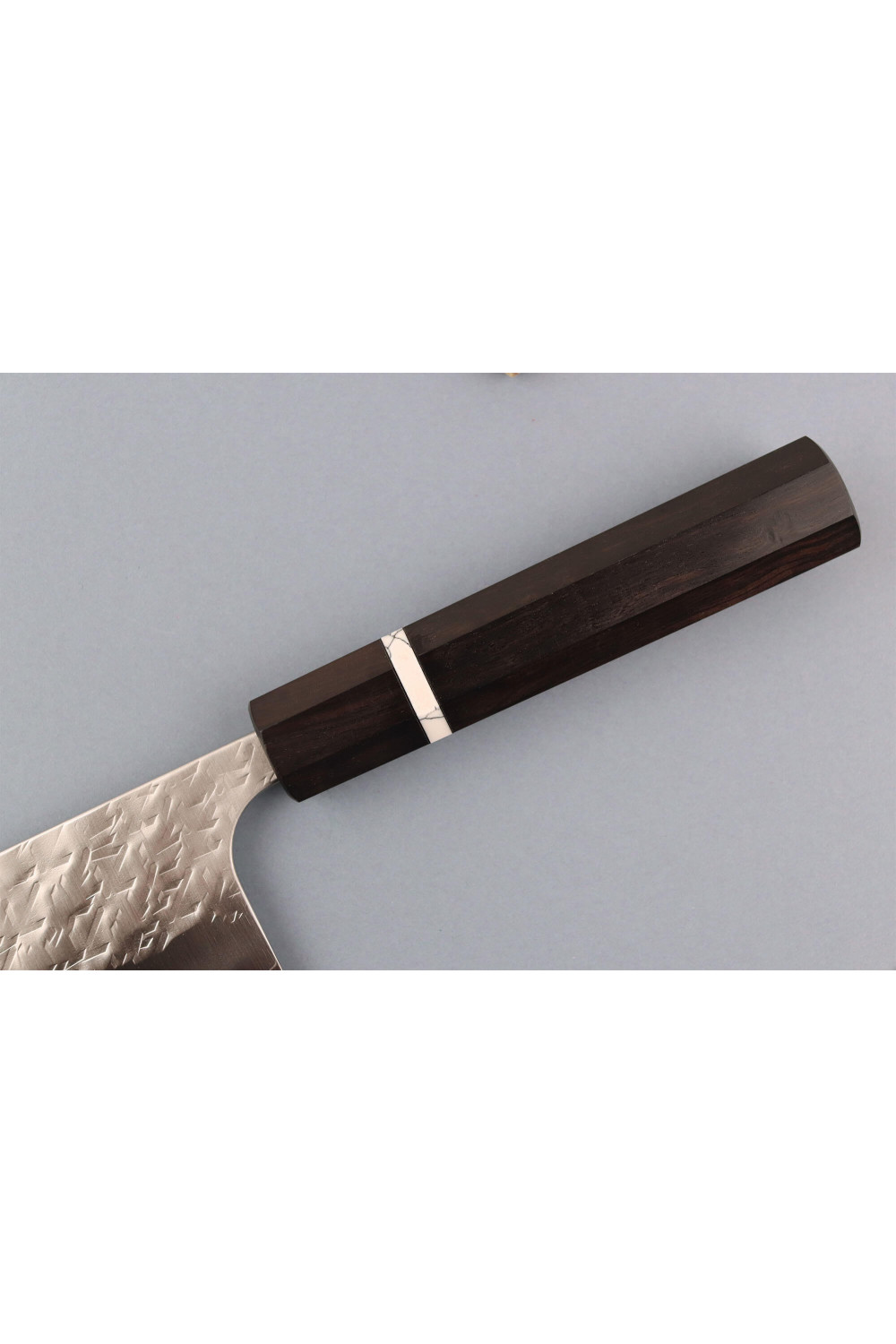
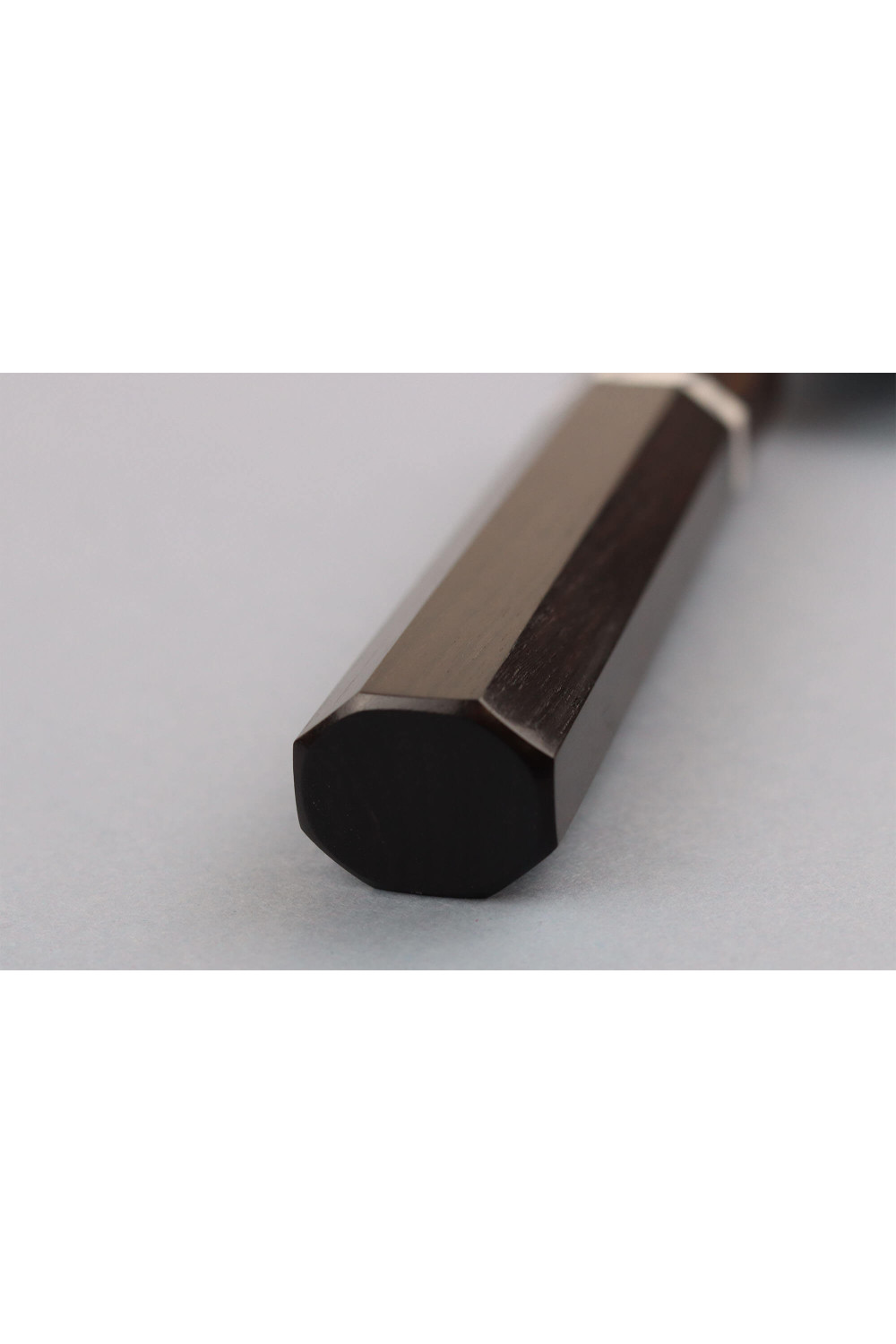
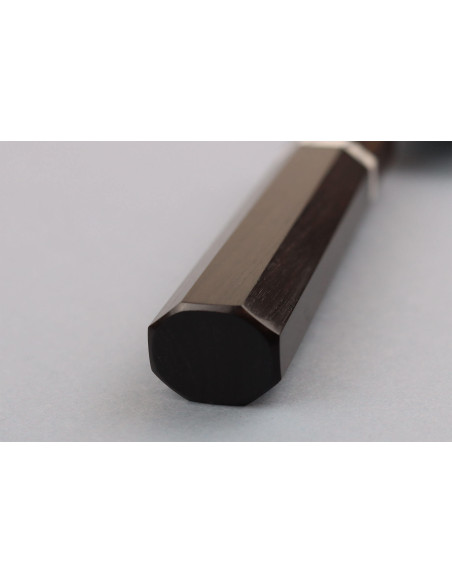
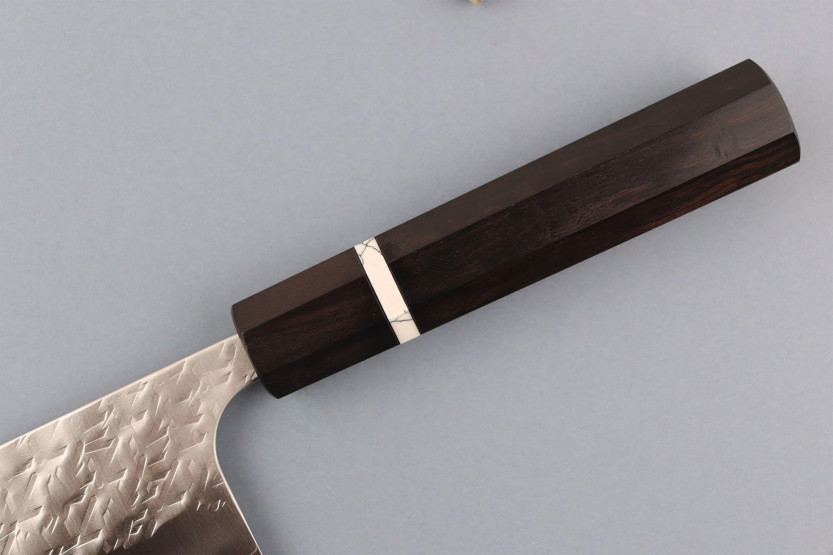
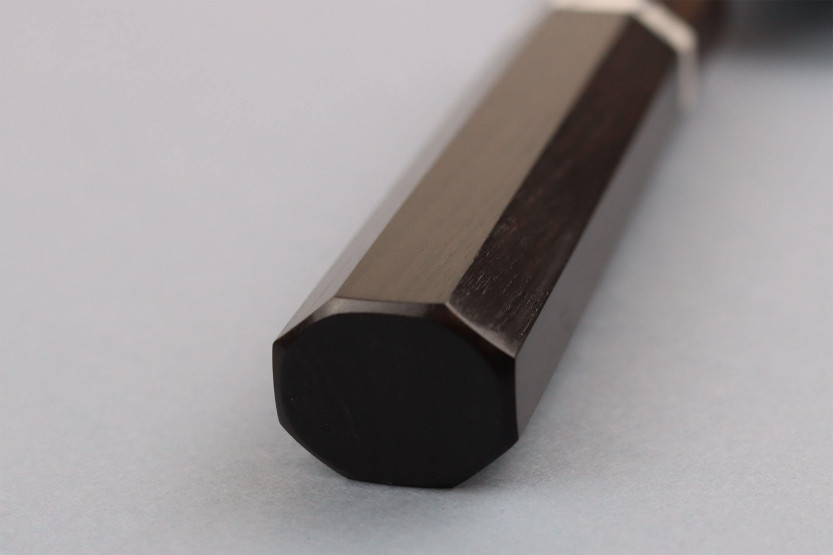
This Japanese nakiri knife features an ebony wood handle, a noble material prized for its density, moisture resistance and naturally soft feel. Ebony provides excellent balance to the whole knife, enhancing the feeling of mastery. What's more, its dark shades are aesthetically pleasing.
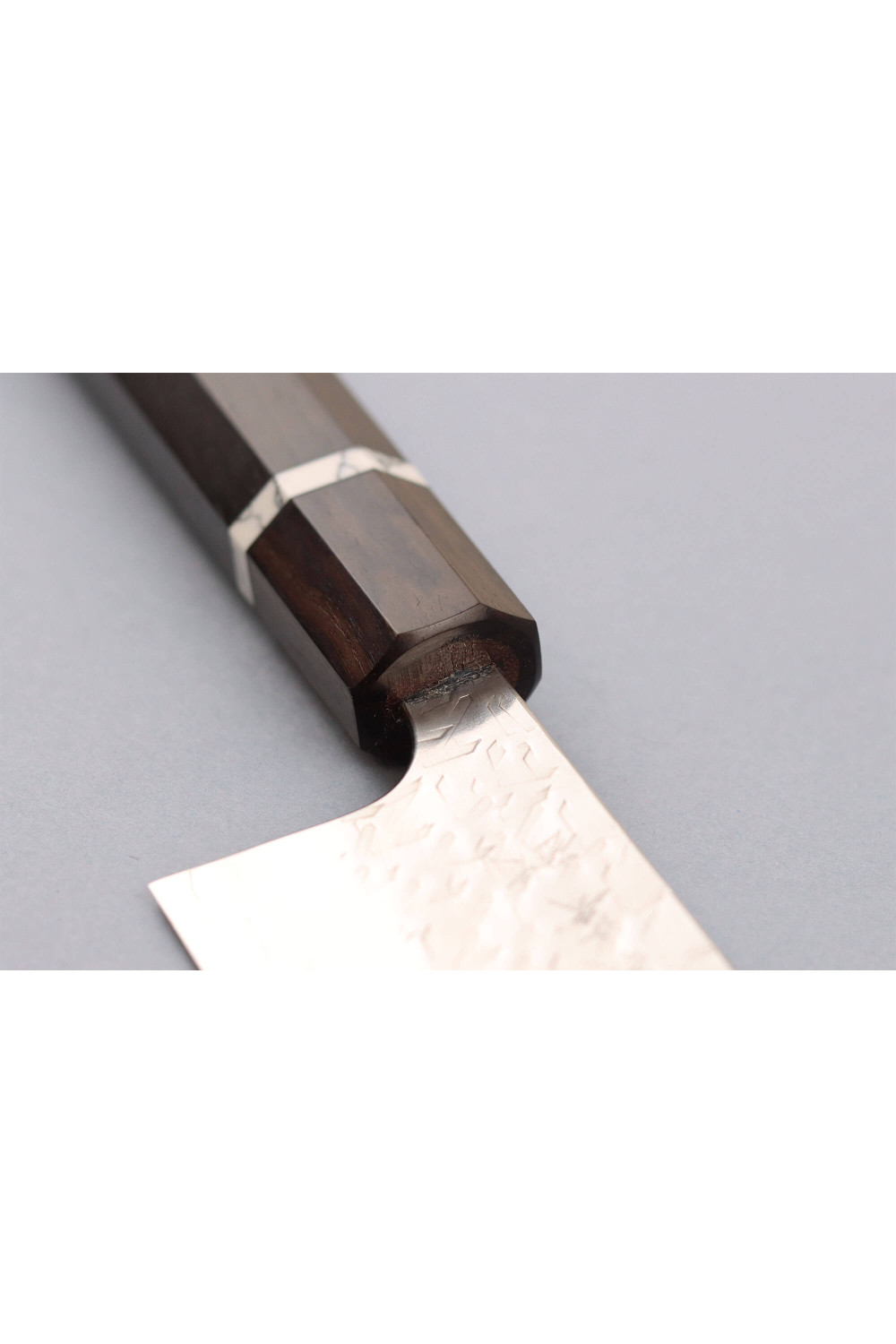
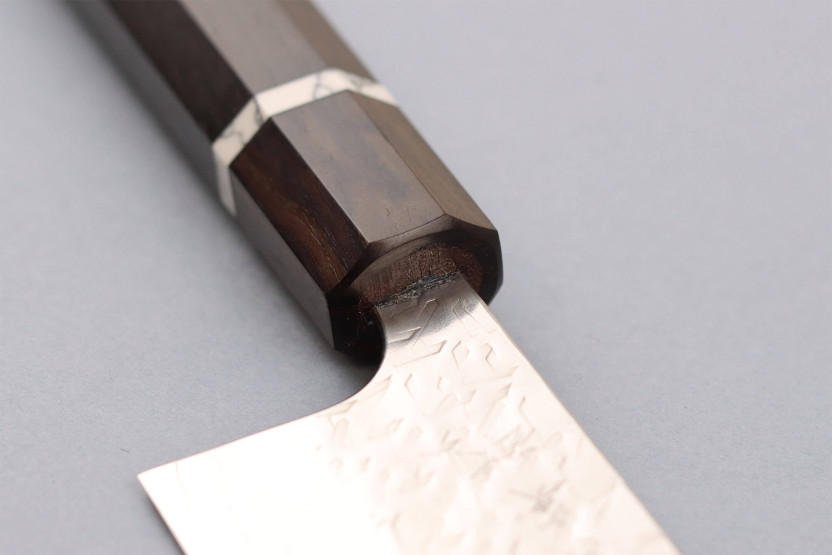
A gemstone ring is inserted between the bolster and the handle. This refined detail is in keeping with the Japanese tradition of beautiful functional objects, combining symbolism and aestheticism.
Finally, the handle is octagonal: its ergonomic shape ensures a comfortable ambidextrous grip, reducing fatigue during long cuts. High-quality assembly guarantees outstanding durability, even under intensive use.
Summary of technical features and benefits of the Nakiri Kato Hyo knife
- San Maï blade structure: sturdy, balanced cutting edge
- SG2 steel
core- (1.3% carbon): precise, long-lasting cutting
Hardness- 63 HRC: reduced sharpening, outstanding performance that lasts over time
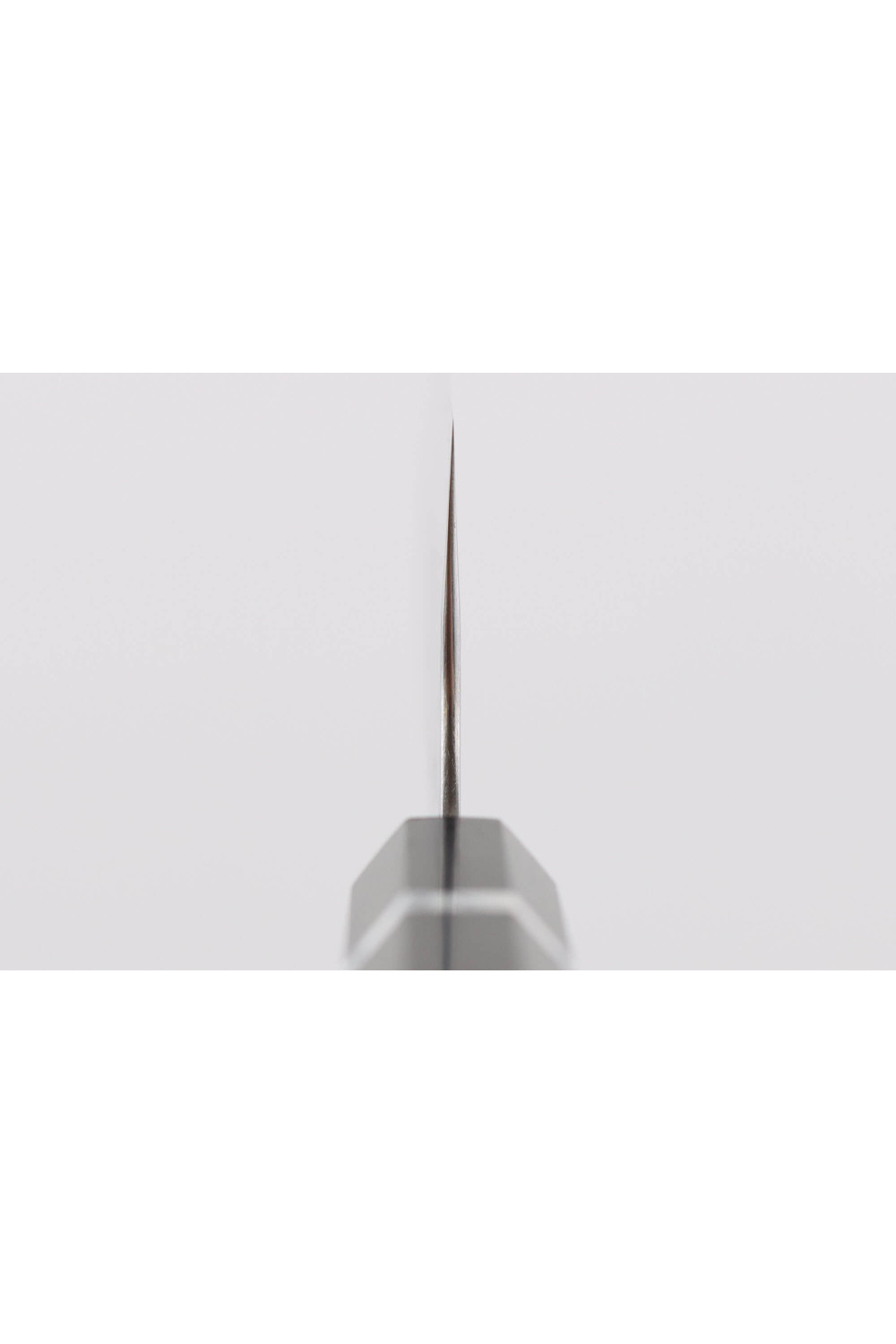
- Flat edge: the blade inserts easily into food
- Unique hammered pattern: smooth food glide and aesthetic character
- Polished surface finish: easy care
- Ebony wood handle: pleasant, natural grip
- Gemstone ring: high-end finish contrasting with ebony
- Octagonal handle shape: optimized ambidextrous comfort
- Handcrafted in Takefu: Japanese tradition and quality
Care instructions to preserve sharpness
To care for this handcrafted knife, wash by hand with a soft sponge and mild detergent, never soaking the wooden handle. Dry immediately after washing, then store in a dry place away from moisture. Do not use the dishwasher.
Discover our selection of handcrafted Japanese knives to enrich your kitchen with exceptional pieces!




 By buying this product you can collect up to