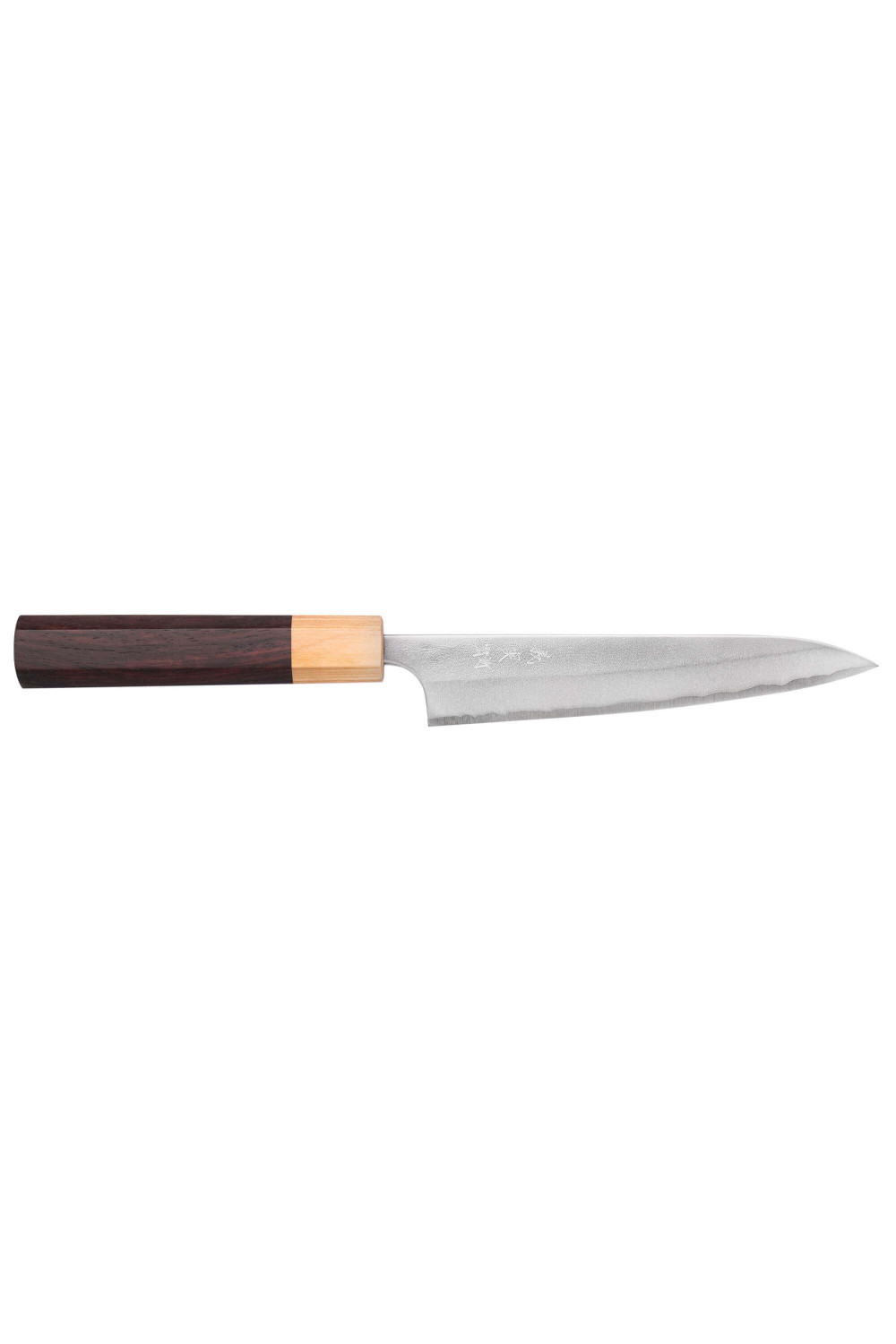
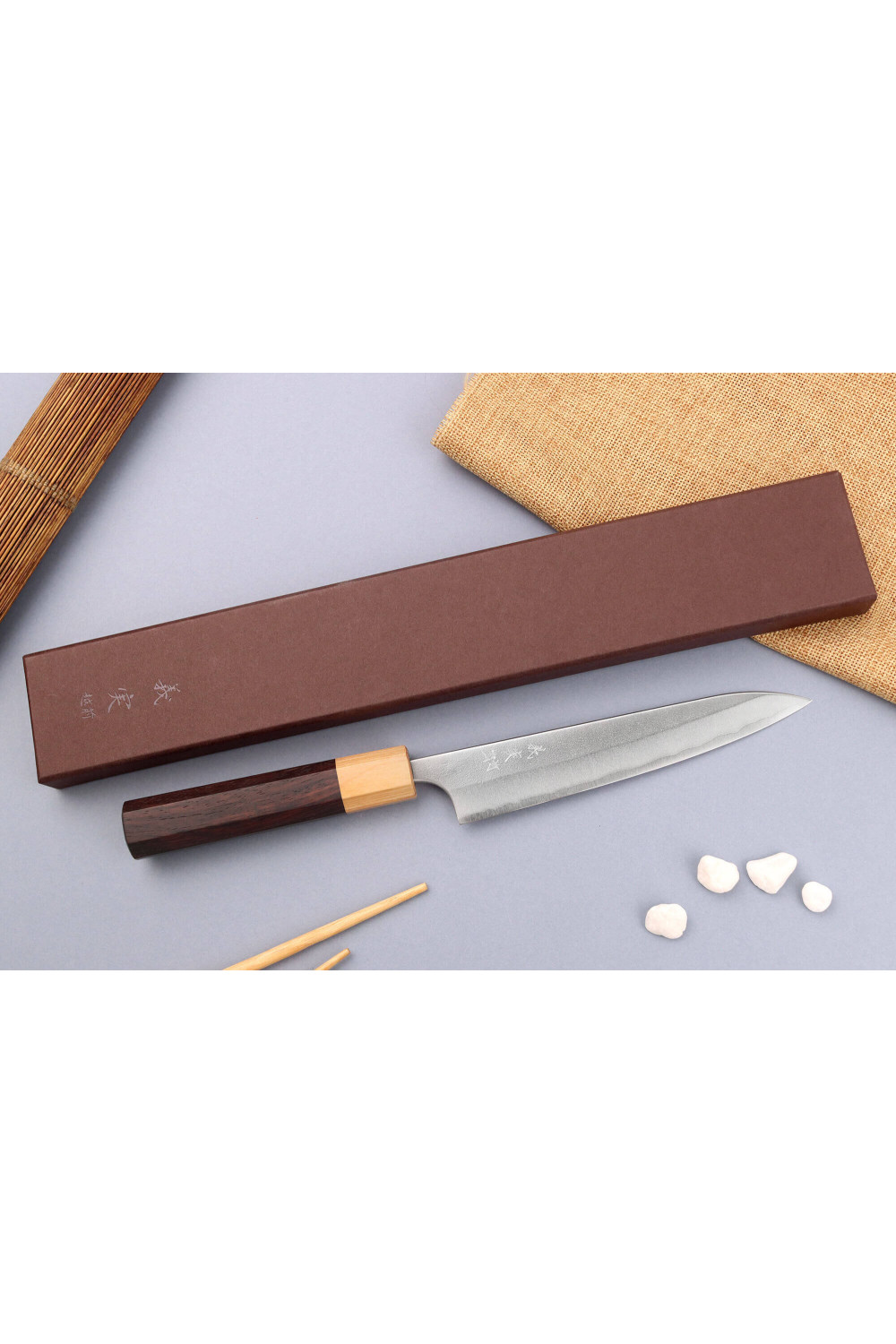
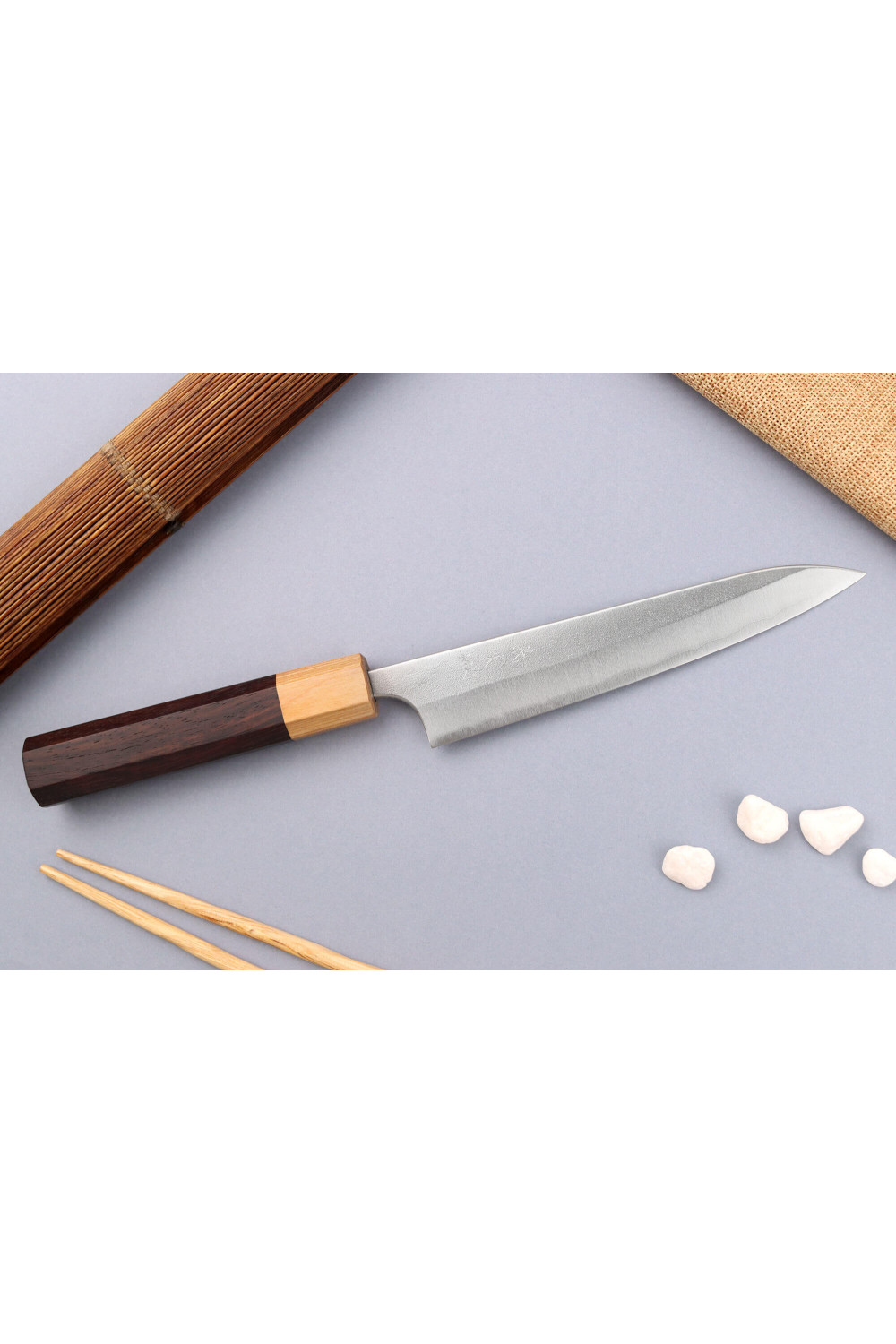
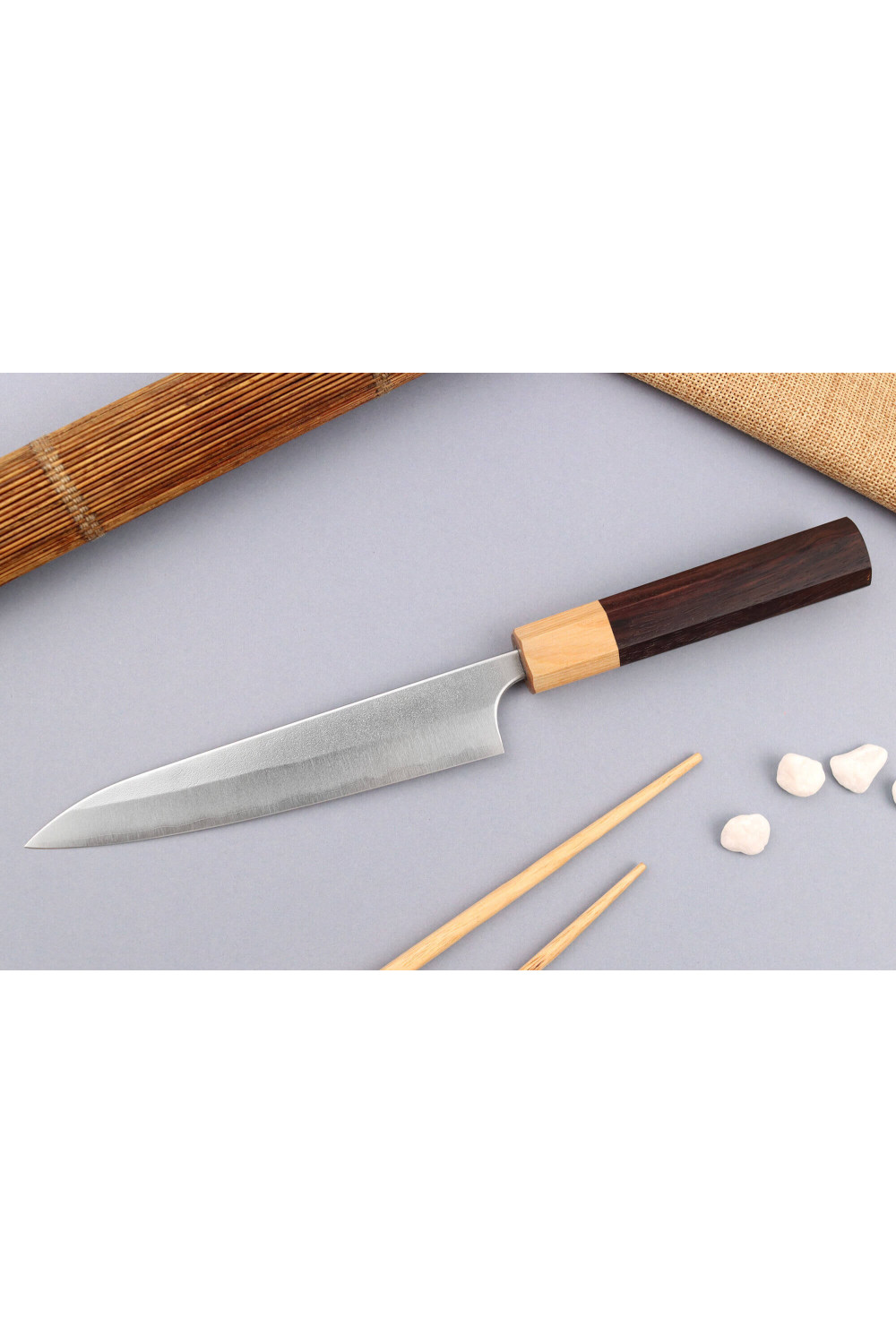
A universal knife by Yoshimi Kato
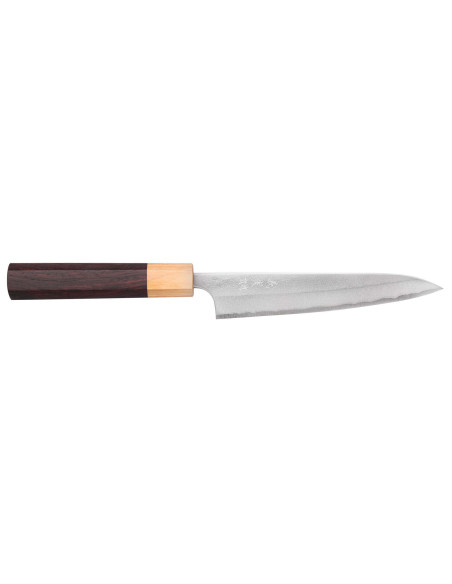
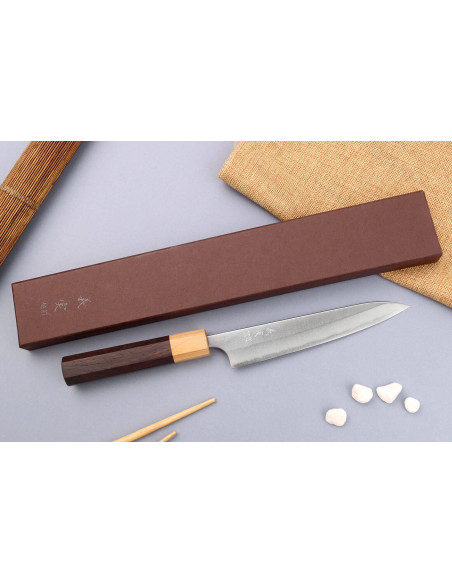
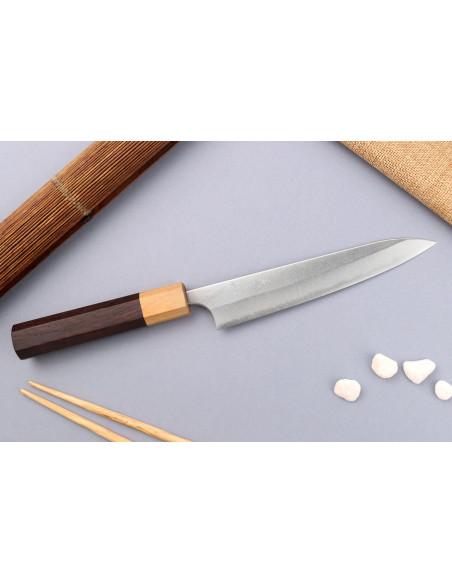
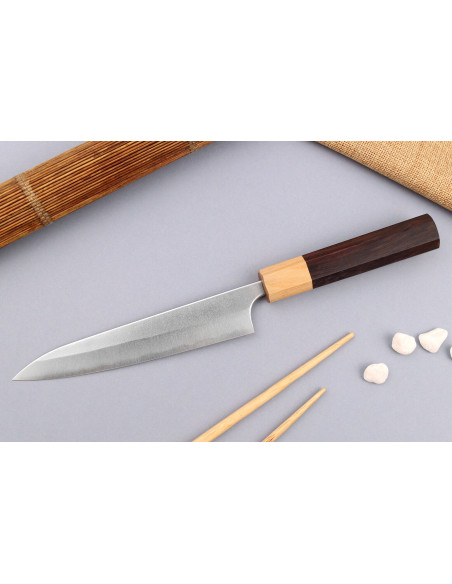
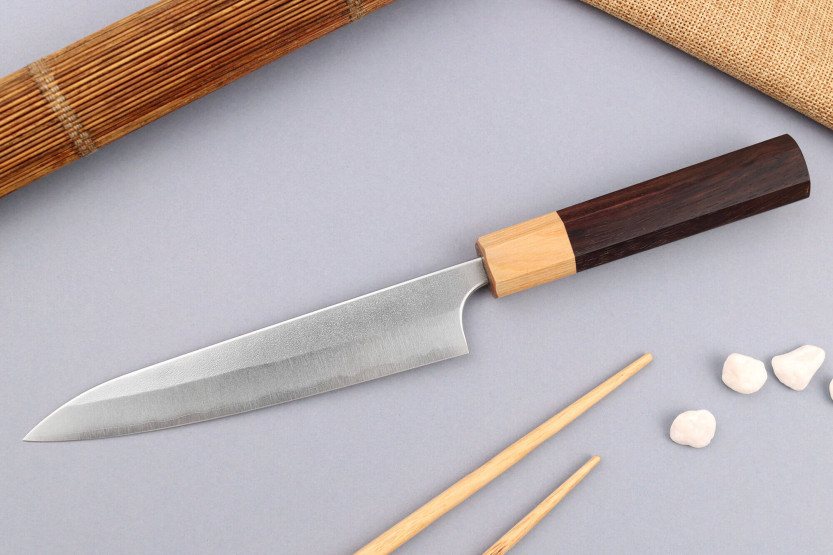
This 15cm utility knife is the creation of Yoshimi Kato, a certified Japanese blacksmith from Takefu. Trained by several masters, including his father-in-law Hiroshi Kato San, he perpetuates internationally recognized traditional know-how.
Hiroshi Kato, a renowned master blacksmith, has been shaping Japanese knives on a daily basis for almost 50 years. Co-founder of the Takefu Knife Village, he helped bring together local craftsmen to share techniques and preserve Japanese cutlery. Today, he passes on his expertise to the next generation.
(Hiroshi san is on the left and Yoshimi san is on the right)
Since his master's retirement, Yoshimi Kato has taken over the workshop and continues to produce his emblematic models while developing his own creations. His Japanese kitchen knives are crafted according to rigorous artisanal methods, guaranteeing unique pieces, ideal for passionate cooks or as exceptional gifts.
Begun in 2013, his apprenticeship has been marked by rapid progress and undeniable talent. By respecting Hiroshi Kato's heritage while incorporating innovations, Yoshimi Kato offers knives prized by chefs and cutlery enthusiasts alike.
A Japanese knife with a Blue Super Steel blade
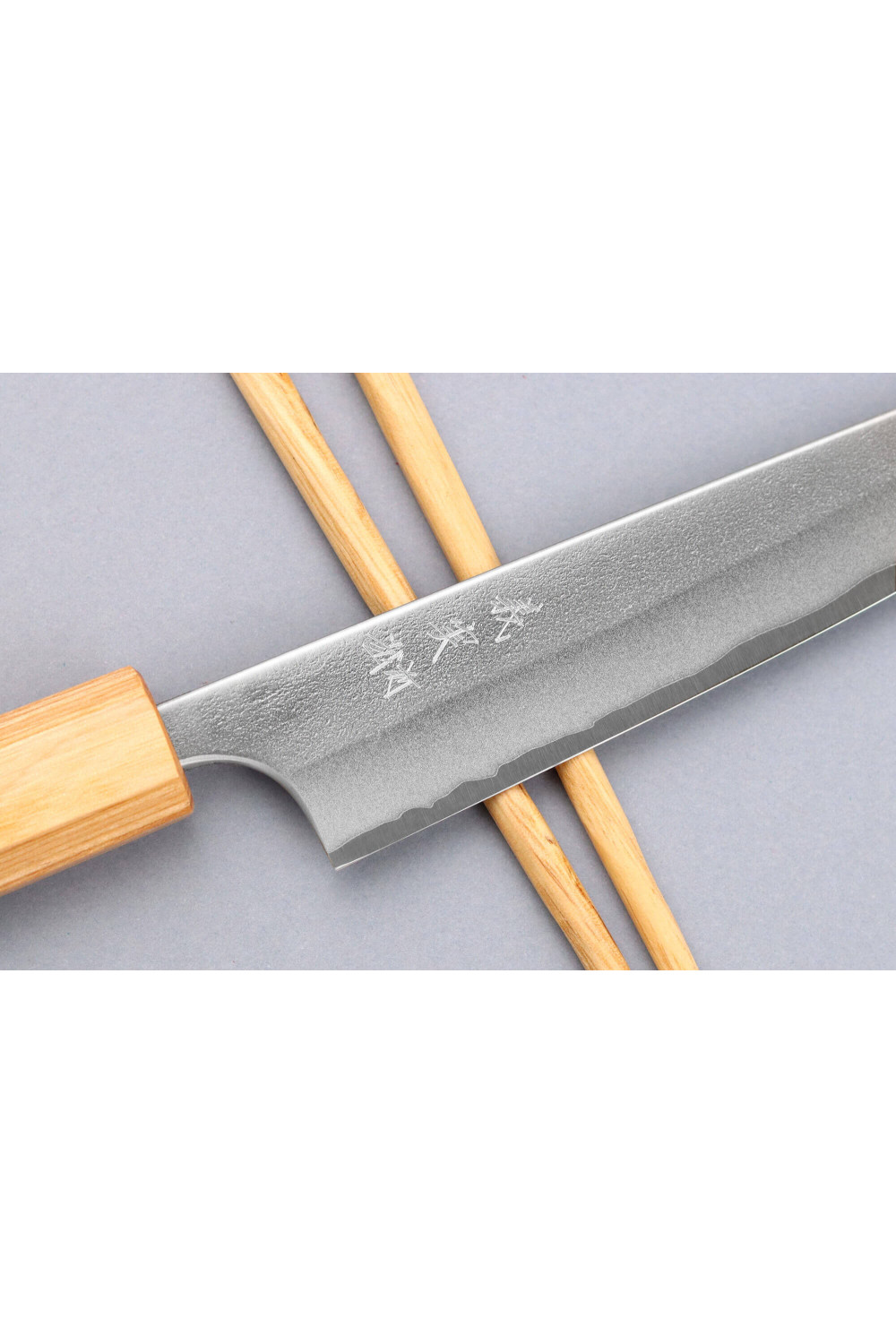
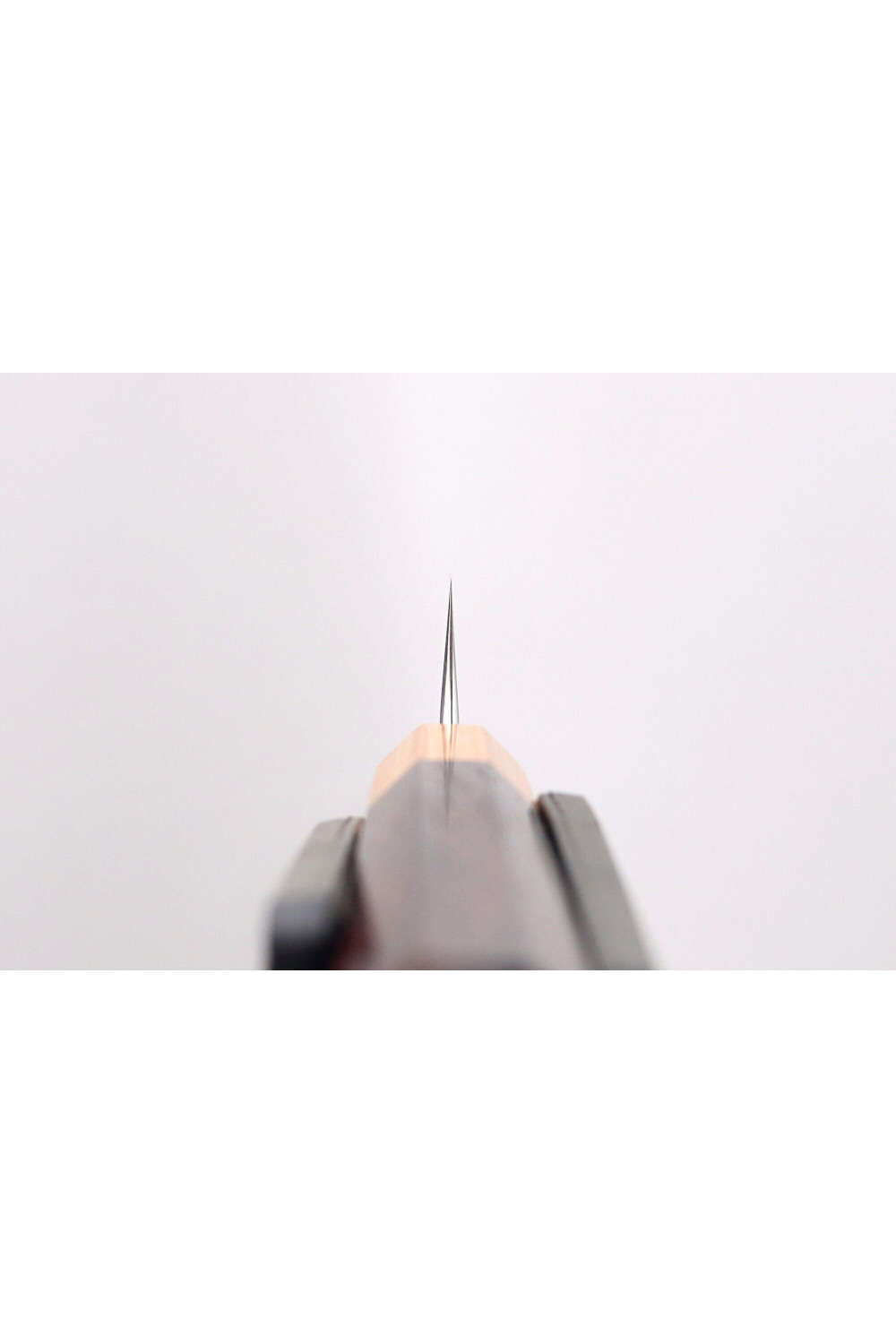
The blade of this Japanese kitchen knife is designed using the San Maï technique, which means "three layers". This method consists of surrounding a rigid steel core with a layer of softer steel to obtain a blade that is both resistant and high-performance.
The core is made from Blue Super Steel(Aogami Super), a top-of-the-range alloy from Hitachi steelworks. Composed of carbon, chromium and tungsten, this steel stands out for its high carbon content (around 1.5%), far higher than that of Western knives, which are generally between 0.5 and 1%.
Thanks to its unique properties, Aogami Super steel achieves a hardness of 65HRC on the Rockwell scale, offering remarkable rigidity. This enables precise sharpening for an ultra-high-performance edge!
Another advantage of this high hardness is the longevity of the cutting edge. The harder the steel, the slower it wears, which means your utility knife will retain its cutting edge longer. For domestic use, sharpening will only be necessary two or three times a year. What's more, despite being extremely rigid, this steel is easy to sharpen, a feature particularly appreciated in Japan.
The core is enveloped in a layer of softer stainless steel, which ensures greater strength while imparting a certain flexibility to the blade. While the blade remains rigid, it becomes less brittle in the face of small impacts.
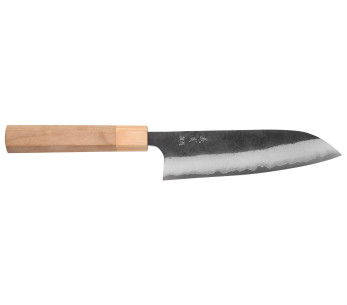
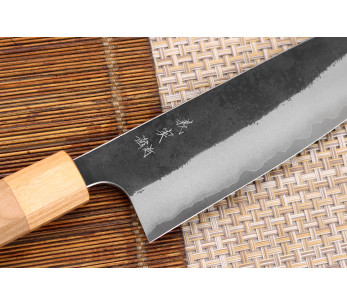
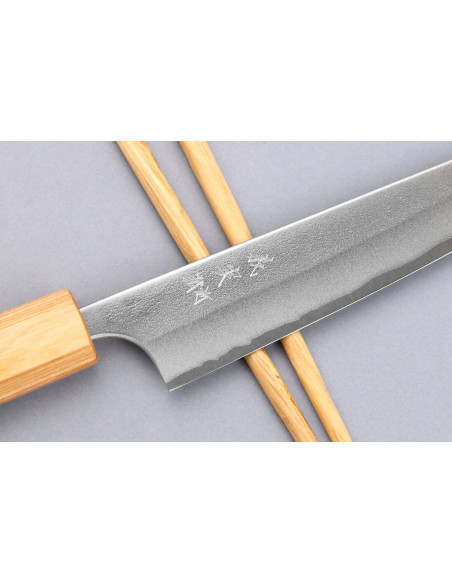
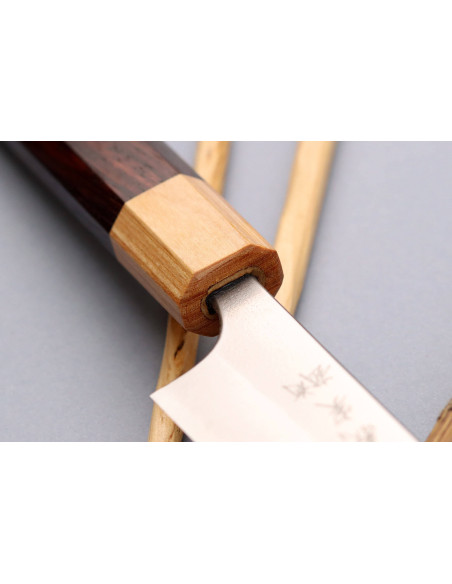
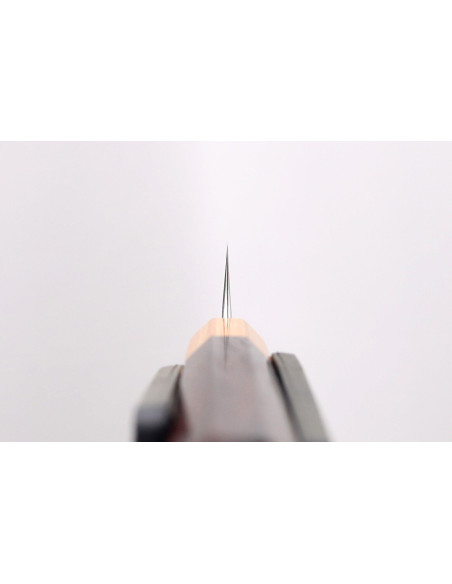
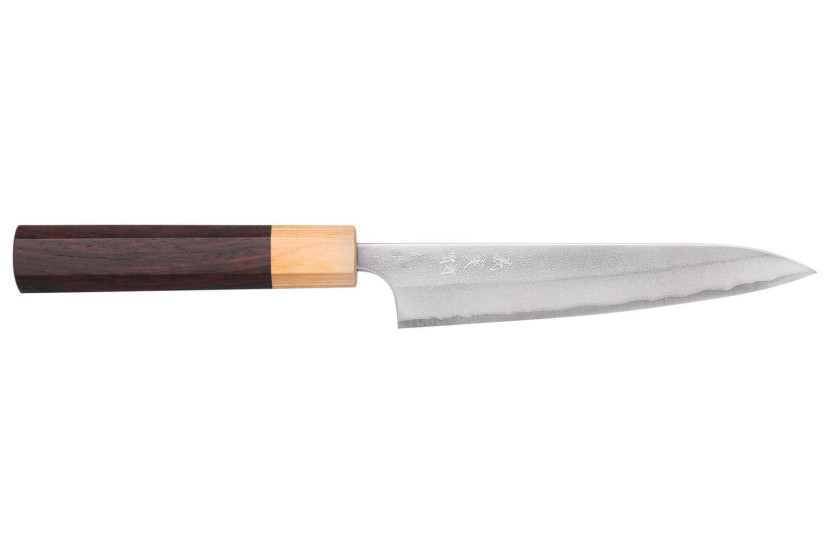
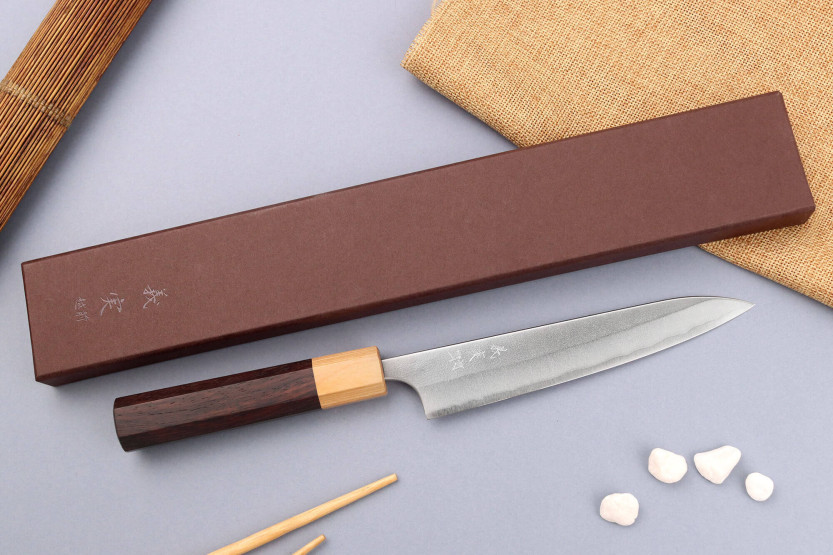
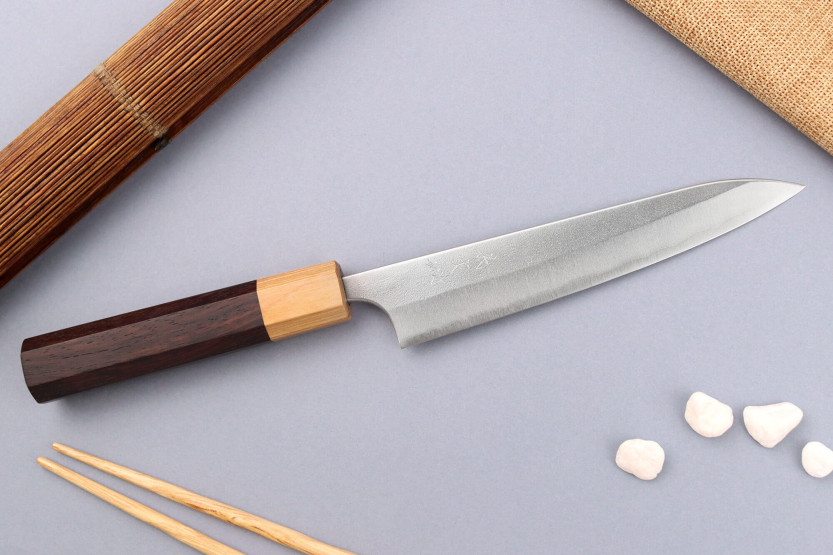
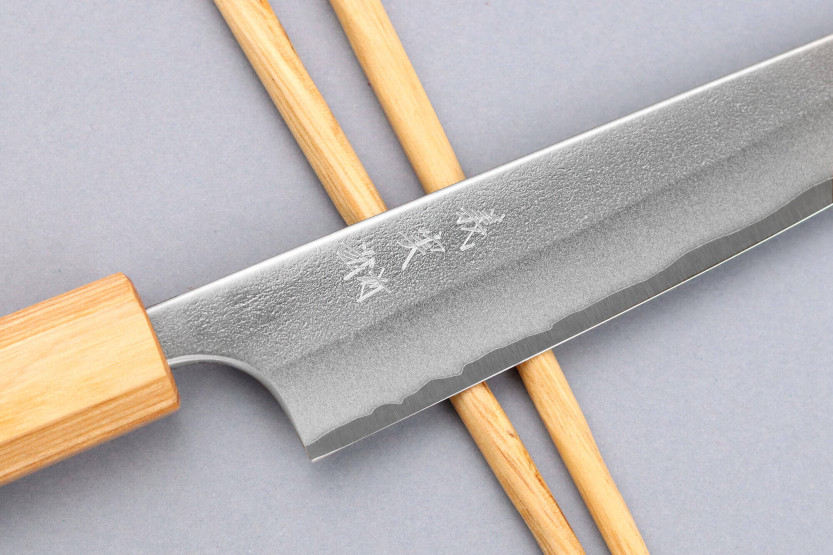
This Yoshimi Kato knife has a traditional Nashiji finish, giving it a rustic, authentic look. Each blade is hand-sharpened to guarantee optimum cutting quality. Finally, kanji engraved by the craftsman add a touch of authenticity.
Refined sandalwood handle design
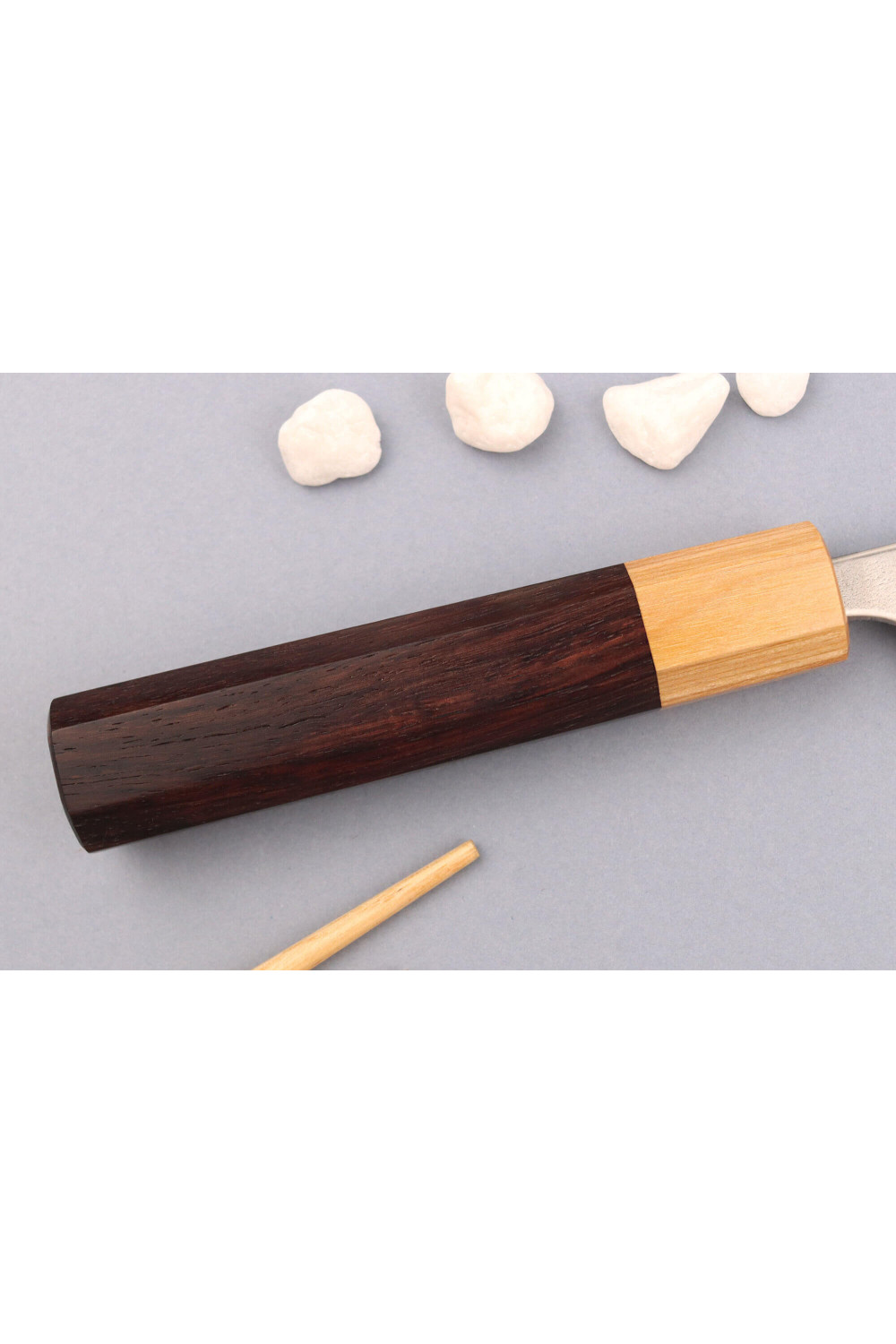
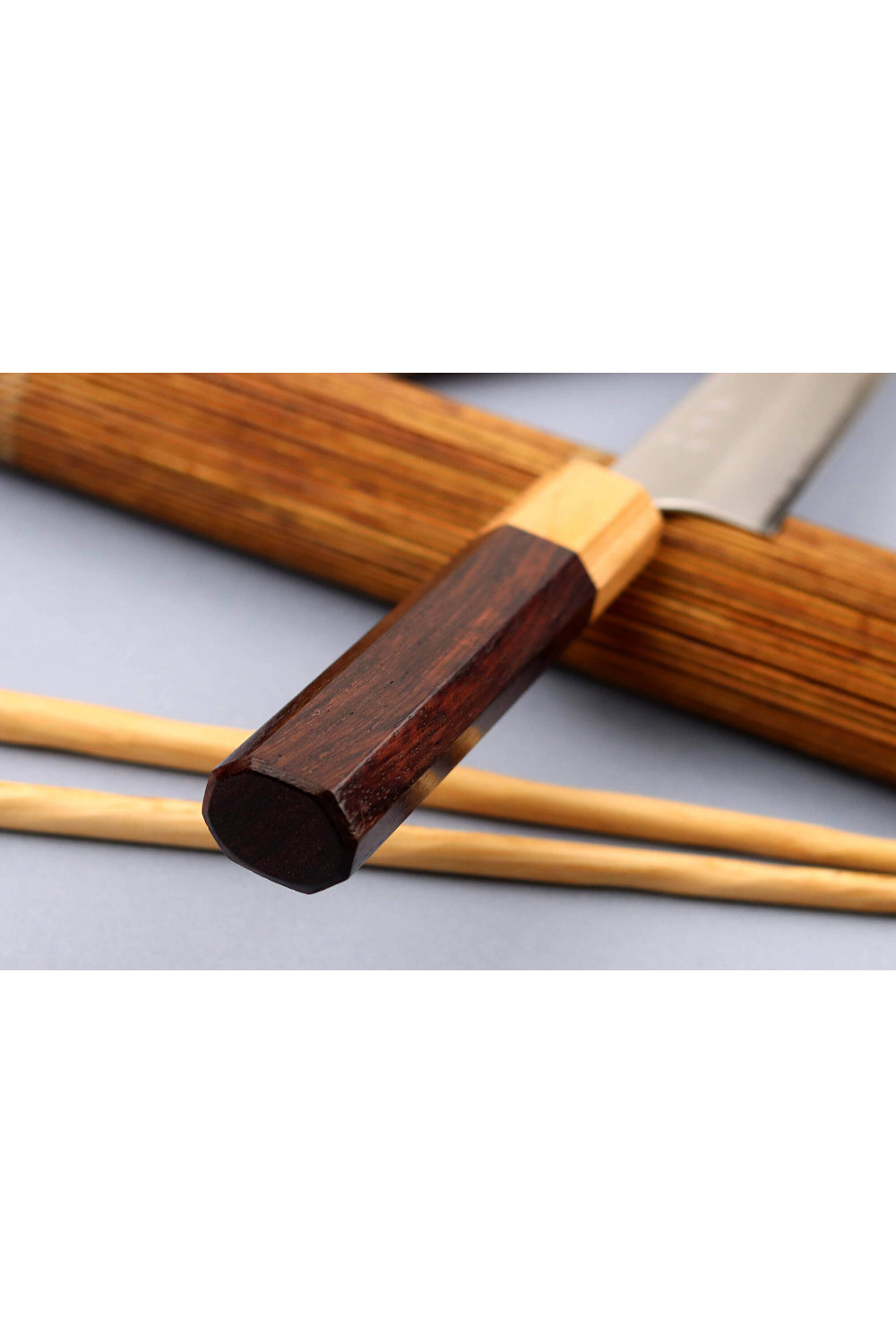
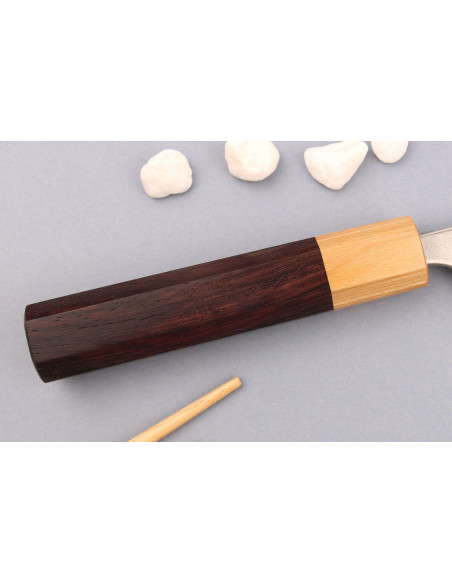
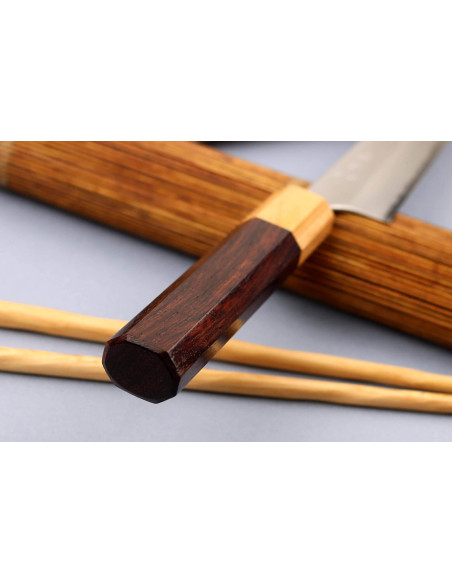
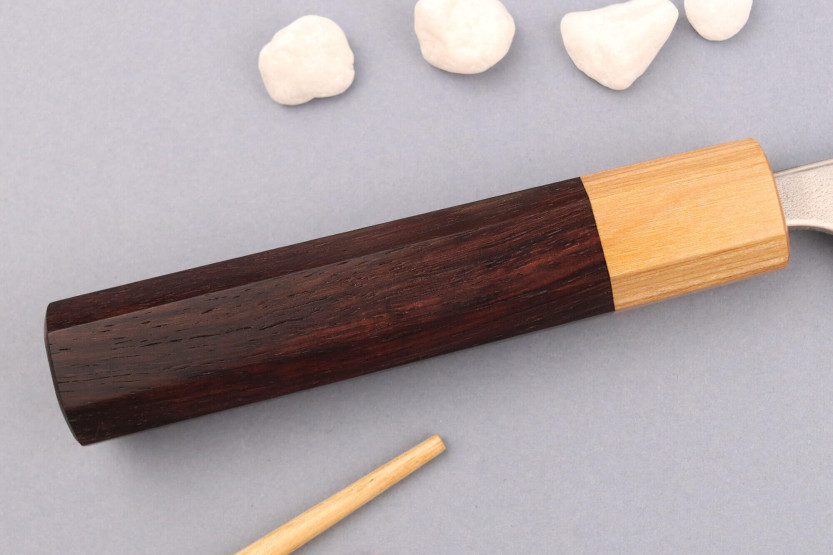
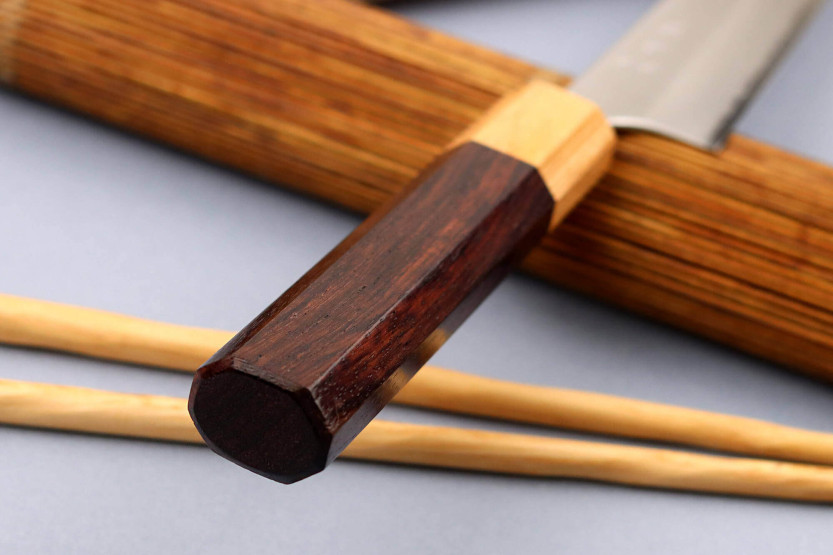
The handle of this handcrafted Japanese knife is made of sandalwood, a dense, robust wood that is pleasant to the touch. Its octagonal shape hugs the palm perfectly, offering excellent control for every cut, and is suitable for both right- and left-handed users.
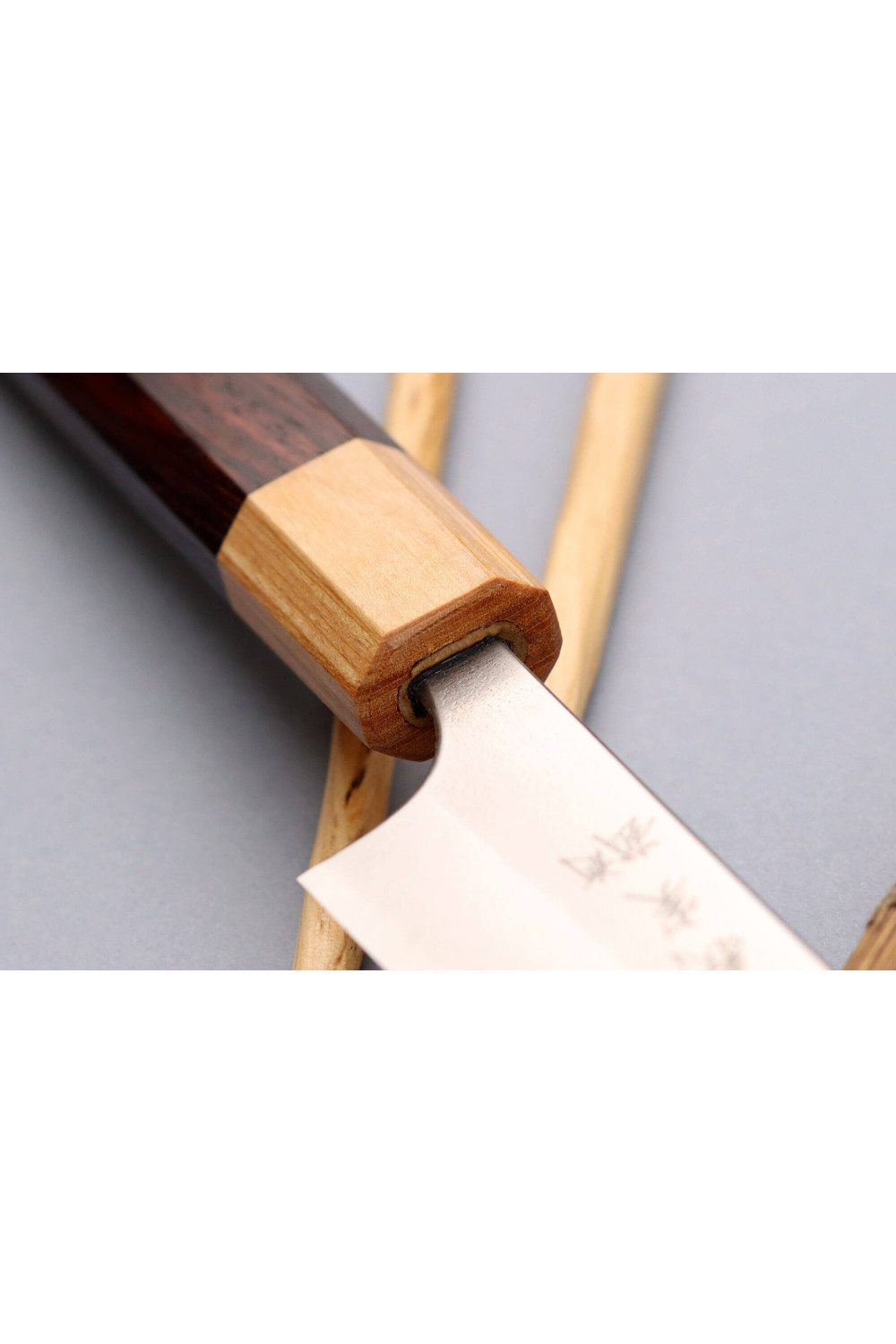
To complete the handle, a white pakkawood bolster has been added. This antibacterial composite material, composed of laminated wood and resin, is designed to resist humidity and temperature variations. Its contrast with the dark wood of the handle adds an extra touch of elegance!
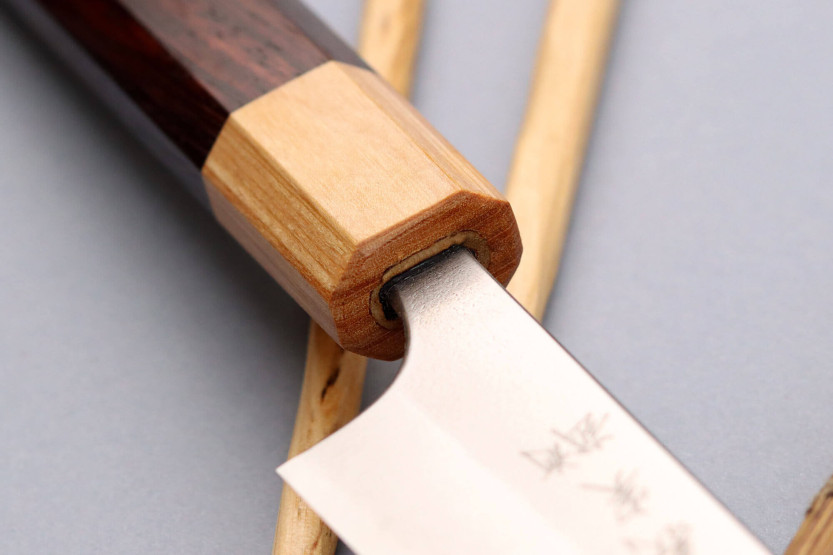
To ensure optimum watertightness, wood paste is applied to the junction between blade and handle. This prevents water and food residues from seeping through, guaranteeing greater durability.
The right care for your Japanese kitchen knife
To preserve the performance of your Yoshimi Kato knife, it's essential to look after it properly. Hand-wash only with a soft sponge and non-abrasive detergent, avoiding wetting the handle. After each wash, wipe immediately with a clean cloth and store in a dry place. It's important never to put it in the dishwasher or let it soak in the sink.
Over time, Aogami Super steel may develop a slight patina, taking on a dark blue hue. This natural phenomenon is due to the carbon that reacts to the acidity of food or ambient humidity. This in no way compromises the cutting quality of your Japanese utility knife!
Discover other exceptional Japanese knives on Knifeleader.eu!




 By buying this product you can collect up to