History of the blacksmith Yu Kurosaki San
Yu Kurosaki is a young blacksmith working in Echizen, Japan. His workshop is located in the famous Takefu Knife Village . The village is home to a large number of blacksmiths, who can share their skills with one another. It's also a popular area for apprentice blacksmiths, who can be taught by a master blacksmith.
Kurosaki San began his training in the early 2000s, and worked with Master Kanehiro for 12 years. Master Kanehiro taught him everything there is to know about forging, from the art of forging a knife to the art of sharpening it. It was after receiving orders from customers who were very satisfied with his blades that he decided to launch his own business, encouraged by his master. He also trained with the renowned Hiroshi Kato San, a recognized master blacksmith and one of the founding members of Takefu Village.
From now on, Yu Kurosaki San will train his apprentice so that, one day, he can open his own workshop.
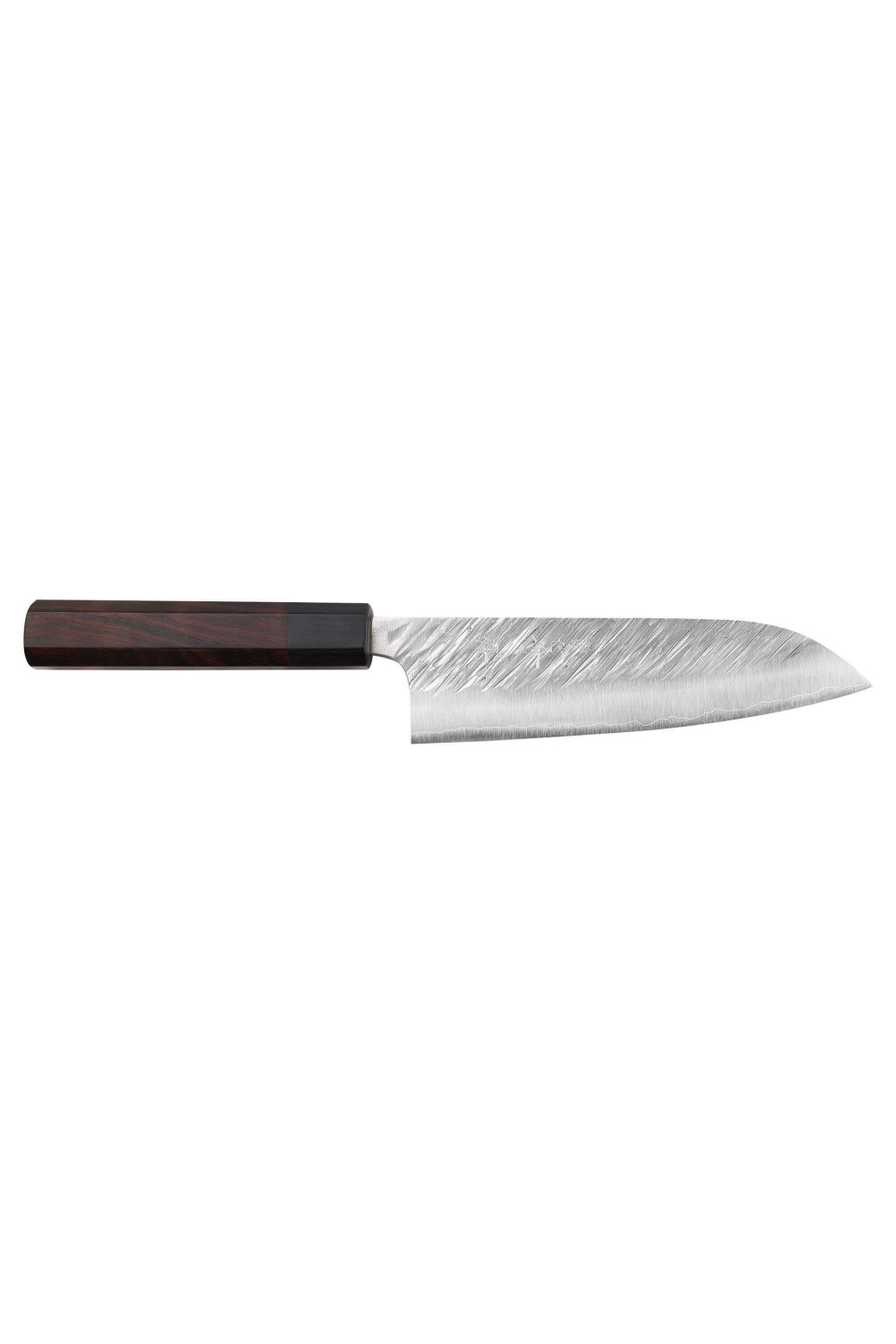
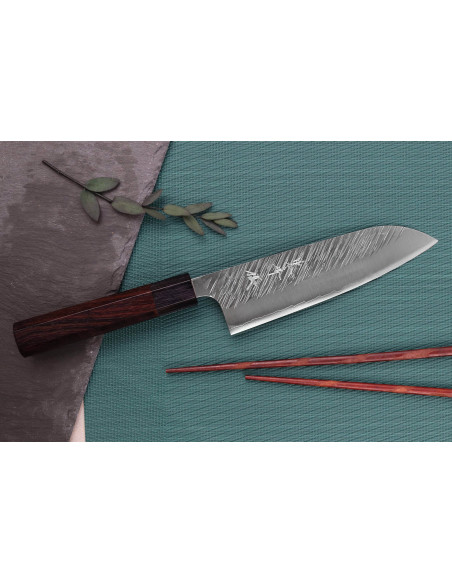
Kurosaki San is best known for his original work on blades, as you can see on the models shown here.
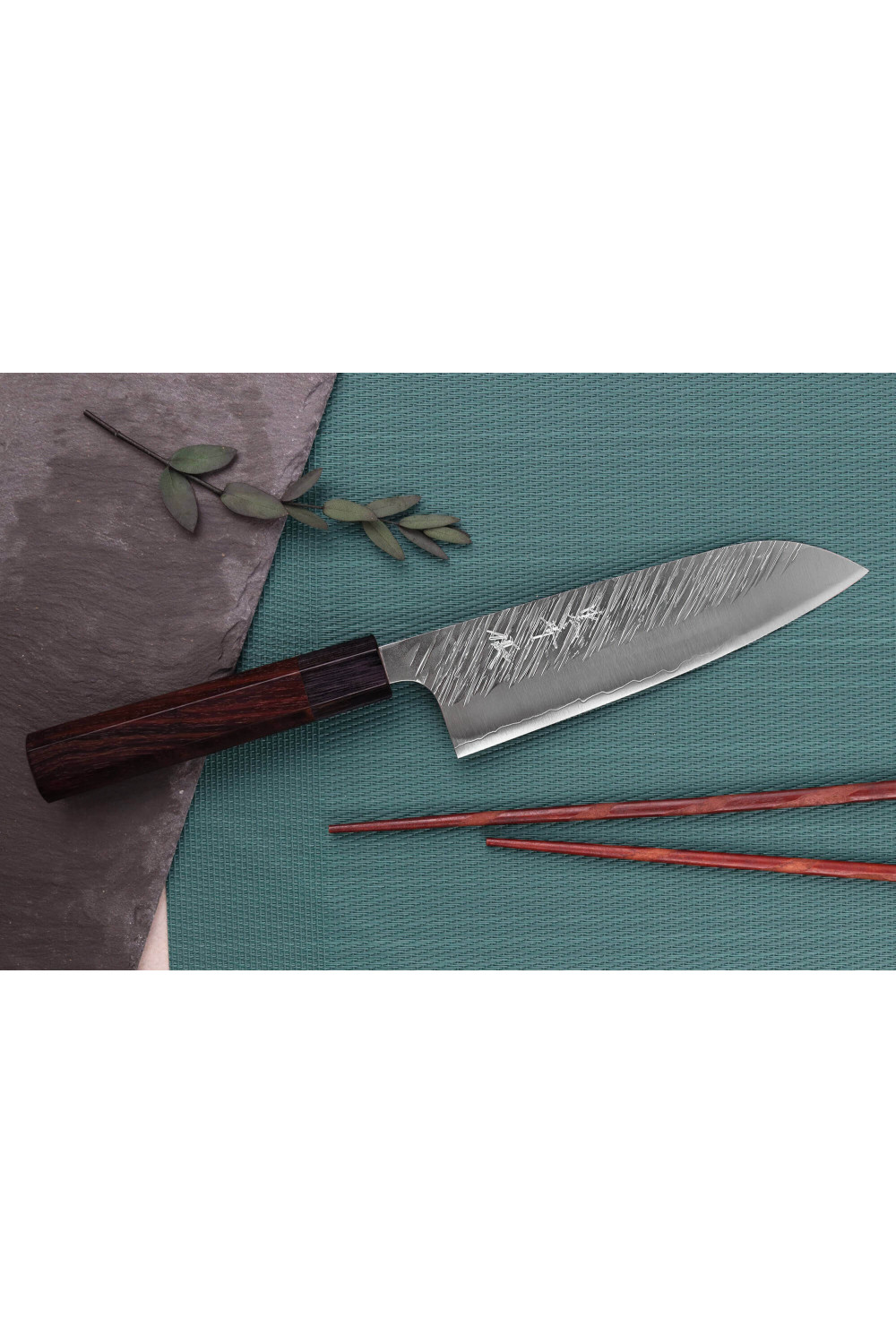
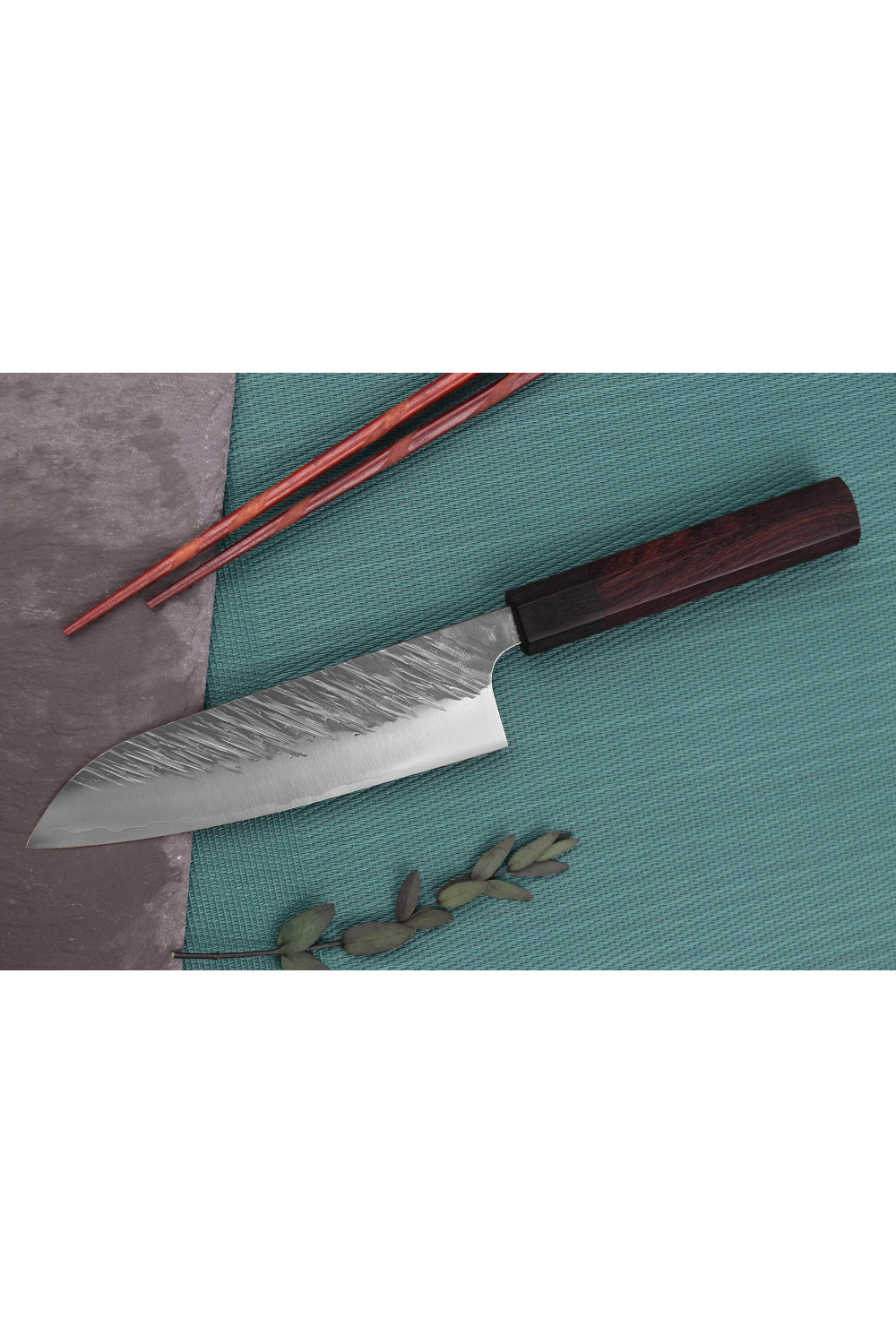
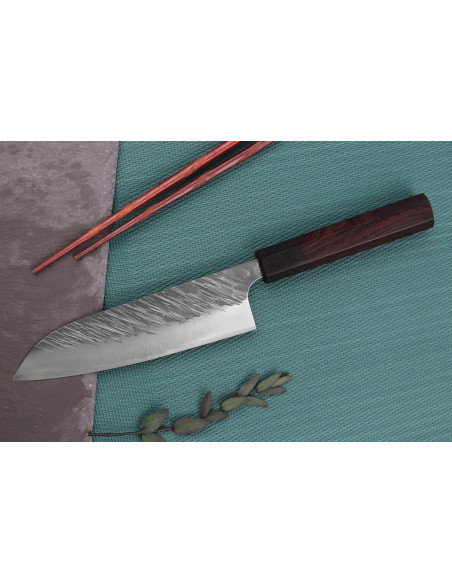
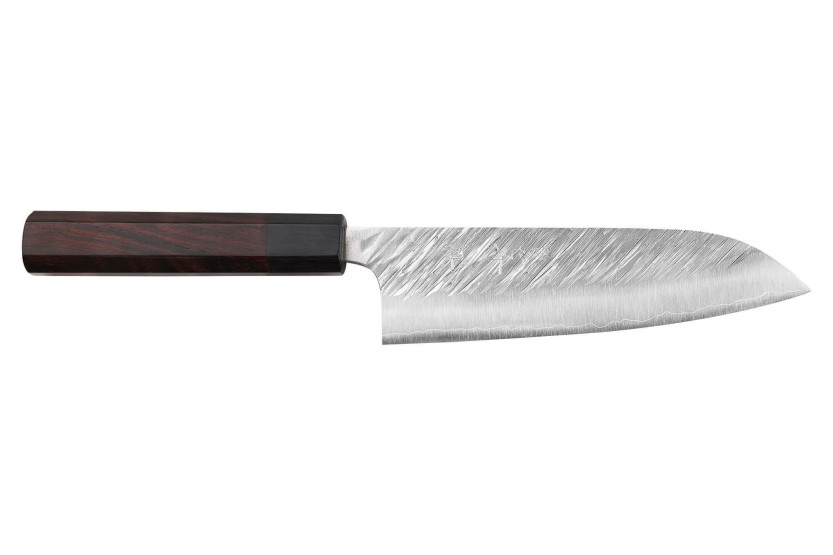
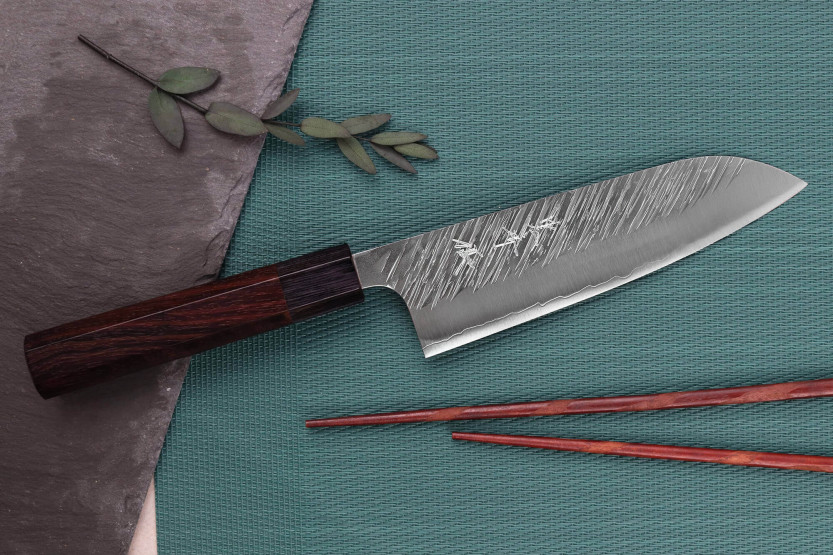
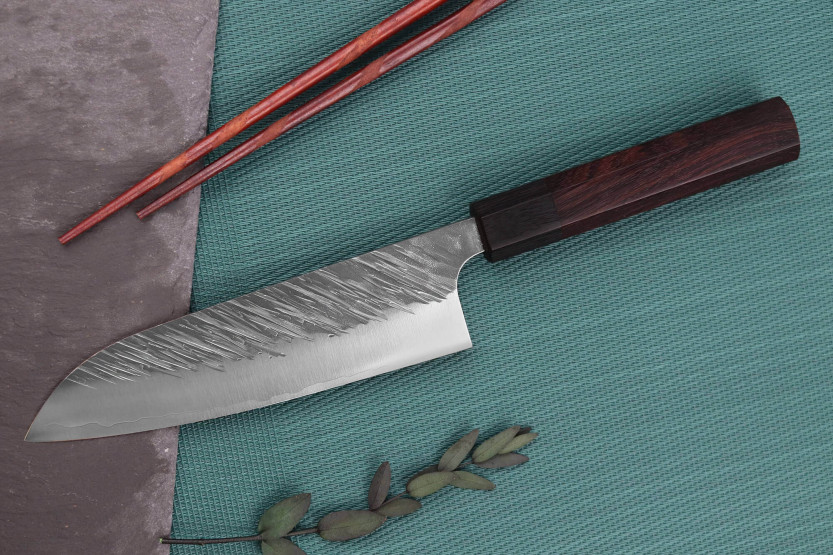
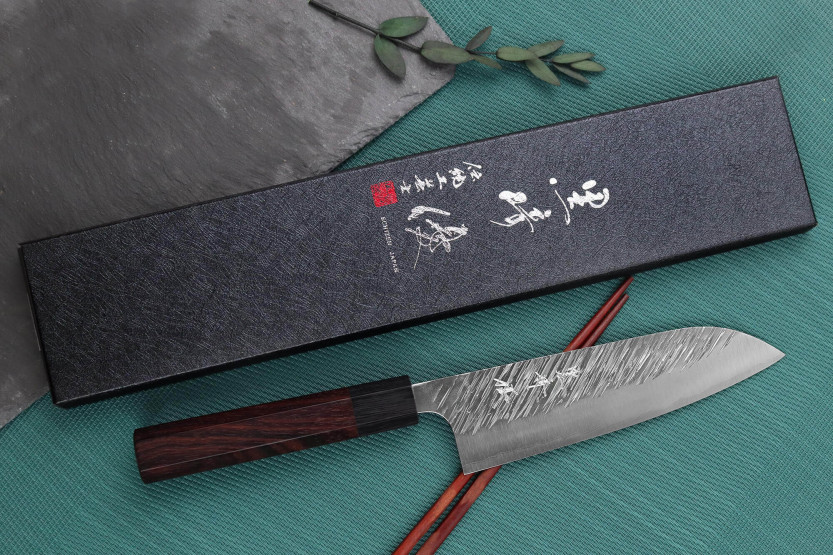
Kurosaki Fujin Yu Santoku knife
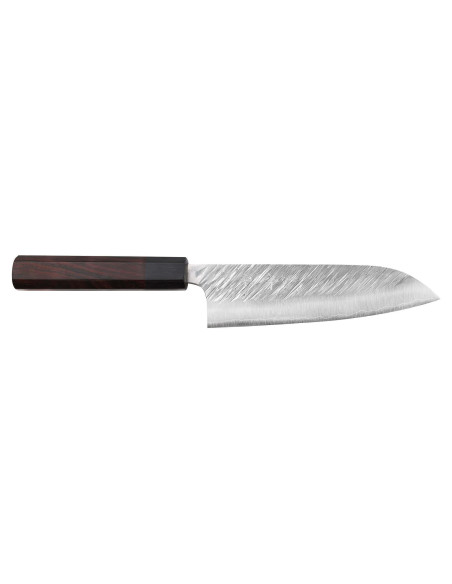
This 16.5cm santoku knife is a typically Japanese multi-purpose model, enabling you to cut vegetables of any size, fruit, herbs... It allows you to slice, chop or even mince efficiently and easily.
The Kurosaki Fujin kitchen knife features a forged blade, meaning that it is formed from a single piece of steel. This is heated, then the blacksmith grips it with pliers and passes it under the mechanical press, turning it regularly to gradually give the blade its final shape. This precision work results in a sturdier knife, as the blade will have no weld points.
The blade core is made of SG2 stainless steel, a top-of-the-range alloy renowned for its high rigidity. With a hardness of around 63HRC on the Rockwell scale, it offers remarkable edge retention. What's more, it can be sharpened to extreme precision, ensuring clean, effortless cuts. A further advantage of this powder-based steel is its more uniform microscopic structure, which considerably reduces the risk of chipping.
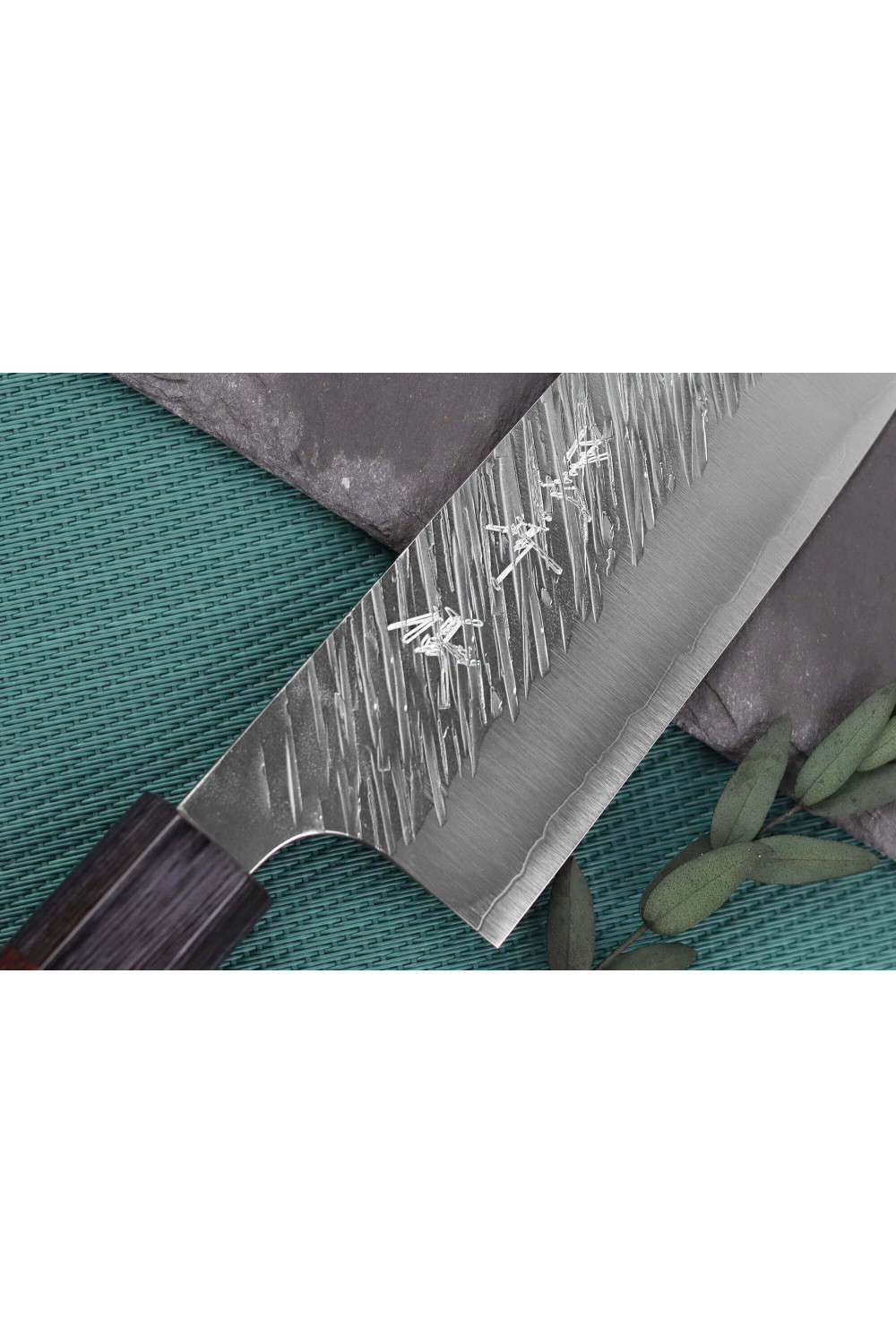
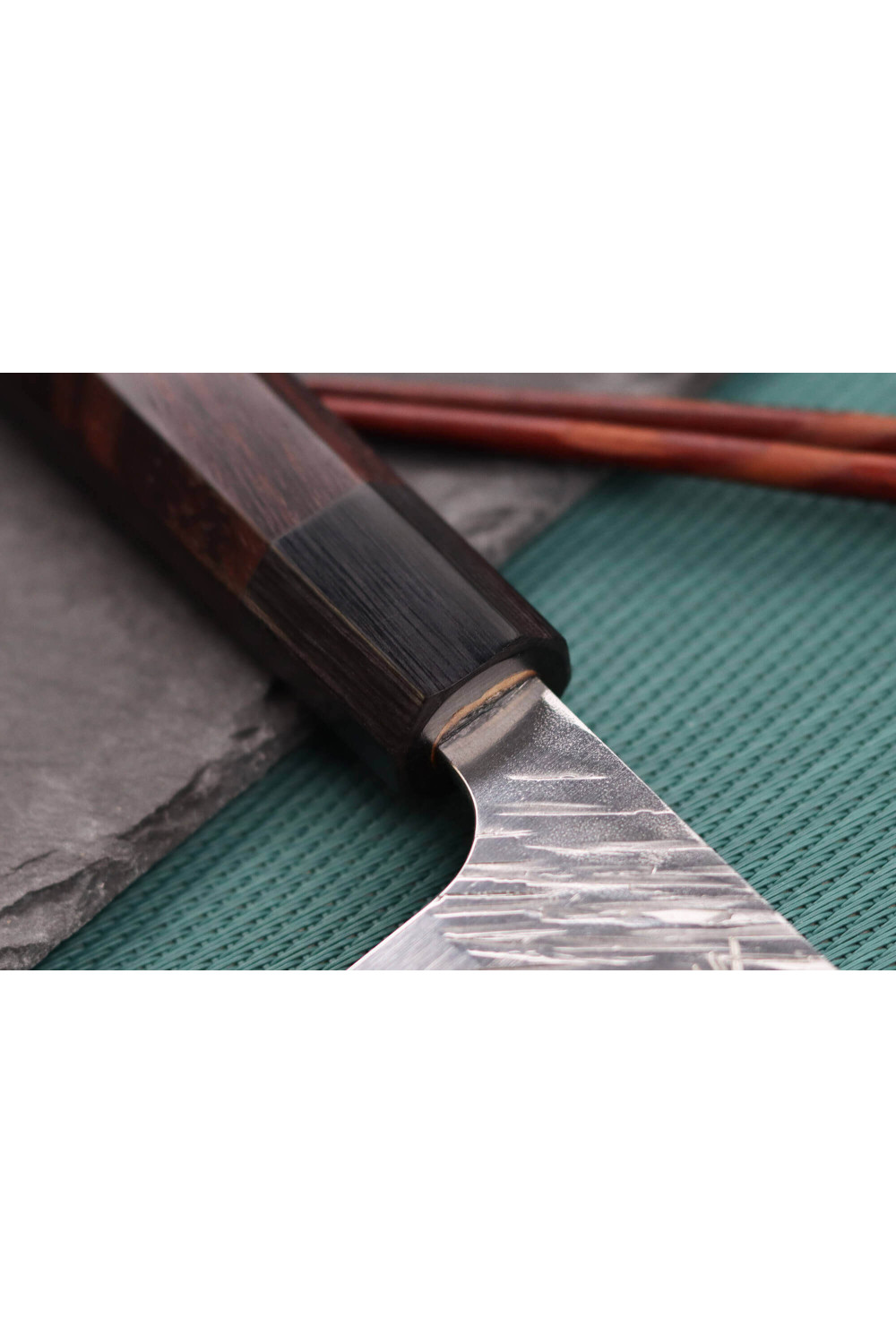
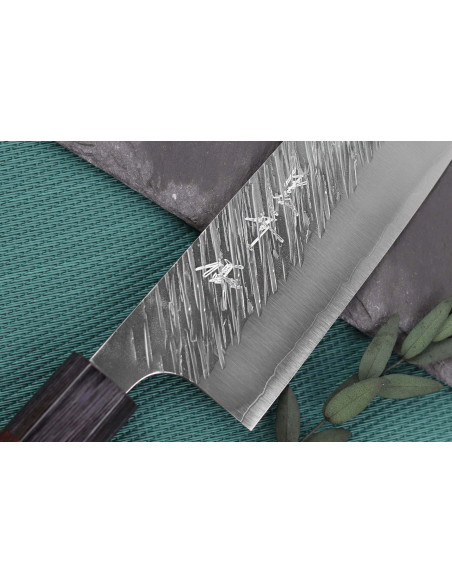
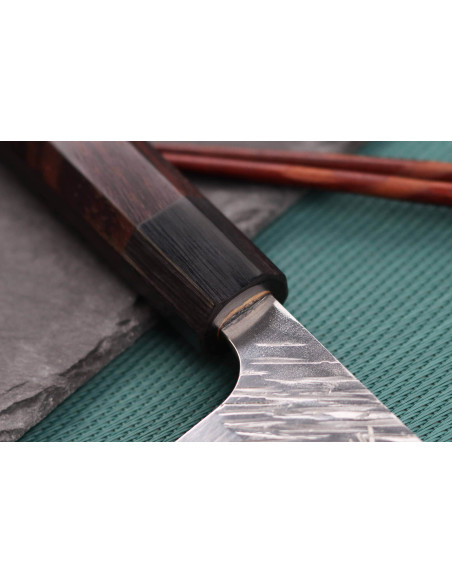
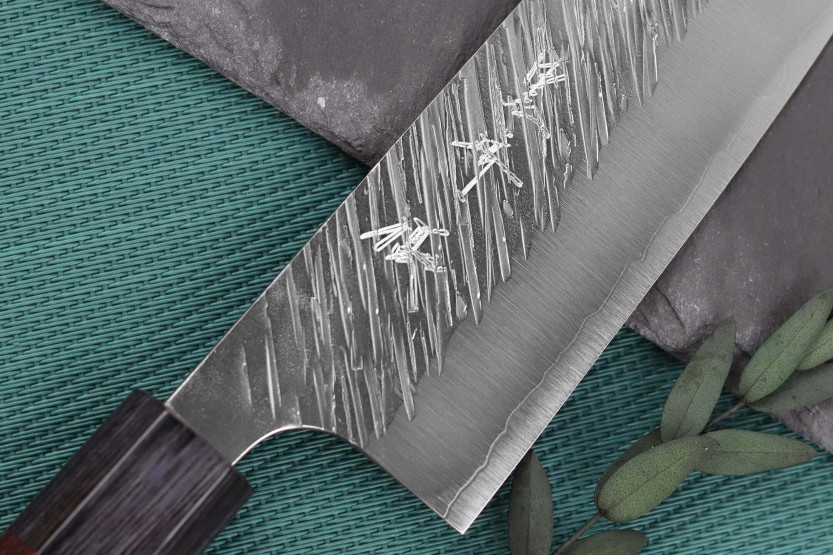
The blade core is then surrounded by a softer layer of steel that folds in on itself to form a San Maï structure. You can see this superimposition on the lower part of the cutting surface. In addition to an original design, this technique makes the blade "softer", i.e. less brittle.
The cutting edge is hand-finished on a grinding wheel to guarantee excellent cutting quality, right from the very first use.
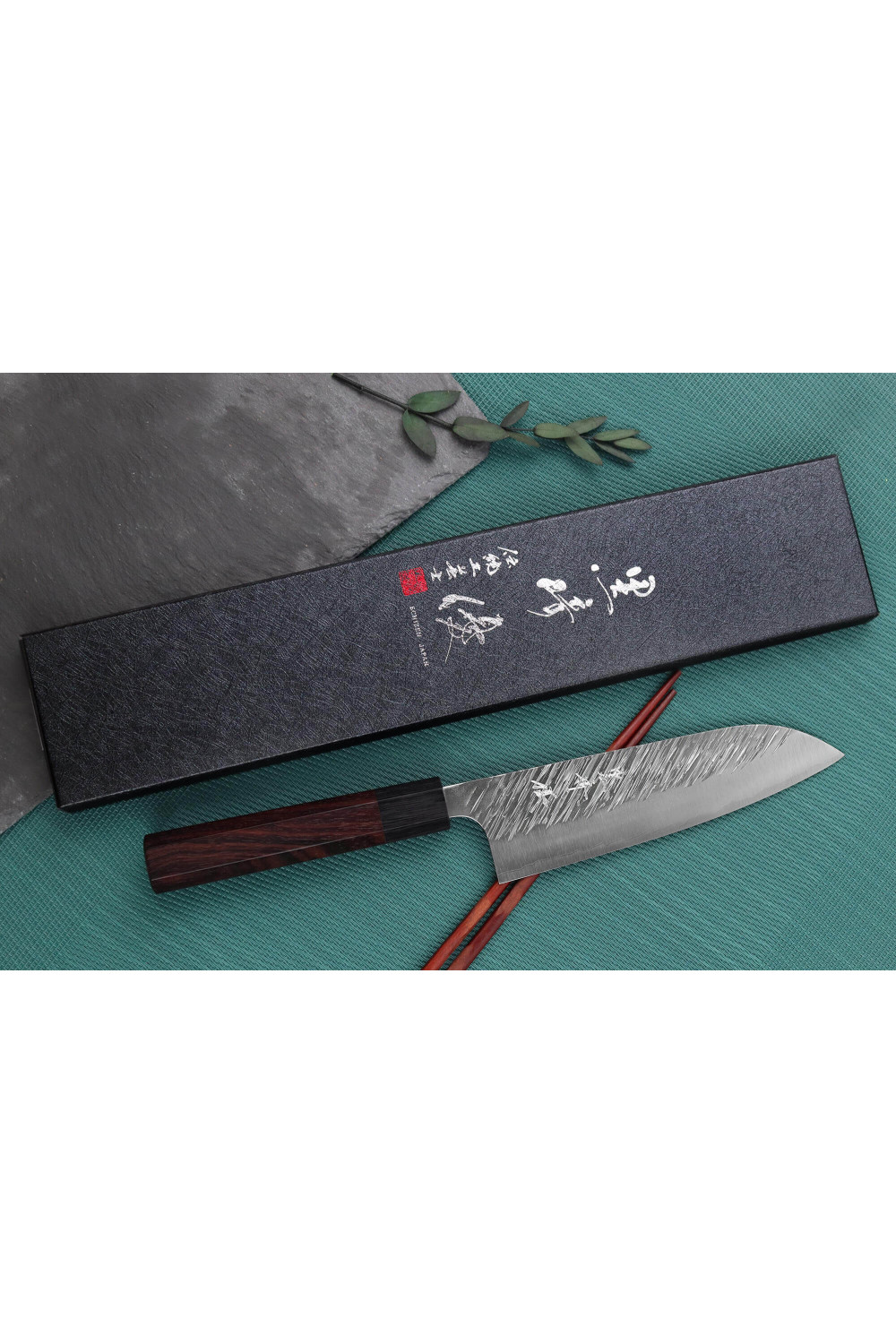
The upper part of the blade has been hand-hammered into a bevel, to create an unprecedented effect! This is what makes Kurosaki knives so special. The brand name has also been engraved on the cutting surface, a guarantee of authenticity.
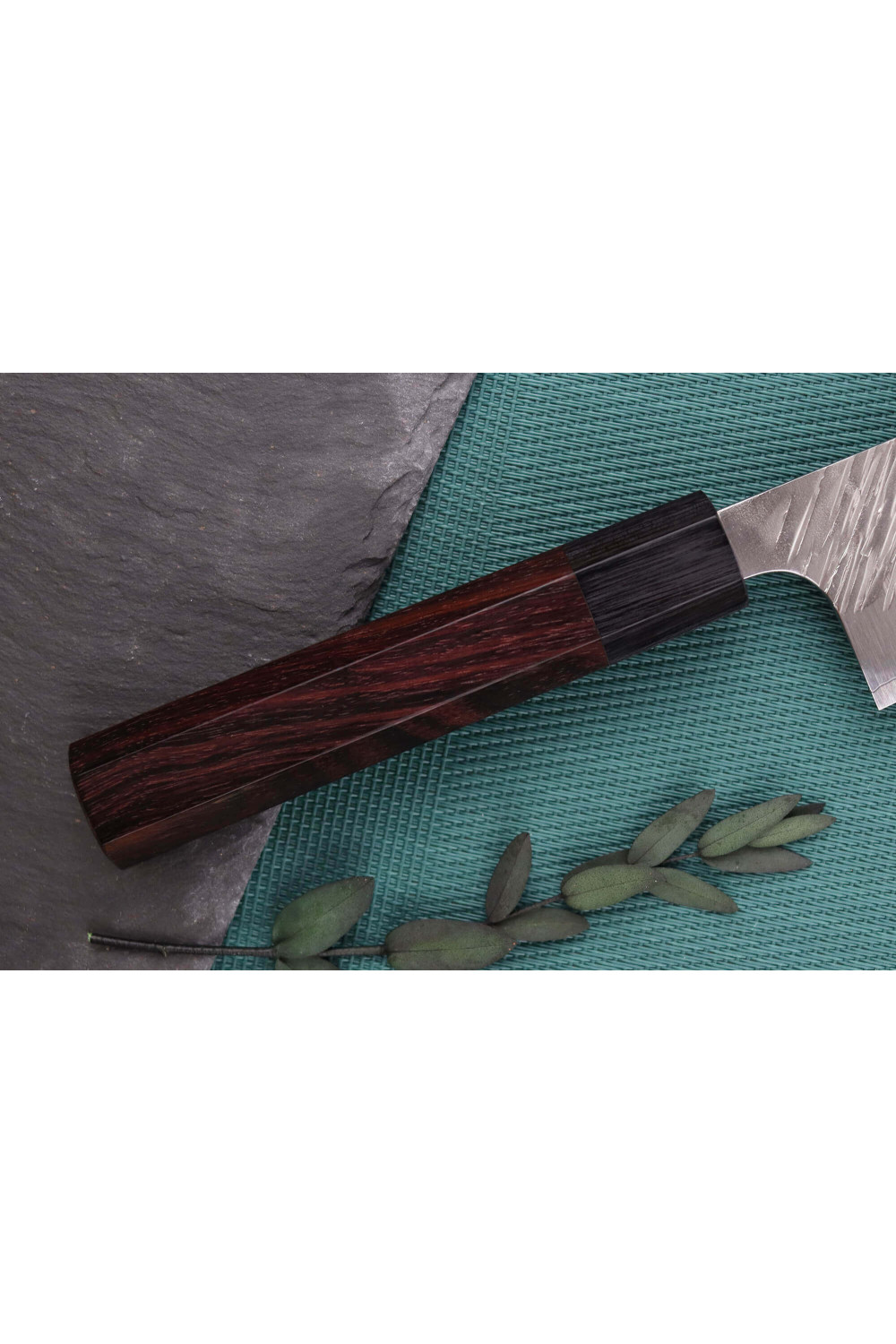
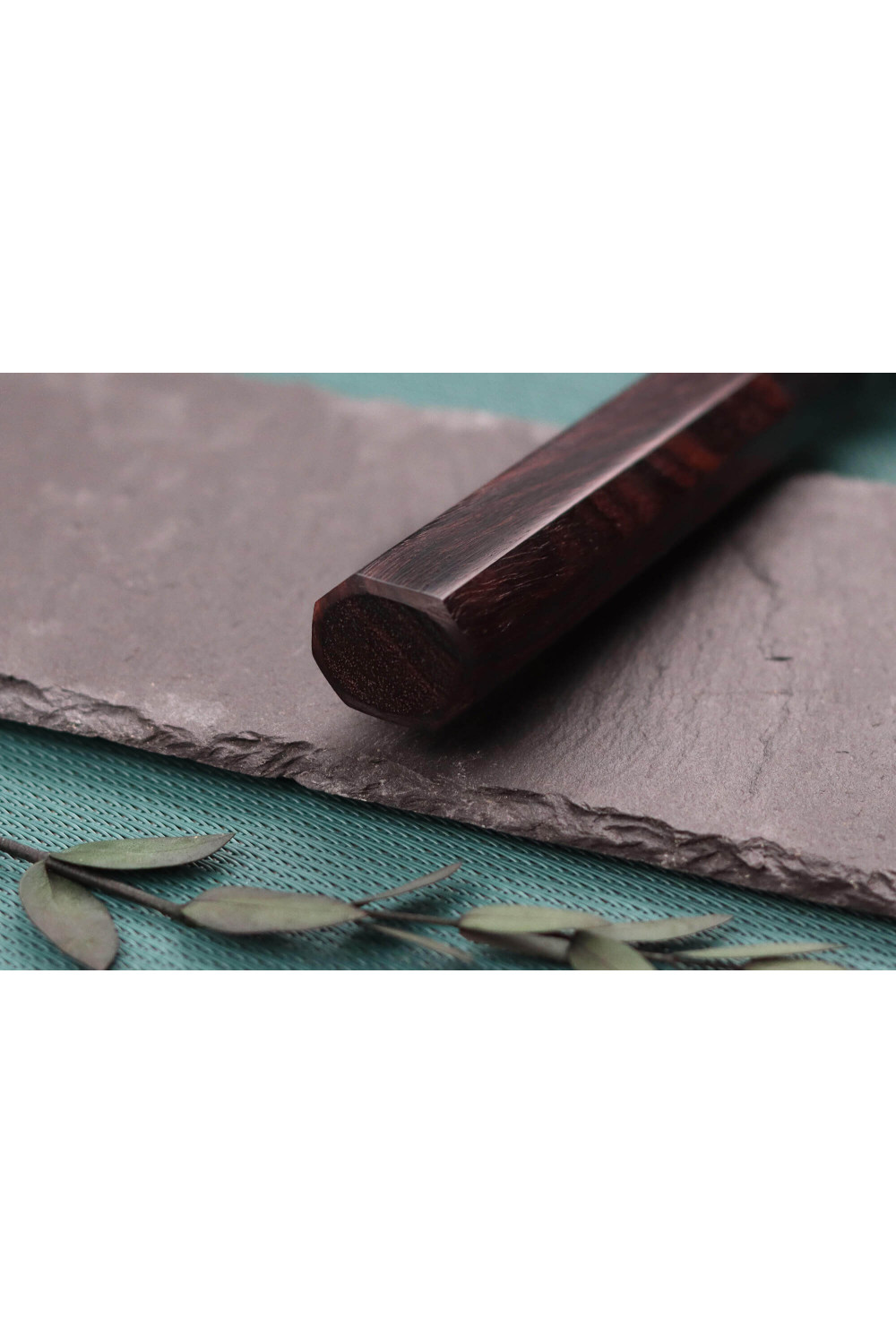
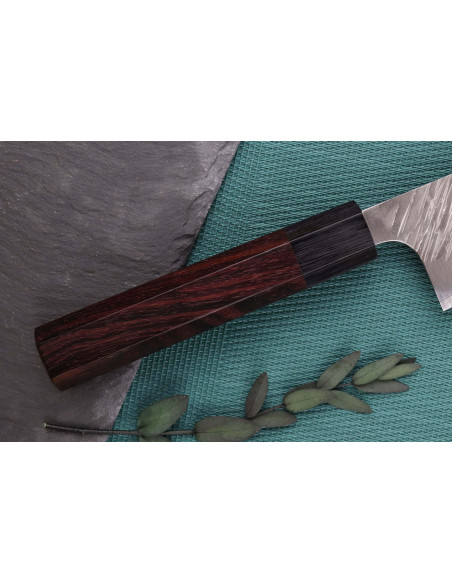
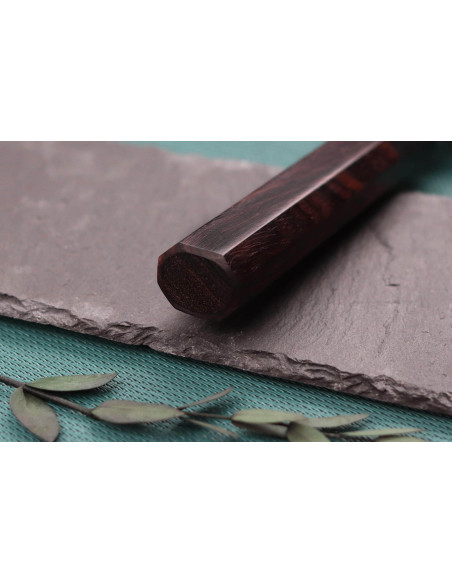
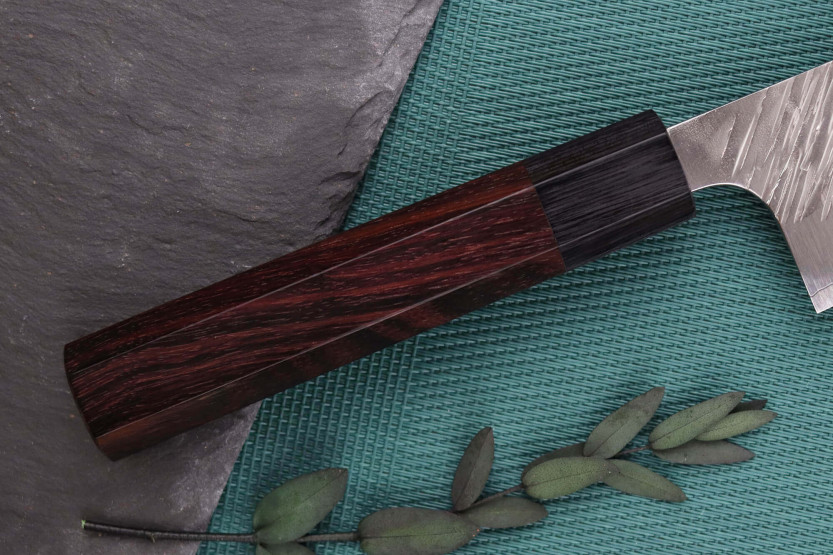
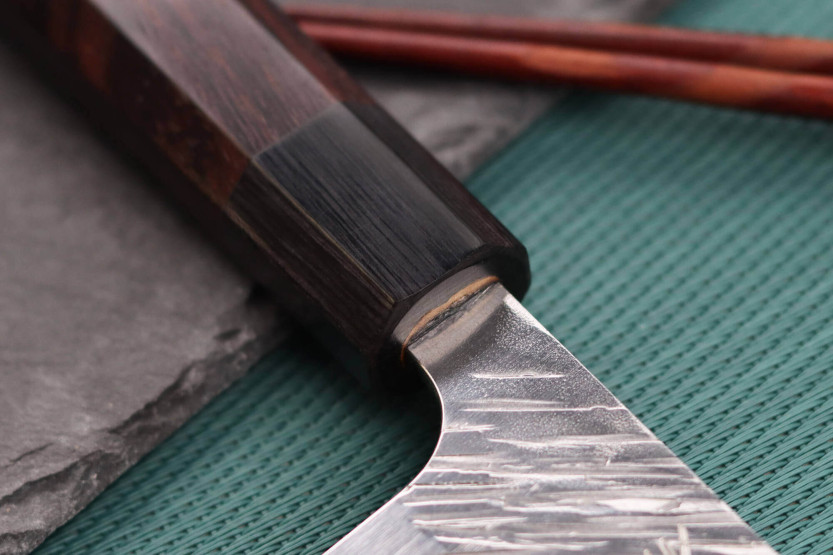
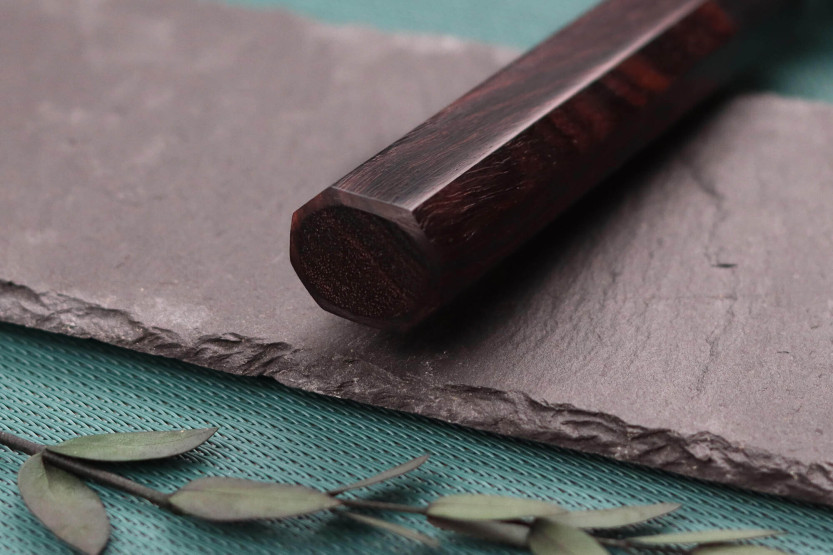
The handle is made of sandalwood, a pleasantly light, fine-grained wood. Its octagonal shape follows the shape of your palm, for marked control of the knife during use. A black pakkawood bolster sits between the blade and handle. The final result is very attractive.
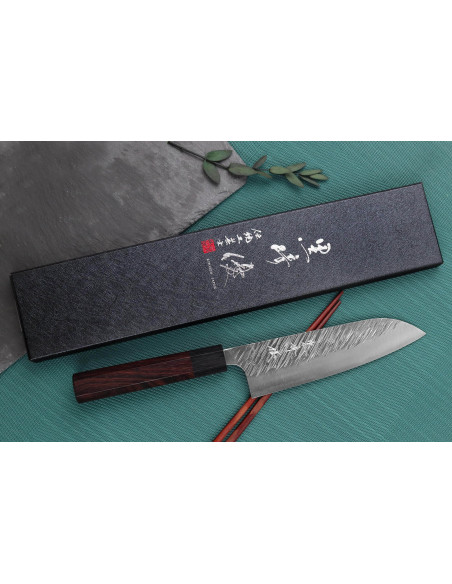
The knife should be washed by hand and wiped with a soft cloth before storage to protect it from moisture. It comes in a cardboard box.
Please note that quantities are limited, due to the provenance of the knives and the capacity of the blacksmith, who performs all operations by hand.
Come and discover the performance of Yu Kurosaki Fujin knives and enjoy their elegant, timeless style every day!
Find out more about all the knives developed by Yu Kurosaki san!




 By buying this product you can collect up to