The model :
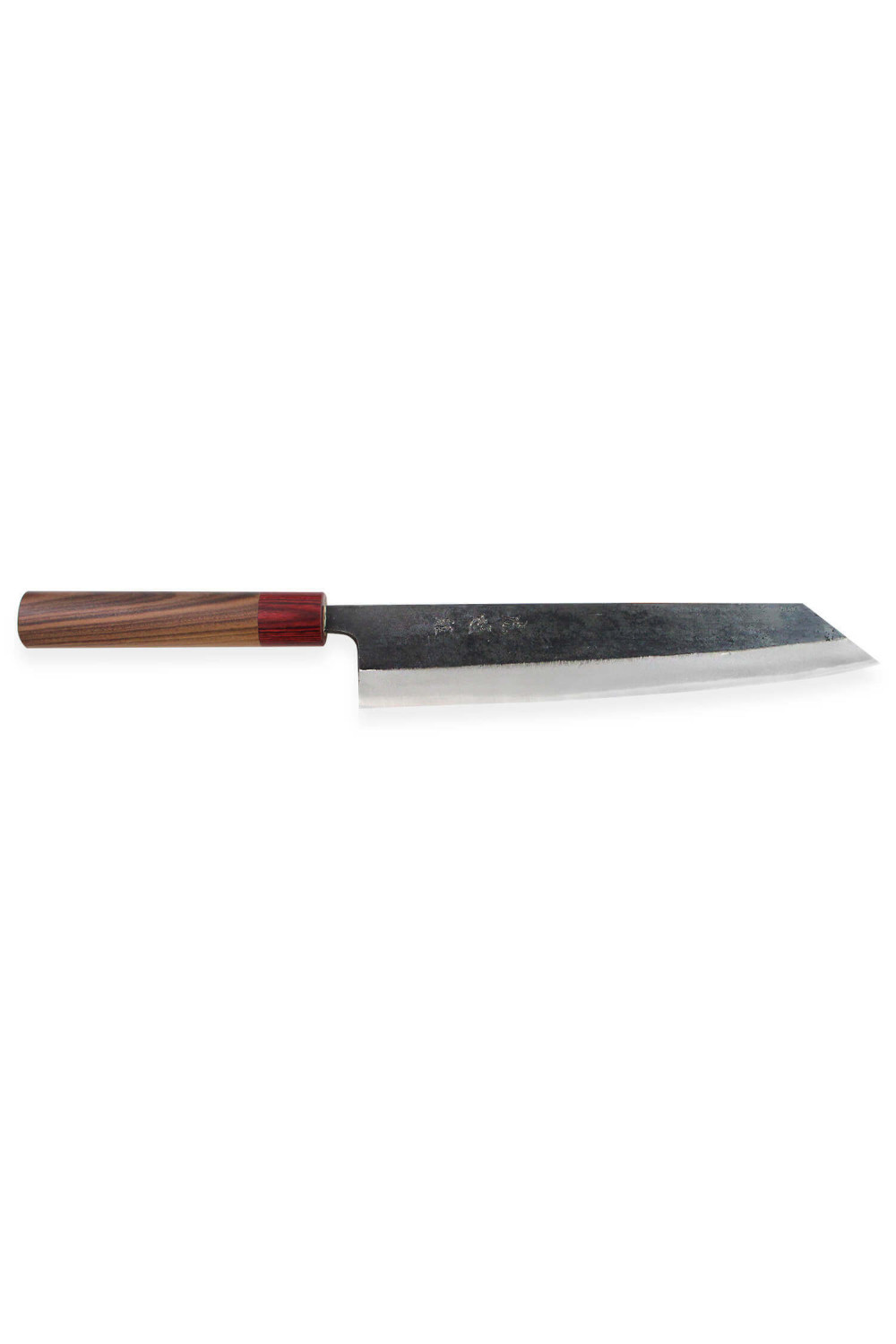
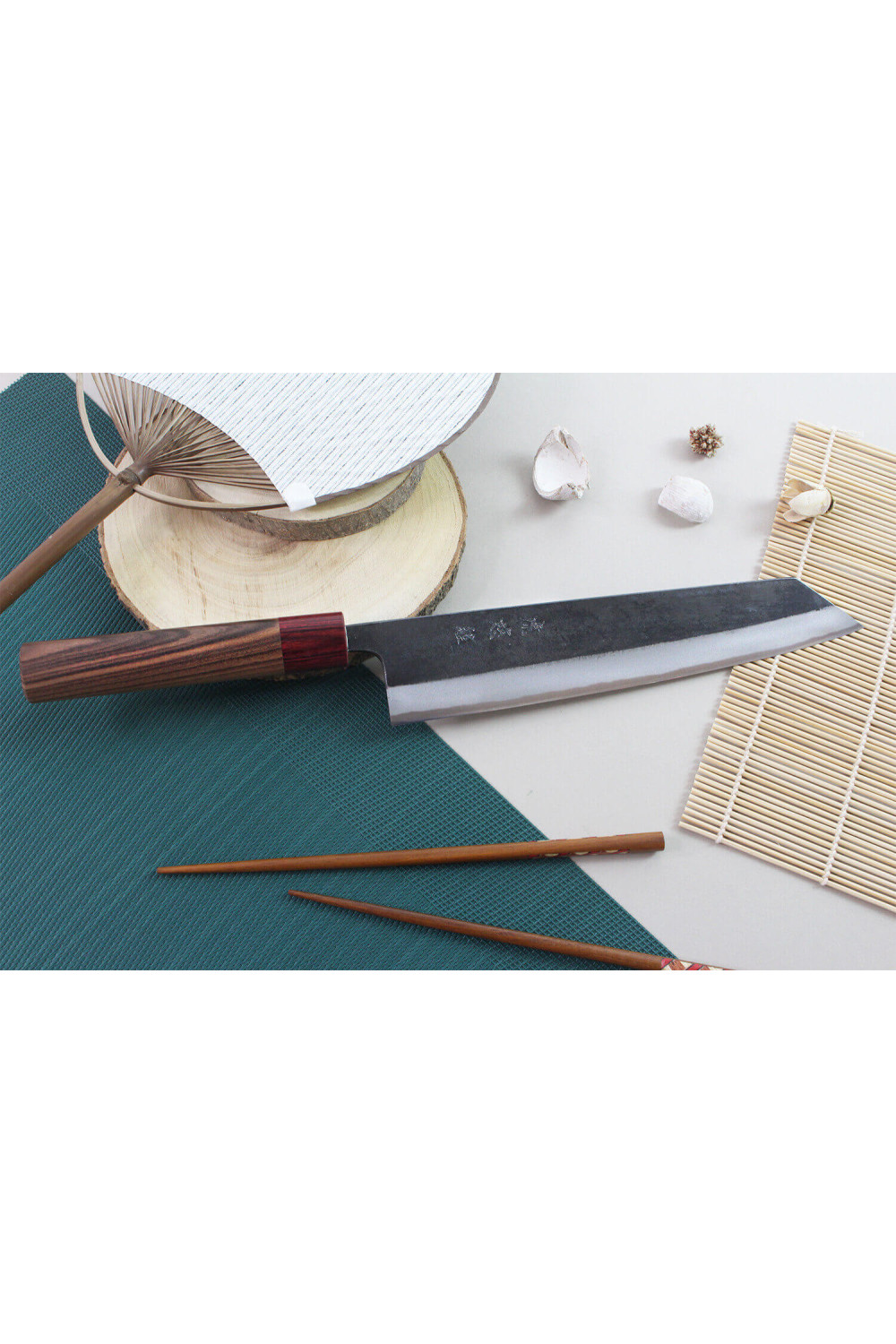
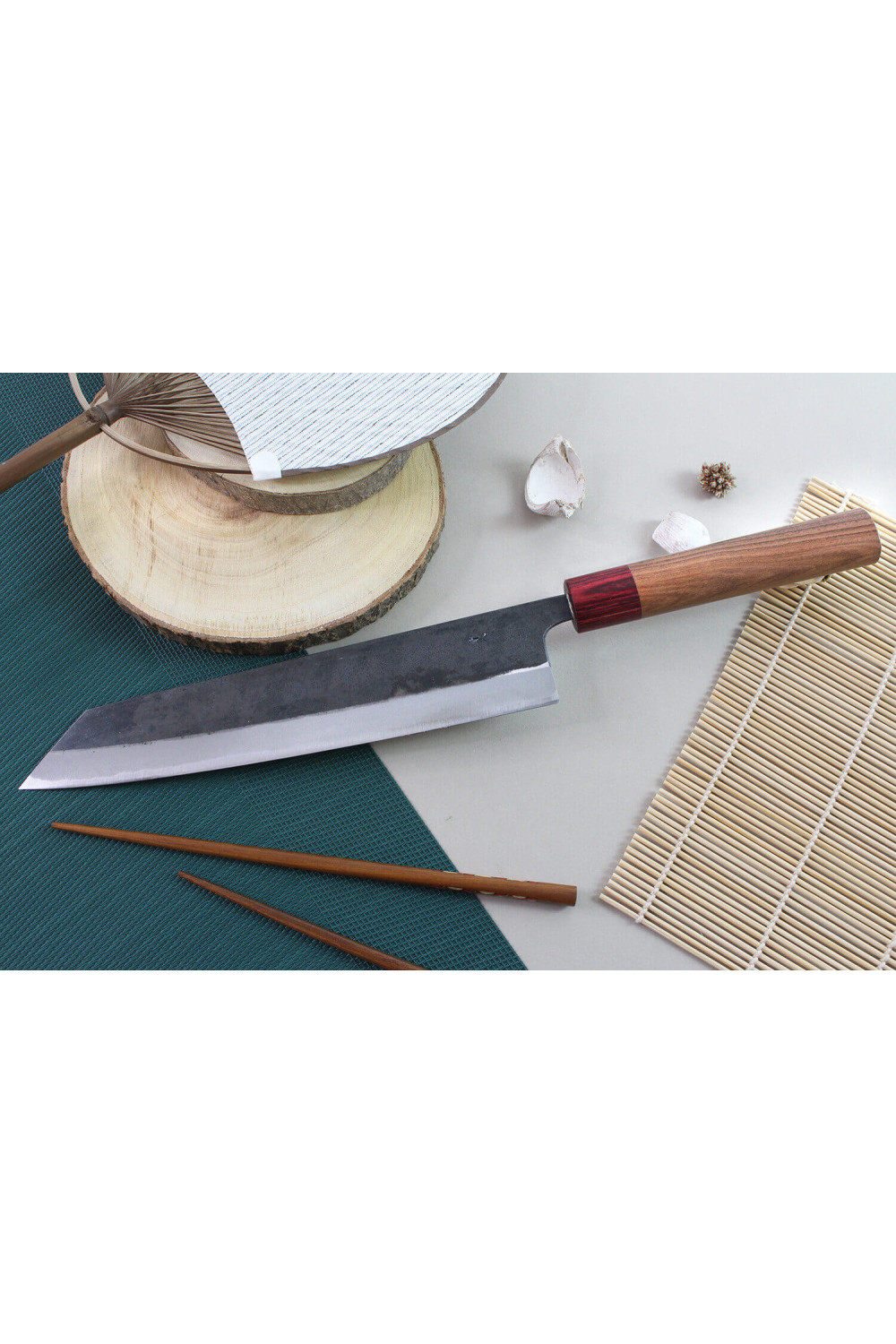
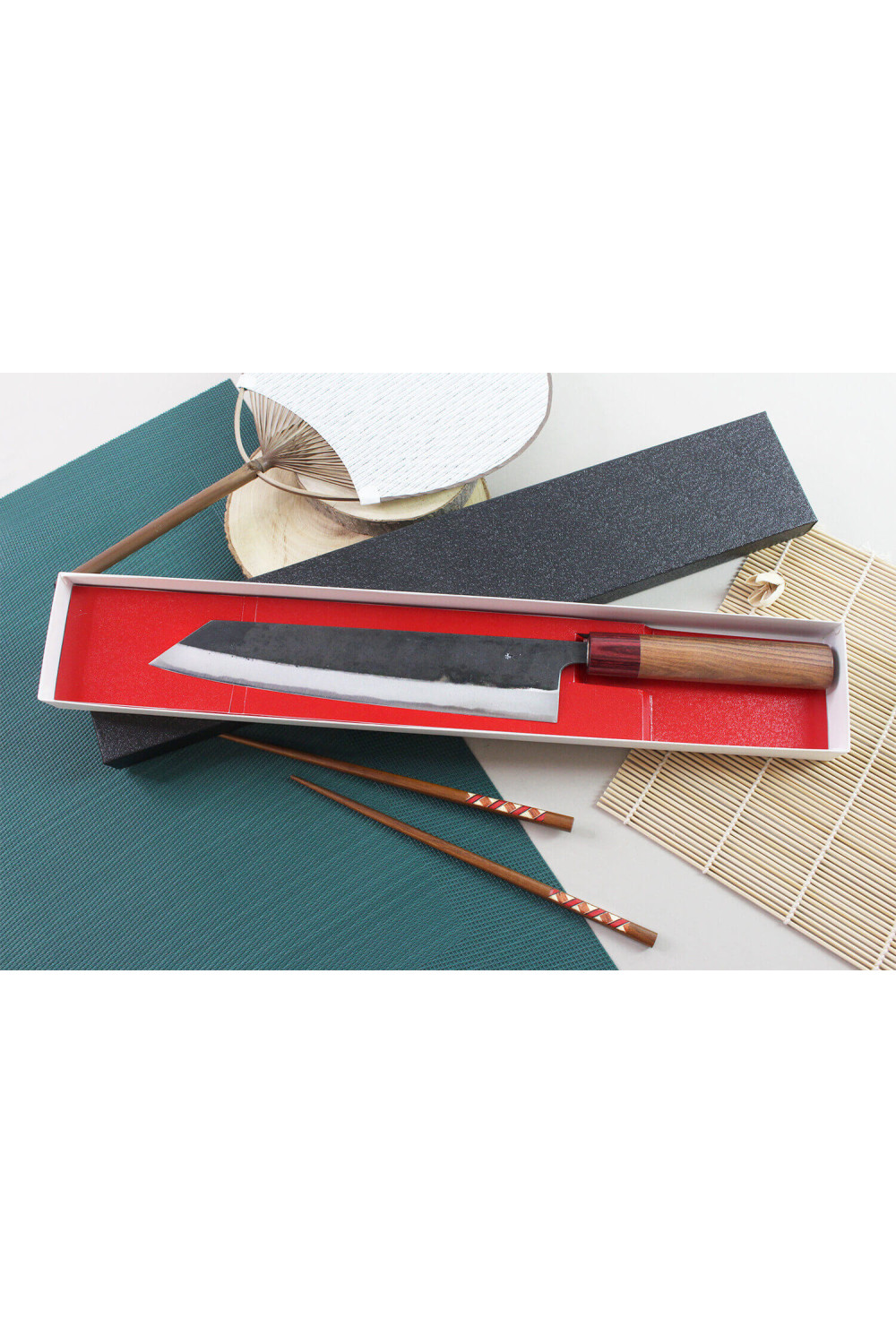
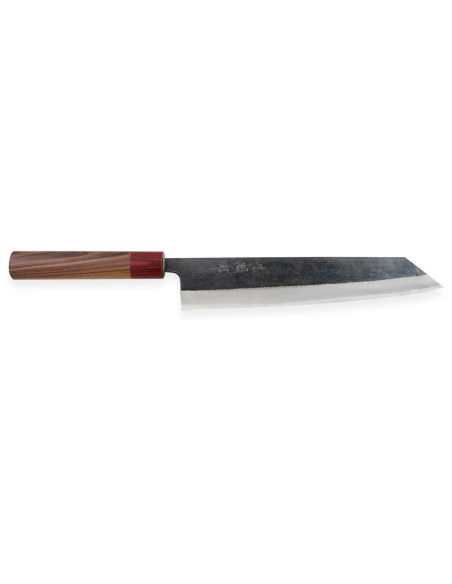
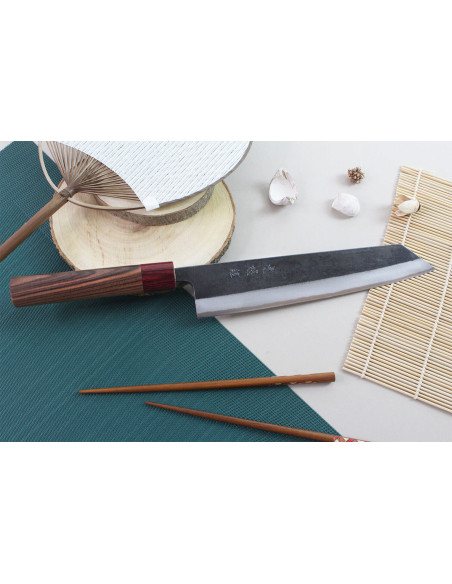
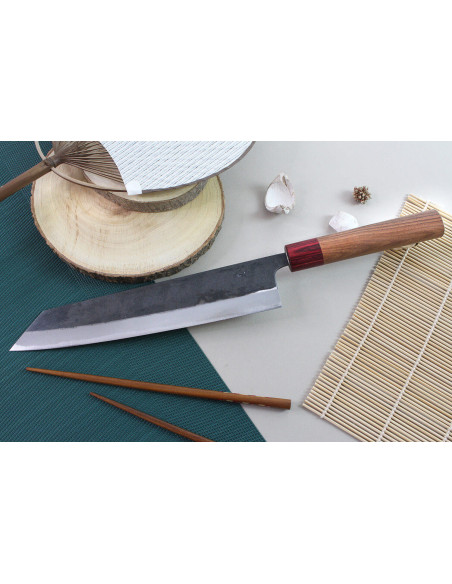
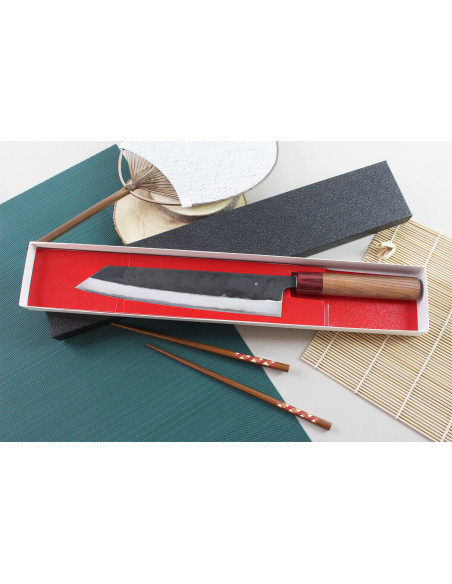
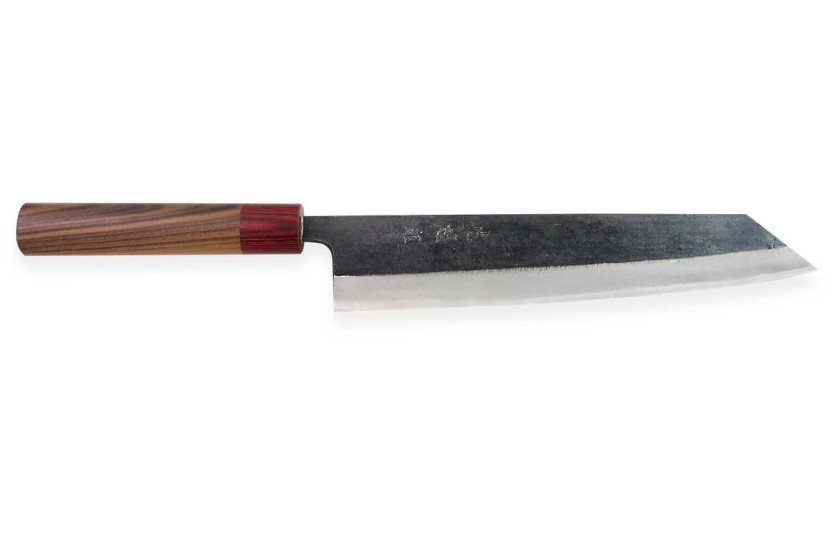
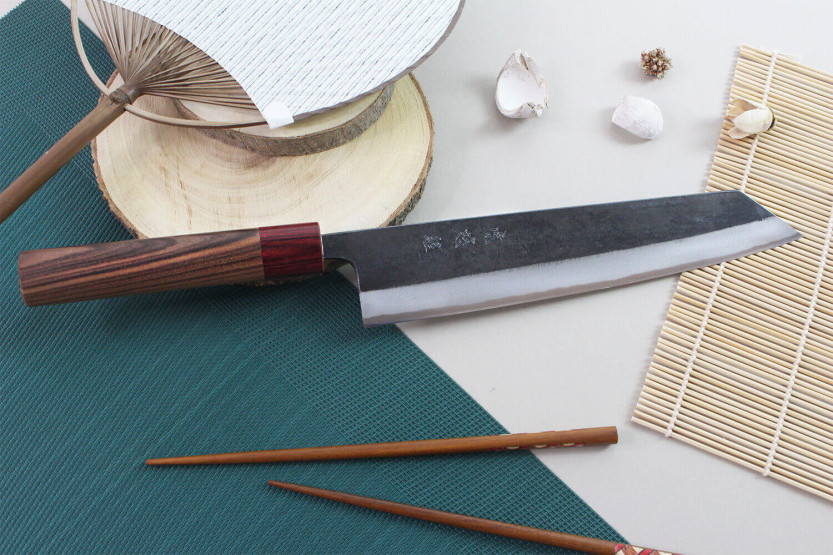
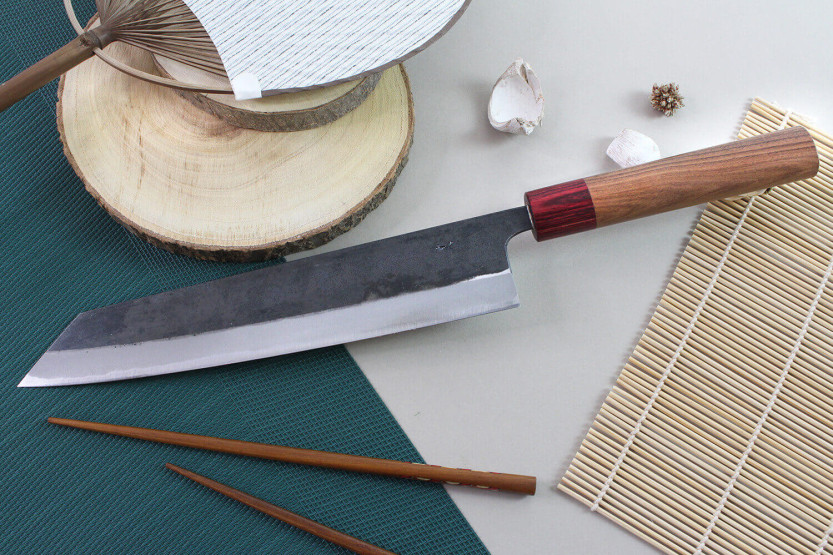
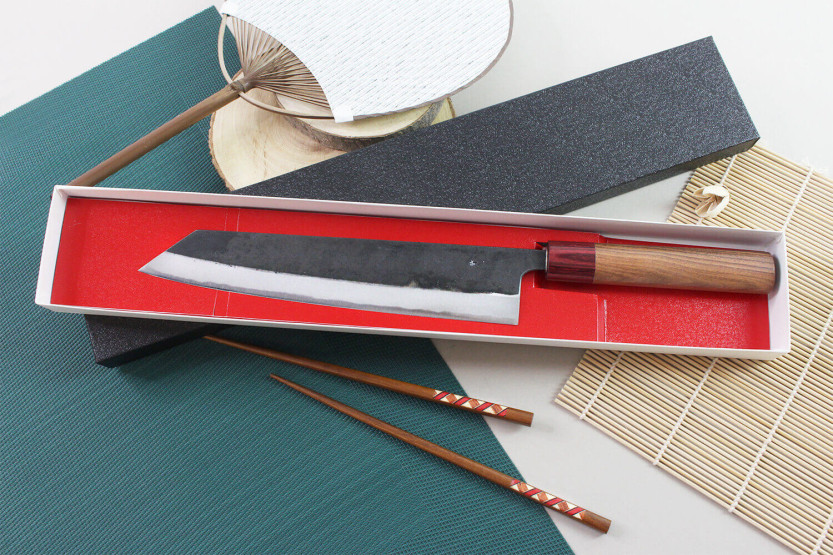
The typically Japanese shape of the Kiritsuke knife Wusaki YuzoKiritsuke knife will surprise you. It's like a chef 's knife: you can use it on a wide range of foods, for chopping, mincing or chiseling! Its sharp-edged blade makes it look like a traditional sword, and that gives it a lot of character.
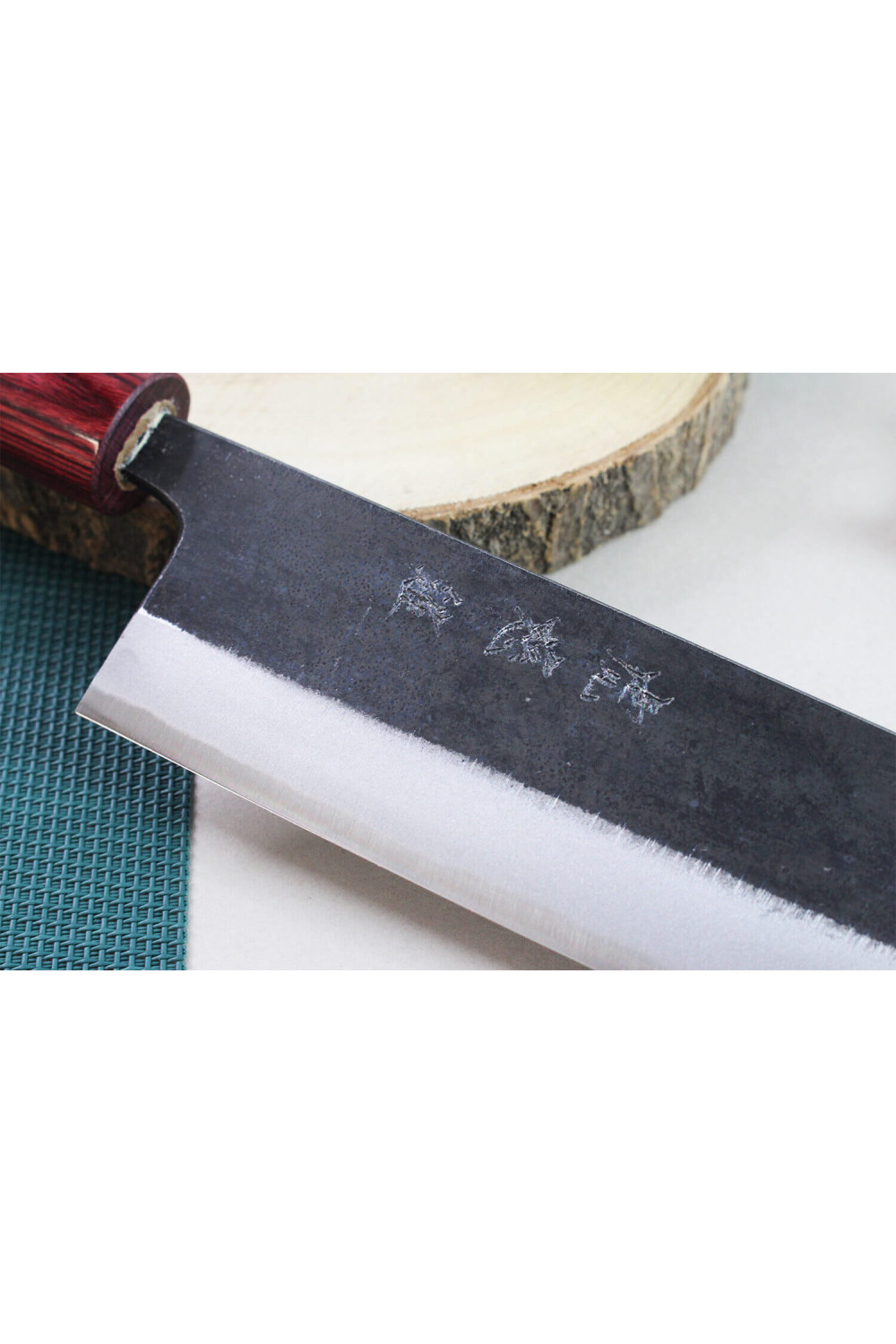
The blade has a San Maï base: this Japanese term designates a blade with 3 superimposed layers of steel. A core, often very rigid, lies in the center, and is then surrounded by a protective layer that folds around it (hence the 3 layers).
The case of the Yuzo knife:
-In the center, we have a core of Japanese Aogami 2 steel (also known as Blue #2 Steel). Its name comes from the white protective paper that surrounds it. It is produced and packaged by Hitachi steelworks. They are renowned the world over, supplying steel to many knife manufacturers! This precise alloy has a carbon content of 1.2%, higher than the average found in Western knives (around 0.5%).
With so much carbon, the steel is more rigid, which in turn means it can be sharpened with greater precision. When you want to maintain the sharpness of your knife, do so with a Sharpening stone.
-A layer of soft iron then surrounds it. This gives it suppleness (not in terms of flexibility, but rather in terms of resistance to breakage when you use it!).
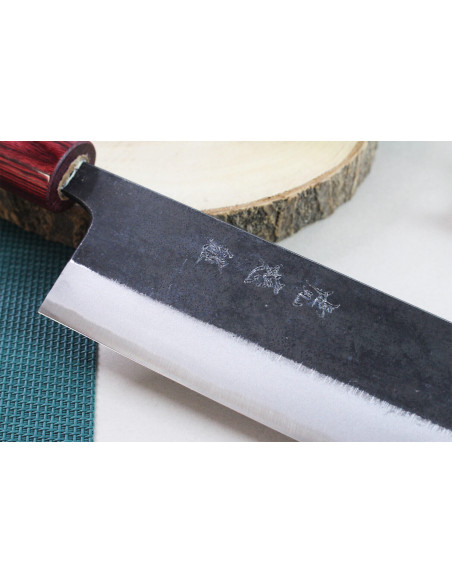
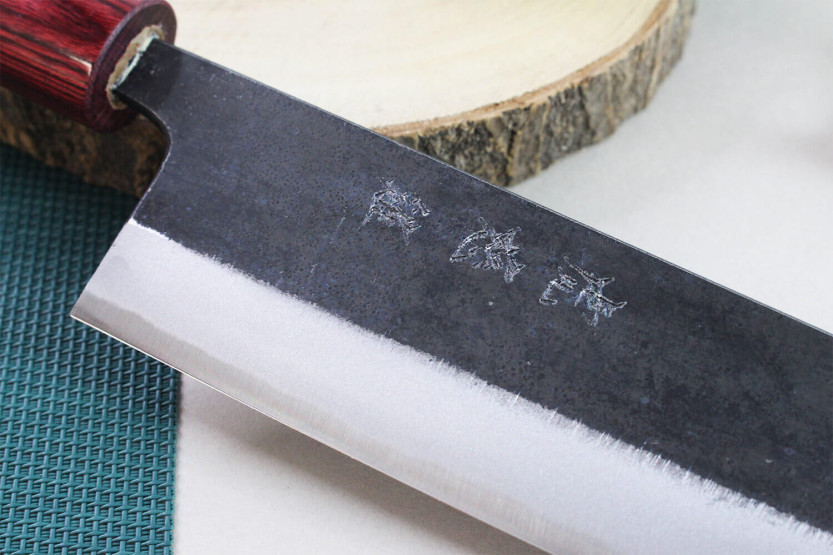
Finally, beautiful kanji have been engraved on the blade, for even greater authenticity.
The rough-forged look also adds a rustic touch to the knife. This type of finish is very popular with Japanese chefs, as it has a more traditional appearance!
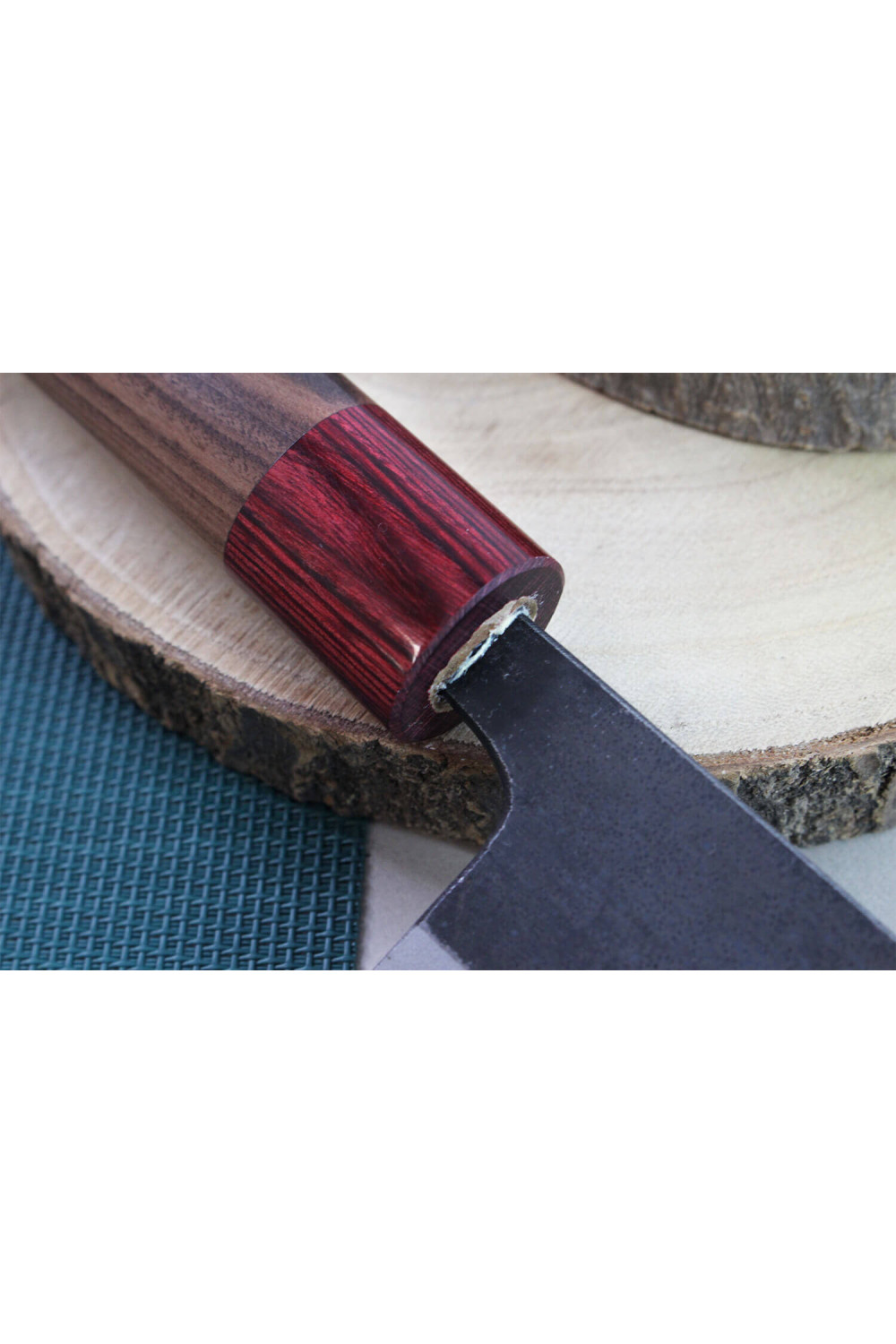
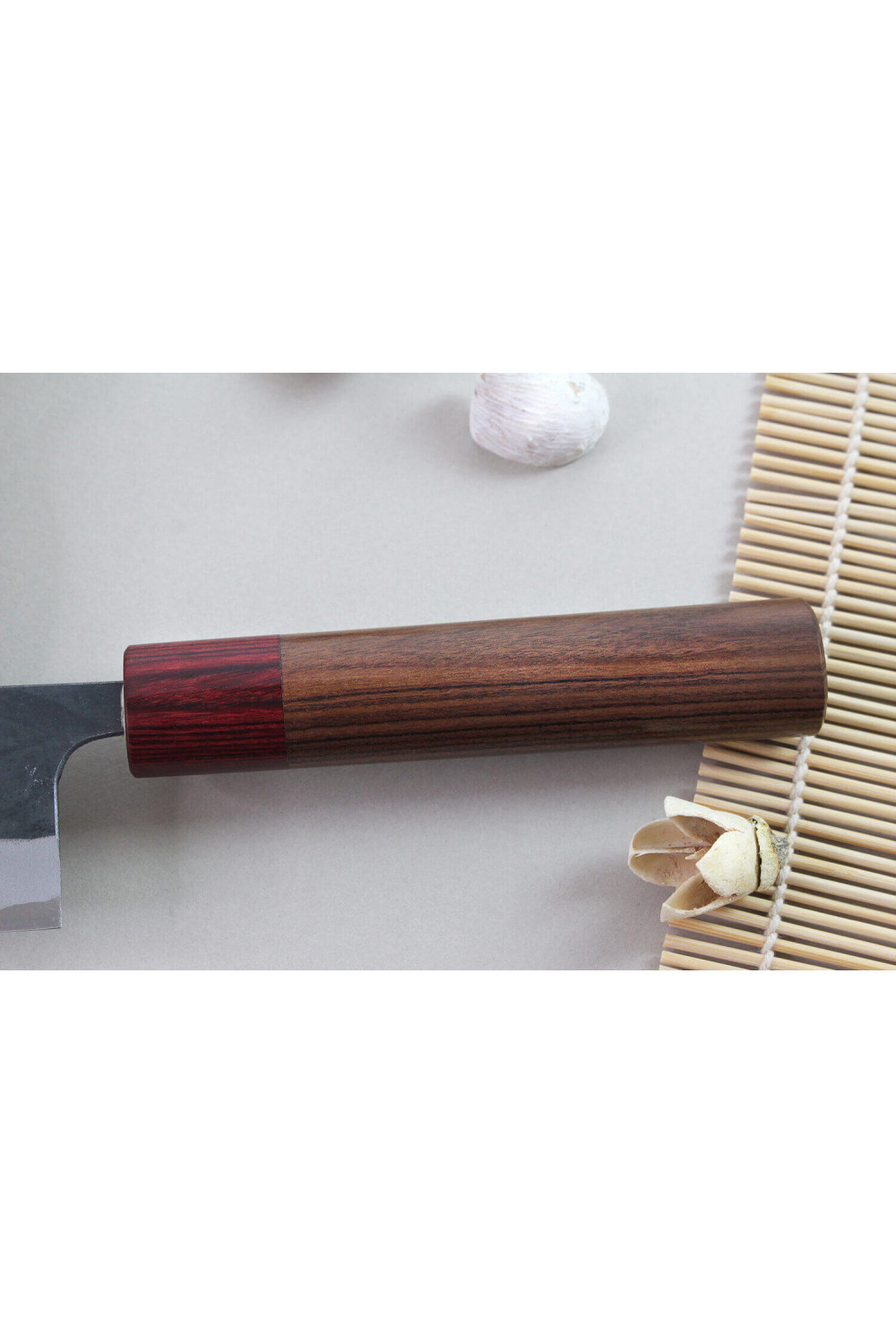
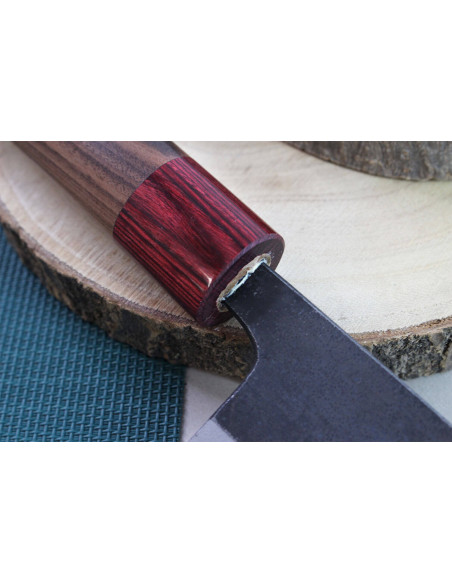
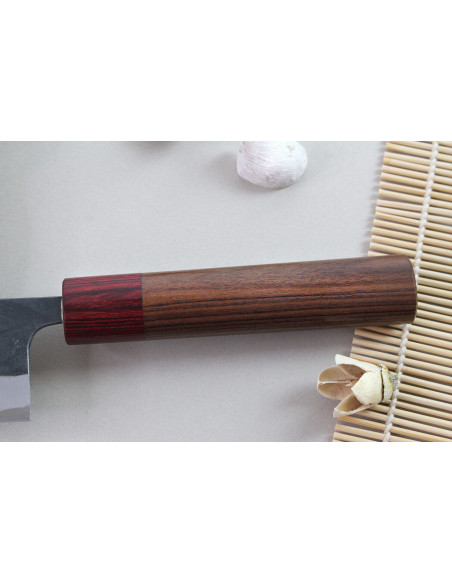
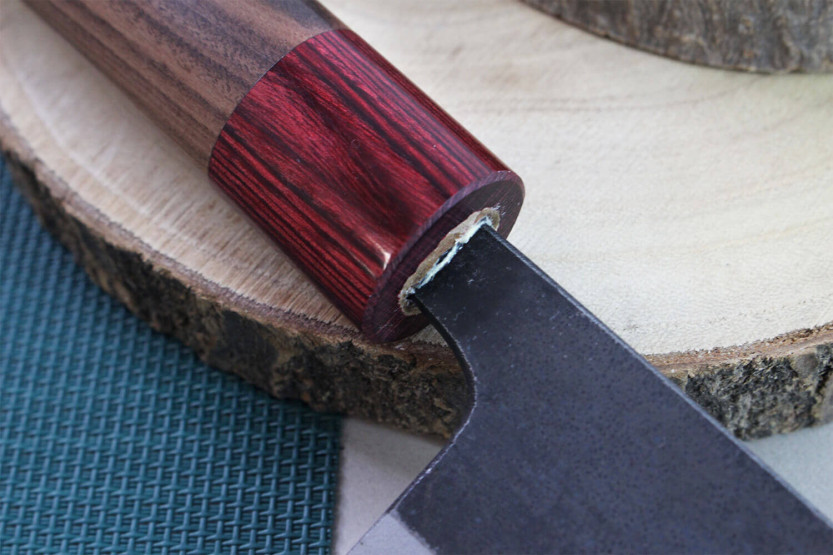
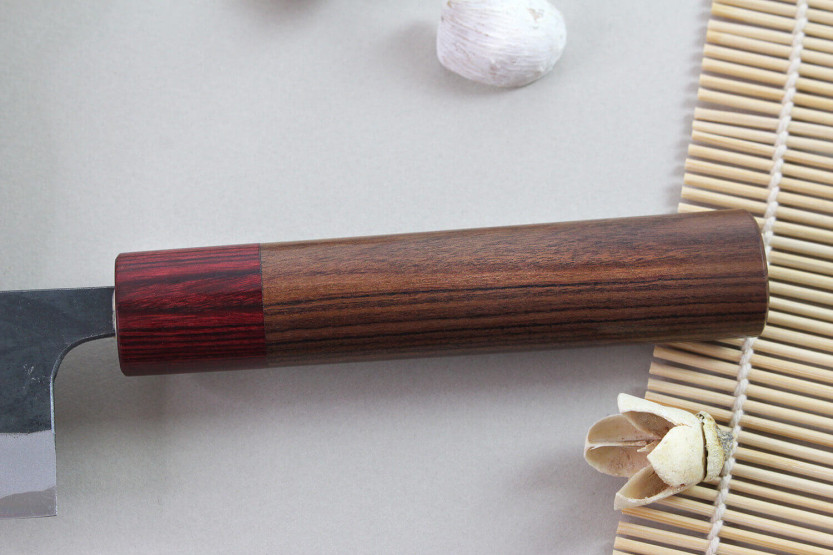
The handle is then joined by a Bolster made from Pakka wood. This is a composite material made from laminated wood and resin, which are compressed together. The result is natural, with a few wood-like veins visible. It's a resistant material, especially to humidity and temperature variations!
Pakkawood is filled with wood paste at the joint with the blade. This makes the handle watertight, to prevent small scraps from getting inside.
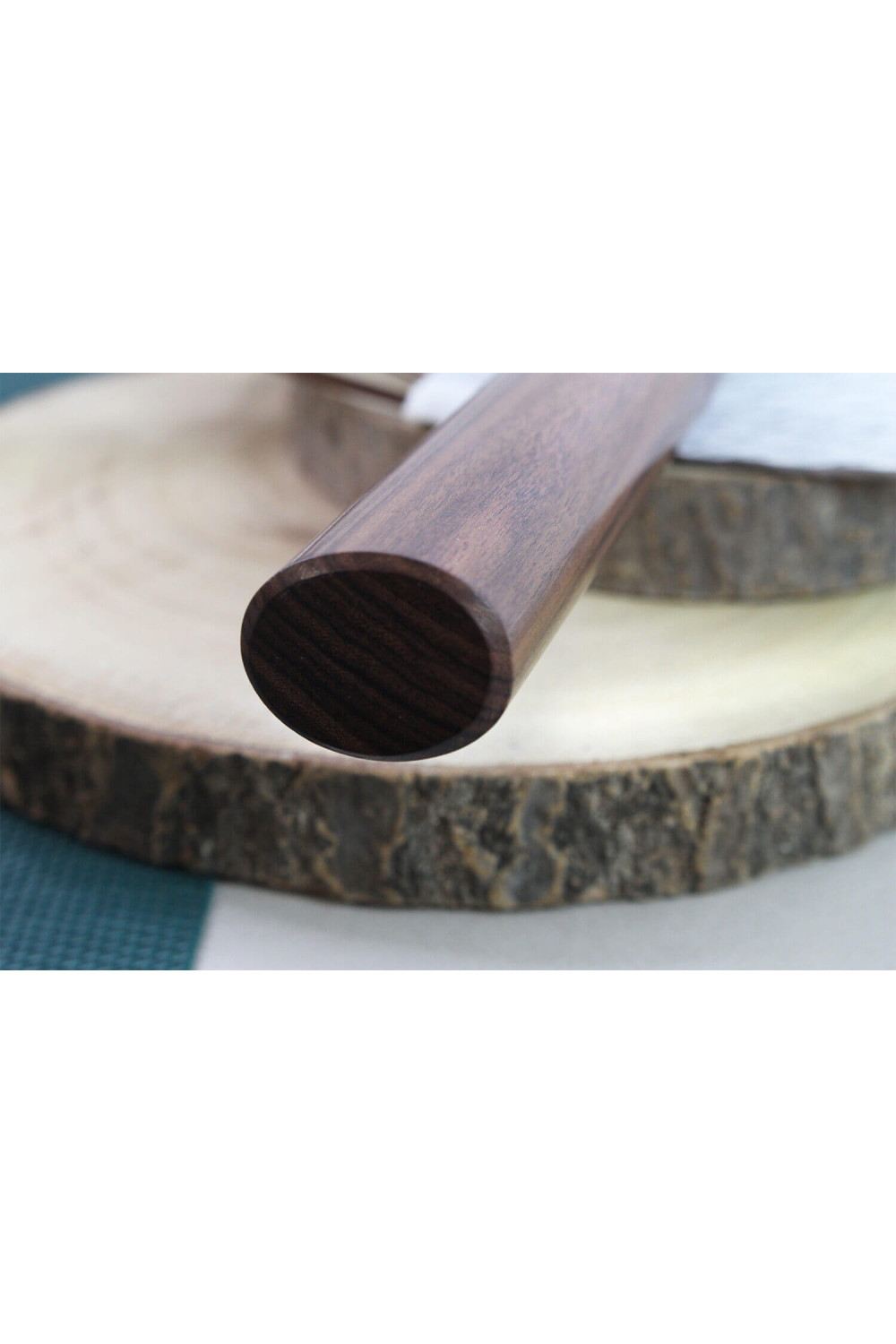
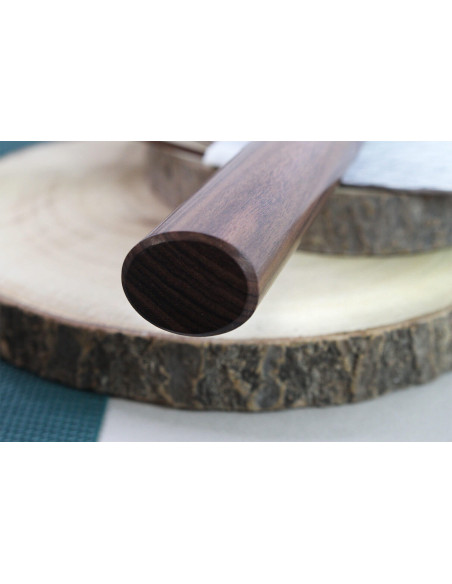
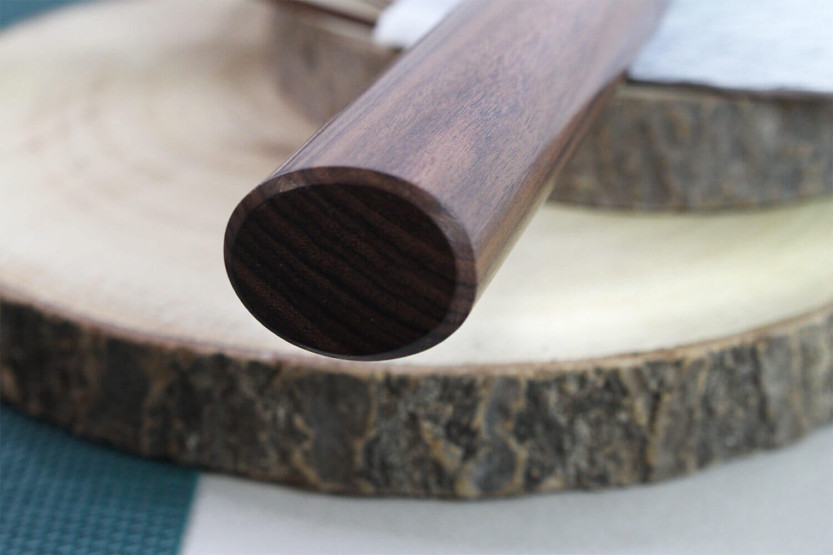
Pakka wood is extended by Morado wood. This top-of-the-range exotic wood has very pleasant warm hues. The wood grain is unique to each piece. Its oval shape allows ambidextrous use. The whole thing remains light and easy to handle.
Things to know:
-Muneishi Forge was founded in 1955 by Hirotaka Muneishi san, who was part of the family's second generation of blacksmiths. Initially, the focus was on tools such as axes and machetes. It was with the third generation of blacksmiths that the family turned to kitchen knives: Kosuke Muneishi took over the work and carries out all the manufacturing stages himself, from forging and tempering to hammering and sharpening.
-The blade is sensitive to oxidation (carbon and iron). So wash the knife by hand, without soaking it in the sink. After washing, wipe with a soft cloth to remove all traces of moisture. Please note, however, that it may vary in color over time, even if you are very careful. This is a normal evolution of the alloy (the knife is in constant contact with moist food, and moisture is also found in the ambient air...). You can apply mineral oil to the steel from time to time.
-The blade arrives slightly oiled. This is perfectly normal, and helps protect the blade. Simply wash the knife before using it for the first time, and the oil will disappear.
-As production is carried out by hand, stocks are limited and restocking times vary.
Find out more about the Yuzo Wusaki series for a variety of cuts!




 By buying this product you can collect up to