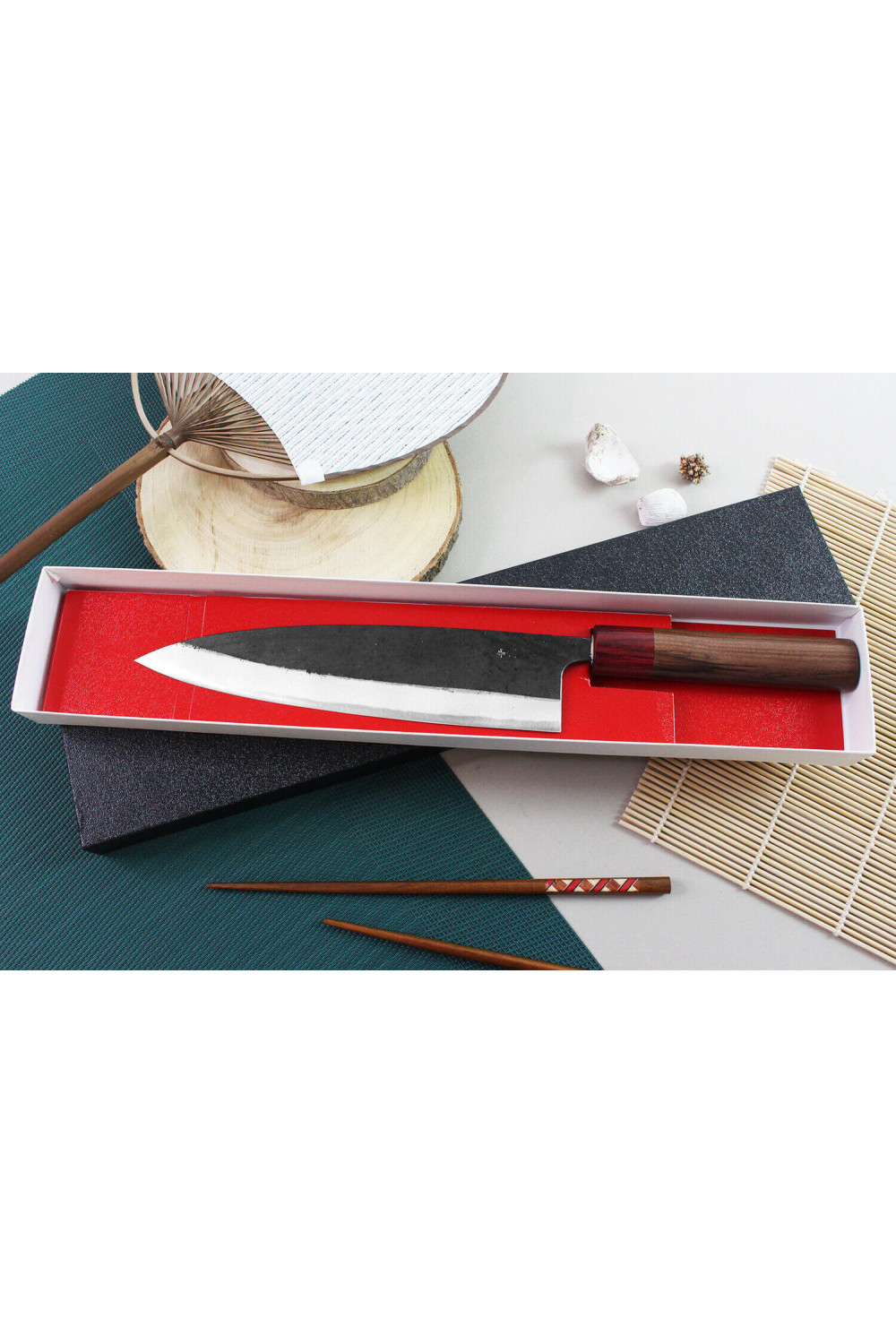
A 100% Japanese model:
Muneishi Forge was founded in 1955 by Hirotaka Muneishi san, who was part of the family's second generation of blacksmiths. Initially, the focus was on tools such as axes and machetes. It was with the third generation of blacksmiths that the family turned to kitchen knives: Kosuke Muneishi took over the work and carries out all the manufacturing stages himself, from forging and tempering to hammering and sharpening.
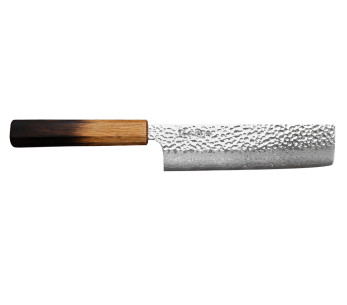
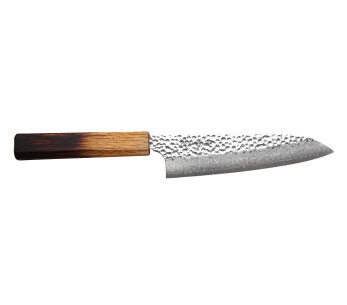
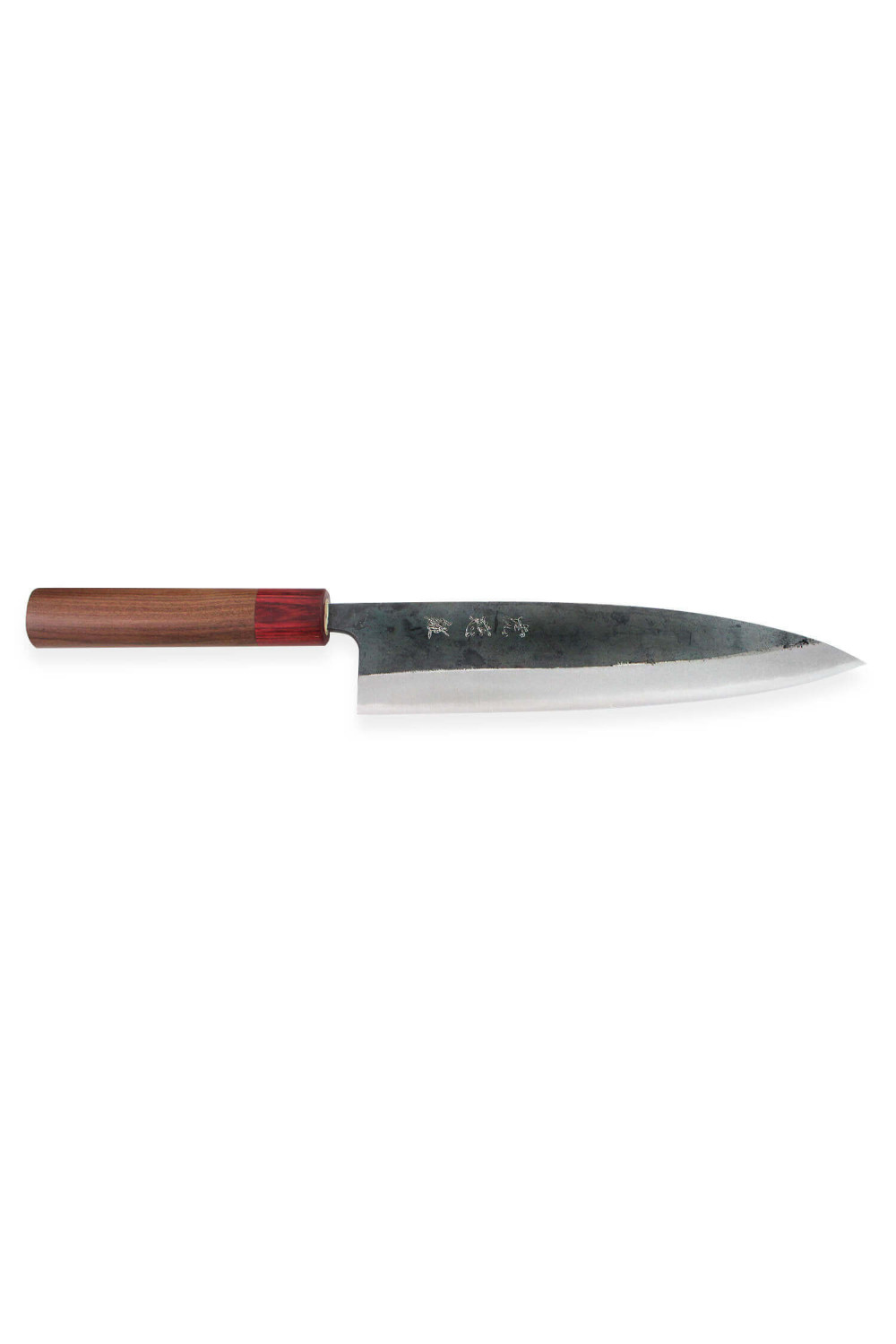
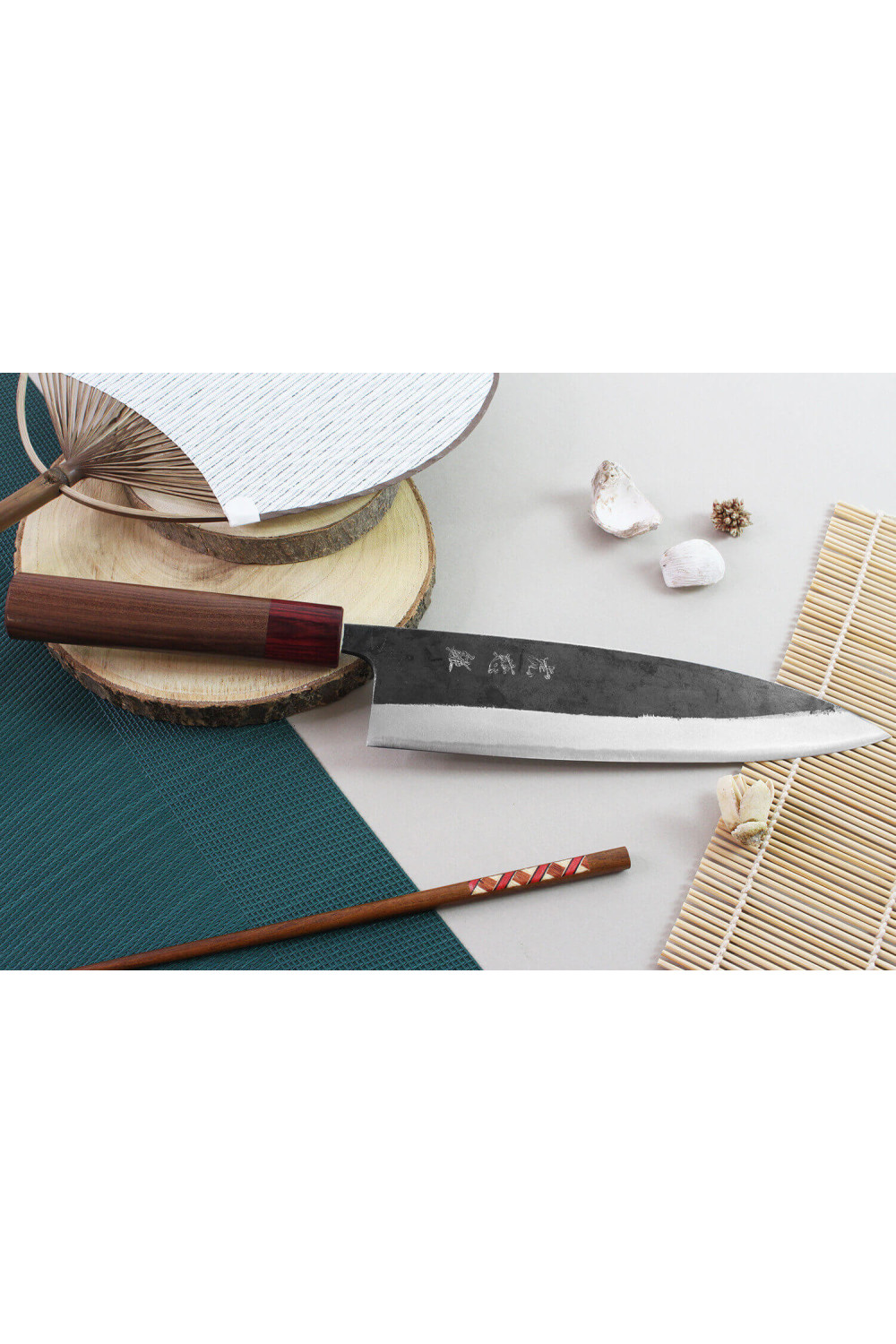
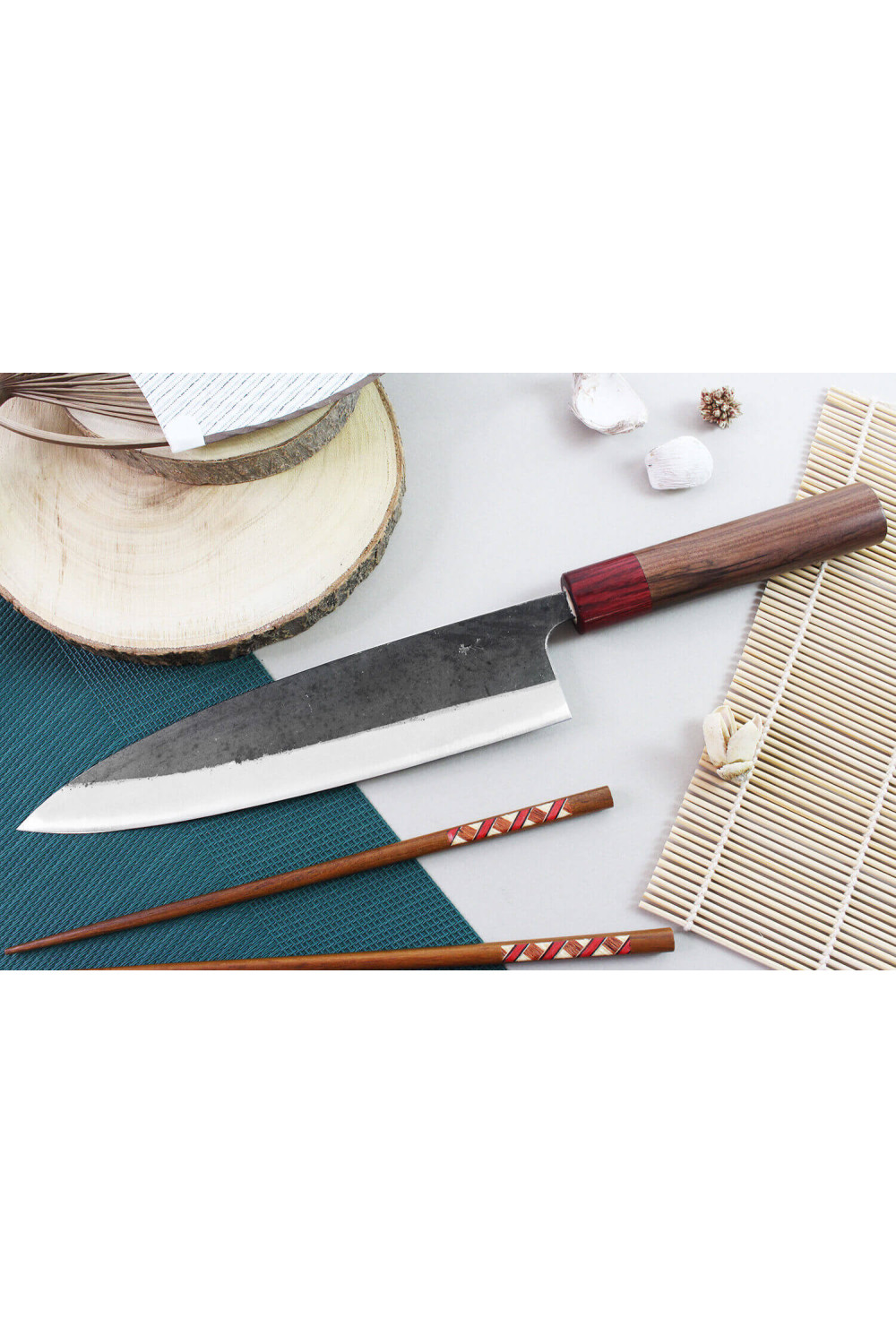
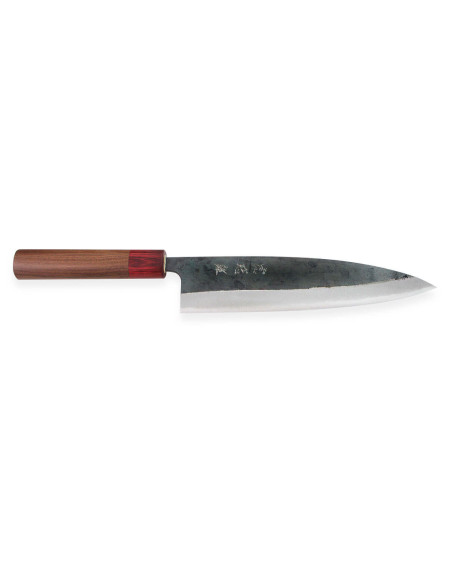
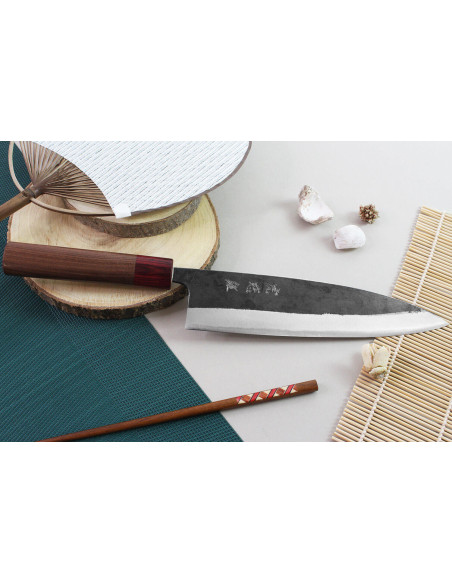
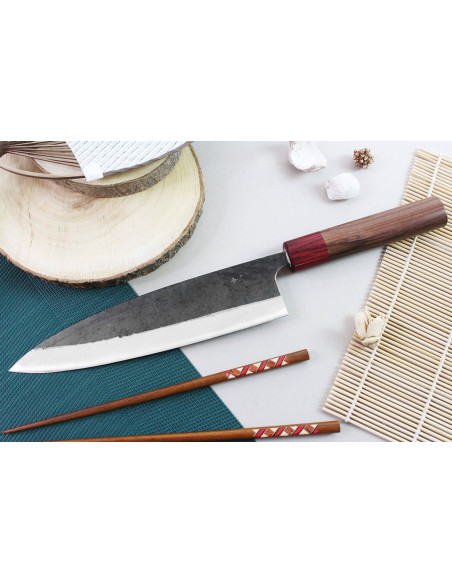
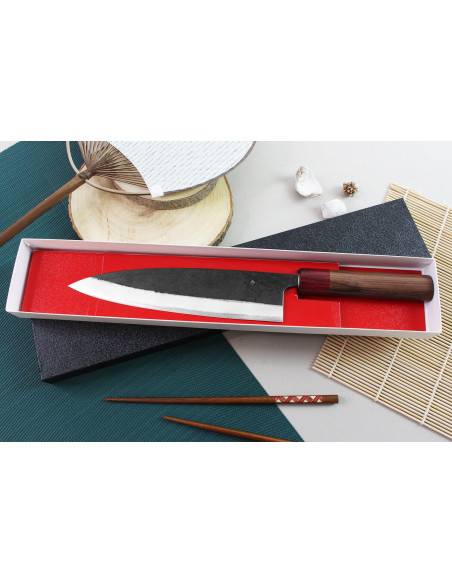
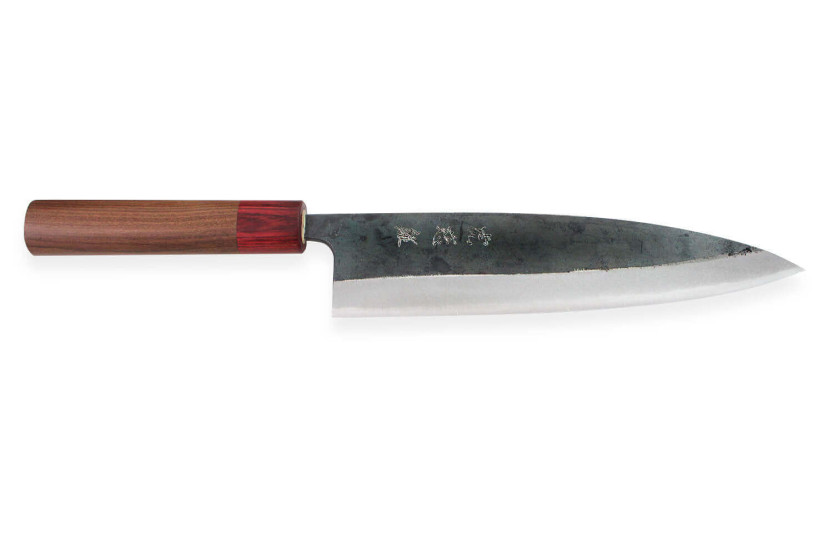
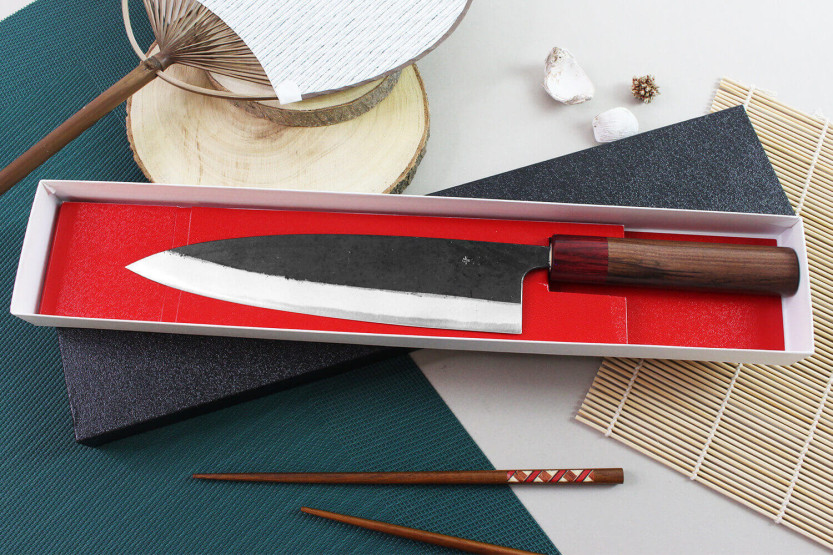
This Wusaki Yuzo 21cm chef's knife is the ultimate all-rounder! It lets you chop, mince or mince a wide range of foods. With it, you can tackle meat, vegetables, fresh herbs...
Please note, however, that since production is carried out by hand, stocks are limited and restocking times variable.
Technical specifications :
The blade is called San Maï. What does this Japanese term mean? It means that the blade is composed of 3 superimposed layers of steel. In the center, the core is often very hard. Then comes a protective layer that folds over (hence the 3 layers observed).
- The core is made of Aogami 2 (also known as Blue #2 Steel), a Japanese steel produced by the internationally renowned Hitachi steelworks.
This alloy contains 1.2% carbon, above the average found in Western knives (around 0.5%). This carbon makes the steel stiffer, which in turn enables it to be sharpened more sharply. This improves your cutting edge, for effortless, clean cuts. By the way, when you want to maintain the edge of your knife, do it with a stone of the right grit!
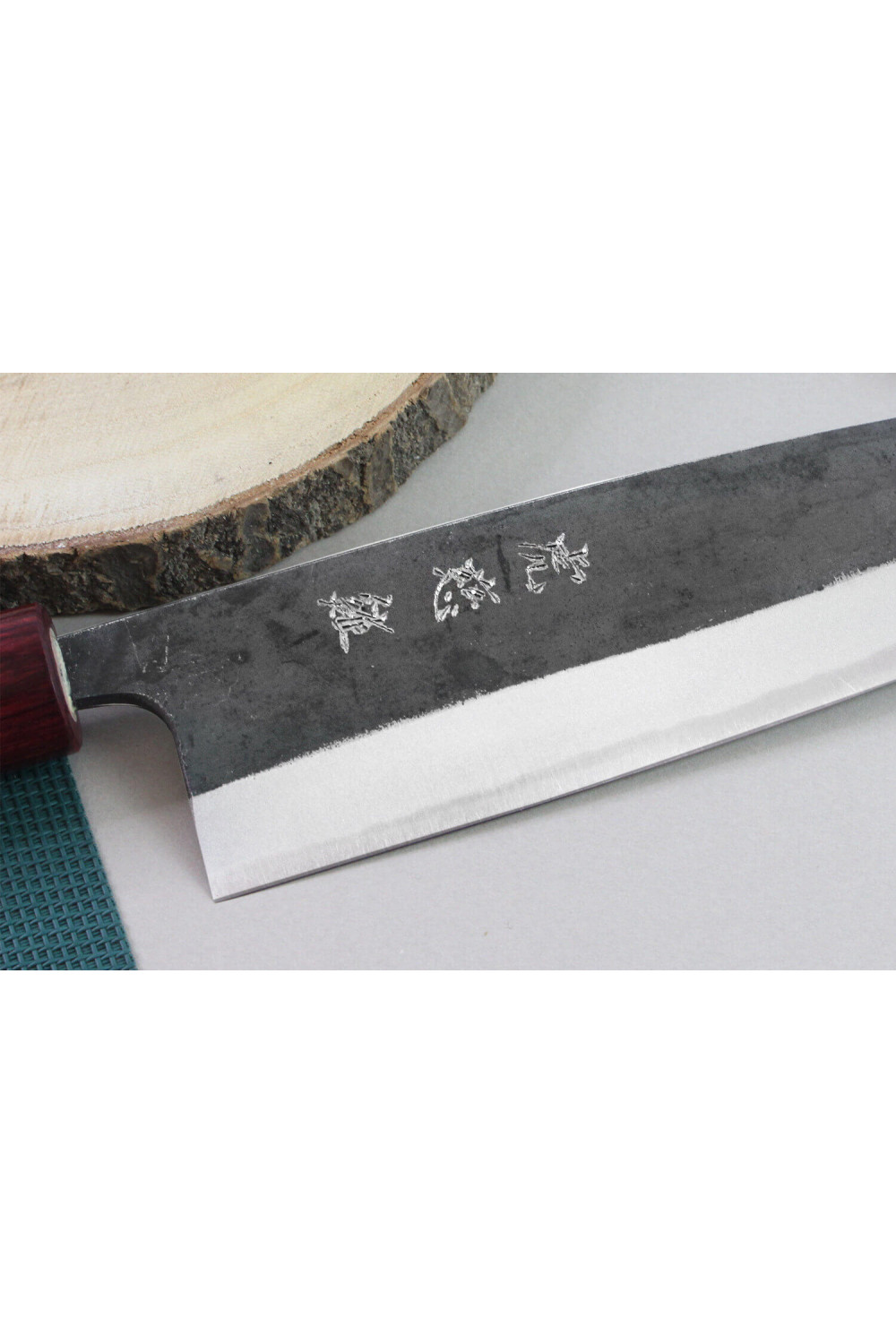
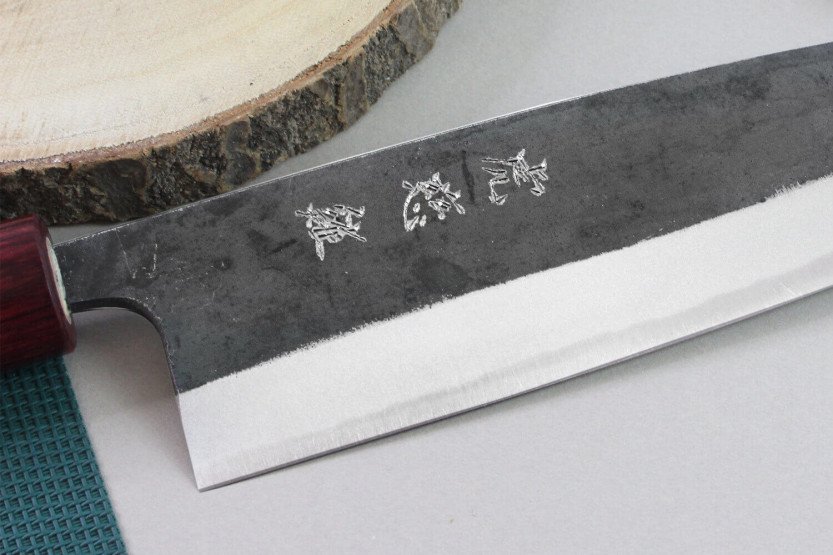
- A layer of soft iron surrounds the hard core. You can see this difference in alloys on the bottom of the blade, with the demarcation of colors. The iron adds a little suppleness (not in terms of flexibility, but rather in terms of resistance to breakage).
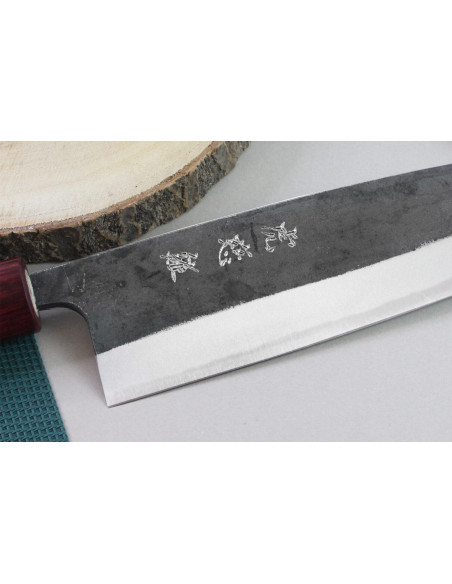
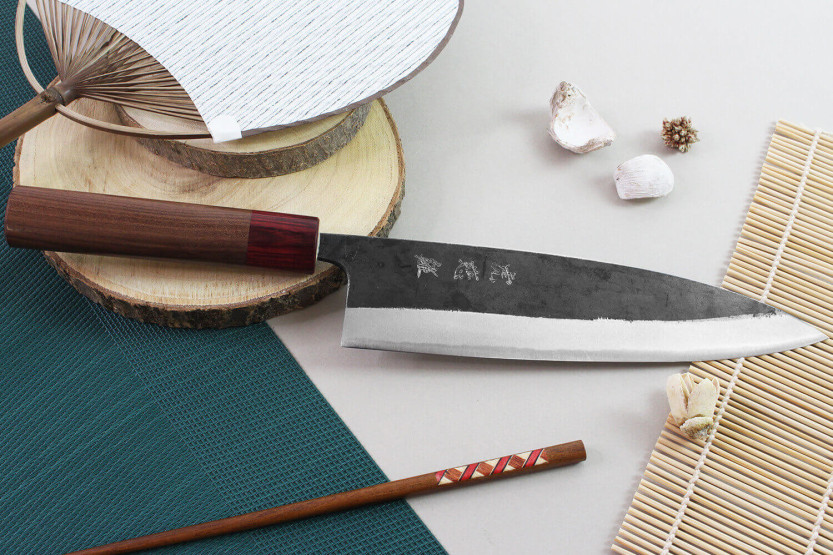
Discreet kanji are engraved on the cutting surface, for an authenticity that will delight connoisseurs.
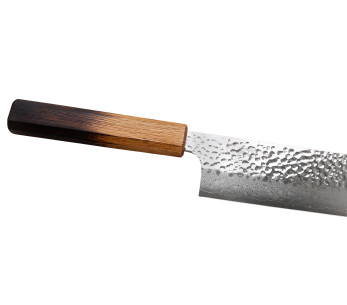
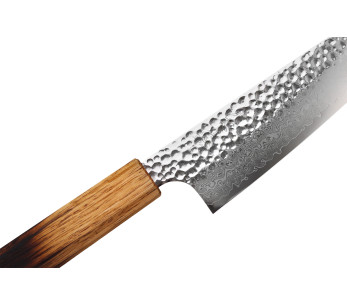
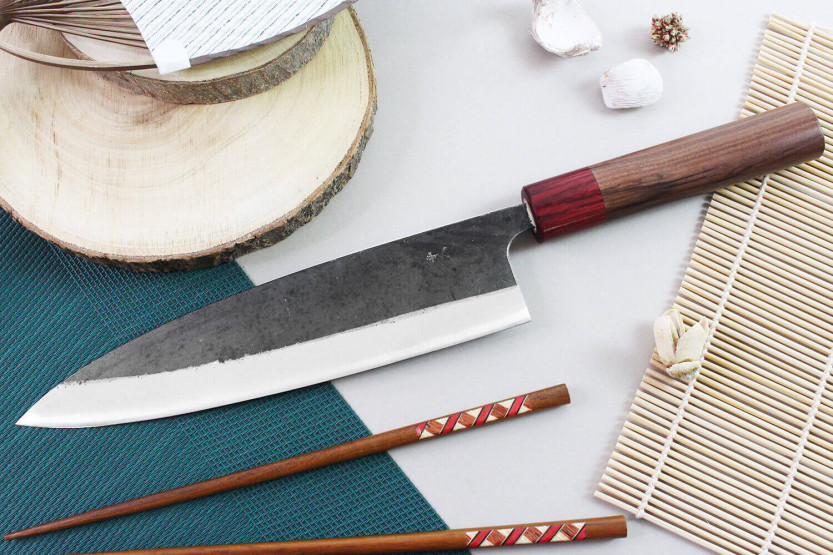
The rough forged finish also adds a rustic touch to the knife. This type of finish is very popular with Japanese chefs, as it has a more traditional appearance, and gives it lots of character!
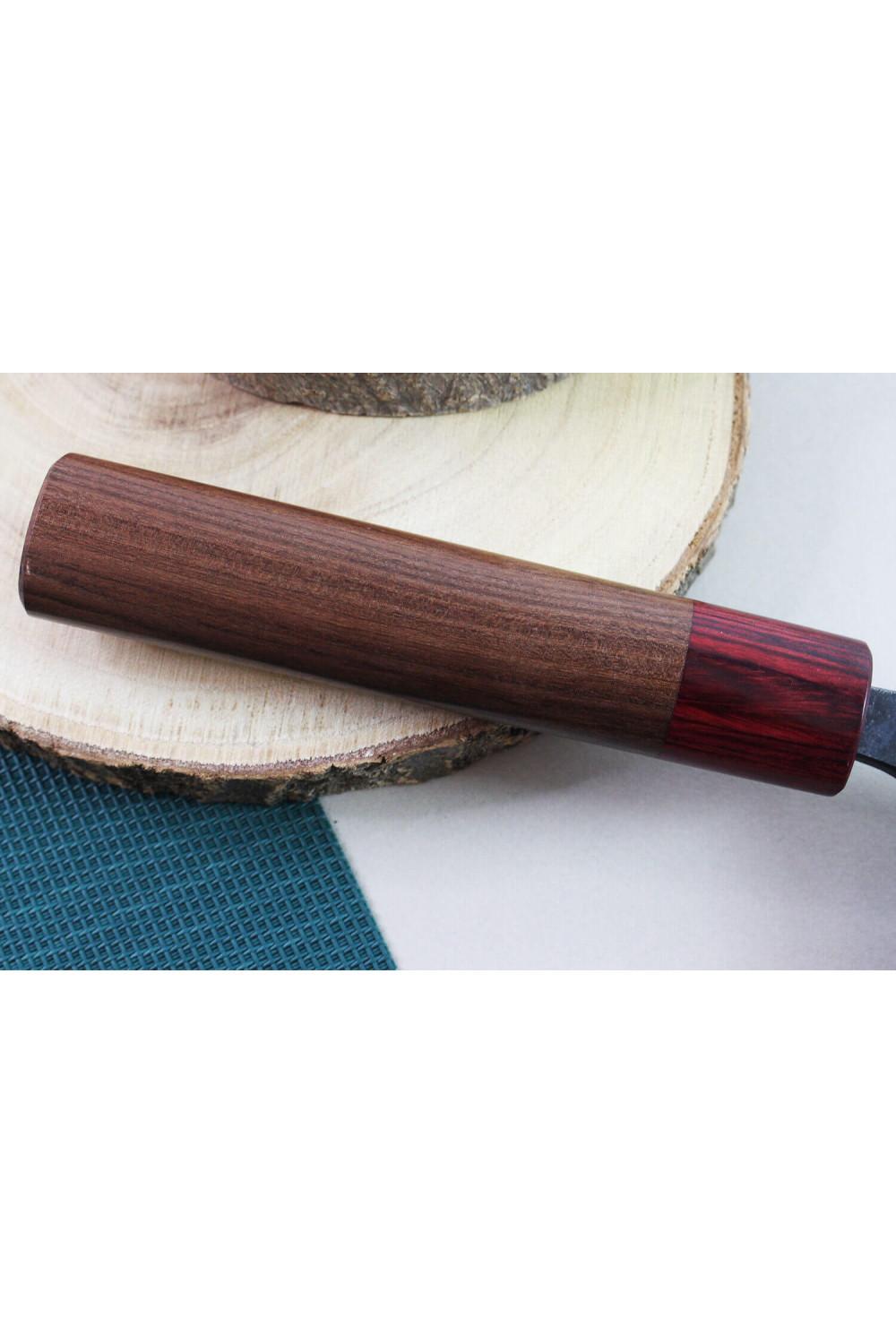
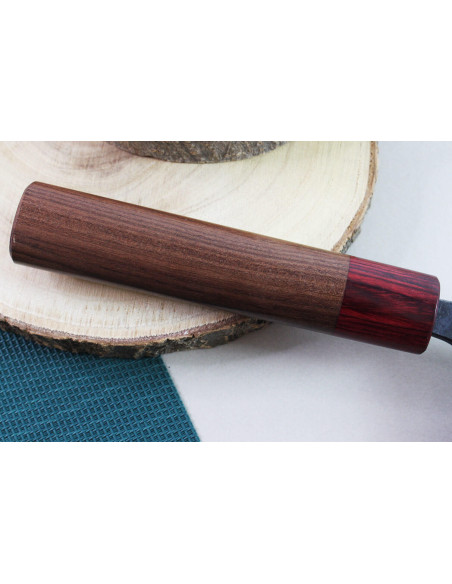
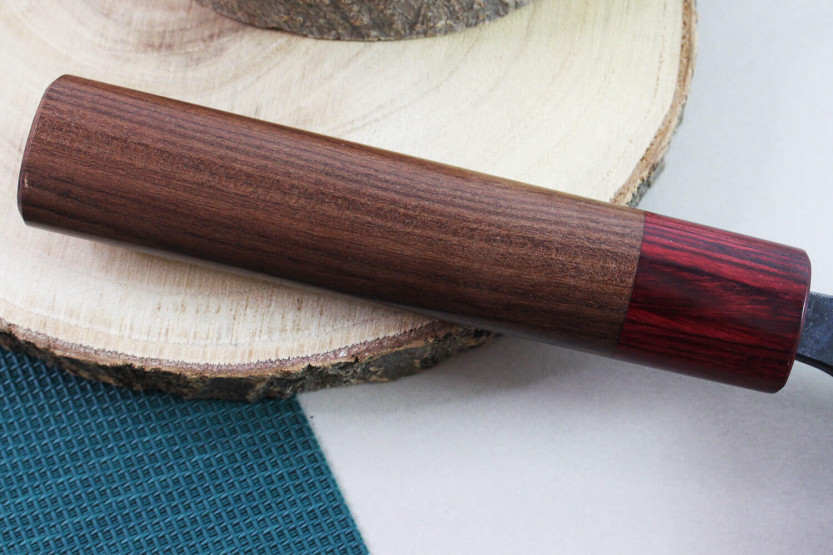
The blade is followed by a beautiful ruby-colored Pakka wood bolster. This material is developed using laminated wood and resin, all hot-pressed together. The result is natural, with some of the veins you'd expect to see in wood. The material is resistant to humidity and temperature variations.
Pakka wood is extended by Morado wood. This exotic wood is considered top-of-the-range, and its warm hues are very pleasing. The wood grain is unique to each piece. Its oval shape allows ambidextrous use. All lightweight and easy to handle.
Wood paste fills the space between the blade and the Pakkawood. This makes the handle watertight, to prevent small scraps from getting inside.
Care instructions :
Note that the blade is sensitive to oxidation (both carbon and iron on the outside). The knife should therefore be washed by hand, without soaking in the sink. After washing, wipe with a soft cloth to remove all traces of moisture. Please note, however, that it may vary in color over time, even if you are very careful. This is a normal evolution of the alloy (the knife is in constant contact with moist food, and moisture is also found in the ambient air...). You can apply mineral oil to the steel from time to time.
Note that the blade arrives slightly oiled. This is perfectly normal, as it protects the blade. Simply wash the knife before first use, and the oil will disappear.
Sharpening stones to maintain your knife are here!




 By buying this product you can collect up to

.jpg)


 (5)
(5) (0)
(0) (0)
(0) (0)
(0) (0)
(0) (0)
(0)