Nakamura is a Japanese company founded in 2015. Created as an artisan workshop, the company calls on the best Japanese blacksmiths and sharpeners whose experience allows you to enjoy knives with high-end visuals and performance. Nakamura launched its own Kaishin (魁心) brand to show what like-minded blacksmiths can create together. "Kai" (魁) means "pioneer", and "Shin" (心) means "spirit". It is in this innovative spirit that Nakamura Kaishin aims to pave the way for the finest knives ever conceived.
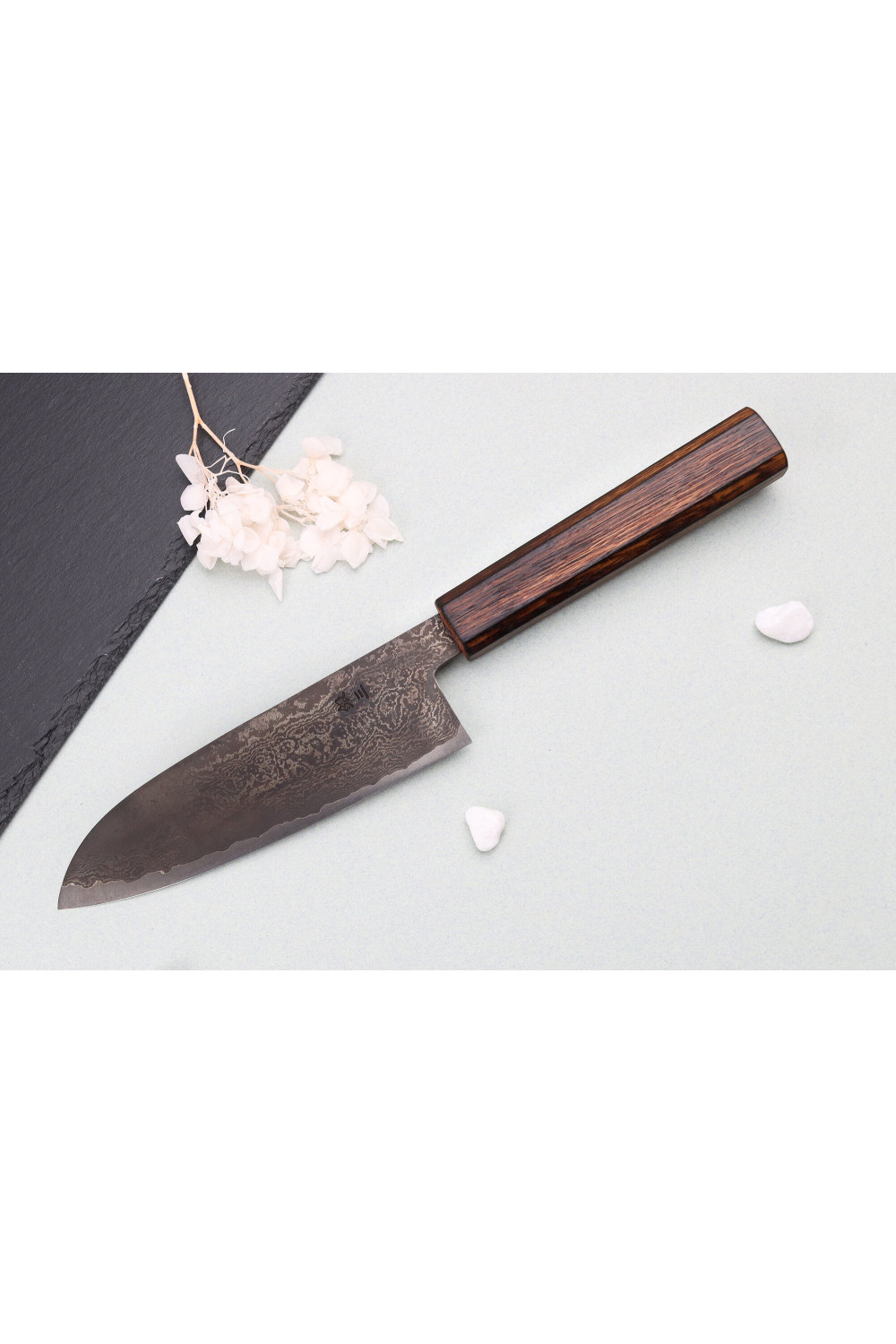
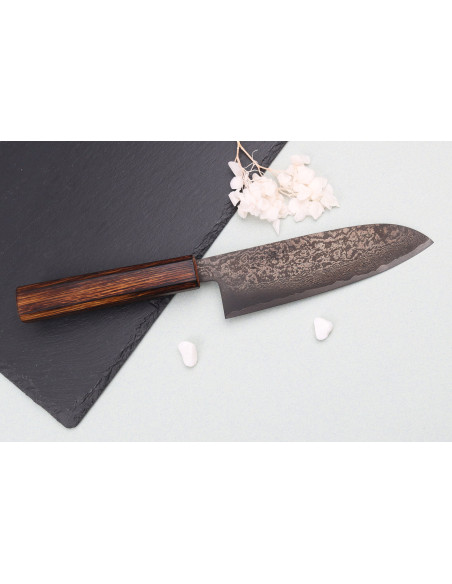
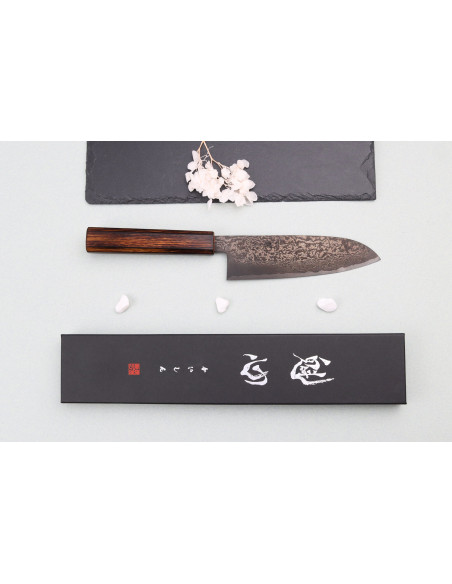
This santoku knife is the work of Sakai-based blacksmith Shogo Yamatsuka. Having grown up with a father who was himself a blacksmith, Shogo was drawn to the craft and became his father's apprentice. Specializing in Ginsan steel, Yamatsuka san taught his son all the secrets of the alloy. Shogo, determined to become a blacksmith, worked for almost 30 years to master the delicate art of hot forging Ginsan steel. In fact, he is the only blacksmith to have mastered this skill. His passion and commitment to this craft have been recognized by Japan's Ministry of Economy, Trade and Industry, which has awarded him the prestigious title of Master Traditional Craftsman.
After being forged, this knife was sharpened by Fujii Hamono's experts. Led by Fujii Keiichi, Fujii Hamono uses large grinding wheels to sharpen the blades. The sharpeners use all their know-how and experience to give your knife an incomparable edge.
Left: Shogo Yamatsuka / right: Fujii Keiichi of Fujii Hamono
A high-performance blade in Japanese Ginsan stainless steel
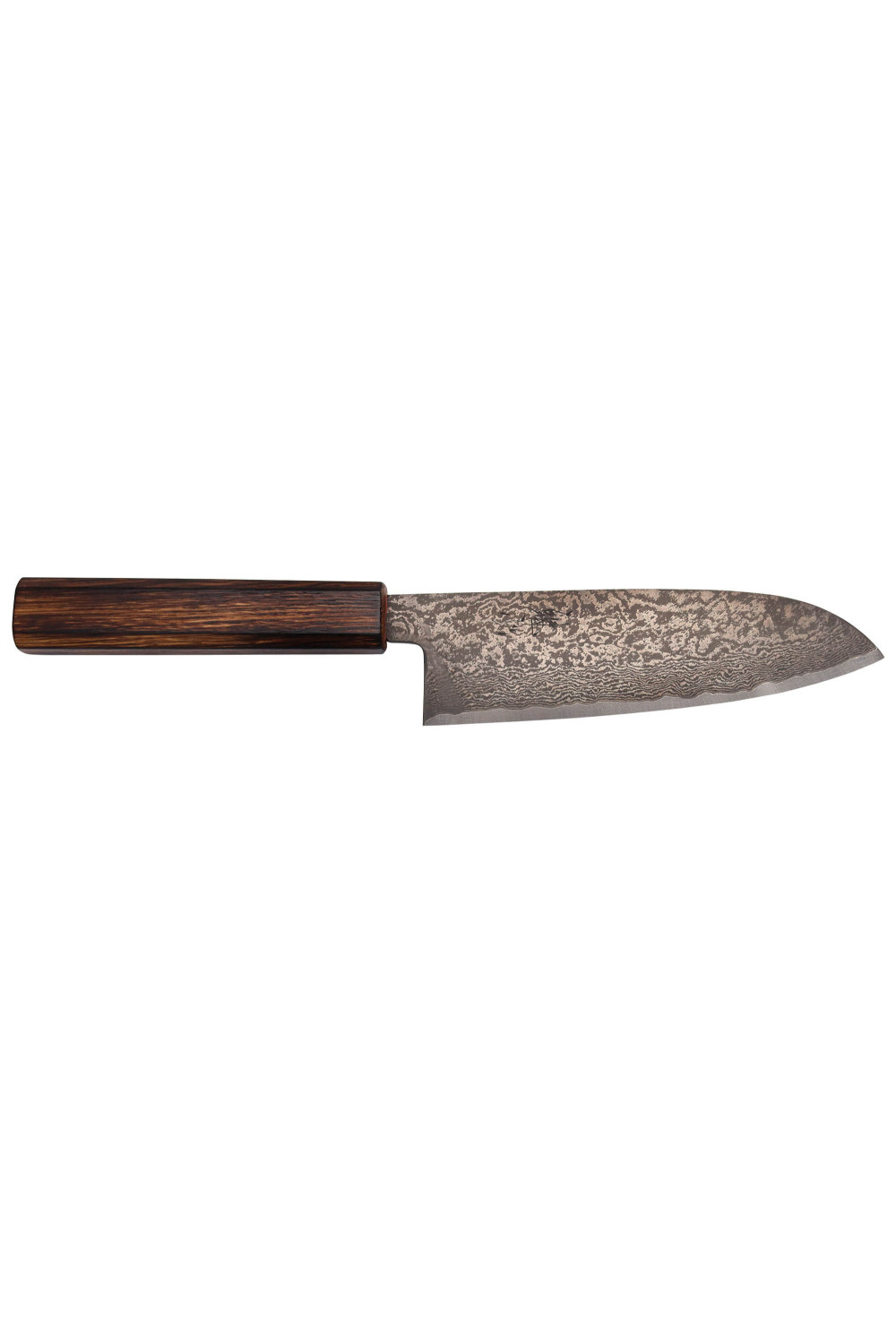
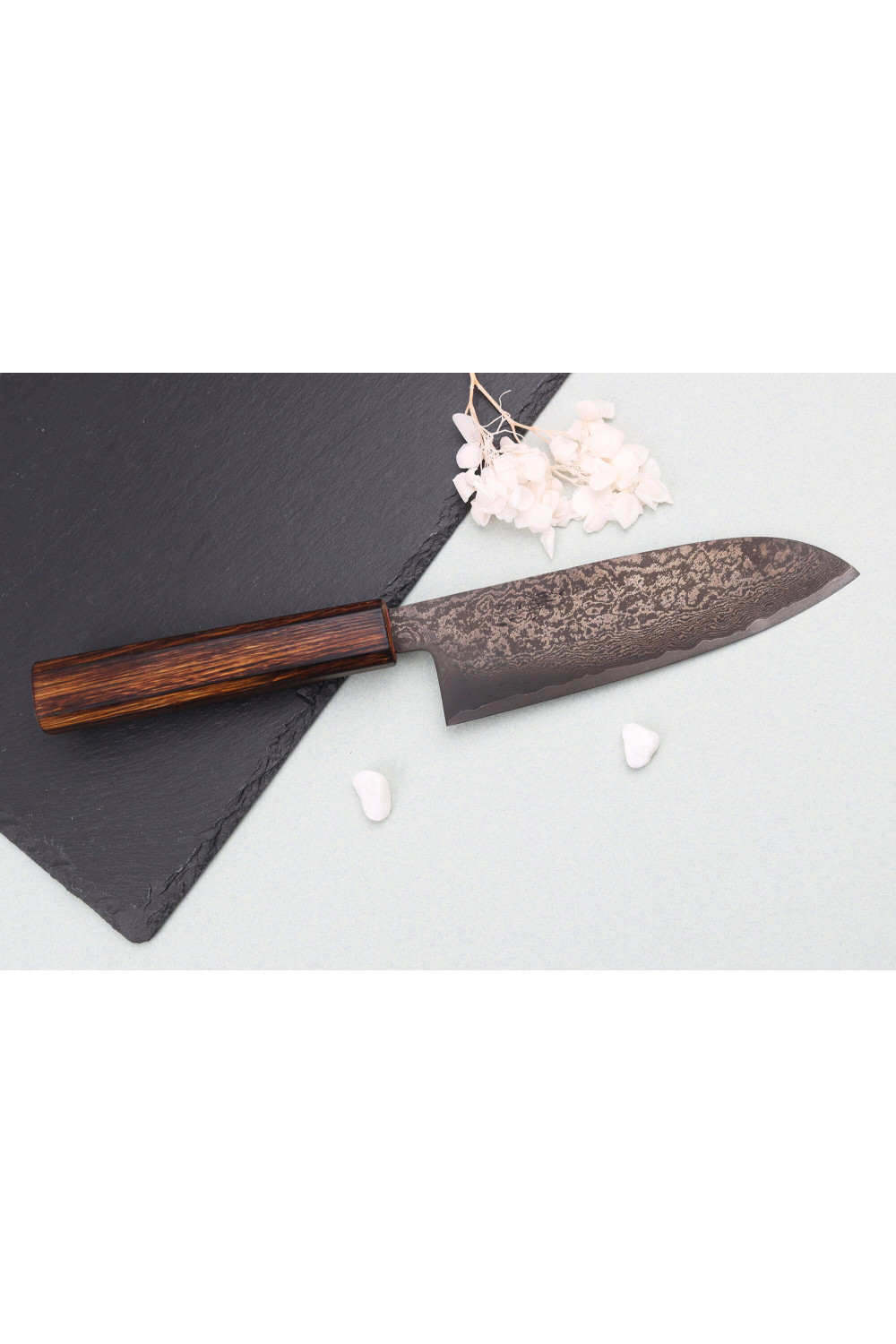
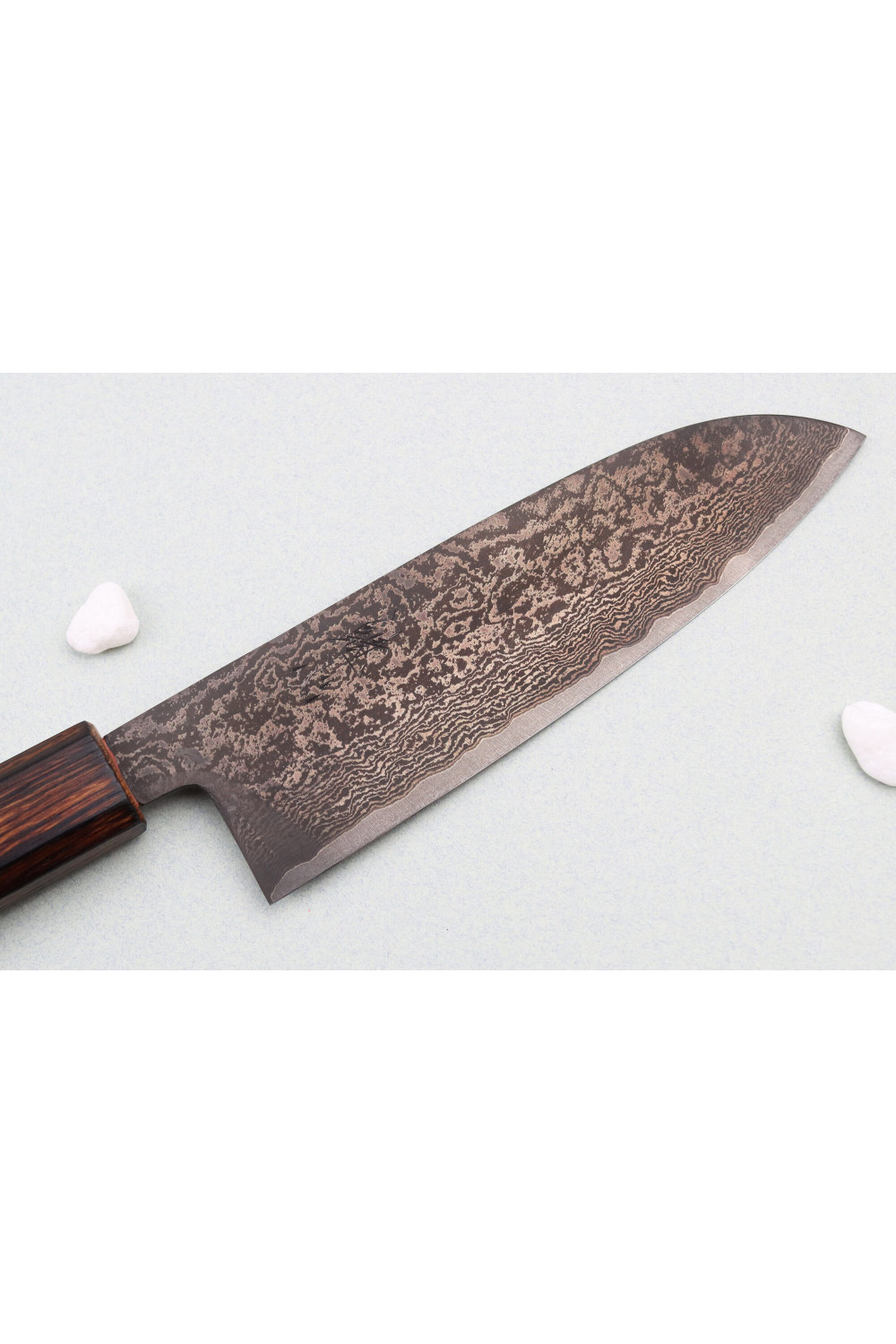
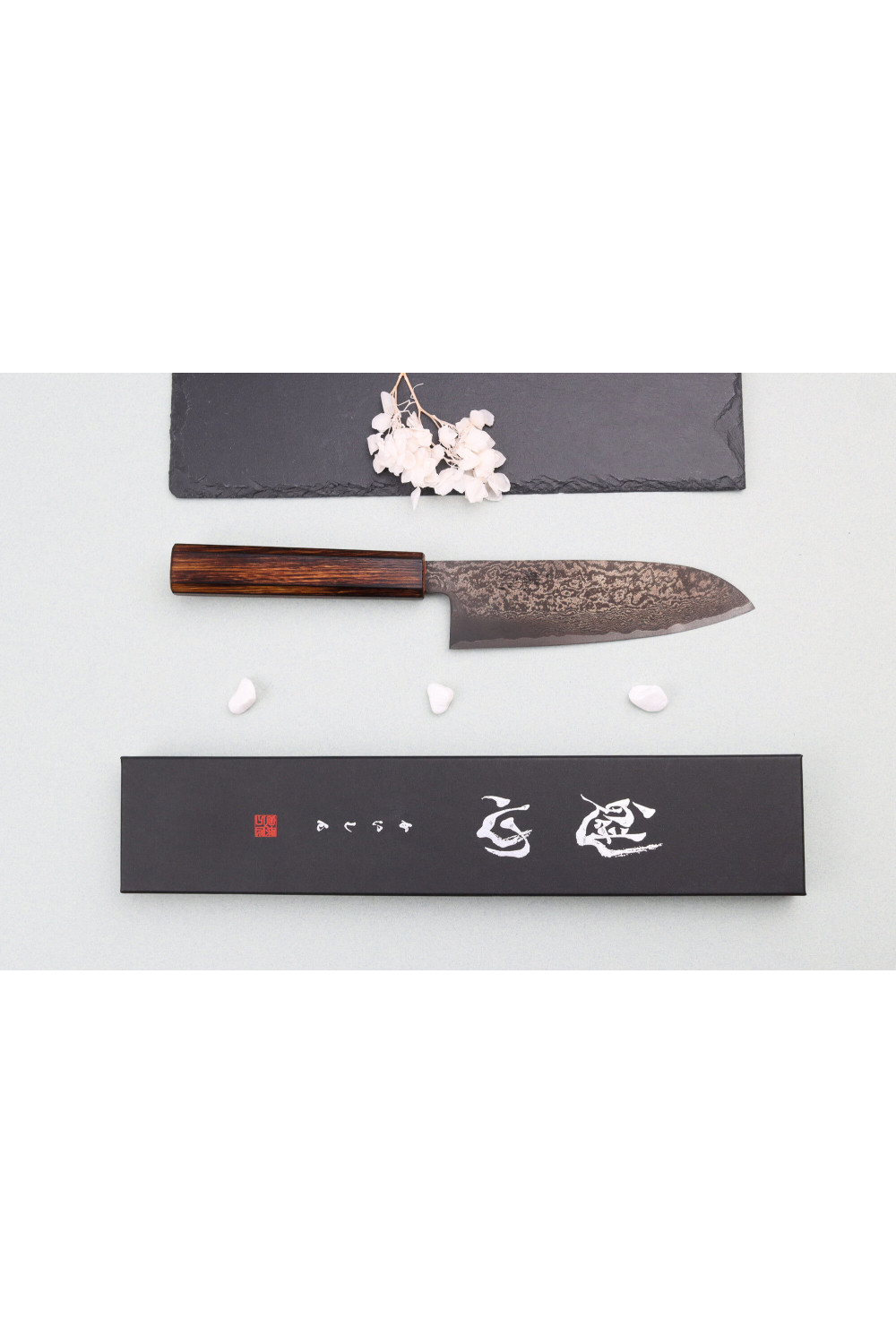
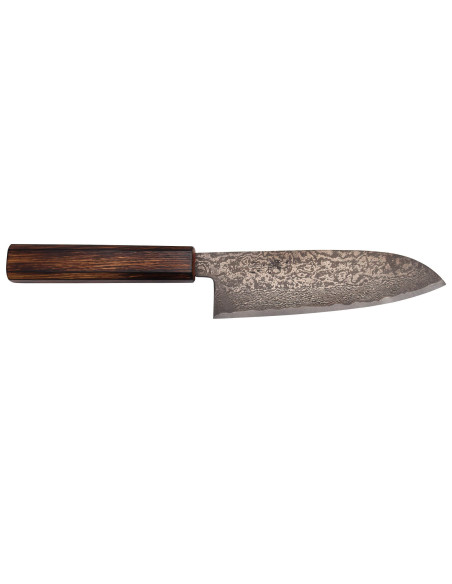
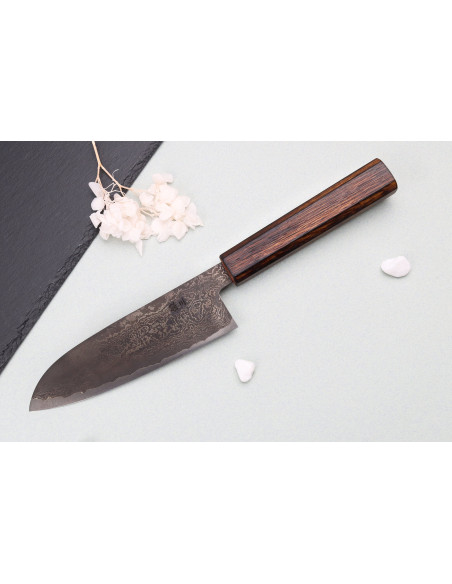
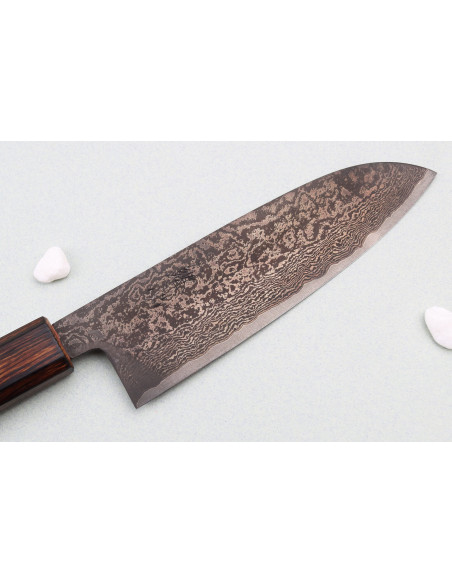
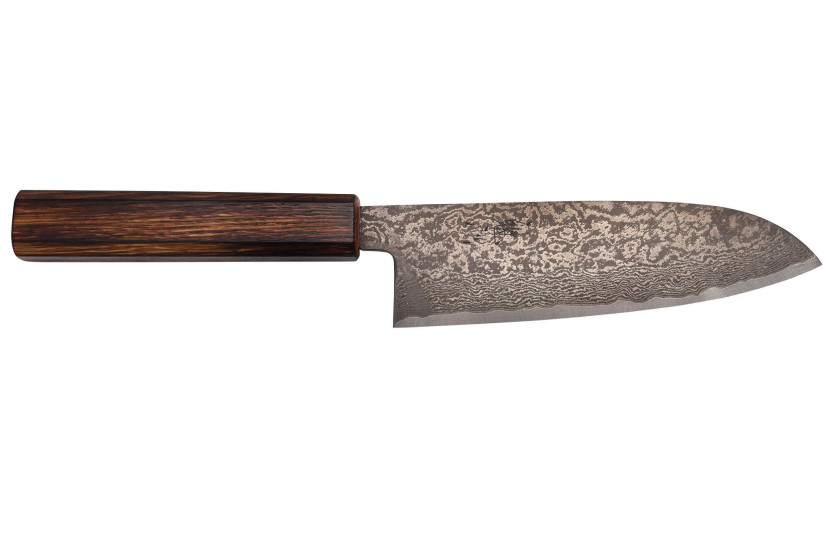
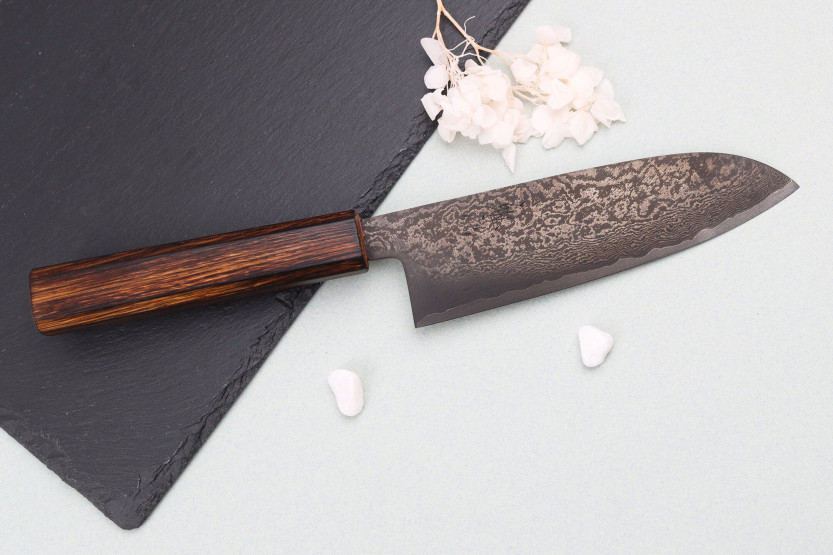
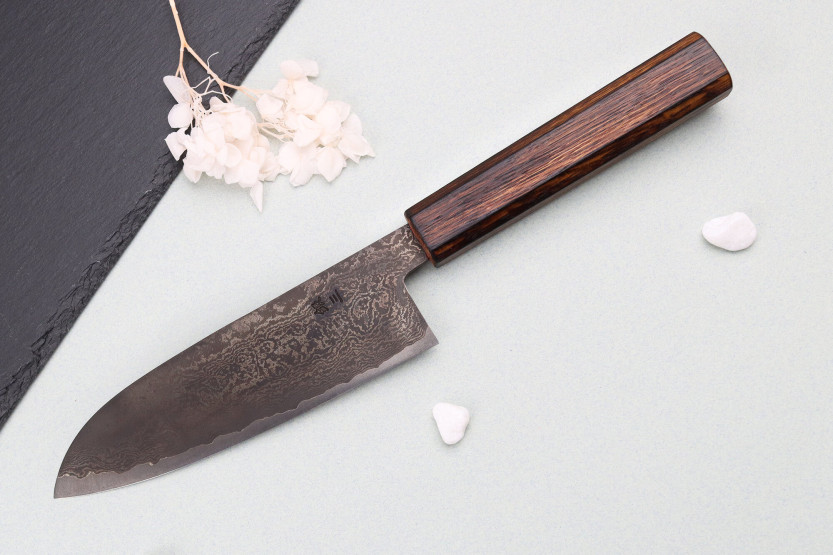
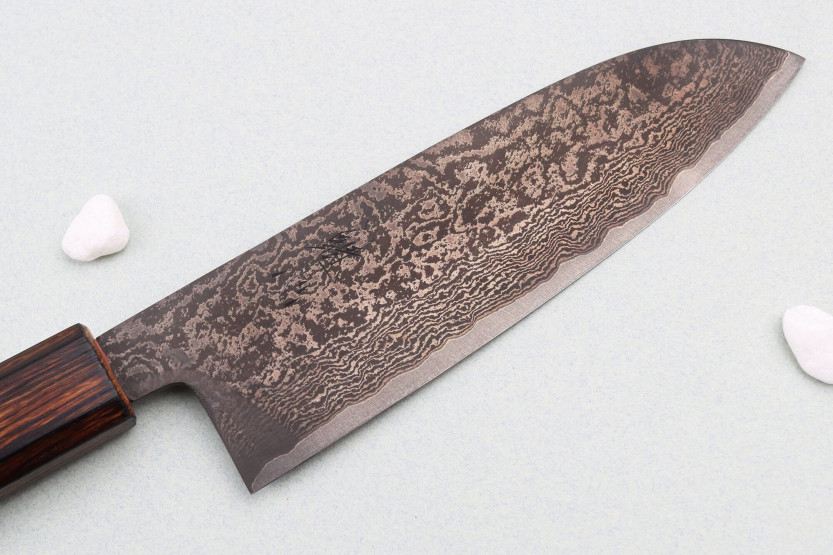
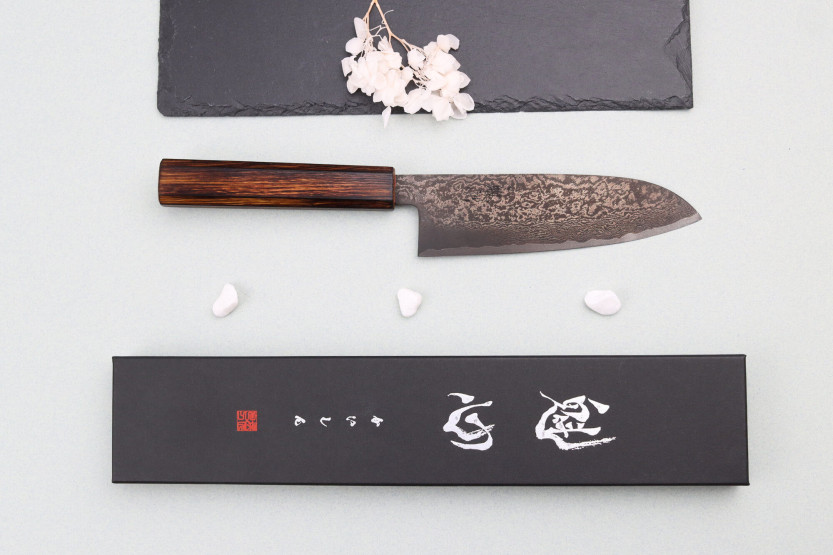
This Japanese santoku knife has a 16.5cm blade made of damascus steel. This means that the blade has a core of rigid steel, which is then coated with several layers of softer steel to protect the core. This blade structure offers an undeniable advantage in the kitchen, as it has a rigid cutting edge that retains its performance for a long time, while at the same time having a balanced surface thanks to the different layers surrounding the core. The upper layers give the core "flexibility", making it less susceptible to breakage.
Here, the core of the blade isJapanese Ginsan steel, also known as G3 or Silver 3. With a carbon content of around 0.95%, this steel offers high hardness and superior rigidity, ensuring prolonged edge retention. Its high chromium content, around 13.5%, also makes the blade highly resistant to corrosion. With a hardness of 59/60 HRC, this knife is easy to maintain, requiring only stone sharpening to maintain its optimum edge.
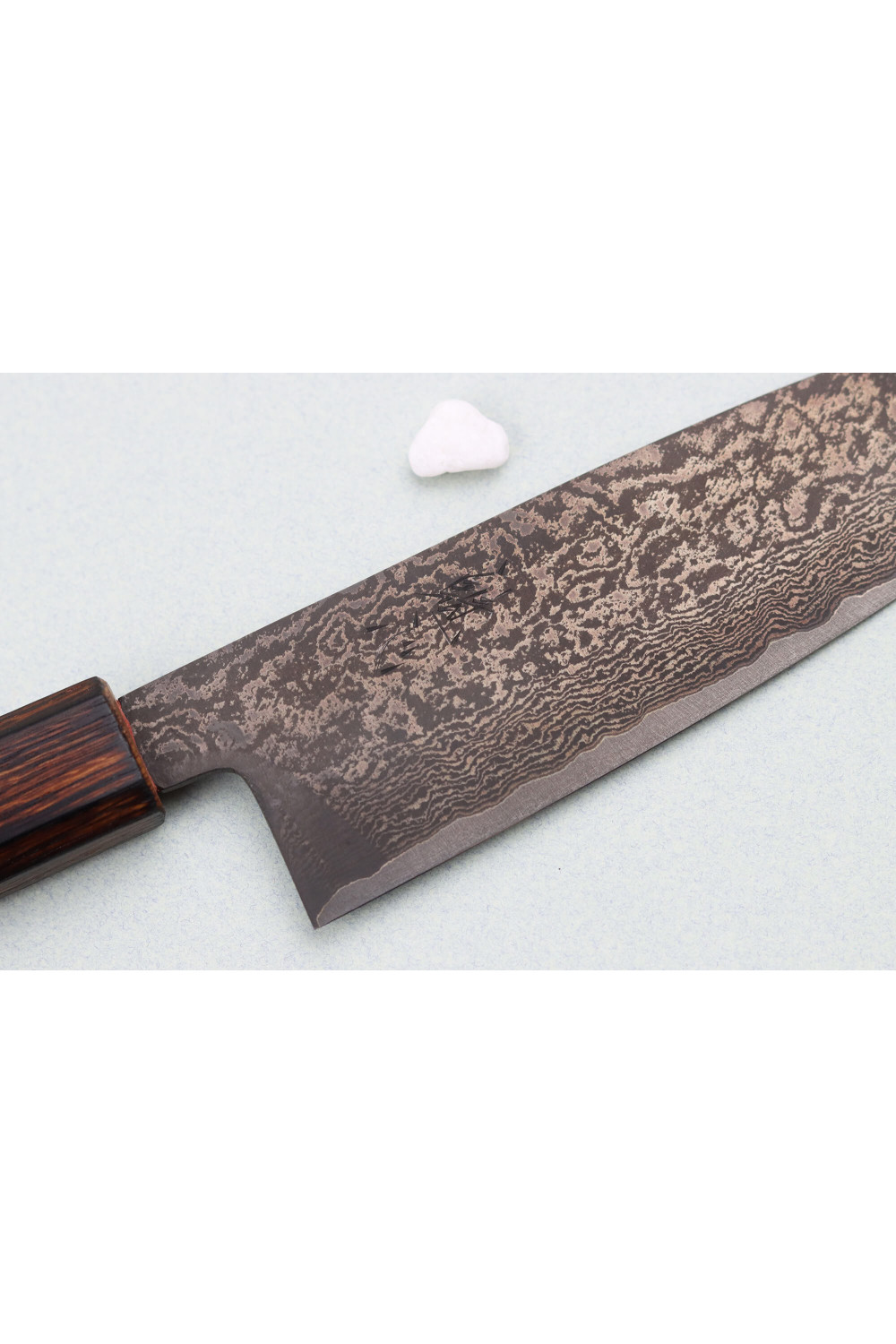
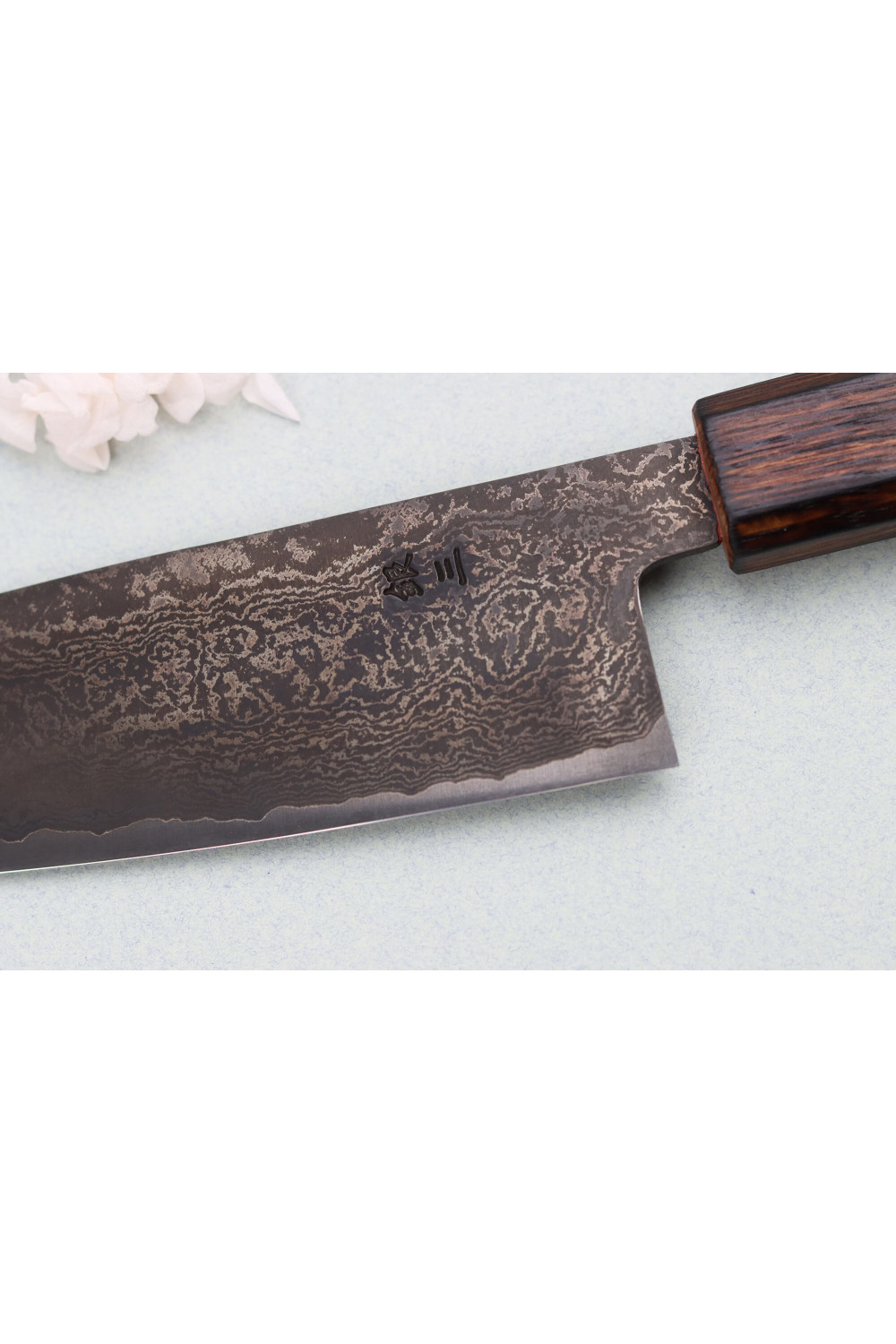
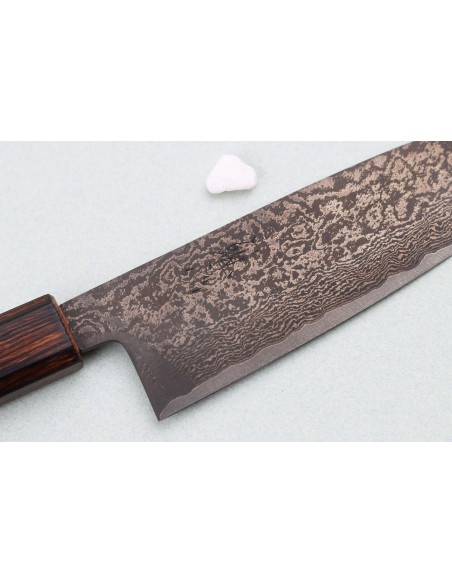
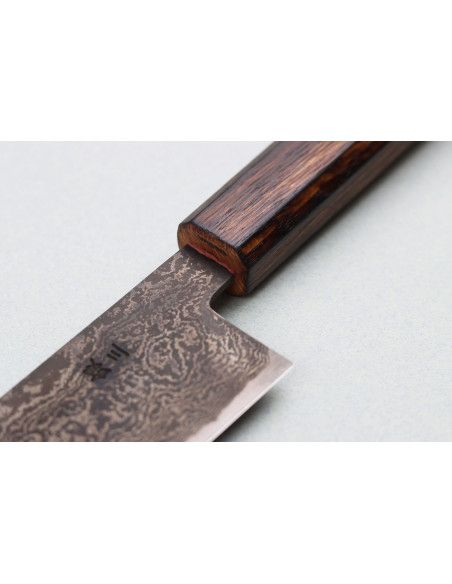
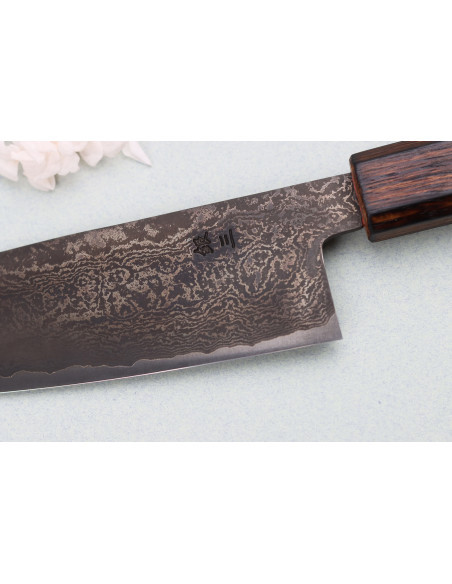
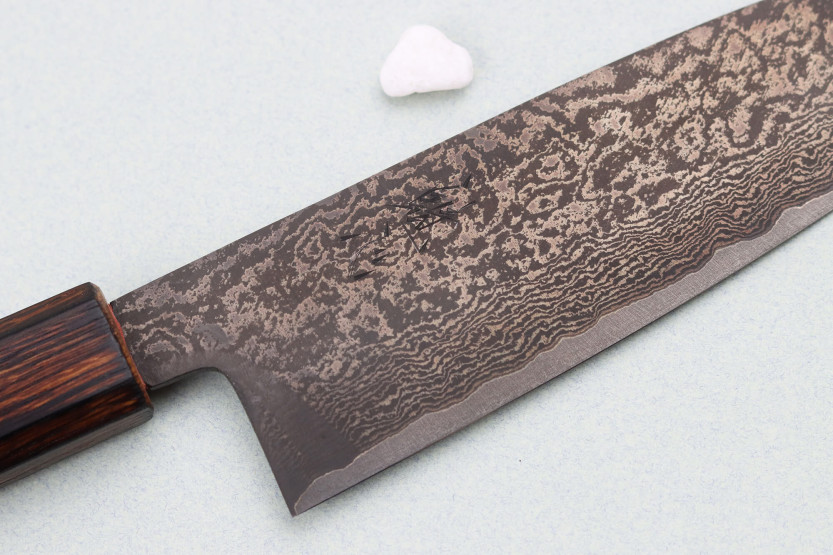
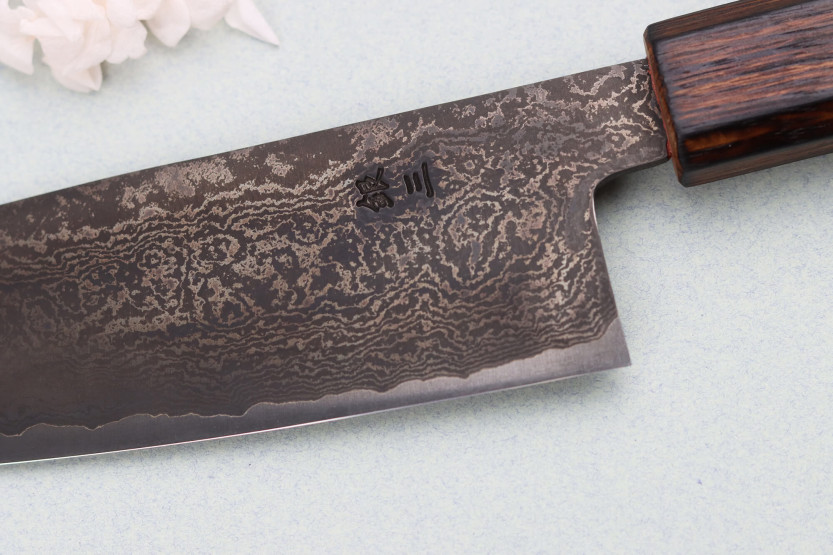
What's more, the blade features a superb damascened surface, the undulations of which vary from knife to knife. Here, the Black Damas surface alternates 63 light and black layers of soft, laminated stainless steel for a unique visual effect, while protecting and balancing the core of the blade.
Important: this santoku knife is handcrafted. In fact, the depth of the black damask surface may vary from one piece to another, but also according to the lighting in which you look at it.
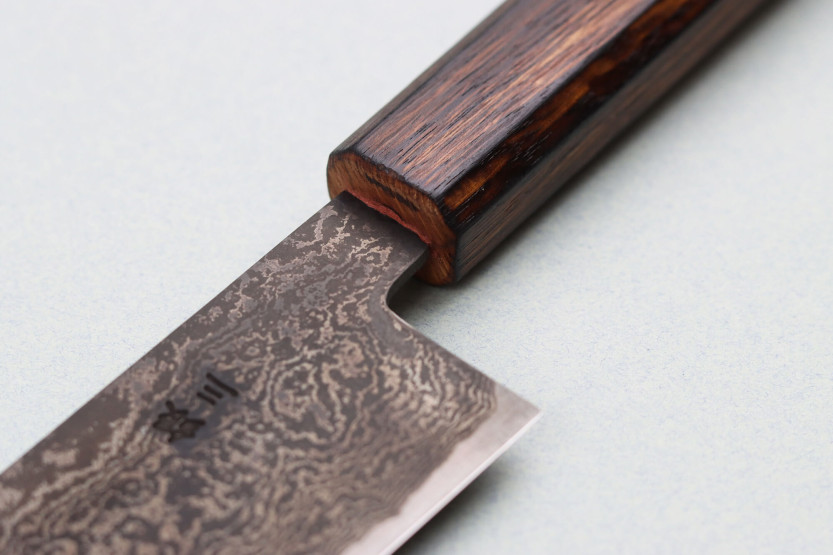
Finally, the blade features hand-engraved kanji meaning "Kaishin". These authentic kanji reinforce the character of your knife.
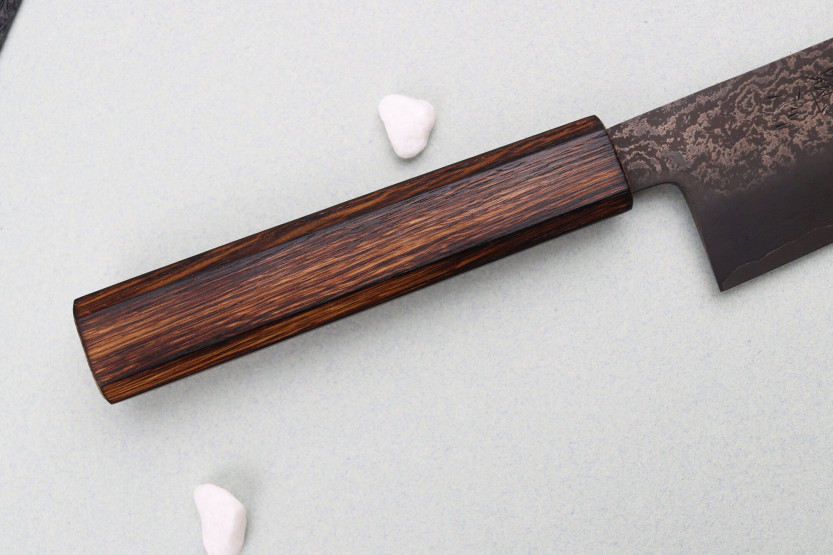
A magnificent burnt oak handle
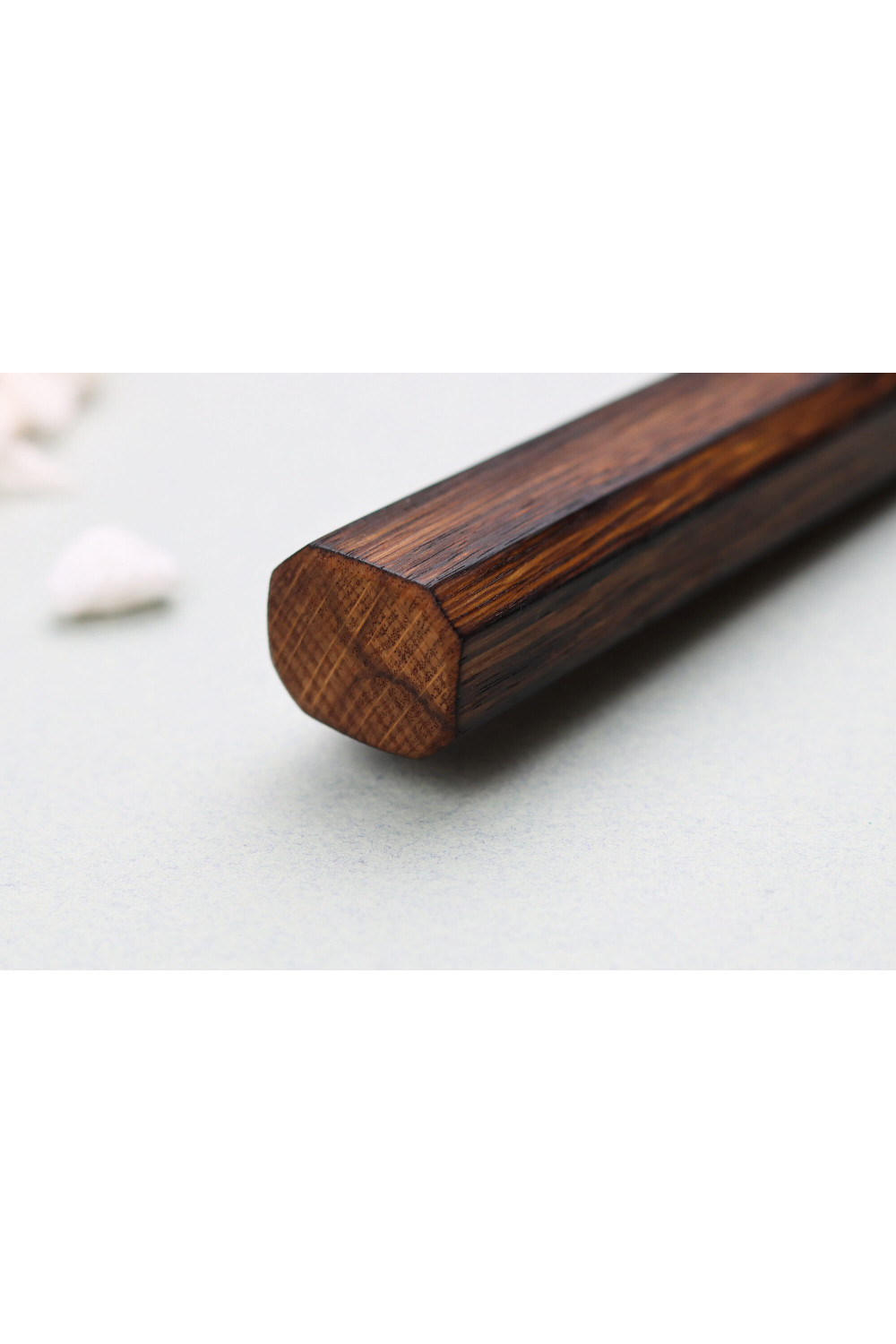
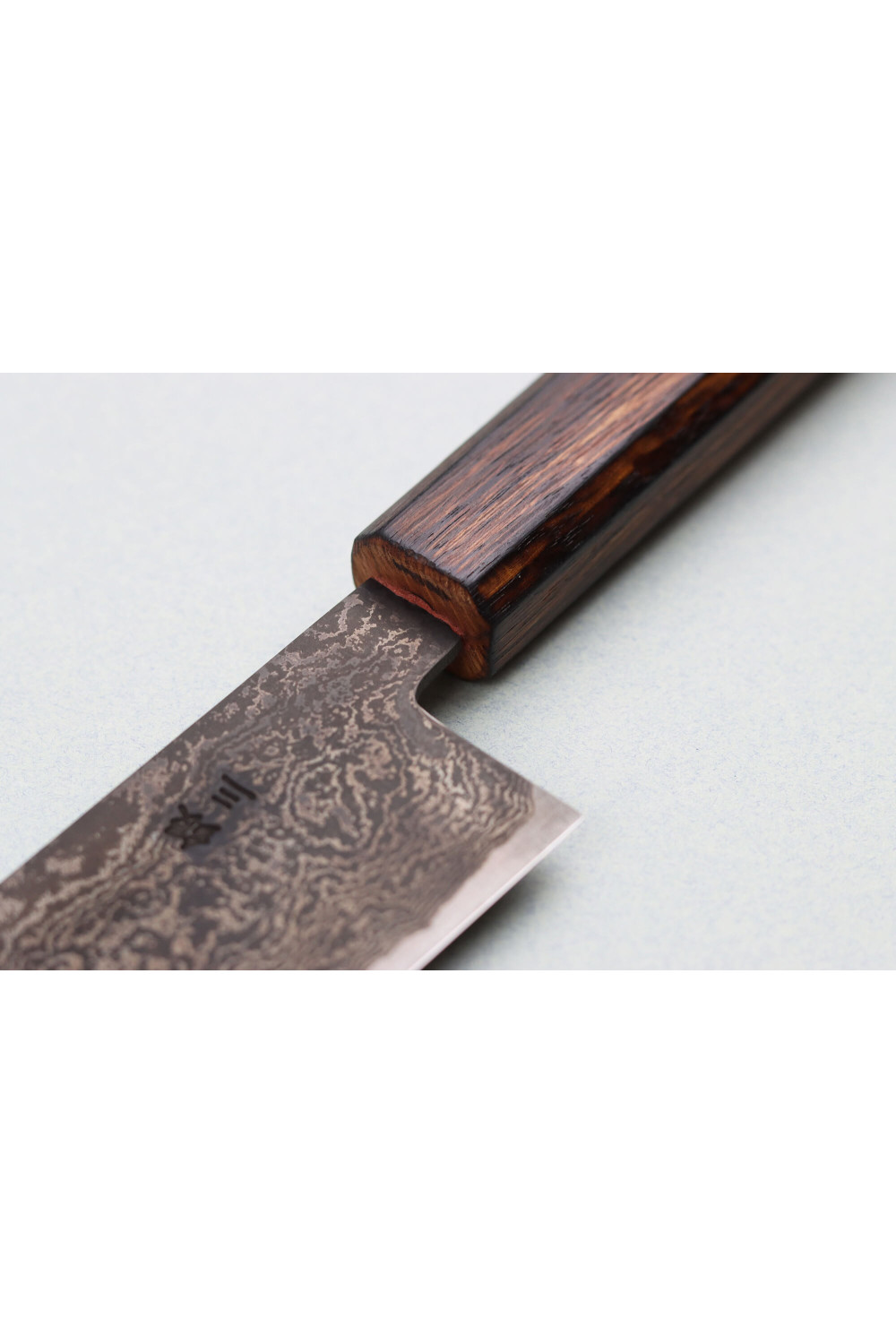
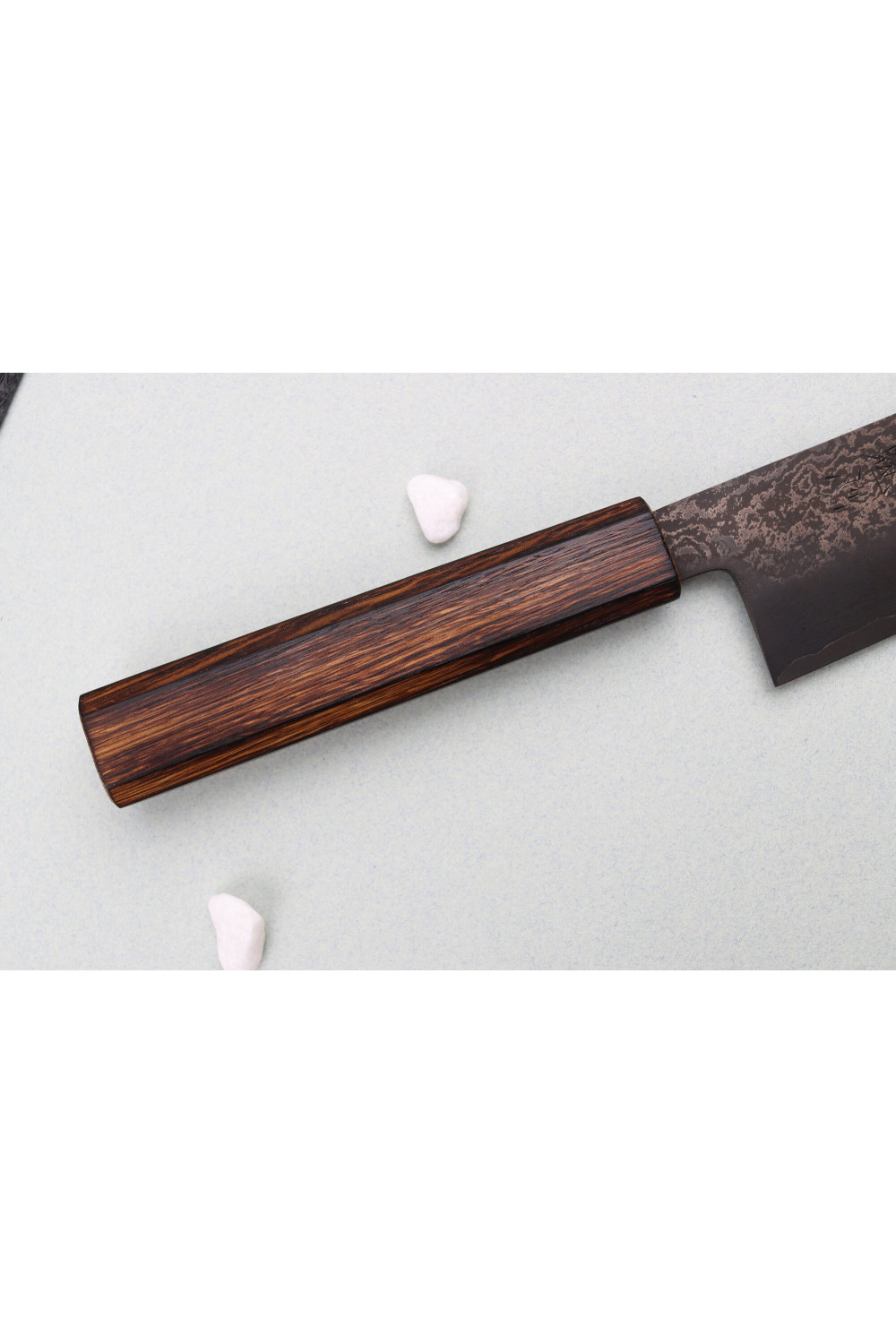
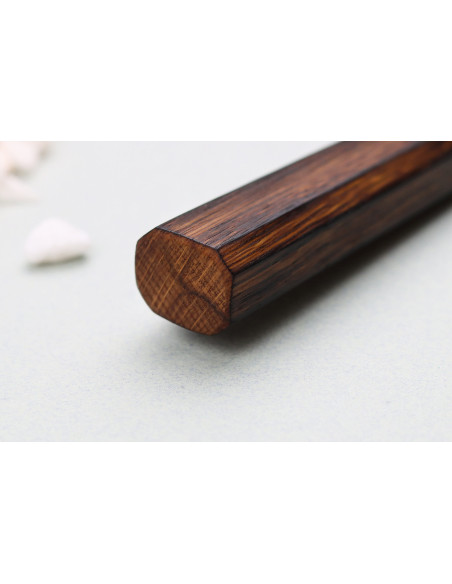
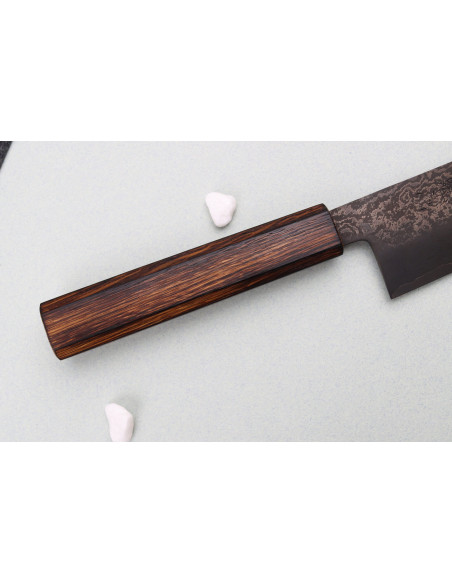
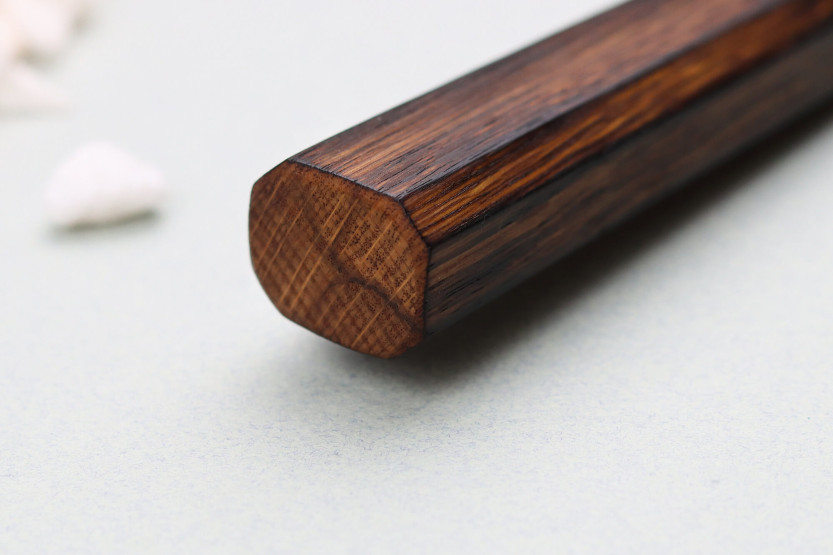
The handle of the Damascus Japanese knife is made from burnt oak, a singular choice that offers the knife remarkable resilience against shock and humidity. To increase the handle's strength and give it a highly aesthetic appearance, the oak has been burnt. Durability and aesthetic appeal.
The handle is also octagonal in shape for optimum ergonomics. This shape is suitable for both right- and left-handed cooks. The handle moulds to the shape of your hand, making it comfortable, easy to handle and suitable for long cutting sessions.
Finally, the spaces where the blade fits into the handle have been filled with wood paste. This makes the knife perfectly watertight, preventing any food or water infiltration for impeccable hygiene.
Taking good care of my Japanese kitchen knife
Having been manufactured from top-quality materials, this knife requires meticulous care on your part, starting with its cleaning. The knife should be washed exclusively by hand with a non-abrasive sponge and mild soap. Dishwashing and soaking in the sink are not recommended. After each cleaning, dry the knife thoroughly with a soft cloth to remove all traces of moisture. Once dry, you can store the knife safely in its case, preserving its quality and elegance for years to come.
Find all Nakamura knives on KnifeLeader.eu!




 By buying this product you can collect up to