Craftsmanship at the Hado workshop
The creation of theHado artisan workshop in Sakai was the result of a collaboration between Sakai Fukui president Ryuichiro Fukui and Tadataka Maruyama, the company's sales manager. Tadataka had long wanted to become a craftsman, an ambition that dovetailed with Ryuichiro's desire to revive artisanal knife production. Sakai Fukui is in fact a company primarily focused on industrial production. Ryuichiro Fukui therefore offered Tadataka-san the chance to take a training course while he set up an in-house craft workshop. Tadataka trained intensively for 3 years before returning to Sakai Fukui. In spring 2019, the workshop finally opened its doors.
The term Hado (刃道), which translates as "the road of blades" in Japanese, was chosen to name the workshop because of its profound meaning. It represents the craftsmen's aspiration to achieve excellence in knife-making, seeking to continually perfect their craft. They put all their tamashi (魂), their soul, into this goal to create remarkable knives that deliver exceptional cutting performance.
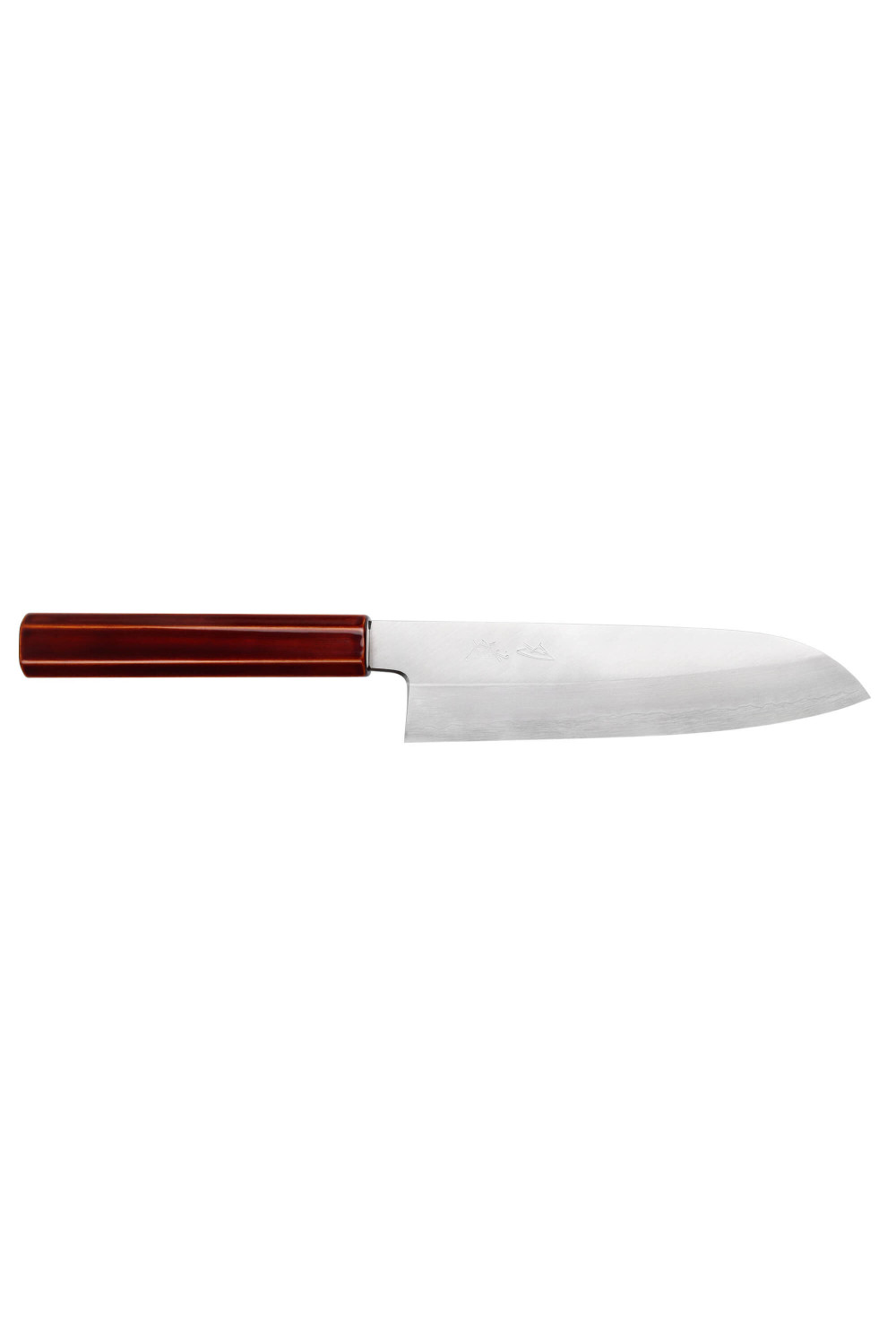
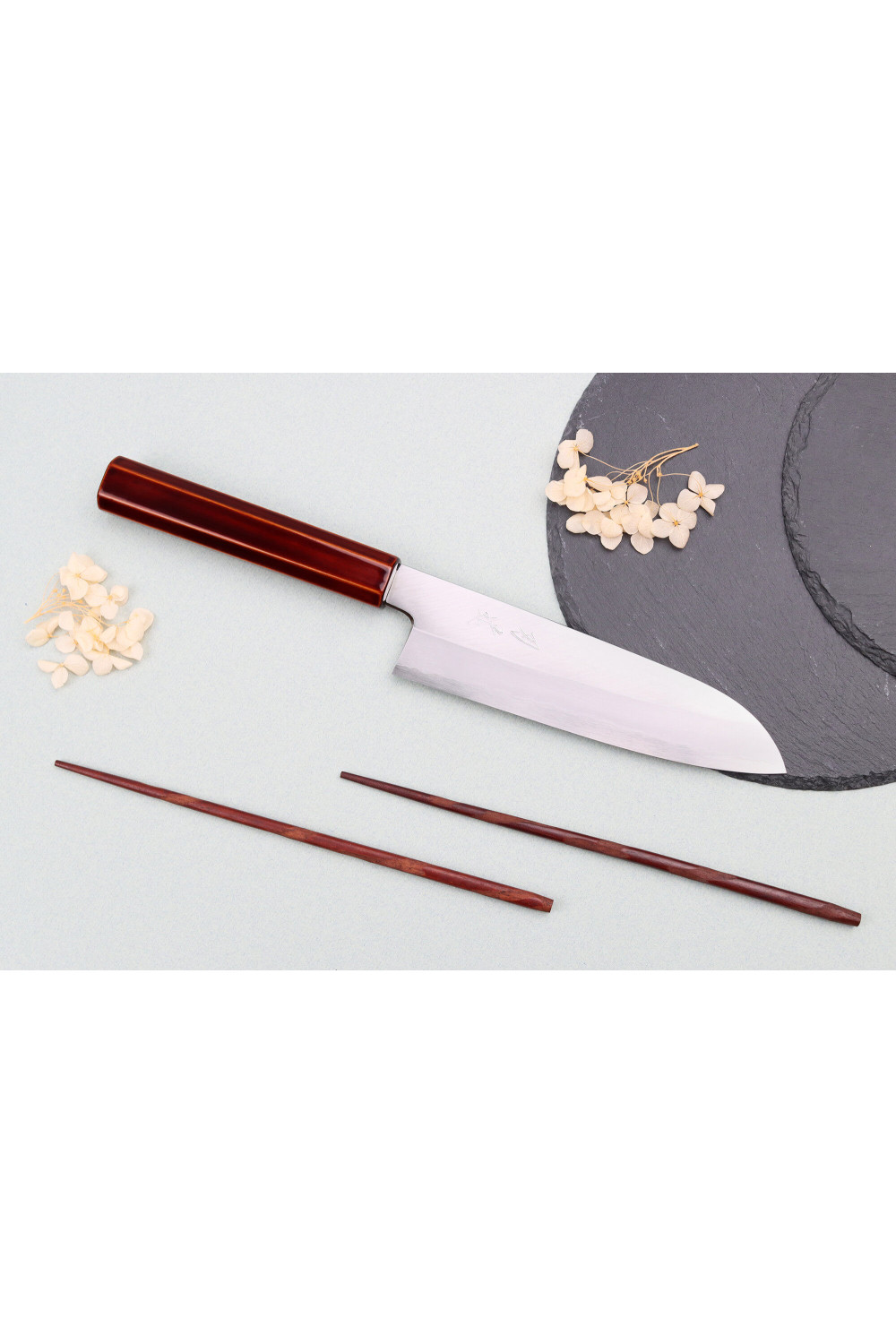
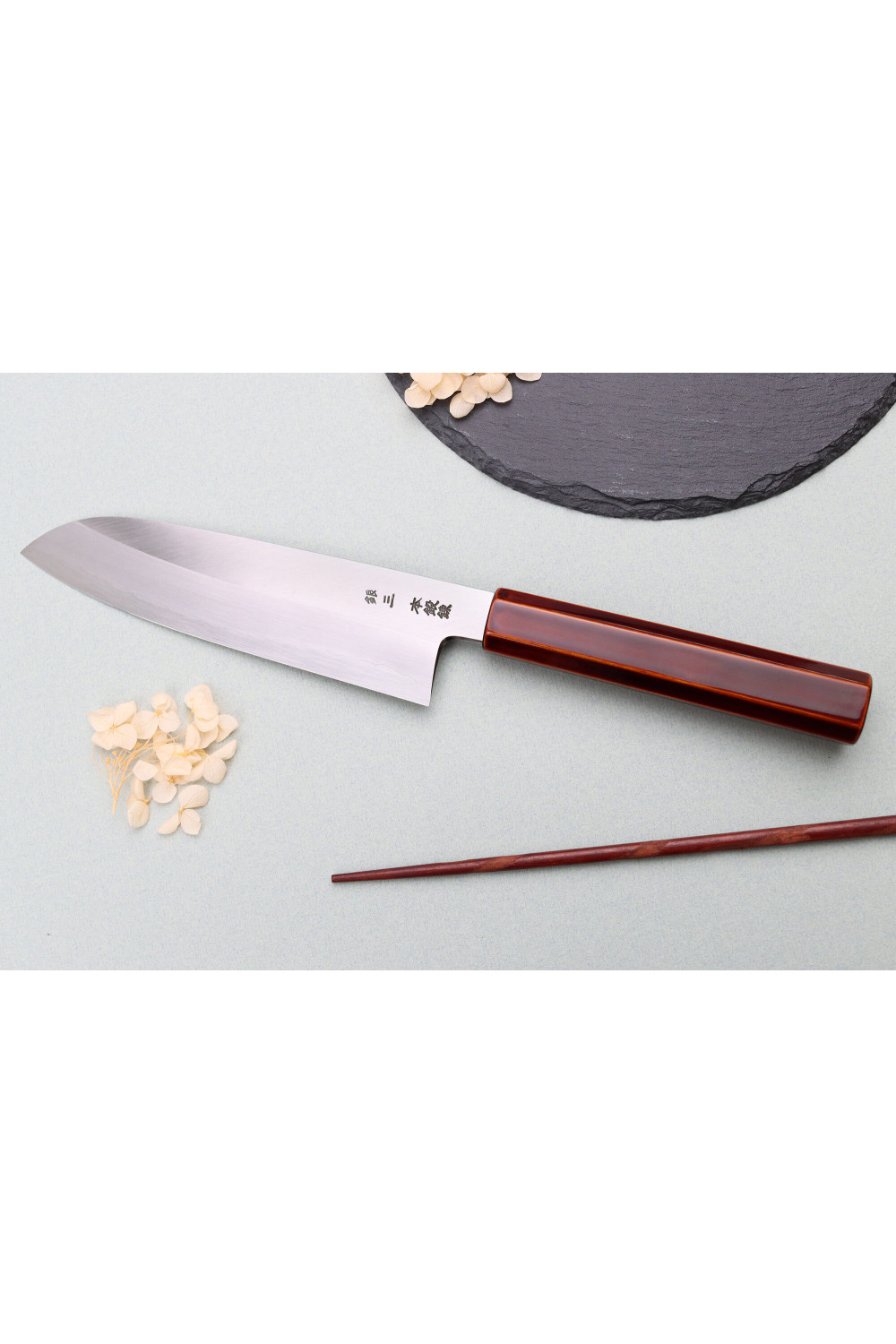
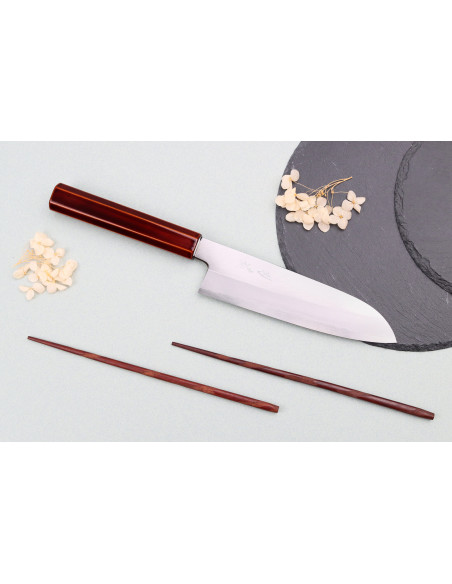
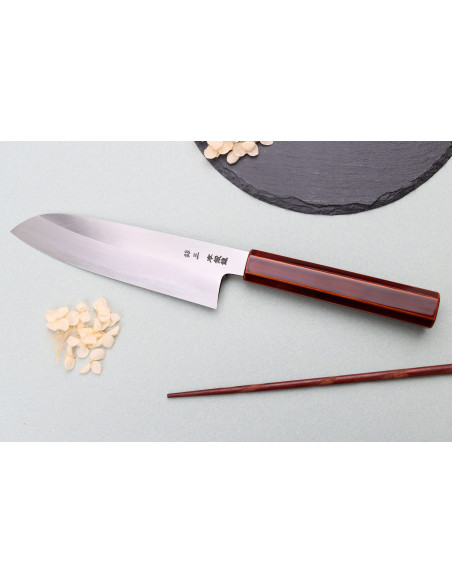
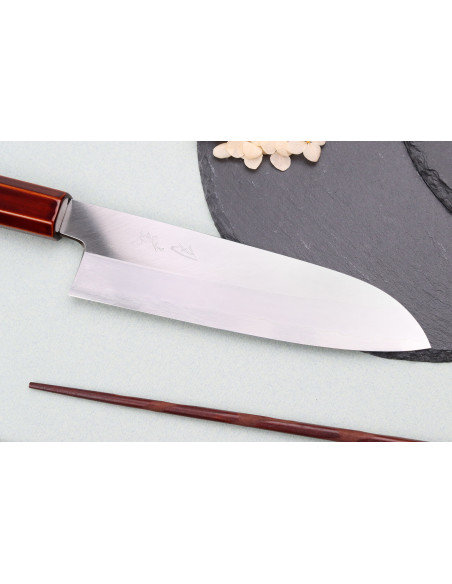
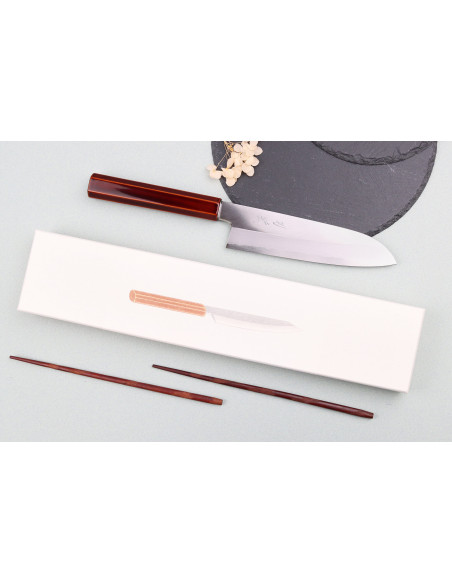
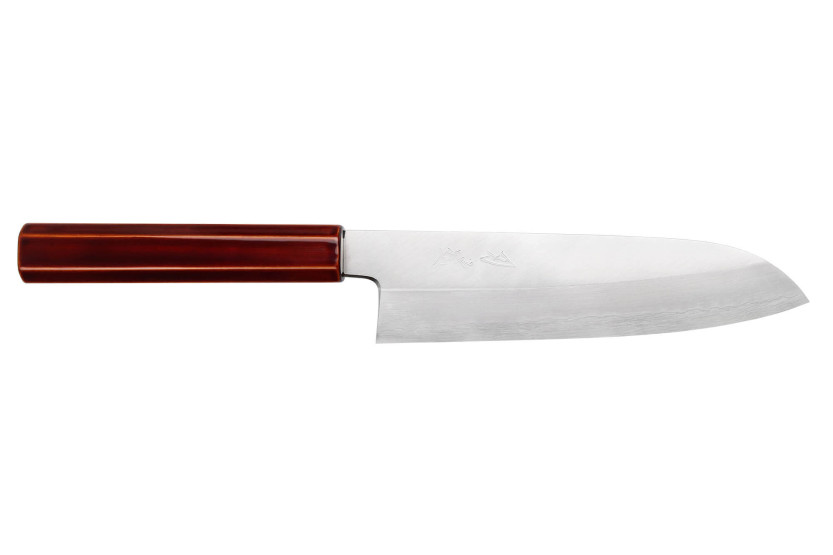
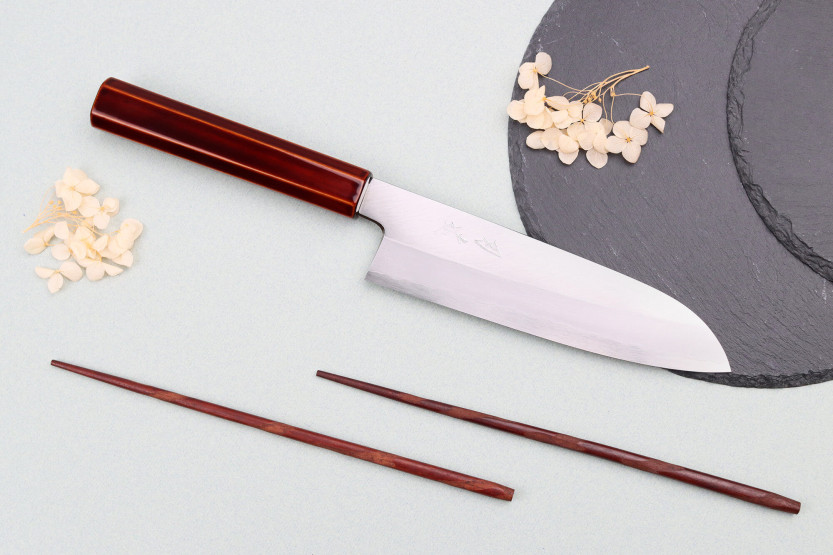
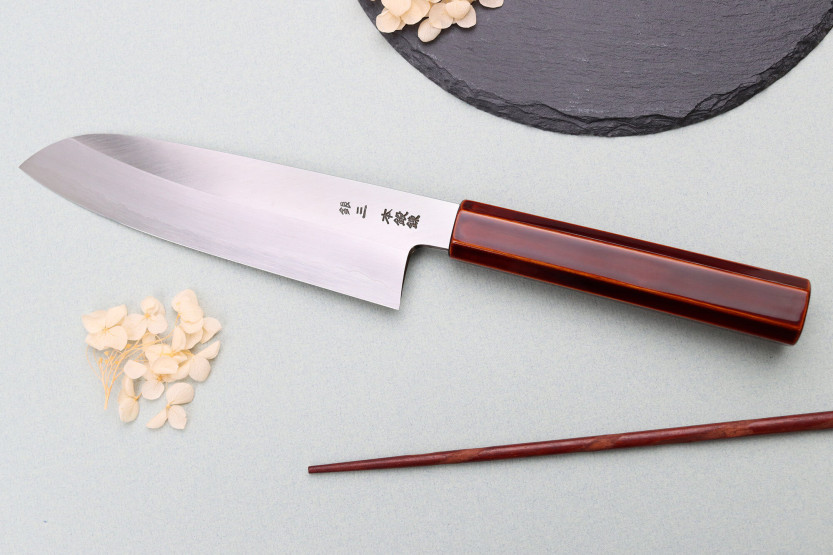
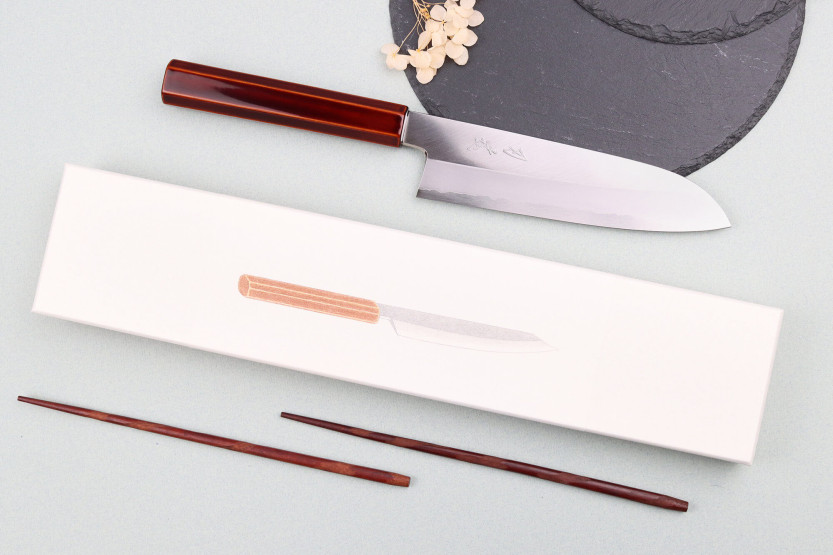
This santoku knife was forged by Sakai blacksmith Shogo Yamatsuka, who has inherited the skills of his father, also a blacksmith, and has acquired unrivalled expertise in Ginsan steel. He is the only blacksmith capable of hot-forging Ginsan alloy, due to its difficult handling. After 30 years of hard work to master the art of steel forging (called Hizukuri - 檜作), he was honored with the title of Traditional Master Craftsman by Japan's Ministry of Economy, Trade and Industry. Tadataka Maruyama, the workshop's head sharpener, then sharpened the knife with his expert hands. He gave it exceptional cutting quality, ensuring optimum performance with every cut.
Blacksmith Shogo Yamatsuka on the left; head sharpener Tadataka Maruyama on the right.
A handle with a traditional Japanese lacquer finish
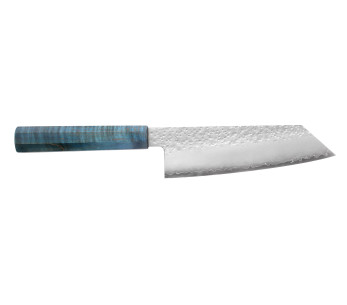
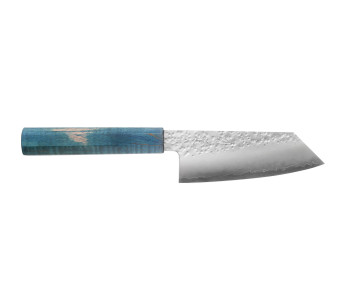
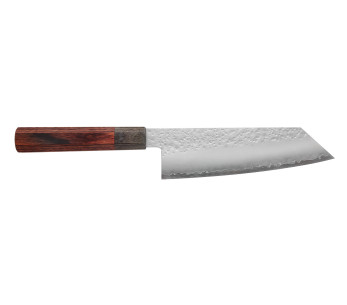
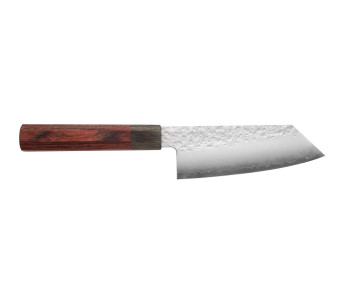
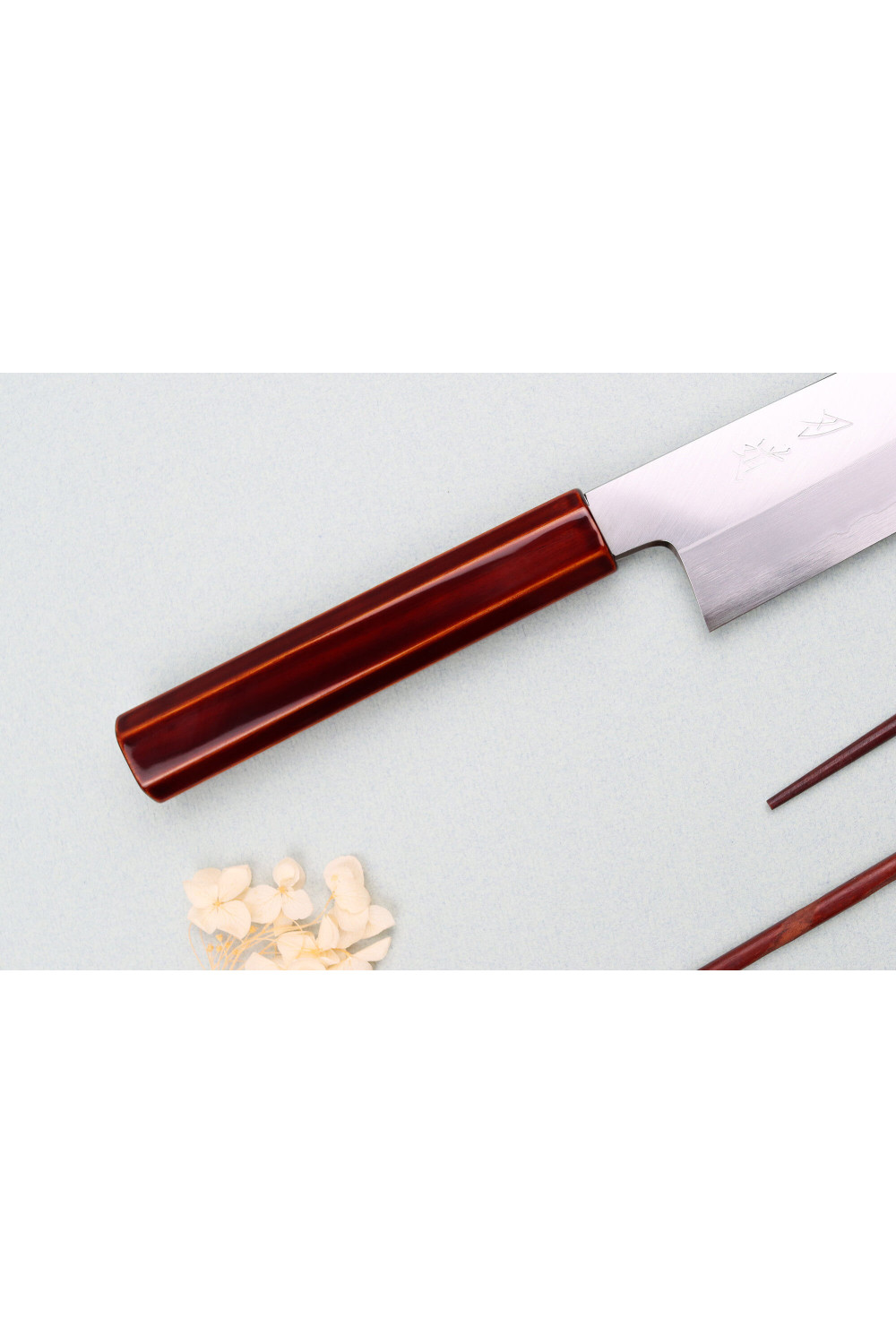
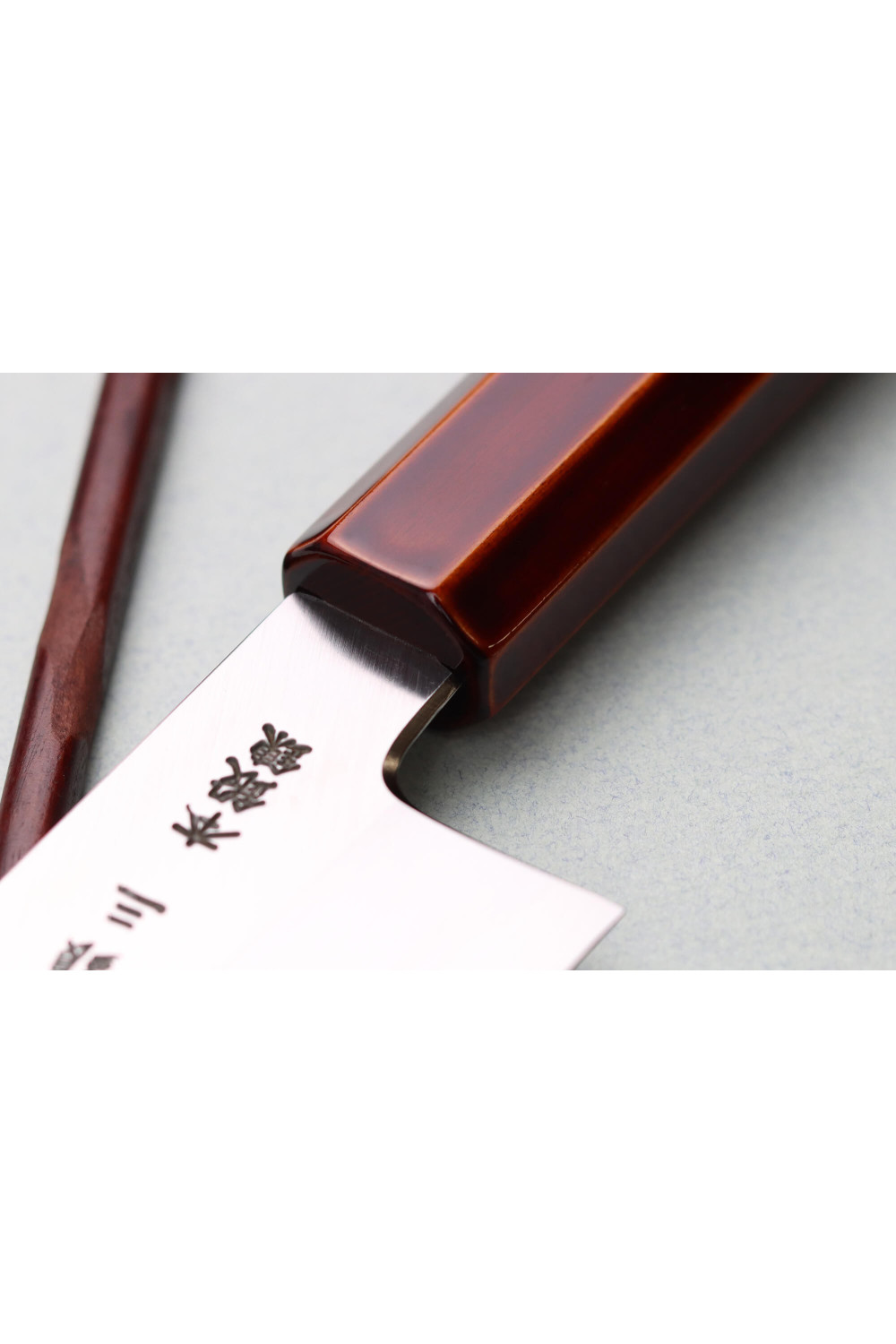
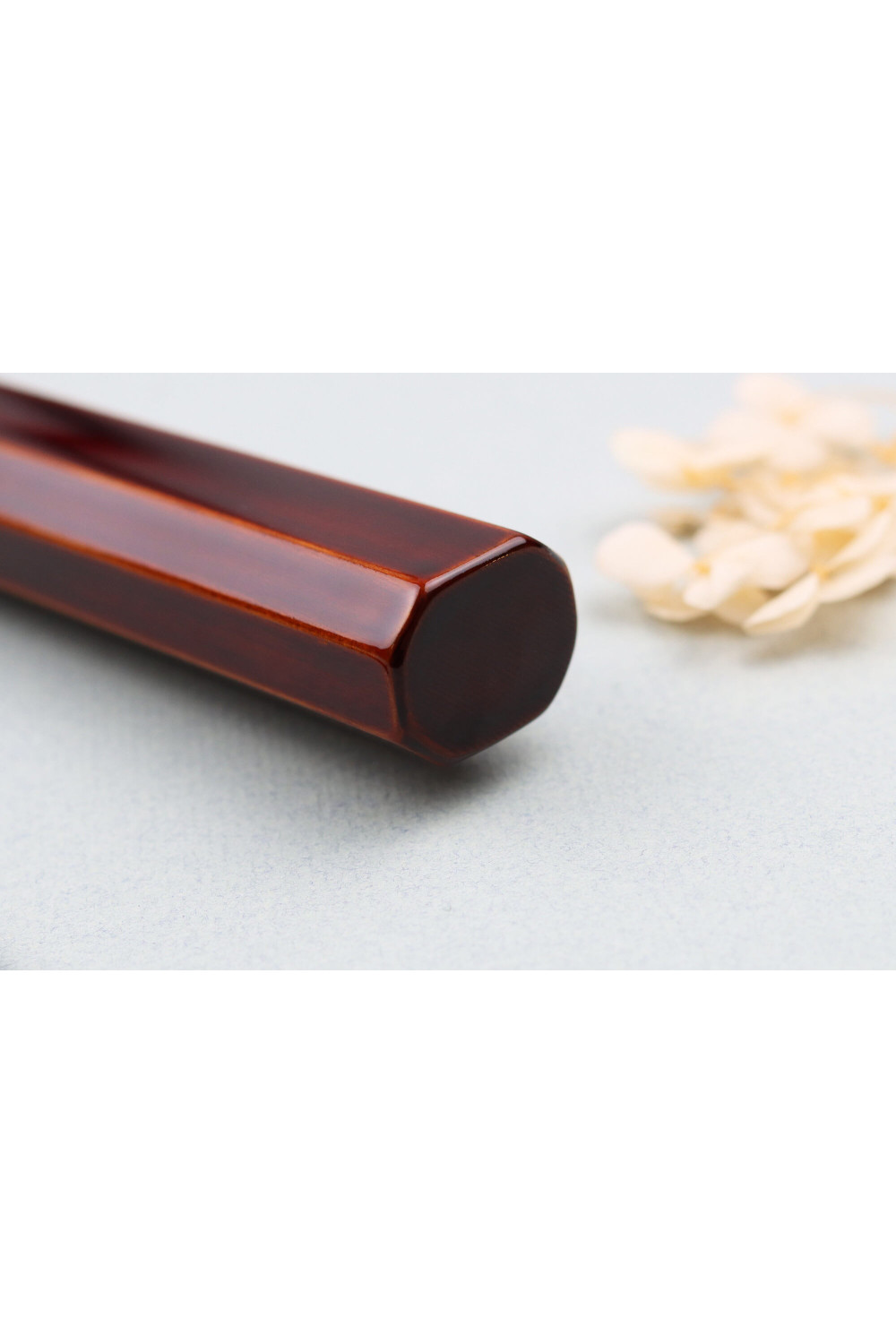
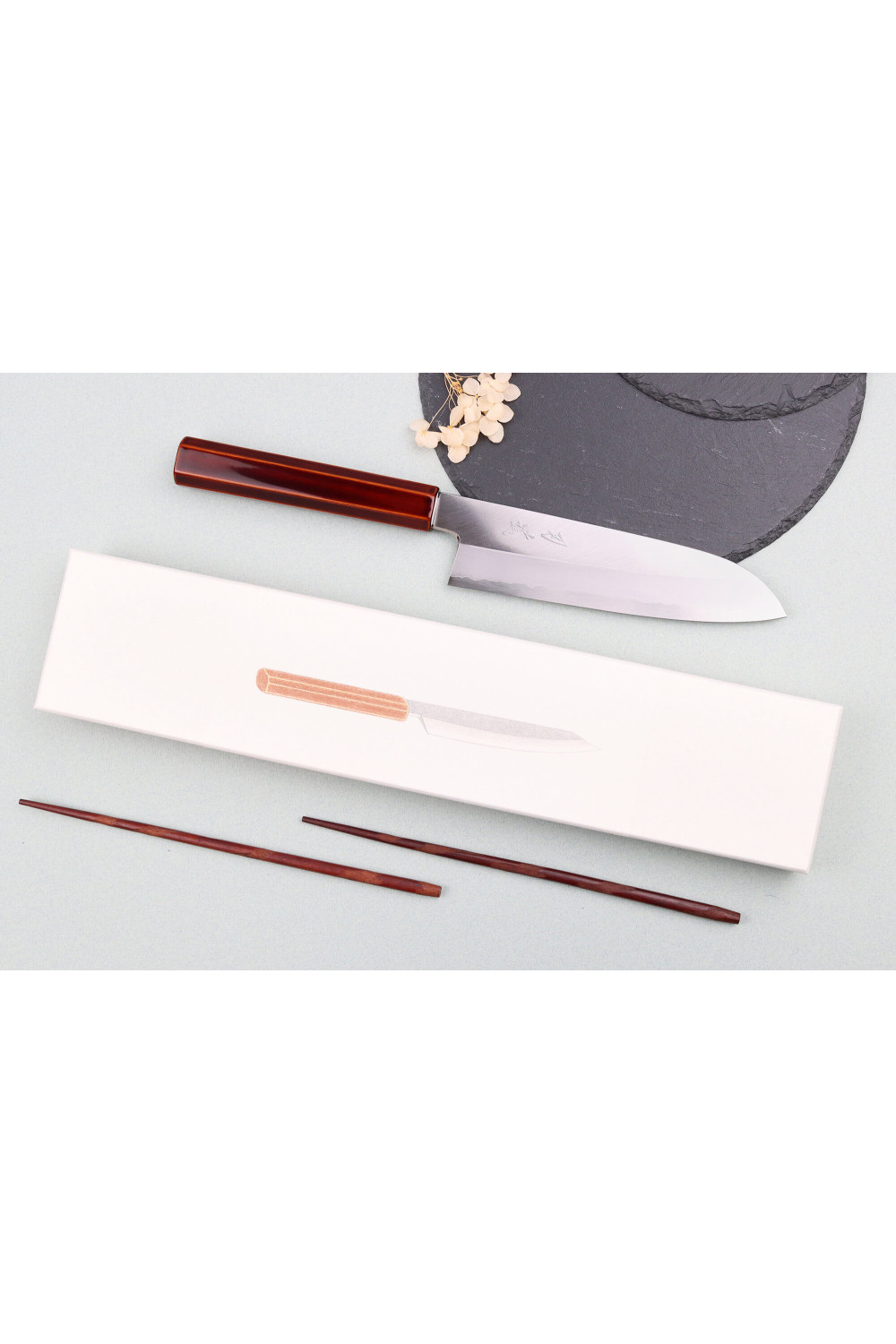
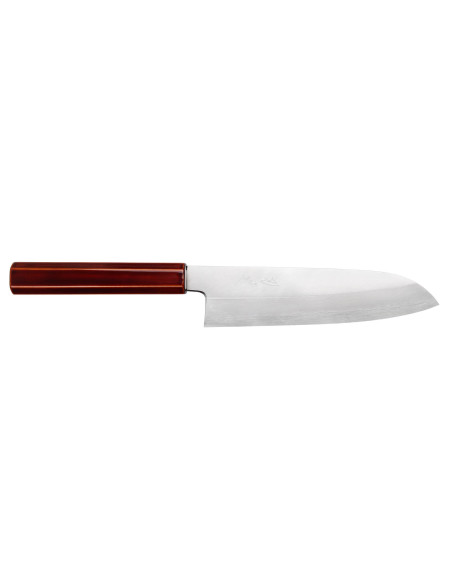
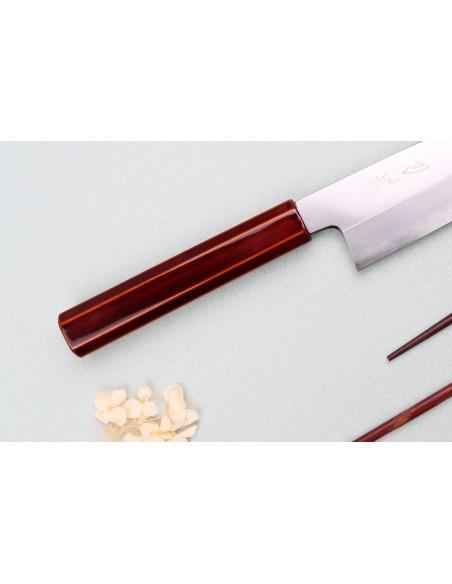
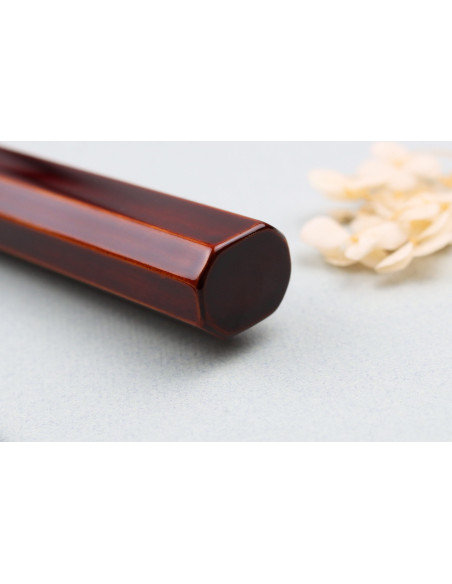
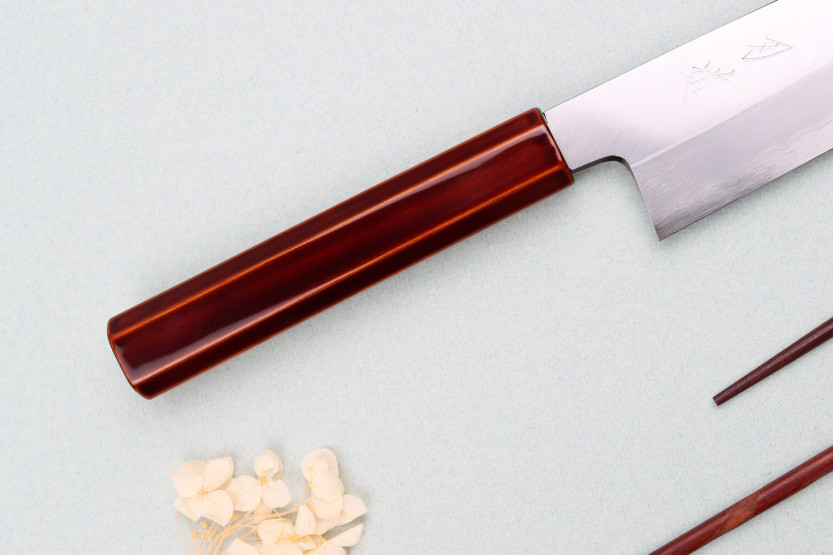
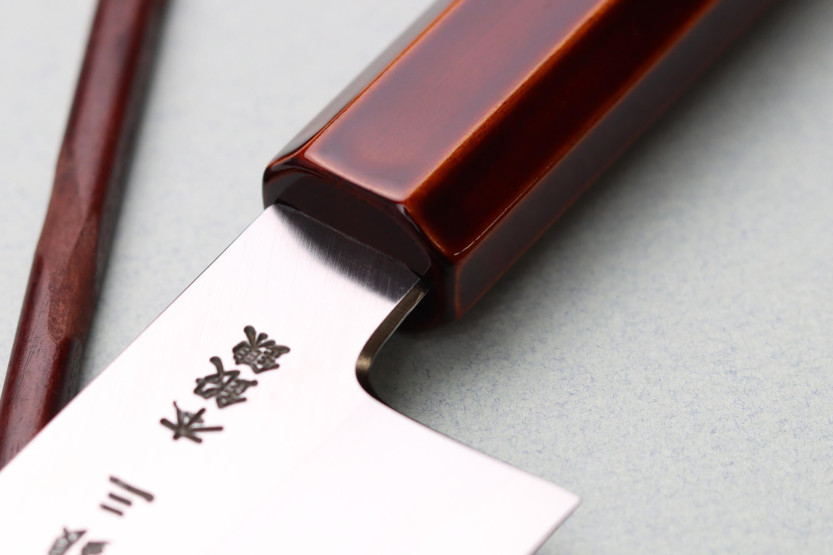
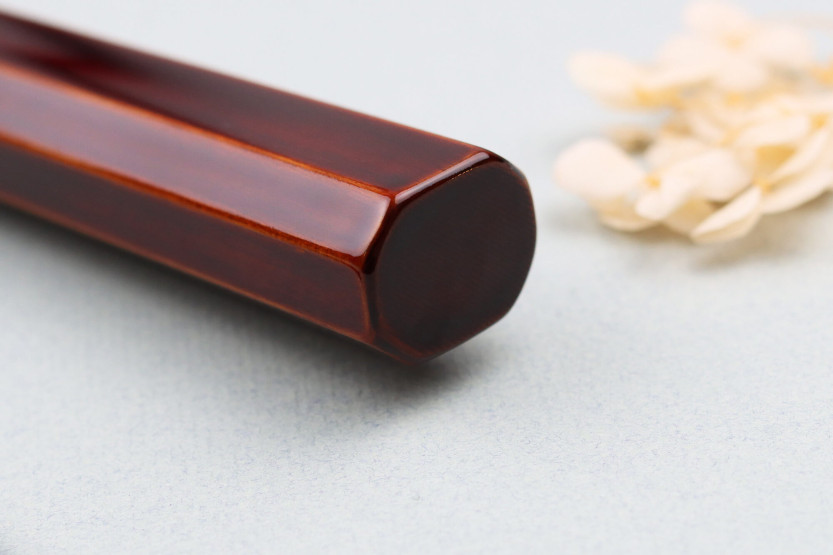
This Japanese santoku features an octagonal handle designed to suit both right- and left-handed cooks. Its shape hugs your palm perfectly, offering comfort and maneuverability. The octagonal shape is ideal for prolonged cutting.
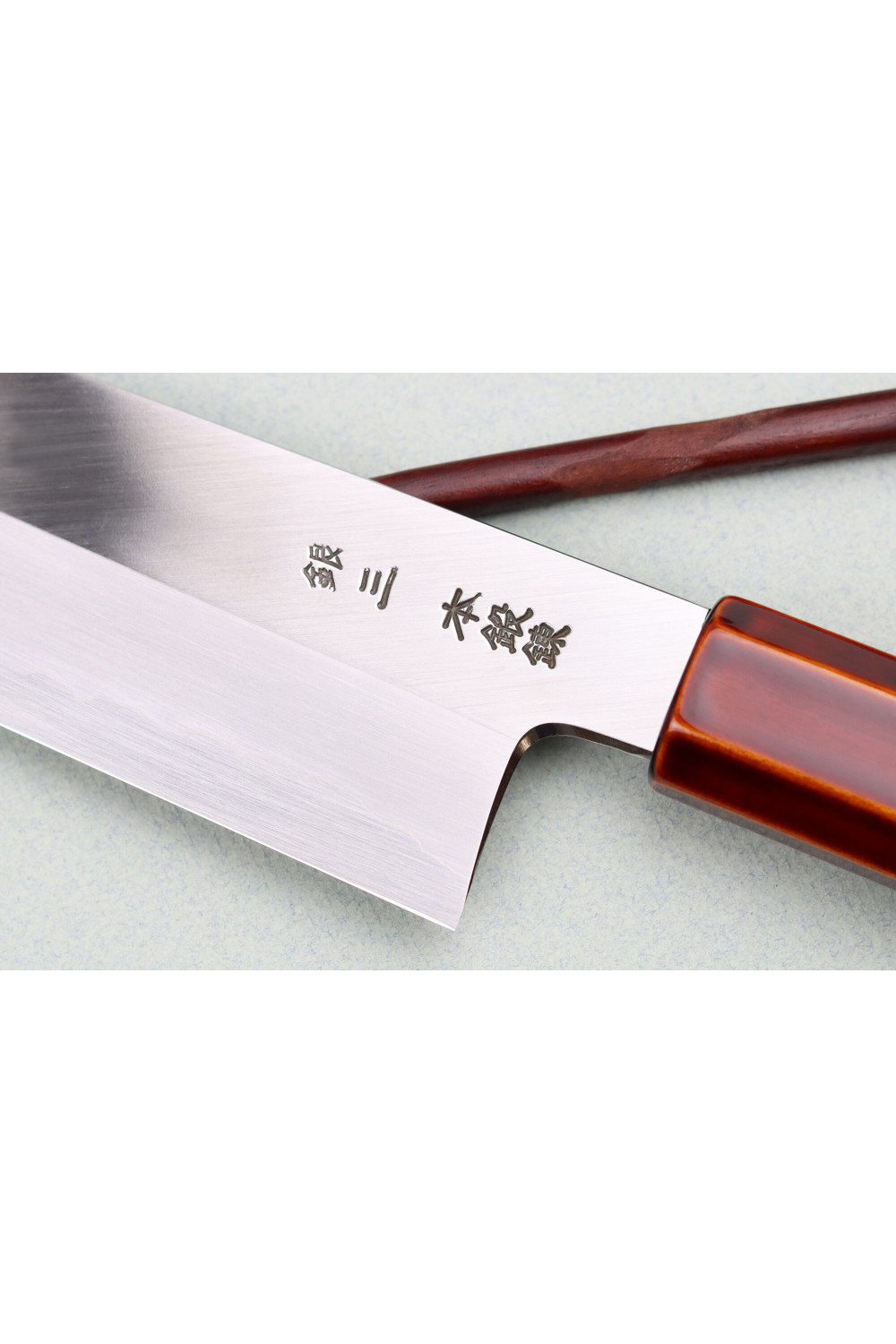
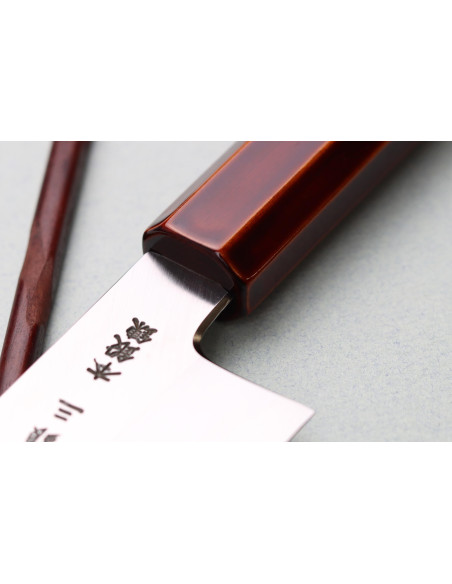
The handle is made from cherry wood, a sacred species in Japan. Cherry embodies beauty, ephemeral nature and life. It's a medium-hard wood that's both strong and light, with long-lasting durability. Naturally light in color, cherry is here coated with a traditional Urushi Kijiro lacquer, giving it a high-gloss brown hue and a smooth, protective feel.
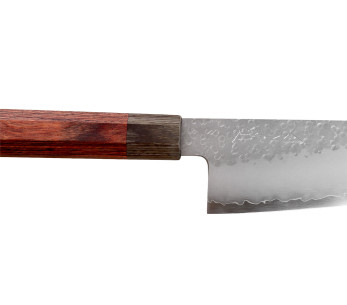
Last but not least, your knife is completely waterproof thanks to wood paste that fills the spaces where the blade fits into the handle. Water and bits of food cannot penetrate the knife's interior.
A high-performance, razor-sharp blade
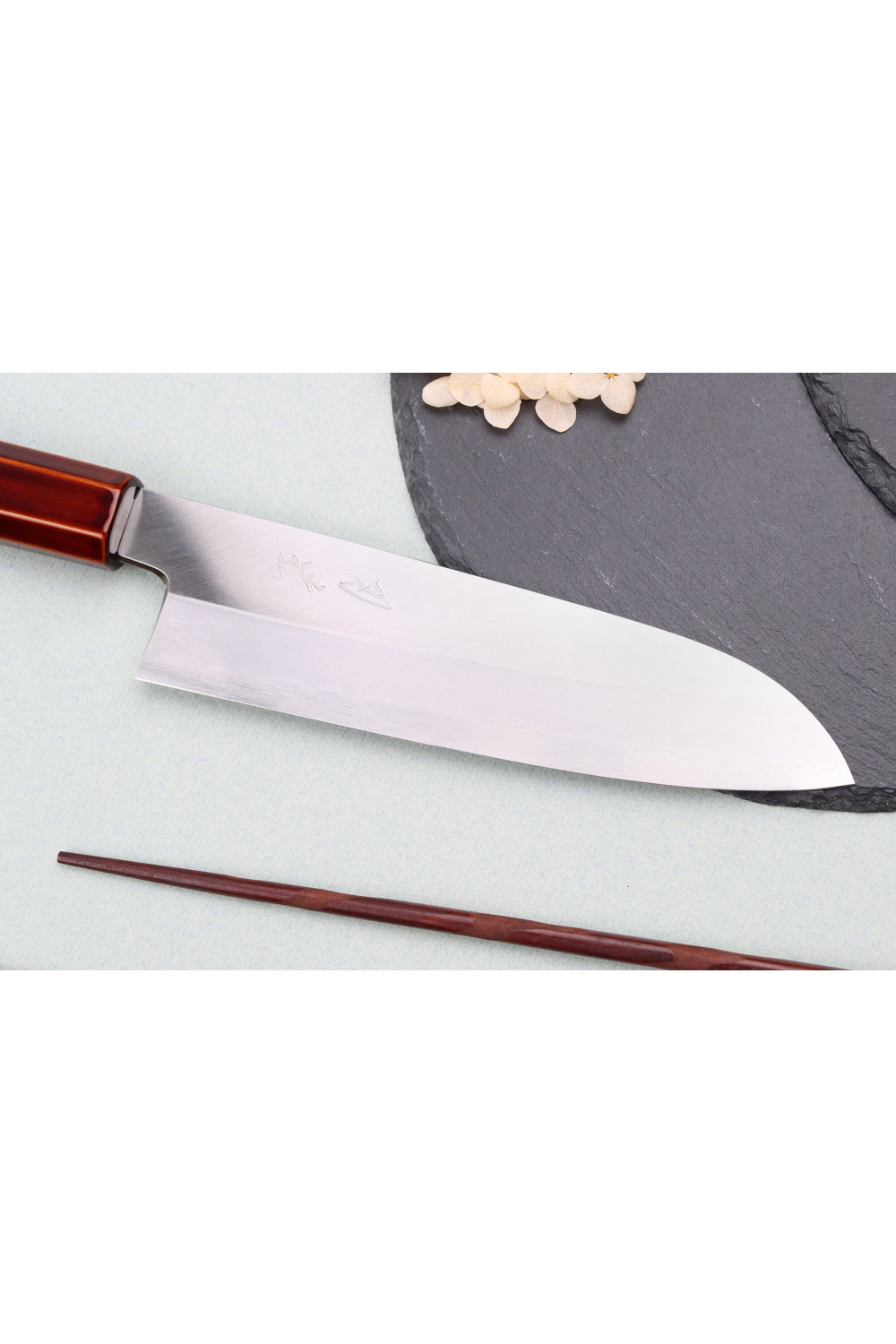
Your traditional Japanese knife is equipped with an 18cm blade whose structure is called San Maï. These words, which mean "3 layers" in Japanese, clearly illustrate how the blade is constructed. It contains a hard steel core surrounded by a softer layer of steel, folded on either side. This structure protects the core while providing excellent balance.
The blade core is made of Japanese Ginsan stainless steel (also known as Silver 3 or G3). This steel has a carbon content of around 0.95%, giving it increased hardness and rigidity, enabling it to hold its edge longer. What's more, with a chromium content of around 13.5%, Ginsan steel offers excellent corrosion resistance. Your knife reaches a hardness of 59/60 HRC, guaranteeing easy blade maintenance. All you need to do is sharpen it with a stone when the need arises.
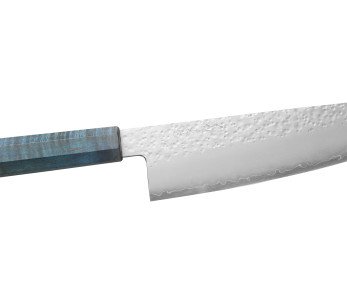
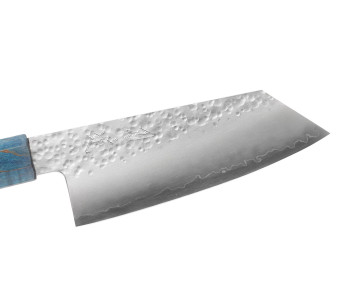
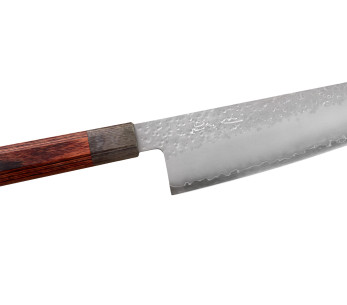
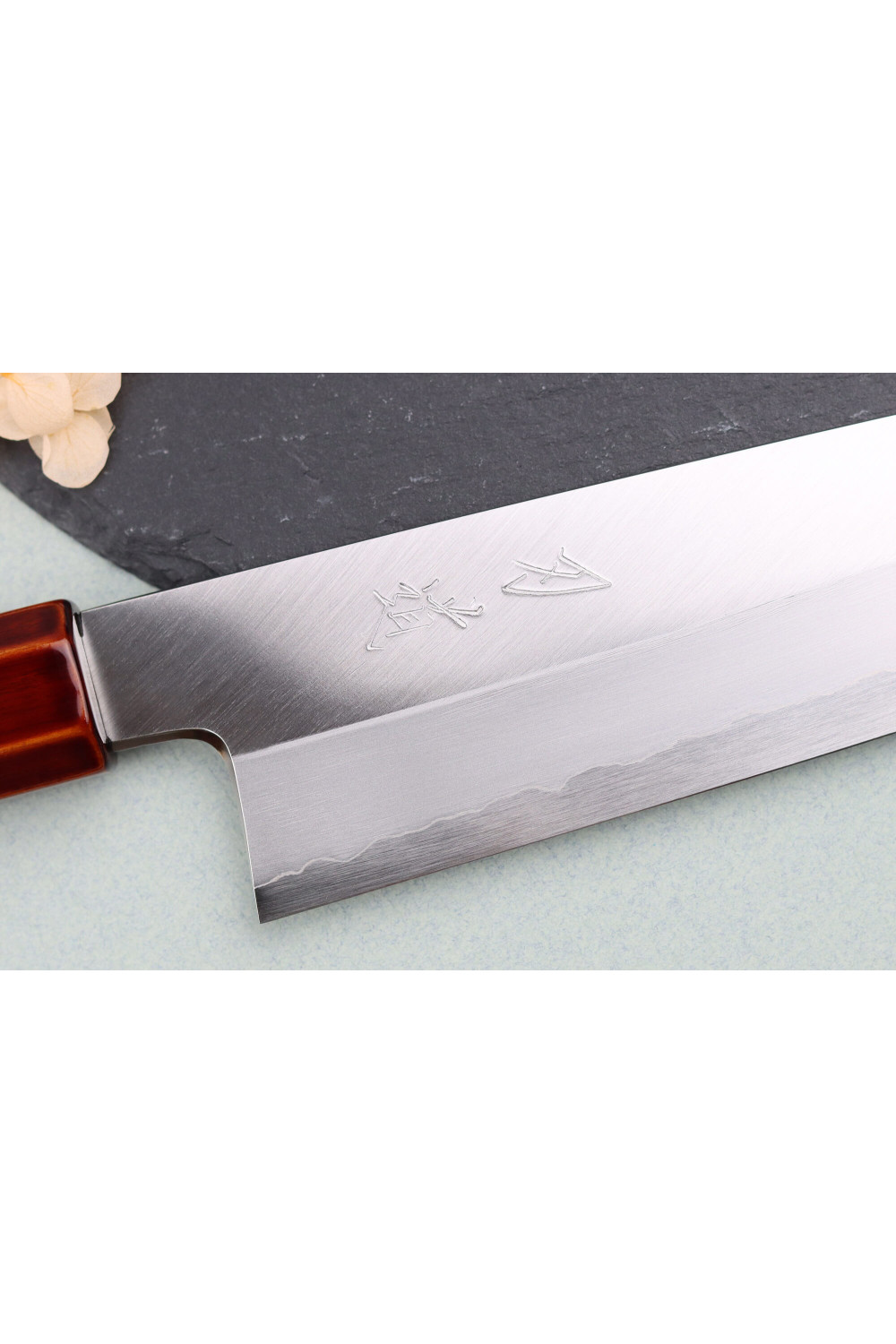
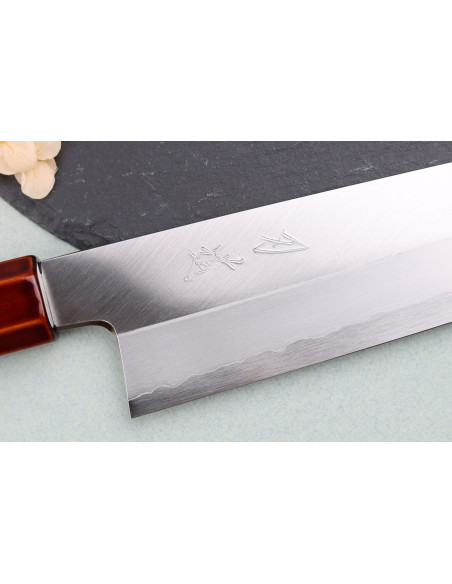
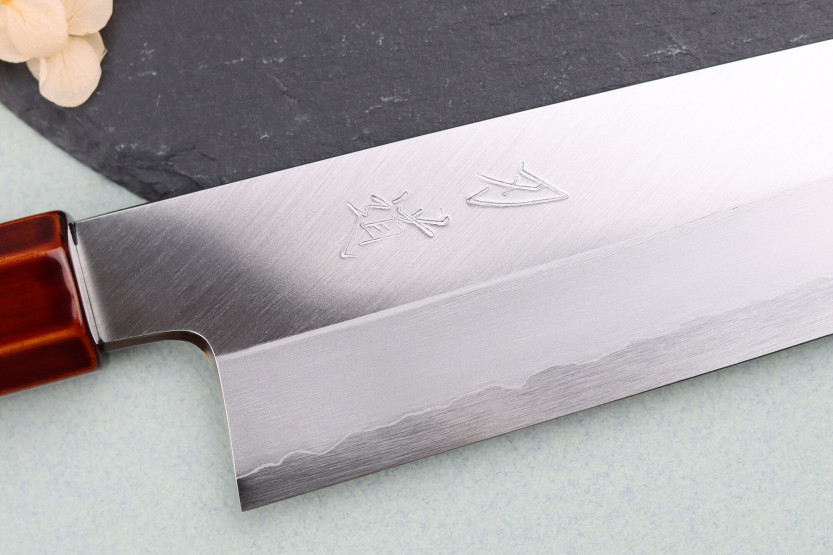
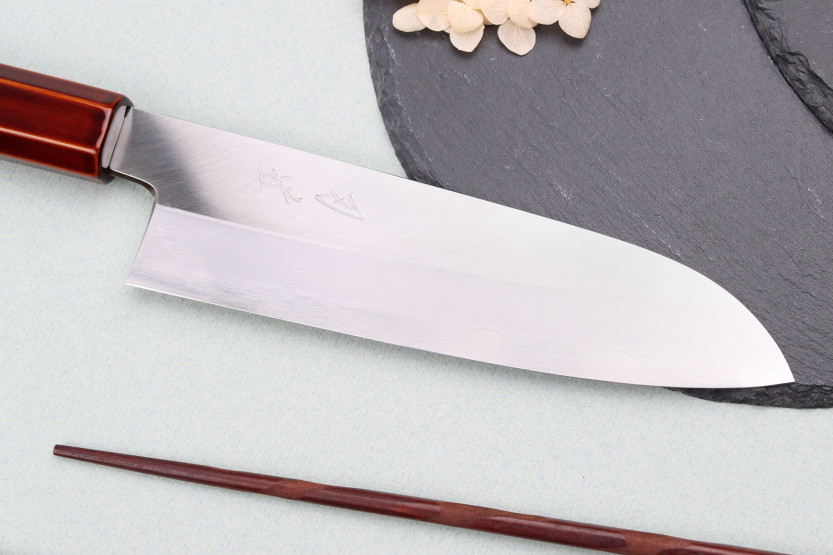
A layer of softer stainless steel is sandwiched on either side of the core. All 3 steel layers are present and form the San Maï. The Ginsan steel is protected and more flexible, making it more resistant to impact and breakage when cutting. The alternating layers of steel are visible along the cutting edge, creating a random wavy pattern that gives the knife a singular visual appeal.
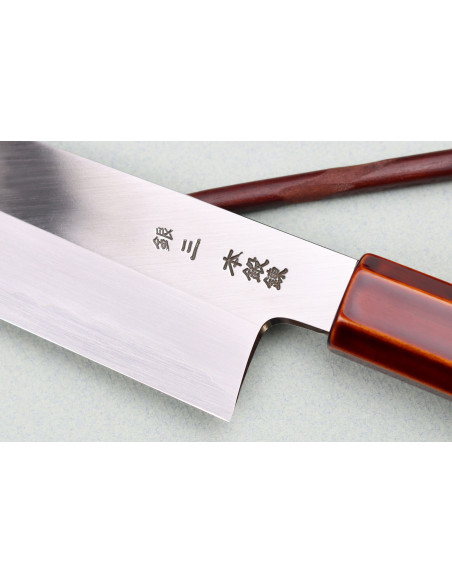
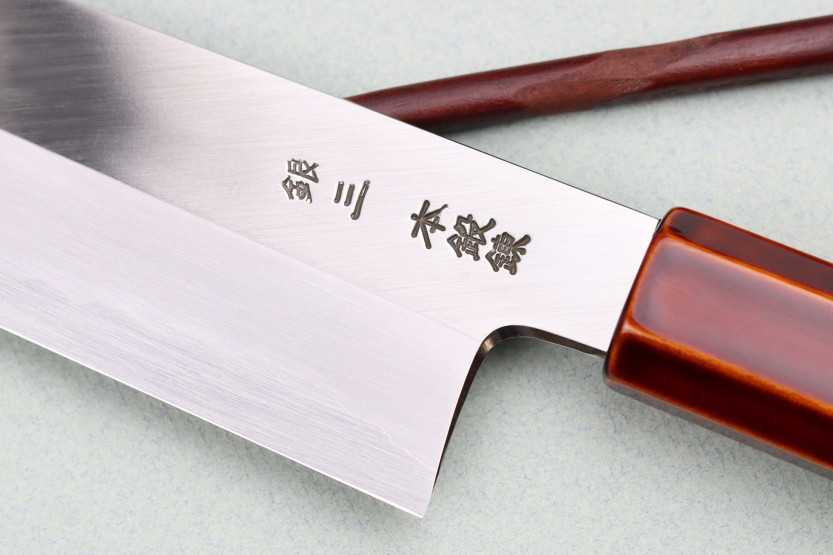
Finally, the blade has been polished and engraved with fine kanji. It possesses authenticity and elegance.
Caring for my hand-forged Japanese knife
As this knife has been made from top-quality materials, it's important to wash it exclusively by hand. Use a mild soap and a non-abrasive sponge, taking care not to wet the handle. After cleaning, dry the knife thoroughly to remove all traces of water, before storing it in its beautiful, dry case. Please note that this knife is not dishwasher-safe or sink-safe.
Discover Hado Japanese knives on KnifeLeader.eu!




 By buying this product you can collect up to