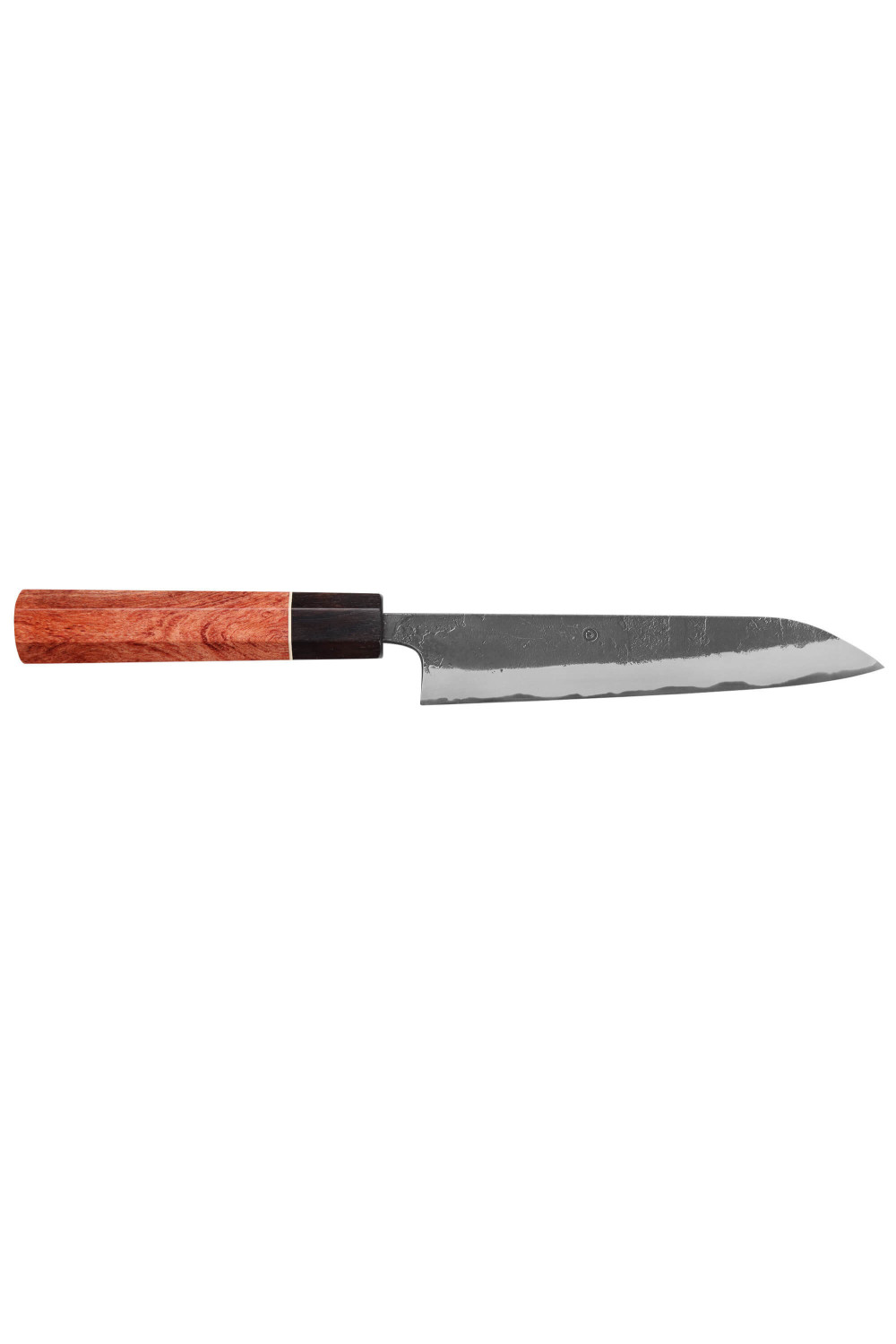
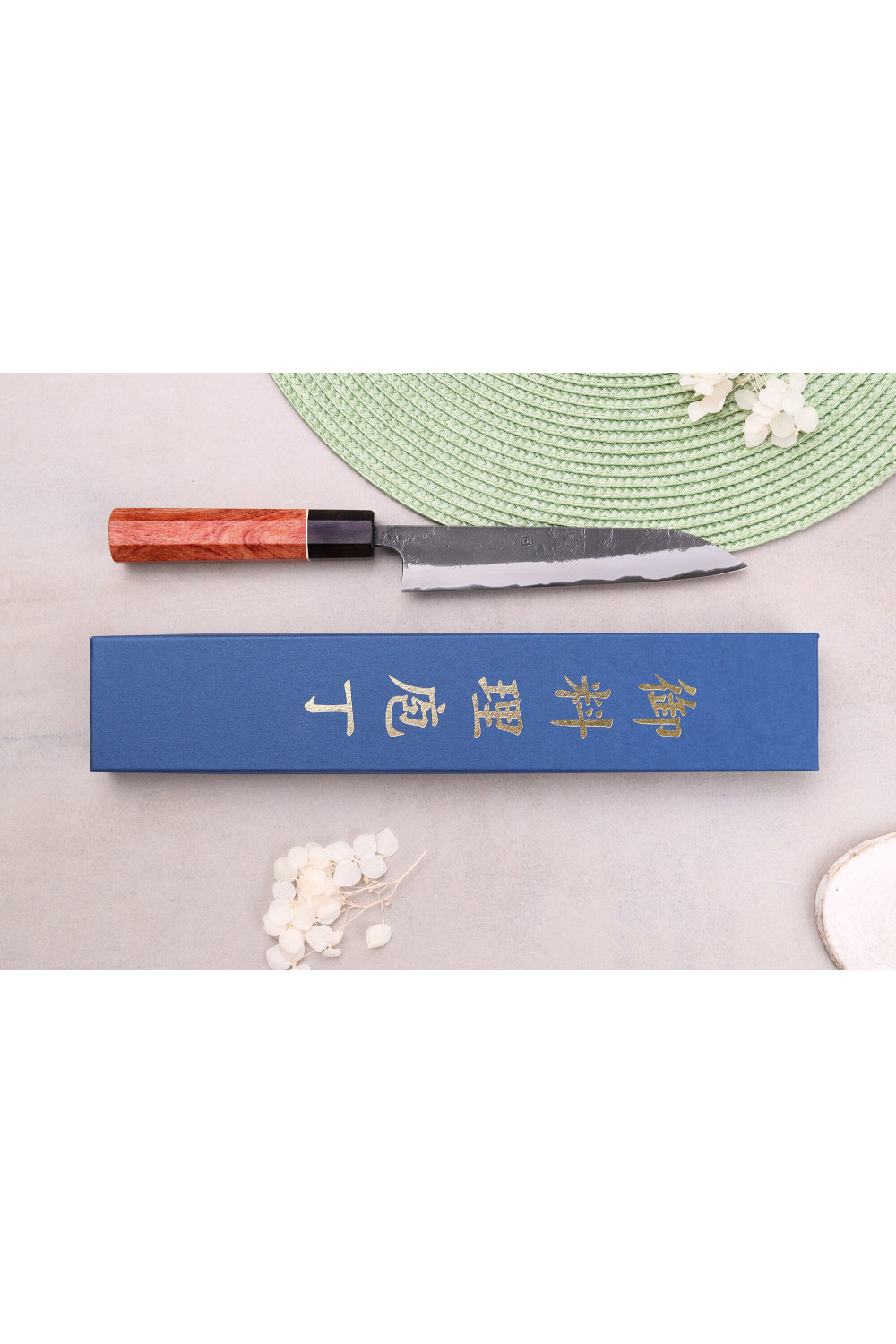
A Japanese knife forged by the incredible Masashi Yamamoto
This Universal knife was forged by Masashi Yamamoto san, a Japanese blacksmith who creates exceptional knives. This young, modern blacksmith was trained in the craft by his family, by his older brother. He developed his own workshop in 2013, when he felt ready.
Masashi imagines and designs knives that are unique pieces highly appreciated for the hardness of their blades. He achieves this hardness through special technical and heat treatments. Despite his youth, Masashi Yamamoto is already passing on his know-how to two apprentices! He has his own unique style that makes him emblematic: Masashi san is accustomed to forging in flip-flops while smoking a cigarette.
Top-of-the-range materials for this handcrafted knife
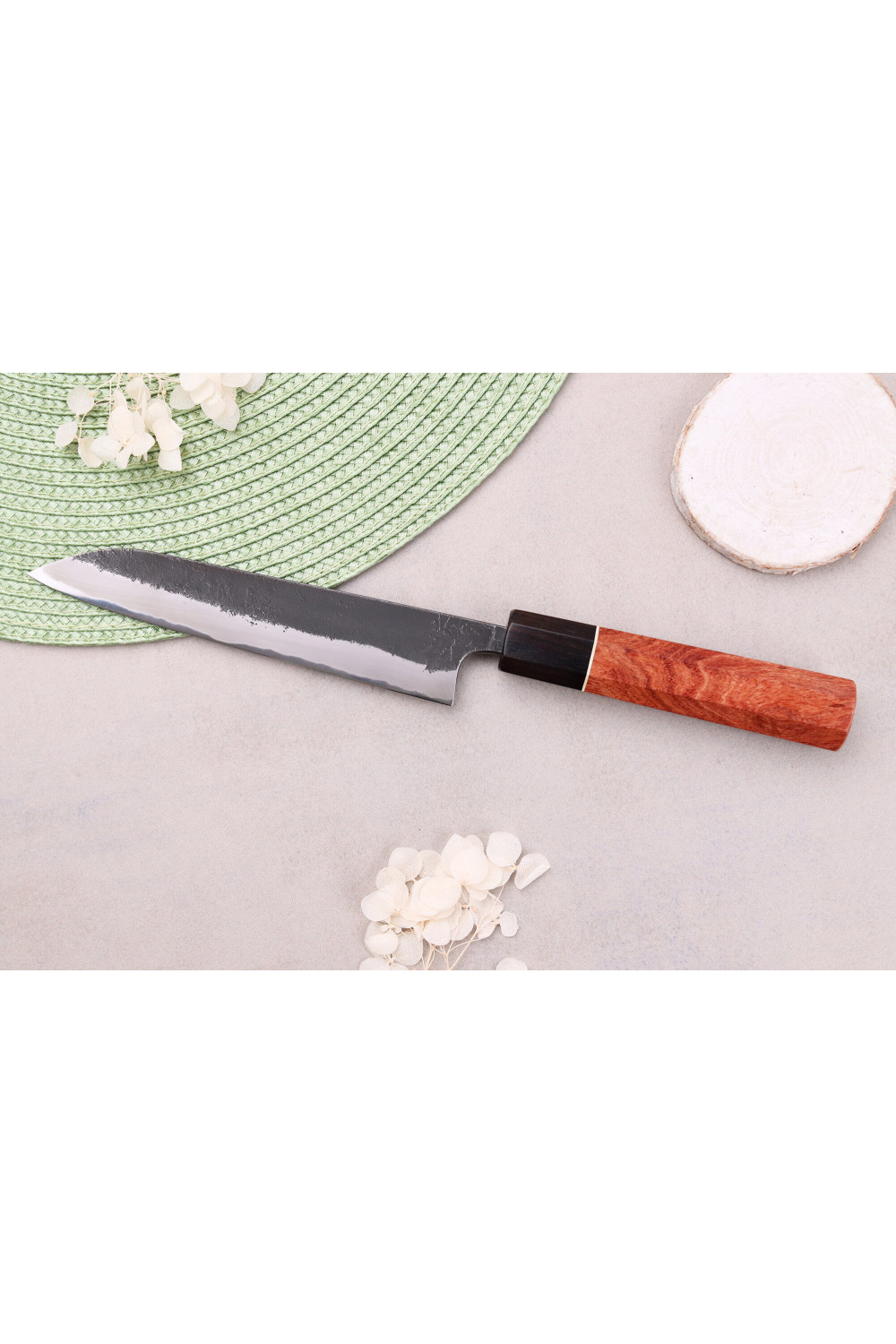
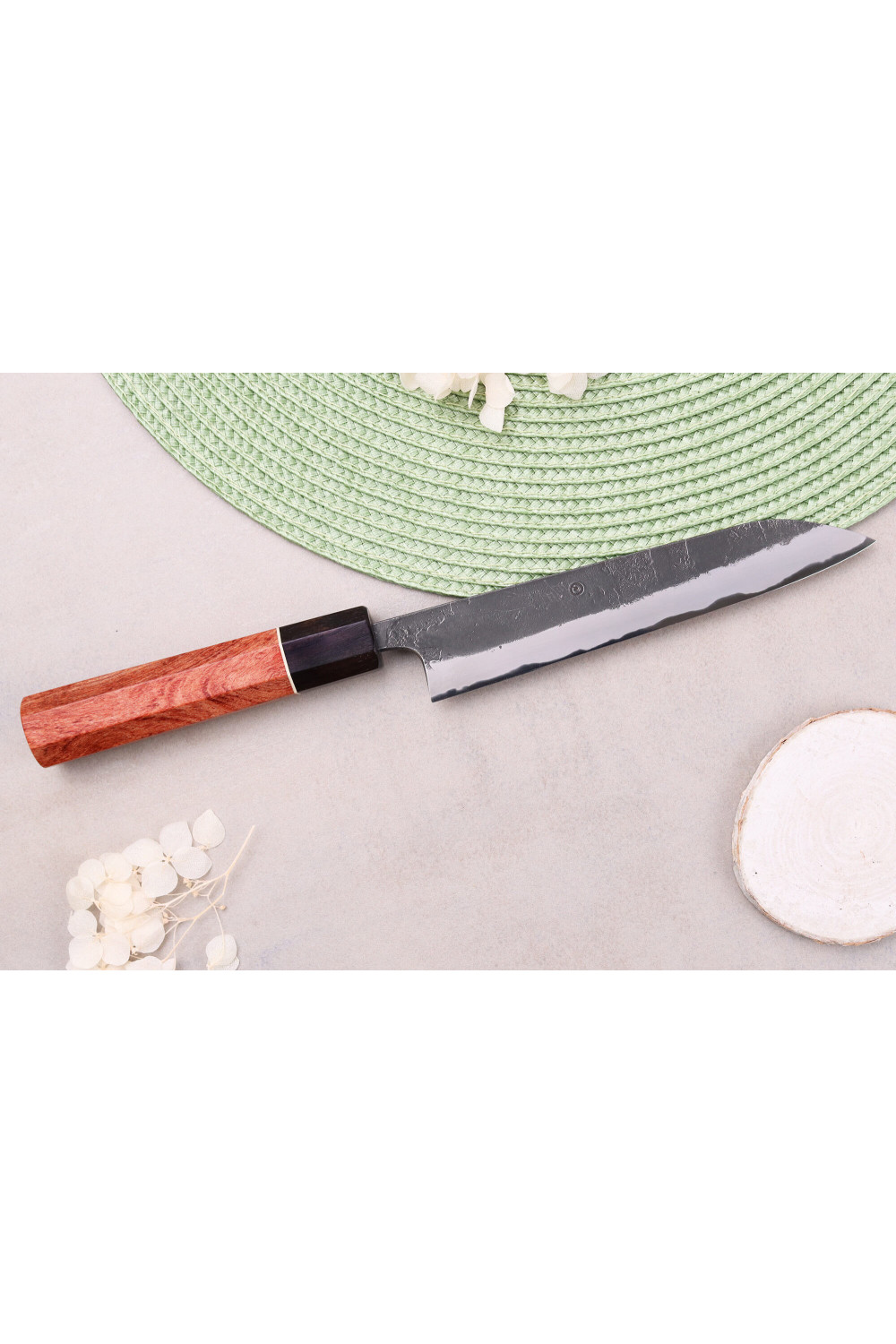
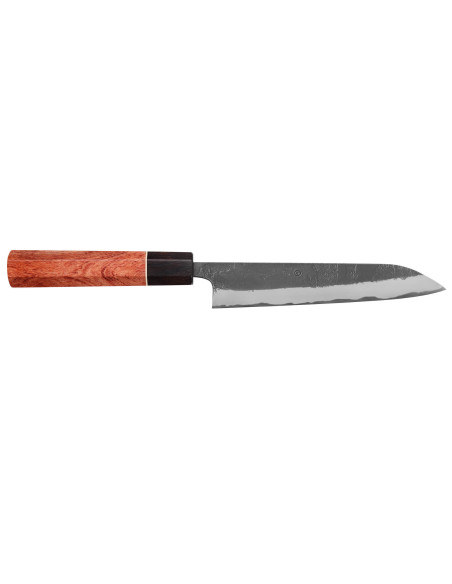
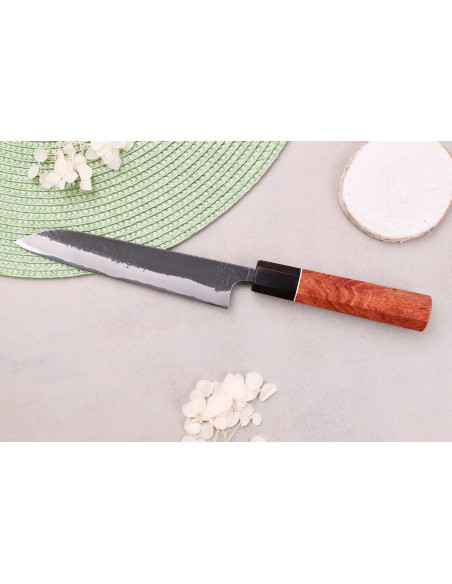
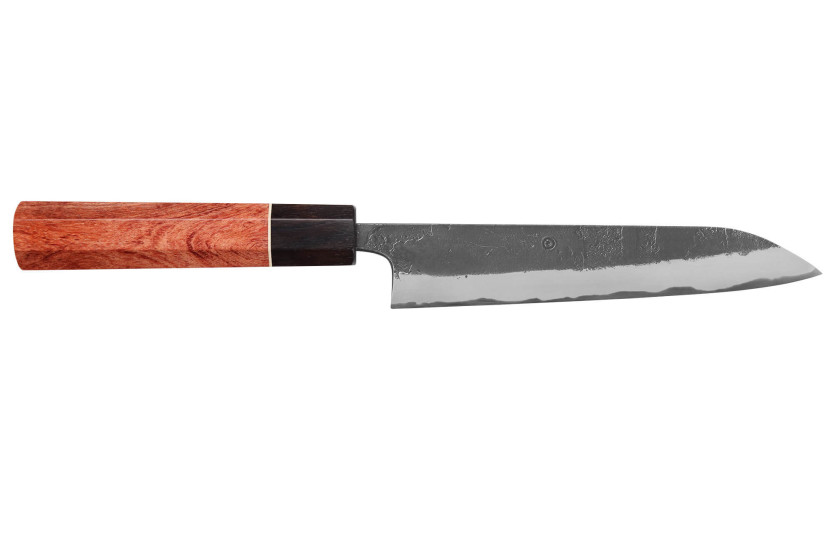
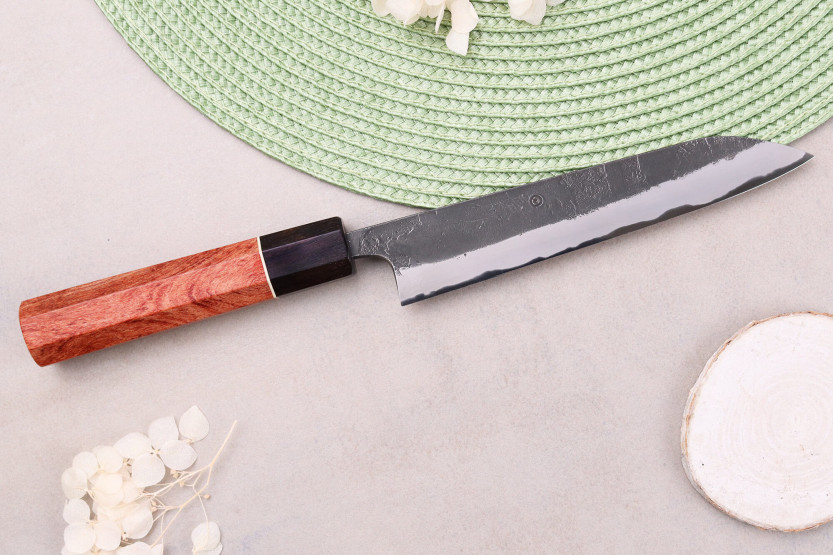
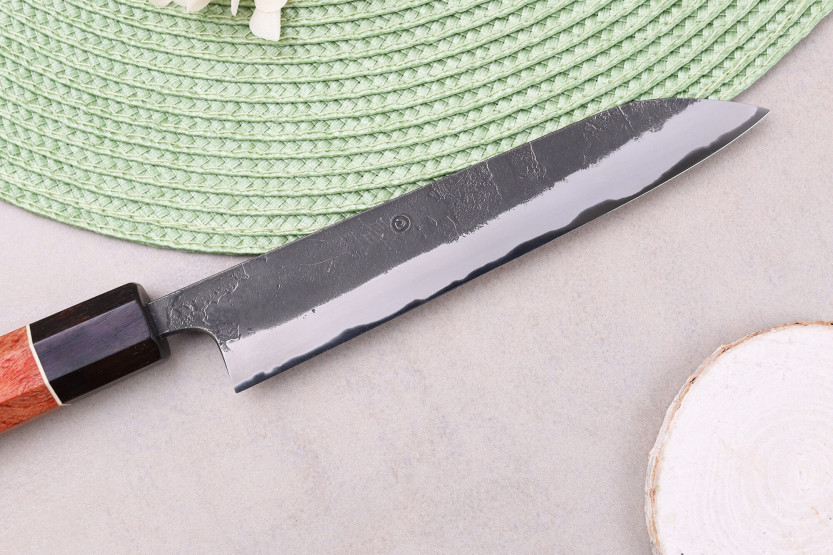
This Masashi Yamamoto JapaneseUniversal knife features a San Maï blade, a typically Japanese structure. The term means "3 layers" in Japanese and is a good indicator of the blade's construction. The blade consists of a core of rigid steel, surrounded by a layer of slightly softer steel, folded on either side.
This design protects the core and adds flexibility. We're not talking about flexibility in the pure sense, but rather a suppleness of use where the blade is less brittle.
The core of this blade is made of Japanese Aogami #1 steel, an alloy also known as Blue Paper Steel #1 or BS1. It is manufactured by the renowned steelmaker Hitachi.
This alloy is enriched with approximately 1.3% carbon, an essential element for increasing alloy hardness. In fact, the harder an alloy, the longer it retains its cutting edge, allowing for longer intervals between sharpening sessions. The blade of this knife achieves a hardness of 63 HRC, demonstrating the performance of its cutting edge and its excellent edge retention.
Aogami #1 steel is expensive and few blacksmiths know how to work it. You need to be an expert to shape it, otherwise the losses could be significant and expensive. Masashi Yamamoto is one such expert blacksmith!
The rigid steel core is then coated with a layer of softer steel, known assoft iron. This alloy is highly enriched with iron ore and provides the necessary flexibility to the core, making it more resistant to the micro-shocks encountered when cutting. With such a composition, the blade of your knife is oxidizable and therefore needs to be meticulously maintained (see all our tips below).
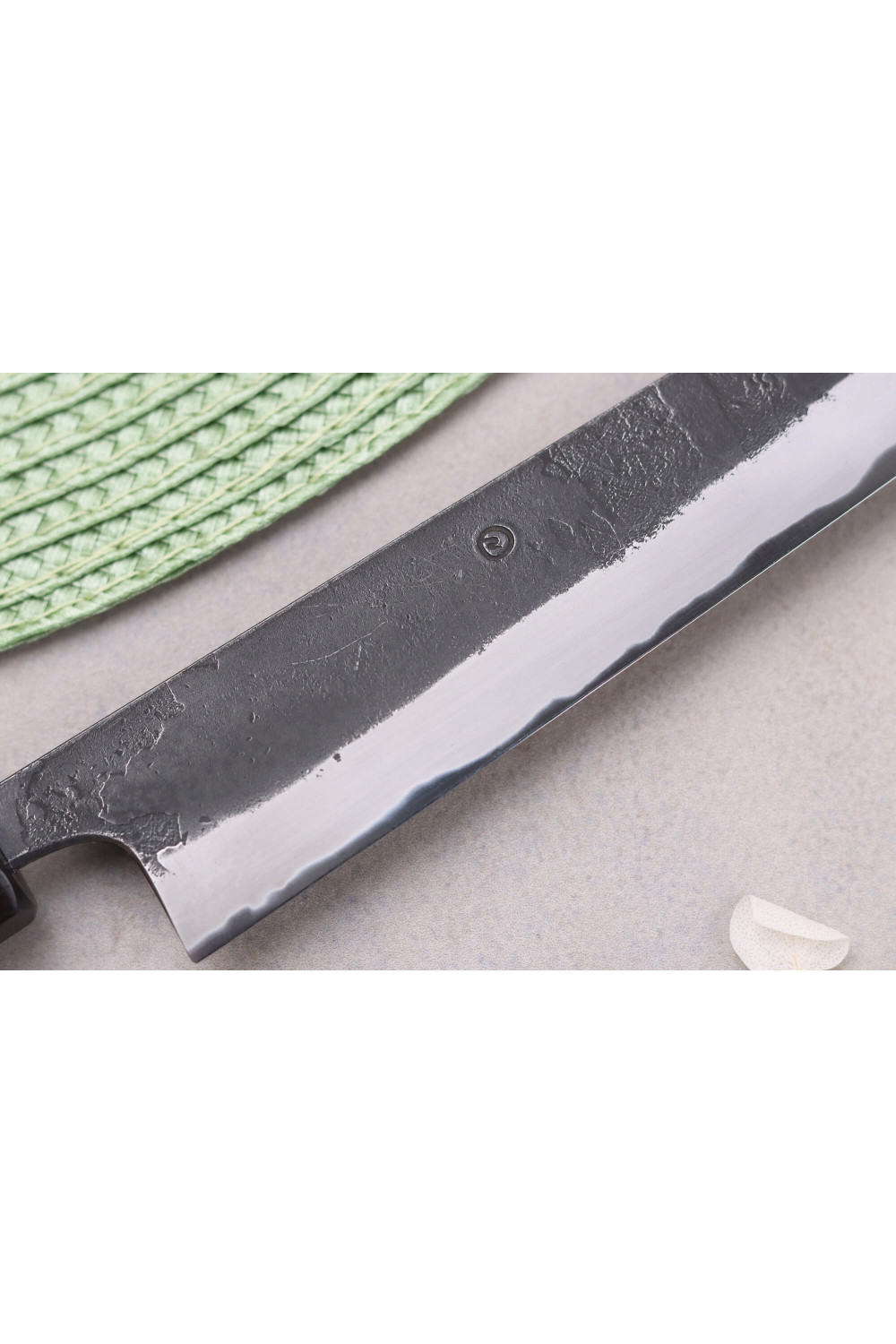
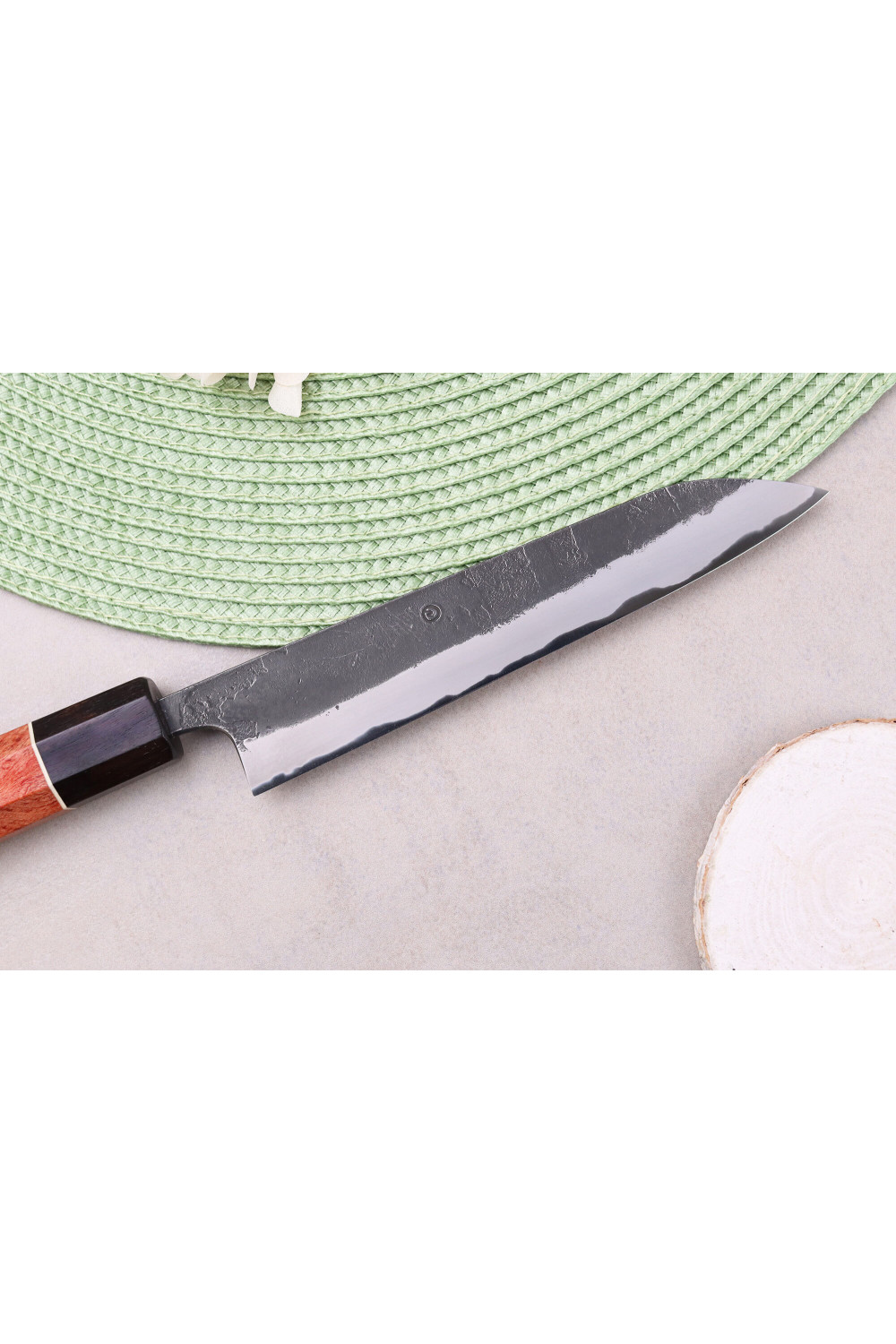
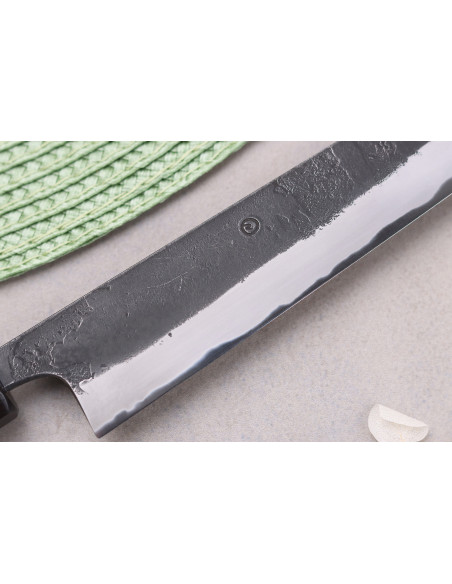
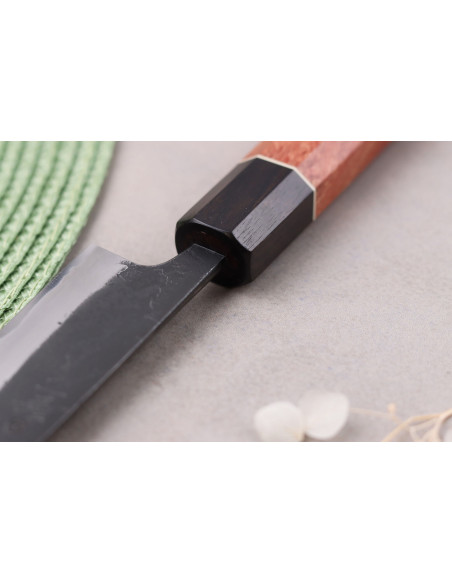
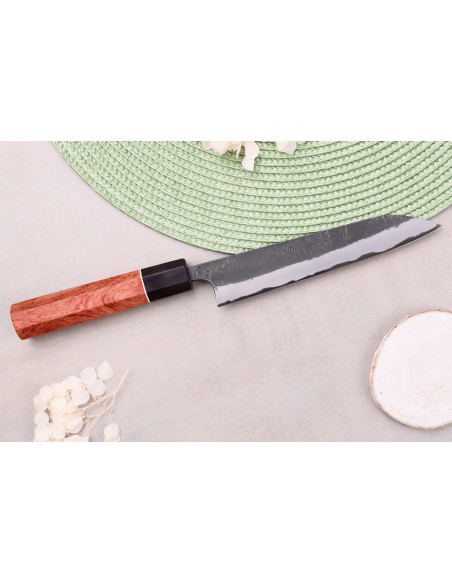
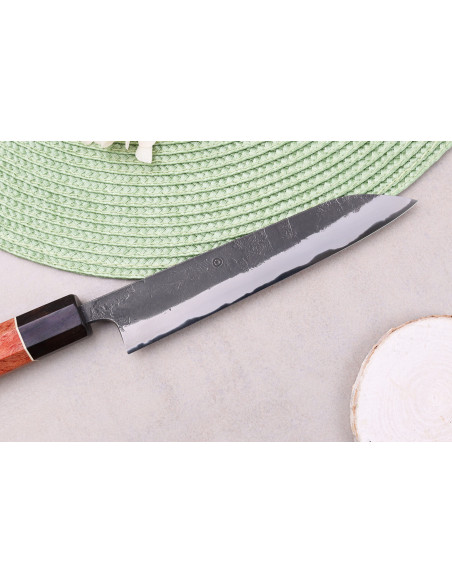
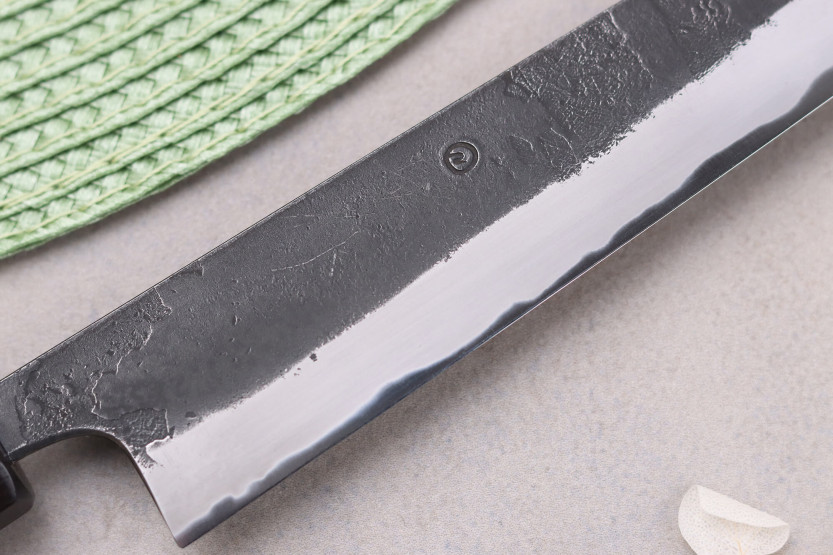
To finish with the blade, it benefits from a superb Black Nashiji finish that gives it a rustic, black appearance, as if it had not been polished. Its appearance is reminiscent of a forged blade. Finely engraved kanji and the blacksmith's hallmark complete the blade.
Note that Masashi Yamamoto knives have a finer point than the average knife. In fact, the thickness of the blade narrows as you reach its tip, making it more flexible and therefore easier to cut, with a more pleasant and natural feel in use. This is further proof of this outstanding blacksmith's expertise. However, be careful not to press too hard, as flexibility has its limits!
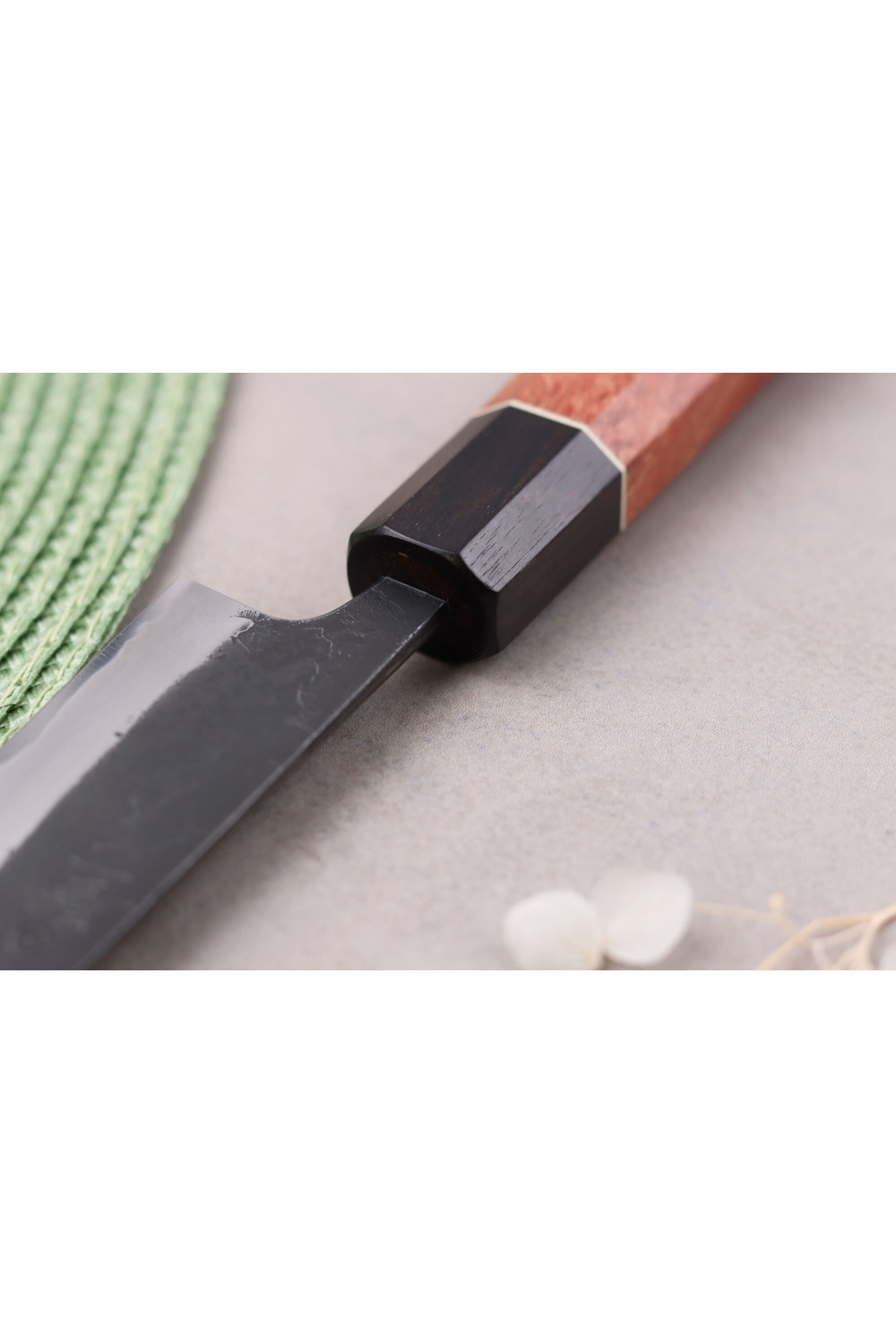
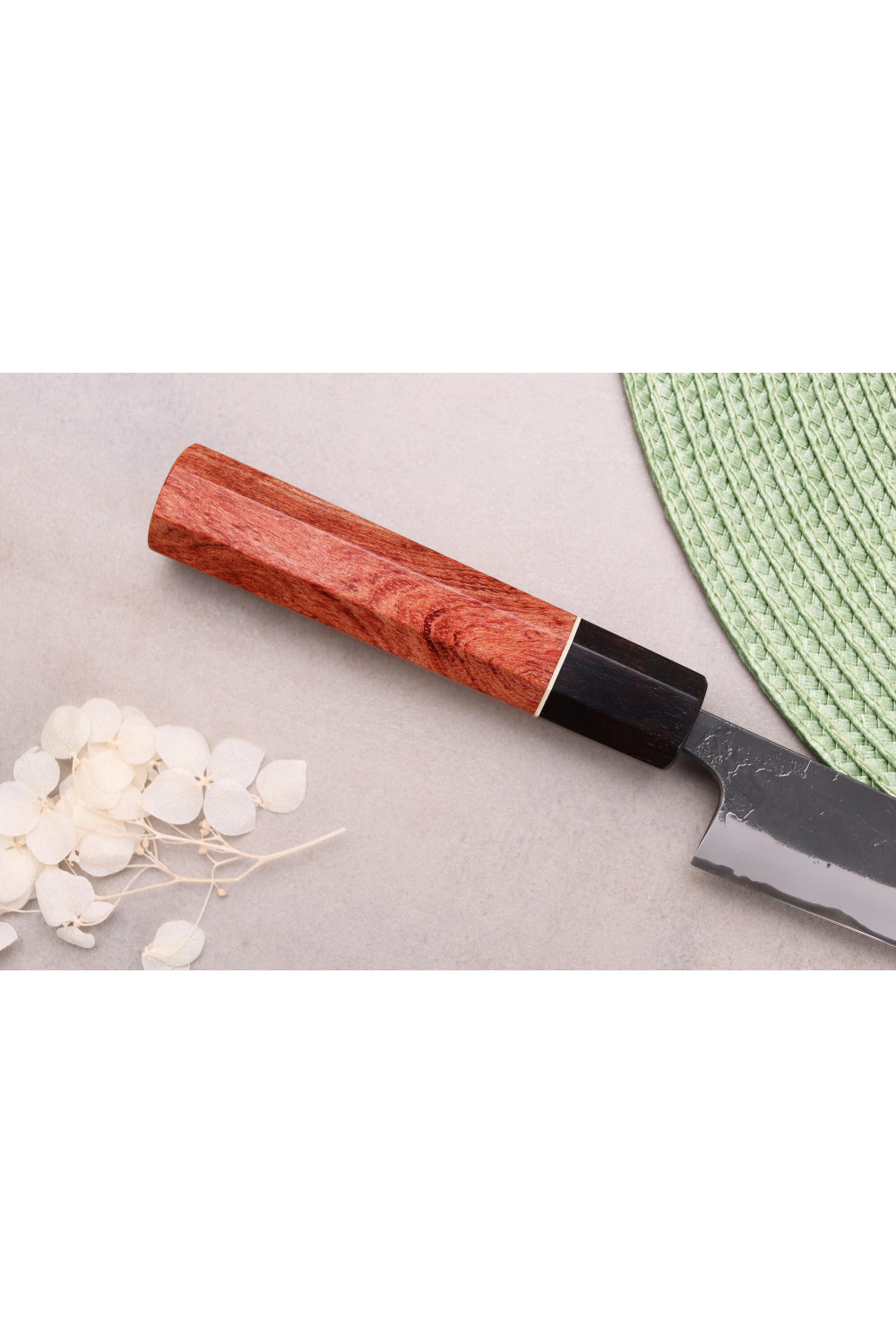
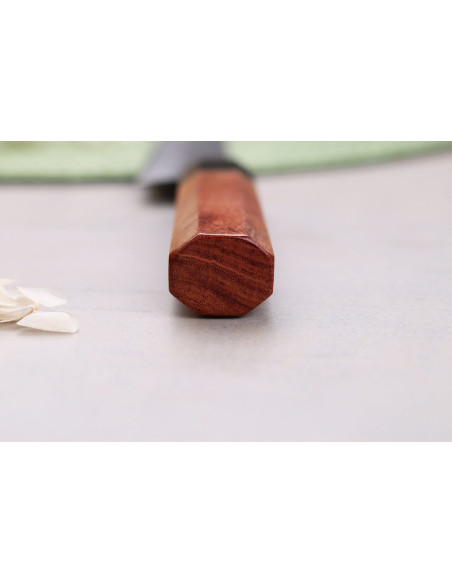
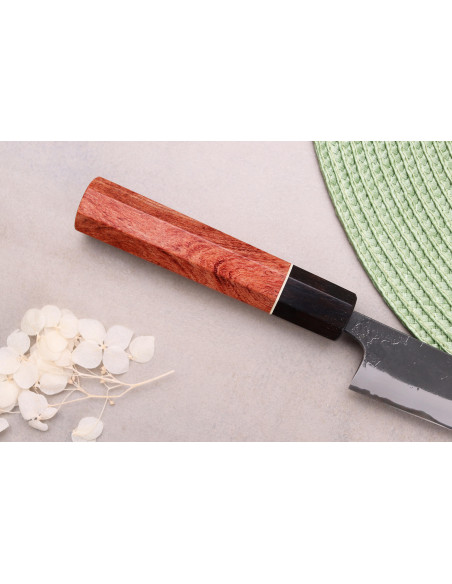
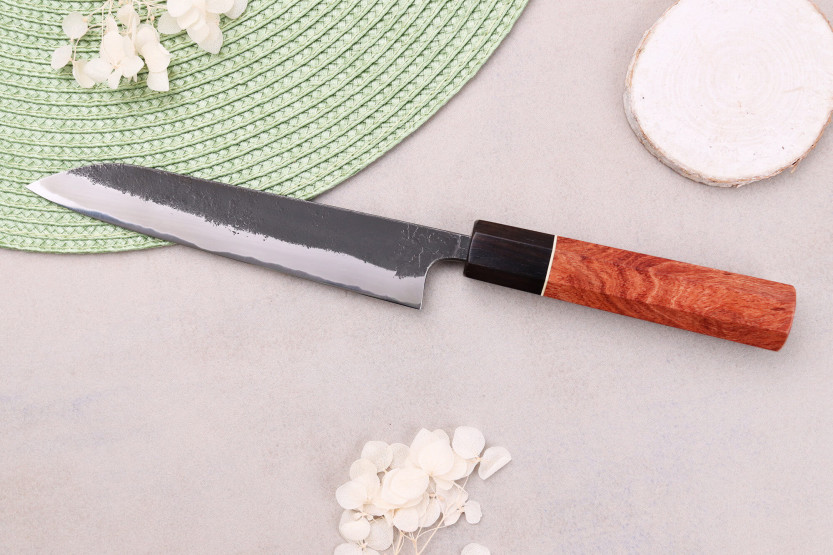
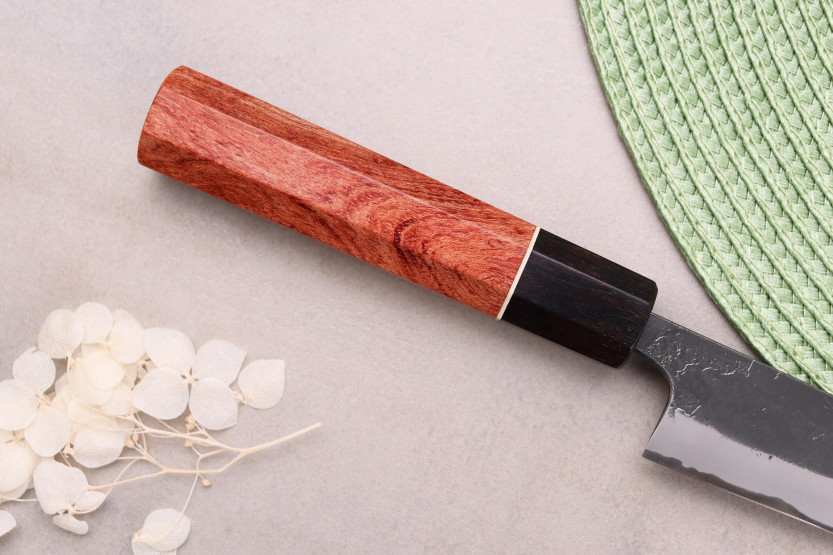
The knife handle is made from quince wood. This wood is prized for its durability, resisting humidity and temperature variations. Quince is characterized by its light color.
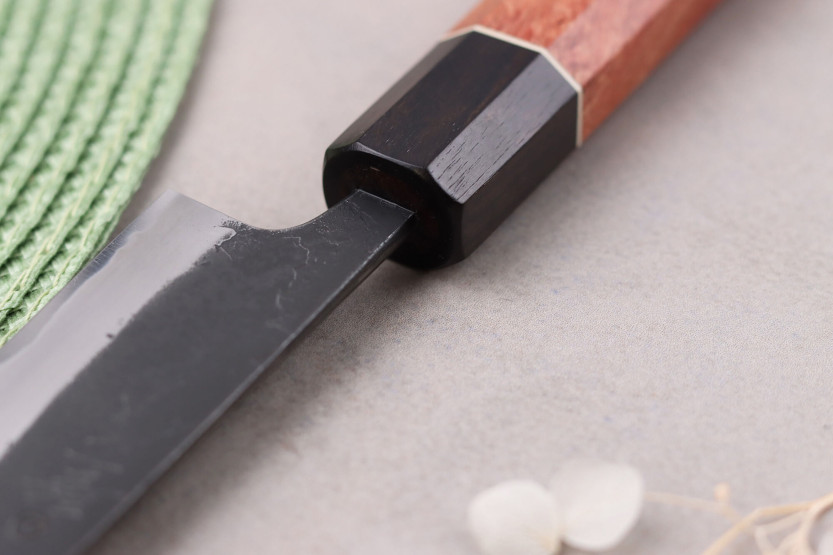
The handle is completed by an elegant bolster in dark ebony, which contrasts with the light color of the quince. A delicate white micarta ring separates the two woods.
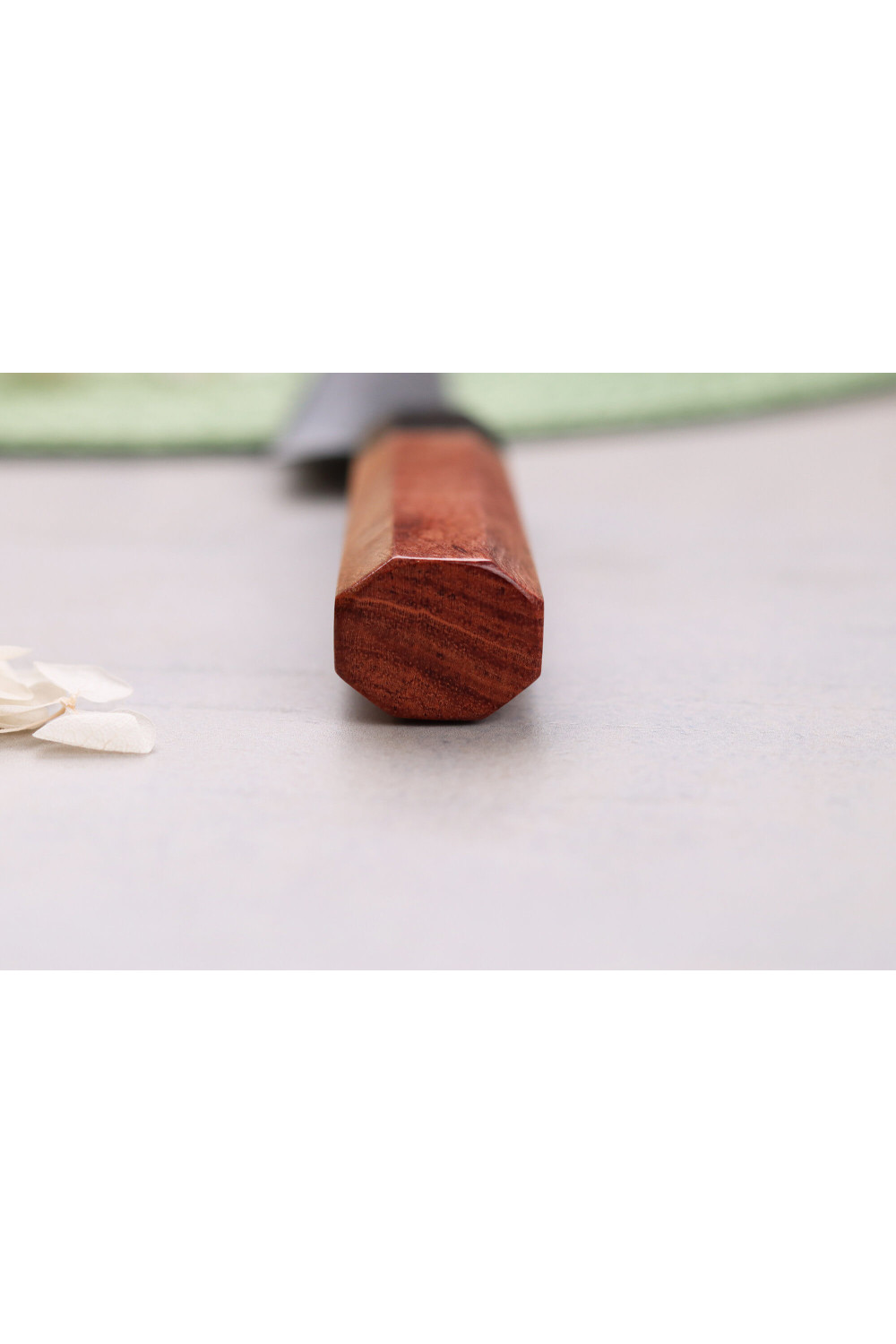
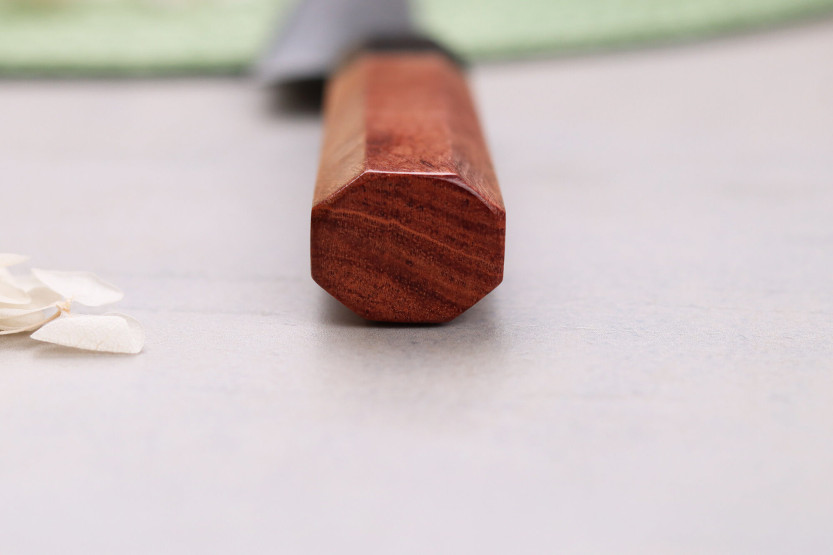
With its octagonal shape, the handle adapts perfectly to your hand. You have full control of the knife, which is easy to handle. What's more, this shape is suitable for both left- and right-handed users.
How do I maintain my carbon Japanese knife?
The blade of this Universal knife is oxidizable, as mentioned above. For this reason, never put the knife in the dishwasher or leave it to soak in the sink.
The knife may only be washed by hand in lukewarm water, using a sponge and mild soap. Take care not to get the handle too wet when washing. Wipe the knife clean immediately to remove all moisture. You can then store it in a dry place.
Note that the blade may change color slightly over time, which is normal. Its steel is naturally very reactive to elements such as humidity in the air, the acidity of food...
To preserve and nourish the blade, we recommend applying a few drops ofoil with a soft cloth from time to time.
Many handcrafted Japanese knives await you!




 By buying this product you can collect up to