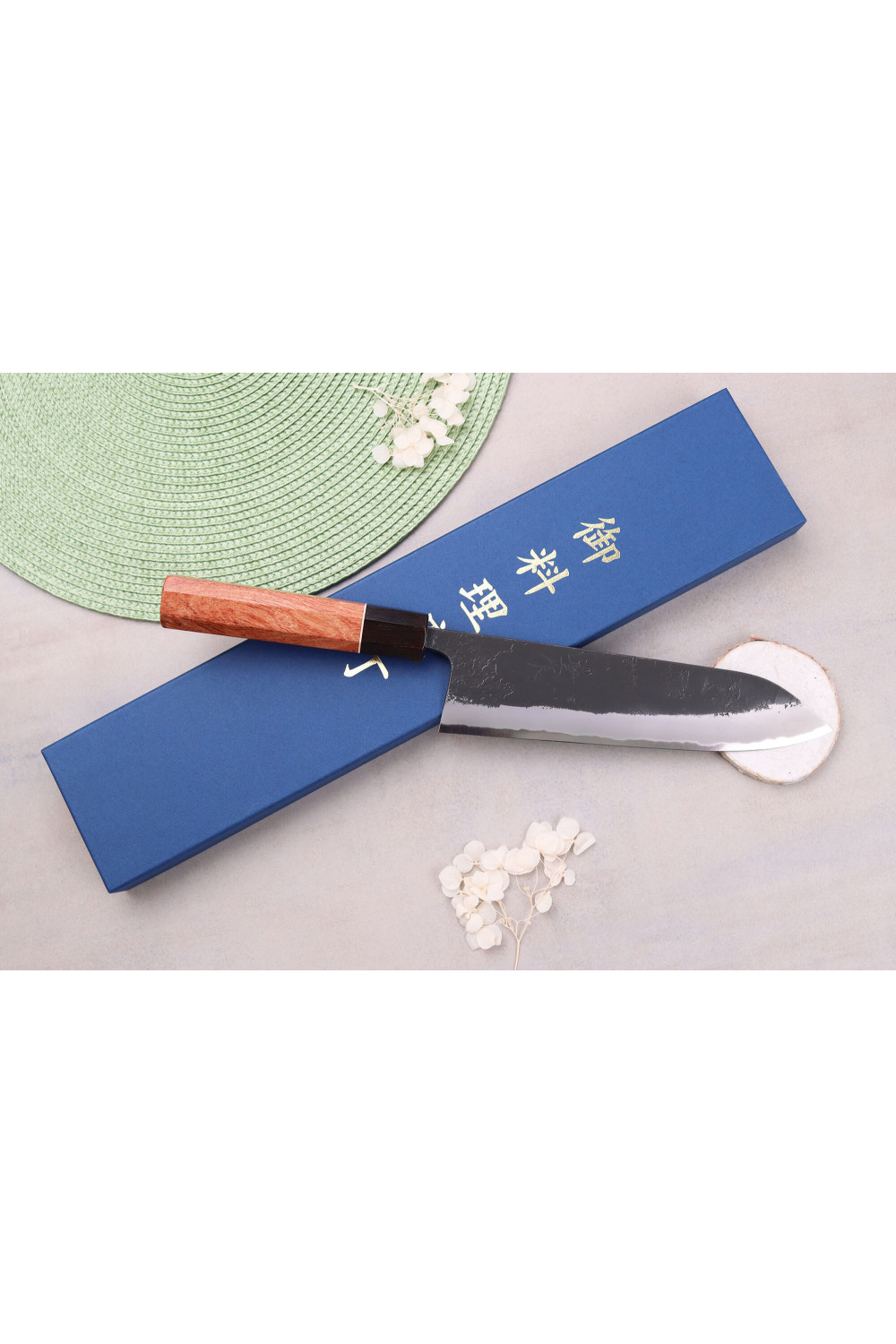
A Japanese knife made of top-of-the-range materials
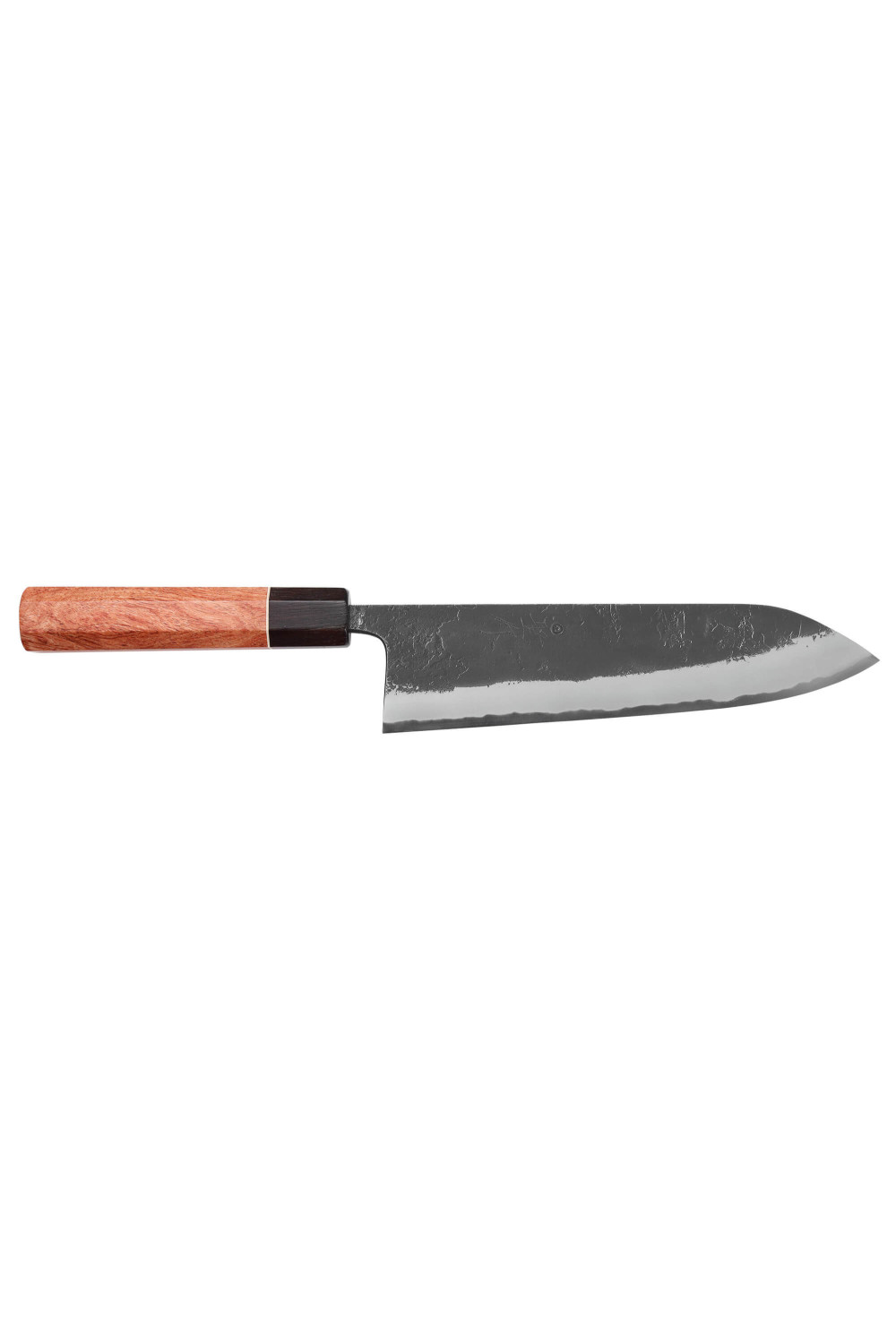
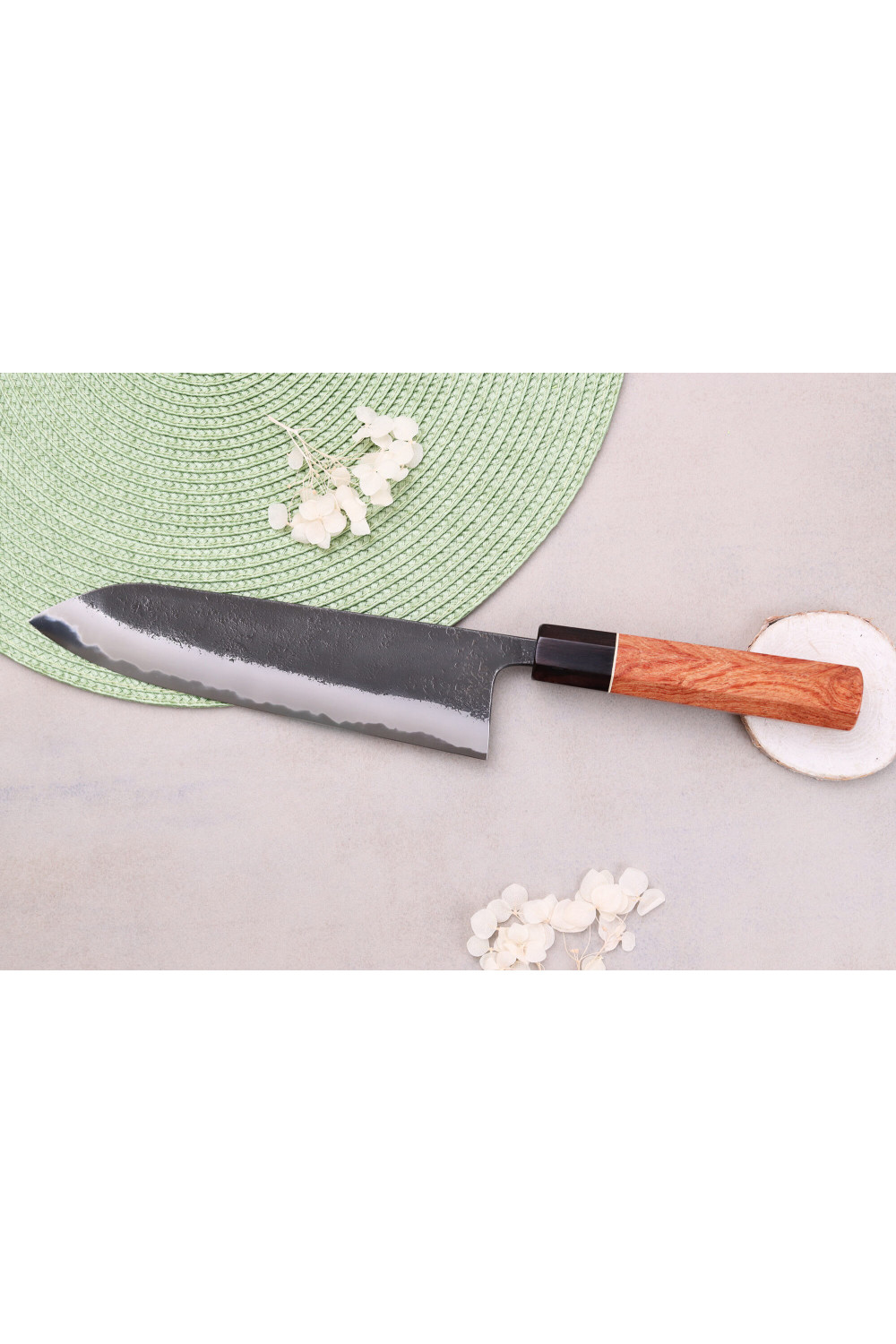
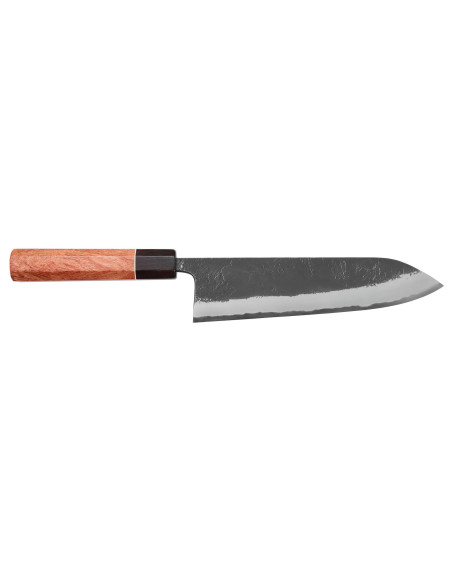
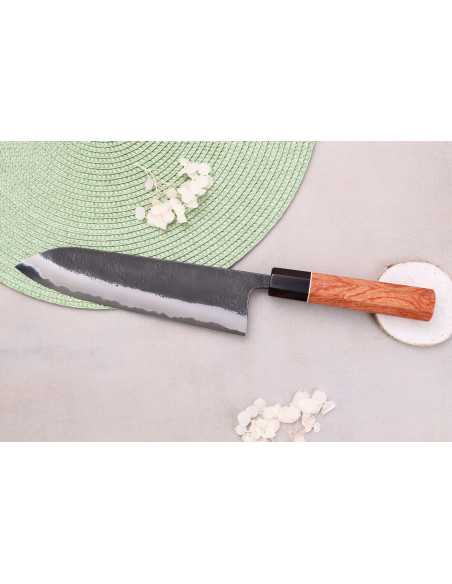
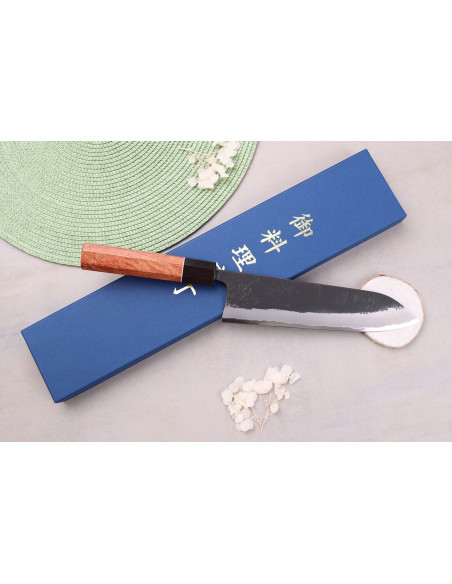
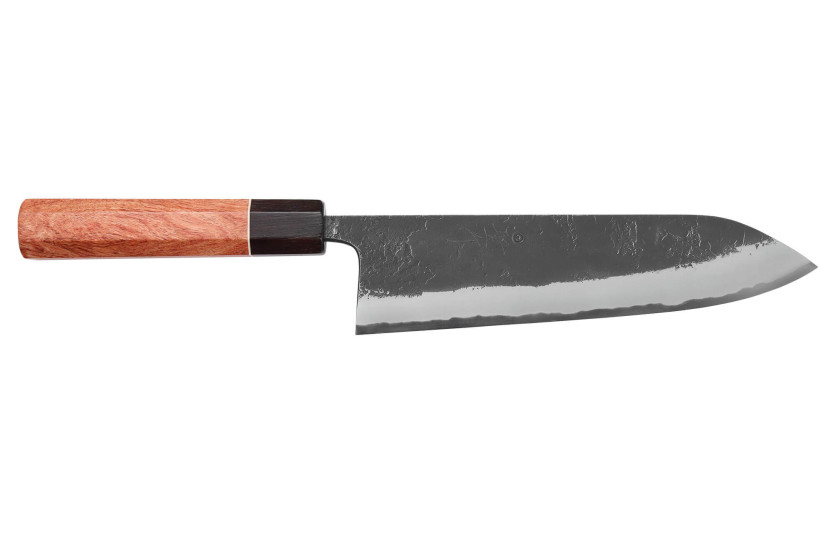
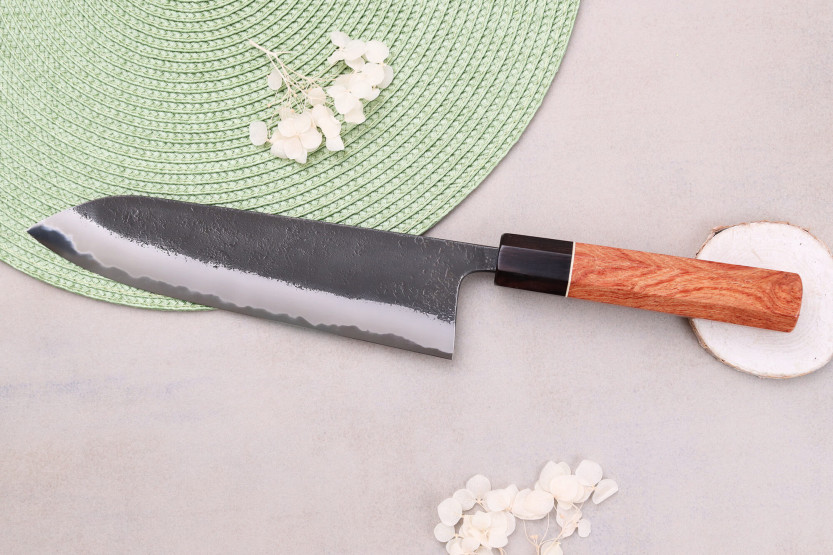
This Masashi Yamamoto Japanese gyuto knife features a blade with a structure called San Maï. This typically Japanese structure means "3 layers". This means that the blade is made up of a core of rigid steel covered by a layer of slightly softer steel, whose purpose is to protect the core and give it a little more flexibility. This does not mean that the blade becomes flexible in the pure sense of the word, but that it has greater versatility of use by being less sensitive to breakage.
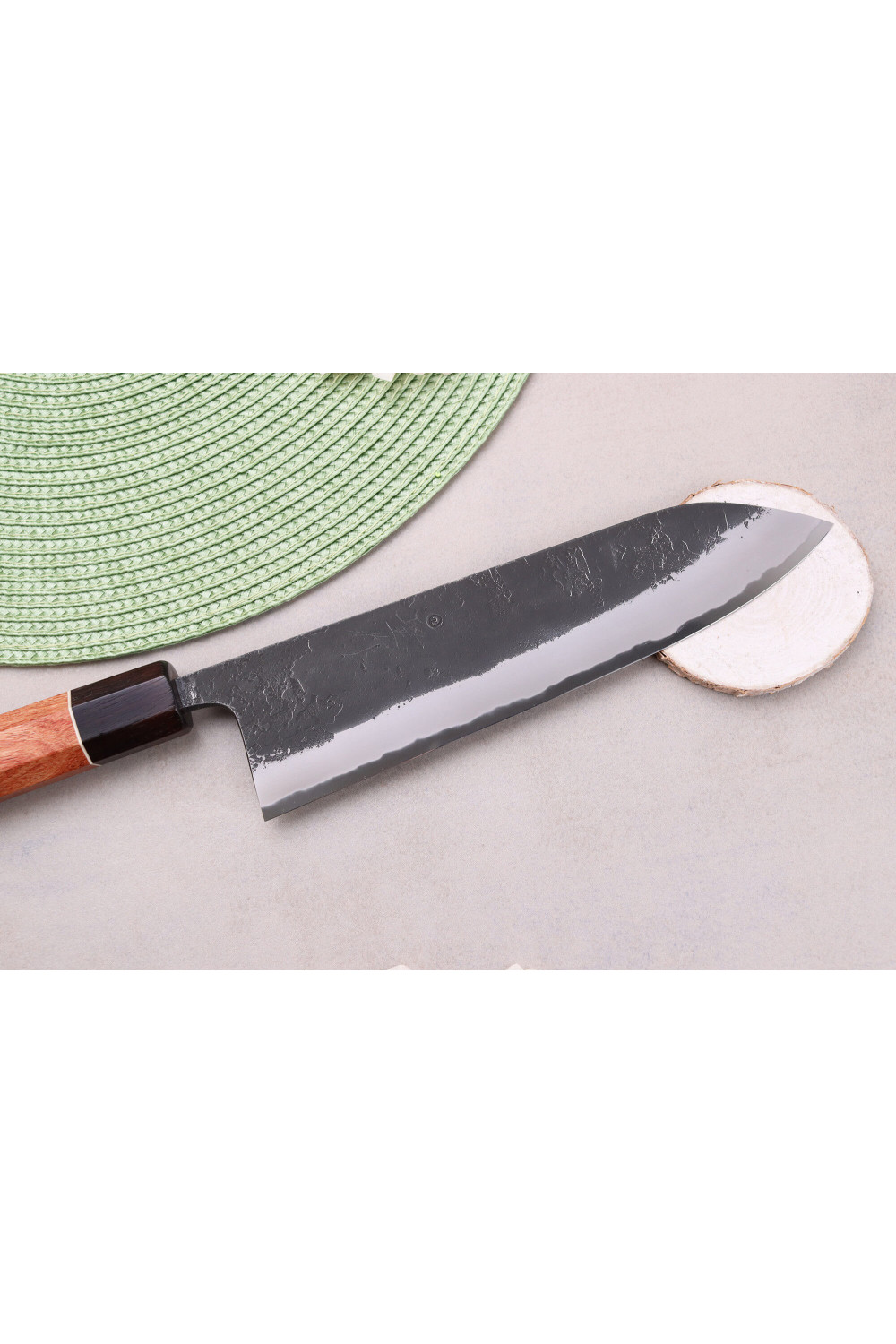
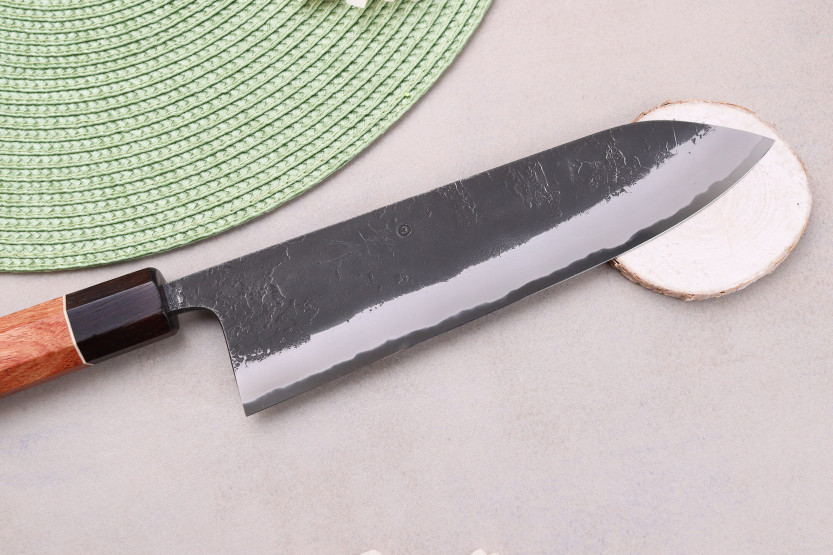
Note that Masashi Yamamoto knives have a finer tip than the average knife. In fact, the thickness of the blade narrows as you reach its tip, making it more flexible and therefore easier to cut, with a more pleasant, natural feel in use. This is further proof of this outstanding blacksmith's expertise. However, be careful not to press too hard, as flexibility has its limits!
Here, the blade core is made from Japanese Aogami #1 steel (also known as BS1 or Blue Paper Steel #1). This alloy is manufactured by the internationally renowned steelmaker Hitachi.
Aogami #1 steel contains a high carbon content of almost 1.3%. Carbon is in fact the essential element for increasing the hardness of an alloy, since the harder a steel is, the longer it retains its cutting edge. The blade of this knife achieves a hardness of 63 HRC on the Rockwell scale, demonstrating the efficiency of its cutting edge and its excellent edge retention.
The alloy is quite difficult to work with and represents a cost. The blacksmith needs to be an expert to shape it to avoid costly losses. Masashi Yamamoto is one of the blacksmiths who master it!
The rigid core is surrounded by a layer ofsoft-iron steel folded on each side. As this layer is folded, it sandwiches the core to form San Mai's 3 layers: the rigid core is protected and optimally balanced. Soft iron steel is an alloy enriched with iron ore, which makes the knife blade oxidizable. It is therefore important to maintain this knife with the utmost care (see our tips below).
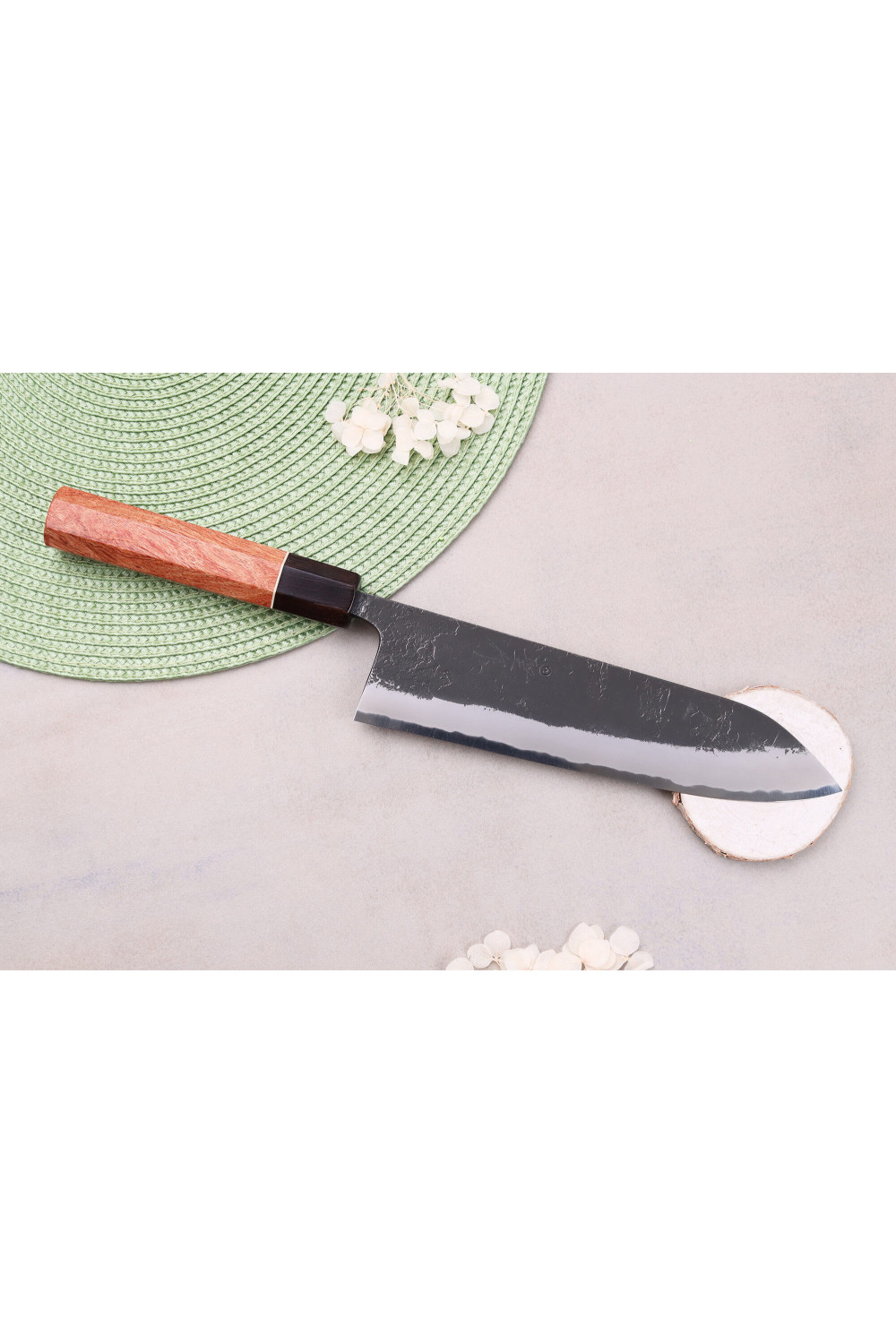
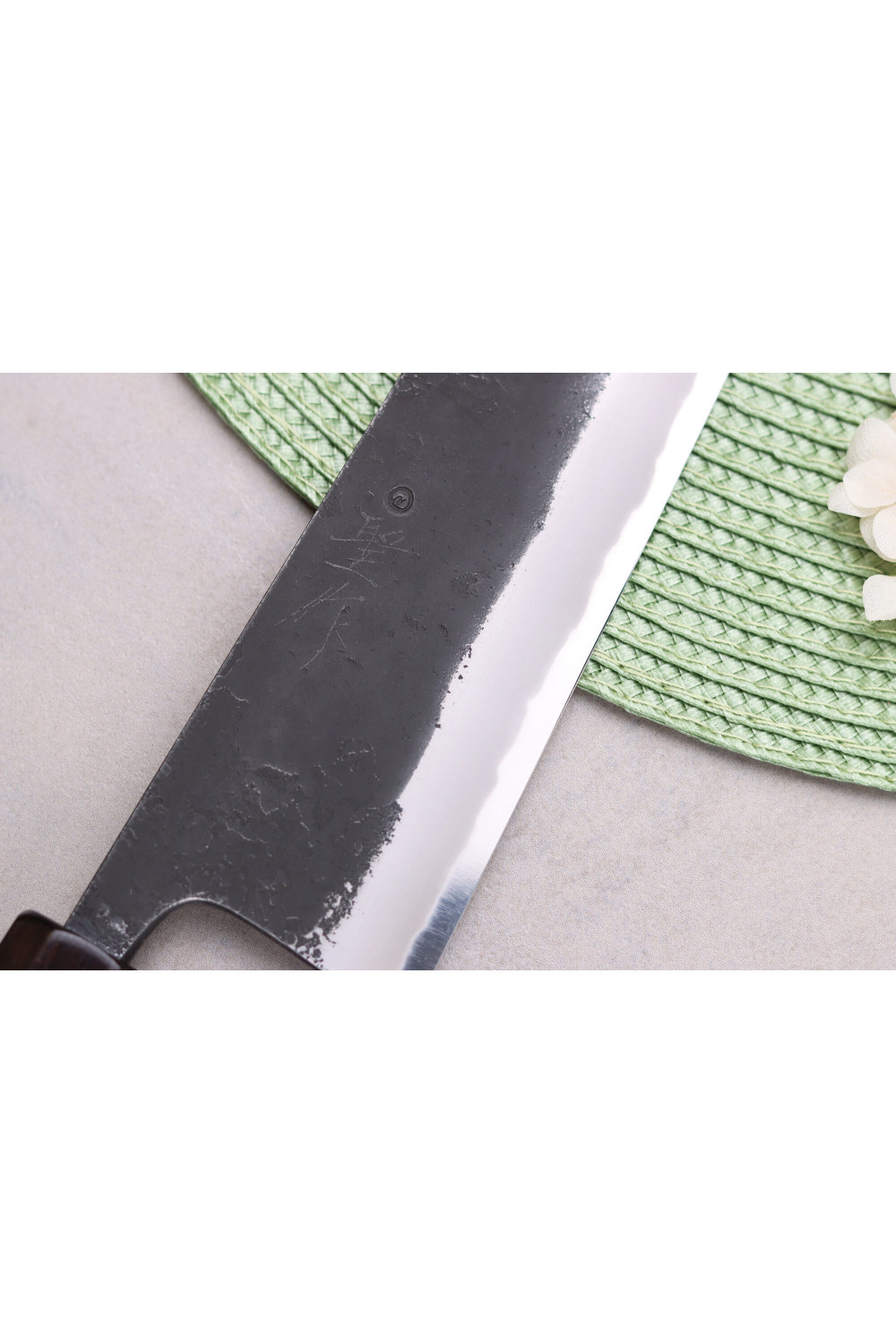
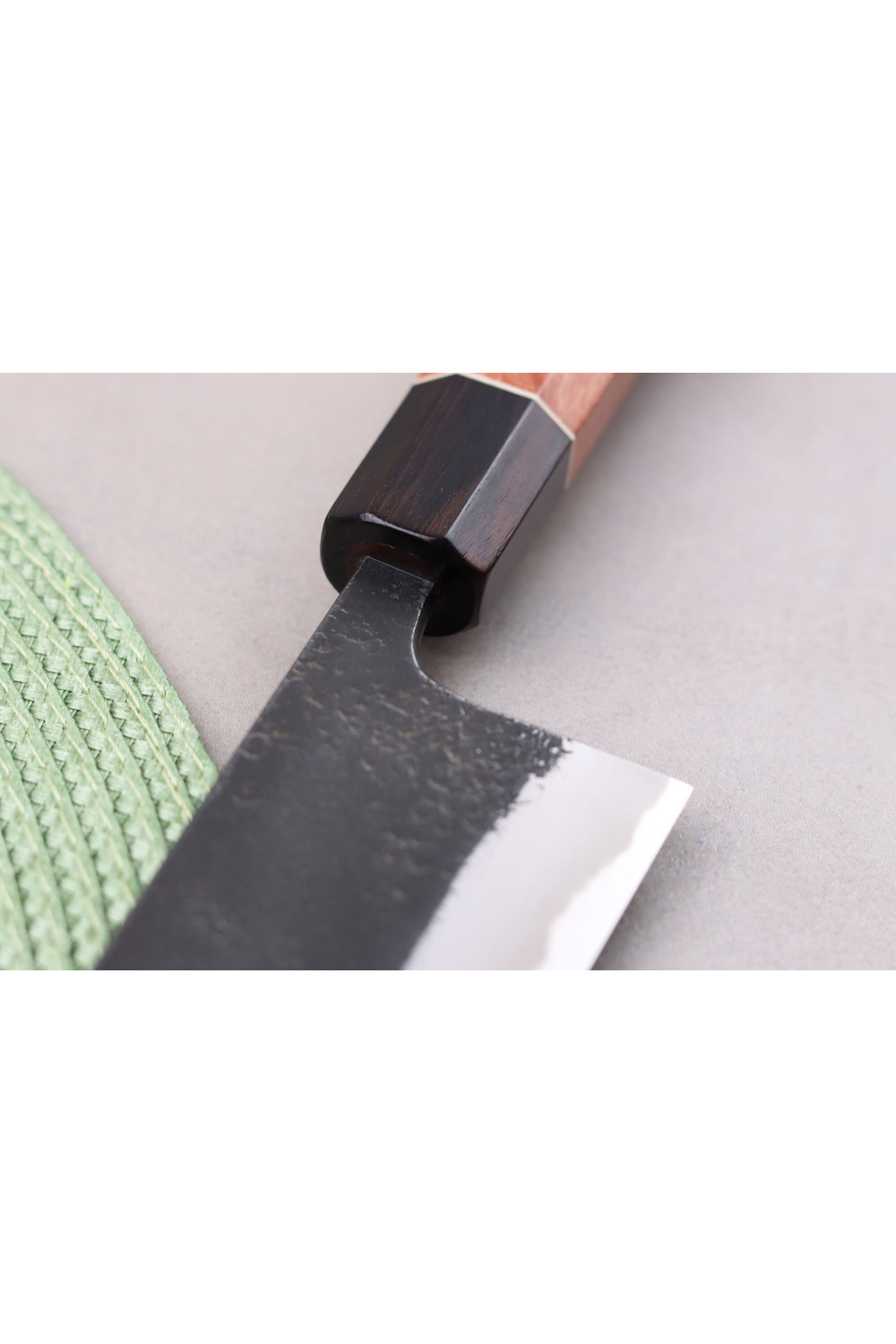
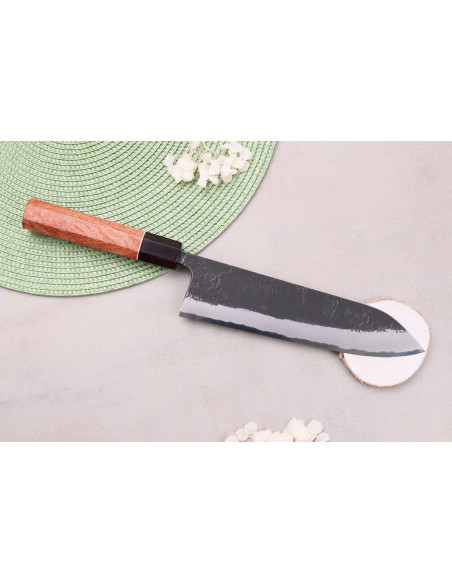
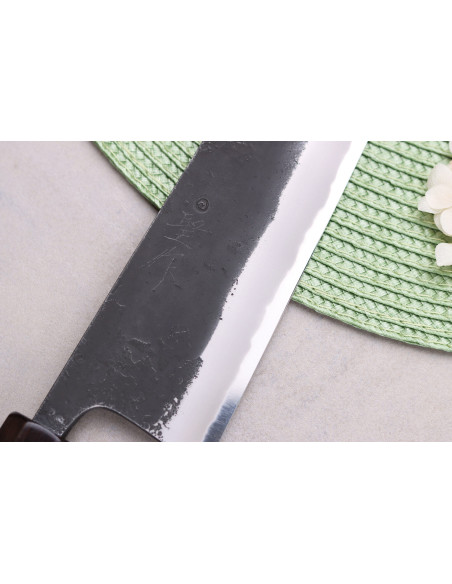
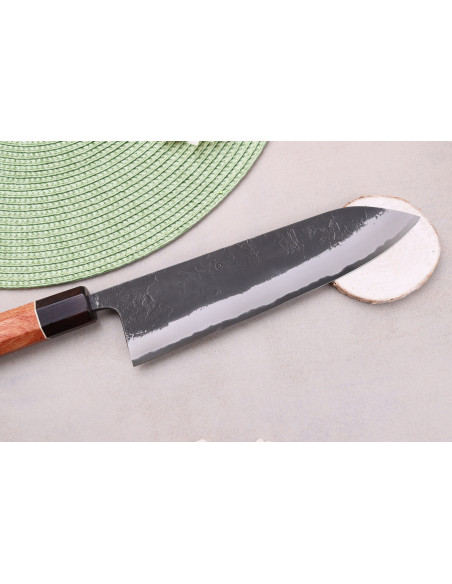
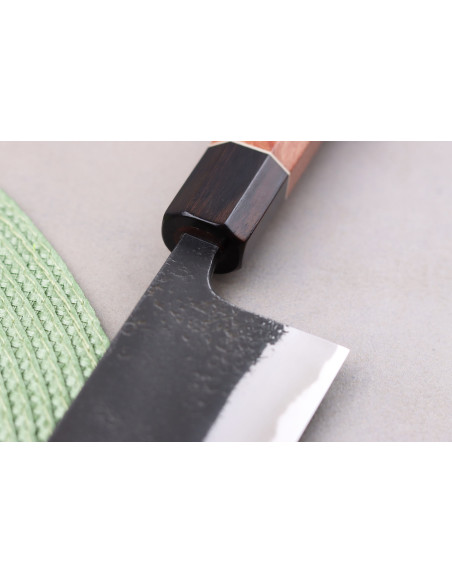
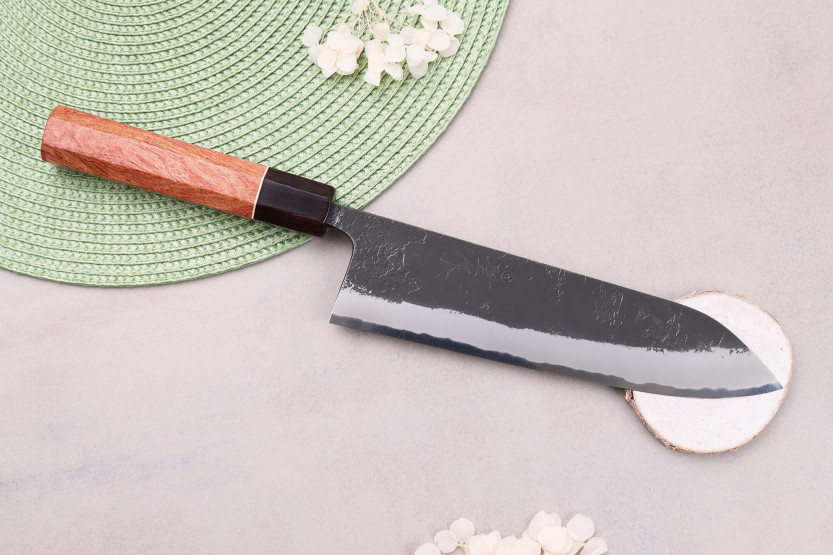
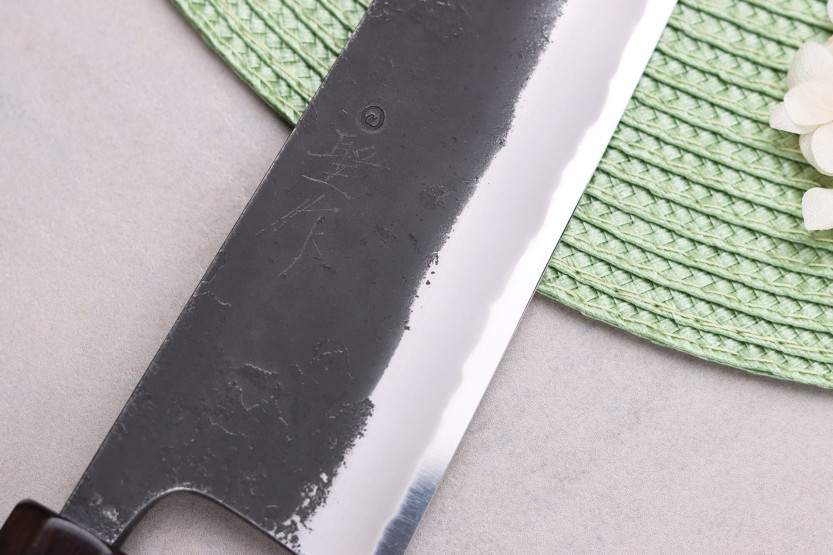
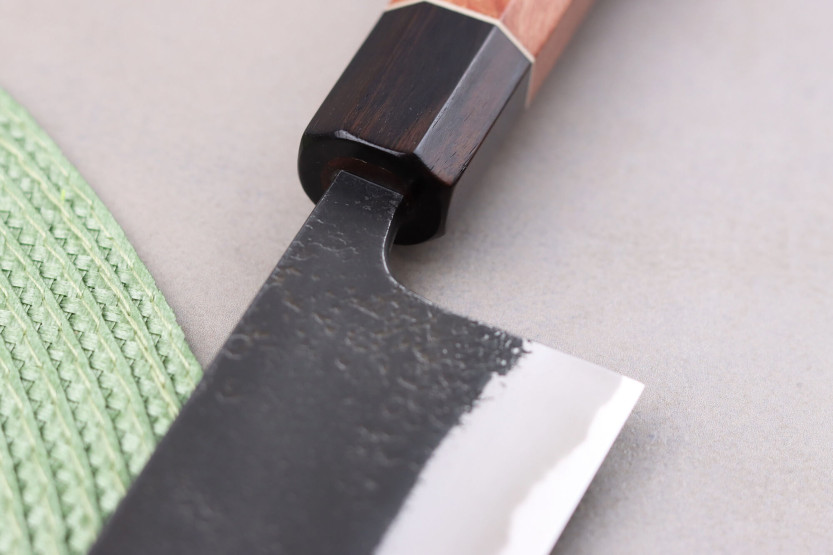
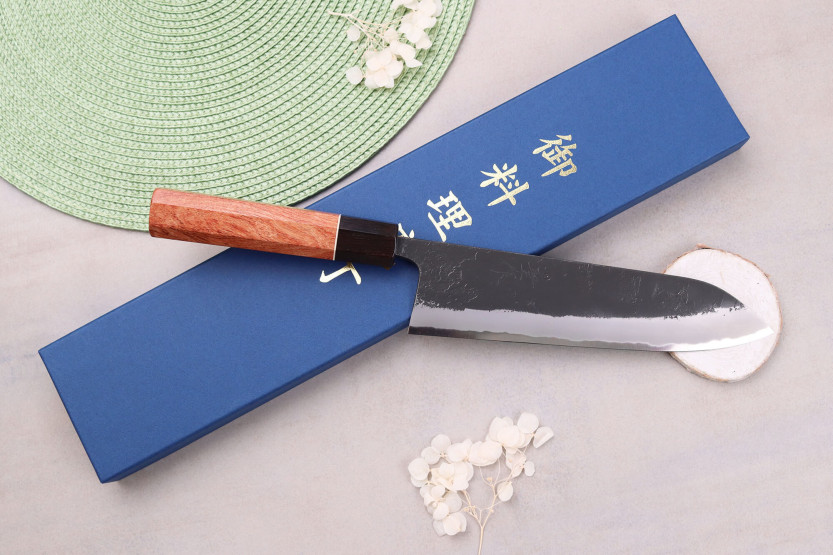
Finally, the blade features a traditional Black Nashiji finish, reminiscent of the name of the range from which the knife derives. This technique gives the blade a black, rustic appearance, as if it had not been polished. It is akin to a rough forged finish. The blacksmith's hallmark and very fine kanji are engraved on the upper part of the blade.
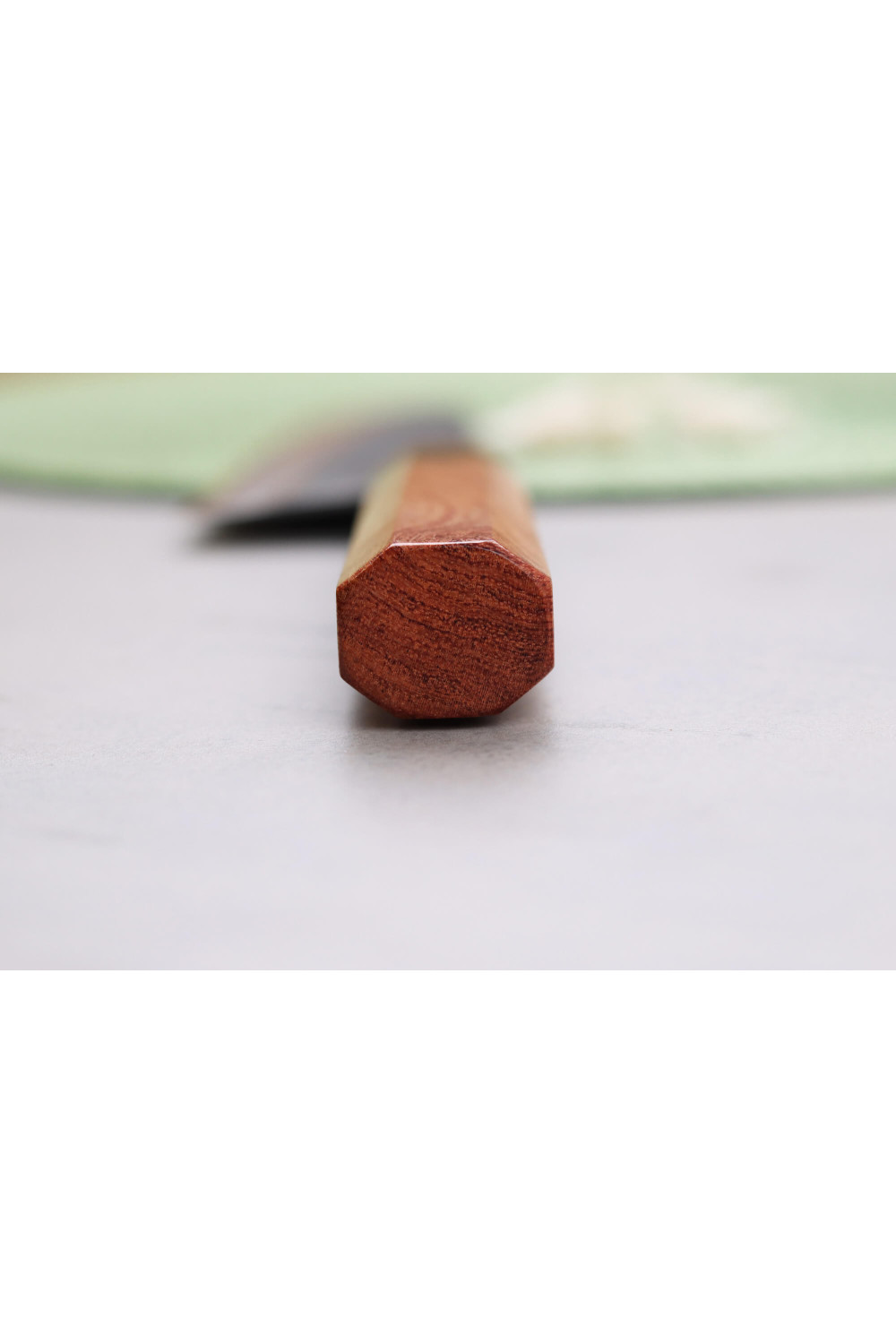
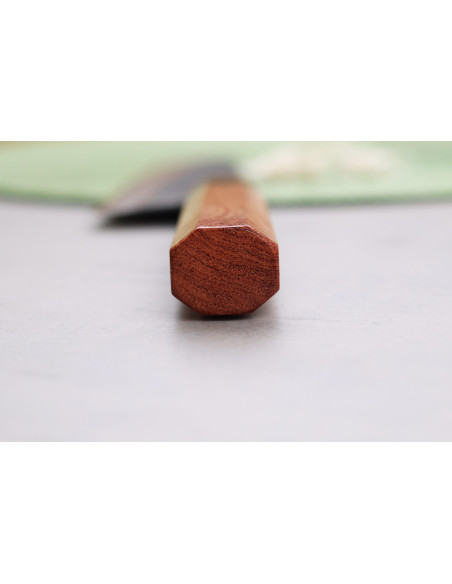
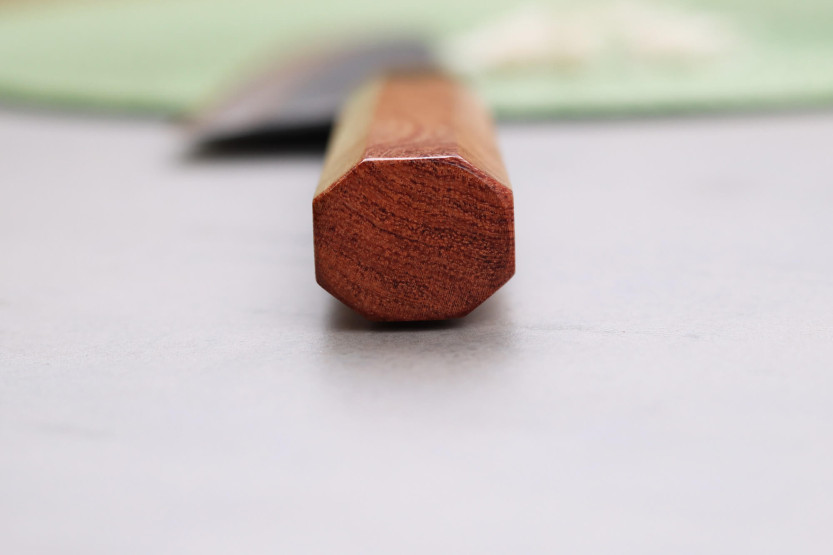
The knife's handle is octagonal in shape for a perfect grip. It hugs your palm so you have total control of the knife when cutting. What's more, this shape is suitable for both left-handed and right-handed users.
The handle is made from quince wood. This species is highly resistant to temperature variations and humidity, making it a durable wood. Quince is easily recognized by its light color.
It is complemented by a dark ebony bolster, providing an attractive contrast. The two woods are separated by a thin ring of white micarta.
Care and maintenance
As this knife contains a lot of carbon and iron, it is oxidizable. Do not put it in the dishwasher or leave it in the sink waiting to be cleaned.
It should only be washed by hand in lukewarm water. Use mild soap and a non-abrasive sponge, and avoid getting the handle wet. As soon as the knife is clean, wipe it dry and remove all drops of water. You can then store the knife in a dry place.
We recommend applying a littleoil to the blade from time to time to protect and nourish it. Indeed, its specific composition makes steel naturally reactive to humidity in the air or the acidity of certain foods. It is therefore possible for the blade to change color slightly over time.
A gyuto knife forged by the exceptional Masashi Yamamoto
PHOTO
Your gyuto knife has been forged by Masashi Yamamoto san, a Japanese blacksmith who creates exceptional knives. This young, modern blacksmith set up his workshop in 2013, after being trained in the craft by his older brother.
His knives are acclaimed for the hardness of their blades, which the blacksmith achieves through special technical and heat treatments. Masashi makes magnificent one-off pieces! Despite his youth, he has already passed on his skills to two apprentices. Masashi Yamamoto's unique style also makes him very emblematic: he usually forges in flip-flops, often while smoking a cigarette!
Black Nashiji knives can be found on our website!




 By buying this product you can collect up to