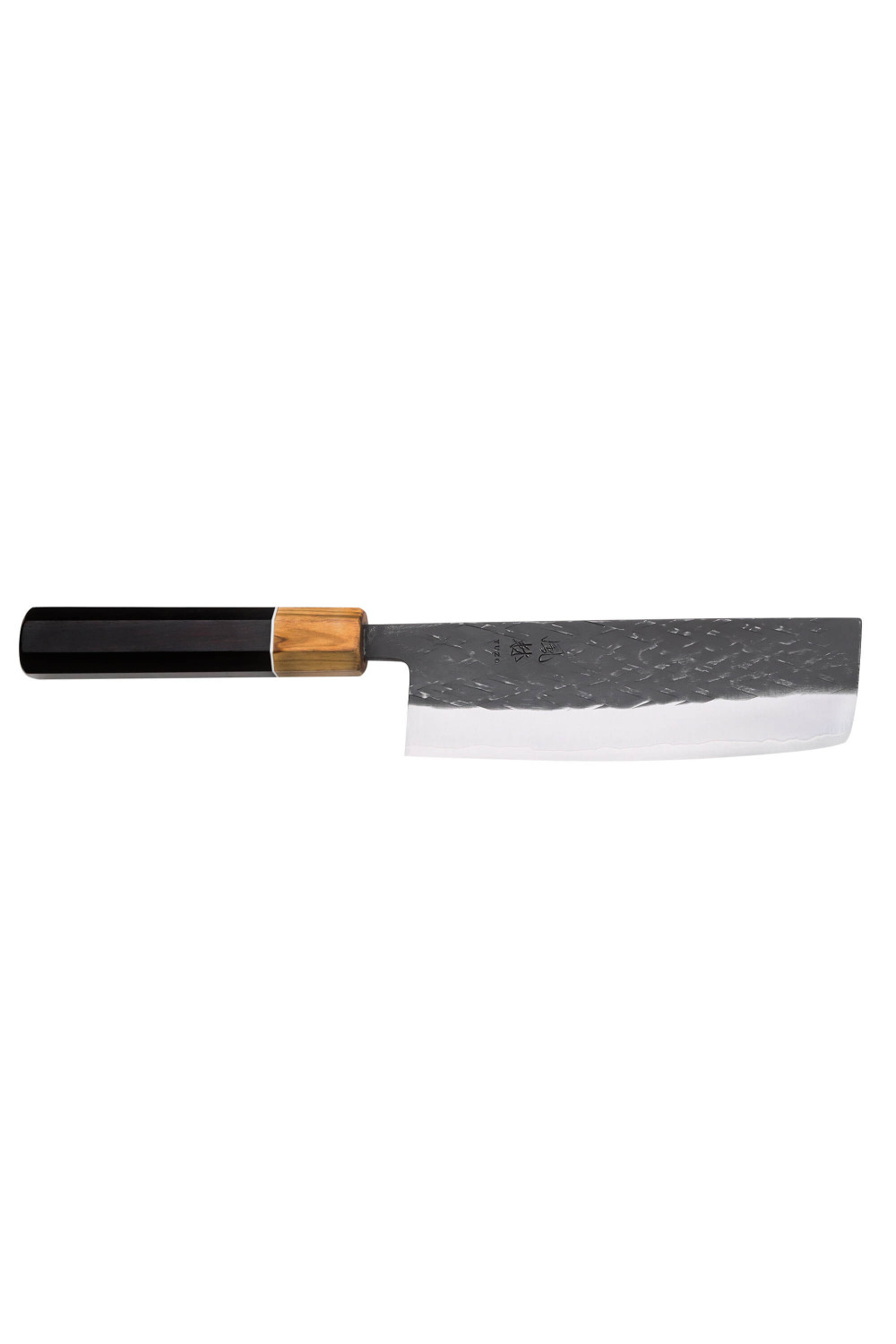
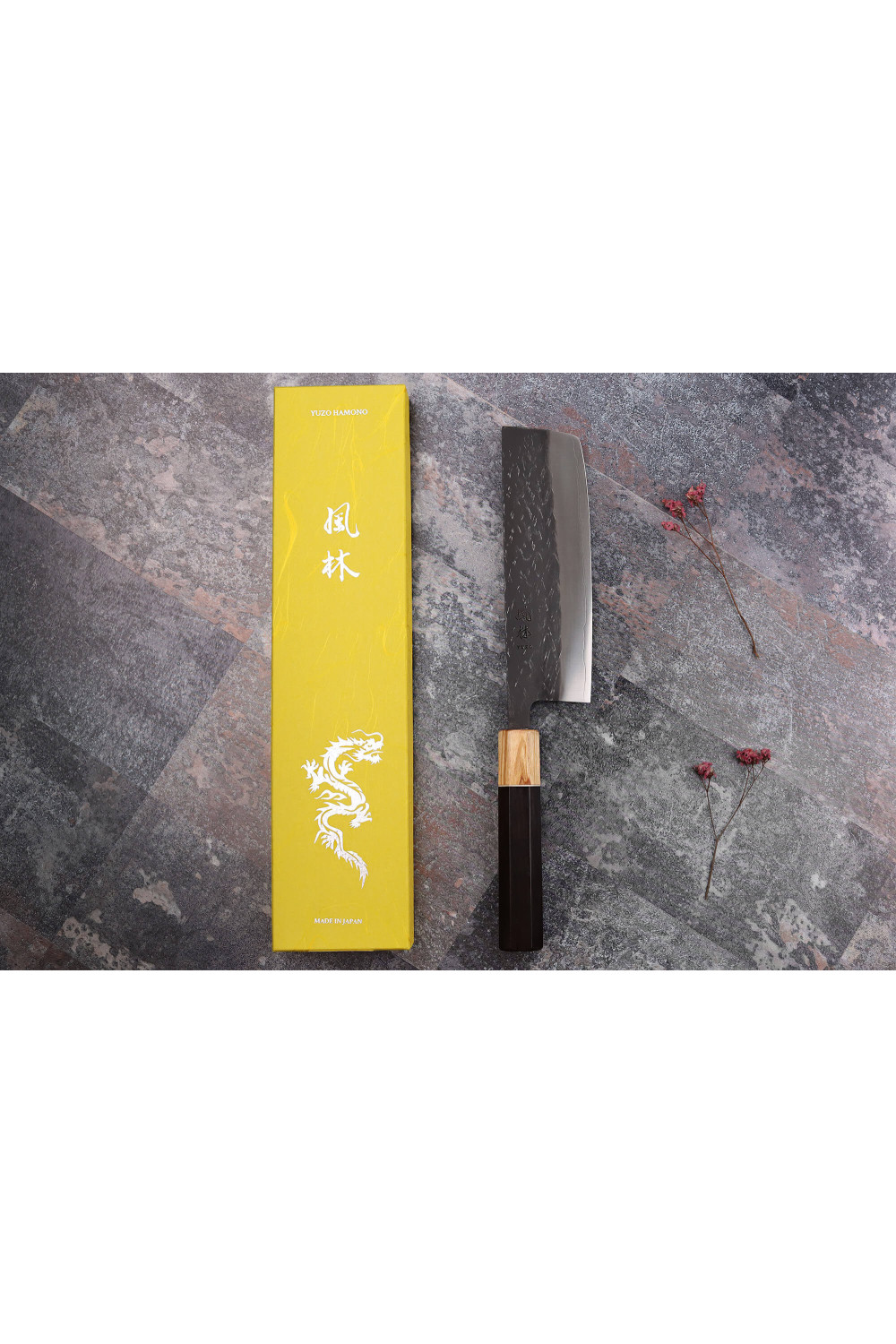
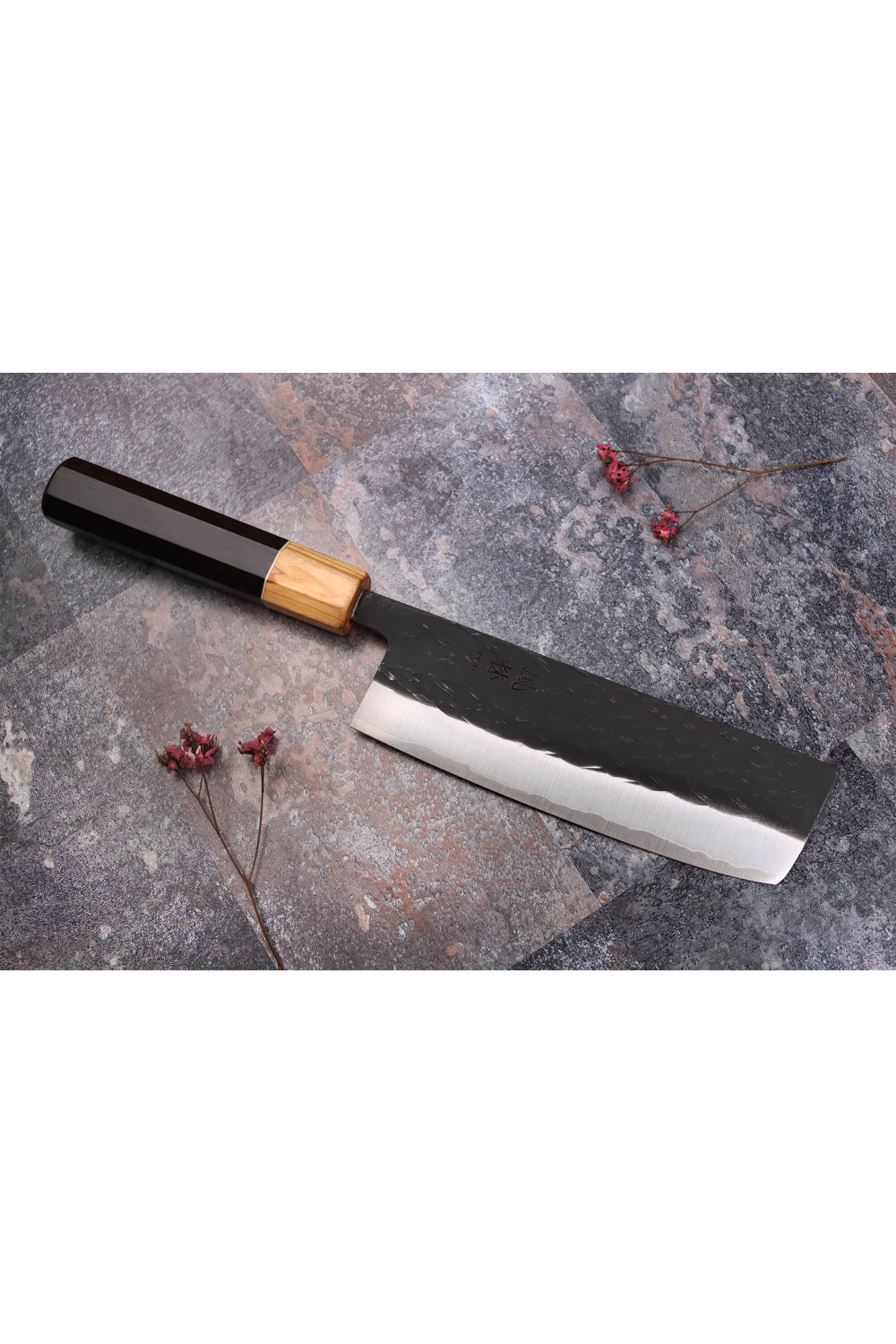
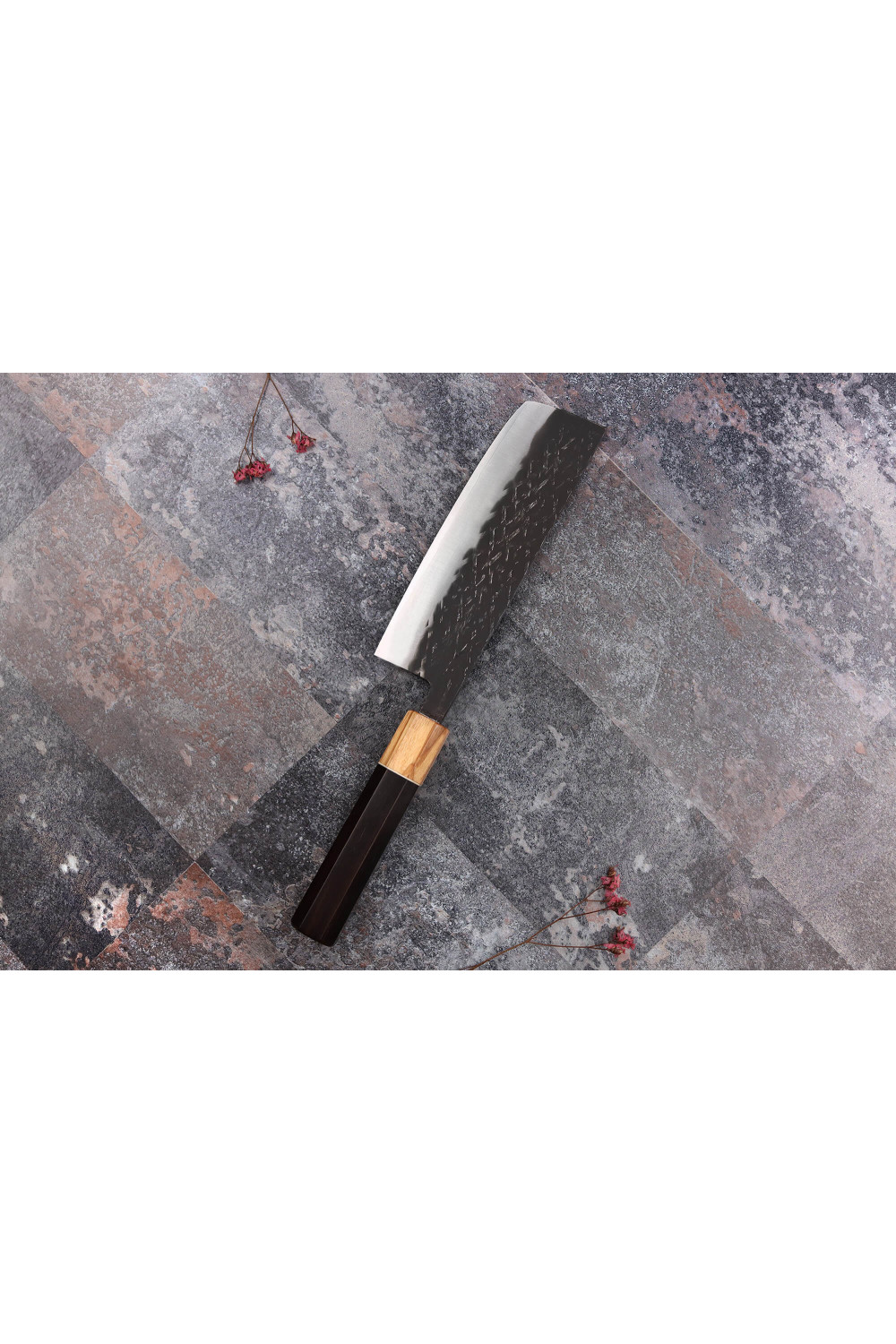
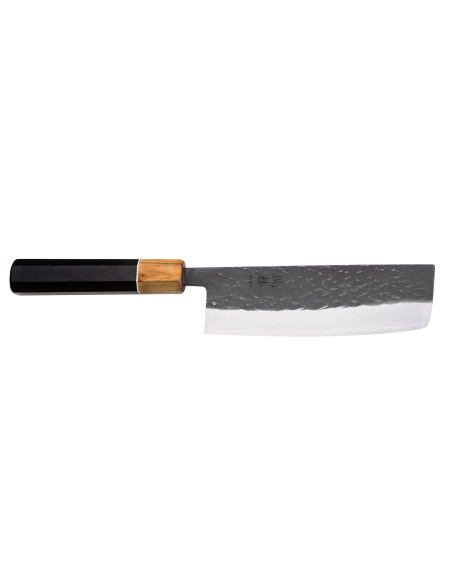
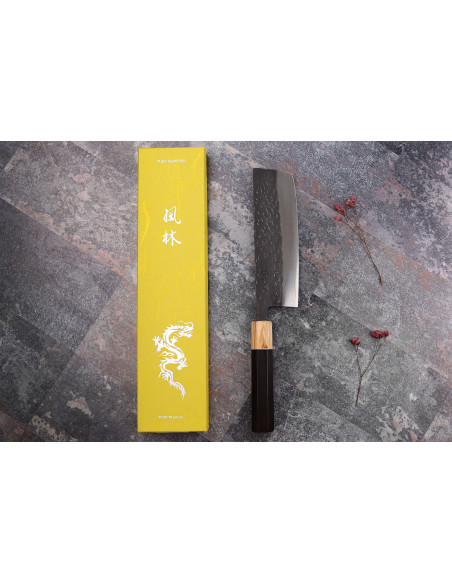
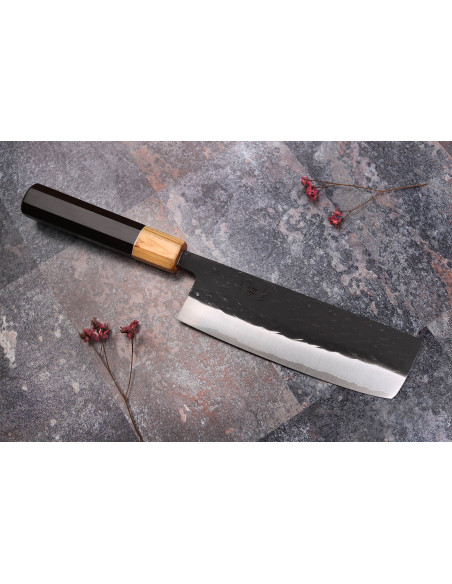
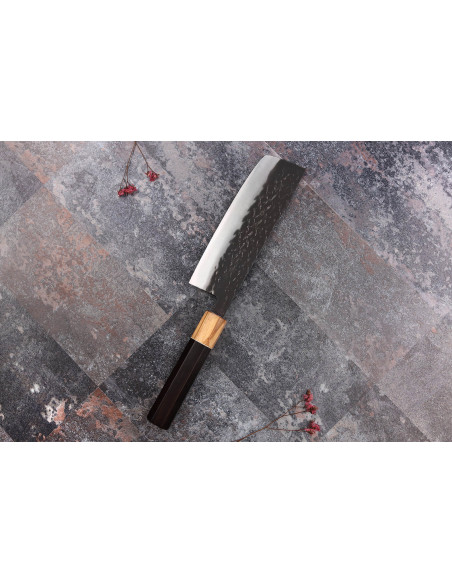
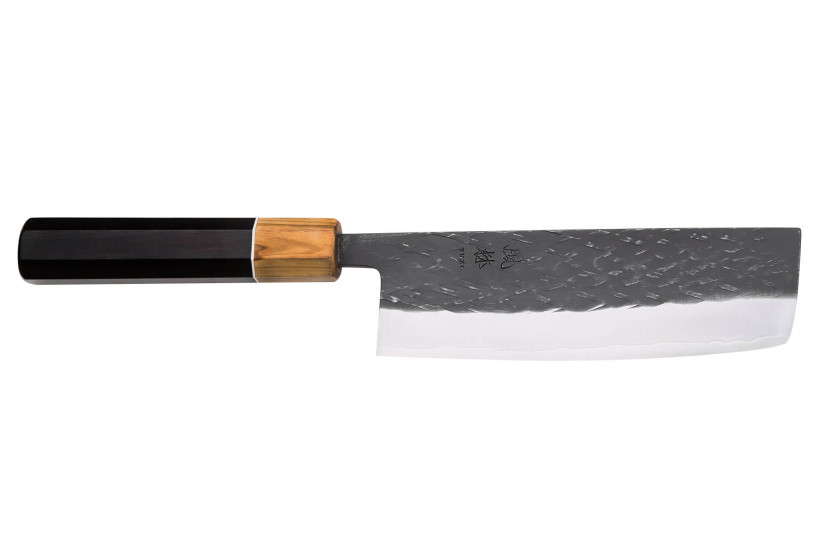
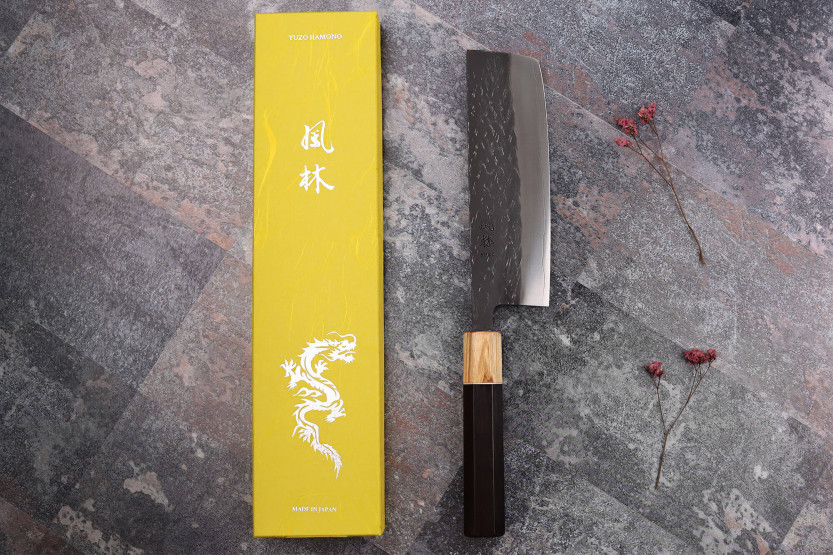
The nakiri knife Yuzo Hamono Black SLD 16.5cm nakiri knife is specially designed for preparing your vegetables! Use it for a wide range of cuts on fruits and vegetables: slice, trim and even chop your herbs! Do not use on hard foods such as squash, cheese wheels or bones.
This knife is made by the famous Tadafusa forge in Sanjo, Japan.
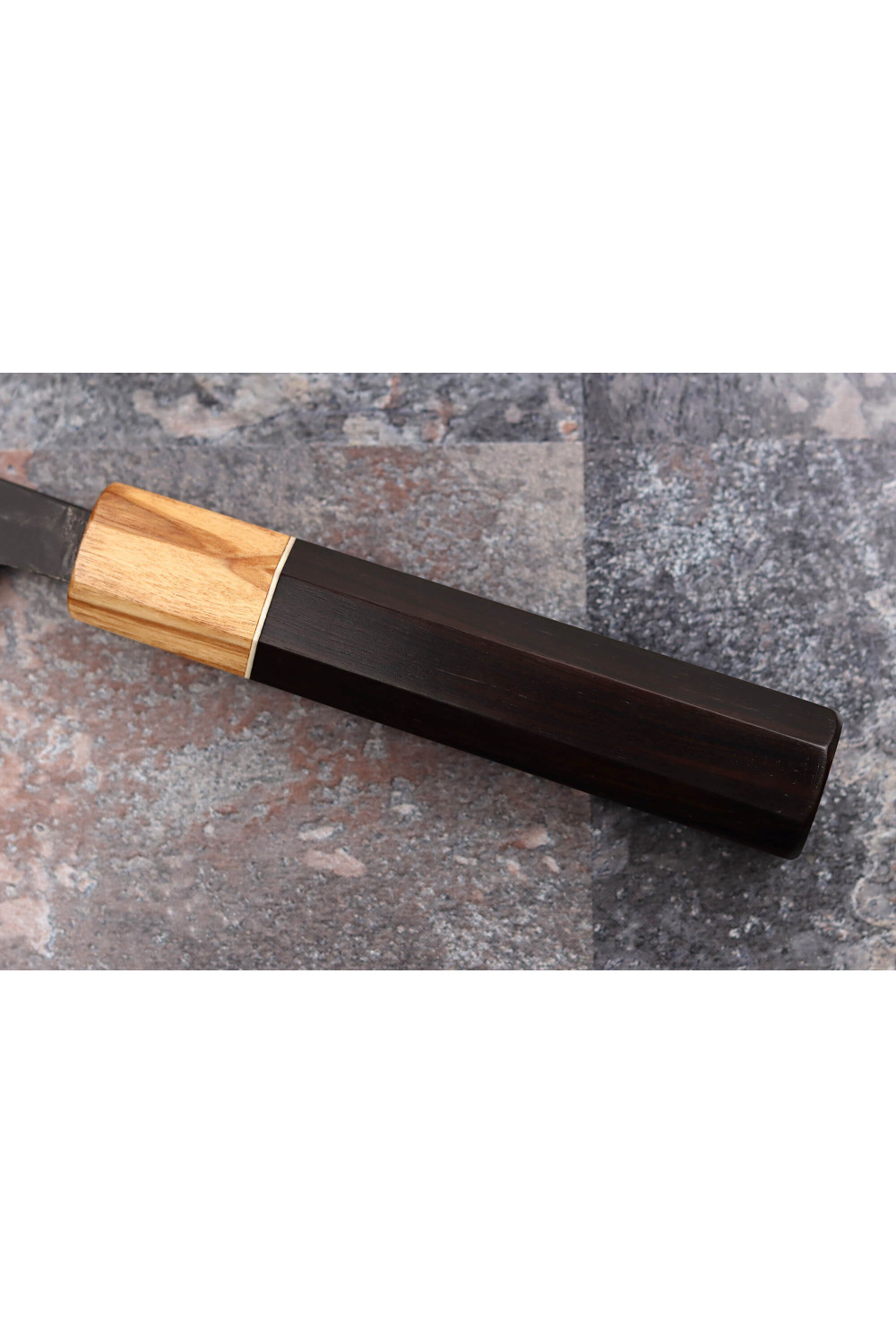
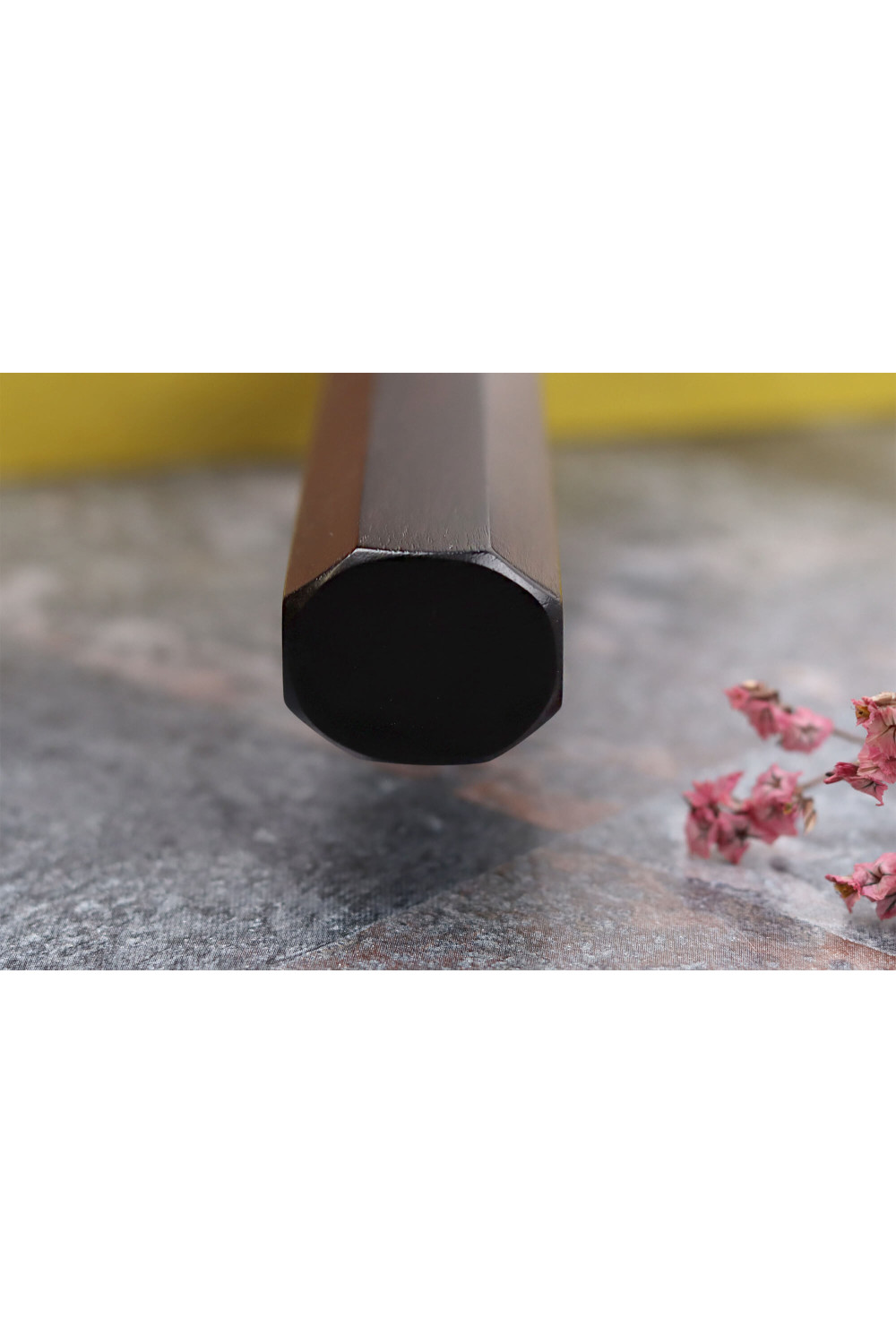
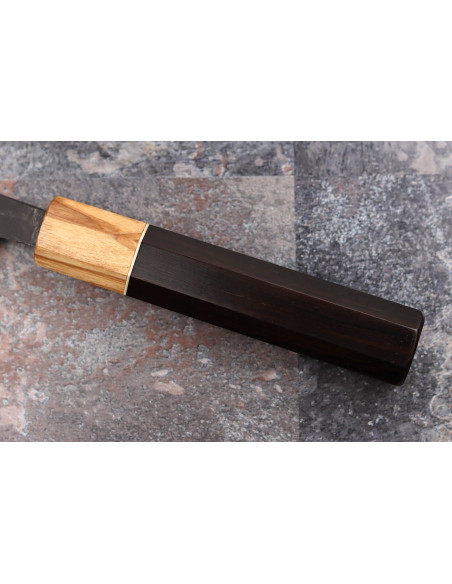
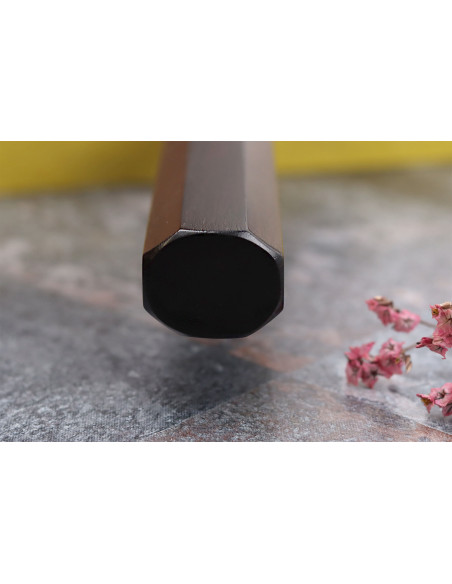
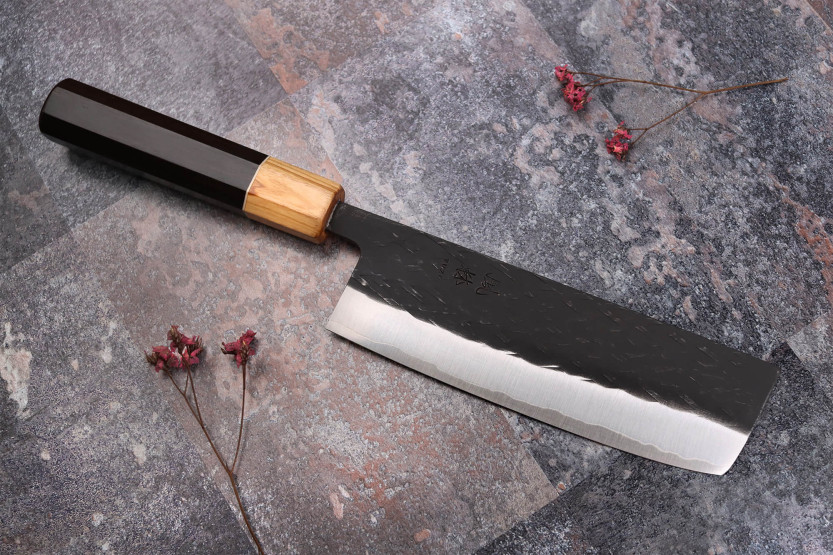
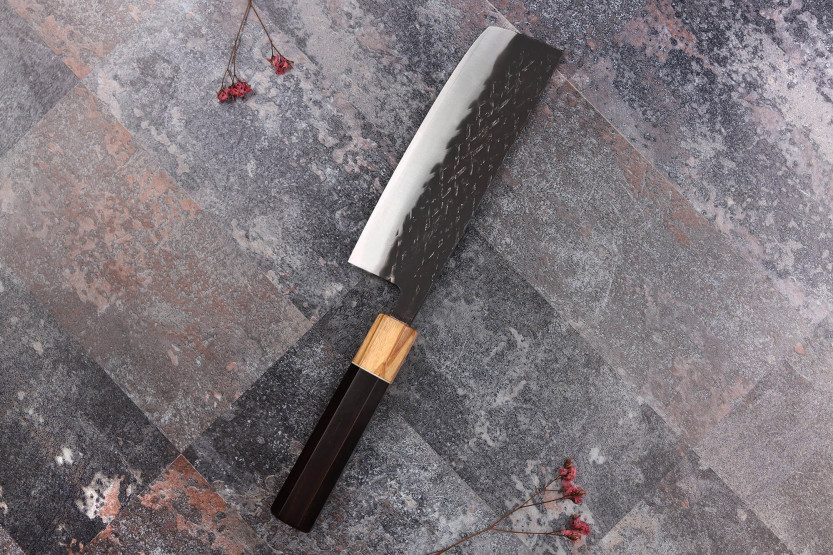
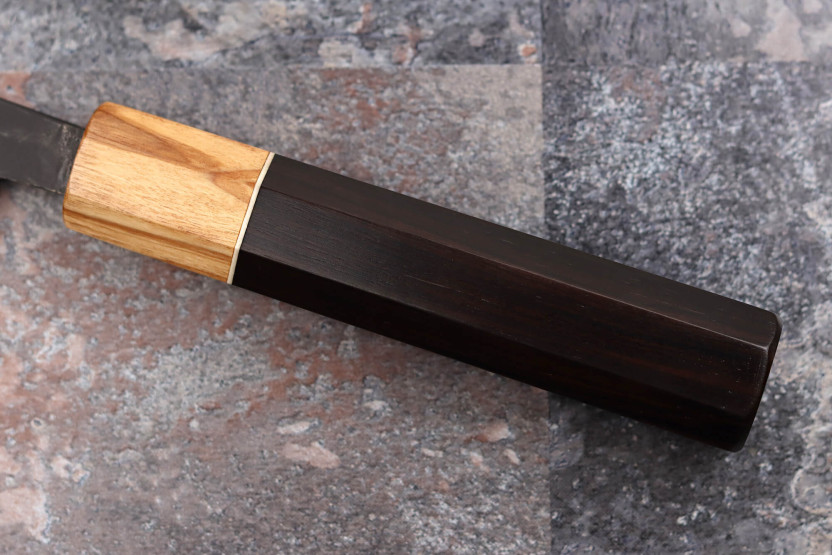
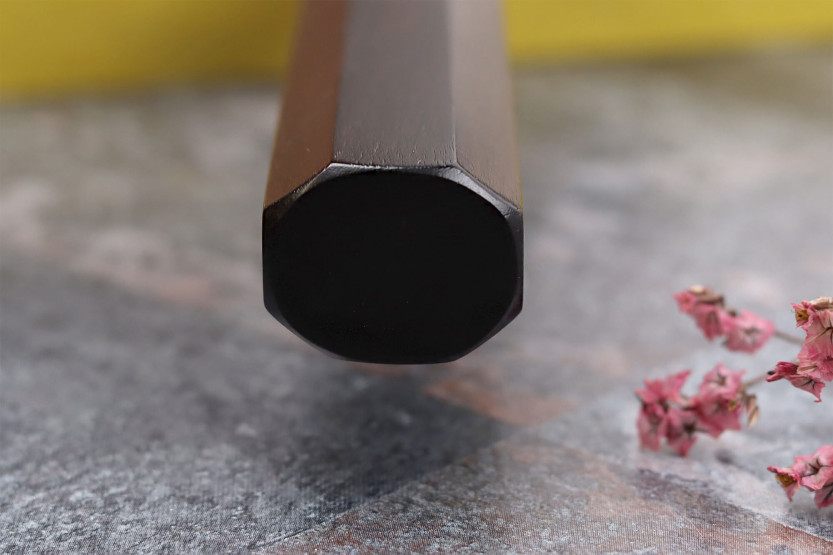
Your nakiri has a handle made of ebony in various shades. This dense wood resists the risk of cracking and is ideal for regular use. Its octagonal shape ensures a comfortable grip and controlled handling for both right- and left-handed users.
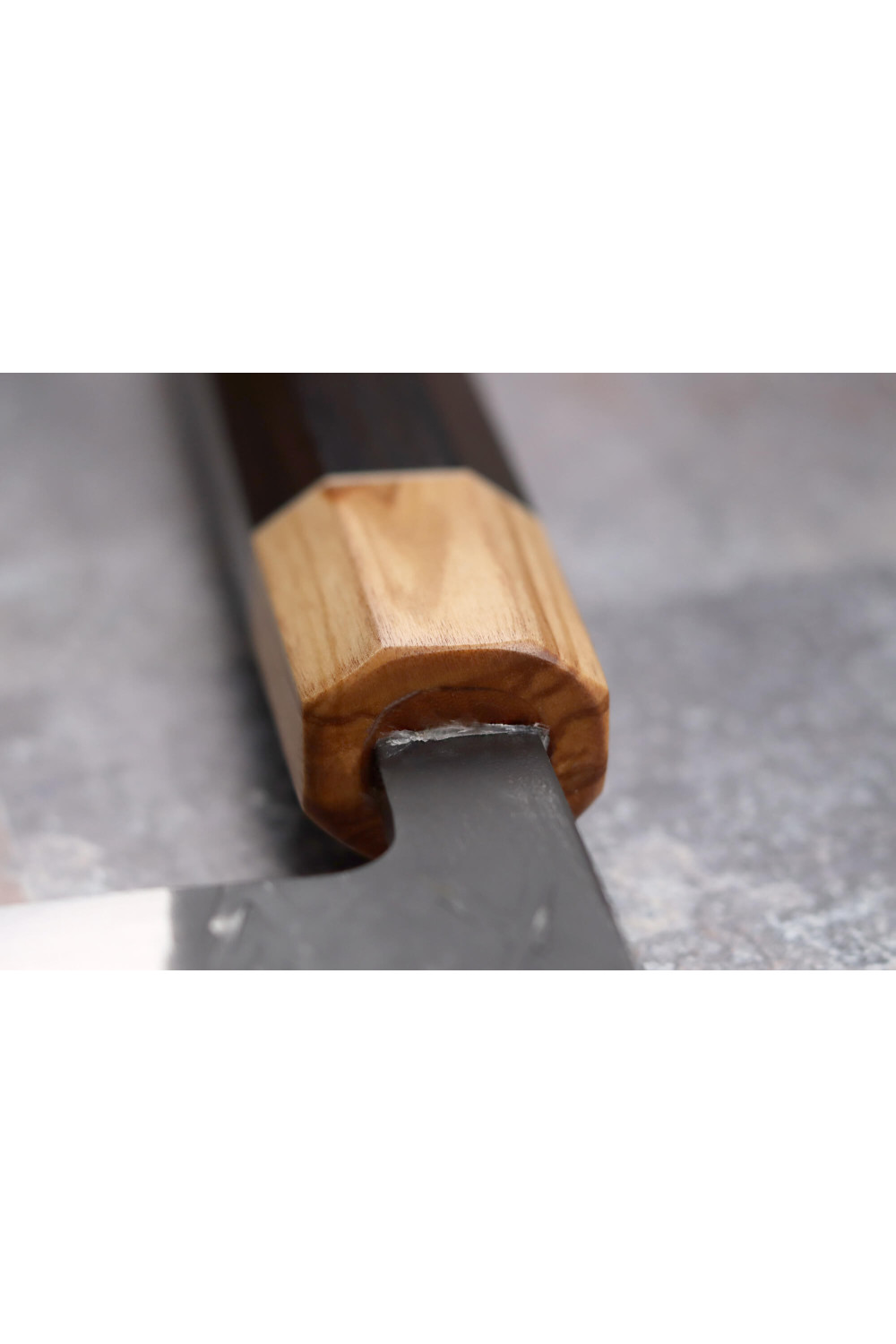
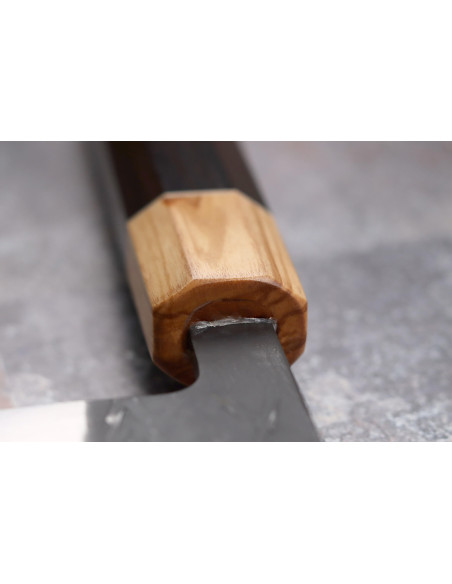
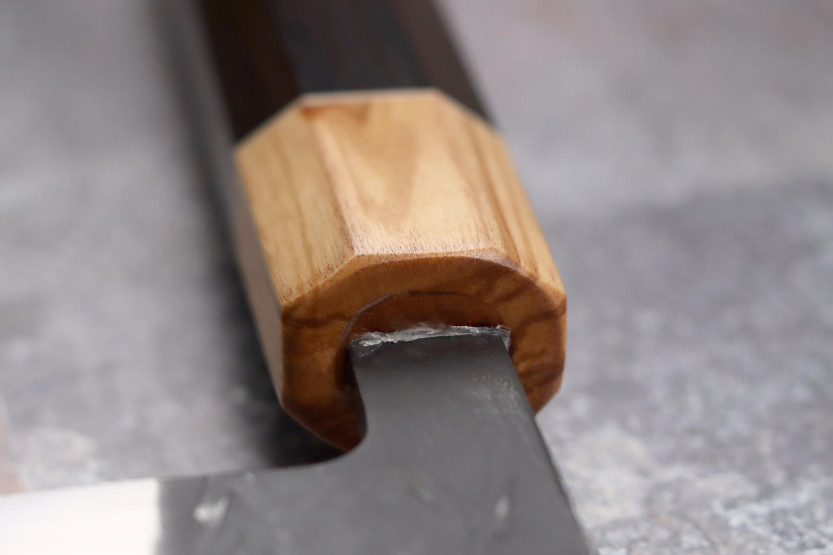
The bolster is made fromolive wood, which is resistant to both humidity and temperature changes. Its warm hues are ideally suited to the colors of ebony. Wood is a living material, so the grain of your knife will be unique and different from one to the next. A white micarta setting ring links the bolster to the handle.
Wood paste fills the space between the two materials, sealing them against moisture and any small foodstuffs that may become embedded.
This Japanese nakiri has a typical Japanese San Maï blade: 3 superimposed layers of steel. The hard core forms the base of the blade, and is surrounded by a layer of softer steel that protects it and ensures greater strength. This technique results in a balanced blade, since the rigid core is made more flexible by the layer that covers it.
The core of this knife is made of Japanese SLD steel invented by the world-famous steelmaker Hitachi.
At the time of its conception,SLD steel was used to slice other steels by equipping machines that could slice various alloys for the purpose of manufacturing mechanical parts, for example. Among other things, SLD steel has excellent edge retention and can be easily sharpened when required. It was by observing qualities like these that Hitachi decided to make it an alloy in its own right.
This particular composition features a high carbon content of around 1.6%. Carbon reinforces the hardness of an alloy, since a hard alloy has a much longer-lasting cutting edge: a real advantage! With a high carbon content, it has a hardness of 63HRC on the Rockwell scale, making it a knife that performs well over time, despite its many uses.
SLD steel contains around 13% chromium to increase its resistance to oxidation (but beware: it's still an oxidizable steel). Even though it's a hybrid between oxidizable and stainless steel, it needs to be maintained with the utmost care, as its high carbon content makes it reactive.
At the microscopic level, the micro-structure of SLD steel is advantageous! Its micro-carbons are evenly distributed, making it resistant to wear and micro-cracking.
The SLD core is coated with a layer ofstainless steel, which makes it more resistant to oxidation (without making it stainless), while giving it greater "flexibility". It's not a knife that becomes flexible, but it's more resistant to shocks than steel that's too hard.
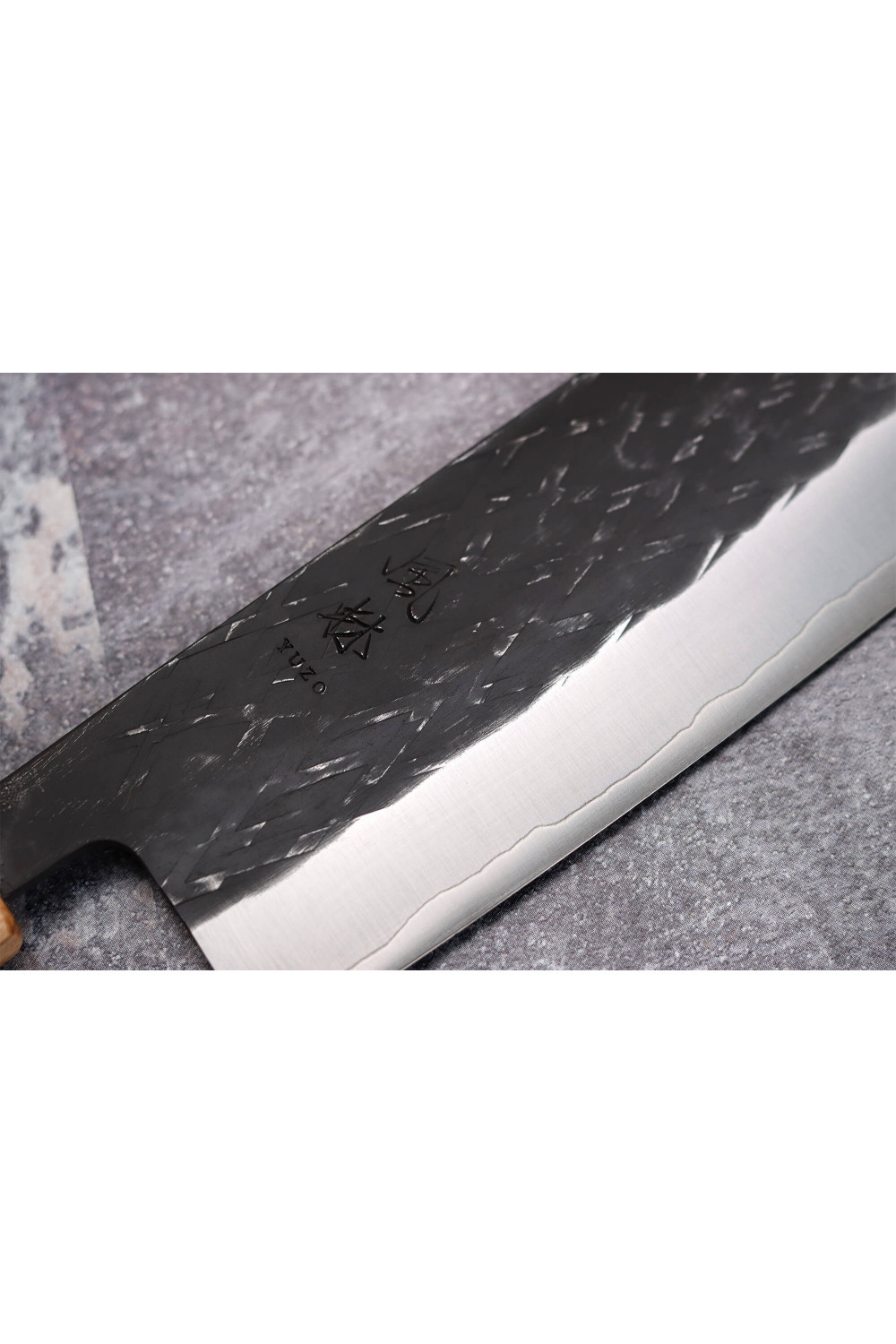
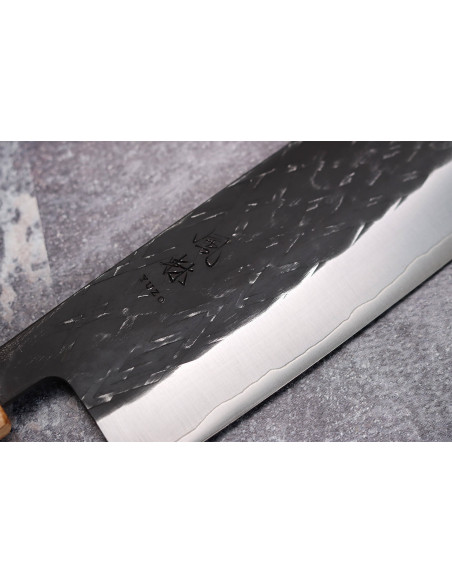
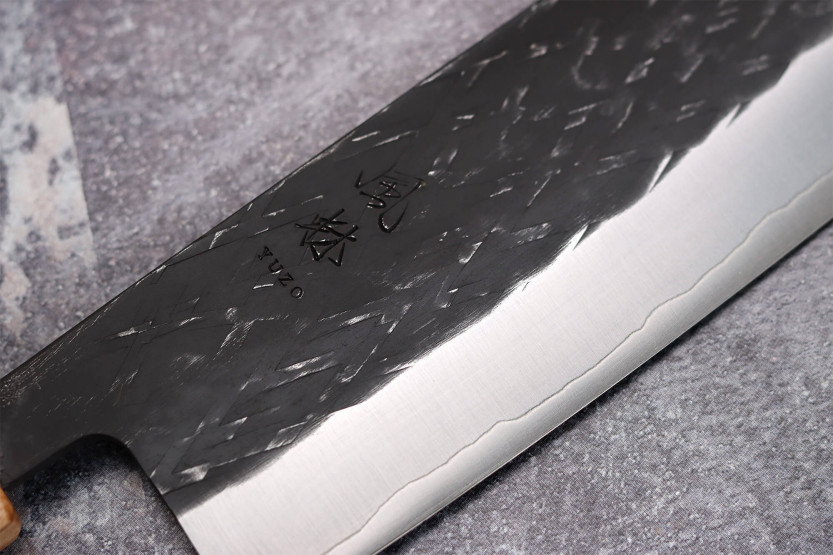
Last but not least, this blade has been manufactured with a rough forge finish that makes it darker. Your knife has not been polished and therefore presents a more traditional aesthetic. What's more, the blade is hammered with unusual criss-cross patterns, making it an original design.
Regular care of your Japanese knife
To best care for your nakiri, we recommend hand-washing it with a sponge and mild detergent. Do not soak in the sink or put in the dishwasher. To preserve wood for the long term, avoid getting it wet as much as possible. When you've washed it, dry it immediately for dry storage.
As this knife is oxidizable, it is essential to keep it away from moisture. Over time, the blade may change color: this is normal! This is a natural reaction caused by the acidity of food and the humidity in the air, which can have an impact on the color.
To accompany it, discover our best cutting boards on KnifeLeader.eu!




 By buying this product you can collect up to
.png)