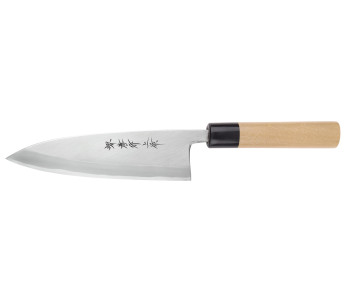
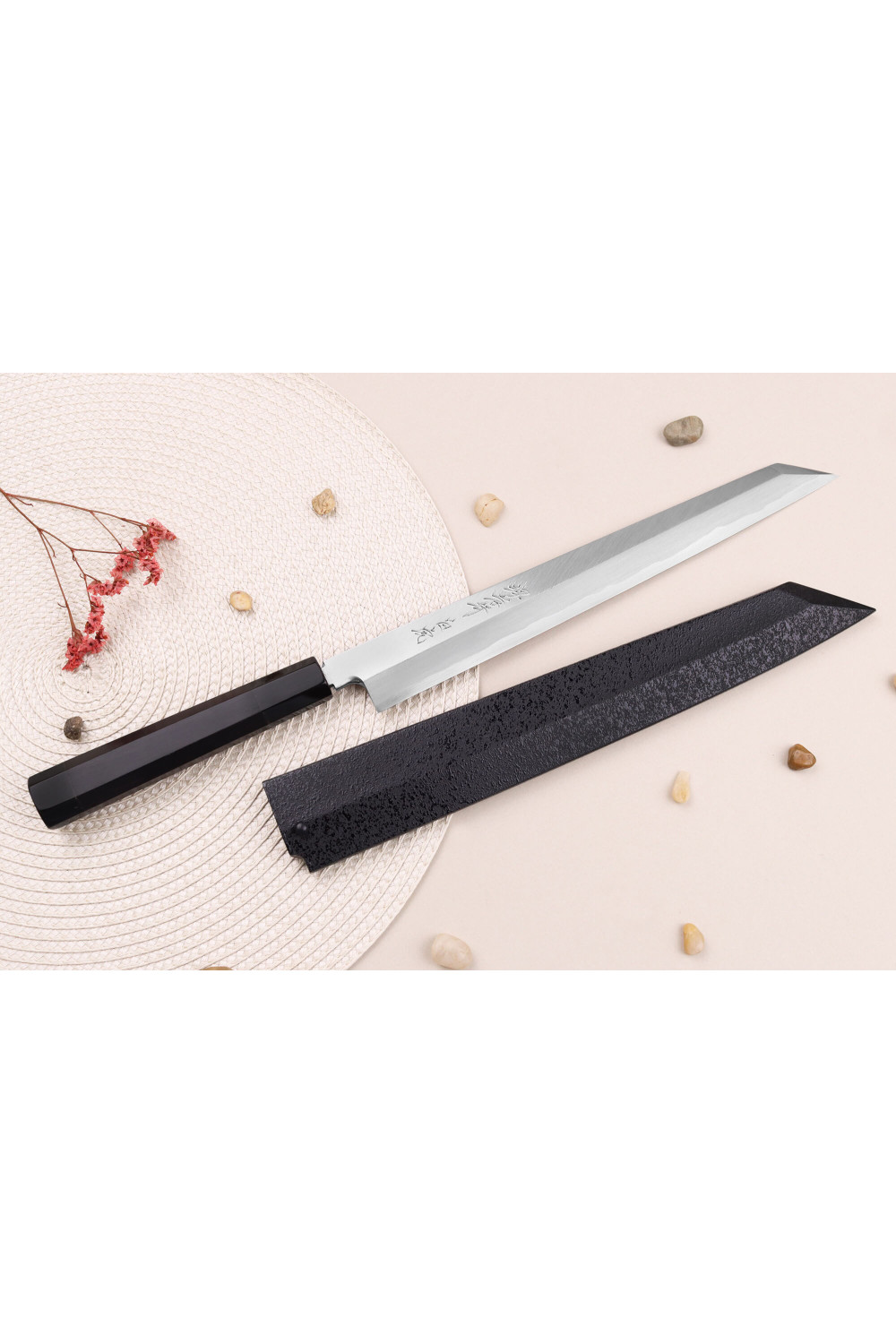
Sakai Takayuki is a Japanese company founded in the 1950s, located in Sakai. With remarkable expertise in the art of cutlery, it perpetuates the ancestral know-how of the blacksmiths who made katanas for the samurai. Indeed, they have passed on their manufacturing techniques from generation to generation, enabling Sakai Takayuki to offer you top-quality Japanese knives.
The company commissioned Kenji Togashi, a master blacksmith from the Sakai region, to design the Byakko range. Having started his career in the 60s, Kenji Togashi has developed a wealth of expertise and is one of the few blacksmiths capable of creating Honyaki blades. His many distinctions, including the prestigious title of Master Traditional Craftsman awarded by the Japanese Ministry of Economy in the 90s, attest to his remarkable mastery. This recognition underlines his commitment to preserving ancestral and local know-how.
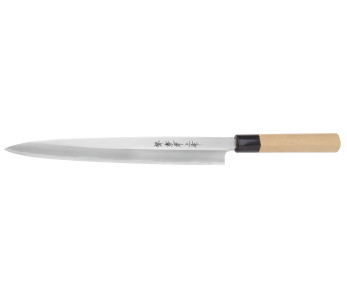
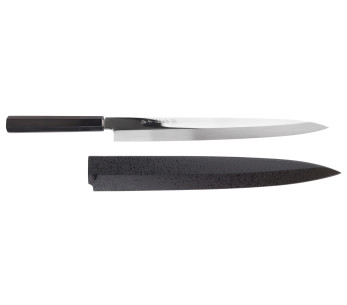
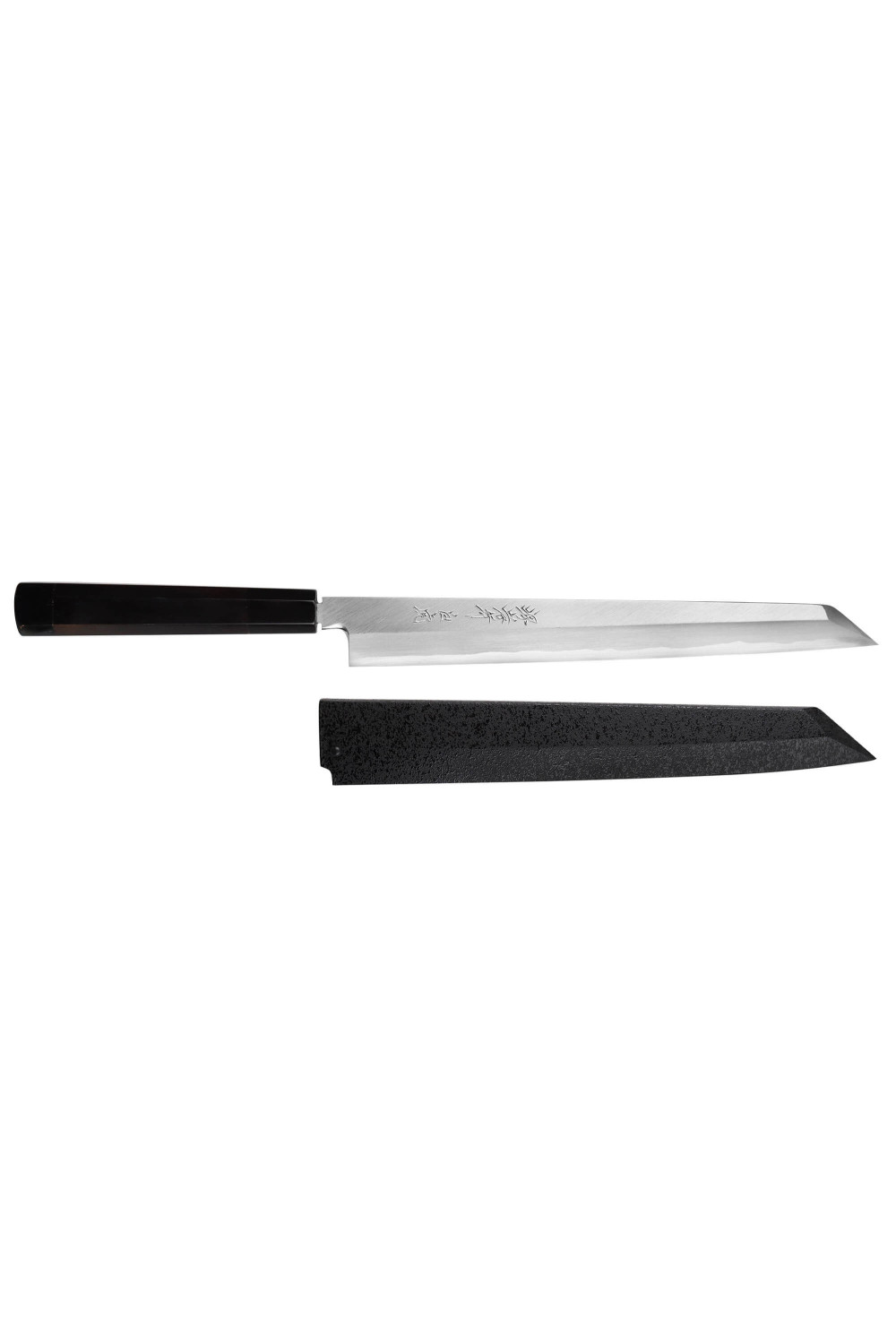
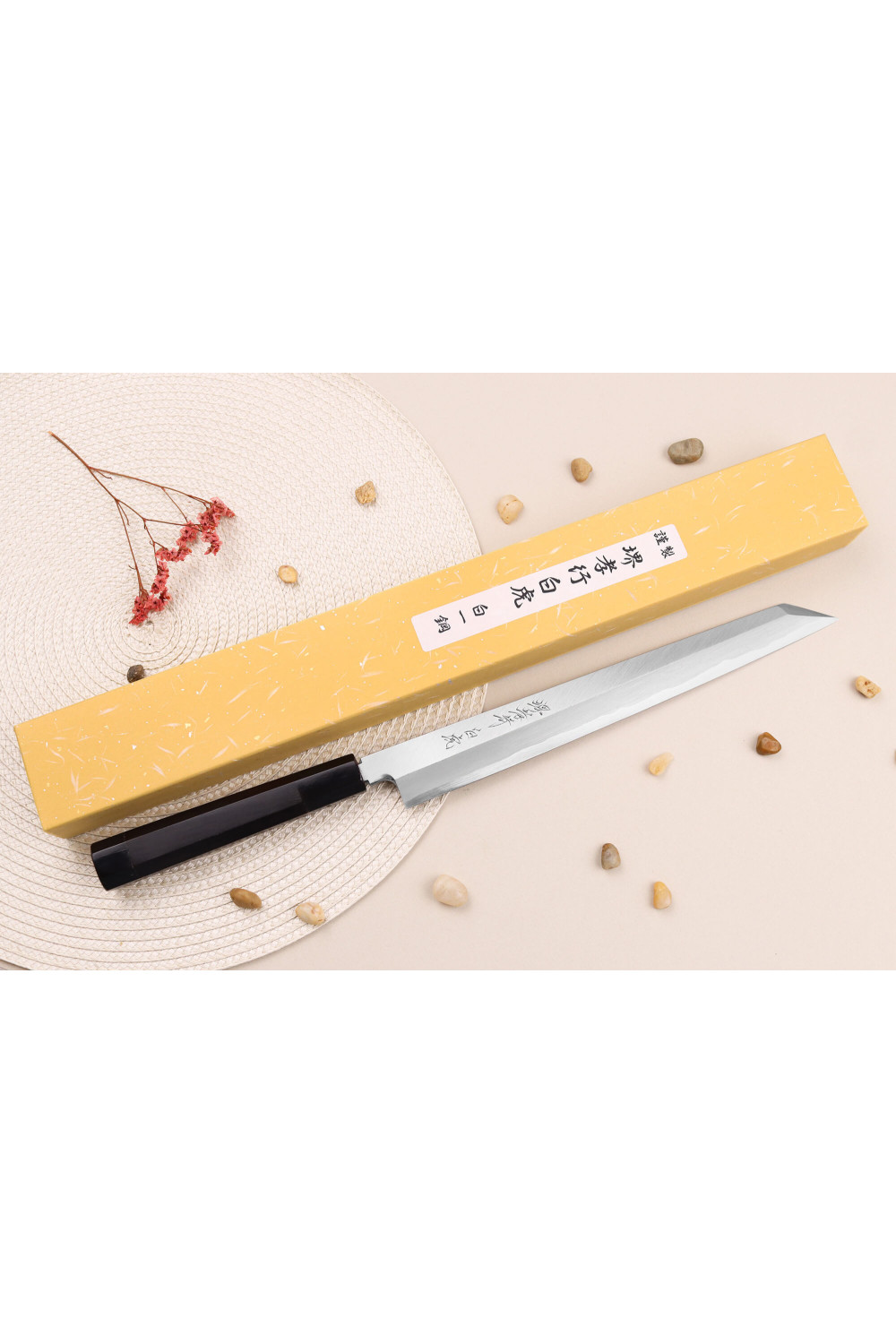
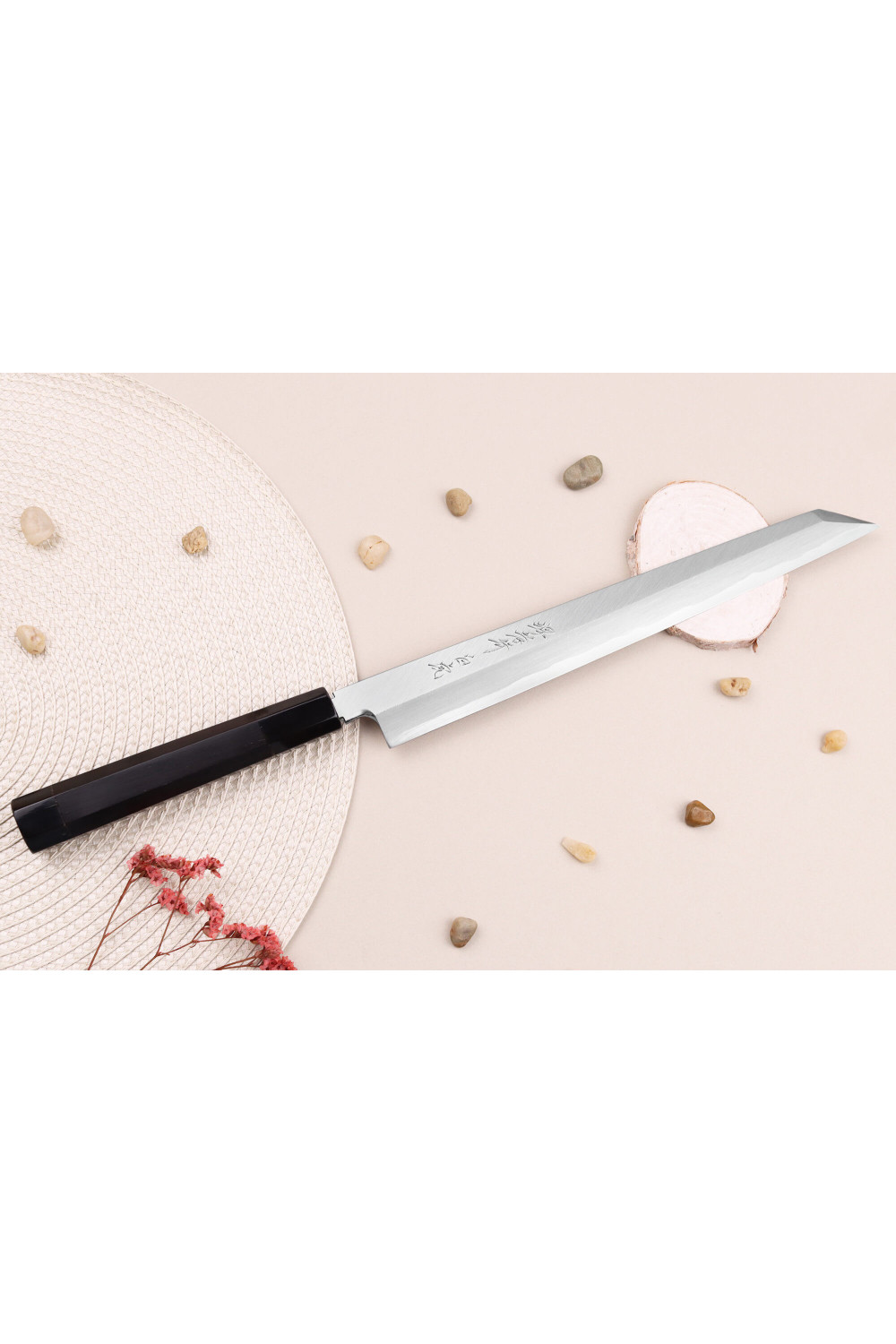
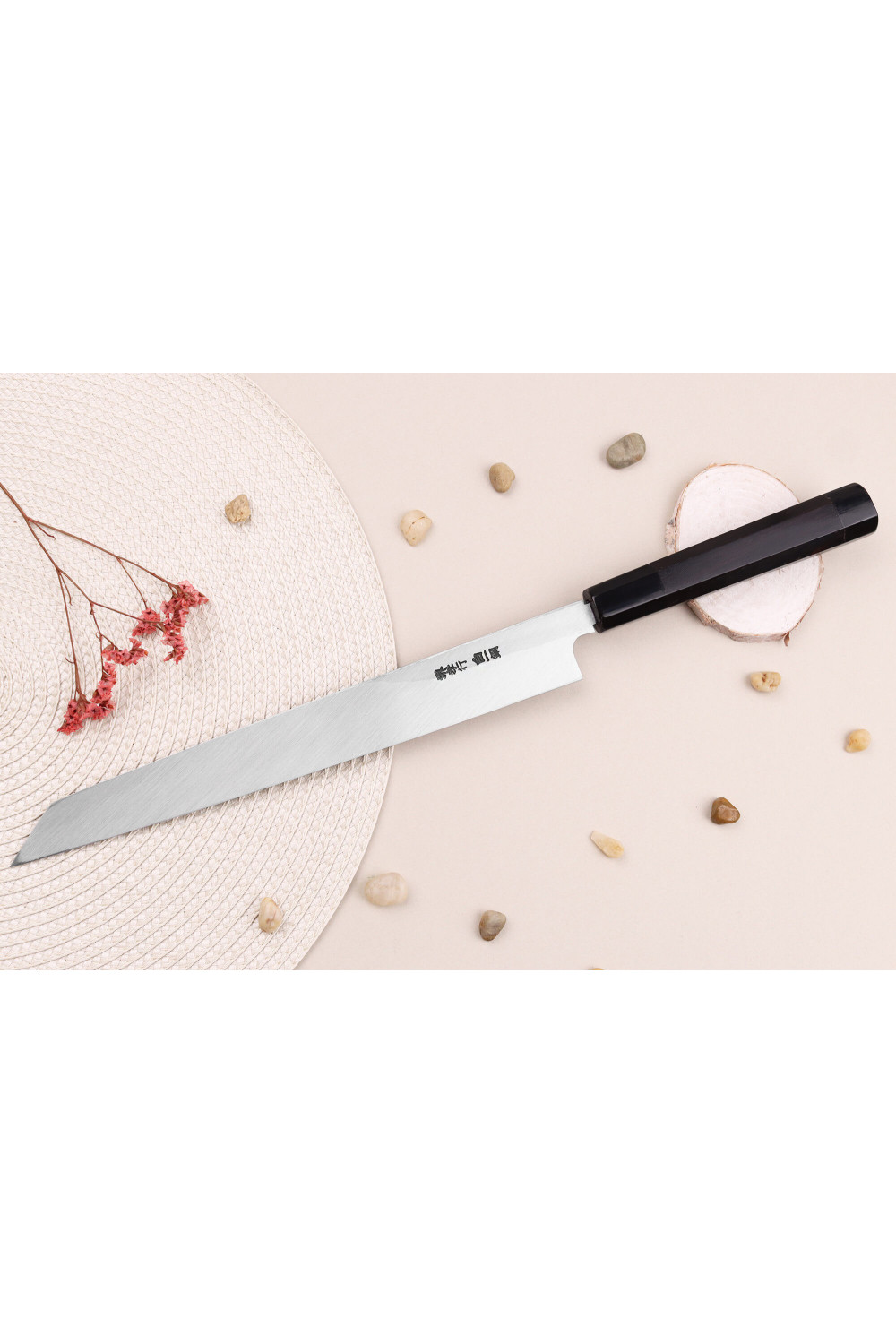
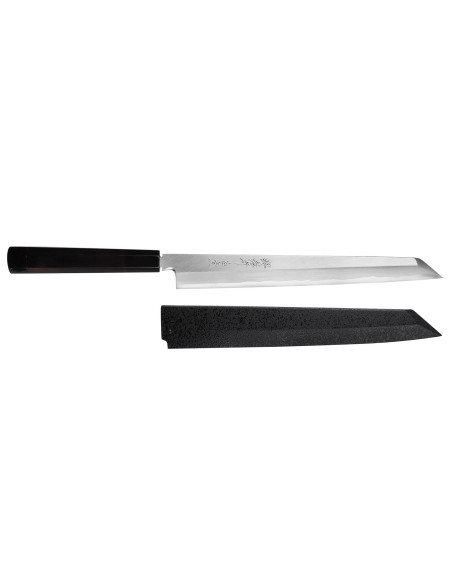
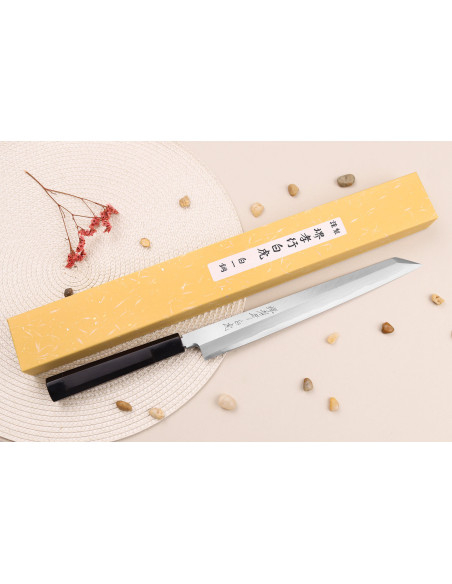
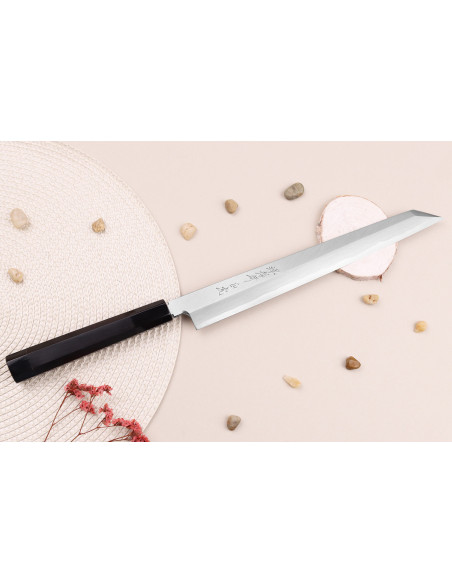
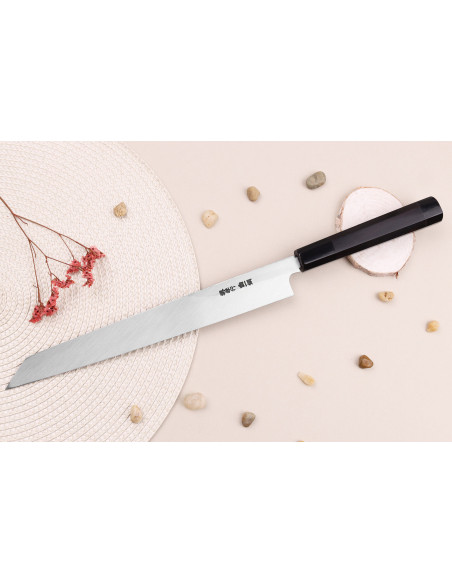
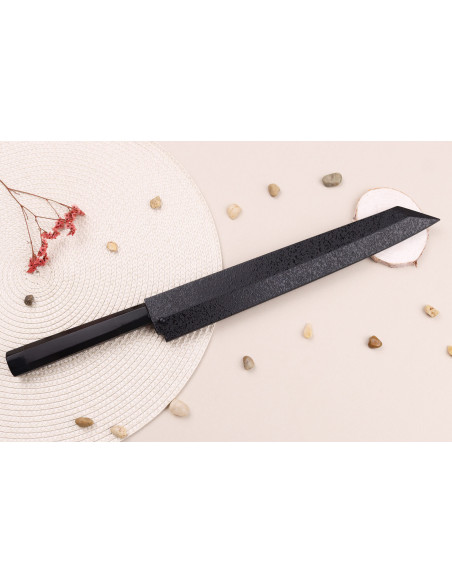
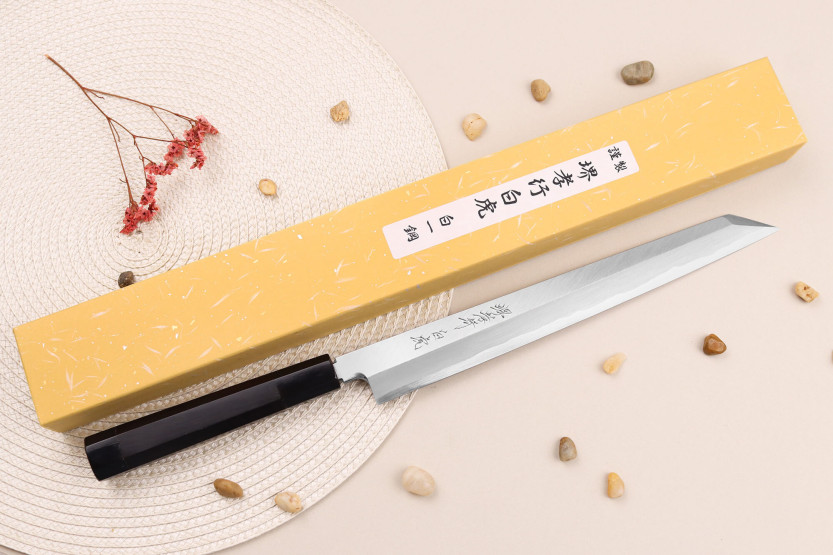
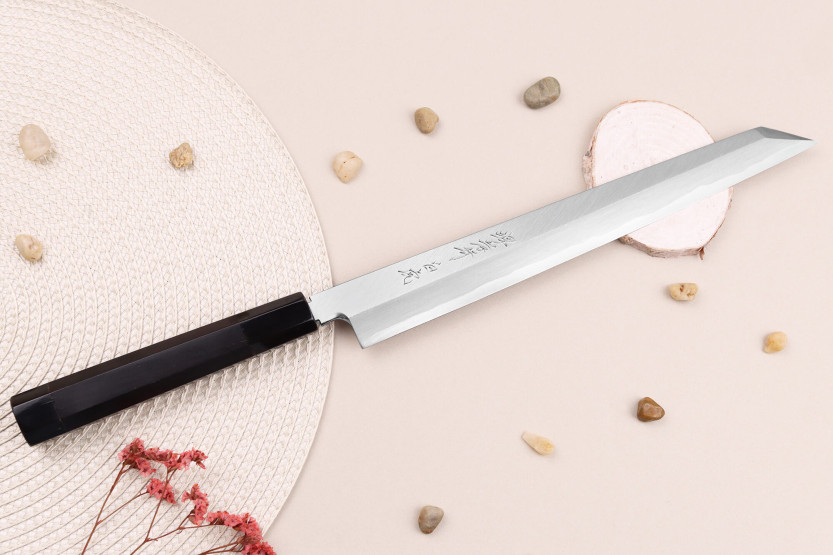
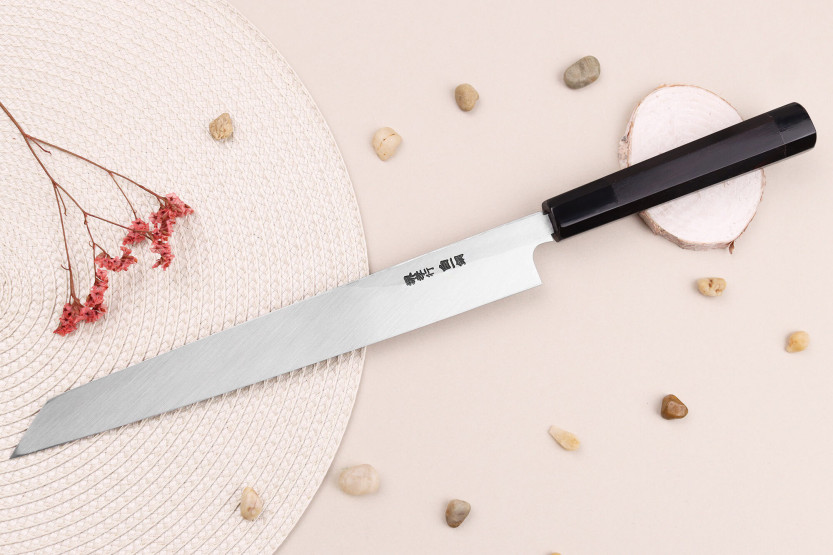
The Yanagiba knife is an important part of Japanese cuisine! With its large, fine blade, it's ideal for cutting raw fish with precision, especially when preparing sashimi and sushi. It features a kiritsuke tip for even greater precision! Be careful not to use it on excessively hard foods such as squash, bones, etc.
A high-performance blade for a quality Japanese knife
The blade of this Yanagiba knife kiritsukeYanagiba knife is crafted using the Japanese San Maï technique (meaning "3 layers"). This consists of forging a rigid steel core covered by a softer layer of steel, thus creating the three distinct layers. The aim of this method is to preserve the core while ensuring optimum blade balance.
The core of this blade is forged from Japanese Shirogami #1 steel (also known as White Steel #1), a high-quality alloy produced by the renowned steelmaker Hitachi. The term "Shirogami" comes from "shiro" meaning white and "gami" meaning steel in Japanese, in reference to the white paper that wraps the alloy during manufacture. Shirogami steel is highly prized by chefs attached to traditional values because of its exclusively Japanese origin. It is also appreciated by craftsmen for its easy workability.
Shirogami #1 steel is a high-end alloy enriched with iron ore and containing around 1.2% carbon. These elements are essential for increasing the steel's hardness. As a result, the blade achieves a hardness of 62HRC on the Rockwell scale, giving it a razor-sharp finish. Its quality edge is durable over the long term, allowing you to space out sharpening sessions. Despite this, sharpening remains easy when necessary.
The microscopic structure of Shirogami #1 steel is homogeneous, ensuring an even distribution of micro-carbides on the surface of the alloy. This characteristic gives the steel a high degree of purity, reinforcing its resistance to the risk of splintering.
Next, the core is enveloped on each side by a layer of softer steel, thus forming the three distinct layers. This configuration is designed to protect the core while providing optimum balance to the blade, ensuring resistance to micro-shocks when cutting. The top layer, made of softer steel, gives the blade flexibility in use.
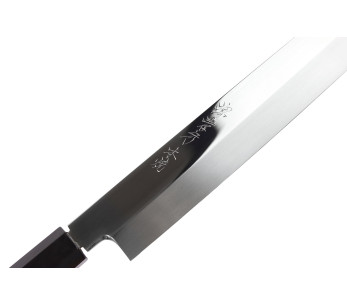
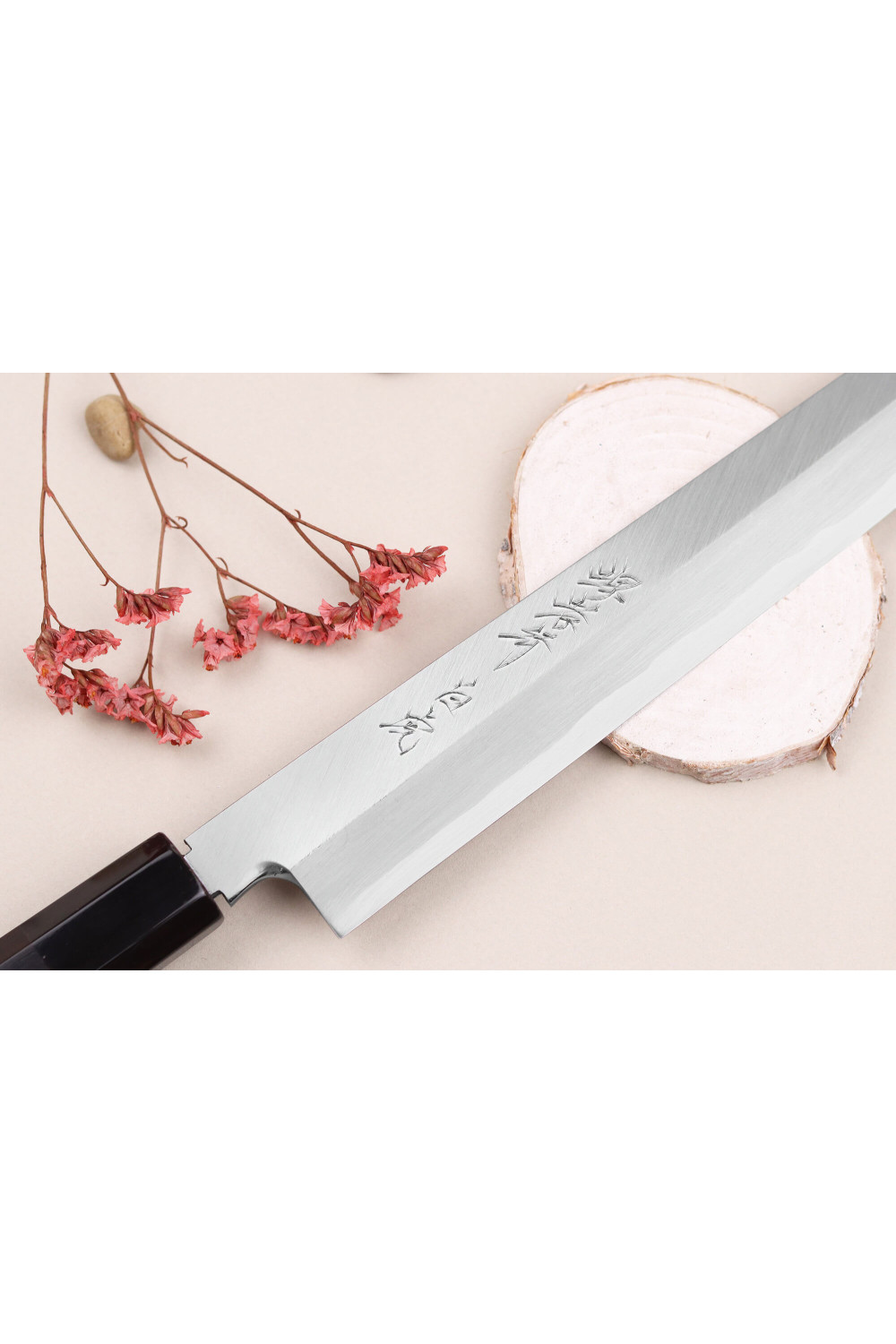
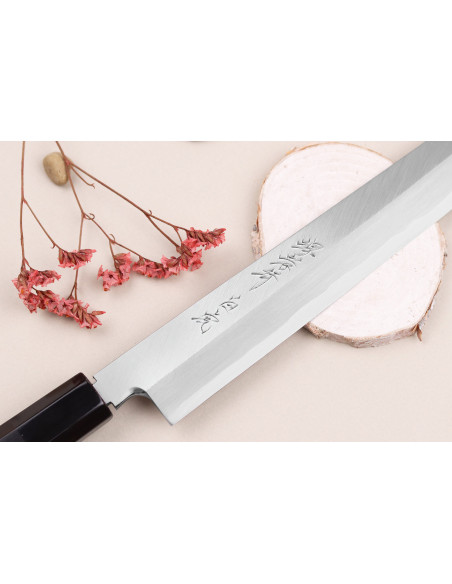
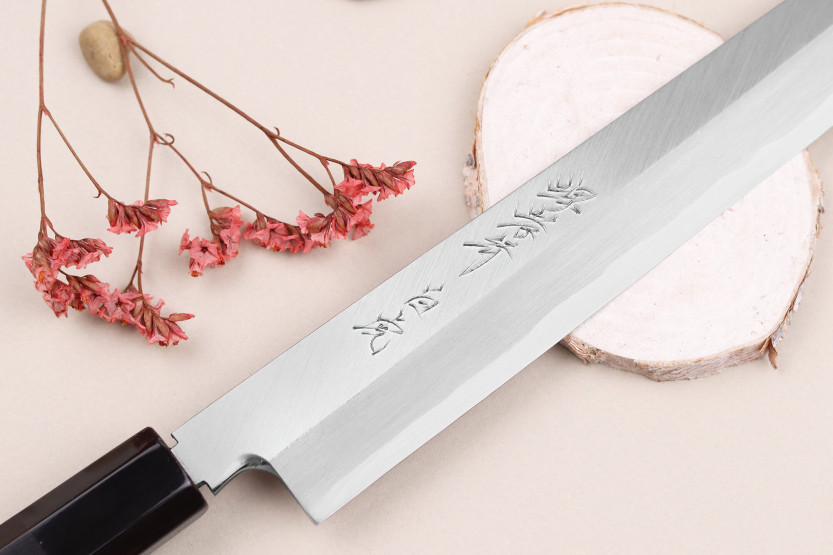
The blade's bevelled edge is sharpened on one side only, making it easier to spread slices. What's more, the back of the blade features a hollow cutting edge that prevents food from sticking, thus promoting air circulation during cutting.
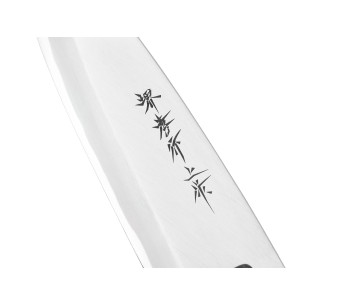
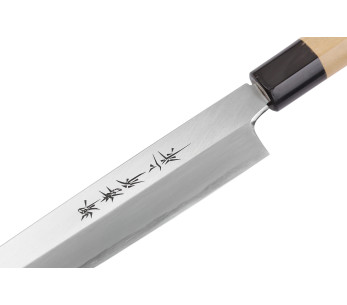
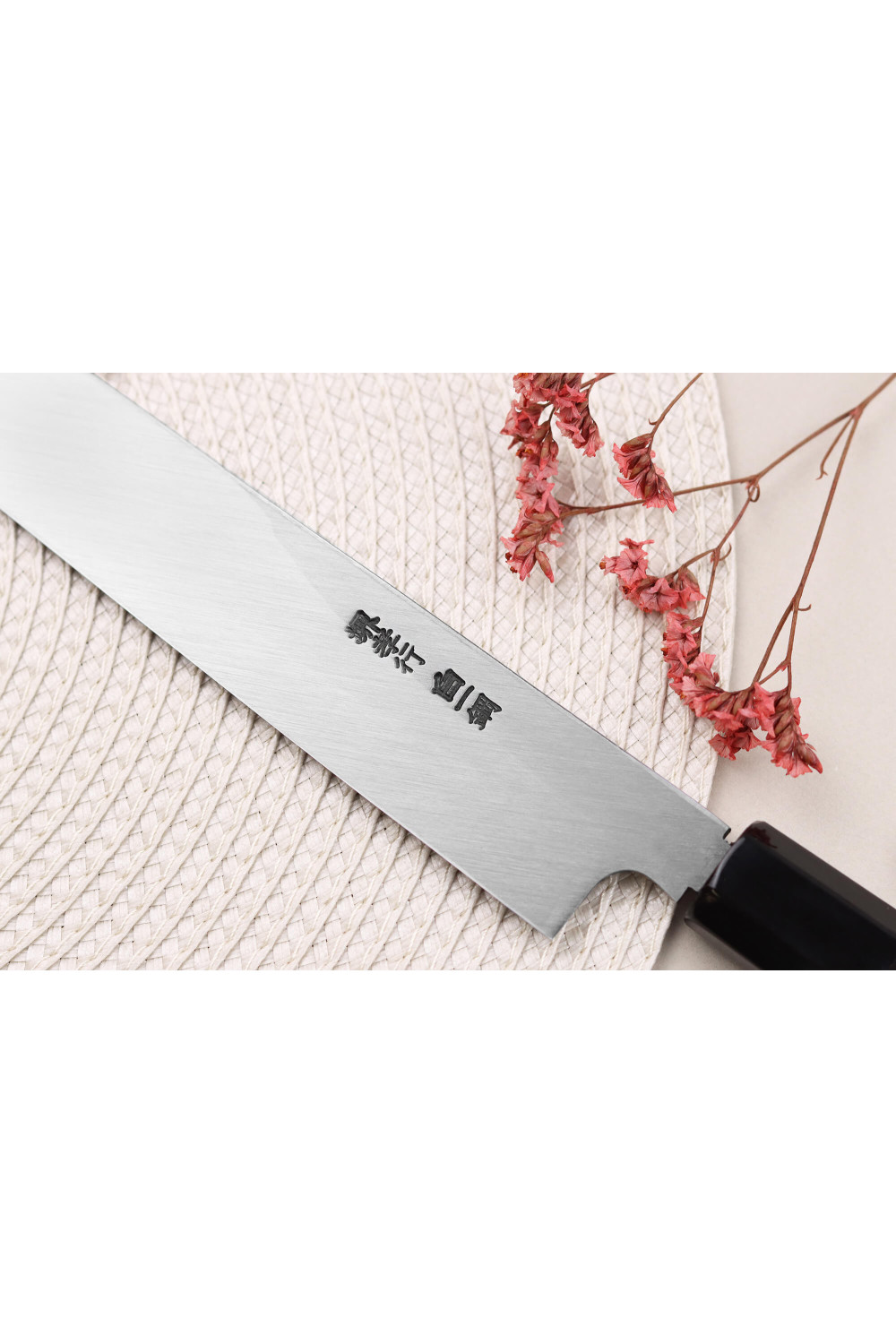
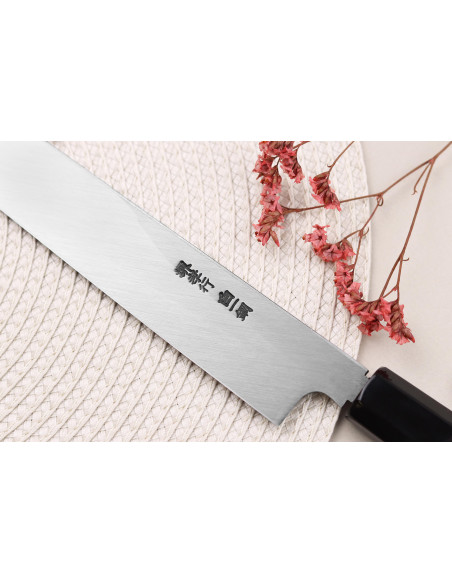
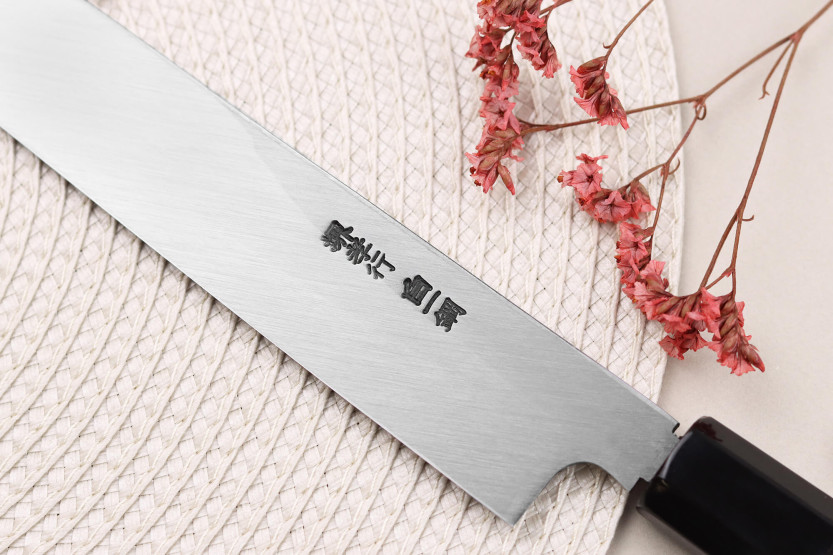
Kanjis are engraved on the front and back of the blade, adding a distinctive touch to your handcrafted Japanese knife. One of the kanjis on the back of the blade is written 白虎, reading "Byakko" in Japanese, which means "White Tiger". This inscription echoes the name of the range to which your Japanese kitchen knife belongs.
A Sakai Takayuki knife with an elegant handle
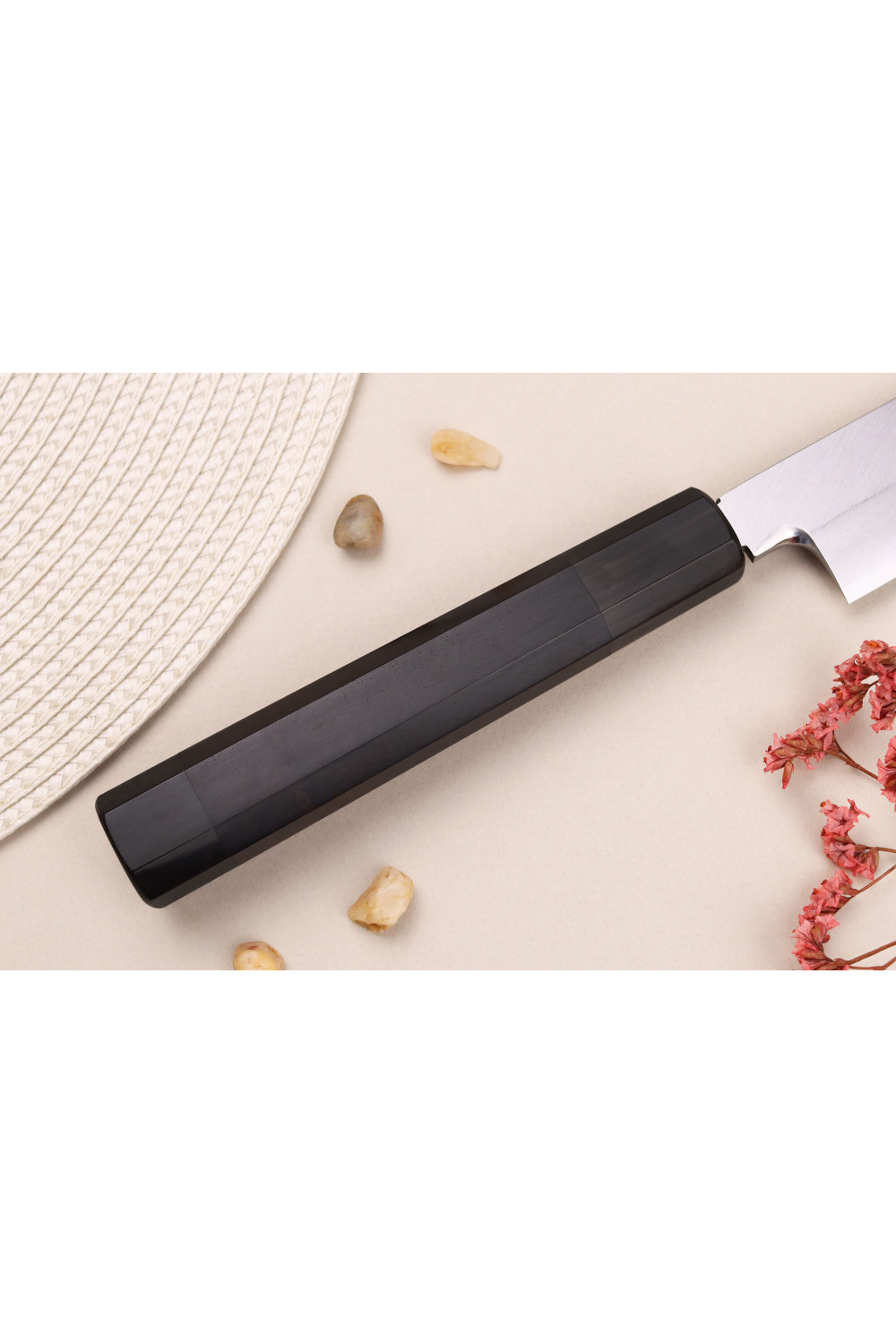
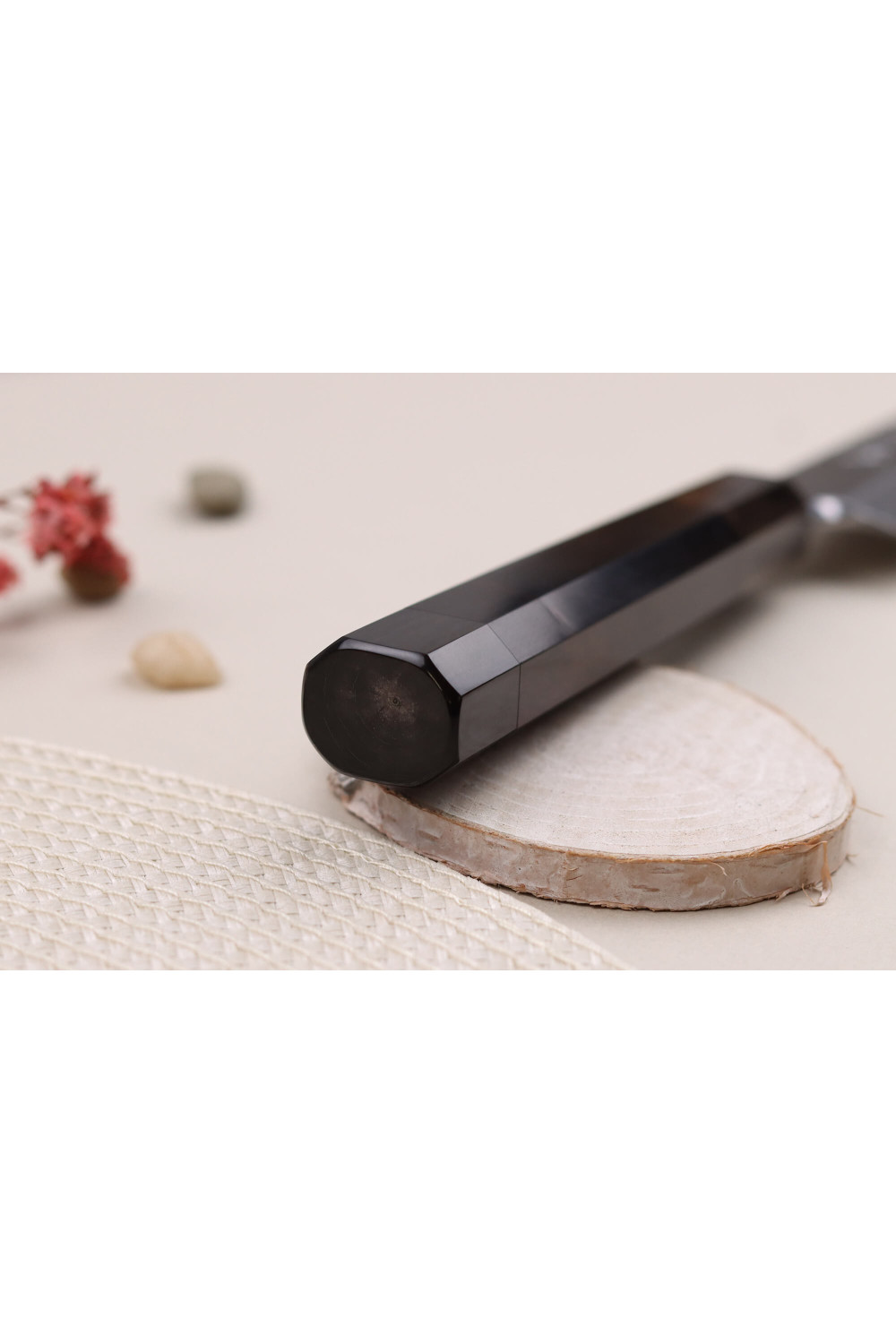
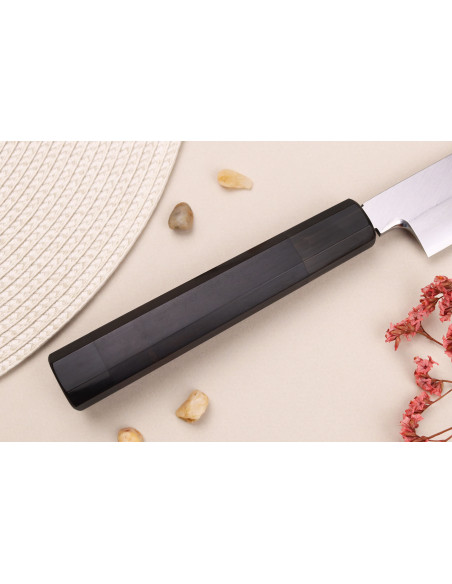
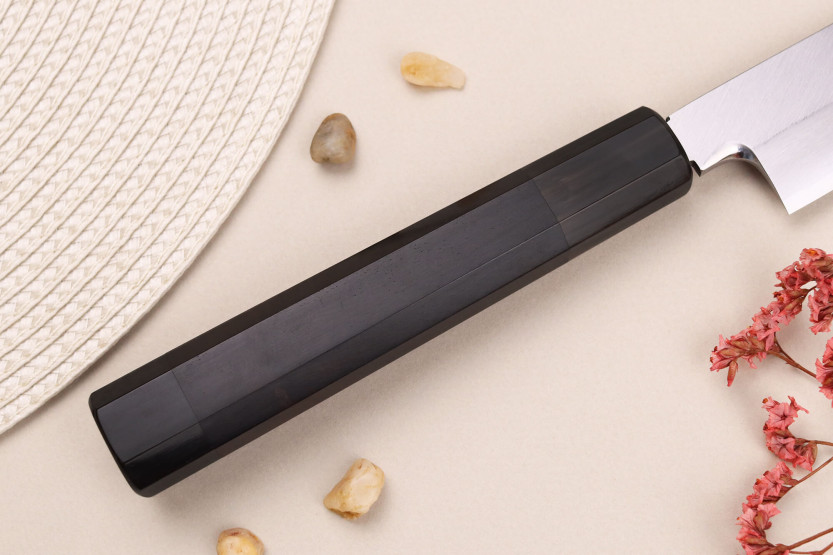
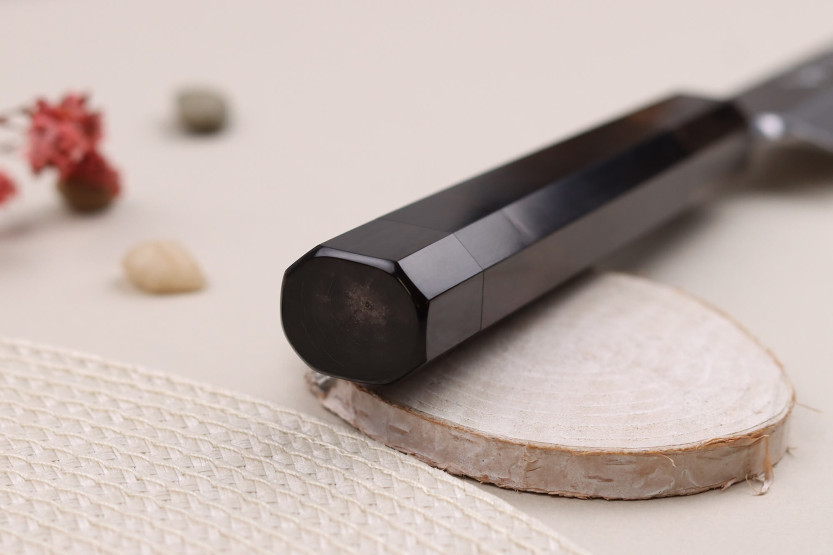
The handle of this handcrafted knife is crafted from ebony wood, a tropical species prized for its dark brown, almost black, hue. With its high density, ebony is highly resistant to cracking, making it ideal for regular, even daily use.
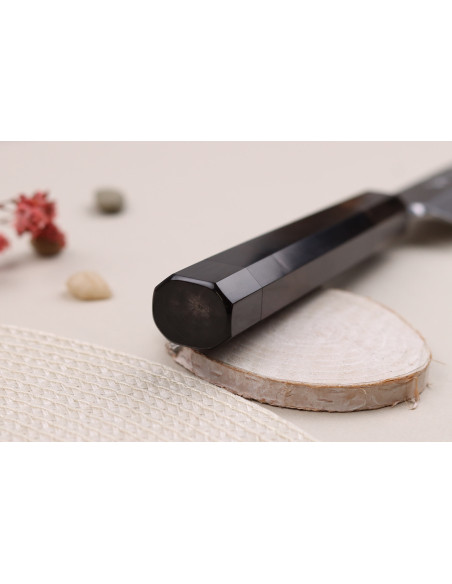
The octagonal shape of the handle offers an optimal grip, specially designed for prolonged use, reducing the fatigue associated with prolonged cutting.
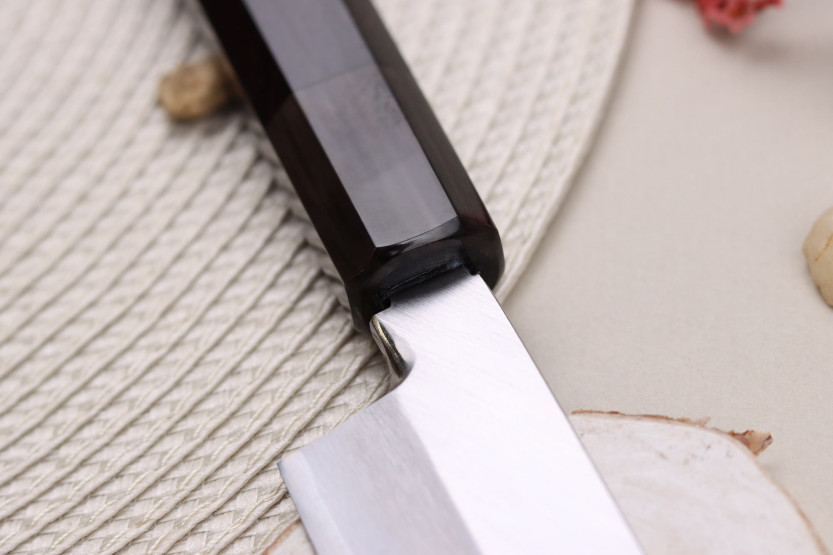
The warm, deep shades of ebony blend subtly with a Bolster and butt made from black buffalo horn. As a living material, horn can vary slightly from one model to another, adding a unique touch to each knife.
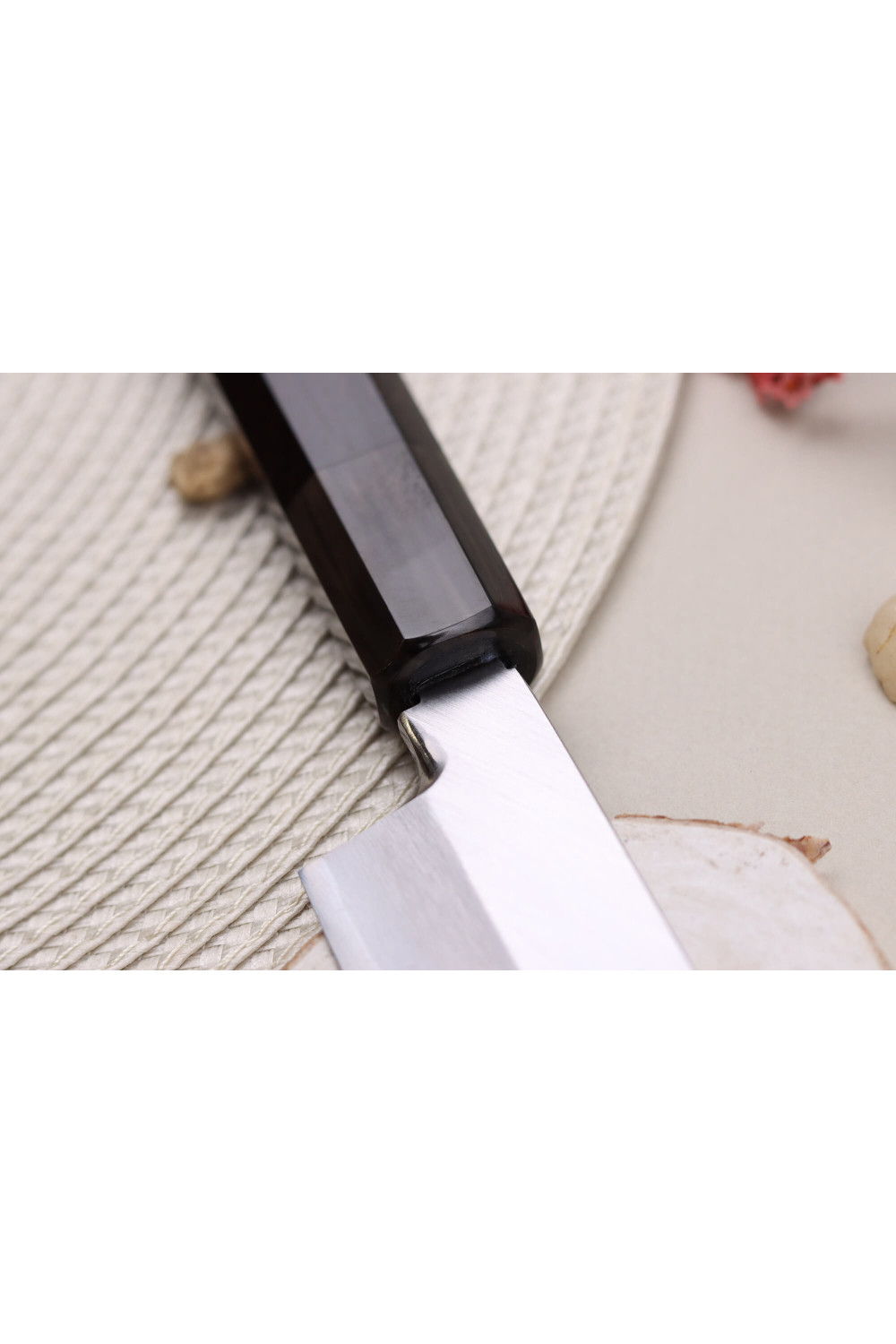
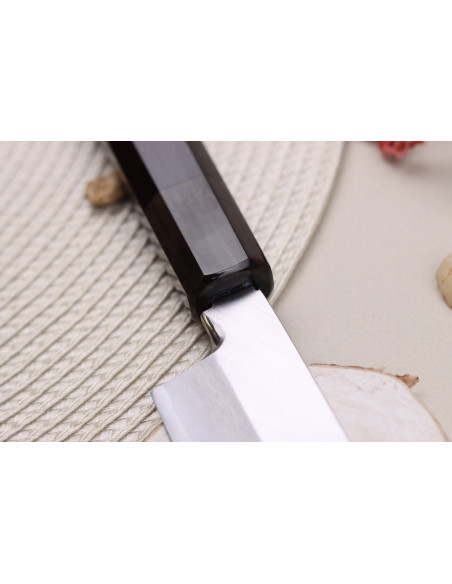
At first glance, it may appear that the blade of this Japanese knife doesn't fit properly into the handle, but that's not the case! Apparent machi, a tradition from the Sakai region, aims to optimize the knife's balance by acting on its center of gravity.
To ensure a perfect seal, wood paste has been added to fill the small gaps between the blade and the handle. This prevents any infiltration of water or small foodstuffs.
Caring for your carbon knife
This handcrafted Japanese knife should only be cared for by hand. Do not use a dishwasher, and do not leave your knife to soak in the sink. Use a mild soap with a non-abrasive sponge, taking care not to get the handle too wet. Once washed, dry it immediately to remove all traces of moisture, then store it in a dry place.
Despite perfect care, it is normal to observe a variation in blade color over time, due to the reactivity of carbon to elements such as the acidity of food or humidity in the air.
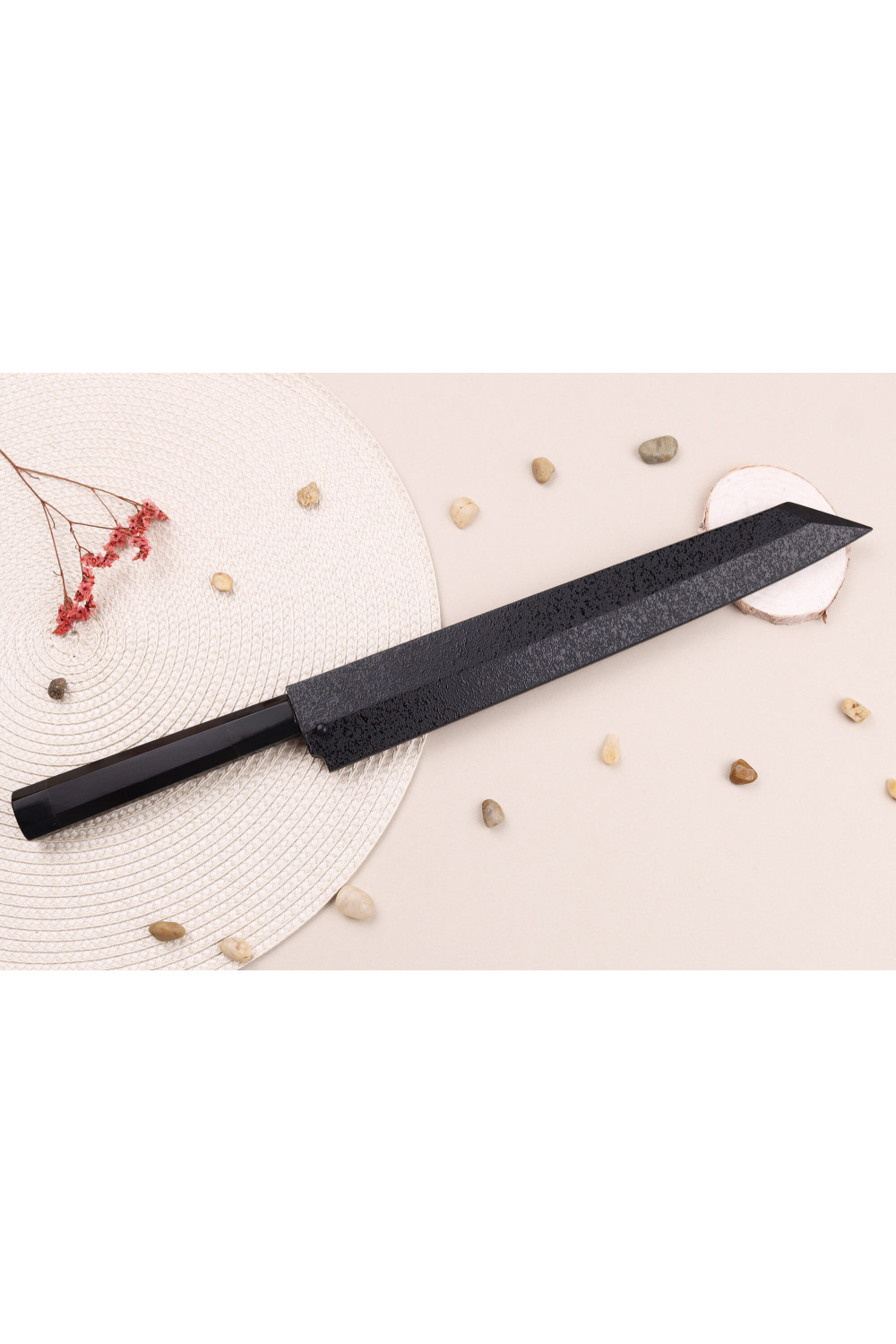
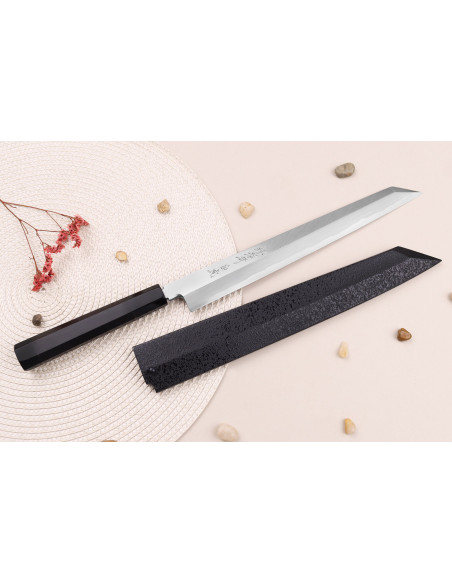
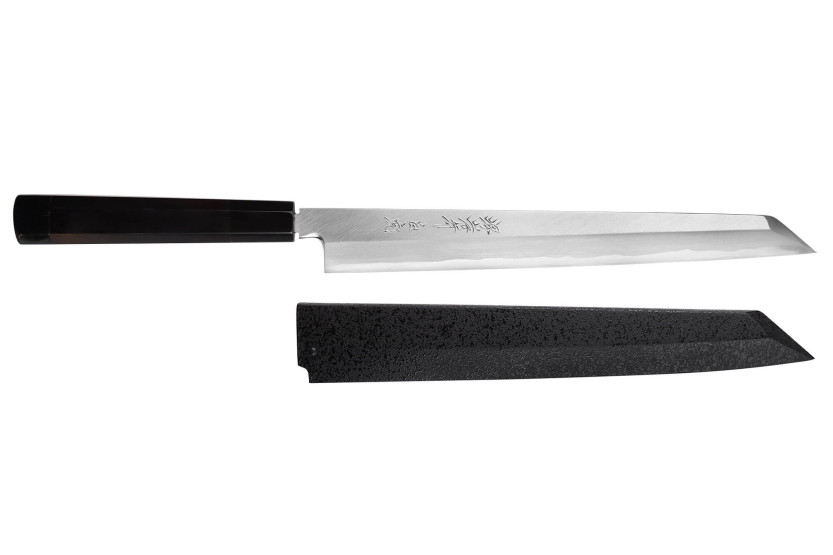
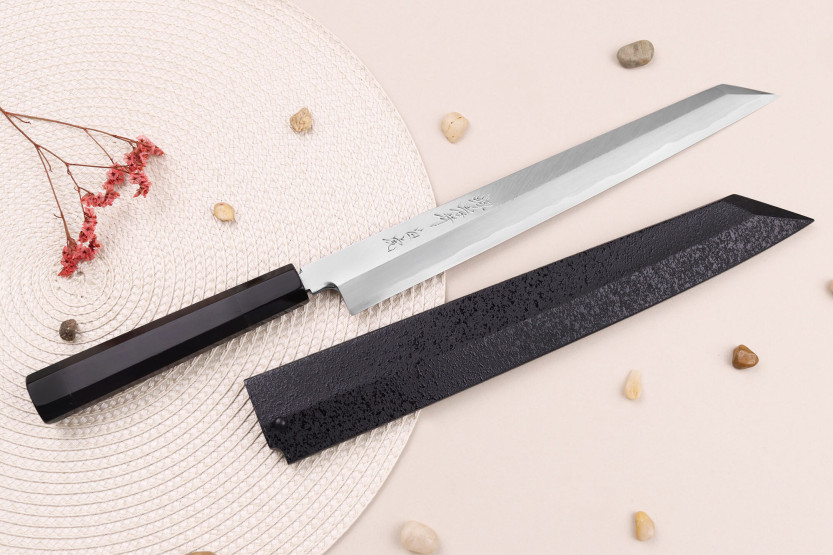
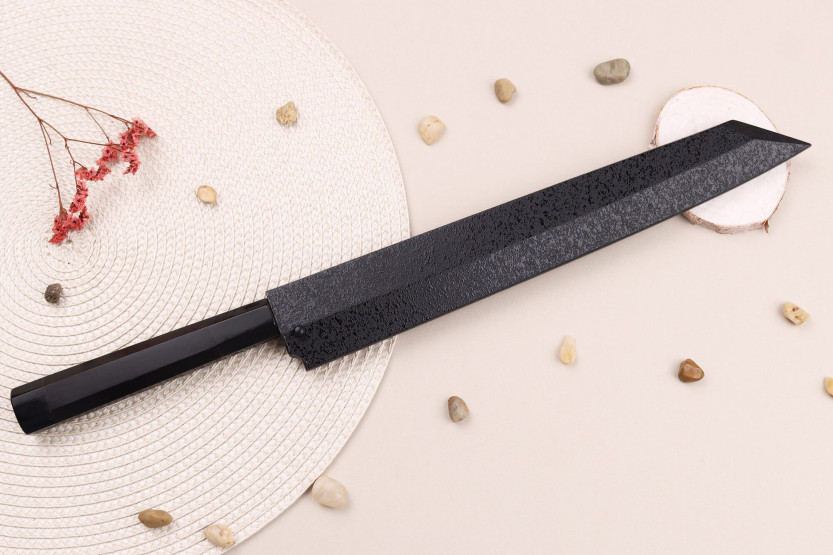
Your handcrafted knife comes with a protective sheath for secure storage. Not only does it provide extra protection for the blade against the elements, it also reduces the risk of accidental injury when handling it.
To maintain your Sakai Takayuki knife, find a wide range of sharpening stones on KnifeLeader.eu!




 By buying this product you can collect up to