Kenji Togashi 's know-how for Sakai Takayuki
Sakai Takayuki is a Japanese company founded in the 1950s and based in the eponymous town of Sakai. Its expertise in the art of cutlery is based on the ancestral know-how of the blacksmiths of yesteryear who made katana for the samurai. They passed on their manufacturing methods to subsequent generations, who have ensured that the tradition lives on, enabling Sakai Takayuki to offer you quality Japanese knives.
The company called on Kenji Togashi, a master blacksmith from the Sakai region, to create the Byakko range. Kenji san began his career in the late 60s and has acquired a wealth of expertise thanks to his skills. Indeed, he is one of the few blacksmiths who know how to make Honyaki blades. Kenji Togashi has received numerous awards throughout his career, including the title of Dento-Kureishi from the Japanese Ministry of Economy in the 90s. This title officially certifies him as a Master Traditional Craftsman, which is a real honor for him and shows the full extent of his expertise: Kenji san perpetuates ancestral, local know-how.
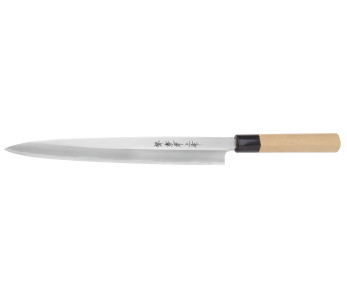
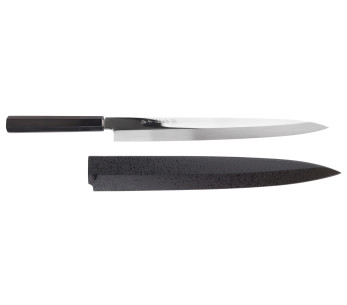
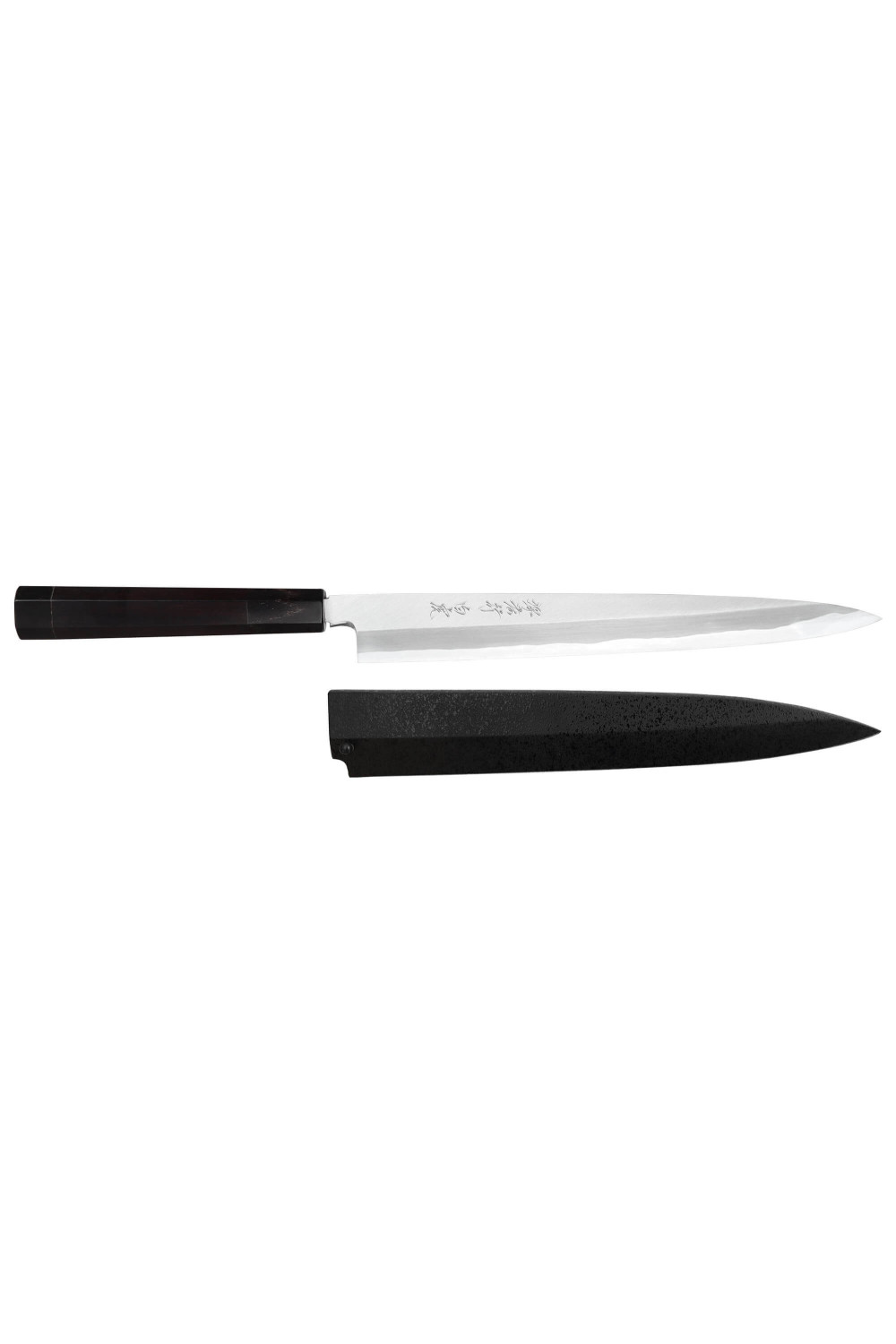
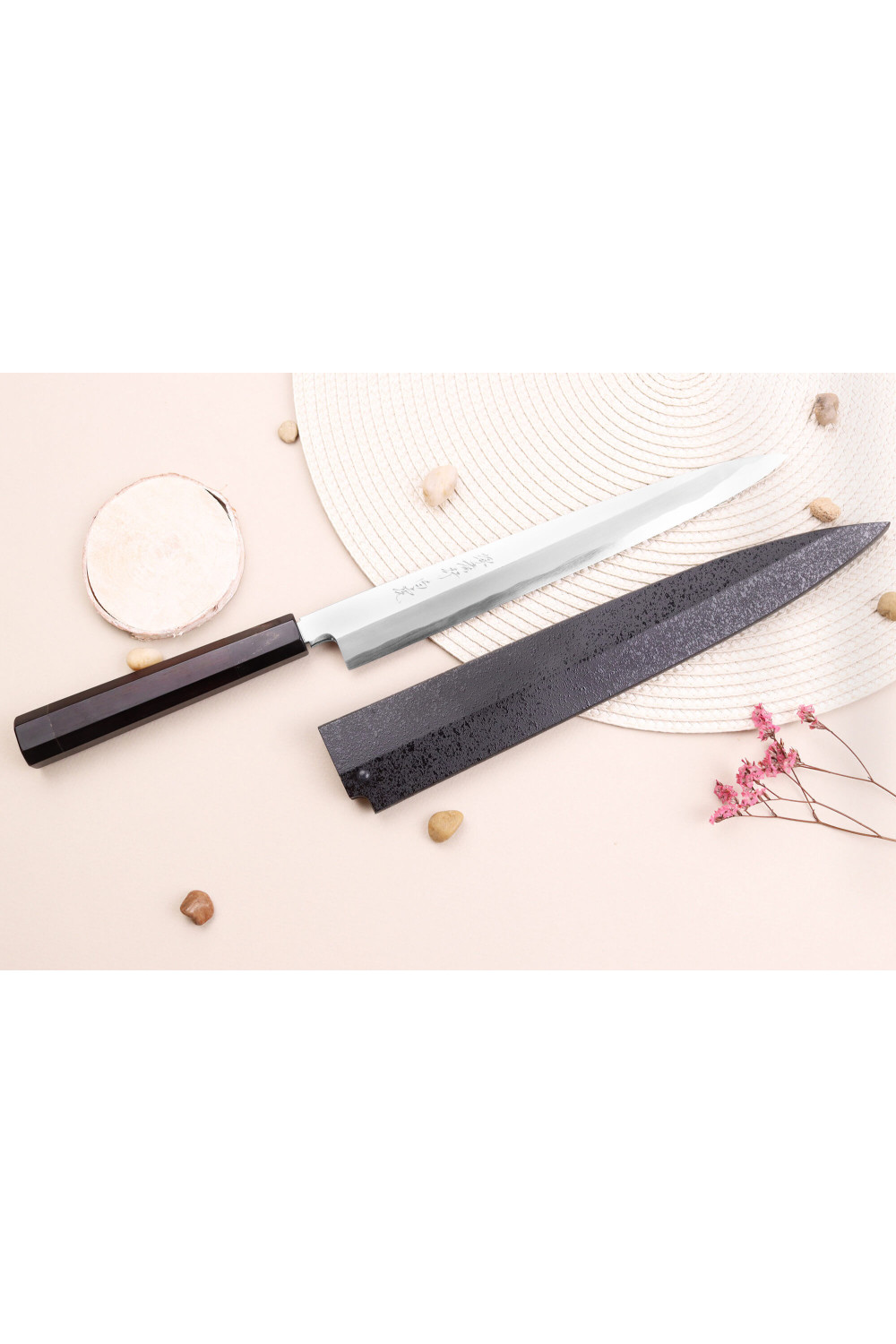
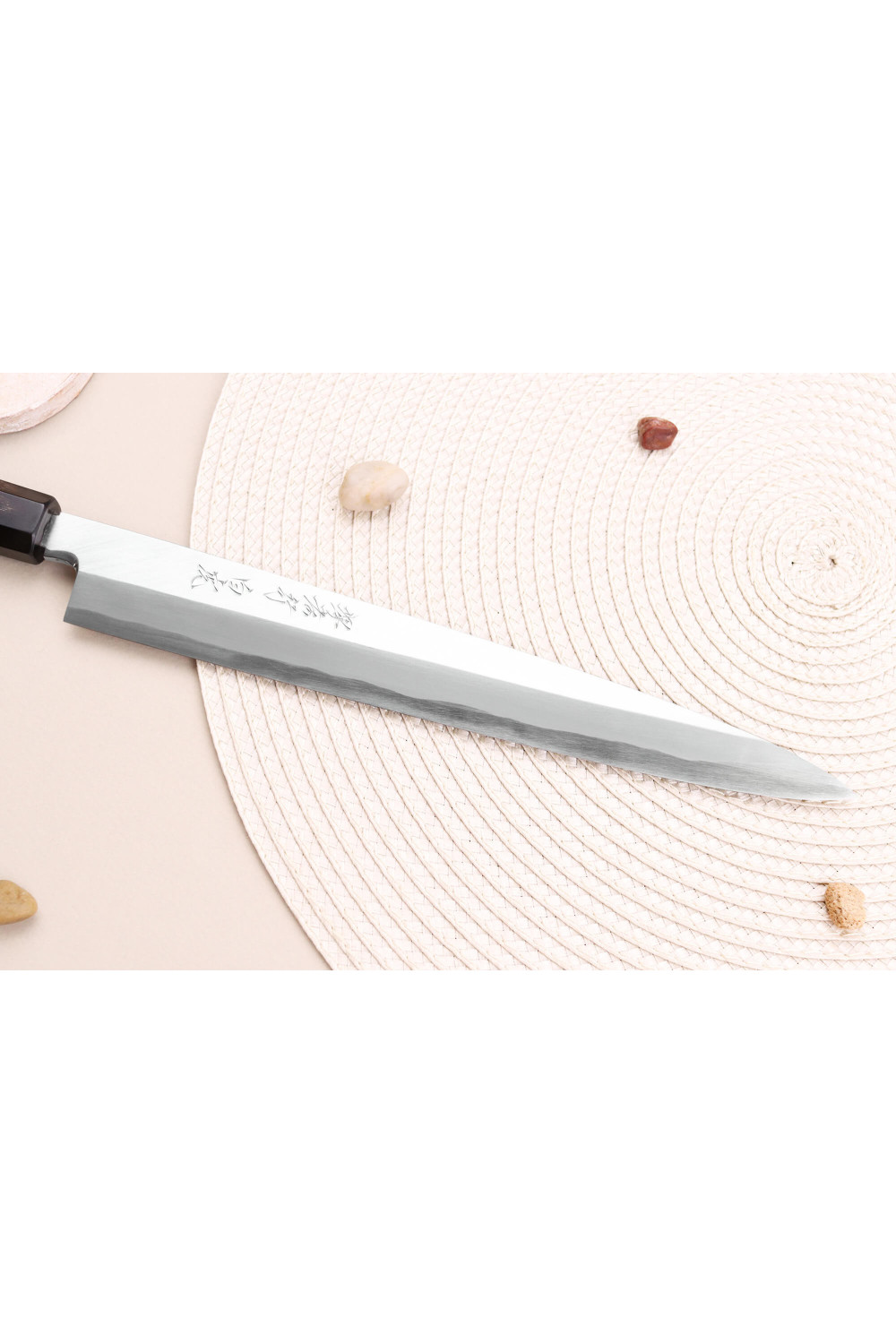
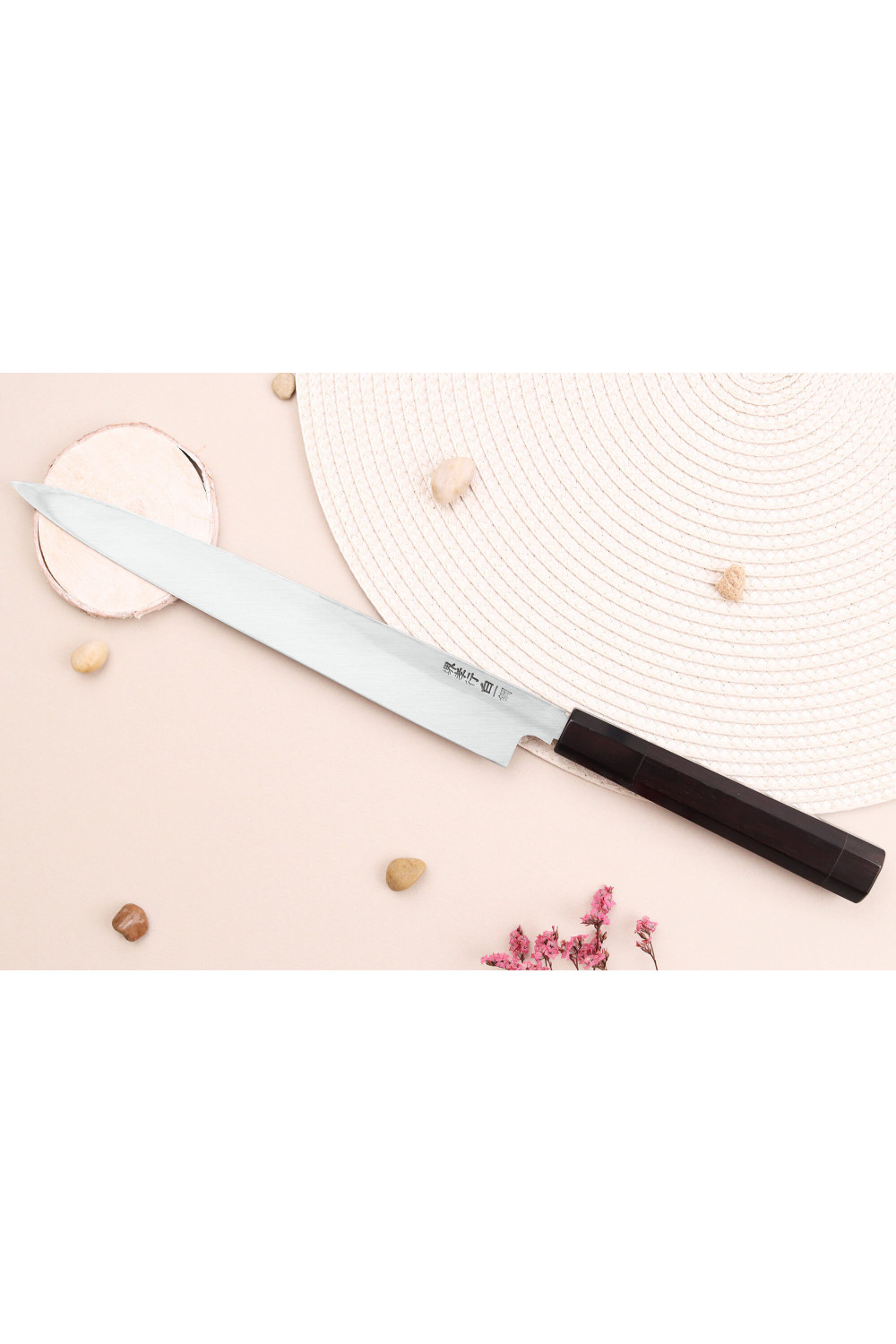
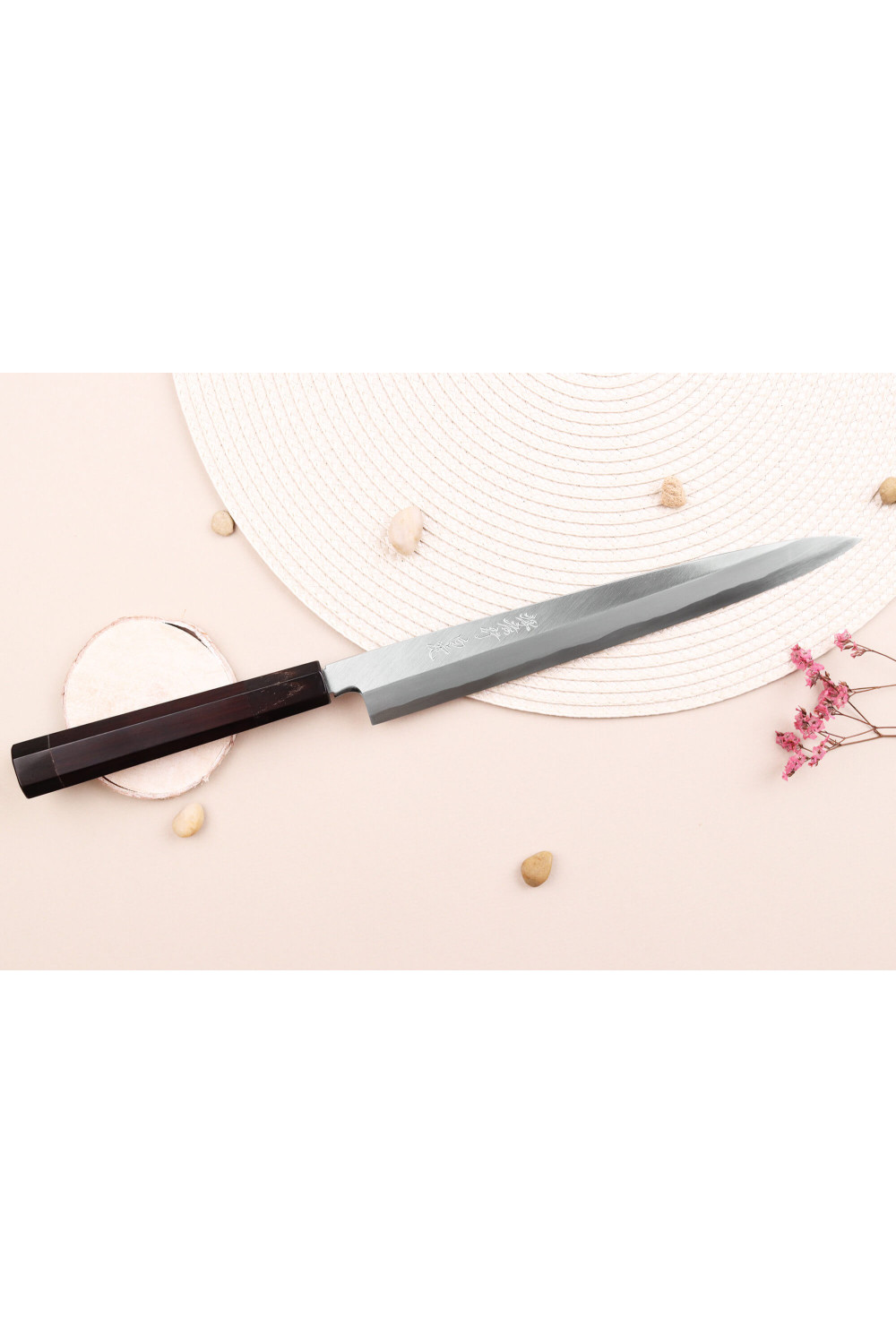
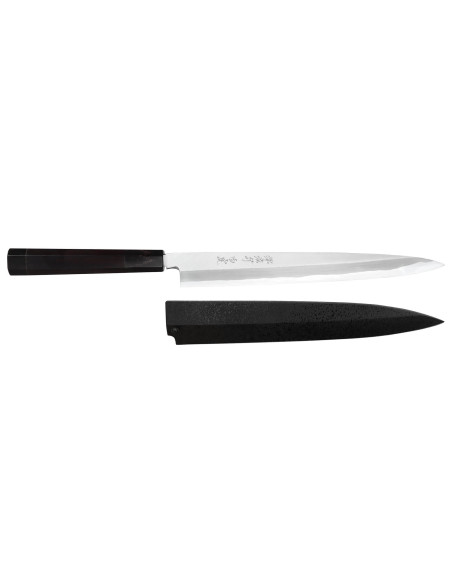
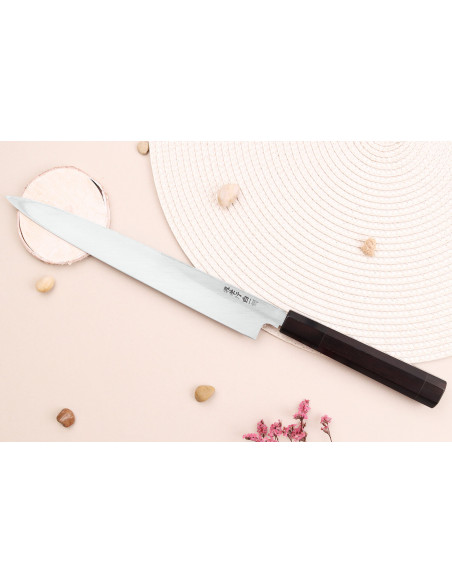
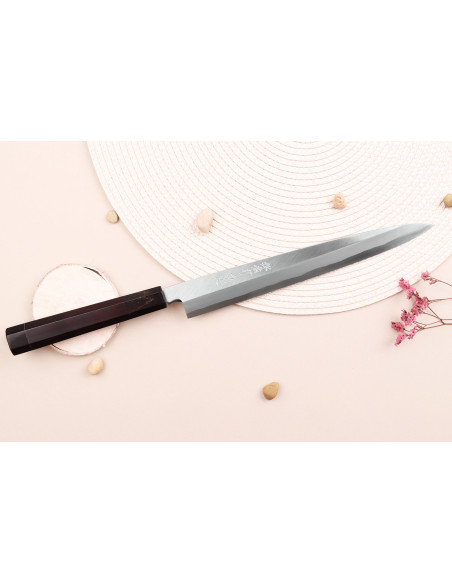
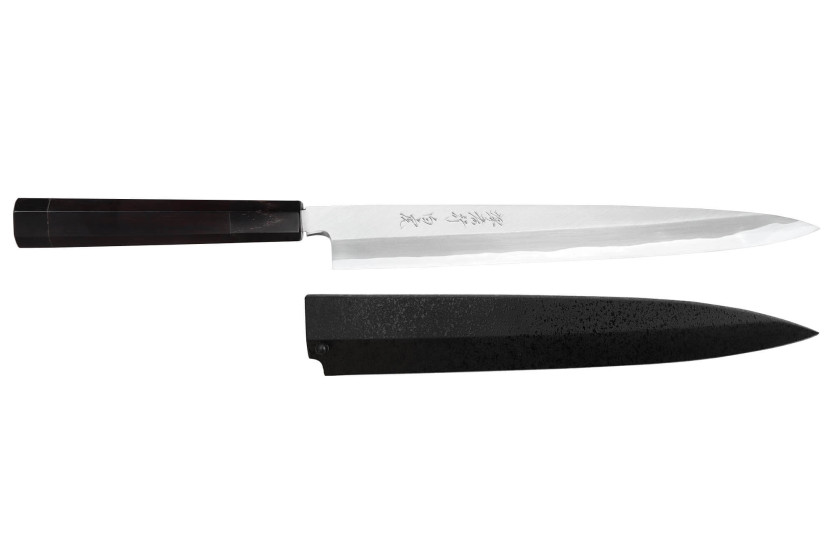
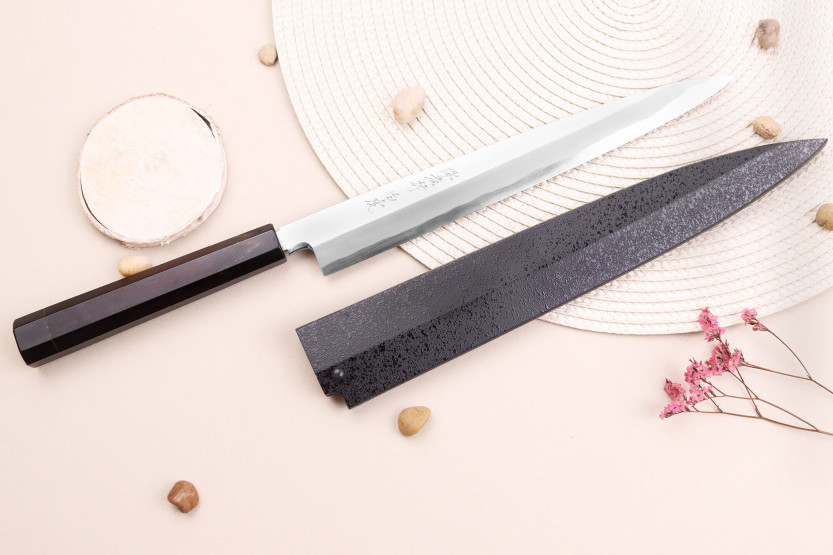
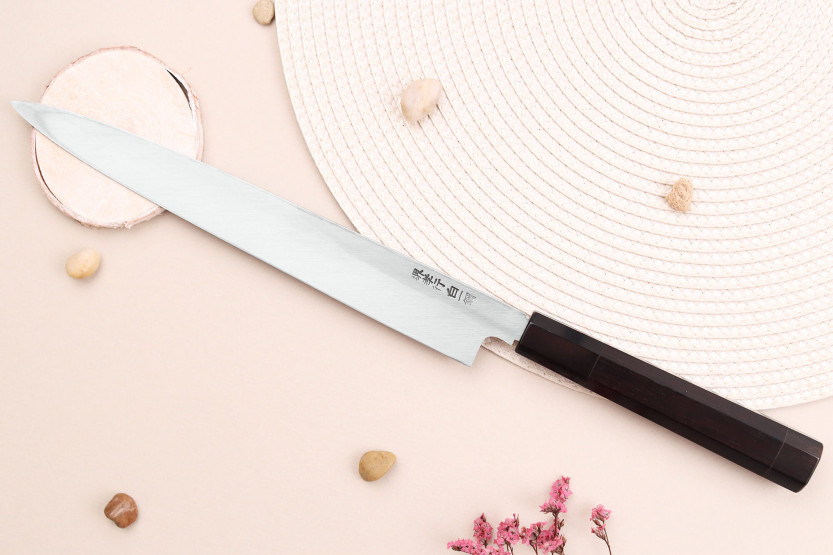
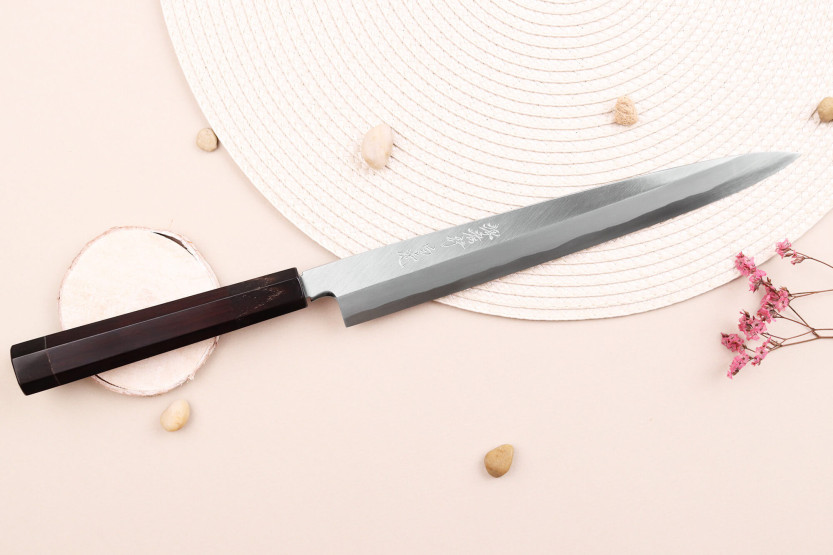
The Yanagiba knife is widely used in Japanese cuisine. It features a long blade with a beveled edge that can be easily inserted into raw fish. Ideal for sashimi and sushi. Be careful not to use this knife on excessively hard foods, such as frozen foods or bones, as the blade may break.
A high-performance blade in Shirogami #1 Japanese steel
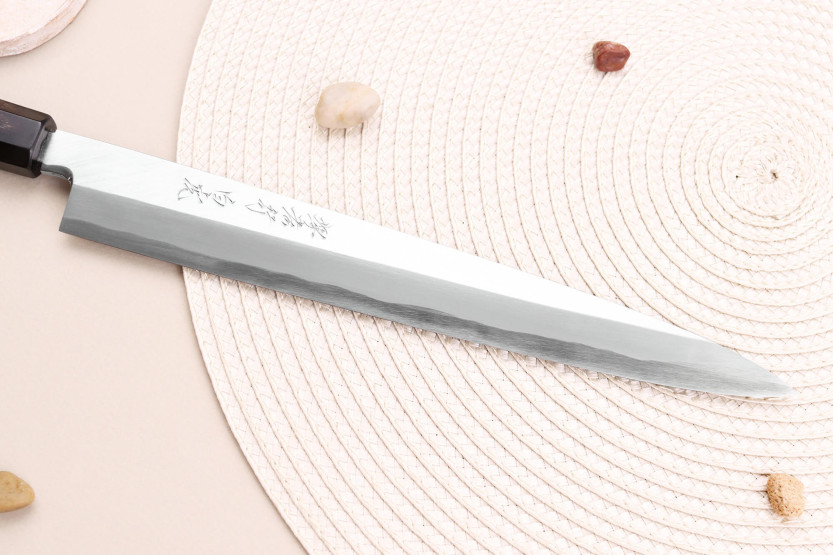
The blade of this 24cm Byakko Sakai Takayuki yanagiba is designed according to a typically Japanese San Maï structure. These terms mean "3 layers" in Japanese and are a good indicator of the blade's design. It consists of a rigid steel core which is then covered by a layer of softer steel sandwiching it: the 3 layers are formed. This protects the core while providing optimum balance to the blade.
For this blade, the core is made from Japanese Shirogami #1 (also known as White Steel #1), a top-of-the-range alloy manufactured by the world-famous steelmaker Hitachi. It is named Shirogami because "shiro" means white and "gami" means steel in Japanese, due to the white paper that surrounds it during manufacture. Shirogami steel is highly appreciated by cooks with traditional values, as it is made directly in Japan and forged by only the finest blacksmiths. They love to use it because it is easy to handle and shape.
It is a top-quality alloy enriched with iron ore and around 1.2% carbon, the elements required to increase the hardness of a steel. The blade reaches a hardness of 62 HRC on the Rockwell scale, enabling it to be sharpened to a higher-than-average level. It has a pronounced cutting edge that lasts, allowing you to space out sharpening sessions. Sharpening, however, remains easy when necessary.
Shirogami #1 steel is also interesting for its microscopic structure. It is so homogeneous that you can see the uniform distribution of micro-carbides on its surface, the alloy is considered to be very pure. This makes it more resistant to splintering.
A layer of softer steel covers this very rigid Shirogami #1 steel core, sandwiching it by being folded over on either side. The purpose of this layer is to protect and balance the core's high rigidity, so that it is more resistant to micro-shocks when cutting. Indeed, a rigid knife tends to be more susceptible to breakage. This outer layer adds flexibility to your blade.
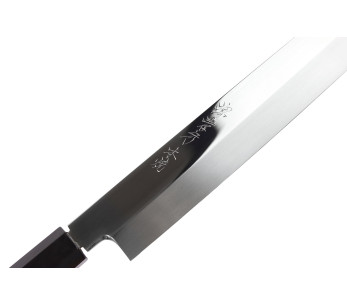
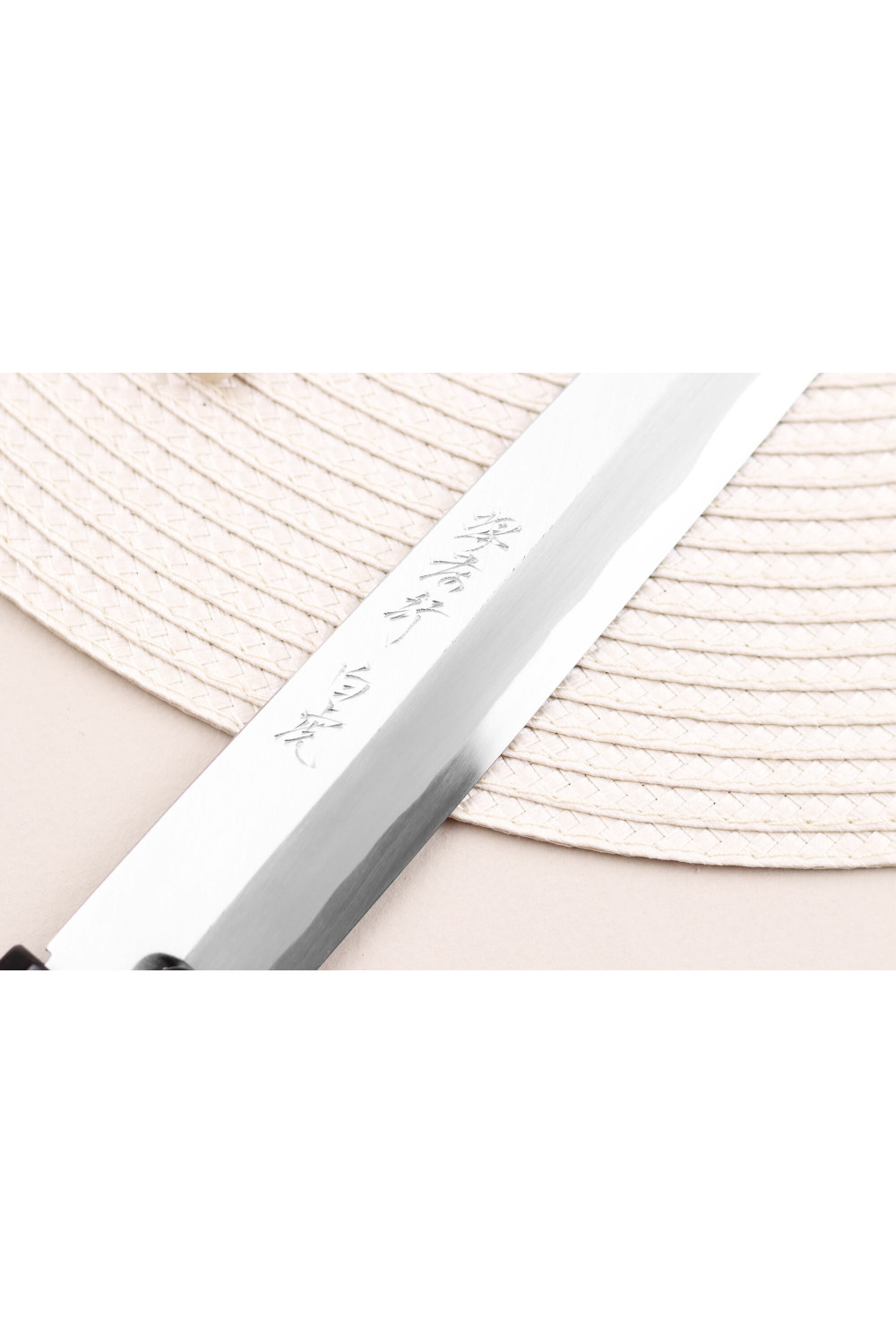
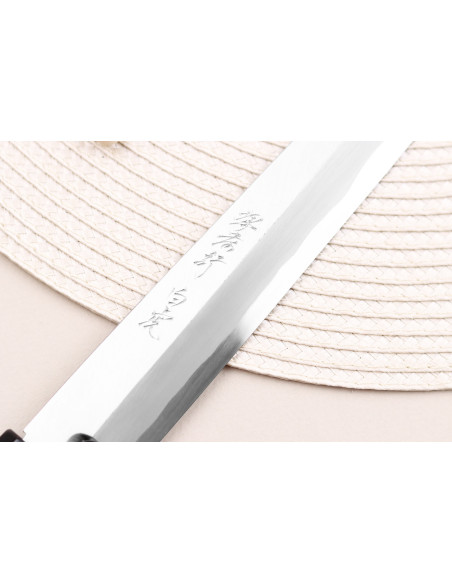
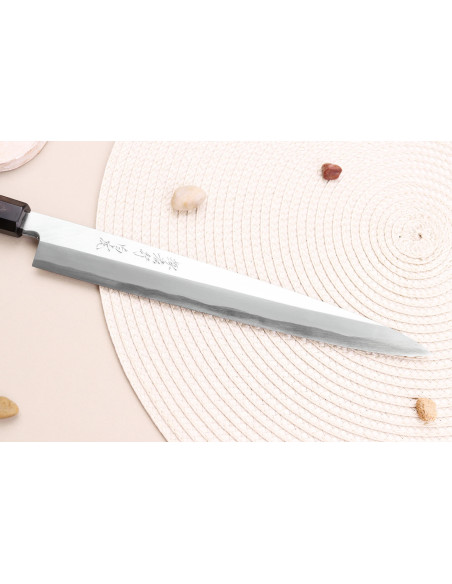
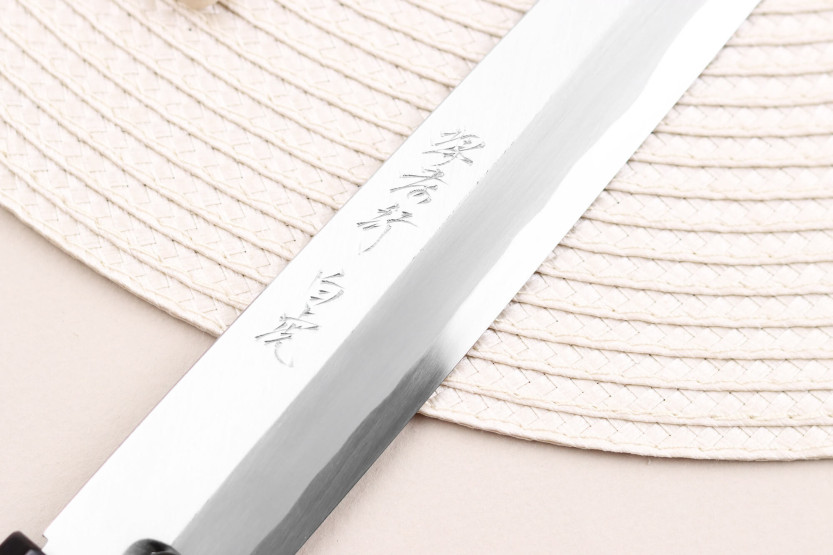
The blade has a bevelled edge, i.e. it is only sharpened on one side. This is useful for easily separating sliced food. The back of the blade has a hollow cutting edge that prevents food from sticking, by facilitating air circulation.
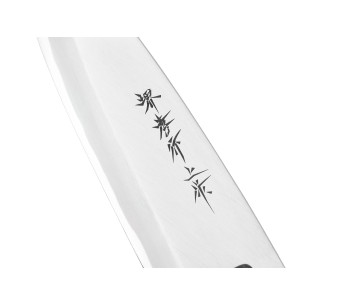
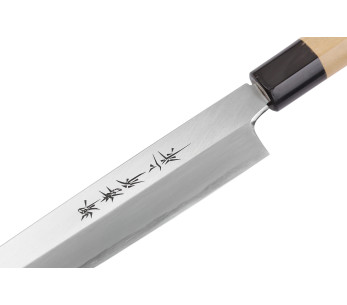
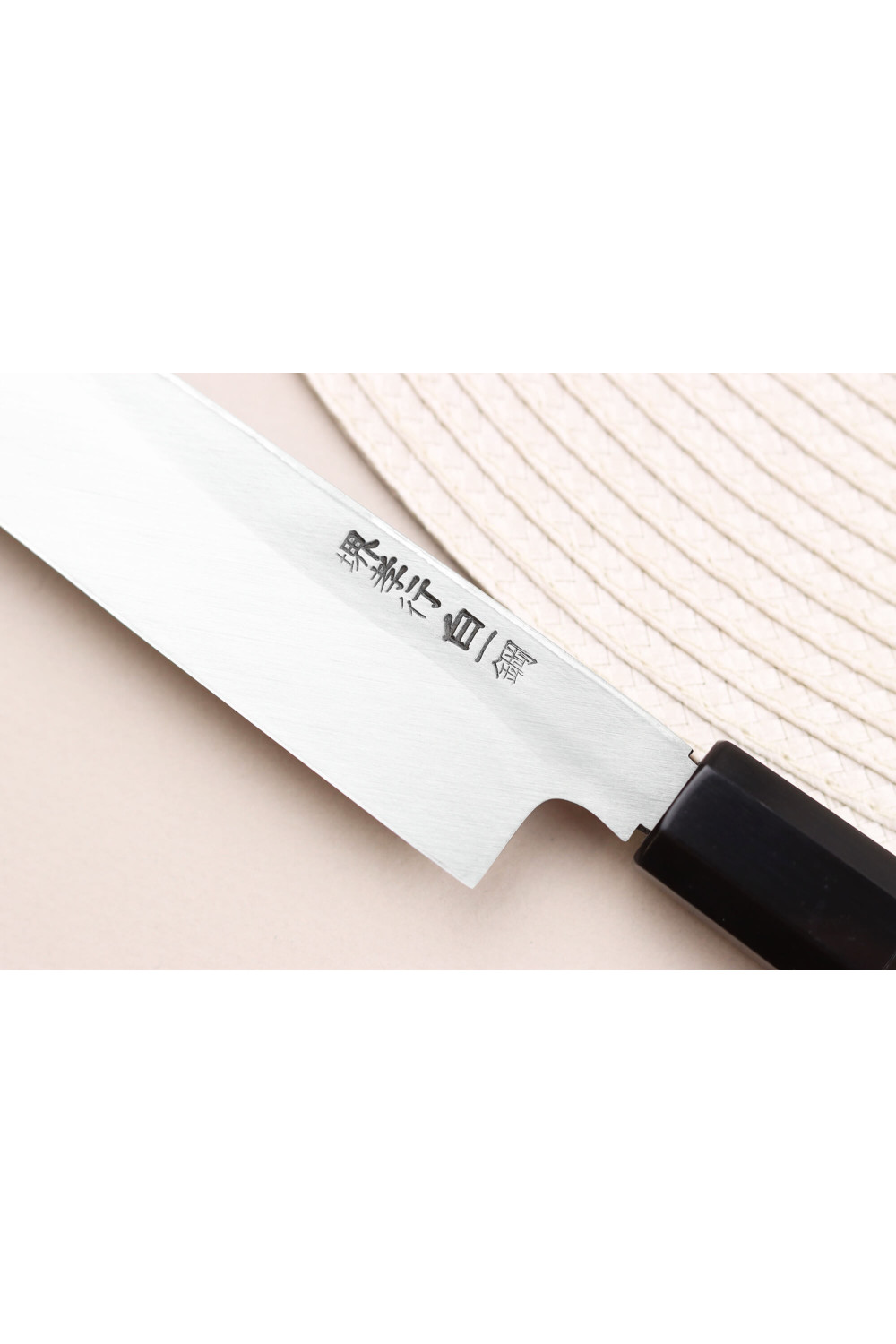
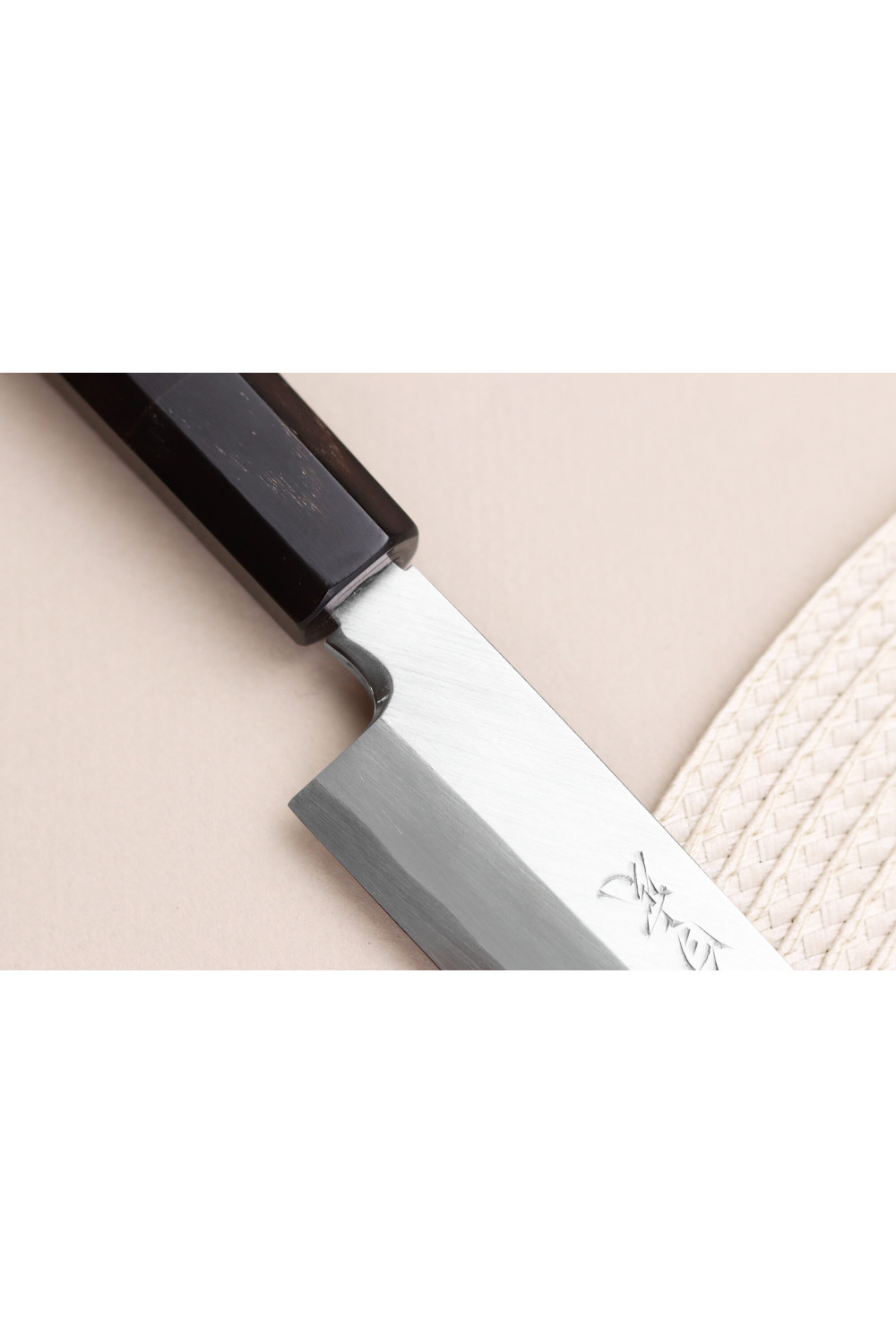
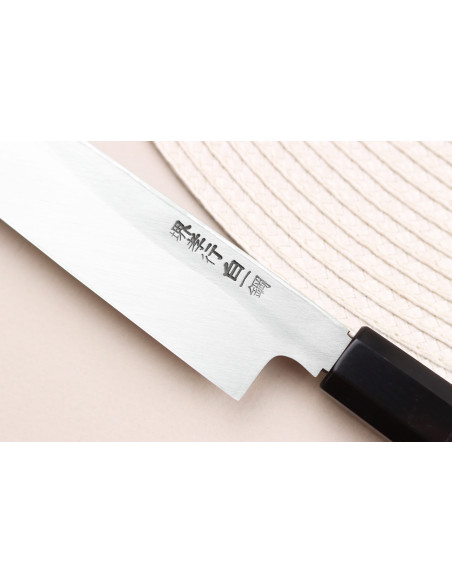
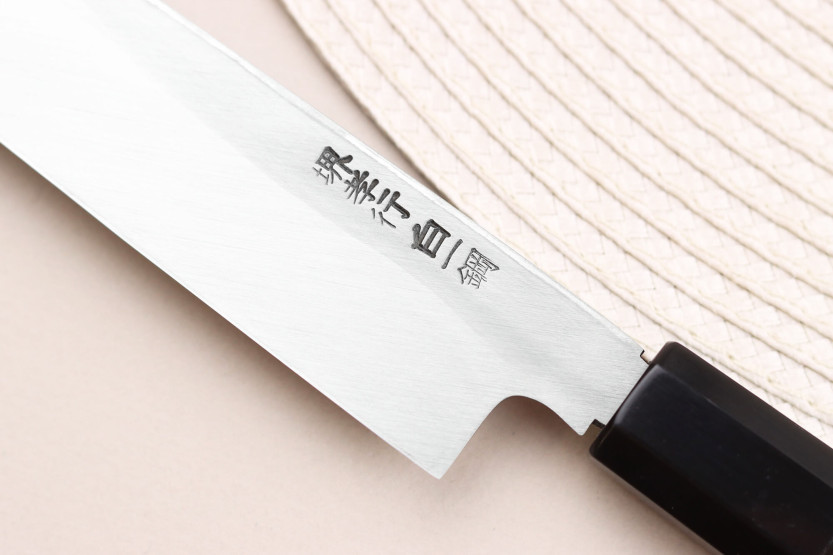
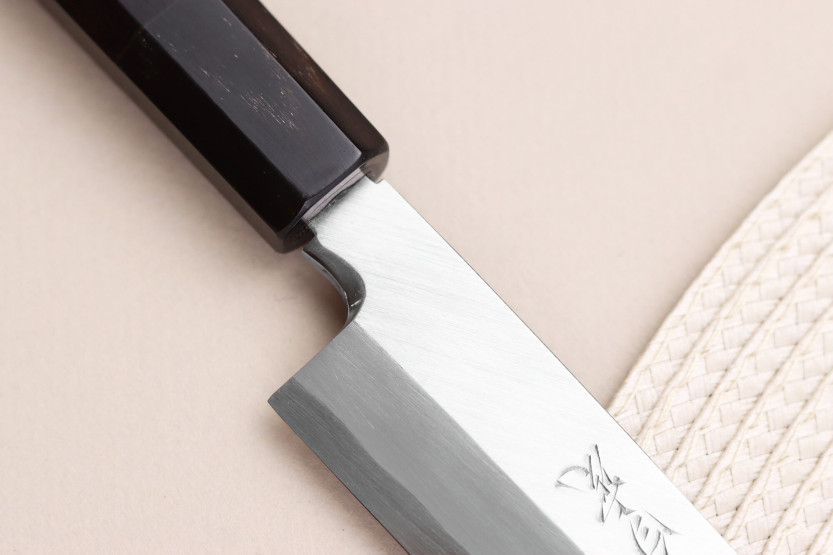
Kanji are engraved on the top of the blade as well as on its back, adding character to this high-quality blade. One of the kanji on the back of the blade is written 白虎, Byakko in Japanese, and means "White Tiger". This echoes the name of the range from which the knife comes.
Precious ebony handle
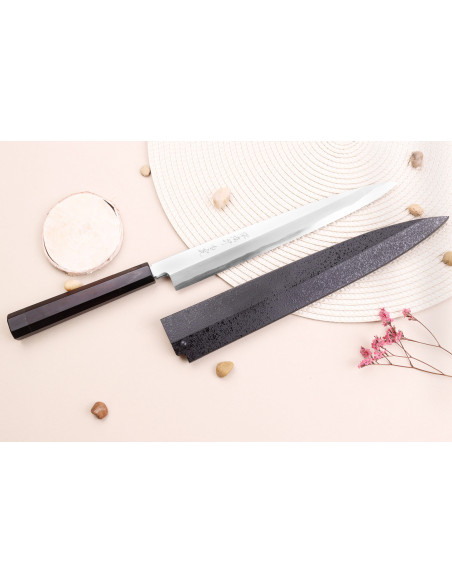
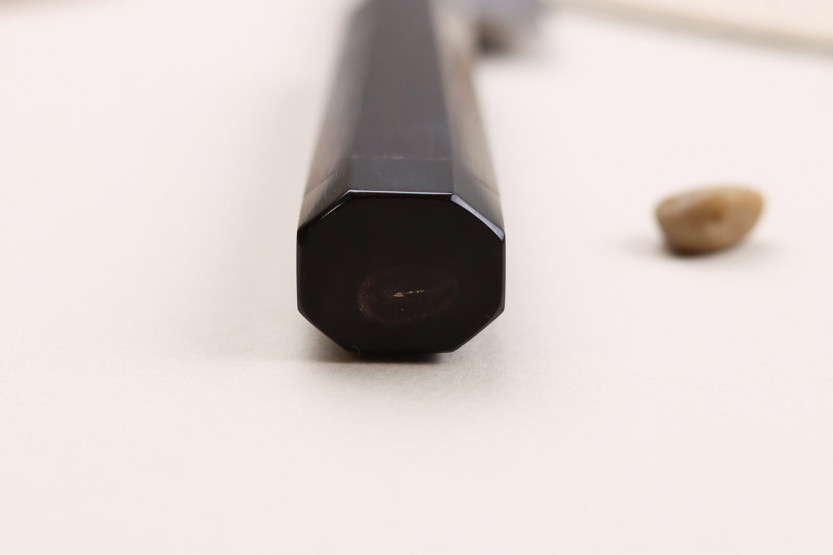
This handcrafted knife features a handle made from ebony wood, a precious tropical species that can be recognized by its dark brown, almost black color. Ebony is a very dense wood, making it resistant to the risk of cracking, and its long durability makes it ideal for regular, even daily use in the kitchen.
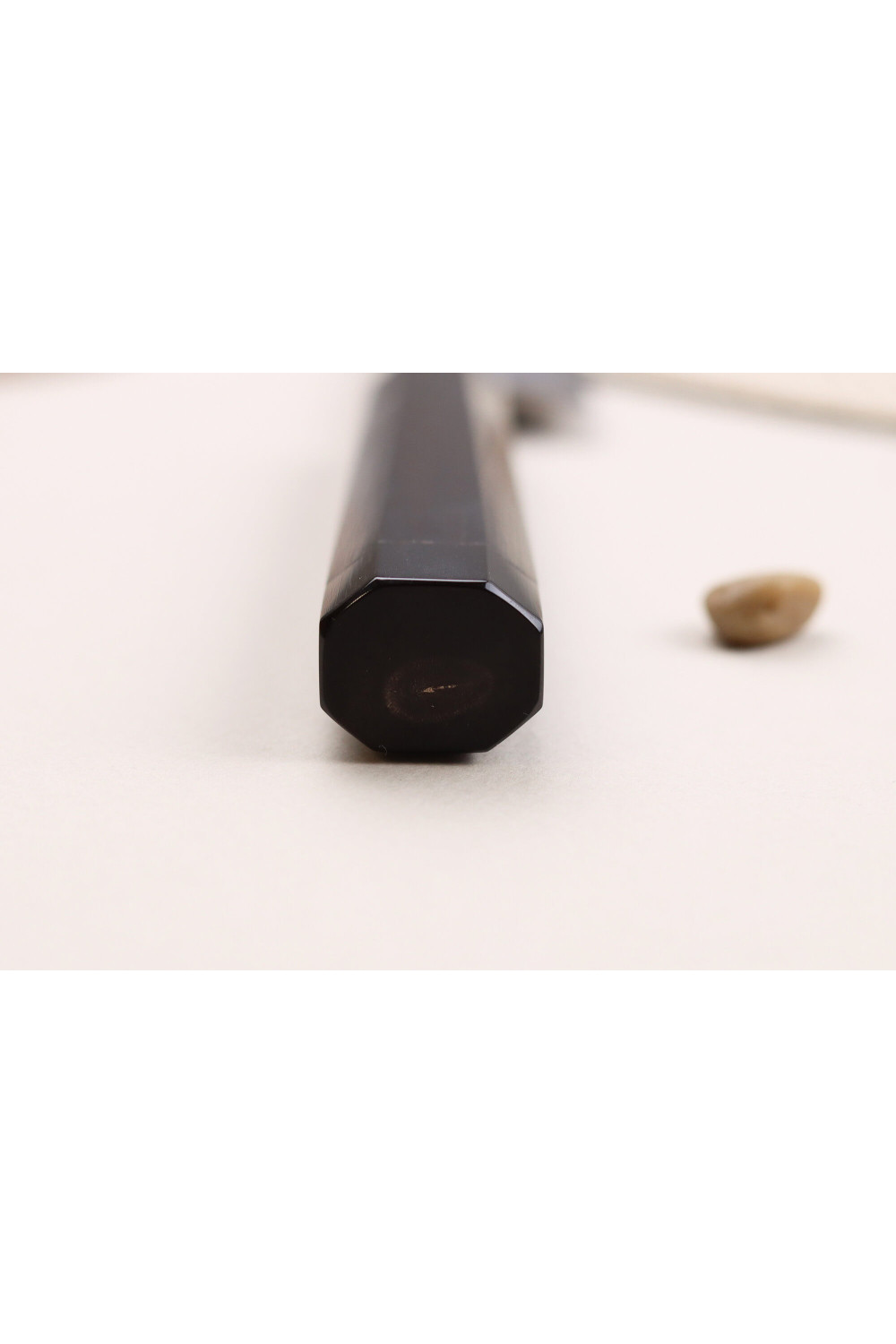
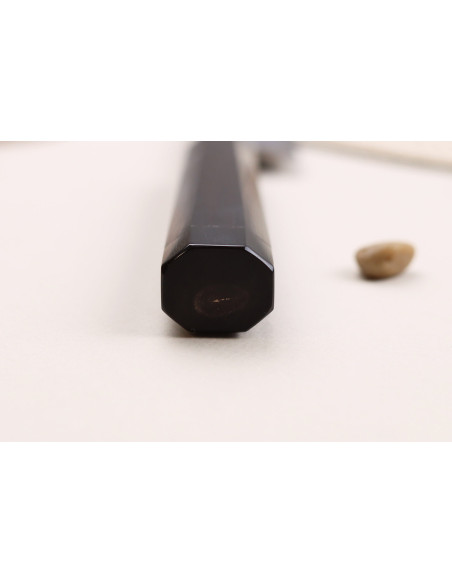
The handle is octagonal in shape, making it ideal for long use. In fact, with this shape you won't feel the fatigue associated with prolonged cutting.
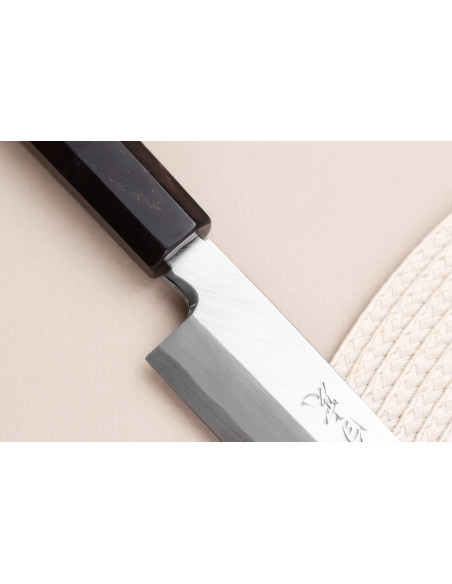
The warm, deep shades of ebony are delicately combined with a Bolster and base made from black buffalo horn. As horn is a living material, its appearance may differ slightly from one model to another.
Looking at the knife, you may get the impression that the blade doesn't fit properly into the handle, but this is not the case. Apparent machi is a tradition in the Sakai region, the aim of which is to perfect the knife's balance by adjusting its center of gravity.
Finally, wood paste has been added to fill the small gaps between the blade and the handle, making the whole perfectly watertight. Cutting food and cleaning water cannot get in.
This knife should be washed exclusively by hand, avoiding the dishwasher and soaking in the sink. Use mild soap and a non-abrasive sponge, taking care not to get the handle too wet. Once the knife has been washed, dry it carefully to remove all traces of moisture. Then store in a dry place.
Note that despite perfect care, the blade may change color over time: this is normal! The carbon contained in the alloy is highly reactive to elements such as the acidity of food or humidity in the air. You can apply a littlemineral oil to the blade from time to time to preserve it.
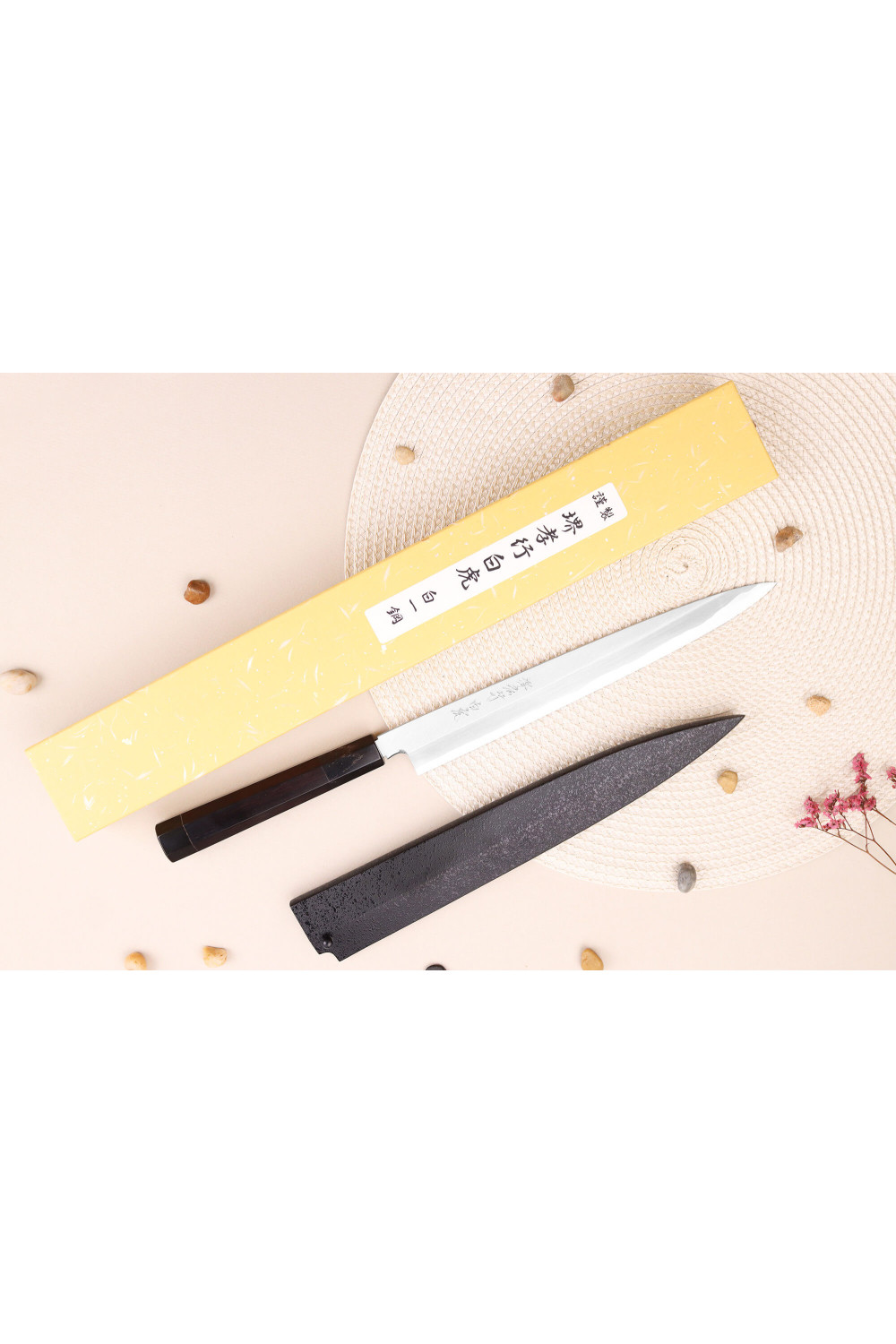
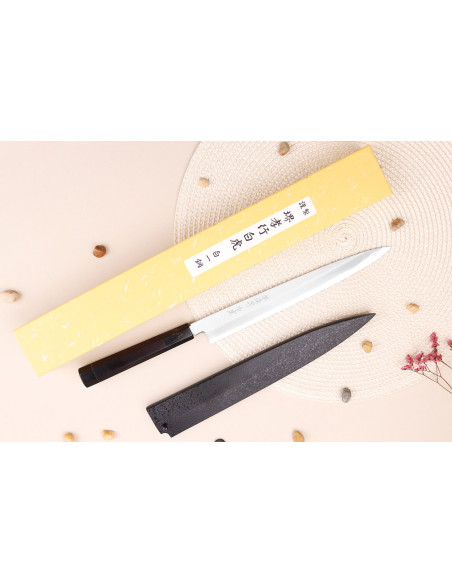
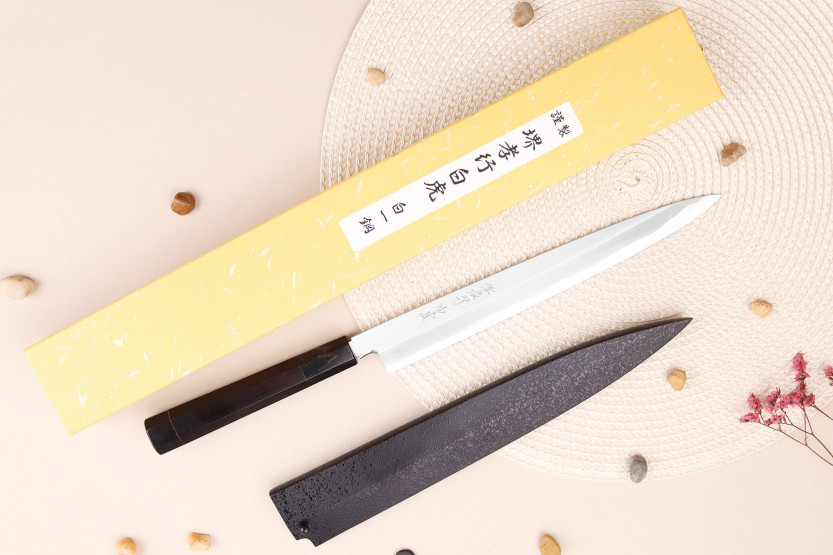
The knife comes with a protective sheath for safe storage. The blade is less reactive to external elements, while preventing injury.
Sakai Takayuki knives are waiting for you on KnifeLeader.eu!




 By buying this product you can collect up to