A San Maï blade with Shirogami steel core #1
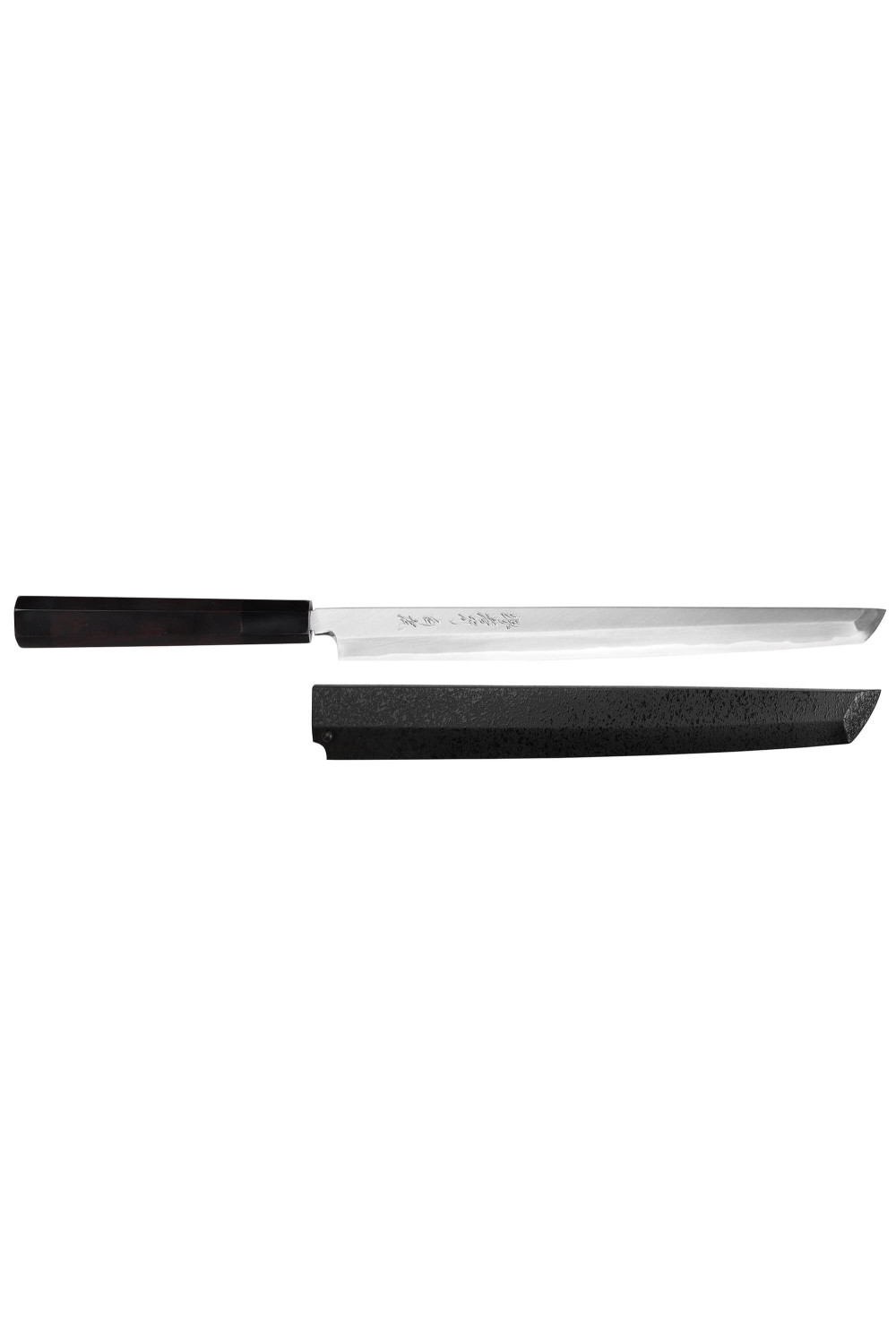
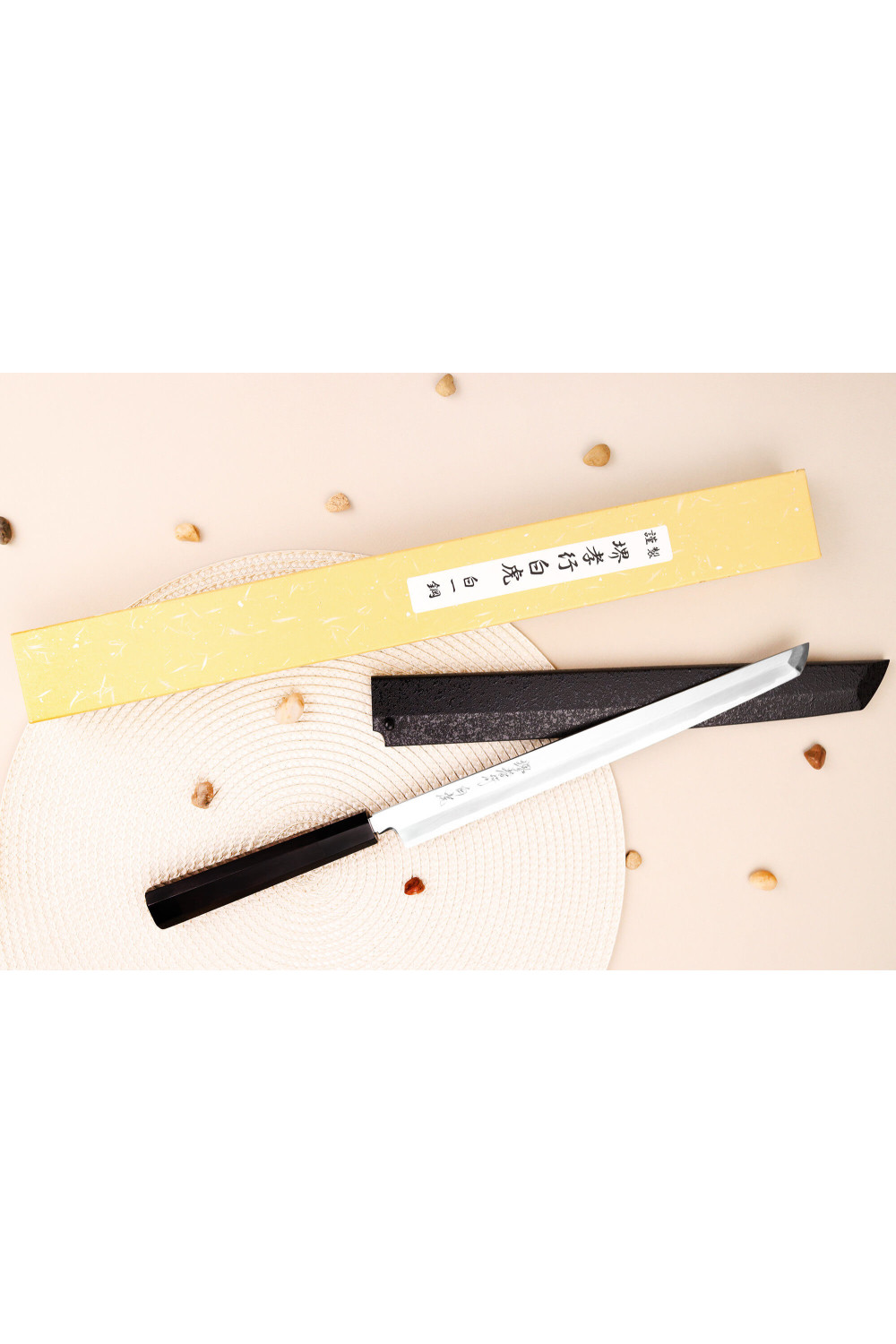
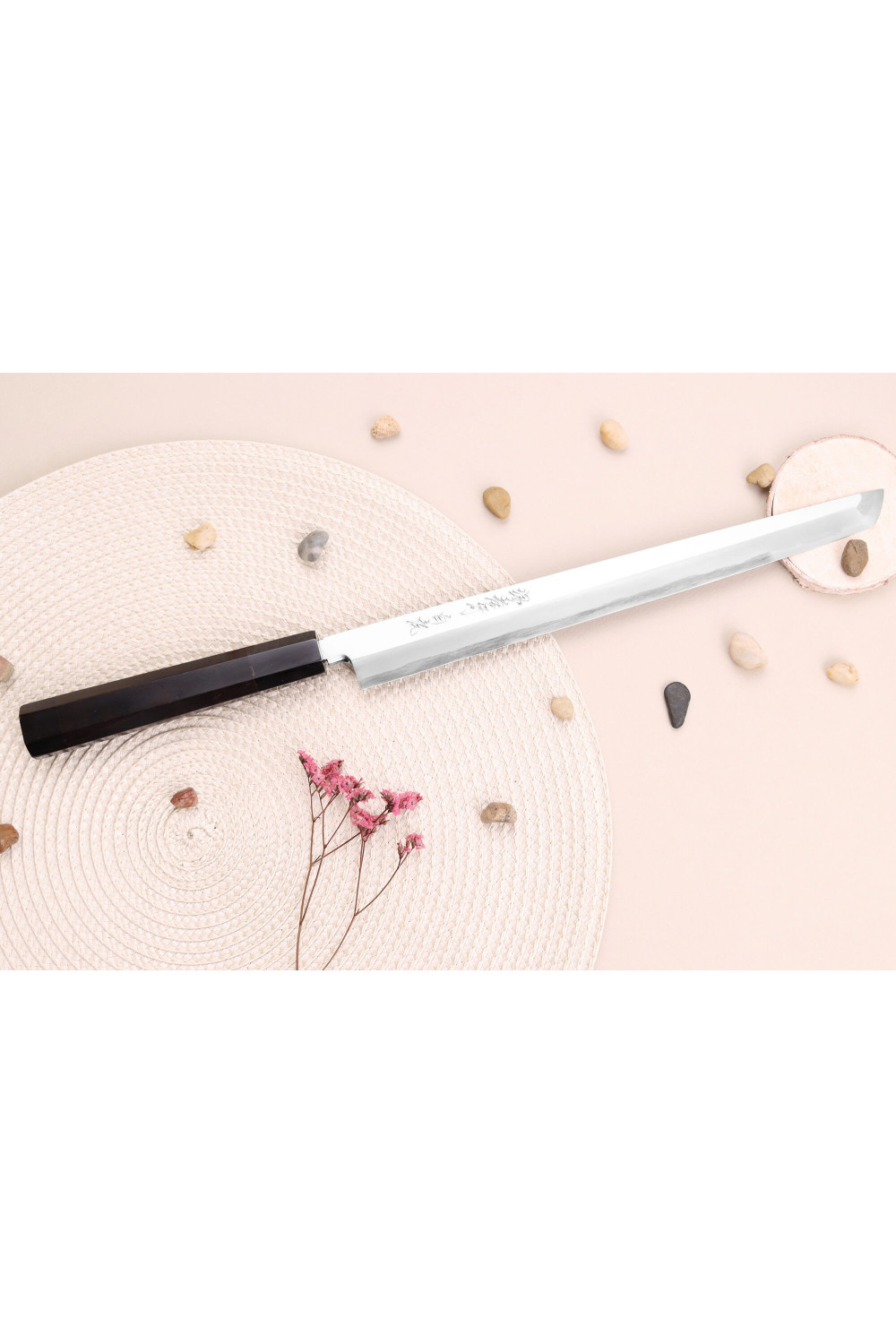
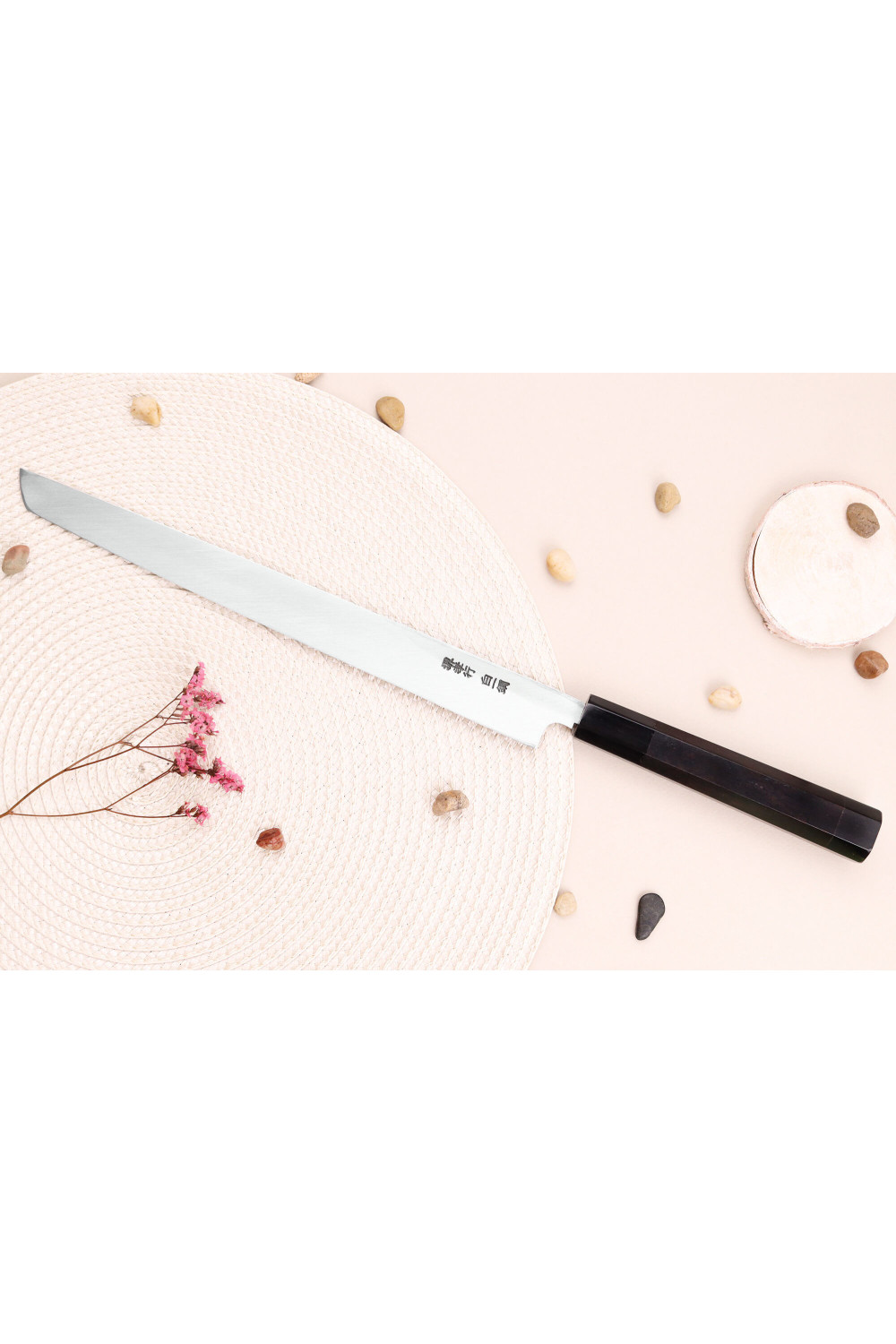
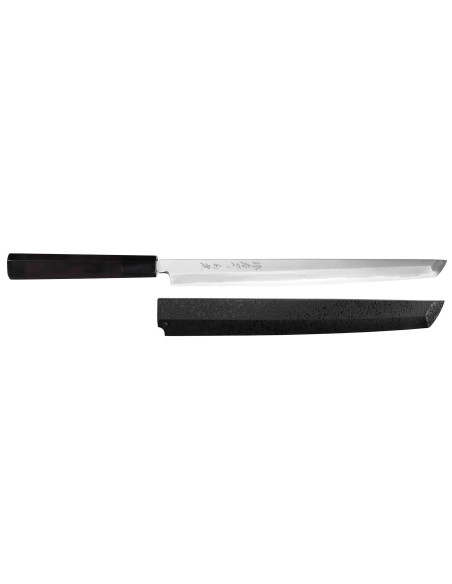
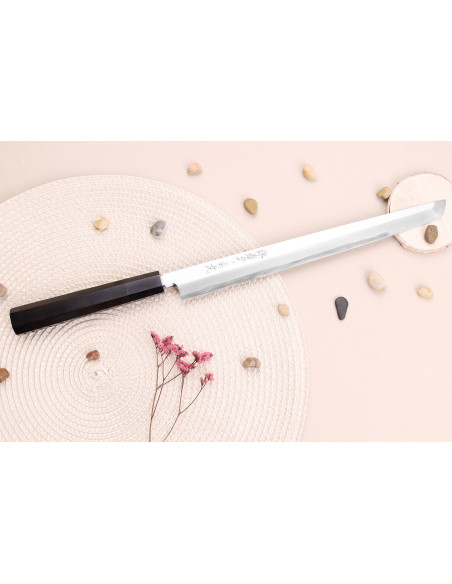
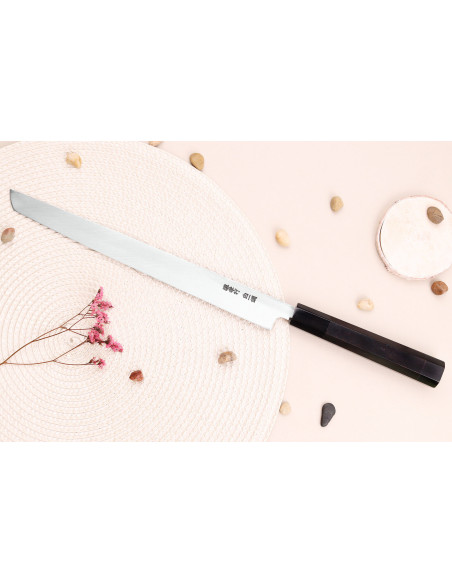
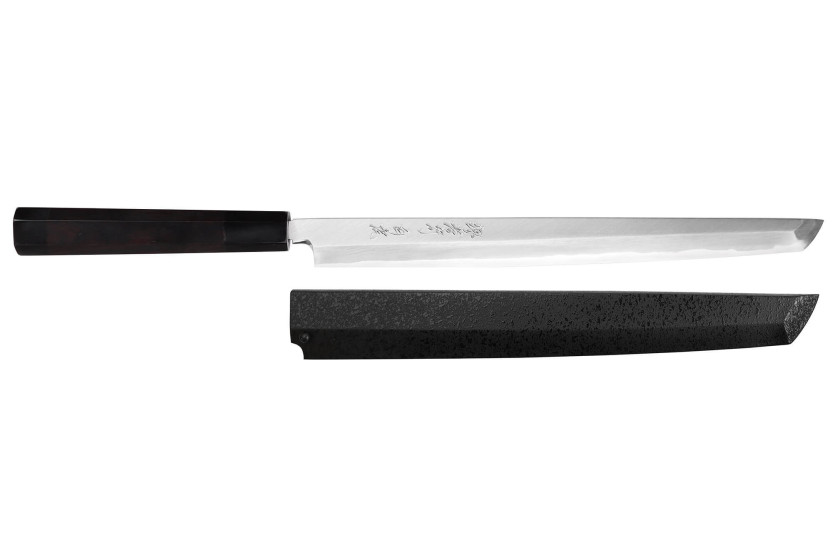
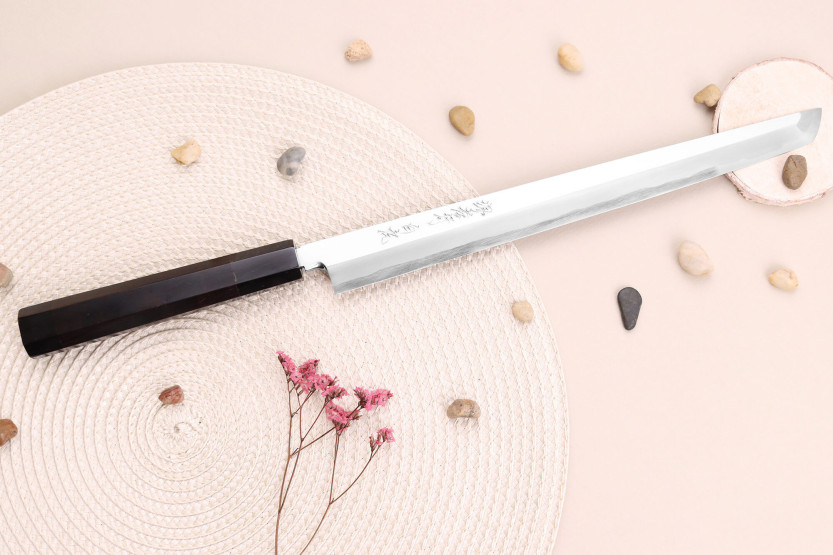
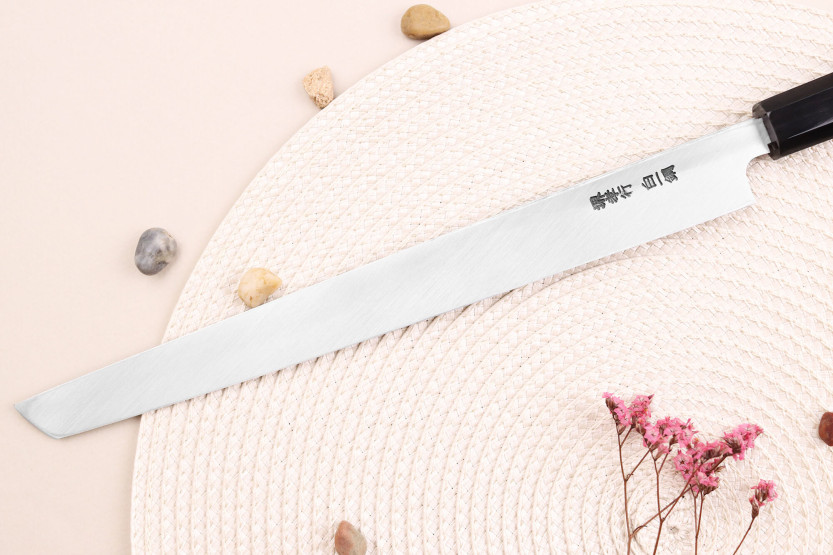
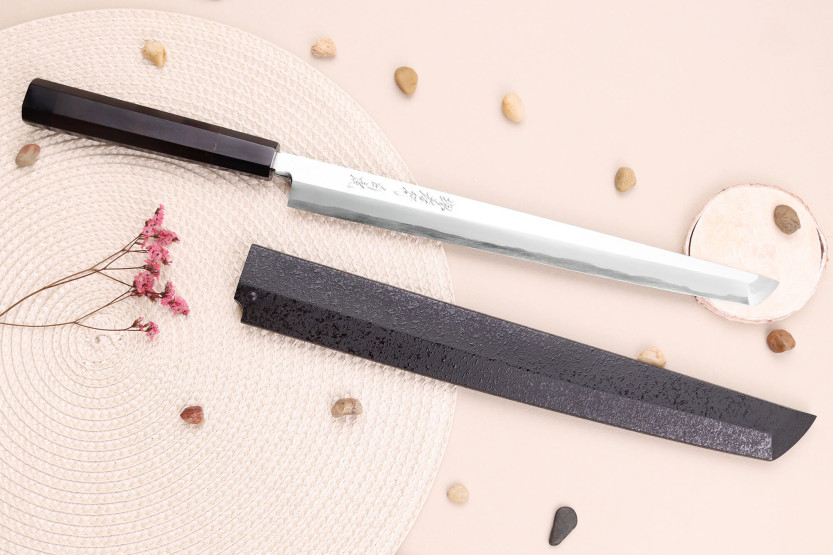
The Sakai Takyuki Byakko 27cm sakimaru takohiki knife features a blade structure called San Maï, which means "3 layers" in Japanese. It consists of a core made of rigid steel, which is then surrounded by a layer of slightly softer steel, sandwiching it. All 3 layers are present, giving the blade ideal balance while protecting the core.
The core of this knife is made from Shirogami #1 steel (also known as White Steel #1), a high-end Japanese alloy developed by the world-famous Hitachi steelworks. "Shiro" means white and "gami" means steel, and the alloy is so named because of the white paper that surrounds it. It's an alloy much favored by cooks with traditional values, because the steel is made directly in Japan, and only the finest blacksmiths work with it. They love to use it because it's easy to shape and handle.
This top-of-the-range alloy is enriched not only with iron ore, but also with almost 1.2% carbon. These elements play a key role in the hardness of an alloy. Shirogami #1 has a hardness of 62 HRC Rockwell, which means it can withstand more severe sharpening than other steels. The blade has a sharp, long-lasting edge, cuts cleanly when first used, and sharpening sessions are spaced out. Moreover, sharpening is easy to perform whenever the need arises.
Another interesting fact is the microscopic structure of the alloy. It is very homogeneous, allowing us to see the micro-carbides evenly distributed on its surface. The purity of this steel's composition ensures greater resistance to splintering.
Next, a layer of softer steel sandwiches the Shirogami #1 core on either side. This layer balances the high rigidity of the core while protecting it, so that the blade is more resistant to the micro-shocks encountered when cutting. Mild steel adds flexibility to the core. We're not talking about flexibility here, but rather versatility. Indeed, the harder a steel is, the more sensitive it is to breakage. The San Maï design corrects this.
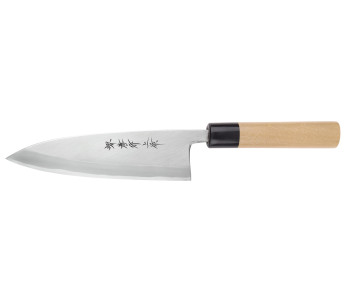
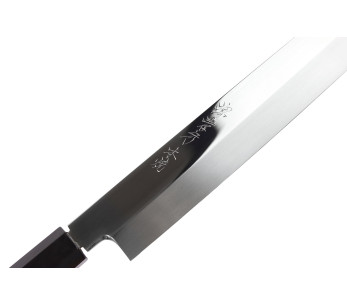
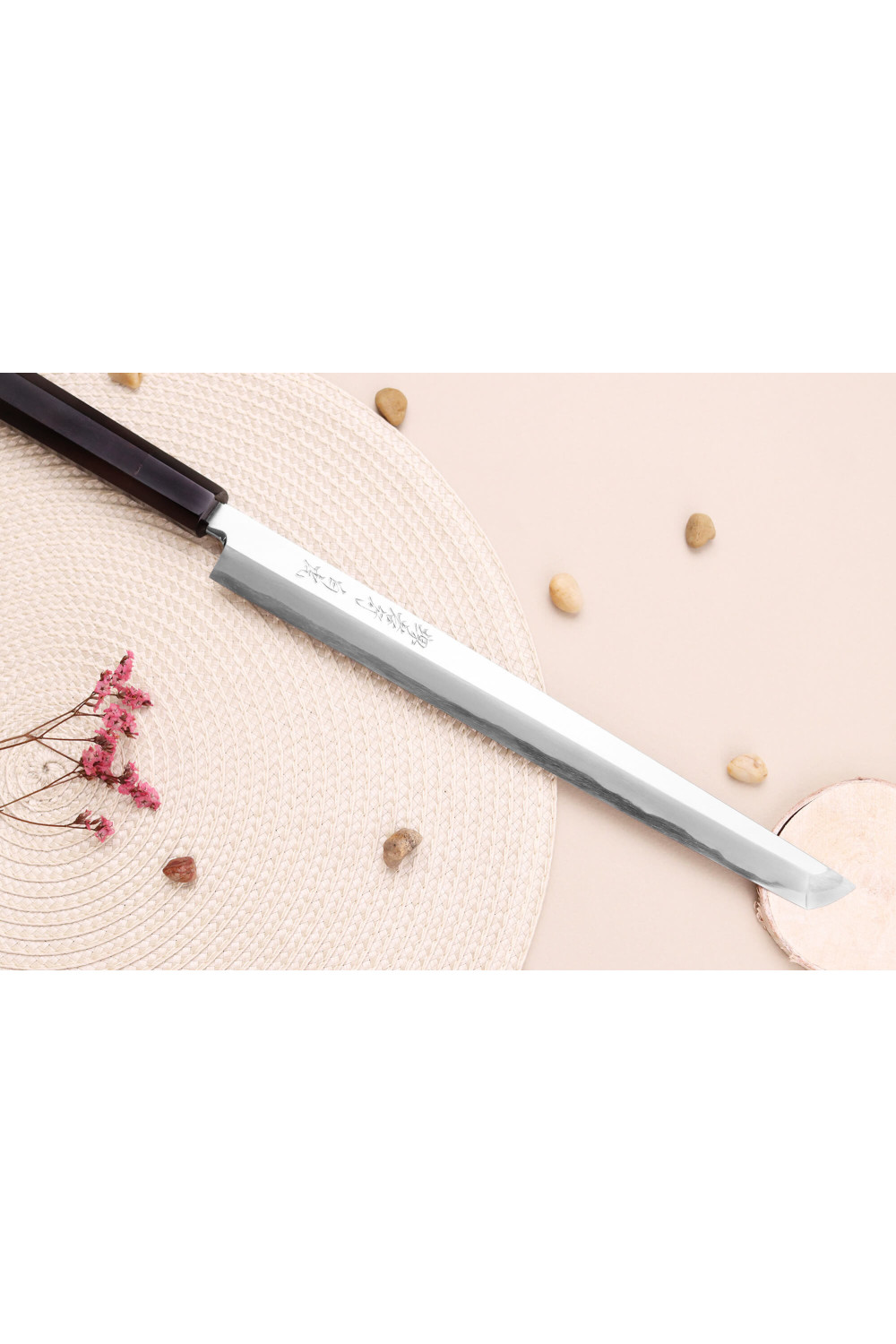
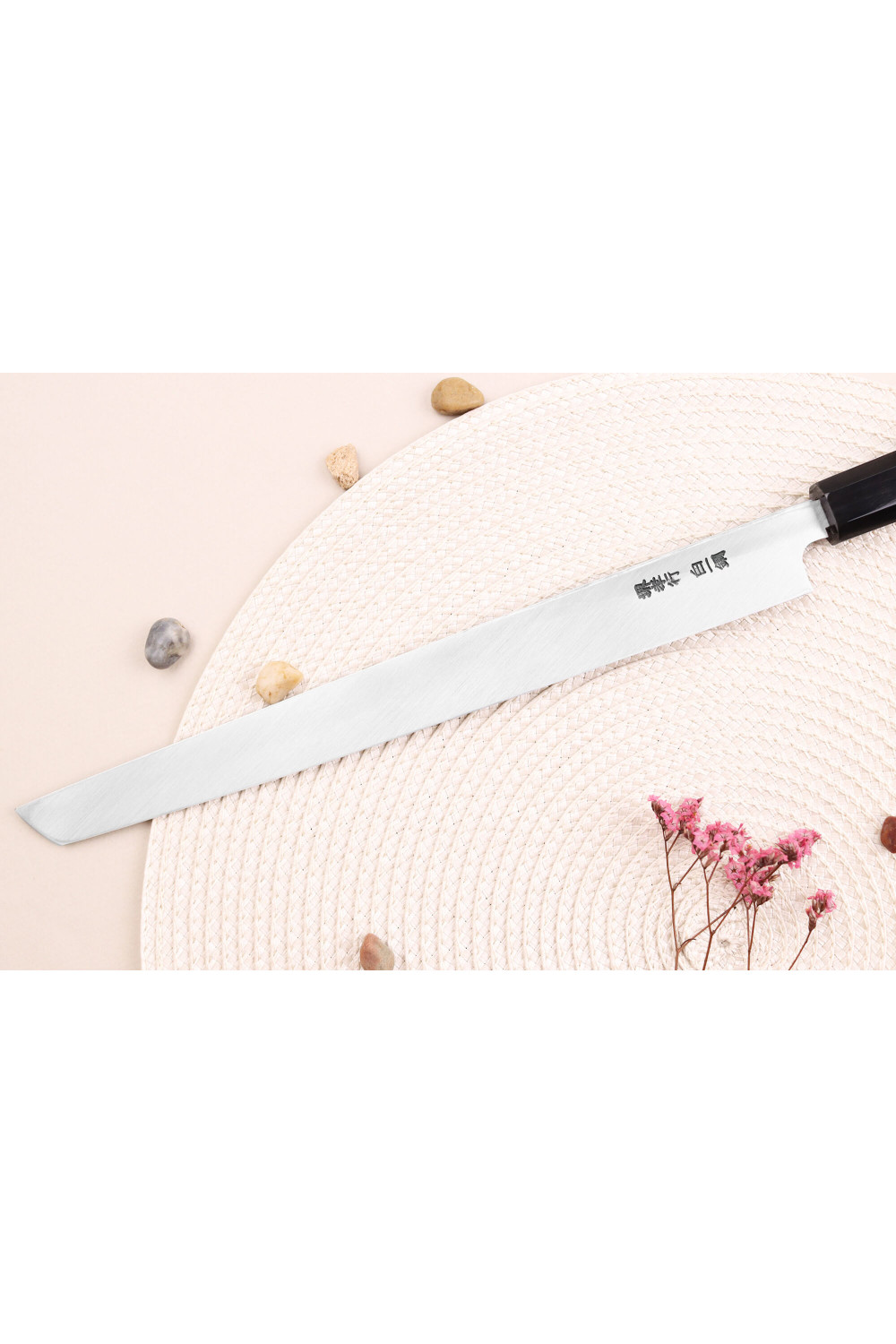
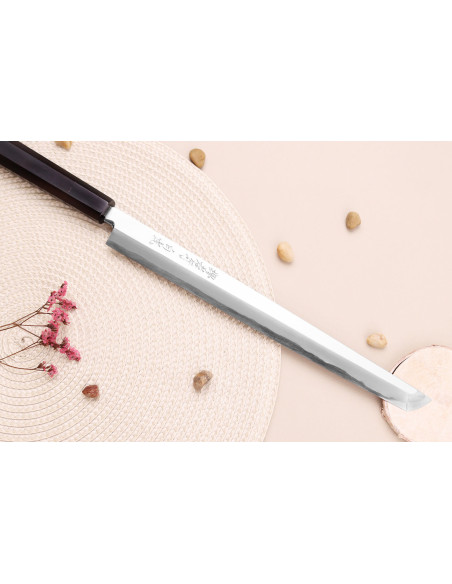
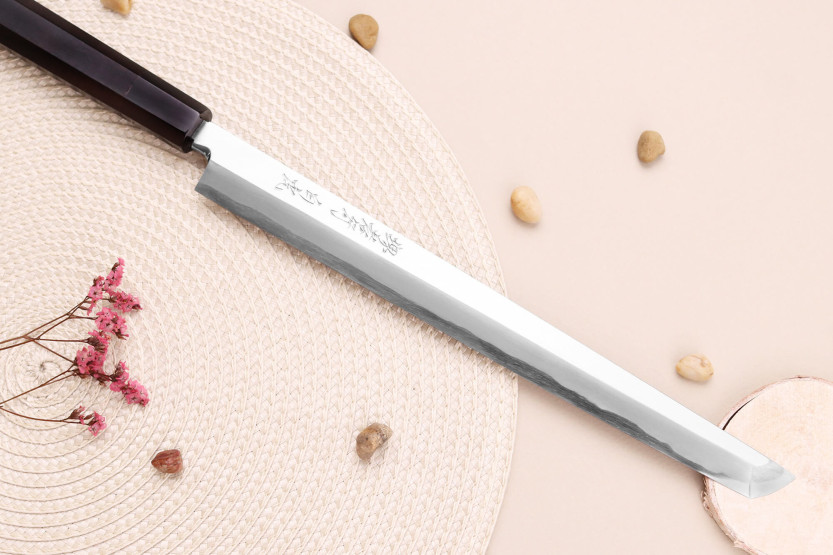
The blade has been sharpened on one side only, and features a bevelled cutting edge. This makes it easy to remove slices of cut food. The back of the blade also has a hollow cutting edge that allows air to circulate, making it easier to loosen food.
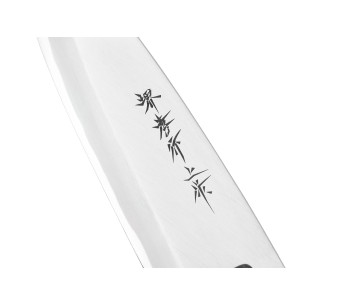
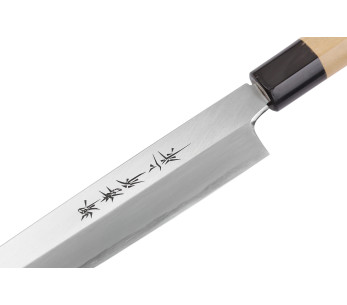
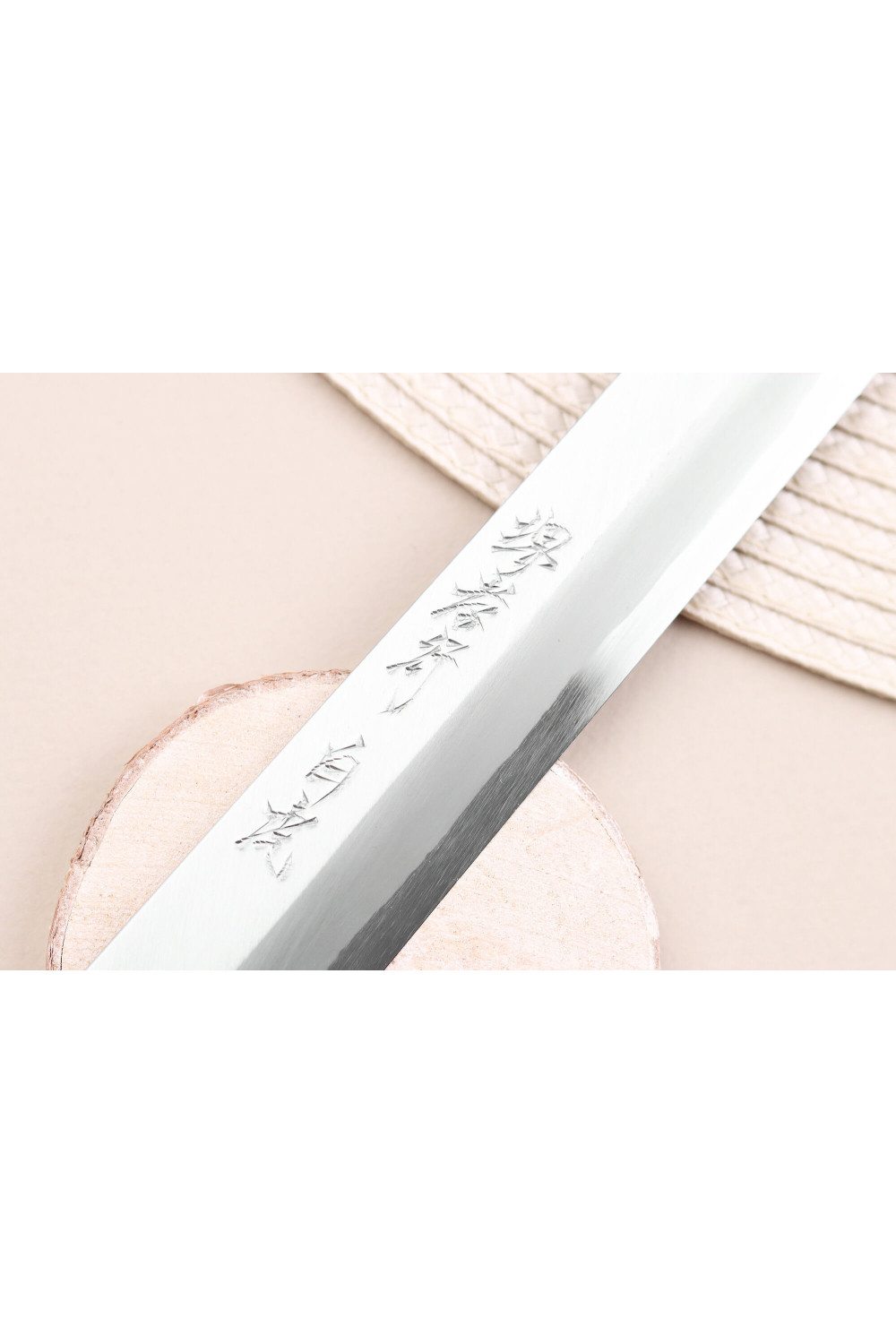
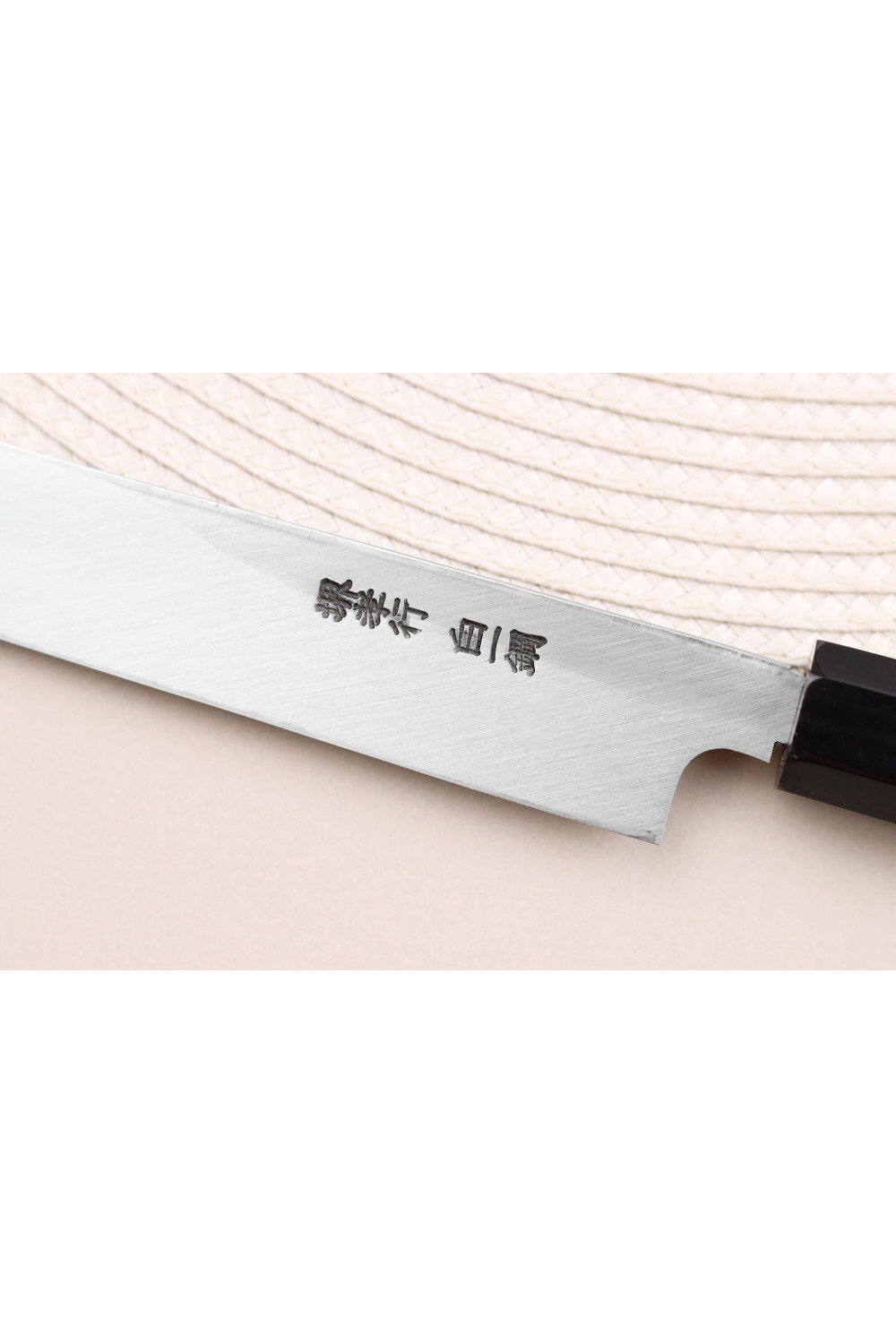
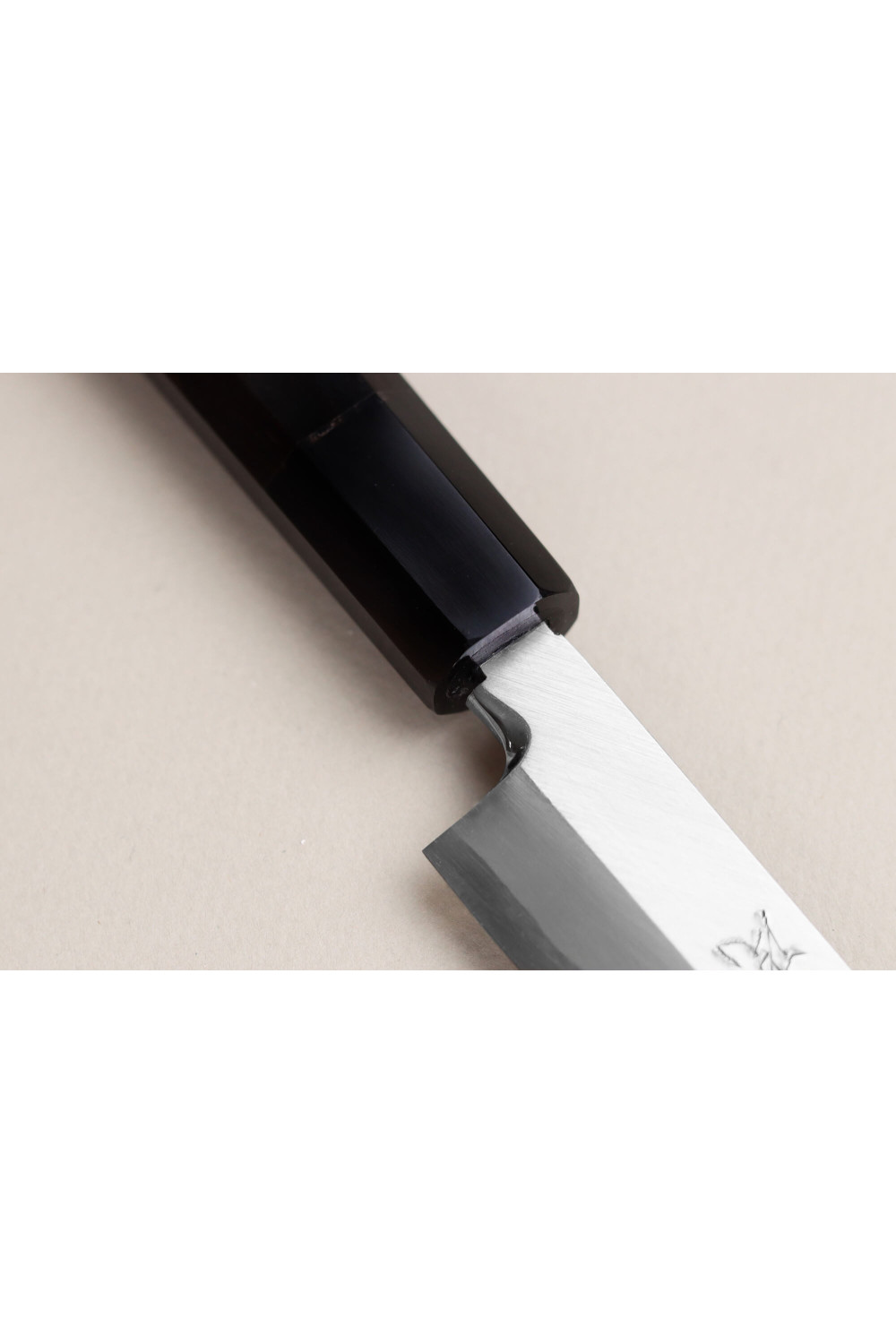
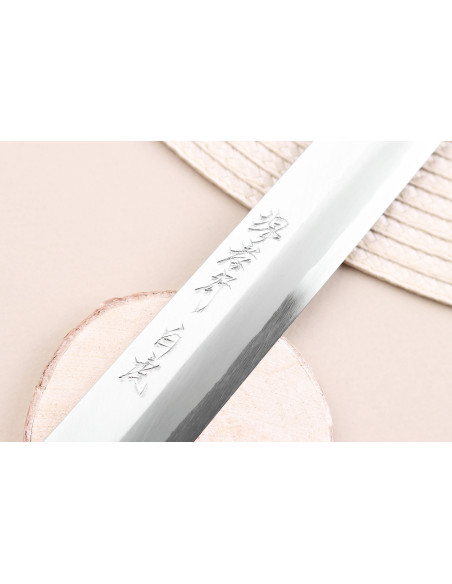
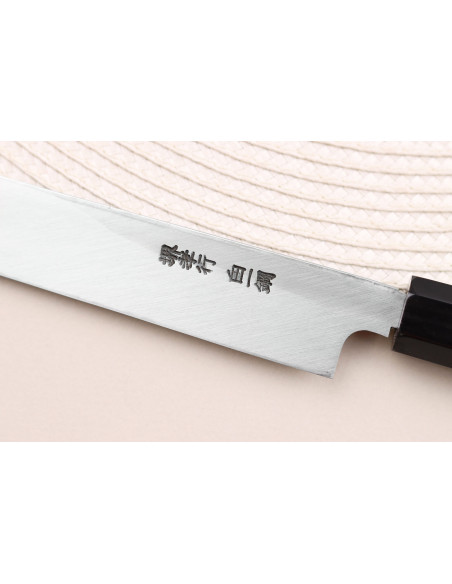
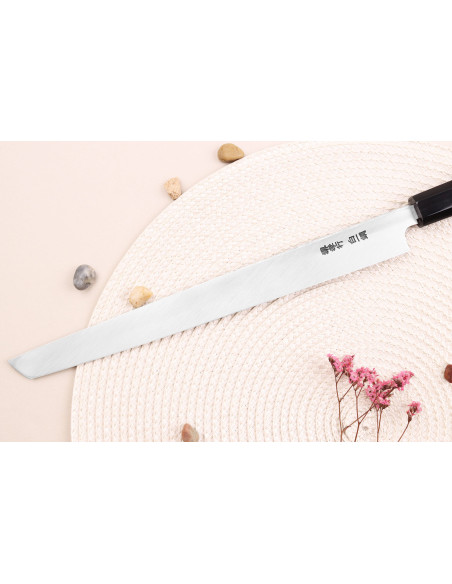
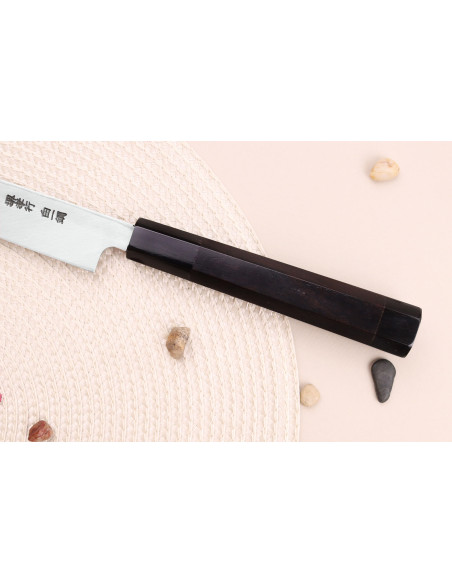
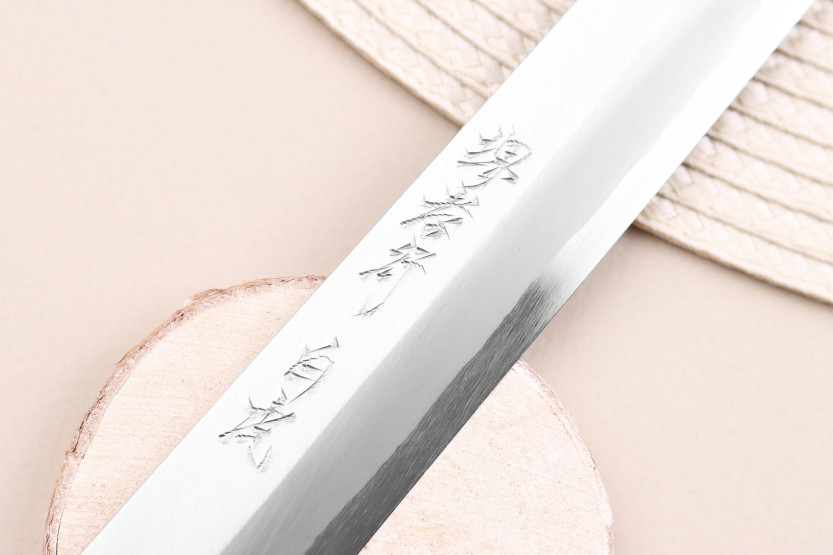
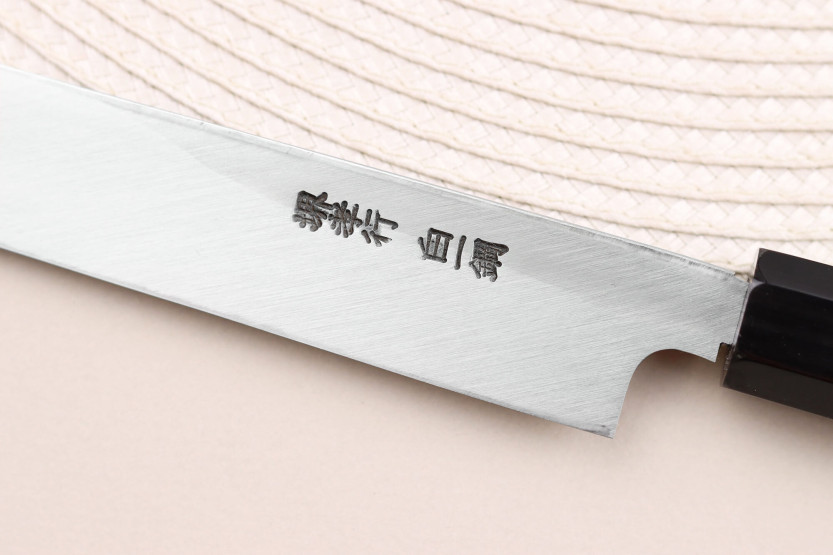
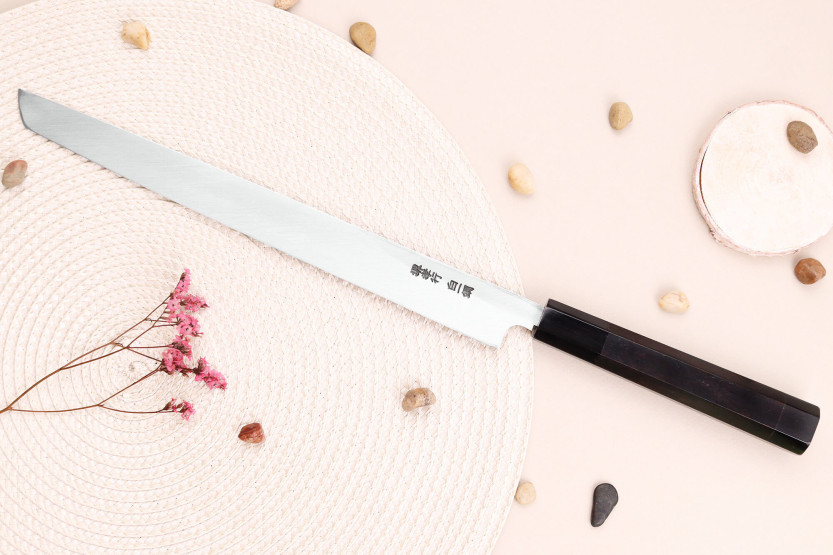
You can also see kanji engraved on both sides of the blade, accentuating its traditional character. One of them on the back is written 白虎, which reads Byakko in Japanese. It can be translated as White Tiger and refers to the name of the range from which this knife comes.
A Japanese knife with a high-end ebony handle
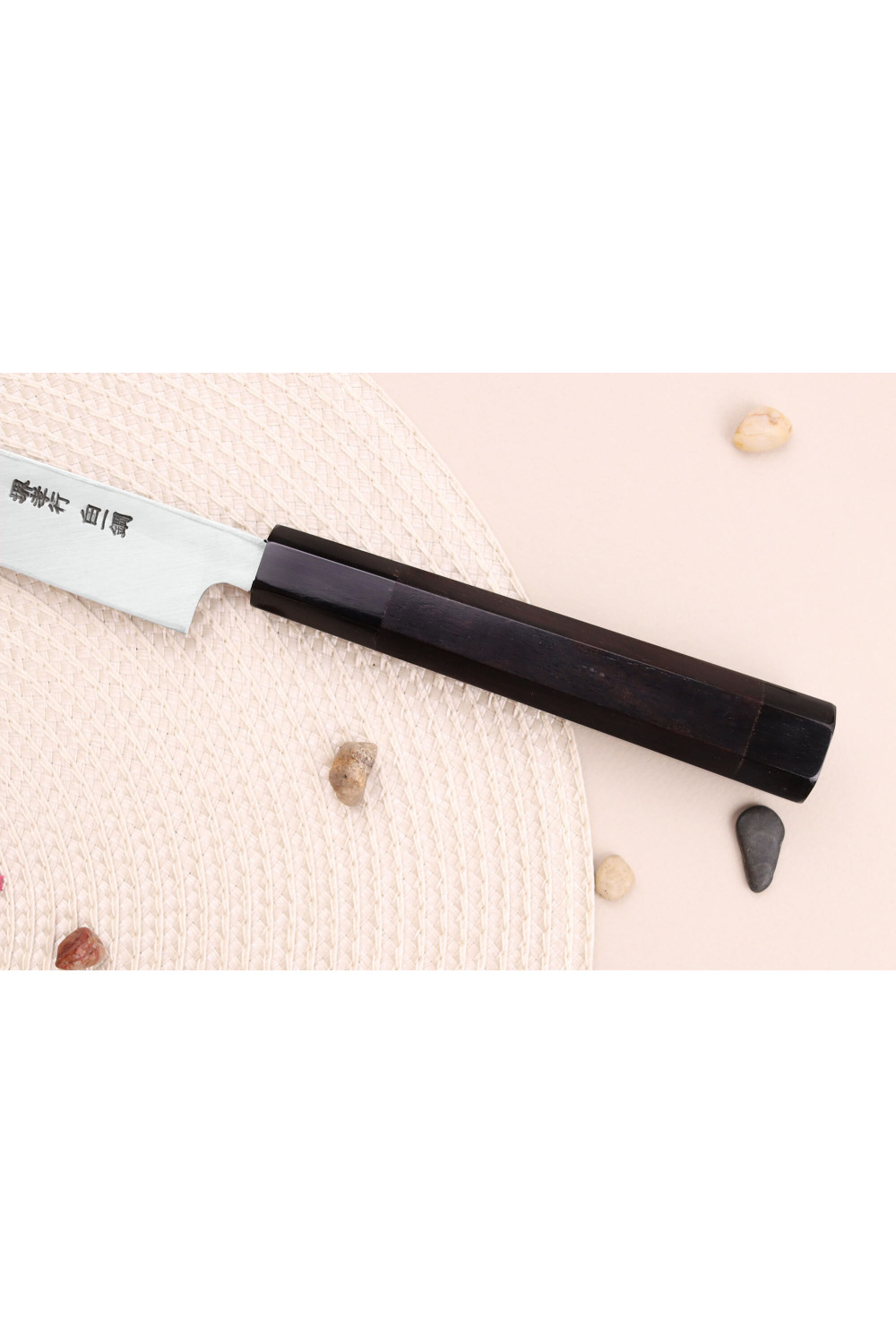
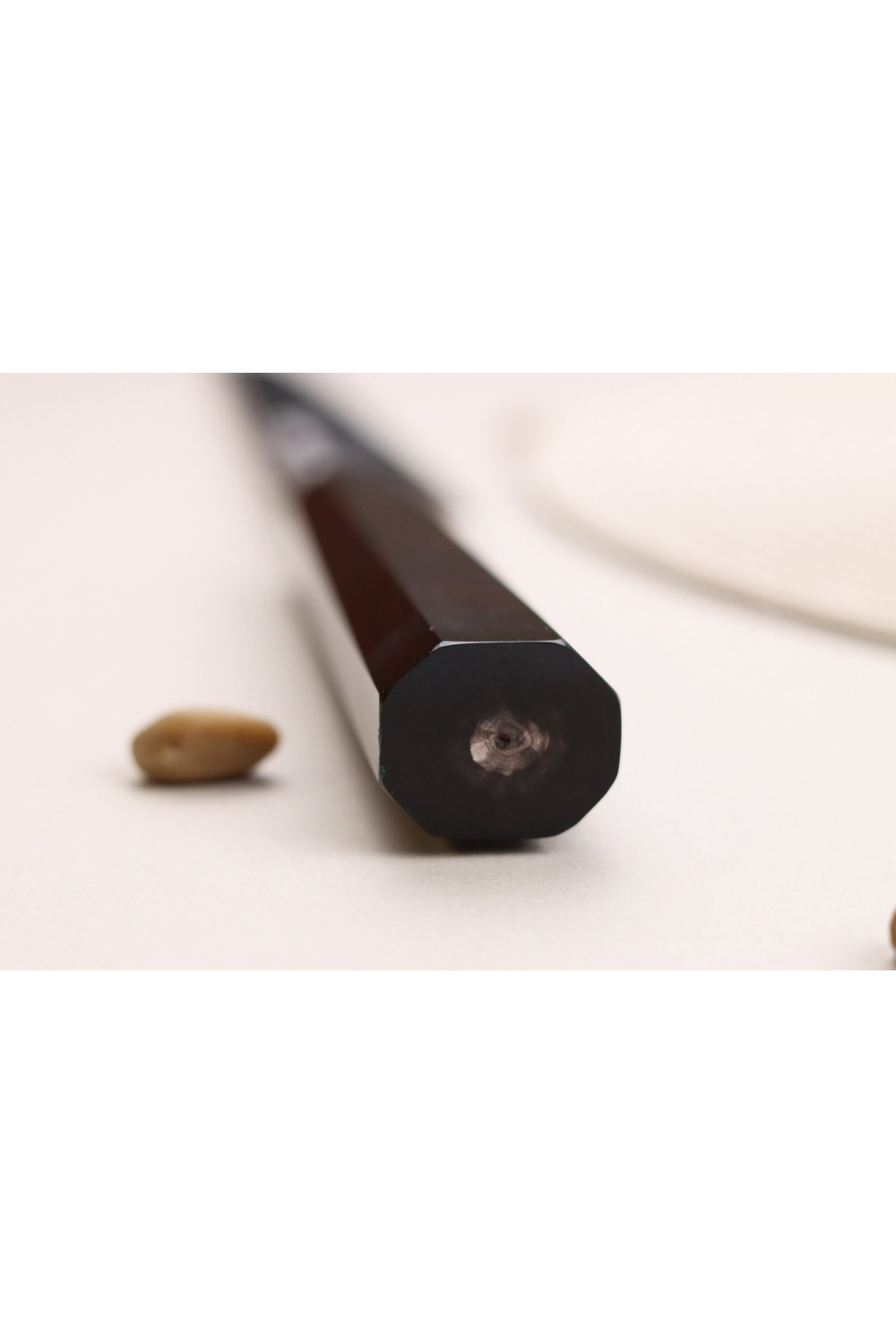
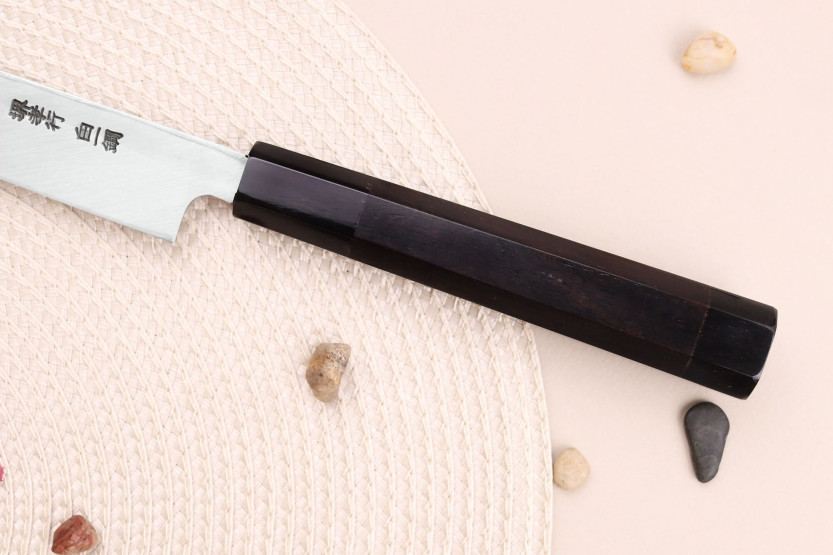
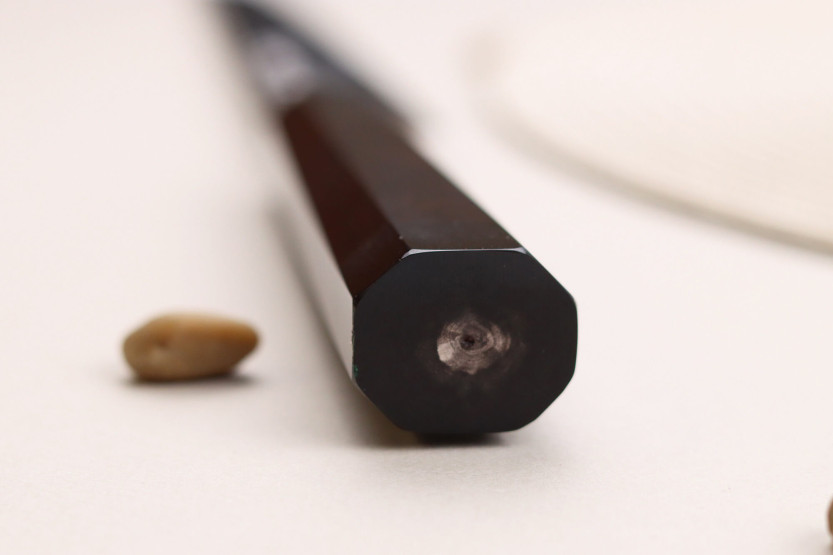
This handcrafted knife has a handle made from ebony, a precious tropical wood easily recognized by its very dark brown, almost black, color. It is a very dense, robust species that resists the risk of cracking. Ebony's durability makes it ideal for regular, even daily use in the kitchen.
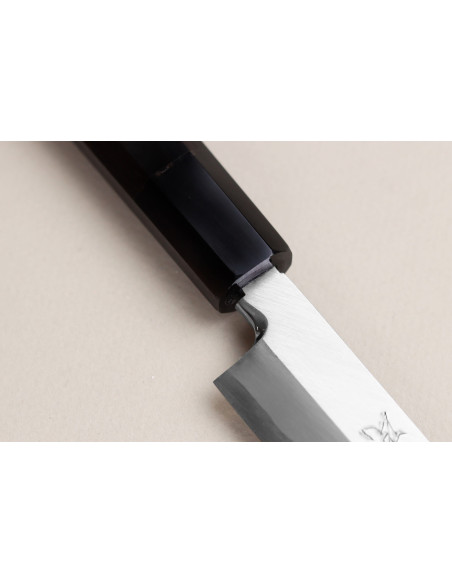
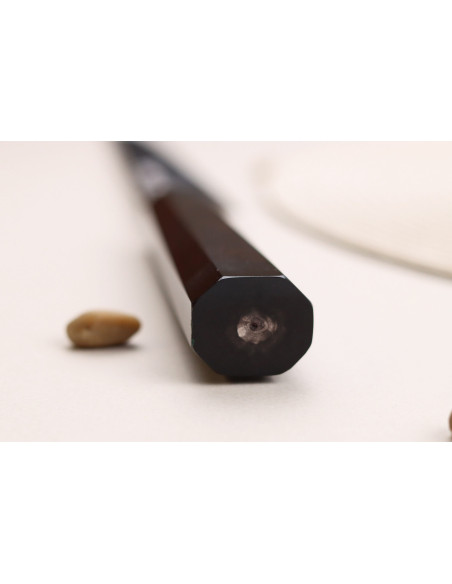
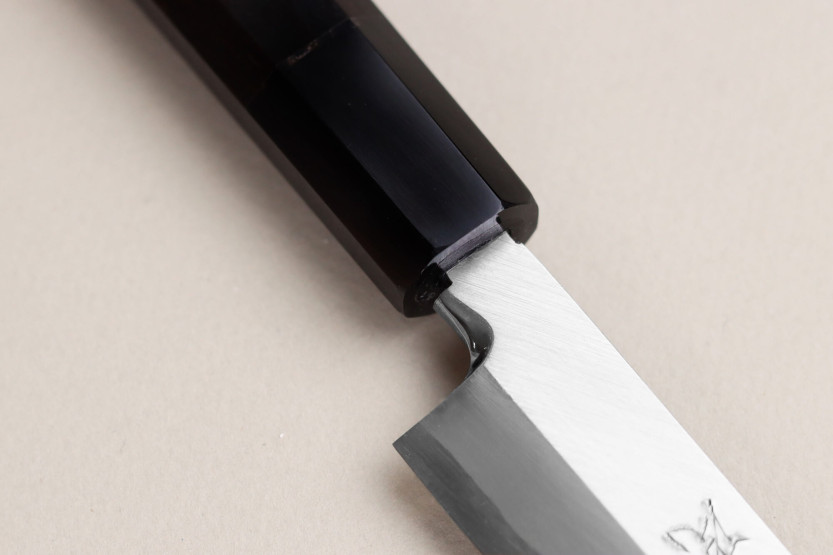
The ebony's deep, warm tones are highlighted by a bolster and base both made from black buffalo horn. Horn is a living material whose aesthetics may differ slightly from one knife to another.
The octagonal shape of the handle gives you a perfect grip and great comfort, especially when cutting intensively. This shape reduces the risk of fatigue associated with long cutting sessions.
The blade gives the impression of not fitting fully into the handle, but this is deliberate. Leaving the machi exposed is a tradition in the Sakai region, and by playing with the knife's center of gravity, it gives it ideal balance.
Finally, the space where the blade fits into the handle is filled with wood pulp to make it watertight. This prevents water and cut food from slipping inside.
Your Japanese knife must be washed by hand, not soaked in the sink or put in the dishwasher. Wash it with a non-abrasive sponge and mild soap, taking care not to get the wooden handle wet. As soon as the knife has been washed, dry it immediately and thoroughly to remove all traces of moisture, so that it can be stored in a dry place.
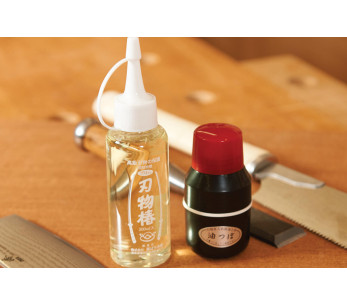
Please note that even if you follow these care instructions, the blade may change color slightly over time: this is perfectly normal! It contains a high level of carbon, which naturally reacts to the humidity and acidity of food... To preserve the blade, you can apply a littlemineral oil from time to time.
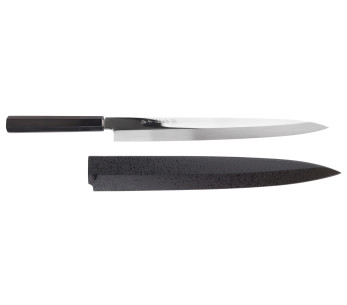
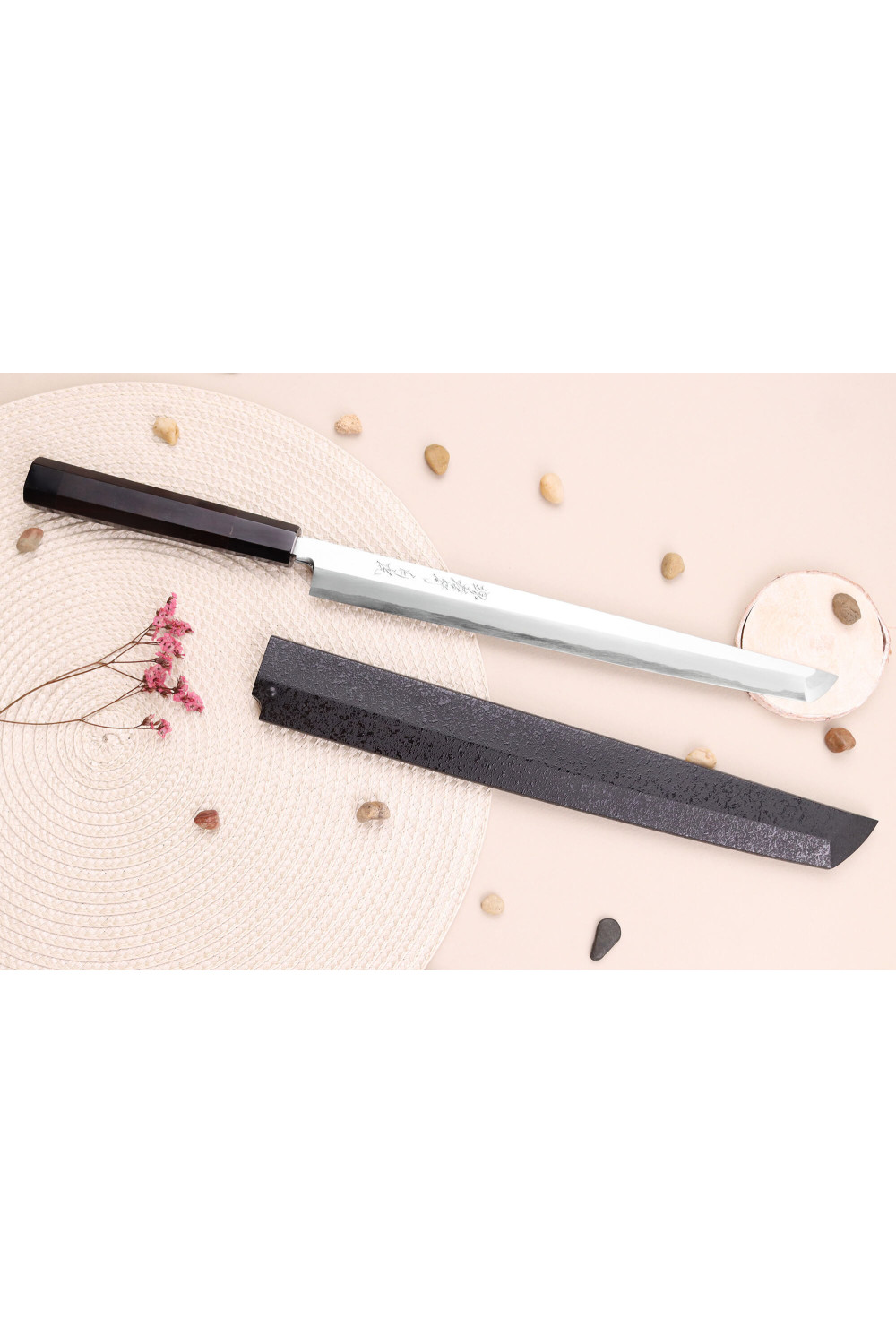
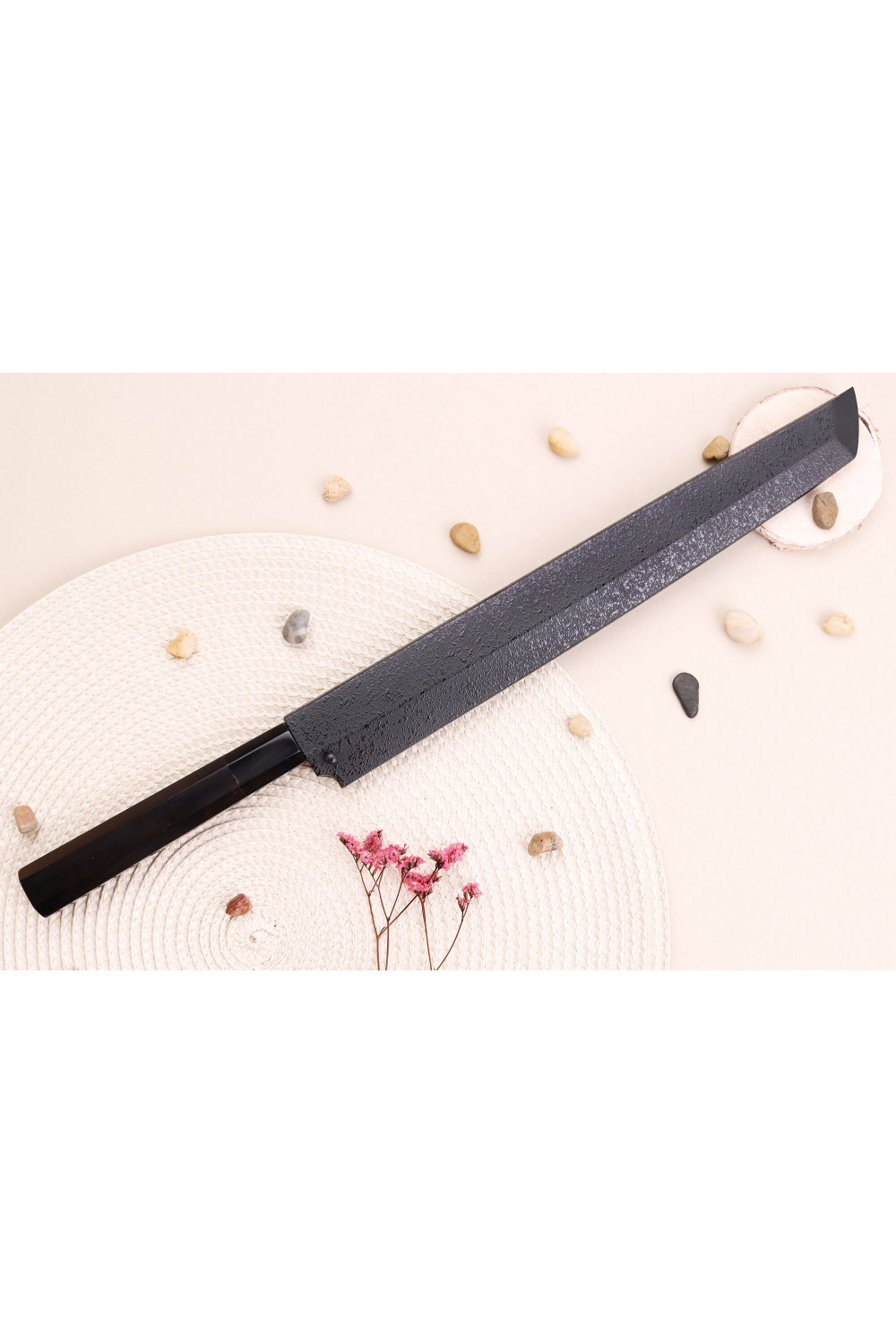
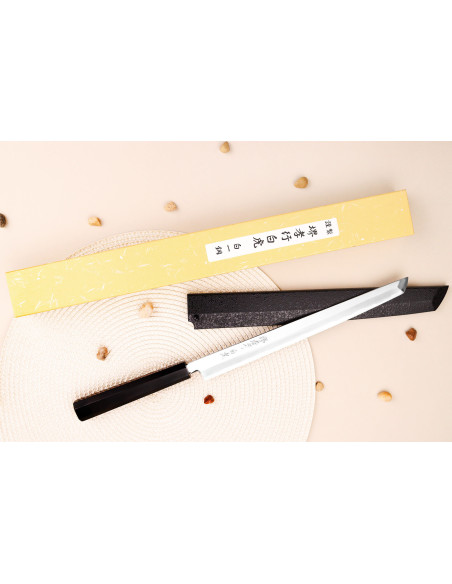
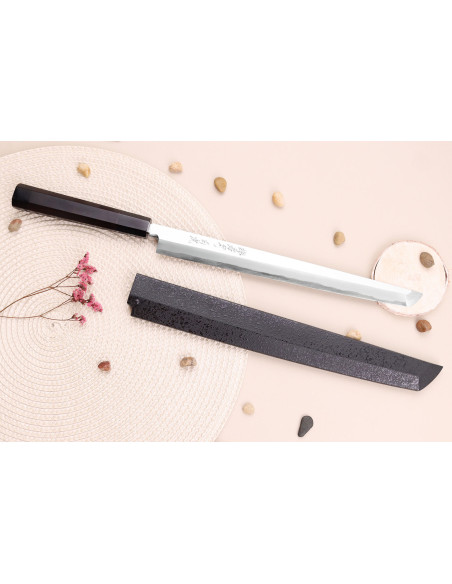
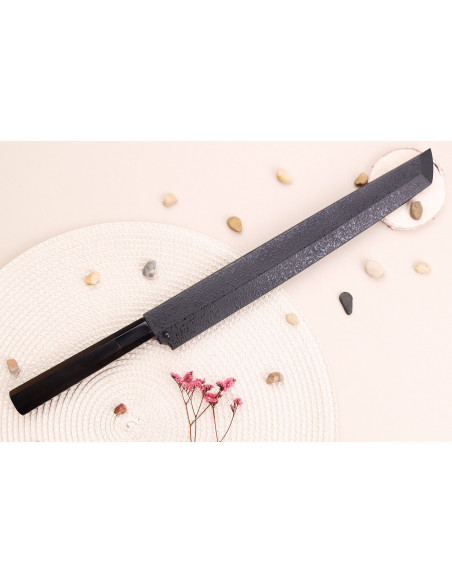
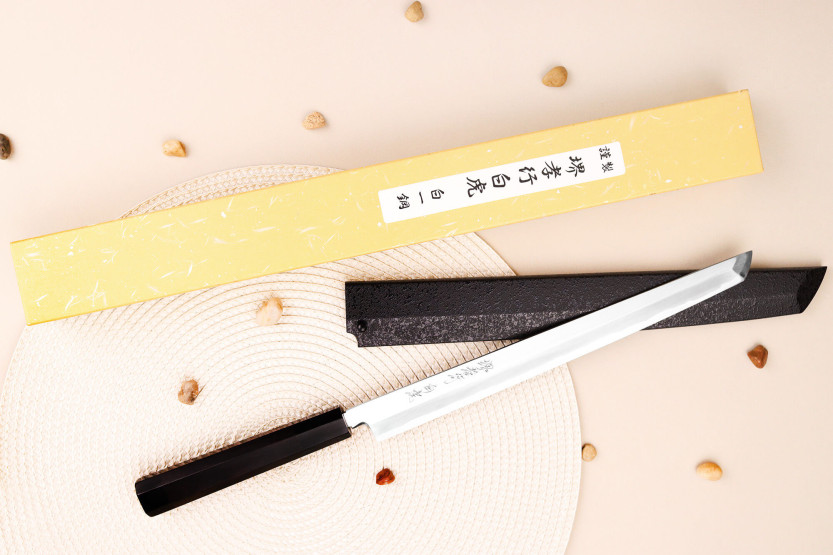
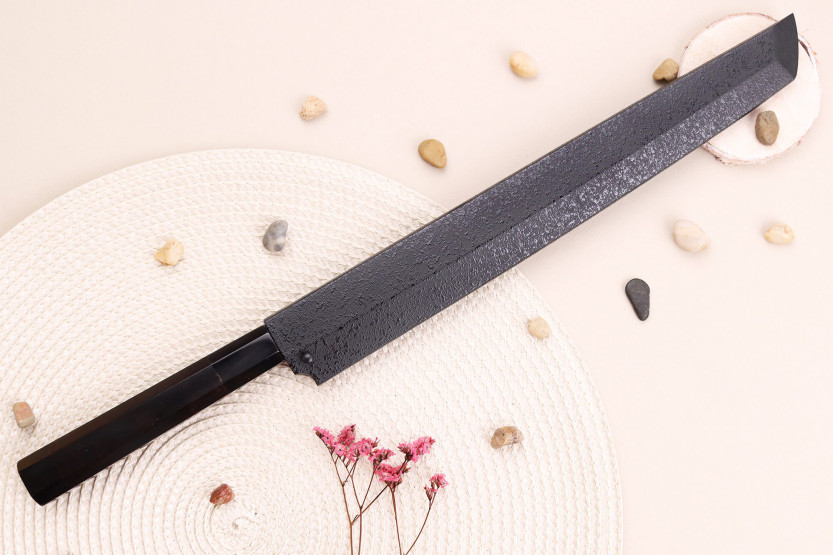
Your knife comes with a protective sheath. The sheath moulds perfectly to the shape of the blade, protecting it from external aggression and avoiding the risk of injury.
An artisan knife forged by Kenji Togashi san
Sakai Takayuki was founded in the 1950s in Sakai, Japan. It has inherited valuable know-how and expertise in the field of cutlery, enabling it to offer you quality Japanese knives. Sakai has long been a hotbed of knife-making, where blacksmiths used to make the famous katana. These blacksmiths were able to pass on their skills to subsequent generations, skills that have been passed down to Sakai Takayuki. The company designs knives that combine modern visuals with ancestral methods.
Sakai Takayuki asked master Kenji Togashi to forge its Byakko range of knives. Kenji Togashi san began his career in the 1960s, and today boasts a wealth of experience and technical know-how. He is one of the few blacksmiths who know how to forge Honyaki blades, and has won numerous awards during his career. In the 90s, he was awarded the title of Dento-Kureishi by the Japanese Ministry of Economy, which certifies him as a Master Traditional Craftsman. That's the quality of his work! This honorary title shows that Kenji san is perpetuating traditional, local techniques.
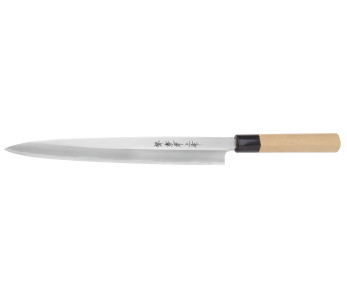
The sakimaru takohiki knife is a Japanese knife with a very traditional look. Its long blade is designed for cutting fish, enabling you to cut slices or chunks, particularly on large pieces such as tuna. Please note: this knife is not designed for cutting hard foods such as squash, bones or frozen foods. These foods could damage the blade.
Sakai Takayuki Byakko knives are available on our website!




 By buying this product you can collect up to