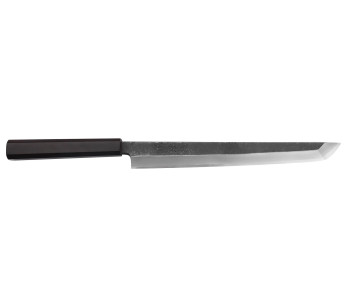
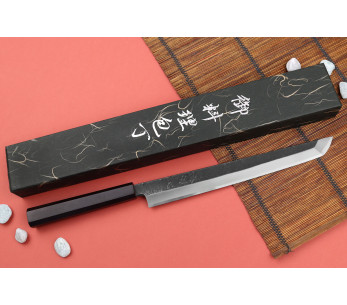
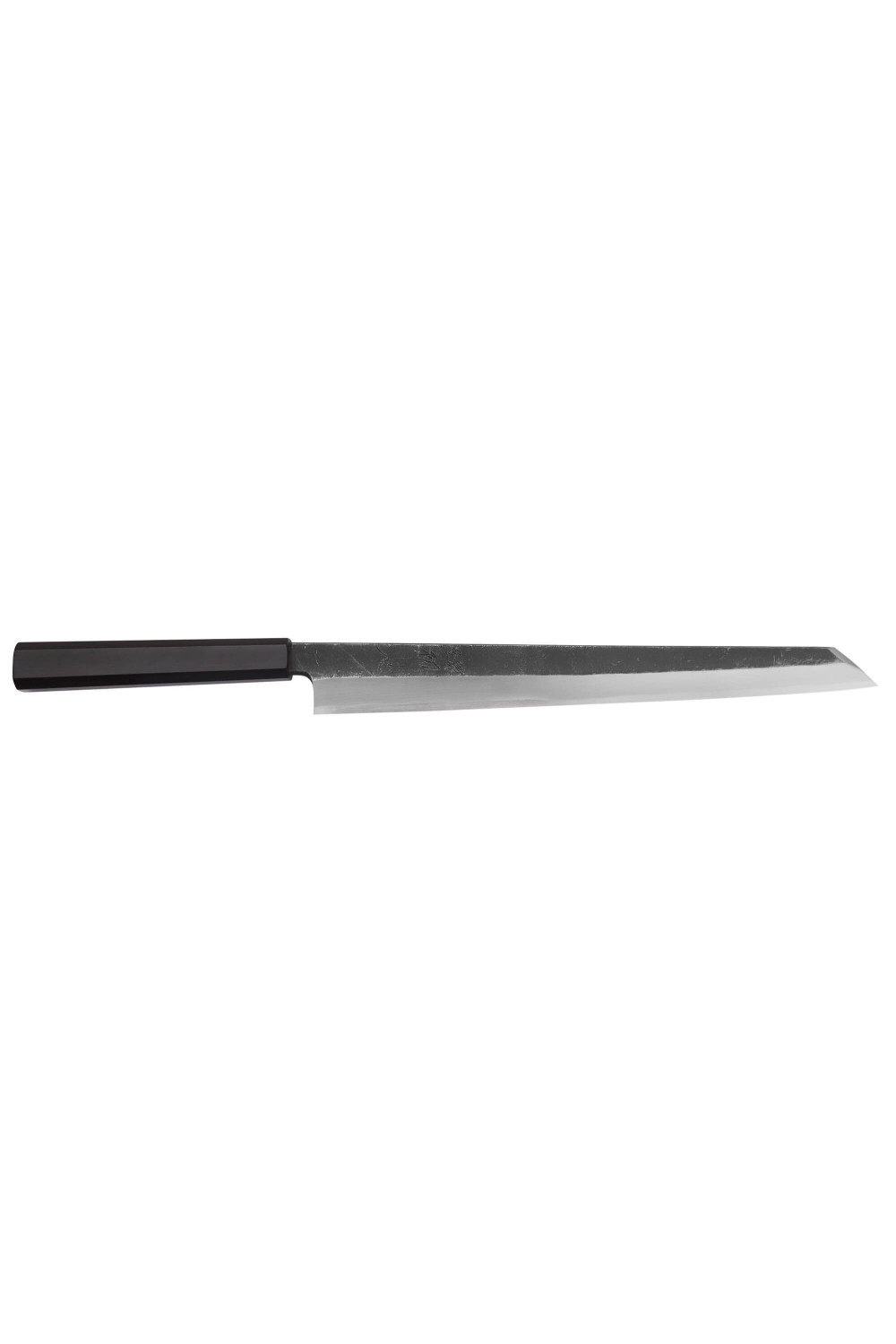
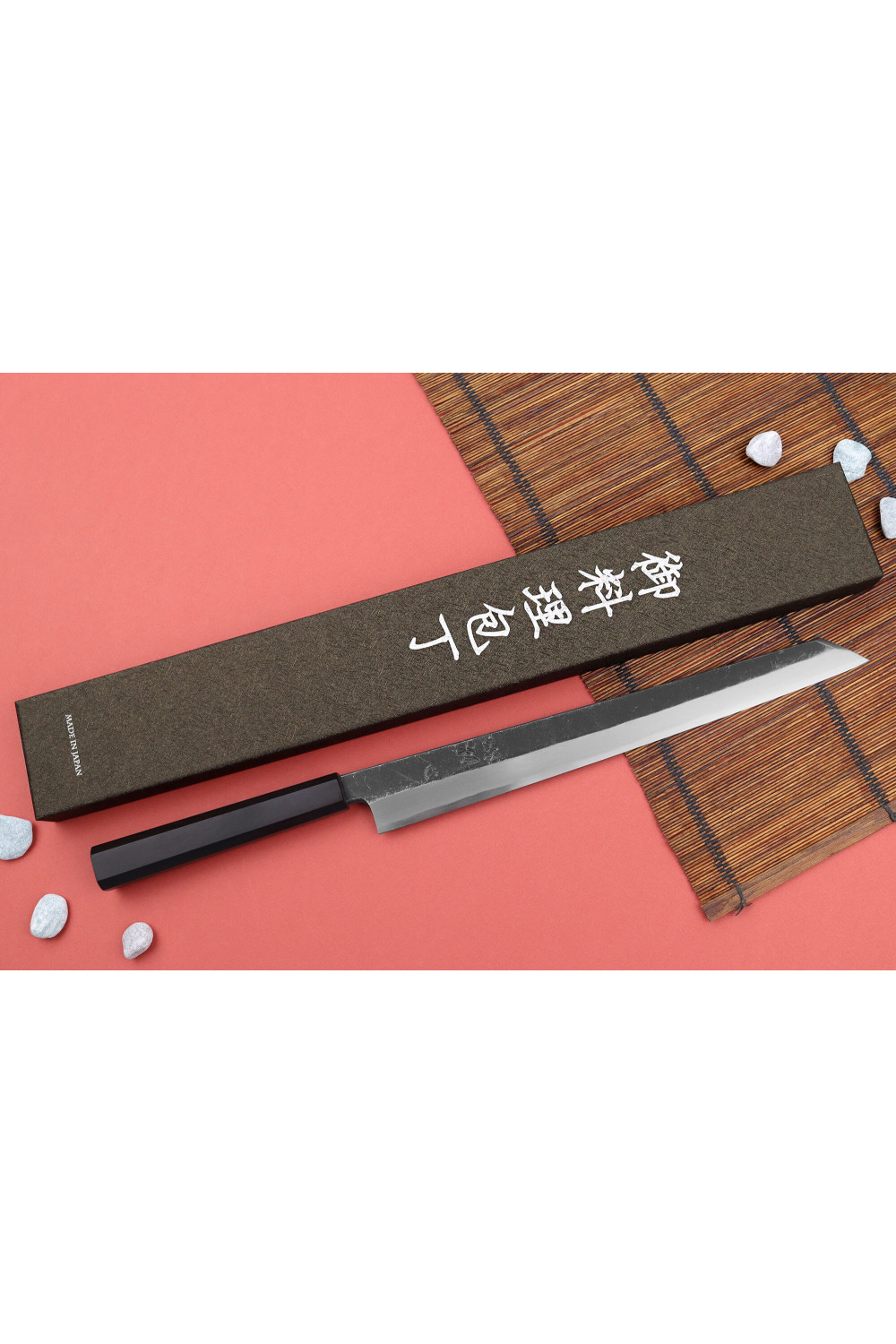
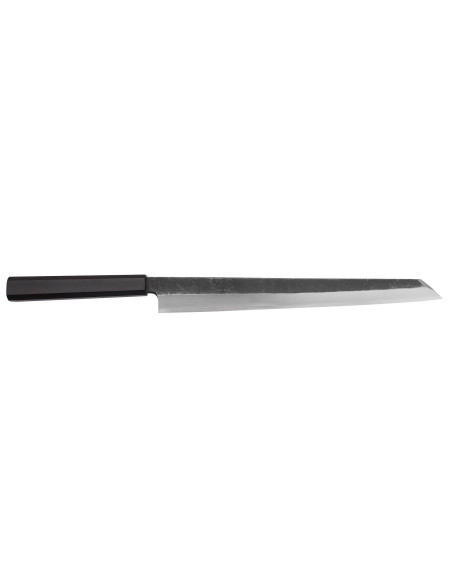
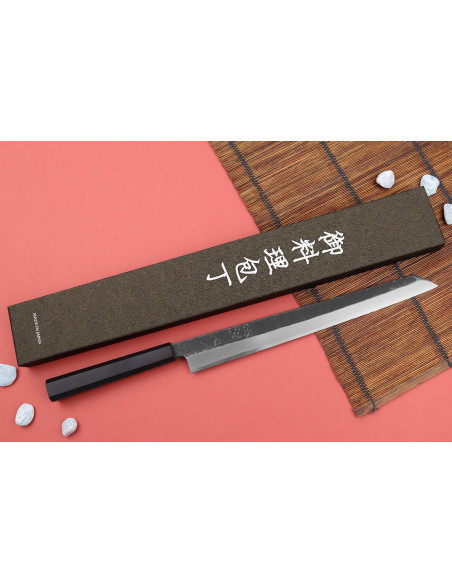
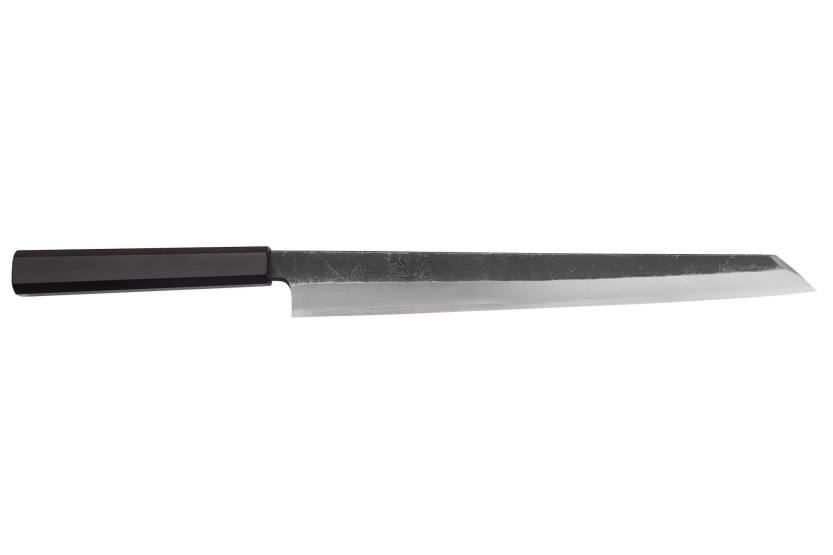
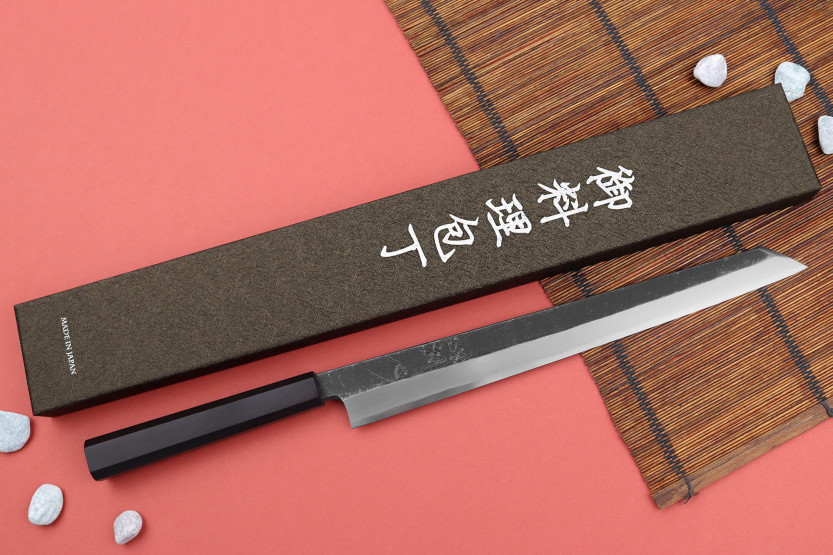
The Japanese brand Hatsukokoro offers you top-quality kitchen knives made by renowned craftsmen. This yanagiba kiritsuke knife bears witness to the combined expertise of Toru Tamura, responsible for forging the blade, and Tateo Myojin, who ensured its meticulous sharpening!
Toru Tamura is a Japanese craftsman who discovered the world of cutlery while working in Canada. Fascinated by the high-quality knives he worked with, he decided to return to Japan to devote himself to learning traditional forging techniques. He trained at Takefu Knife Village, an iconic place where blacksmiths share their skills and experiences. There, he was guided by Hiroshi Kato, a respected master blacksmith in the art of Japanese cutlery.
Following his training, Toru Tamura specialized in the manufacture of single-edged blades, using traditional techniques. He regularly collaborates with renowned craftsmen, notably the Myojin family, experts in sharpening. For this model, it was Tateo Myojin who sharpened the blade, bringing his expertise to sublimate the one-sided edge of the Japanese kitchen knife!
Hatsukokoro Shirasagi knives have an authentic blade
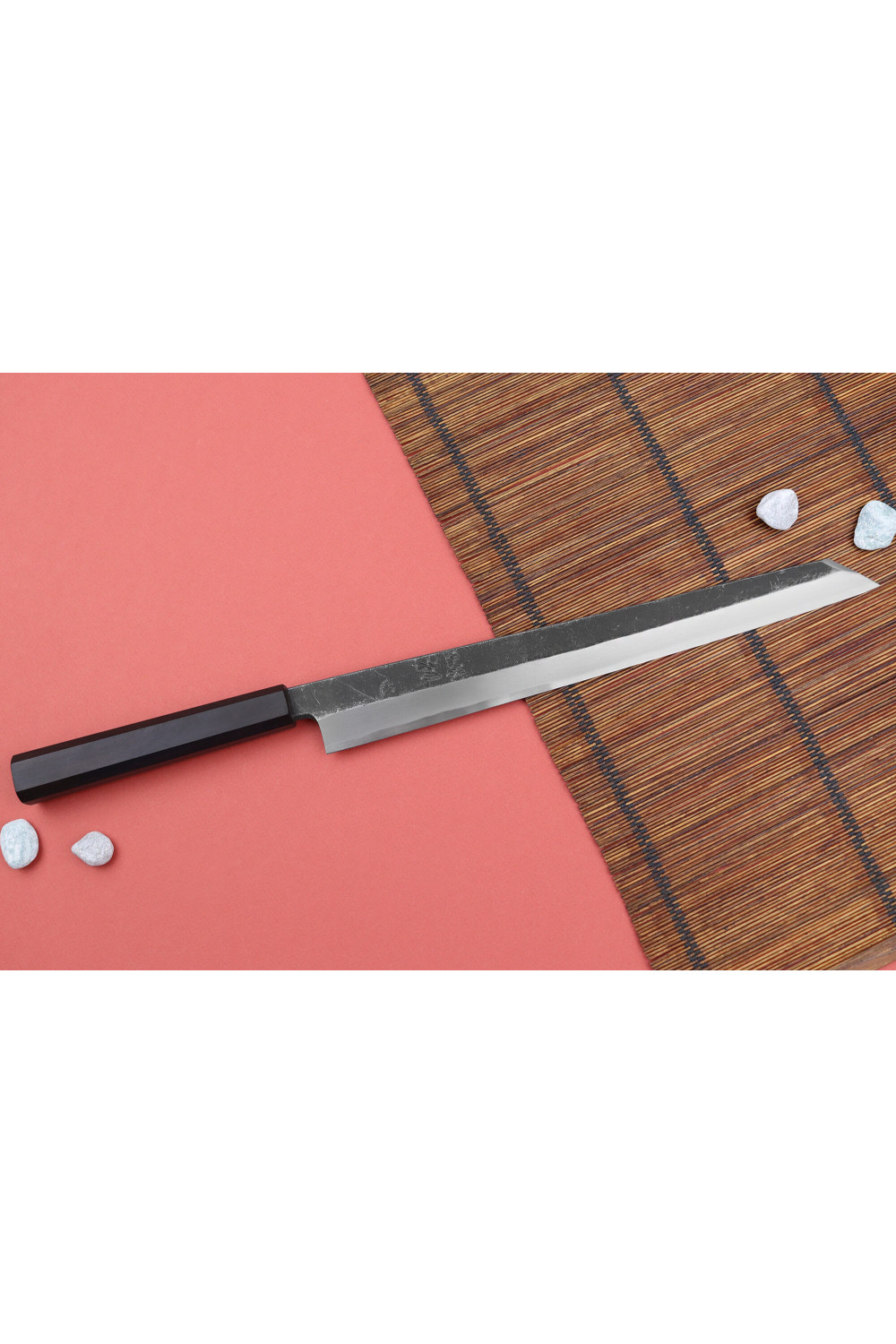
The blade of this yanagiba kiritsuke knife is manufactured using the San Maï technique, meaning "three layers": it consists of a hard steel core, enveloped by a layer of softer steel folded in on itself. This structure gives the blade a well-balanced hardness, while protecting the core.
The core of the blade is forged from Aogami #2 steel, also known as Blue Paper Steel 2, a quality alloy developed by steelmaker Hitachi. With a carbon content of around 1.2%, this steel offers remarkable hardness. The blade achieves a hardness of 62HRC on the Rockwell scale, guaranteeing a cutting edge that's both efficient and long-lasting!
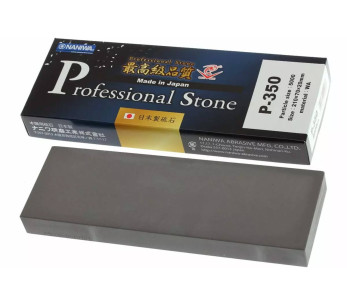
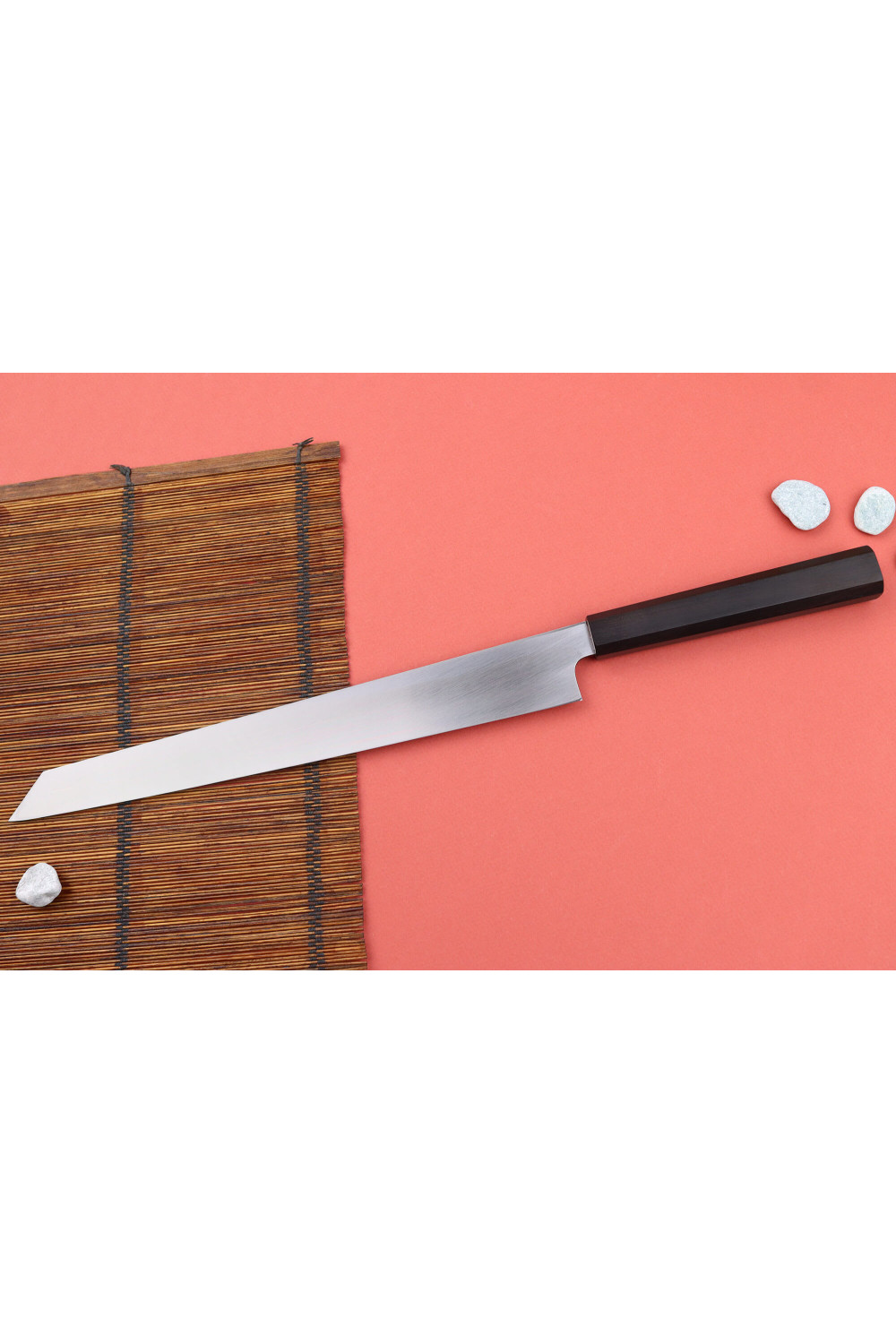
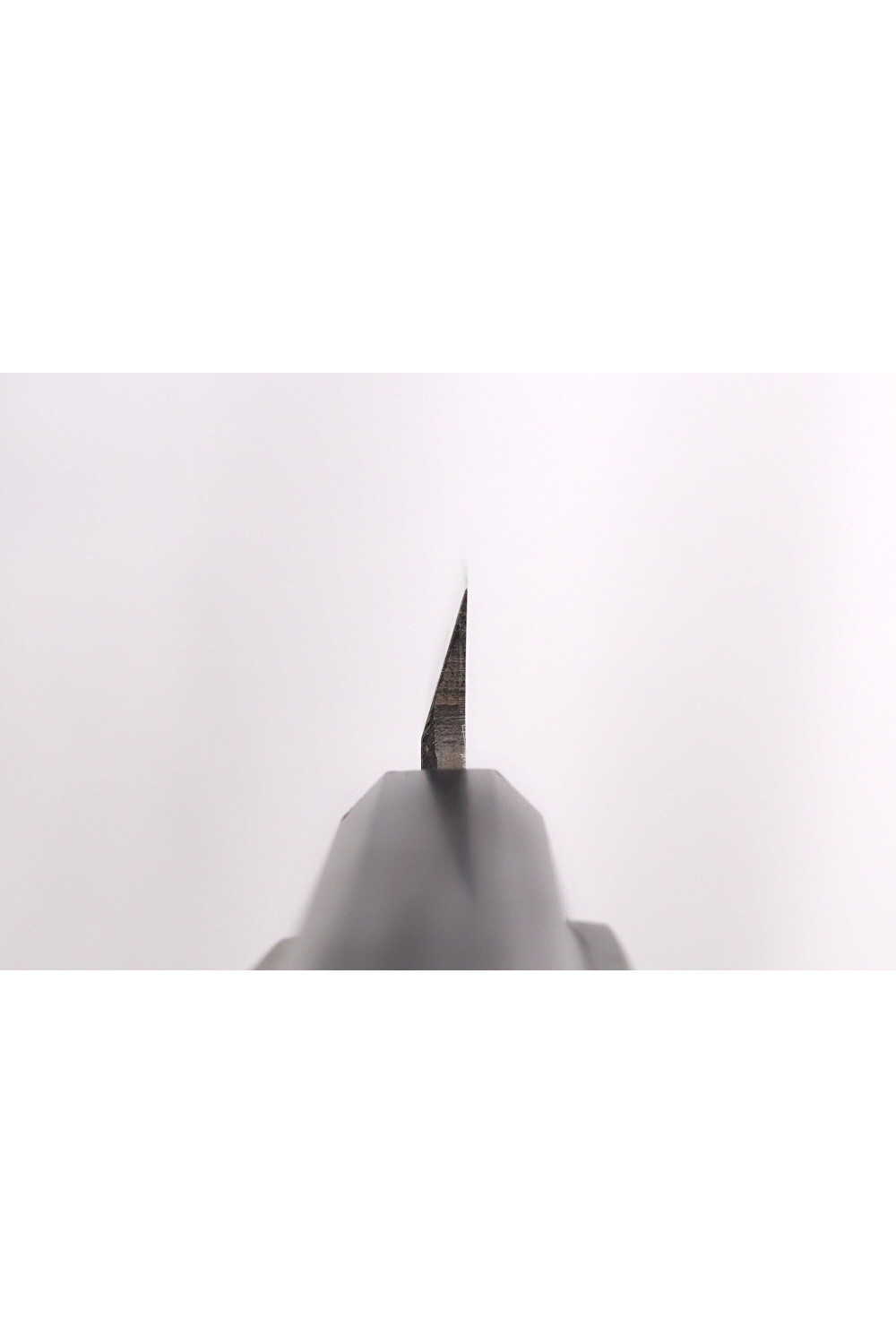
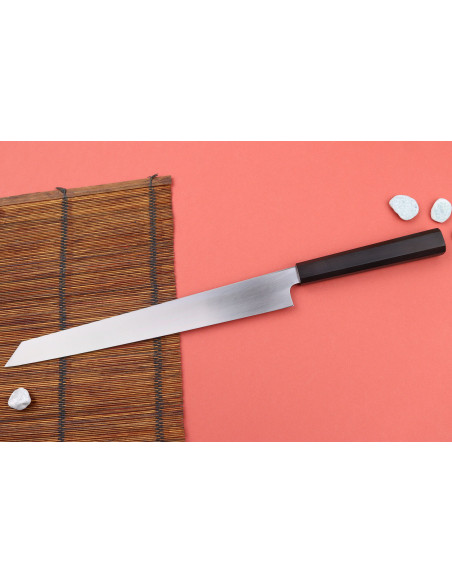
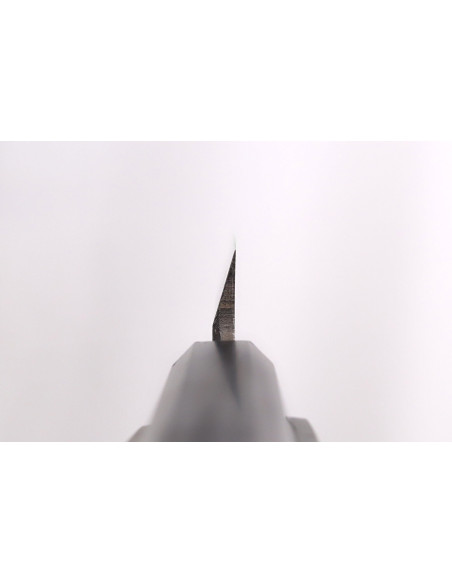
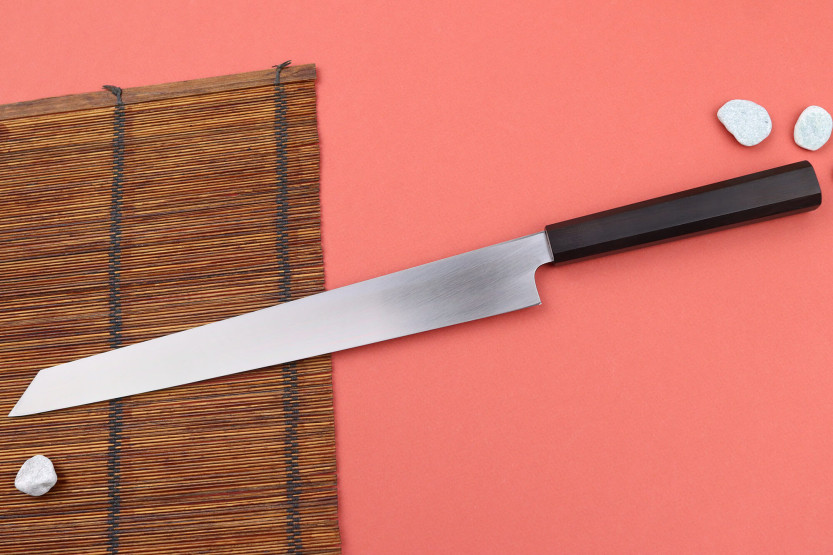
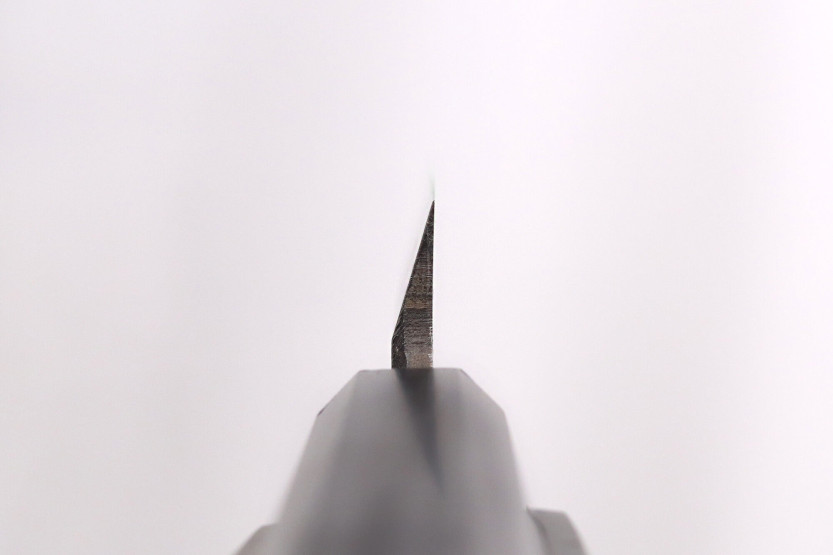
To maintain optimum sharpness, we recommend the use of appropriate sharpening stones. This Japanese knife features an asymmetrical cutting edge specific to yanagiba, with a one-sided cutting edge designed for right-handed use, enabling clean, even cuts.
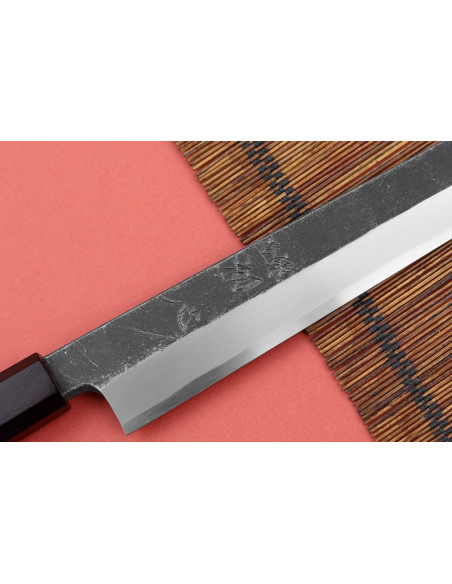
San Maï construction includes an outer layer of softer steel, enveloping the core to increase impact resistance and minimize the risk of breakage, while maintaining its rigidity. The superposition of steels is visible all along the blade edge, creating a fine wave pattern!
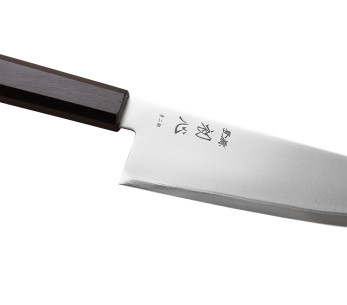
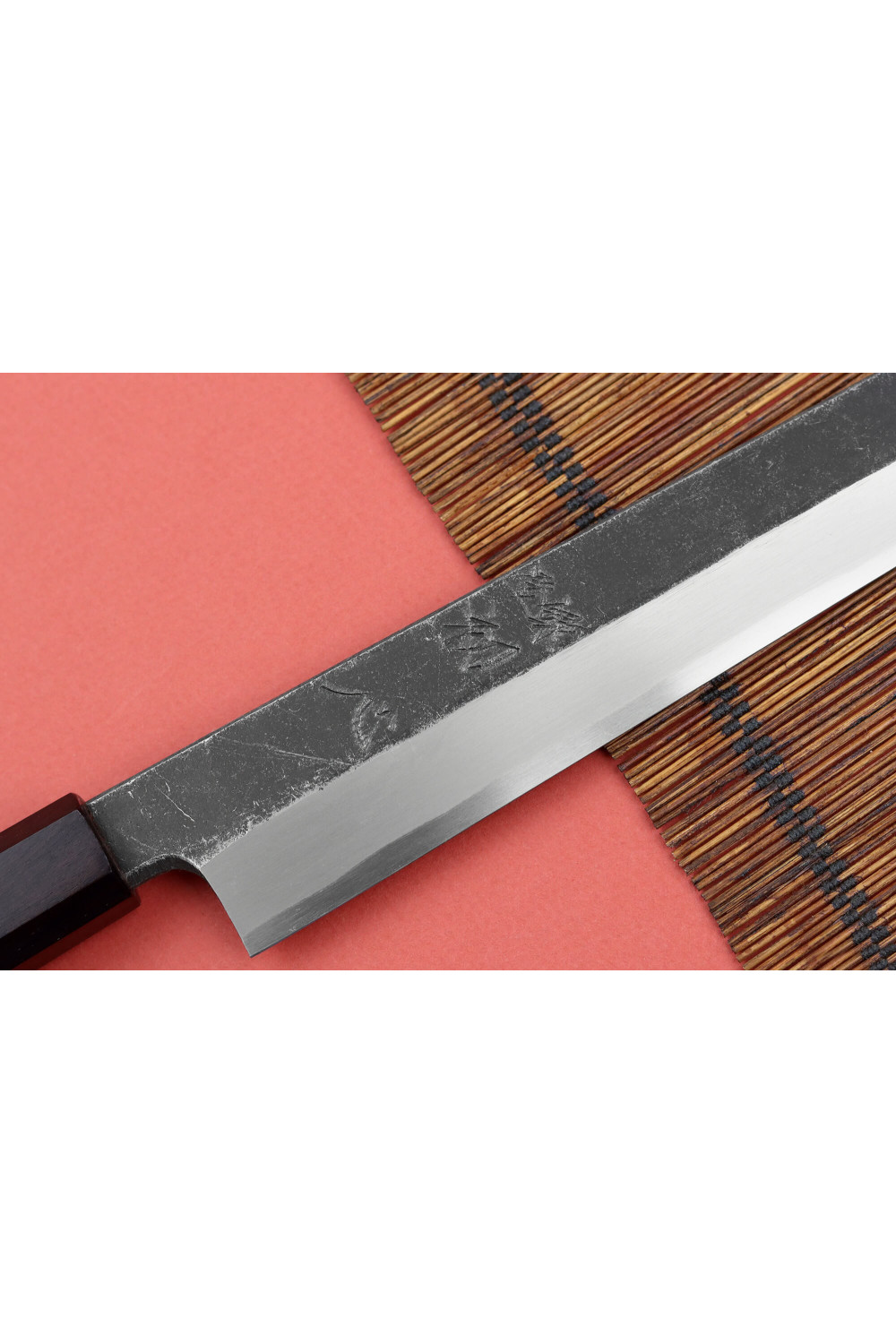
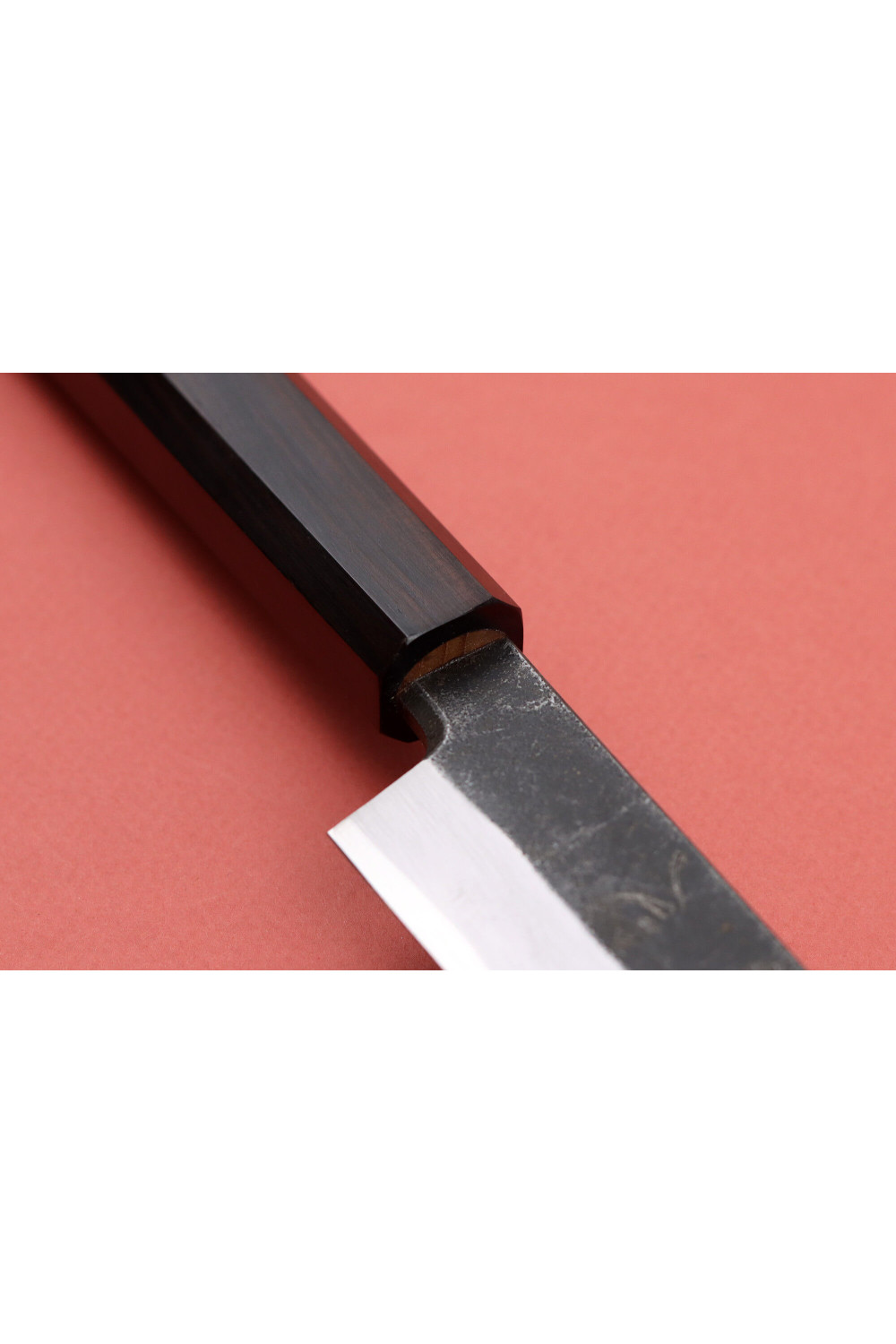
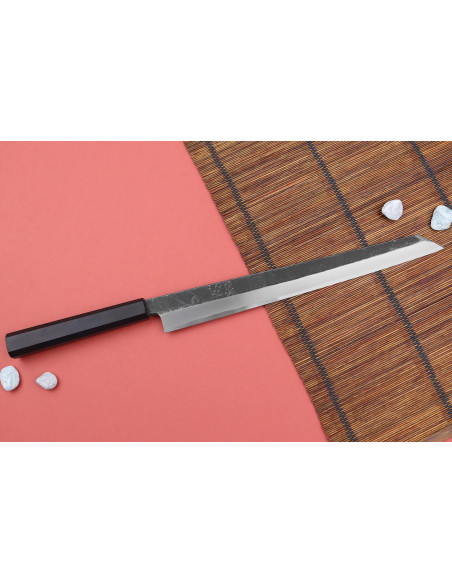
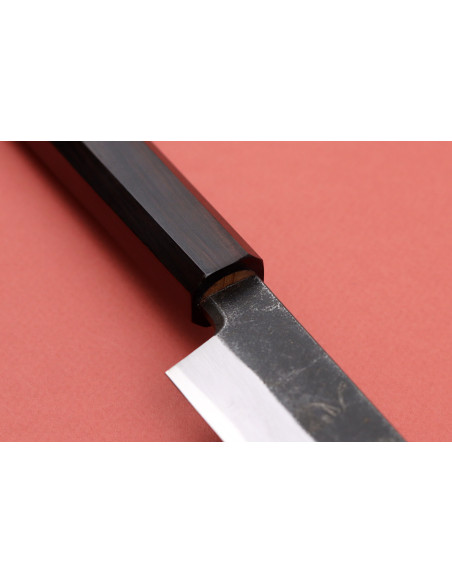
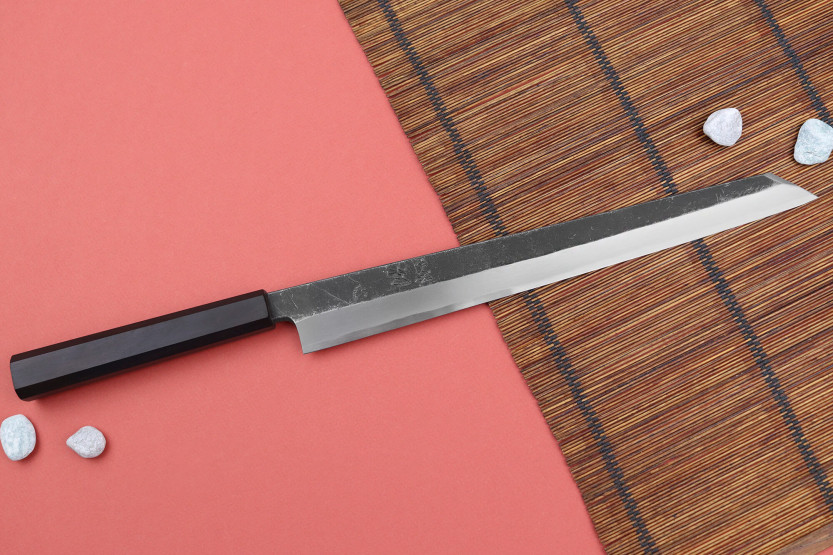
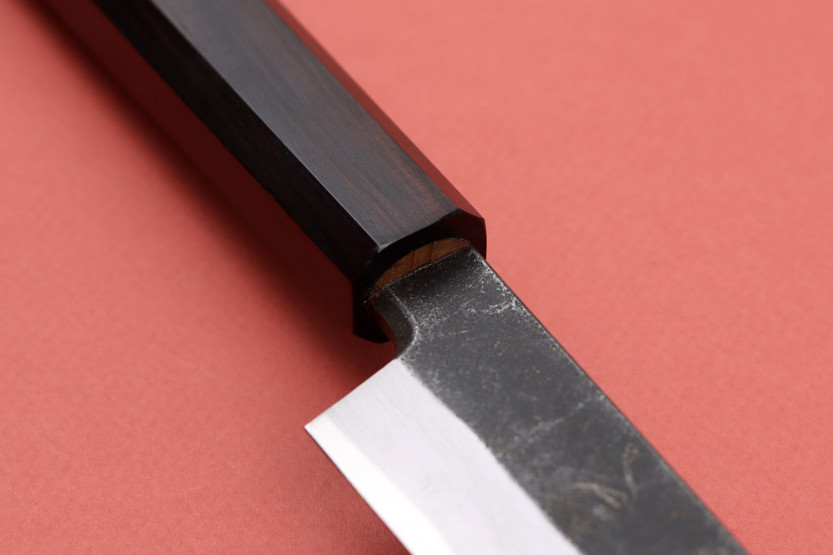
The surface of the blade is left forged, with an unpolished finish that gives it a dark, authentic look, much appreciated by Japanese chefs for its traditional character! The blade is also hand-engraved with kanji, adding an extra touch of authenticity.
An elegant handle for this Japanese knife
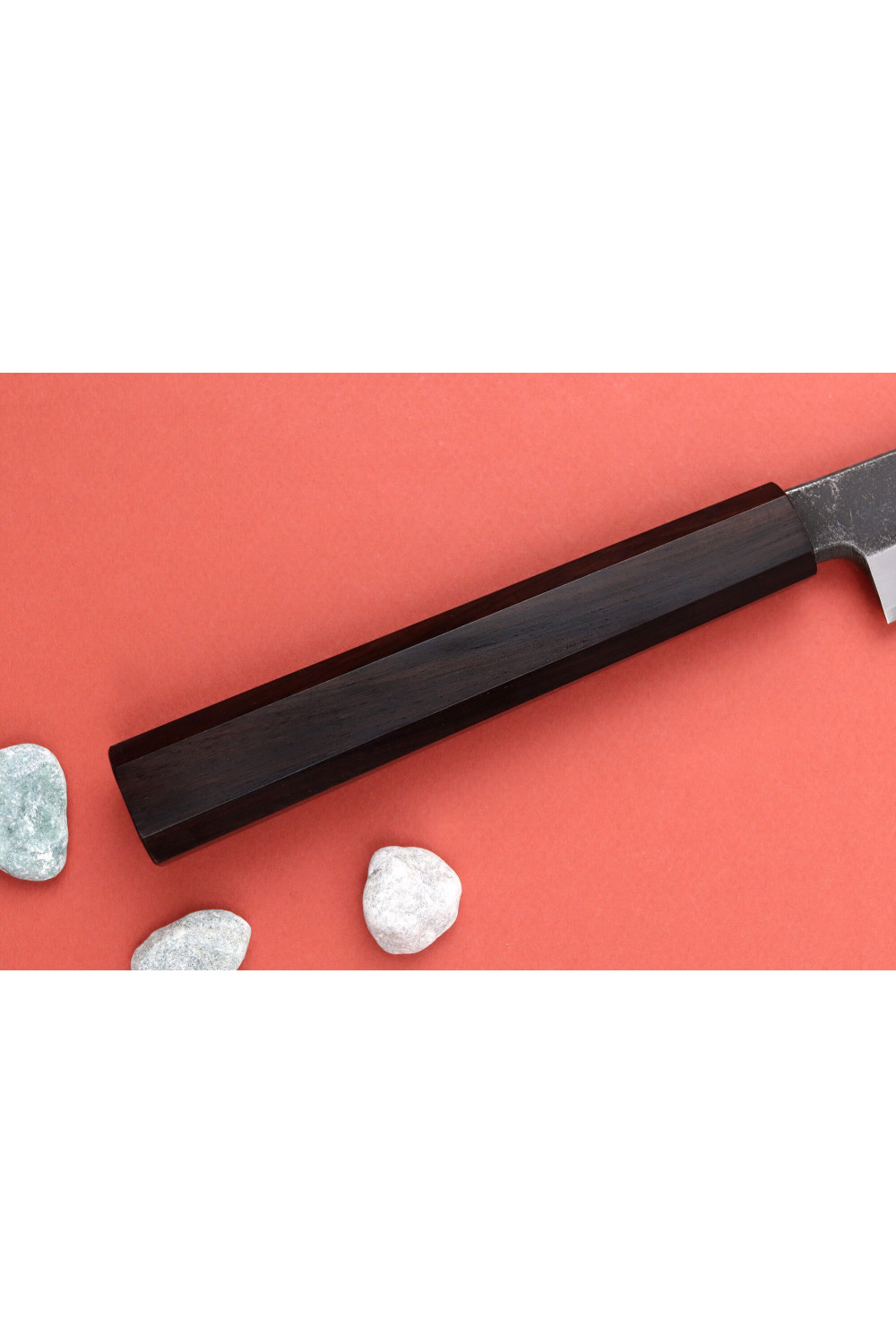
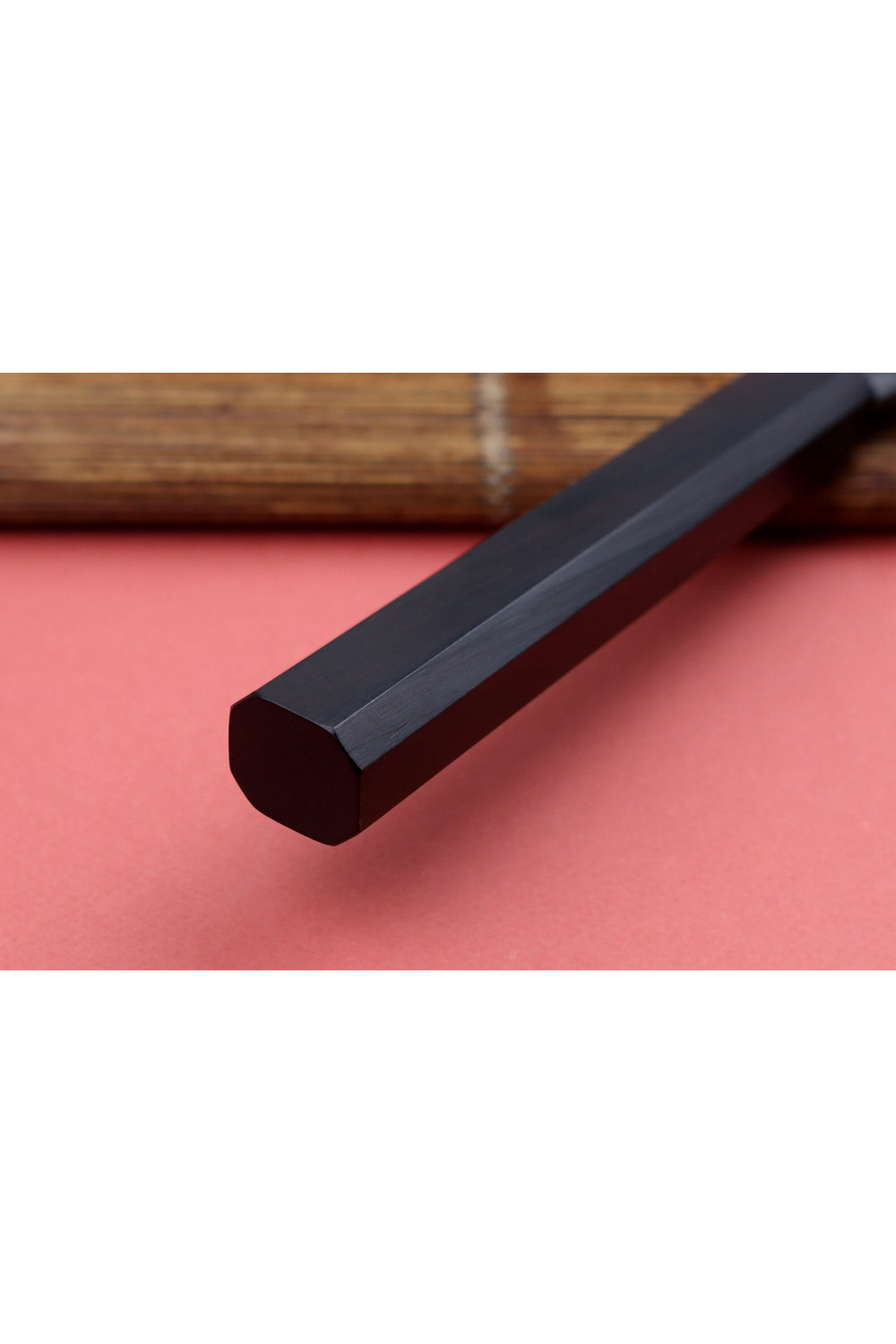
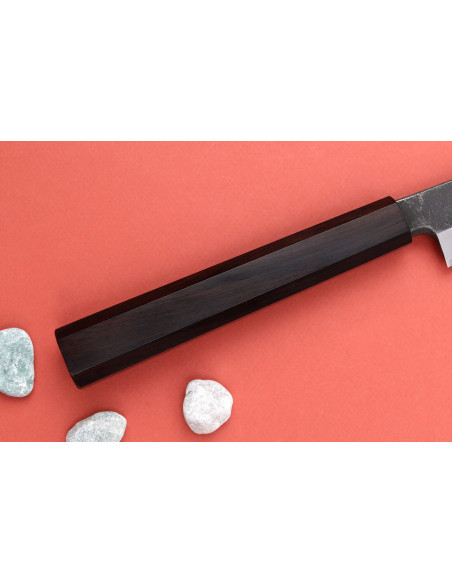
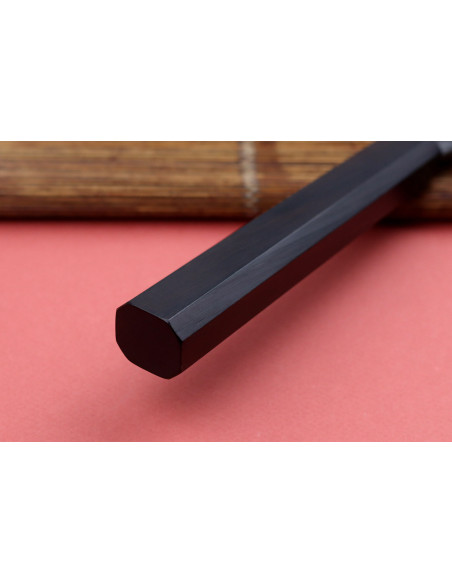
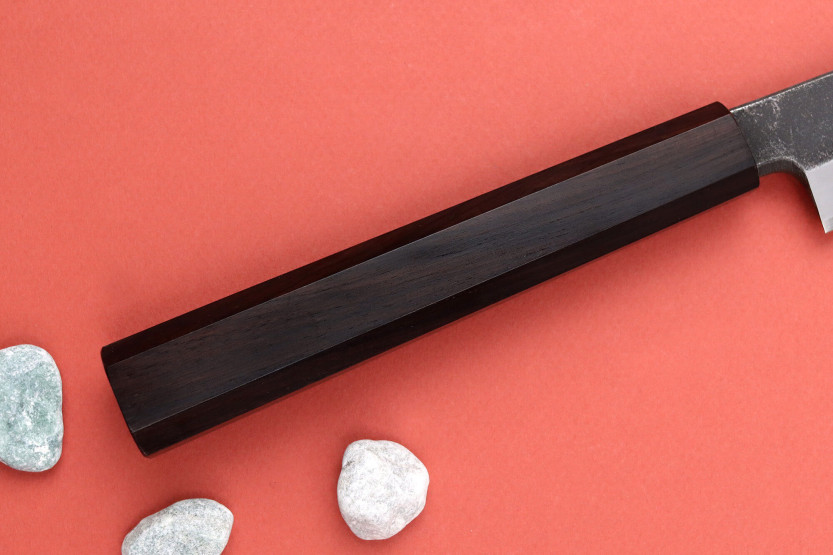
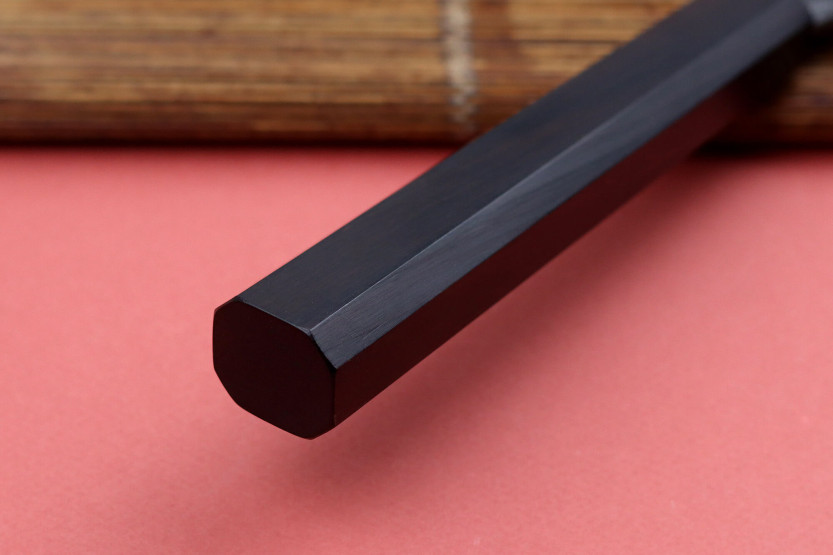
The handle of this Japanese kitchen knife is made of ebony wood, a durable and naturally moisture-resistant material. This tropical wood with its dark shades gives each Hatsukokoro knife a unique character, due to the wood's natural variations.
This handcrafted knife features an octagonal handle, offering a comfortable grip suitable for everyone. Its ergonomic shape is designed to facilitate long cutting sessions in the kitchen.
Finally, wood paste is applied between the blade and the handle, guaranteeing optimal watertightness and preventing any infiltration of water or small pieces of food.
Caring for a Japanese kitchen knife
To care for your kiritsuke knife, wash it only by hand with a soft sponge, taking care not to get the handle wet. Dry it immediately after use and store it in a dry place. Do not put it in the dishwasher or soak it in water.
Over time, a slight patina may form on the blade, due to the natural reaction of carbon with food acids and moisture. This phenomenon in no way affects the performance of your handcrafted knife!
Discover a wide range of Japanese knives on Knifeleader.eu!





 By buying this product you can collect up to