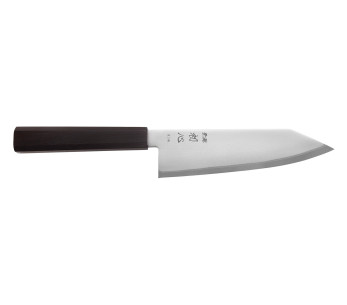
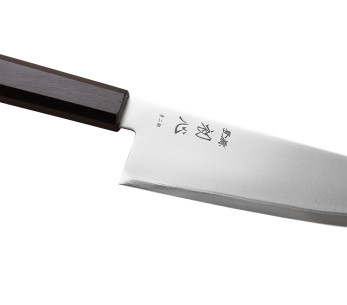
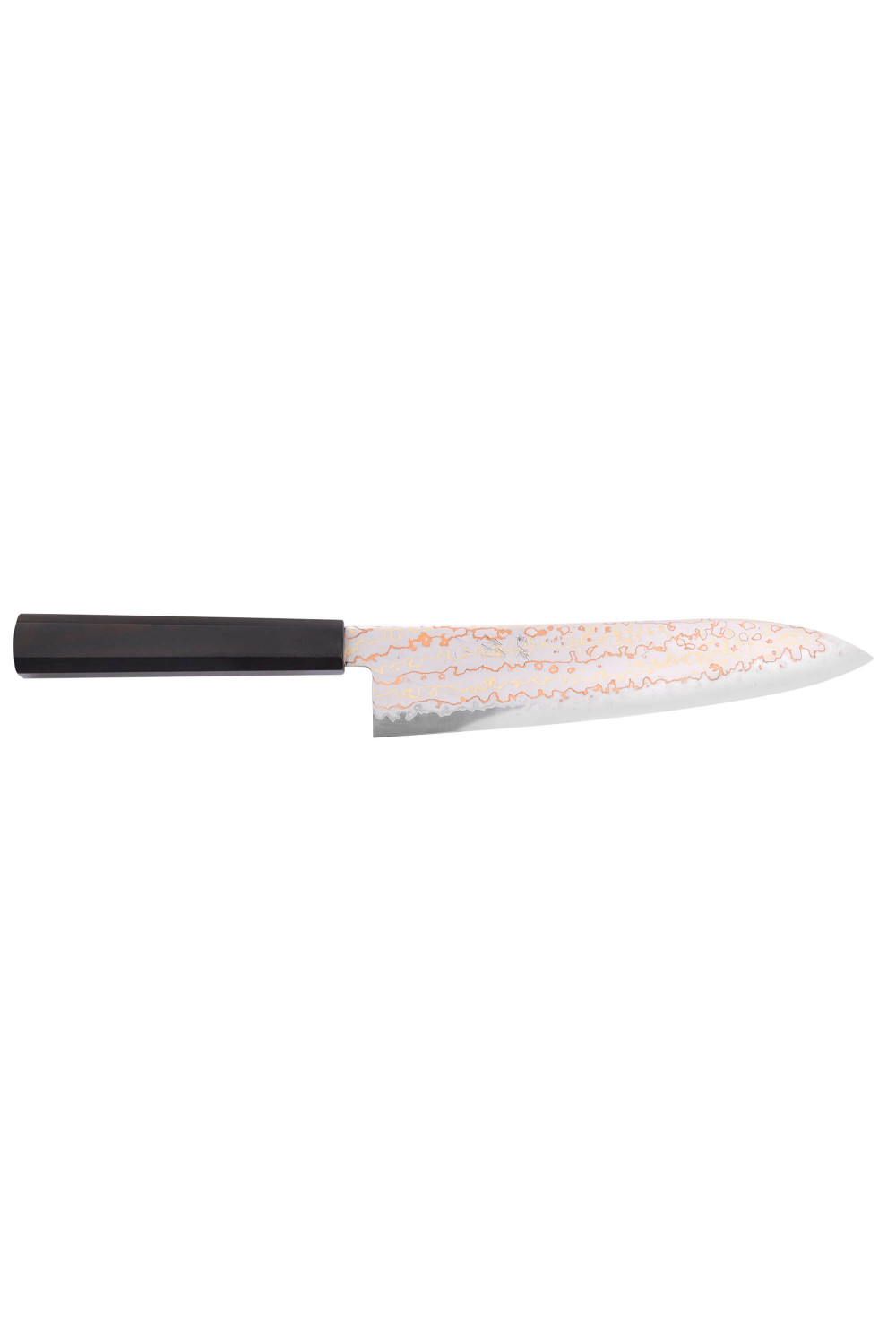
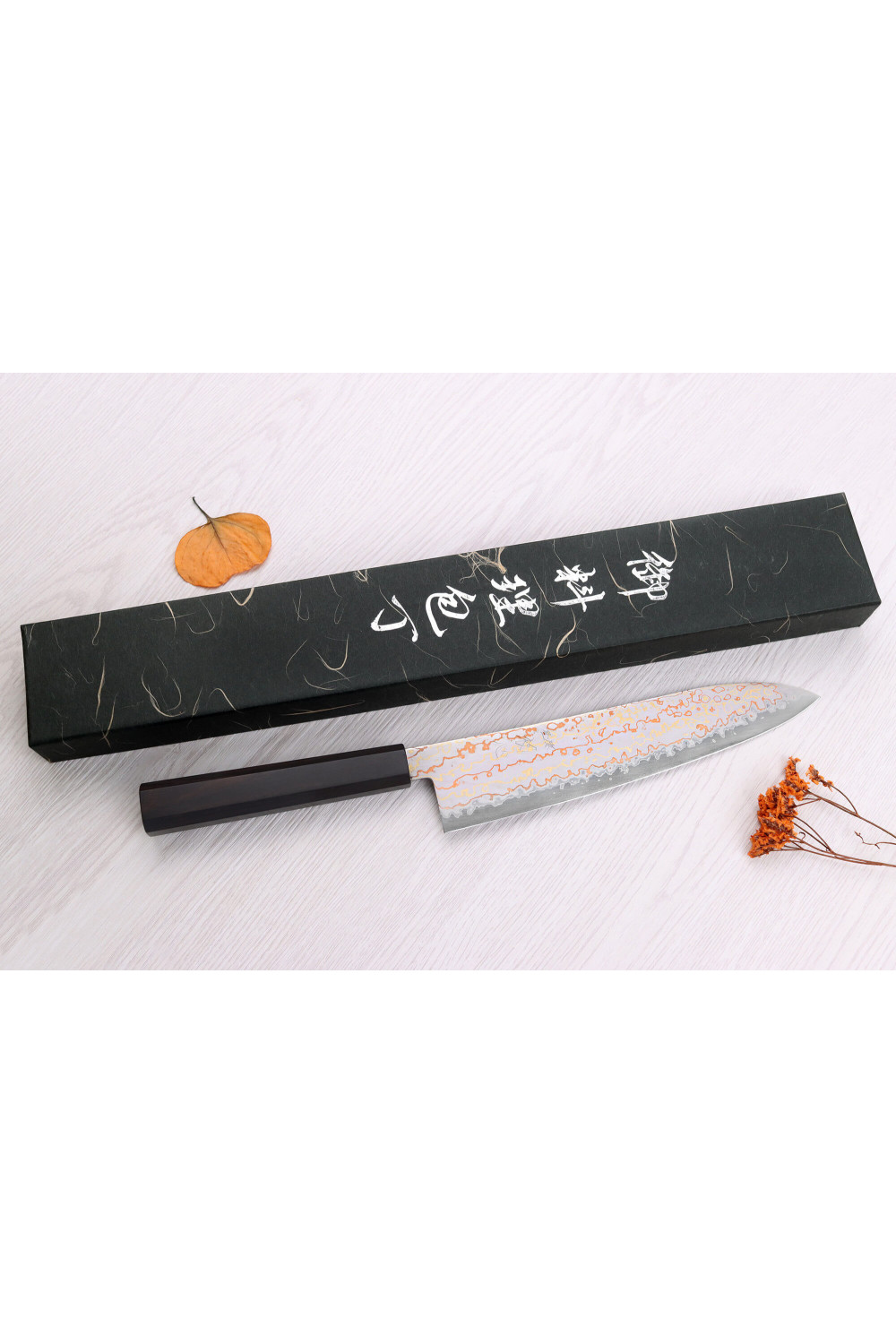
The Japanese Hatsukokoro brand has been created by a company specializing in Japanese kitchen knives for some ten years. It collaborates with renowned Japanese blacksmiths who are experts in ancestral forging techniques. These renowned craftsmen produce Hatsukokoro Japanese knives, which are appreciated for their quality and unique style!
An elegant blade for this damask knife
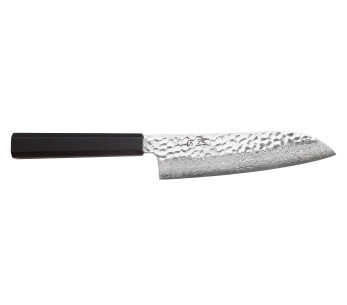
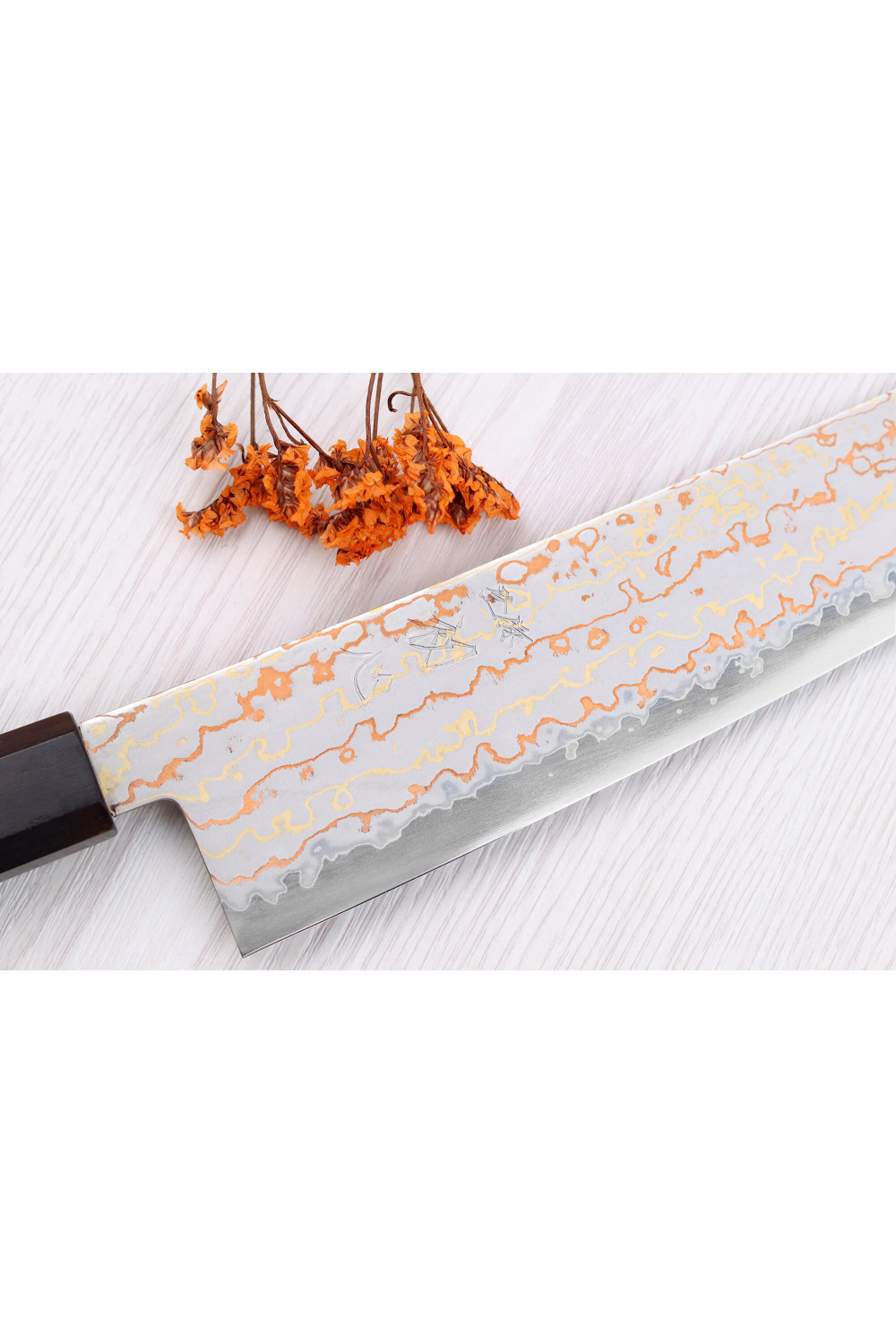
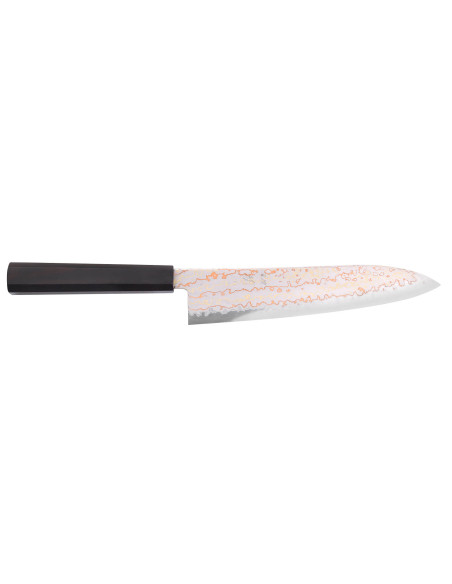
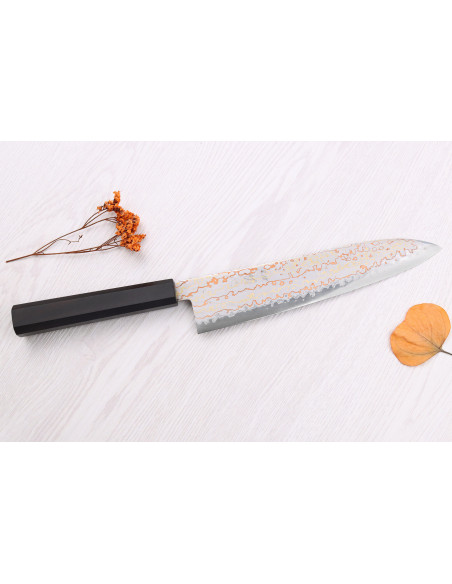
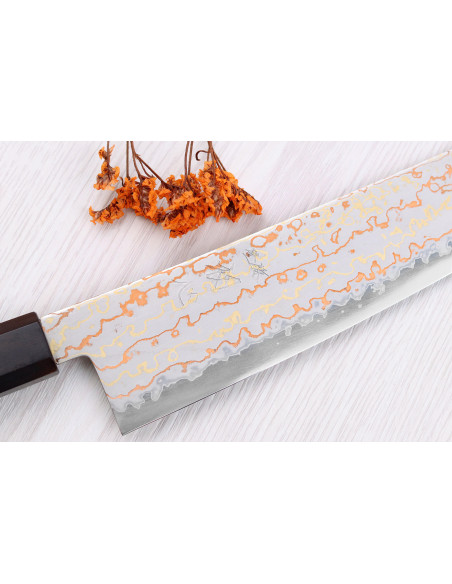
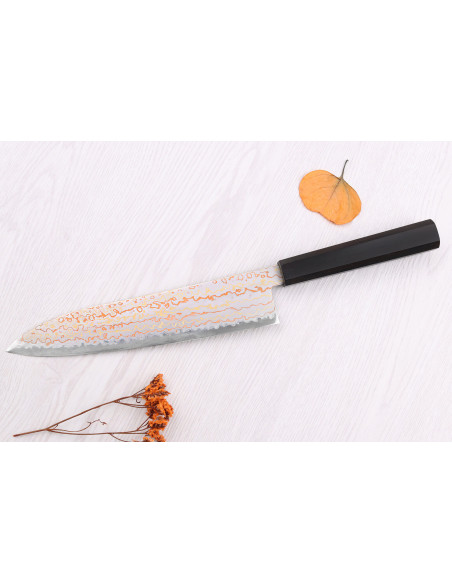
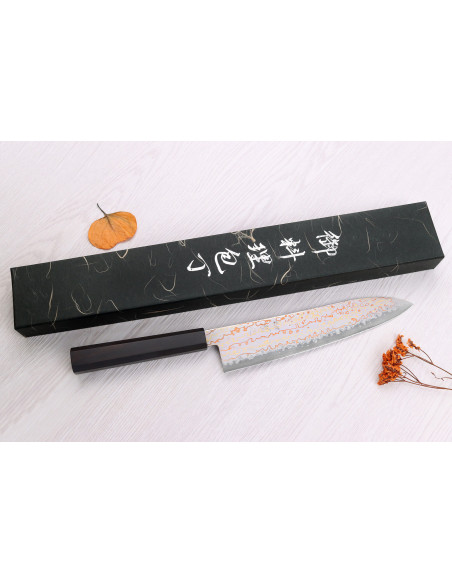
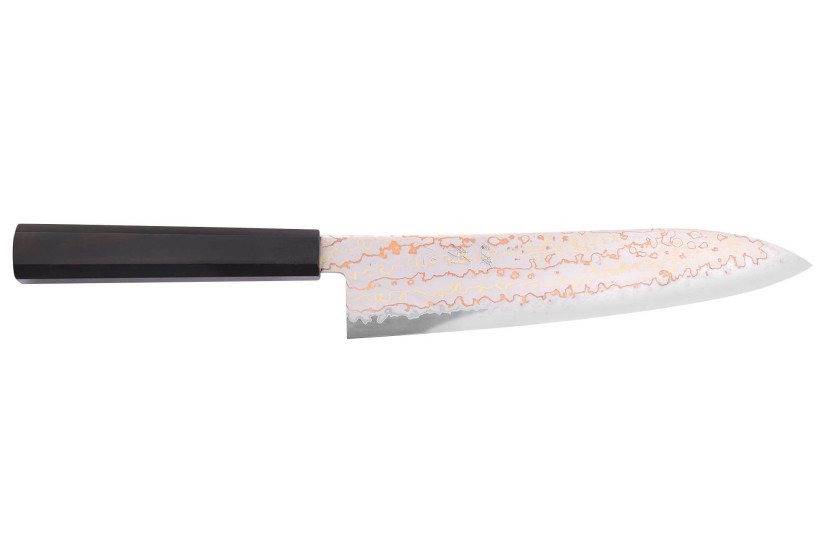
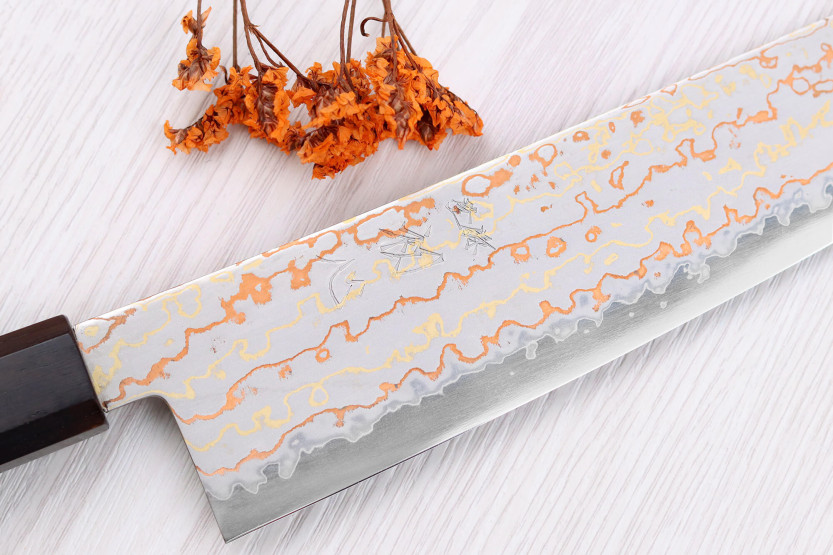
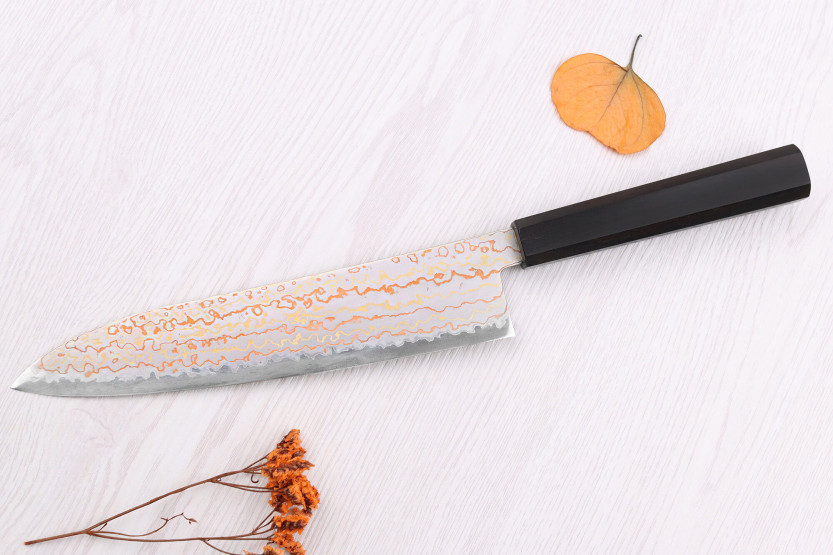
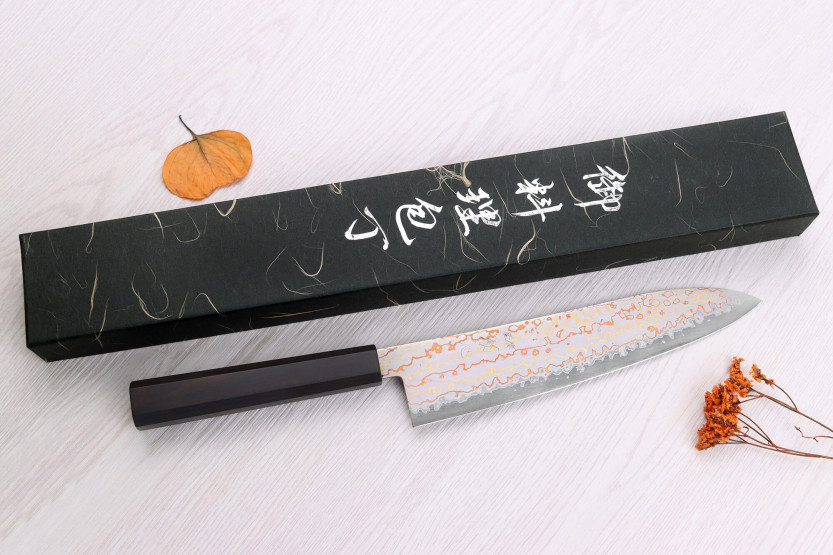
This chef's knife features a high-quality damascened blade: a process consisting of forging a rigid steel core which is then covered by several layers of softer steel. This method gives your blade suppleness to balance its hardness, while protecting the core of your Japanese kitchen knife.
In fact, the heart of this blade is made from Aogami #2 steel (also known as Blue Paper Steel 2), produced by the famous steelmaker Hitachi. This steel has a high carbon content of around 1.2%, the element that increases the hardness of an alloy. As a result, the hardness of this blade is 62HRC on the Rockwell scale, giving you excellent edge retention for a high-performance cutting edge.
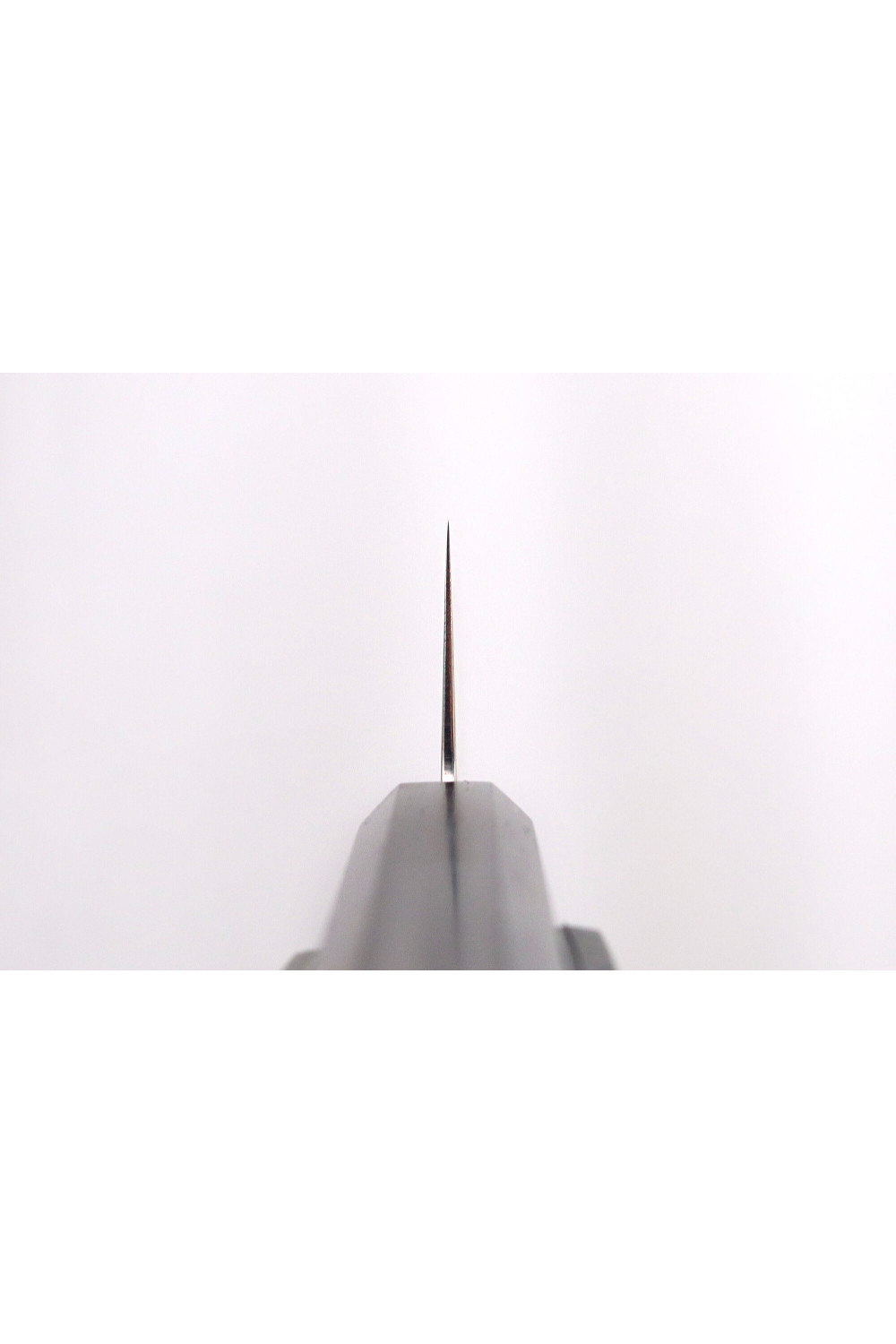
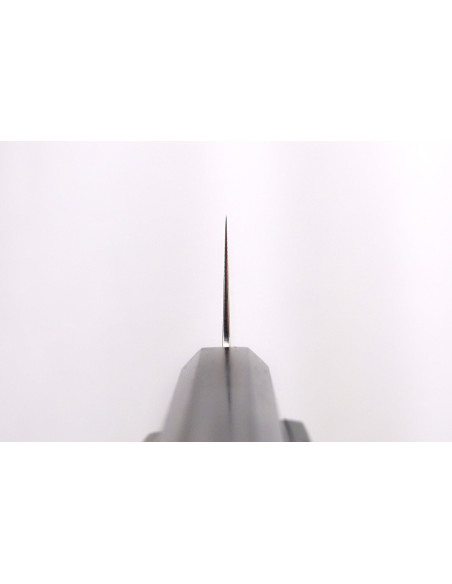
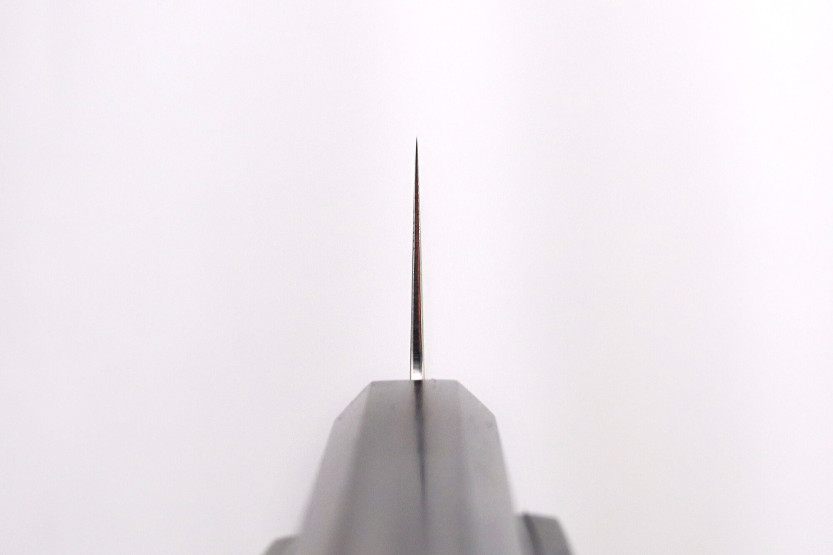
Your blade also features a fine, flat grind for enhanced strength! Practical, it's easy to reproduce during sharpening, and looks great too.
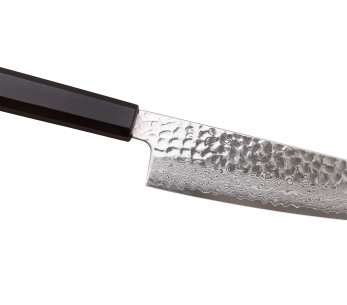
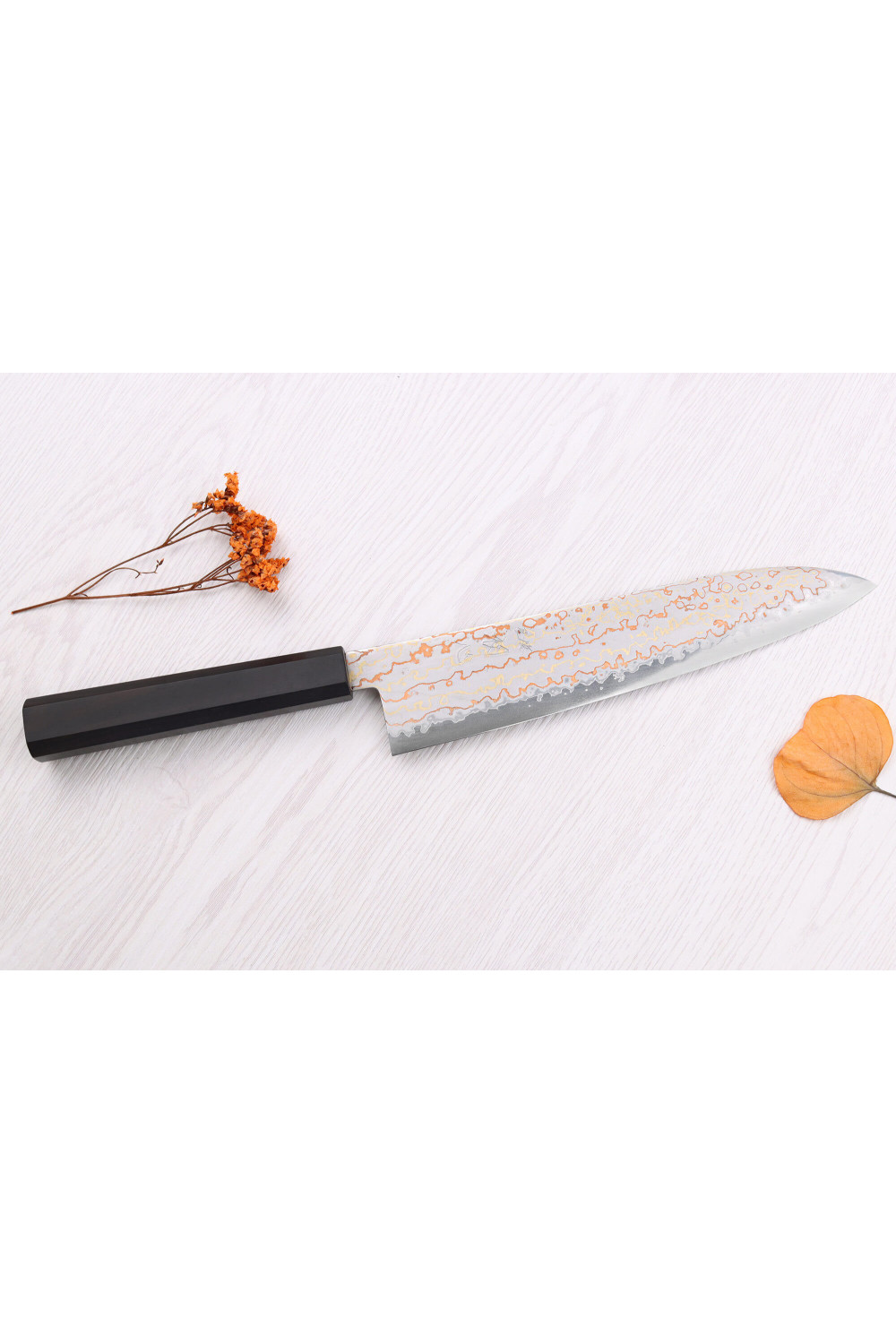
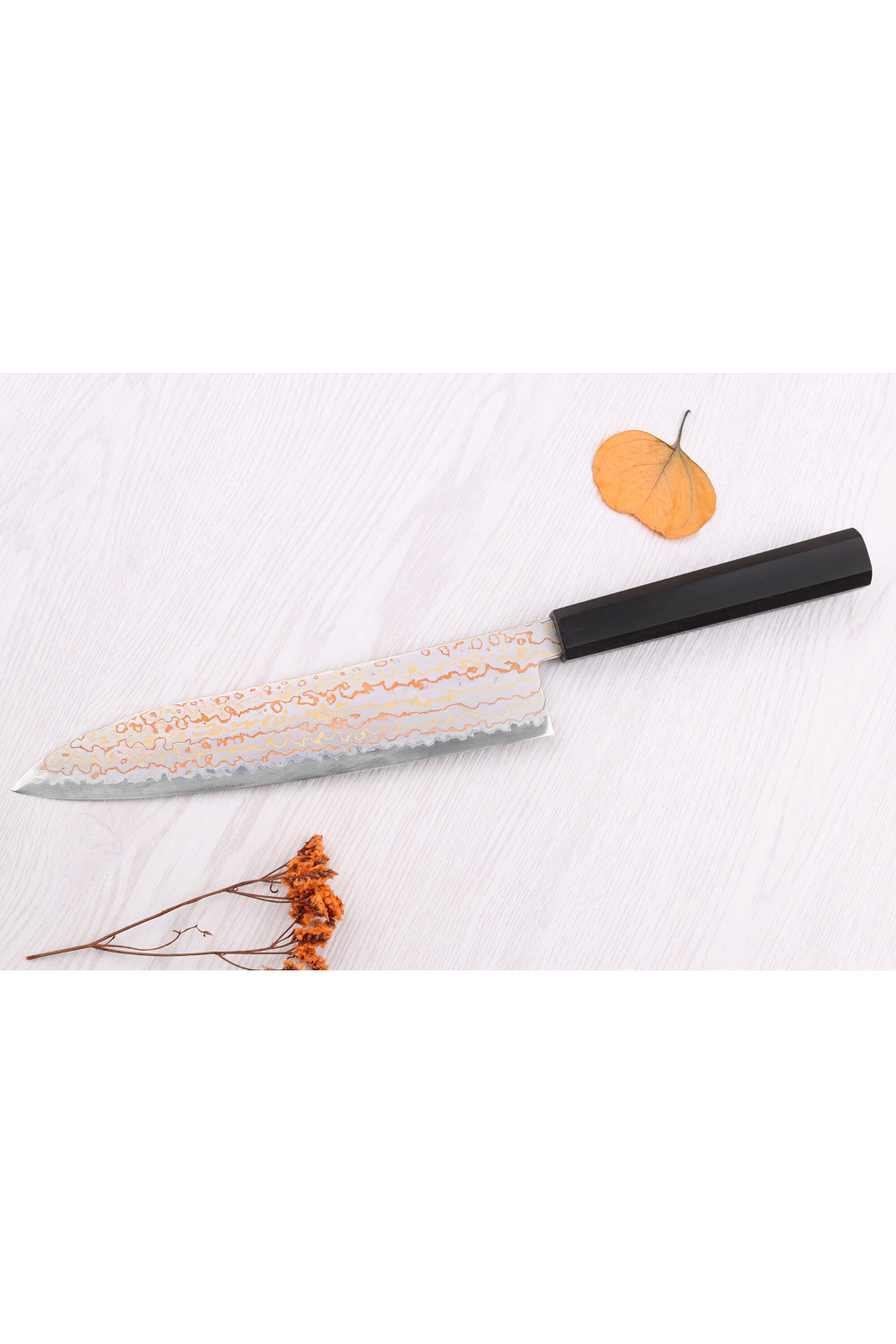
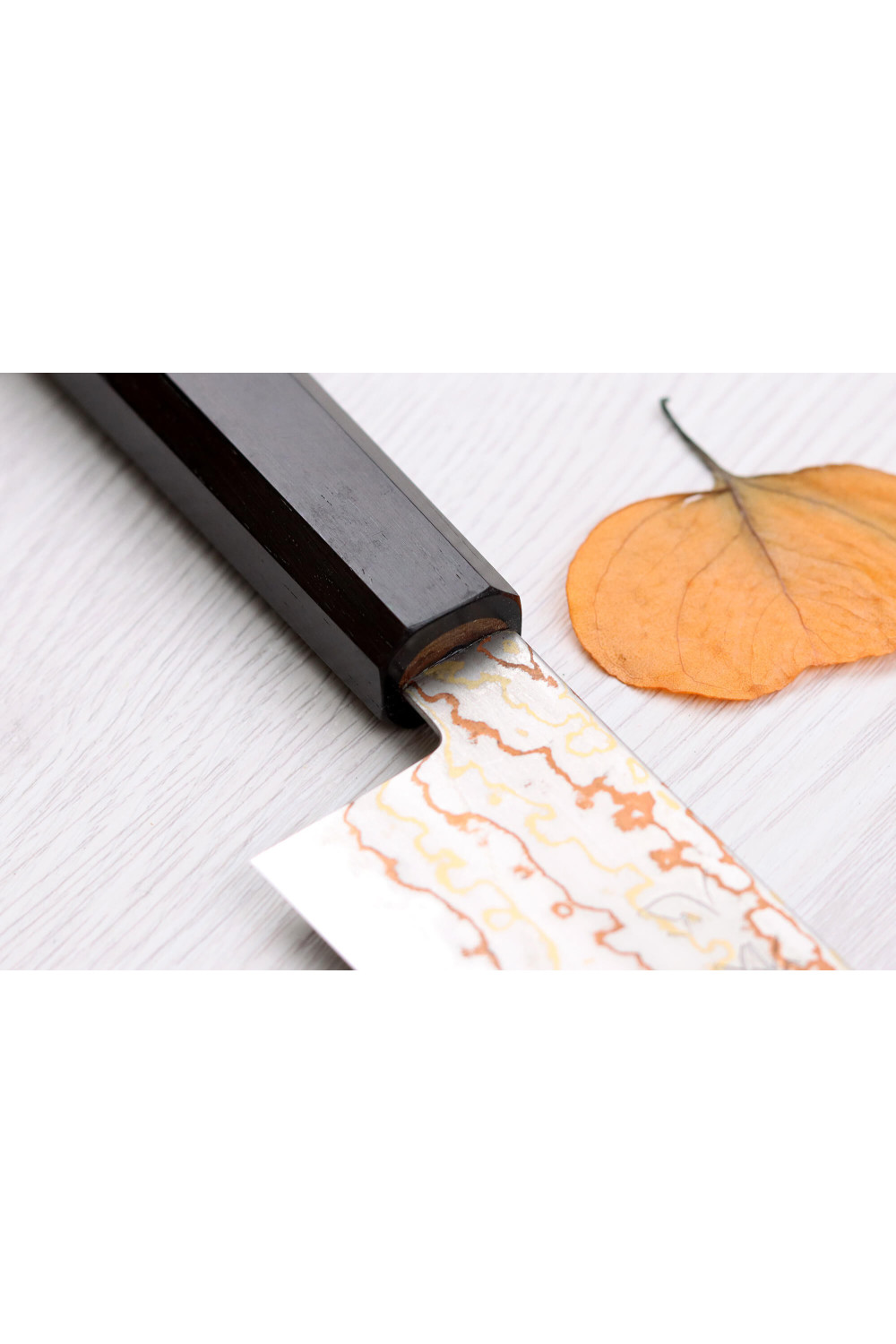
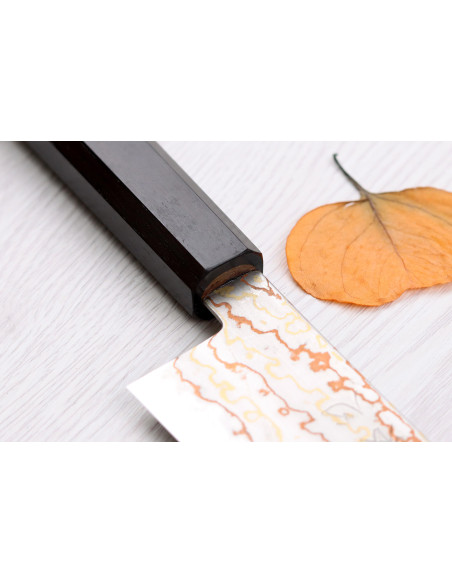
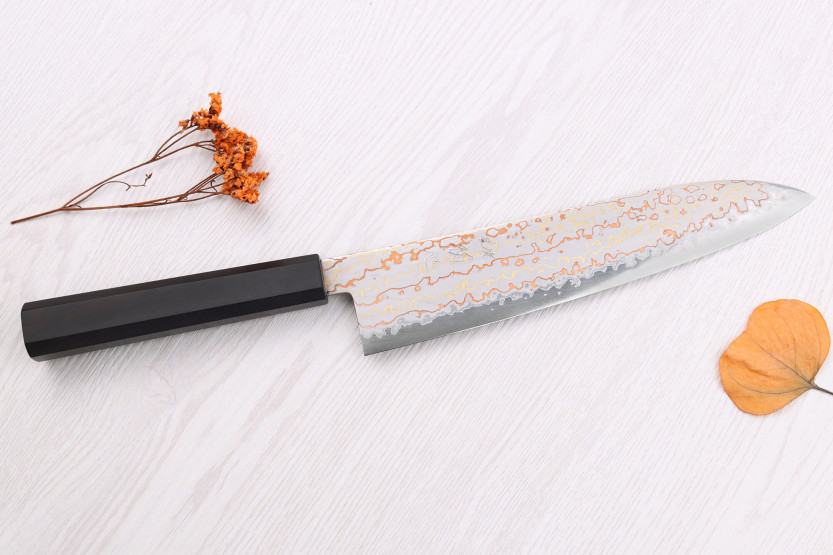
To complete the damascus structure, several layers of softer stainless steel surround the Aogami core to protect it and add suppleness to minimize the risk of breakage during use. You can see the superimposition of these different layers of steel all over the blade, where they form fine waves with random patterns. This Damascus knife has an original design, with an unusual coppery appearance!
Finally, your damascus blade has been polished for a refined finish and a most elegant visual effect!
A gyuto knife with an ebony handle
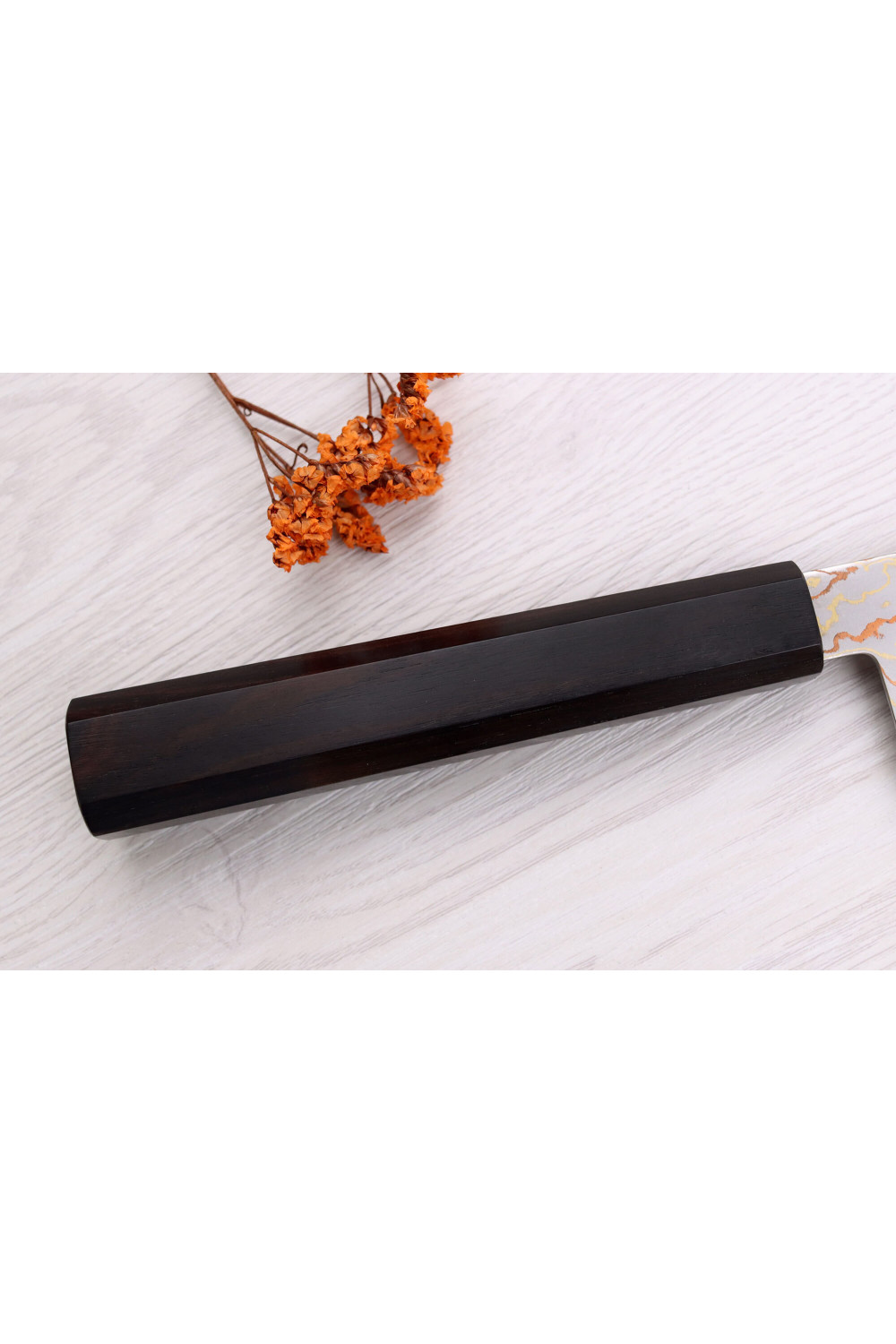
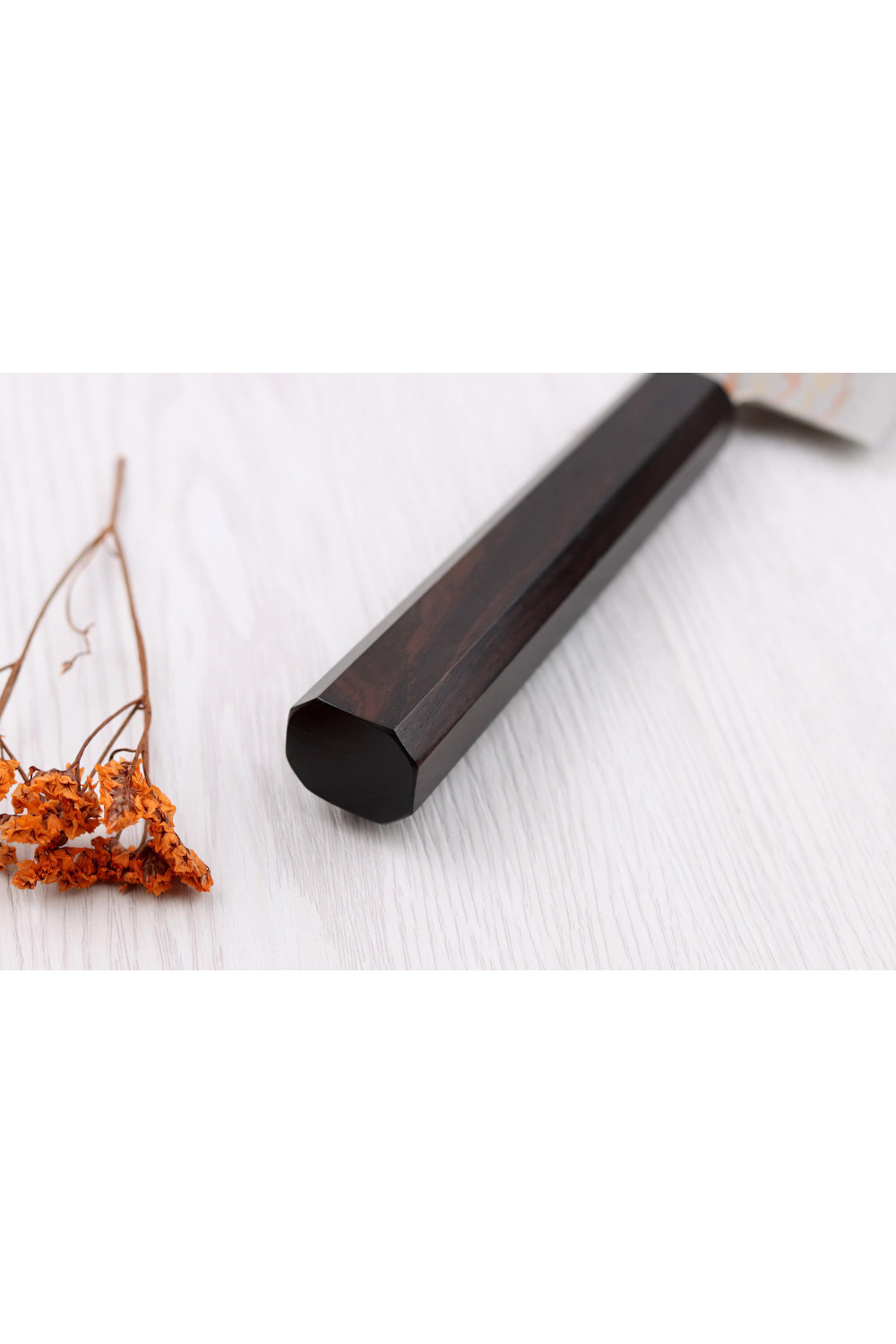
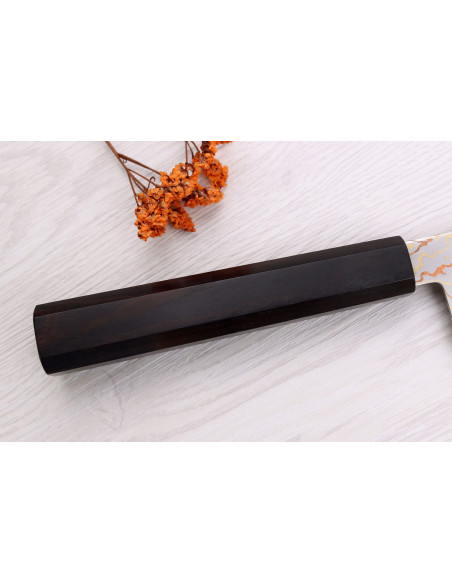
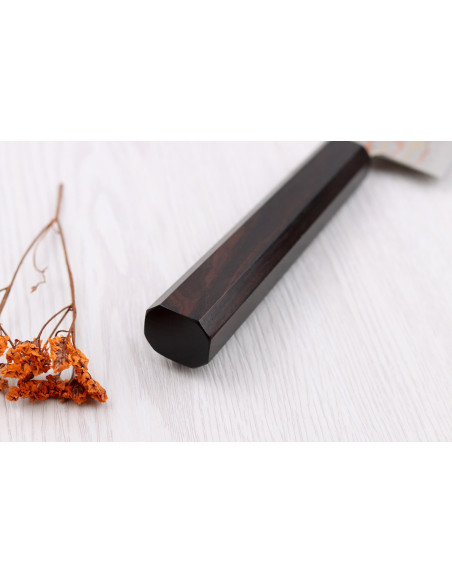
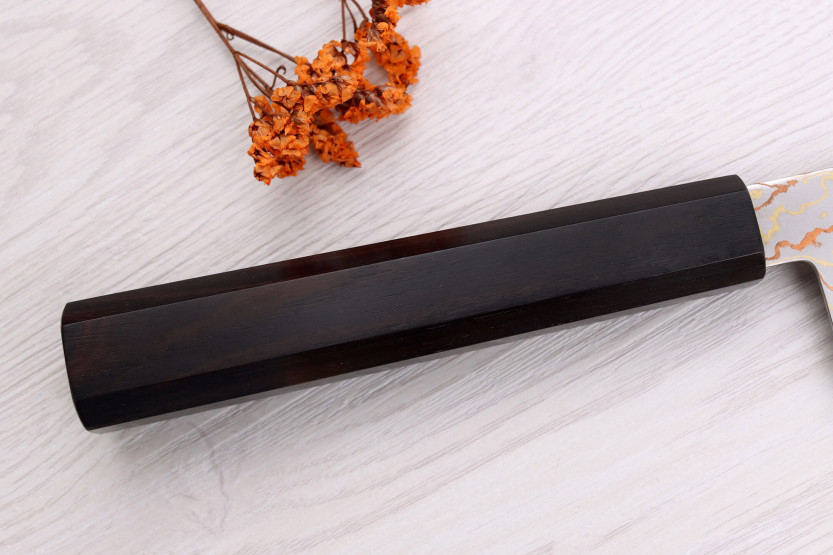
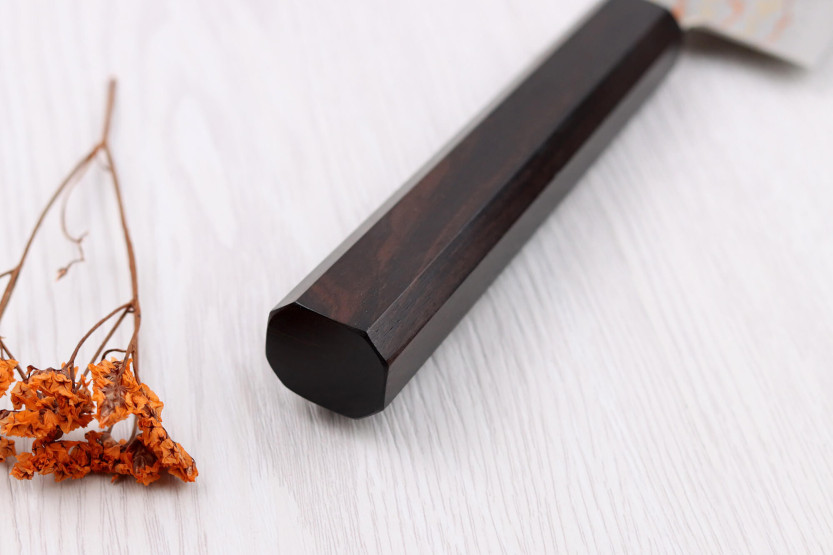
This damascus knife features a handle made entirely from ebony wood, a robust and durable exotic species. It's prized for its dark hue and dark veining, unique to every Hatsukokoro knife! This wood adds character to your damascus knife.
The octagonal handle of this handcrafted Japanese knife is suitable for all hands, whether left- or right-handed! It provides an ergonomic grip for comfortable use, even during prolonged use in the kitchen.
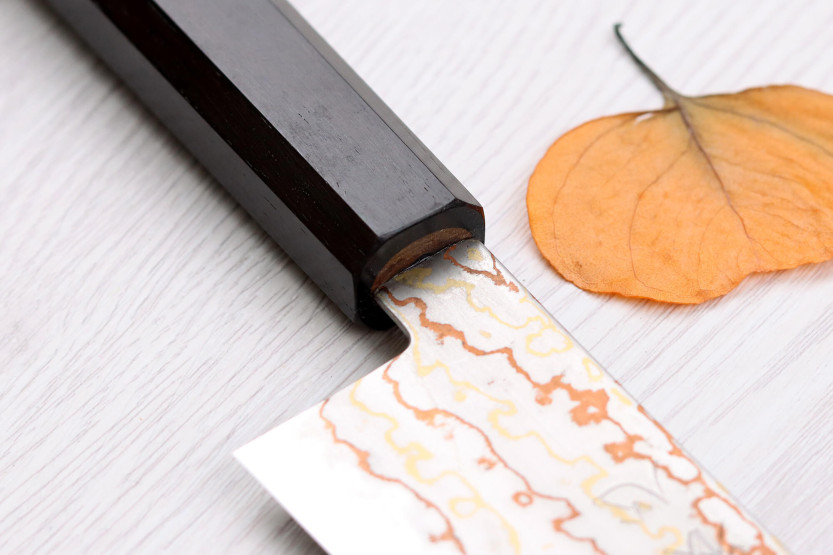
Finally, wood putty has been applied where the blade joins the handle to fill the small gaps. This ensures a watertight seal, preventing water or small foodstuffs from seeping through.
How do I care for a handcrafted Japanese knife?
To maintain your carbon knife, it's essential to wash it only by hand with a sponge and a mild detergent, avoiding wetting the handle. Once cleaned, you should dry it immediately with a clean cloth to remove all moisture and store it in a dry place. Do not use the dishwasher or leave it to soak in the sink.
Over time, the color of your blade may change slightly: this is normal! This is a natural reaction of carbon to ambient humidity or the acidity of the food you're cutting. This in no way prevents the use of your Japanese chef's knife!
Find a wide range of gyuto knives on Knifeleader.eu!




 By buying this product you can collect up to