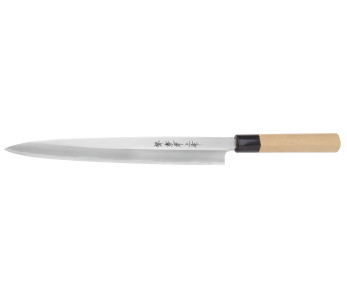
A high-performance blade in Aogami #2 steel
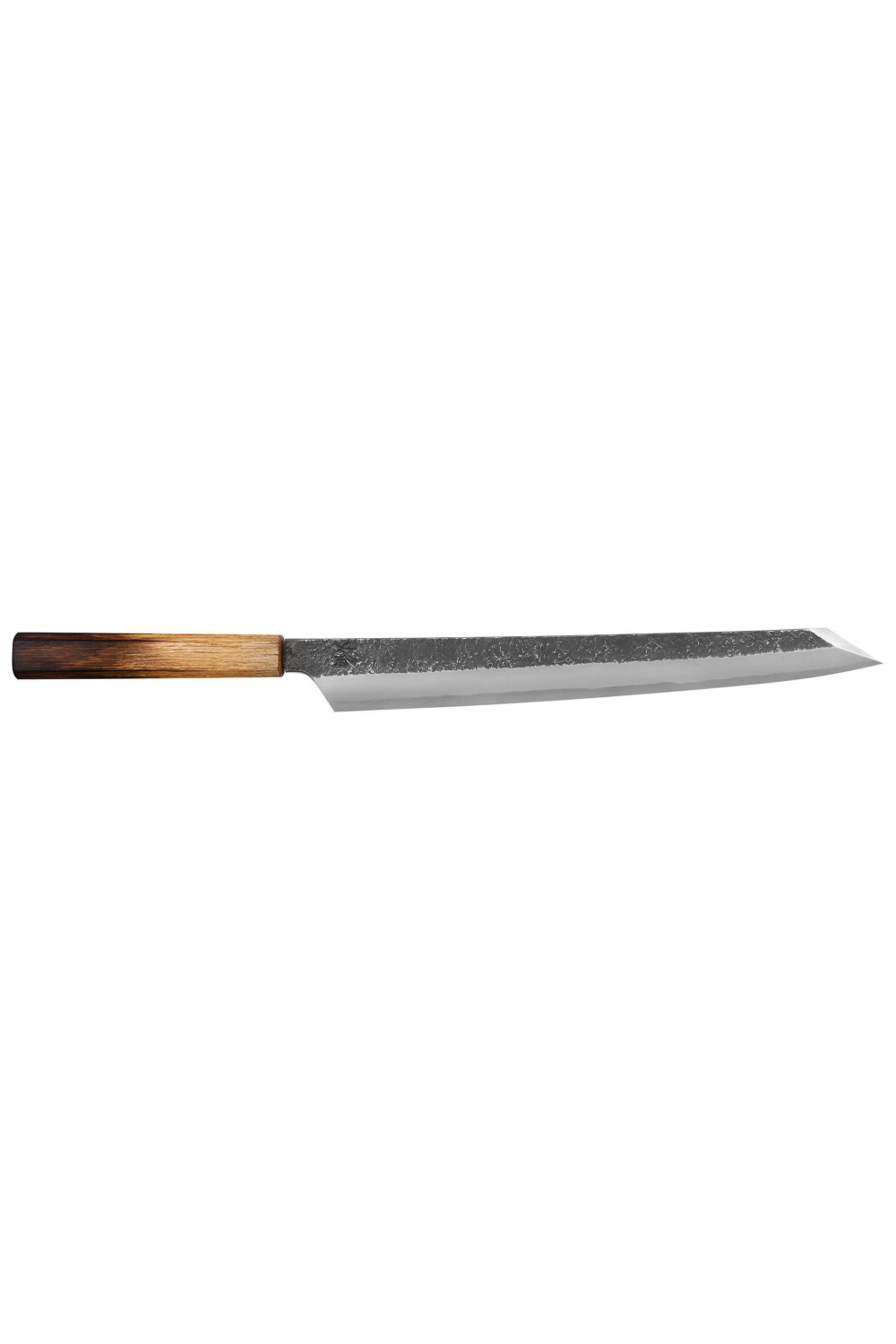
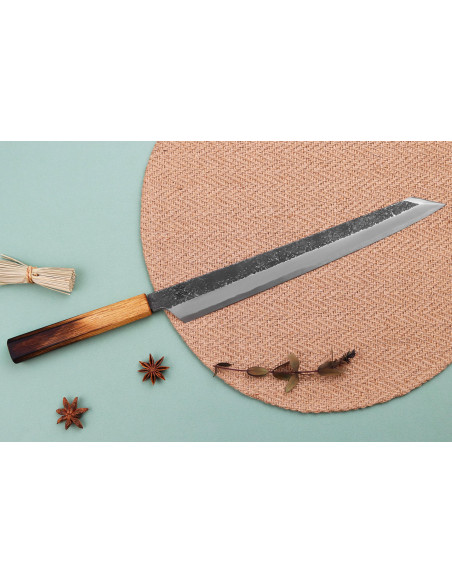
This Yanagiba knife features a San Mai blade, which means "3 layers" in Japanese. This construction, typical of the Land of the Rising Sun, consists in surrounding a core of rigid steel with a layer of softer steel, folded on either side. The 3 layers are formed. This design ensures optimum blade balance and protects the rigid core.
Here, the blade core is made from Aogami #2 steel (also known as Blue Paper Steel #2), a Japanese alloy manufactured by world-renowned steelmaker Hitachi.
The alloy contains a high carbon content of around 1.2%, carbon being the essential element for increasing a steel's hardness. The harder the steel, the longer its cutting edge. Here, the blade achieves a hardness of 62 HRC on the Rockwell scale, proving that it has a high-performance cutting edge and excellent edge retention.
This Aogami #2 steel is an expensive and difficult alloy to work with, and only a few blacksmiths have mastered it. If the alloy were to be handled by a non-specialist, the risk of loss would be high and therefore costly. Itsuo Doi is one of these specialist smiths!
To obtain a San Maï blade, a layer of softer steel is added on top of the Aogami #2 core. Aogami #2 offers greater strength, flexibility and protection. It is more resistant to micro-shocks encountered during cutting, and to breakage.
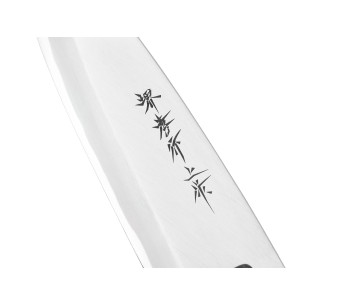
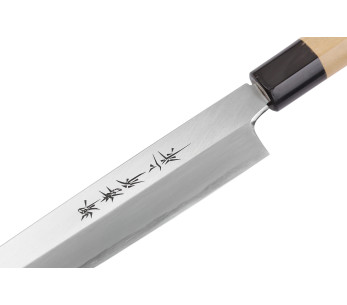
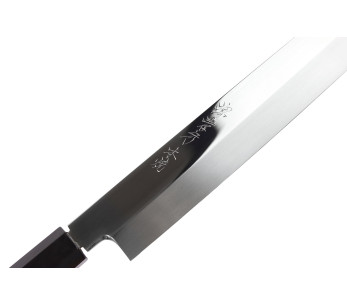
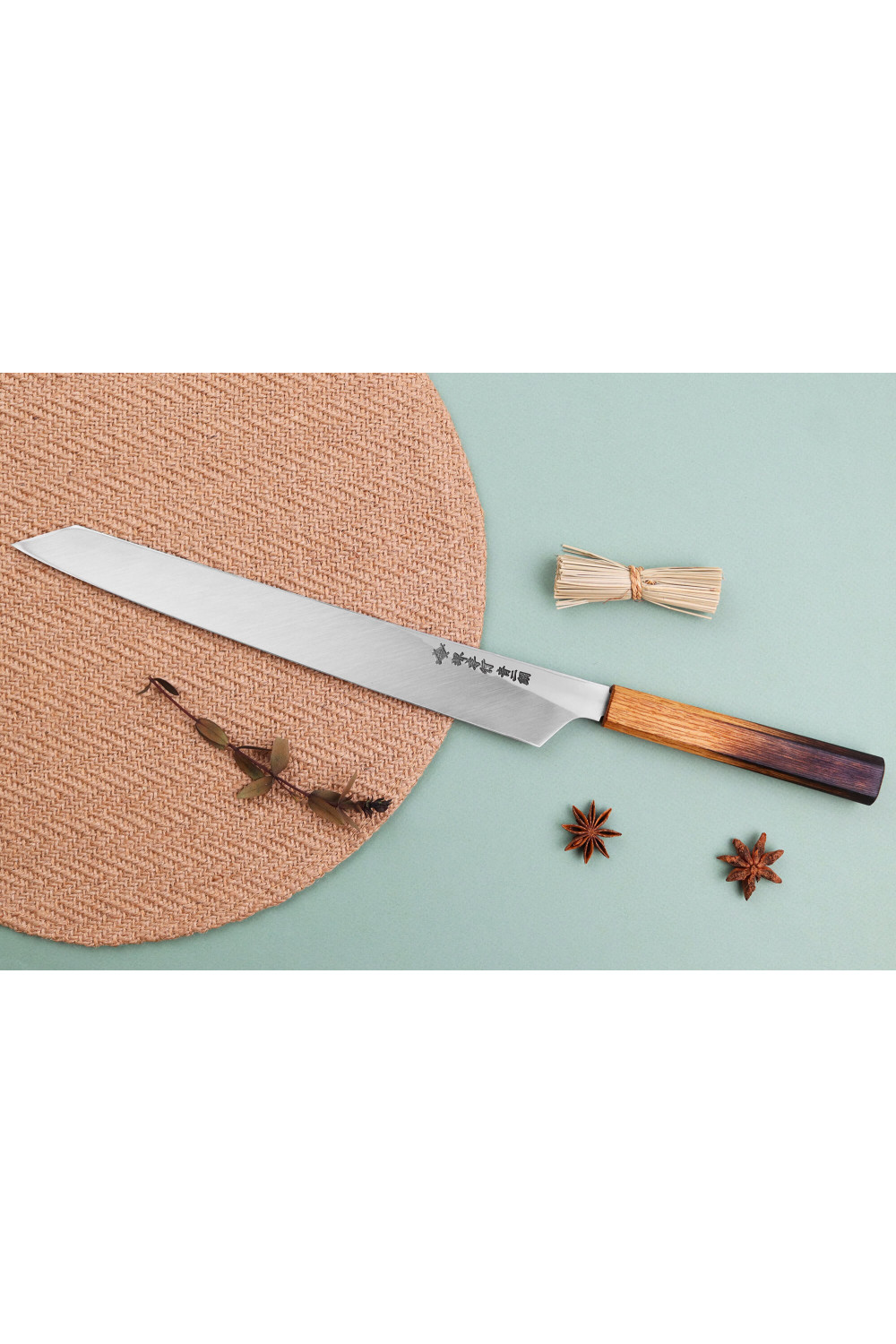
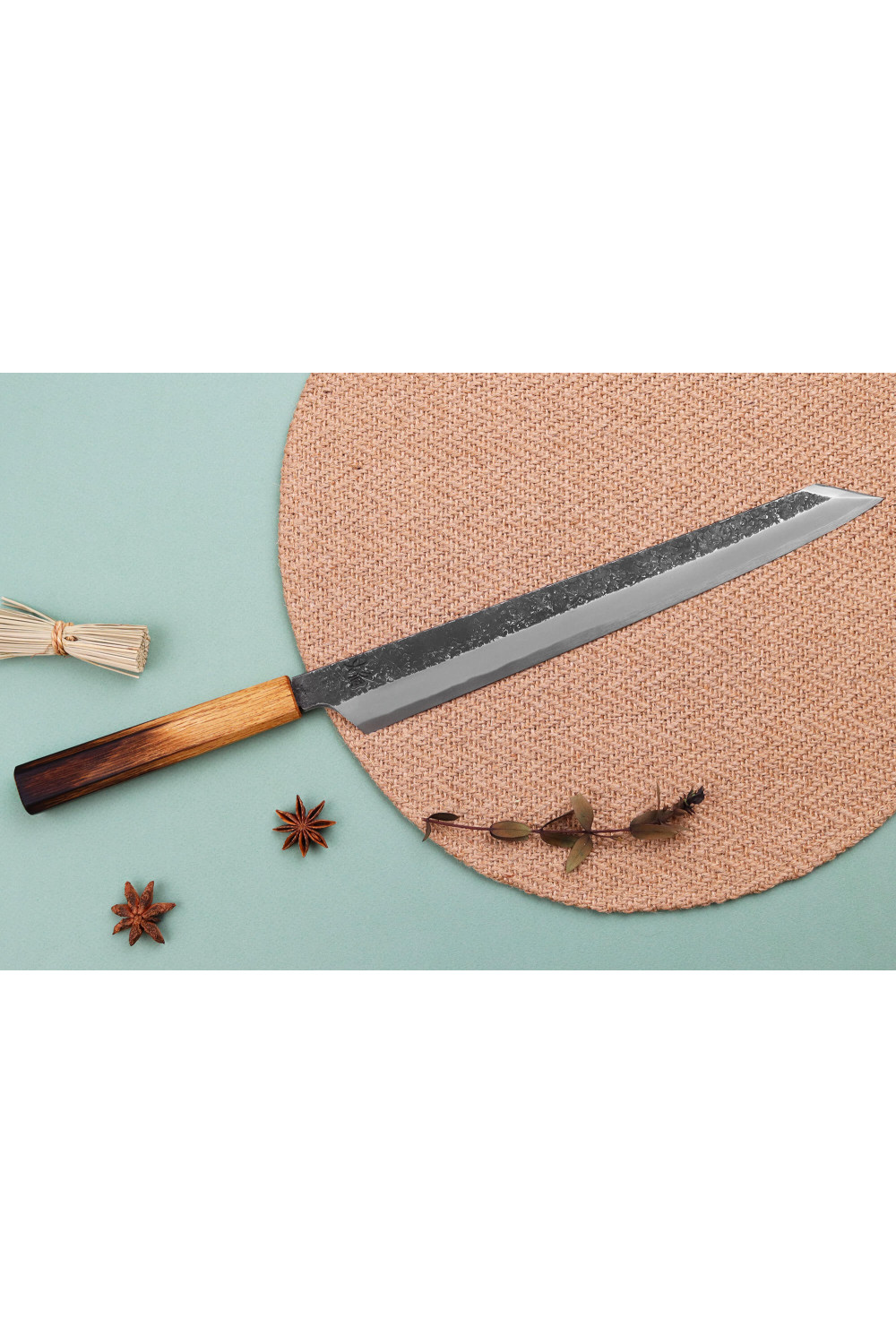
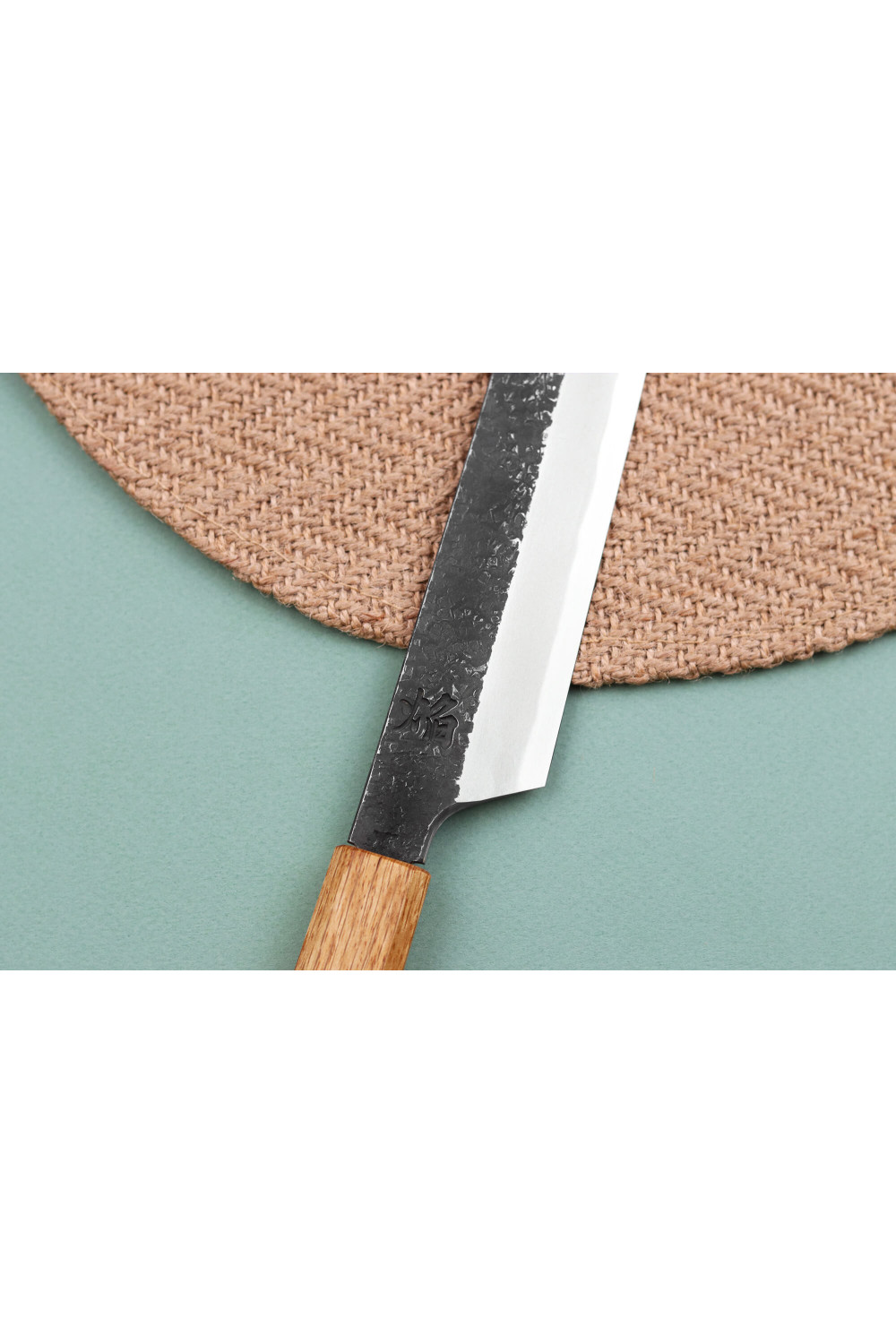
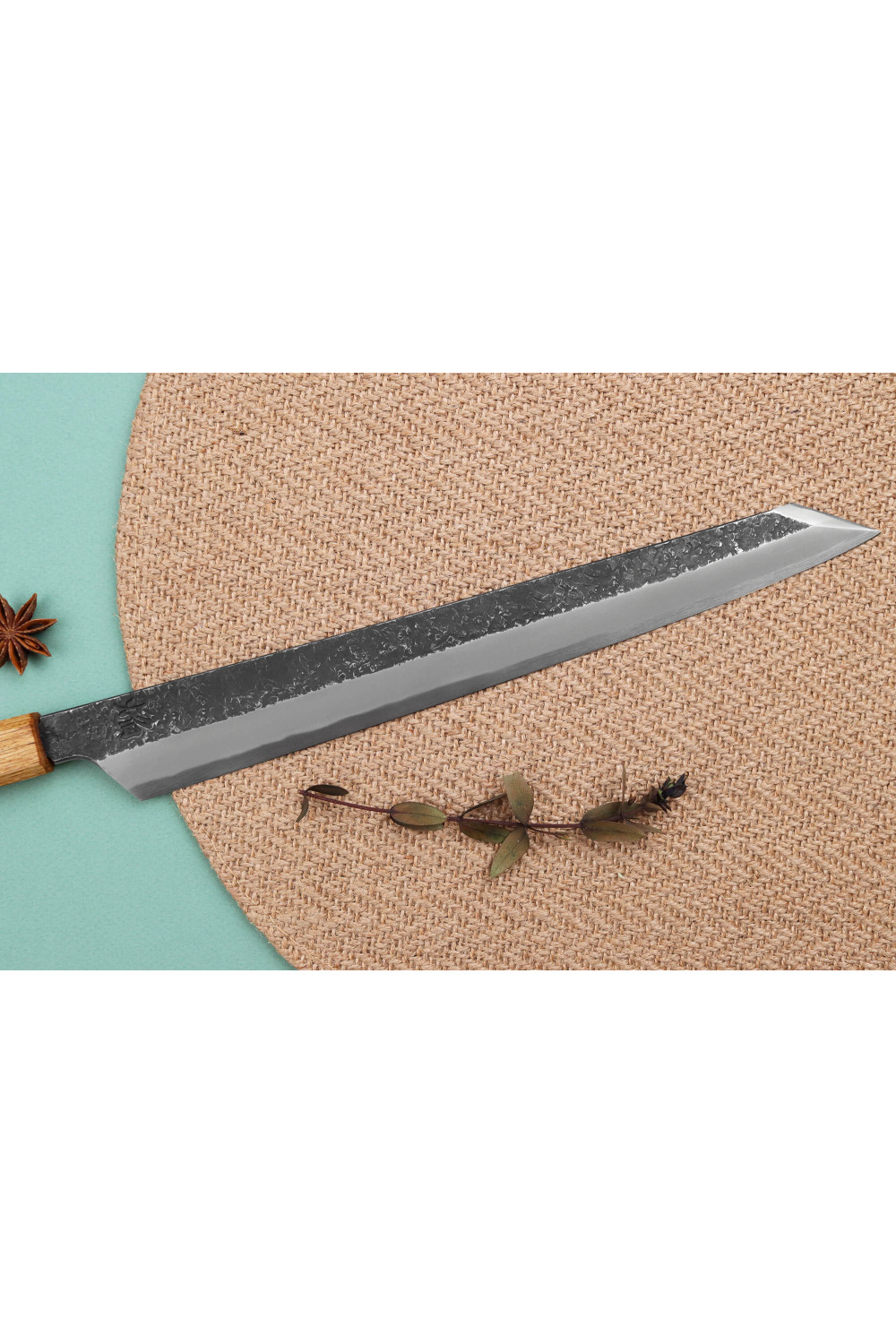
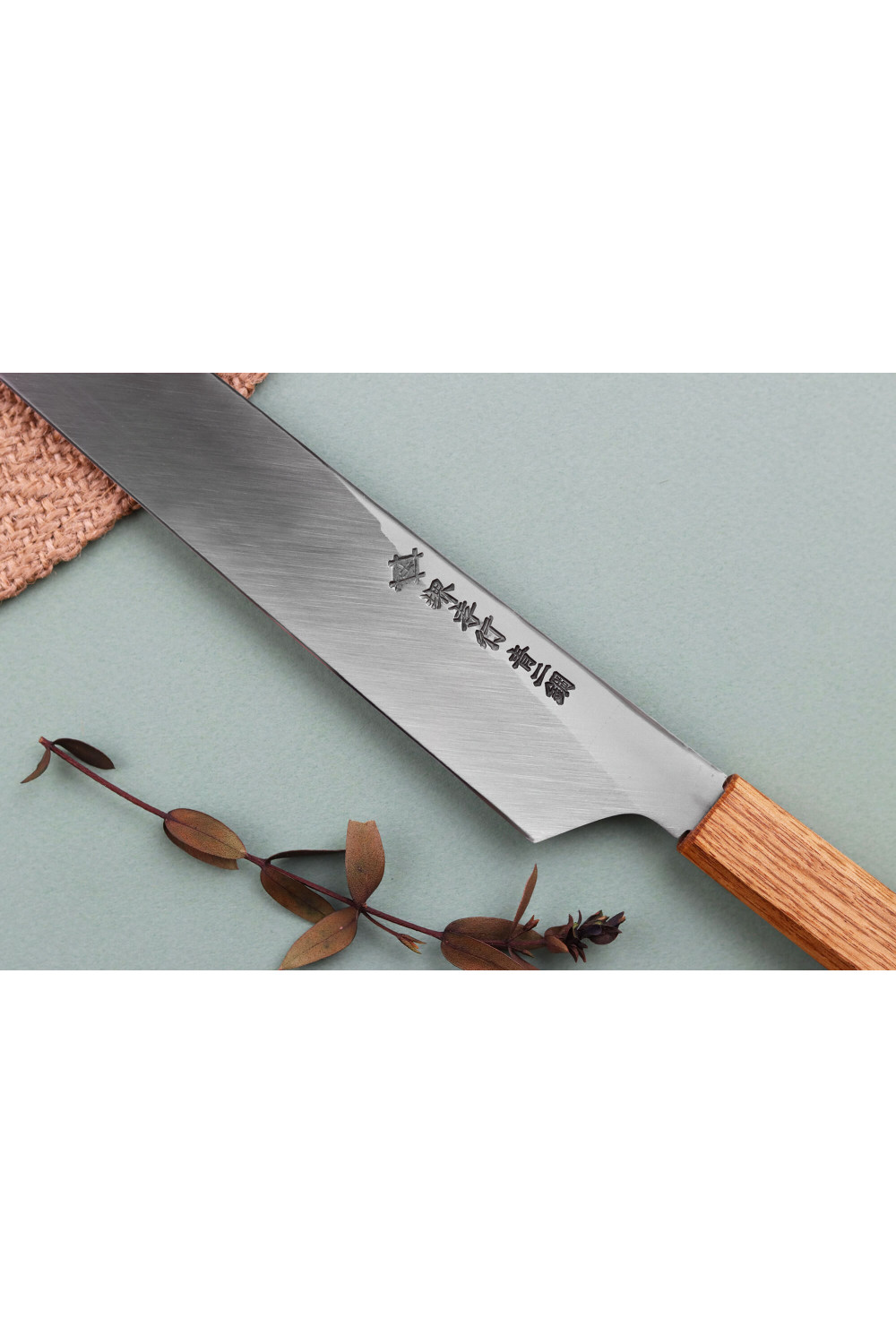
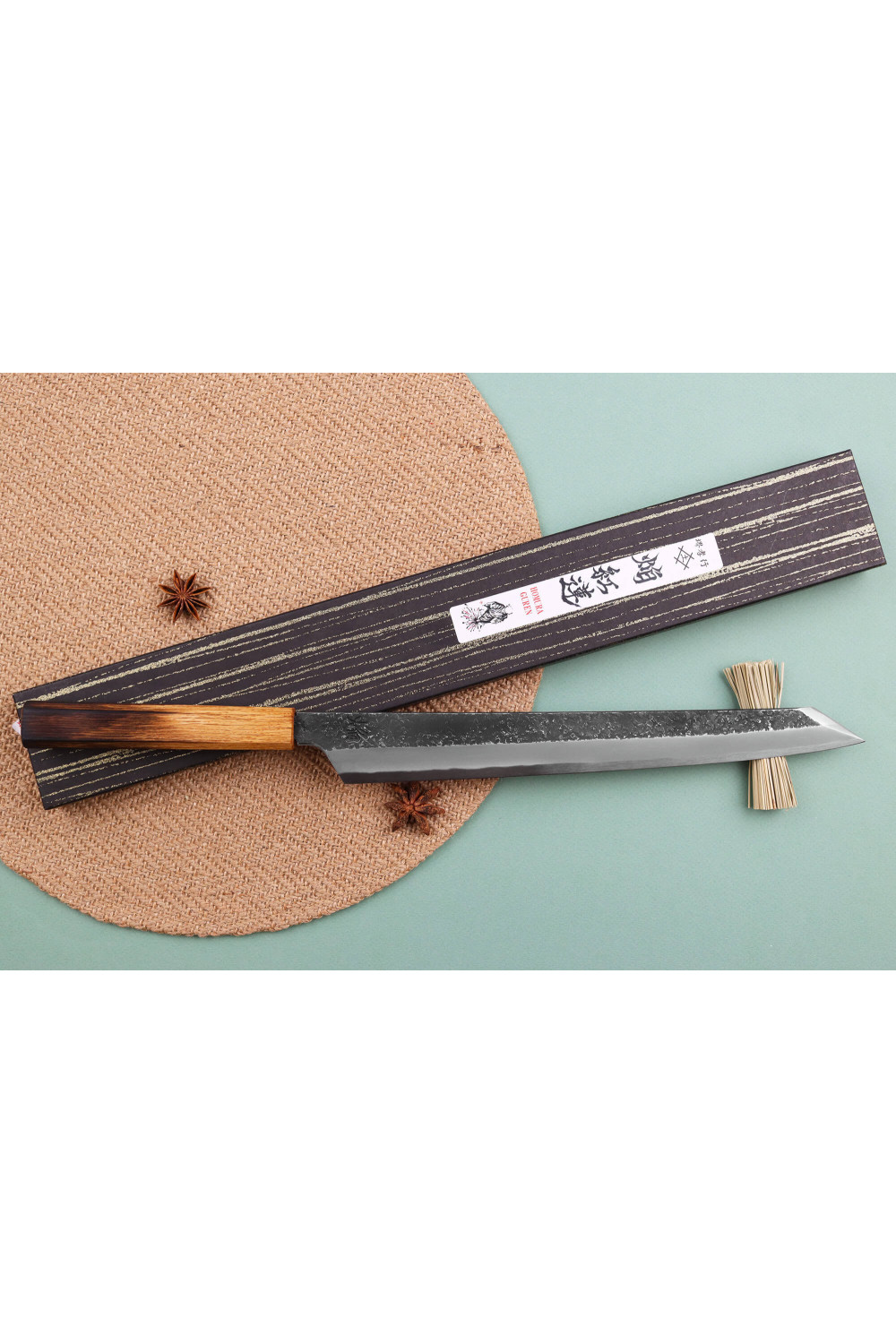
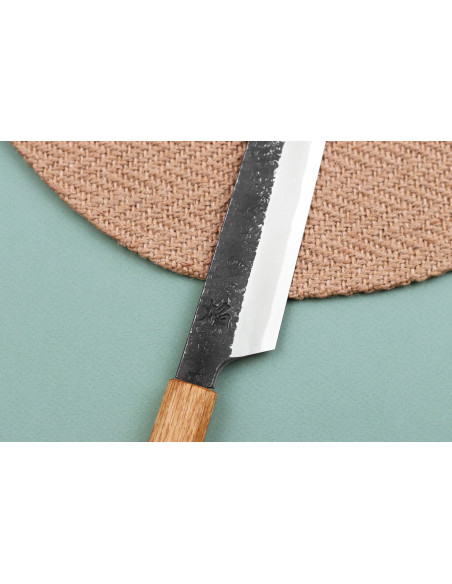
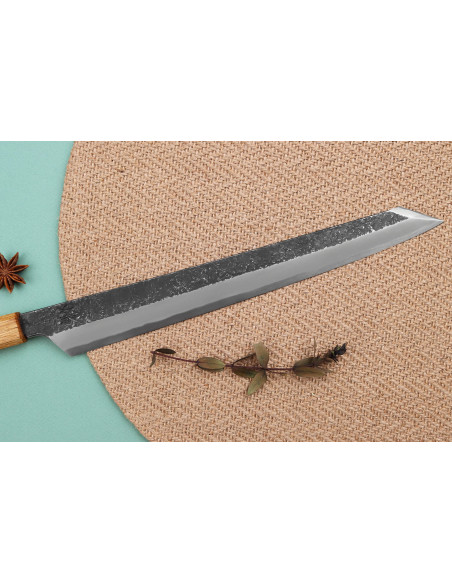
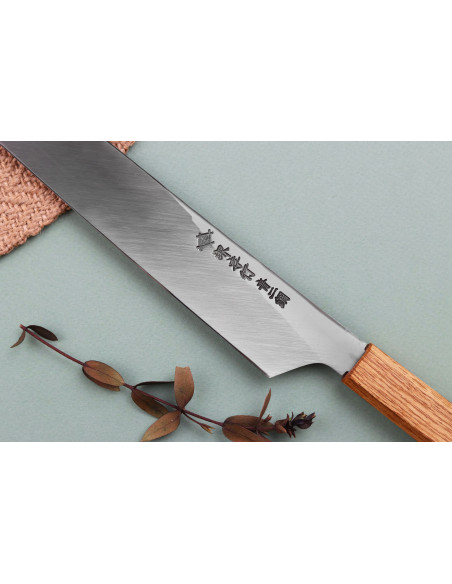
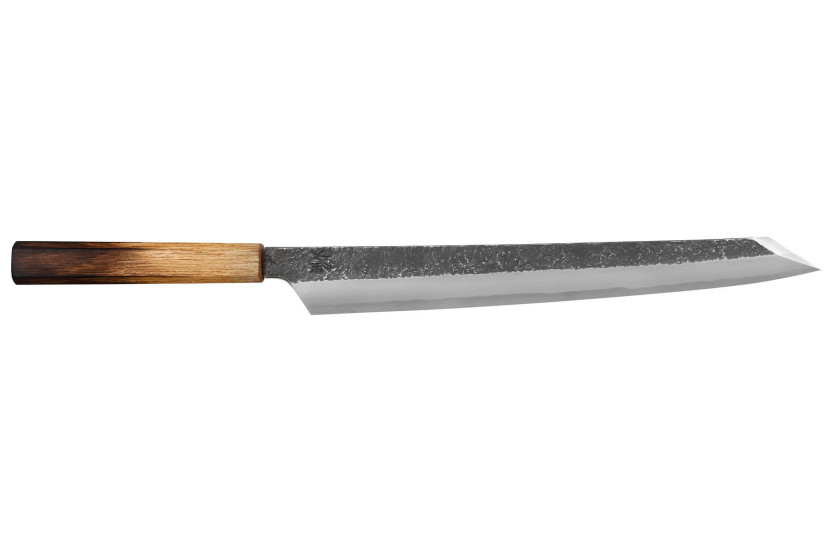
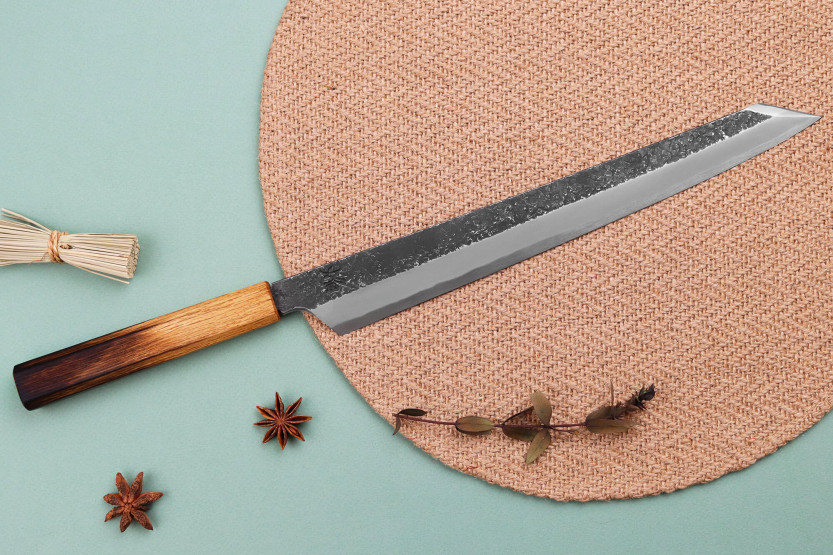
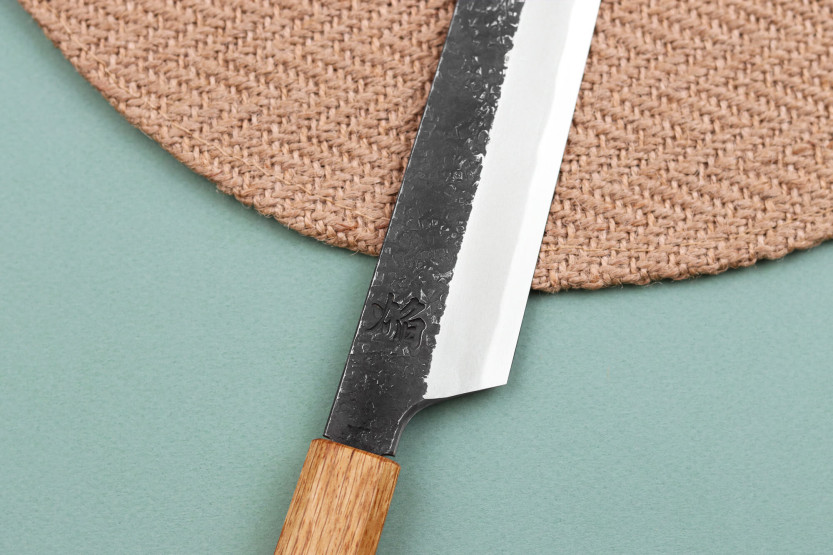
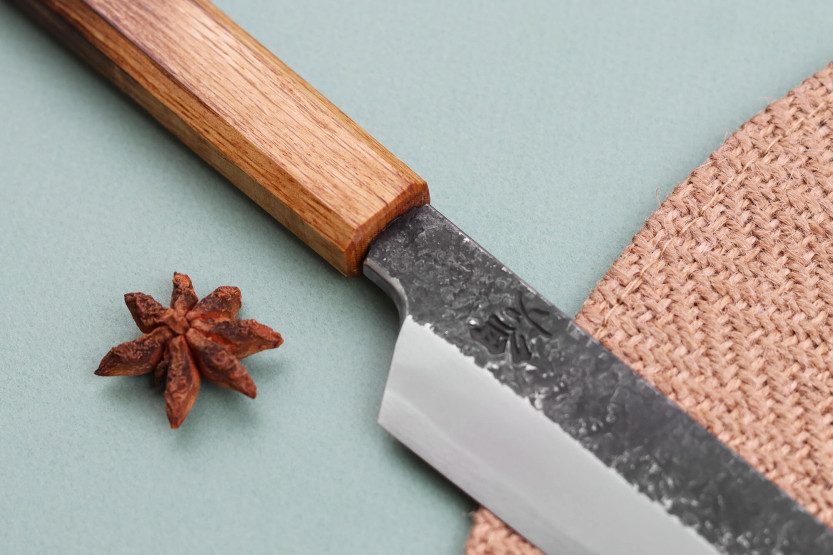
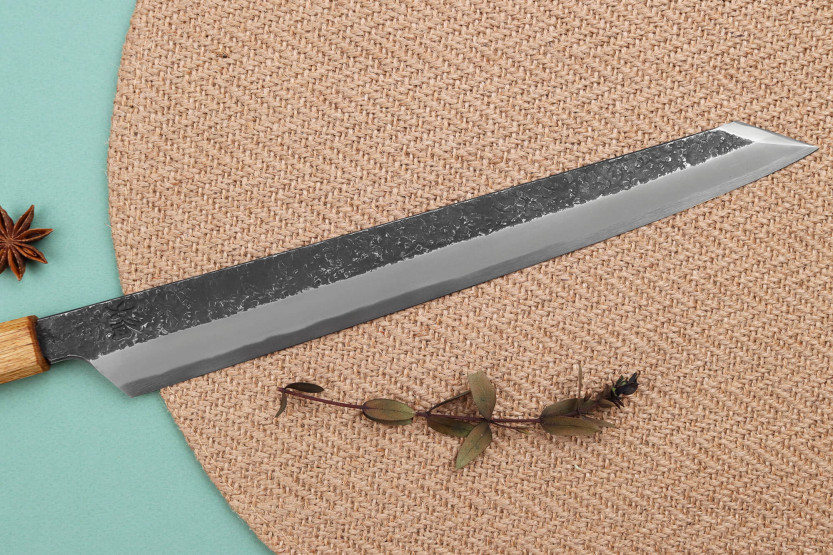
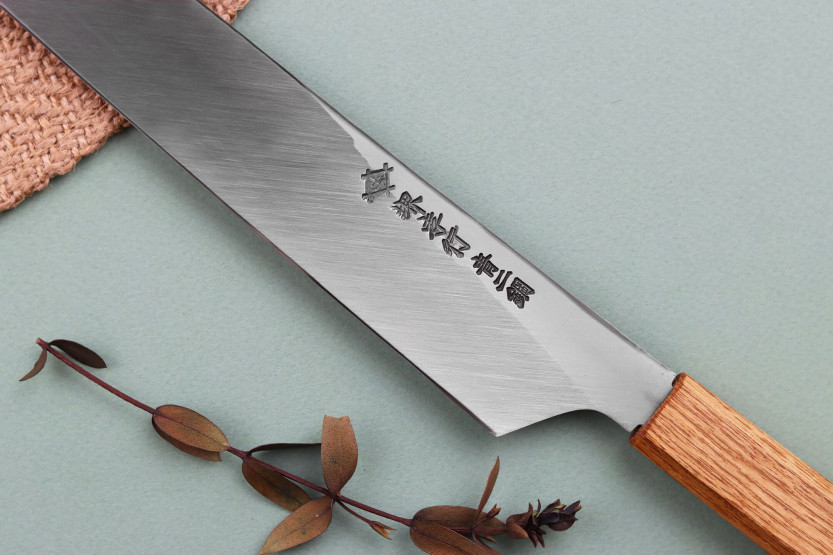
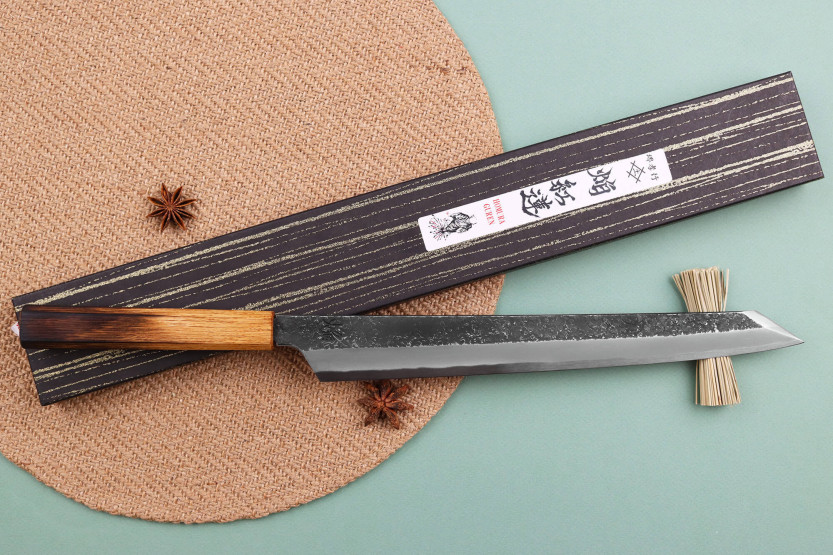
Last but not least, the blade retains its rough-forged appearance, as it has not been polished, but rather hammered. This type of finish gives the knife blade great character, and perfectly represents Japanese craftsmanship. Kanji have been engraved by hand. One of them, 焔 , reads Homura and means "flame" in Japanese. It echoes the name of the range.
Note that the cutting edge of this yanagiba is beveled, making it suitable for right-handed use.
A robust and elegant burnt oak handle
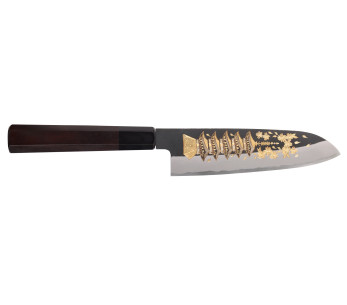
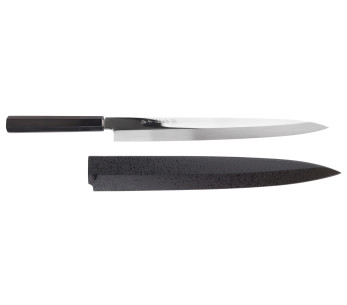
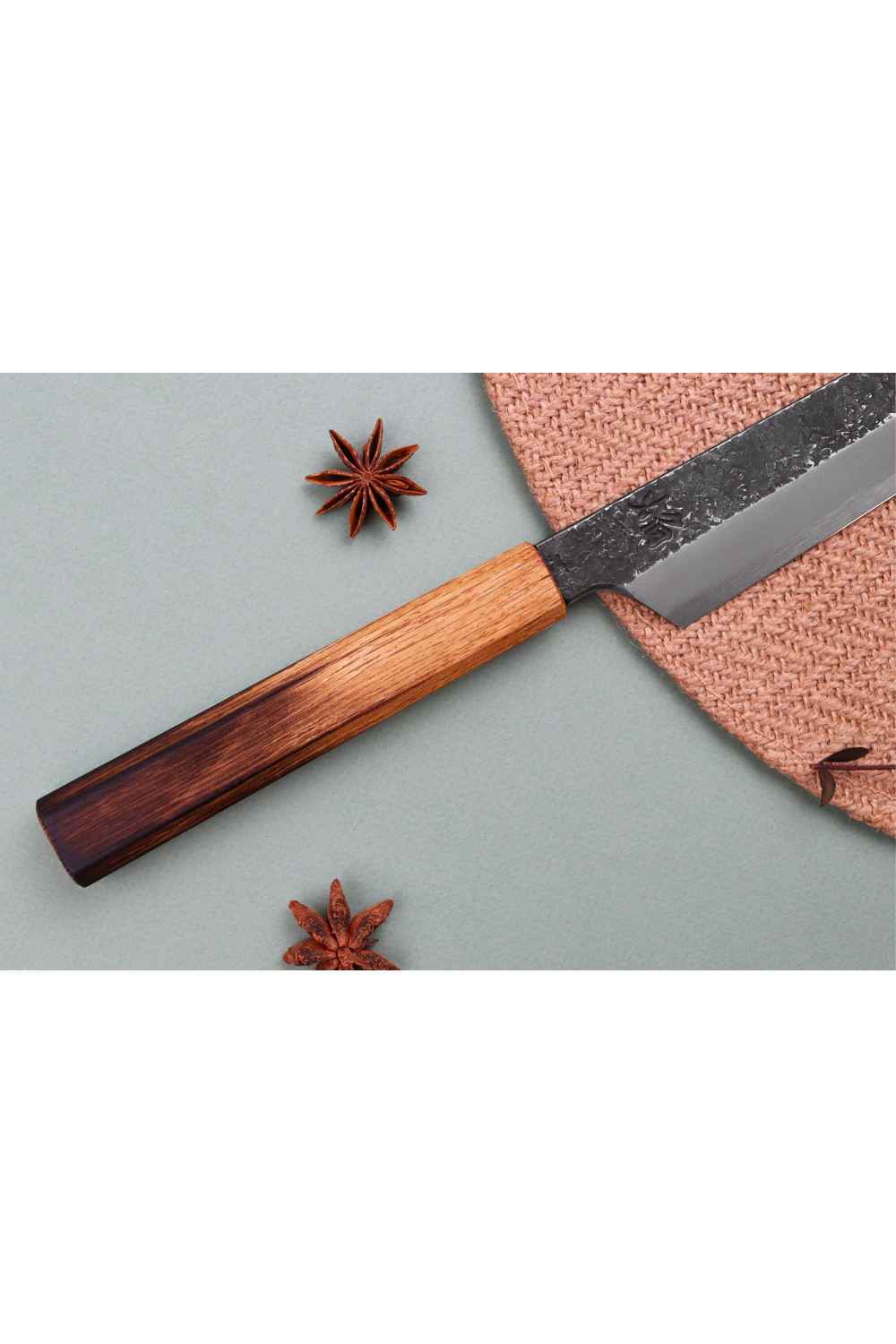
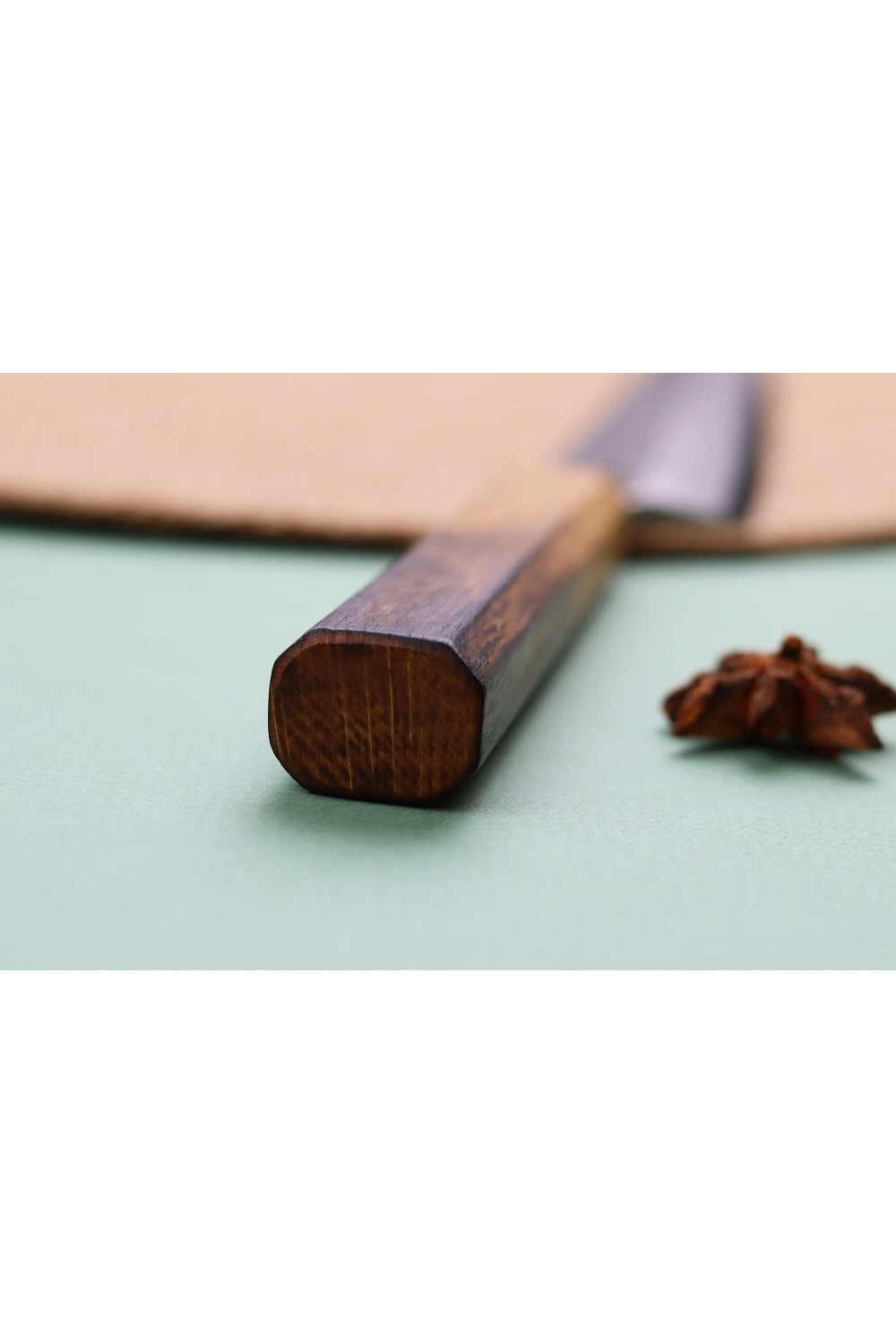
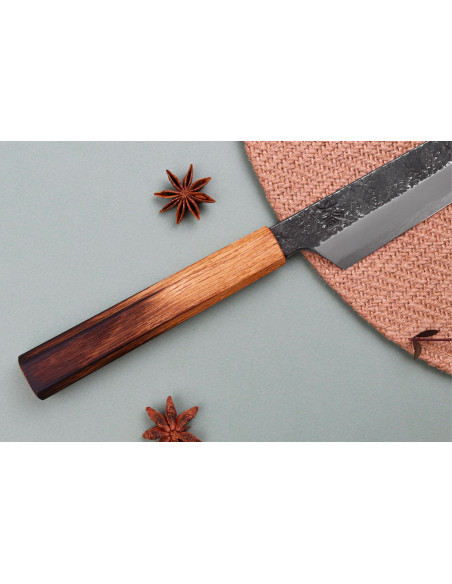
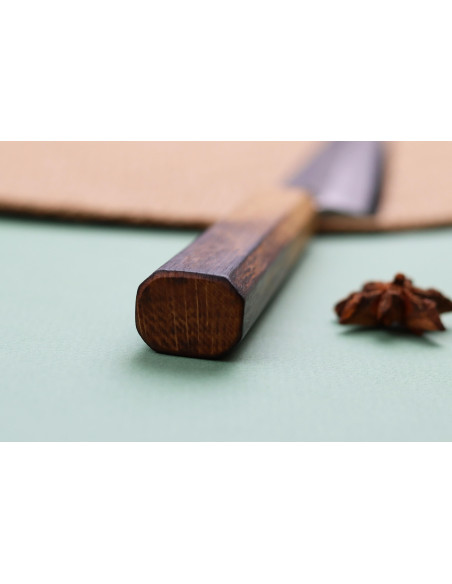
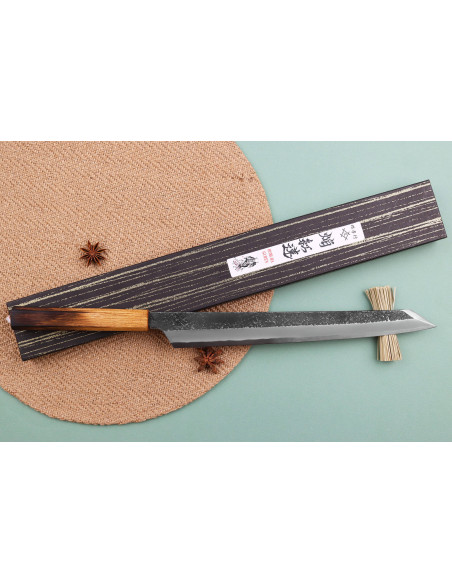
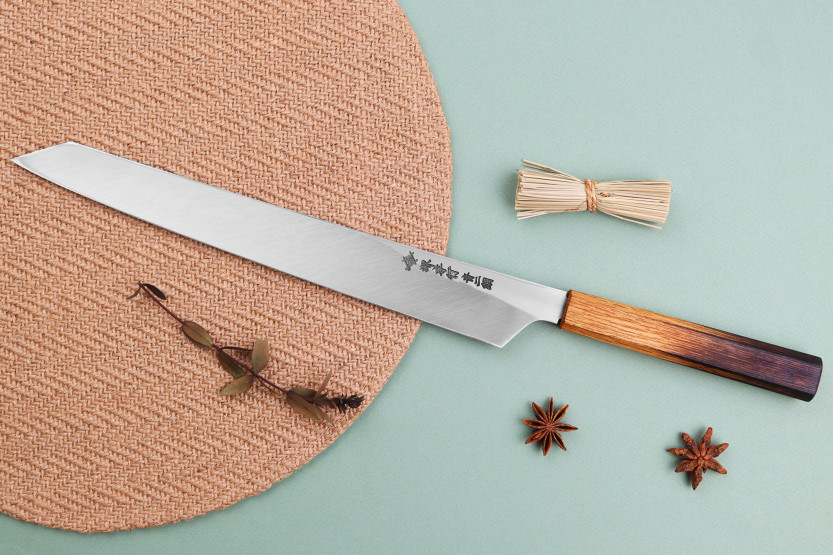
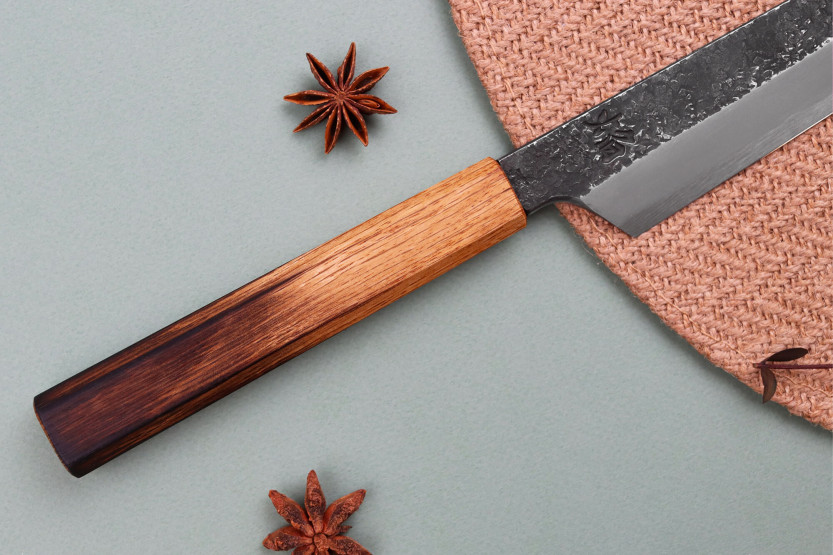
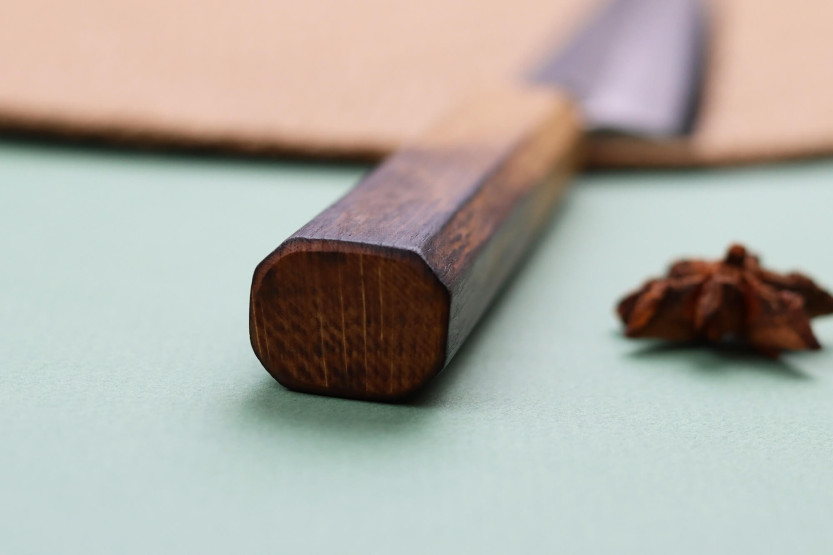
Your Yanagiba knife has a handle made from oak, a durable species that resists shock and vibration. Its high density makes it difficult to deform, making it ideal for knife handles. The end of the handle has been burned, providing a nice contrast with the wood's clarity and reinforcing its strength.
Its octagonal shape is very comfortable and ergonomic. It's easy to handle, even when cutting for long periods.
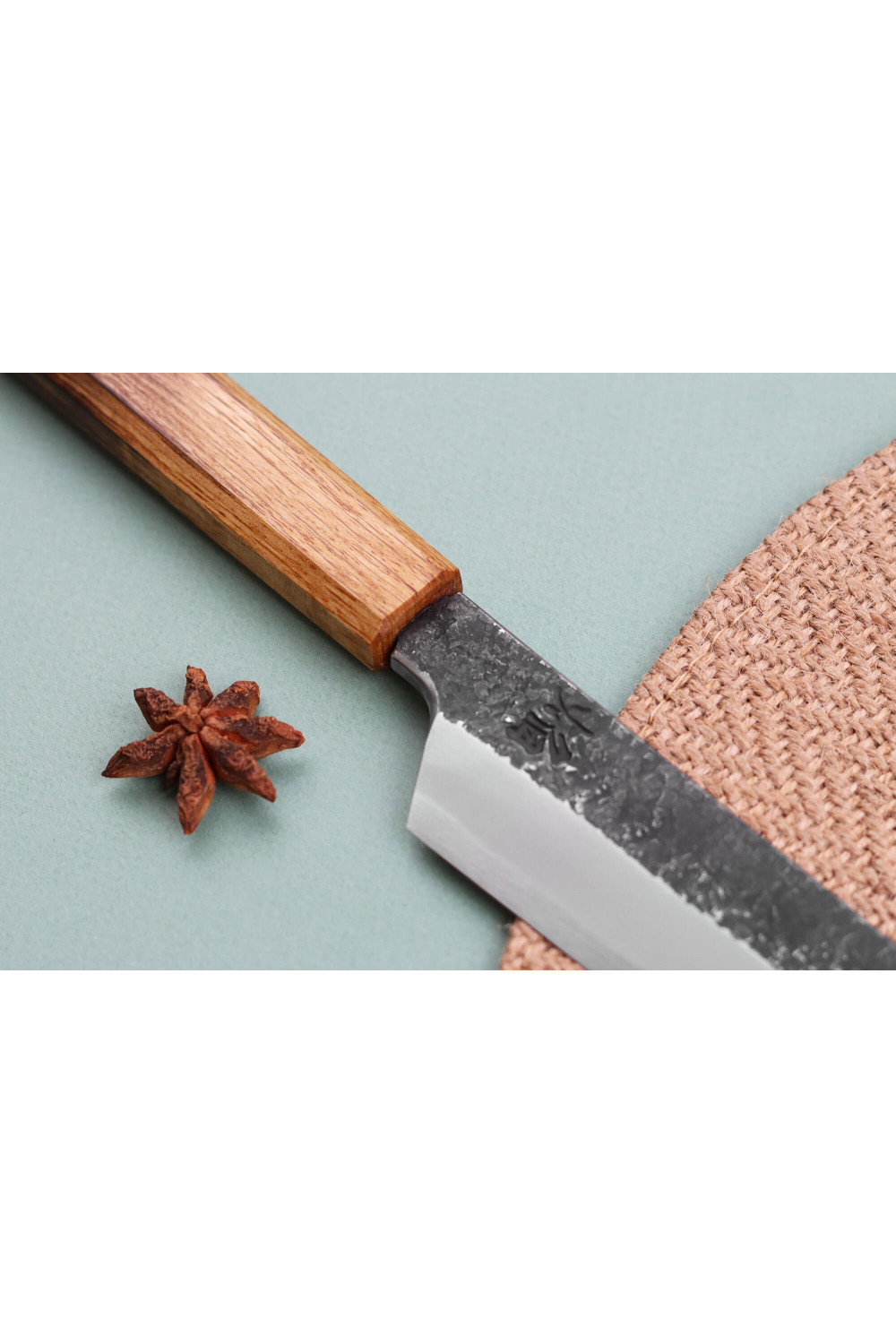
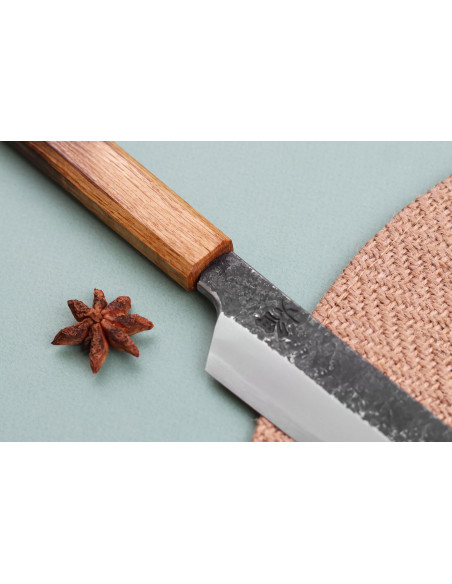
Wood paste has been added to fill the gaps between the blade and the handle. This makes the whole unit perfectly watertight, preventing food and water from entering.
You may also have the impression that the blade doesn't fit properly into the handle, but this is not the case. Leaving the machi exposed is a Sakai tradition which, as well as being aesthetically pleasing, enhances the knife's balance by adjusting its center of gravity.
Your knife must be cleaned by hand, using a non-abrasive sponge and a mild detergent. Once you've washed it, dry it quickly and thoroughly to remove all traces of moisture. You can then store it in a dry place.
Please note that despite perfect care, the blade of your knife may change color over time: this is perfectly normal! The carbon contained in steel reacts naturally to external elements such as the acidity of food, humidity in the air...
Itsuo Doi's know-how for Sakai Takayuki
The yanagiba is a knife specifically designed for preparing sushi. In fact, its long, thin blade is easily inserted into the raw flesh of the fish, ensuring clean cuts. The tip of the knife shown here is that of a Kiritsuke knife and is designed to bring even greater precision to your cuts. Be careful not to cut excessively hard foods, such as frozen foods or squash, or your blade may break.
Sakai Takayuki is a Japanese company founded in the 1950s. It is based in Sakai, which is why the company's name includes the town's name. With its many years of experience, the company now boasts extensive expertise in cutlery. It has also inherited the skills of the blacksmiths of yesteryear who made the famous katana. Sakai Takayuki offers you quality Japanese knives, combining traditional techniques with modern visuals.
She called on Itsuo Doi to create her Homura Guren range. Itsuo san is a master blacksmith whose skills stem from his apprenticeship with his father, Keijiro Doi. He himself was a master blacksmith recognized by his peers for his great technique: forging steel at a lower temperature than normal. This method preserves all the steel's particles, and thus makes for longer-lasting knives. Keijiro san taught this method to his son, who has been using it for over 50 years! His knives are of the highest quality.
Homura Guren knives are available on our website!




 By buying this product you can collect up to