The high-quality San Maï blade
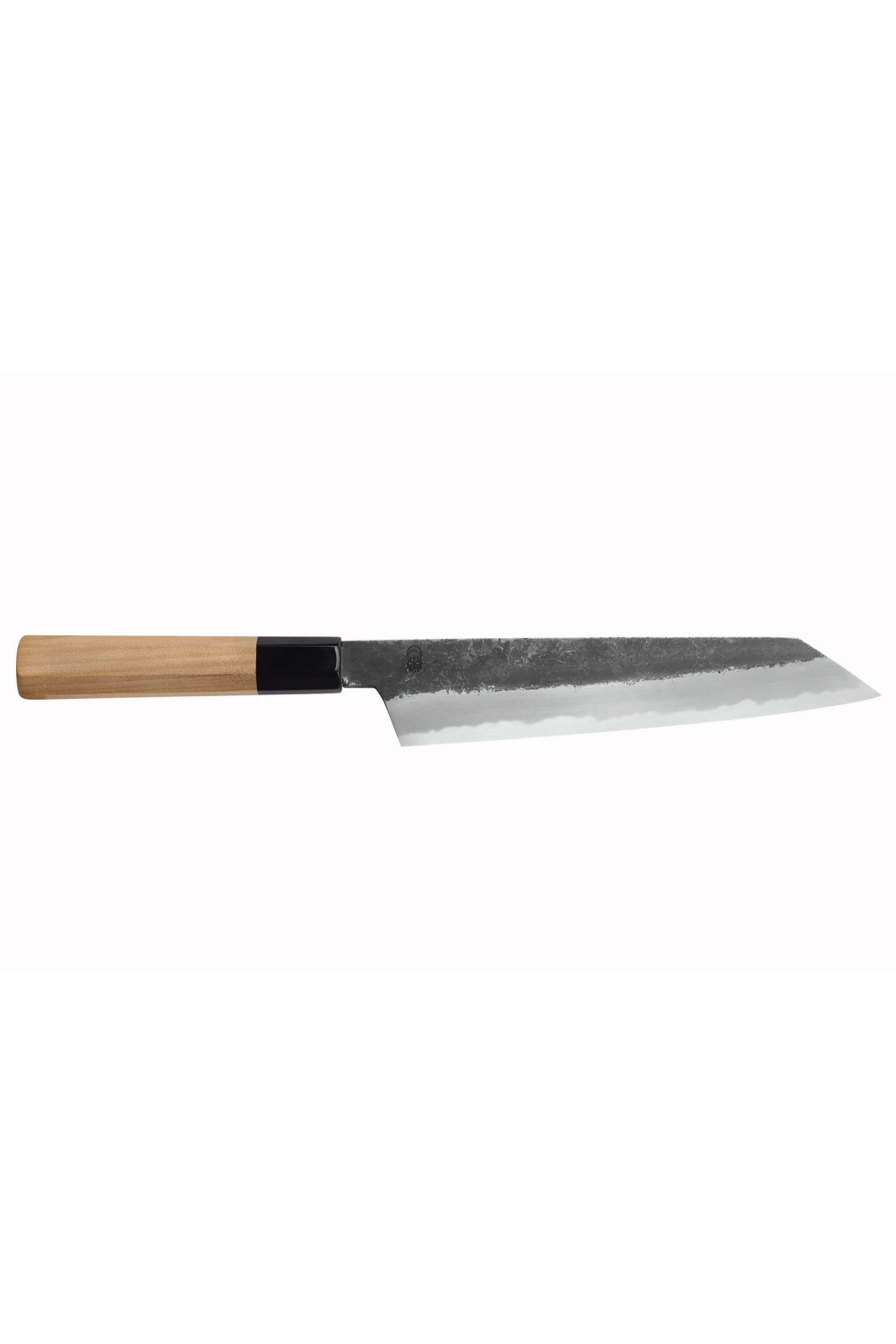
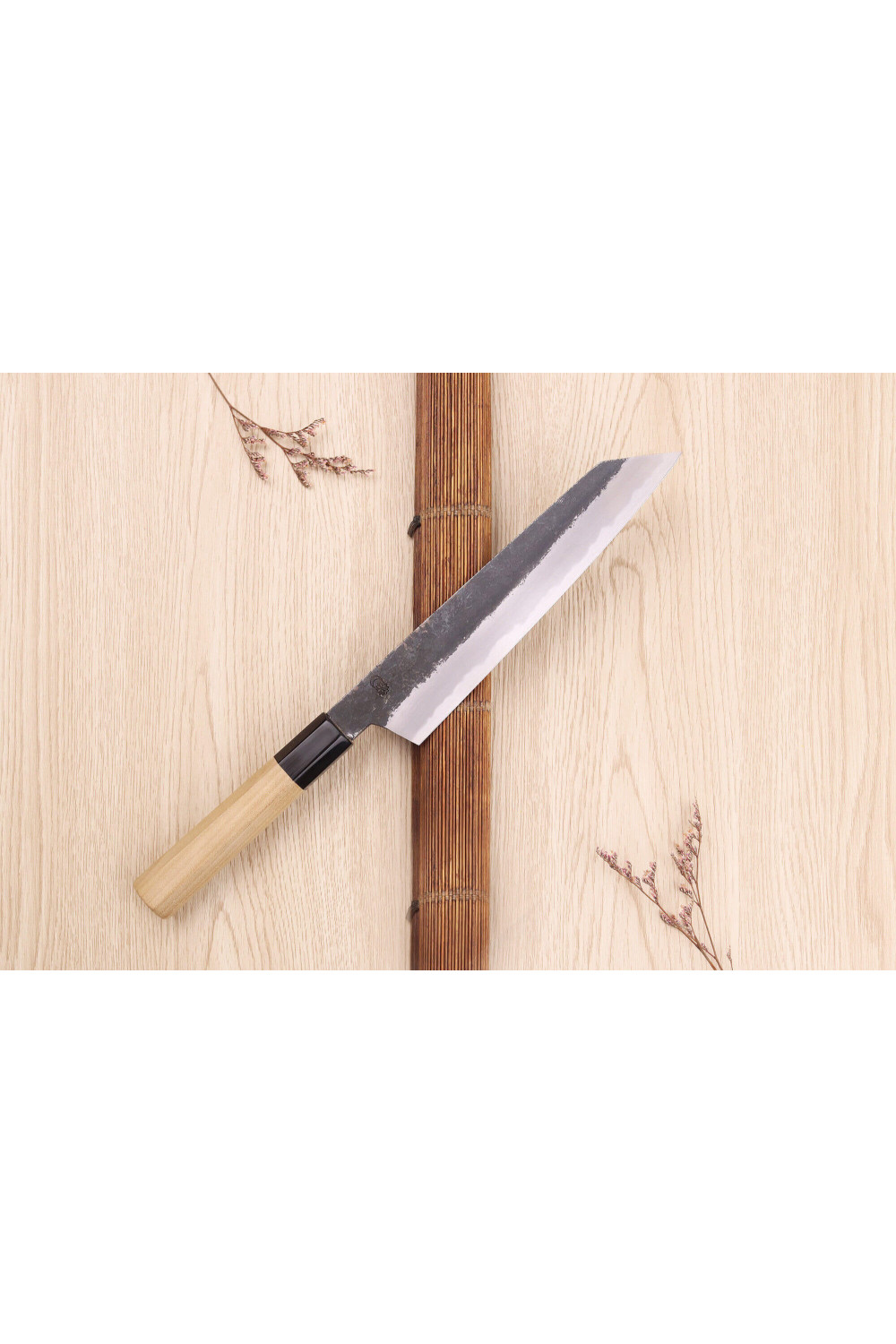
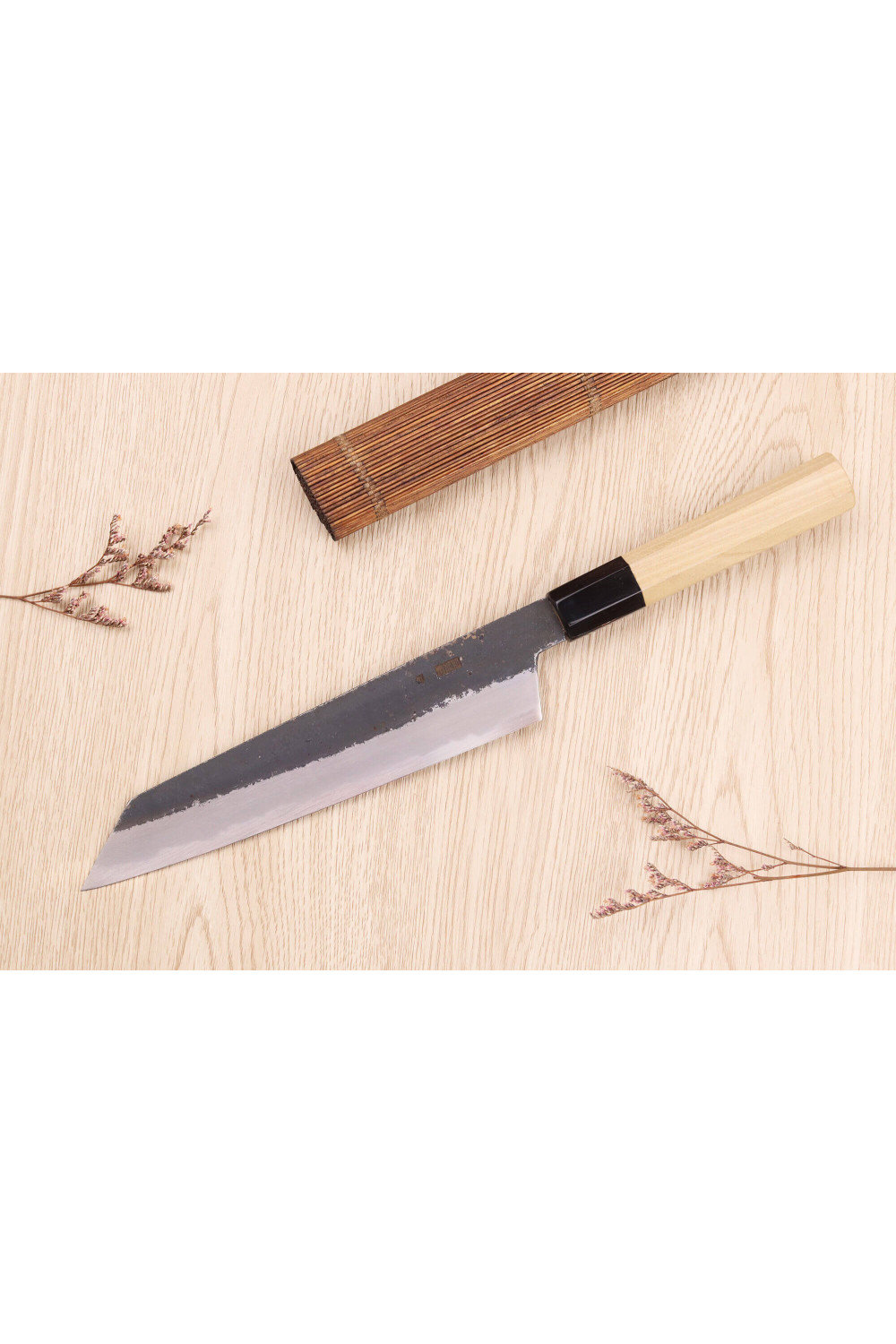
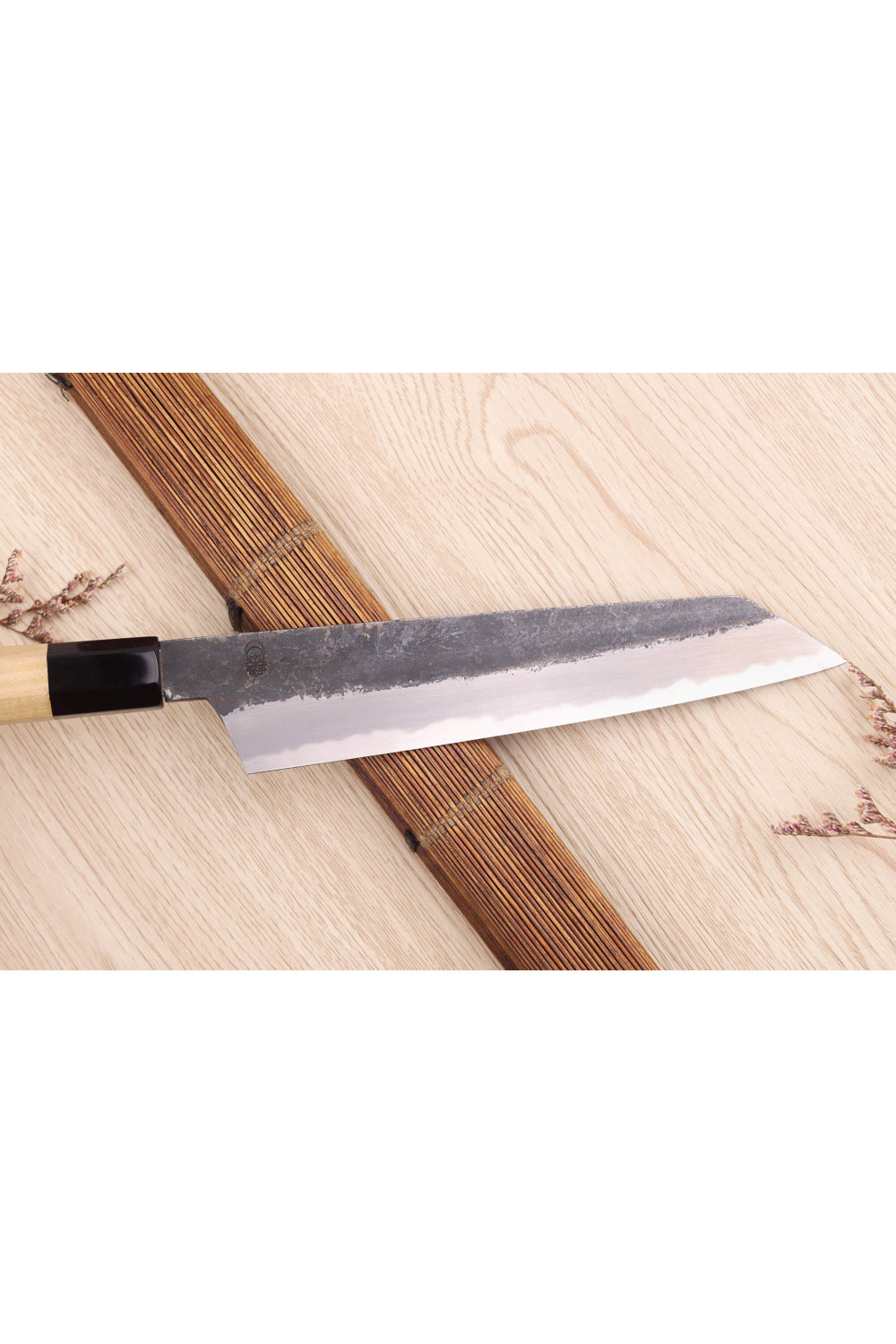
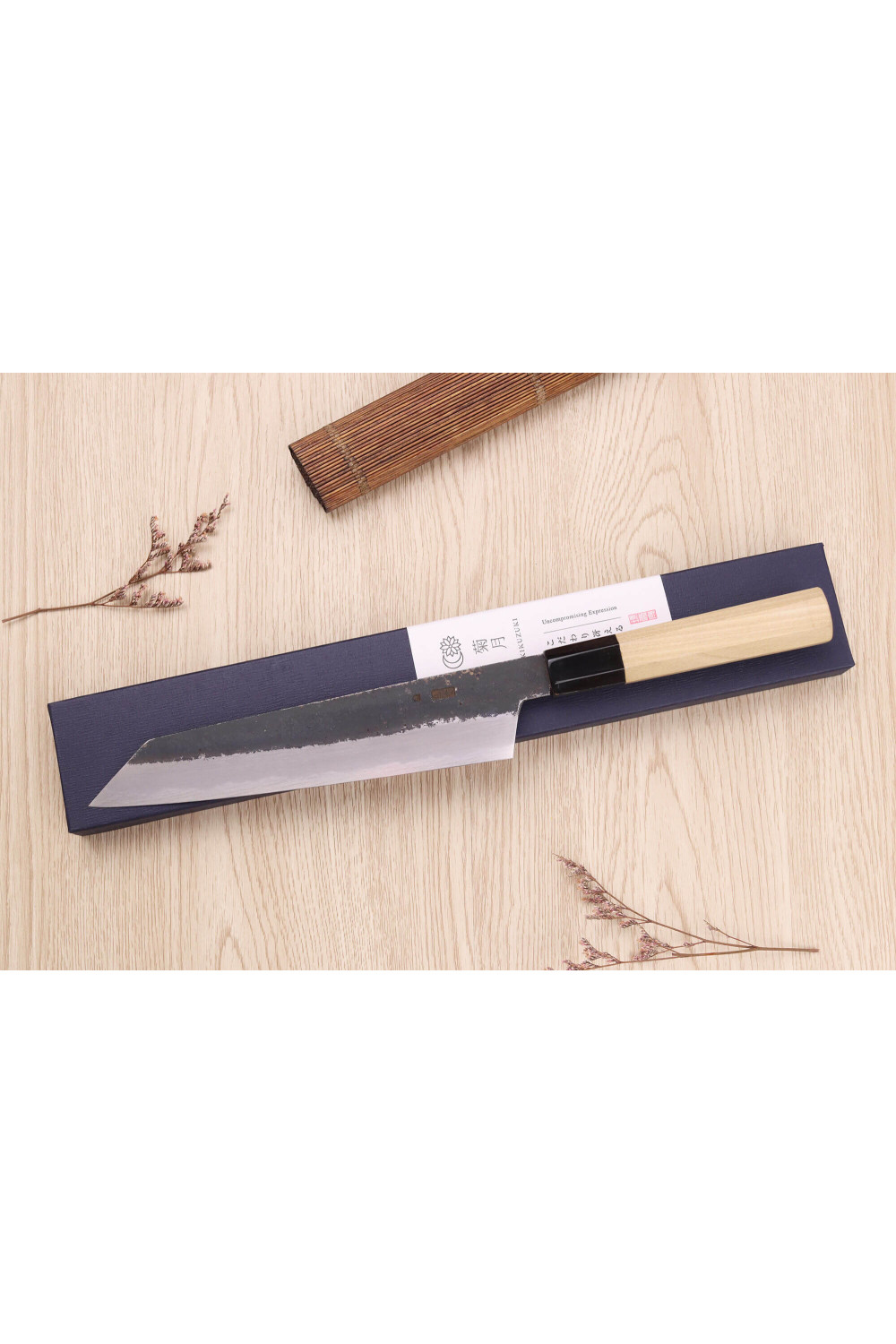
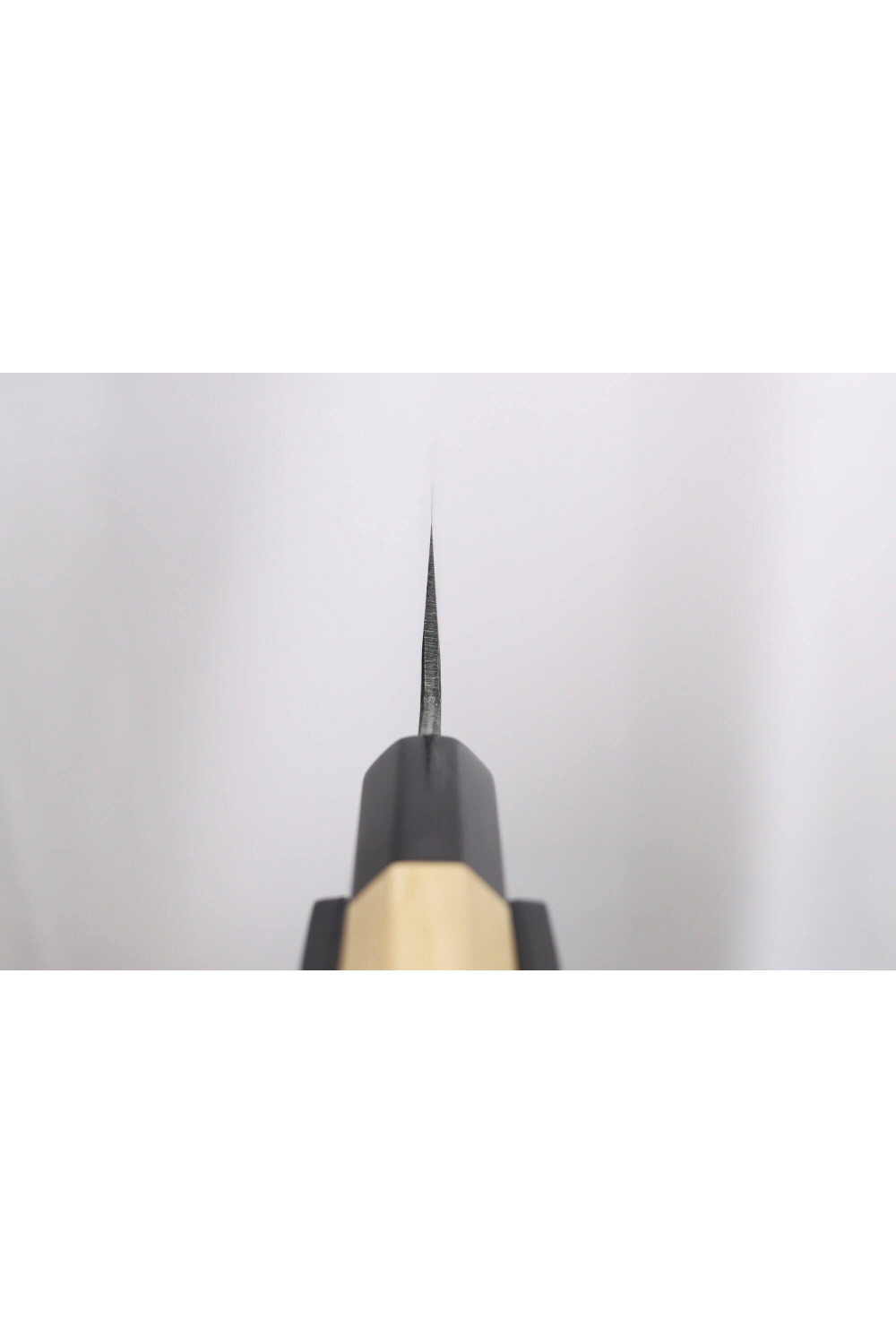
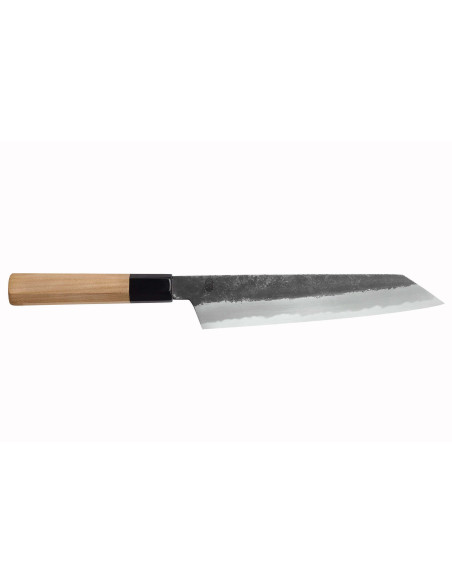
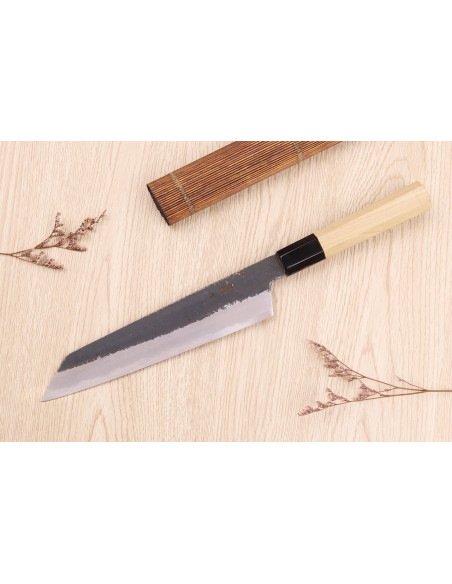
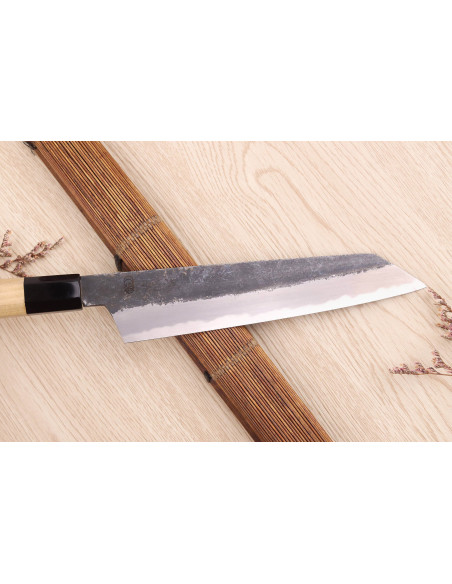
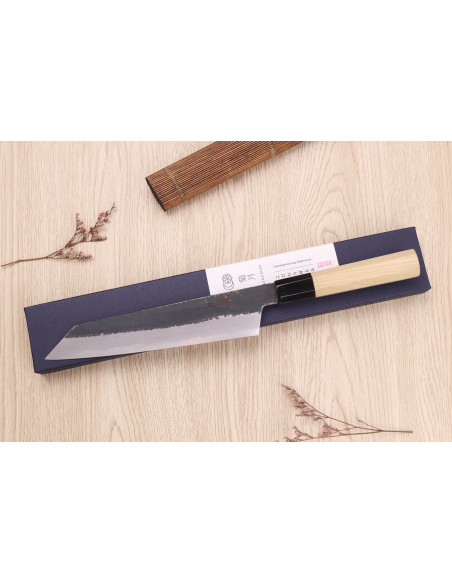
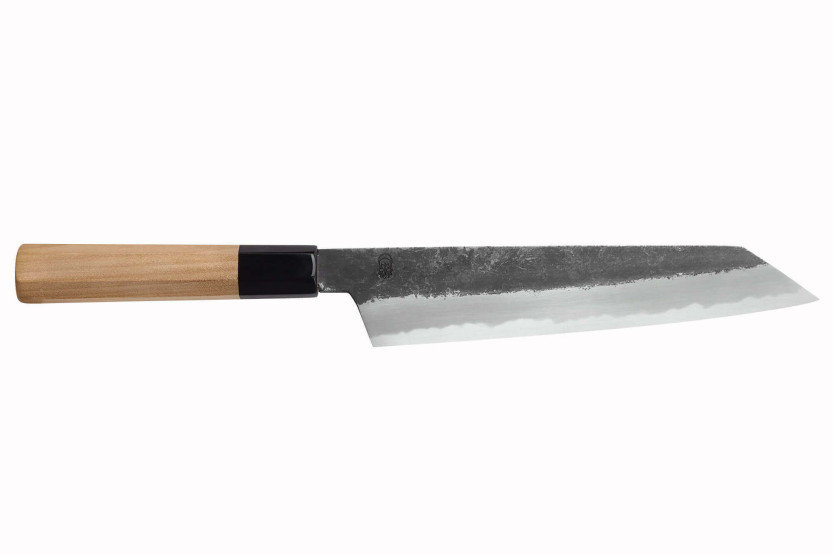
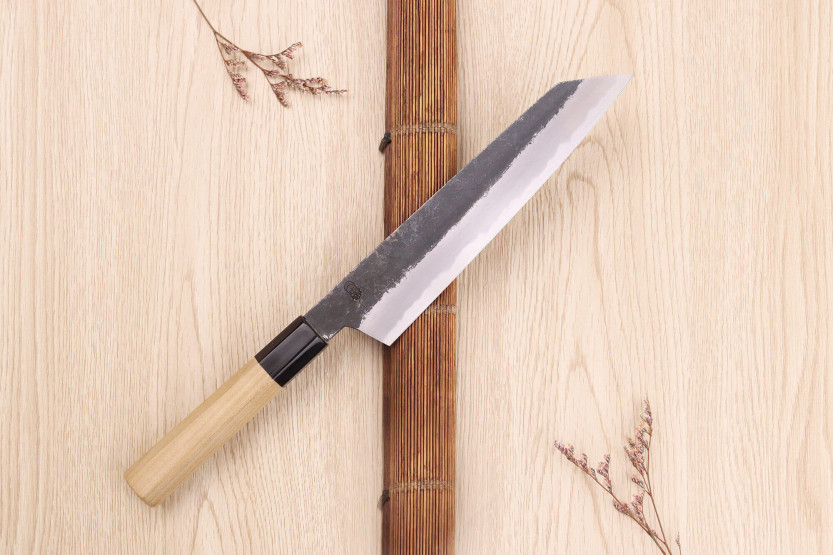
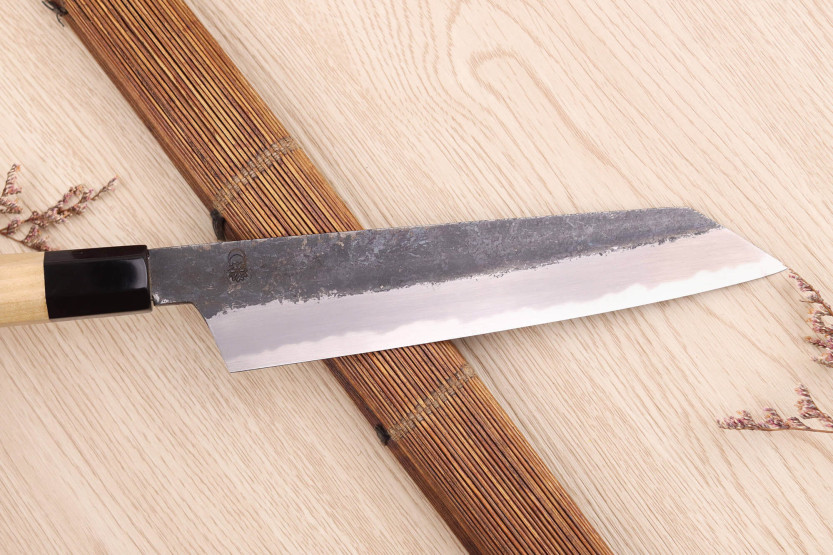
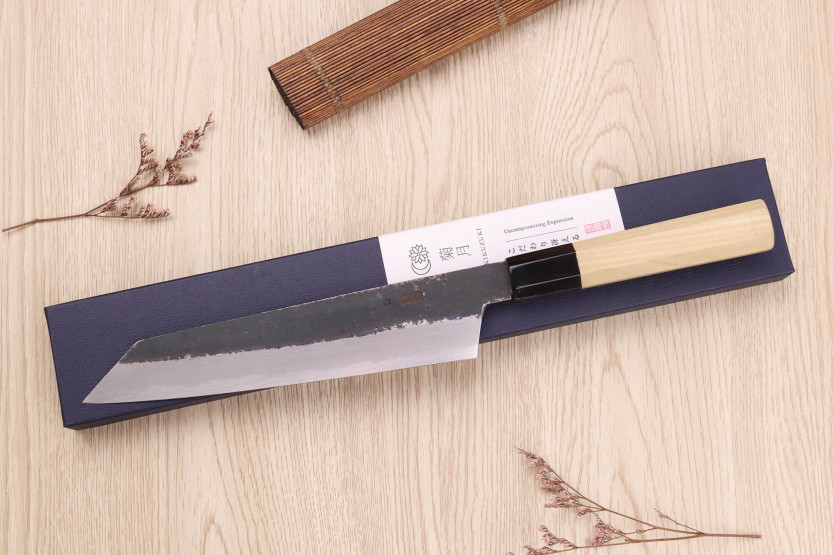
This 21cm kiritsuke knife is a highly versatile kitchen knife, the equivalent of a chef's knife. It is capable of slicing a wide variety of foods, including meat, fish, fruit and vegetables. Its special tip facilitates insertion into food, guaranteeing easy slicing.
The blade is built according to the traditional Japanese structure known as San Maï. This process consists of forging a rigid steel core, which is then enveloped in a layer of softer steel on the sides. The core is thus more flexible and protected.
The core of the blade is made from Shirogami 2, also known as White Steel 2, produced by the renowned Hitachi steel mills in Japan, which collaborate with many renowned blacksmiths. Knives made from this high-quality steel are particularly prized by chefs who value traditional values. Worked locally by the most talented craftsmen, this steel is a true guarantee of high quality.
This alloy is among the purest on the market. It is reinforced with iron and carbon, with a carbon content of around 1.2%. These elements are crucial to increasing the alloy's hardness, which reaches around 61 HRC. A stiffer blade enables more precise sharpening, ensuring a razor-sharp edge.
Although Shirogami is very rigid, it is still easy to sharpen when you notice a slight loss of cutting efficiency. What's more, its composition is homogeneous at the microscopic level, which reinforces its strength and reduces the risk of breakage when cutting.
The Shirogami 2 core is then coated with a layer ofsofter steel to balance and protect it. San Maï is present.
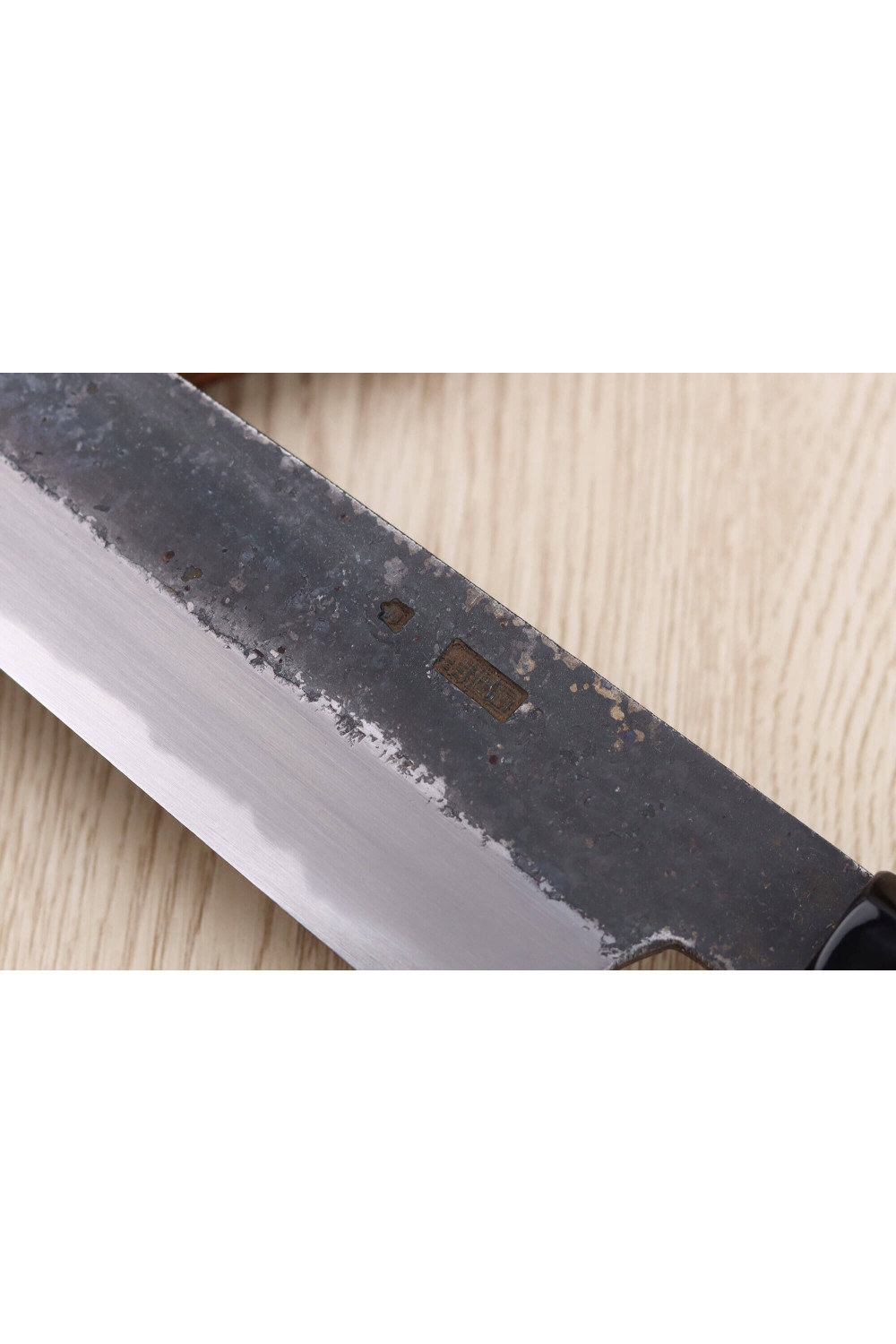
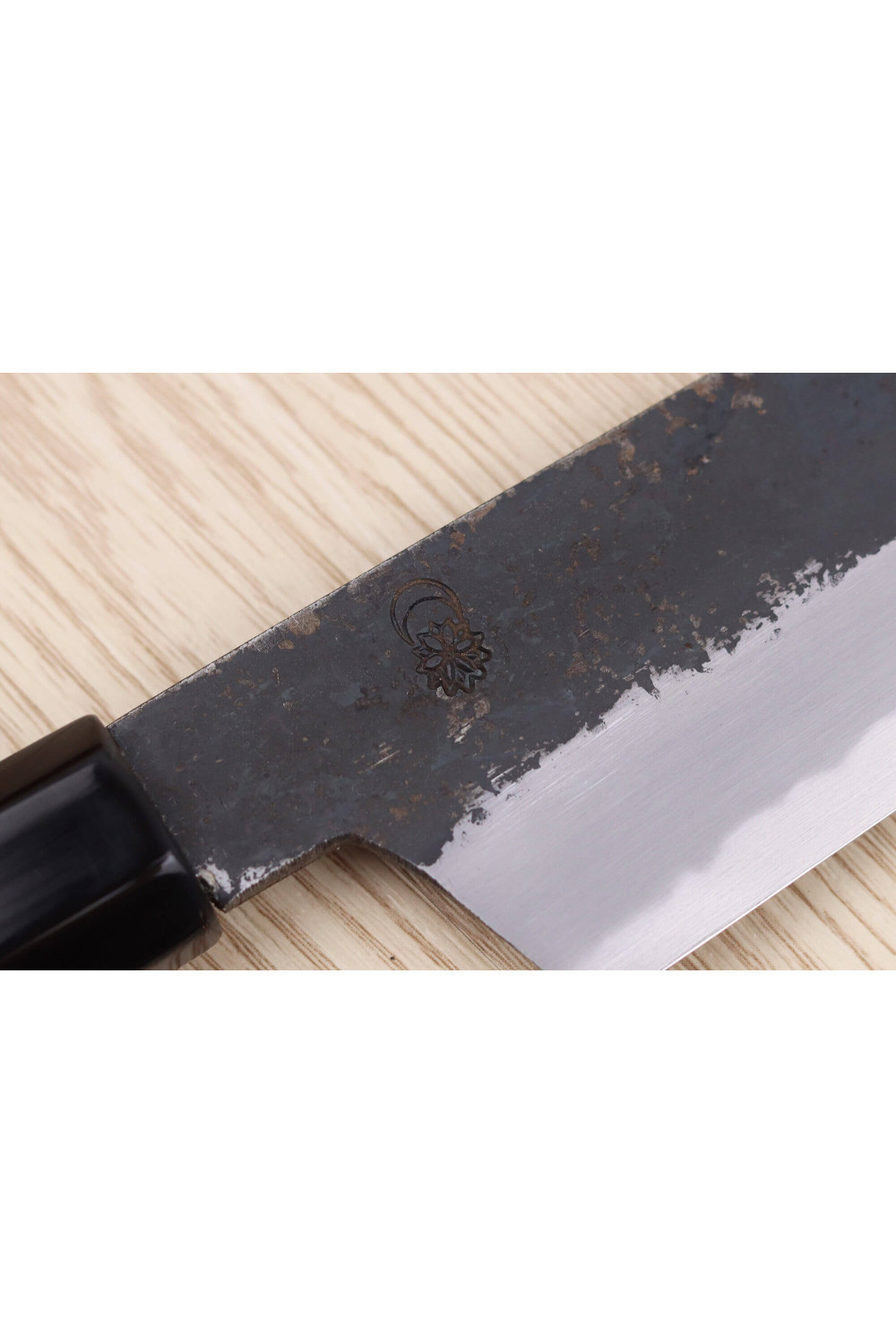
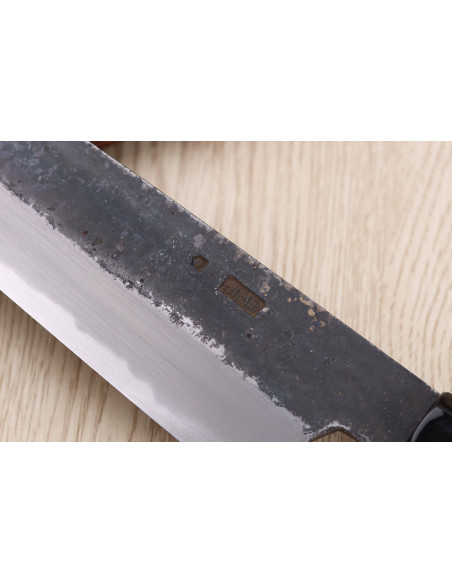
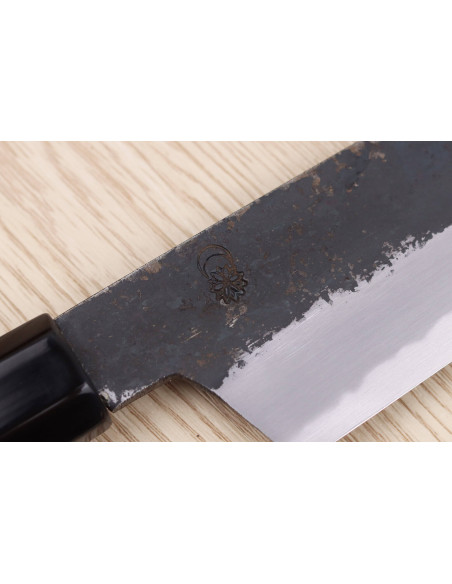
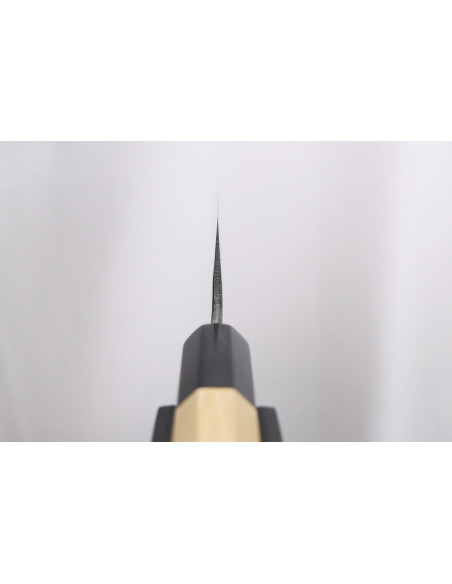
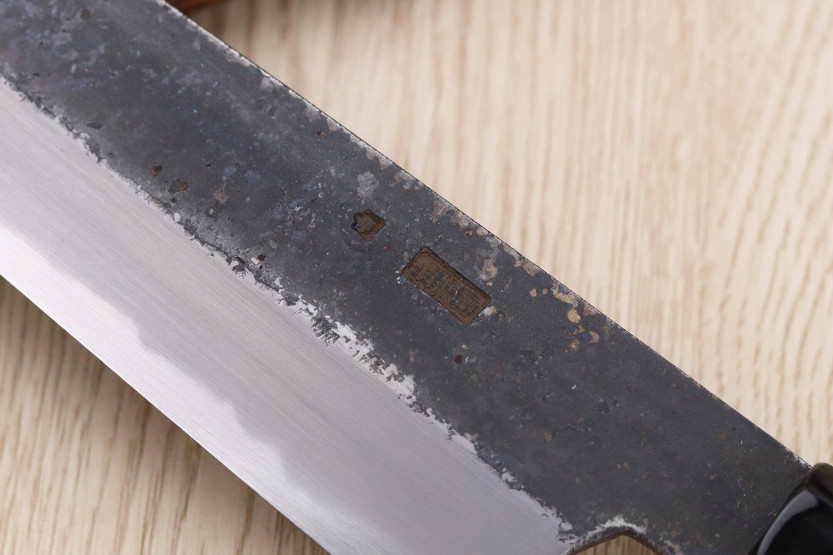
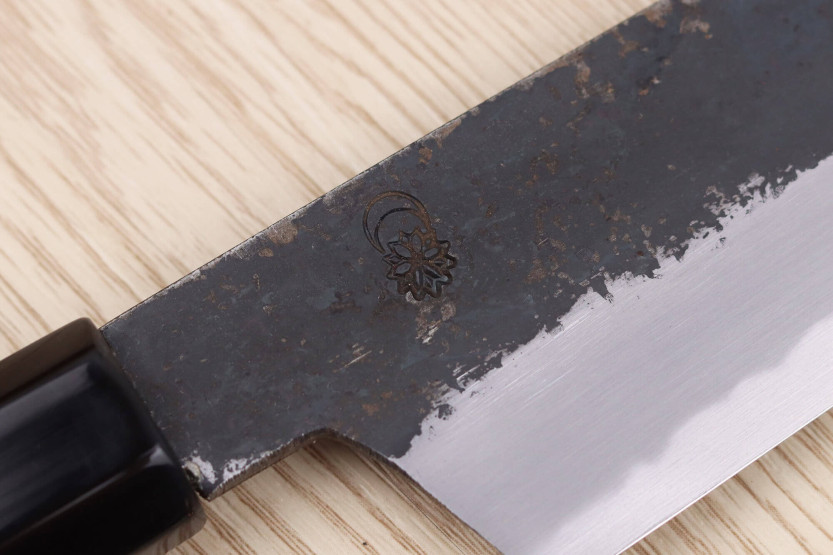
Finally, chefs will appreciate its traditional rough-forged finish. Unpolished, the blade retains its rustic appearance with a dark, rough texture. With a flat edge, the blade has an elegant finish and enhanced strength.
The traditional magnolia wood handle
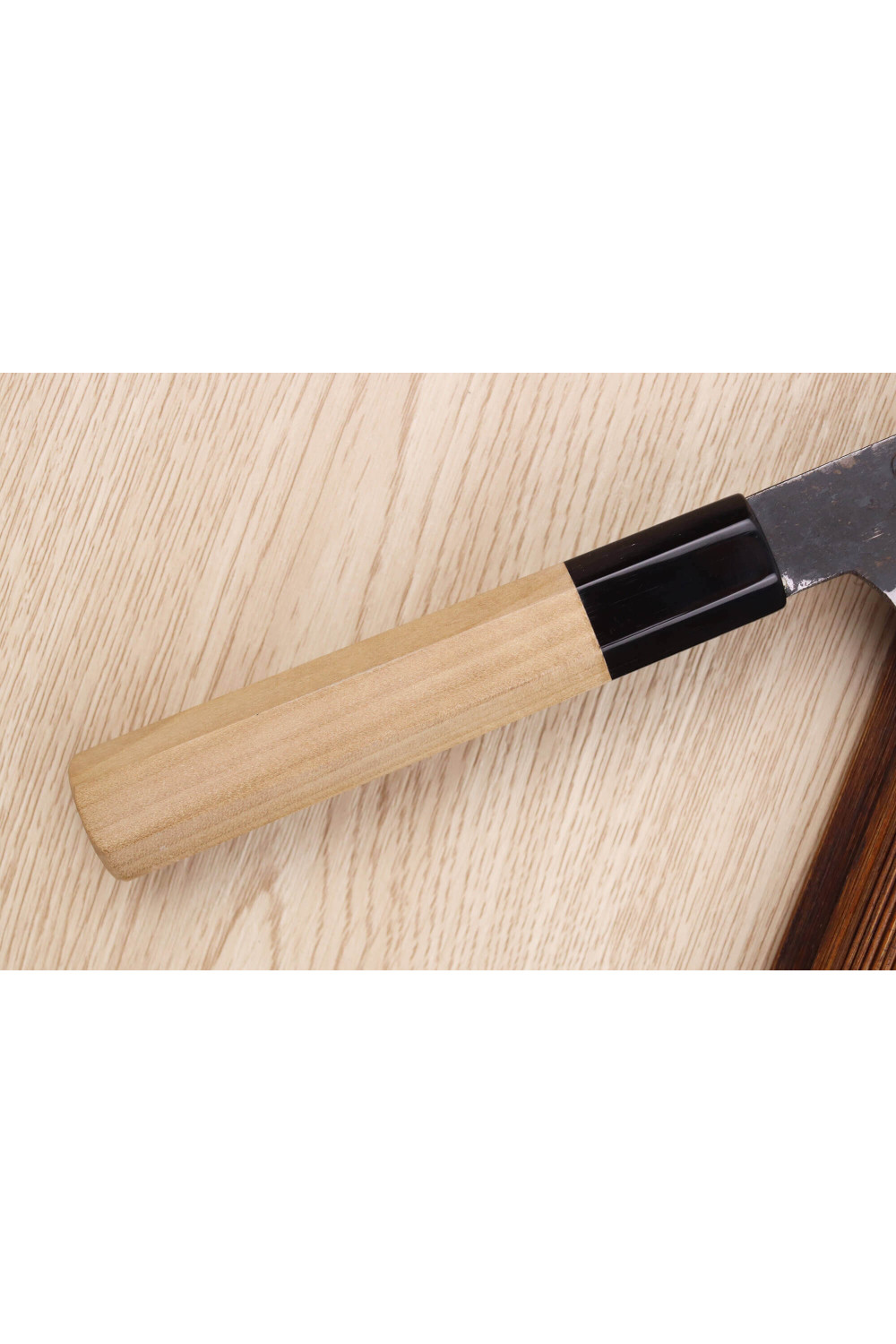
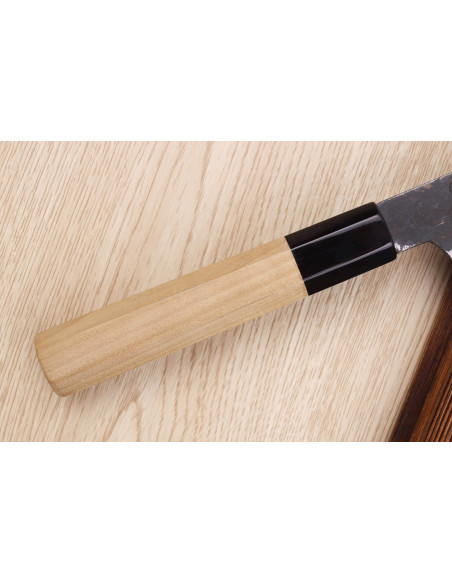
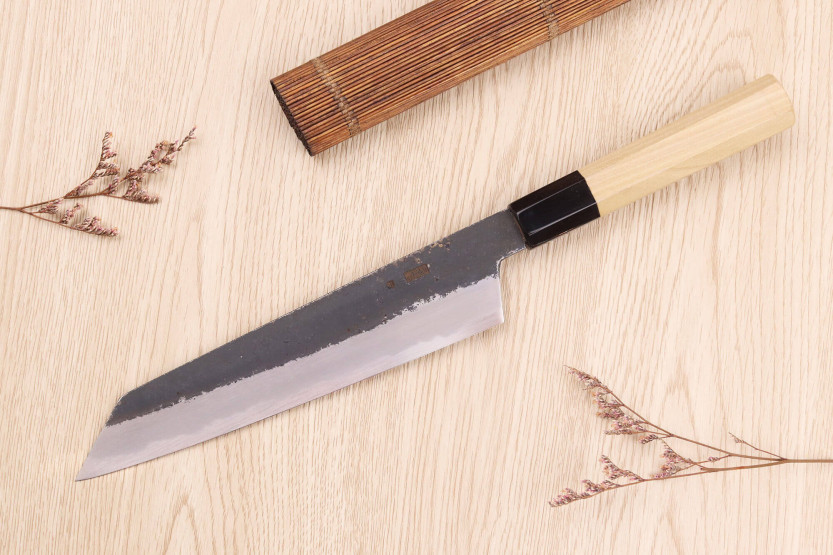
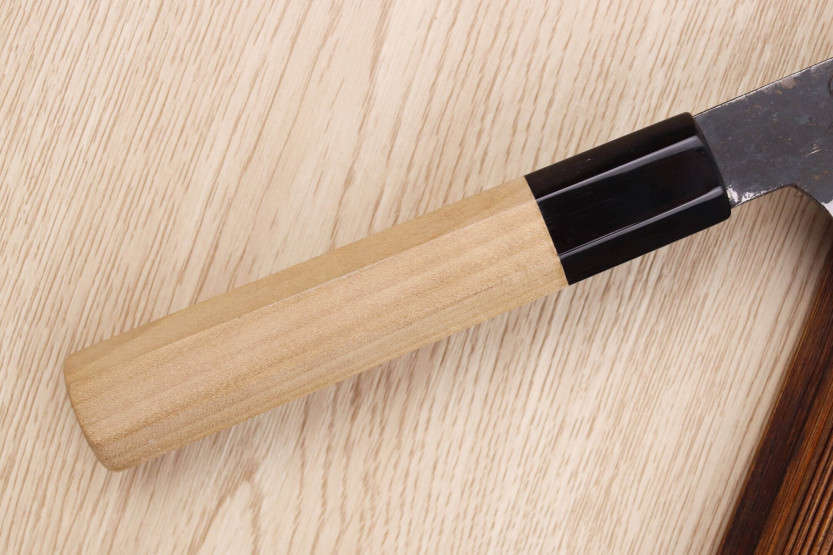
This Japanese kitchen knife features a magnolia wood handle, giving it a traditional, authentic aesthetic. This light wood is not only comfortable to use, but also has a soft feel and excellent resistance to humidity.
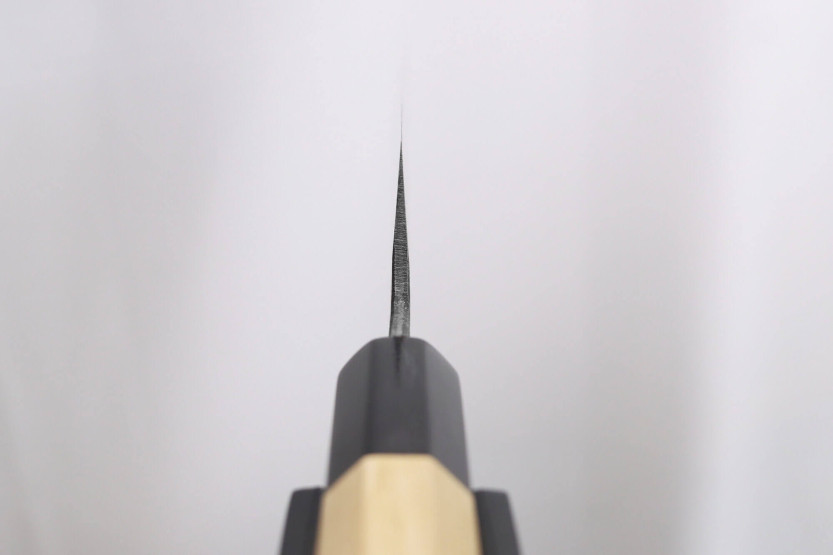
The santoku has an octagonal-shaped handle, ensuring comfort and maneuverability, even during long cuts in the kitchen. This design makes the knife usable by all cooks, whether right- or left-handed.
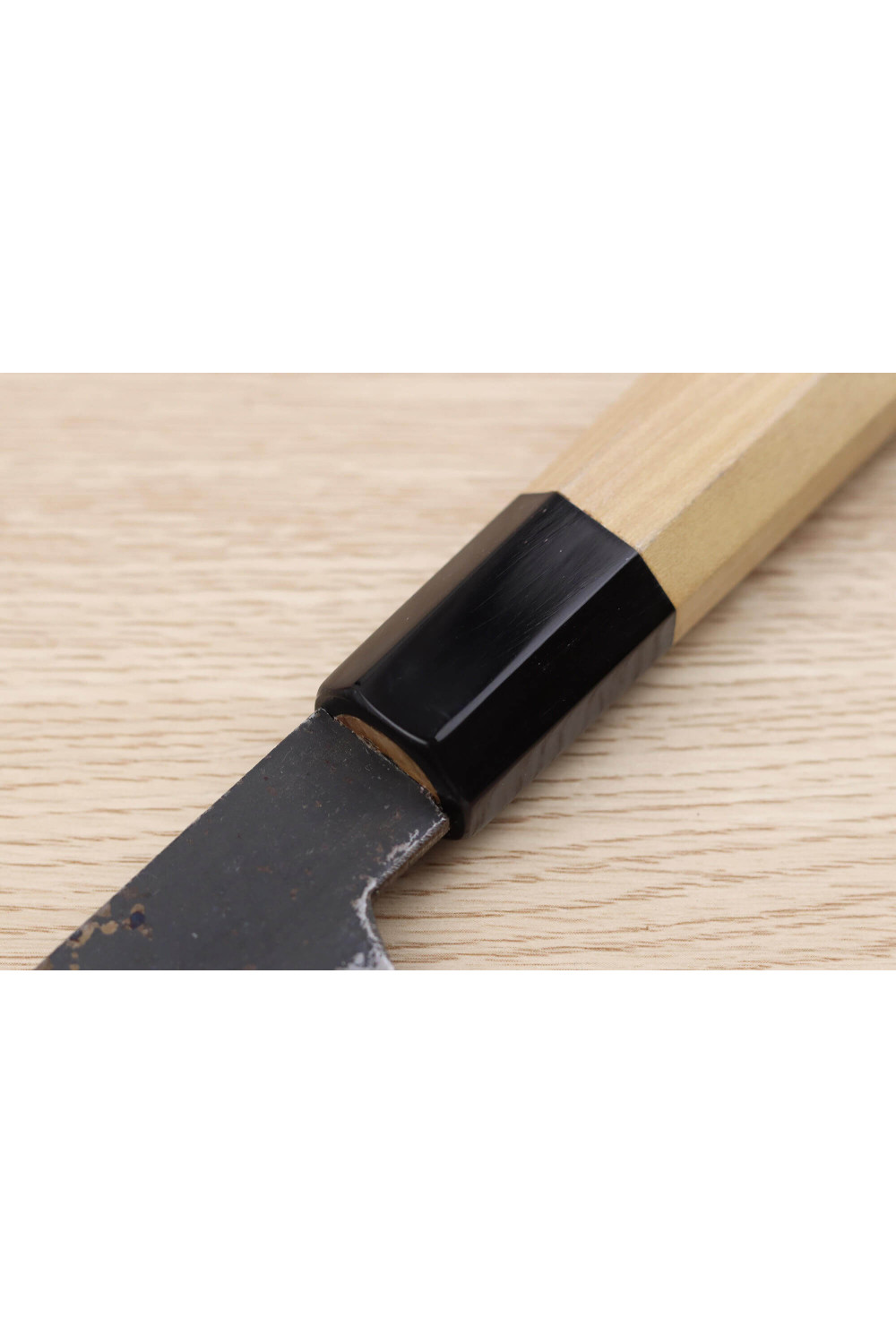
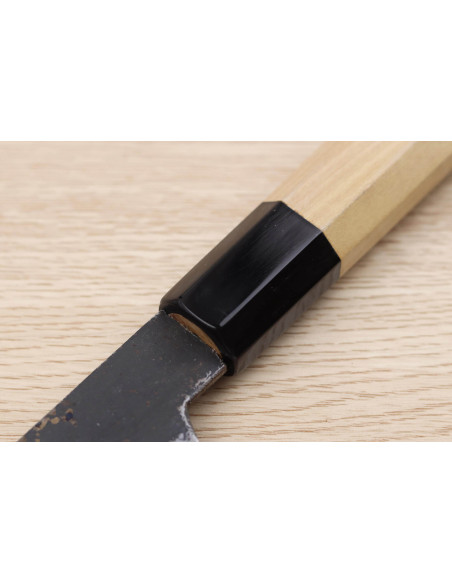
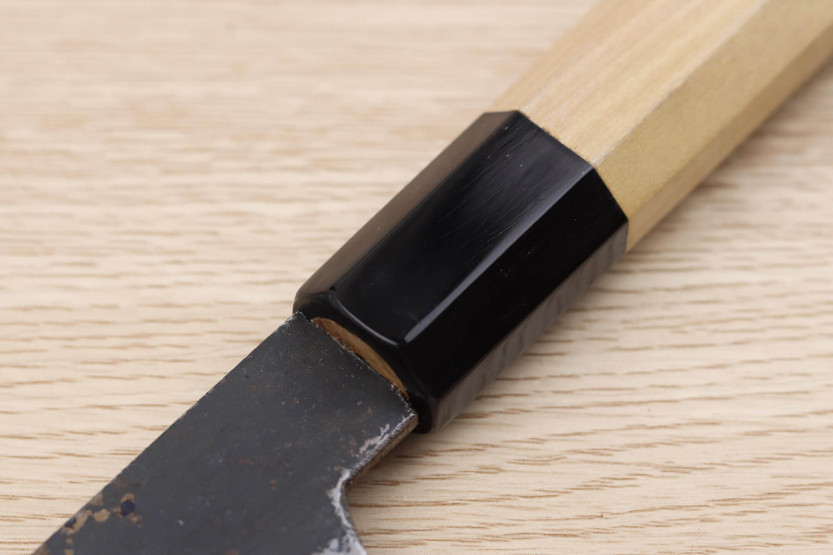
A black buffalo horn ferrule links the blade to the handle. Being a natural material, horn can have slight variations in color, and some pieces may show fine white streaks.
Finally, wood paste has been added to fill the small gaps between blade and handle. This ensures that the knife is watertight and hygienic, and prevents pieces of food from entering.
How do I care for my handcrafted knife?
As the blade of a knife is enriched with carbon, it is more prone to oxidation. To ensure optimum care, you must wash your knife by hand only. Use a mild soap and a non-abrasive sponge, taking care not to wet the handle.
After cleaning, wipe the knife carefully and immediately to remove any residual moisture. Then store it in a dry place, in its elegant case, in a kitchen case or on a magnetic bar.
Note that despite meticulous care, the color of the carbon blade may change over time. Its alloy reacts naturally to various elements, such as ambient humidity or the acidity of food. To maintain its original appearance, you can oil it regularly.
Learn more about Sakai Kikumori
Sakai is a historic town in Japan, renowned for its cutlery craftsmanship. In fact, some of its forge workshops have been in operation for centuries! So it's hardly surprising that this town is the cradle of exceptional craftsmanship, handed down from generation to generation.
The Sakai Kikumori craft factory by Kawamura Hamono is located here. By mixing knives forged by renowned master blacksmiths with those made by small craftsmen, the factory offers a diverse range in terms of both materials and prices. It is this diversity that makes the brand particularly appreciated by professionals.
To forge its Kikuzuki Kuro knife series, Sakai Kikumori has teamed up with renowned blacksmith Yoshikazu Tanaka, a respected figure in the cutlery world. His expertise has been recognized by the Japanese government. The work he does on the knives is of remarkable quality: he applies a temper that considerably improves the durability of the blade, which does not deform even when sharpened.
Many kiritsuke knives are available on Knifeleader.eu!




 By buying this product you can collect up to