Discover Yoshikazu Tanaka and Sakai Kikumori
Sakai is a historic town in Japan, famous for its cutlery. In fact, some of the town's forge workshops have been in operation for centuries! So it's hardly surprising that the town is a veritable cradle of exceptional craftsmanship, handed down from generation to generation.
The town is also home to Sakai Kikumori by Kawamura Hamono, an artisanal knife factory. Combining knives forged by renowned master blacksmiths with those created by small craftsmen, the factory offers a varied range in terms of price and materials. This makes the brand particularly popular with professionals.
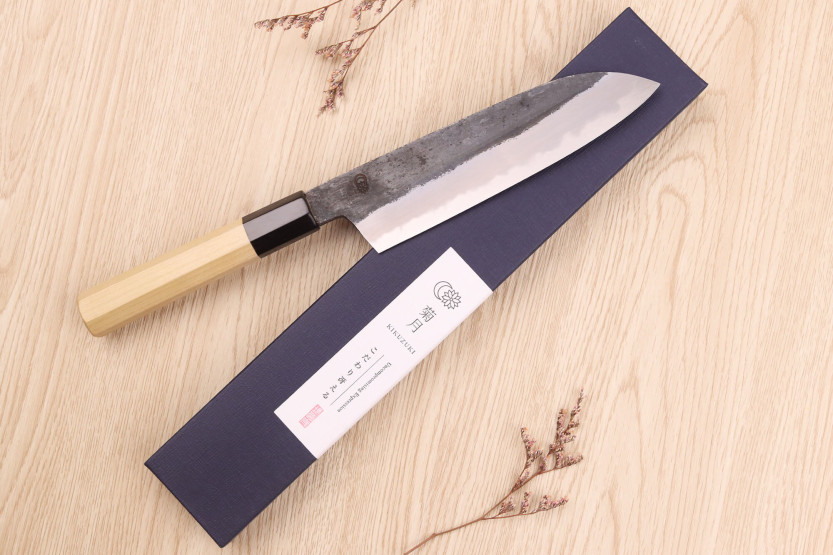
To create its Kikuzuki Kuro knife series, Sakai Kikumori collaborates with renowned blacksmith Yoshikazu Tanaka. The Japanese government has even recognized his expertise. The work he carries out on these knives is of exceptional quality: the tempering he applies greatly enhances the durability of the blade, which does not warp, even during sharpening.
A traditional, high-performance blade
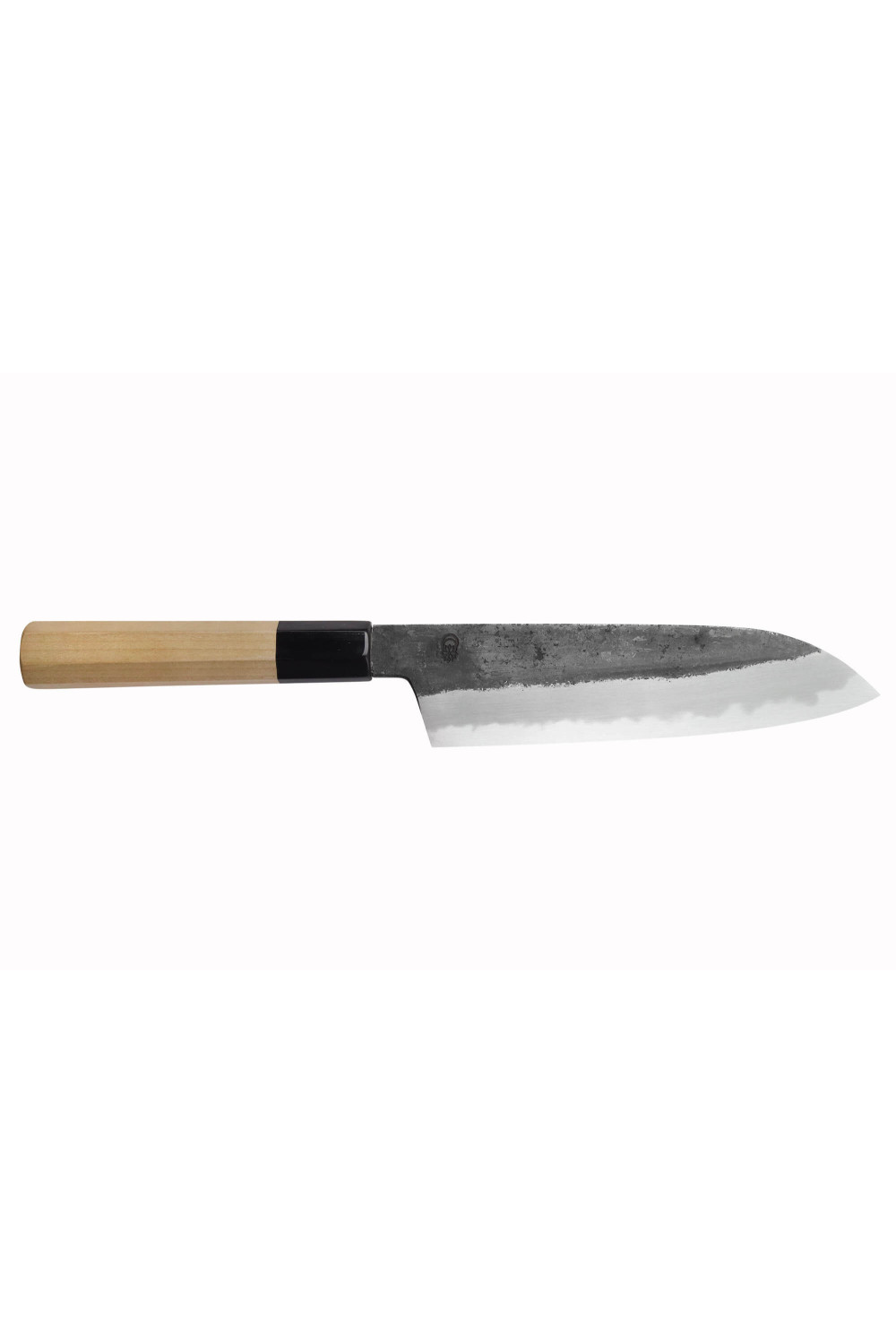
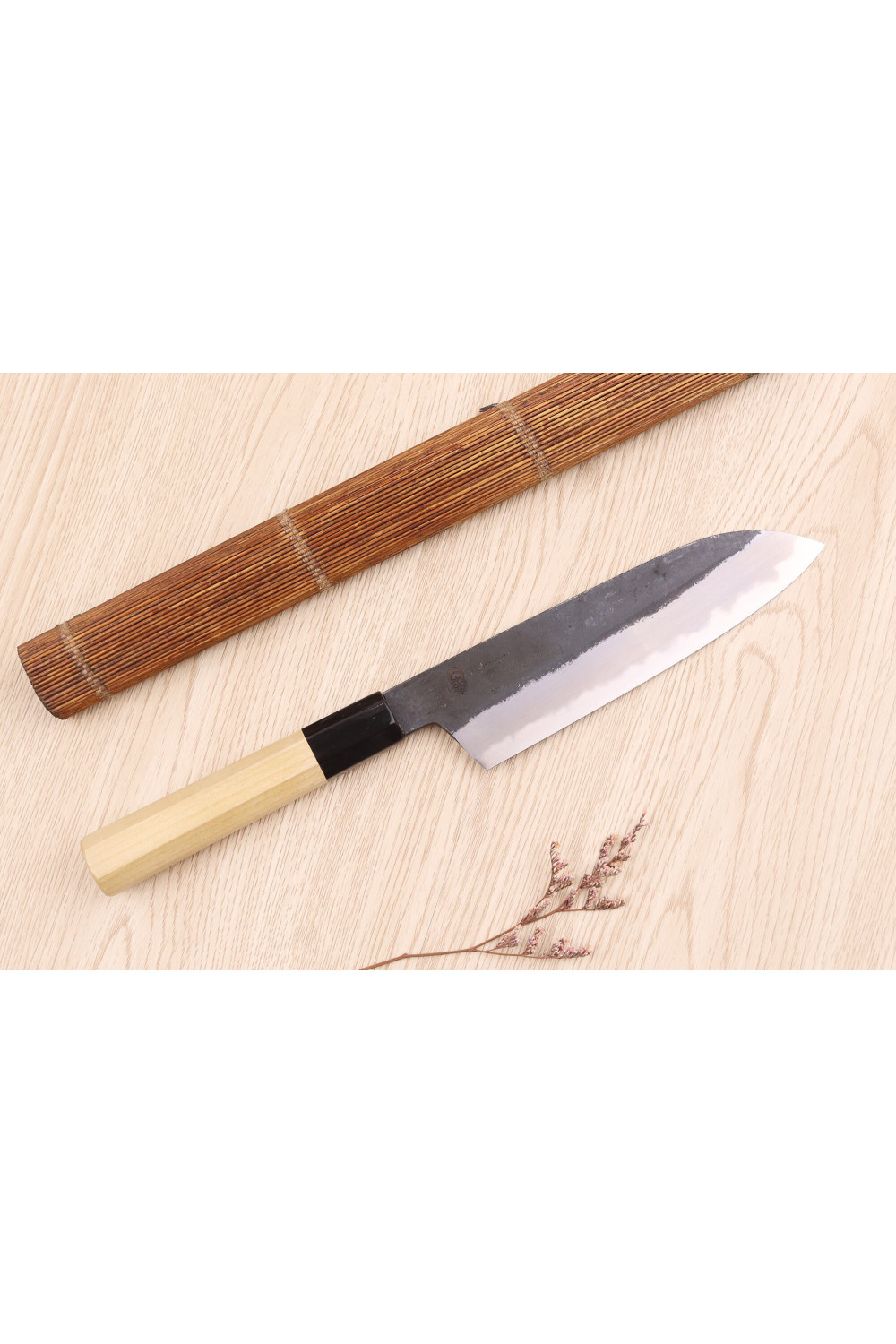
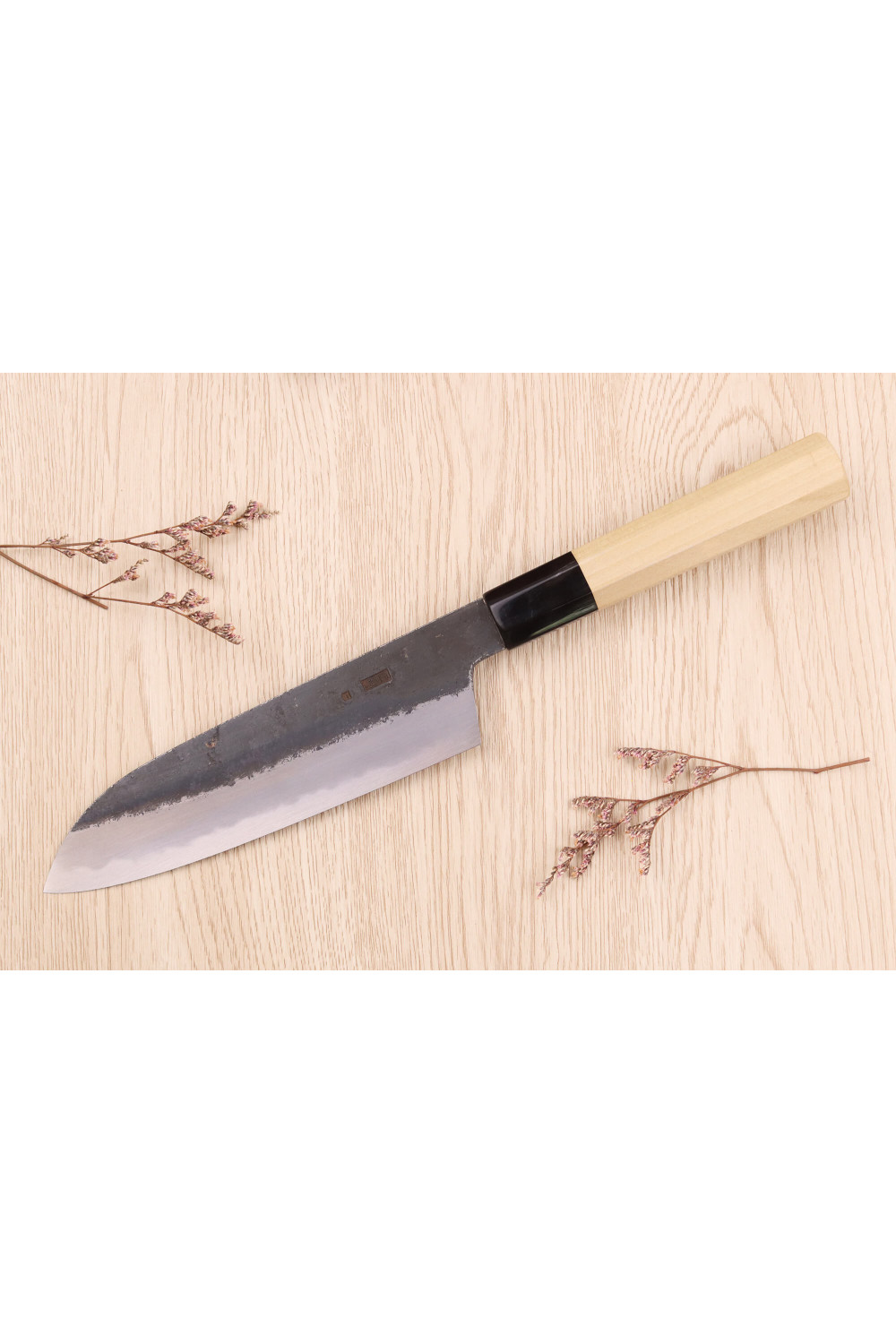
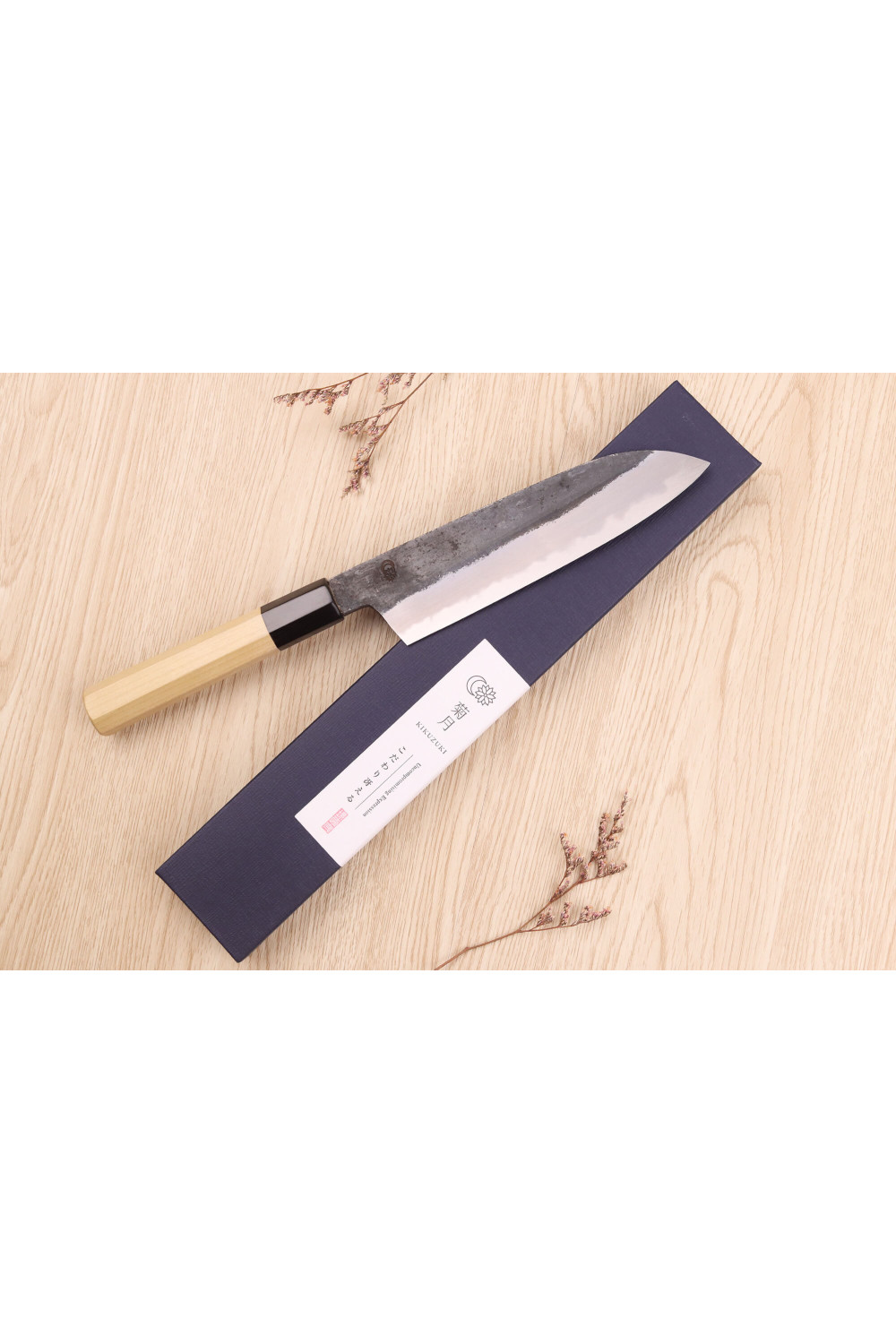
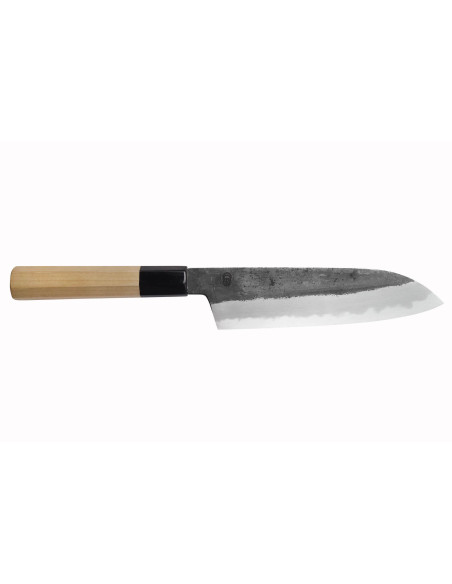
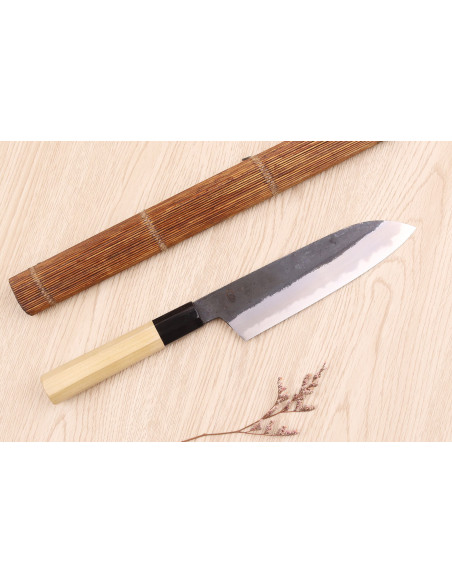
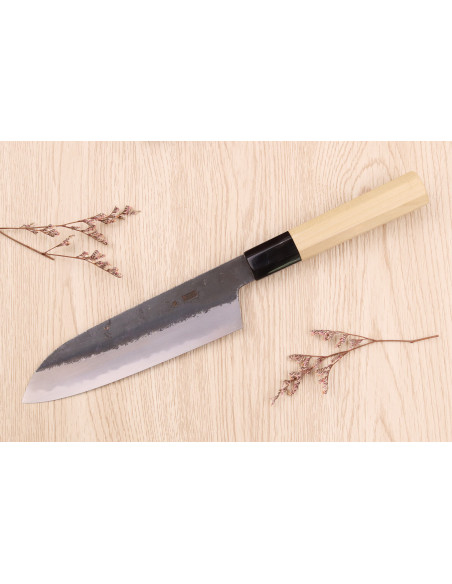
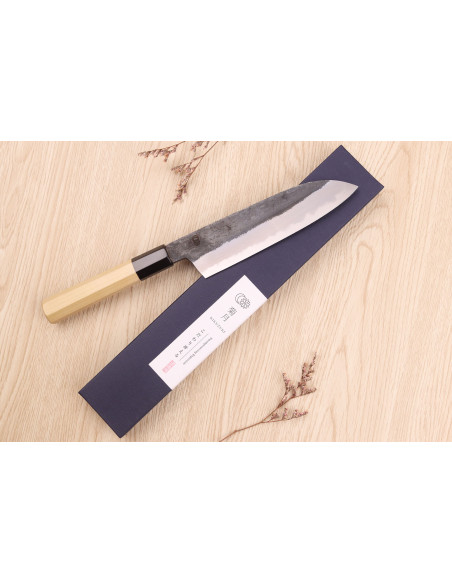
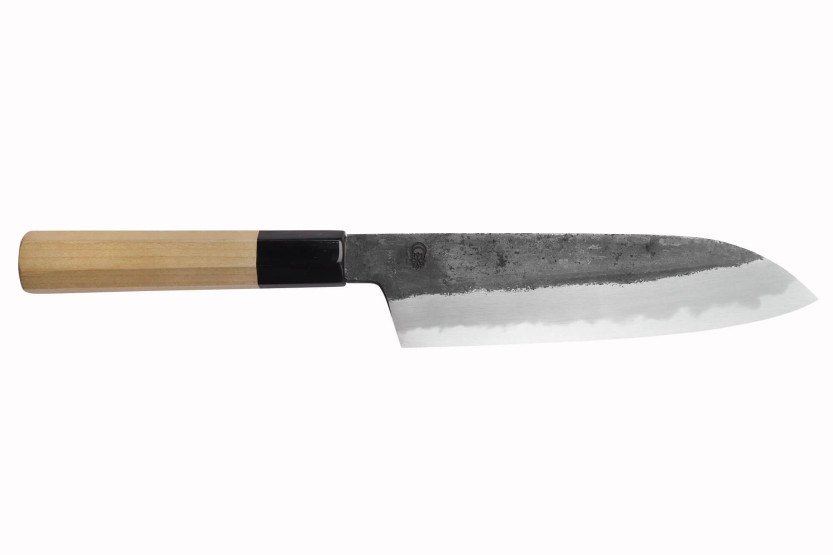
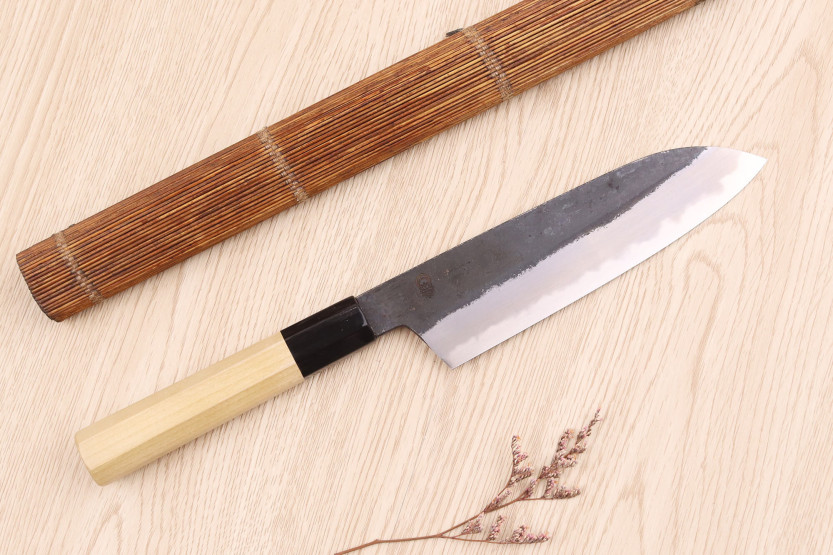
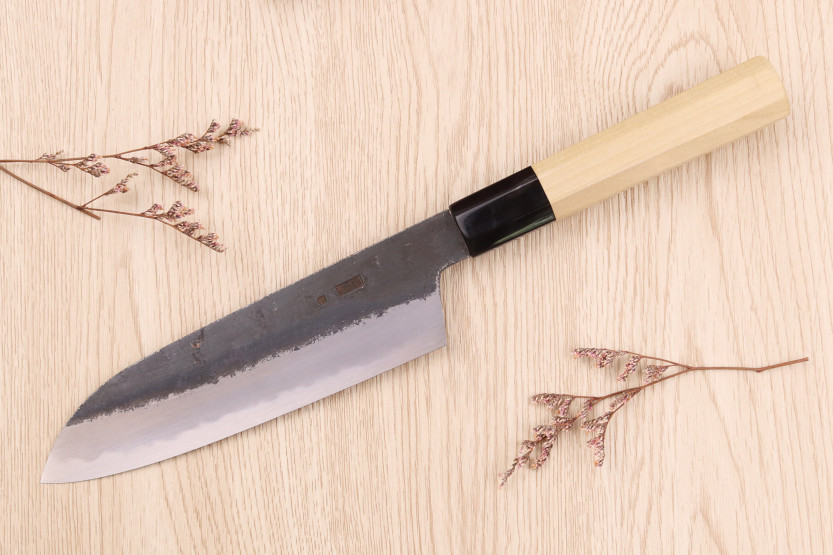
The 18cm santoku knife is a versatile kitchen knife. Like a chef's knife, it can be used to cut, slice and chop all kinds of food. You can use this model on meat, vegetables, fresh herbs and fish.
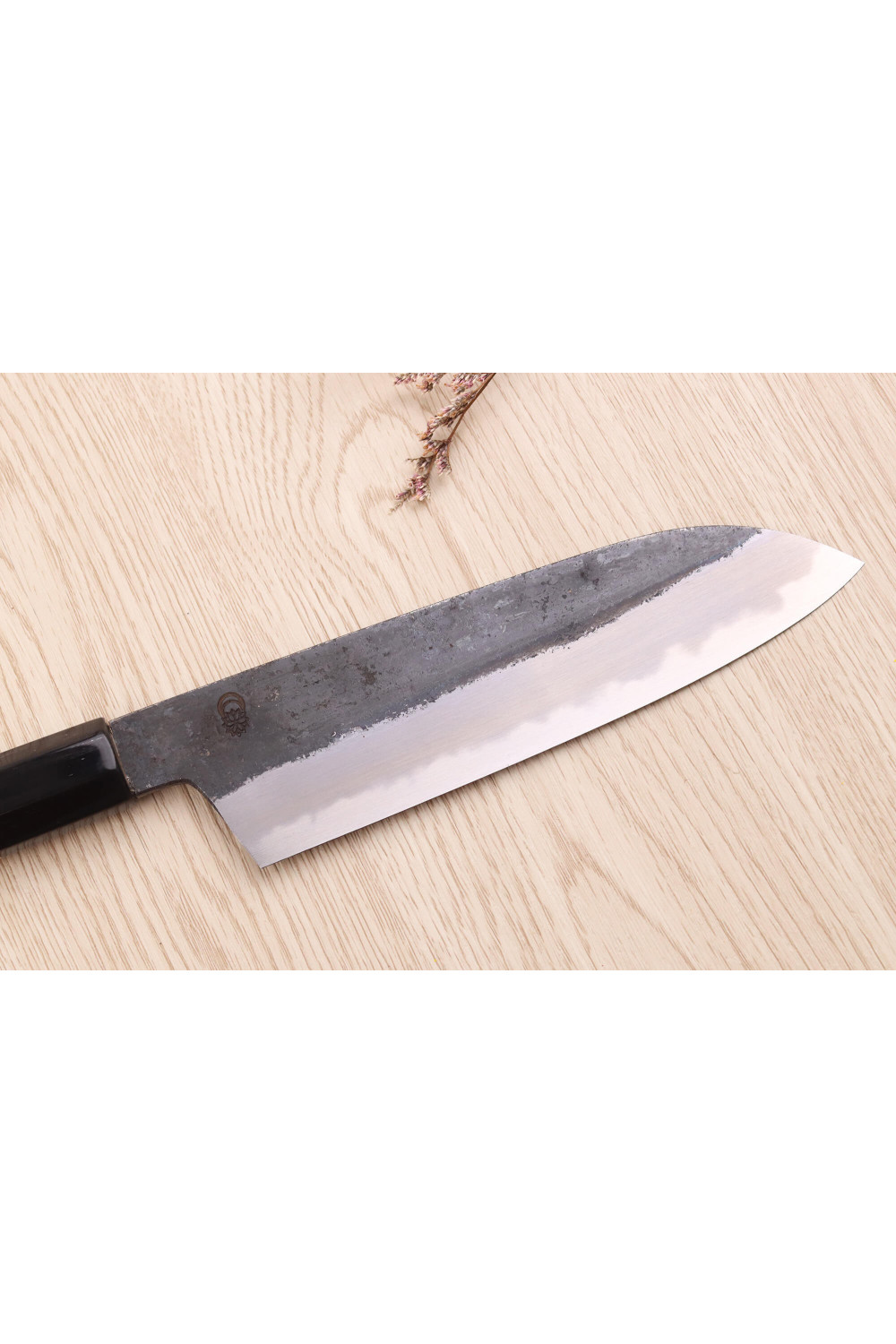
Its blade features a typical Japanese structure called San Maï. This technique consists of forging a core of hard steel, then surrounding it with a layer of softer steel folded over on either side. This gives the core greater flexibility while protecting it.
The core of the blade is made from Shirogami 2, also known as White Steel 2, an alloy produced by Japan's famous Hitachi steelworks, which work with many renowned blacksmiths. Knives made from this fine steel are highly prized by chefs committed to traditional values. Manufactured locally by the finest craftsmen, it is a guarantee of exceptional quality.
Shirogami 2 steel is one of the purest available. It is enriched in iron and carbon, with a carbon content approaching 1.2%. These elements are essential for increasing the alloy's hardness, reaching around 61 HRC. A harder blade enables more precise sharpening, guaranteeing a razor-sharp edge.
Even though it's a very rigid alloy, it's still easy to sharpen as soon as you notice a slight loss of cutting efficiency. What's more, its composition is homogeneous at the microscopic level, reinforcing its solidity and reducing the risk of breakage during use.
The Shirogami 2 core is then enveloped in a layer ofsofter steel, providing both balance and protection. The San Maï is created.
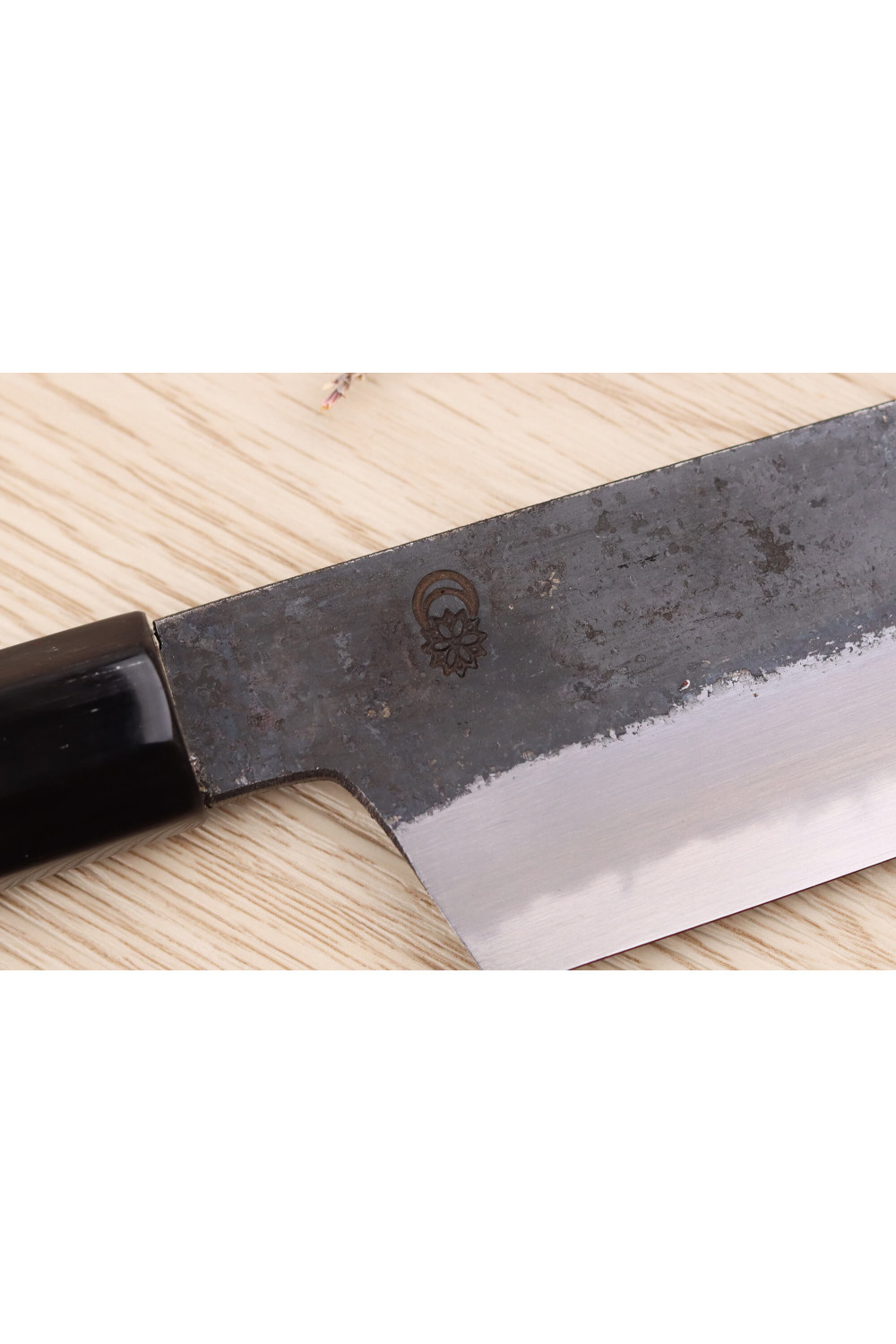
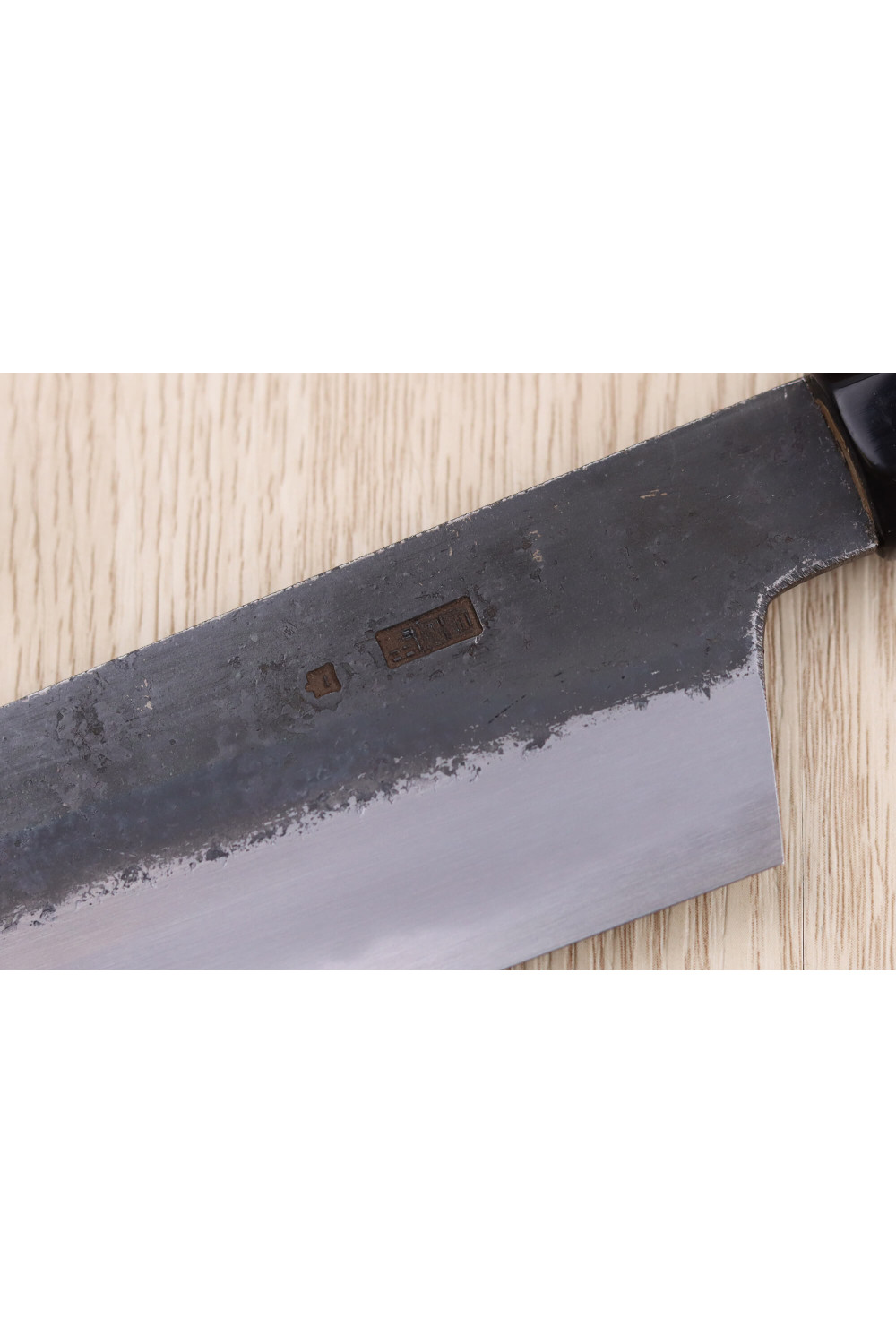
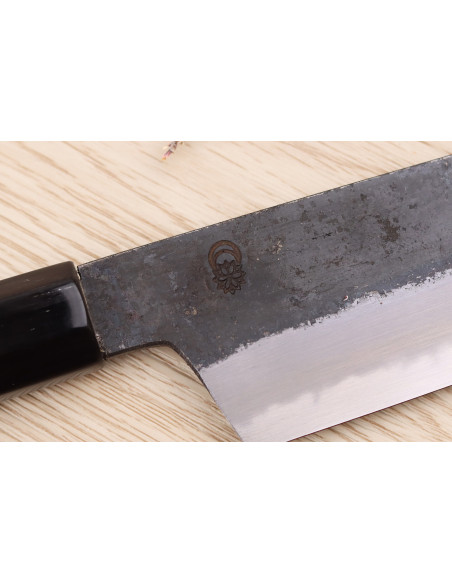
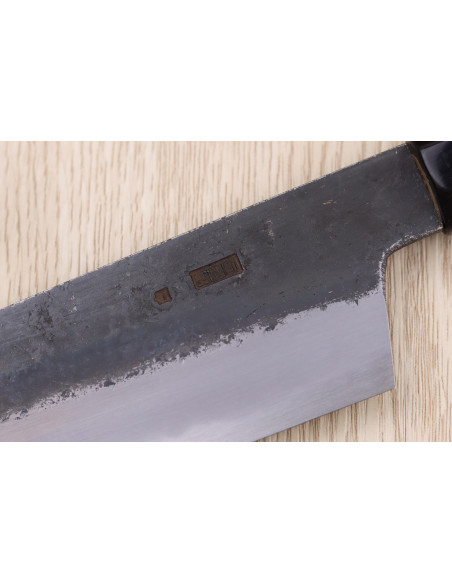
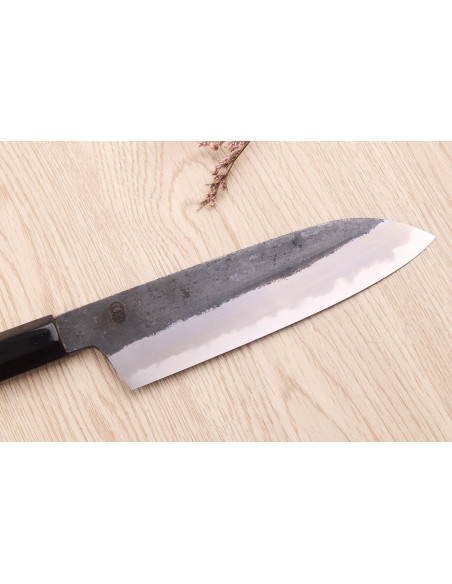
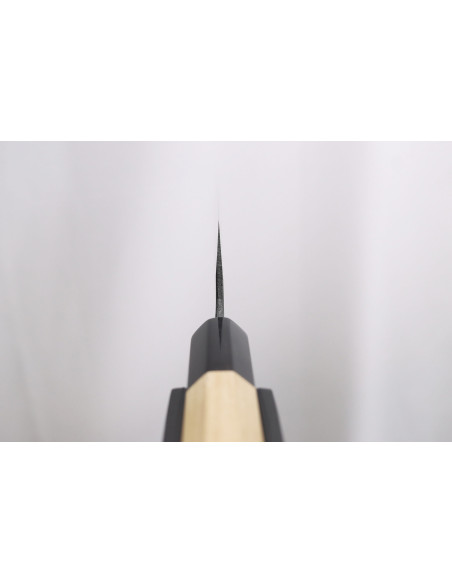
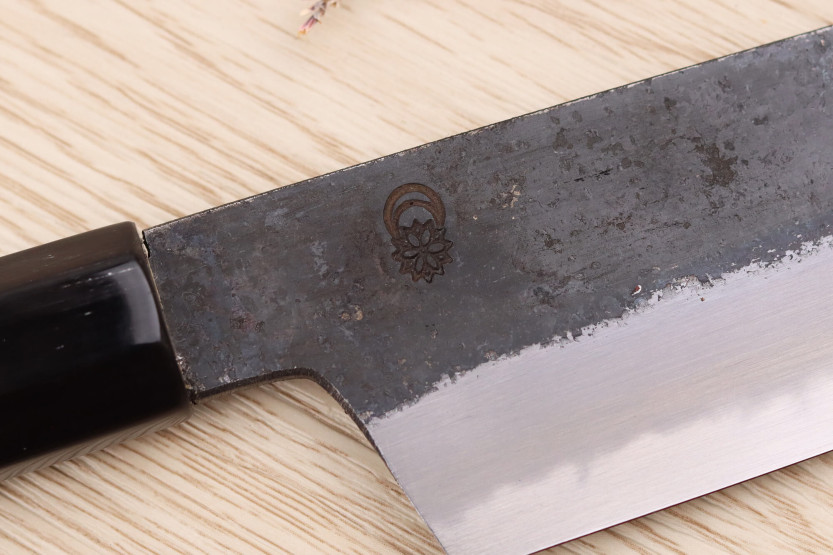
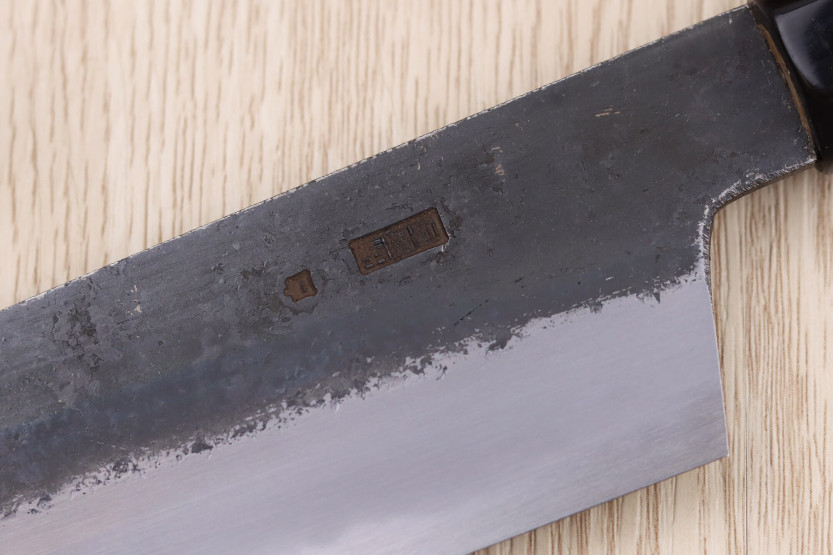
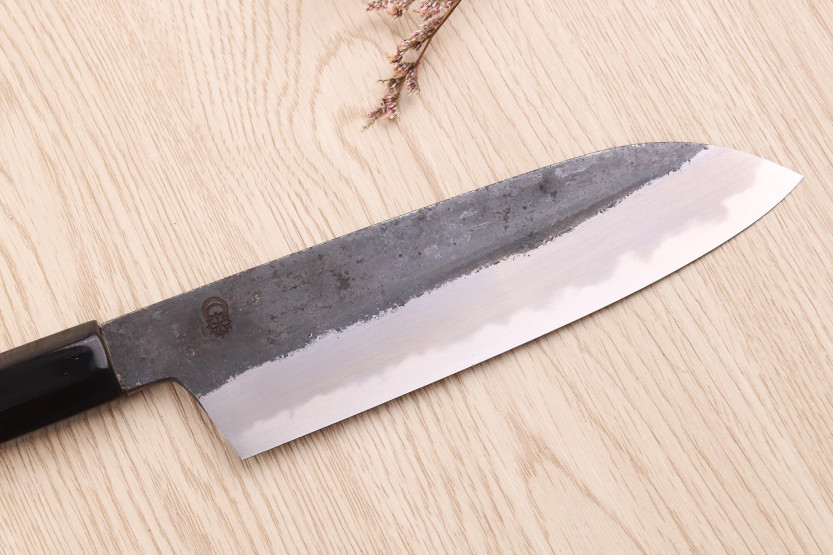
Last but not least, cooks appreciate the traditional rough-forged finish. The blade is unpolished and has a rustic look with its dark, rough texture. The blade'sflat bevel gives it an elegant finish while reinforcing its sturdiness.
Ergonomic magnolia handle
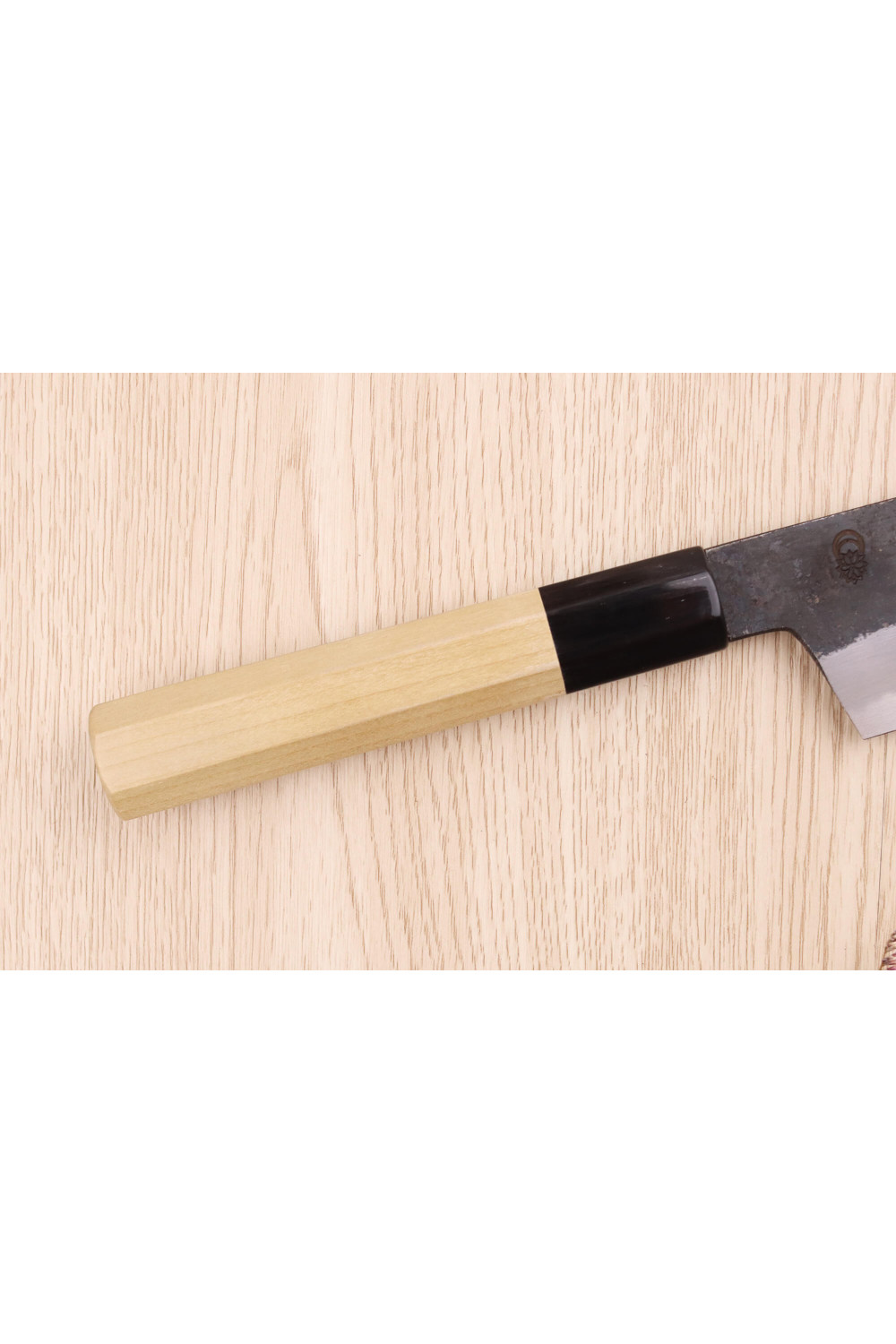
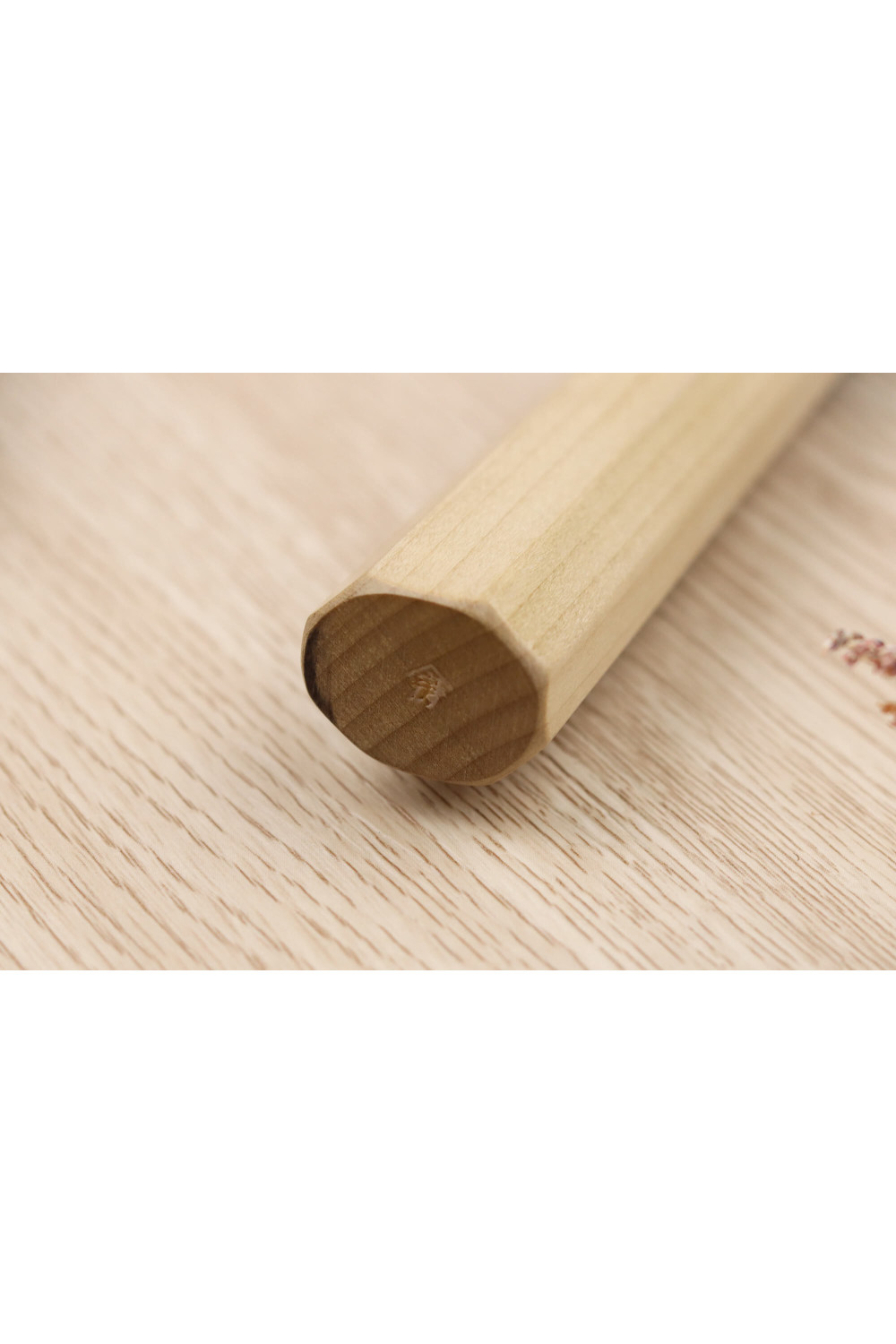
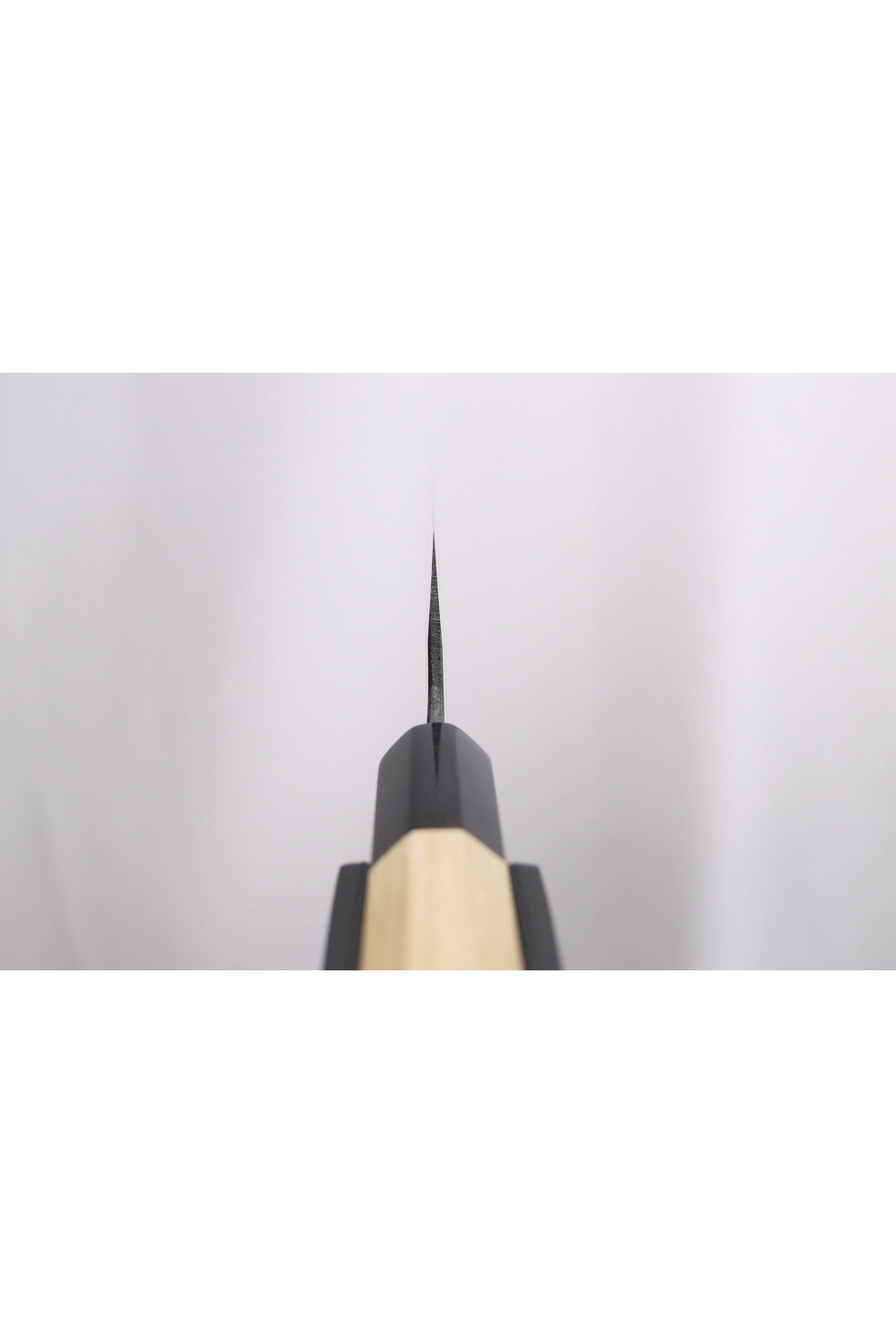
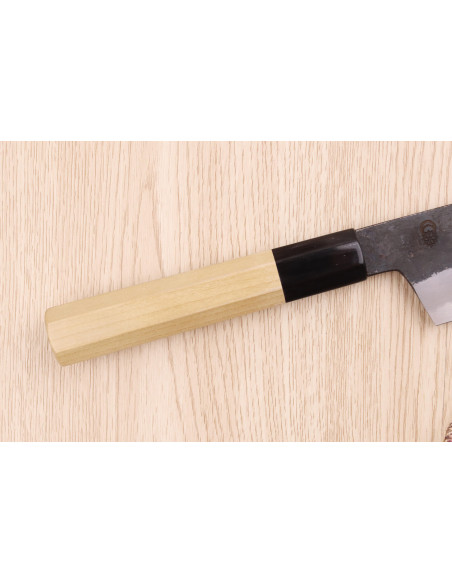
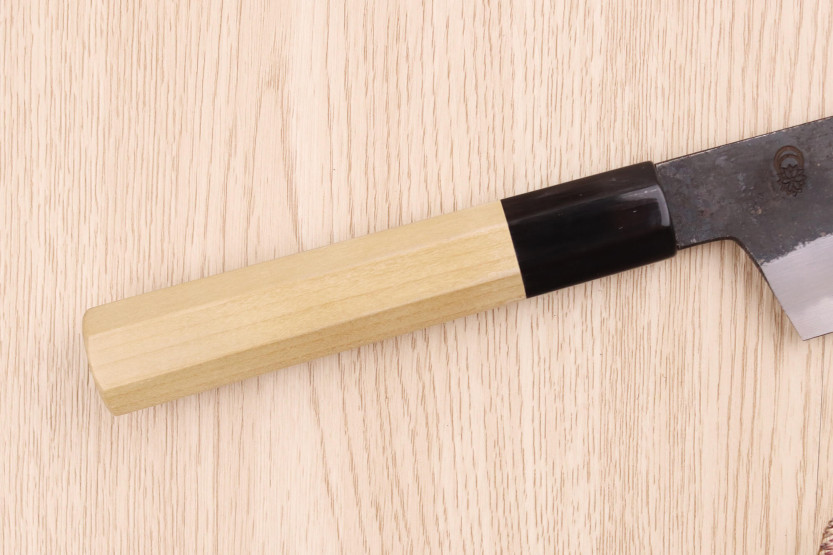
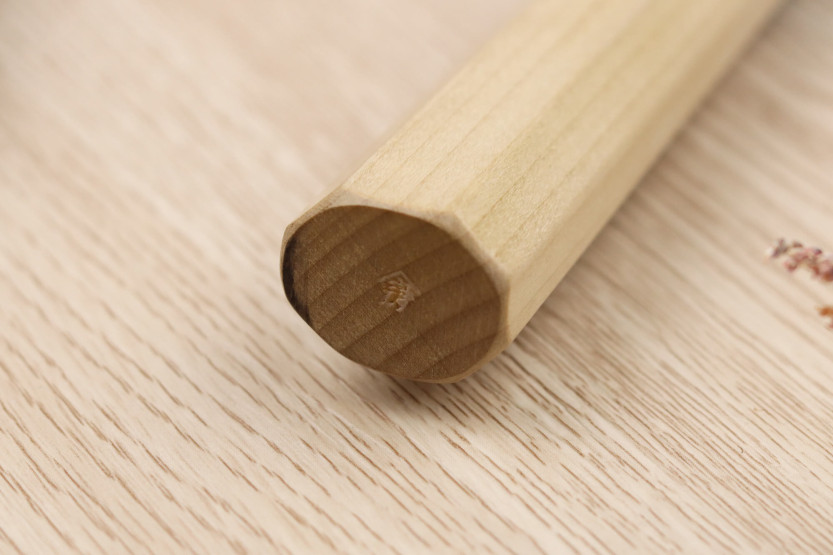
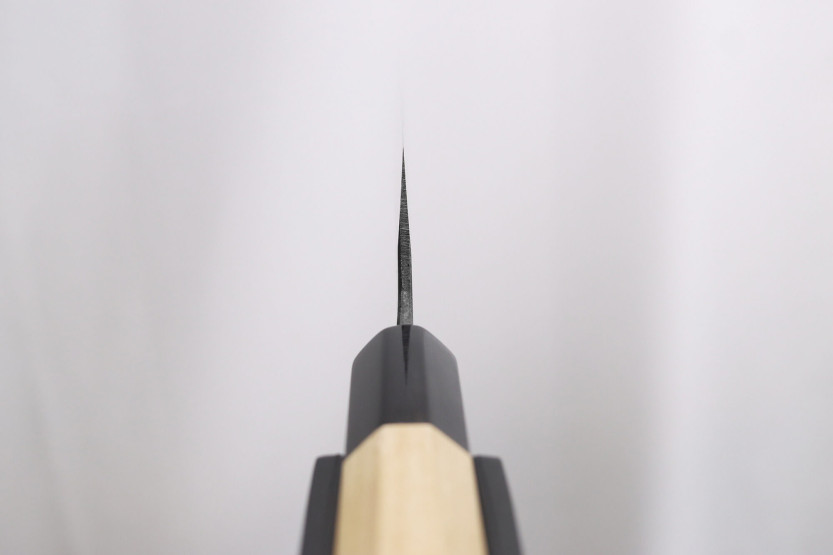
The handle of this handcrafted Japanese knife is octagonal in shape, ensuring both comfort and maneuverability, even during long kitchen sessions. What's more, this shape is equally suited to right-handed and left-handed cooks.
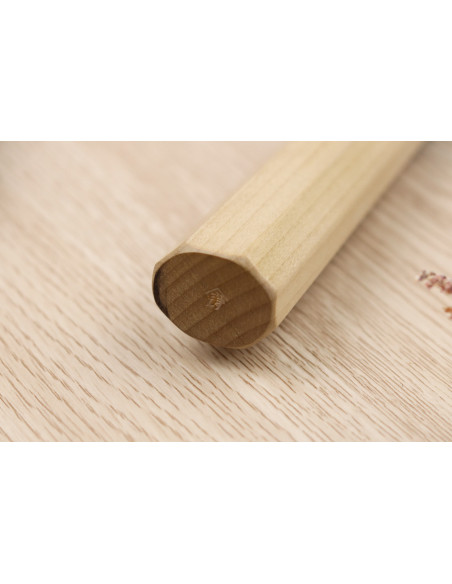
This santoku has a magnolia wood handle, giving it a traditional, authentic look. This lightweight wood is not only pleasant to handle, but also offers a soft feel and excellent resistance to moisture.
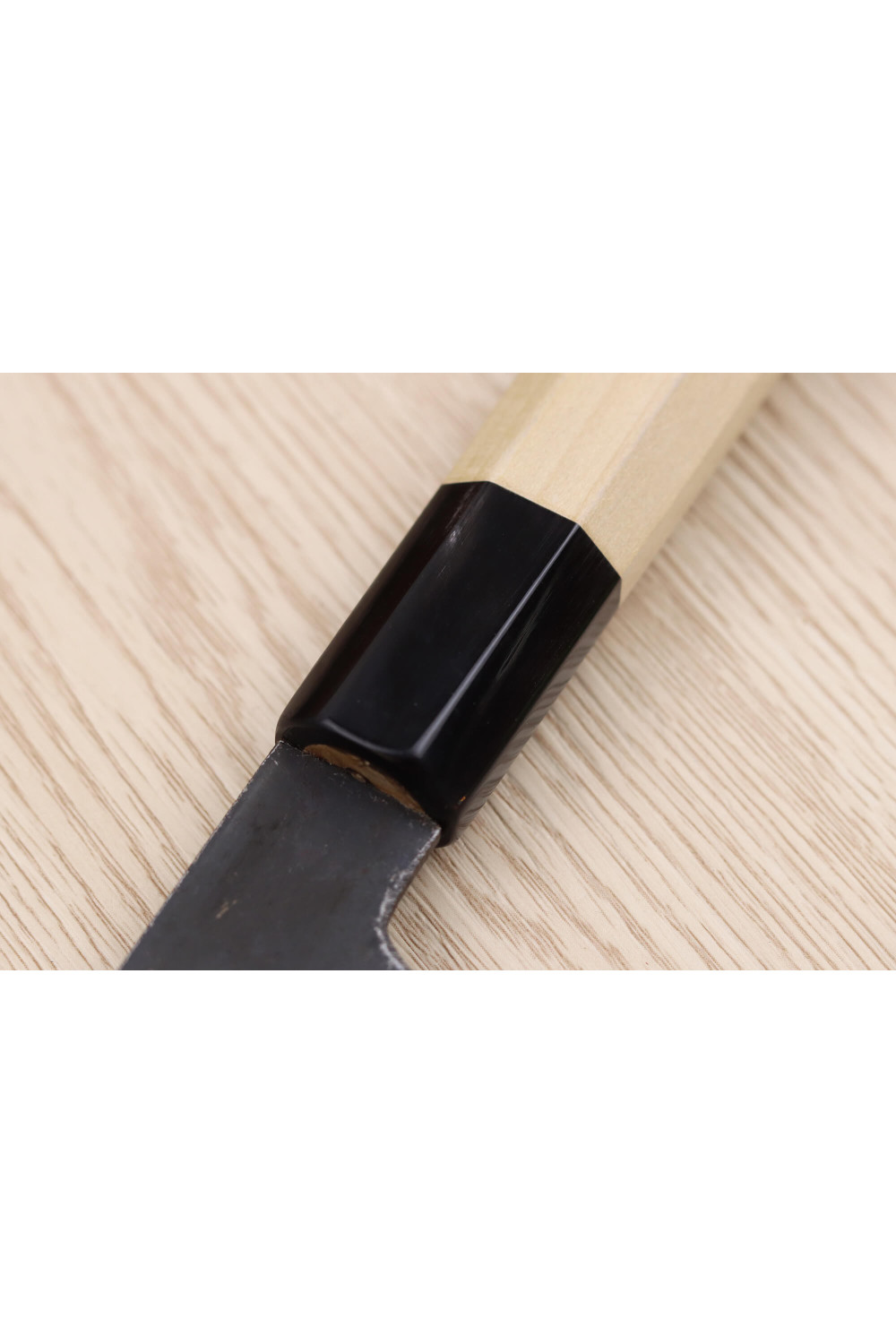
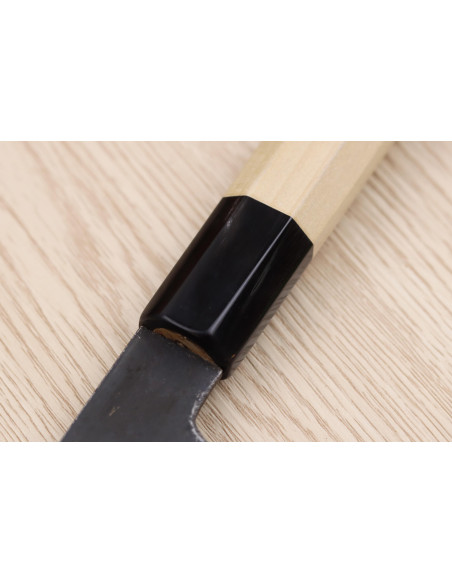
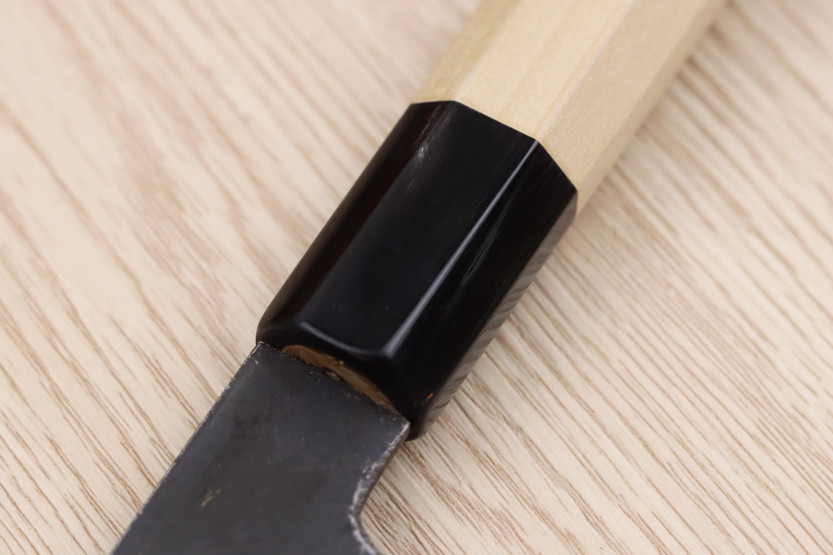
A black buffalo horn ferrule links the blade to the handle. This natural material may show slight variations in color, and some pieces may have fine white streaks.
Finally, wood putty fills the small gaps where the blade fits into the handle. This guarantees the knife's watertightness and hygiene, preventing cut pieces from getting inside.
How to care for your Sakai Kikumori craft knife
As the blade of this knife has a high carbon content, it is more exposed to the risk of oxidation. To preserve your knife at its best, wash it by hand only. Use a mild soap and a non-abrasive sponge, avoiding wetting the handle.
After washing, wipe the knife dry to remove all traces of moisture. Then store it in a dry place, whether in a drawer, on a magnetic bar or in your briefcase.
However, it's important to know that, despite careful maintenance, the carbon blade may change color over time. Its alloy reacts naturally to various factors, such as the acidity of food or humidity in the air. To preserve its original condition, we recommend regular oiling.
Discover Kikuzuki Kuro knives on our website!




 By buying this product you can collect up to