First of all, a few important words about maintenance:
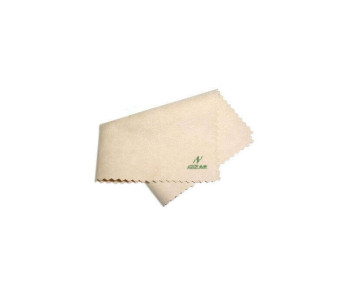
Perfectly suited to professional use, this knife should still be cleaned by hand, using a soft sponge and washing-up liquid. Once you've washed your knife, wipe it dry with a soft cloth and store it in a dry place, to ensure that it retains its original appearance for a long time to come.
Get to know the manufacturer:
Misono was founded in 1935, in the town of Seki. The town is internationally renowned for its knifemaking expertise.
Initially, the family business made peeler blades, but diversified into kitchen knives in the 1960s.
Misono is now the oldest manufacturer of Western-style knives in Japan, employing some 50 experts to produce 150,000 knives a year.
100% of knife production, from blade to handle design, is carried out by Misono experts (although many producers of this size outsource certain parts of their knives to other companies, more specialized in a particular field).
Misono's production techniques are based on those of Japanese master blacksmiths, and many steps are carried out by hand, by their experts.
Misono knives are now appreciated the world over, and top chefs have no hesitation in acquiring them.
Blade :
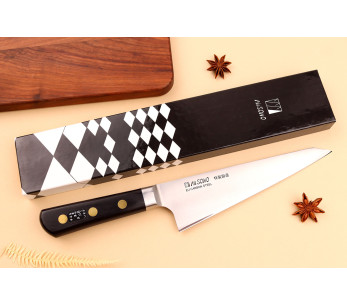
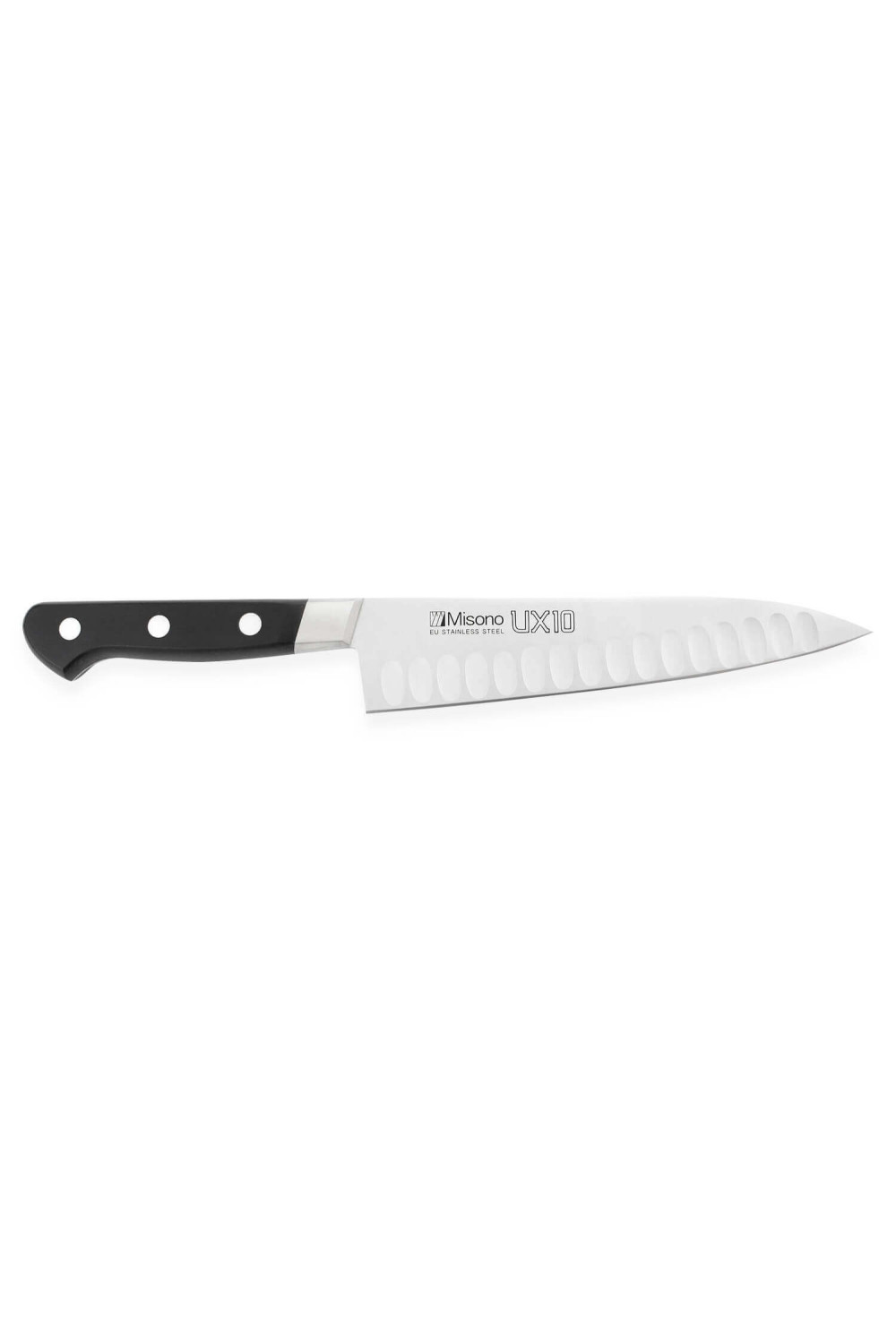
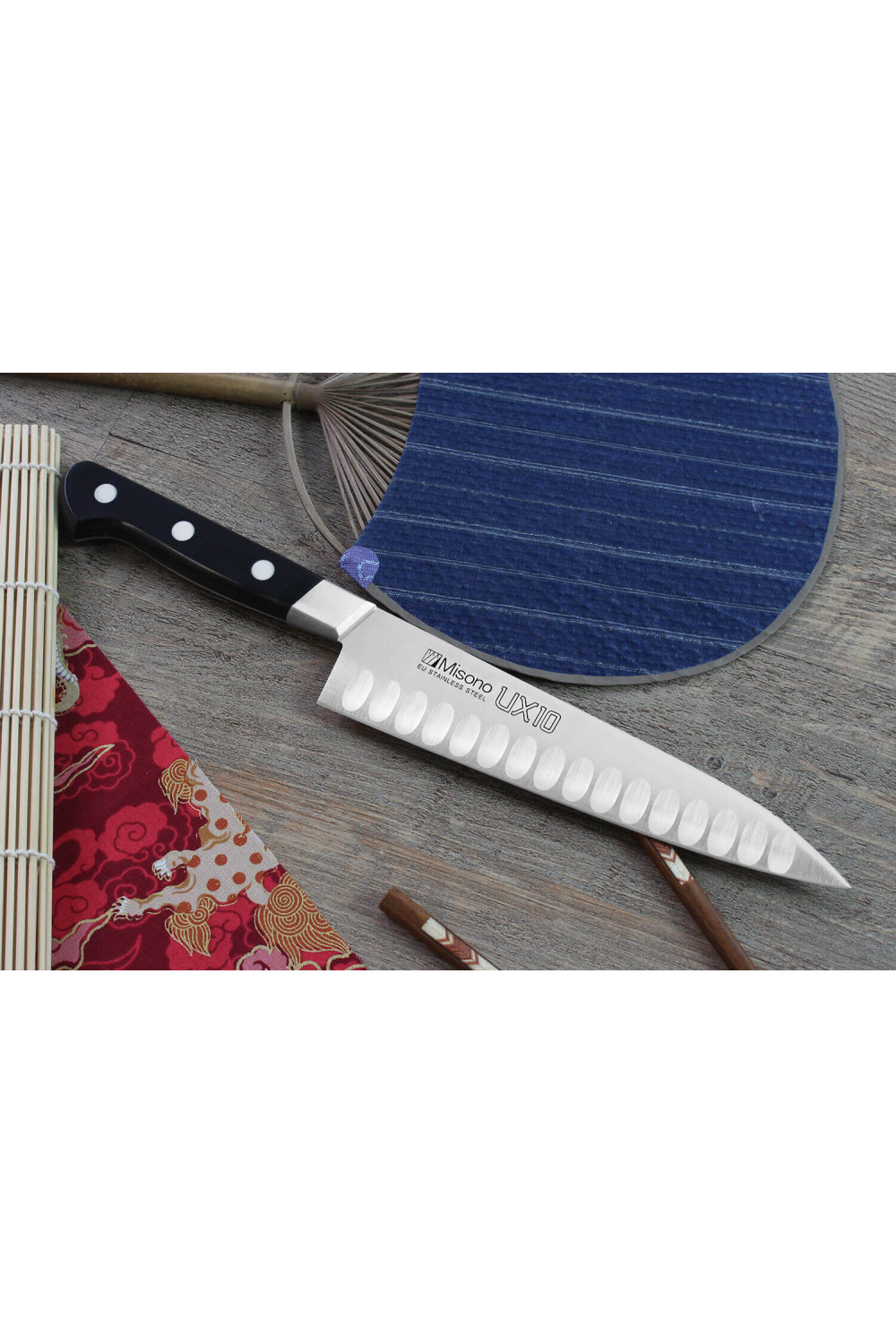
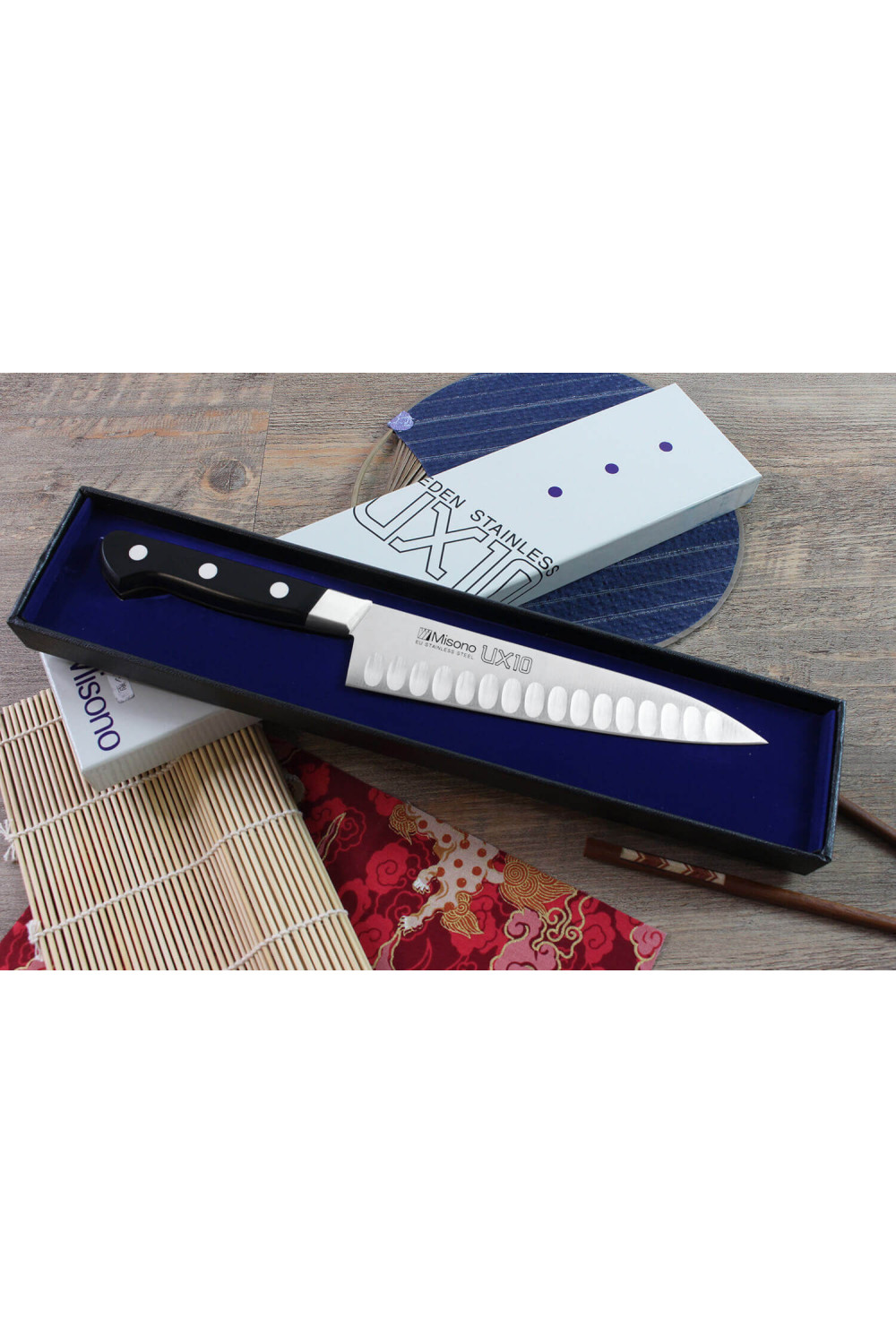
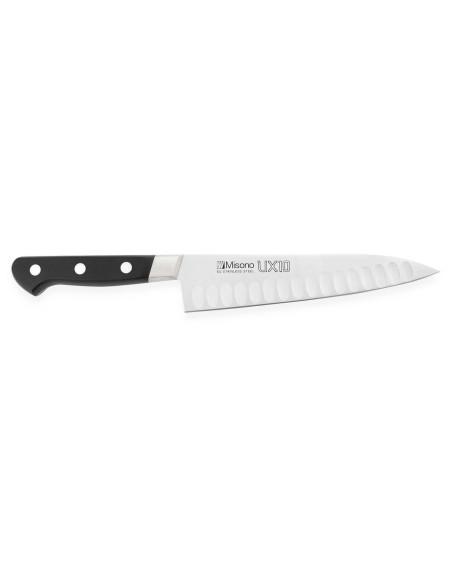
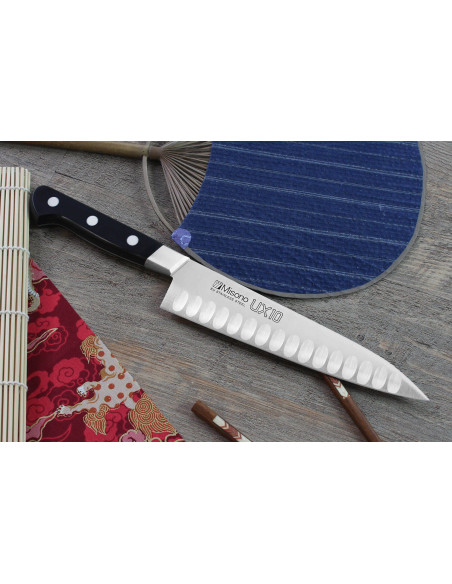
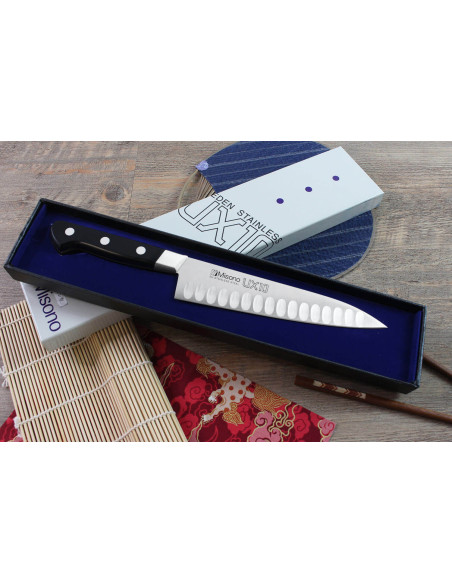
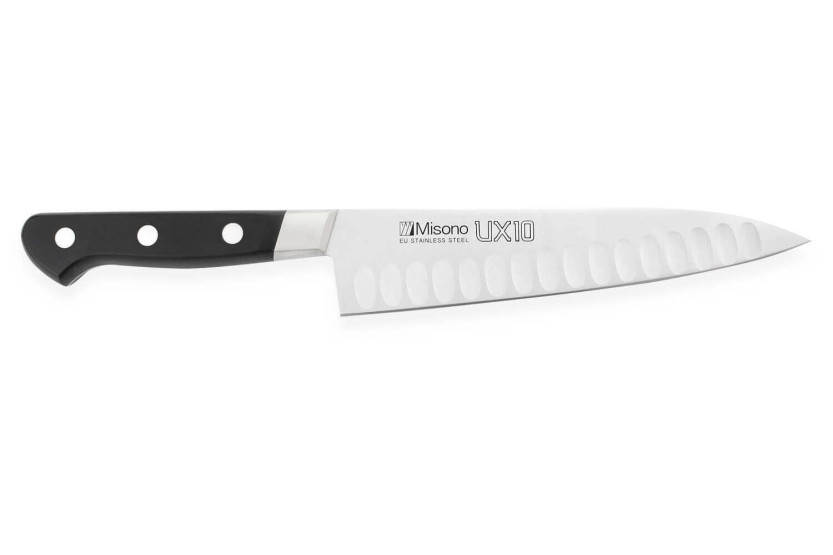
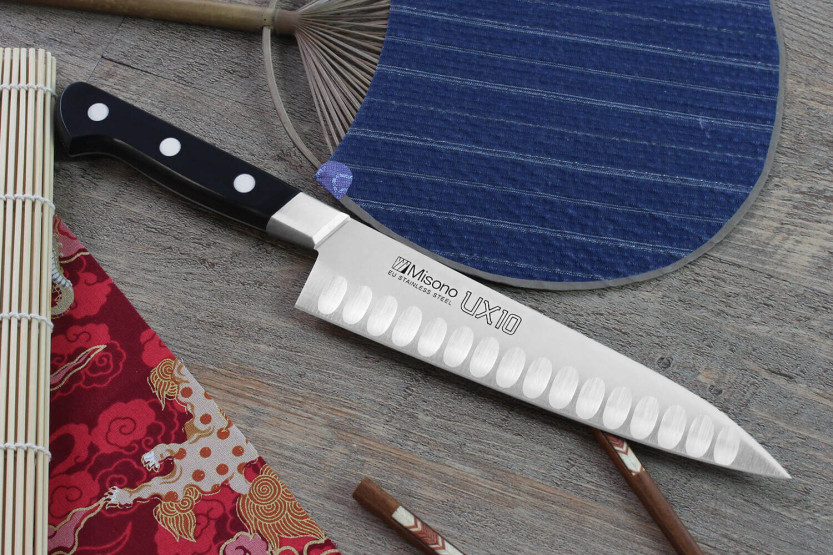
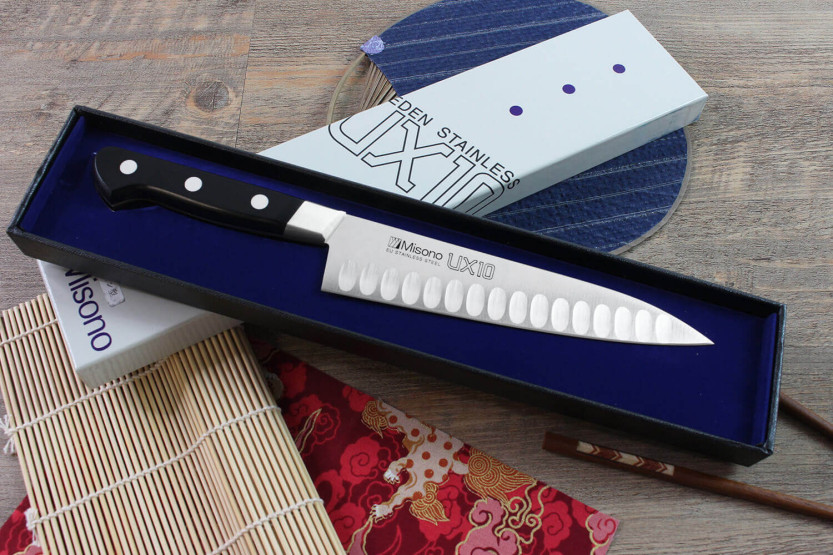
This 18cm Misono chef's knife is part of one of the manufacturer's best ranges: the UX10 series. It is widely used in restaurants, especially gourmet and Michelin-starred ones.
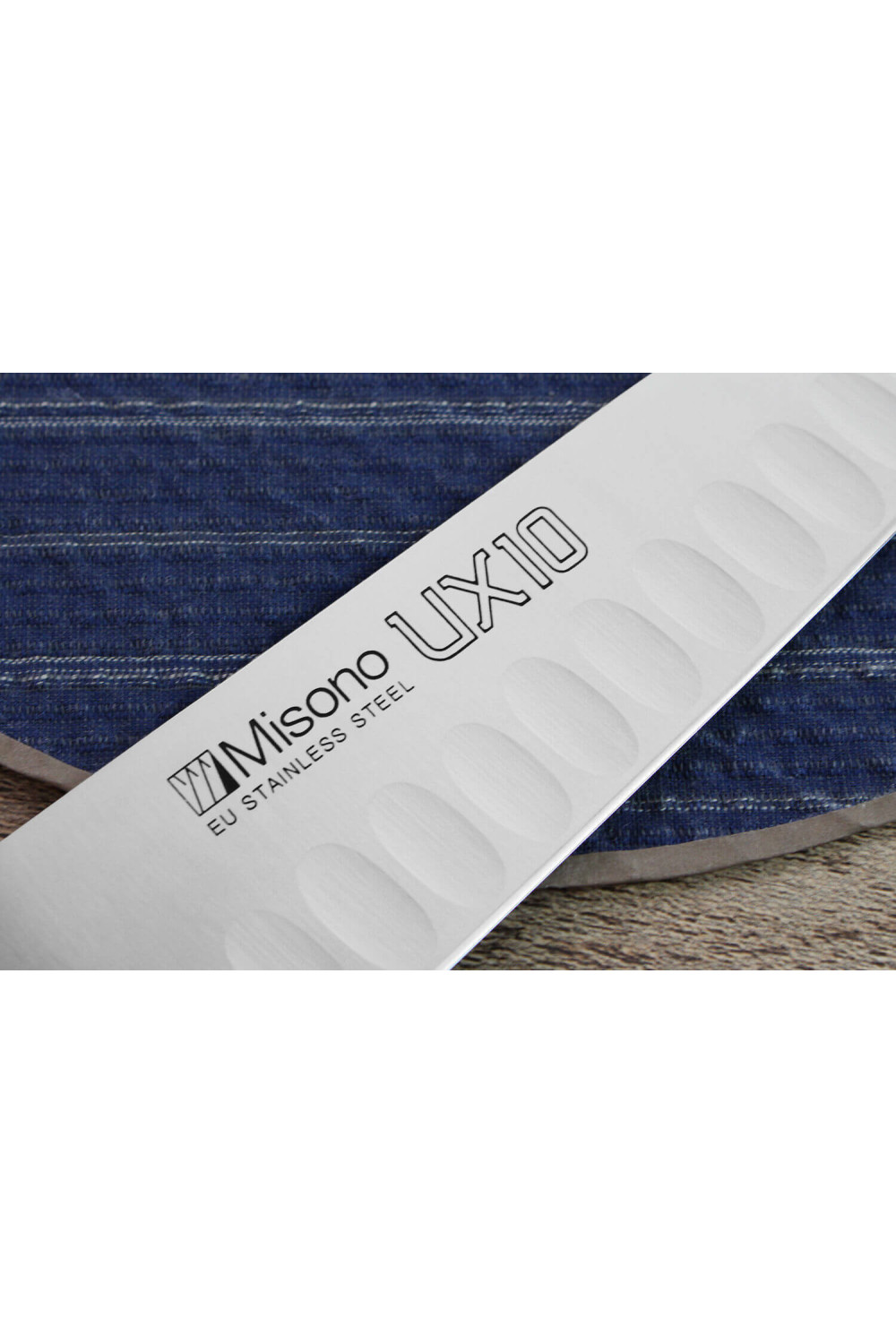
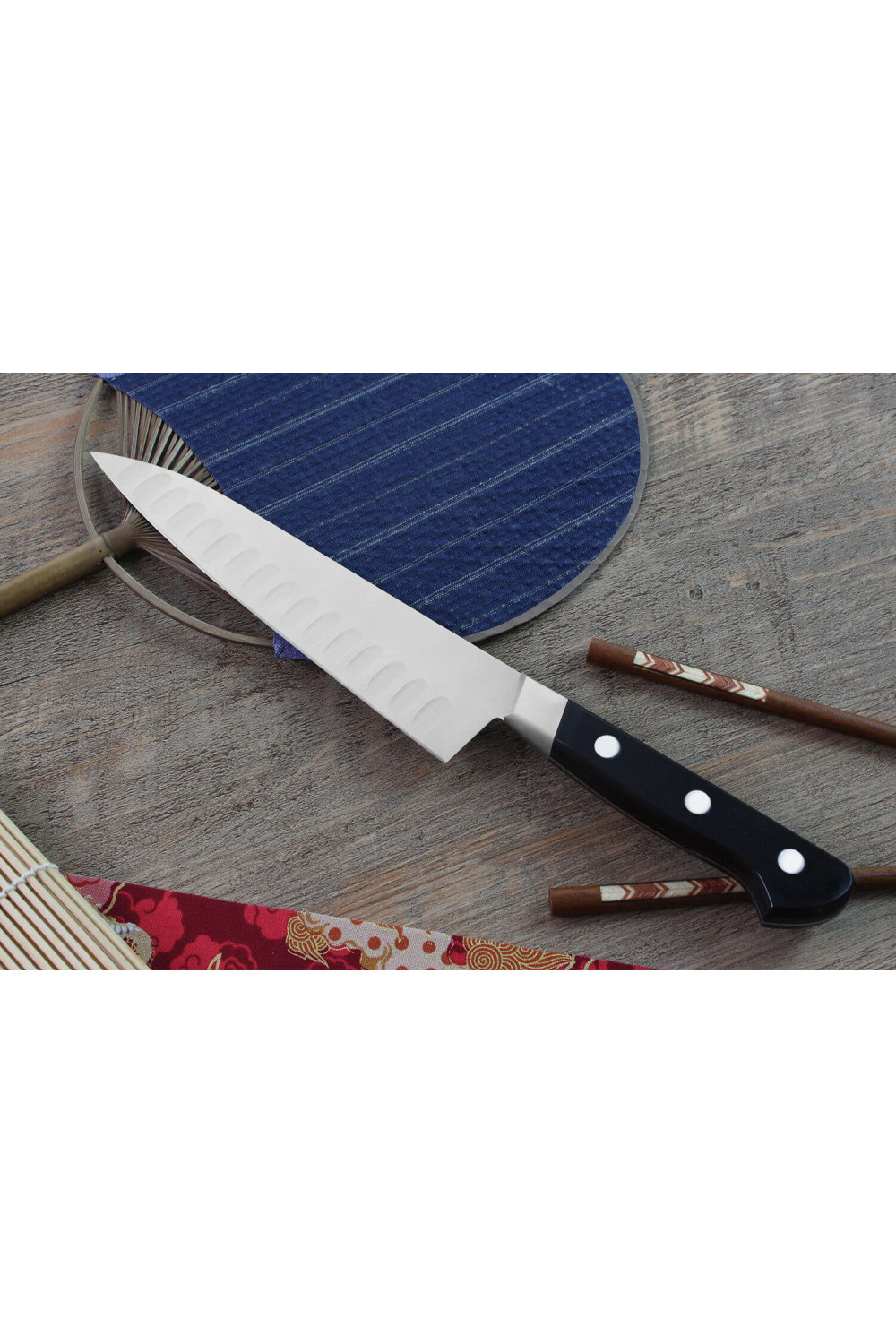
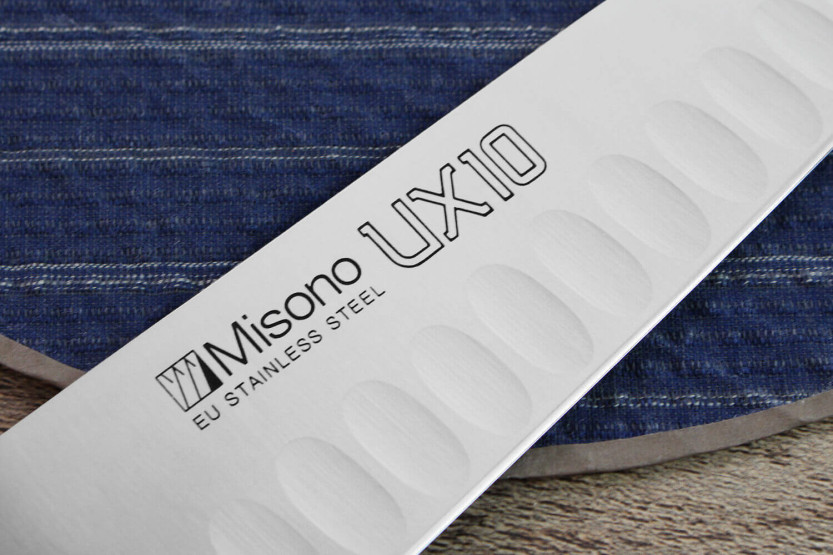
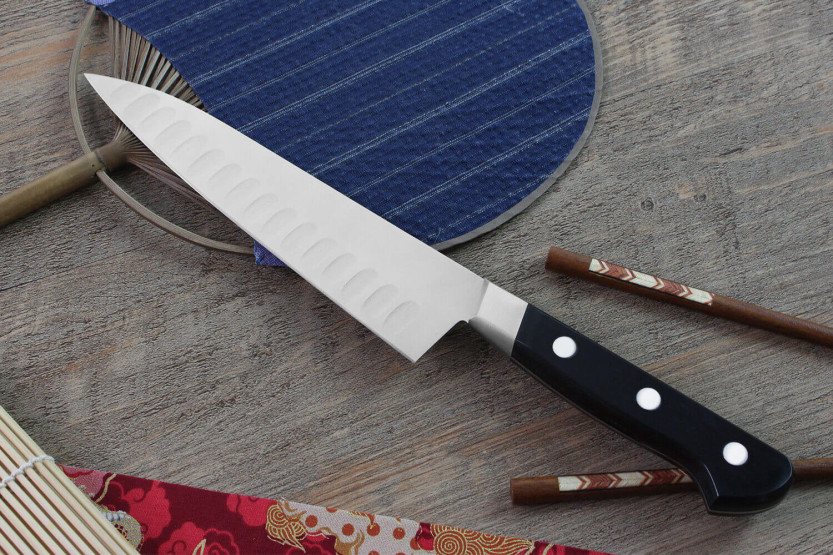
Its with granton edgesurface enhances its non-stick properties. In fact, small air bubbles are created in the hollows of the alveoli when cutting, enabling food to stick less to the steel.
What's more, the cutting edge is made from a high-grade Swedish stainless alloy, making it corrosion-resistant (with standard use and maintenance, of course). This alloy also ensures long-lasting sharpness. Misono UX10 knives boast the highest edge retention of all the brand's ranges combined.
Their hardness reaches 59/60 HRC: a good compromise between ease of sharpening and cutting edge life, as mentioned above. When the need arises, you can restore its efficiency by maintaining it with a Sharpening stone.
One of the strengths of the Misono knife lies in the shape of its cutting edge. It has an asymmetrical (but not one-sided) angle. This makes for much easier cutting: the blade gently inserts itself into the flesh, without damaging it.
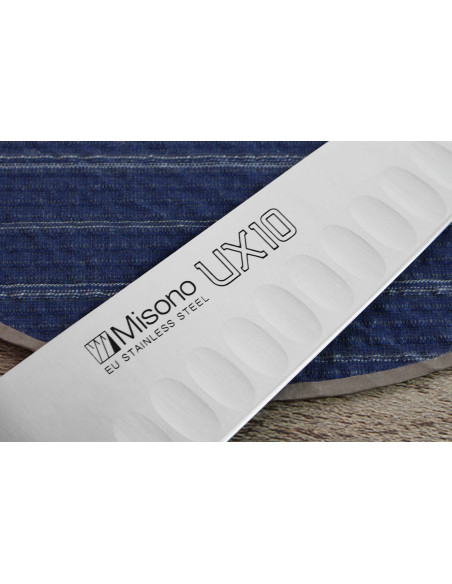
The brand and range logos are clearly visible on the cutting surface.
Handle:
The materials and shape of the handle have been designed to suit the needs of Western chefs. This is one of the reasons why these knives are used all over the world.
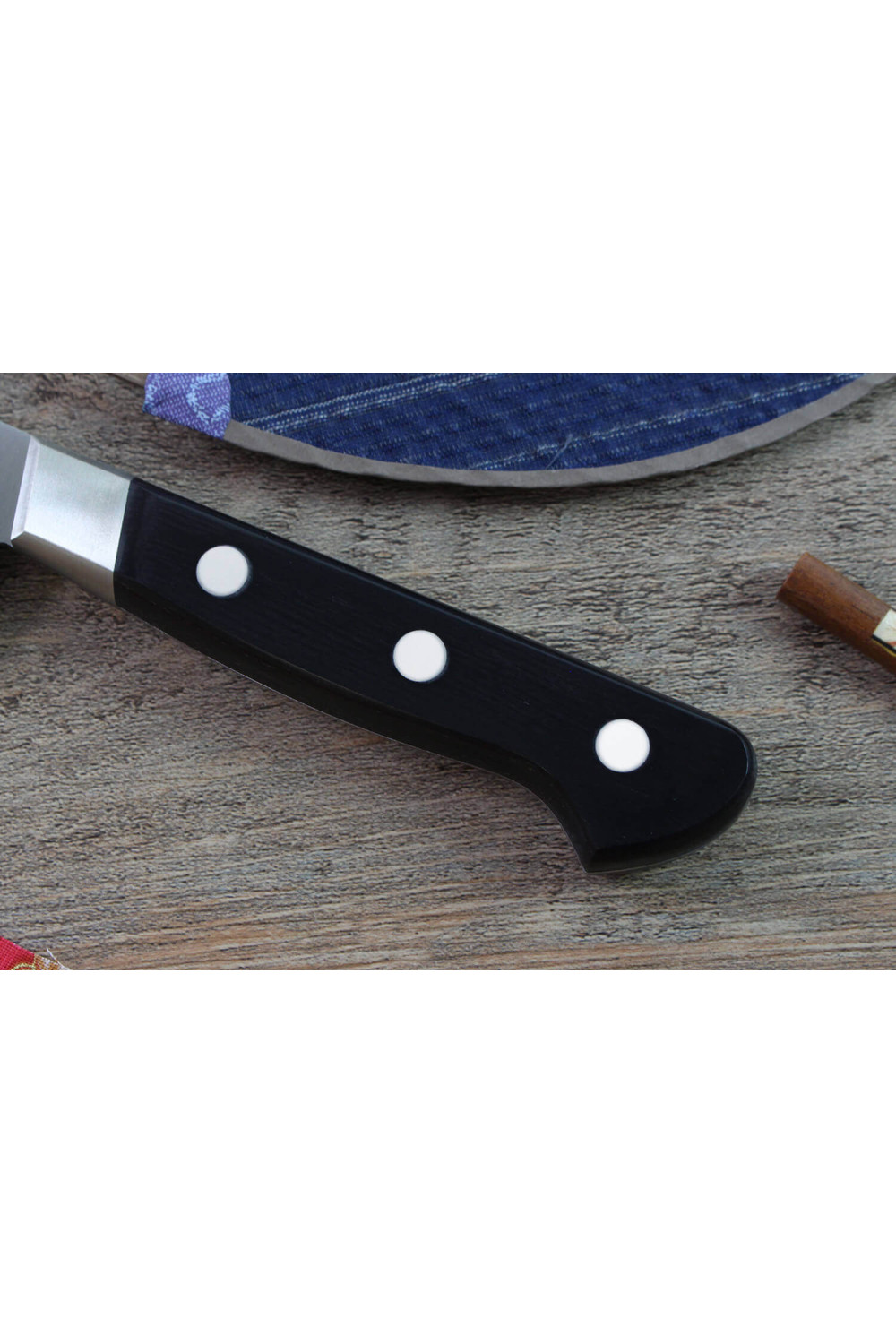
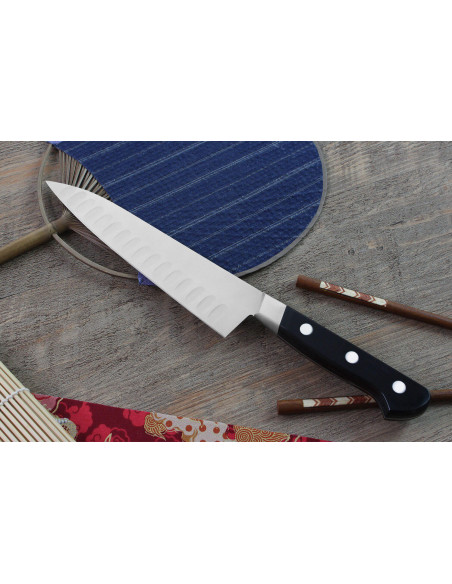
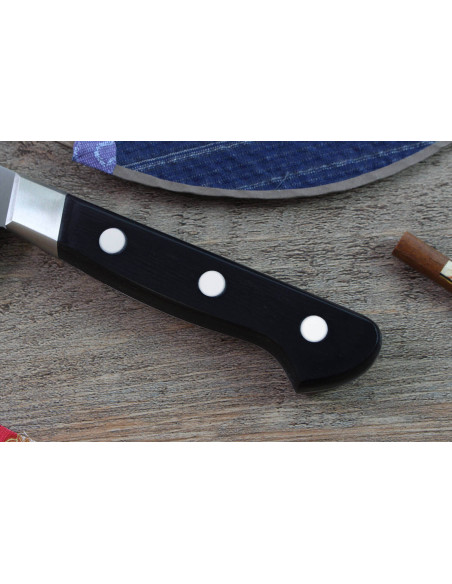
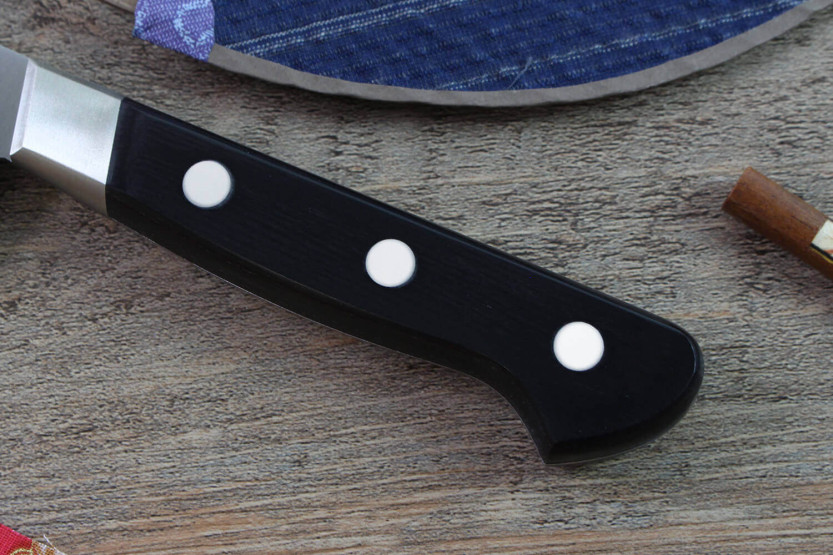
Made from light, black Pakka wood, it is very pleasant to grip, and can be used over time without tiring. What's more, Pakkawood is an antibacterial material widely used in the kitchen, as it is resistant to temperature variations and humidity.
A small recess in the base allows you to grip and handle it with control.
It also features 3 rivets and a nickel silver bolster. This is an alloy of copper, nickel and zinc, appreciated for its hardness and resistance to corrosion. It is therefore particularly recommended for a kitchen environment. Its appearance resembles that of stainless alloy, creating a beautiful continuity with the blade. The bolster balances the knife, while the rivets hold the handle's Pakkawood perfectly to the full tang blade (which extends to the end of the handle).
Don't hesitate: this knife is a real asset, whether you're a professional chef or a passionate amateur. It's high-performance, easy to maintain and very pleasant to use. It's a safe bet that proves once again that Japanese cutlery expertise is among the best in the world!
See also our care section to help you look after your knives!




 By buying this product you can collect up to