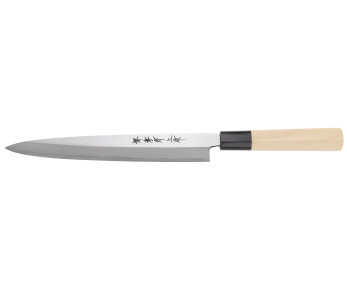
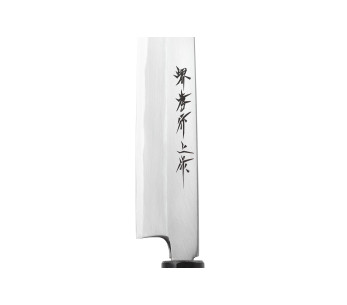
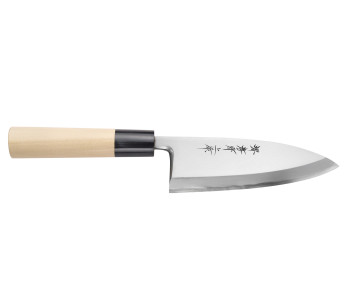
A Japanese deba knife for precise fish preparation
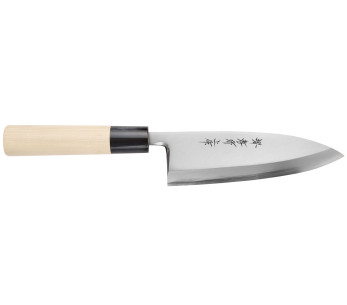
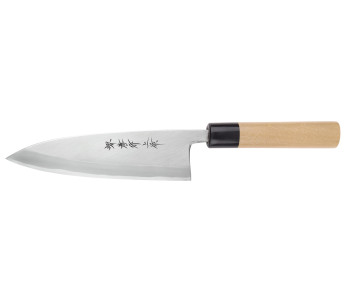
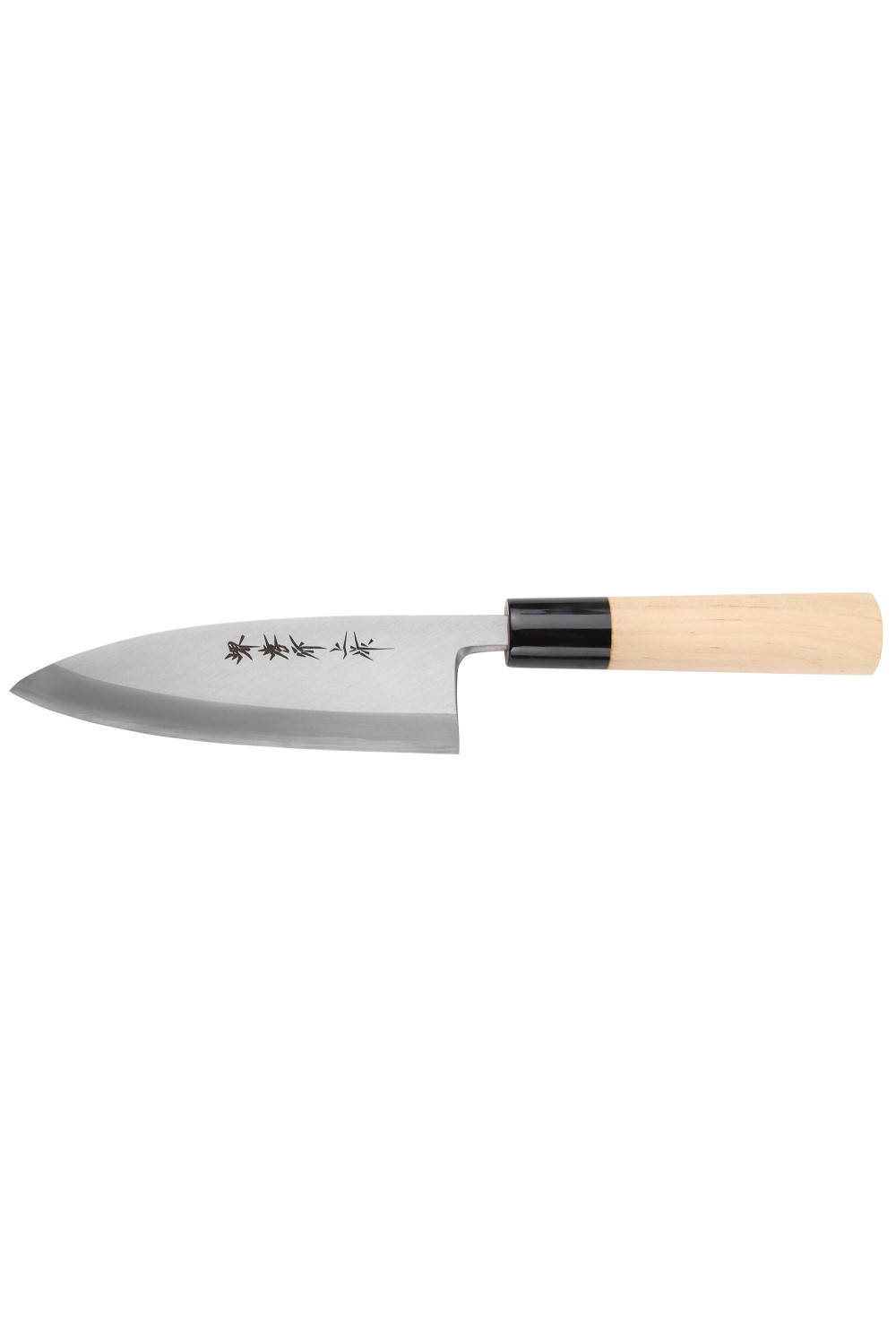
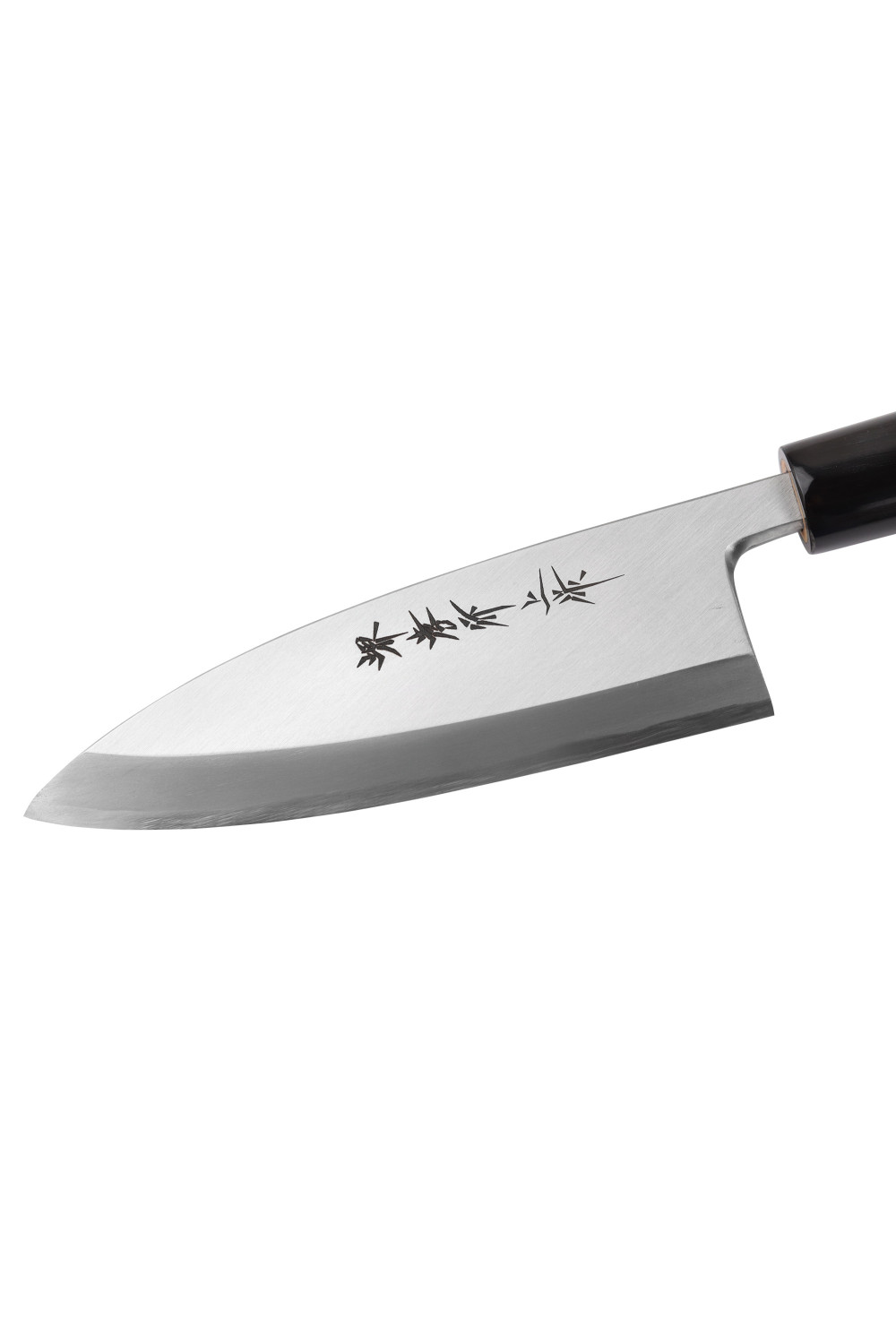
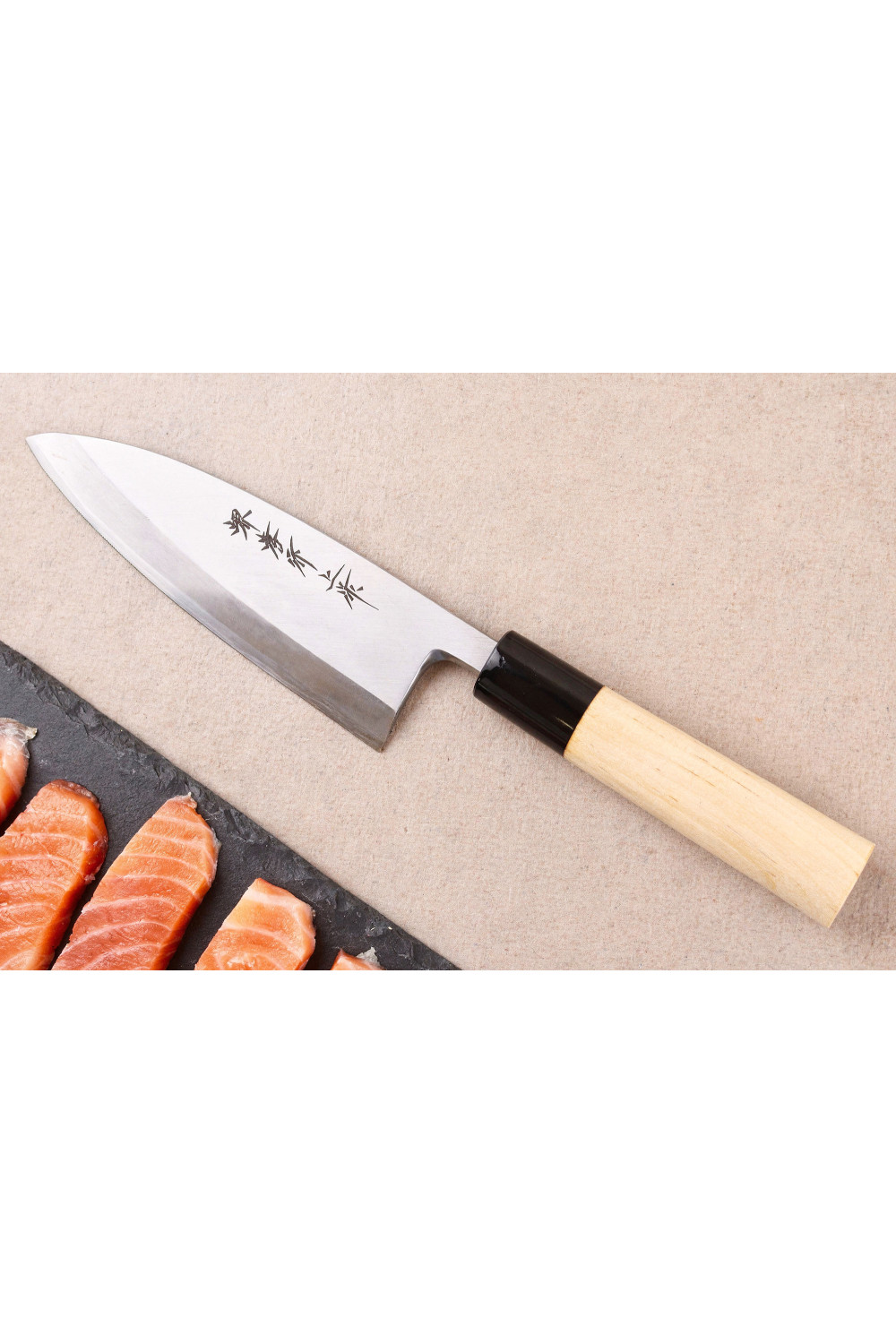
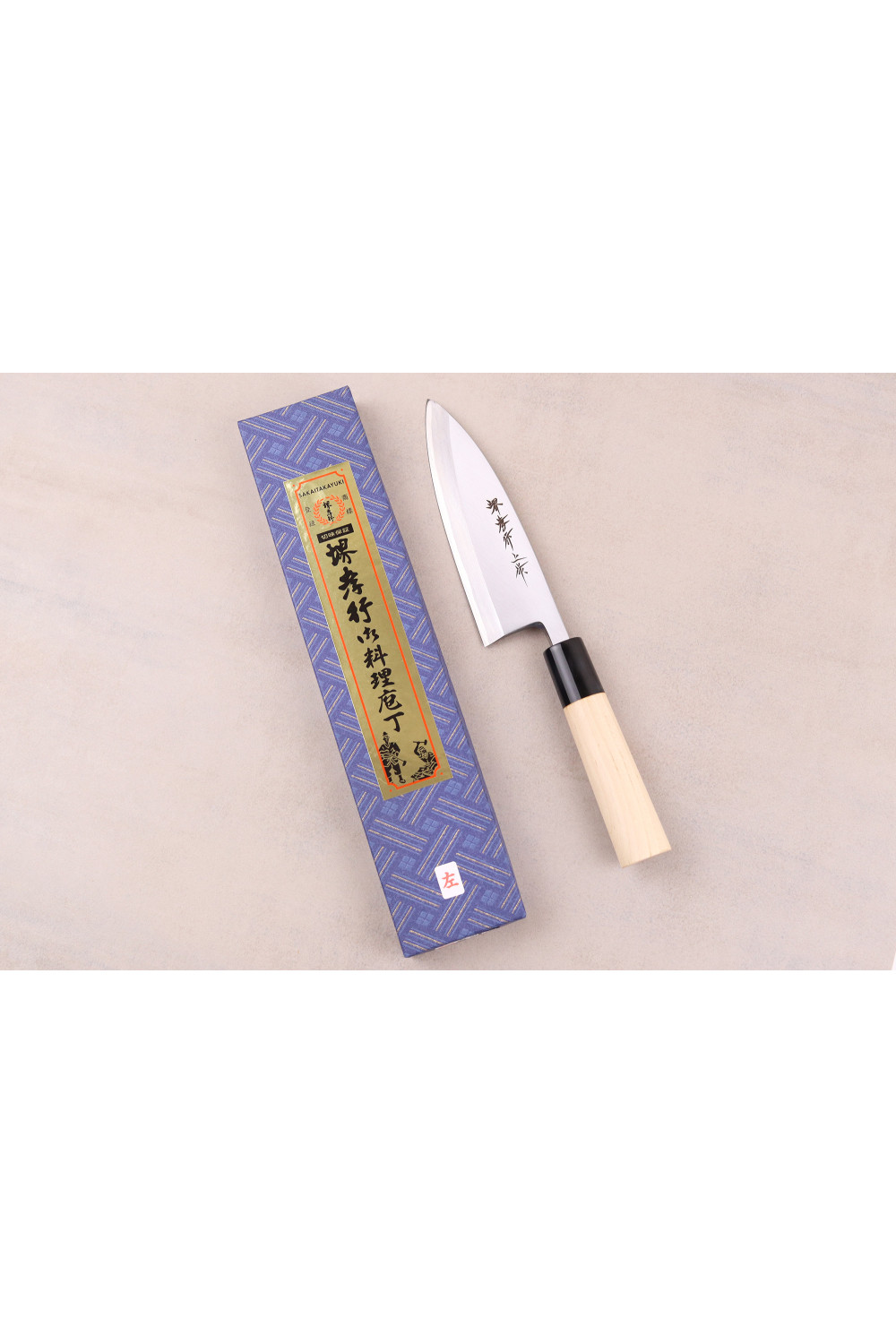
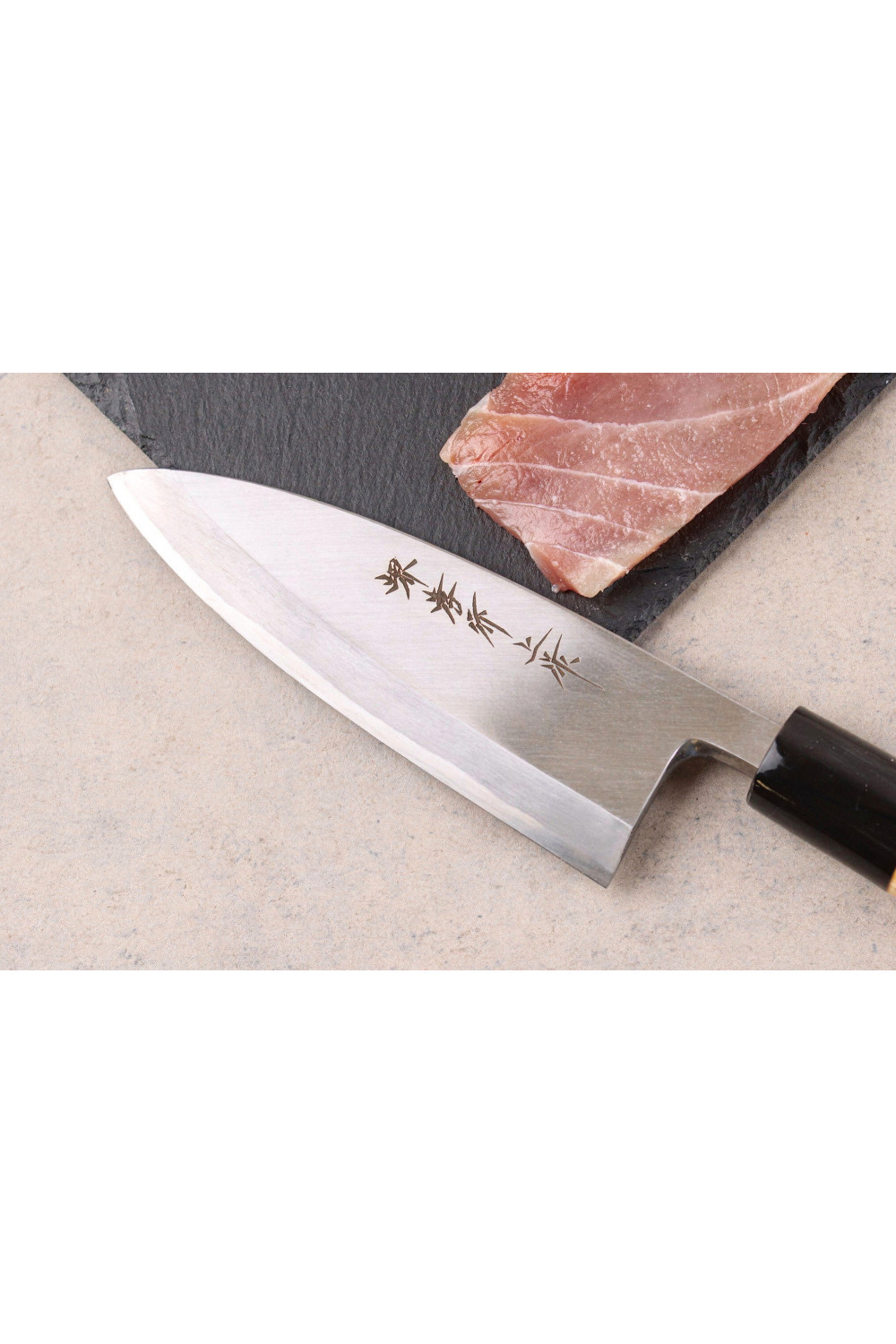
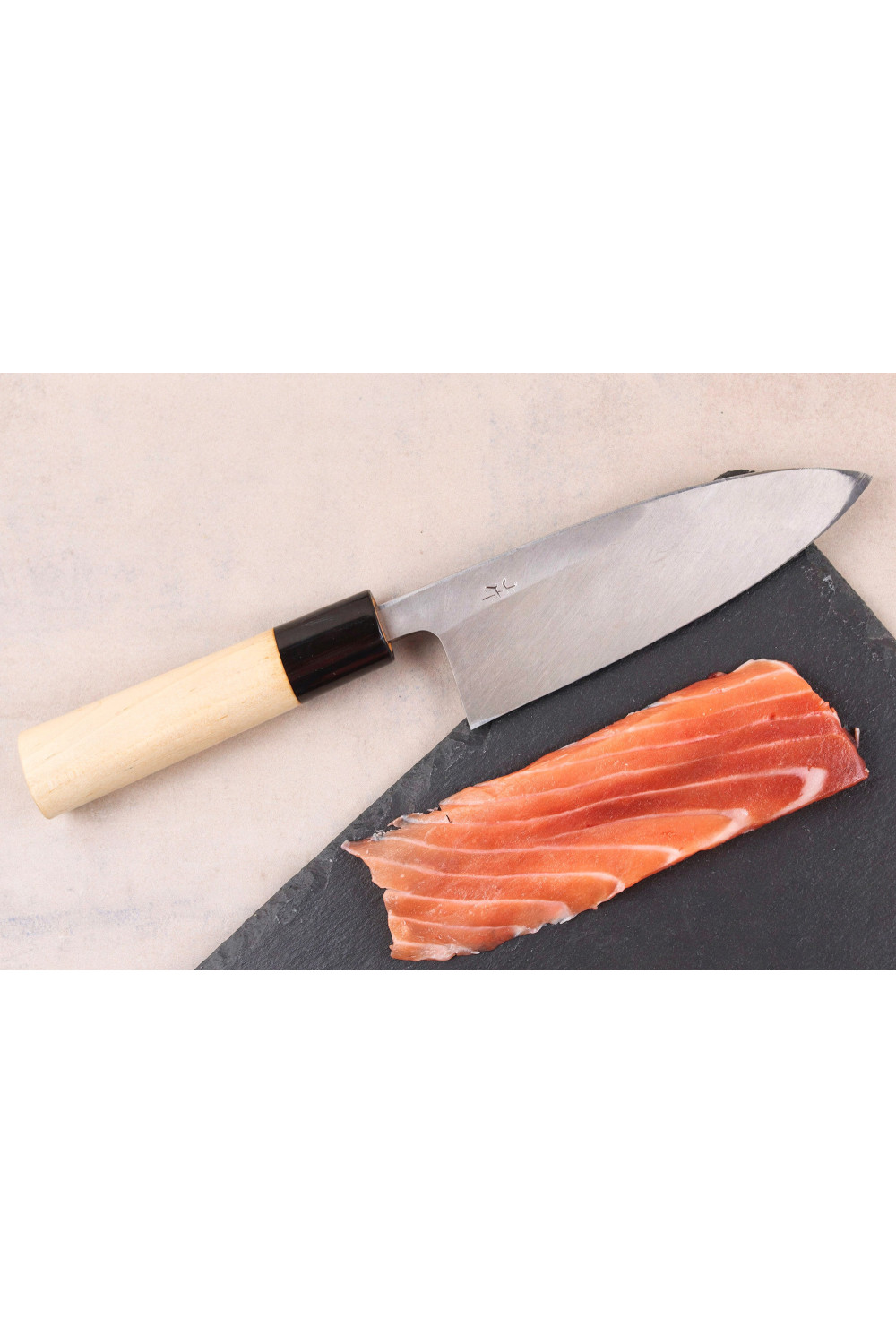
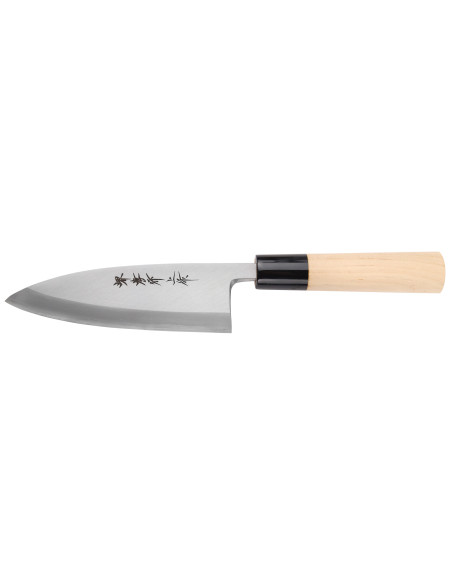
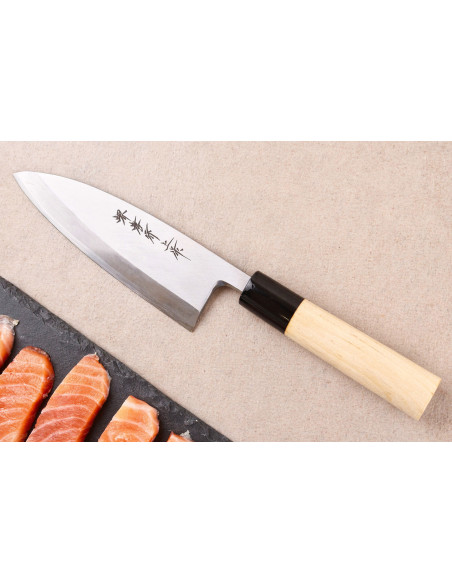
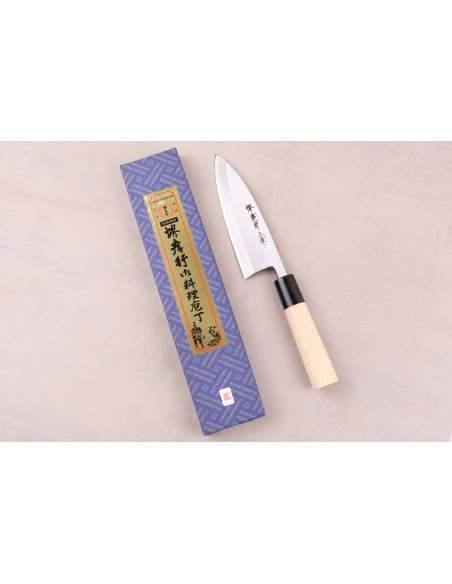
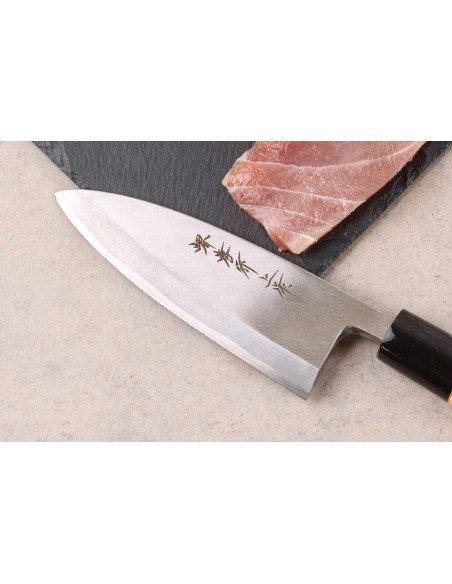
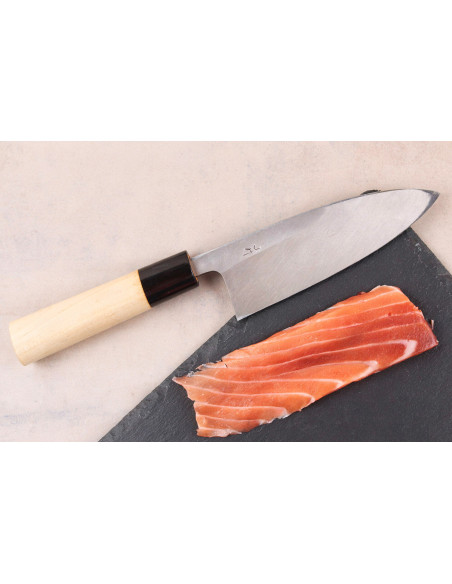
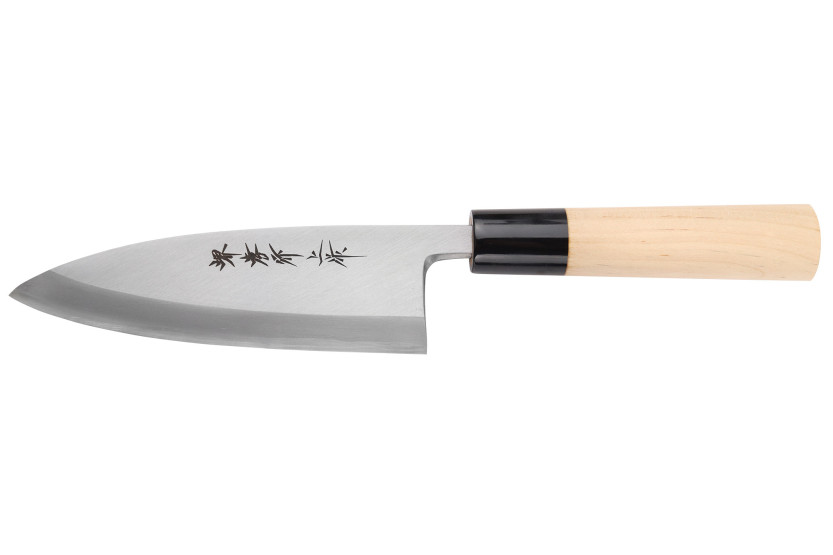
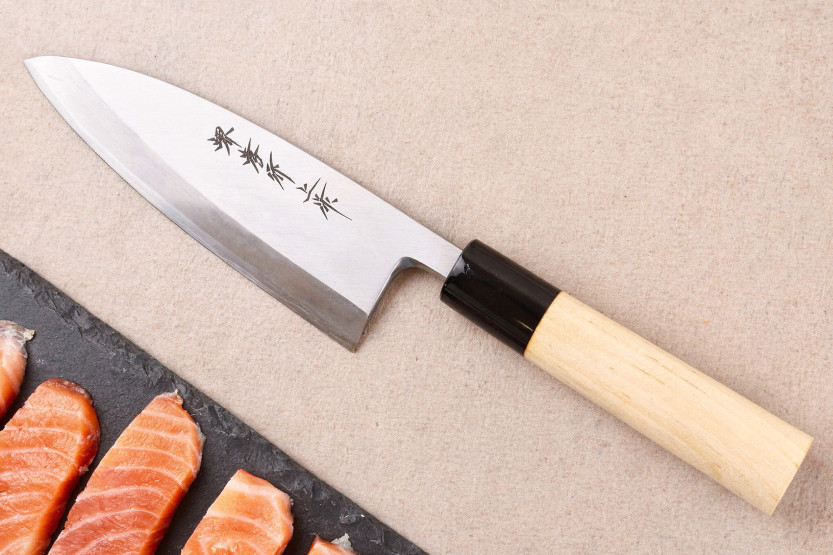
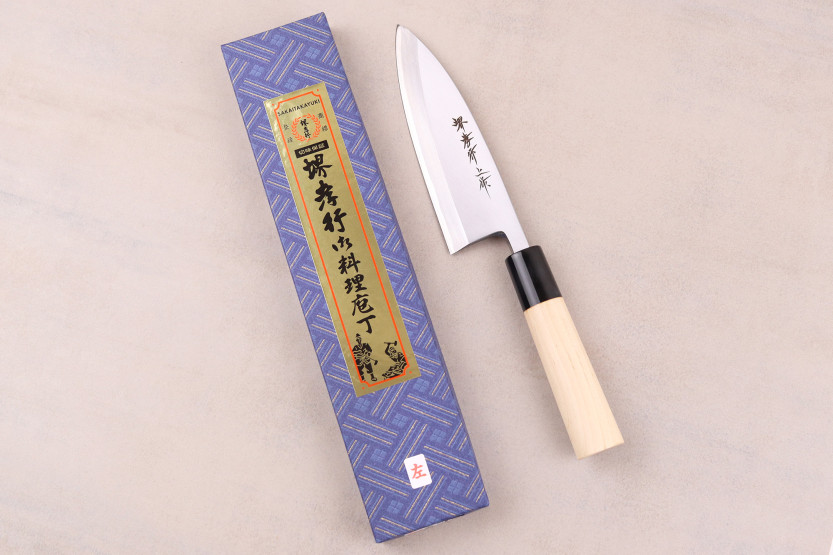
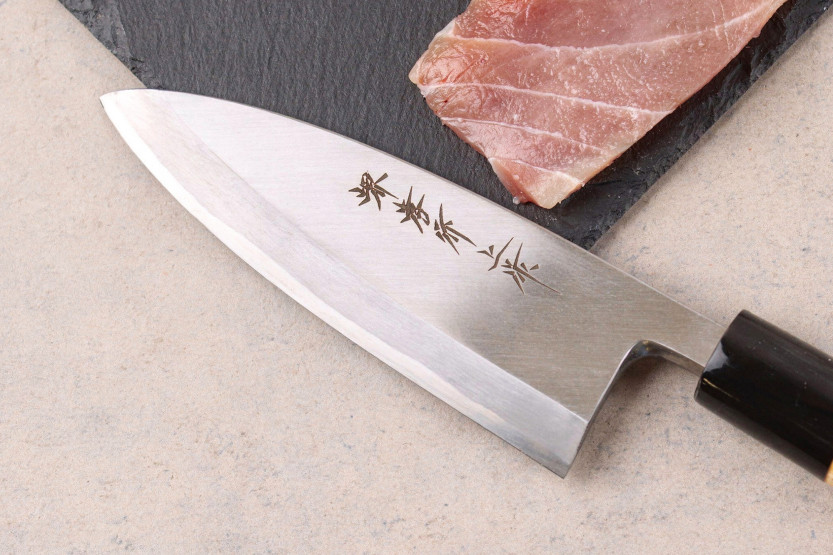
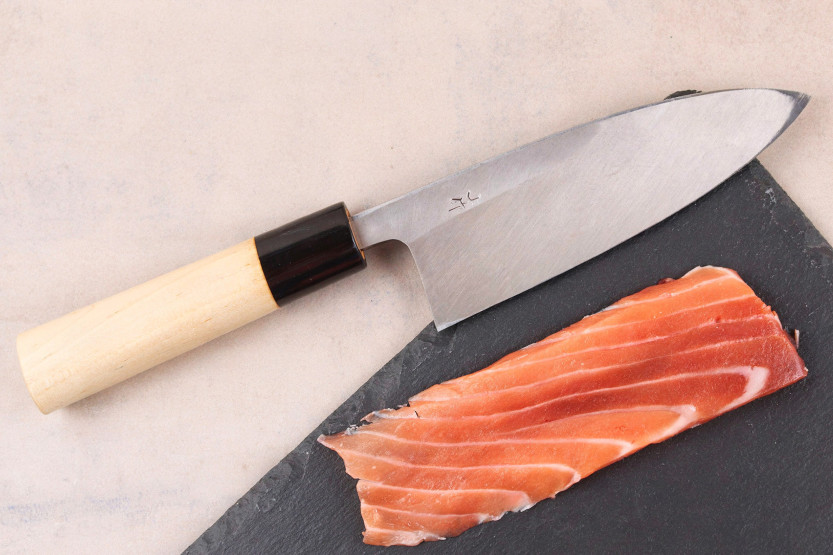
Discover the Sakai Takayuki Honkasumi deba knife, a handcrafted piece forged in Japan by Kenji Togashi and sharpened by Mitsuo Yamatsuka! This traditional modelfeatures a 15-cm blade specially designed for preparing whole fish. Its asymmetrical grind, tailored for left-handed users, allows you to perform the various preparation steps with precision and control.
This Japanese kitchen knife features a tall, thick, and sturdy blade—a hallmark of traditional deba knives. Its geometry allows you to fillet fish, remove heads, and cut through certain fish bones using the appropriate technique. Unlike Western sole filleting knives, its rigid blade offers excellent stability during cutting. Its 15-cm length strikes a good balance between power and maneuverability, making it particularly well-suited for preparing small to medium-sized fish.
A sturdy blade forged according to Japanese tradition
This deba features a 15-cm blade crafted using the traditional Japanese Sanmai structure. It combines a core of rigid steel with two layers of softer steel. Its core is madeof Japanese Shirogami #3 steel, also known as White Paper Steel #3. This alloy contains approximately 0.9% carbon, a composition that yields a fine, precise edge after sharpening.
Thanks to its hardness of approximately 60 HRC on the Rockwell scale, the blade retains its edge well, even during tasks that require a certain amount of strength. Shirogami #3 steel is also valued for being relatively easy to sharpen on a whetstone, allowing the blade to regain an effective edge with proper maintenance.
The carbon steel core is surrounded by outer layers of softer steel, which support the central section and help make the structure more resistant to mechanical stress. This construction combines the cutting qualities of hard steel with a blade well-suited for fish preparation tasks.
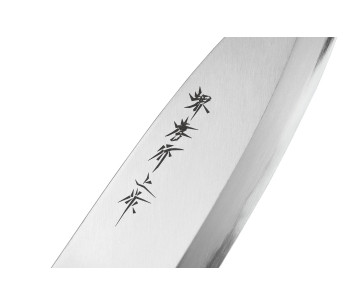
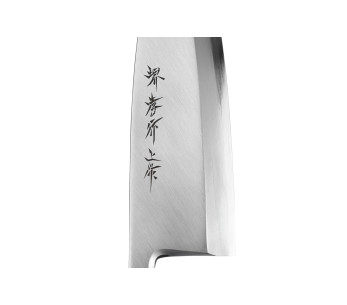
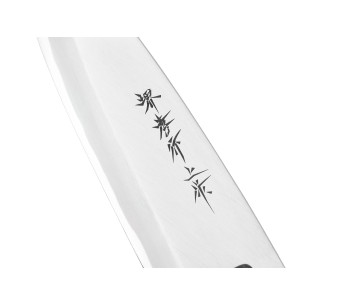
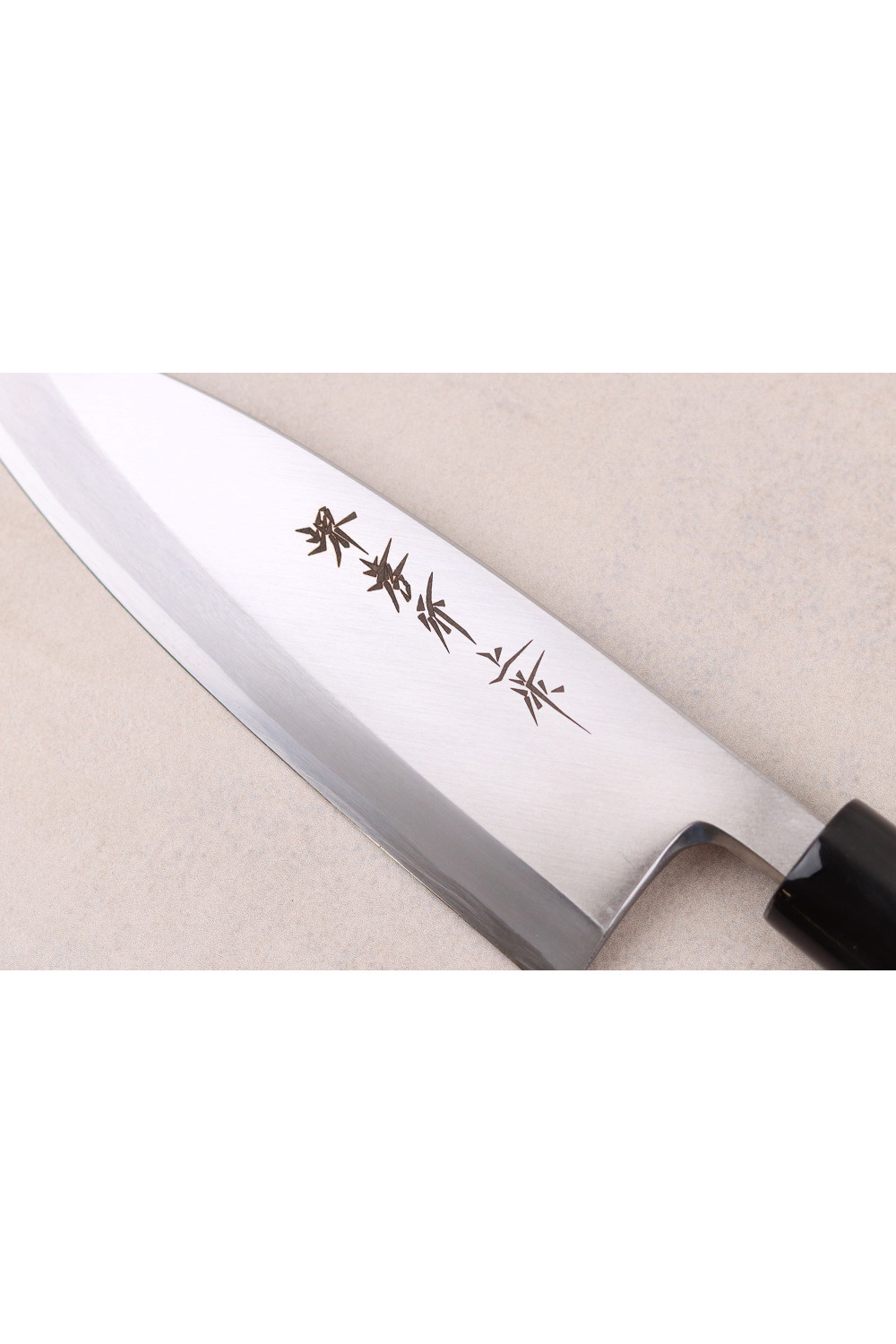
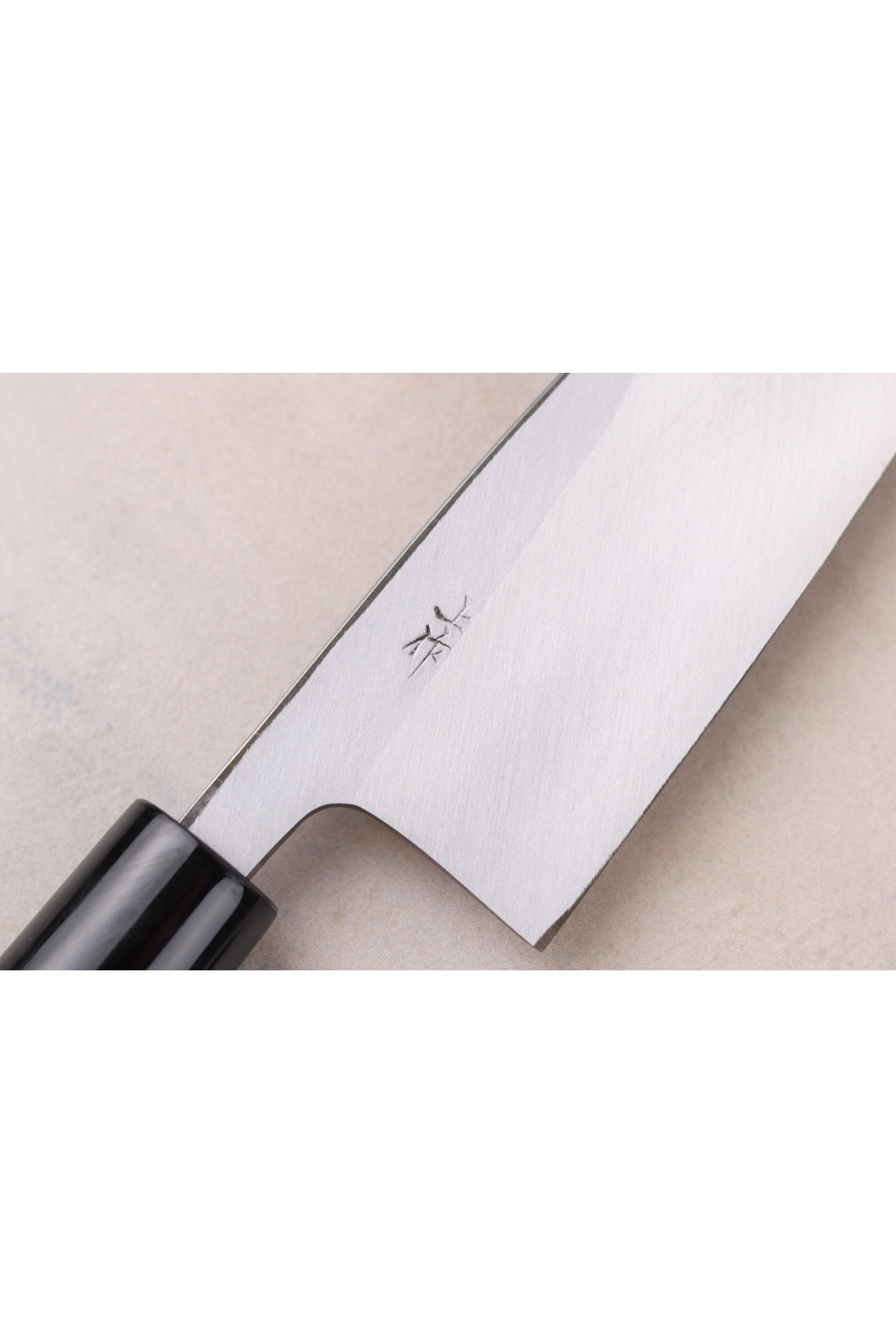
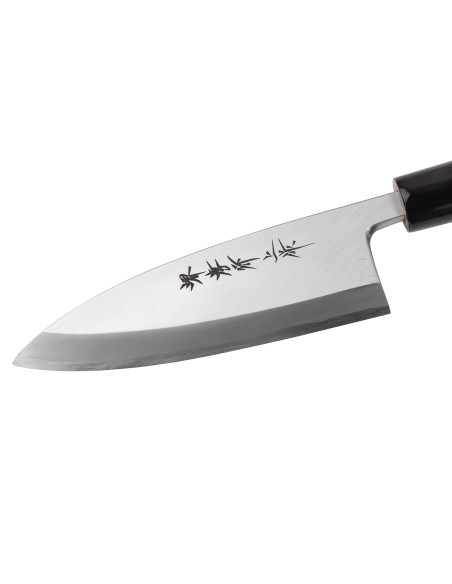
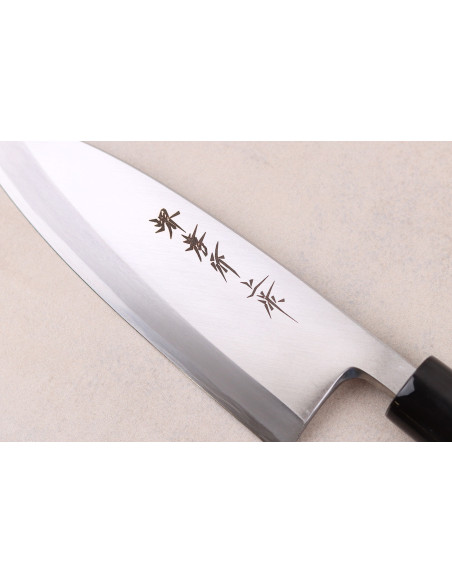
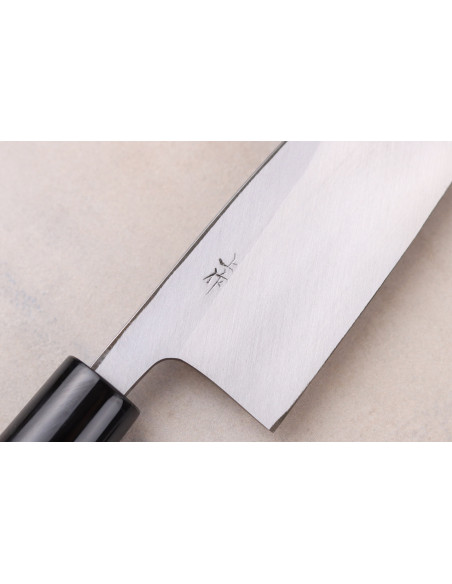
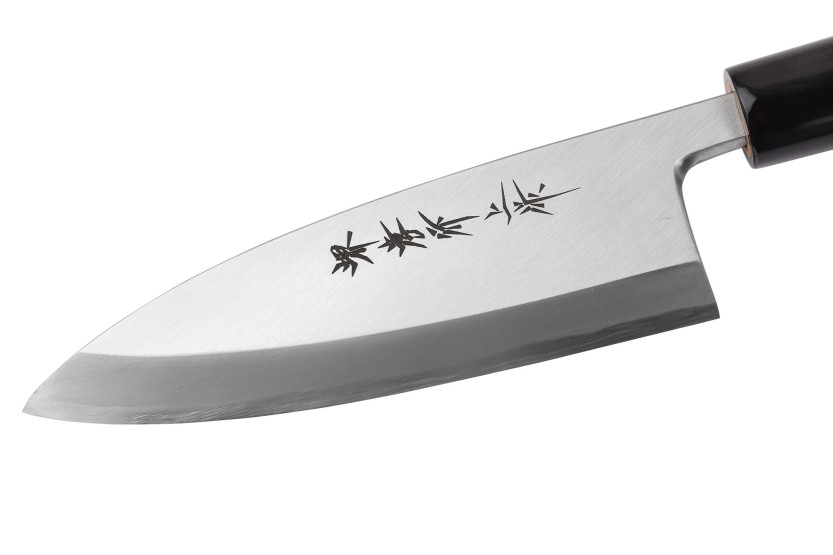
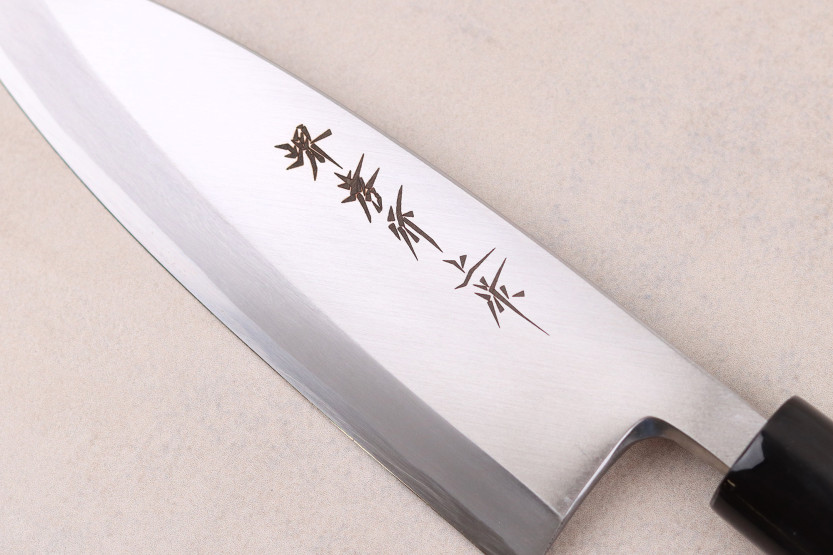
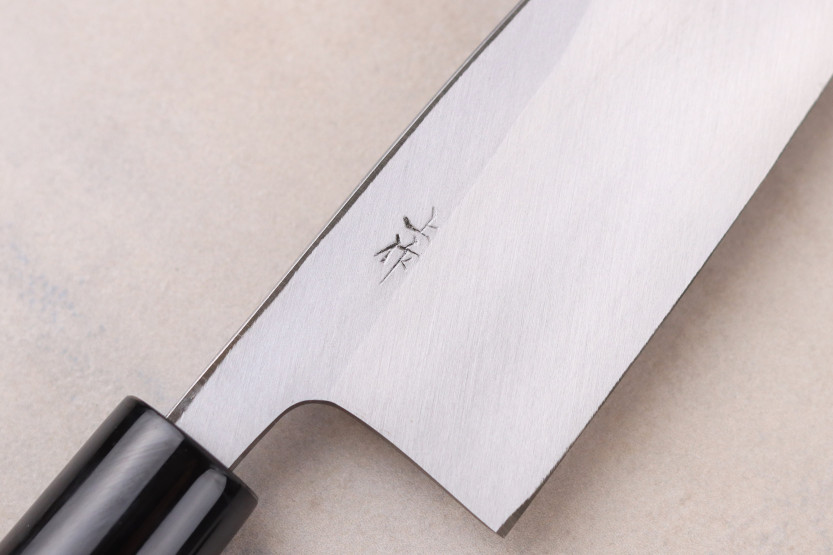
The blade’s surface features a polished finish, which gives it an elegant look and highlights the craftsmanship involved in its manufacture.
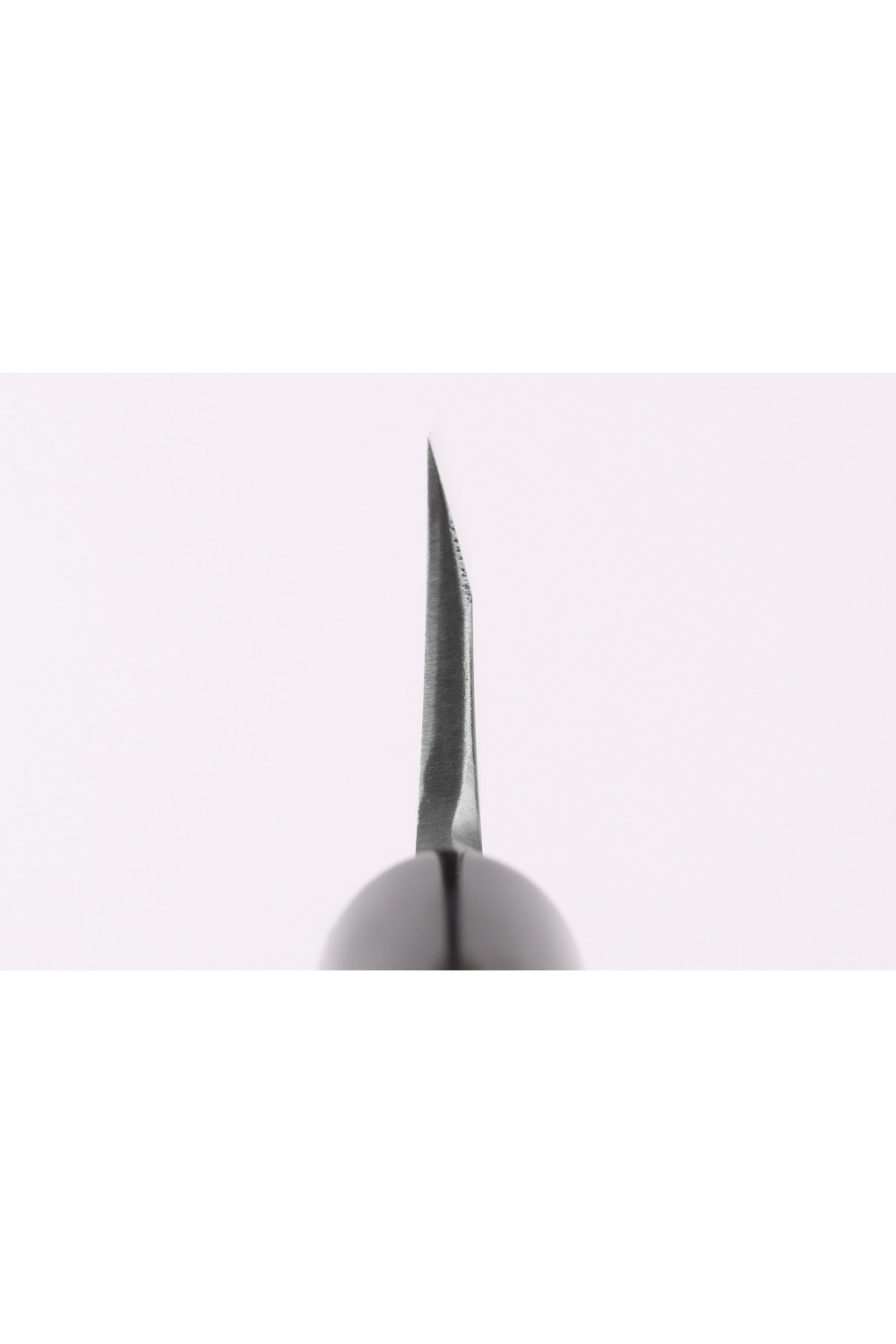
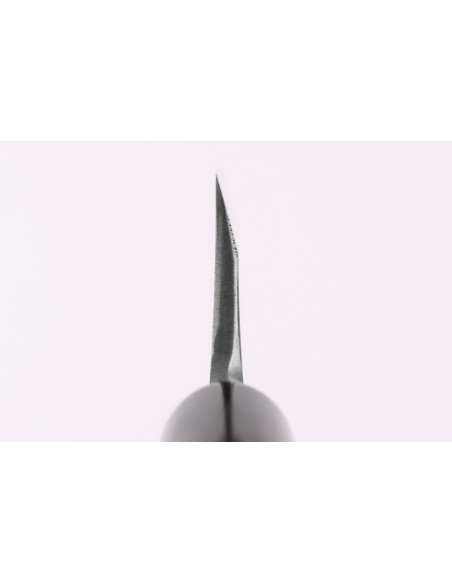
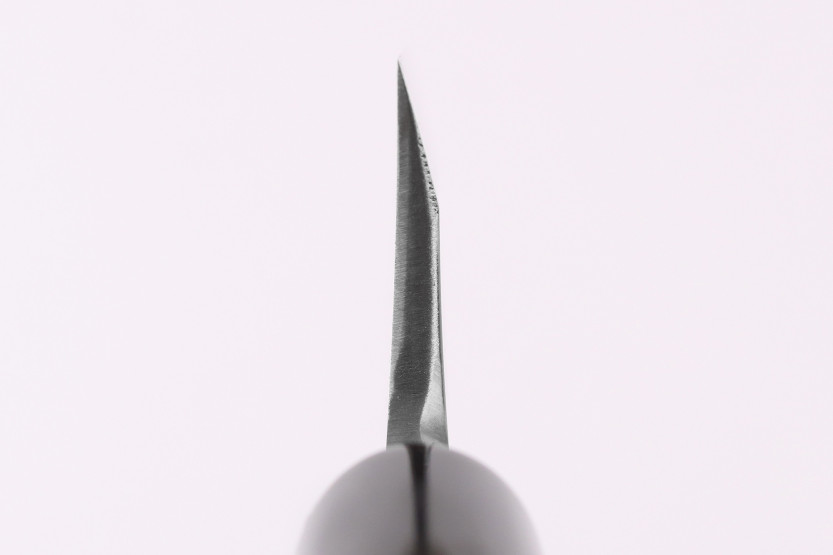
The asymmetrical grind designed for left-handed users is a key feature of this knife. Its cutting edge is oriented to follow the movements of the left hand and make it easier to guide the blade along the fish’s bones. Its thickness, combined with a precise tip, allows you to work close to the spine as well as make cuts that require more force.
An oval handle made of natural magnolia wood
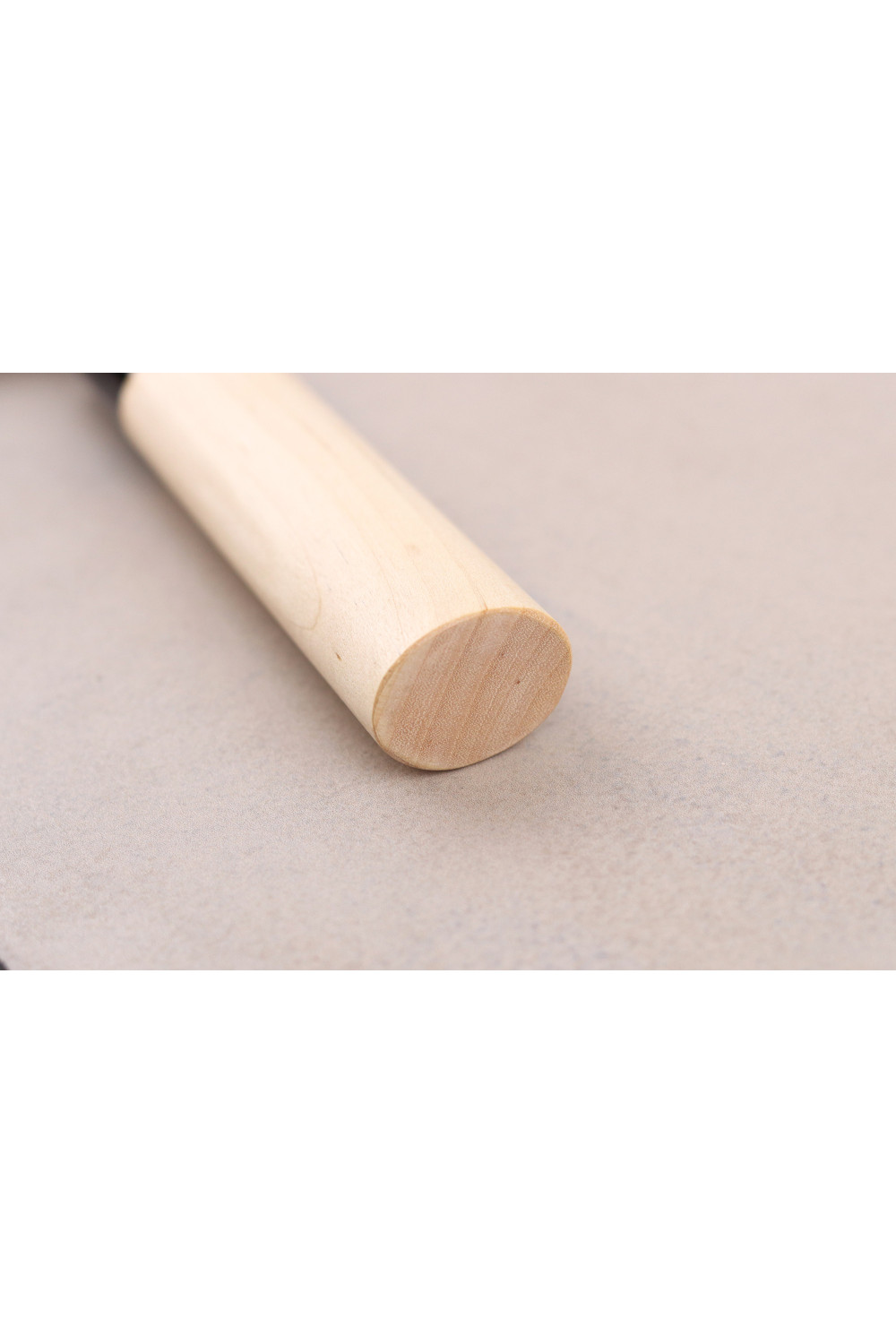
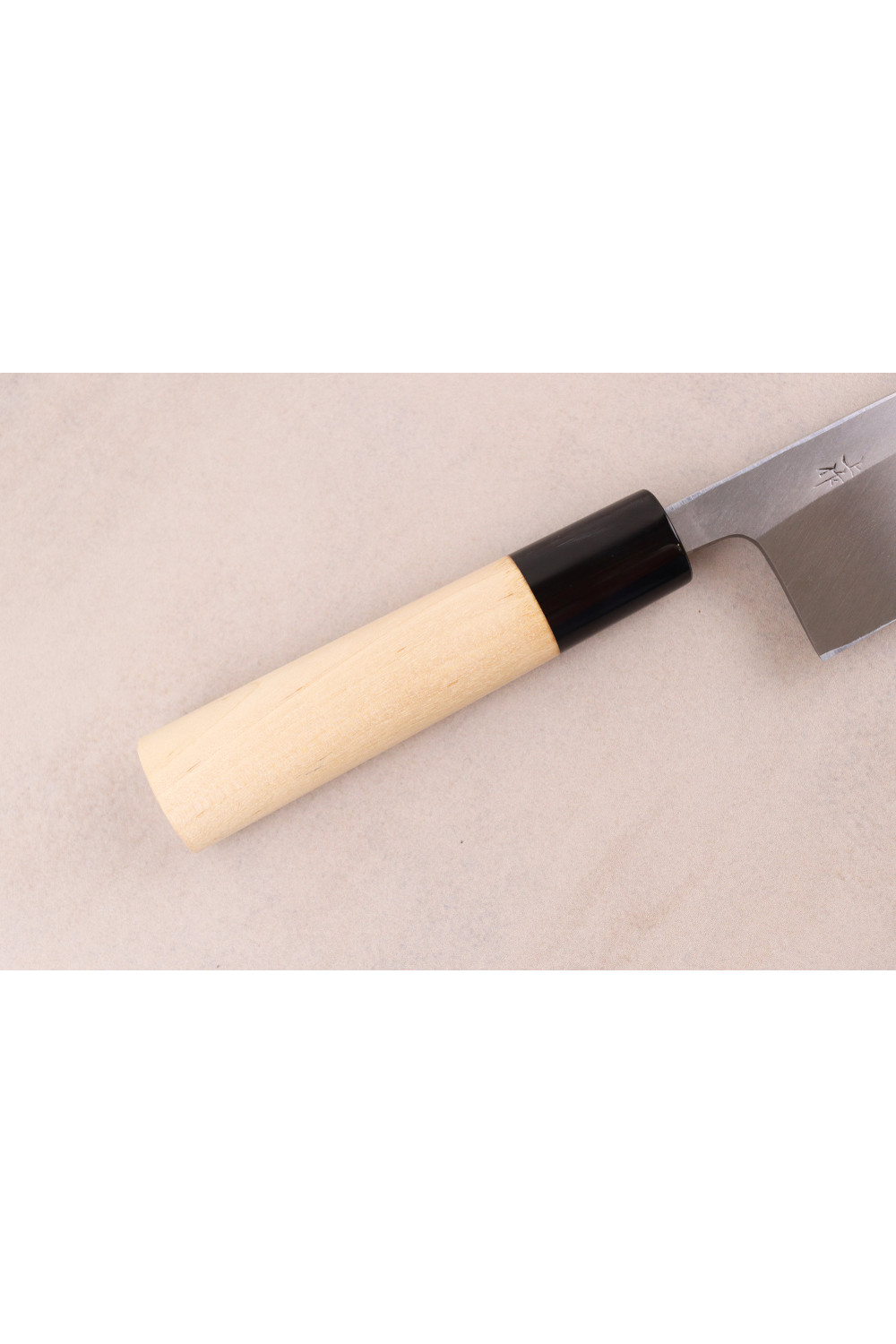
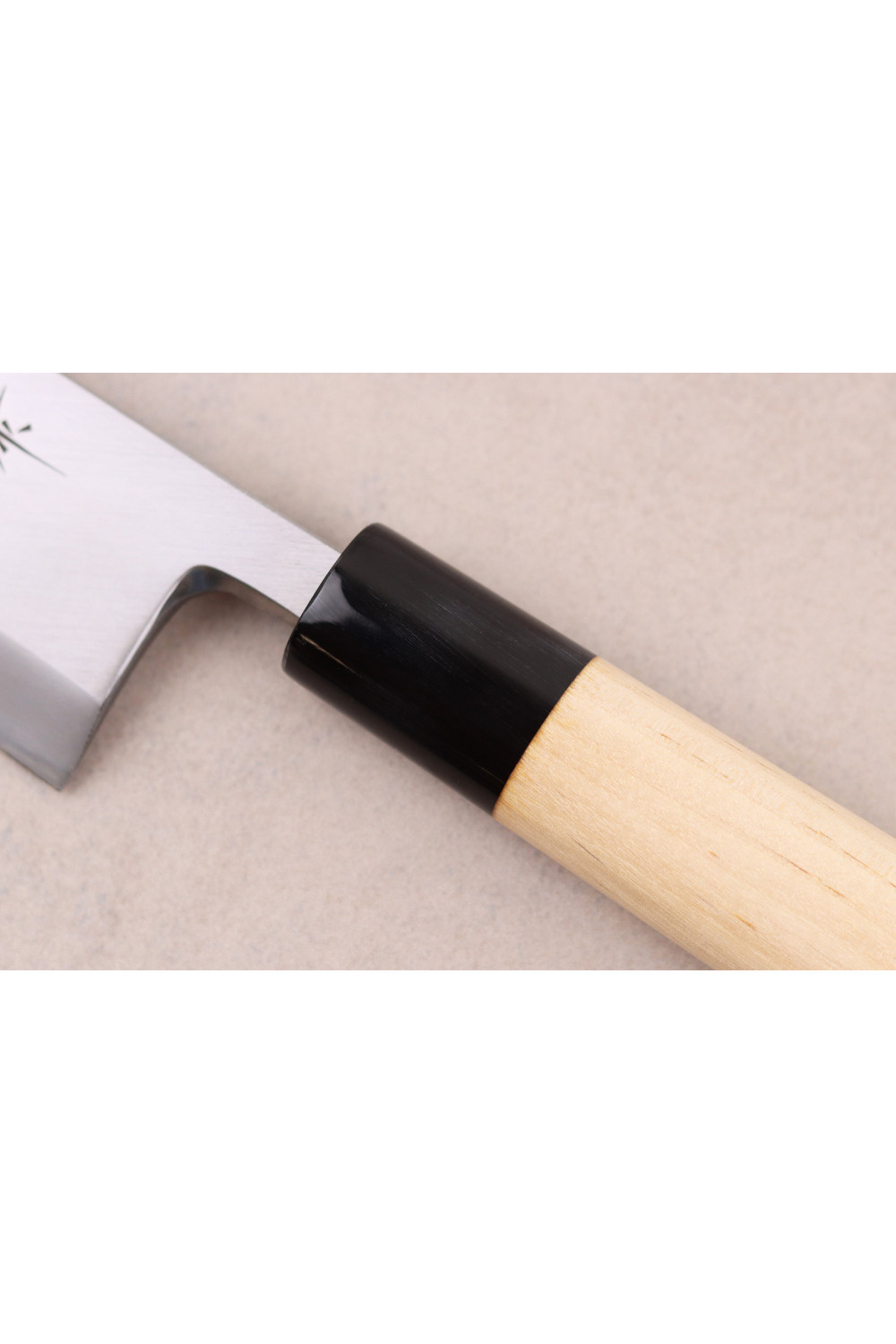
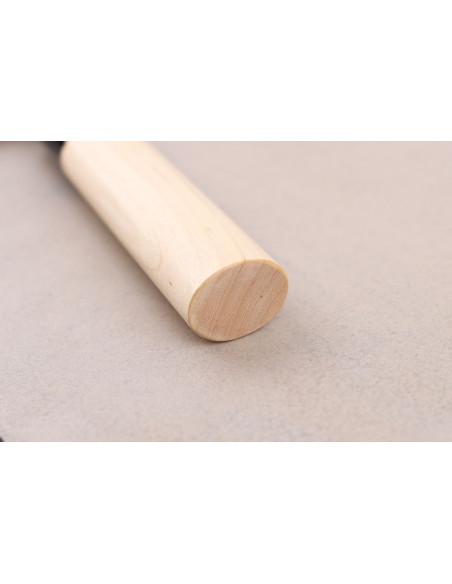
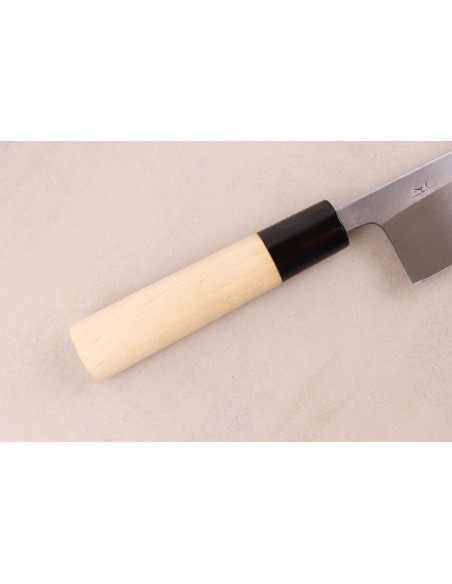
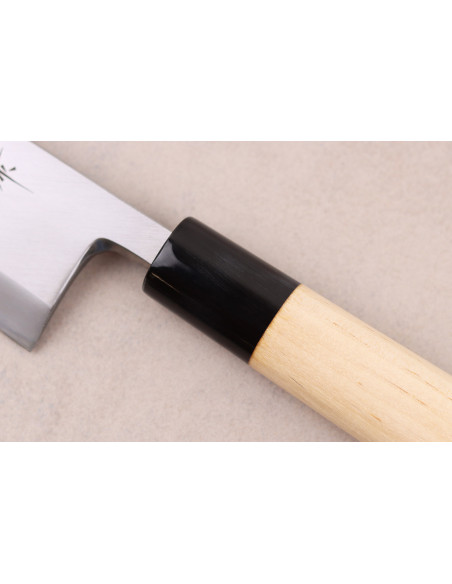
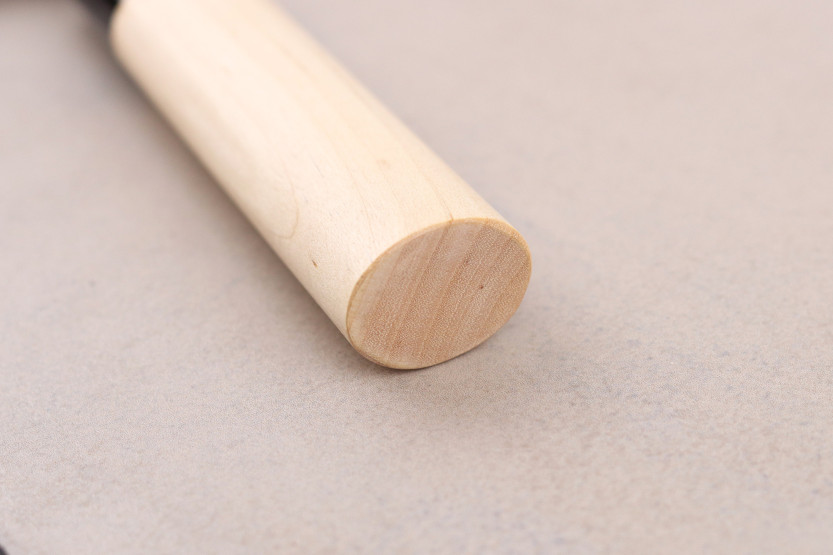
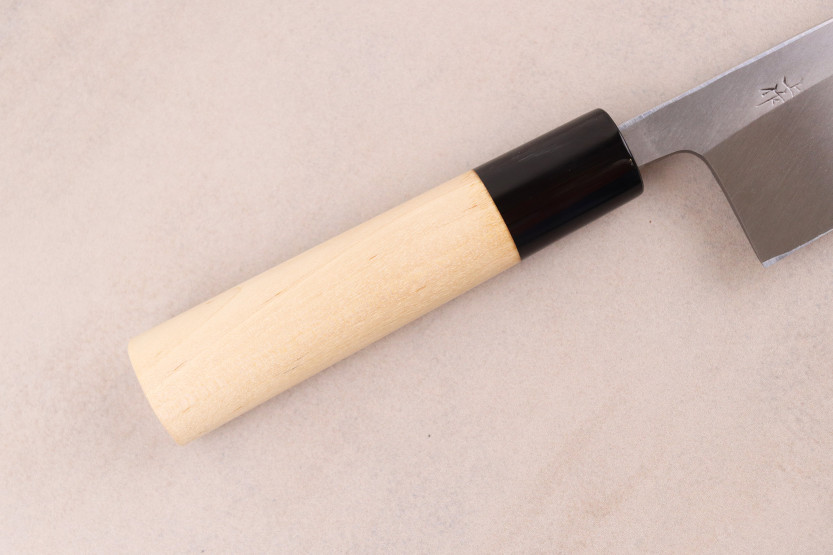
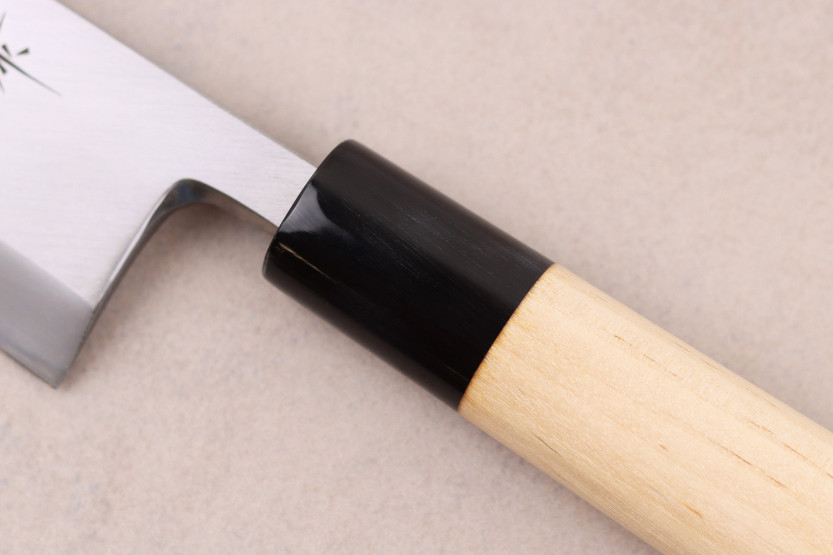
The handle of this deba is made of magnolia wood, a species traditionally used in Japanese cutlery. This light-colored wood has a pleasant texture and is noticeably lightweight, helping to balance the weight of the blade, which is naturally more substantial than that of a classic kitchen knife.
Its oval shape provides a comfortable grip and makes it easy to position your fingers around the handle. It allows you to naturally adjust your grip depending on the task at hand, whether you’re filleting a fish, working near the bones, or preparing a fish head. Its rounded profile minimizes sharp angles where it comes into contact with the palm and promotes smooth handling.
The handle is topped with a black buffalo horn bolster that connects to the blade. This piece helps reinforce the end of the handle while providing a refined finish. The contrast between the light magnolia wood and the dark horn highlights the authentic aesthetic of handcrafted Japanese knives.
Since magnolia and horn are natural materials, their color, grain, and texture may vary from one knife to another, giving each knife its own unique appearance.
Key Features
-
- 15 cm blade: makes it easy to prepare small to medium-sized fish
- San Mai construction: combines a hard core with protective layers
- Shirogami #3 steel core: delivers a fine, precise cutting edge
-
- Hardness of approximately 60 HRC: promotes long-lasting edge retention
- Polished finish: provides a refined and elegant surface
- Asymmetrical grind for left-handers: makes it easier to guide the knife along the fish bones
- Magnolia handle: offers lightness and comfort during use
-
- Oval shape: allows for an easily adaptable grip
- Black buffalo horn bolster: reinforces the connection to the handle
- Handcrafted by Kenji Togashi: carries on the tradition of Japanese cutlery craftsmanship
- Sharpened by Mitsuo Yamatsuka: provides a precise finish to the cutting edge
Using and Caring for My Japanese Knife
This deba knife is designed for preparing whole fish: removing the head, filleting, and cutting through thin bones using the appropriate technique. To cut through bones, use the thick part of the blade near the heel, without twisting the knife. Avoid large bones, hard surfaces, and frozen foods. Use a wooden or synthetic cutting board.
Its carbon steel core requires regular maintenance. Wash the knife by hand and dry it immediately after use. Do not leave it soaking in the sink, and never put it in the dishwasher. To maintain its sharpness, use a whetstone designed for asymmetrical sharpening for left-handed users.
Two artisans with recognized expertise
In Sakai, Osaka Prefecture, the craft of traditional knife-making is rooted in a artisanal tradition where each step requires specialized expertise. It is within this world of cutlery that Sakai Takayuki’s Honkasumi line finds its place, bringing together the work of several Japanese artisans.
For this deba knife, Kenji Togashi works at the forge. His job is to shape the steel into a thick blade with the characteristic geometry of knives designed for preparing fish. His mastery of heating and hammering helps give the steel the properties sought after for this type of blade.
Once the forging is complete, Mitsuo Yamatsuka takes over for the sharpening. This Traditional Master Craftsman’s work shapes the profile of the cutting edge and its asymmetrical grind, which in this case is specifically designed for left-handed use.
This division of labor reflects a distinctive feature of Sakai’s craftsmanship: the blacksmith shapes the blade, while the sharpener gives it its final cutting geometry. Two complementary crafts united in a single knife!
Find all left-handed knives at Knifeleader.eu!




 By buying this product you can collect up to