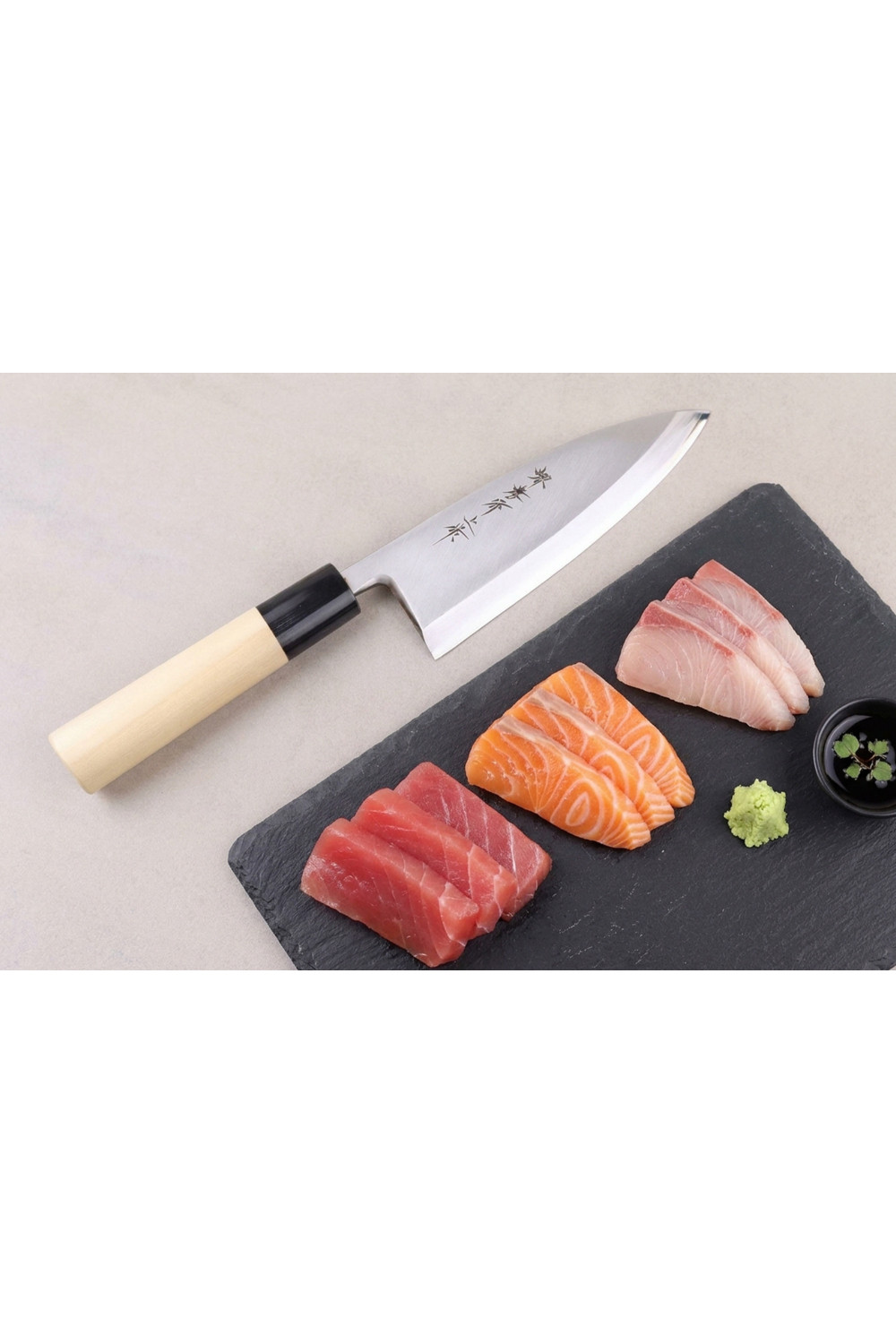
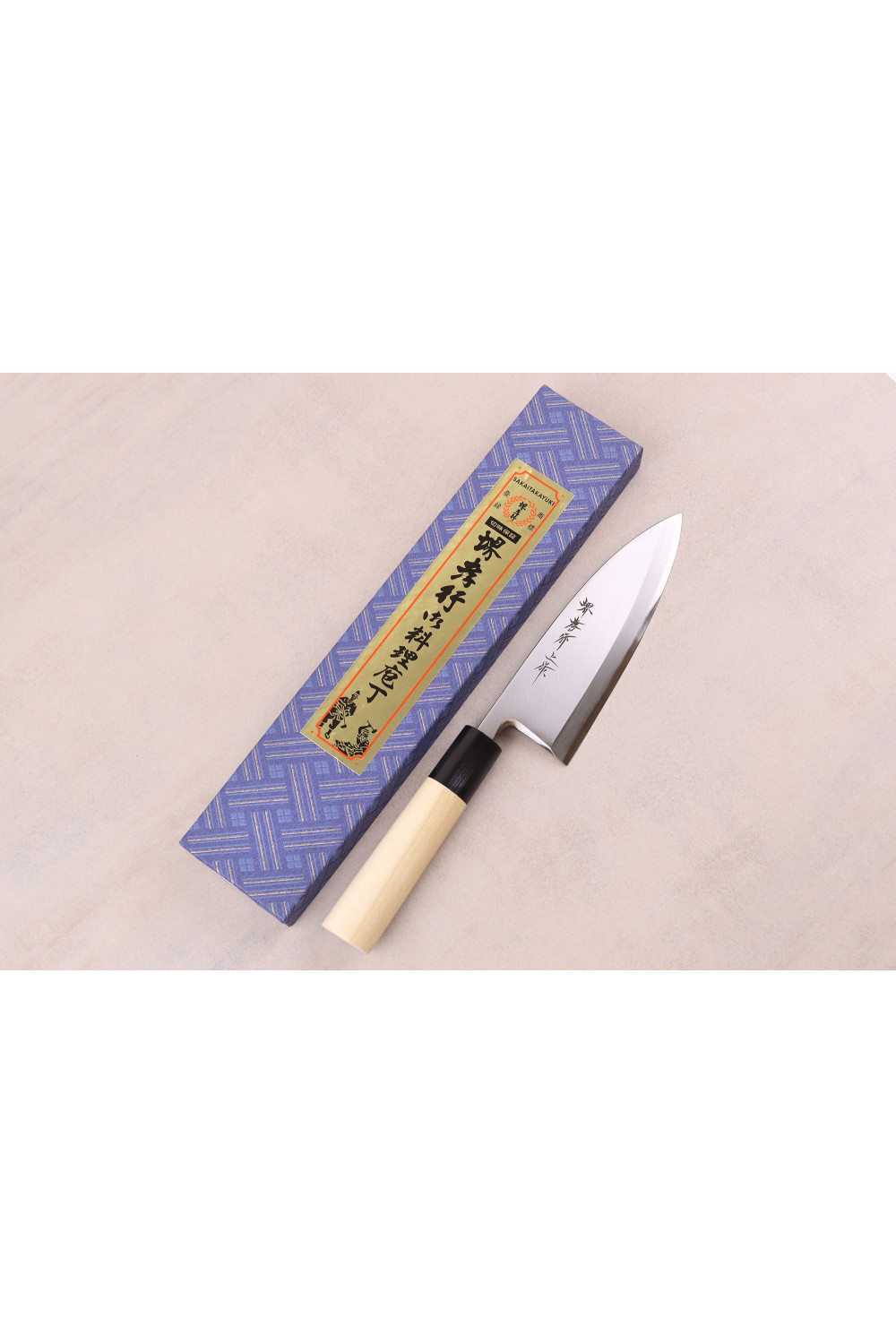
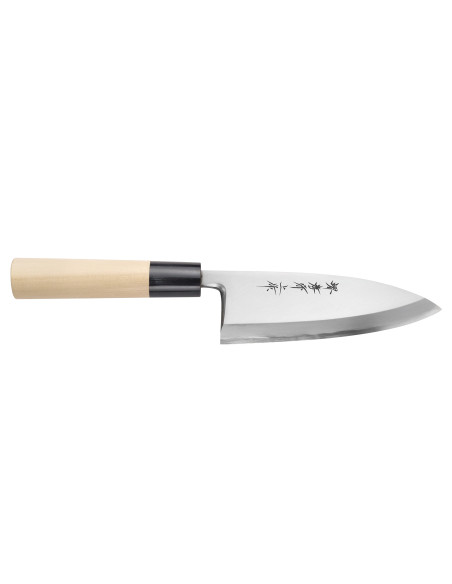
The traditional Japanese knife for preparing whole fish
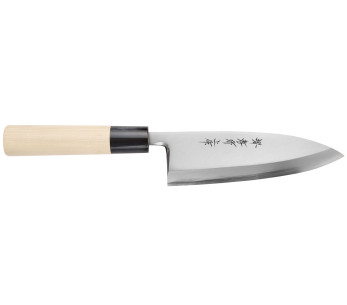
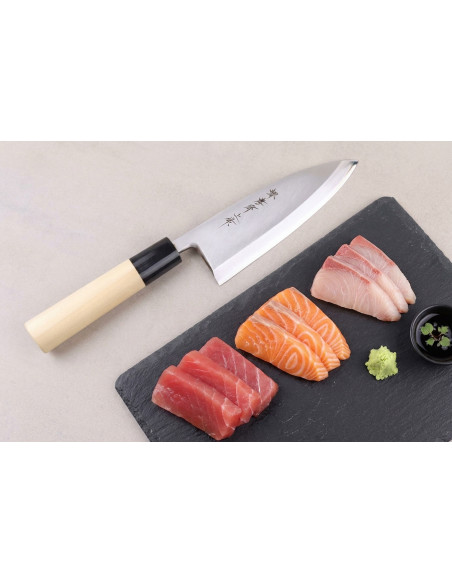
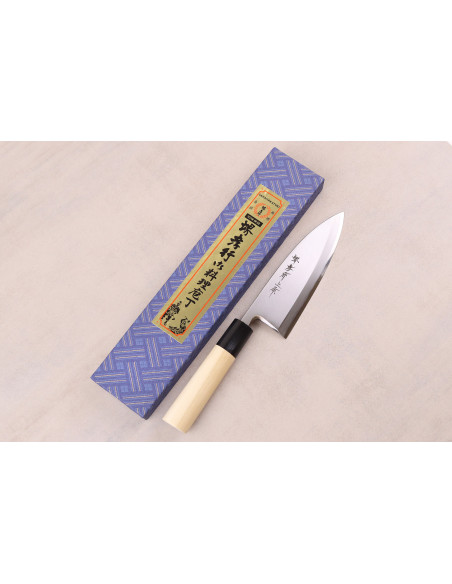
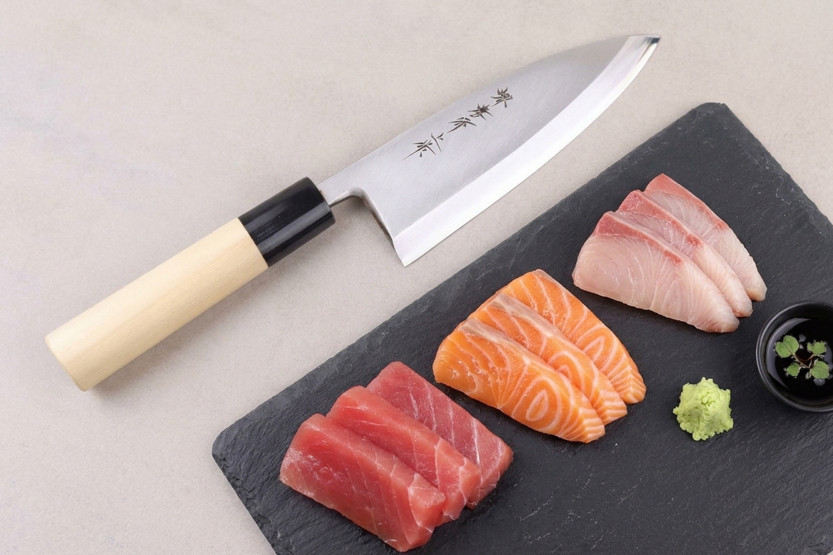
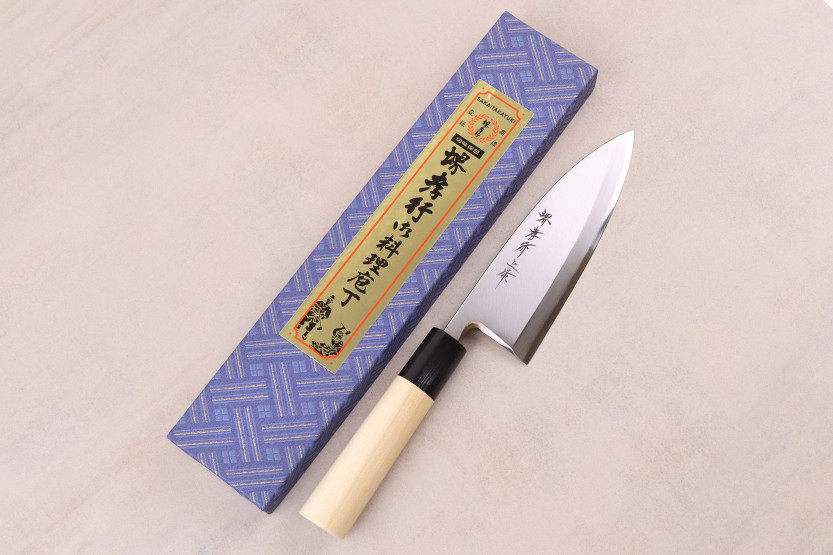
Do you enjoy preparing your own fish, from scaling to filleting? The Sakai Takayuki Honkasumi Japanese deba knife is your perfect companion for these various tasks, thanks to a design rooted in the Sakai cutlery tradition! Forged by Kenji Togashi and sharpened by Mitsuo Yamatsuka, it brings together the work of two specialized Japanese artisans.
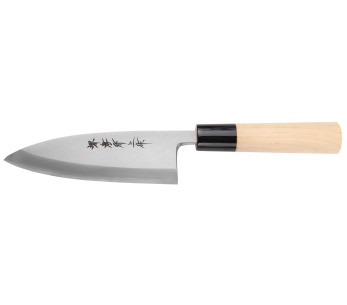
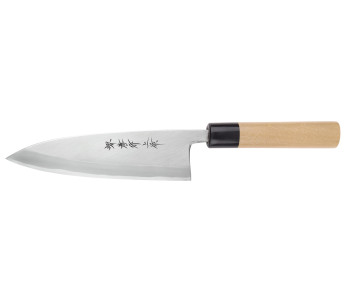
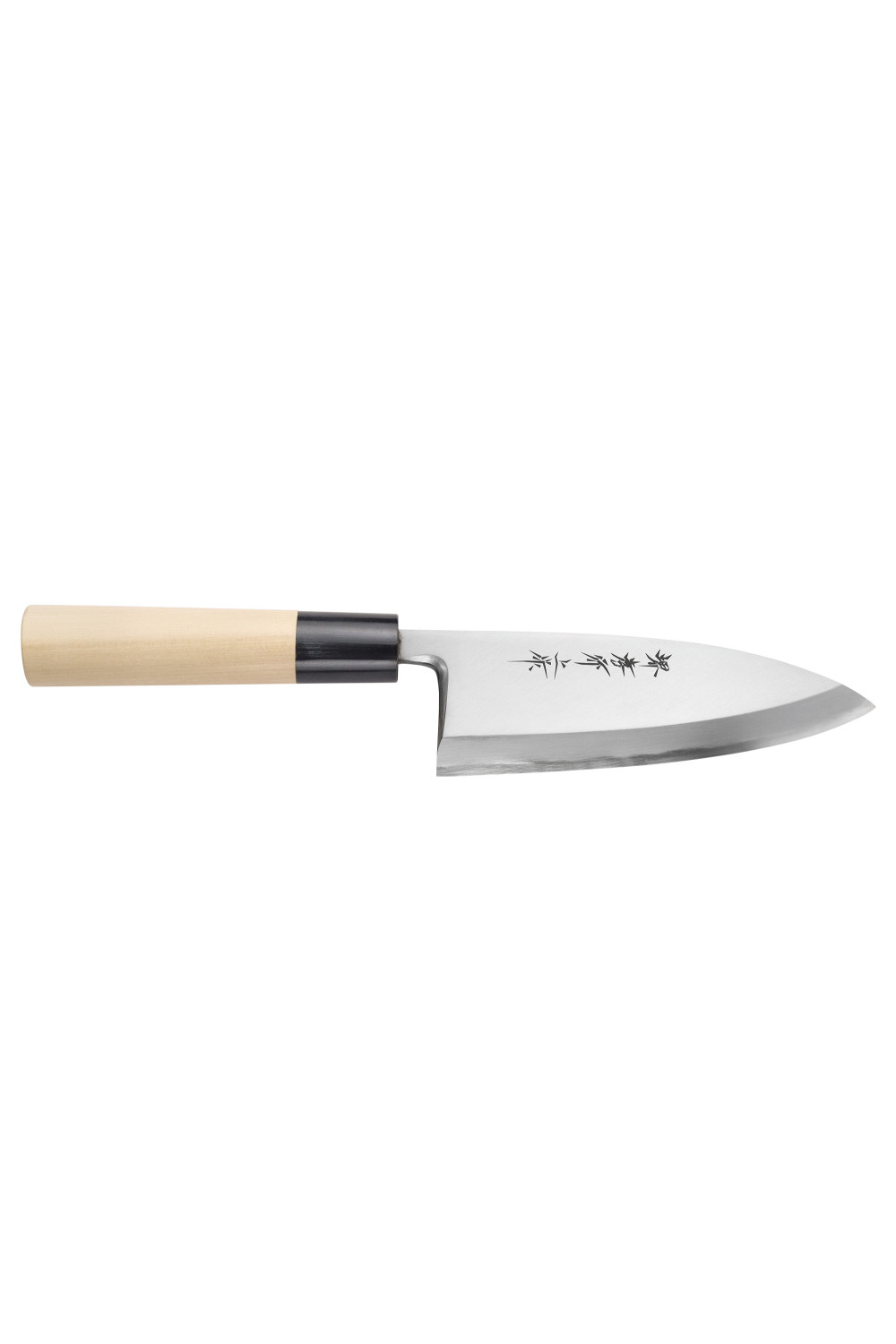
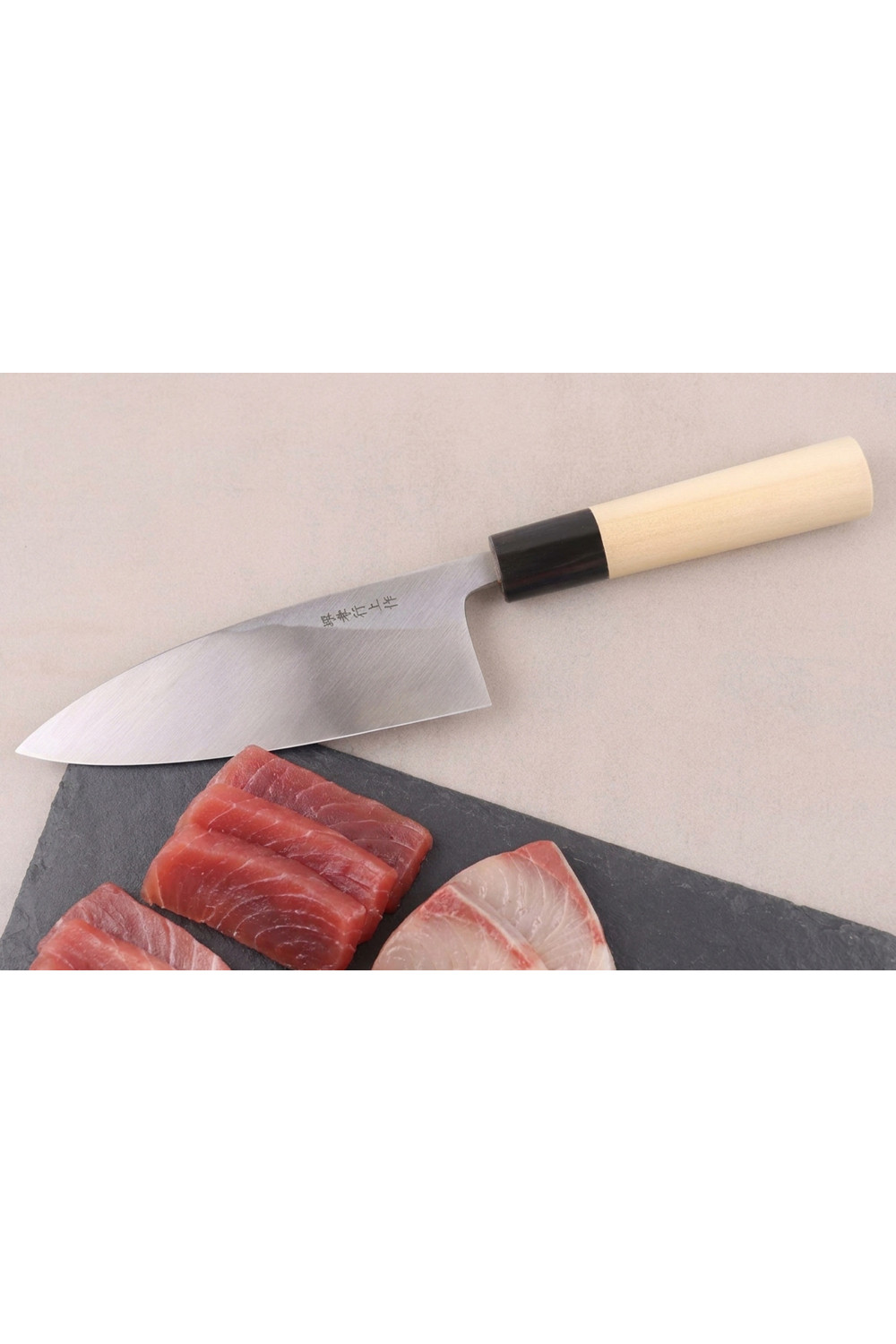
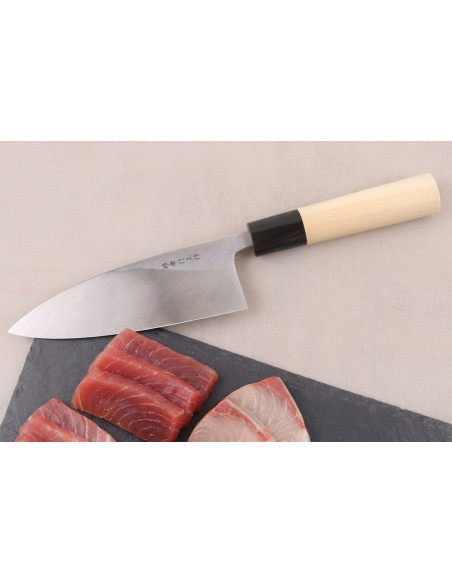
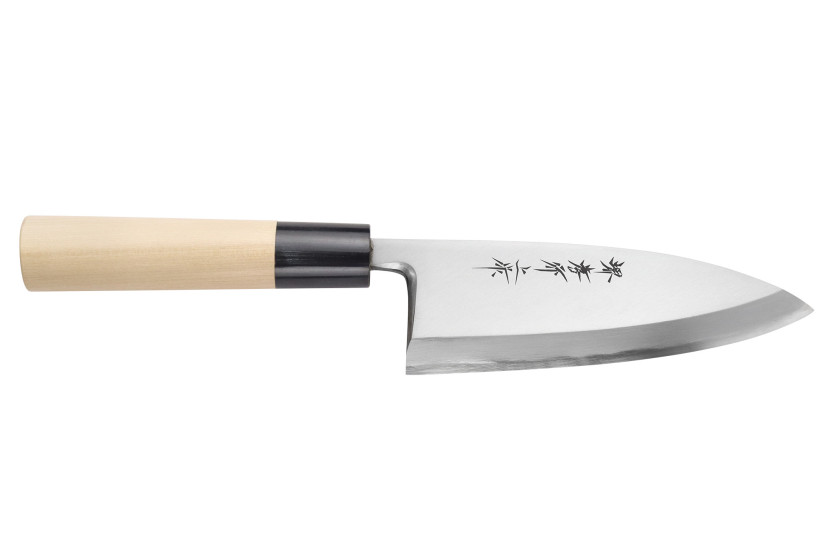
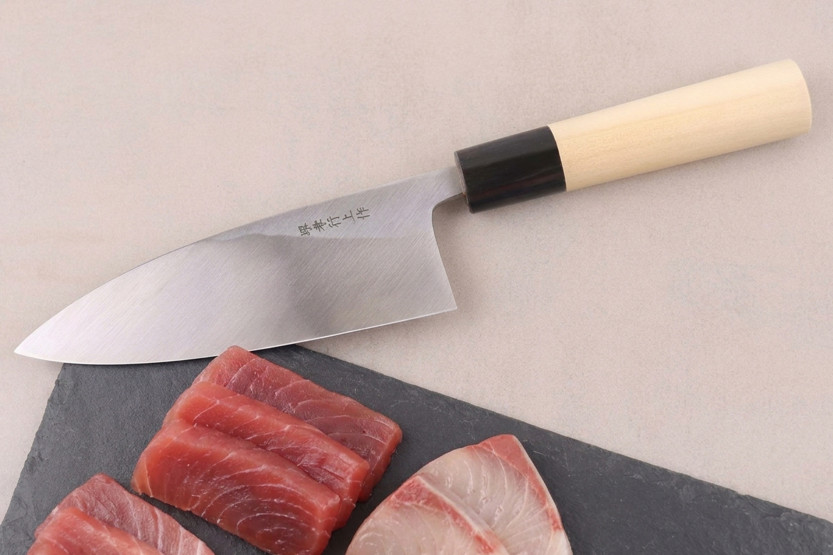
With its 15 cm length, imposing silhouette, and asymmetrical edge designed for right-handed users, this deba is particularly well-suited for preparing medium-sized fish. It offers the rigidity needed to separate the flesh from the bones, while its pointed tip allows access to more delicate areas.
A design tailored for fish preparation
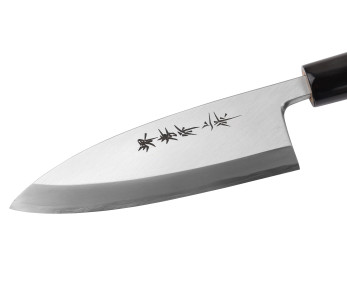
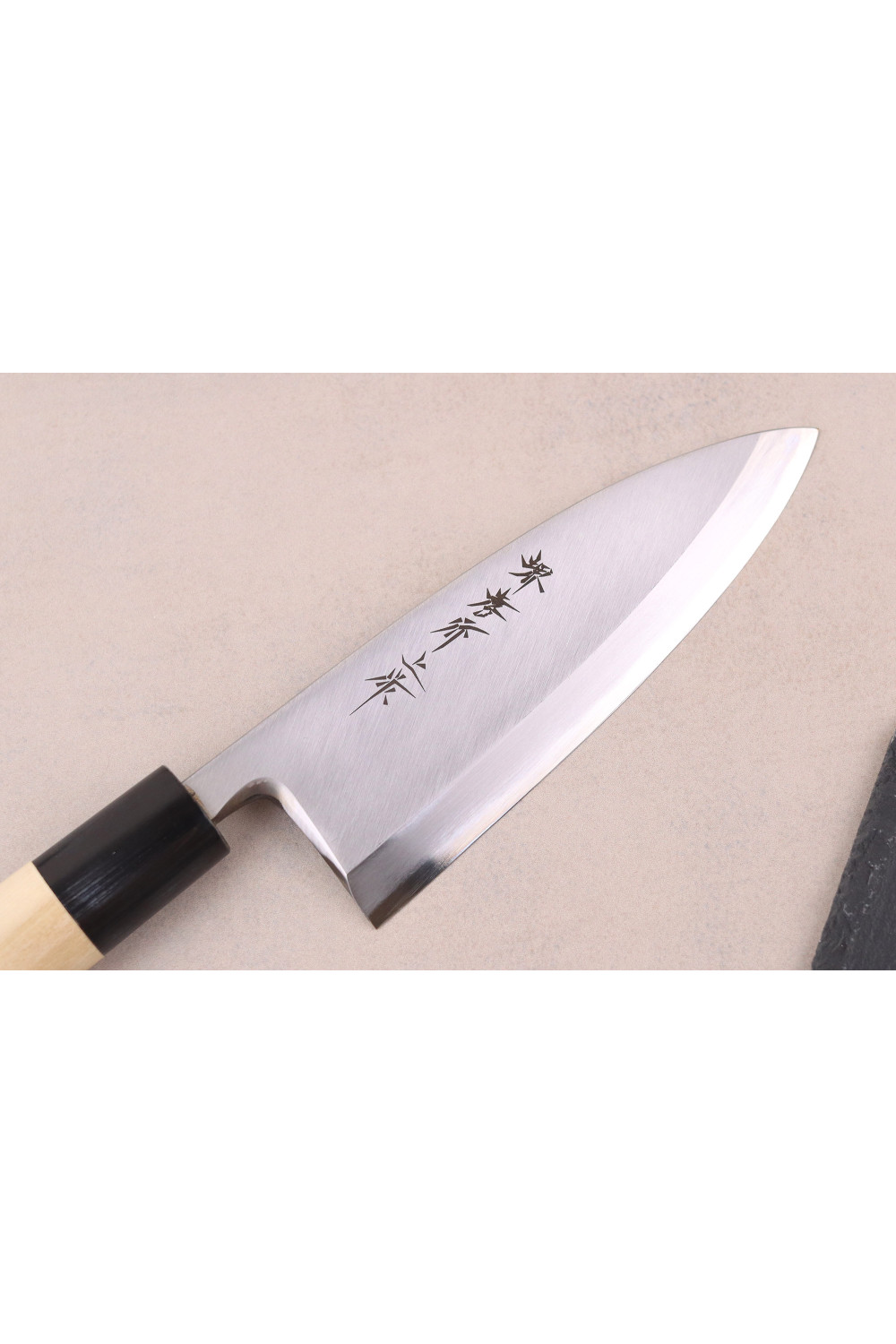
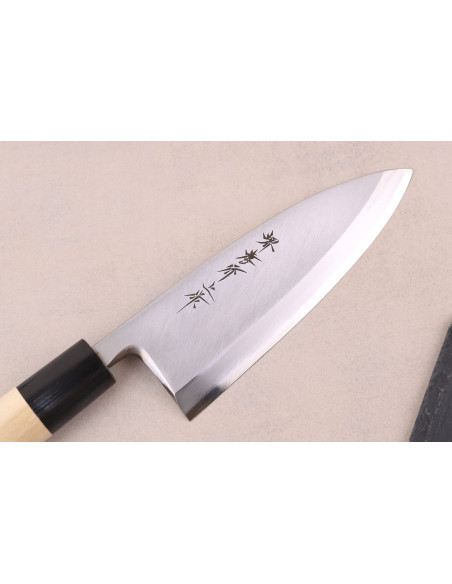
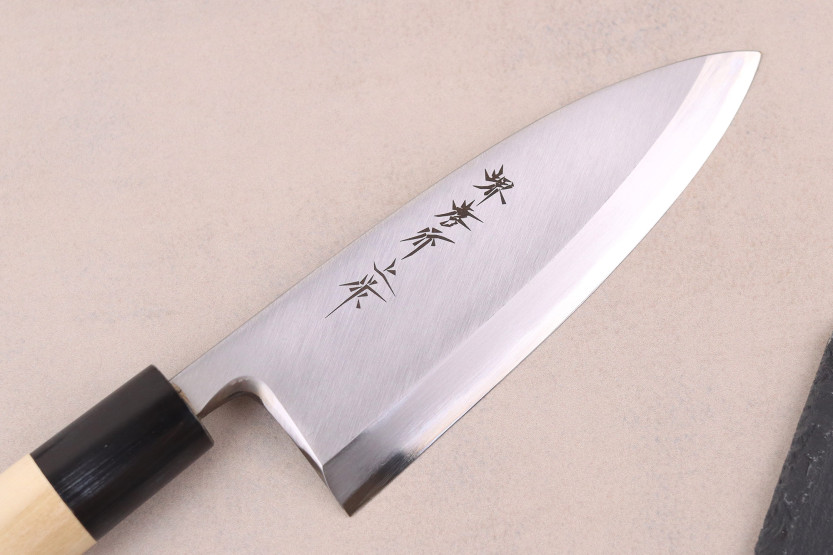
The first thing you notice about this right-handed deba knife is its tall, thick 15-cm blade, which is quite different from that of a multipurpose knife. This geometry provides excellent rigidity when you need to fillet a fish by following its bone structure. The heel provides a sturdy area for cutting through thin bones using the proper technique, while the tip allows for more precise maneuvers.
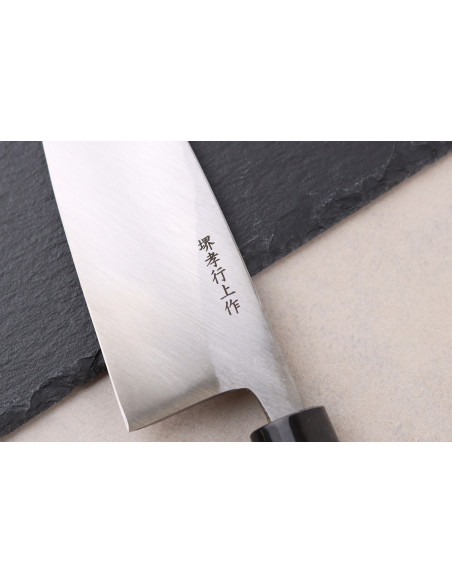
The blade features a three-layer San Mai construction, consisting of a hard central core surrounded by softer outer layers. At the center is Shirogami #3 steel, a Japanese carbon steel containing approximately 0.9% carbon. Also known as White Paper Steel #3, it is prized for its ability to hold a fine edge and for its performance on water stones.
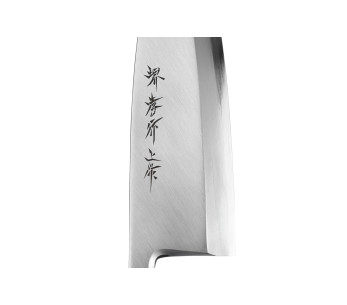
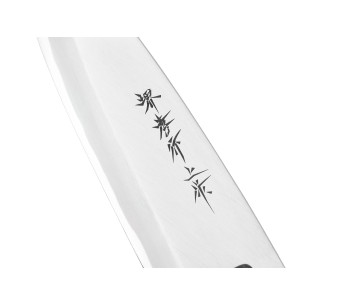
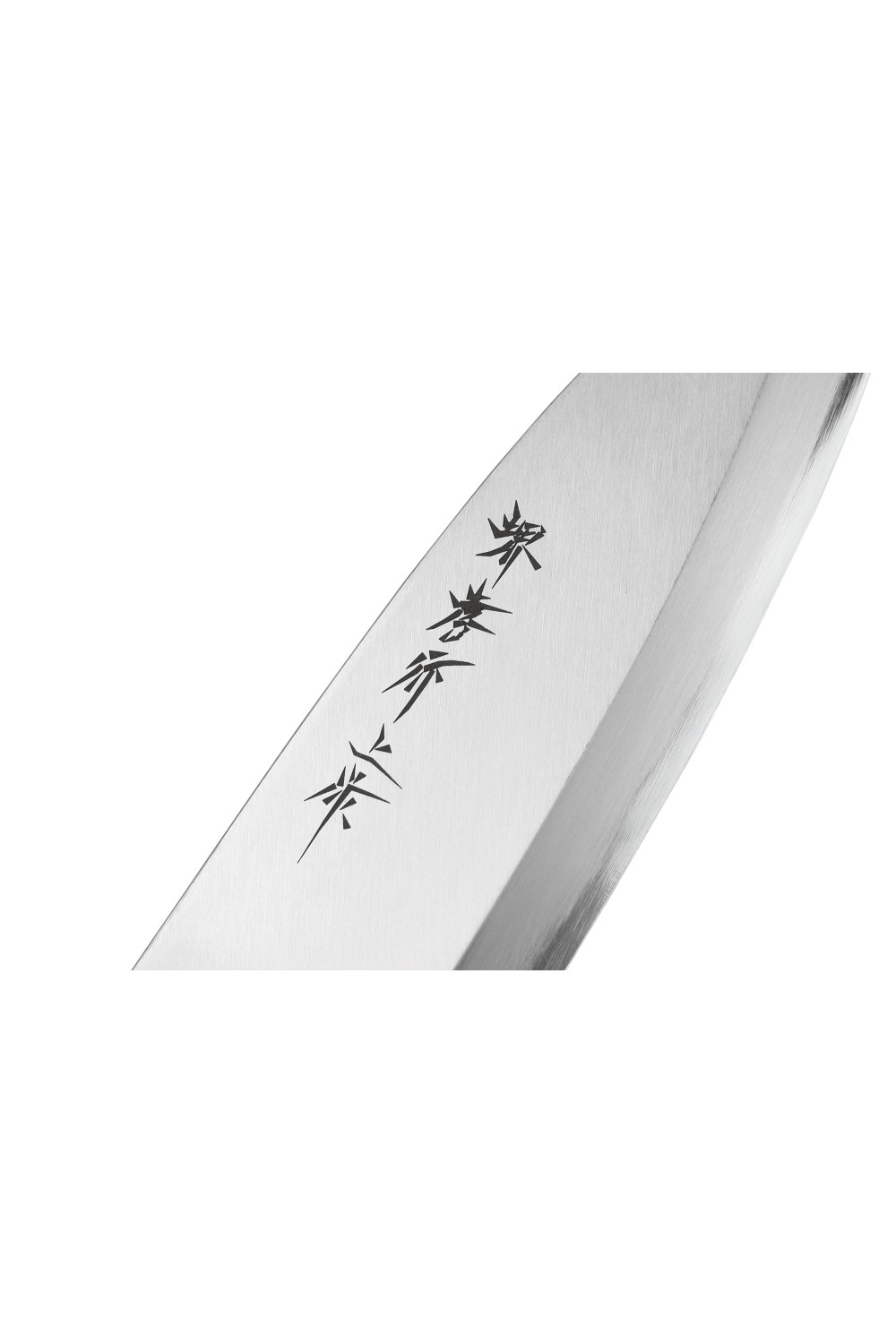
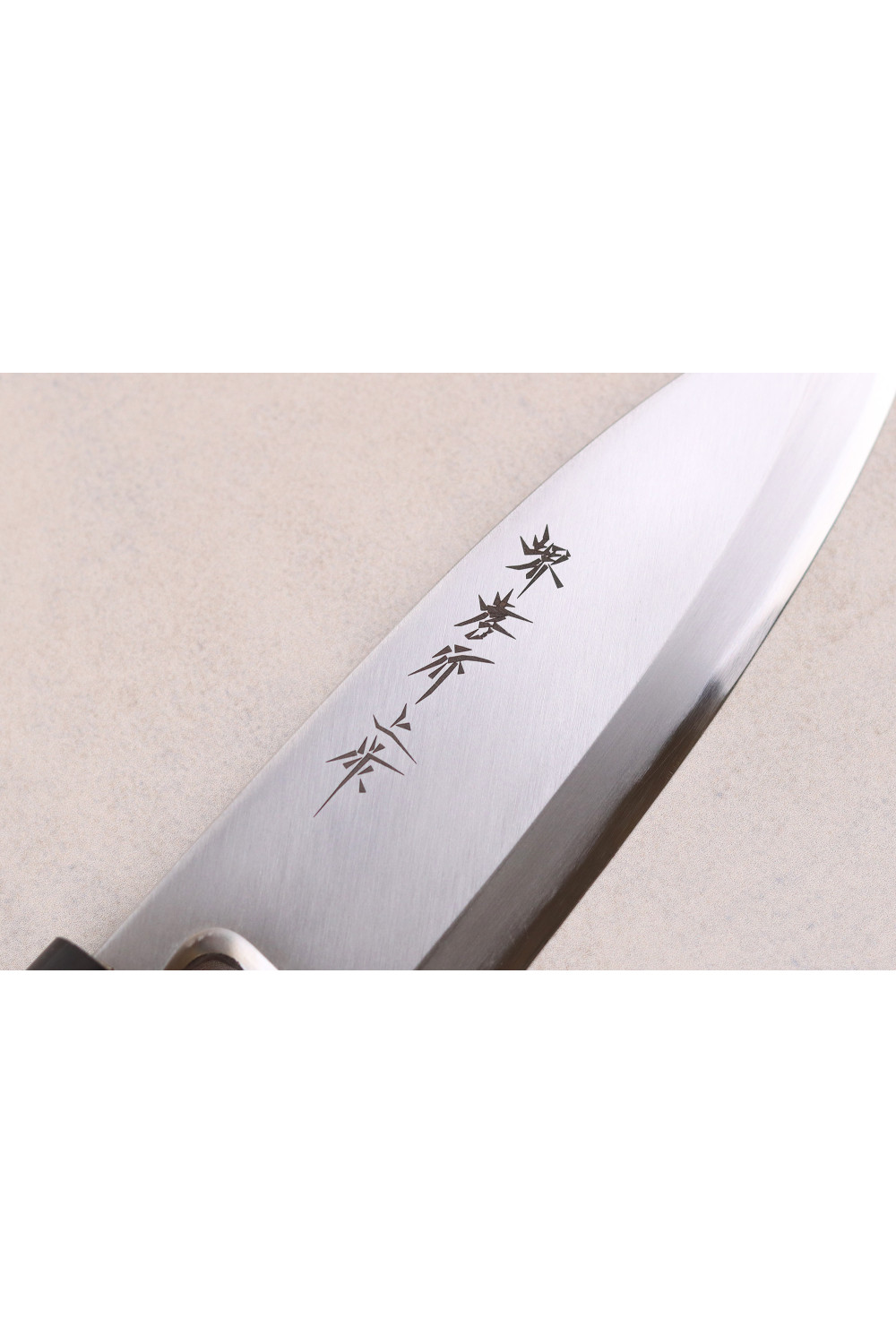
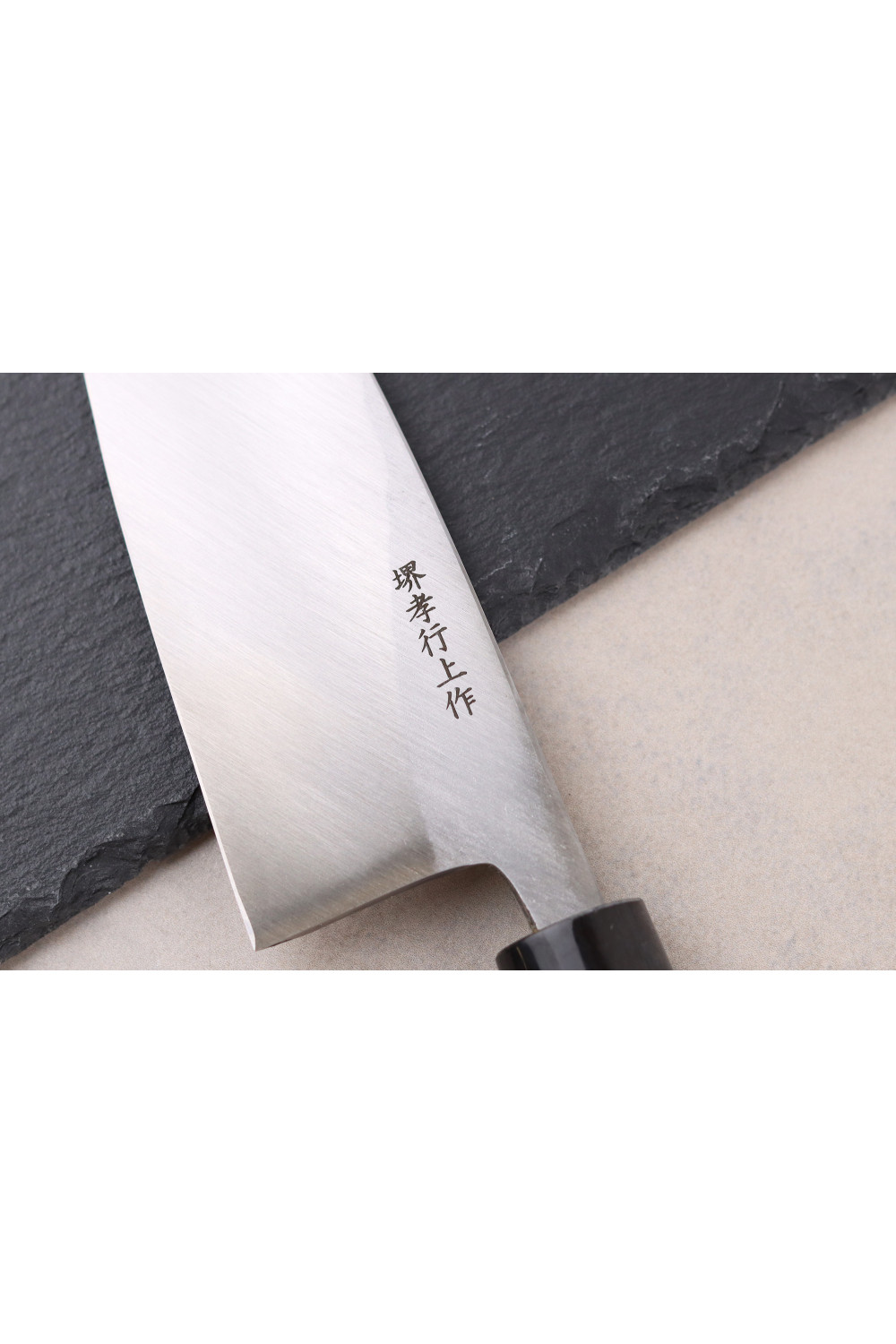
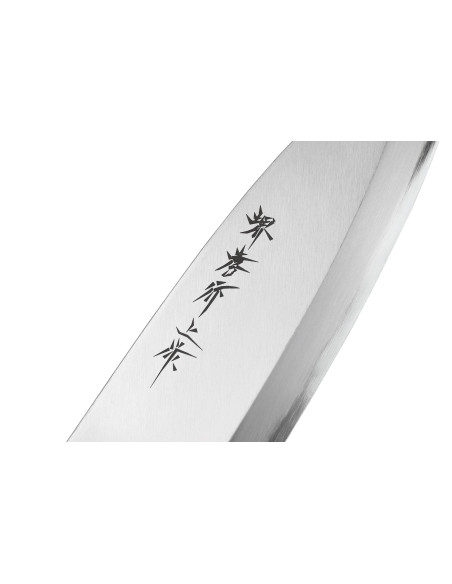
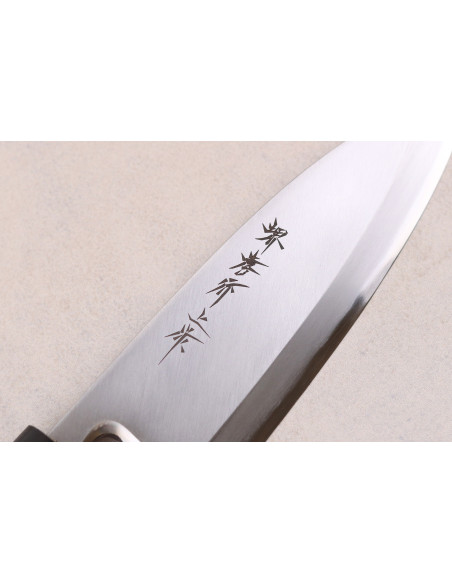
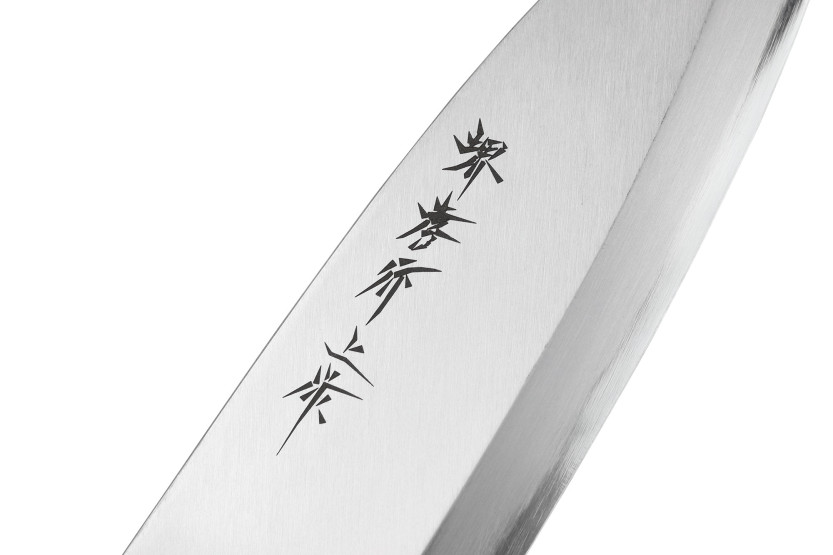
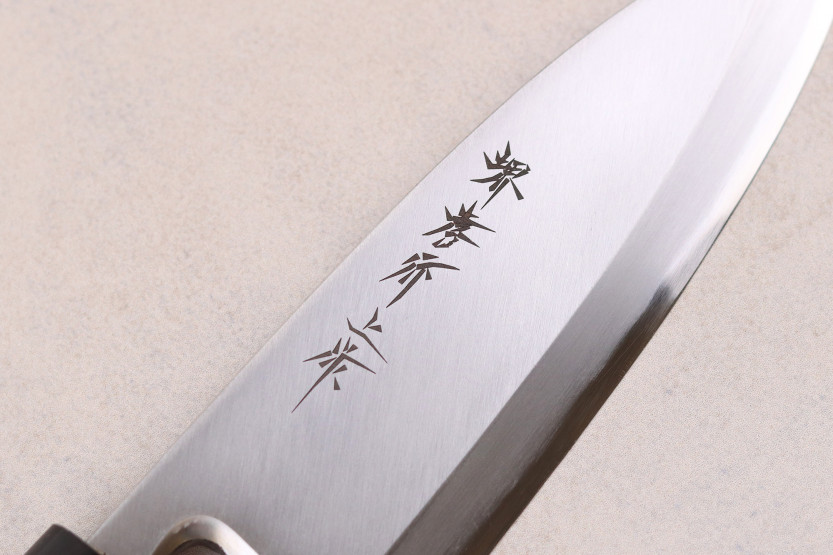
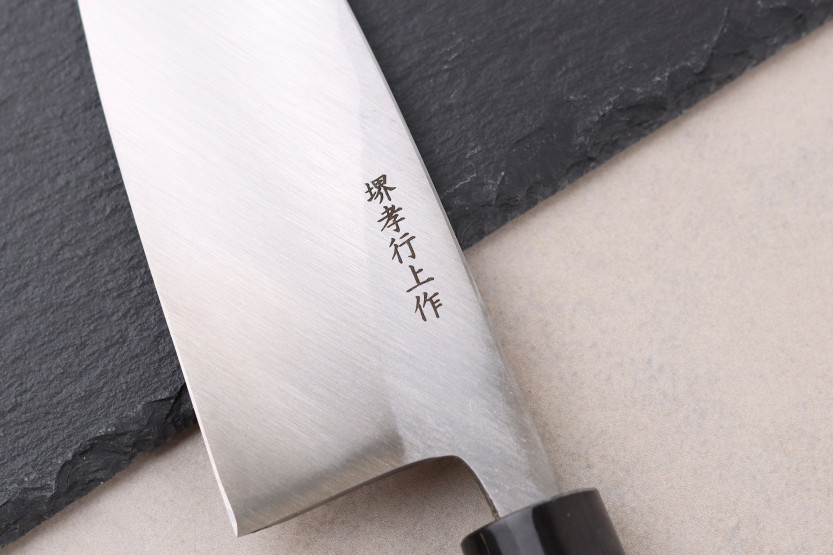
With a hardness of around 60 HRC, this steel offers an appealing balance between long-lasting cutting performance and the relative ease of restoring the edge. The upper layers of softer steel complement the rigid core and contribute to the blade’s overall strength. The polished surface provides a lustrous finish that highlights the lines of this handcrafted blade.
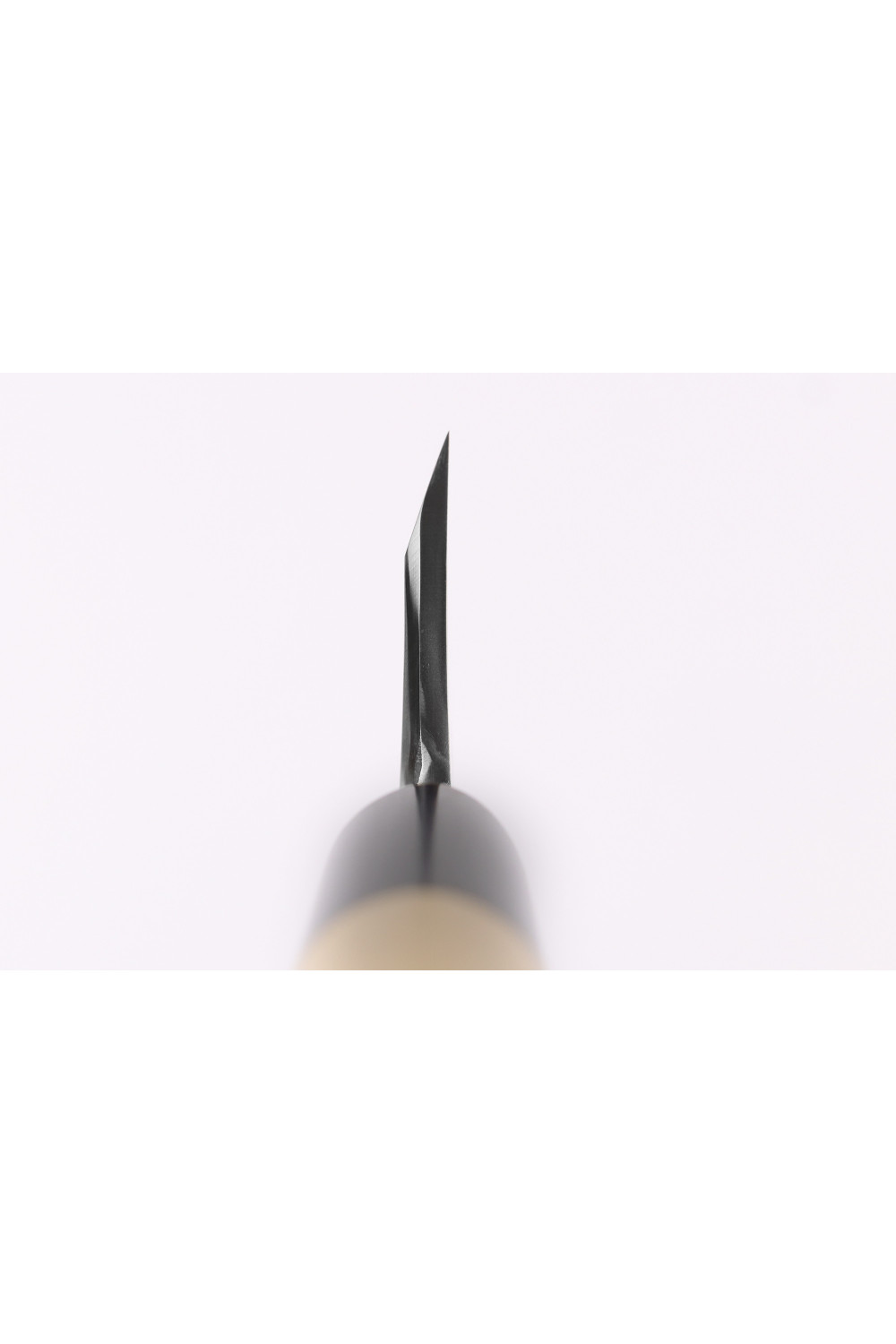
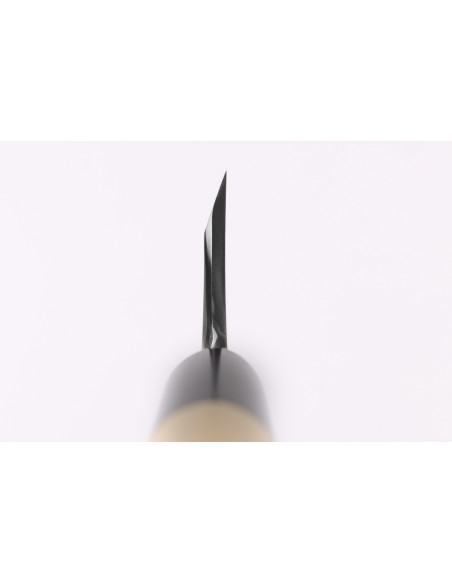
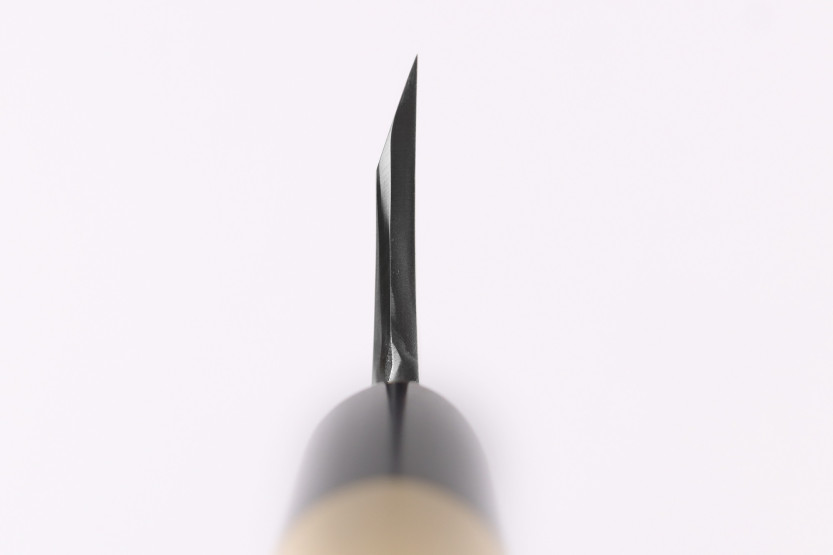
This model features an asymmetrical grind specifically designed for right-handed users. Unlike a double-bevel knife, its geometry features one side that is primarily beveled and an opposite side designed to follow the progression of the cutting edge. This configuration makes it easier to follow the contours of the fish and allows you to work as close as possible to the bones.
Magnolia and buffalo horn for a comfortable grip
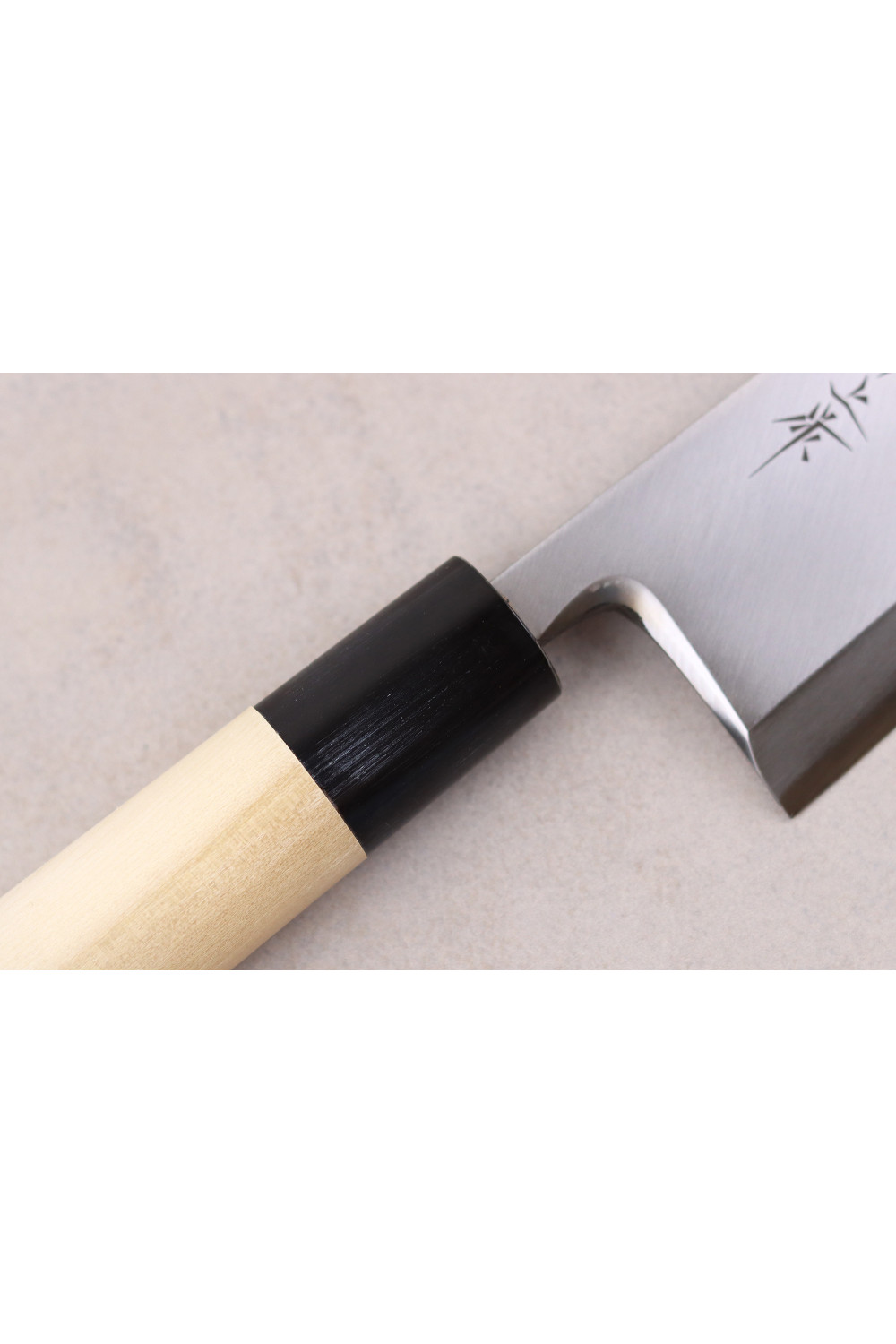
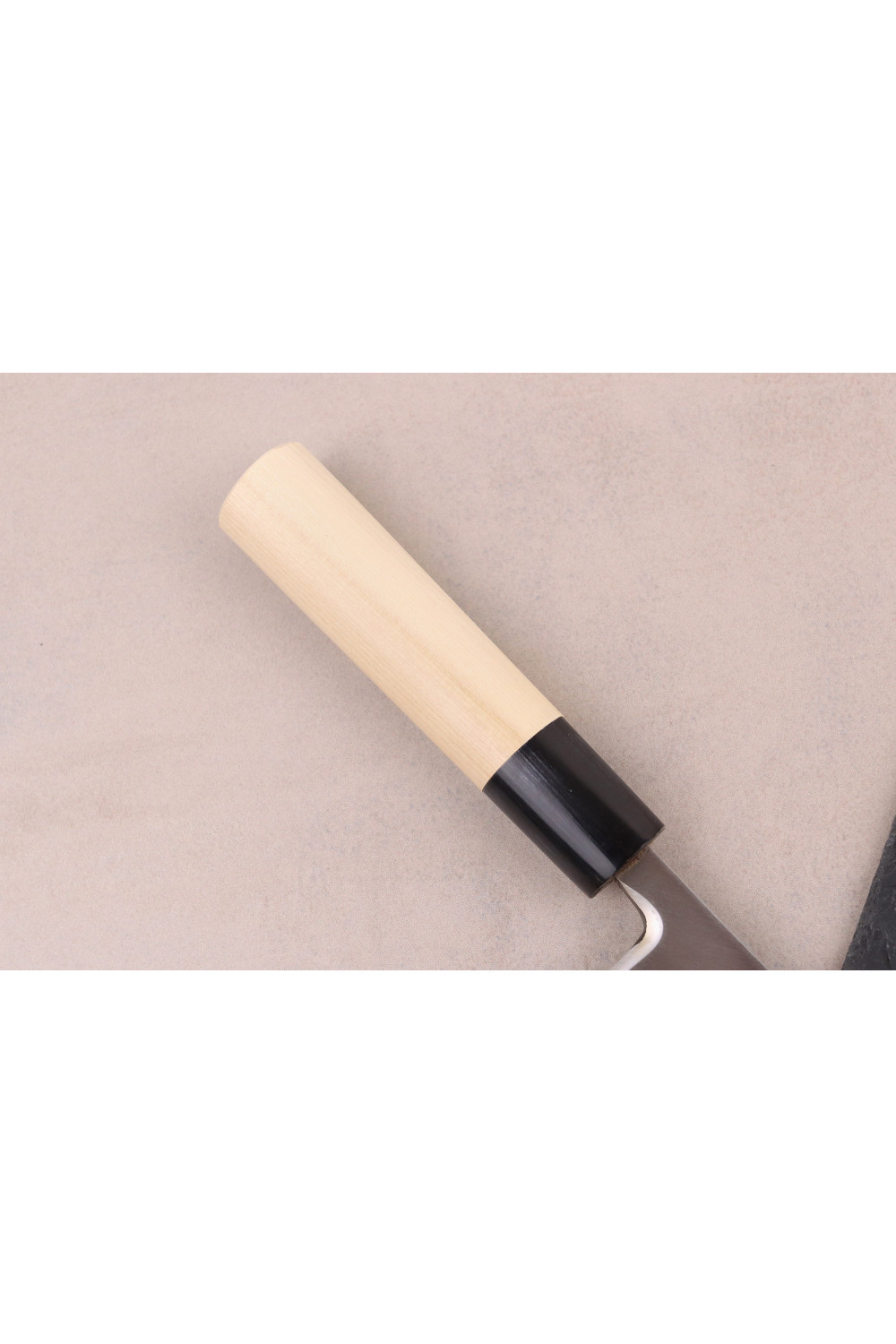
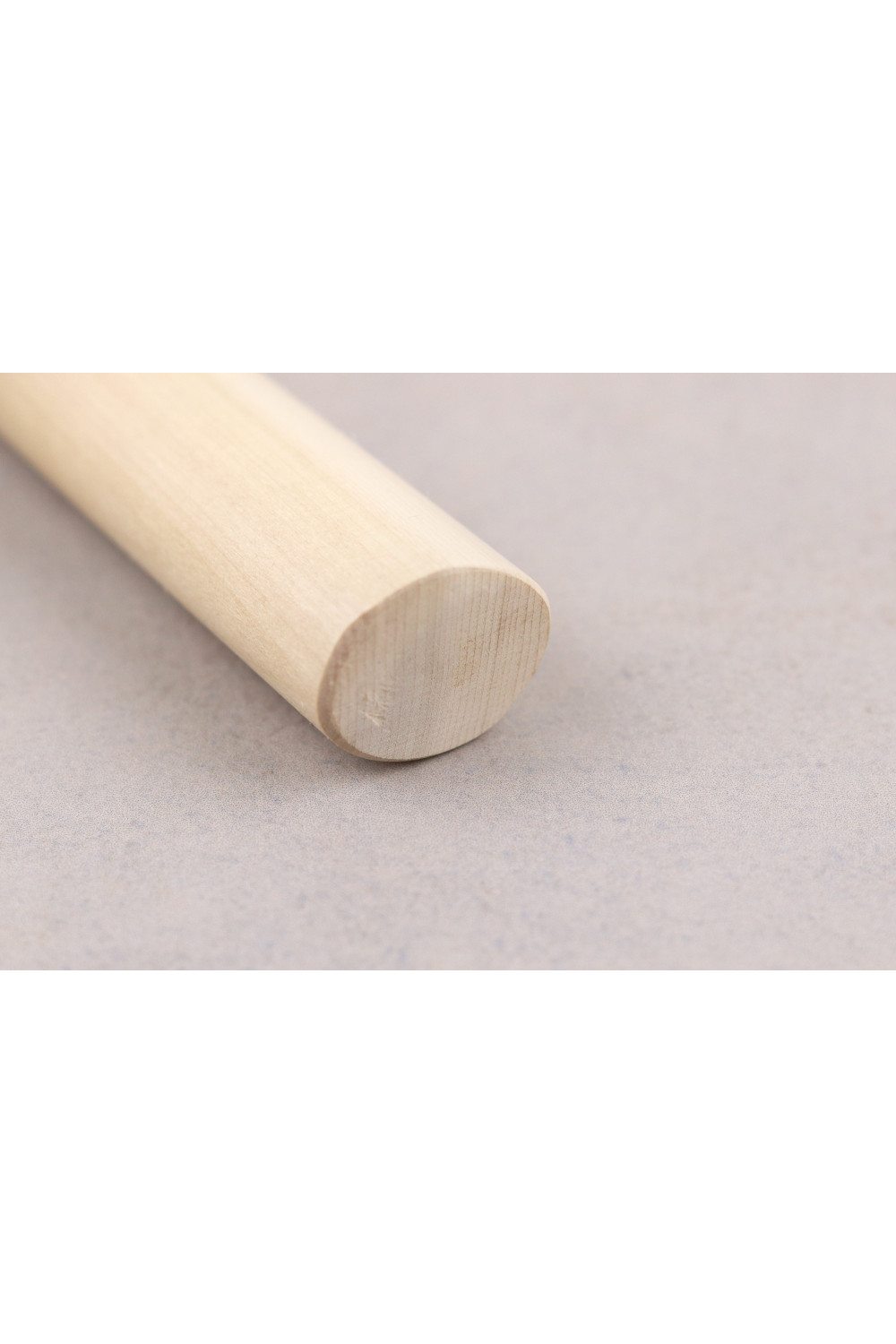
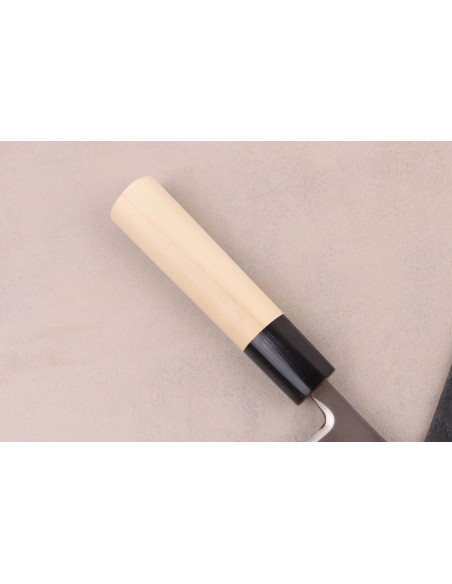
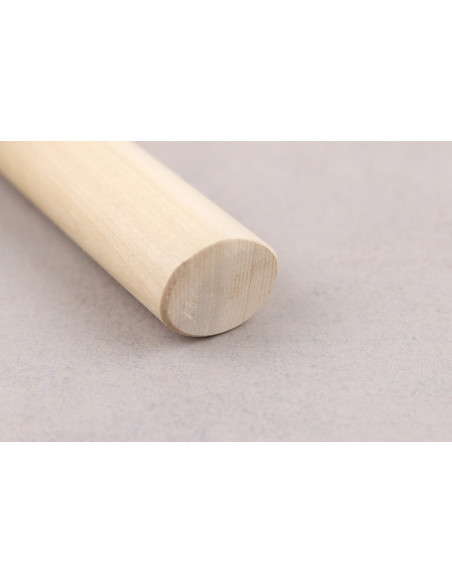
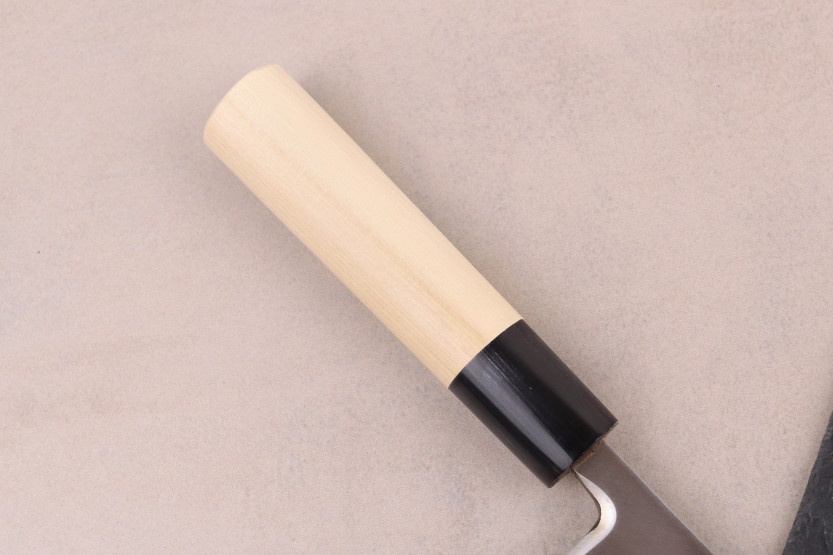
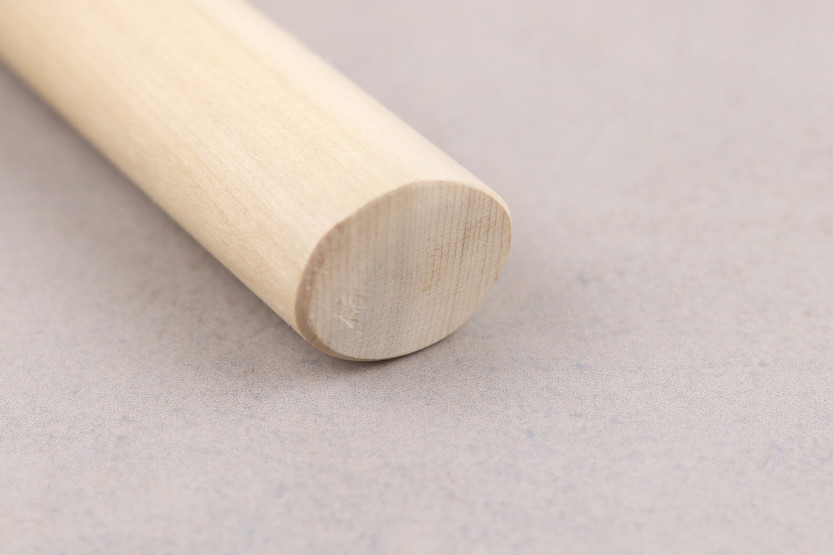
To complement this traditional blade, a magnolia wood handle was chosen. This wood has long been used in the manufacture of Japanese knives for its light weight and pleasant feel. Magnolia has a naturally light color and a relatively subtle grain. Its light weight ensures the blade feels solid in the hand, which can be particularly appreciated with a deba, whose metal portion is especially thick.
The oval profile of the handle conforms to the palm without forcing the fingers into an overly rigid position. It is equally suited to a firm grip—such as when working on the head of a fish—and to a grip closer to the blade for precise movements. Its rounded surface also feels pleasant against the hand during food preparation.
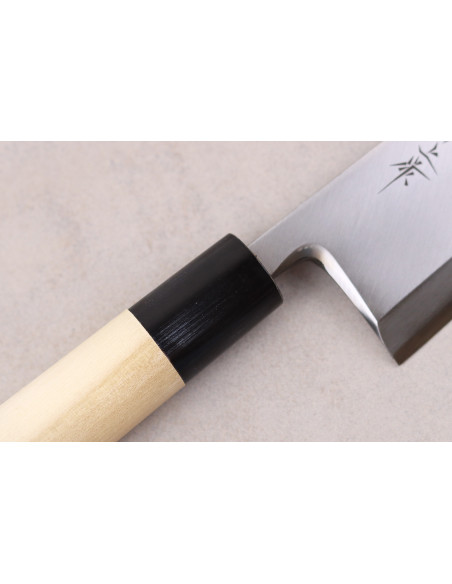
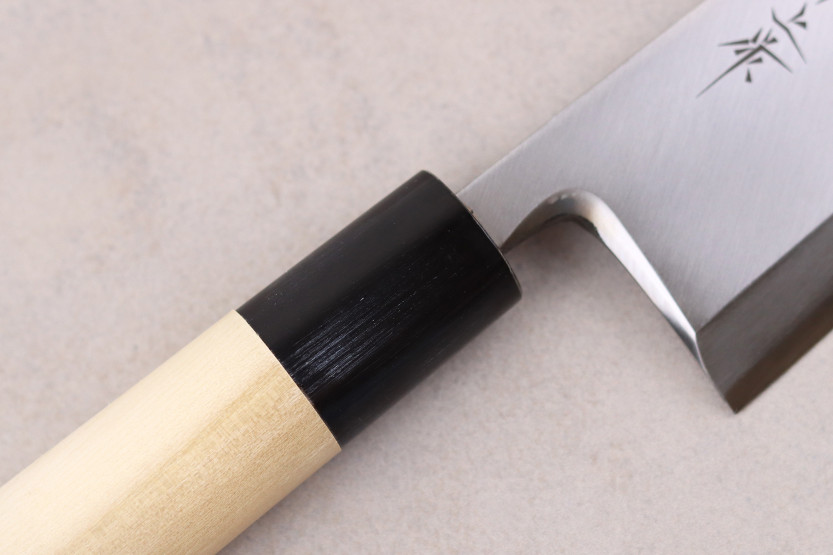
A black buffalo horn bolster completes the handle. It protects the junction between the blade and the handle while providing an elegant contrast to the soft hue of the magnolia wood. The overall design maintains a deliberately understated appearance, true to the aesthetic of traditional Japanese kitchen knives.
Each knife may exhibit slight visual variations. Since magnolia and buffalo horn are natural materials, color shades, wood grain patterns, and the appearance of the horn are never perfectly uniform. These unique characteristics give each handle its own distinct identity, without affecting its functional qualities.
Key Features at a Glance
-
- 15 cm blade:ideal for efficiently preparing medium-sized fish
- San Mai construction: combines a hard core with softer outer layers
- Shirogami #3 carbon steel: suitable for precise sharpening on a whetstone
-
- Hardness of 60 HRC: ensures good edge wear resistance
- Asymmetrical grind: follows the natural motion of the right hand
- Polished blade surface: highlights the craftsmanship of the finish
-
- Oval magnolia handle: combines lightness with a
- comfortable
- grip
- Black buffalo horn ferrule: protects the end of the handle
-
- Forged by Kenji Togashi: ensures the blade is shaped by hand
- Sharpened by Mitsuo Yamatsuka: achieves high-performance cutting geometry
Tips for using and caring for your deba
To prepare fish, start by removing the parts to be discarded, then use the tip to follow the bones and separate the fillets. The heel can be used to cut through thin bones, without twisting or moving the knife sideways. Avoid thick bones and frozen foods.
Shirogami #3 is a carbon steel that is susceptible to oxidation. Wipe the blade regularly while preparing food, then clean it by hand and dry it thoroughly. Do not put it in the dishwasher. To restore a sharp edge, use a wet whetstone, taking care to follow the asymmetrical geometry designed for right-handed users.
Two Japanese artisans united by a single blade
In the city of Sakai, traditional cutlery-making relies on specialized trades. The creation of a knife can thus involve several artisans, each contributing at a critical stage of its production. This is why Sakai Takayuki calls upon different blacksmiths to draw on their expertise.
Blacksmith Kenji Togashi is responsible for shaping the blade. For a deba knife, his work must account for the steel’s considerable thickness, the height of the profile, and the need to achieve a structure suited to fish preparation tasks. The forging process gives the knife its general shape before the finishing stages.
The work continues in the hands of Mitsuo Yamatsuka, a Master Traditional Craftsman, who is responsible for sharpening. He shapes the cutting surfaces and refines the edge to achieve a functional geometry. On this right-handed version, the orientation of the bevel must correspond to the intended direction of use.
The work of the two artisans is complementary: forging defines the blade’s structure, while sharpening determines its cutting performance. It is this combination of skills that is found in Sakai Takayuki’s Honkasumi line, which remains faithful to the traditional knife-making methods of the Osaka region.
The Sakai Takayuki Honkasumi line of Japanese knives is available on our website!




 By buying this product you can collect up to