A cooking class to master fish preparation
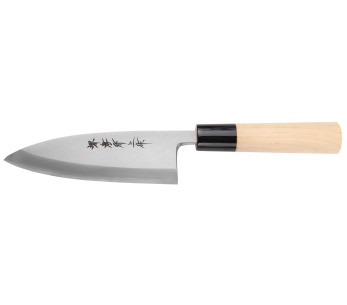
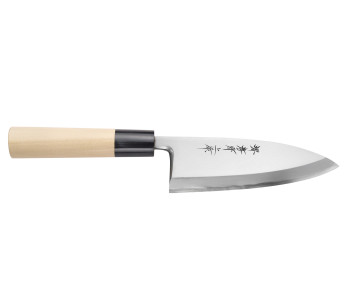
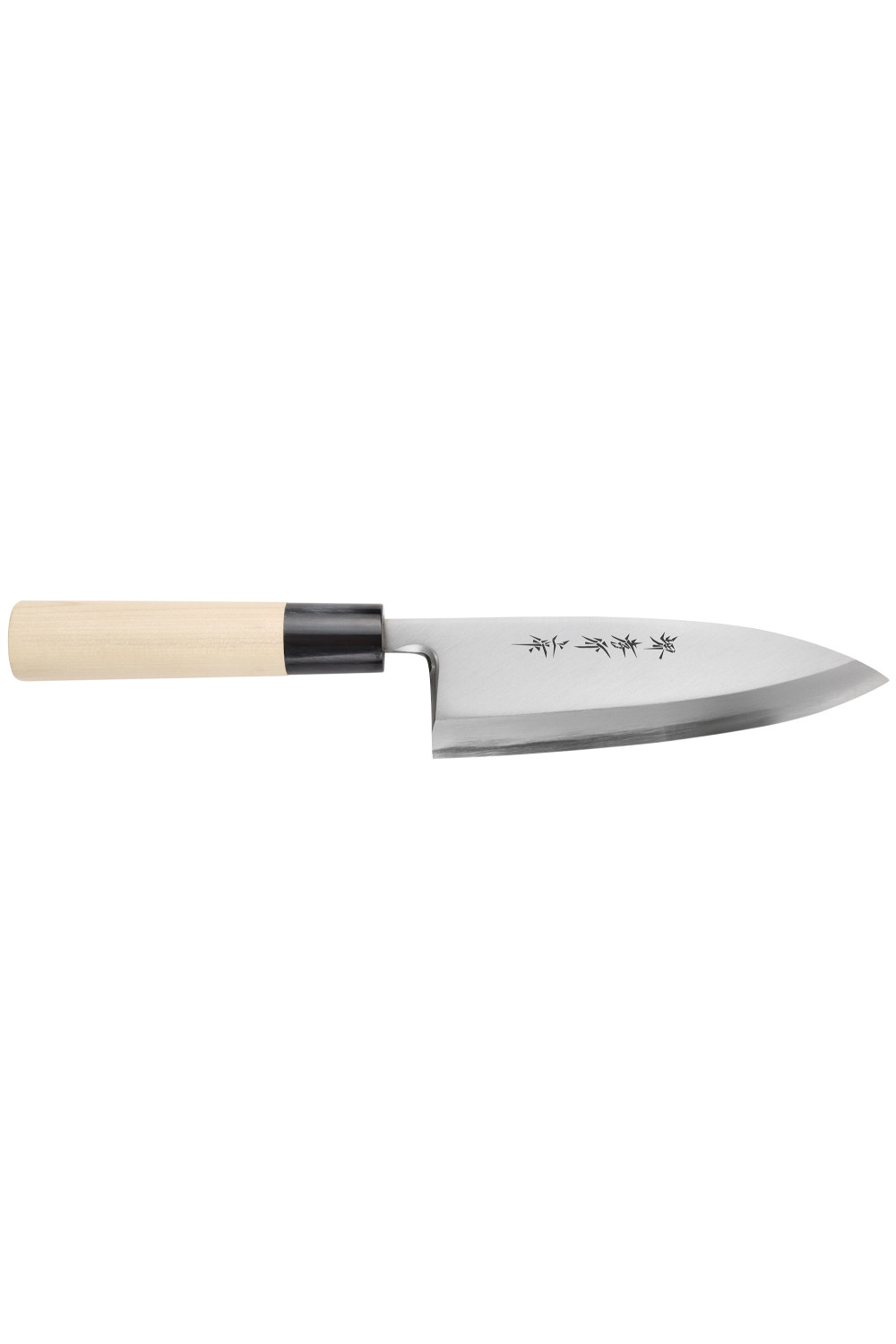
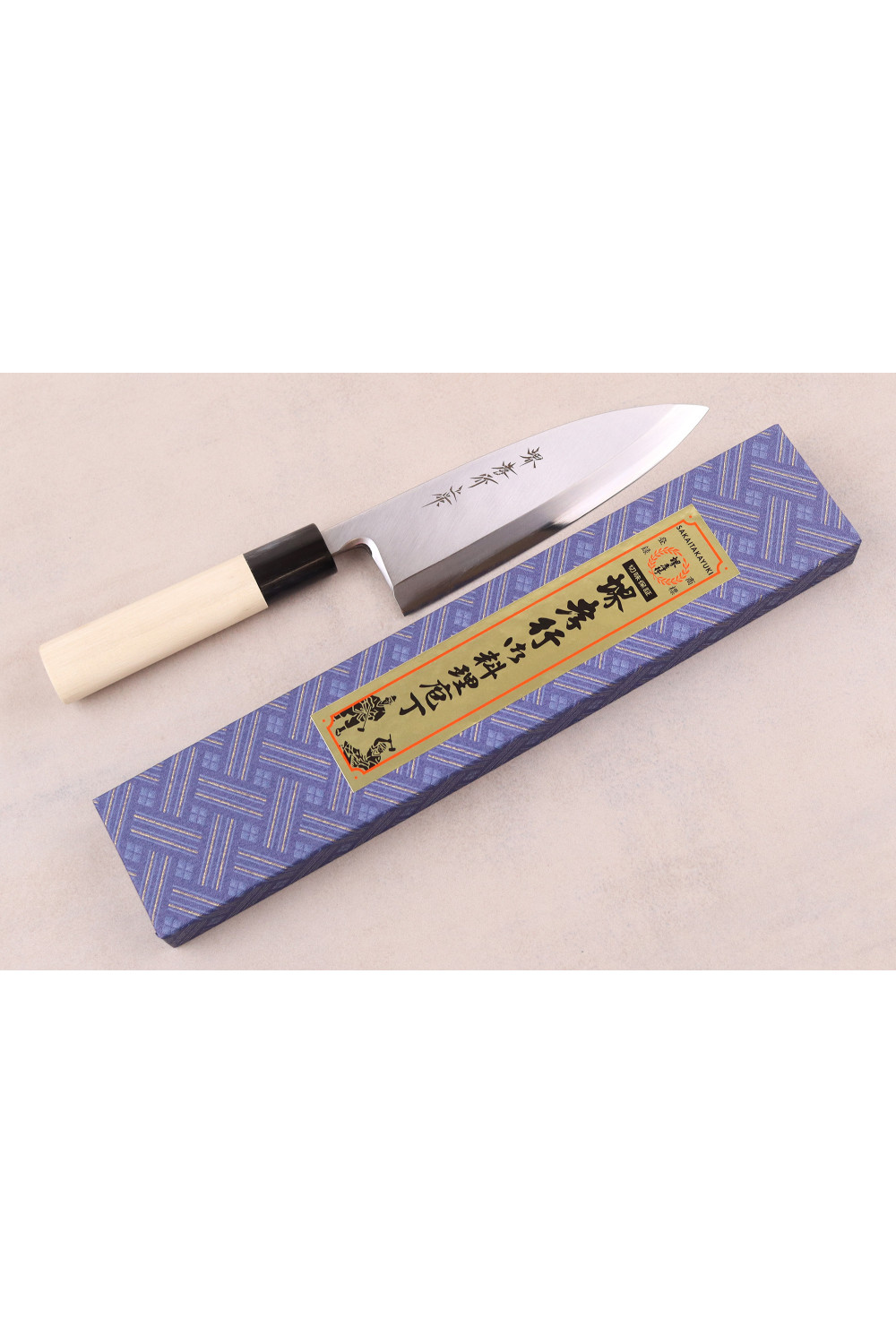
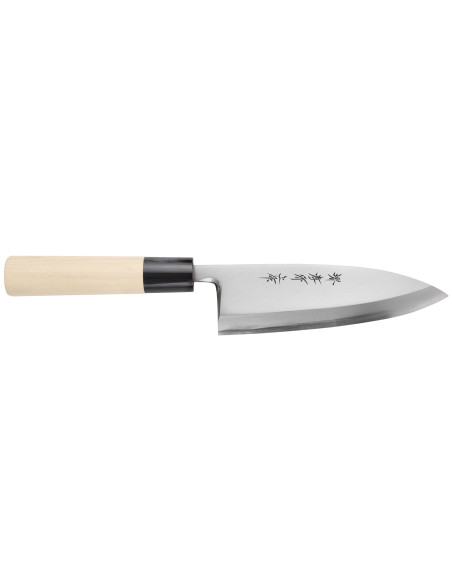
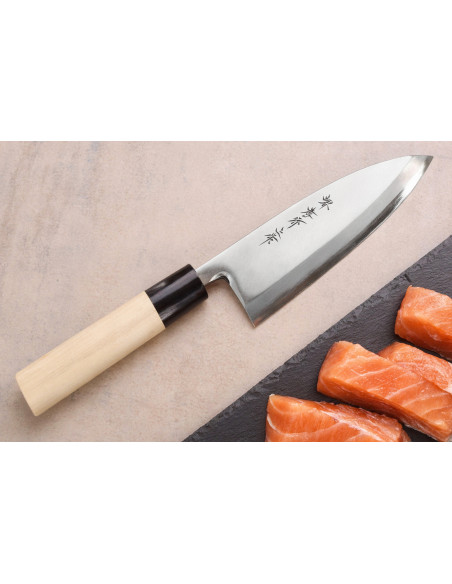
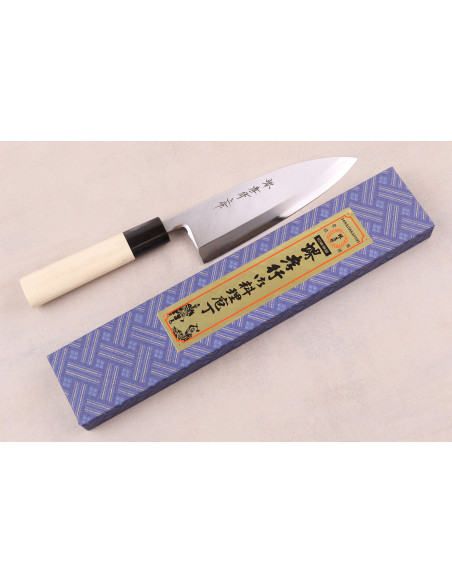
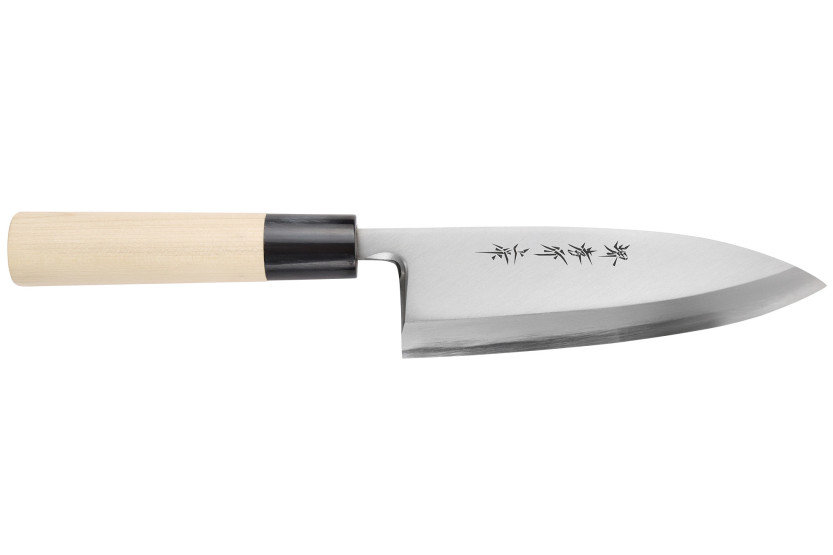
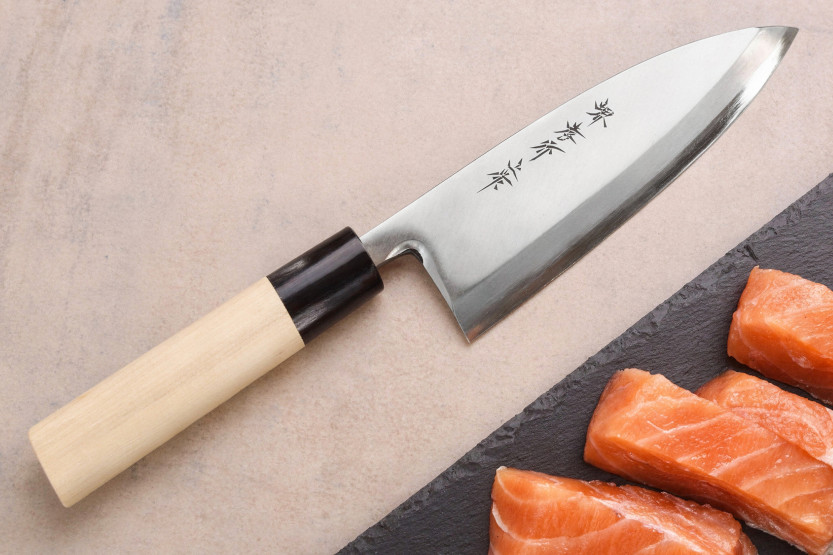
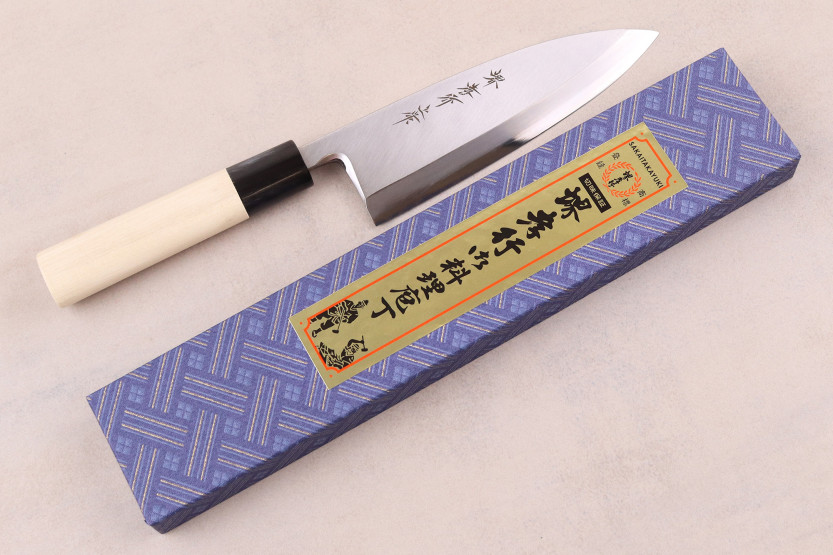
Cutting up a whole fish requires a blade that combines precision, stability, and durability. The 16.5 cm Sakai Takayuki Honkasumi Japanese deba knife meets these requirements thanks to its traditional design and the expertise of two Japanese artisans: Kenji Togashi, head of the forge, and Mitsuo Yamatsuka, responsible for sharpening.
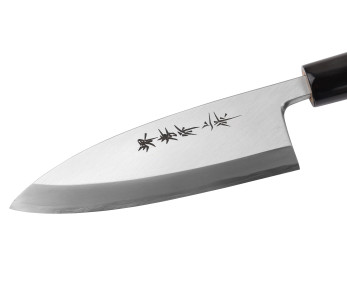
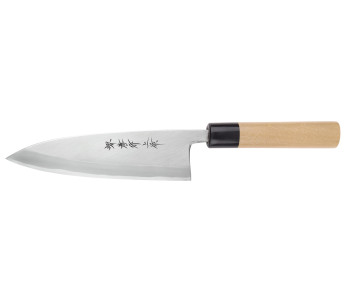
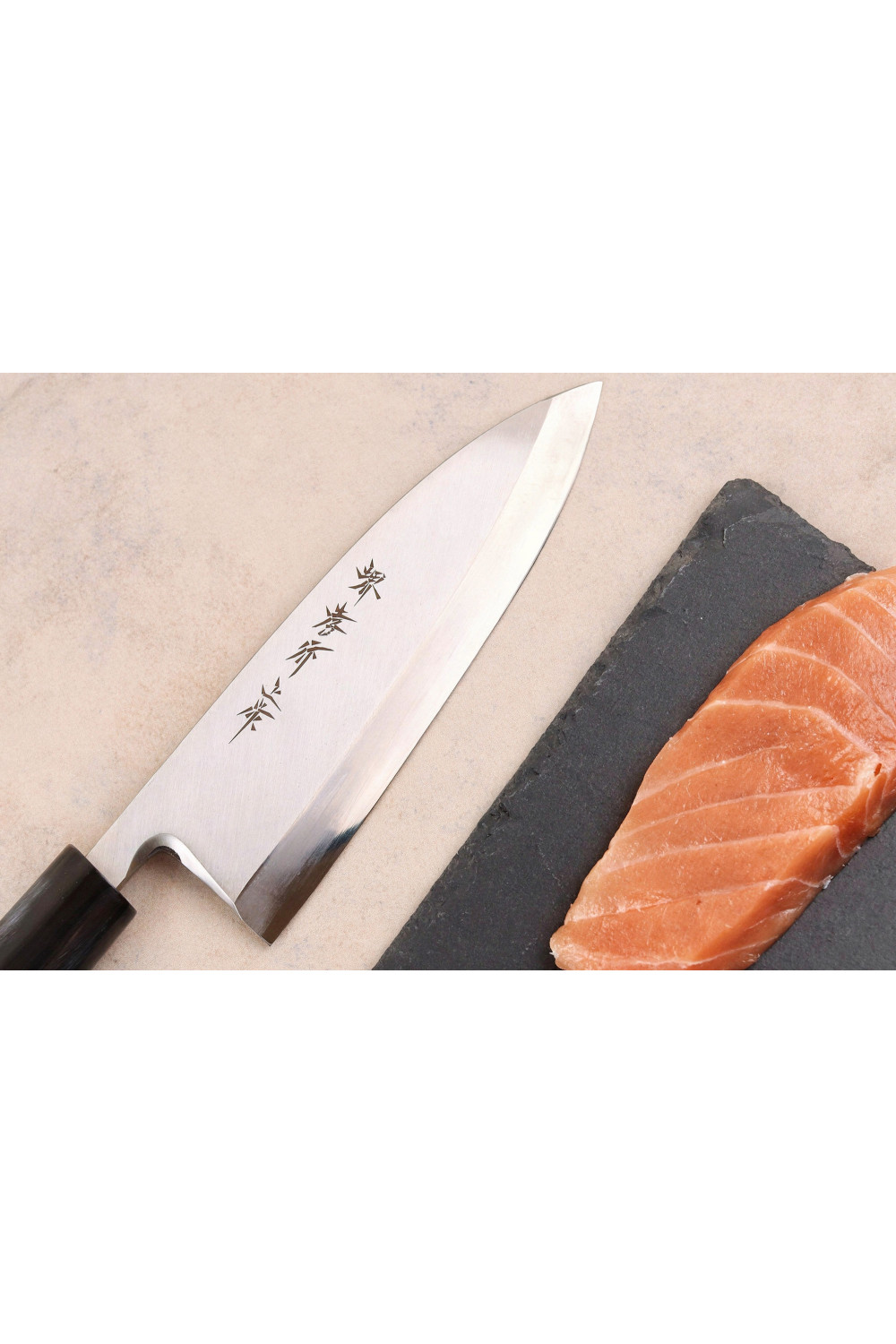
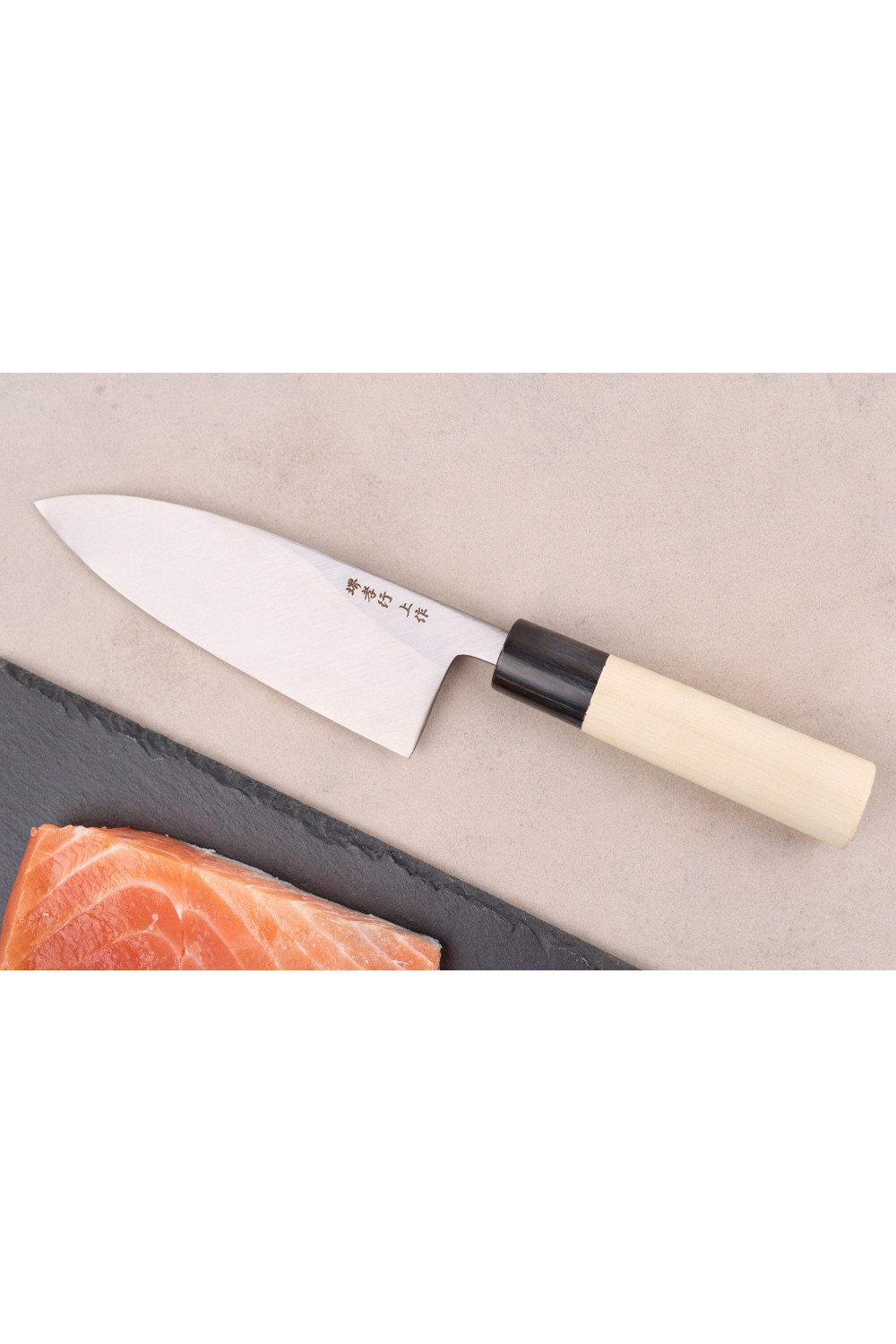
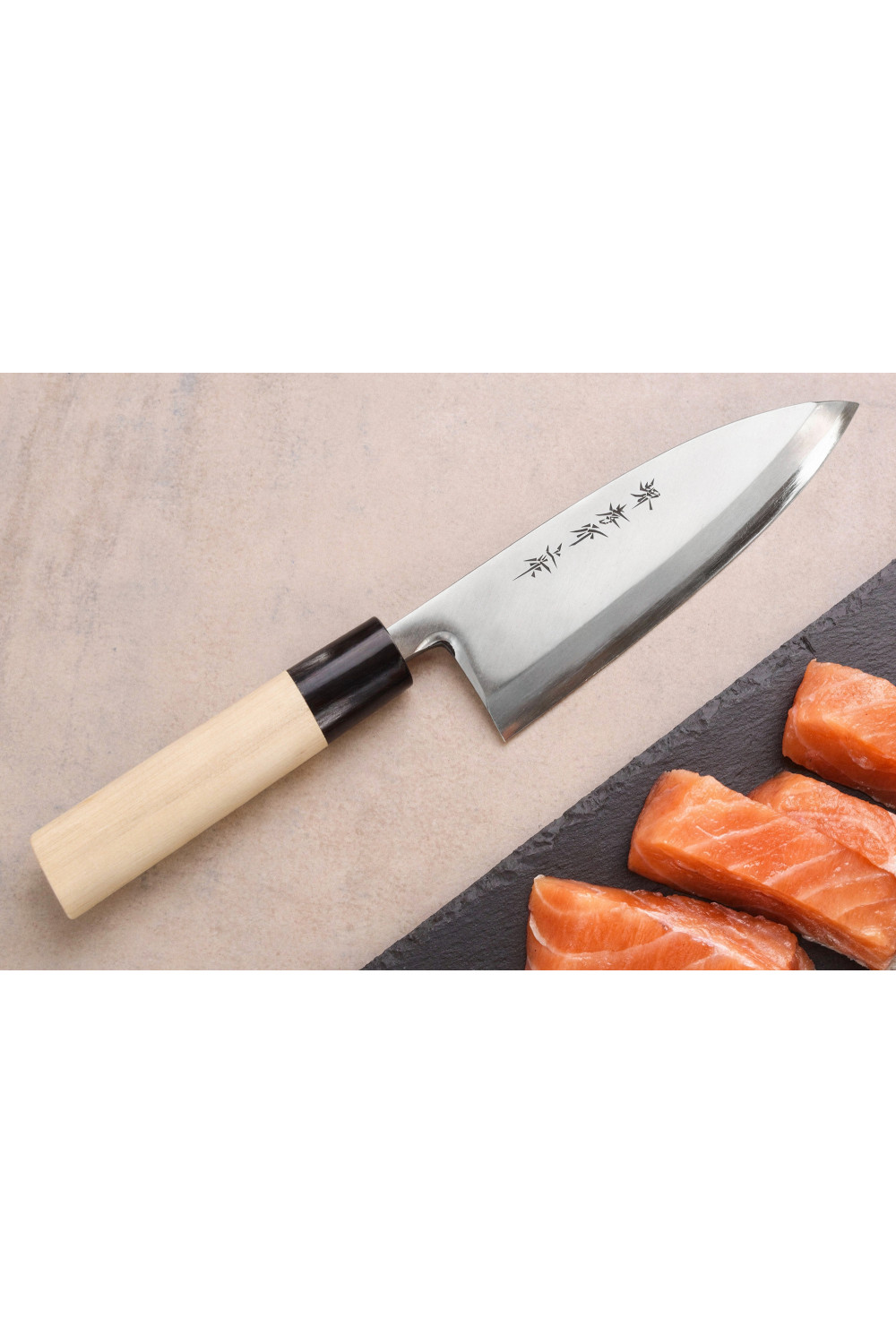
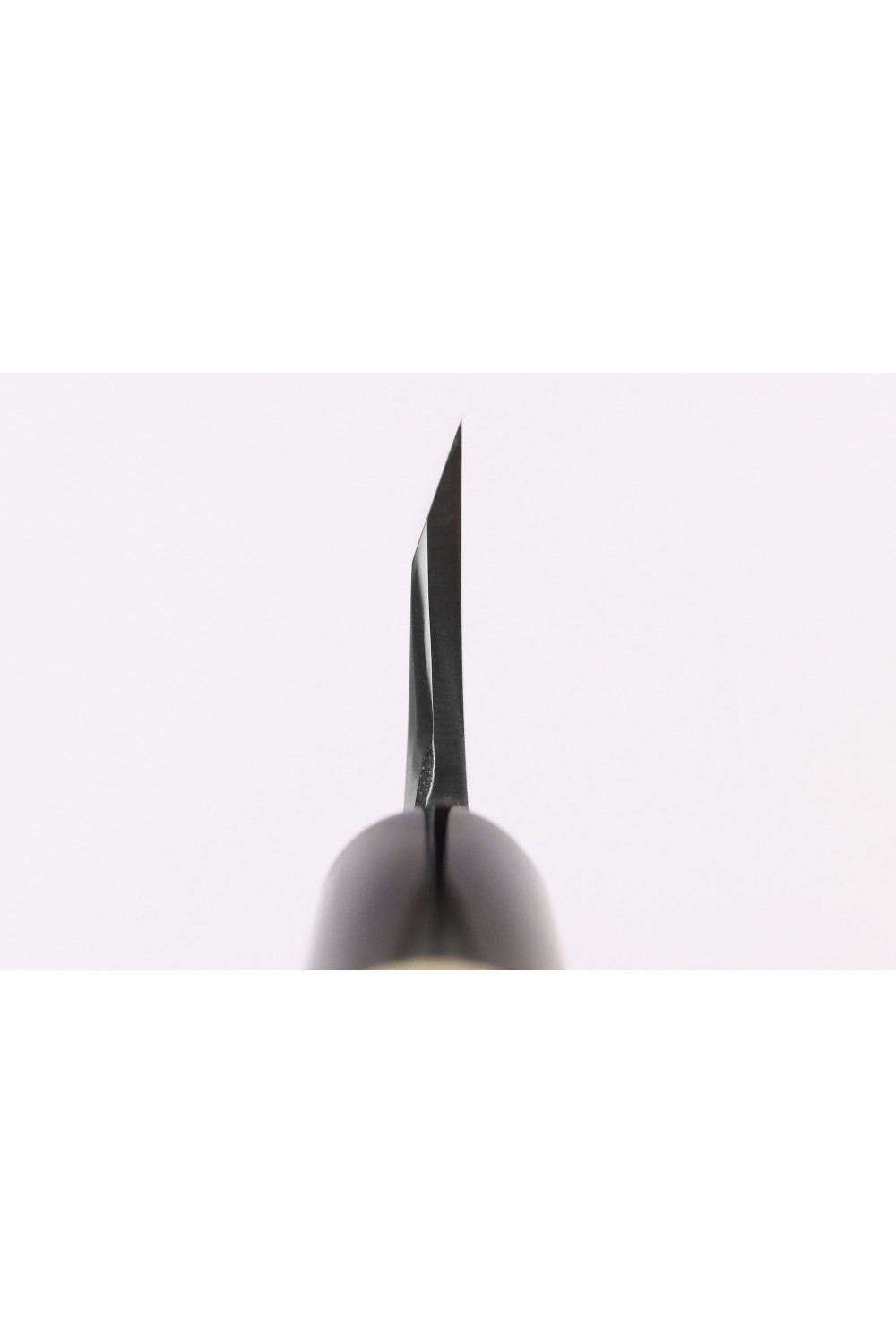
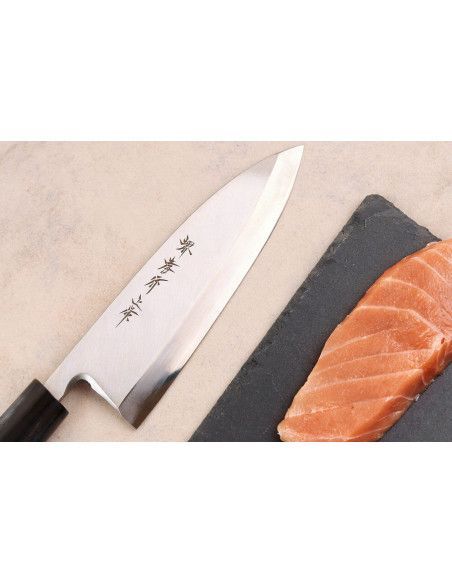
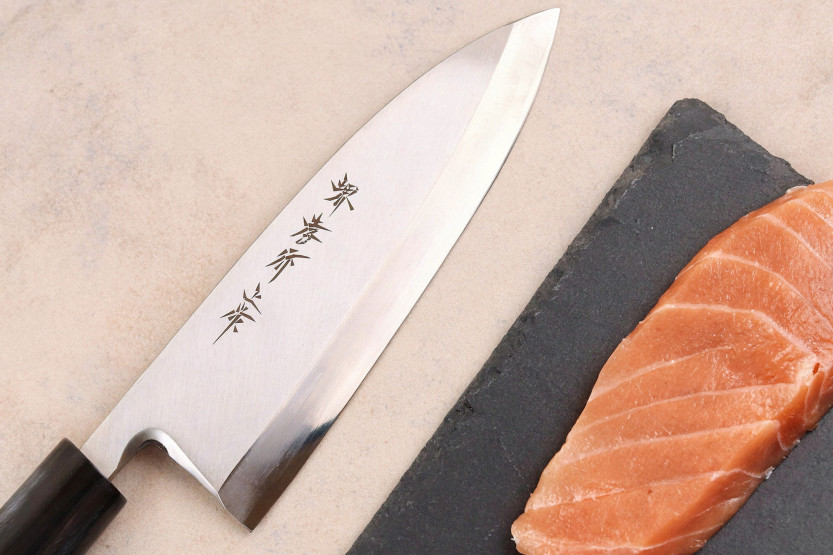
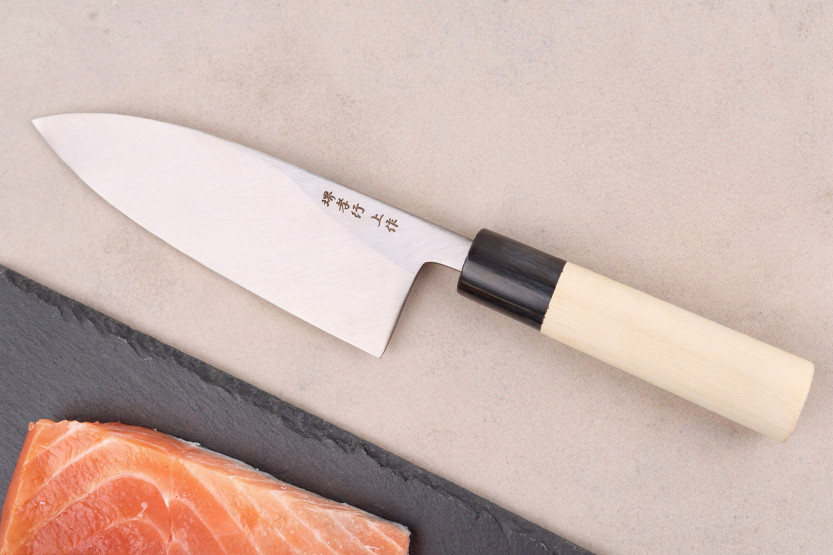
This model features a thick, high blade—characteristic of the deba—which allows you to tackle the various steps involved in preparing fish: removing the head, separating the fillets, and working around the bones. Its 16.5 cm length provides a cutting surface well-suited for handling medium-sized fish, while maintaining good precision in your movements.
A blade that combines power and precision
The 16.5 cm blade is crafted using a San Mai construction, consisting of three layers of steel. At its center is a core of Shirogami #3 steel, a Japanese carbon steel also known as White Paper Steel #3. With a carbon content of approximately 0.9%, this alloy possesses the properties necessary to achieve a particularly fine edge.
Its hardness of approximately 60 HRC allows it to maintain an effective edge during cutting tasks, provided it is used properly. This characteristic is particularly valuable for a knife designed to follow the contours of fish, where the quality of the edge directly influences the precision of the cuts.
On either side of the core, layers of softer steel reinforce the central section. Their presence helps make the structure less susceptible to stress than a blade made entirely of such hard steel would be. This combination of materials meets the requirements of a knife that must combine durability and precision.
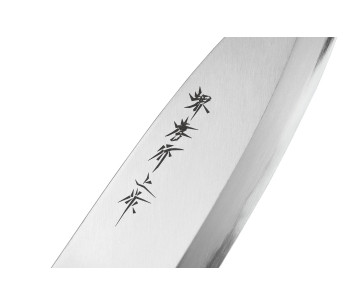
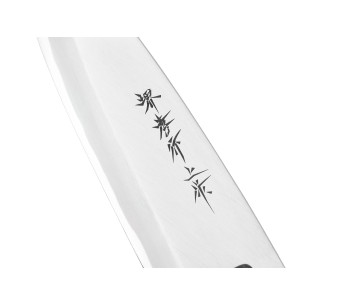
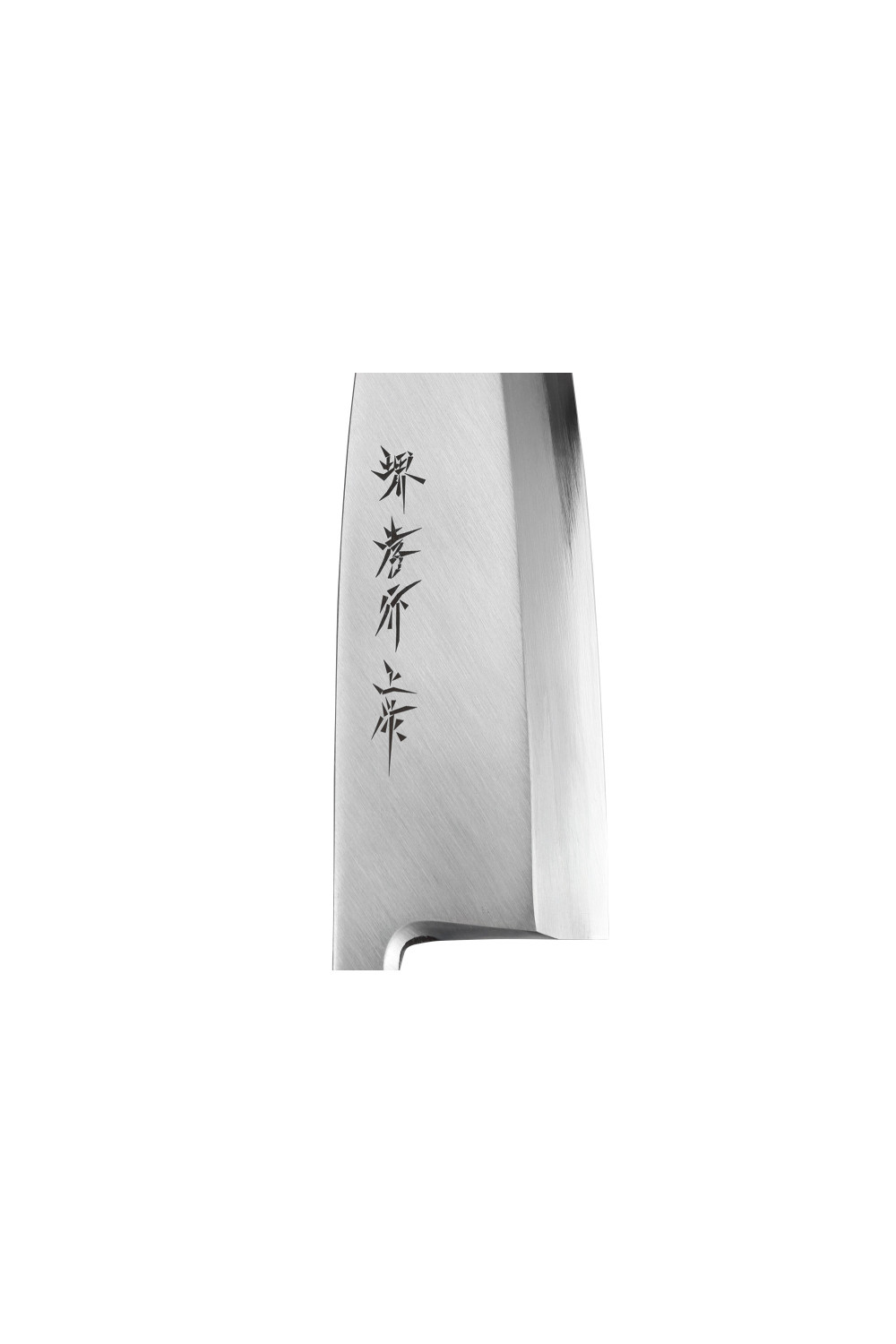
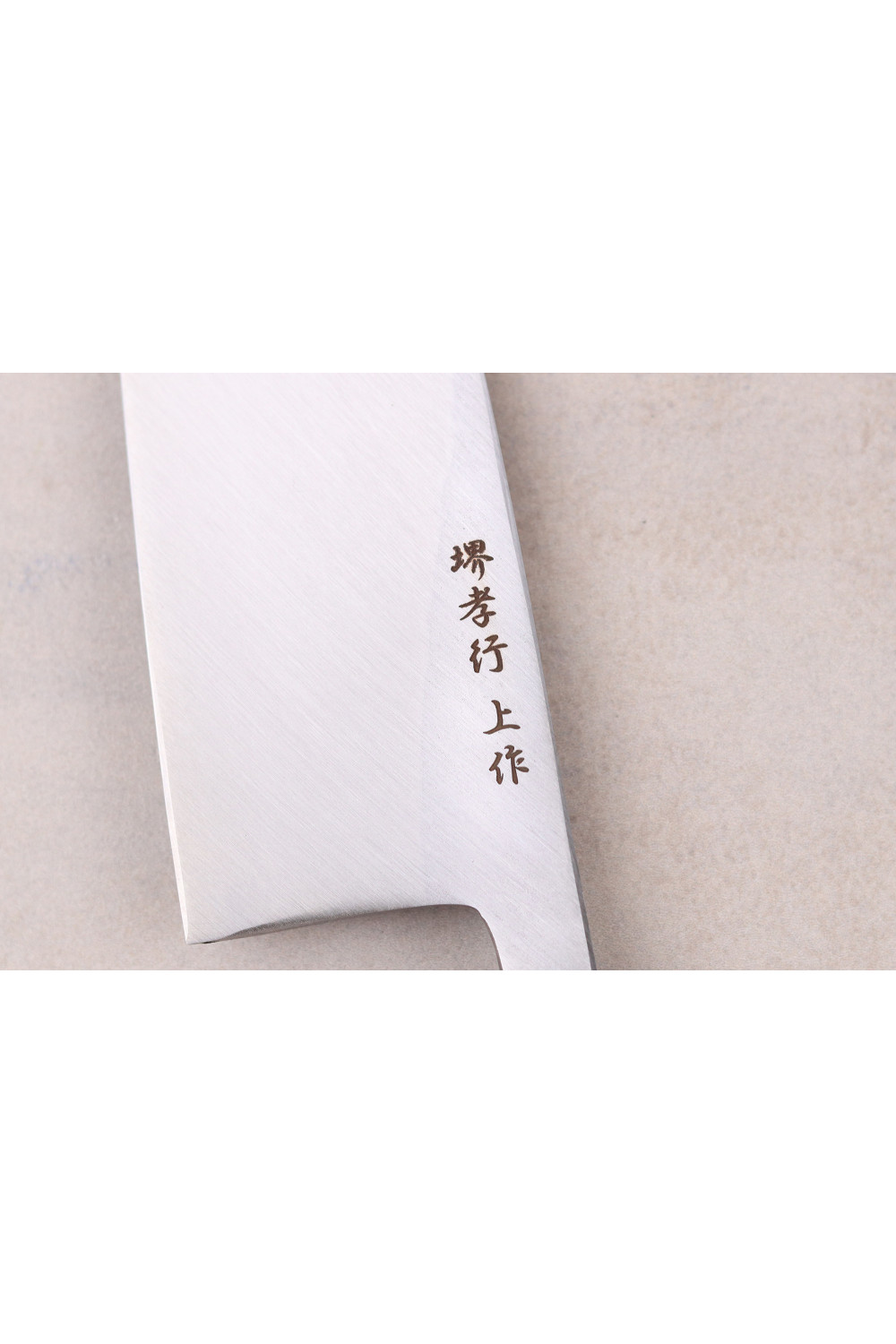
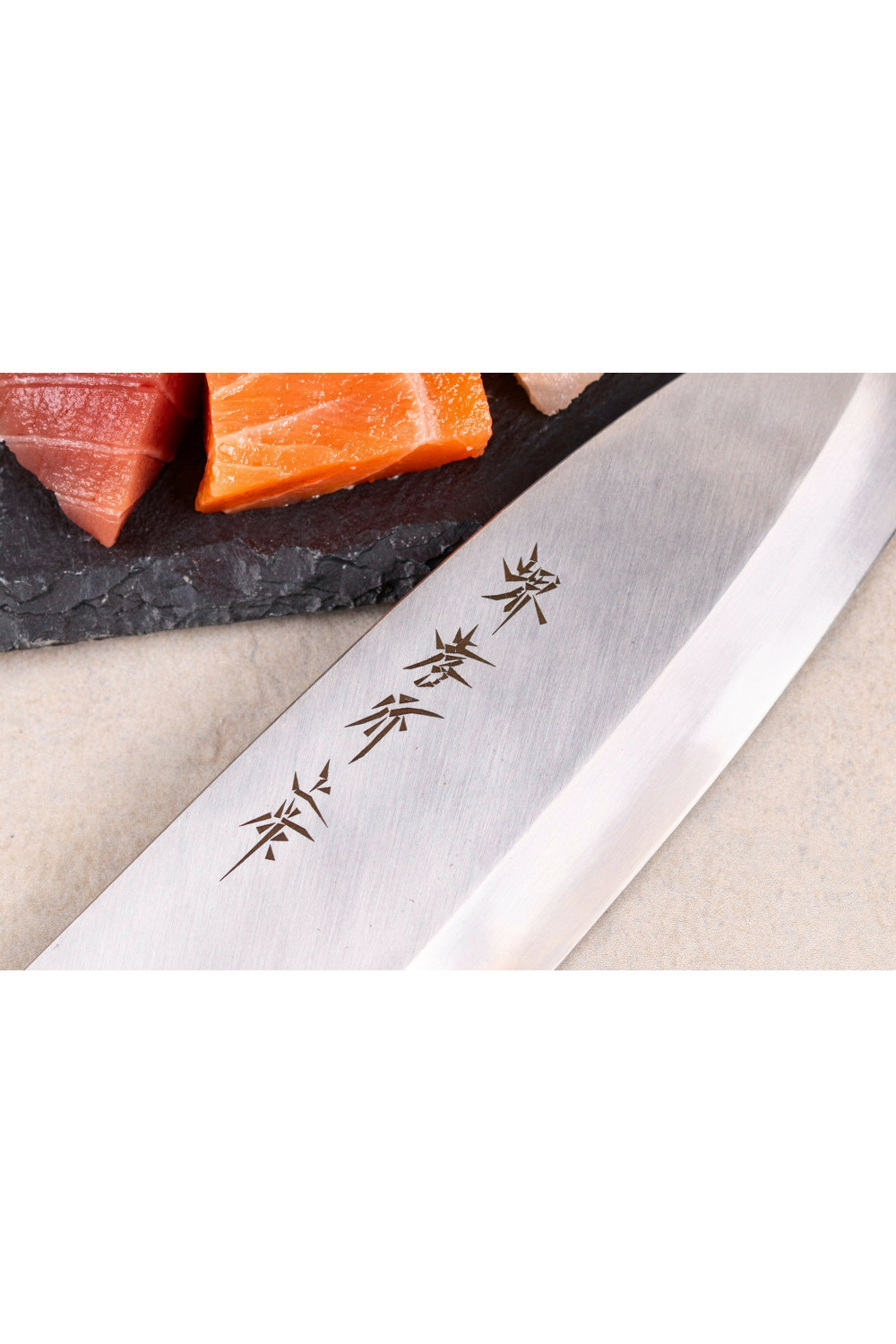
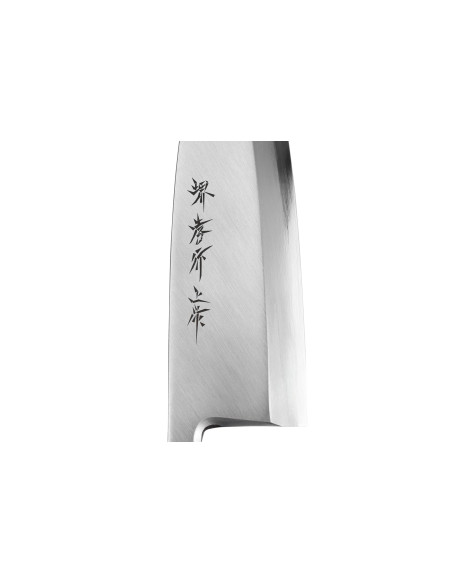
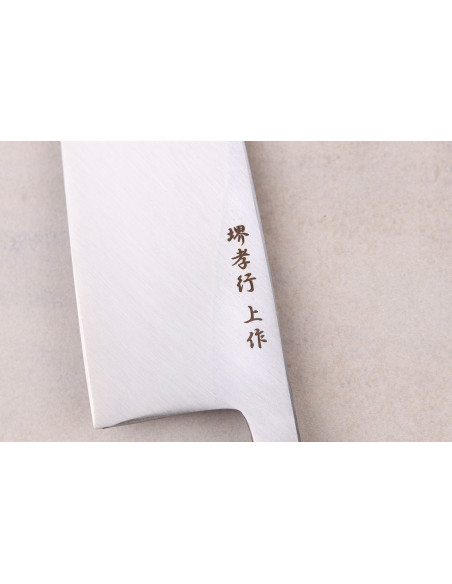
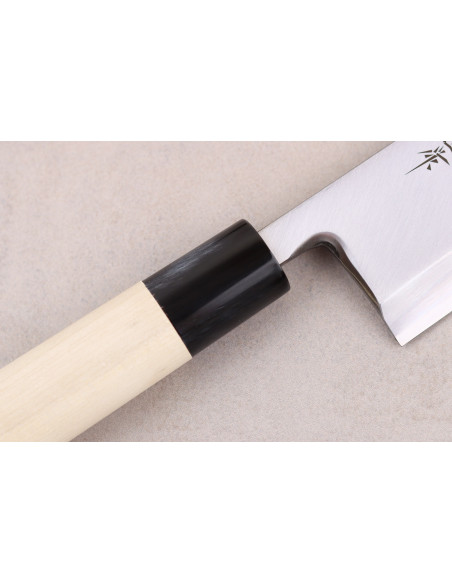
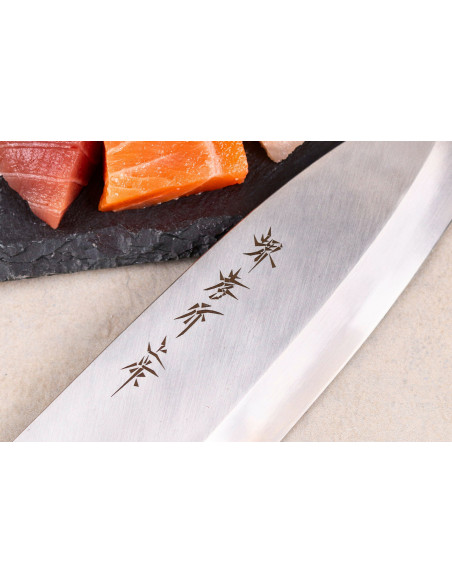
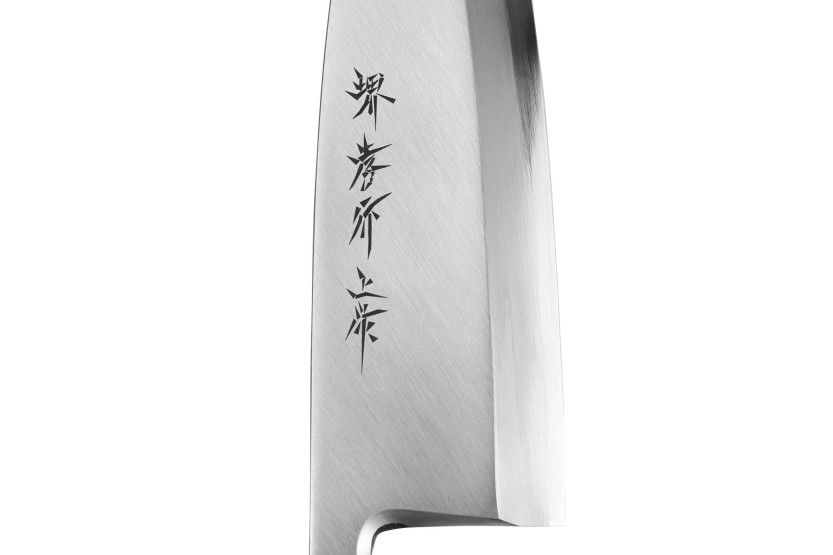
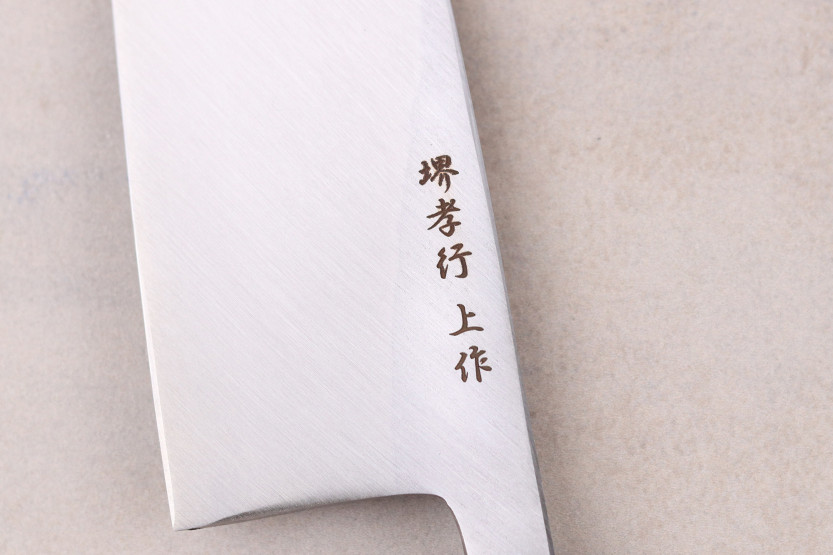
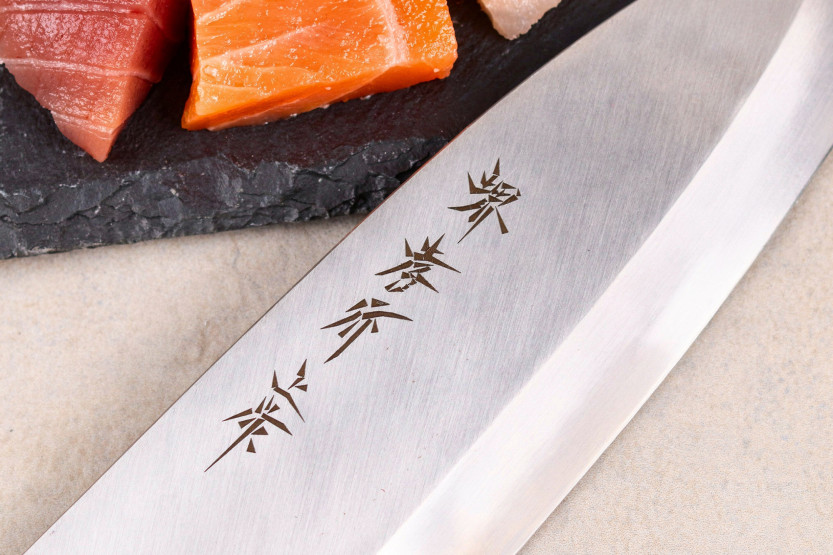
The finishing process gives the blade’s surface a polished appearance with subtle highlights. This finish highlights the characteristic lines of the deba and the visual quality of its handcrafted construction.
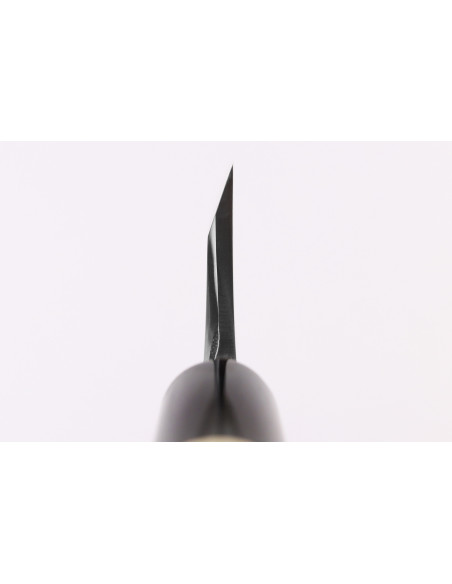
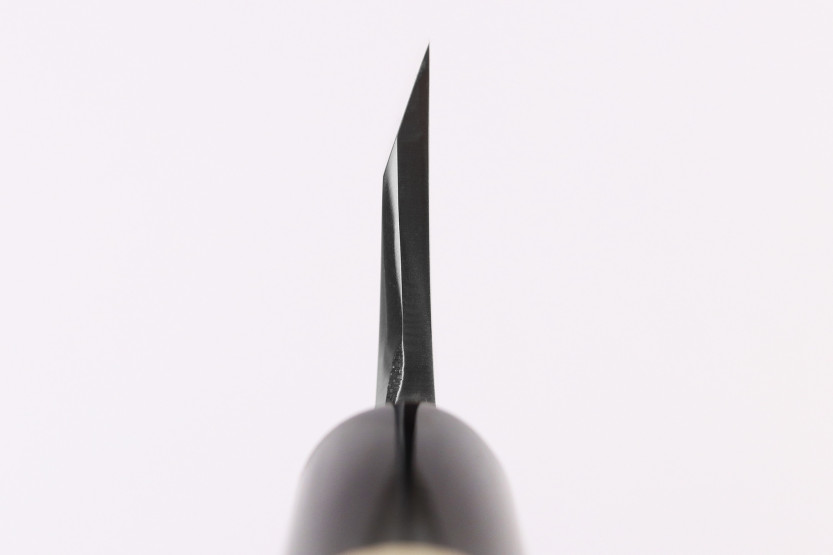
Another distinctive feature of this knife is its asymmetrical grind designed for right-handed use. The main bevel is shaped to allow for cutting guided by the right hand. The opposite side contributes to the blade’s performance as it moves through flesh and bones. This shape allows the knife to follow the fish’s spine with greater precision, without making unnecessary additional cuts. However, it requires proper technique: the deba should cut using its edge, not through twisting motions.
A Japanese handle crafted from carefully selected materials
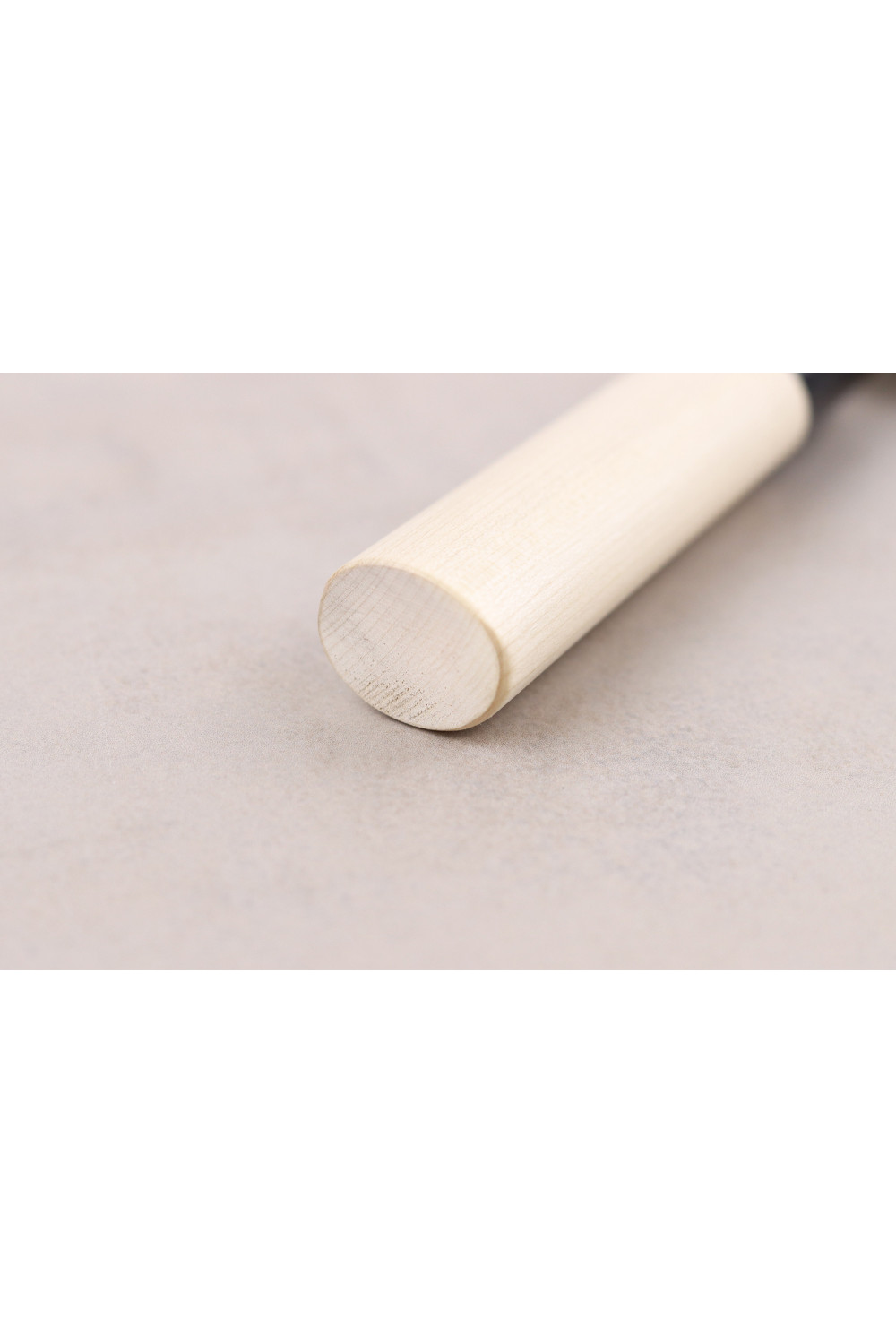
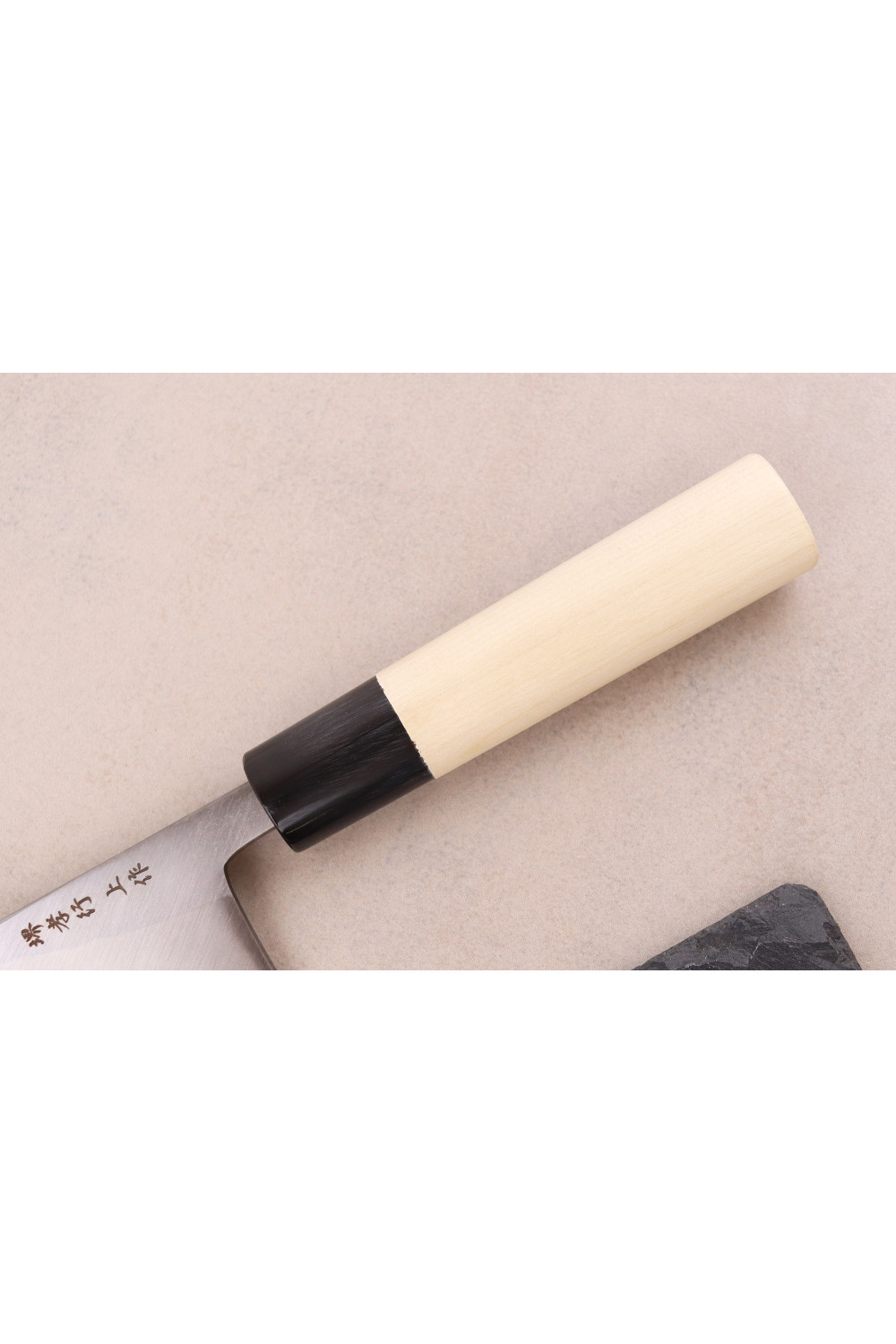
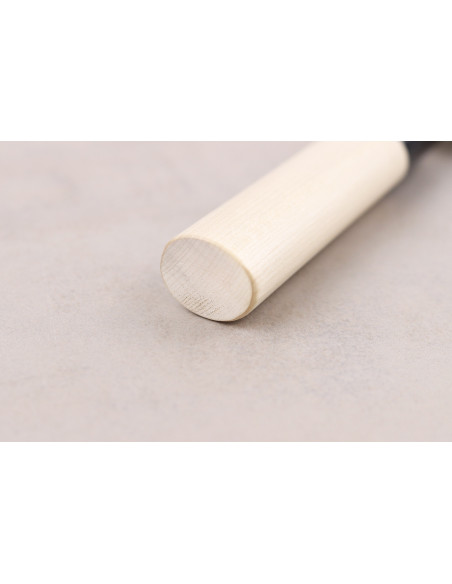
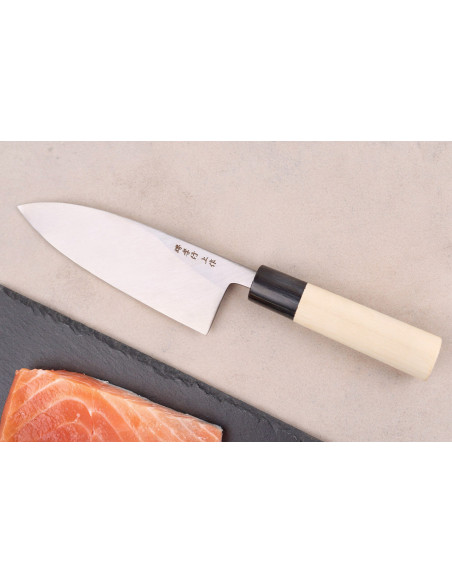
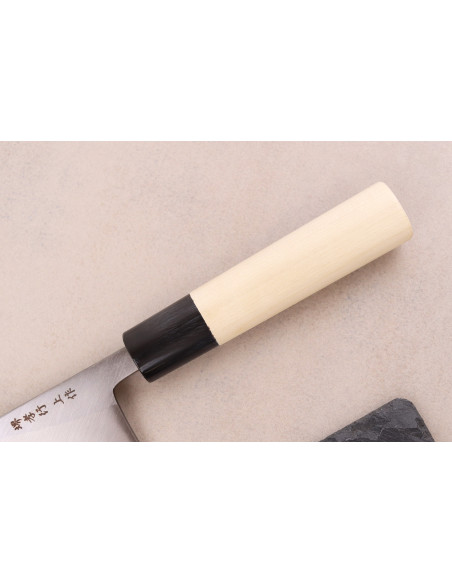
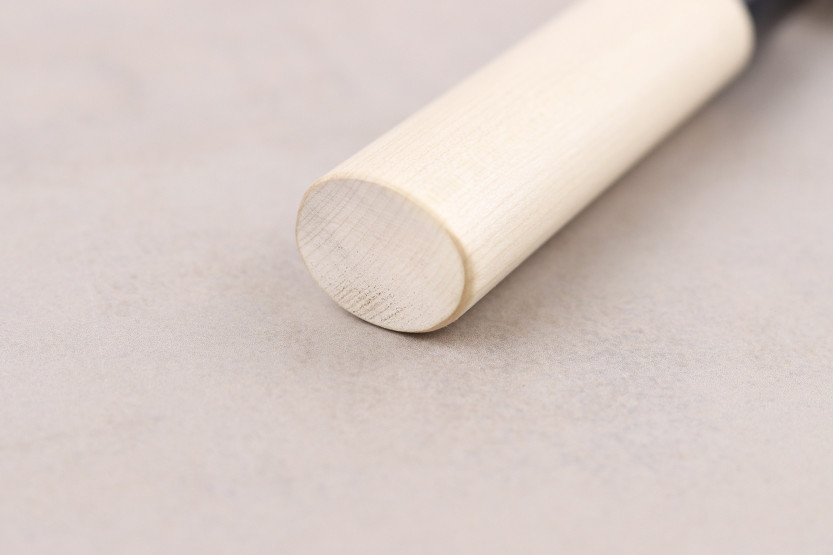
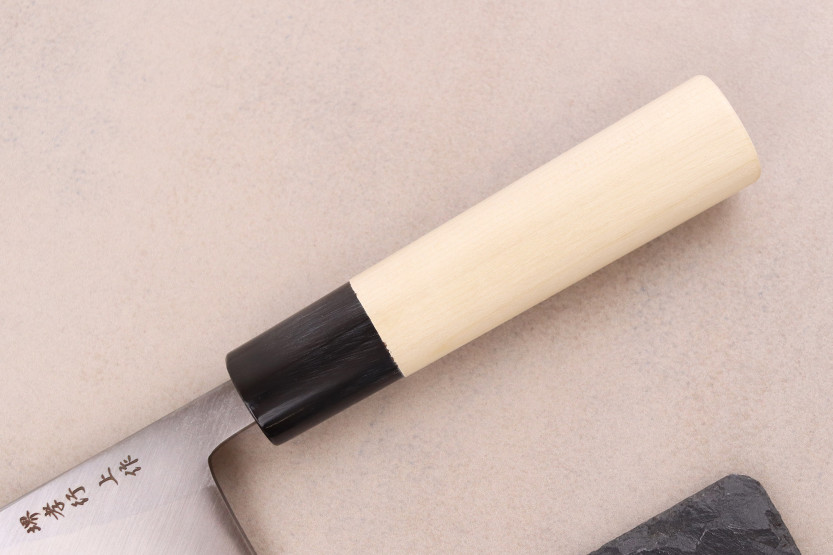
The traditional aesthetic of this knife is reflected in its magnolia handle, recognizable by its light color and naturally smooth appearance. Magnolia woodis a popular choice in Japanese cutlery for its lightness. On a deba, which has a substantial blade thickness, this choice of material helps minimize the weight added by the handle. This allows you to feel the blade and control its movement while preparing food.
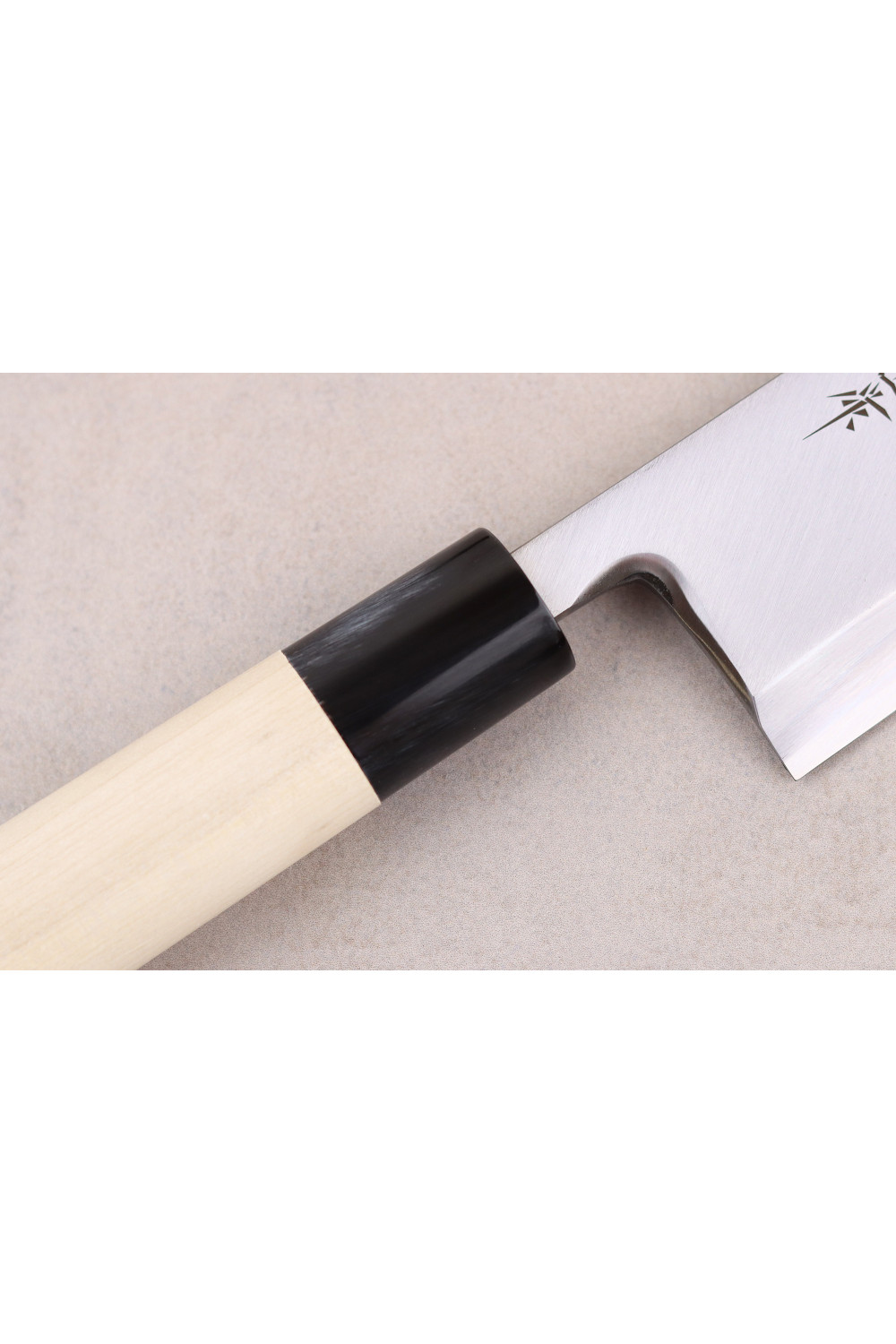
Unlike octagonal handles, this model features an oval shape with no sharp edges. Its rounded profile makes it comfortable to hold in the palm and allows you to slightly adjust your finger position depending on the task at hand.
When filleting, gripping the handle close to the blade helps control the tip. For certain tasks that require more firm pressure, the handle can be gripped further from the blade to stabilize the knife. This versatility in grip is particularly useful when alternating between different techniques on the same fish.
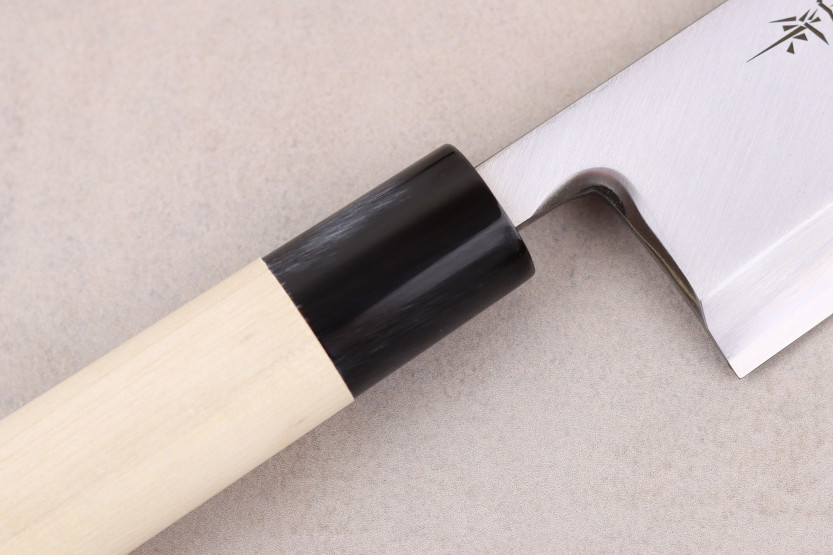
A black buffalo horn ferrule completes the handle at its front end. It provides a clean finish where the handle meets the blade and contributes to the strength of this area. Its dark color contrasts with the light tones of the magnolia wood, without adding any superfluous decorative elements.
Wood and horn are natural materials. Consequently, their colors, grain, and any variations cannot be perfectly identical from one knife to another. Each knife therefore has its own unique aesthetic characteristics.
Features and Benefits
-
- 16.5 cm blade: length suitable for preparing medium-sized fish
- 3-layer San Mai construction: supports the hard core with softer steels
- Shirogami #3 core: enables clean and precise cutting
-
- Hardness of approximately 60 HRC: helps maintain cutting performance
- Asymmetrical grind for right-handed users: allows for cutting control with the right hand
- Polished surface: blade with a refined finish
- Oval magnolia handle: comfortable grip
-
- Black buffalo horn bolster: reinforces the front of the handle
- Forged by Kenji Togashi: handcrafted blade shaping
- Sharpened by Mitsuo Yamatsuka: cutting edge geometry optimized for use
Preparing Fish and Caring for Your Knife
Use this deba knife on a wooden or synthetic cutting board, focusing on controlled movements. Its tip allows you to score the flesh, while the heel can be used to cut through certain thin bones. Avoid thick bones, frozen foods, and any sideways twisting that could chip the edge.
Since Shirogami #3 steel contains carbon, it can oxidize upon prolonged contact with moisture. Clean the blade by hand after use, then wipe it thoroughly with a dry cloth. Never put this knife in the dishwasher. For sharpening, use a water stone and maintain the specific angle of its asymmetrical grind designed for right-handed users.
Kenji Togashi and Mitsuo Yamatsuka: Sakai’s expertise in cutlery
The Japanese city of Sakai, located in Osaka Prefecture, boasts a cutlery-making tradition that has developed around the production of blades for various trades. Traditional kitchen knives hold a special place there, with models specifically designed for Japanese culinary techniques. This is where Sakai Takayuki is based.
The production of this deba knife involves Kenji Togashi, a master blacksmith specializing in working with steel. His craftsmanship determines the blade’s shape as well as the characteristics of its structure. For this type of knife, the key is to create a blade that is thick enough to withstand the rigors of fish preparation while maintaining the proportions necessary for precise cutting.
After this stage, the blade is entrusted to Mitsuo Yamatsuka, a Master Traditional Craftsman, for sharpening. His work refines the surfaces and gives the cutting edge its final shape. Creating an asymmetrical grind requires special attention, since the two sides are not worked in the same way.
The collaboration between these specialists highlights the importance given to each craft in the production of Sakai Takayuki Honkasumi knives. The quality of a deba depends as much on the forging process as on the work done on its cutting edge.
Explore our selection of Sakai Takayuki Japanese knives to complete your collection!




 By buying this product you can collect up to