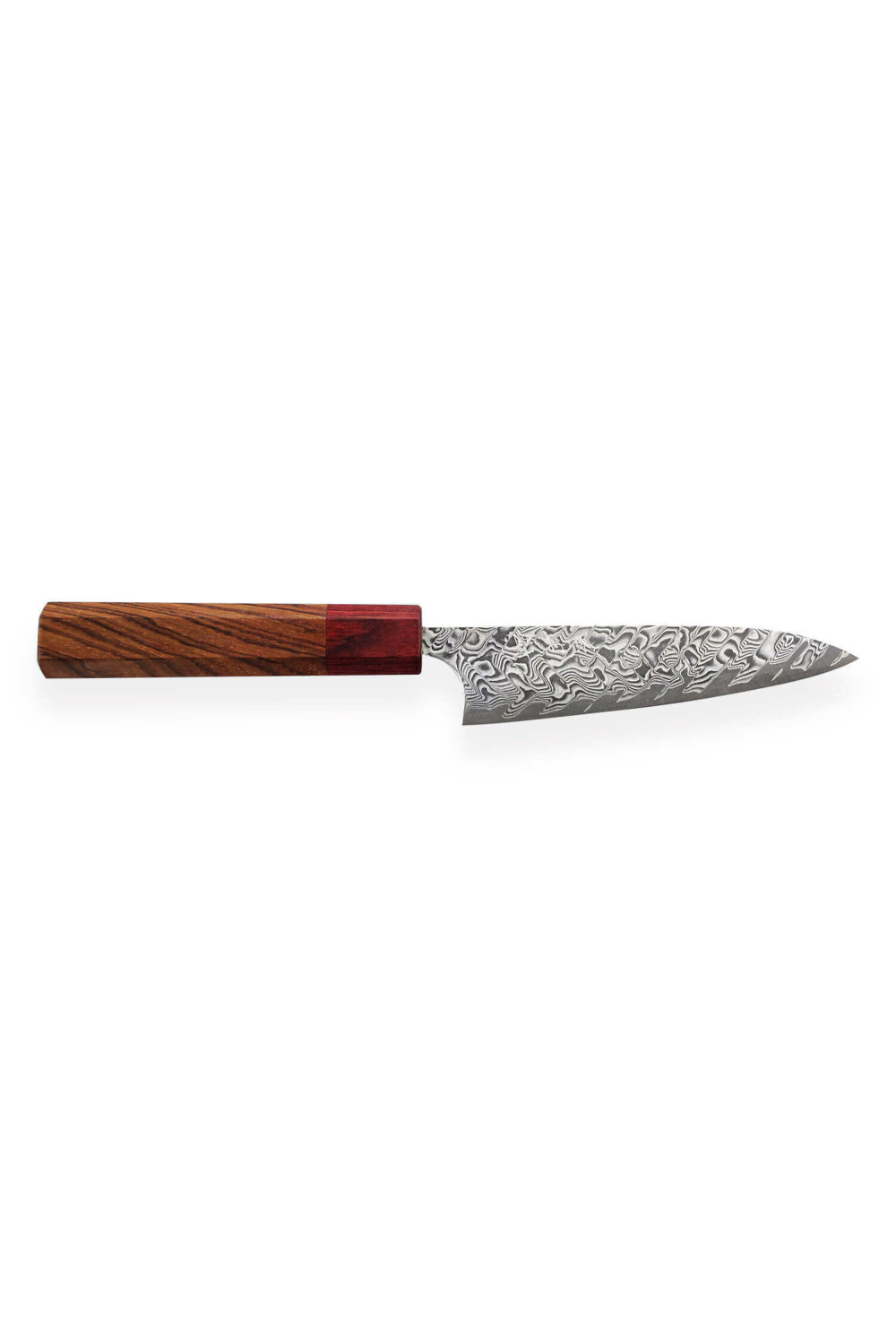
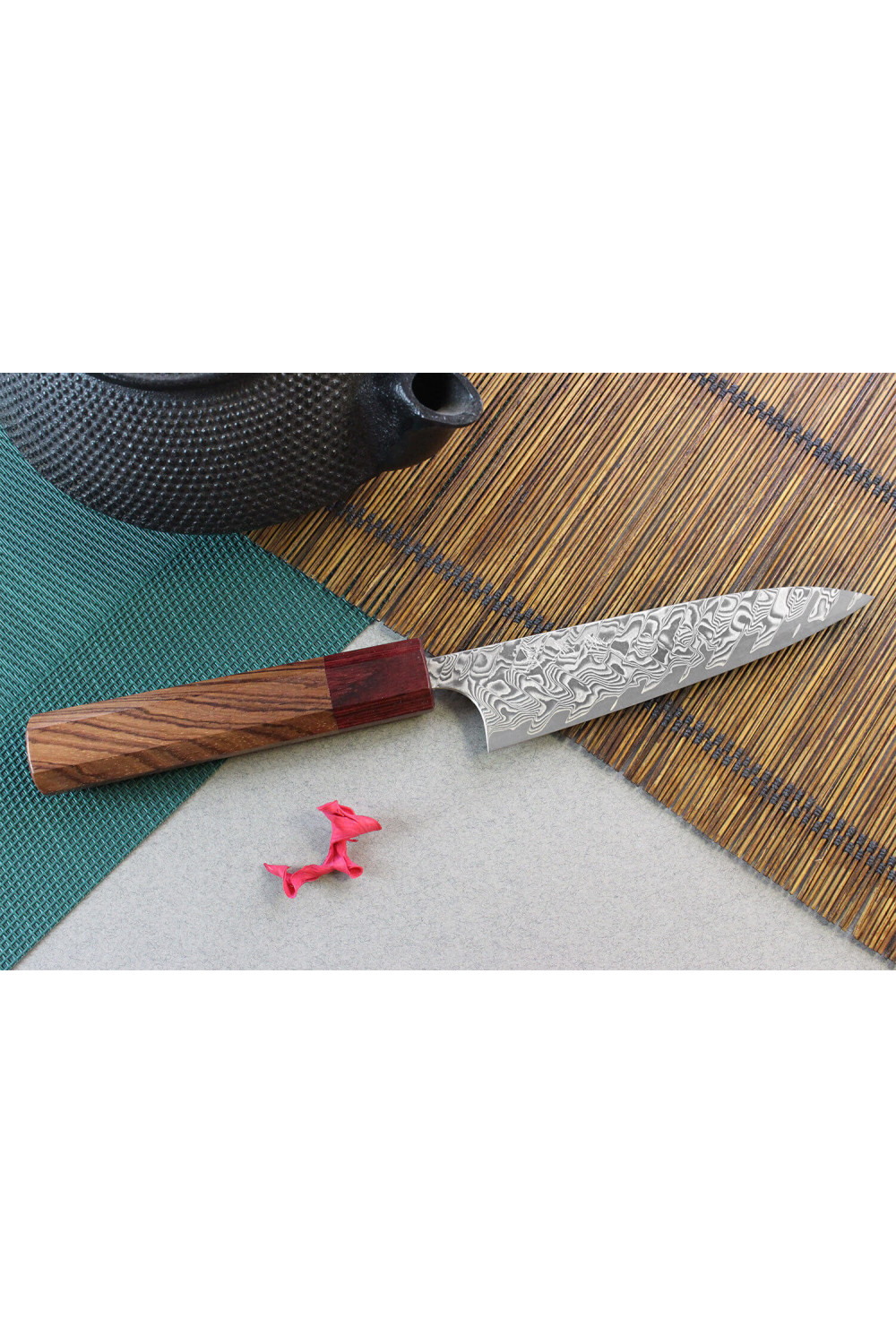
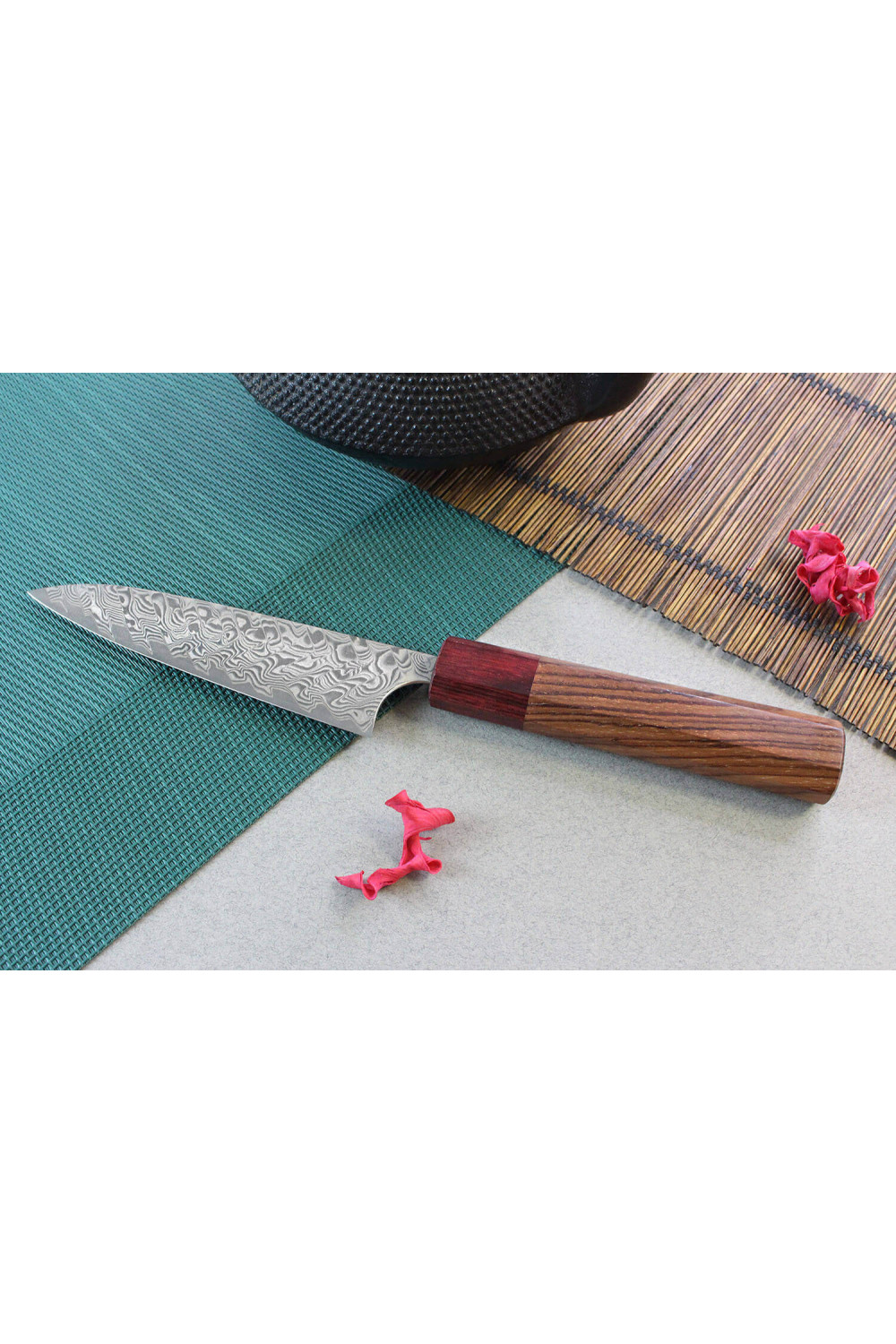
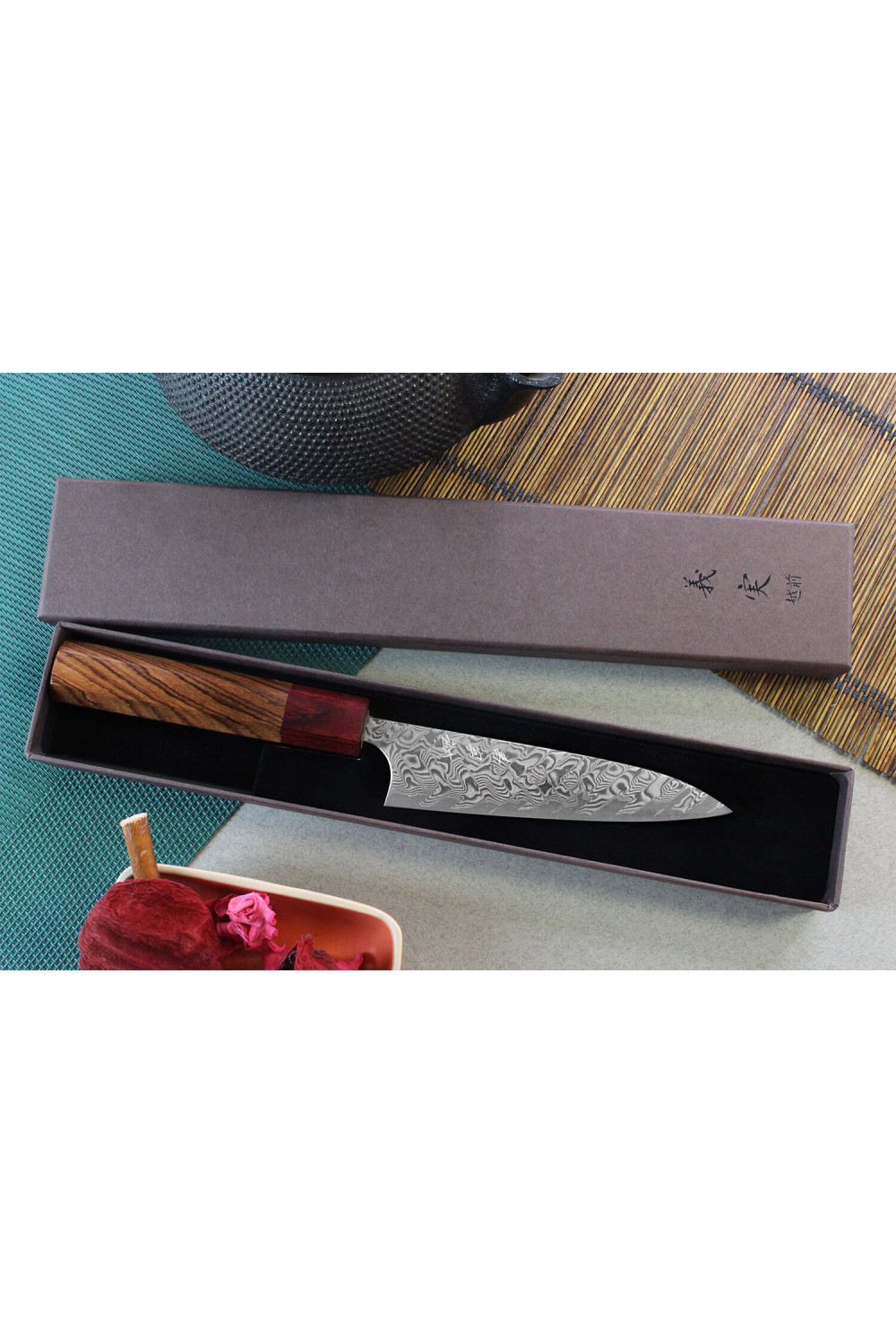
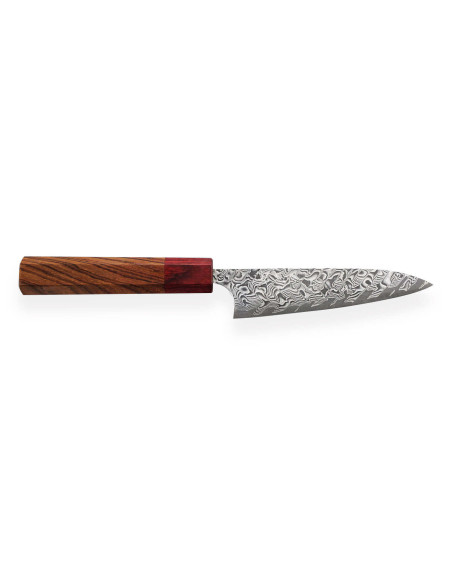
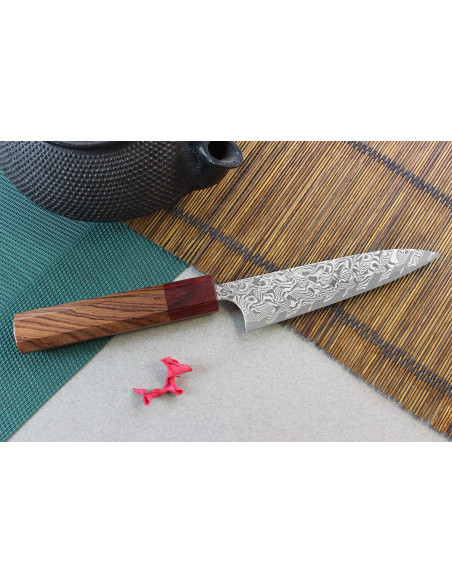
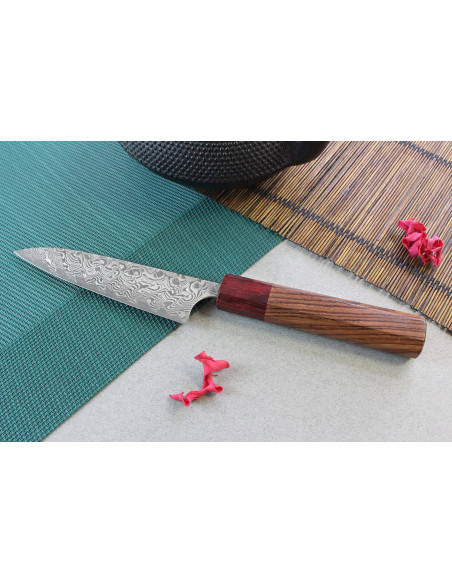
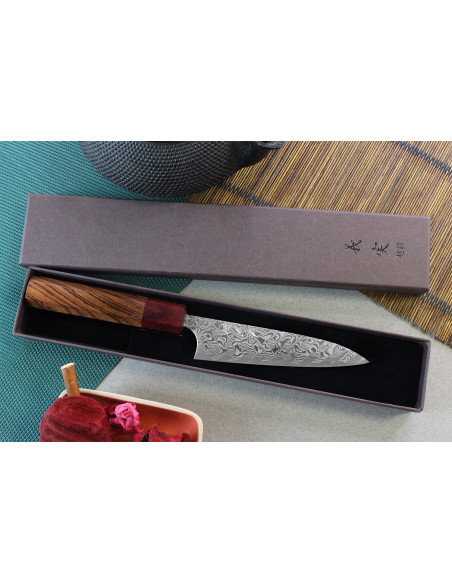
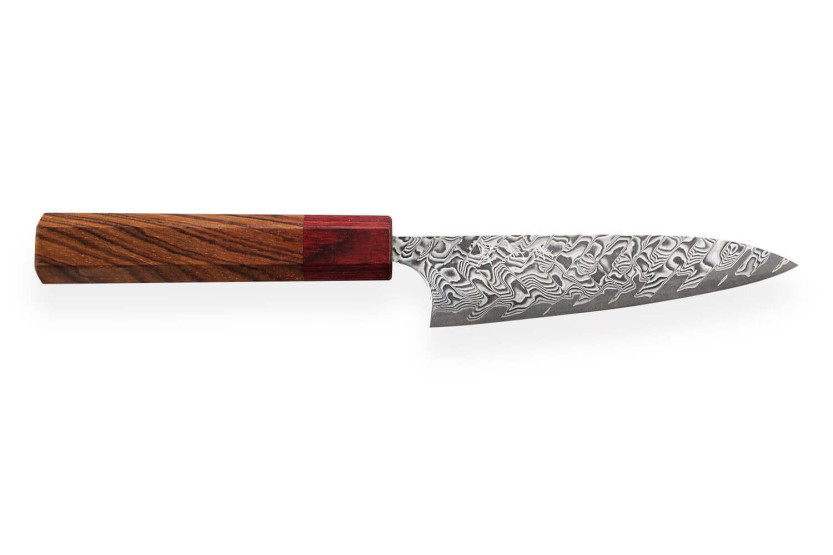
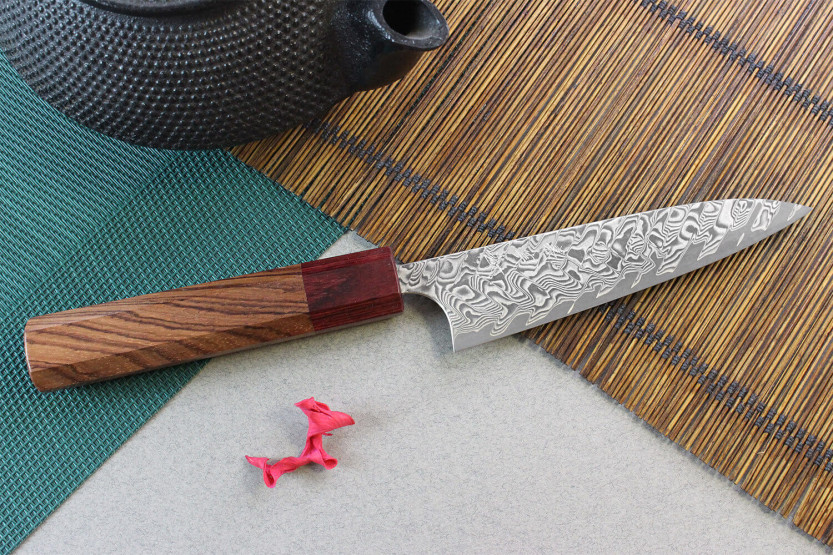
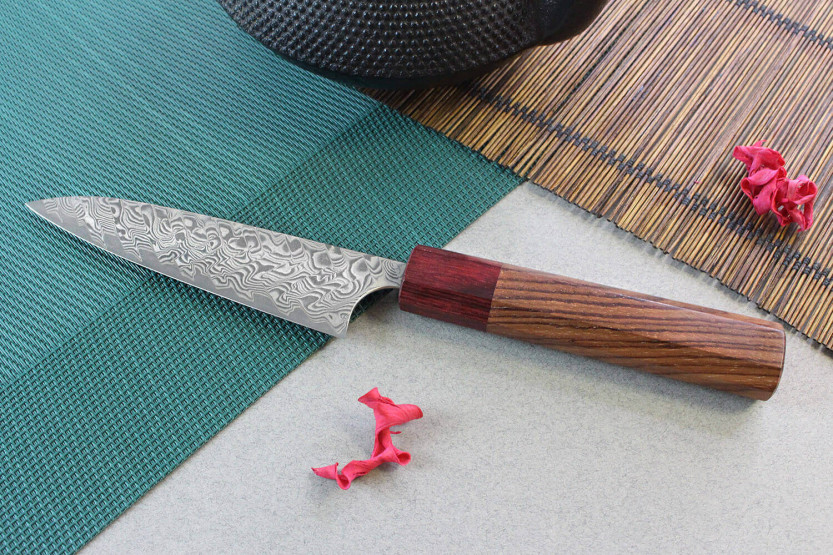
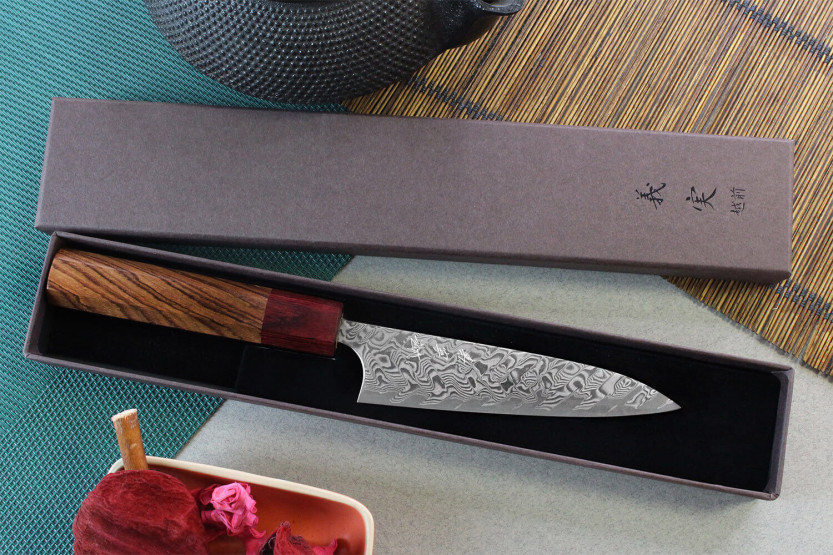
This 12cm Universal knife features a fully forged blade, i.e. it's formed on a solid piece of steel, which increases the knife's overall strength and durability (there are no sticking points that could weaken it).
How the blade is formed :
- The heart of the knife is made of SG2 powdered steel, an expensive high-end alloy with many advantages. With a hardness of around 63 HRC on the Rockwell scale, it holds its edge over the long term, so you save on sharpening sessions. SG2 steel is easy to sharpen if the need arises, even though it is very rigid. You can also maintain it with a Sharpening stone to perfect its cutting edge. You'll be surprised by its sharpness from the very first use. Another advantage of SG2 steel is its purity. At the microscopic level, its structure is very homogeneous, which makes it more resistant (for example, there's less risk of chipping when you use it).
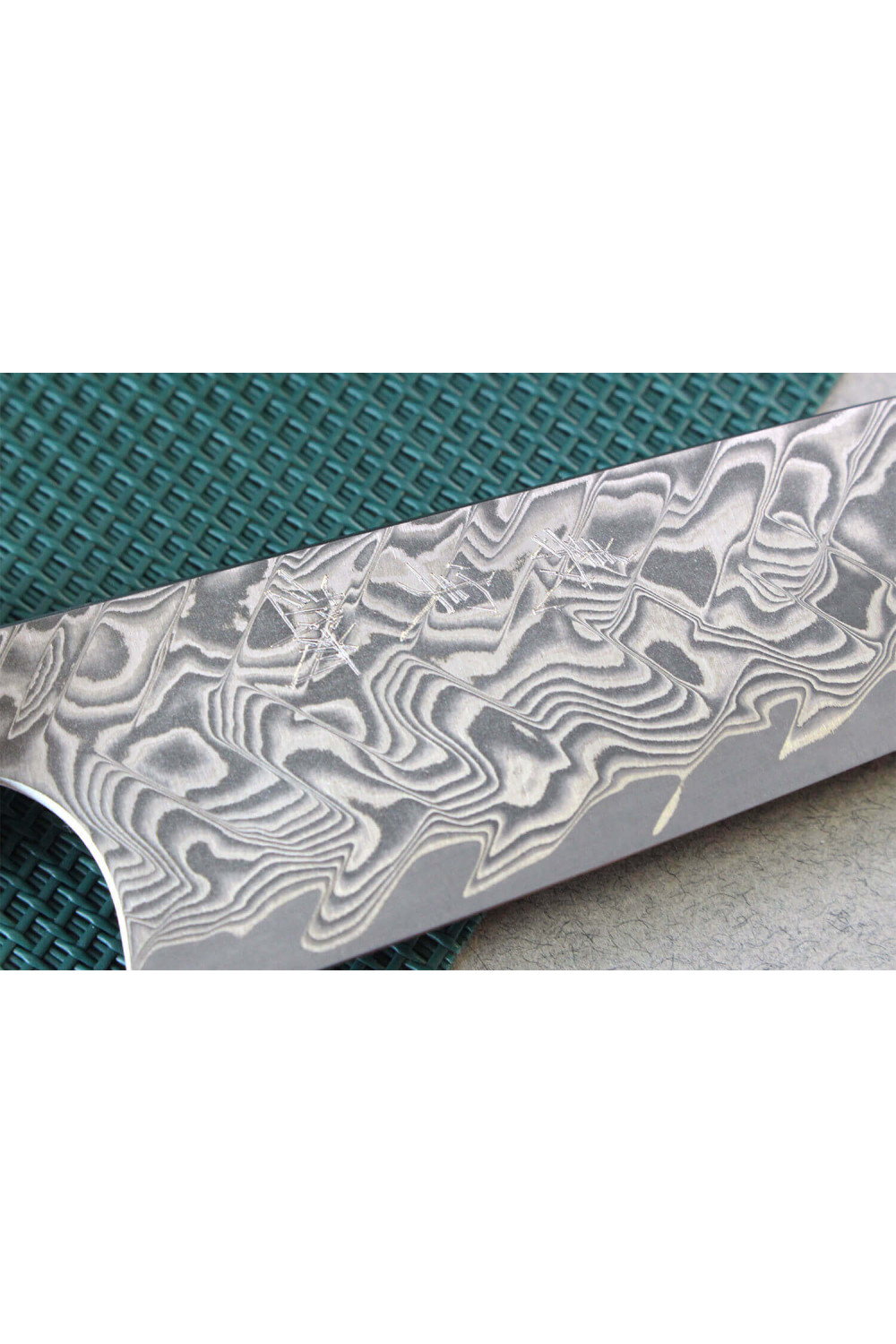
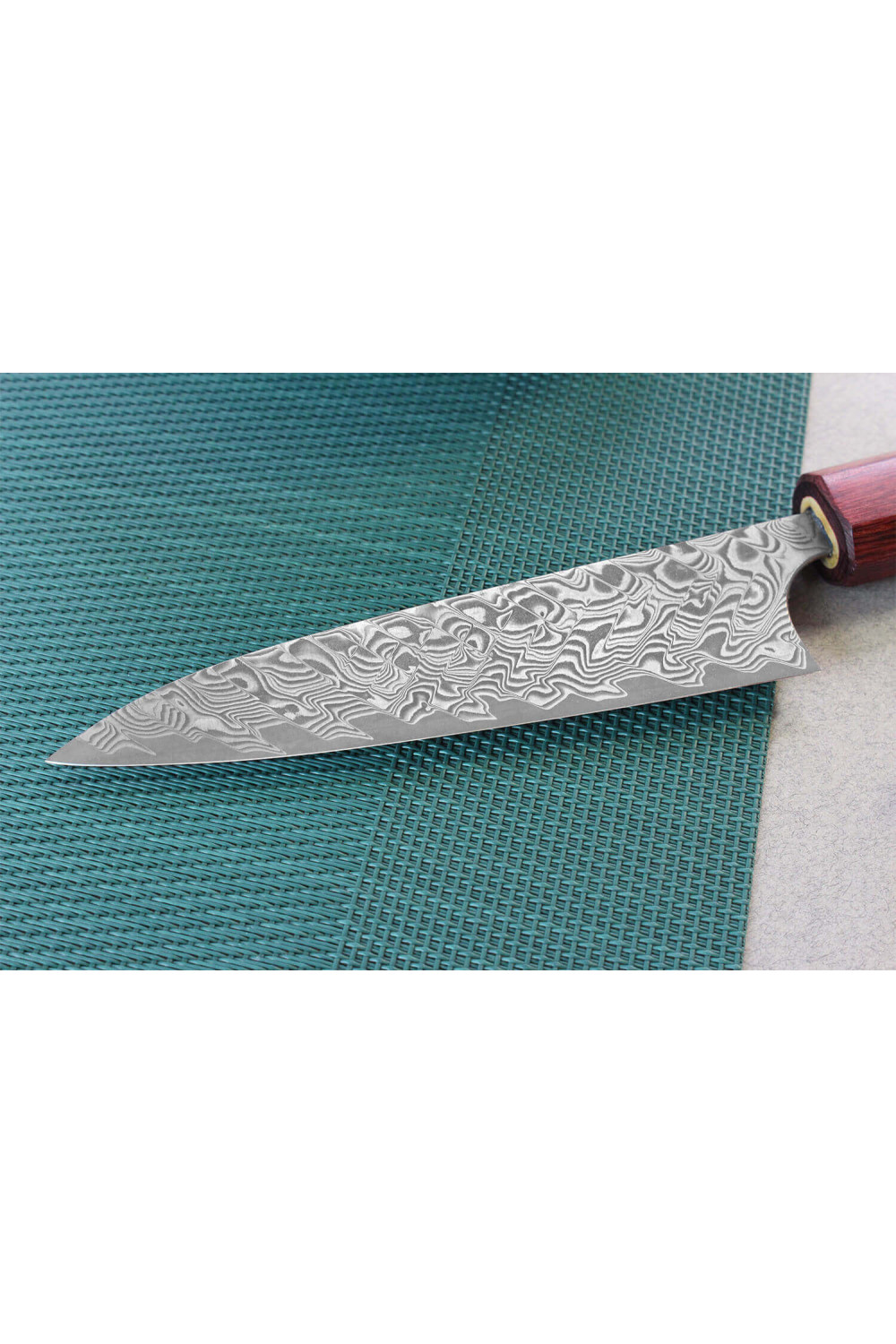
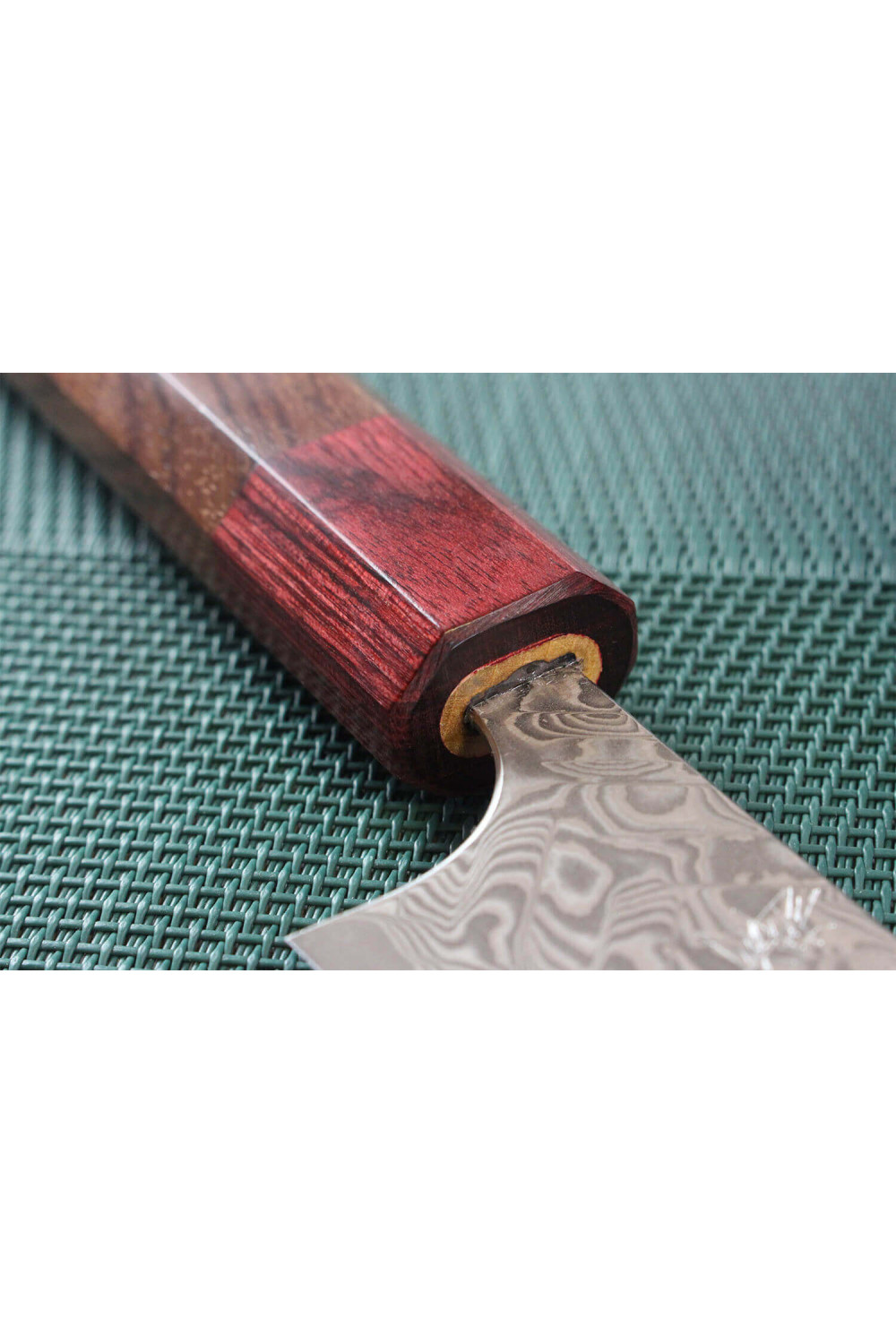
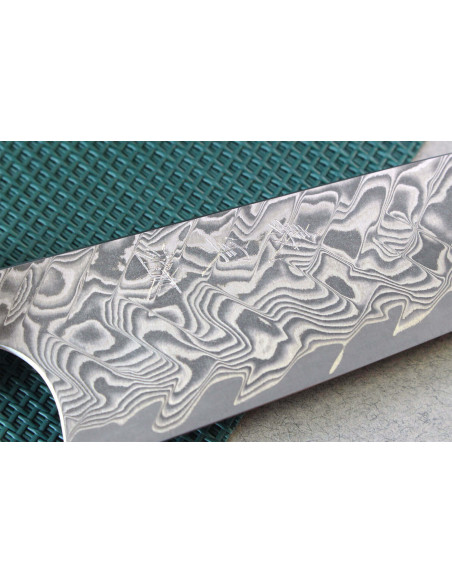
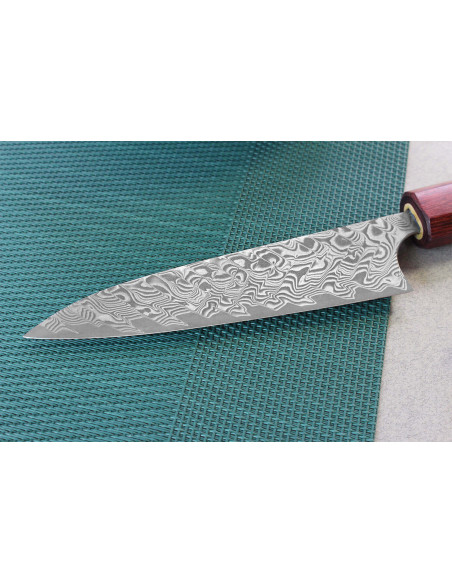
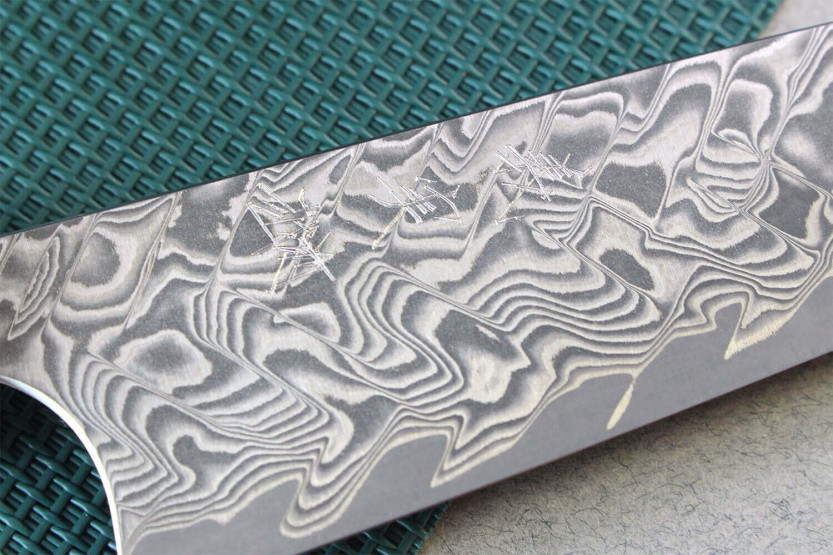
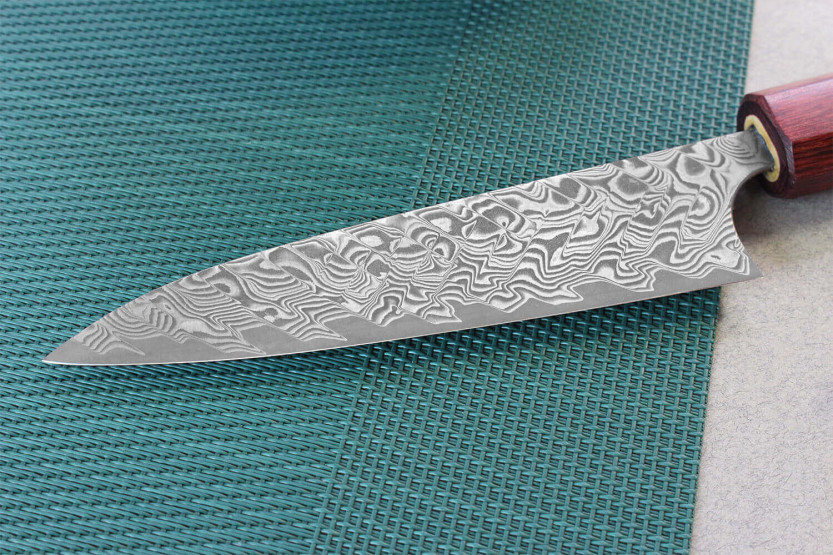
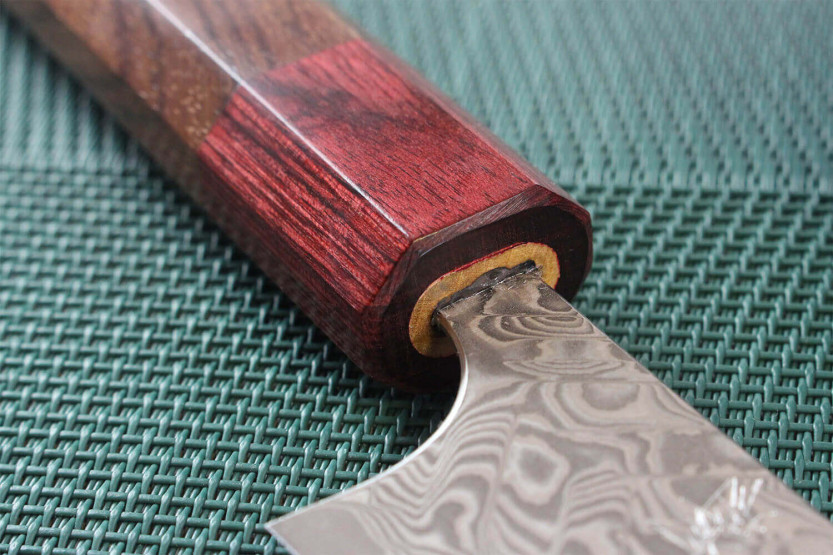
- Next comes the damascening process. A damascened knife is one on which slices of steel have been folded one on top of the other (on the core, here in SG2). Here, Kato San uses a mild stainless steel and a nickel steel. When these different steels are alternated, unique waves can be seen undulating across the cut surface. On the one hand, stainless steel has the advantage of increasing corrosion resistance. Nickel steel, on the other hand, provides greater mechanical strength. The blend of the two tones gives the knife a surprisingly attractive look.
It's a unique piece, its originality accentuated by the "stripes" applied over the superimposed steels. This creates magnificent metallic ripples, rather like your finger disturbing the surface of sleeping water.
Finally, the blade is hand-sharpened to guarantee excellent cutting performance. The kanji on its surface are also engraved by hand.
SG2 Damascus knife handle:
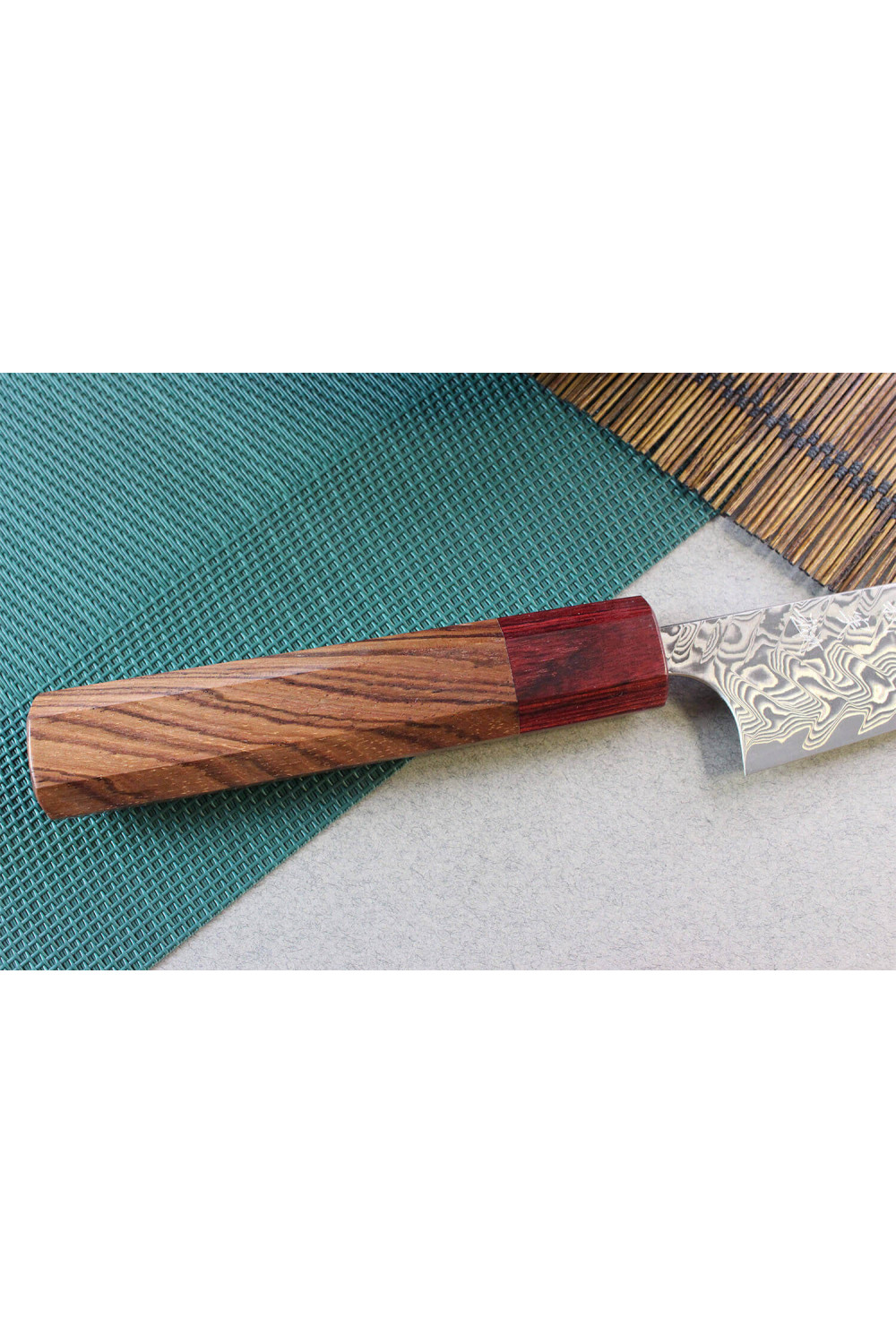
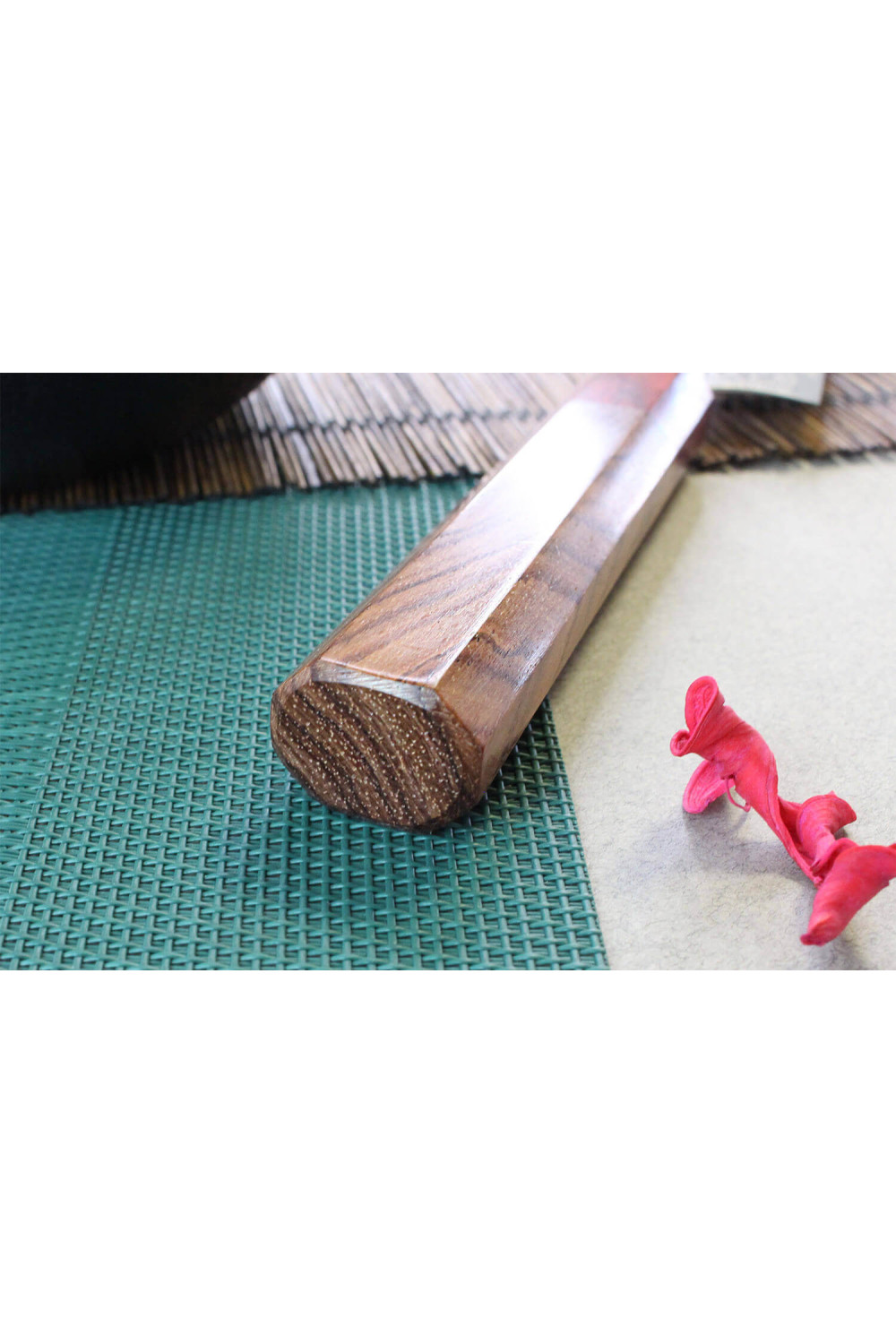
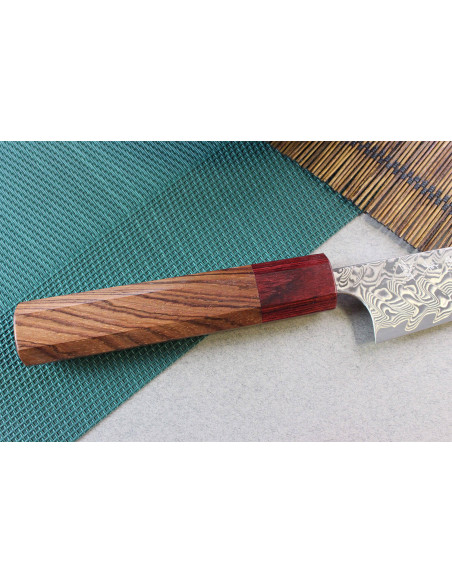
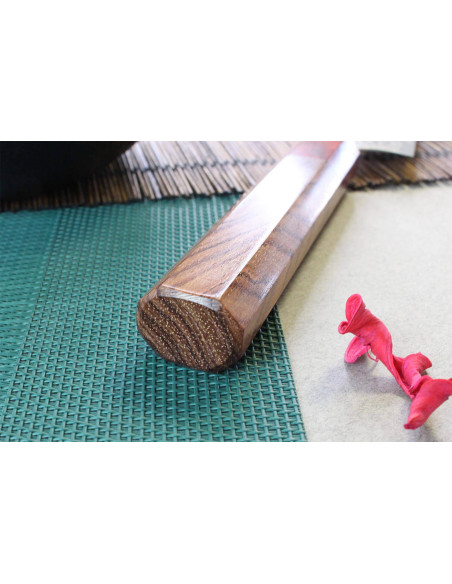
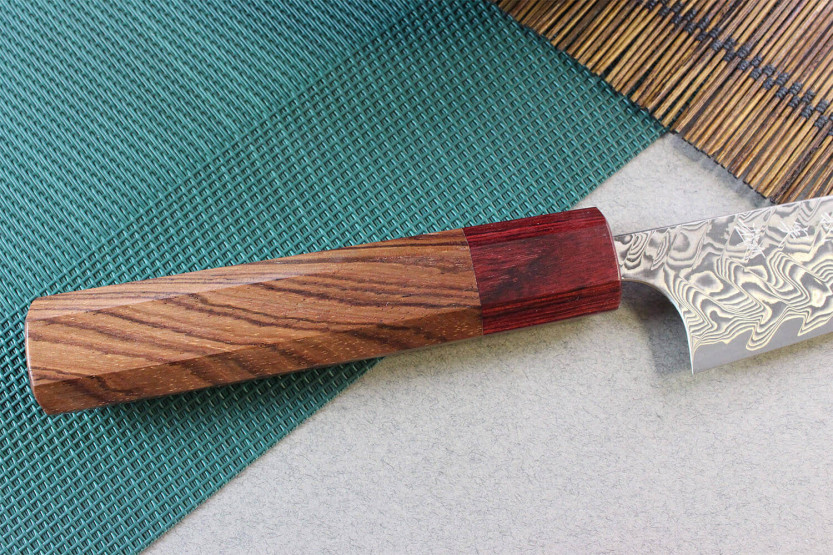
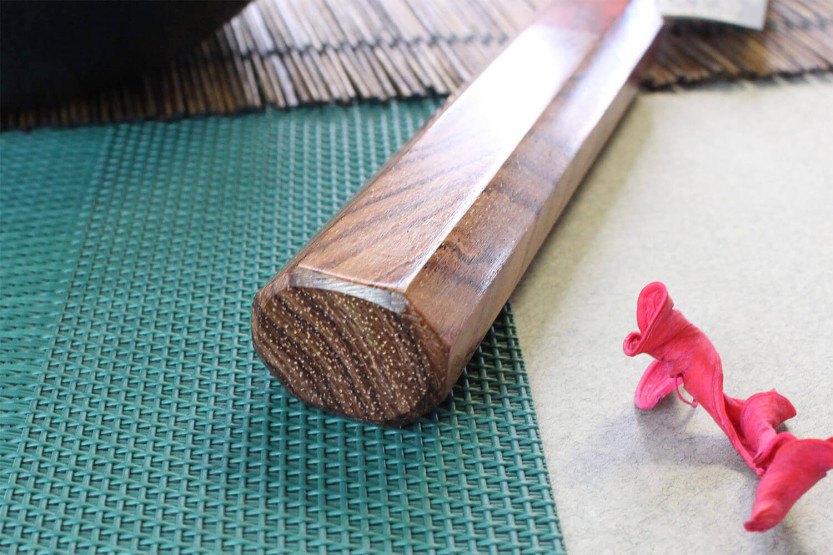
The handle is made of Sandalwood, a grit wood that is pleasantly light. Its octagonal shape fits snugly in the palm of your hand, making it ideal for prolonged use!
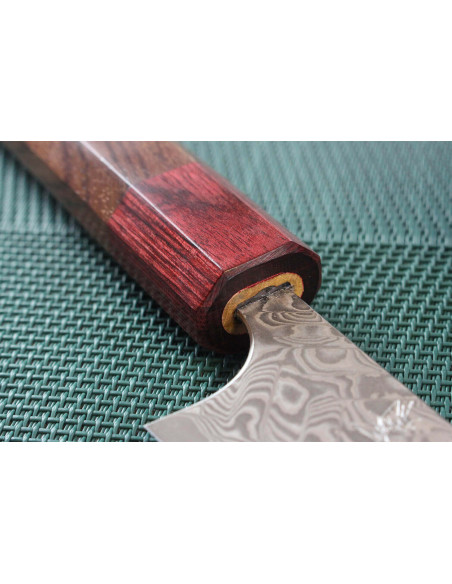
A bolster in red Pakkawood (a moisture-resistant, antibacterial composite material) links the blade to the handle (where you can even admire the wood knots, depending on the model). The whole contrasts very well, and depending on the light, you may even notice iridescent zones in the heart of the Pakkawood. Both right- and left-handers can use it.
A few words about Yoshimi Kato San:
(Hiroshi Kato on the left, Yoshimi Kato on the right)
Hiroshi is one of the greatest master blacksmiths of our time. He has been designing knives almost every day for almost half a century. He is also one of the founding members of the Takefu Cutlery Village , an area where blacksmiths can share their skills, materials and ideas (you'll find some wonderful handcrafted knives there).
He now teaches his art to the next generation. Yoshimi has taken over his workshop and continues to create his master's knives (now retired), while having launched his own line of knives. Each Kato knife is crafted in the Japanese tradition, using the finest techniques and processes to ensure a unique piece.
Yoshimi Kato San began his apprenticeship in 2013. Very talented, he quickly assimilates the craft. He continues Hiroshi Kato San's work in cutlery, while bringing innovative ideas that all cooks will appreciate!
Interview :
The knife should be washed by hand, to maintain its appearance and efficiency over time (no dishwasher). You can then wipe it with a soft cloth and store it in a dry place. It should not be left in contact with moisture for any length of time.
Opt for originality and performance, for cooking in the purest Japanese tradition!
See our selection of Kato knives to complete or renew your cutting equipment!




 By buying this product you can collect up to