Shibata knives are famous for their efficiency in the kitchen! Each knife is designed for a specific purpose, to suit all users. Materials are selected according to cutting needs. They are made at the Takefu Cutlery Village, and Takayuki Shibata himself sharpens the knives before meticulously inspecting them.
Shibata san has also worked as a master sharpener for Masakage knives, which are also produced by the Shibata brand. Thanks to his precision work, Masakage knives are renowned for their performance!
The name of the Shibata Koutetsu range of Japanese knives comes from the shape of the Japanese ship Koutetsu, which was built in 1864. This vessel was emblematic of the Japanese fleet and was one of the best boats thanks to its inclined shape, which enabled it to ram other ships. It's a reference to this efficiency that this range of Shibata knives has taken this name.
A Japanese knife with a powerful cutting edge
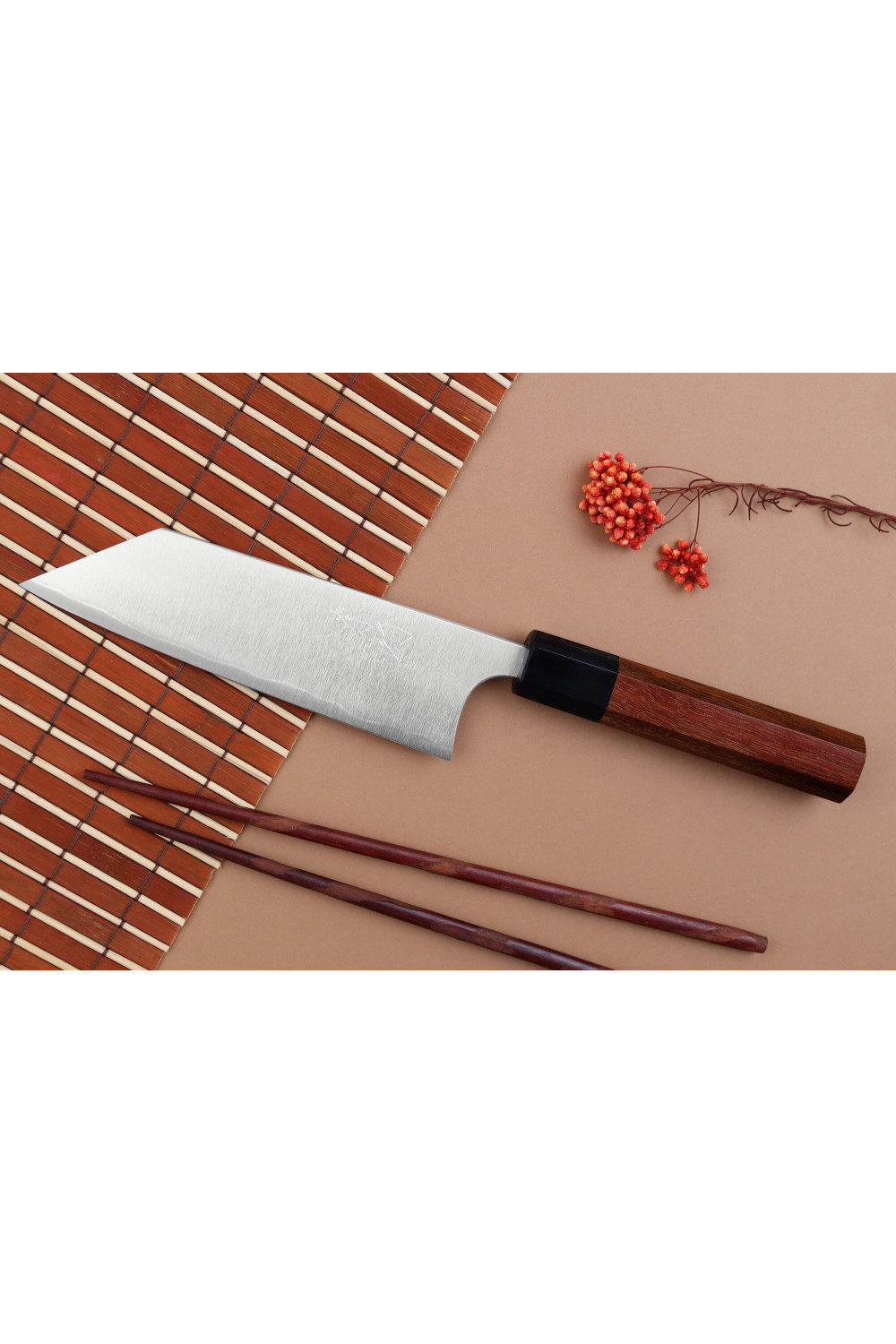
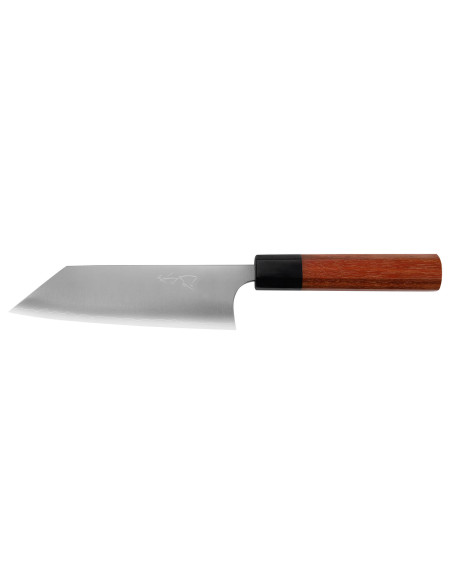
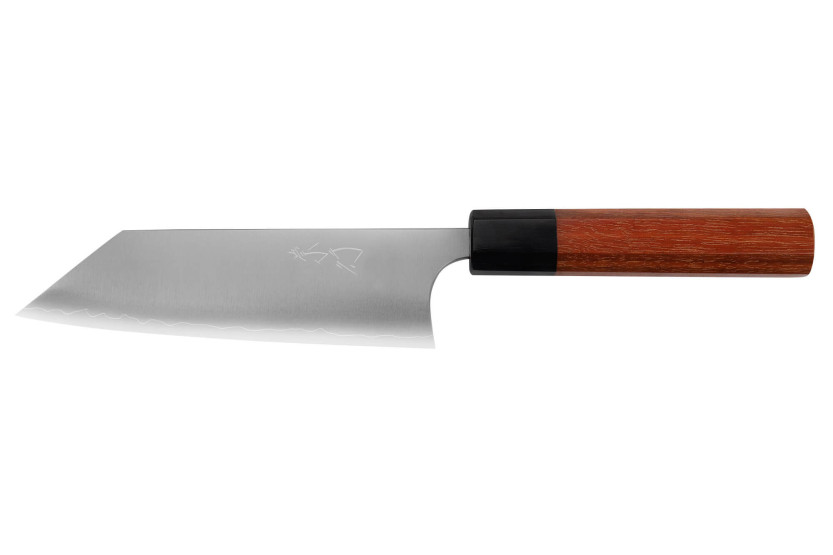
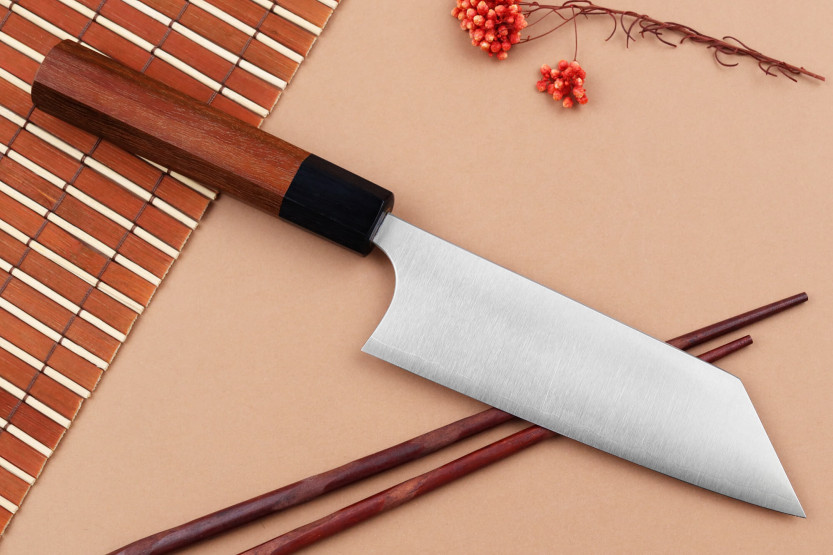
This ko-bunka knife features a blade with a typically Japanese San Maï (meaning "3 layers") structure. This method consists of manufacturing a rigid steel core, which is then covered with a softer layer of steel that is folded in on itself. This technique protects the blade's core and balances its hardness, making it less brittle.
The core of this blade is forged from Japanese R2 powdered steel (also known as SG2). This is a rare and expensive alloy that is rarely used in cutlery, as only a few experienced blacksmiths can use it without incurring losses.
R2 steel has a high carbon content of up to 1.3%: this is the element that increases the hardness of a blade, bearing in mind that a stiffer hardness confers excellent edge retention. The hardness of this Japanese kitchen knife is 63HRC on the Rockwell scale, making it a high-performance, long-lasting cutting edge that's easy to sharpen when necessary.
Another advantage of this steel is its "pure" microstructure, in which the micro-carbides are evenly distributed. This makes your handcrafted Japanese knife more resistant to micro-cracking and wear.
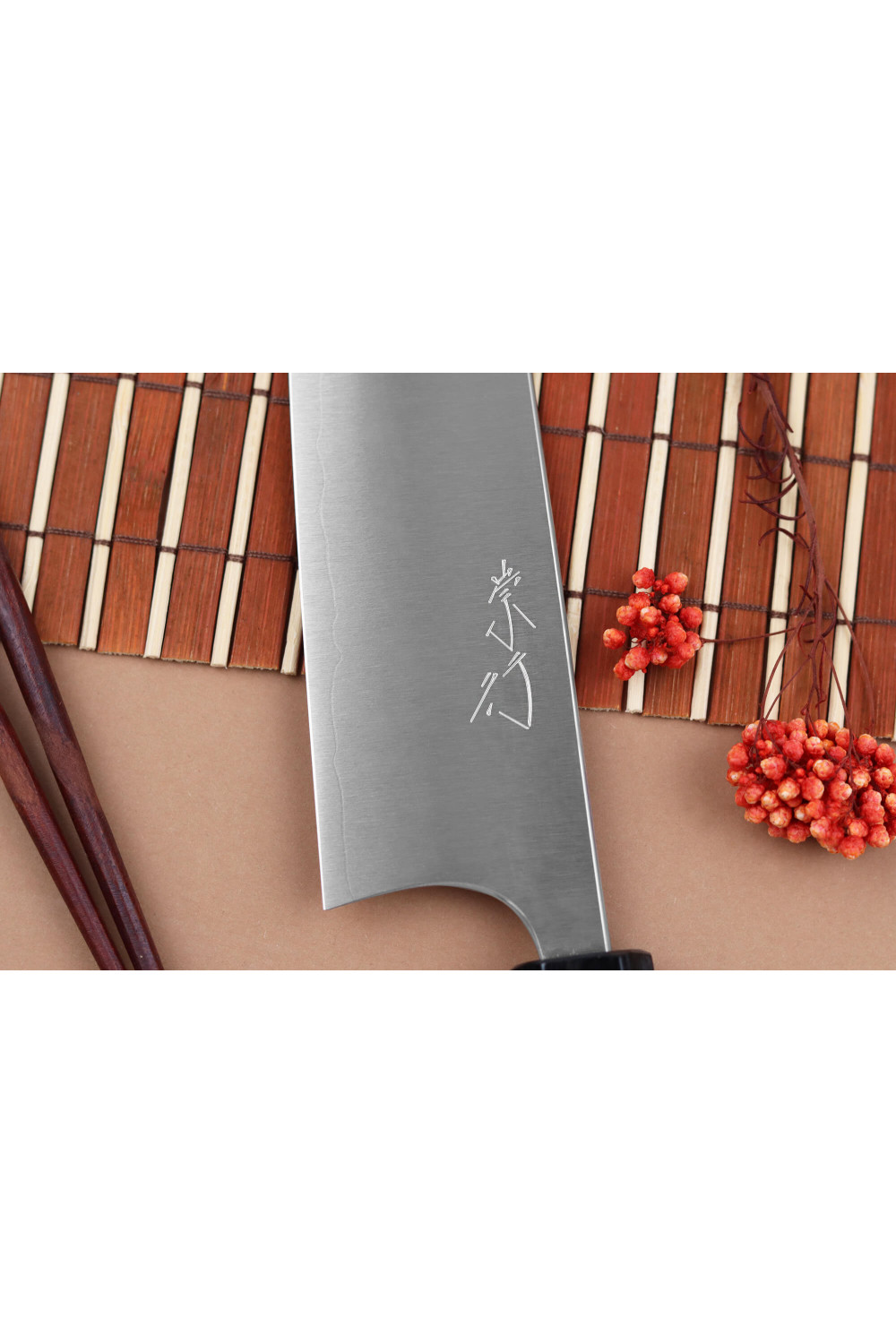
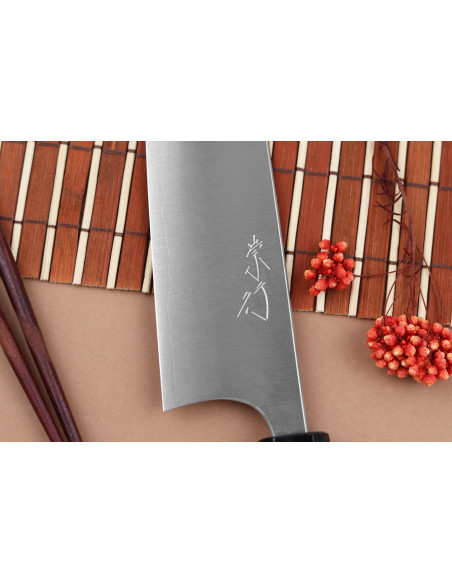
Finally, the heart of your blade is enveloped in a more supple layer of stainless steel for enhanced protection. The superimposition of the different steels can be seen all along the cutting edge, where a fine wave is formed, unique to each piece!
A handcrafted Japanese knife with an elegant handle
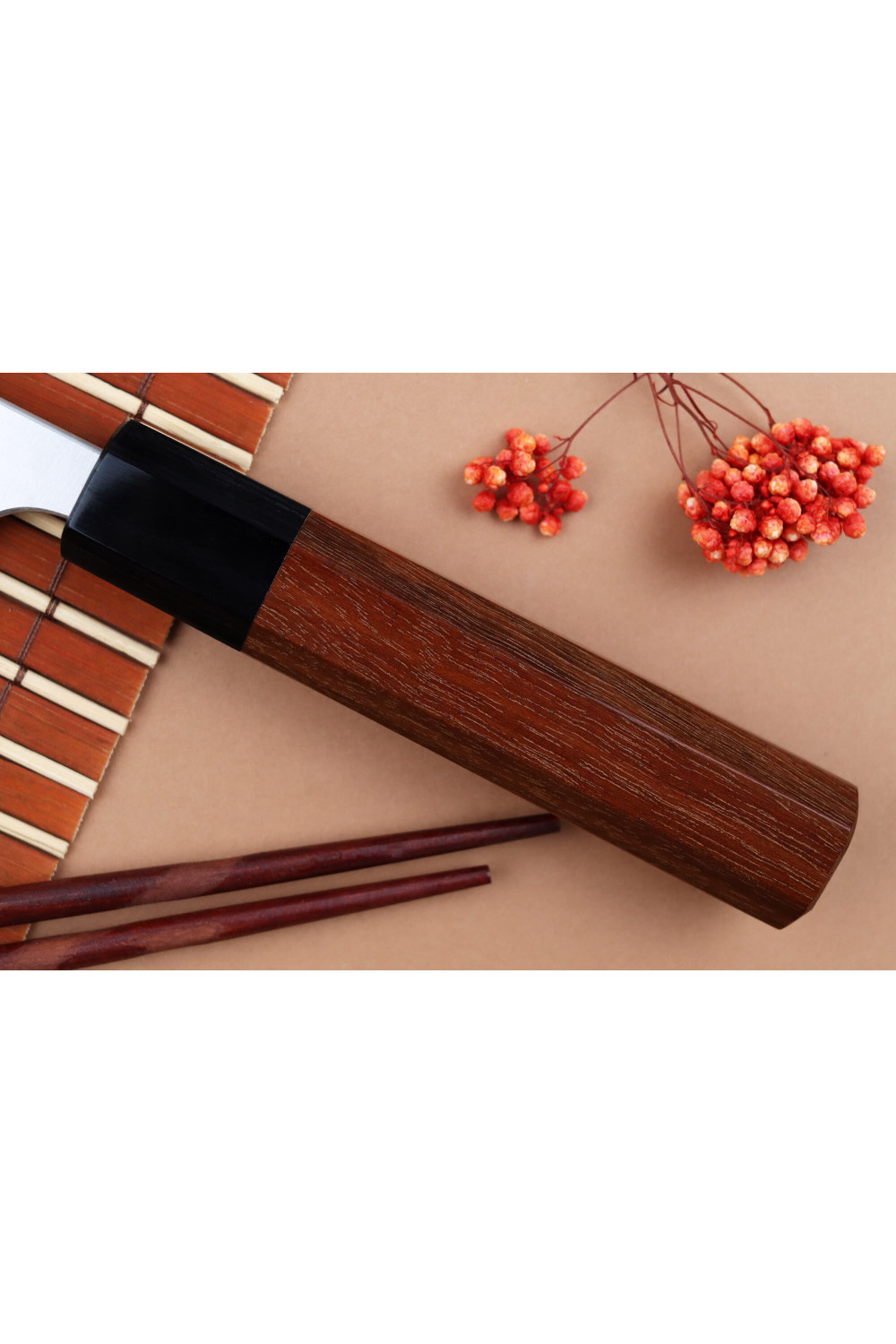
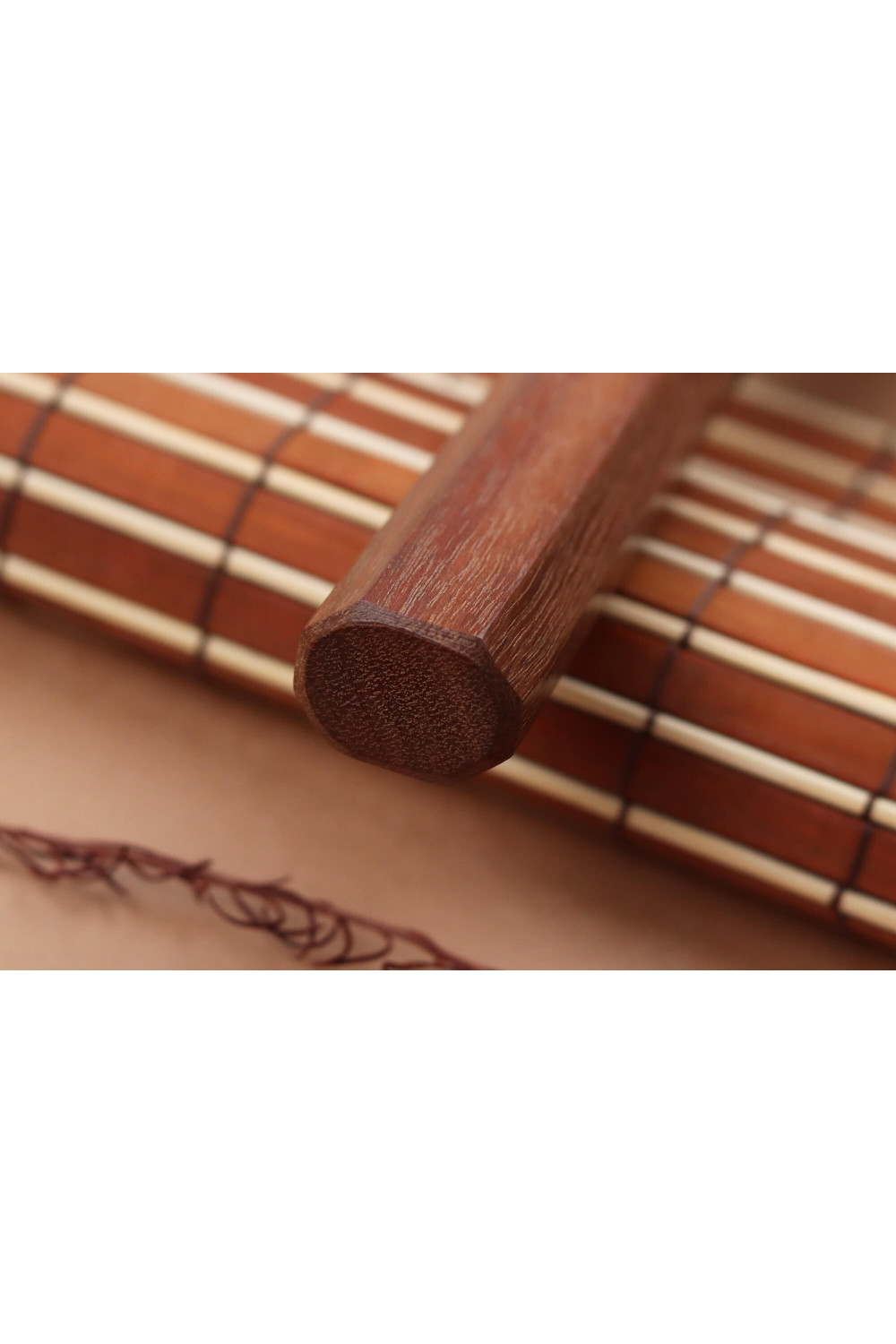
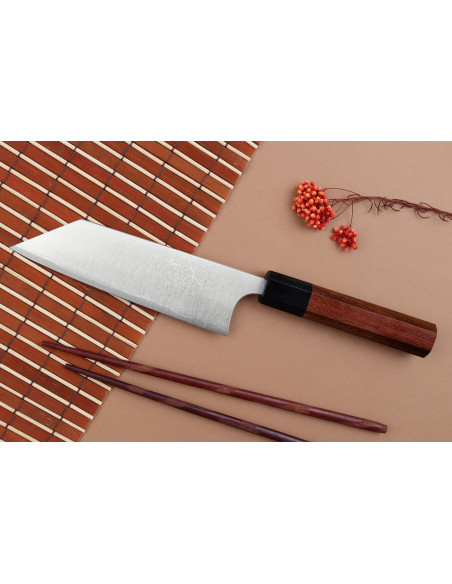
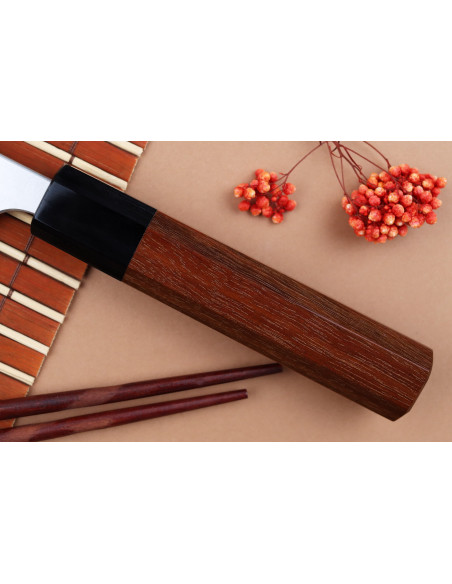
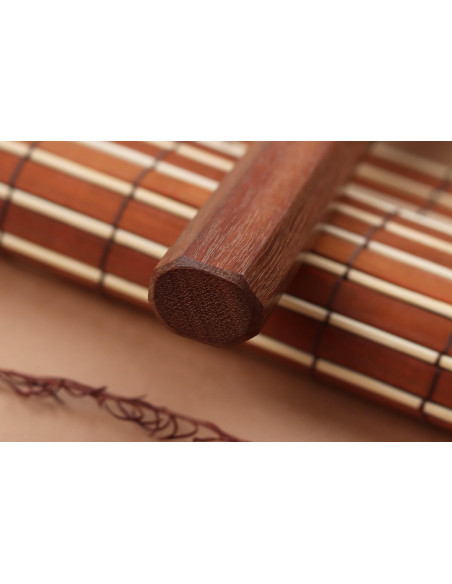
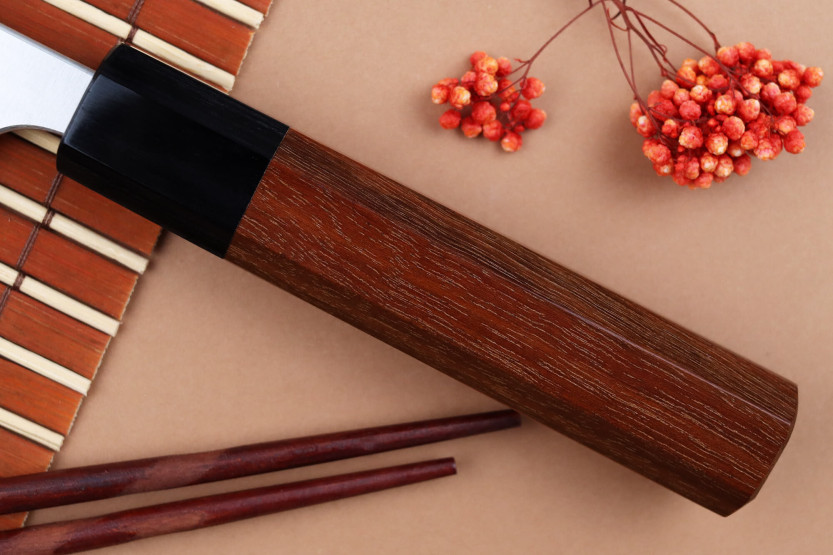
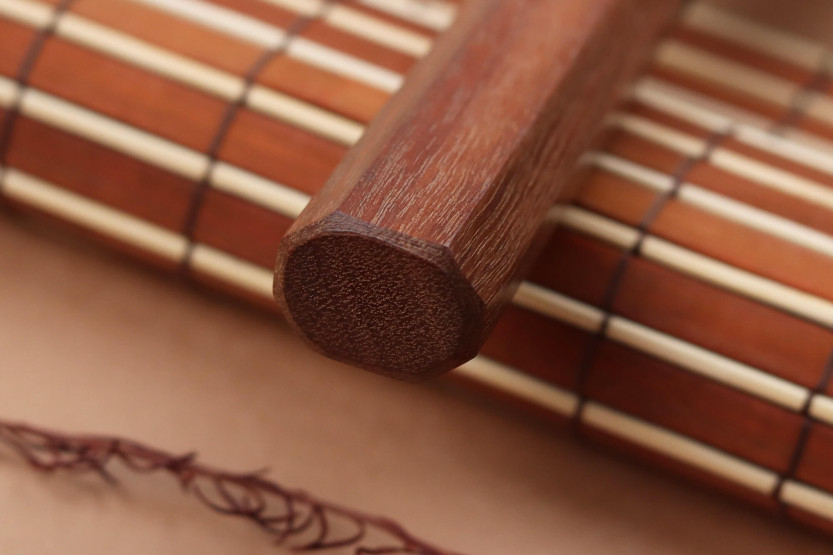
The handle of this Japanese knife is made of tropical jarrah wood, a robust and durable species that is resistant to humidity. It is brown in color with warm nuances for a warm design that is much appreciated!
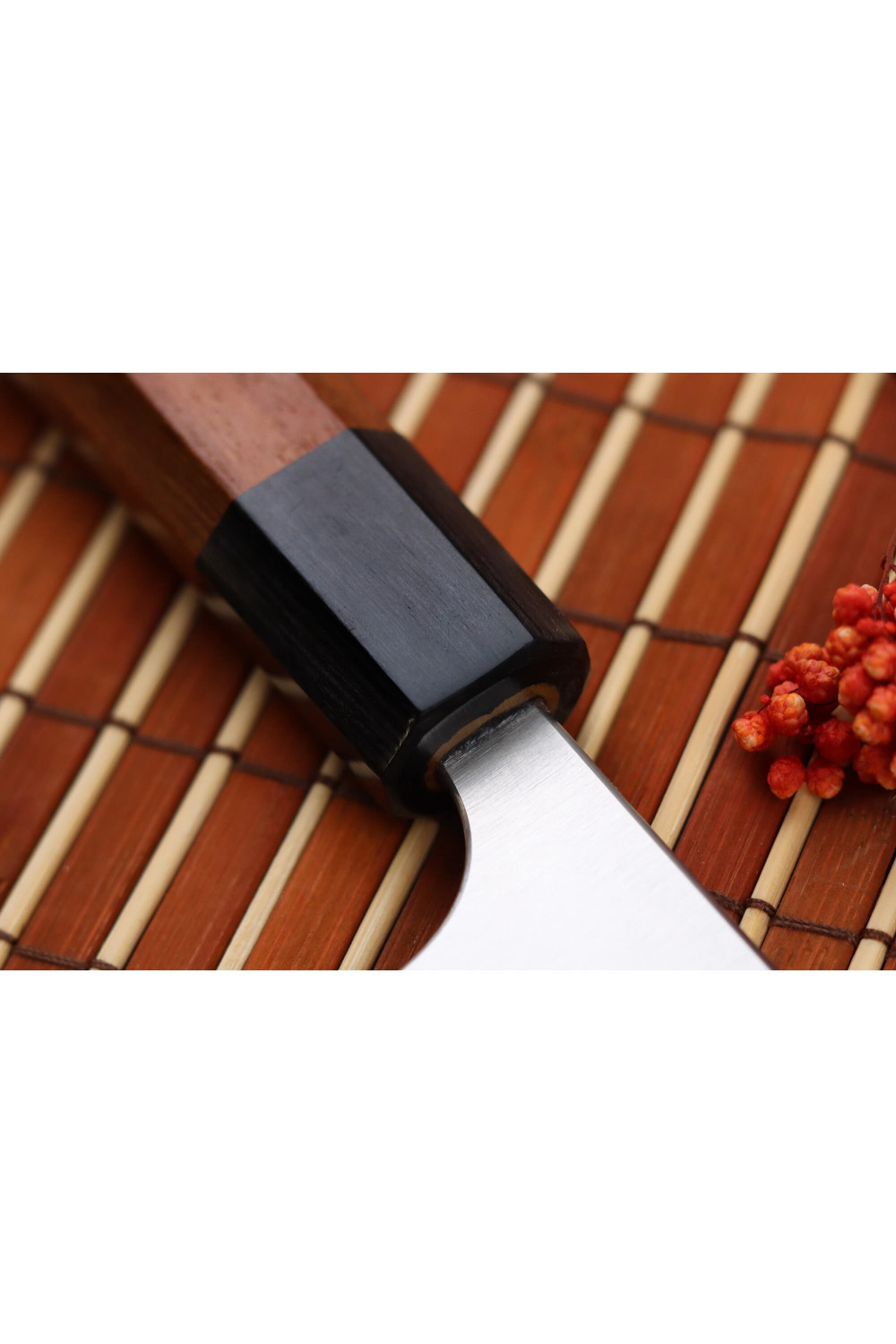
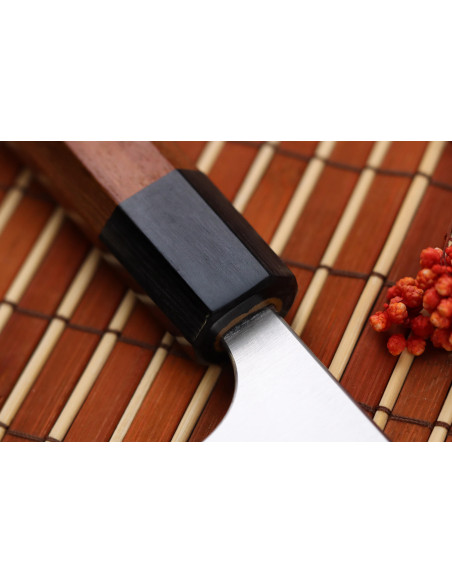
A black pakka wood bolster completes the handle, a composite material made from laminated wood and resin and heat-hardened. The result resembles wood, with a unique grain pattern.
The handle is octagonal in shape to fit the hands of all cooks, right- and left-handed alike! You benefit from an ergonomic grip that's perfect for prolonged use.
Finally, wood putty is added to fill the small gaps where the blade meets the handle. This makes the whole unit watertight and prevents water infiltration.
Taking good care of your handcrafted knife
To care for your handcrafted knife, it should be washed only by hand with a non-abrasive sponge and a mild detergent, avoiding wetting the handle. Once cleaned, wipe dry immediately so that you can store it in a dry place.
Never use a dishwasher, and never leave your knife to soak in the sink.
Find the full Shibata Koutetsu range on KnifeLeader.eu!








 By buying this product you can collect up to