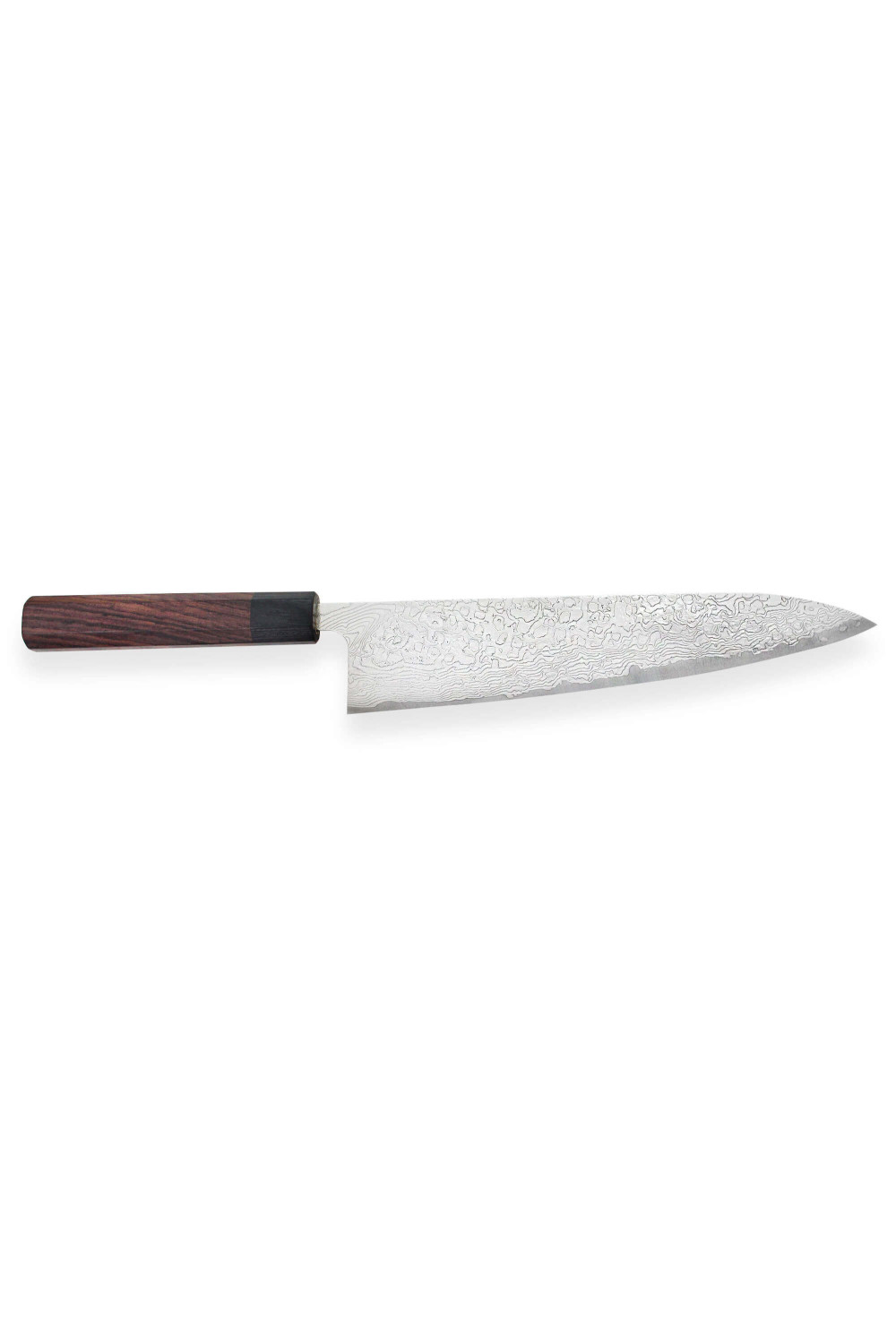
Takeshi Saji R2 Damas Japanese knives are hand-finished by Takeshi Saji san blacksmith.
Takeshi Saji san has an excellent reputation in Japan. His knives are appreciated for their finesse and elegance. He brilliantly combines the forging techniques of the past with original visuals, appealing to all cooks. He has been certified as a "traditional master craftsman" since the 90s.
He works at the Takefu Knife Village, a major center for the manufacture of knives and cutting Utensils. The village is home to some of the world's finest traditional blacksmiths, who keep the ancestral know-how alive. They continue to train the new generation in this way, and being together in the same place enables them to share their tricks of the trade.
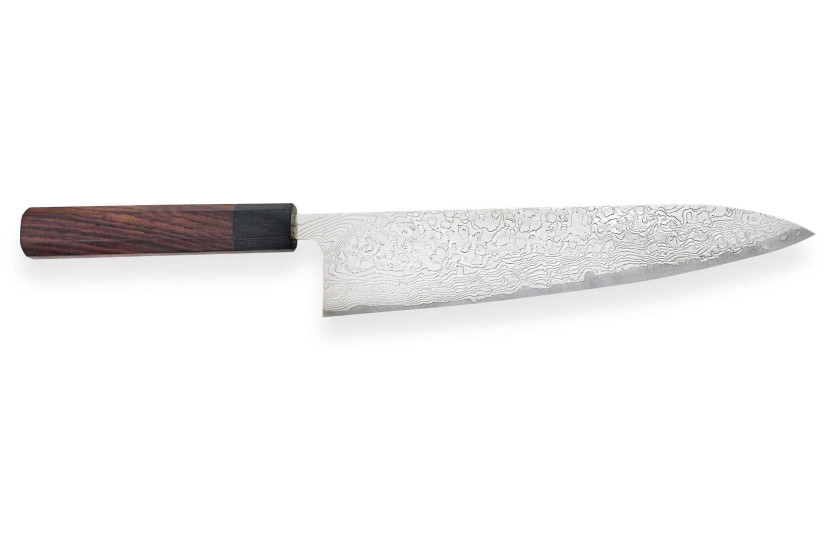
The 24cm chef's knife (also known as the Gyuto) is an all-purpose knife. In fact, it's the most versatile of all knives, enabling you to chisel, mince and minced vegetables, meat and fish. It's also the perfect size for larger pieces.
The first thing you notice is the damascus blade: it's constructed from several superimposed layers of steel. There is always a more rigid core, followed by several layers of softer steel, which soften the blade and make it more resistant to breakage and chipping.
In the center, we find a core of Japanese R2 steel (also known as SG2): a stainless alloy produced by powder metallurgy. It's quite rare, but highly appreciated (both by the blacksmiths who work it and by the users). With a hardness of around 63 HRC on the Rockwell scale, it holds its edge over time, so you'll need less sharpening!
What's more, despite its hardness, R2 steel is easy to maintain should the need arise. This is a real asset for such a rigid alloy. In fact, you can maintain it with a Sharpening stone whenever you find it needs it.
Another advantage of this alloy is its purity. At the microscopic level, its structure is highly homogeneous, making it more resistant to wear.
This core is then enveloped by several layers of nickel and stainless steel, which contrast with its extreme rigidity. You can see them intertwining on the cutting surface, which is very aesthetically pleasing. Finally, the blade benefits from a Diamond Finish, which creates a beautiful polished/blurred effect. Polishing a blade makes it more resistant to corrosion, as its surface is smootherand less porous.
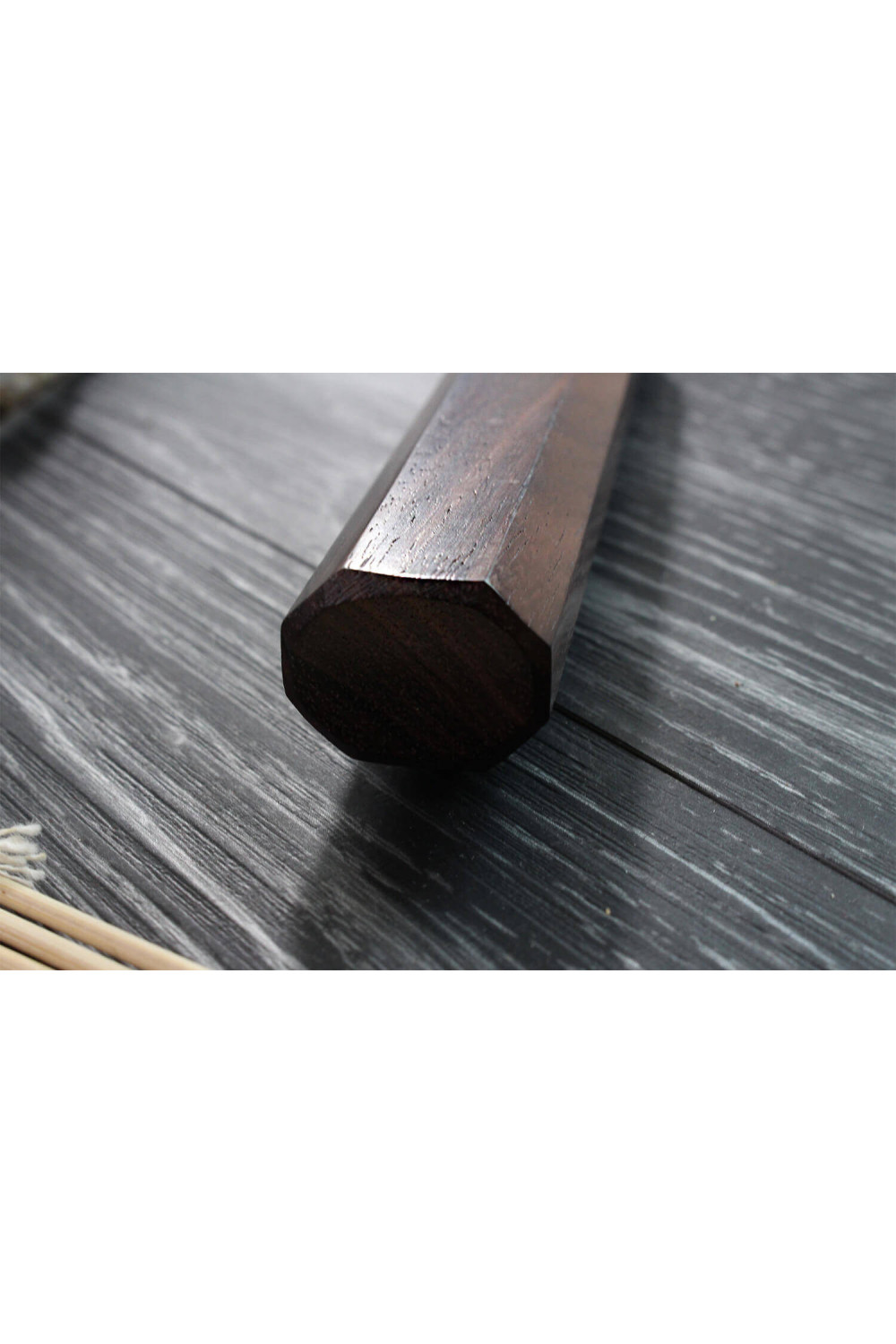
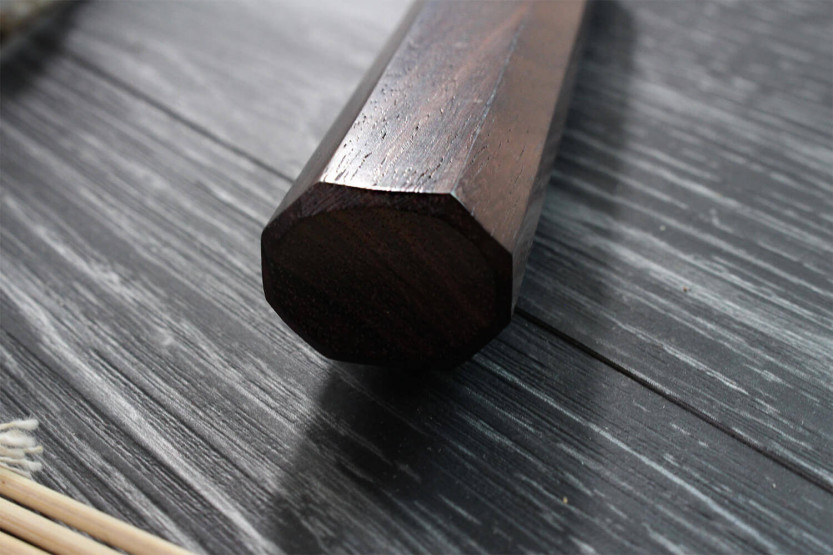
The knife's handle is made of sandalwood, a dark wood that lends elegance to the piece. What's more, this wood is resistant to bacterial attack, and depending on the tree's maturity, is considered precious. The veins observed are unique, and differ on each knife.
A dark Pakkawood bolster extends the blade. This composite material is resistant to humidity and temperature variations. Octagonal in shape, it is suitable for both right- and left-handed cooks.
It also features wood pulp that fills the space between the blade and the handle. This makes it watertight and prevents small scraps from getting inside.
Things to know:
The knife is not dishwasher-safe. It should be washed by hand under lukewarm water, using a sponge and a mild detergent. Once washed, wipe with a soft cloth to remove all traces of moisture, then store in your drawer, your block, on your magnet bar...
It comes in an attractive light-colored wooden box, perfect for gift-giving!
Please note that quantities are limited, due to the origin of the knives and the capacity of the blacksmith (all operations are carried out by hand).
Our complete selection of Saji knives awaits you here!




 By buying this product you can collect up to