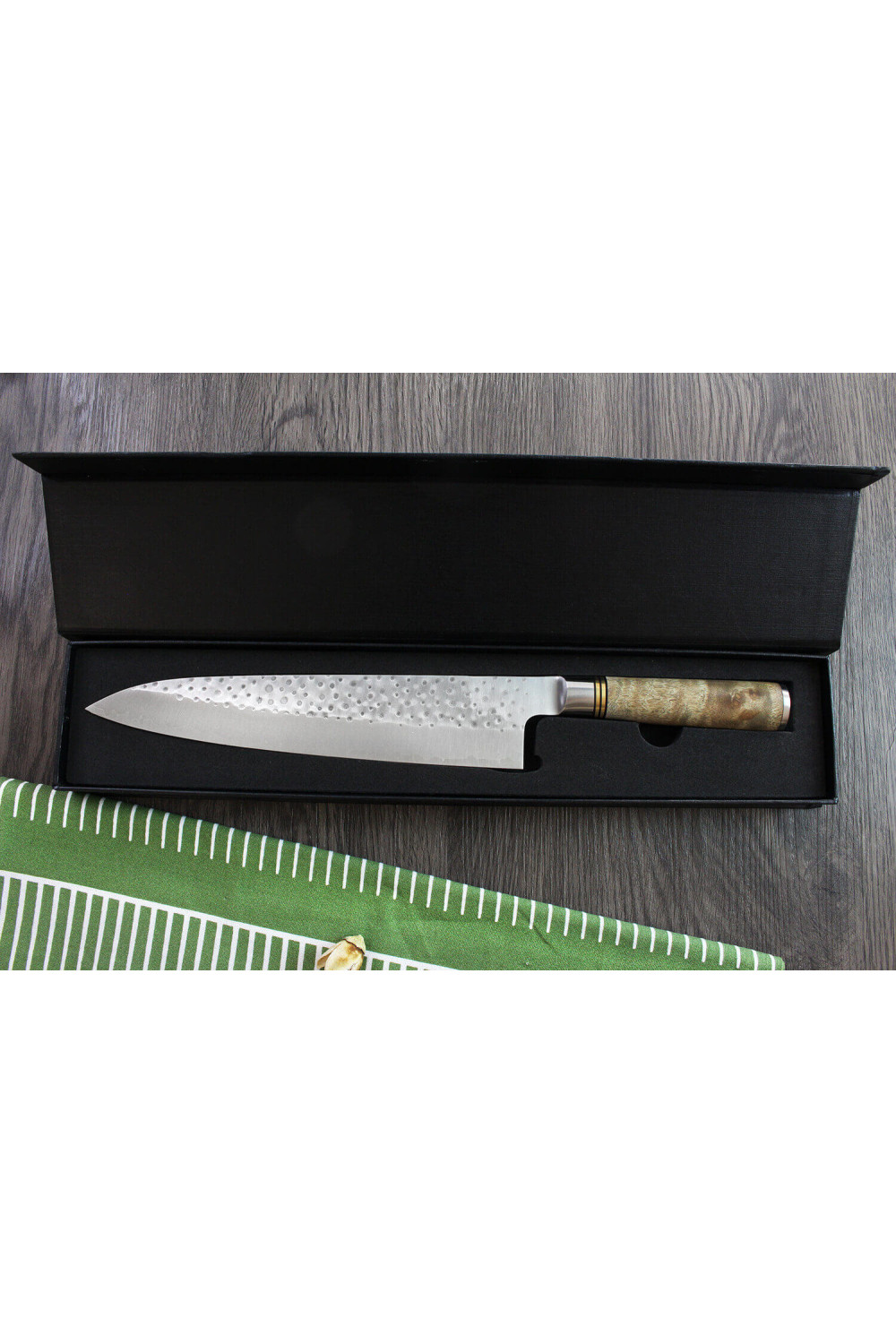
The model :
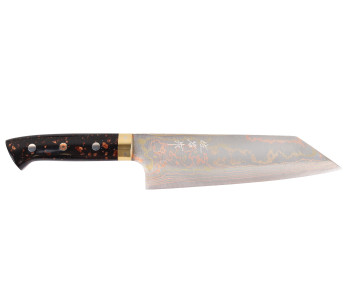
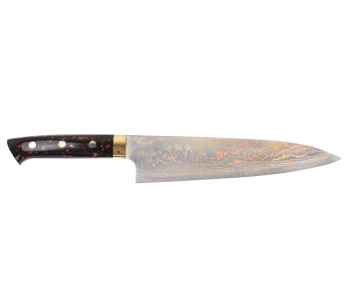
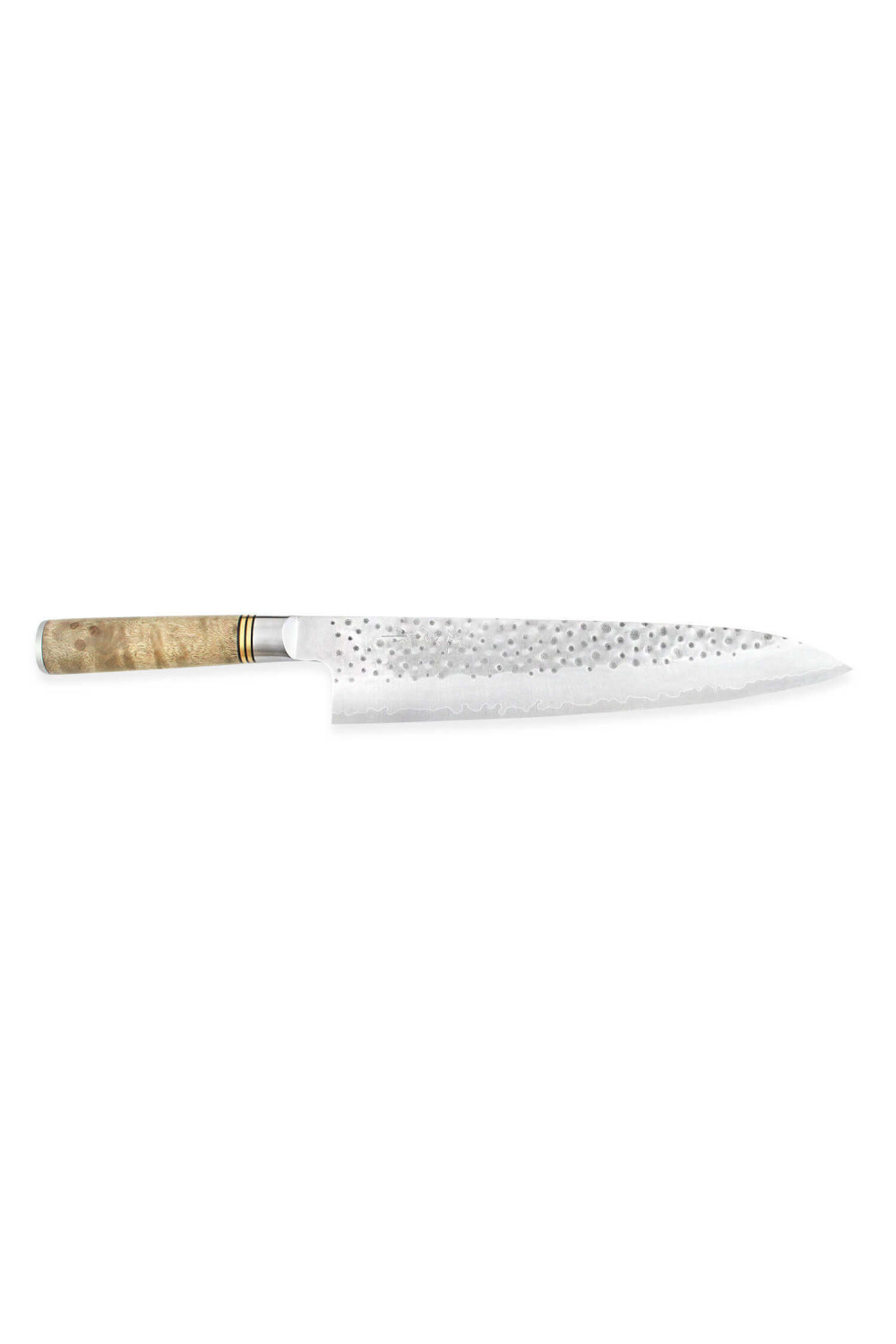
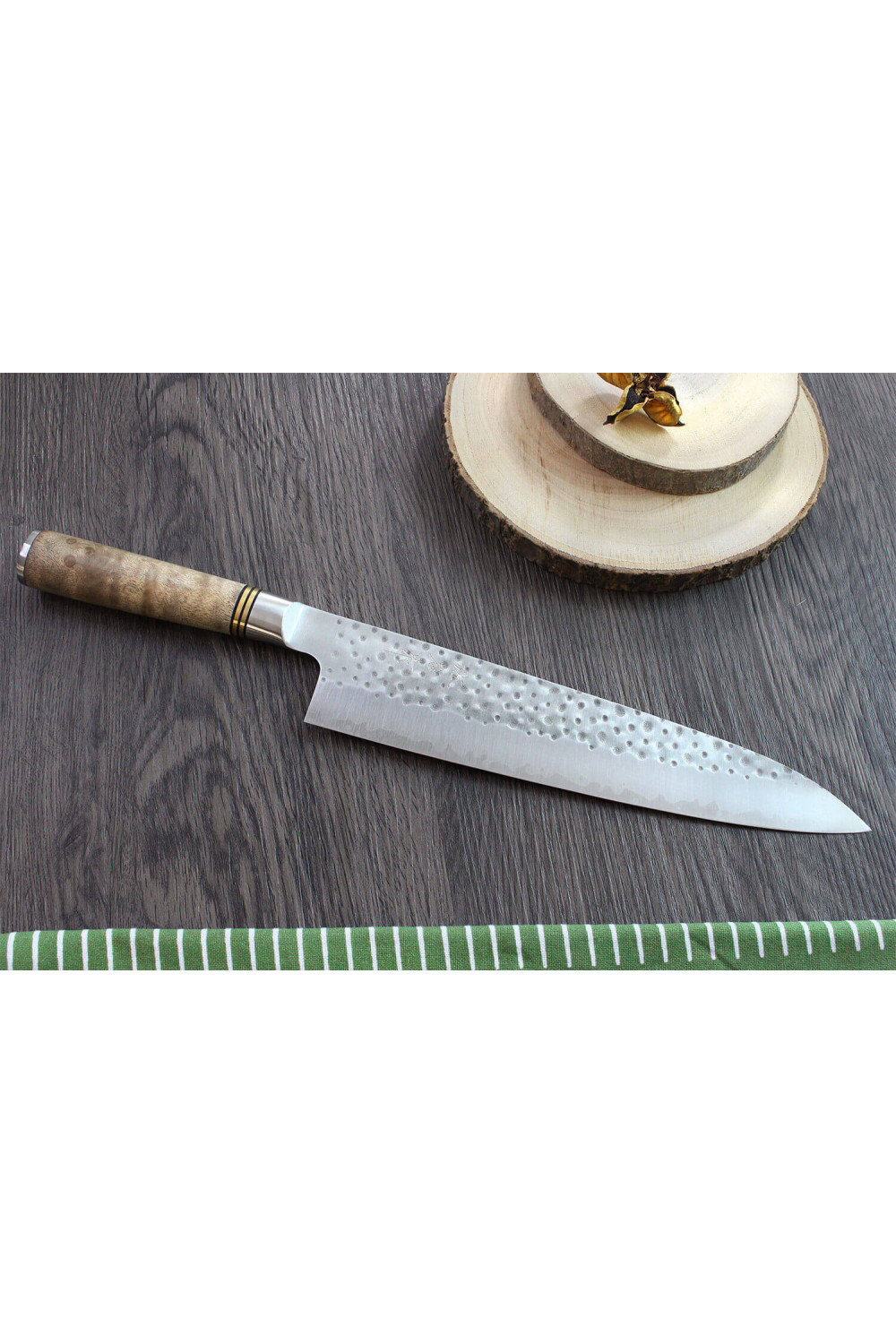
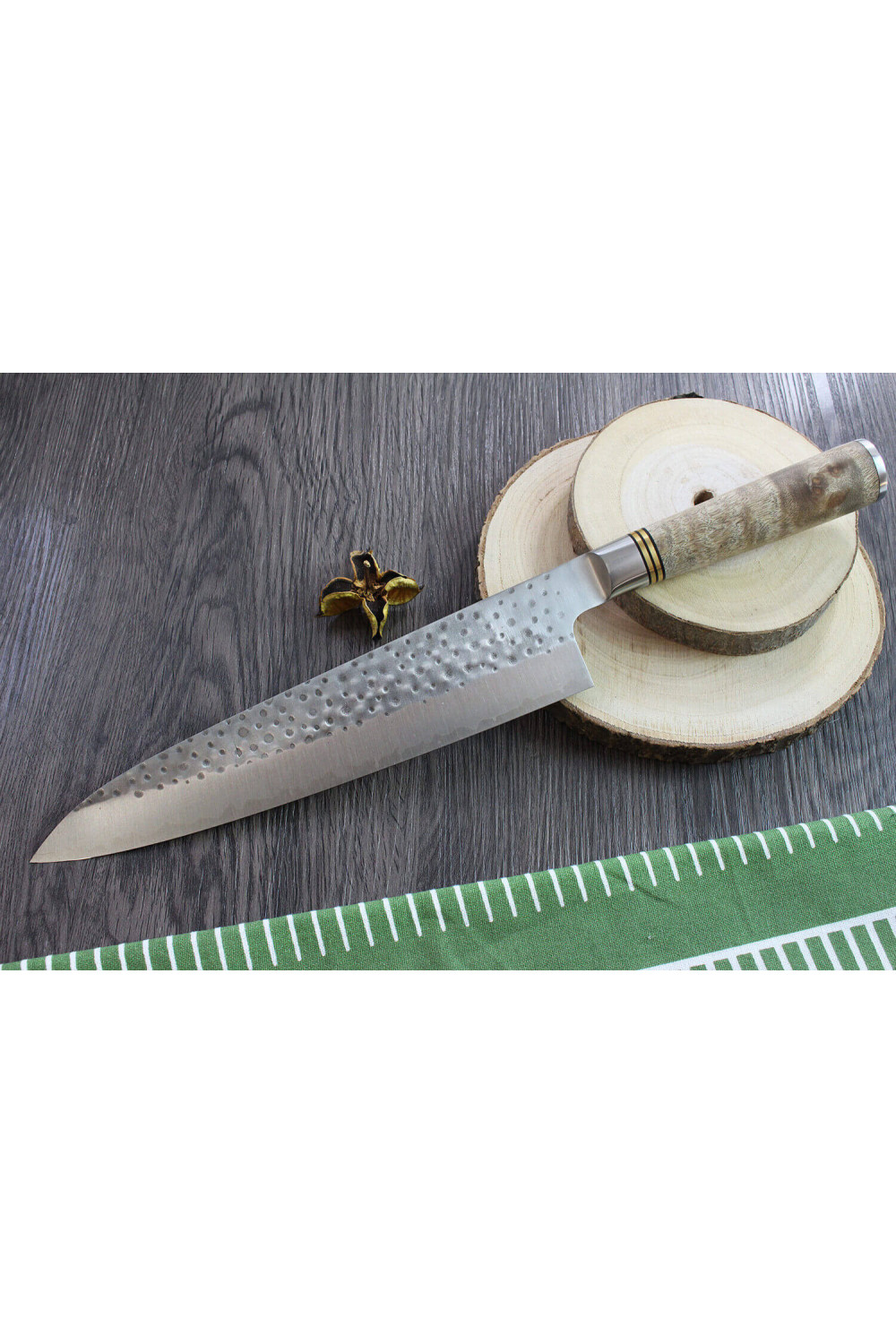
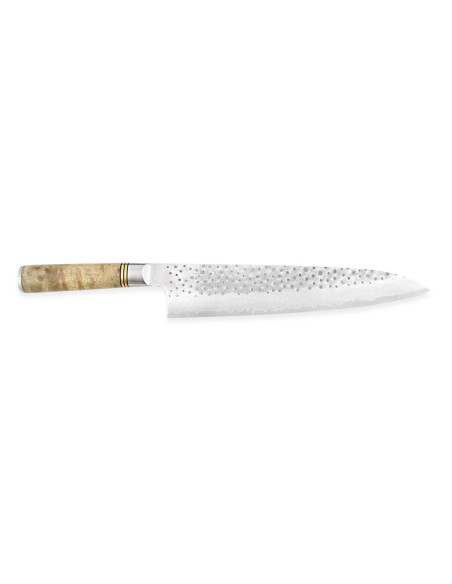
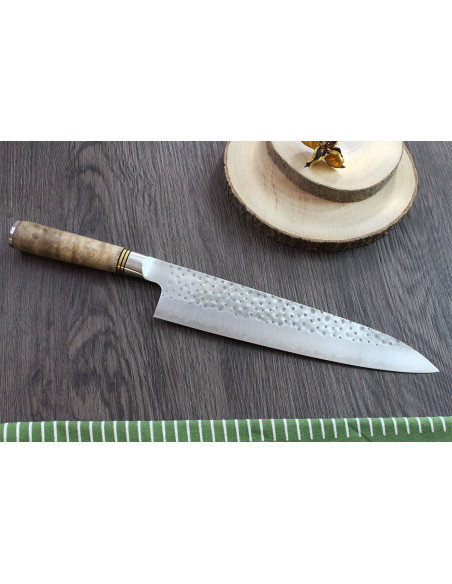
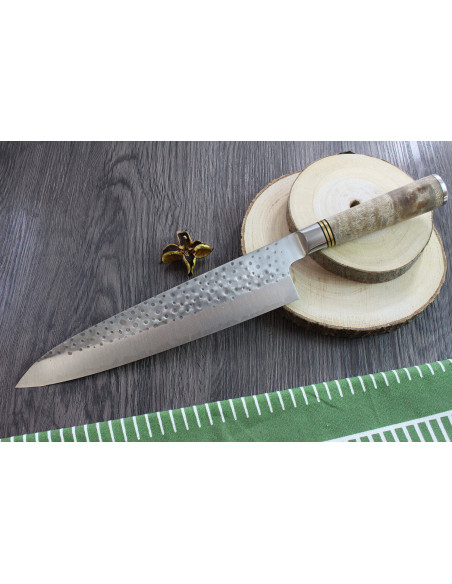
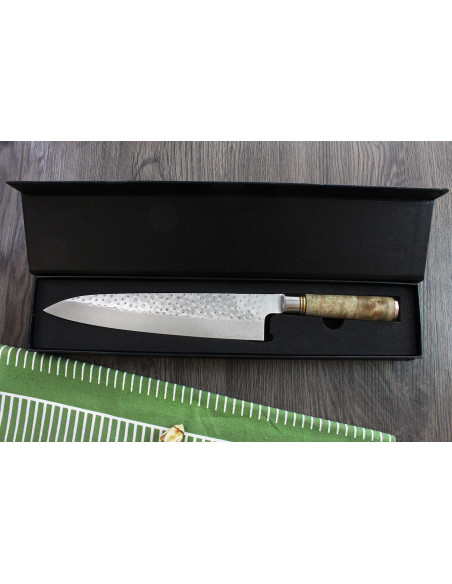
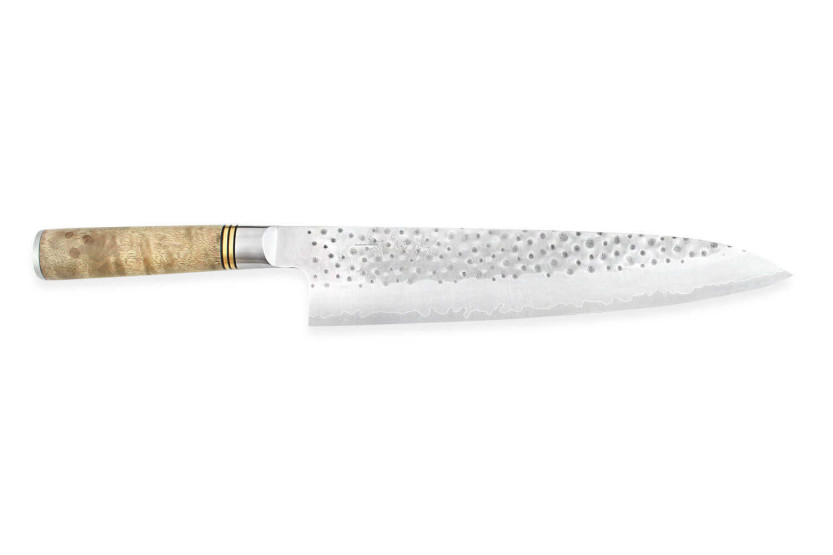
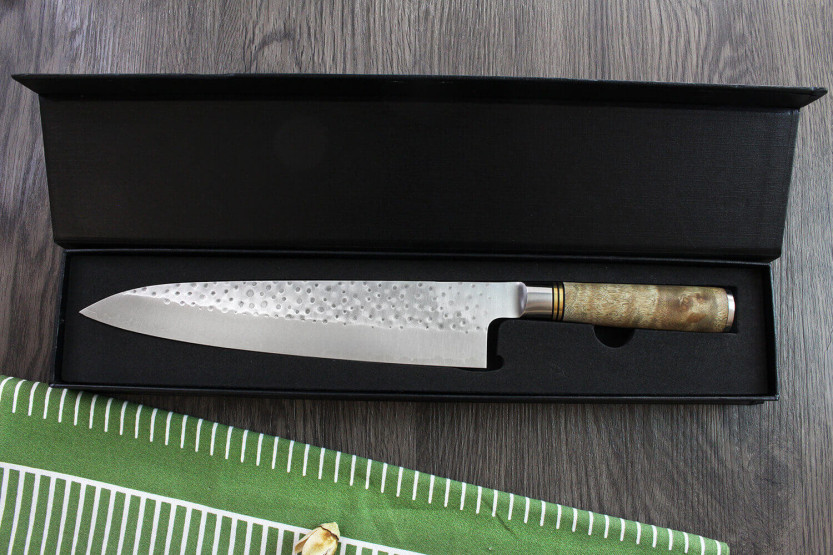
The 24cm chef knife is a versatile model. It's a bit of a jack-of-all-trades! With it, you can slice, chop and chisel meat, fish, vegetables and fresh herbs.
Blade :
The blade is built on a San Maï base, i.e. it has 3 interlocking layers of steel. There is always a more rigid core, followed by a layer of softer steel to protect it and soften the blade as a whole (so that it is more resistant to breakage during use, without being flexible).
Core :
The Takeshi Saji knife featured here has a core of Japanese R2 steel: a stainless alloy produced by powder metallurgy. It is expensive and rarely found in cutlery. It is very rigid: its strength is around 63 HRC on the Rockwell scale. As a result, its cutting edge will perform well for a long time, so you'll need less sharpening!
You might think that such hardness would make sharpening difficult, but that's not the case. The R2 is easy to maintain, and you can even Sharpening stone it with a Sharpening stone to keep its incredible edge.
Finally, this steel reveals another quality: its purity. At the microscopic level, its structure is very homogeneous, which makes it more resistant (for example, there's less risk of chipping when you use it).
Outer layer and finish :
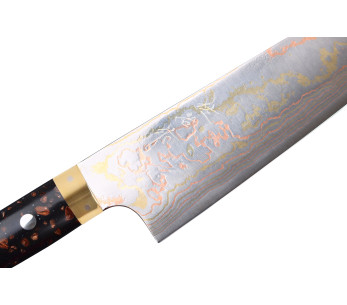
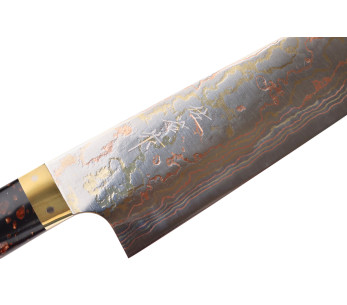
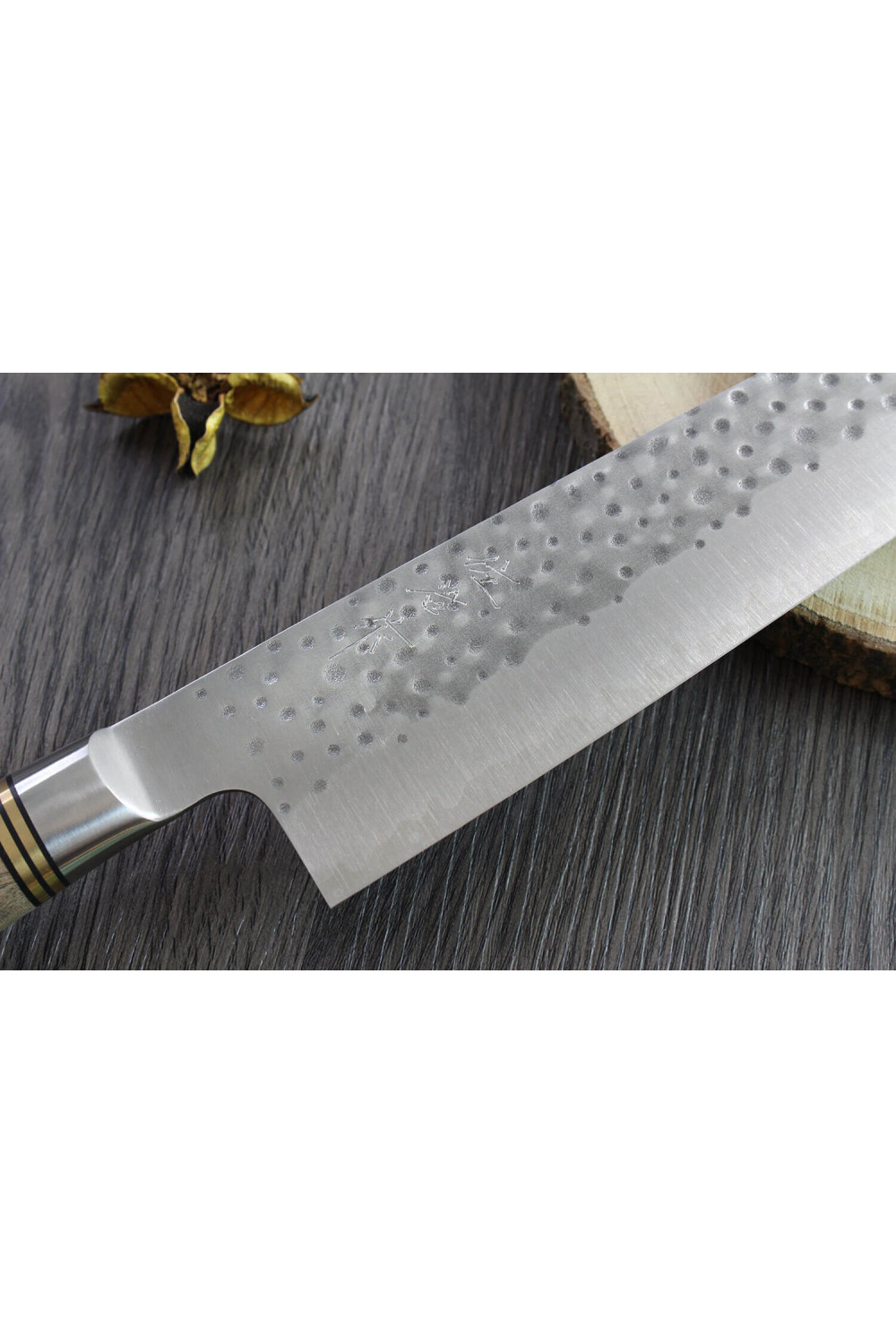
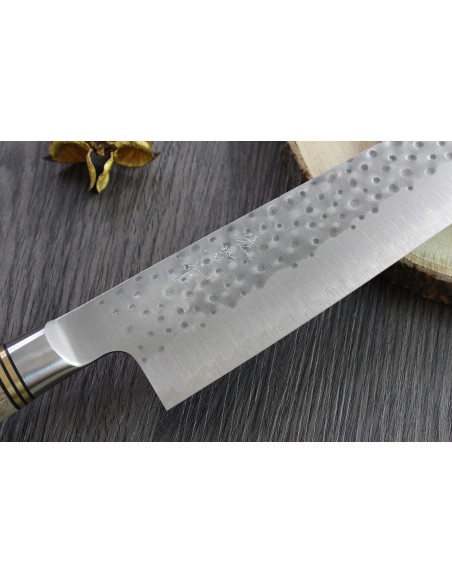
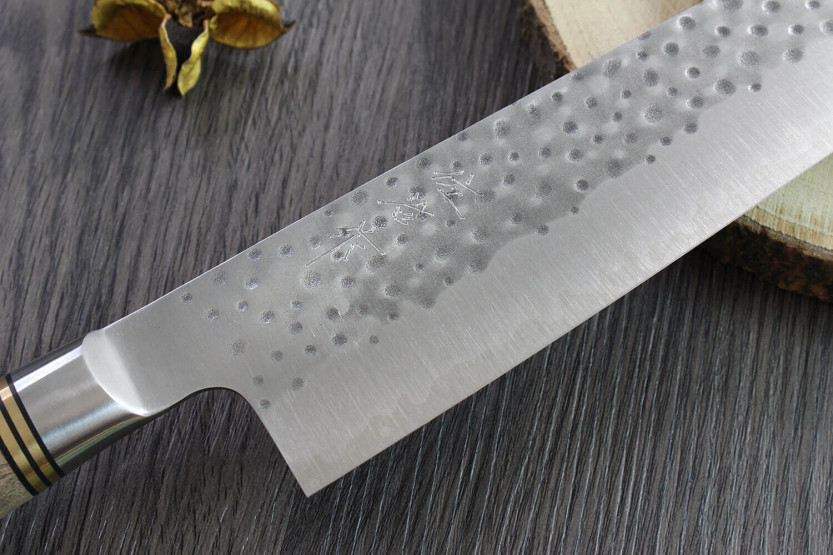
The R2 is wrapped in a layer of softer stainless steel, which sandwiches it on either side (hence the 3 layers described above). You can see this superimposition of steels on the bottom of the blade, with the fine wave running across the entire cutting surface.
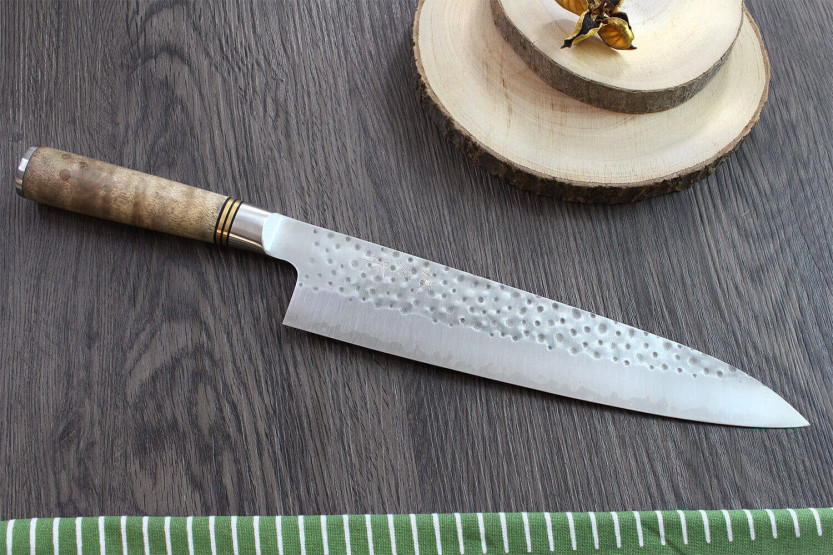
Finally, the blade benefits from a Tsuchime Finish: this refers to the fine hammering seen on the top of the cutting surface. In addition to slightly enhancing its anti-adhesive capacity (as it will act a little like honeycombing), the hammering gives a unique style to each knife, while adding a great deal of character.
Handle:
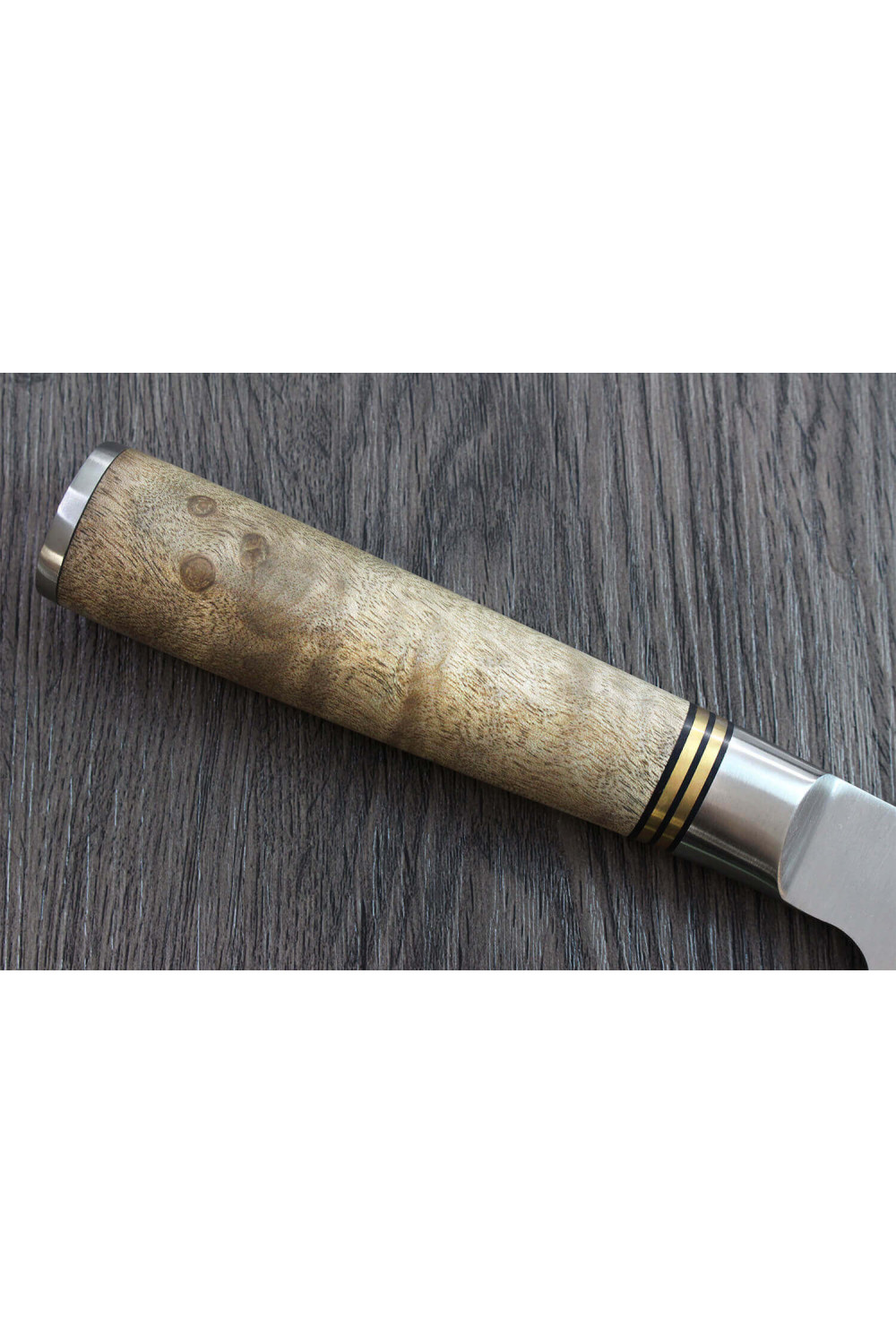
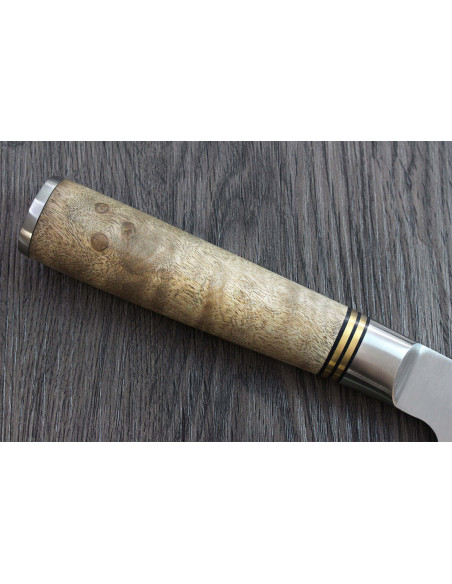
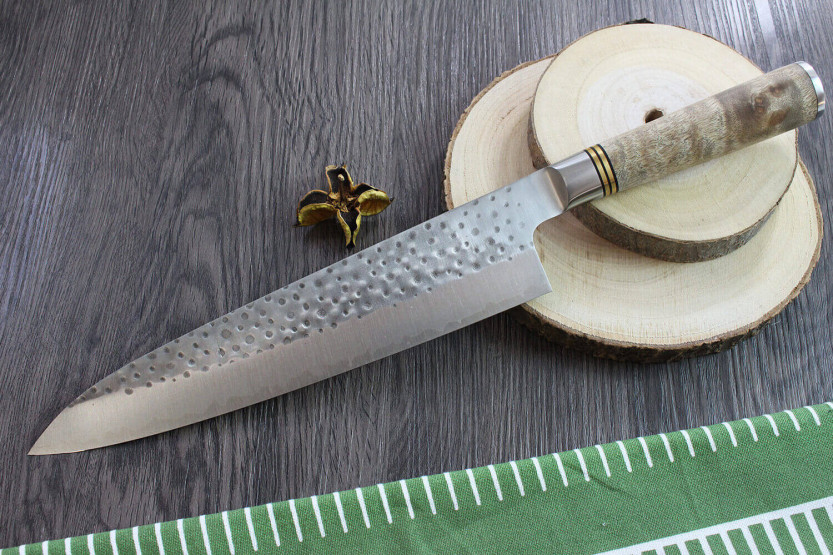
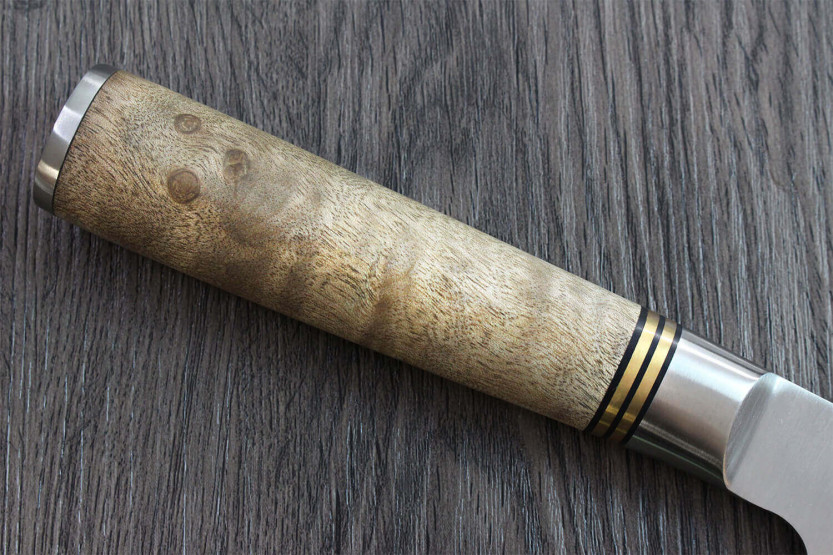
The handle is made of quince wood, a beautiful and rare species not usually seen in cutlery. This light-colored wood has beautiful nuances that are unique to each knife. It contrasts perfectly with the cool tones of the blade. It is complemented by a decorated stainless steel bolster, which creates a smooth transition between the two parts of the knife. It makes it easy to hold.
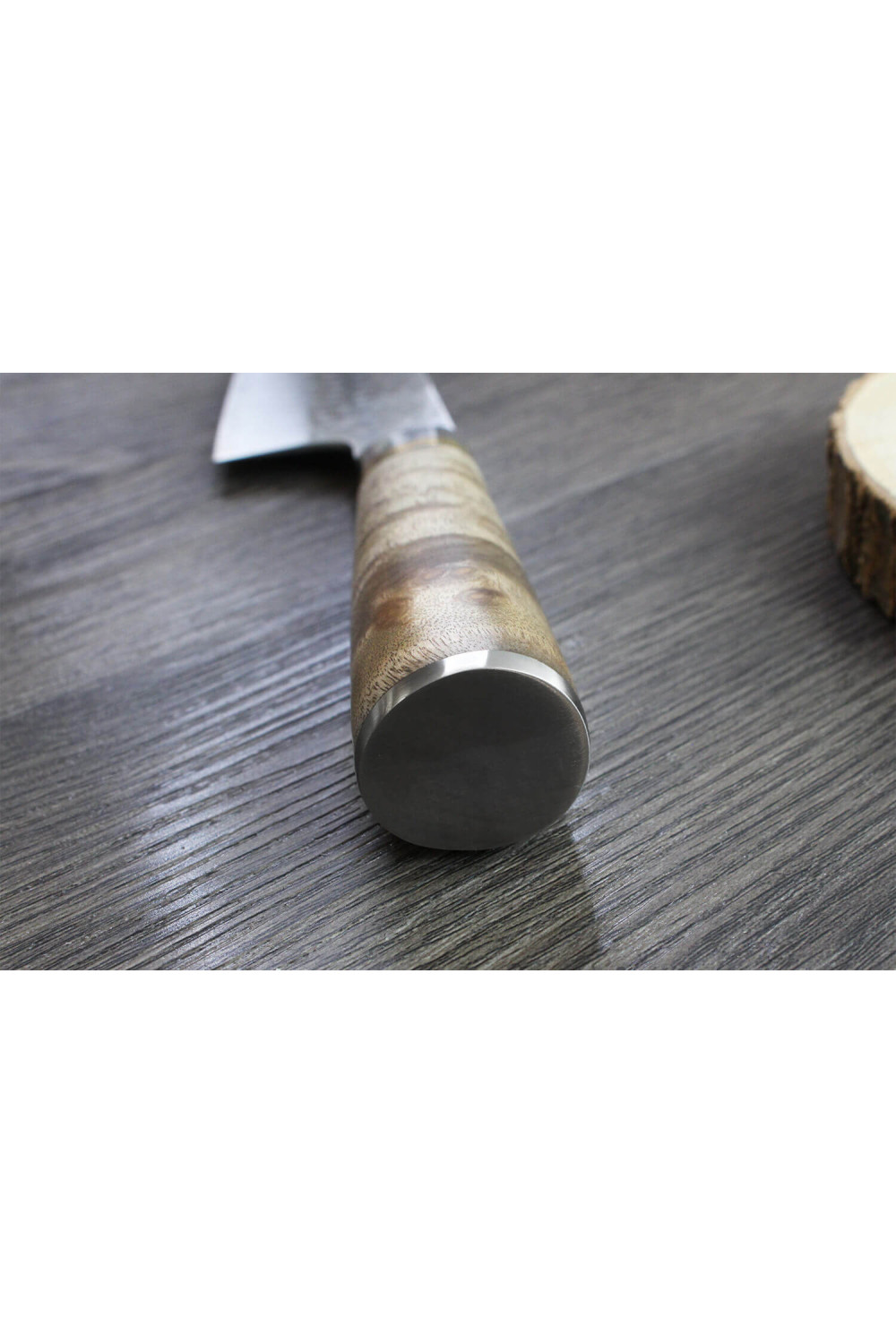
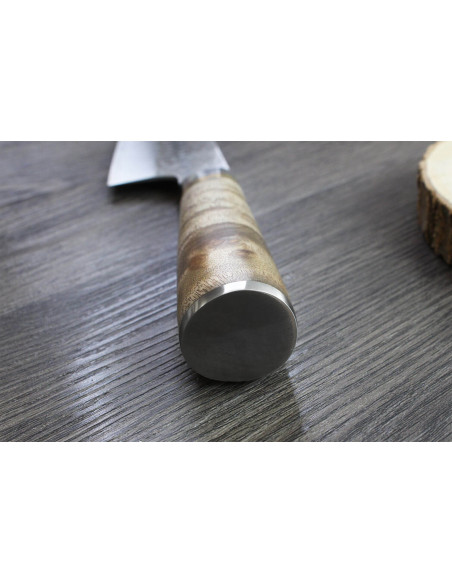
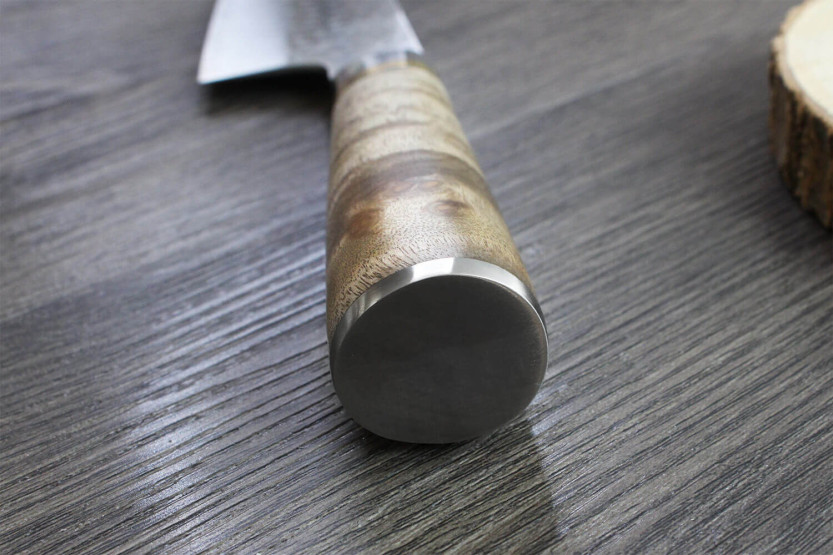
The whole is oval-shaped, to suit both right- and left-handed cooks. Finally, the knife also features a stainless steel base, which adds balance to the piece.
How to care for the knife :
The knife is not dishwasher-safe. It must be washed by hand under lukewarm water, using a sponge and a mild detergent. After washing, wipe with a soft cloth to remove all traces of moisture, then store.
A few words about the blacksmith:
Takeshi Saji R2 Tsuchime Japanese knives are handcrafted. Blacksmith Takeshi Saji san is an expert who has been working in this field for over 50 years, and enjoys a very fine reputation in the industry. His knife lines are appreciated for their finesse and elegance. He elegantly and effectively combines ancestral forging techniques with timeless designs, appealing to the widest possible audience. It's not for nothing that he was certified "traditional master craftsman" in the 90s.
His workshop is located in Japan's famous Takefu Knife Village. Here you'll find some of the finest traditional blacksmiths in the country, who want to keep the ancestral know-how alive. They continue to train the new generation to this end, and being together in the same place enables them to share their tricks of the trade.
Please note that quantities are limited, due to the origin of the knives and the capacity of the blacksmith, who carries out all operations by hand.
See also our wide selection of handcrafted Japanese knives to renew your cutting equipment!




 By buying this product you can collect up to