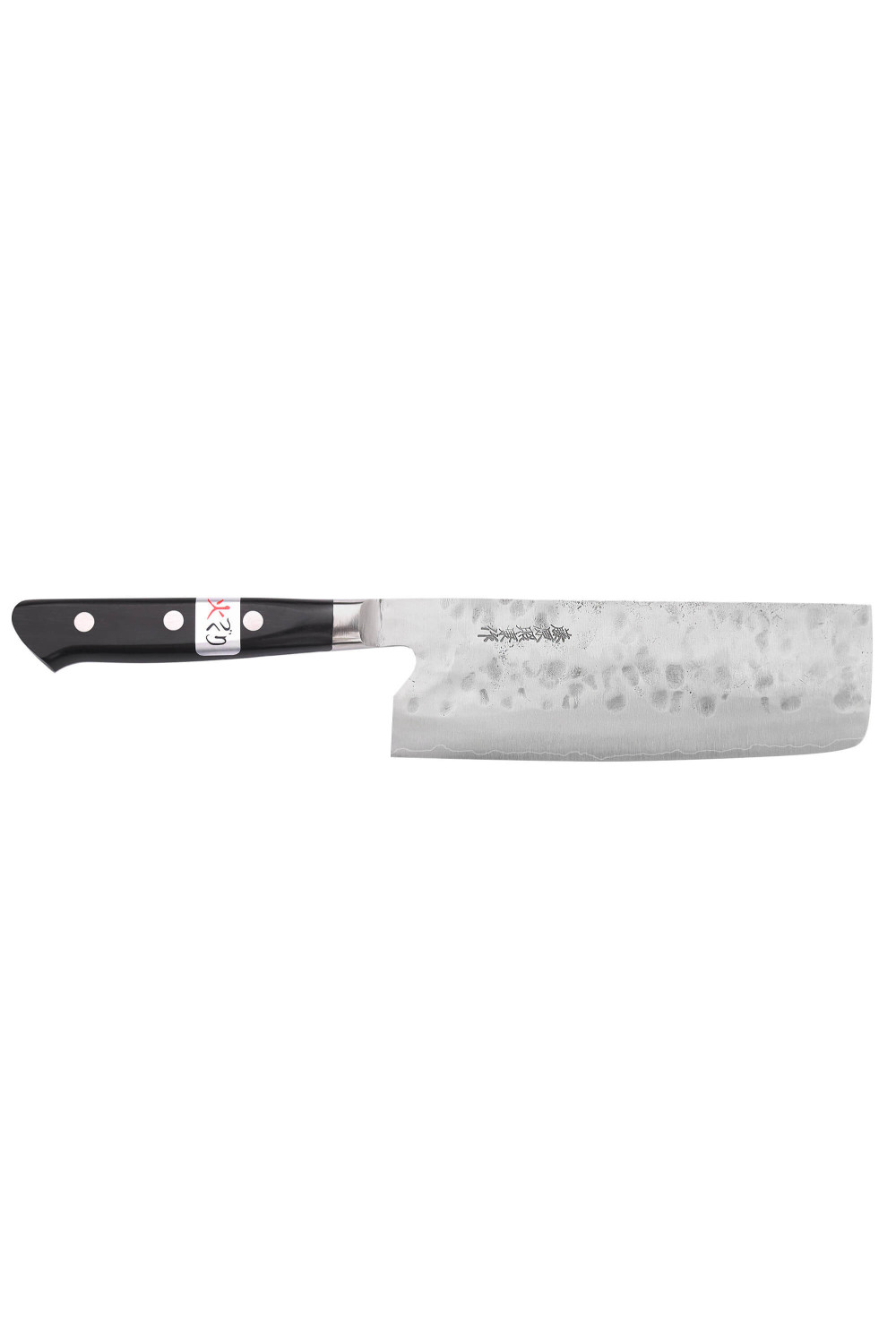
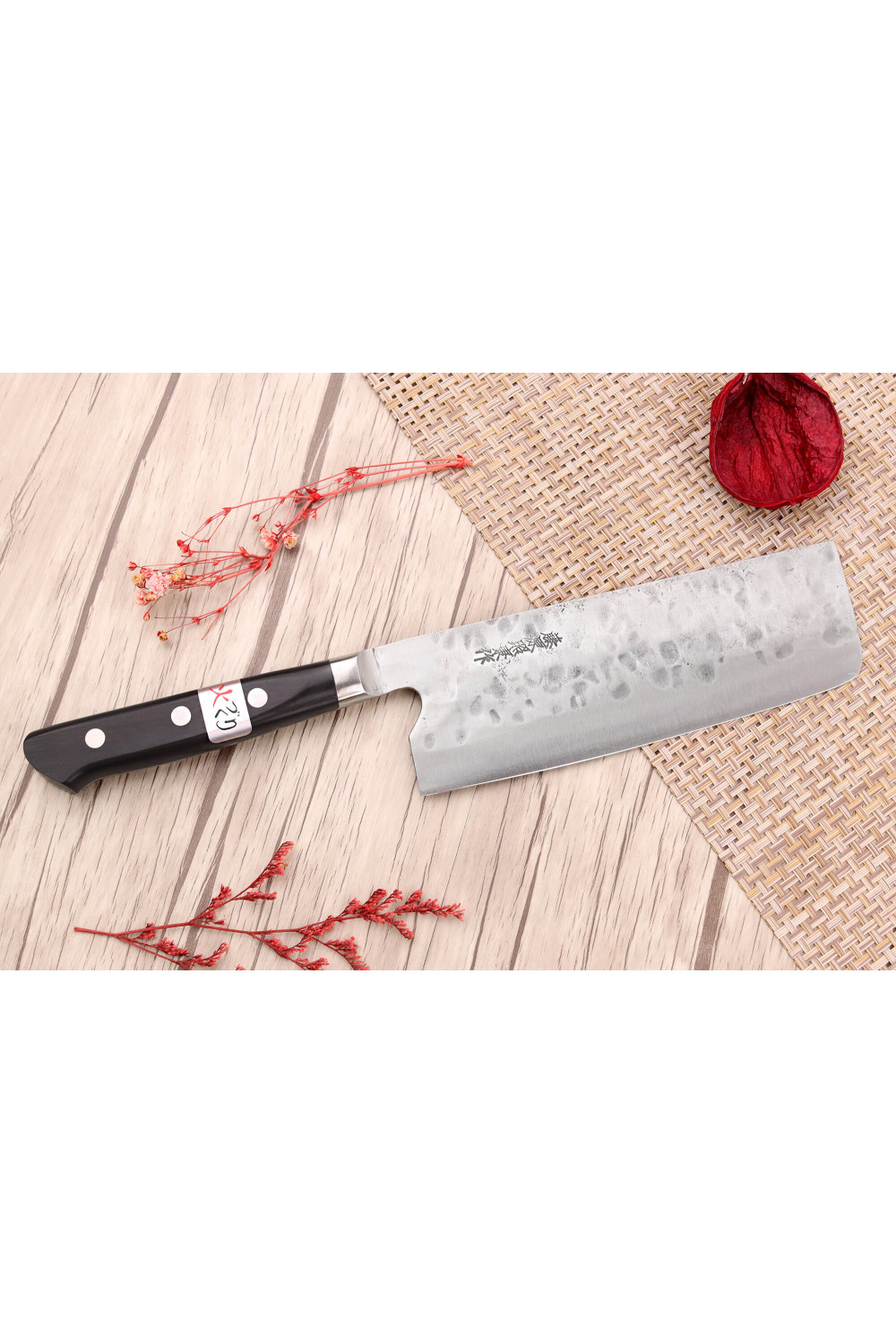
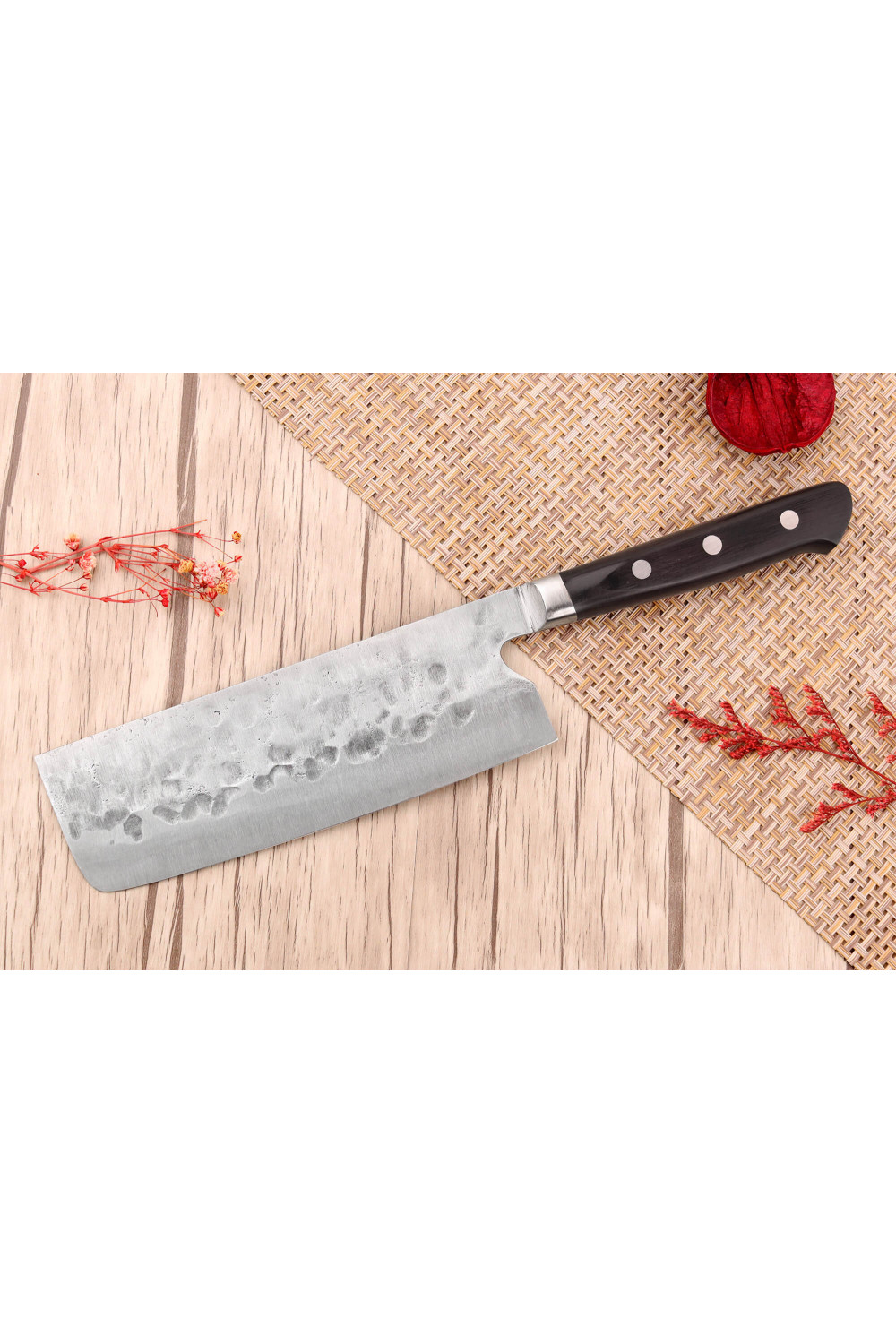
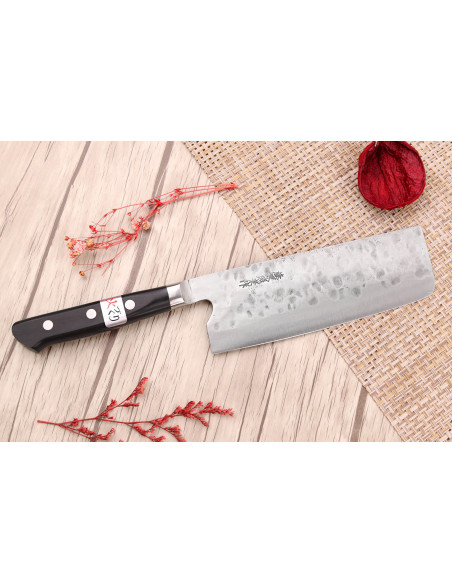
High-quality shirogami blade for this nakiri knife
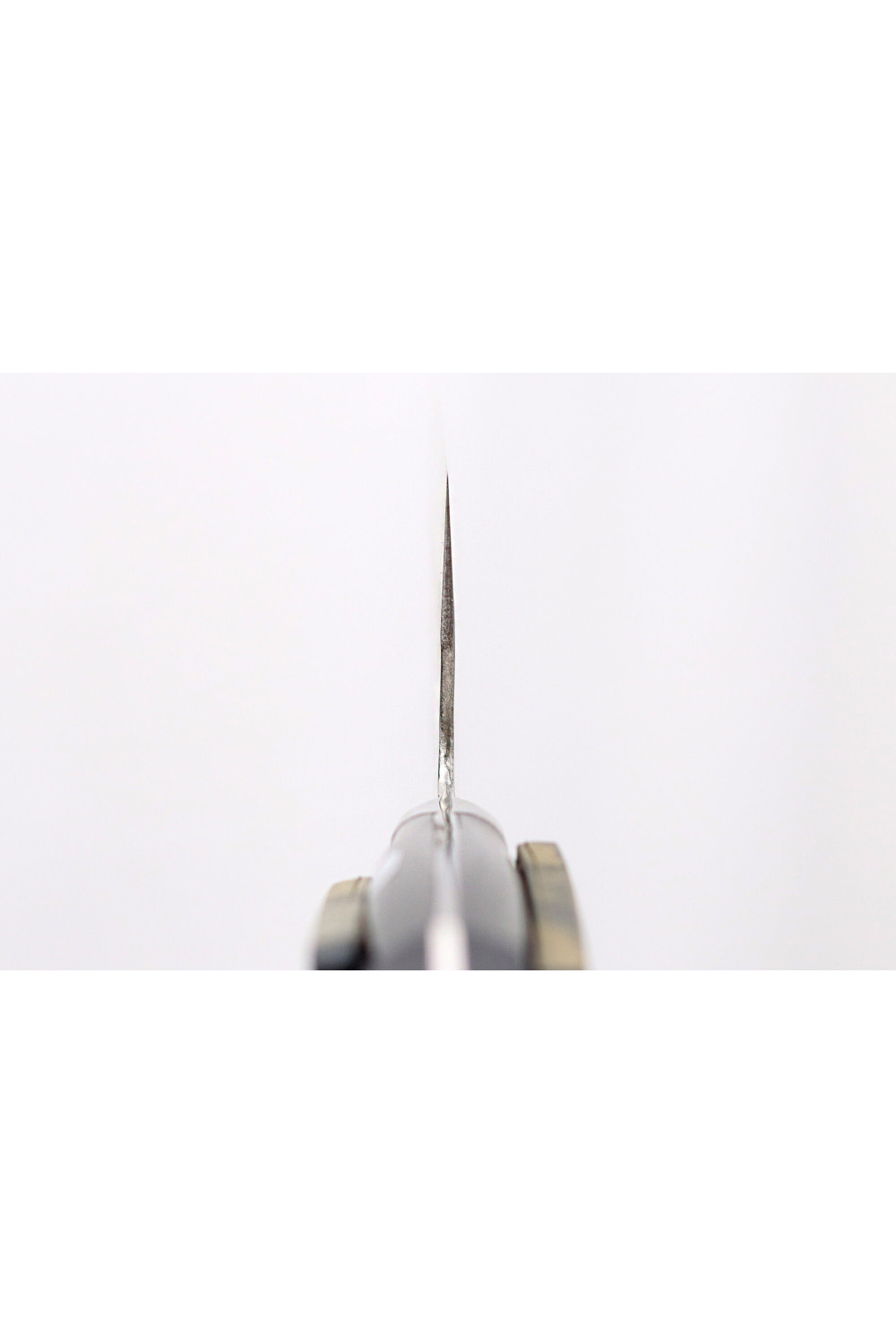
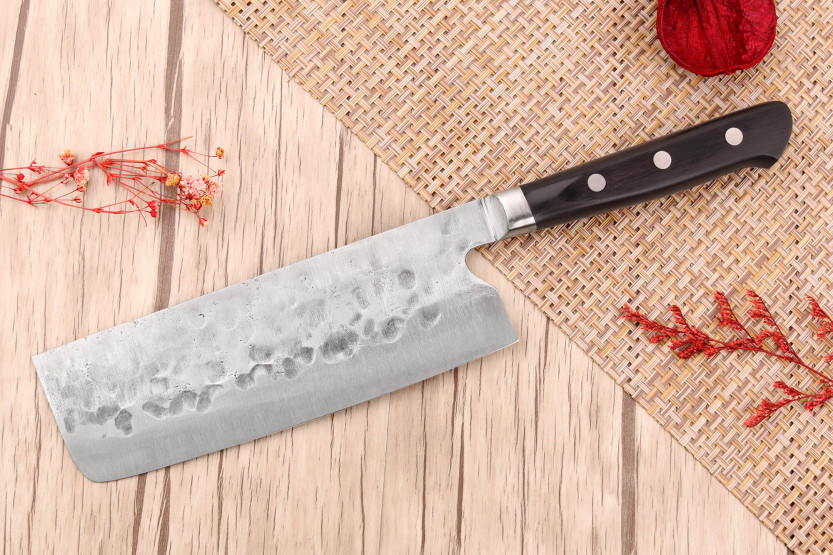
The blade of your Japanese kitchen knife adopts a so-called San Maï construction, i.e. a hard core enclosed between two layers of softer steel, enabling it to combine a fine, long-lasting edge with greater strength.
This blade is forged around a core of Shirogami #1 steel (also known as White Paper Steel 1) with a high carbon content of around 1.3%. It is this high content that gives it a hardness of 62HRC on the Rockwell scale: ensuring excellent edge retention.
The core of your blade is coated with a layer of stainless steel to balance its hardness.
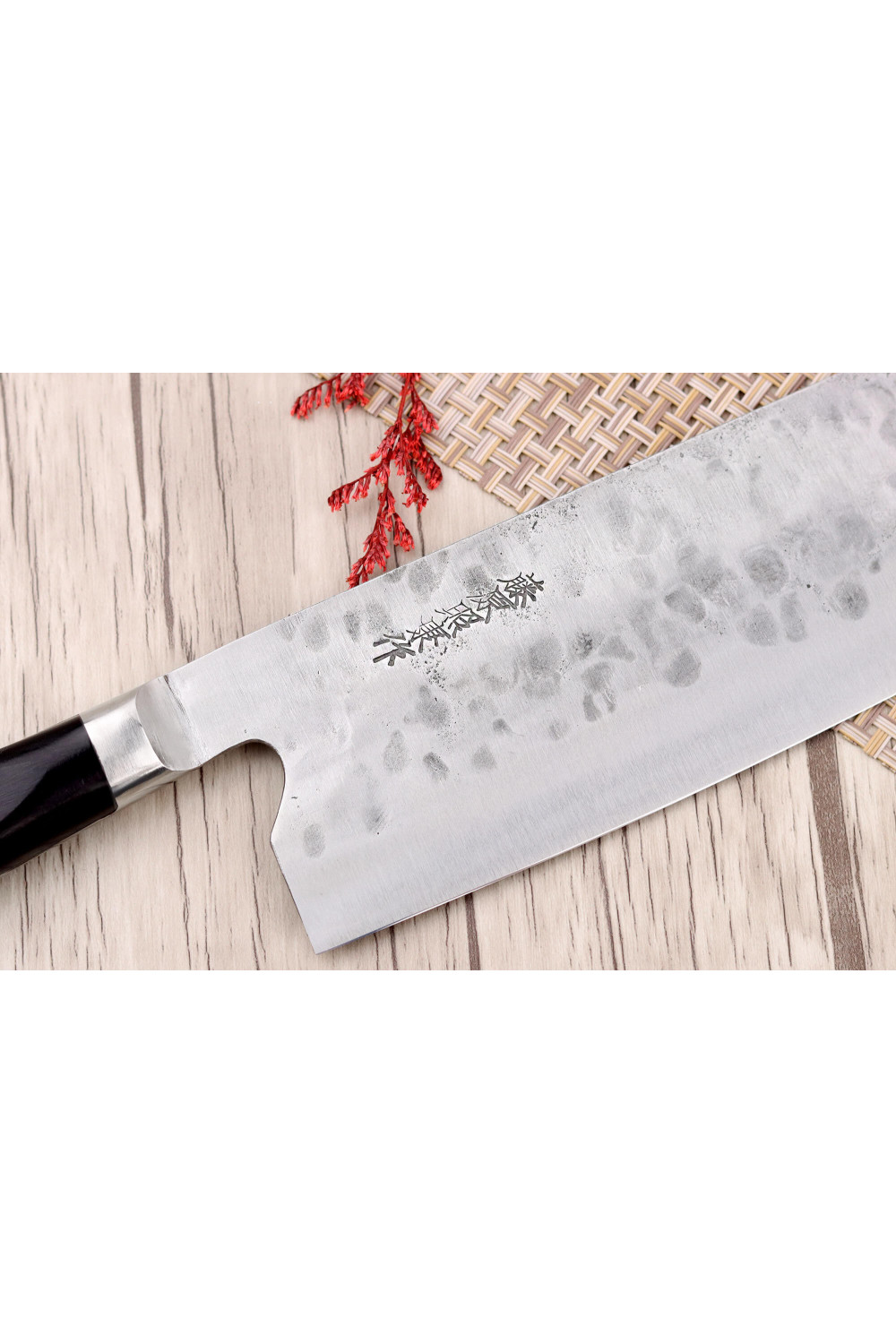
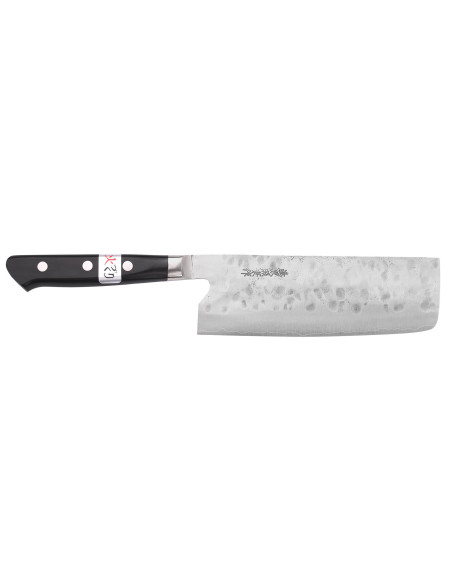
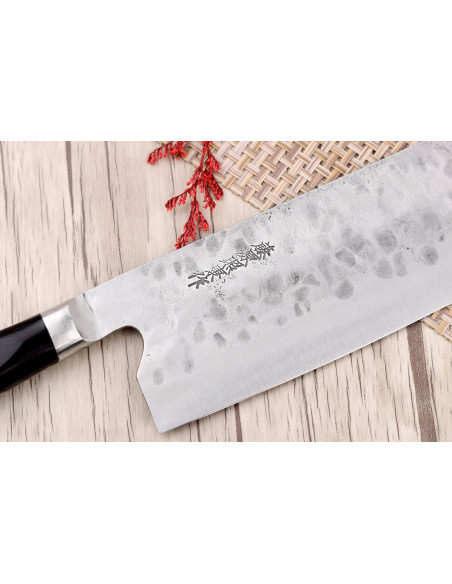
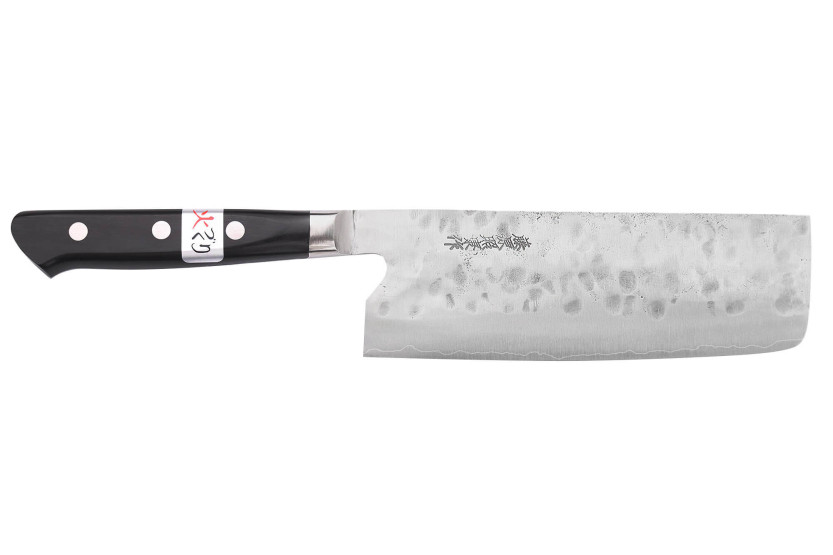
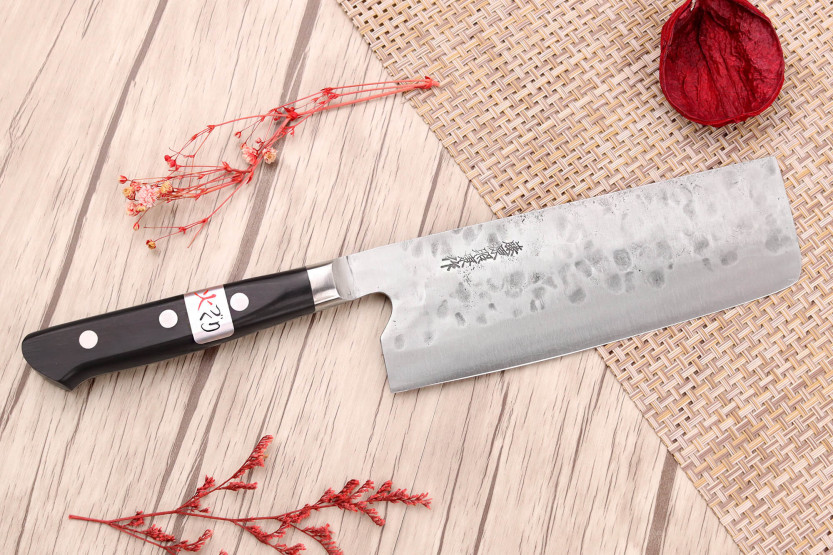
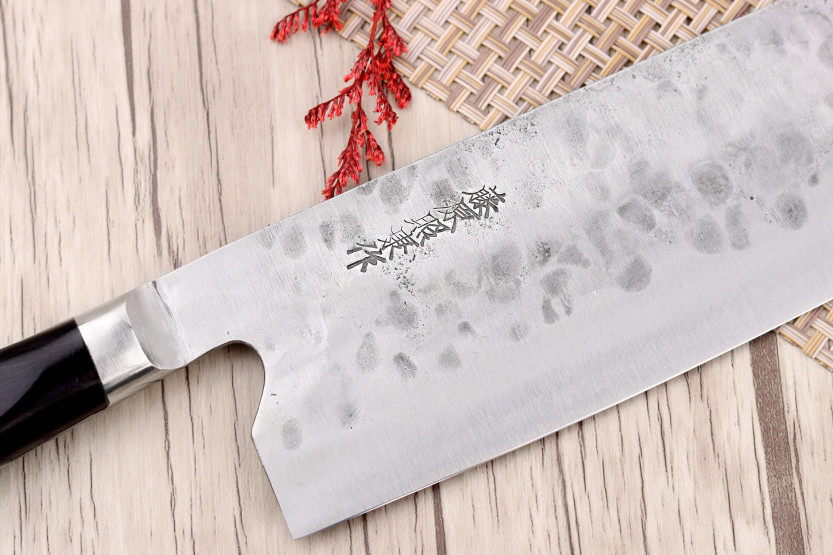
The finish features fine hammering with a nashiji texture that not only adds a handcrafted aesthetic but also helps vegetables slide off when cutting.
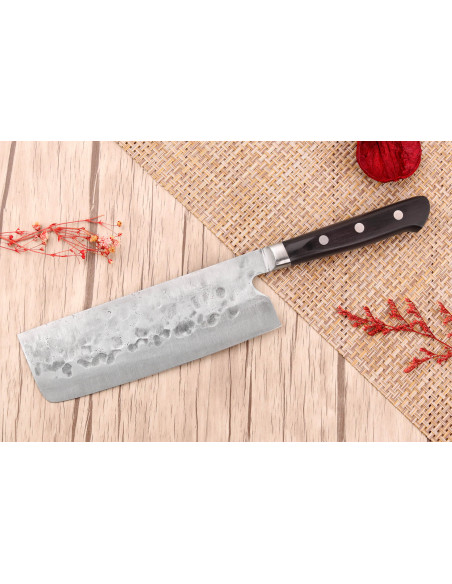
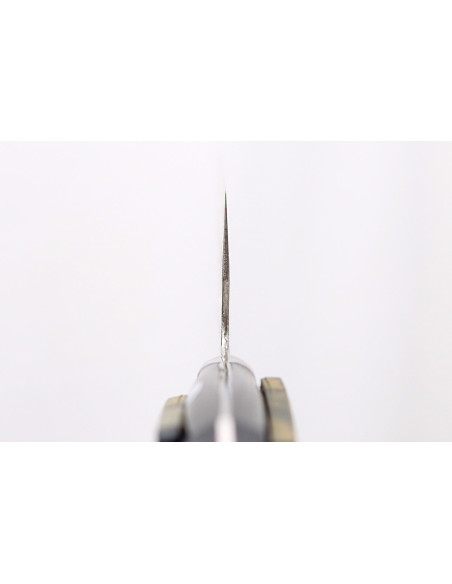
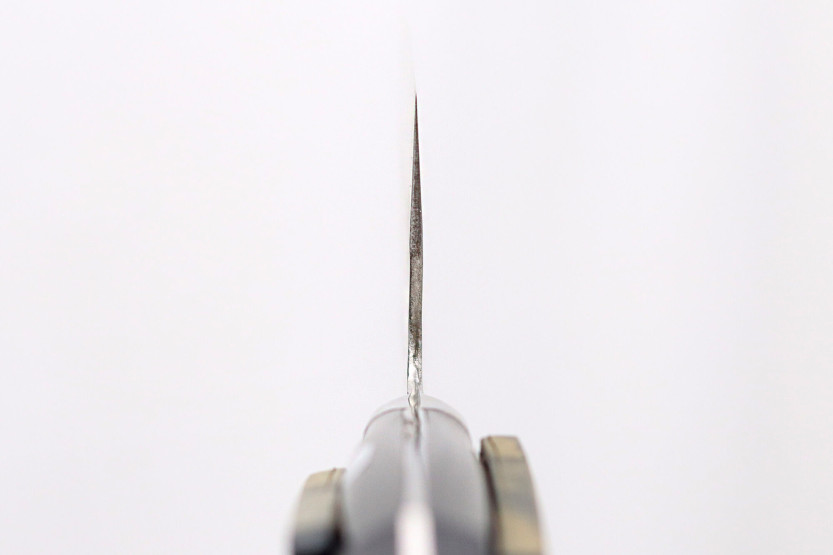
The blade of this Japanese kitchen knife is flat and symmetrical for ambidextrous use!
Handle and ergonomics of your handcrafted Japanese knife
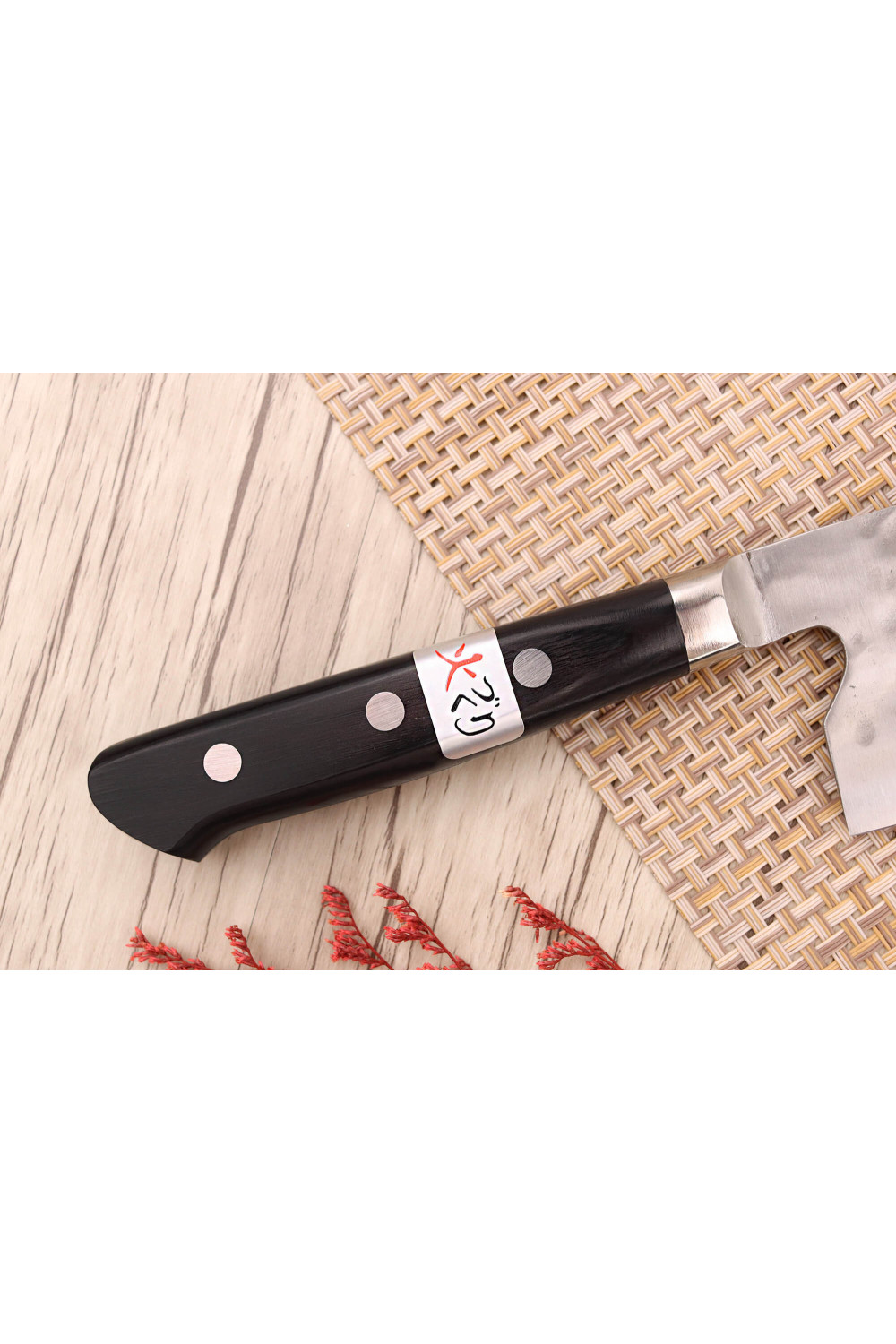
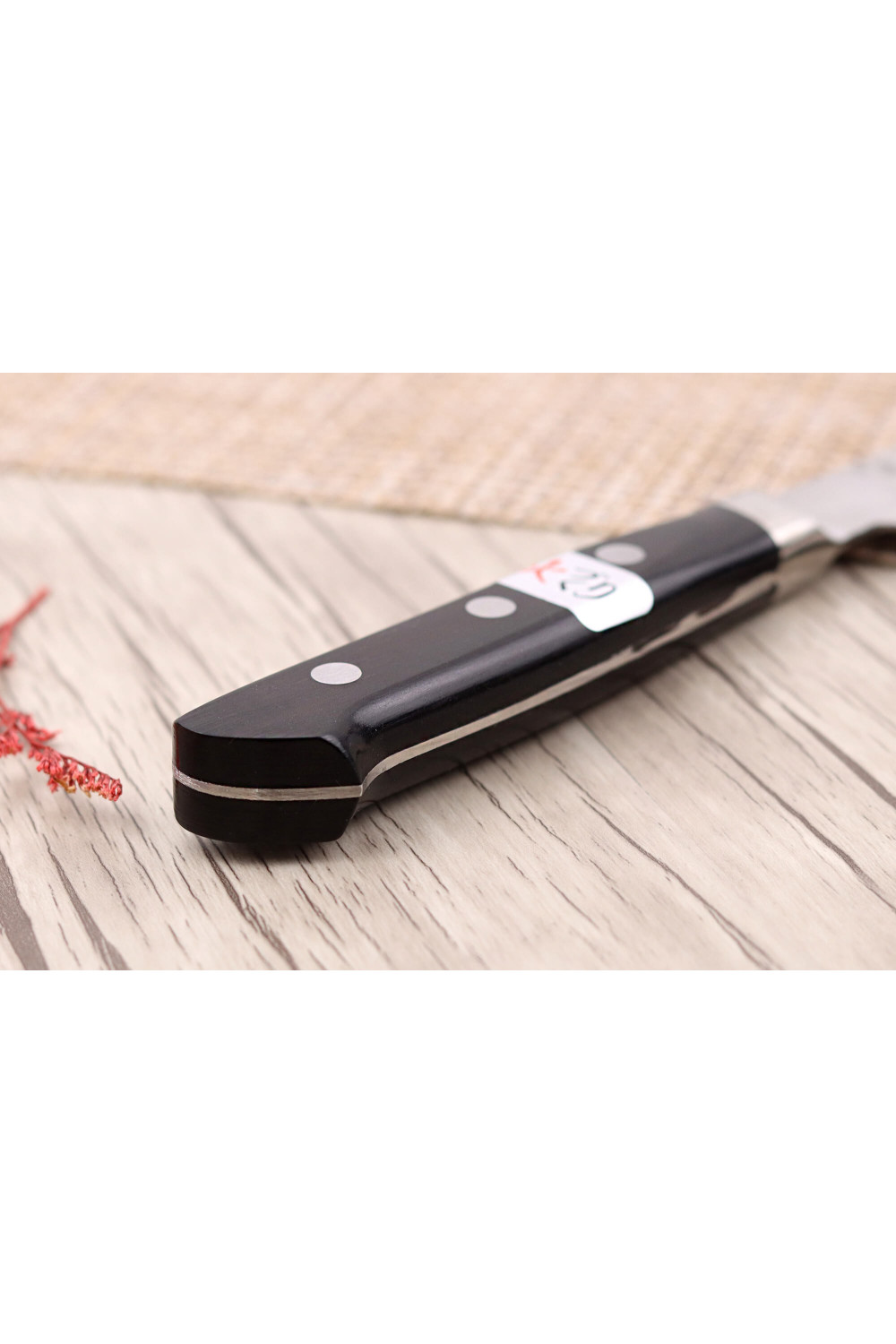
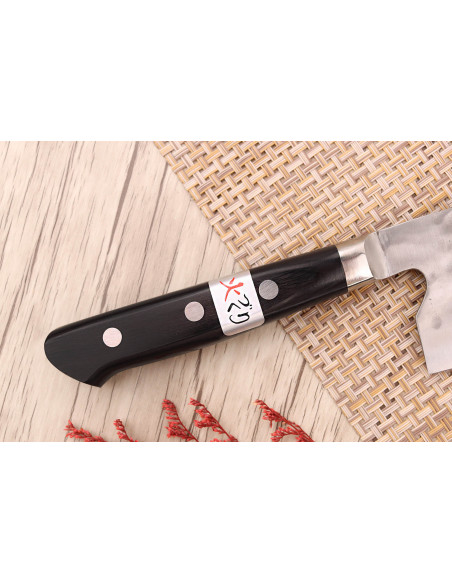
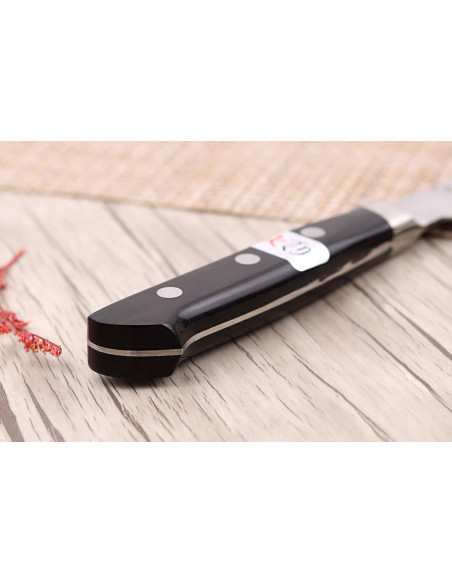
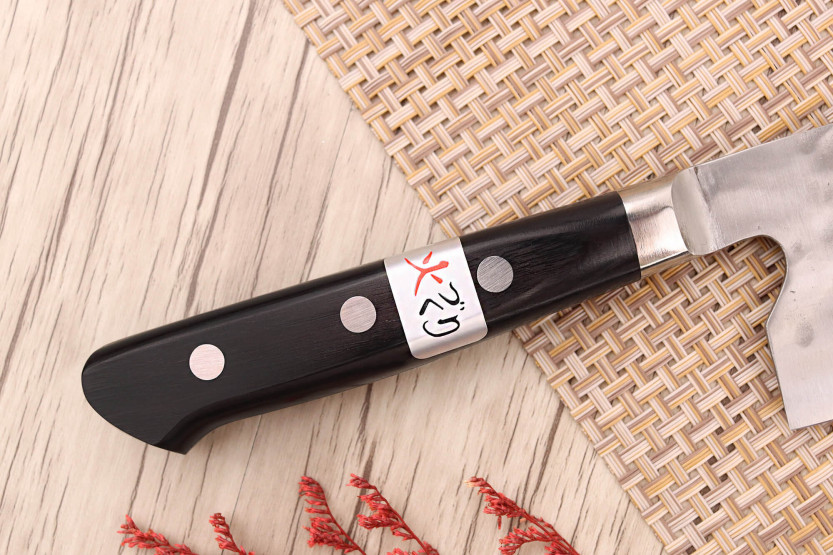
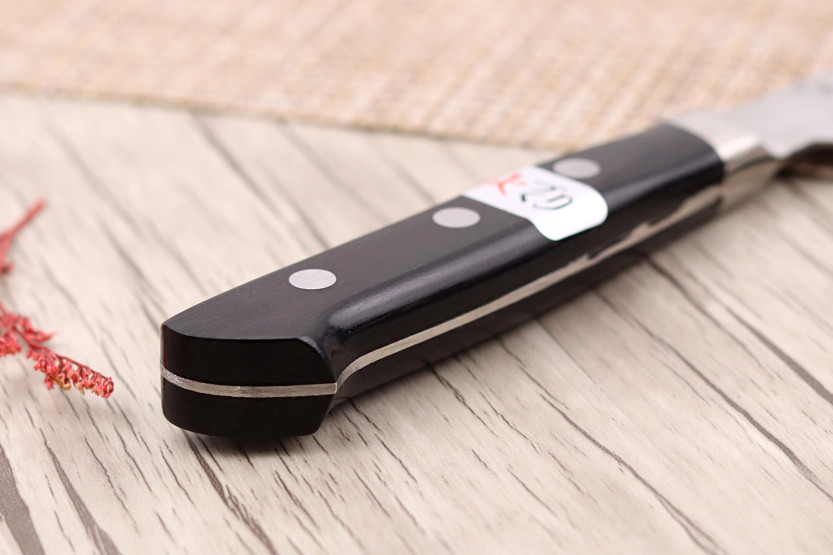
The handle of your nakiri knife is made of black pakkawood, a high-quality composite of laminated wood and resin. You benefit from the advantages of composite while retaining the natural look of wood.
The Western shape of the handle ensures a comfortable, stable grip, suited to the precise handling required when cutting vegetables. It ensures optimum ergonomics for long kitchen cutting sessions.
The handle is held to the full tang blade by 3 rivets. It also features a stainless steel bolster for ideal balance of your Japanese kitchen knife.
Summary of Fujiwara knife features and benefits
- 16.5 cm Shirogami #1 blade: ultra-precise cutting
- 62HRC
hardness
- : extended edge retention
- San Maï construction: robustness and performance
- Nashiji hammered finish: handcrafted aesthetics and improved glide
- Ergonomic pakkawood handle: optimal comfort and strength
- Handle with 3 rivets and stainless steel bolster: balance and enhanced strength
- Handcrafted in Tokyo: authentic Japanese know-how
Caring for your carbon knife
To preserve the quality of your Japanese nakiri knife, clean it exclusively by hand, using warm water and mild soap. Wipe dry immediately after use and store in a dry place. Avoid dishwashing or prolonged soaking, as these may damage the blade.
Over time, a dark grey patina will naturally appear on the steel: this is a normal evolution of the material, a sign of regular use, with no effect on the cutting performance of your Teruyas Fujiwara knife.
Focus on the craftsman Teruyasu Fujiwara
Teruyasu Fujiwara is the fourth generation of the family, founded in 1870 in Tokyo. The workshop specializes in blade-making, applying traditional sword-making forging techniques to Japanese kitchen knives. Fujiwara Maboroshi series models are renowned for their demanding heat treatment, top-of-the-range steel (Shirogami #1) and hand-crafted finish.
Each knife leaves the workshop with the stamp of the master blacksmith and is designed to last, and even to be handed down. The name "Maboroshi" ("sword vision" in Japanese) underlines both technical virtuosity and cutting-edge excellence!
Find exceptional Japanese knives on Knifeleader.eu!




 By buying this product you can collect up to