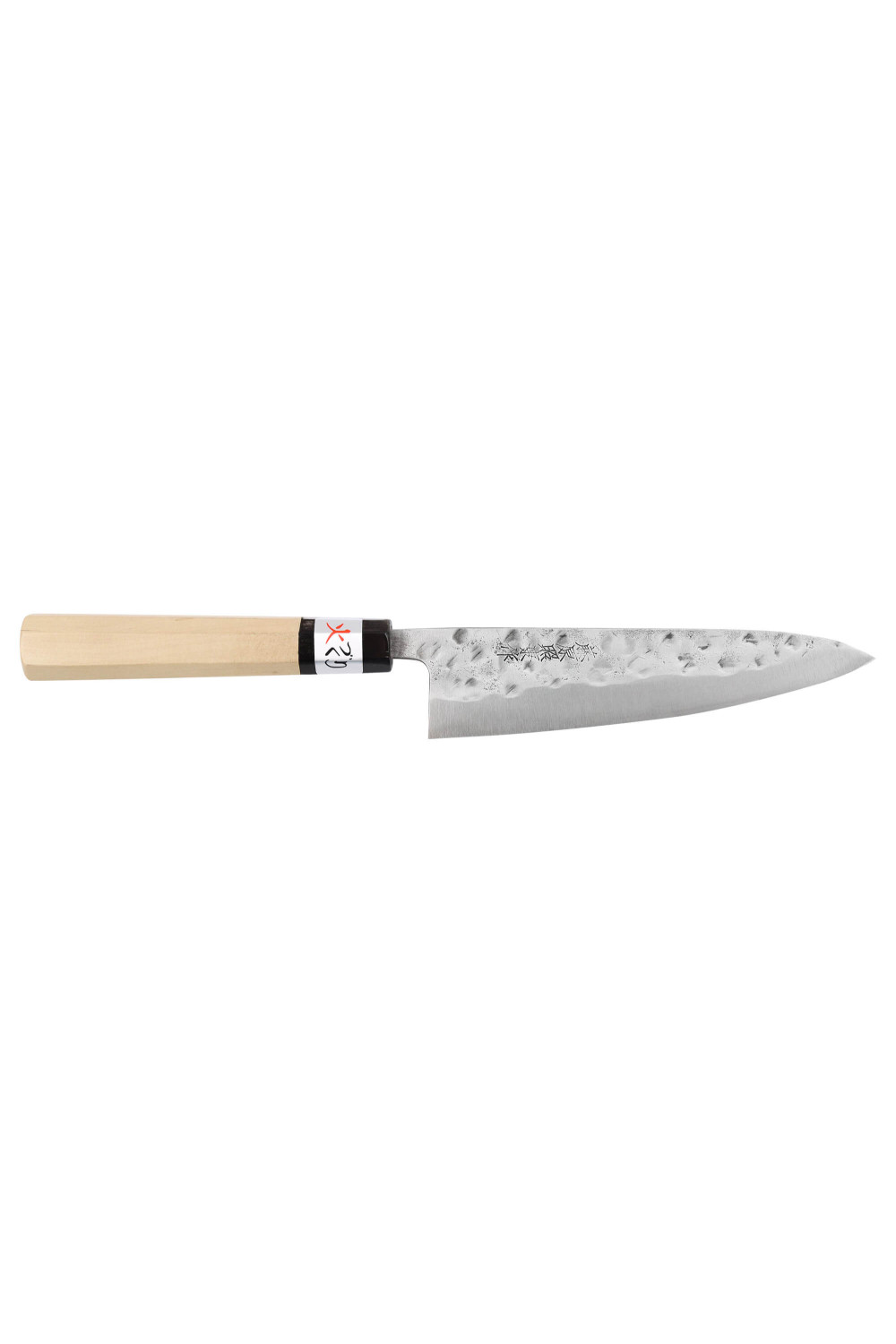
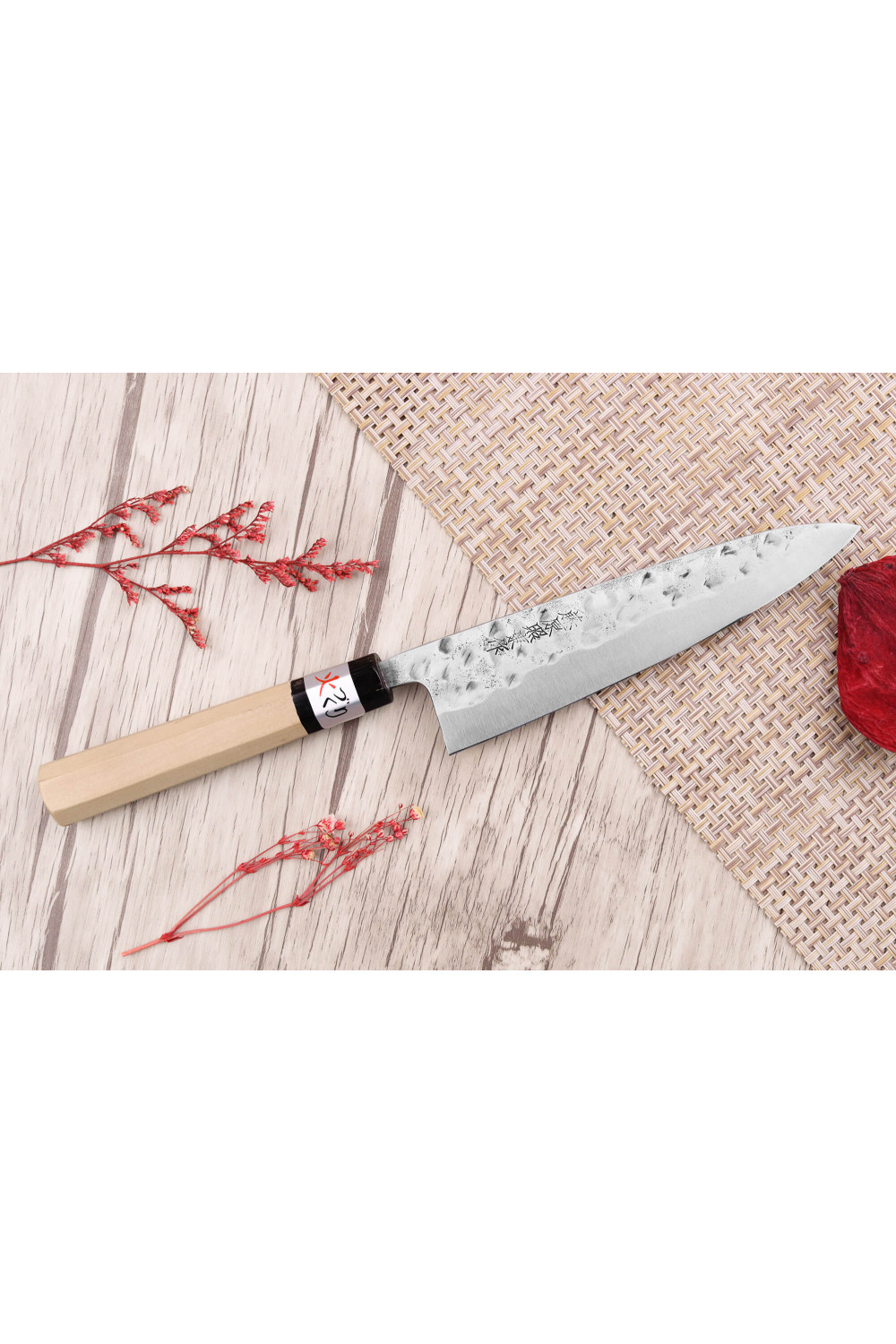
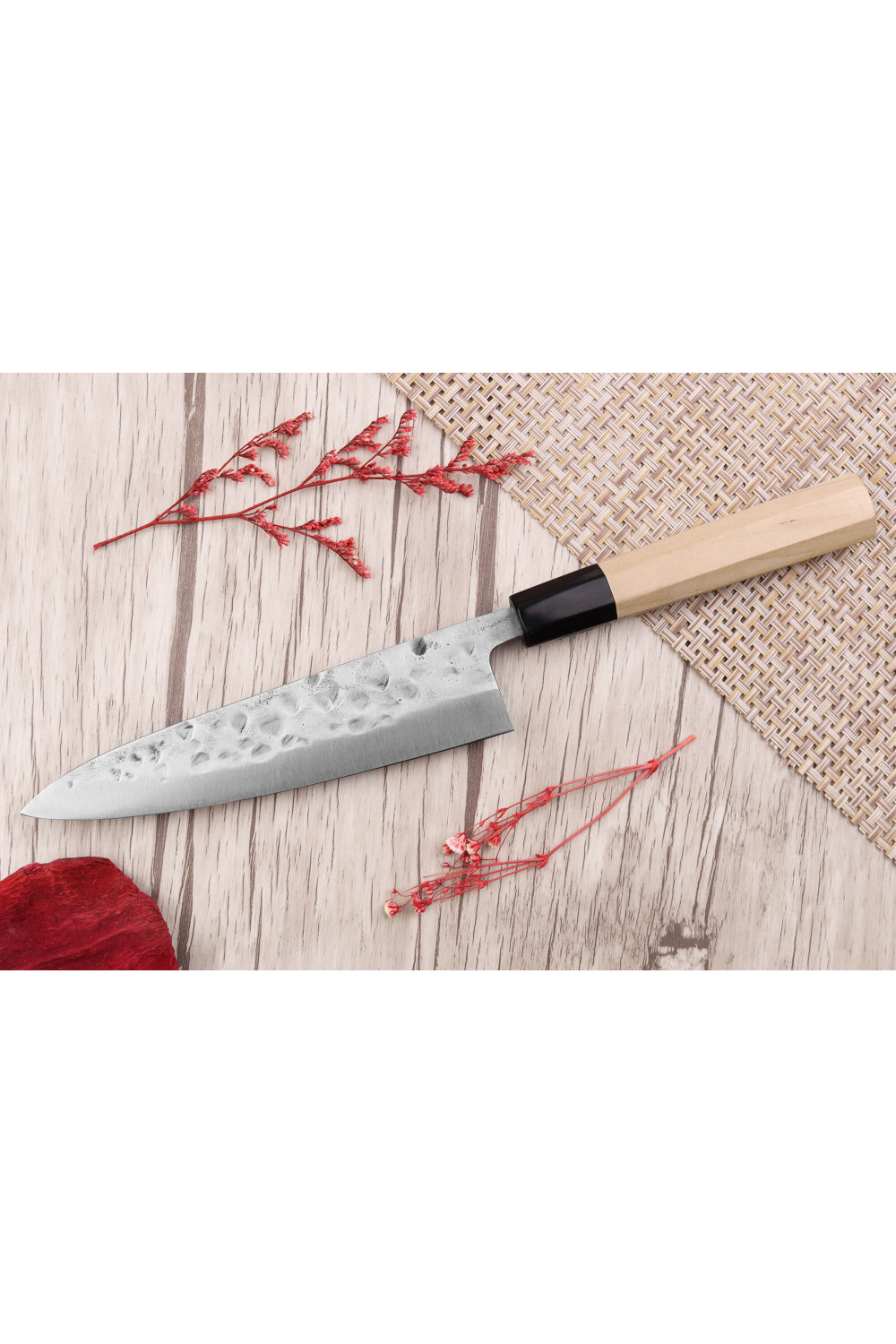
Fujiwara Teruyasu's Japanese knives are renowned both in Japan and abroad. The company's workshop is located in Tokyo prefecture, to equip professional chefs and amateurs alike. Fujiwara san crafts his knives with the utmost attention to detail, reflecting his commitment to performance. This Japanese blacksmith is a perfectionist who guarantees high-quality cutting edges for remarkable cuts.
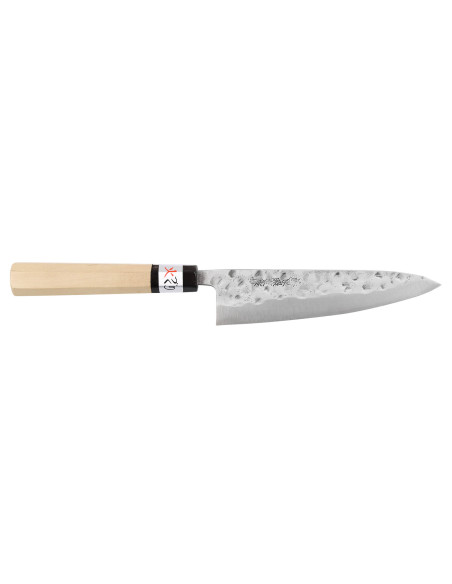
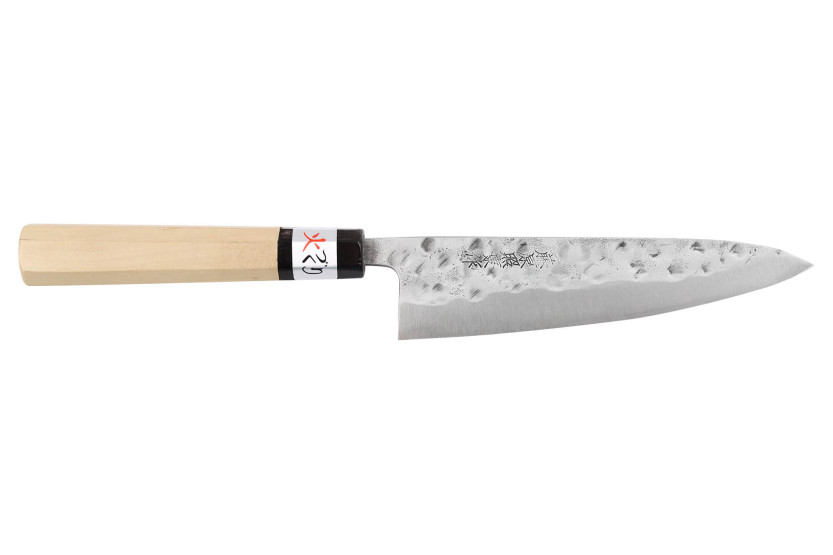
This Japanese Universal knife lets you make a wide range of cuts! With its blade, you can carry out small jobs requiring precision, without any problem. You can cut fruit, vegetables or pieces of meat with ease! Just be careful not to use it on hard foods such as squash, frozen foods or a wheel of cheese.
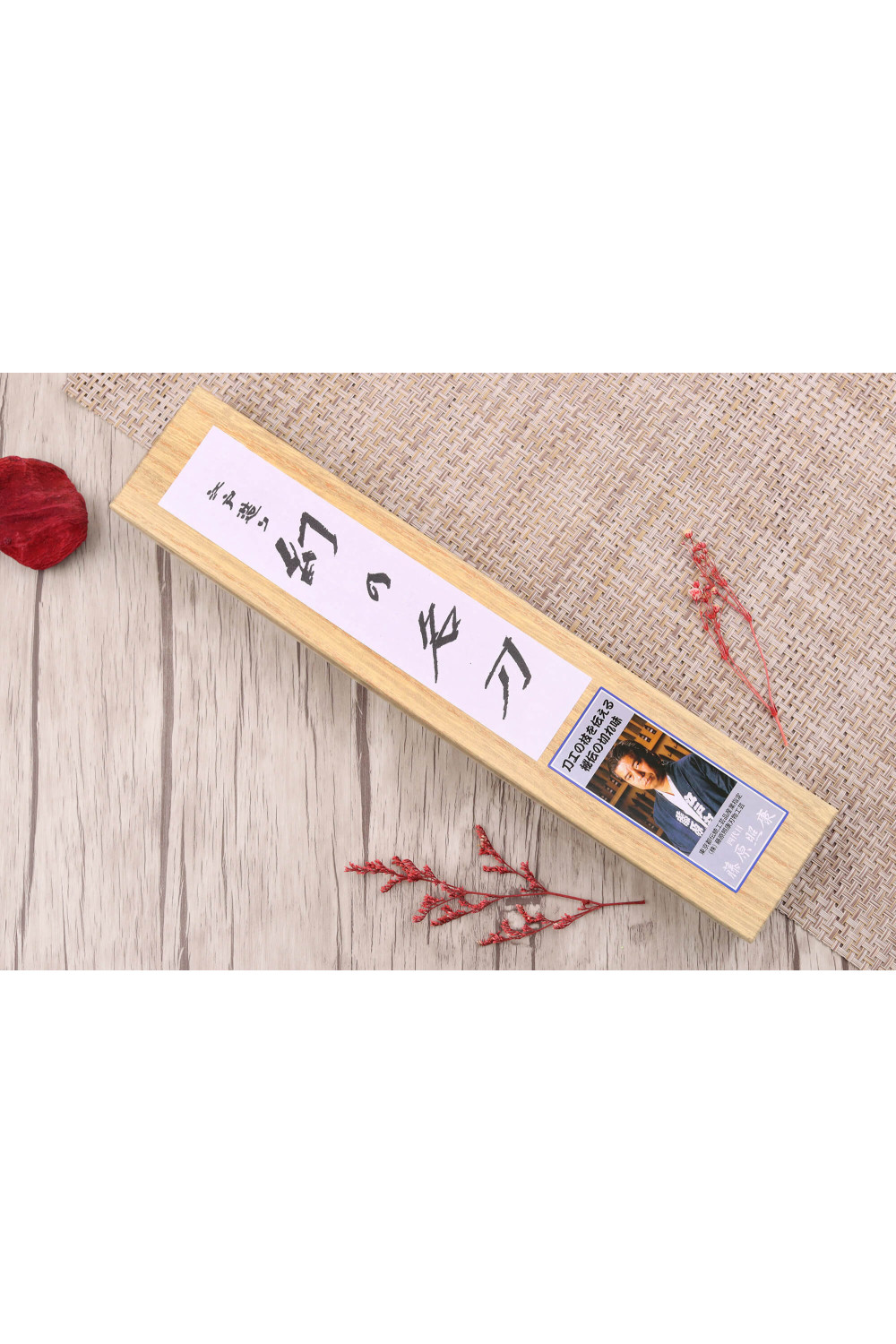
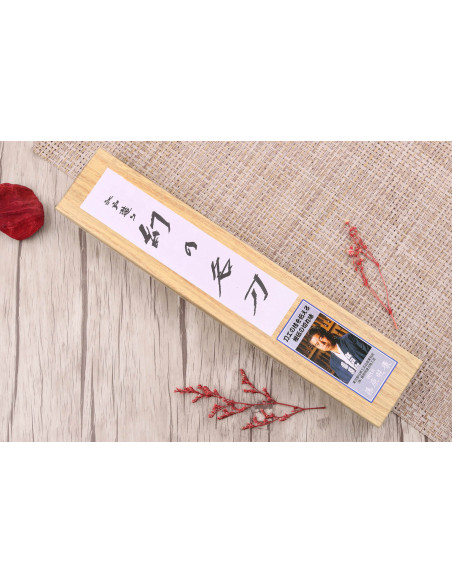
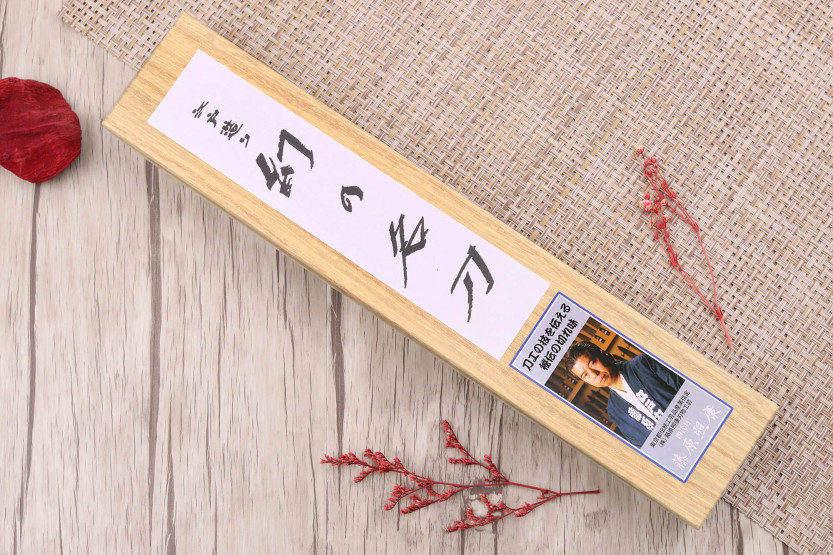
The full name of this range is Maboroshi no Meito, which means "The victorious visionary sword", reflecting their superior quality!
A high-performance blade for this handcrafted Japanese knife
This Japanese knife features a San Maï blade structure, a typically Japanese technique. This literally means "3 layers", as it consists of forging a core of rigid steel, which is then surrounded by a layer of softer steel, folded in on itself to form the remaining 2 layers. This construction results in a blade with balanced hardness, whose core offers optimum protection.
The core of this structure is made of Japanese Shirogami 1 steel, a prestigious alloy produced by the famous steelmaker Hitachi. Shirogami steel (also known as White Steel) is packaged in white paper, hence the origin of its name ("shiro" meaning "white"). It has a high carbon content of around 1.3%, giving it above-average hardness. It achieves a hardness of 62HRC on the Rockwell scale, guaranteeing excellent edge retention and outstanding cutting performance.
Carbon is one of the essential elements that make up the alloy, helping to increase hardness. A blade with higher hardness can retain an edge longer than a "softer" blade. This is a real advantage, allowing you to space out your sharpening sessions! However, note that a hard blade is not unbreakable either. In fact, a stiffer blade is more prone to breakage because it is less flexible and therefore less able to absorb shocks. This is why, as mentioned above, we don't recommend using it on foods that are too hard.
Secondly, Shirogami steel is an alloy that can be easily sharpened when necessary. It is coated with a softer layer of stainless steel to add softness to the hardness, for more pleasant use.
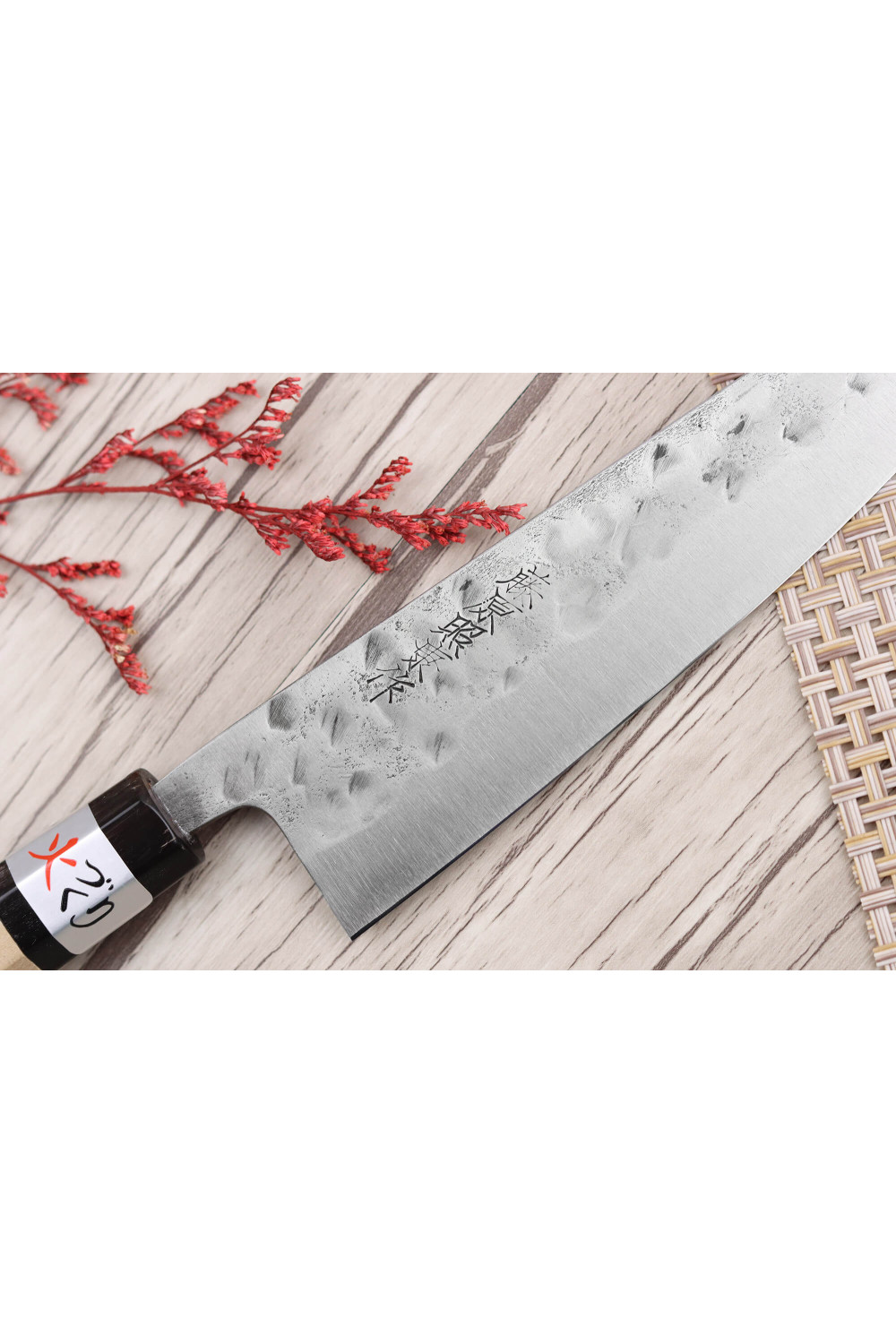
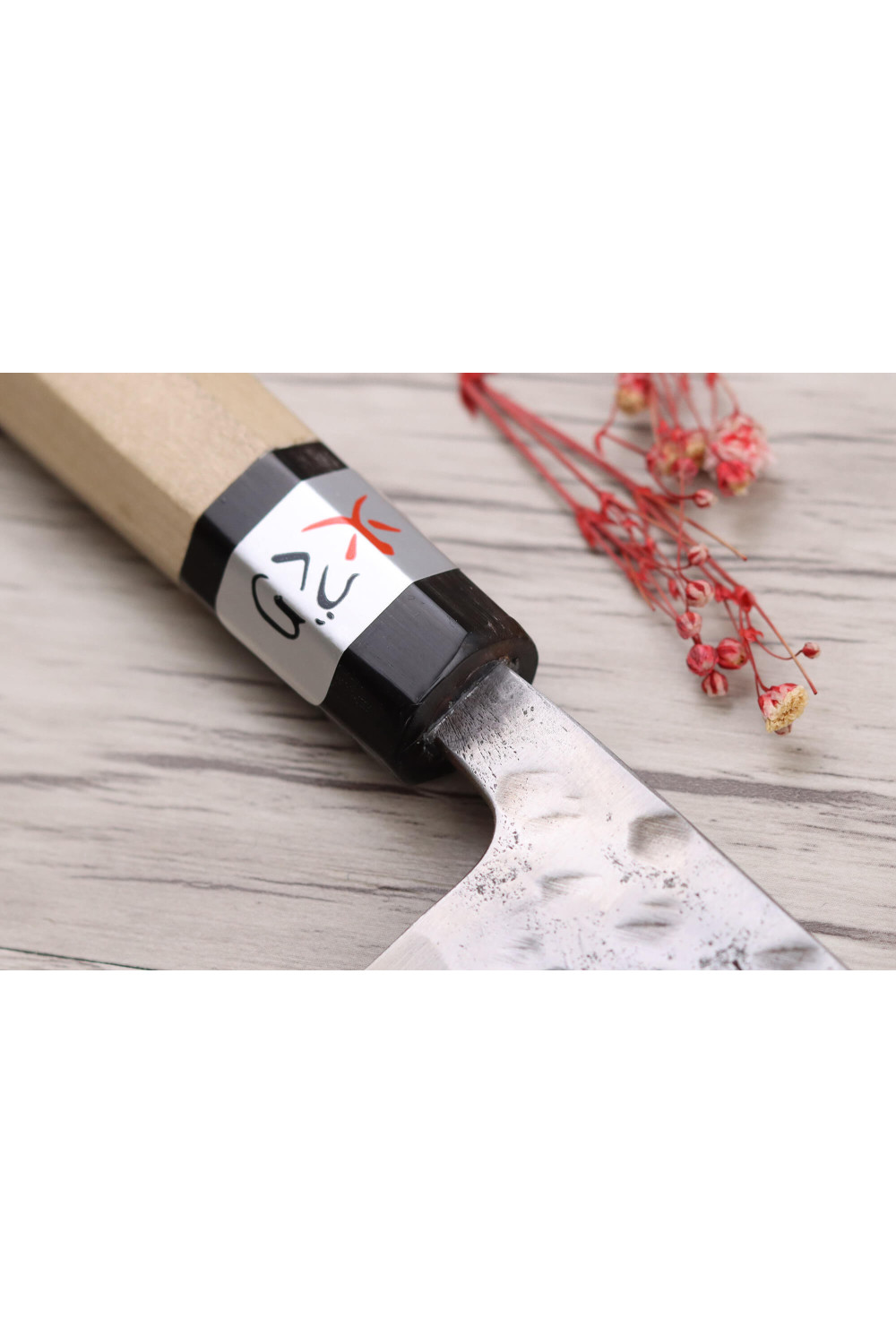
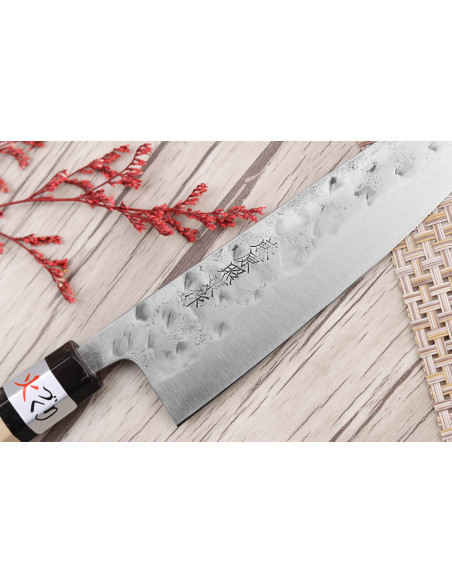
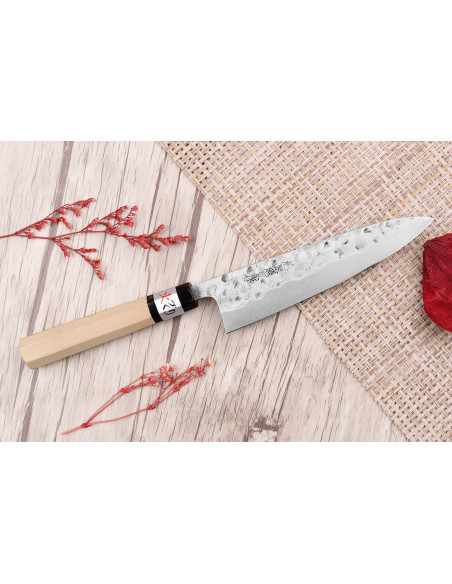
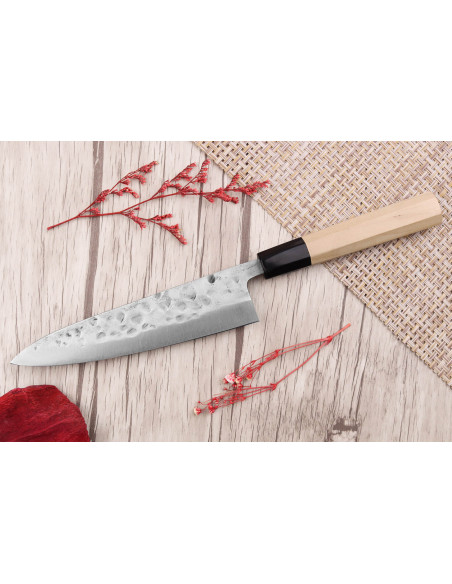
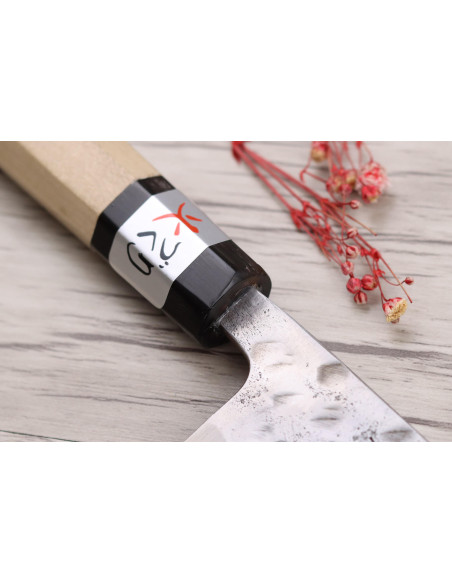
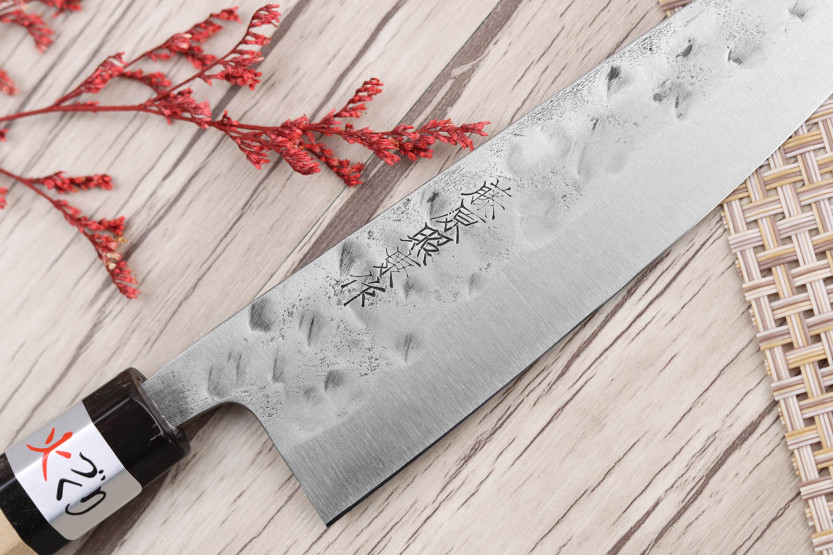
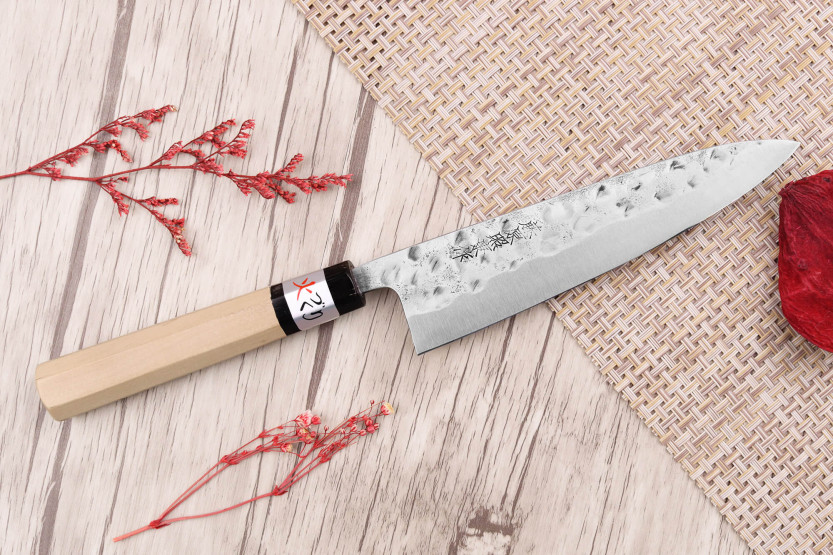
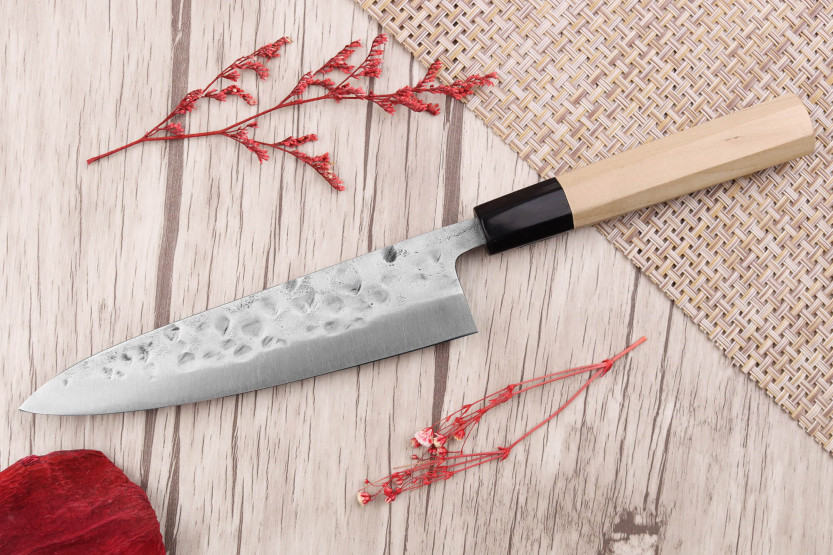
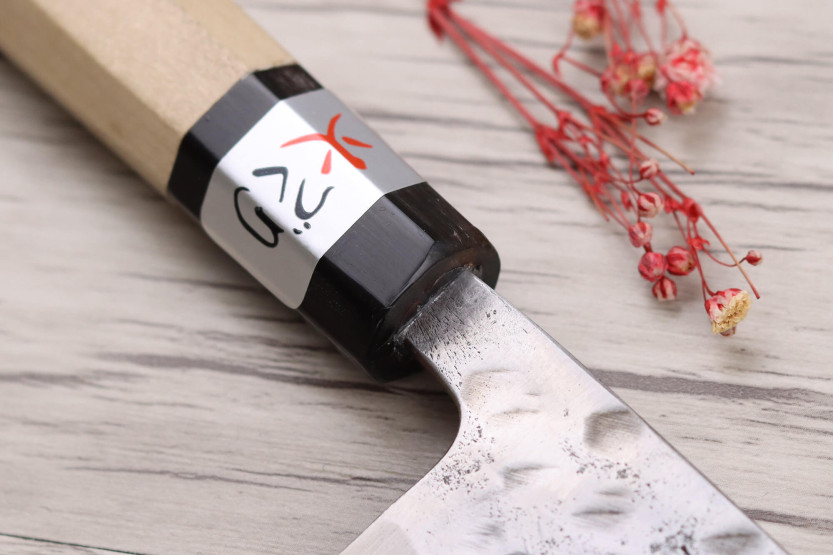
The blade surface of your handcrafted Japanese knife has a Nashiji finish that gives it a slightly rough, rustic look. The blade has also been hammered to give it even more character!
The kanji on the cutting surface have been engraved directly by the craftsman with a hammer and chisel. They can be translated as "made by Teruyasu Fujiwara".
A Japanese knife with a quality handle
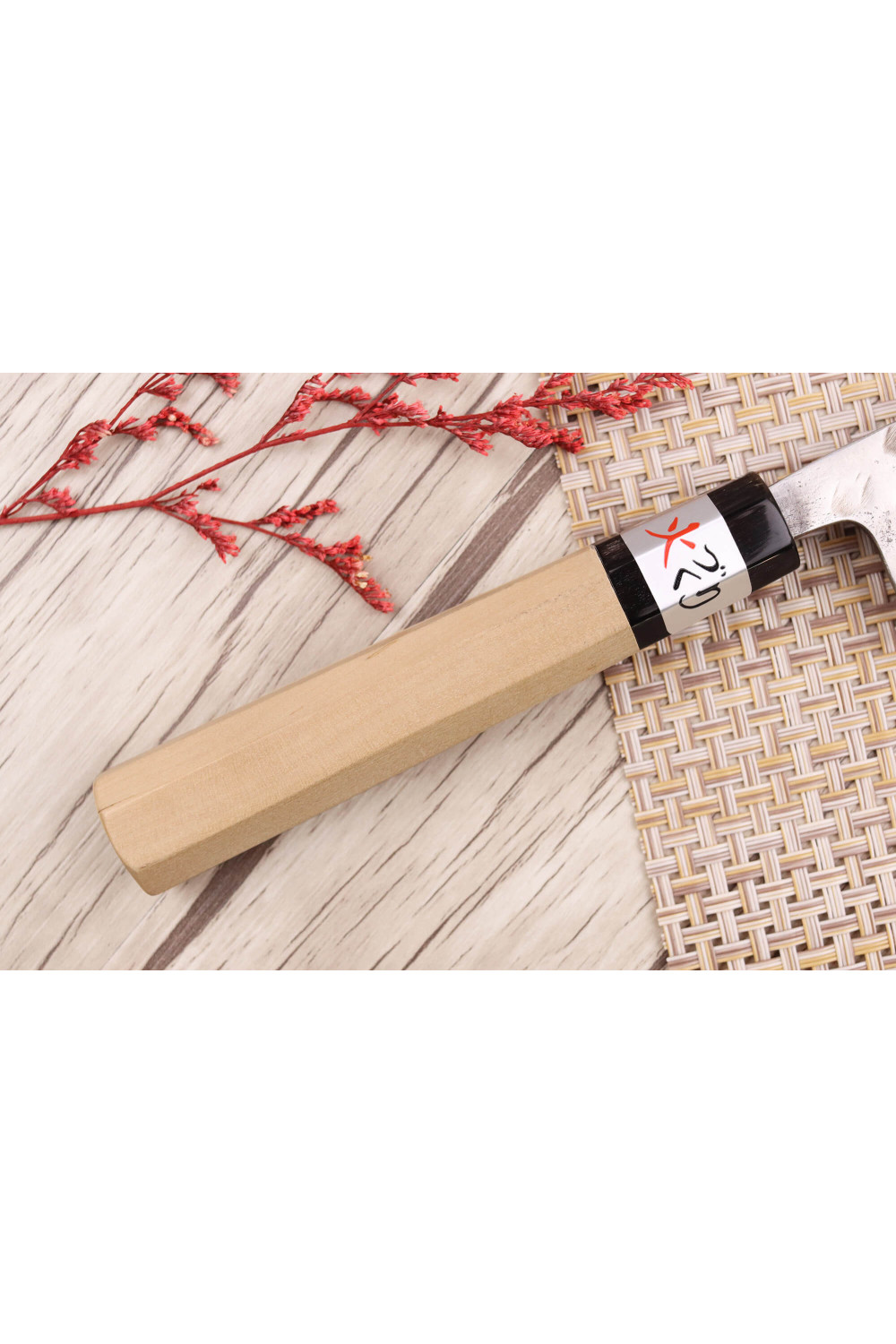
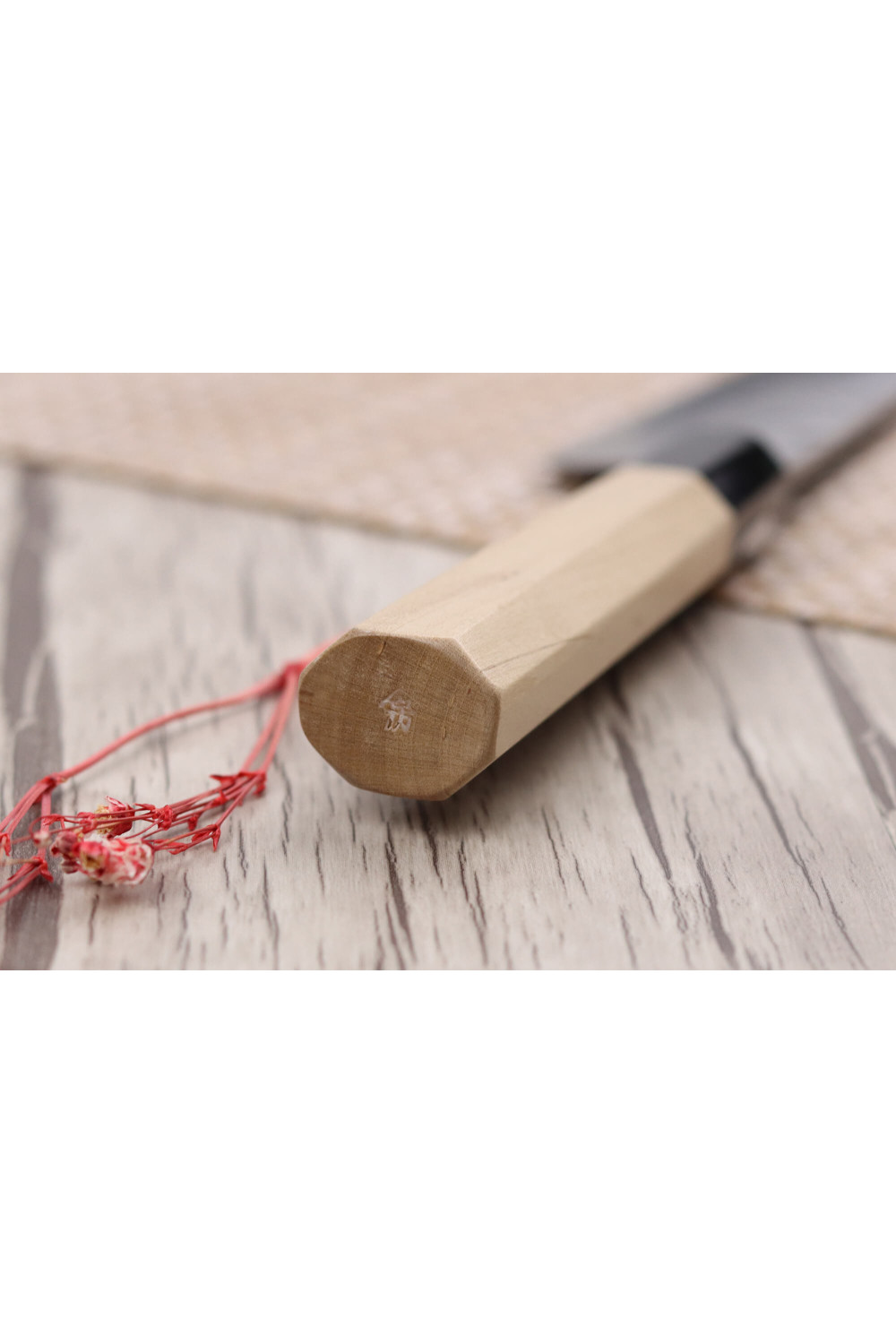
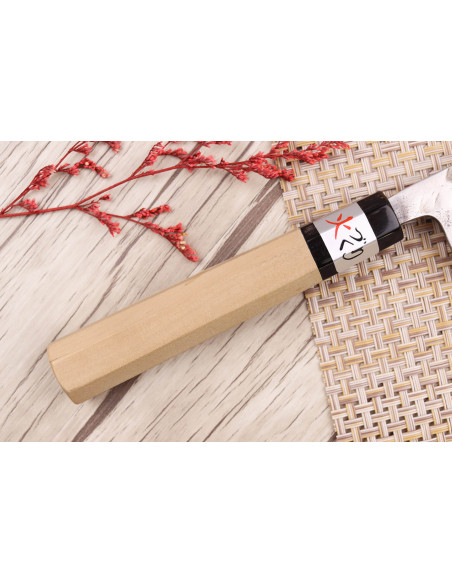
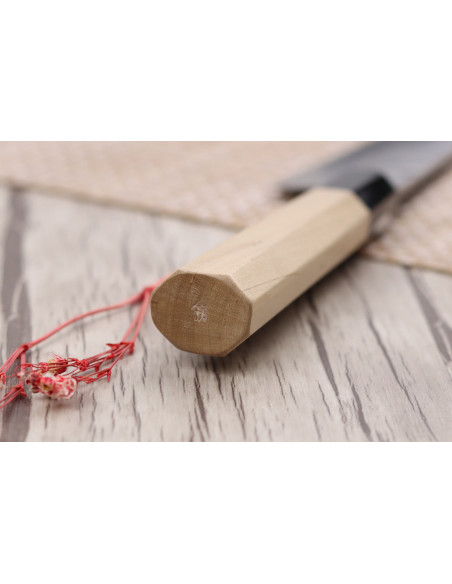
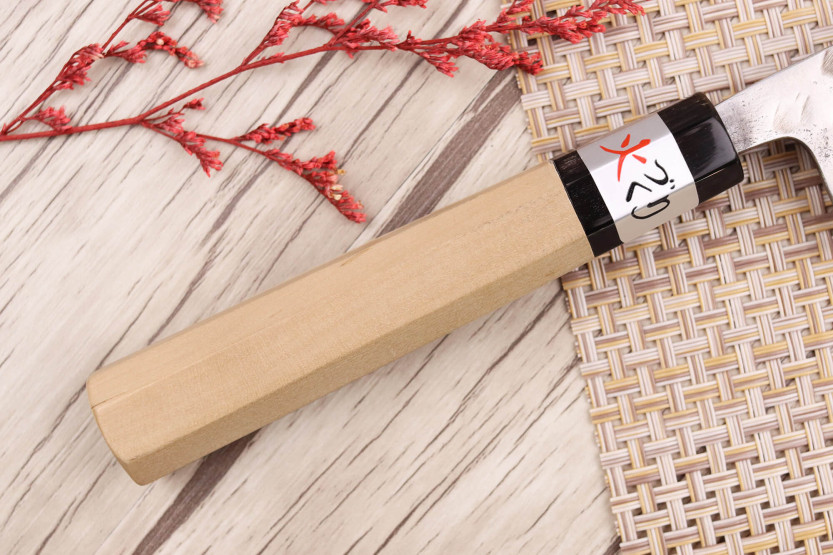
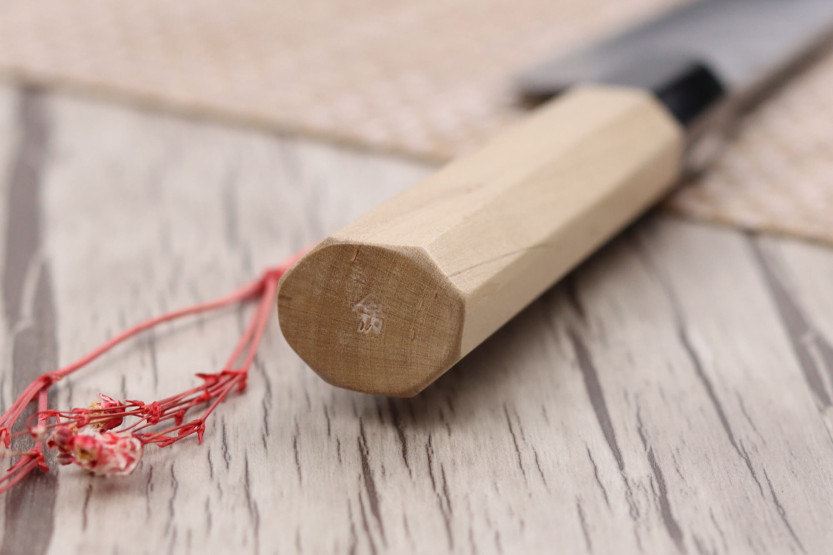
This Maboroshi knife features a handle made from magnolia wood, a species renowned for its elegant light color. This wood is highly resistant to humidity and therefore to the risk of warping. The base has also been engraved with a kanji for an extra touch of authenticity.
A black buffalo horn bolster links the handle to the blade. It contrasts with the rest of the clear handle to add character to your Japanese kitchen knife. Horn is a living material, so it's unique to each knife!
The handle is octagonal in shape to suit the hands of all cooks, right- and left-handed alike! It offers a comfortable grip for perfectly controlled handling, especially during prolonged use.
Finally, wood putty has been added at the point where the blade meets the handle to ensure a watertight seal. This prevents water or small foodstuffs from seeping inside.
Care and maintenance of an artisanal Universal knife
To care for your carbon knife, wash only by hand with a non-abrasive sponge and mild detergent, avoiding wetting the handle. Once washed, wipe dry immediately to remove all traces of moisture and store in a dry place. Do not use the dishwasher or leave it to soak in the sink.
Even with optimum care, the blade may change color slightly over time: this is normal! This is a carbon reaction caused by the acidity of the food being cut and the humidity in the air. We recommend keeping a paper towel handy to wipe your blade between 2 cuts.
From time to time, you can oil your blade with mineral oil to reinforce its protection.
Discover all other knives forged by Teruyasu Fujiwara on KnifeLeader.eu!




 By buying this product you can collect up to