The renowned Japanese blacksmith: Toshihiro Wakui
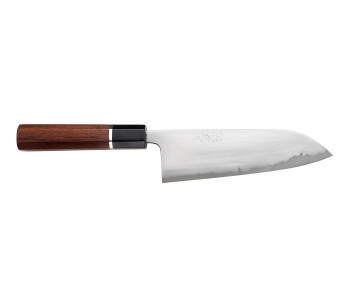
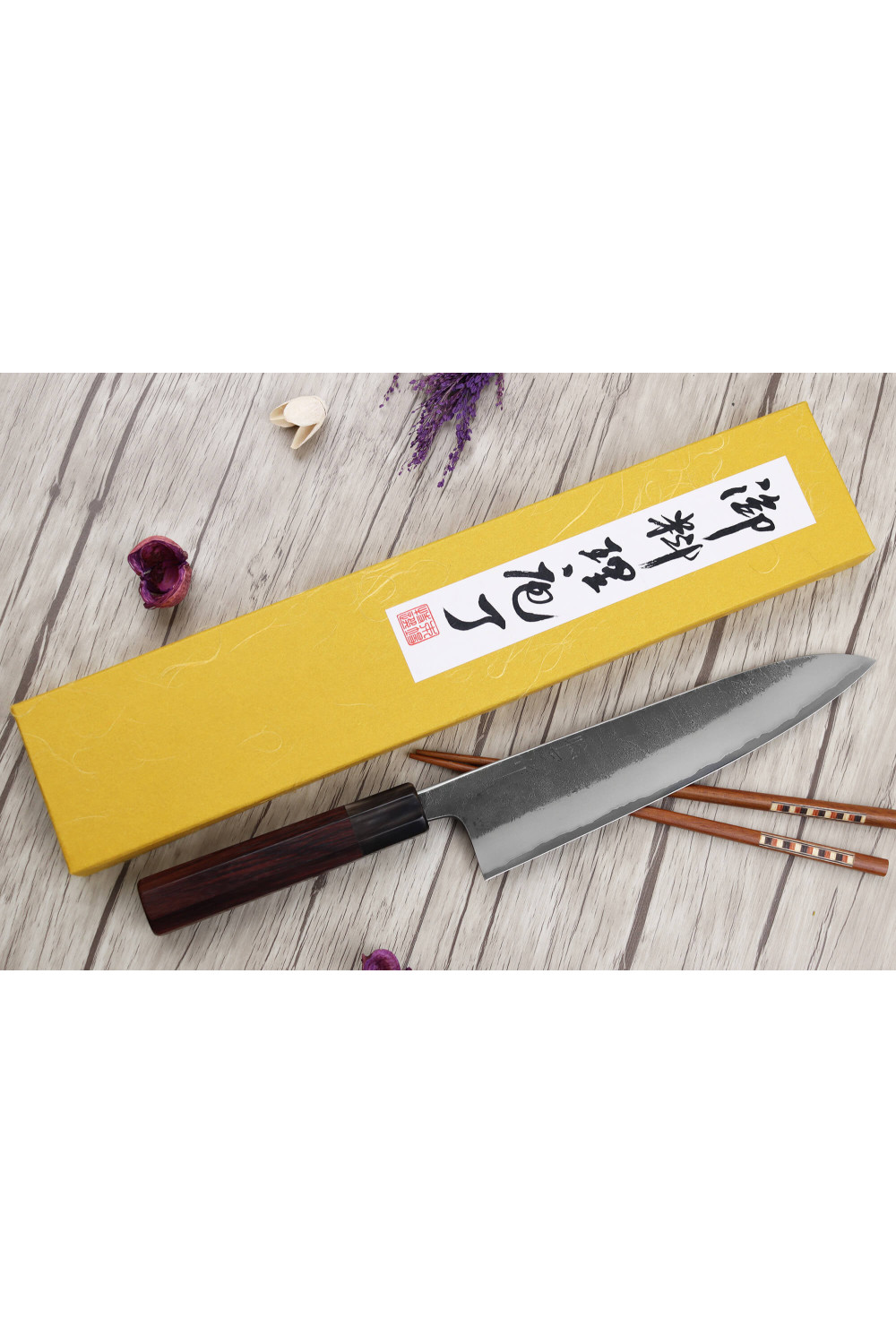
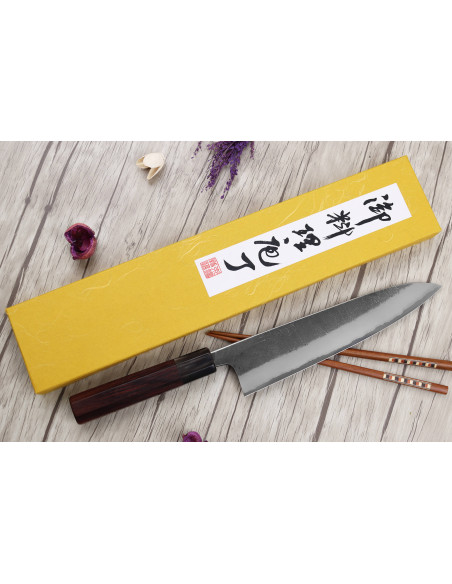
This kitchen knife was made by Toshihiro Wakui: a famous Japanese blacksmith with exceptional expertise! He has been carrying on the family tradition for 3 generations and acquired his skills some twenty years ago.
When he took over the family business, Toshihiro Wakui was faced with a declining demand for crowbars and metal bars, products in which his family specialized. After discussions with Kazuomi Yamamoto, Yoshikane Hamono's head master blacksmith, he decided to shift his focus to knife forging. It was Kazuomi-san himself who offered him the opportunity to become his apprentice, an offer that Toshihiro Wakui accepted. For four years, he worked diligently as an apprentice, during which time he began creating his own knives.
Toshihiro practices his art in his workshop in Sanjo, Japan, where he crafts blades of exceptional quality. His specialty lies in the technique of hot-rolling to create unique damascus patterns on the blades. Despite his atypical workspace, characterized by the distance between his kiln and his anvil, as well as by the space he takes up, Toshihiro Wakui manages to produce high-quality blades.
A high-performance blade in San Maï
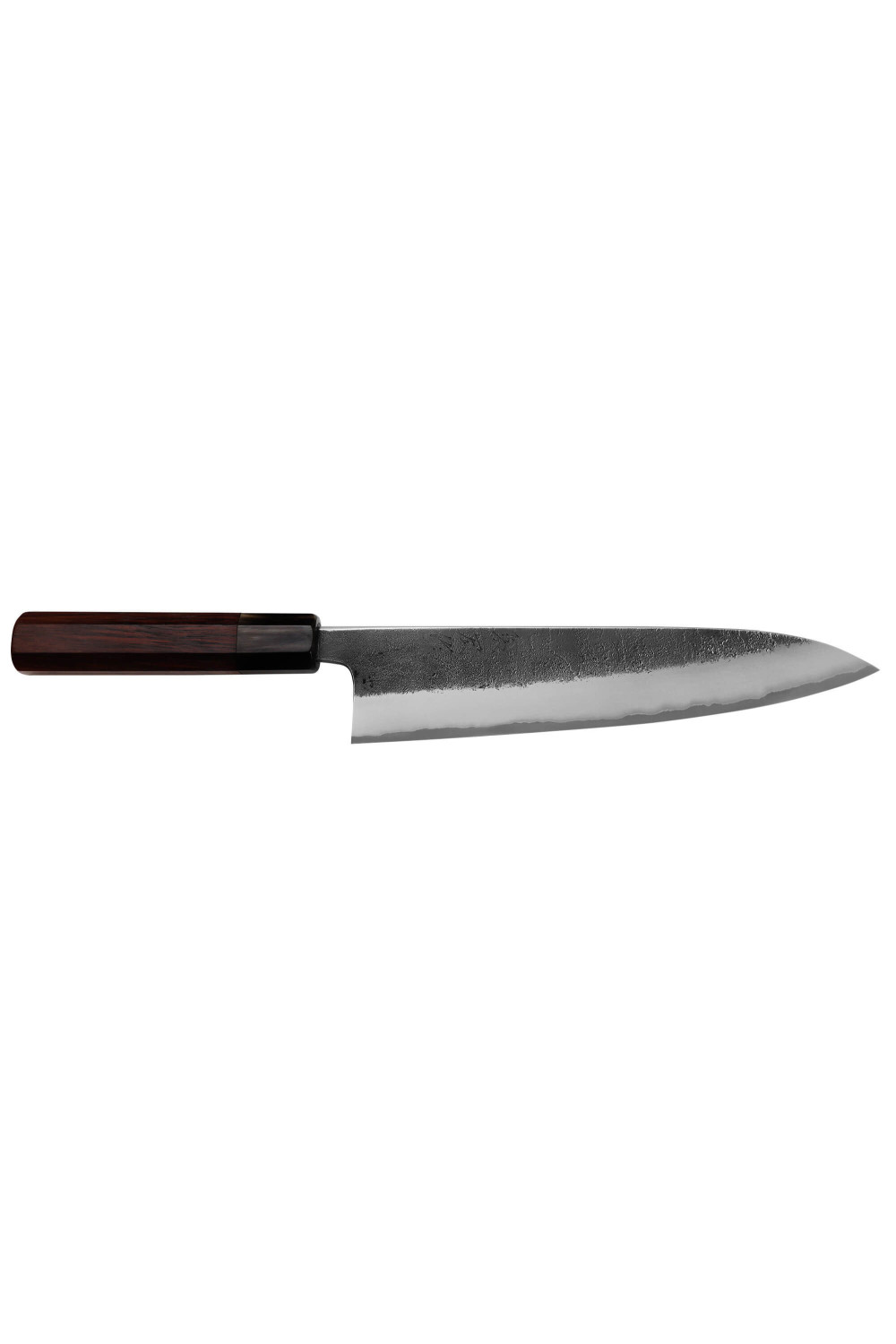
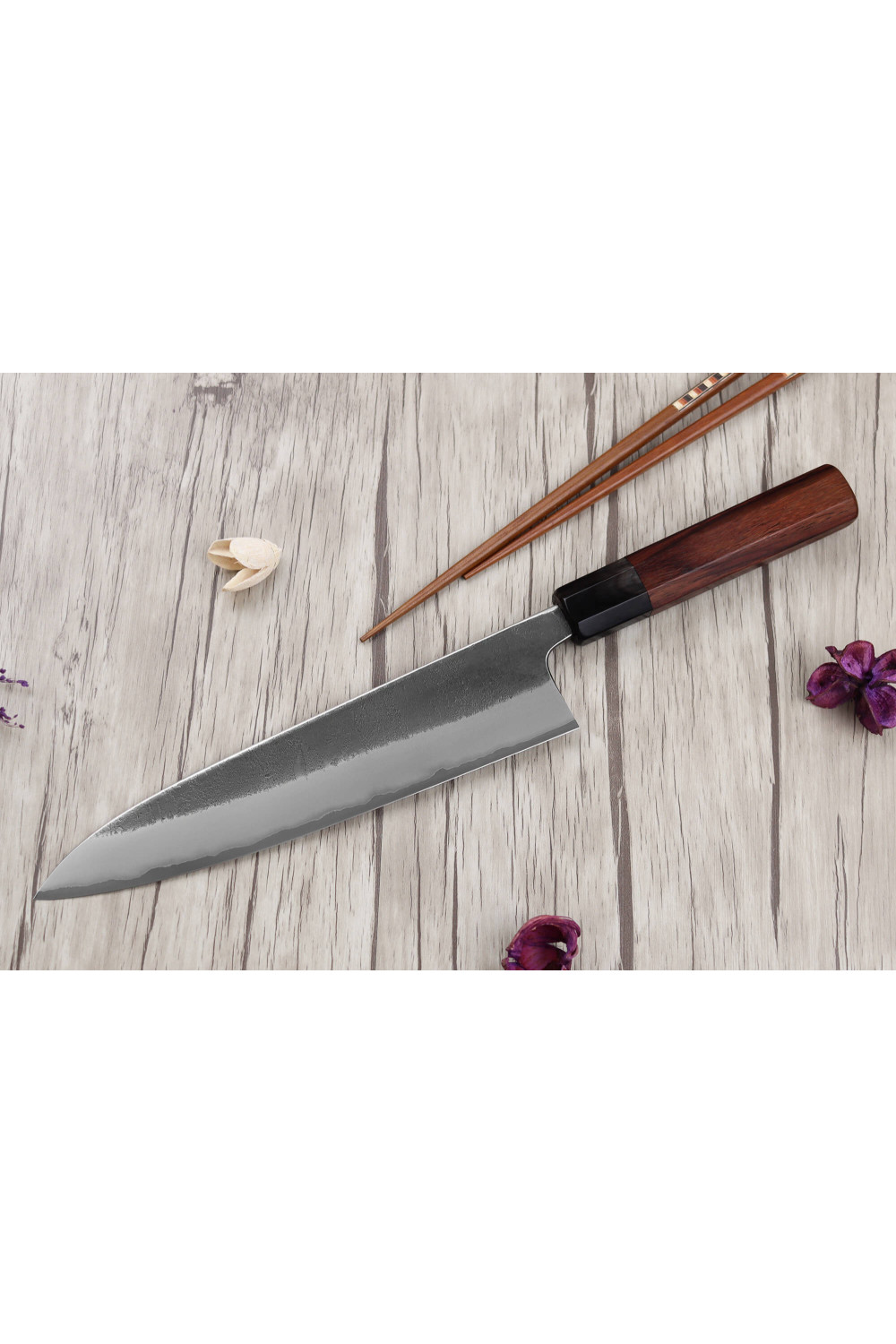
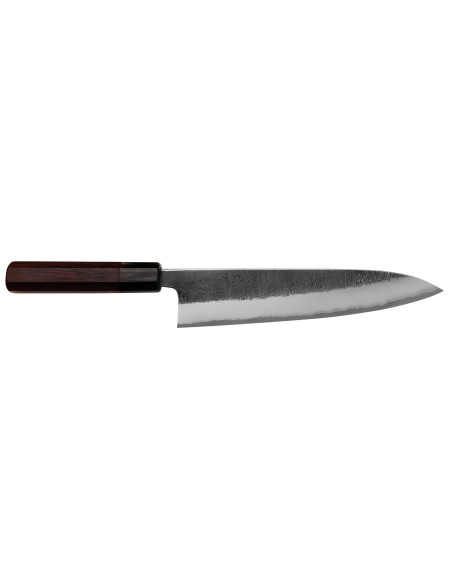
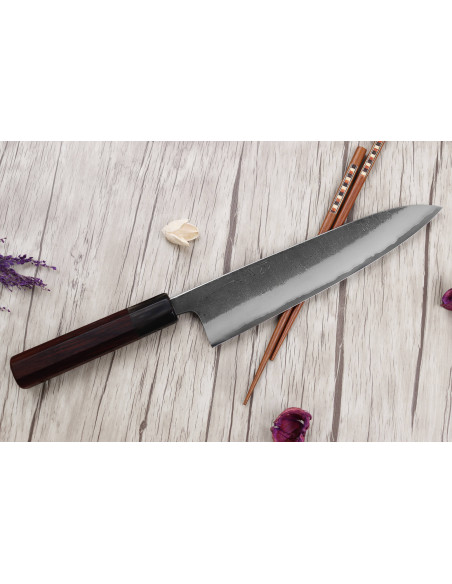
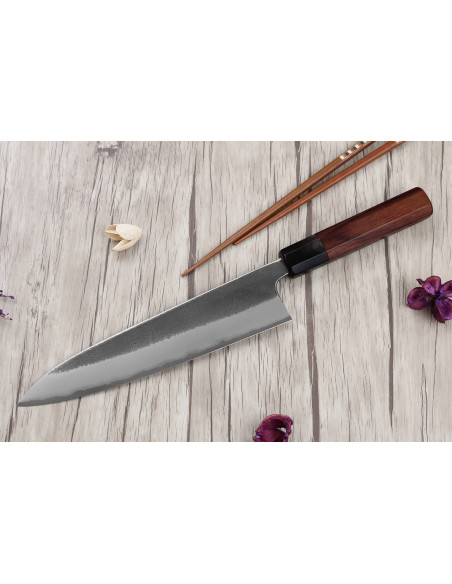
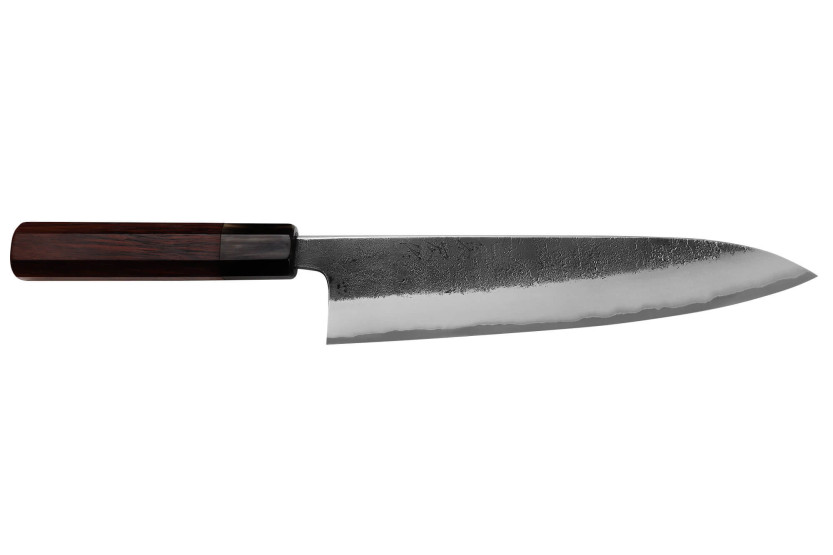
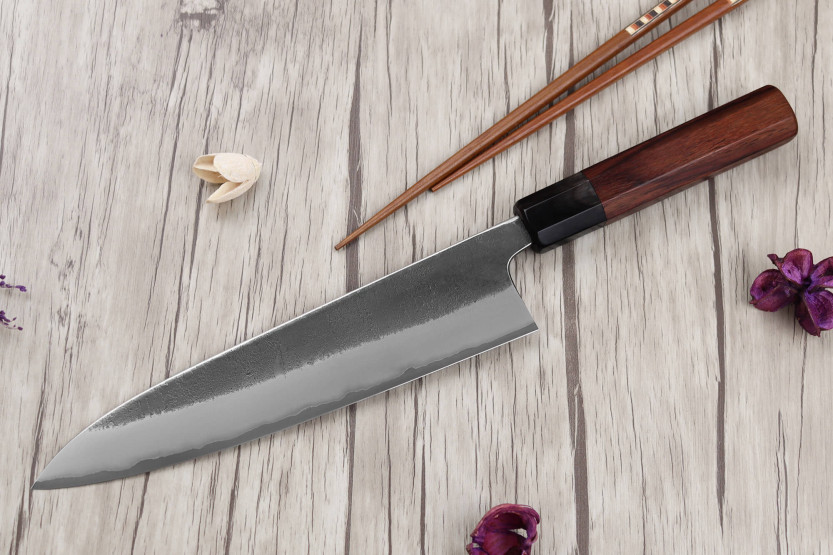
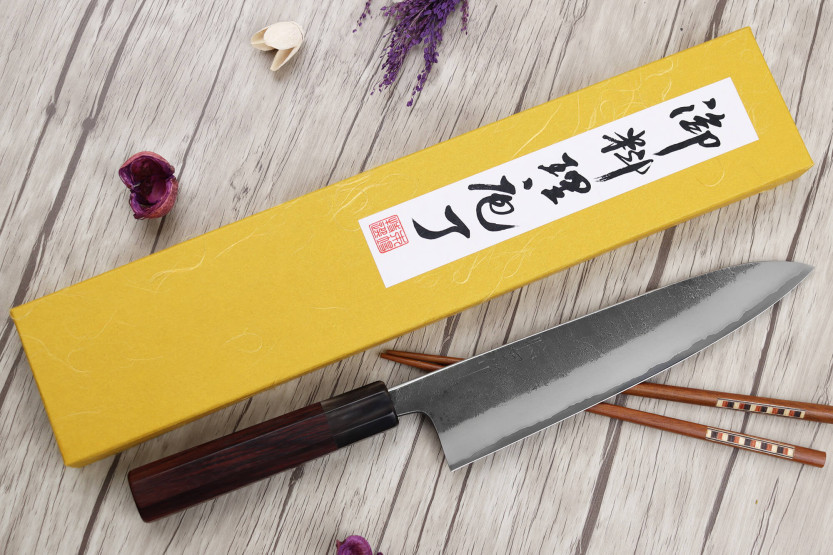
This chef's knife features a 21cm blade in typical Japanese San Maï structure (meaning "3 layers"). This technique consists of forging a rigid steel core, which is then surrounded by a top layer that folds in on itself to form the remaining 2 layers. This process gives your blade greater flexibility, while protecting the core.
The core of this blade is forged in Japanese Shirogami 2 steel (also known as White Paper Steel #2), a renowned alloy produced by the famous steelmaker Hitachi and much appreciated by chefs. Shirogami 2 steel has a high carbon content of 1.3%: this is the essential element that increases a blade's hardness. As proof, its hardness is 62HRC on the Rockwell scale, providing excellent edge retention for a long-lasting, high-performance cutting edge.
Shirogami 2 alloy is also considered pure in its micro-structure. In fact, its micro-carbides are evenly distributed, making it the steel closest to the tamahagane used to make traditional Japanese swords. Thanks to this structure, the blade of your gyuto knife is more resistant to micro-cracking and wear.
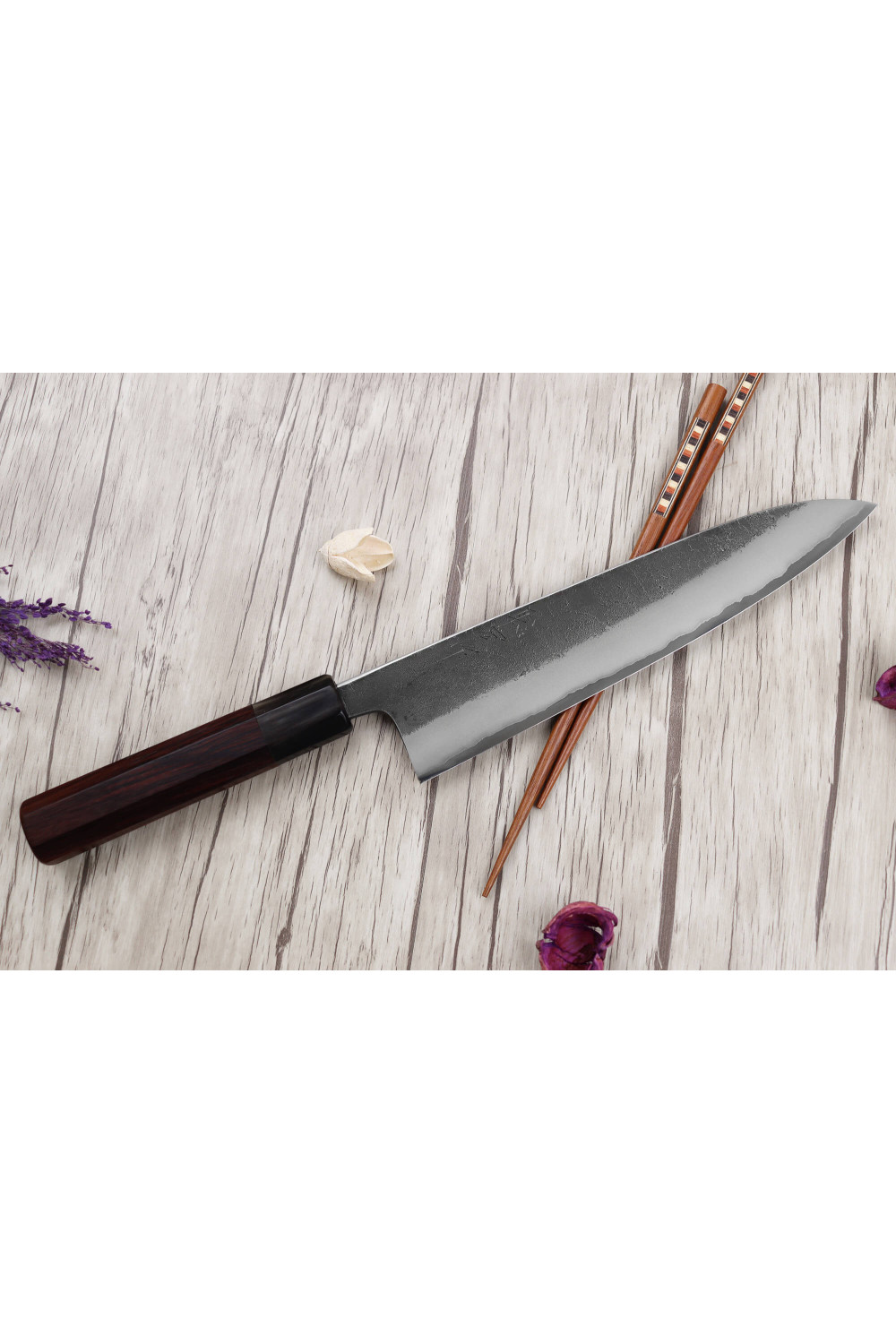
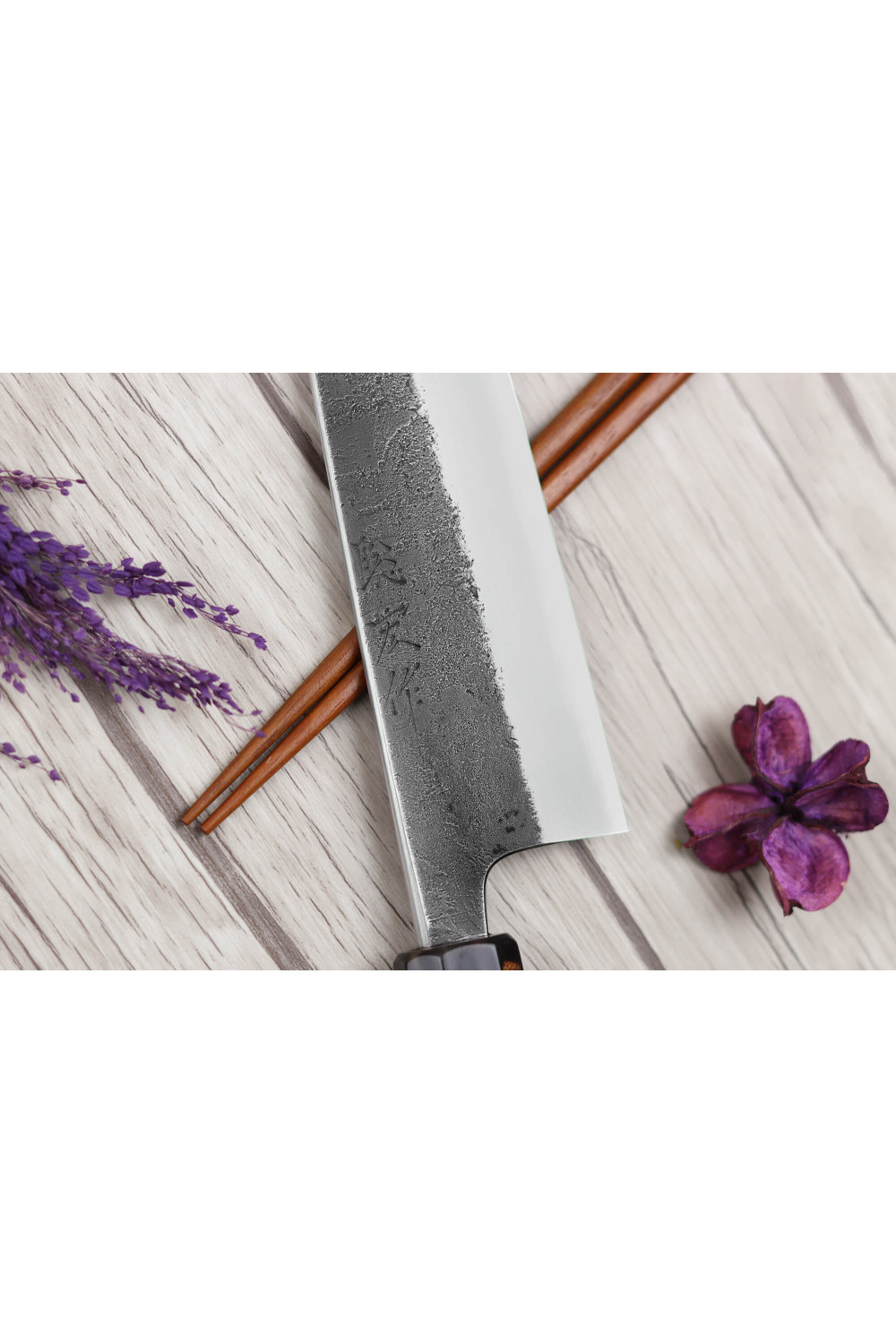
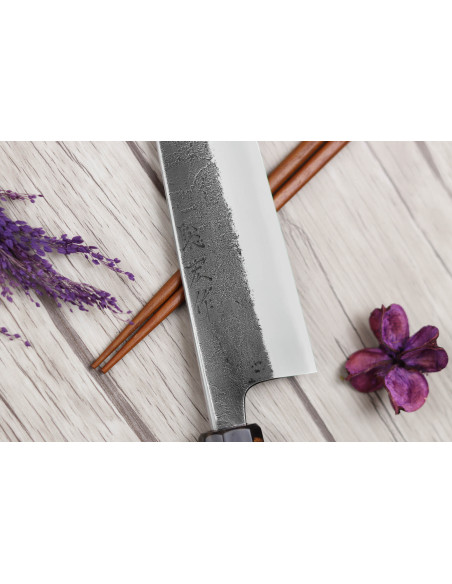
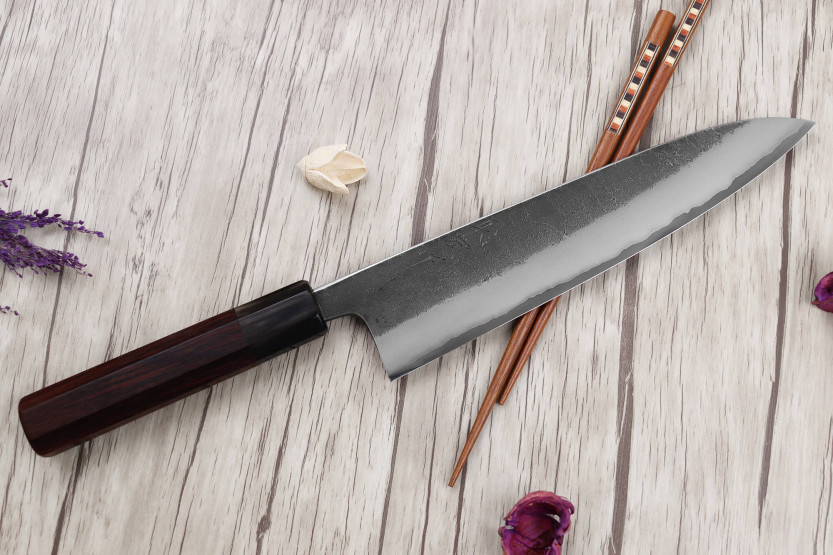
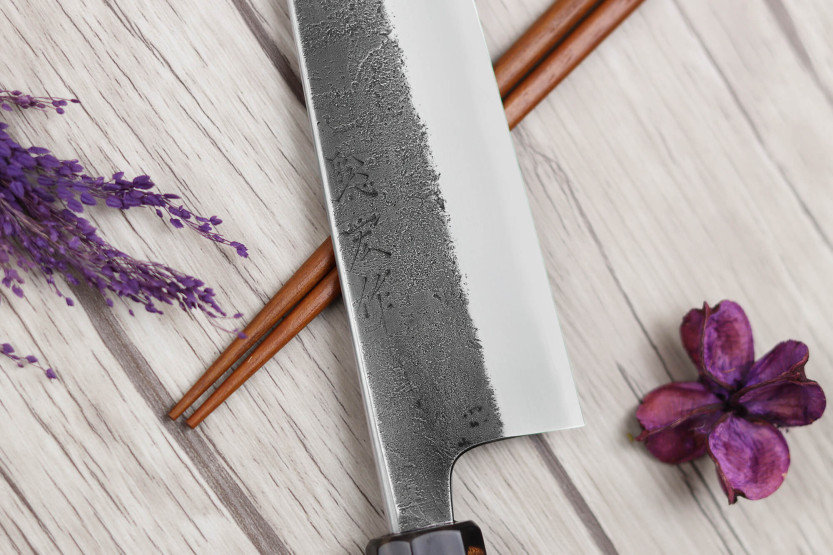
A layer ofsofter steel, called stainless steel, covers the core to protect it and balance its hardness. However, due to the high carbon content of the core, this knife should be considered oxidizable. You can see the superimposition of the different layers of steel all along the cutting edge, where it forms a fine wave with random patterns.
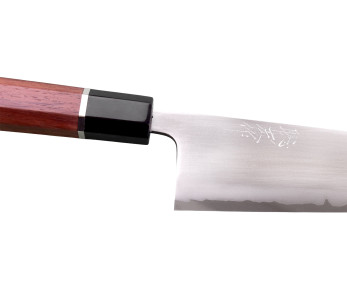
Finally, kanji have been hand-engraved for a touch of authenticity. The blade has a nashiji finish, giving the impression that the surface has not been polished. This effect is achieved using a steel hardening technique that gives the blade a dark, rustic appearance. The result is authentic and traditional, much appreciated by Japanese chefs!
An authentic Japanese knife
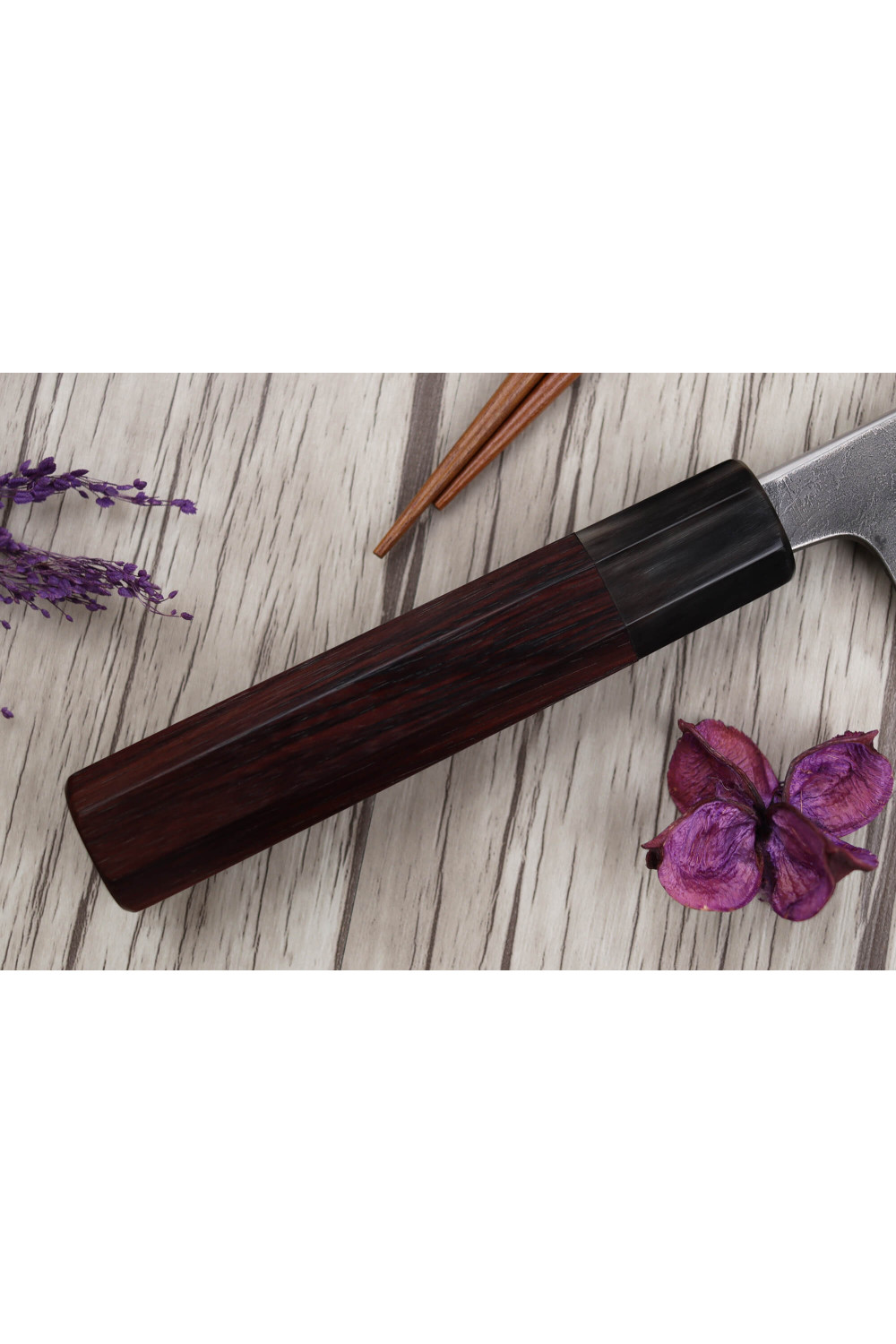
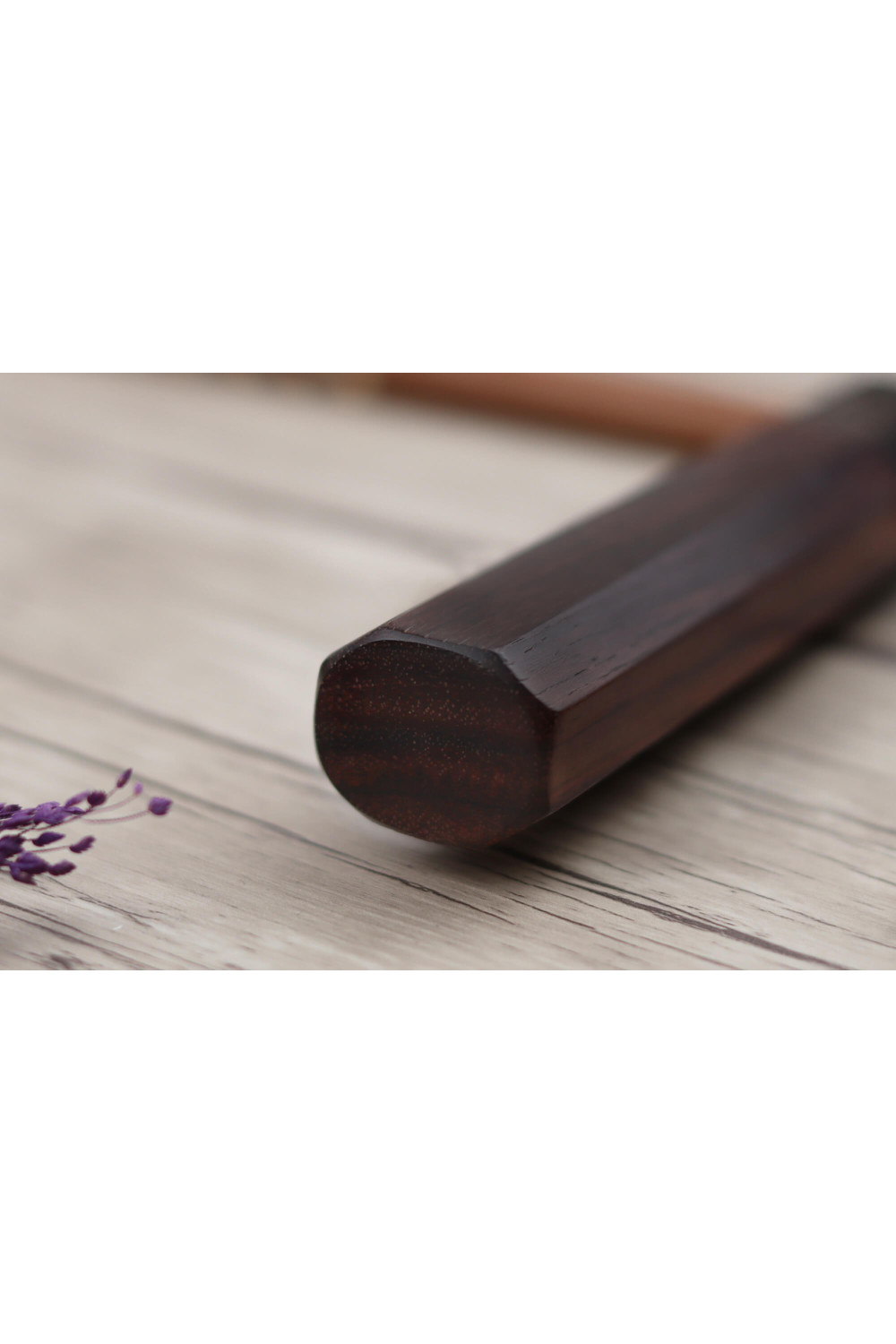
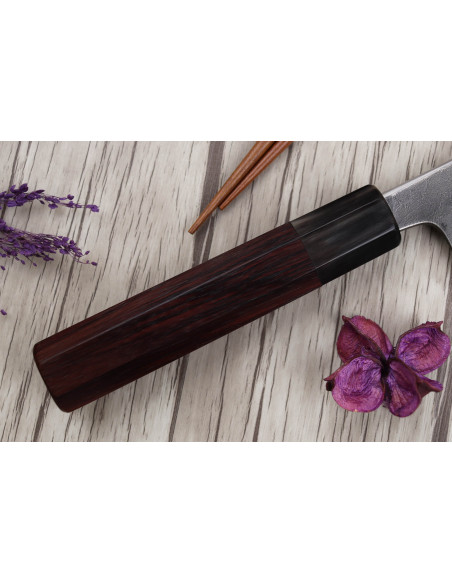
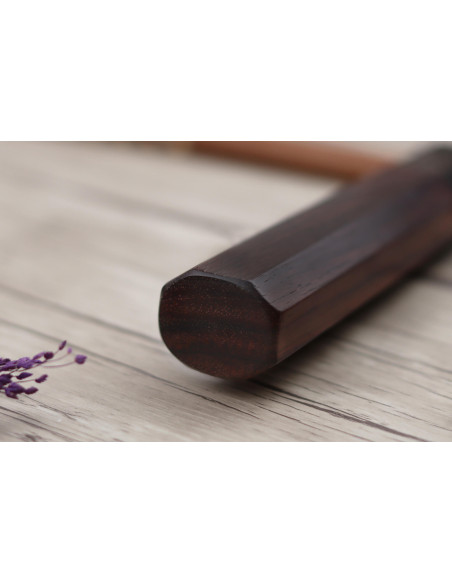
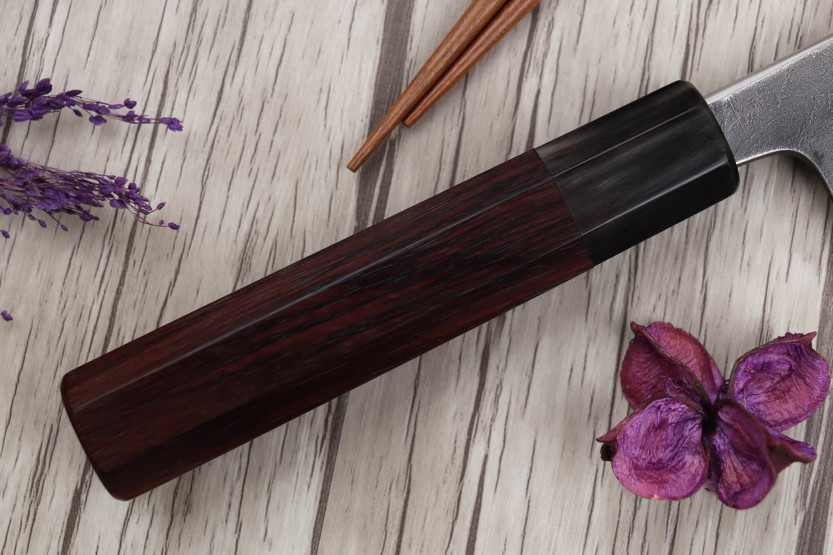
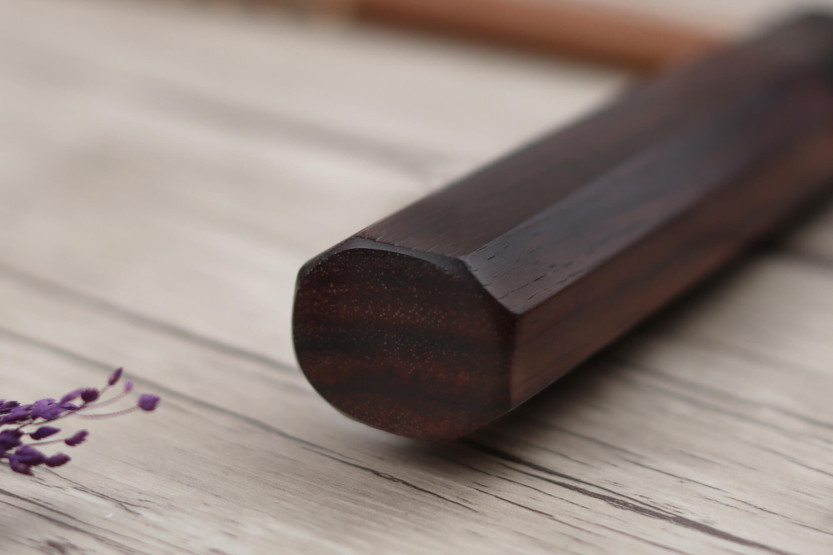
The handle of this Japanese kitchen knife is made from rosewood, a robust species that is resistant to shock and humidity. Its dark brown nuances offer a distinctive grain that is unique to each piece!
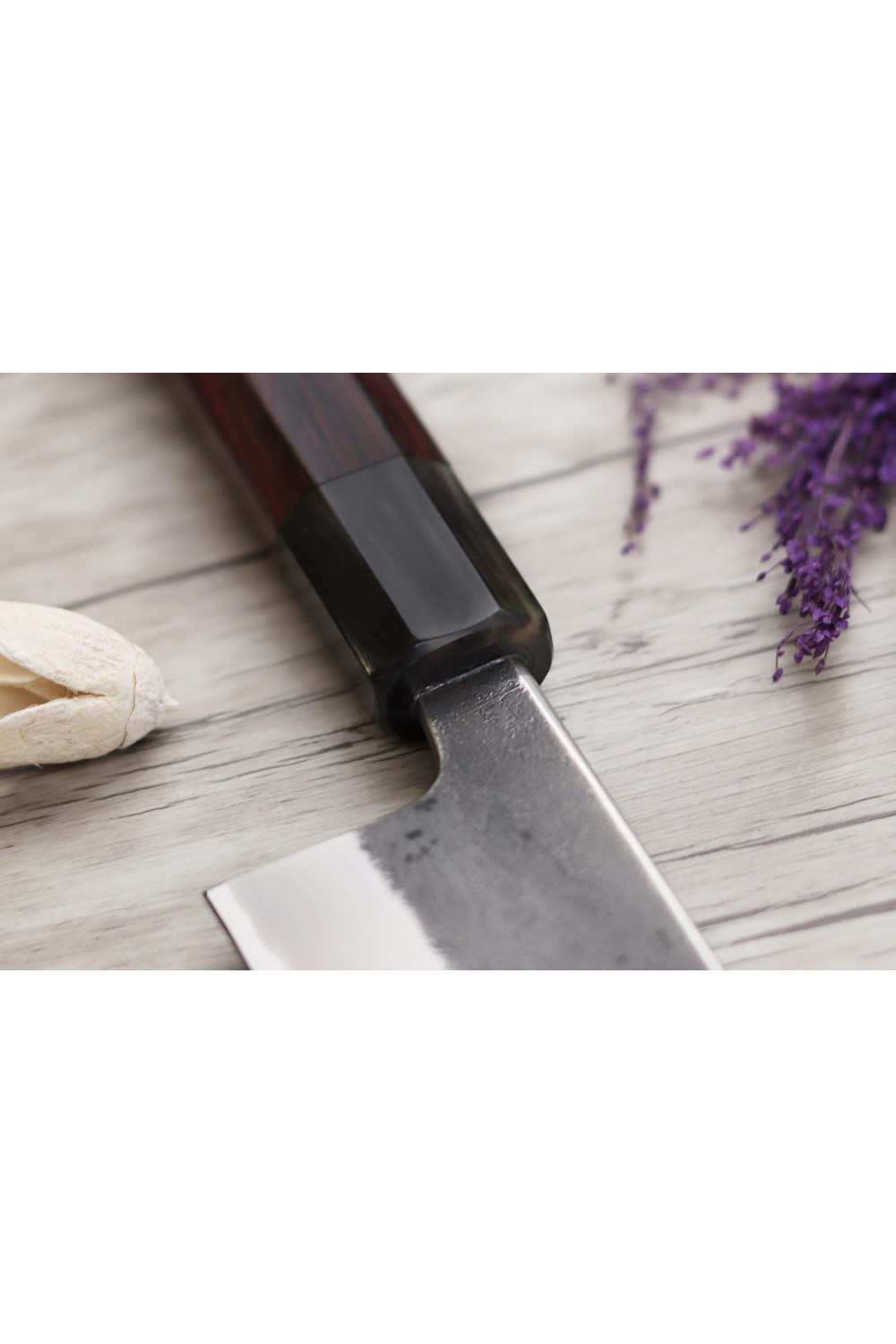
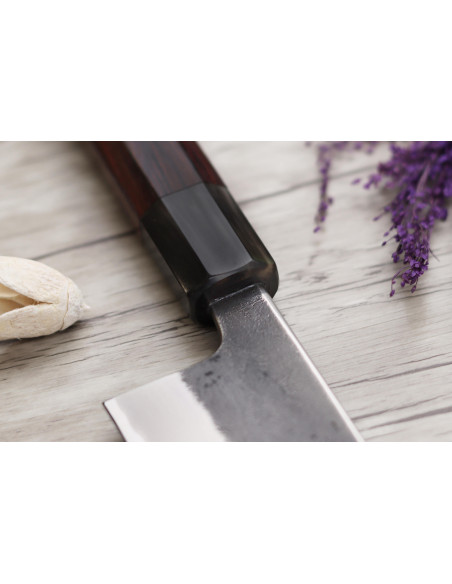
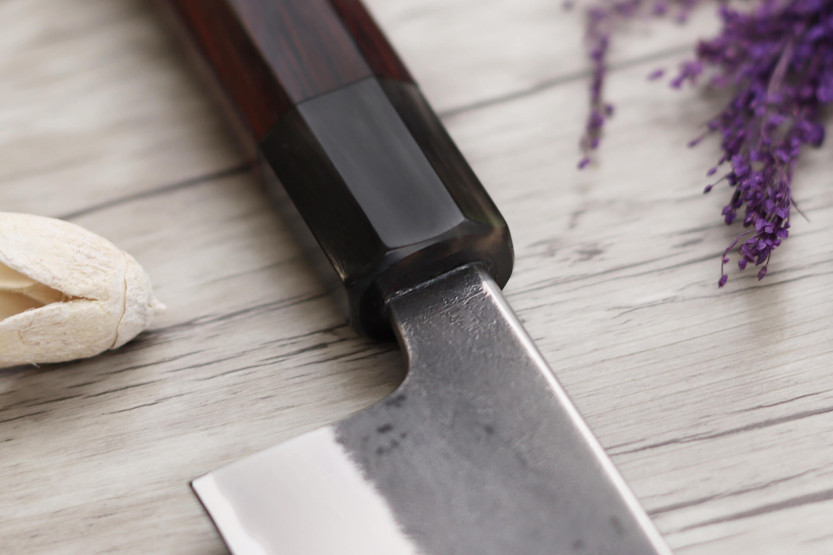
The handle is complemented by a black buffalo horn bolster that links it to the blade. This resistant material adds character to your handcrafted Japanese knife.
The handle of your Japanese knife is octagonal in shape to suit all cooks: right- or left-handed! It offers an ergonomic, comfortable grip for optimum maneuverability, especially during prolonged use.
Finally, wood putty has been added where the blade joins the handle to fill any small gaps. This prevents water from seeping in and makes the whole unit watertight.
How to care for your handcrafted kitchen knife?
To care for your carbon knife, wash it only by hand with a non-abrasive sponge and mild detergent, avoiding wetting the handle. Once washed, wipe dry immediately to remove all traces of moisture and store in a dry place. Do not use the dishwasher, and do not leave your handcrafted knife to soak in the sink.
Over time, the color of your blade may change slightly: this is normal! This is a natural reaction of the carbon caused by the acidity of the food you're cutting or the humidity in the air. To preserve its initial appearance, you can apply a little oil from time to time.
Find all knives forged by Toshihiro Wakui on KnifeLeader.eu!




 By buying this product you can collect up to