Japan is a country of tradition, and the methods used to create kitchen knives are based on the ancient techniques of Samurai sword smiths, spanning many centuries.
Tsunehisa knives are made here by a small team of skilled experts. This manufacturer places great emphasis on the efficiency of the cutting edge of its blades. You'll appreciate Japanese expertise, while benefiting from a very sober design, studied for ease of use by Western cooks. These knives are suitable for professional use, but will also be a pleasure to use for the passionate amateur.
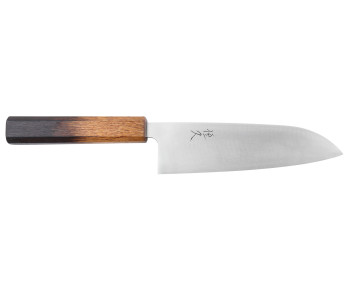
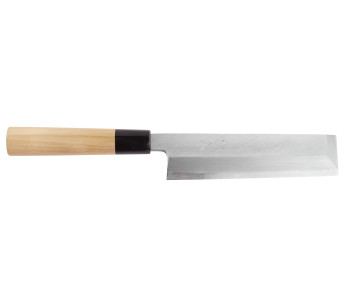
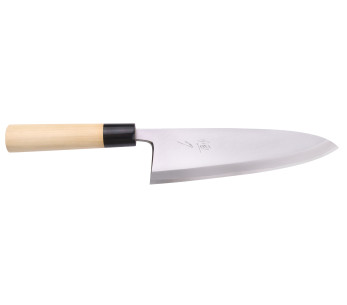
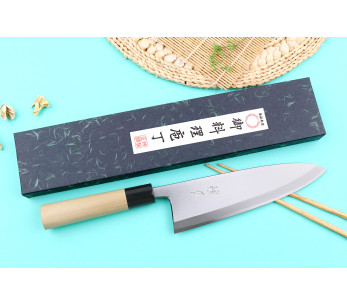
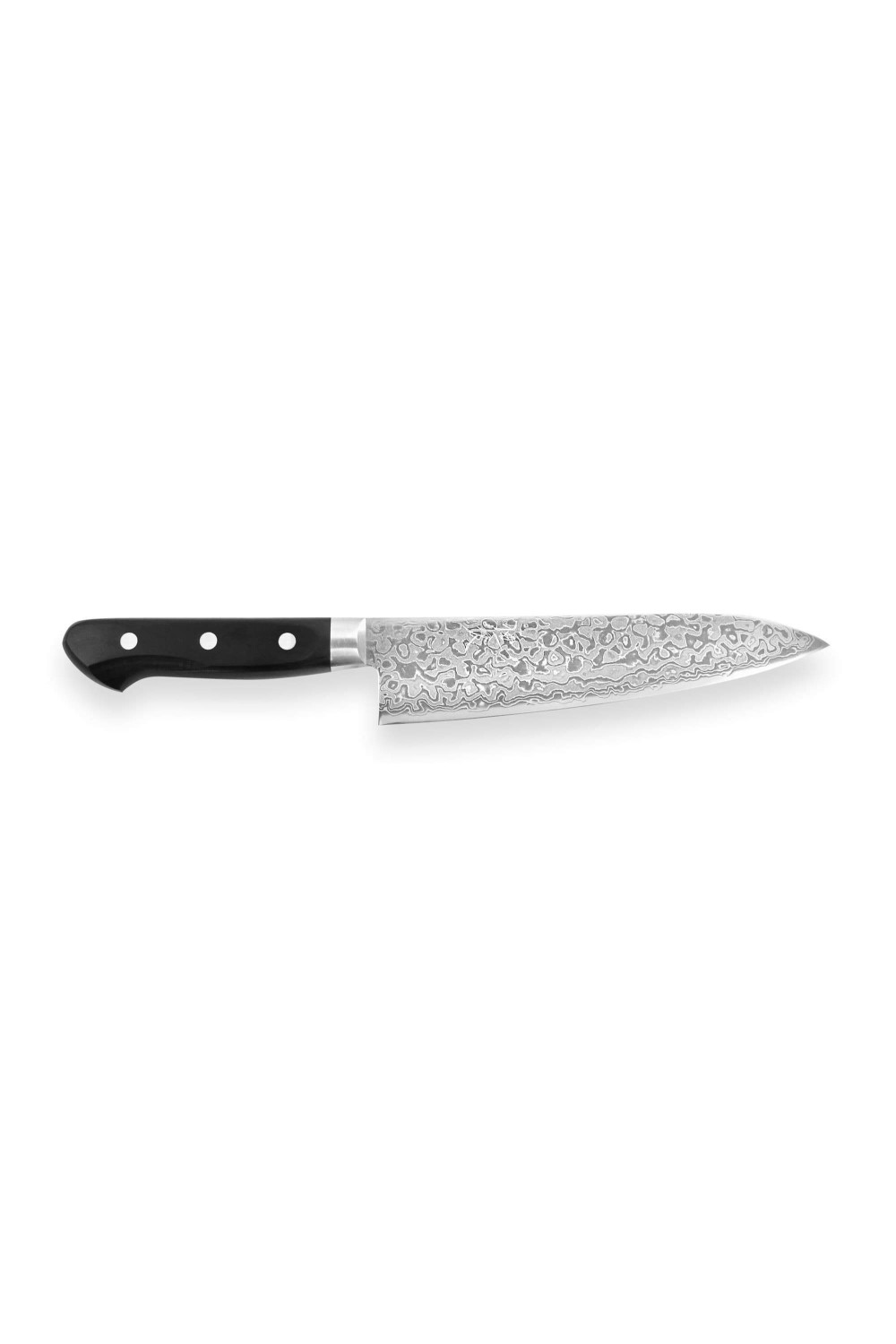
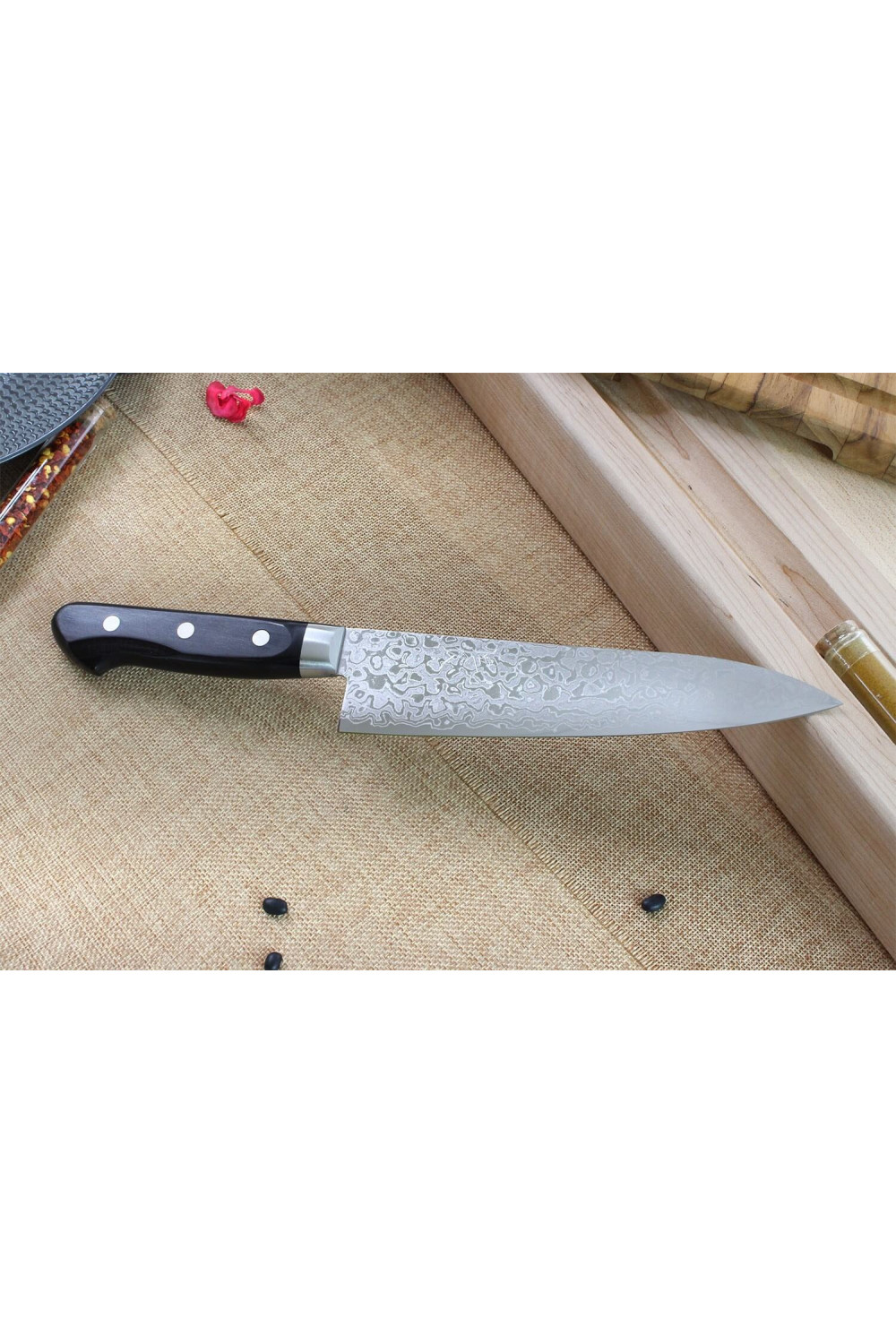
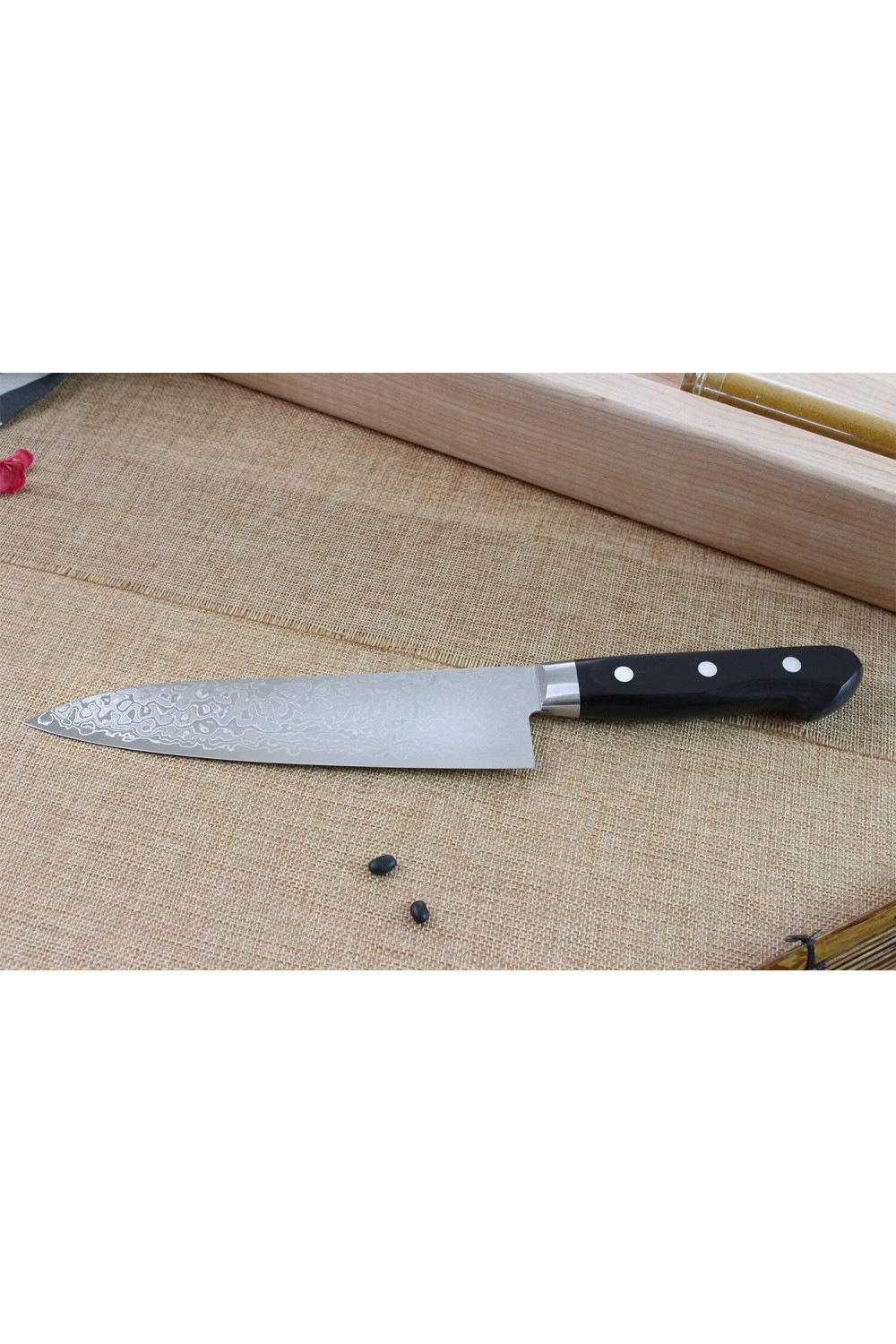
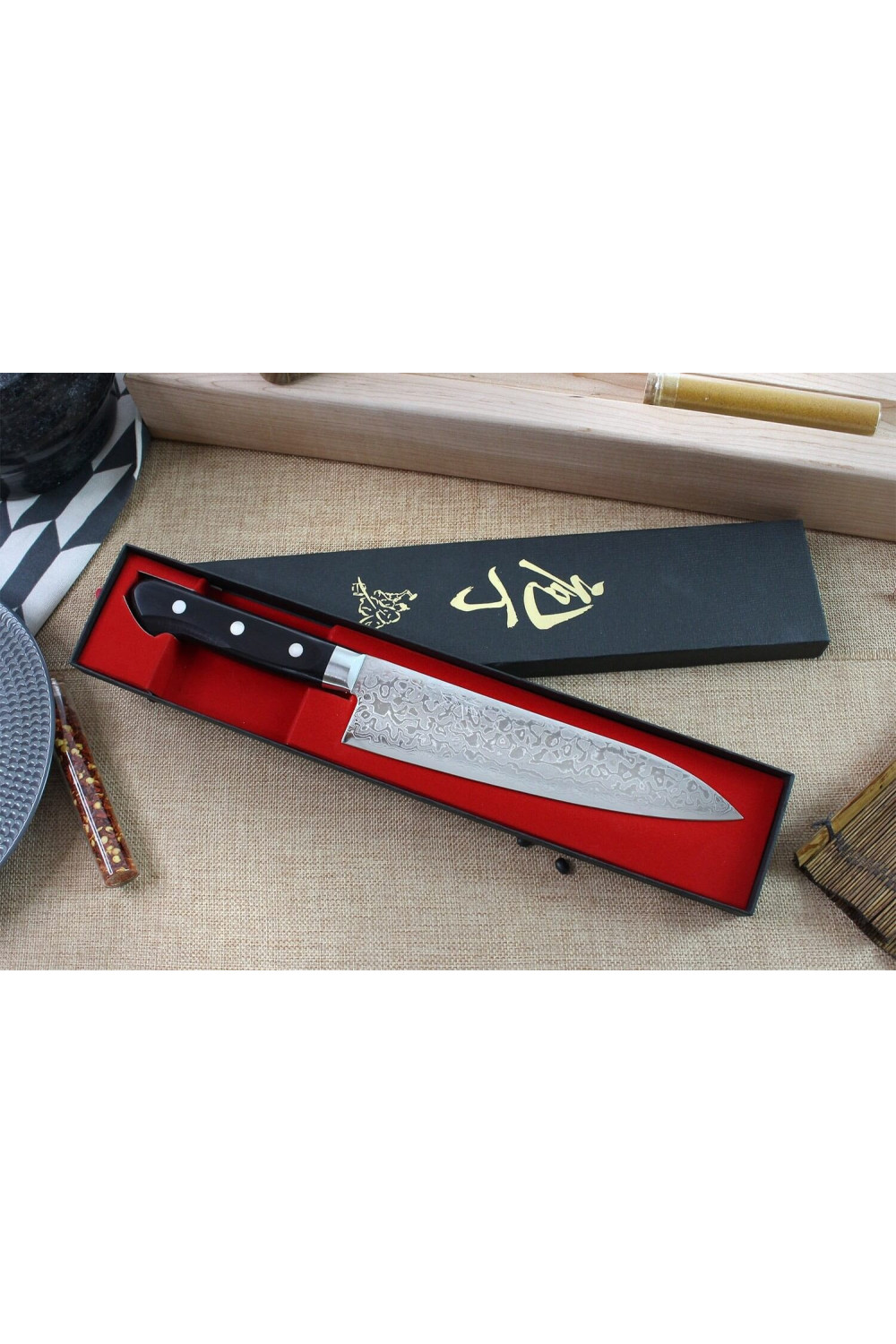
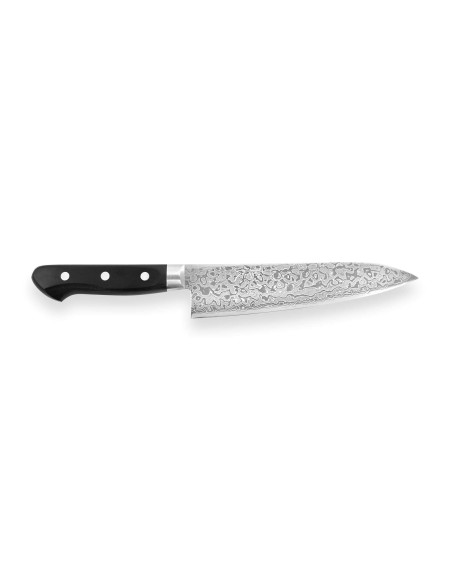
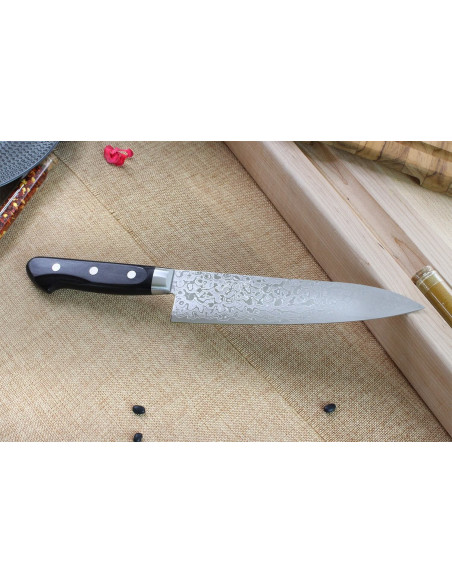
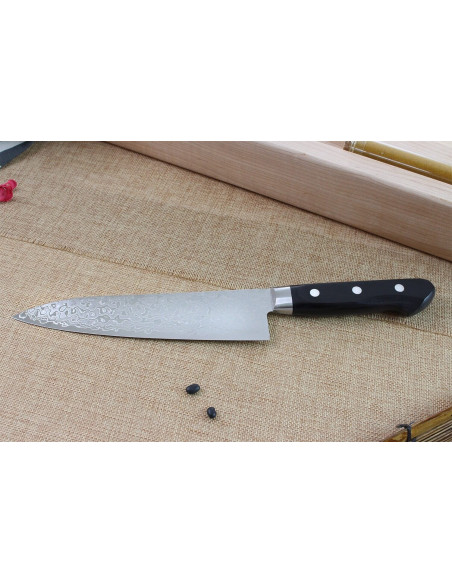
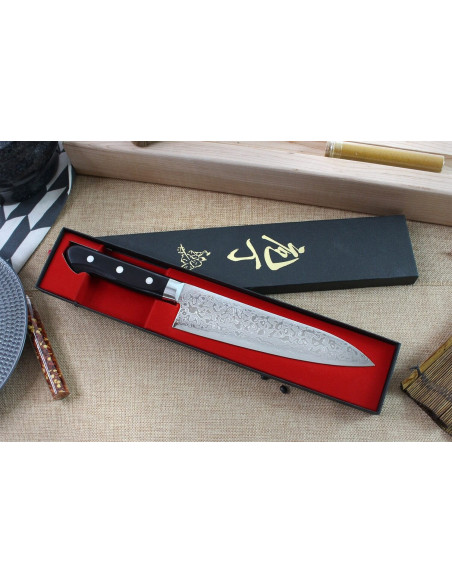
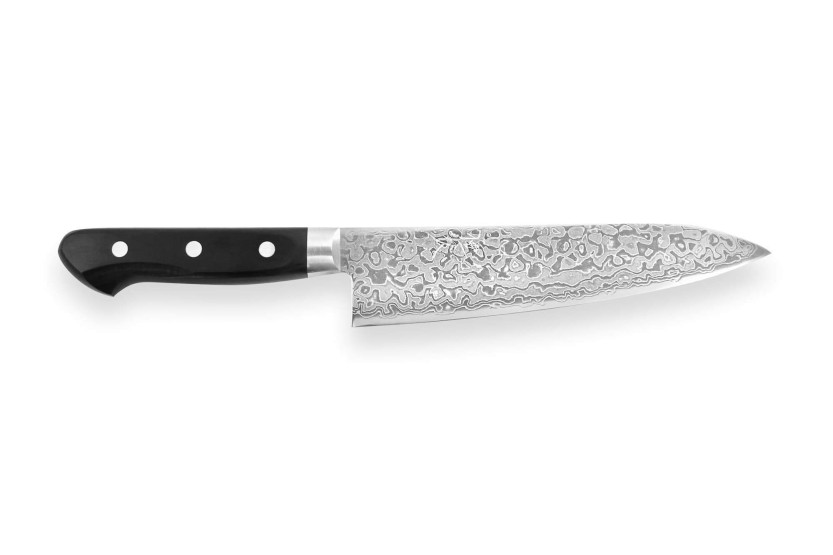
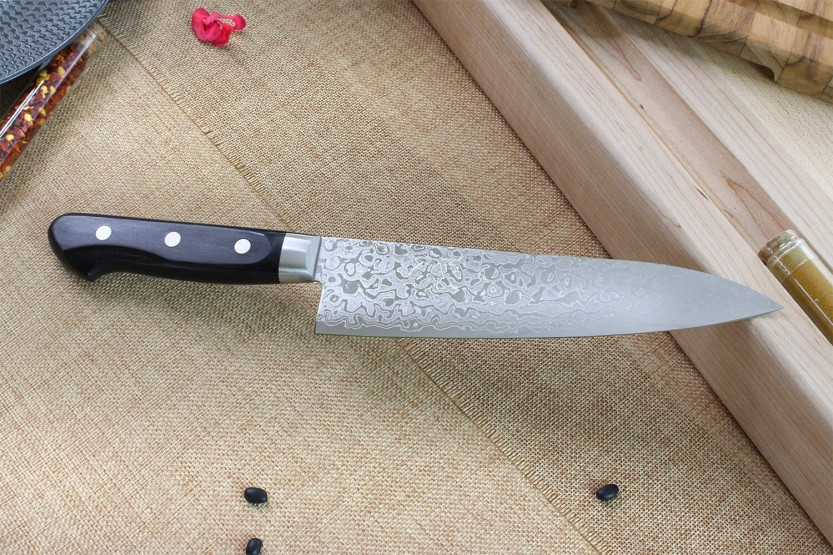
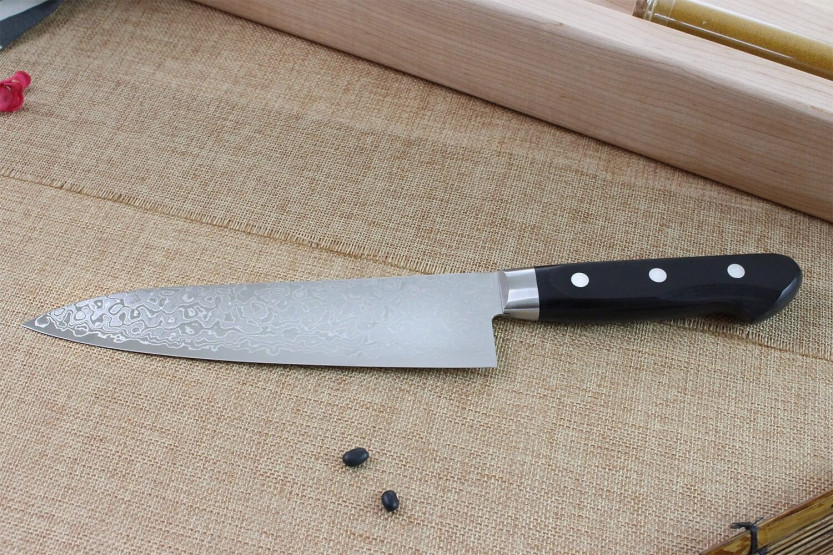
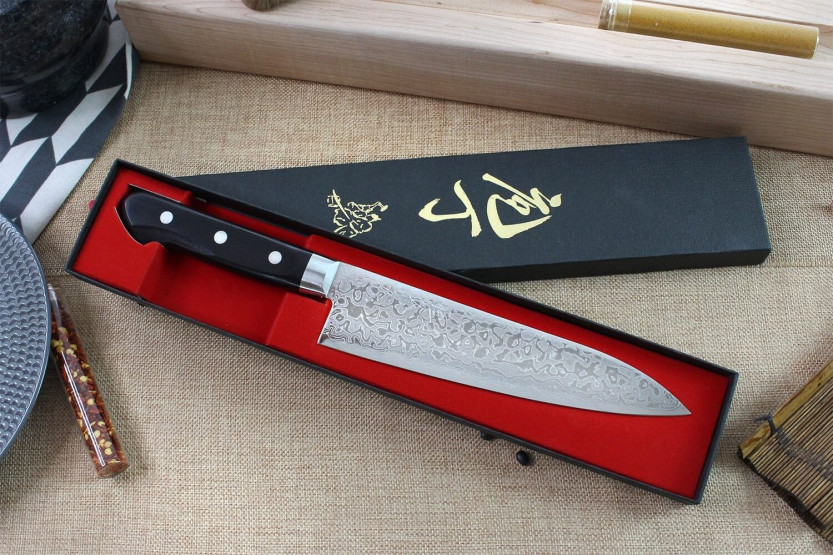
This Tsunehisa VG10 Damascus 18cm chef's knife is made from quality materials, and will last you for years! It's considered a jack-of-all-trades, enabling you to cut, chop, chisel or mince with ease. It's a kitchen essential!
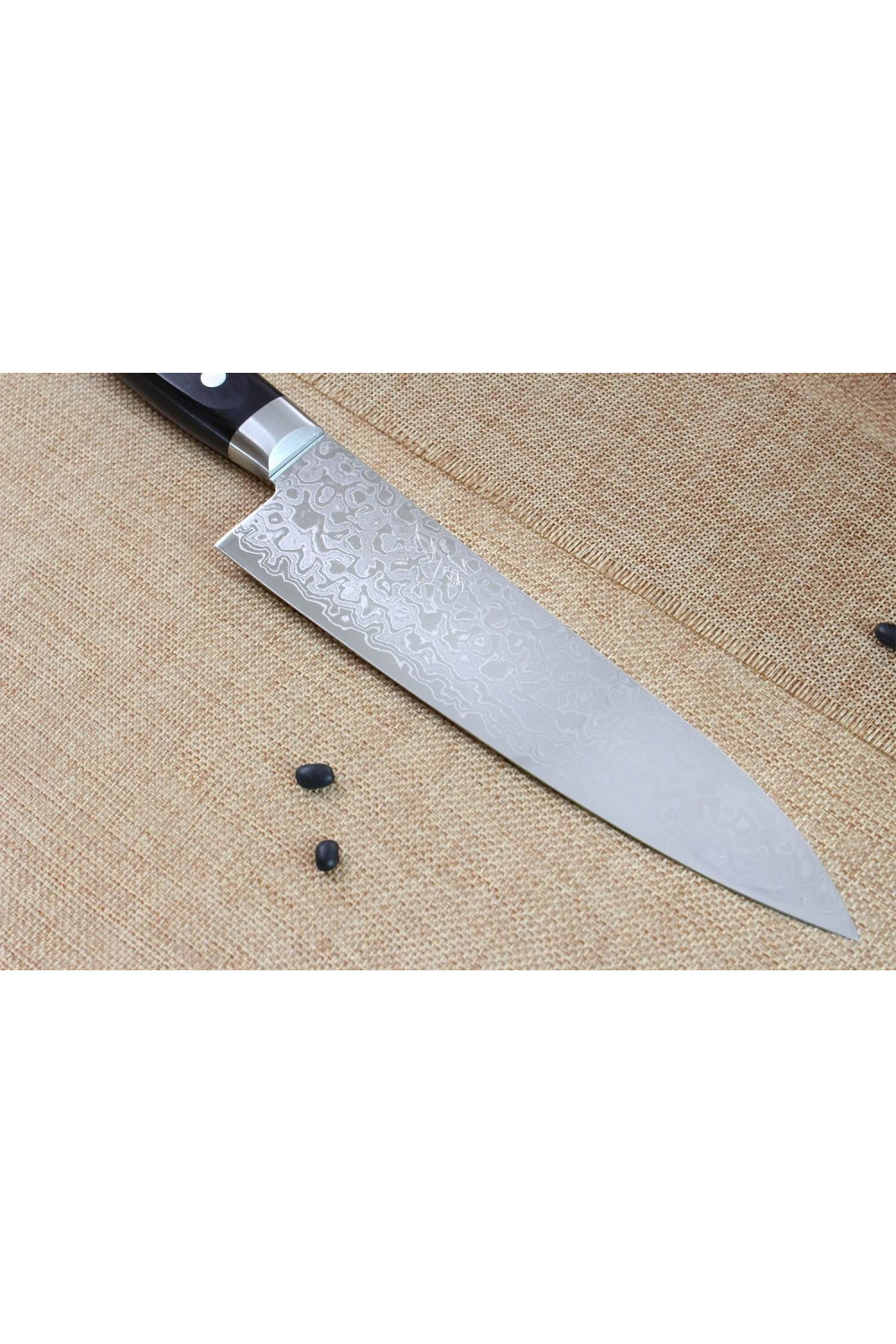
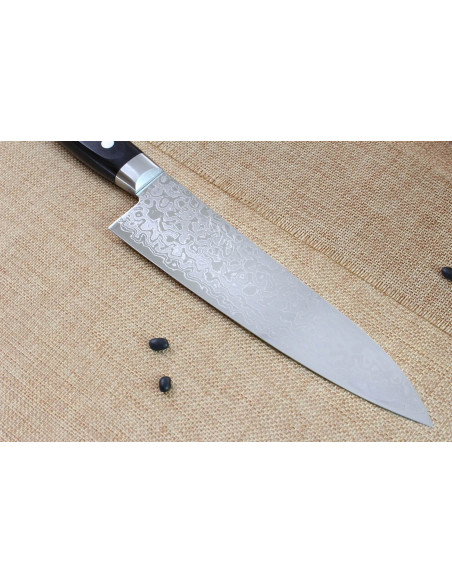
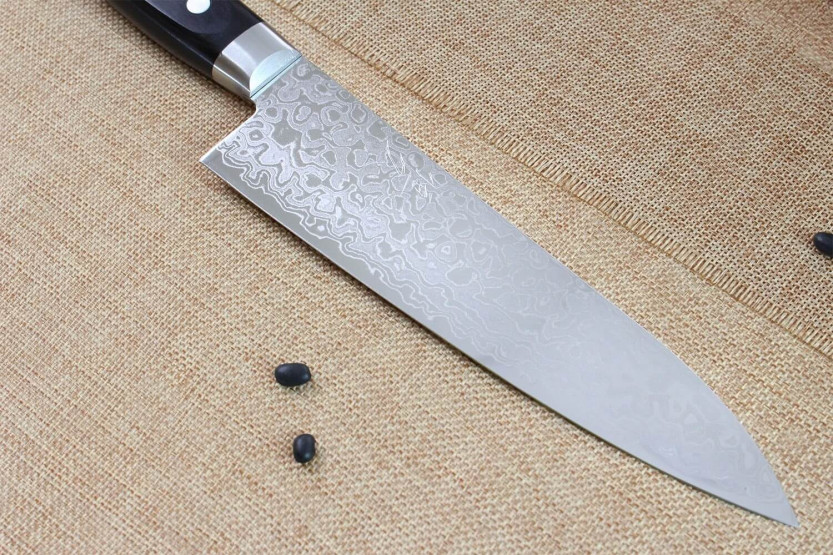
Its blade has several components. First of all, it has a core of VG10 Japanese steel, an alloy renowned in the cutlery world for its many advantages. Firstly, it contains 1% carbon (compared with an average of 0.5% for Western knives), making it extremely rigid (around 60 HRC on the Rockwell scale). The impact of such a high carbon content is as follows: the knife has a very rigid edge, which enables it to keep its sharpness longer. Also, it can withstand a razor-sharp finish, which you can achieve when you go to sharpen it: it will be able to hold up to such a degree of performance. Secondly, VG10 has a very good chromium content, making it resistant to corrosion (maintenance, though it must be done with care, is made easier).
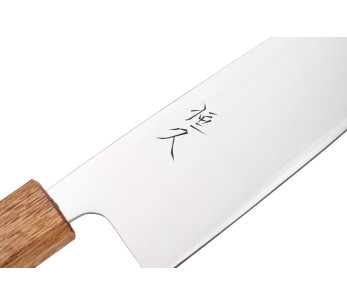
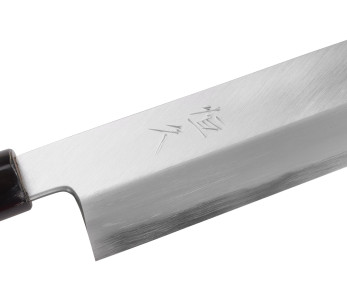
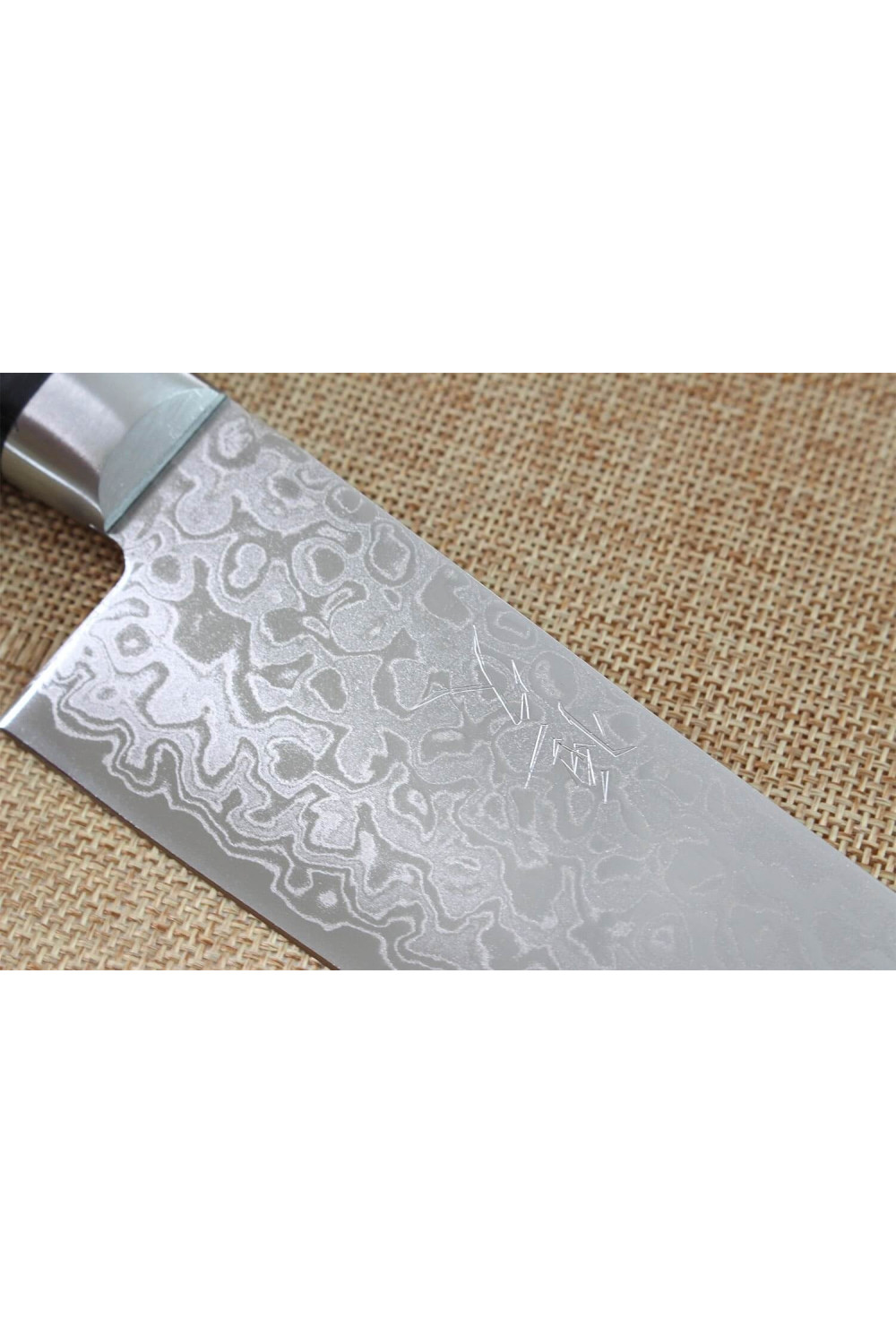
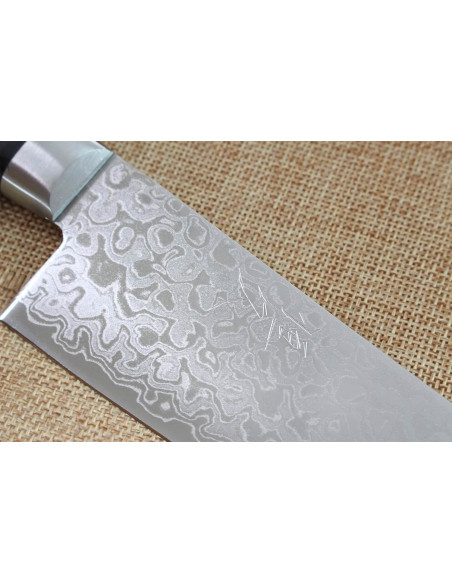
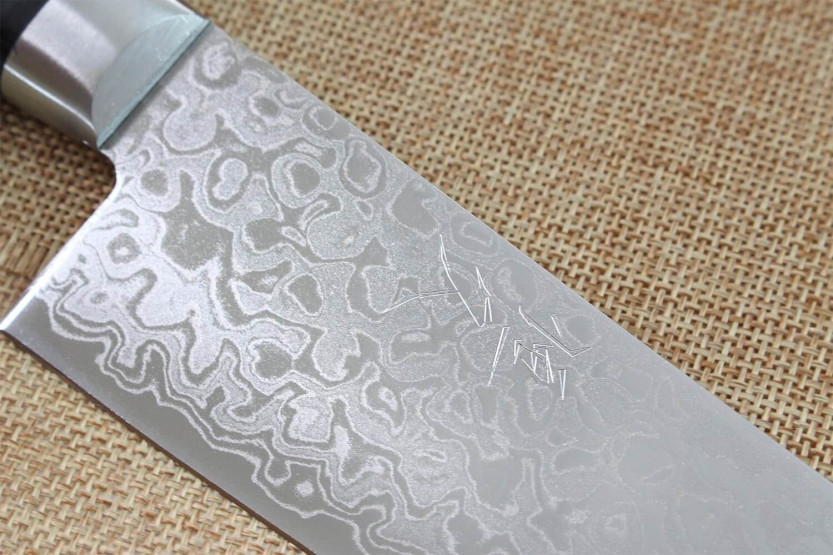
This special core is surrounded by 22 layers of softer steel, folded one on top of the other. This is called damascus, and Japanese blacksmiths are masters of the art. In total, there are 45 layers (the 22 folded, with the core also counted) and you can see them intertwining on the cutting surface, on both sides of the knife. Last but not least, the brand's logo has been affixed to the cutting surface, for added authenticity.
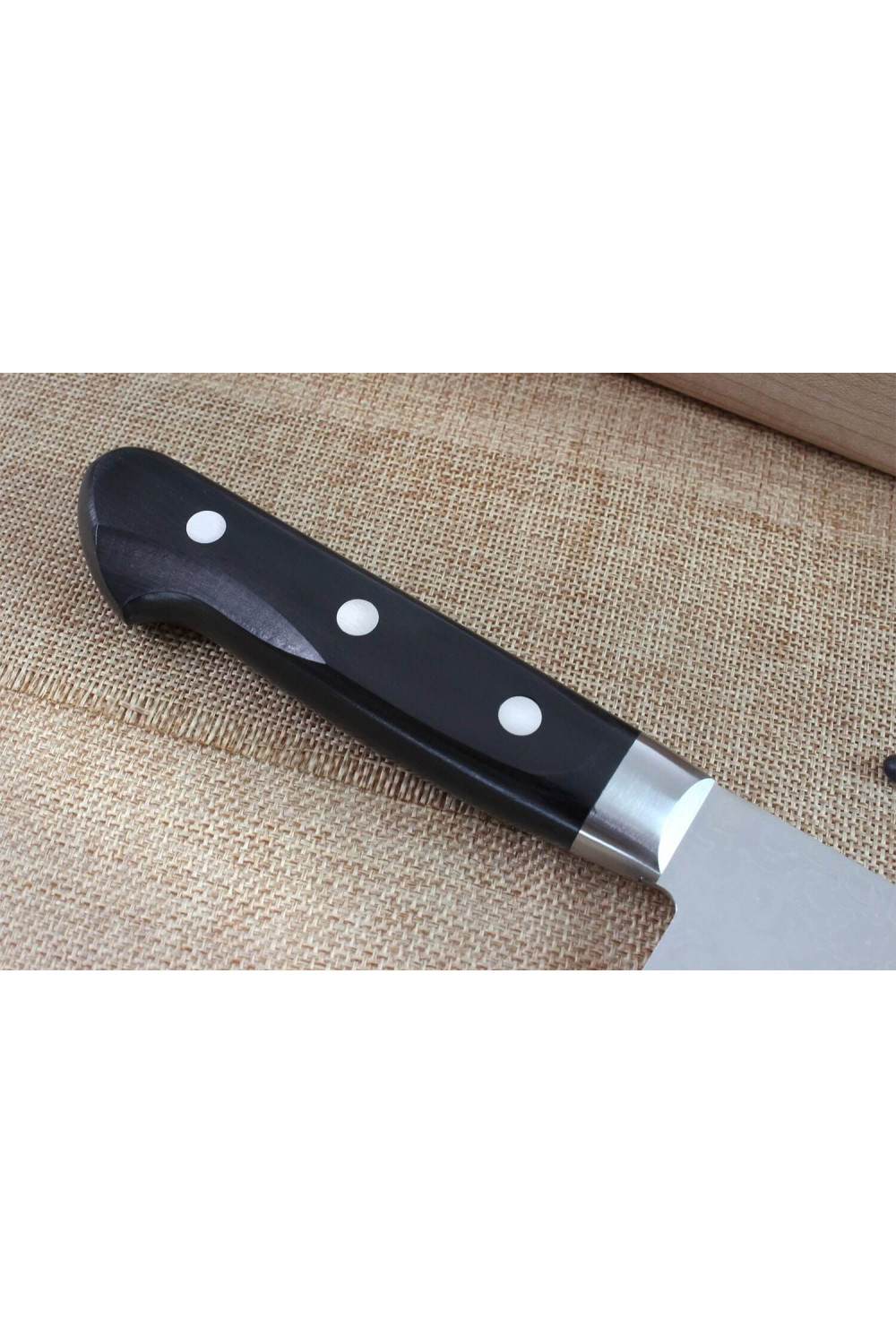
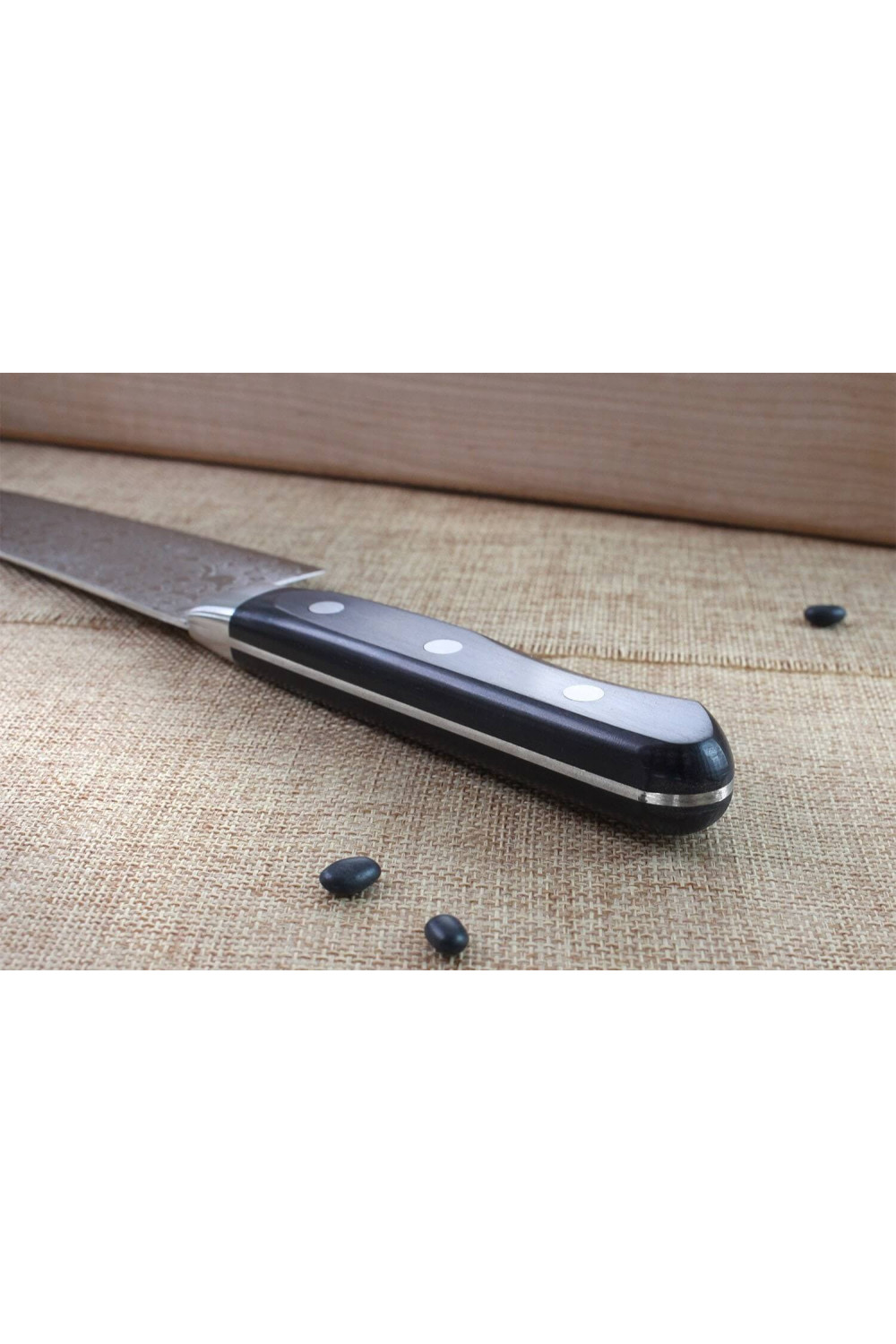
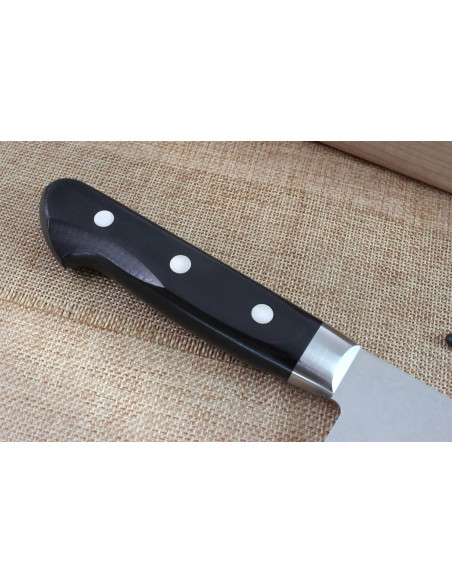
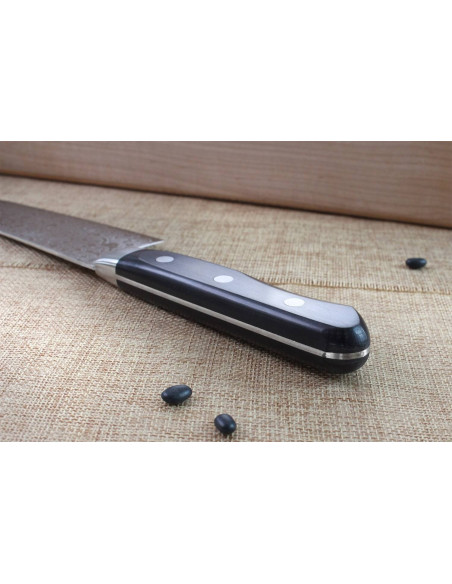
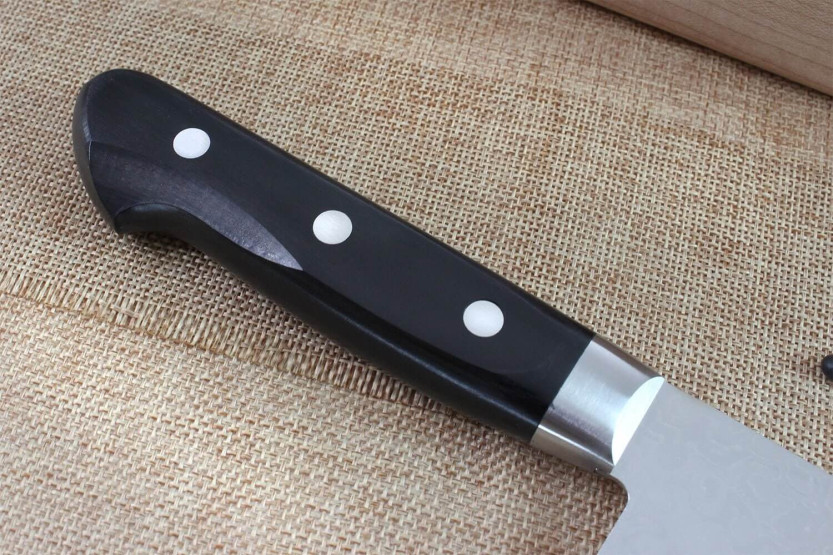
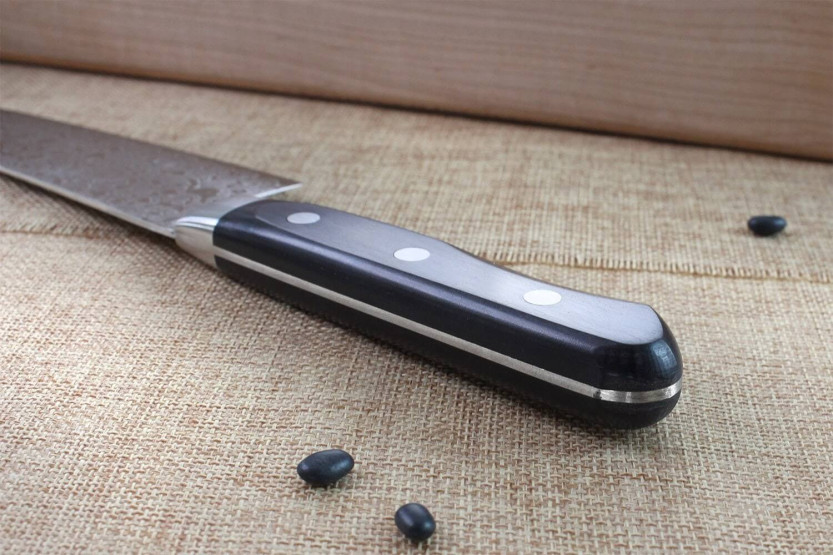
The handle, meanwhile, is made from Pakkawood, a composite material combining laminated wood and resin, which are hot-pressed together. The end result looks a little like wood (as you can make out slight veins on its surface). It's a popular material because it's antibacterial, but also resistant to temperature variations and humidity. It is complemented by rivets that hold the steel blade together with the Pakkawood parts.
The handle has been hollowed out on the sides, to make the grip more pleasant and natural, with less pronounced edges. The knife can be used by right- or left-handed cooks. A stainless steel bolster links the blade to the handle.
Care: wash the knife by hand (dishwashers are not permitted) and wipe with a soft cloth immediately afterwards for thorough, gentle care. This will help to preserve it over the long term, since even though it is considered stainless, it is nevertheless highly enriched with carbon, which is oxidizable.
Choose among Tsunehisa knives on KnifeLeader!




 By buying this product you can collect up to