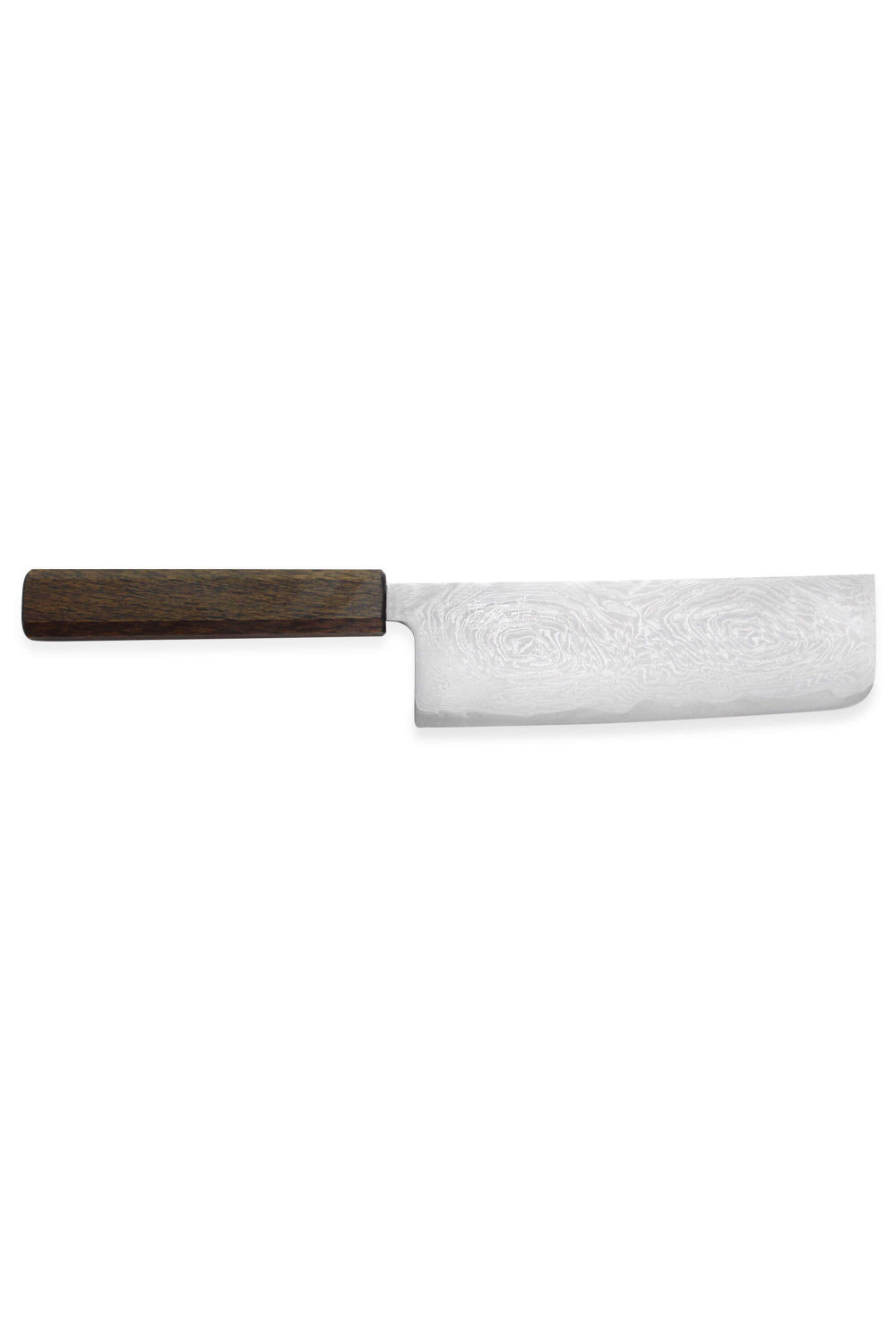
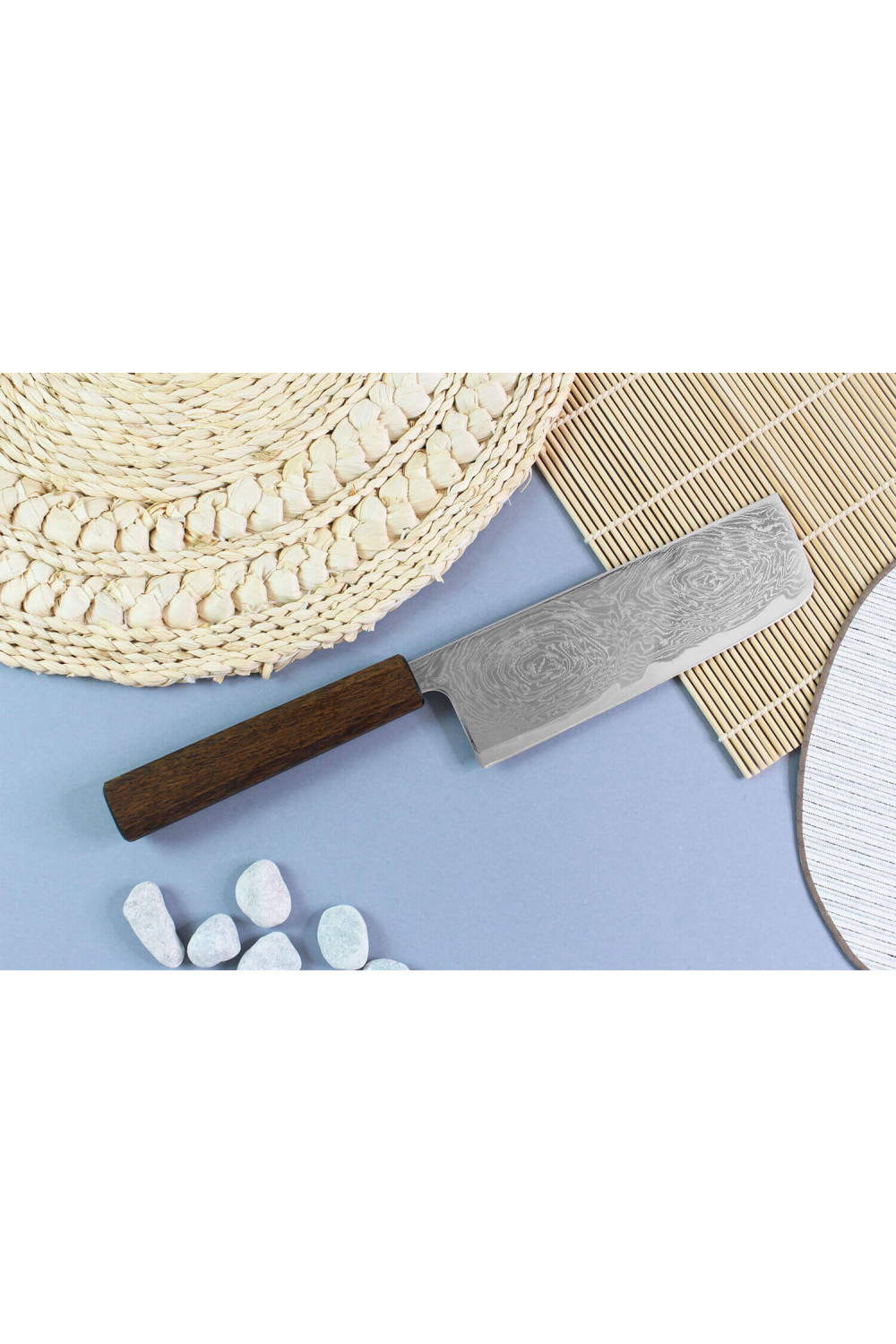
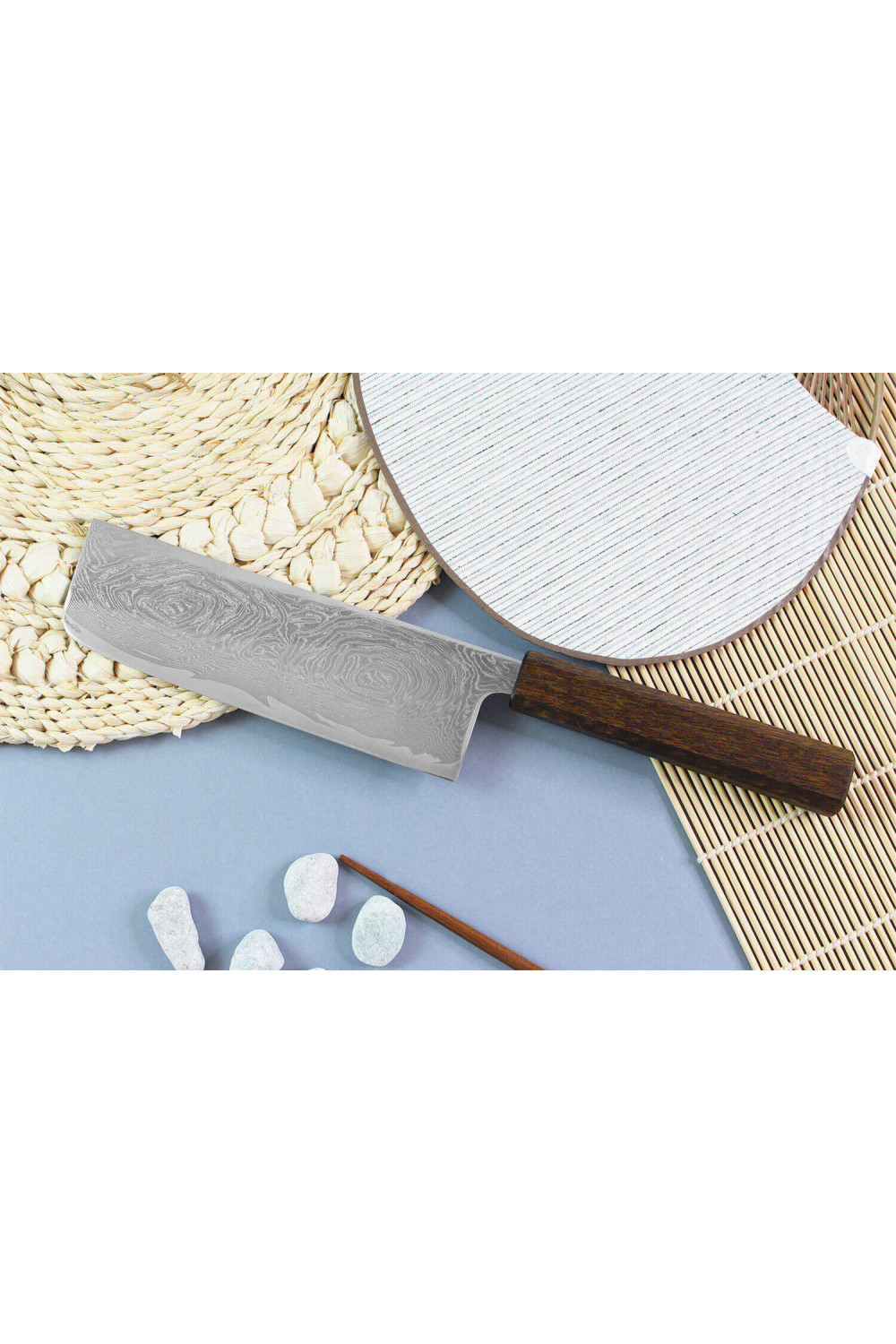
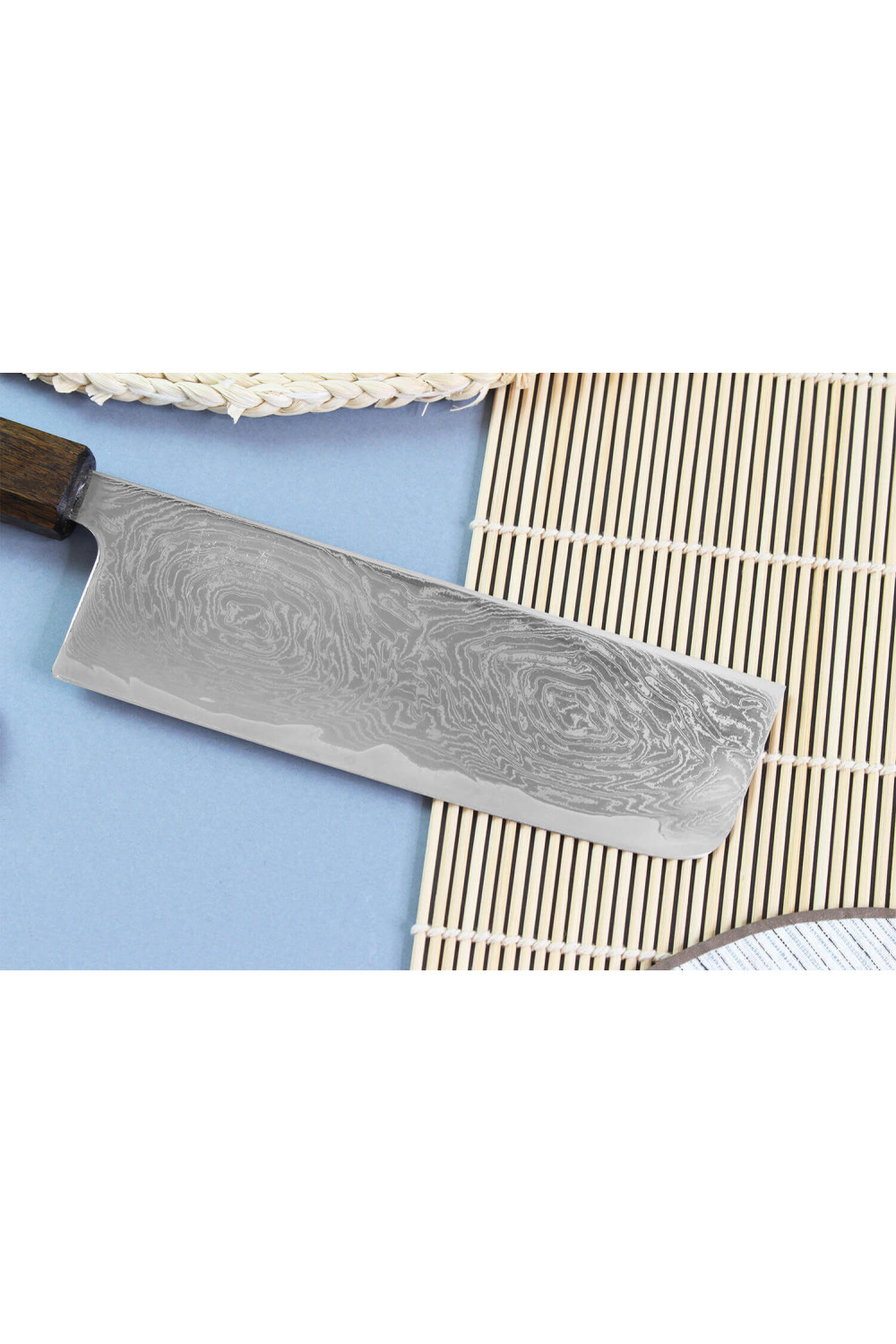
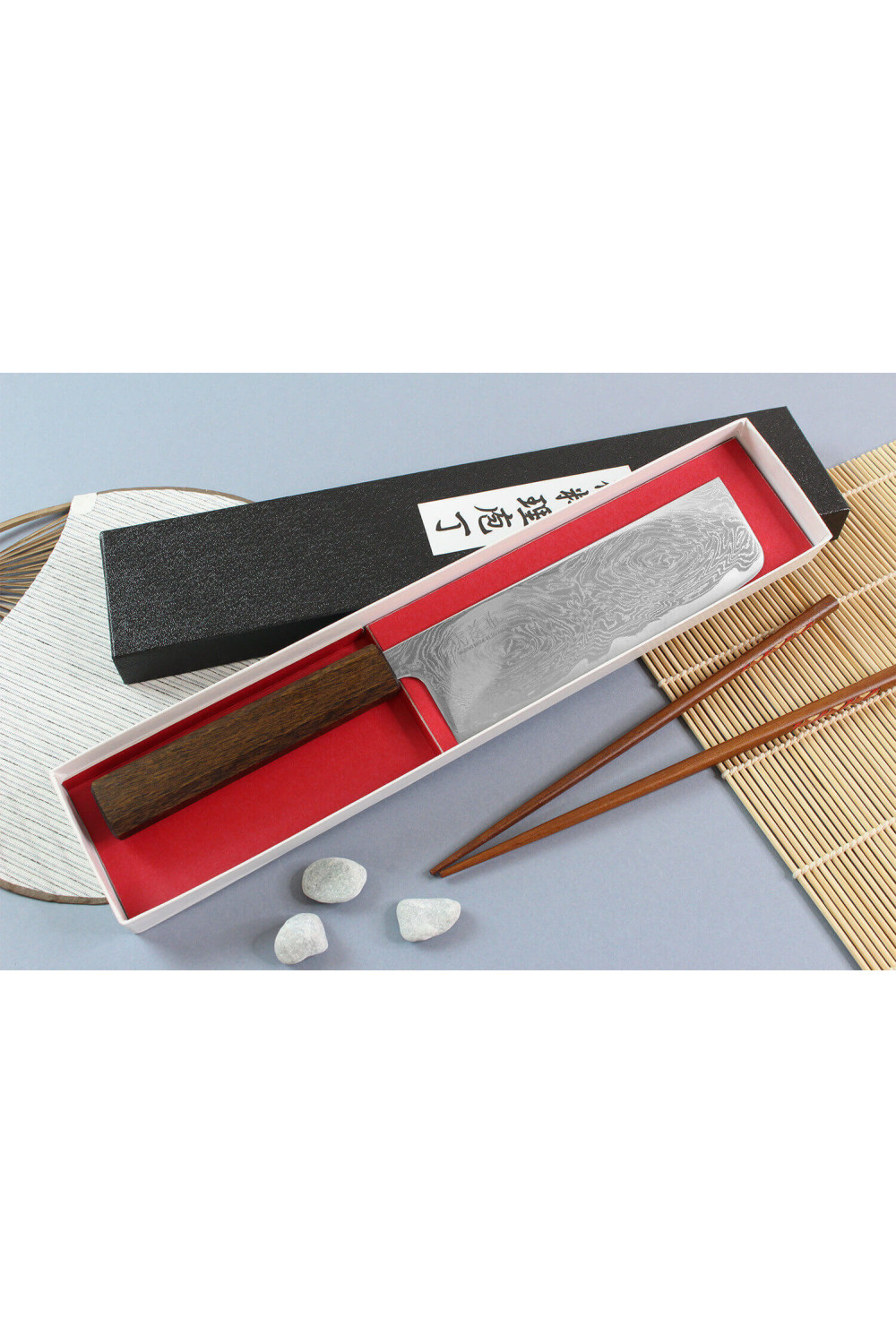
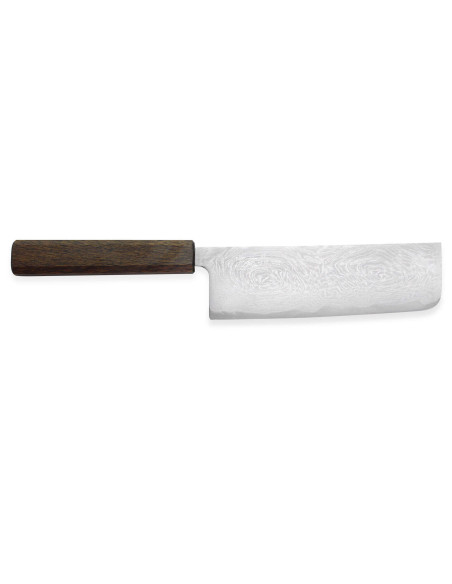
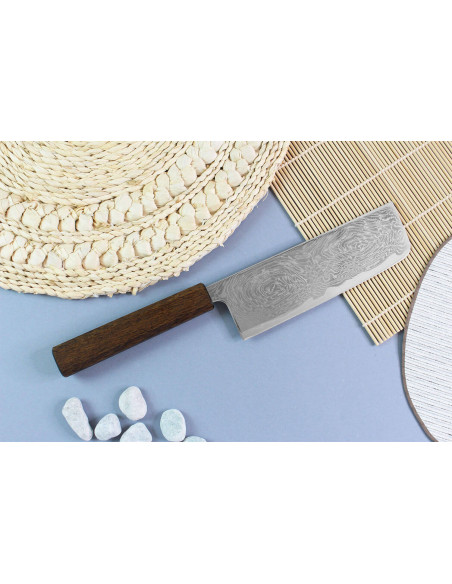
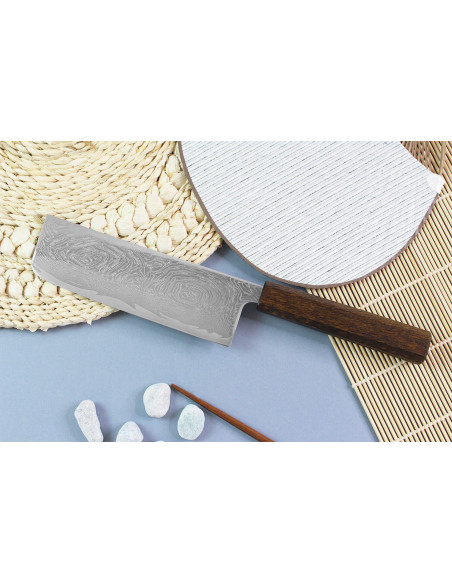
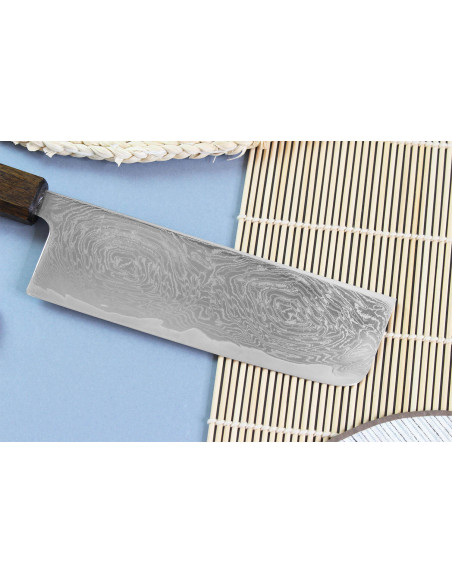
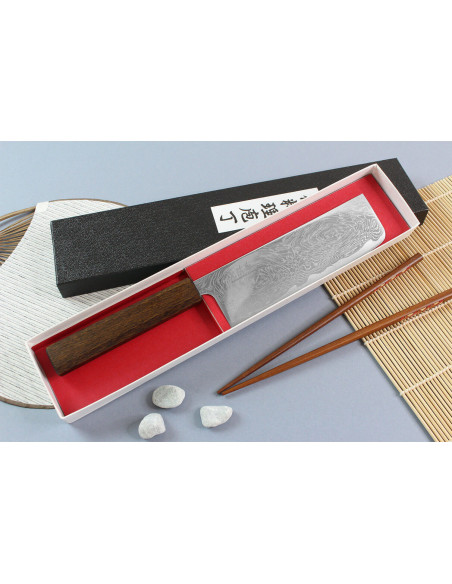
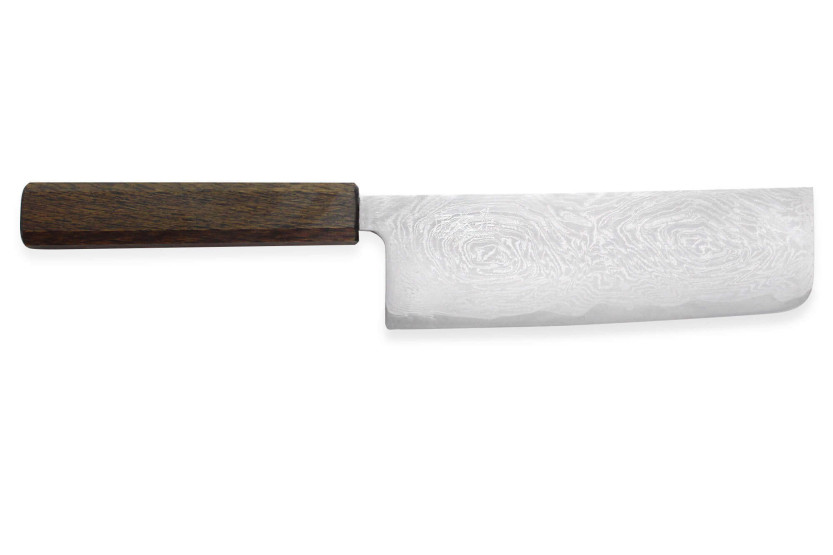
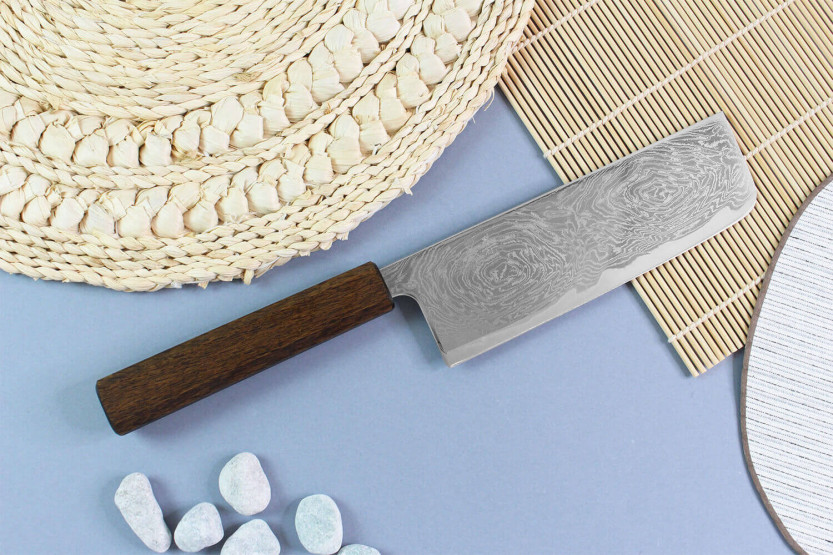
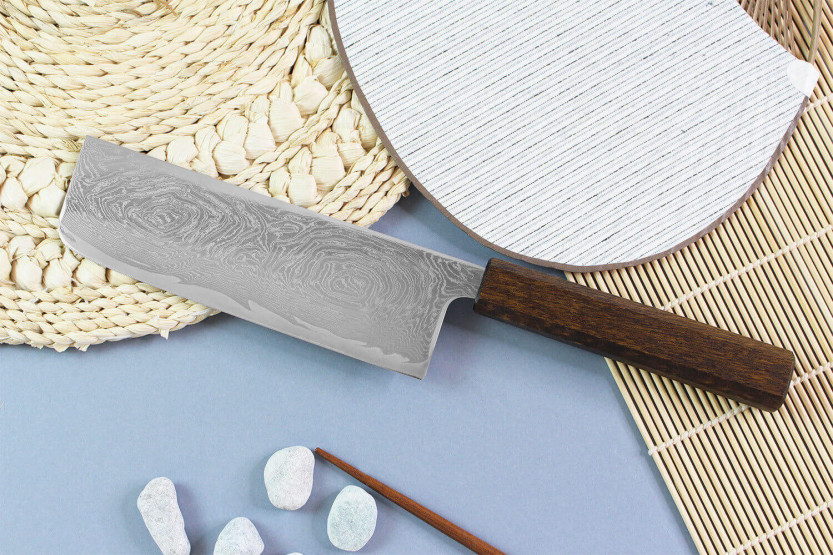
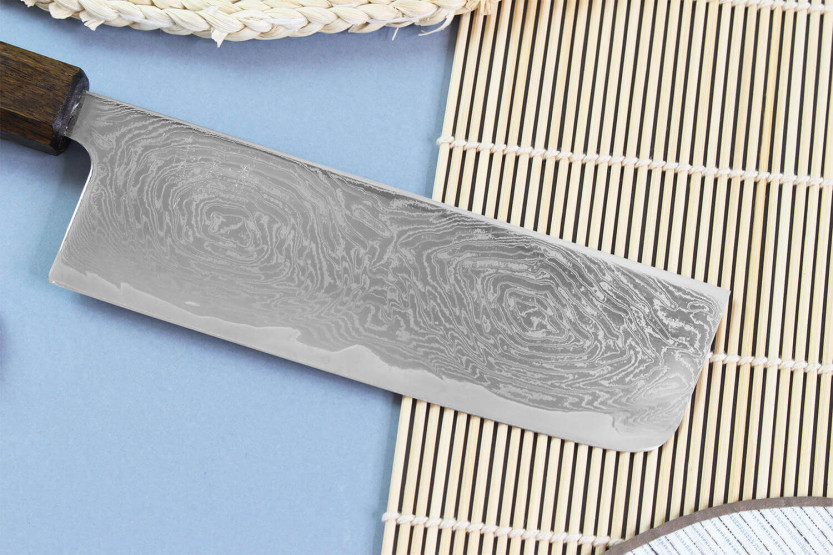
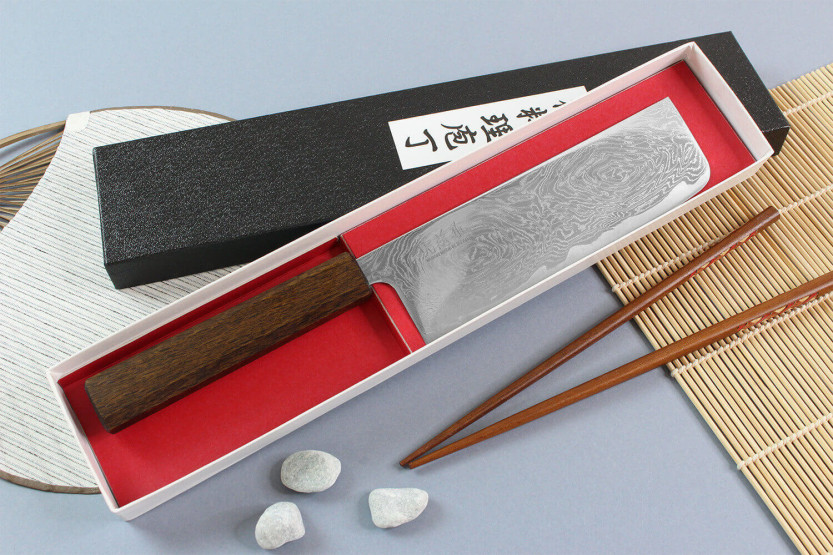
This 16.5cm Wusaki Unaginakiri knife lets you cut fruit and vegetables with precision. Its wide, rectangular blade is used for this purpose in Japan. It enables you to work quickly and meticulously, making the chopping motion natural. It's a beautiful, typical knife!
Wusaki Unagi knives are made by the Japanese knifemaker Tsunehisa, who brings together a small team of highly skilled experts. You can see all their know-how in the beautiful finishes and choice of materials.
The blade in detail:
The blade of this knife has a core of AUS10 steel. This is a very good Japanese alloy, and the top of the range in the AUS family. It has been enriched with 1.05% carbon, giving it a rigid cutting edge that will hold its edge for a long time. The final hardness of the alloy is 60 HRC, an interesting index that offers an advantageous ratio between wire durability and ease of maintenance (to be carried out with a stone for impeccable results).
It is also enriched with nickel, manganese, vanadium and silicon, which counterbalance the hardness of carbon to prevent it from becoming too brittle when you use it. Last but not least, this alloy is renowned for its resistance to corrosion and wear: so you could say it has a lot going for it!
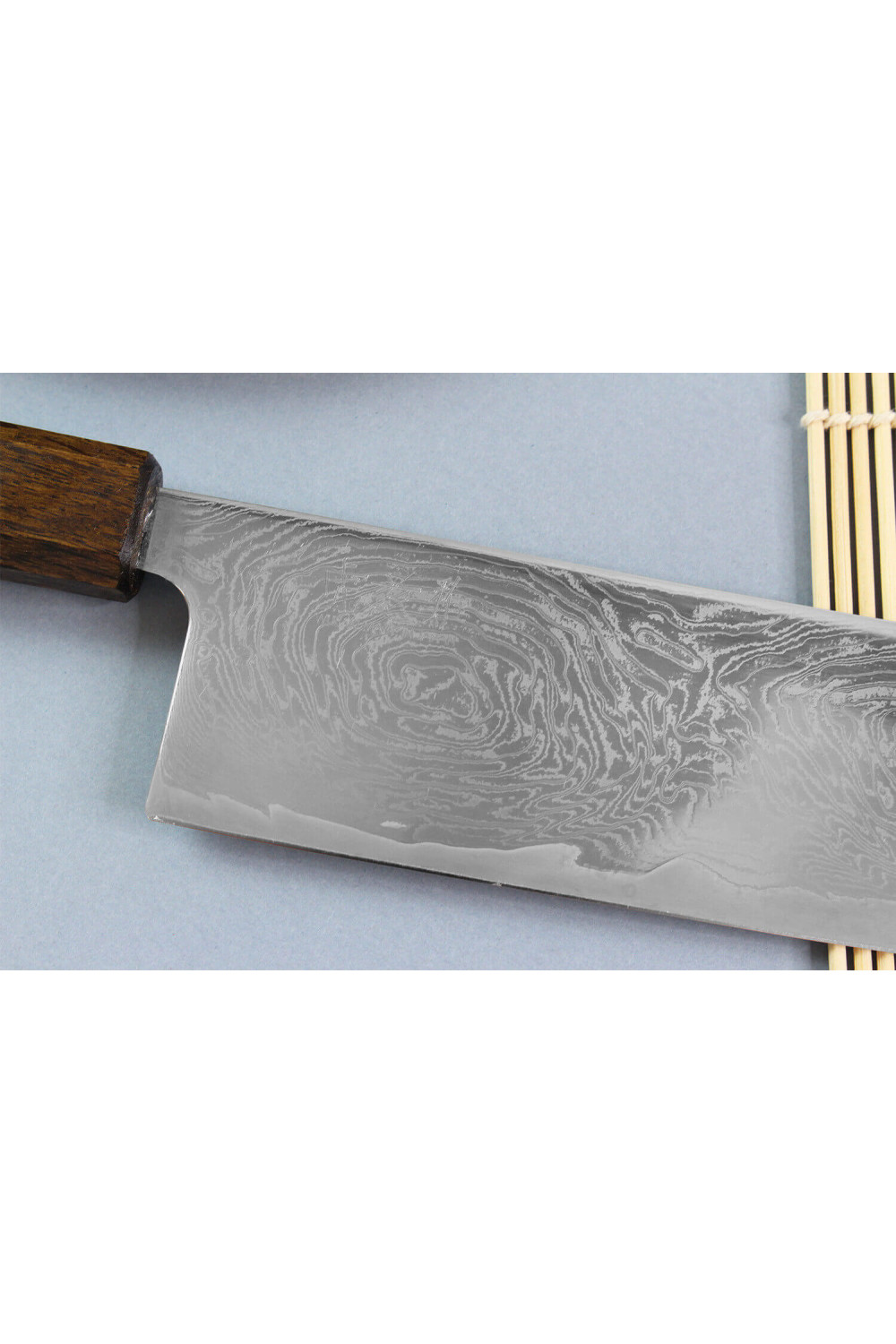
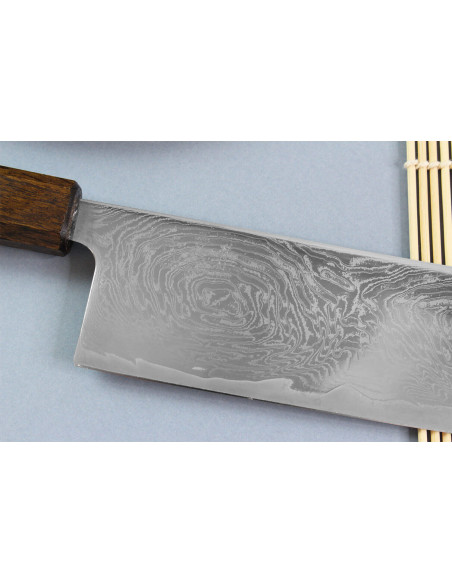
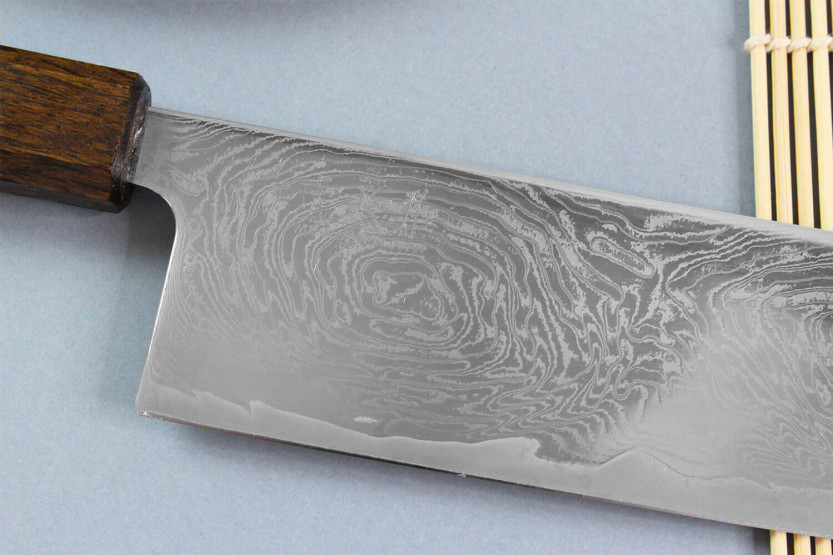
This Japanese core was then surrounded by several superimposed layers of steel. The layers are enriched with nickel, which creates the slight color contrast between the different layers and enables them to be distinguished. The alternation of these layers once again balances the hardness of the core, and adds a certain suppleness to the blade (we're not talking pure flexibility here, but rather the steel's ability to better absorb light impacts).
While damascus has a technical role to play, it also has a real aesthetic appeal! It gives the knife character and originality. What's more, the damascus pattern visible on Wusaki Unagi knives is not often seen: the layers follow one another in a circular pattern, as if a drop of water had fallen on the surface of the alloy and small waves were propagating through the water.
Finally, the brand's logo has been applied to the cutting surface for added authenticity.
A simple but striking handle:
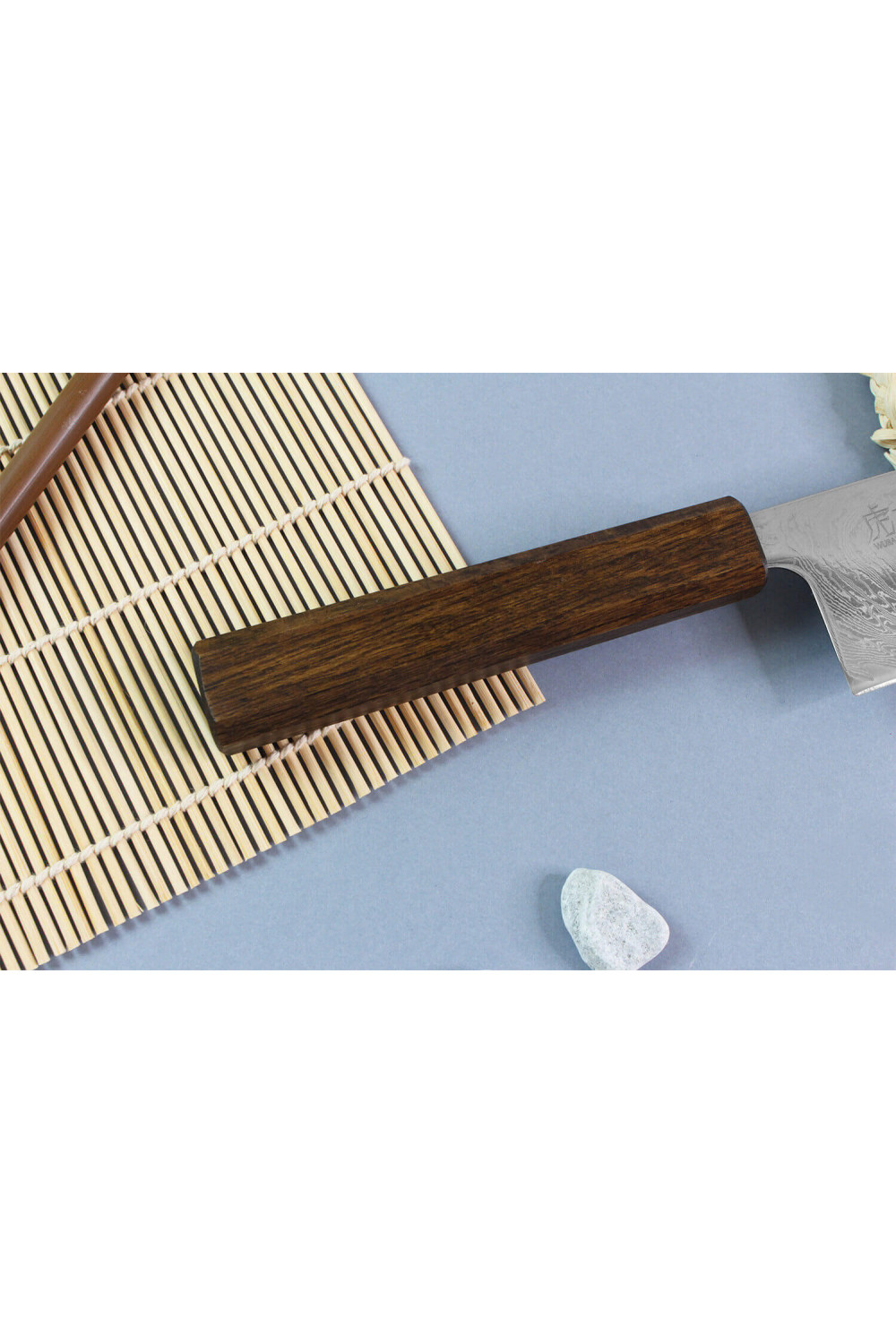
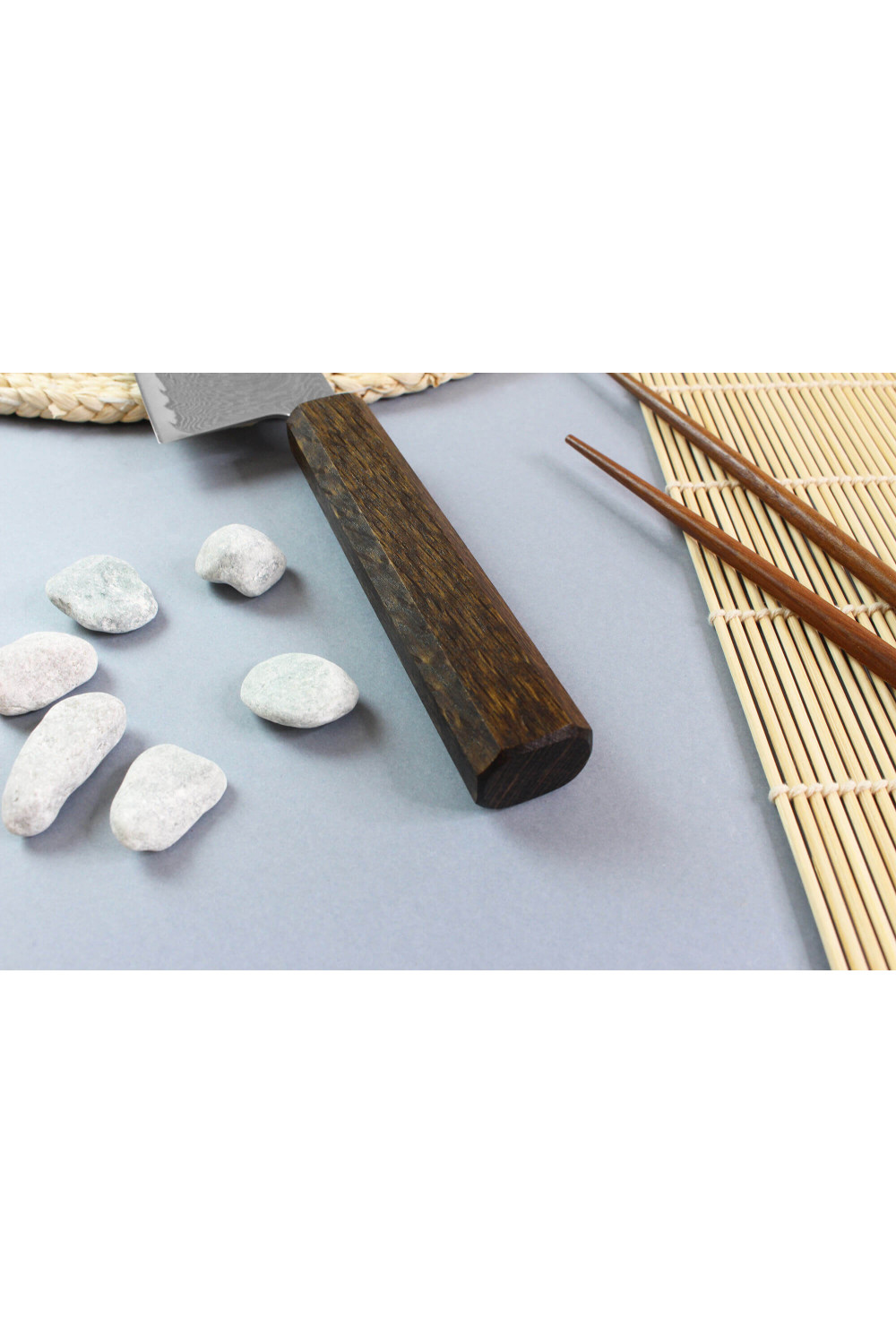
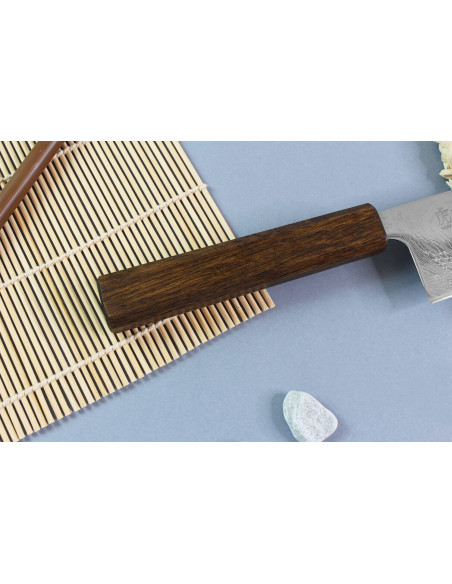
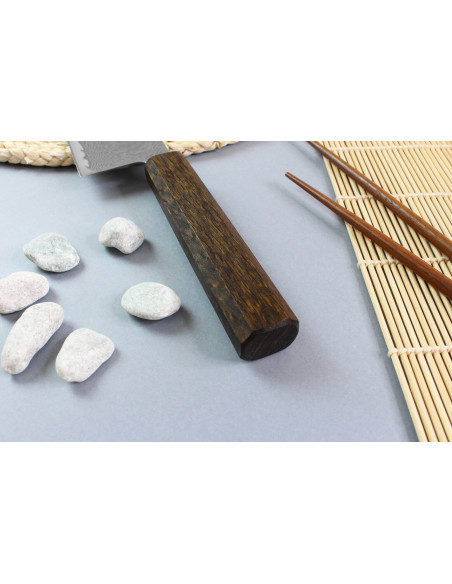
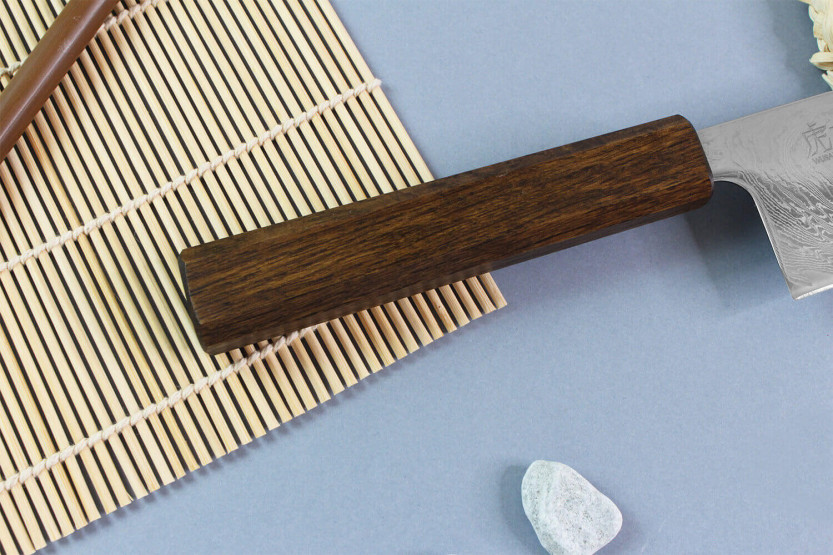
The handle is made from oak wood, a durable species much appreciated in cutlery. It's a wood that resists moisture, shock and vibration well, so it won't warp easily.
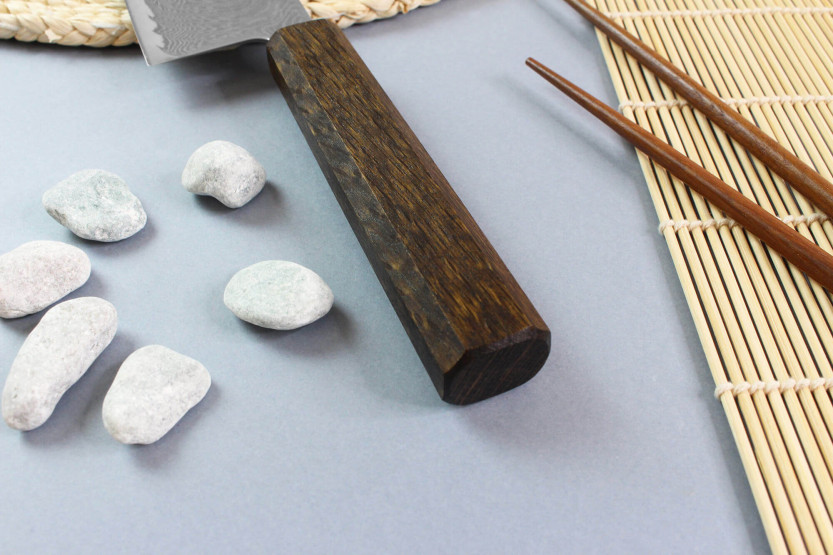
The 8-sided octagonal shape means it can be used by both right- and left-handed cooks.
The handle is lightly lacquered in black, darkening the natural shade of the oak to give it even more character.
What's more, it's lightweight, making it easy to handle for long periods of time. A plus if you're planning to spend a few hours in the kitchen!
Finally, a binder has been injected at the junction between the blade and the handle to fill the gap and prevent liquids or food from entering.
Knife care:
Wash the knife by hand (dishwashers are forbidden) and wipe it with a soft cloth immediately afterwards for complete care, which will help to preserve it over the long term, since even though it is considered stainless, it is nevertheless highly enriched with carbon, which is oxidizable. What's more, as the handle is made of wood, we recommend keeping it as dry as possible.
A wide selection of Japanese knives awaits you on KnifeLeader!




 By buying this product you can collect up to


 (6)
 (0)
 (0)
 (0)
 (0)
 (0)