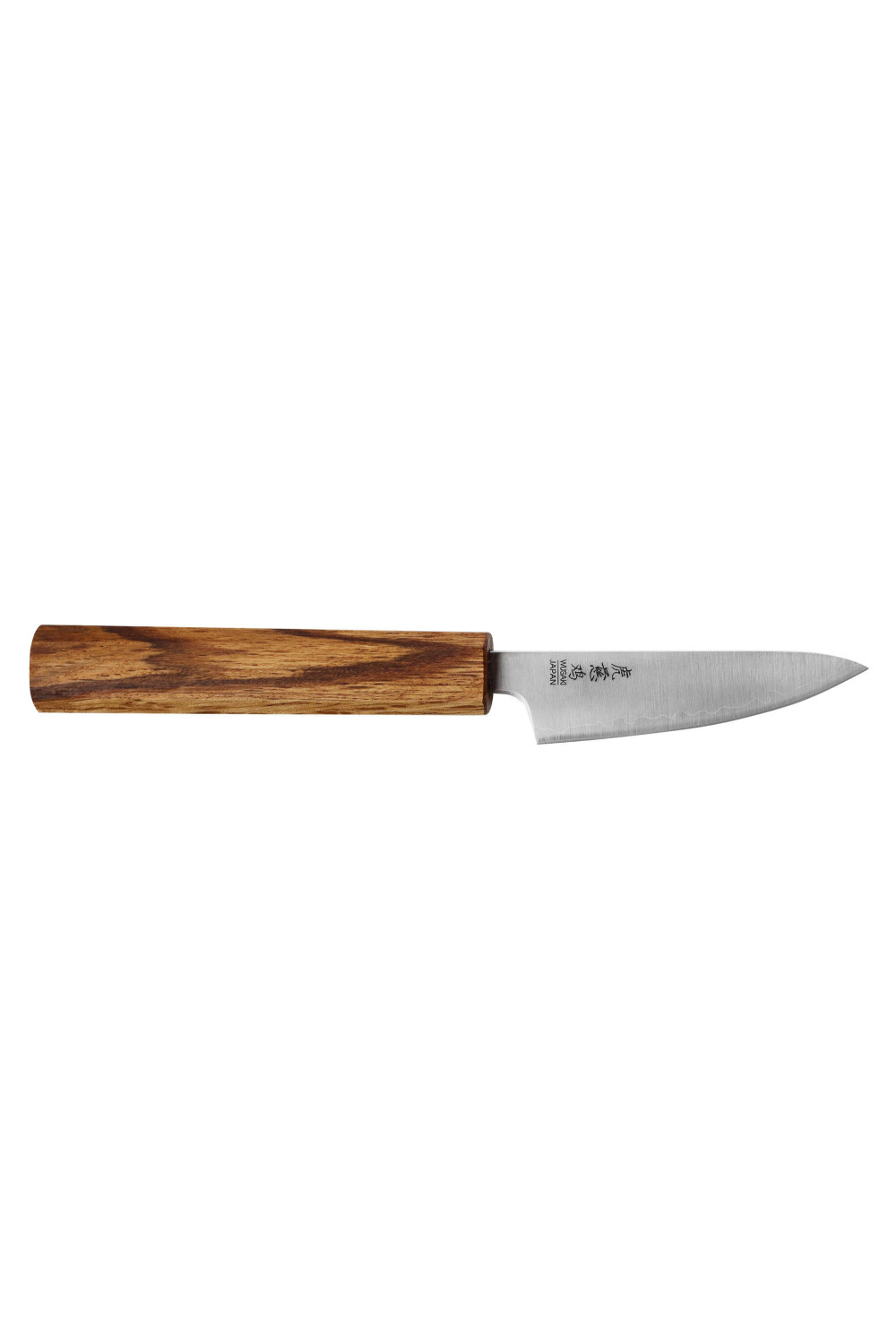
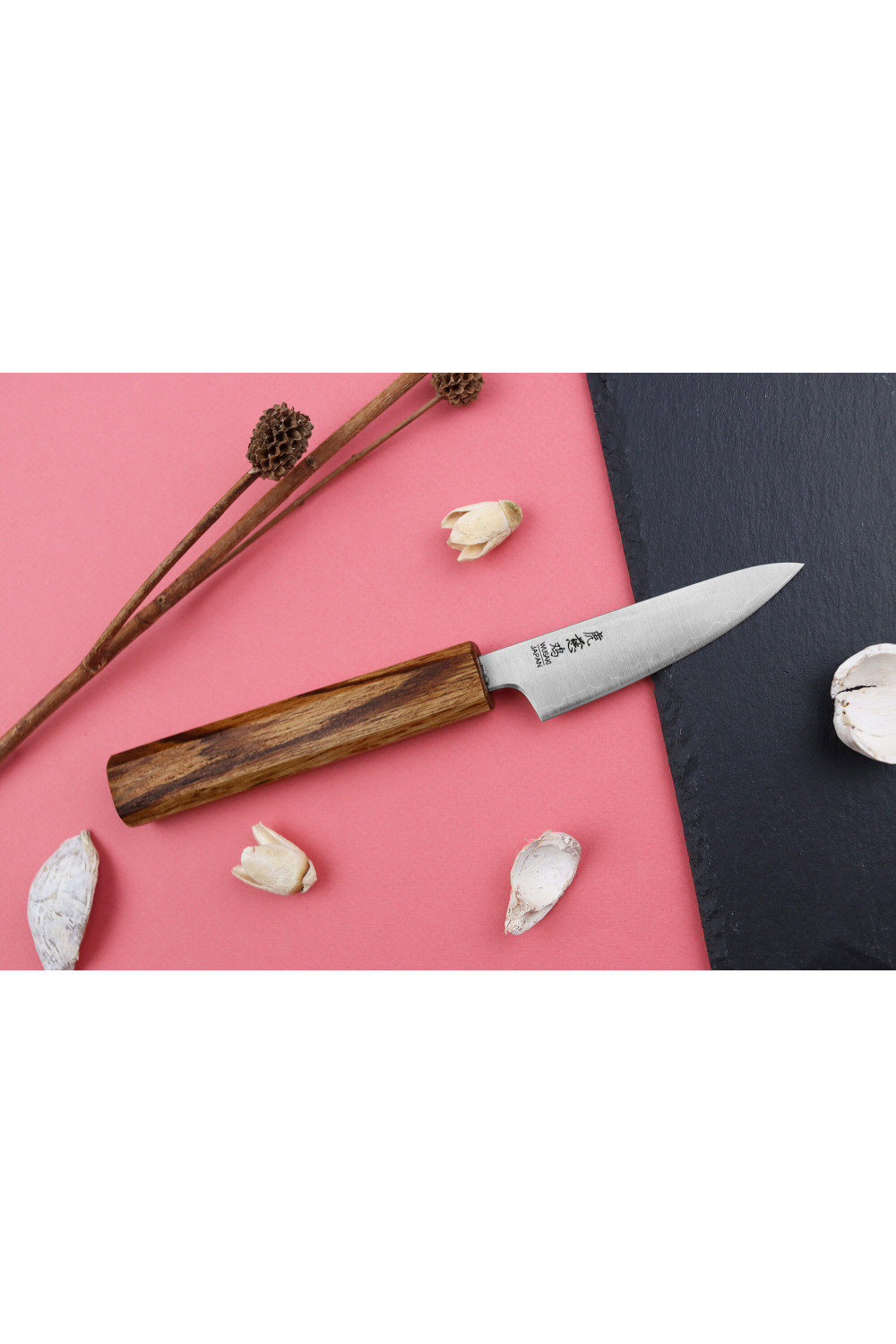
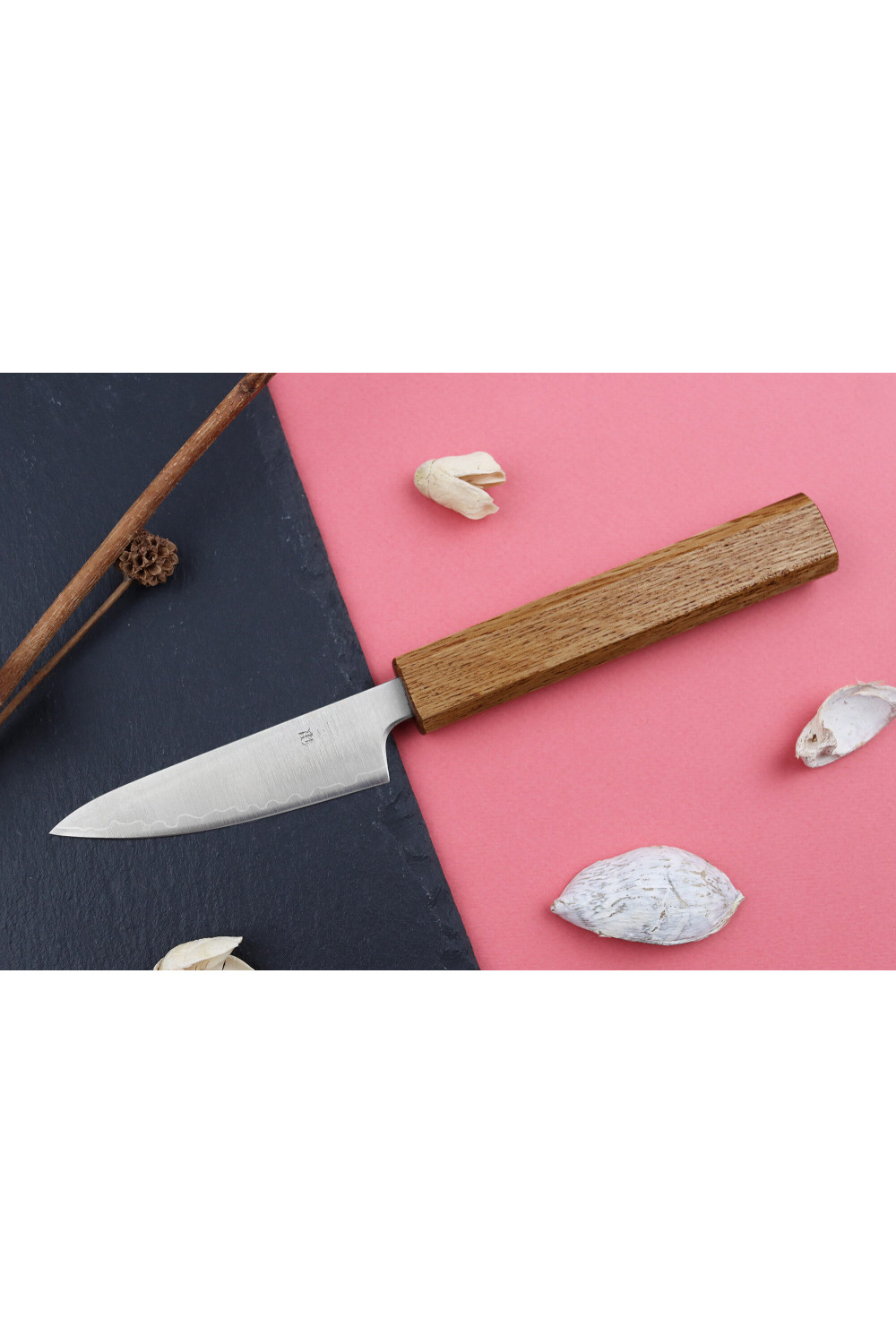
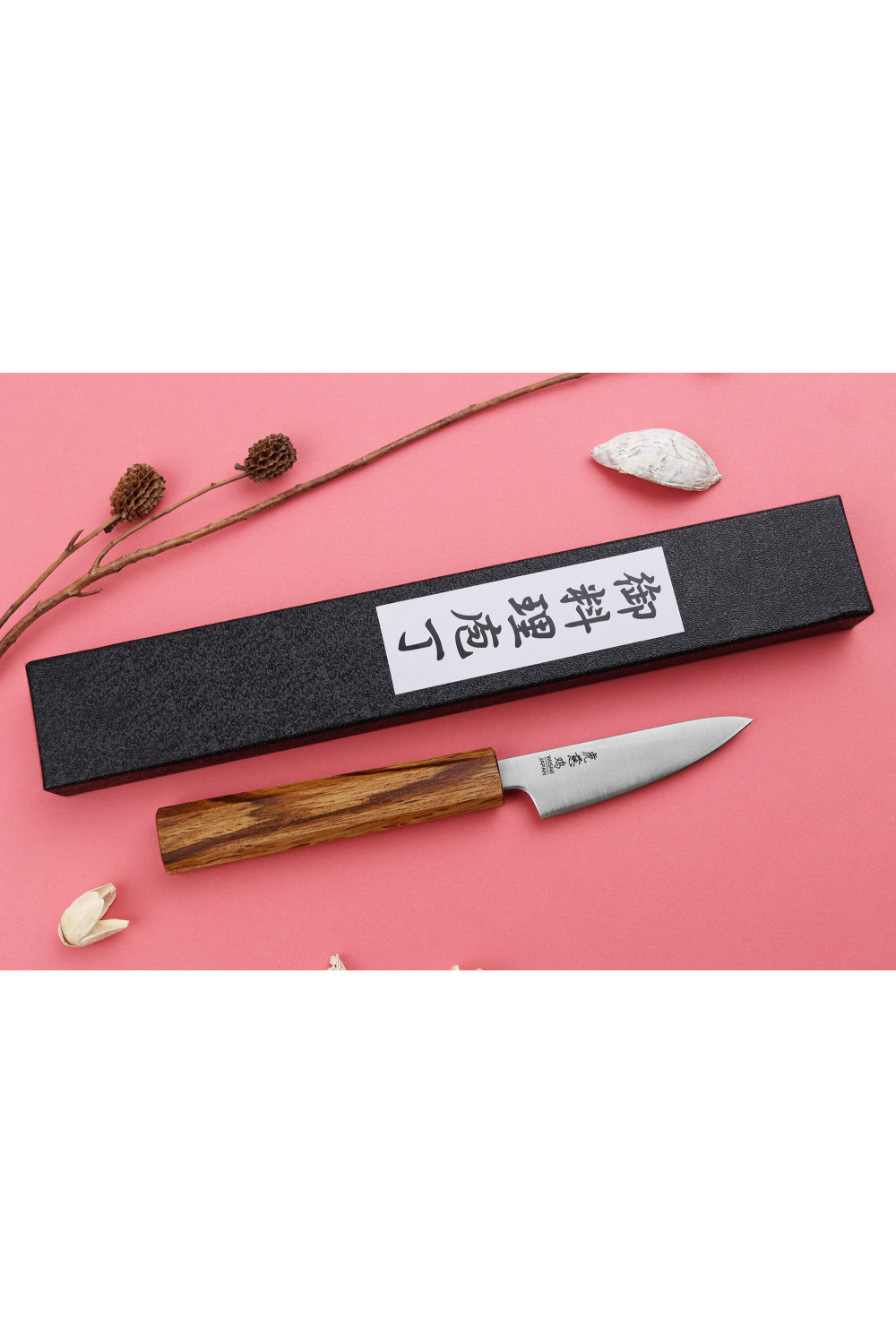
Choose Wusaki Migaki Japanese knives, made by Tsunehisa Japanese cutlery!
paring knife function
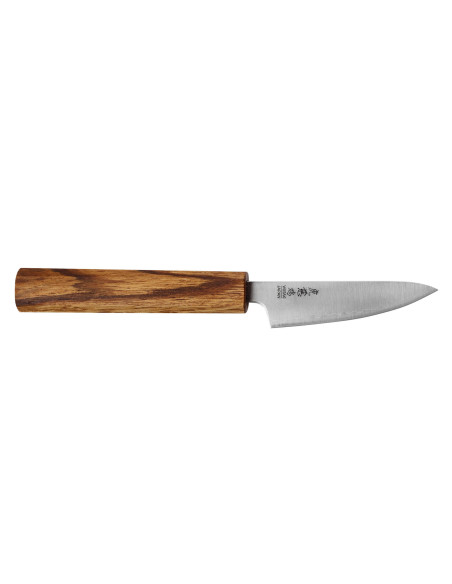
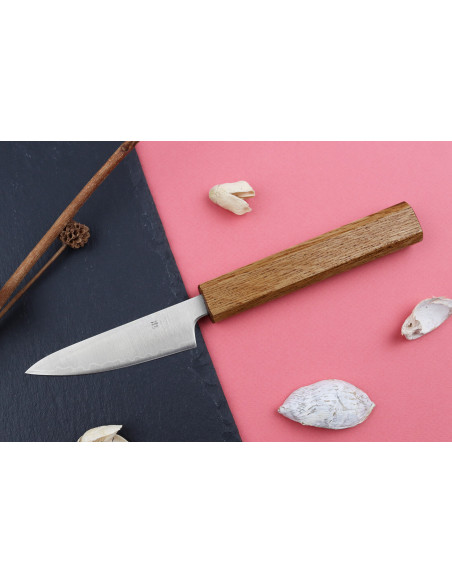
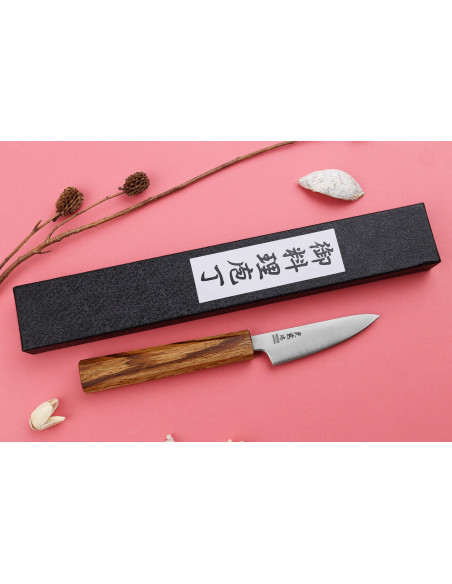
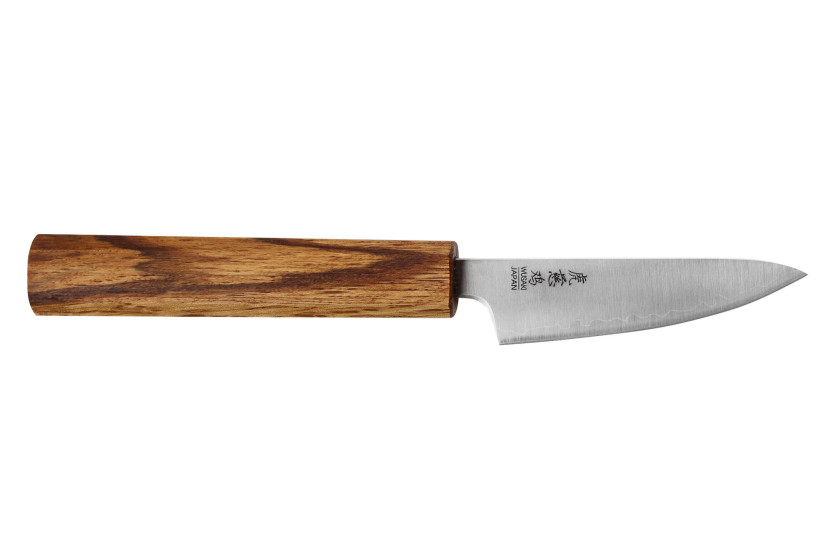
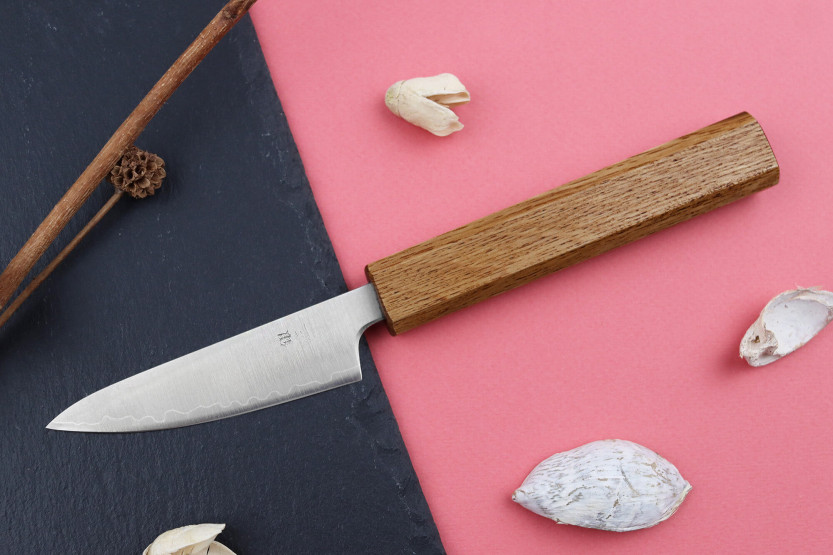
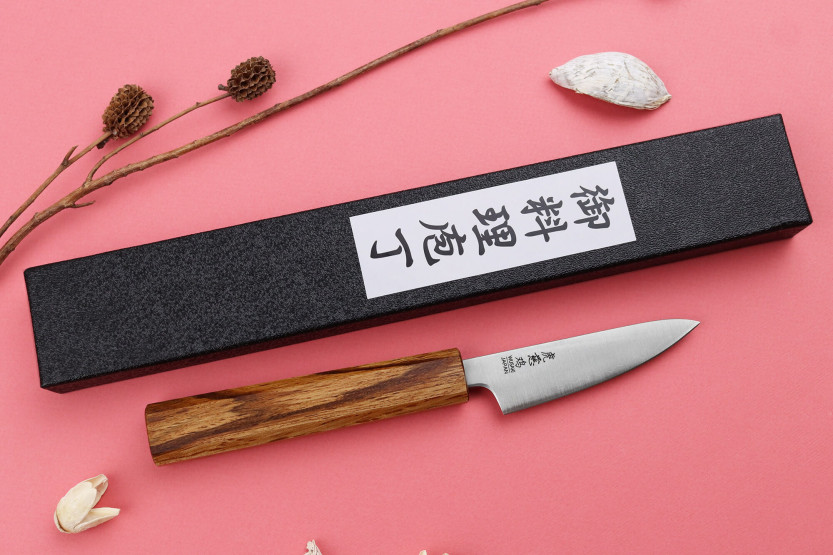
The paring knife is a model with a small blade, designed for precision cutting. You can cut small pieces of vegetables or fruit, or even peel them. It's an easy-to-handle knife, suitable for all cooks, whether novice or expert.
Japanese knife made from quality materials
The blade is called San Maï, meaning it is constructed from 3 alternating layers of steel. In fact, the alloy core is enveloped by a layer of softer steel, and that's why it's called 3-layer, because the top layer folds down on either side of the core.
Here, the core is made of Ginsan steel, a Japanese alloy enriched with 0.95% carbon, which makes the wire stiffer than average for long-lasting sharpness.
This steel also has a high chromium content, this time to make the knife more resistant to corrosion.
Ginsan steel has a hardness of around 60 HRC, enabling it to retain its sharpness for a long time. When the need arises, don't hesitate to restore your knife's cutting ability by using a Sharpening stone.
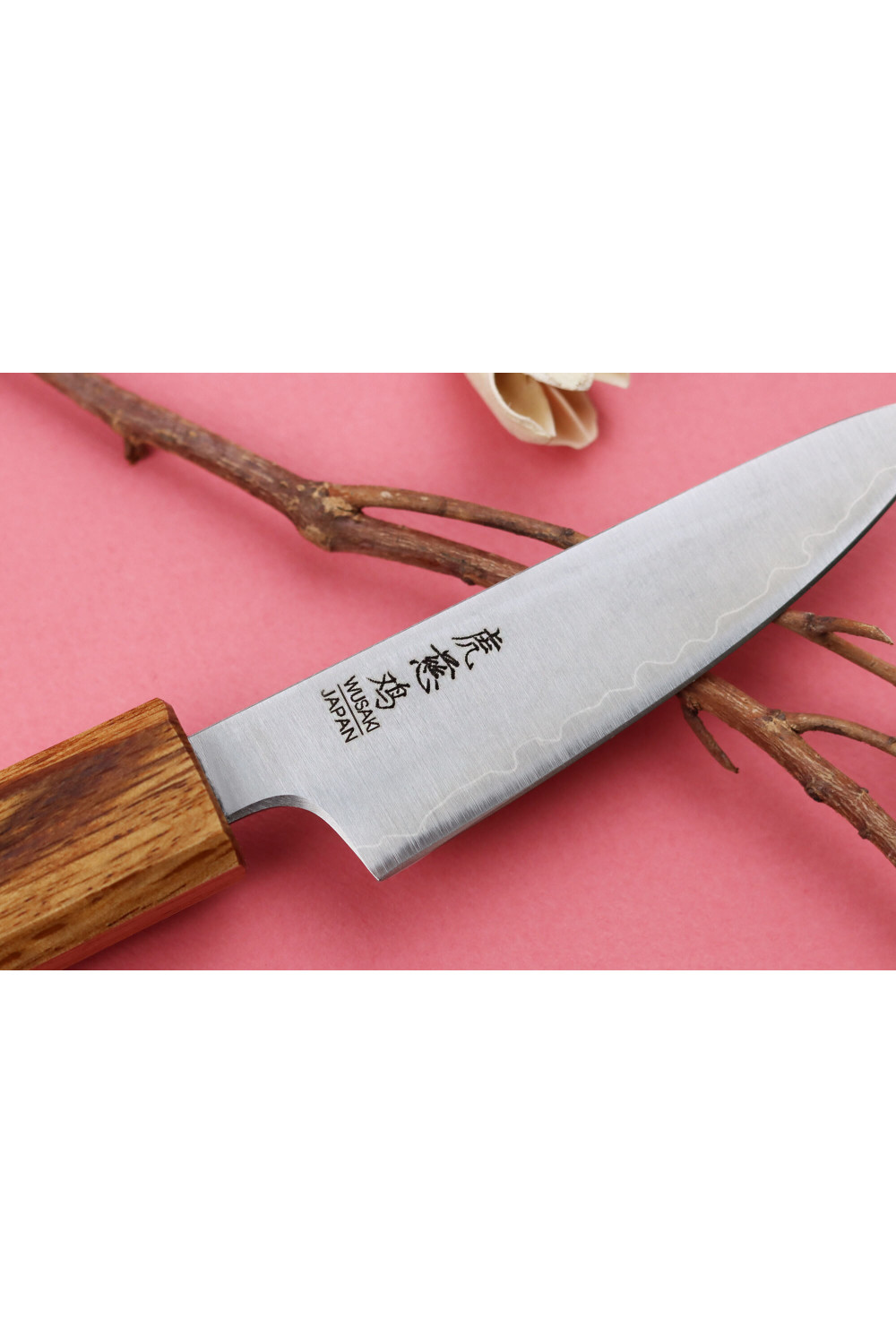
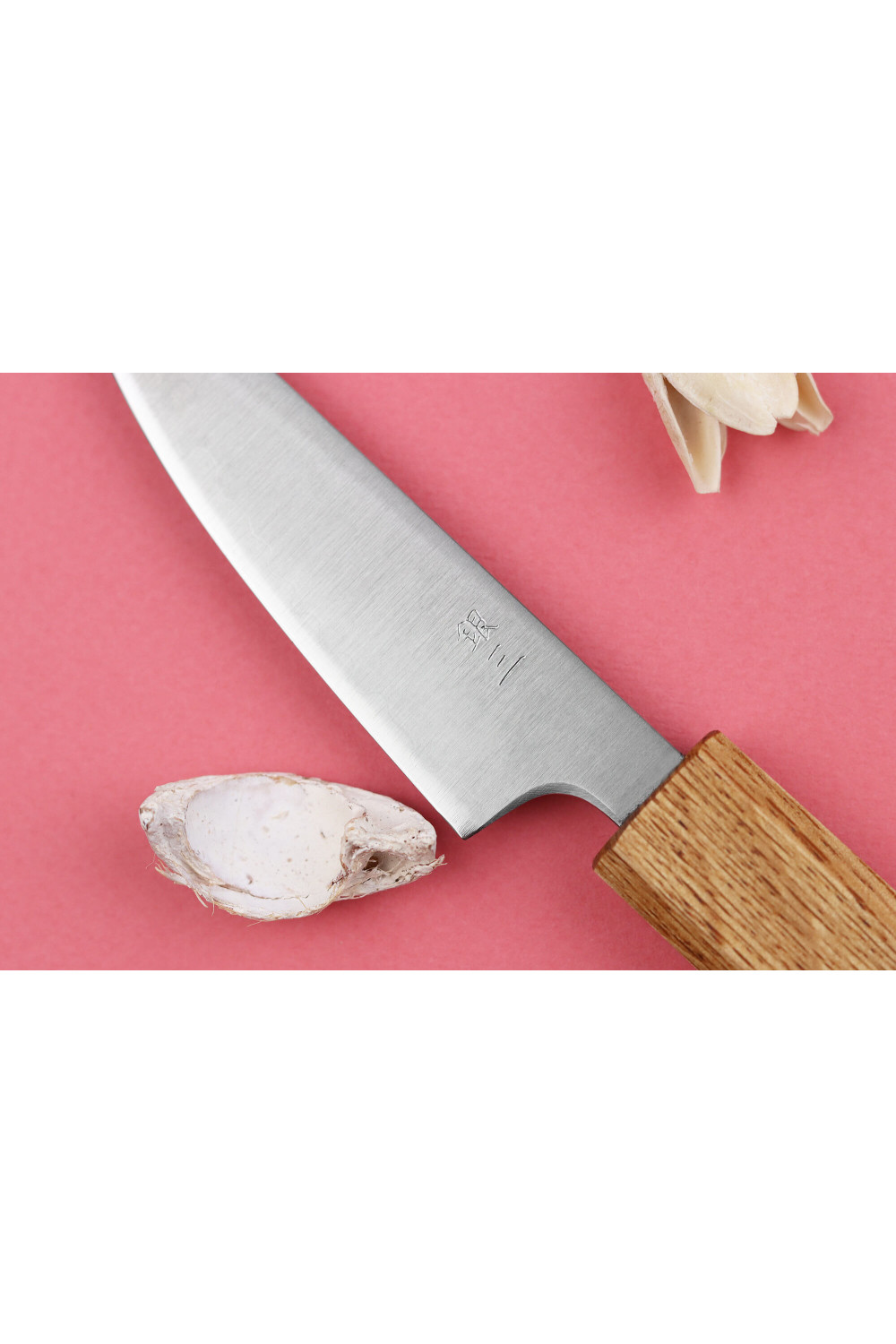
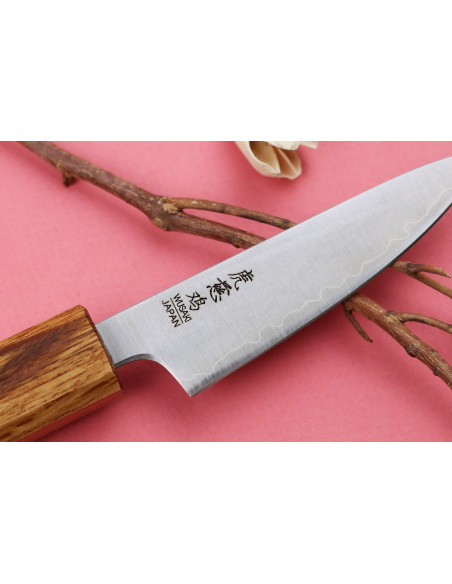
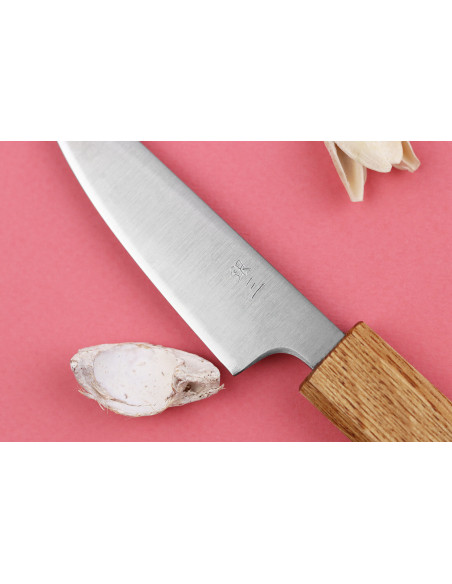
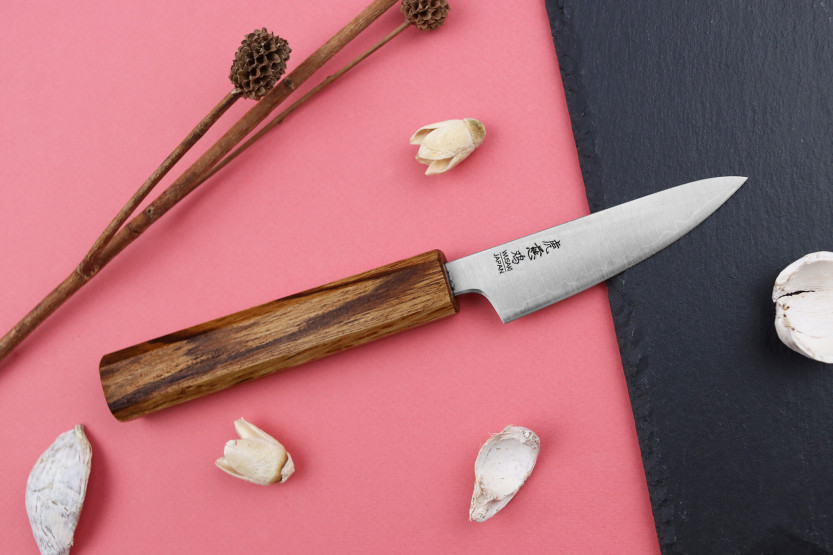
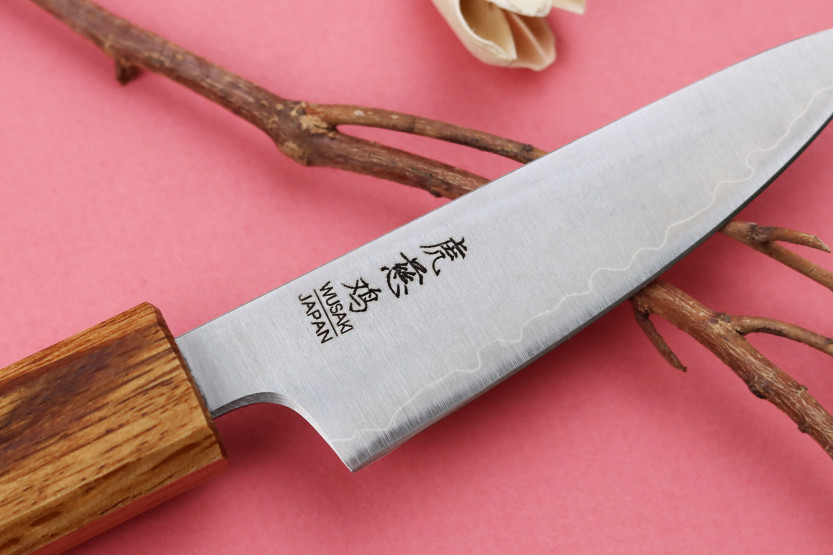
As previously mentioned, Ginsan is then surrounded by a layer of stainless steel that protects and softens it, making it less brittle when you use it. The difference in steel can be seen at the bottom of the blade: a small wave runs across the entire cutting surface.
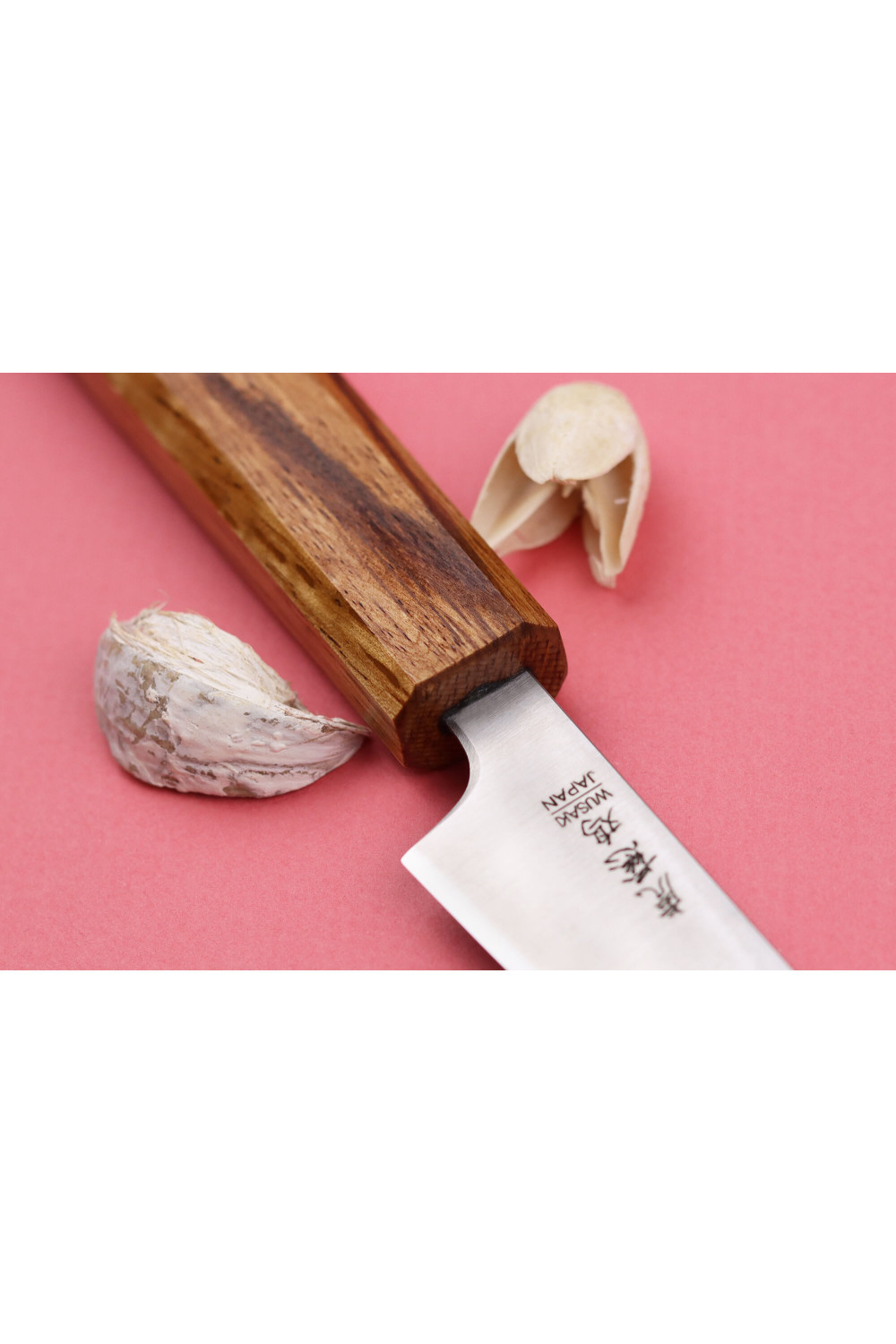
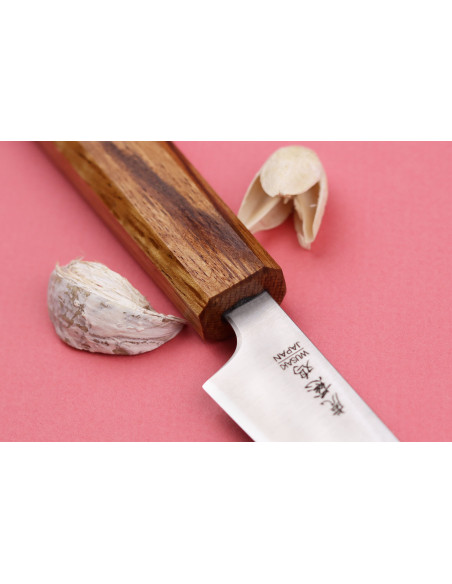
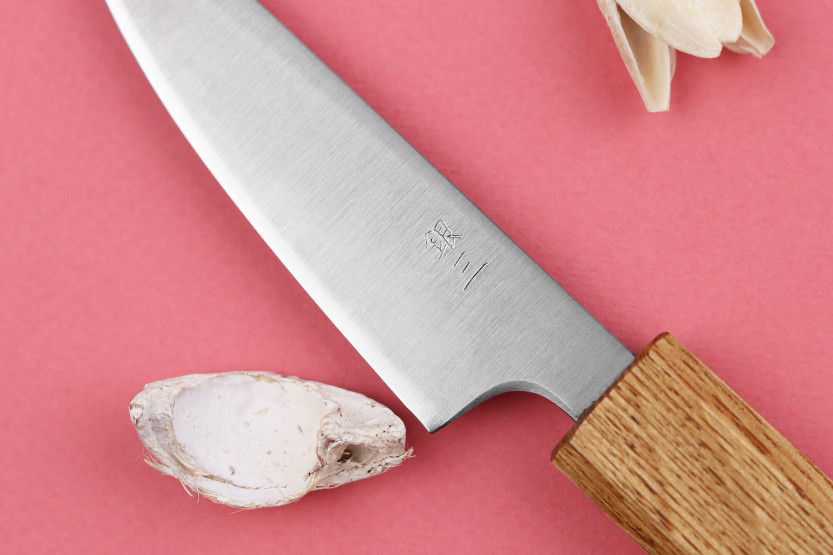
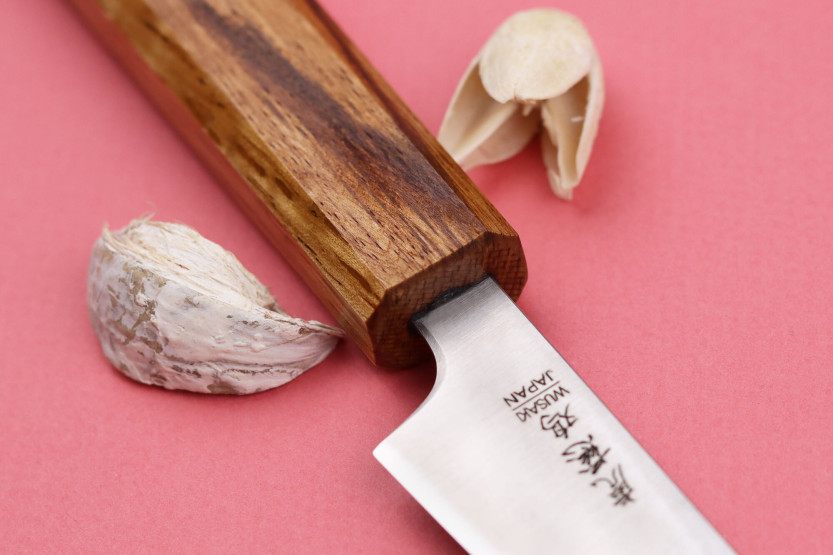
The logo on the top of the blade and the kanji engraved on the back are proof of the product's authenticity.
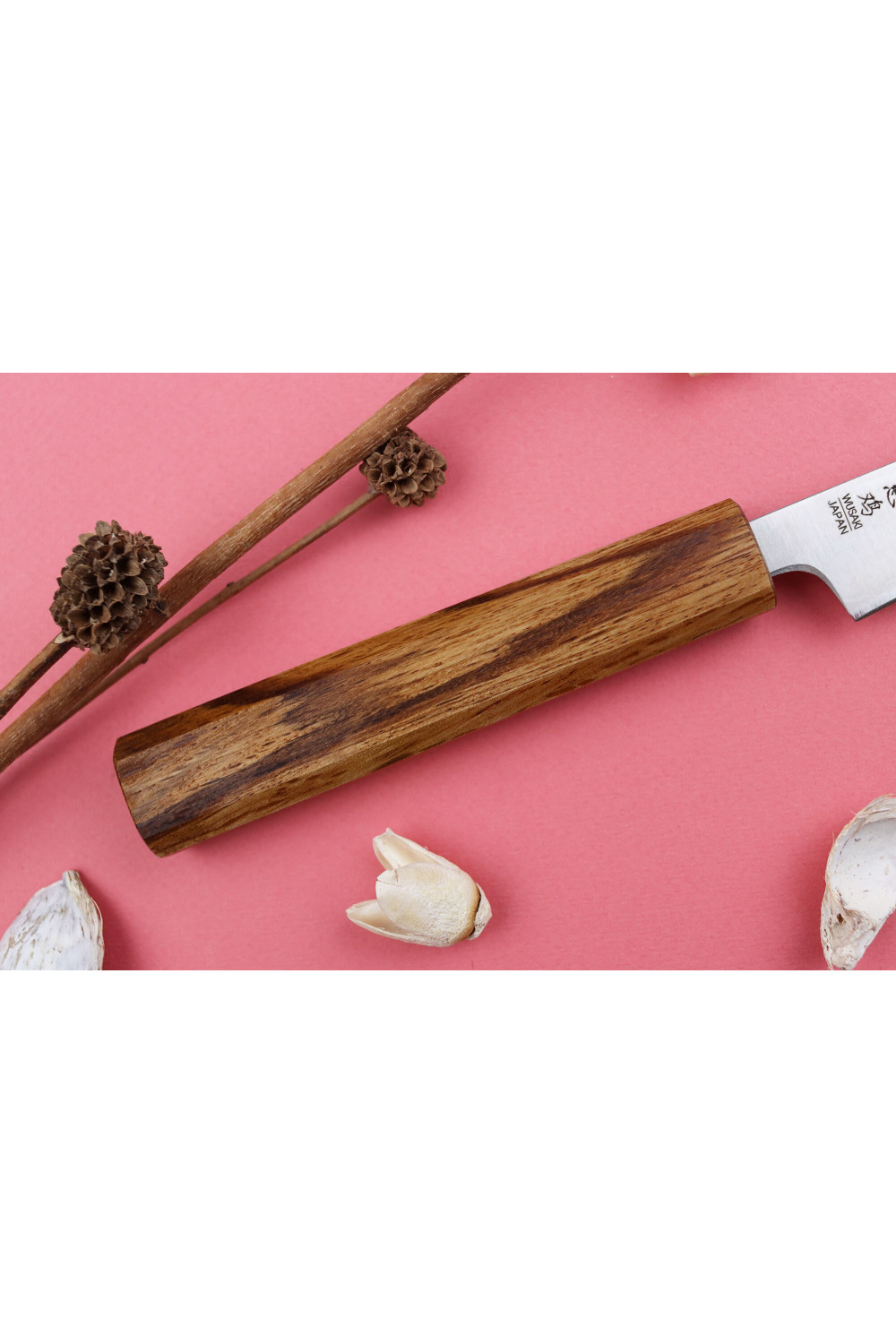
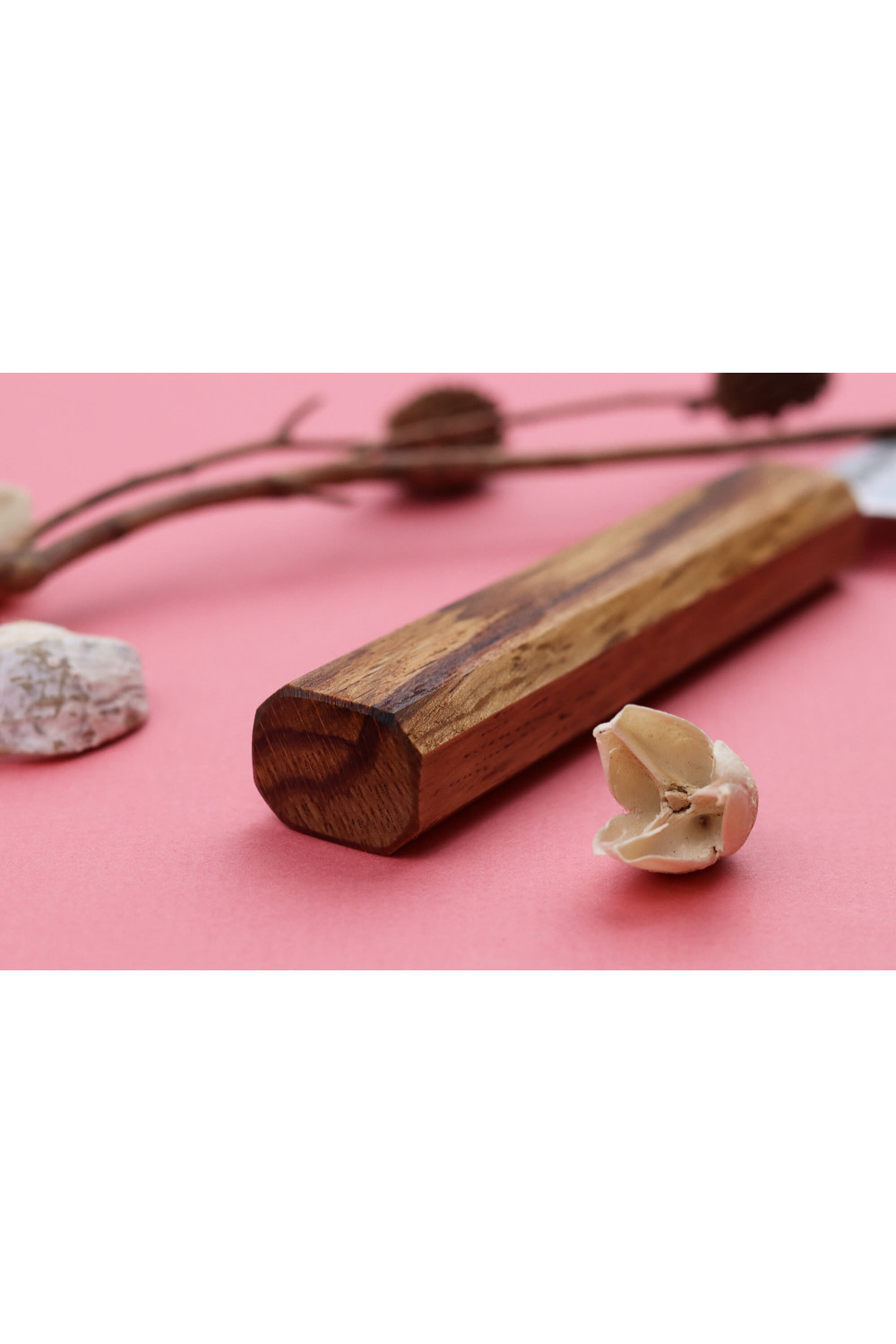
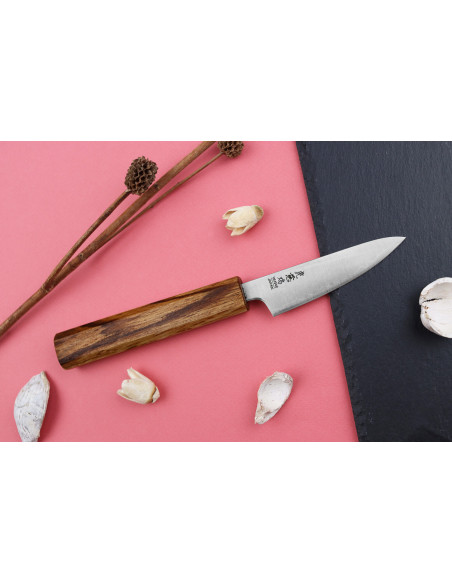
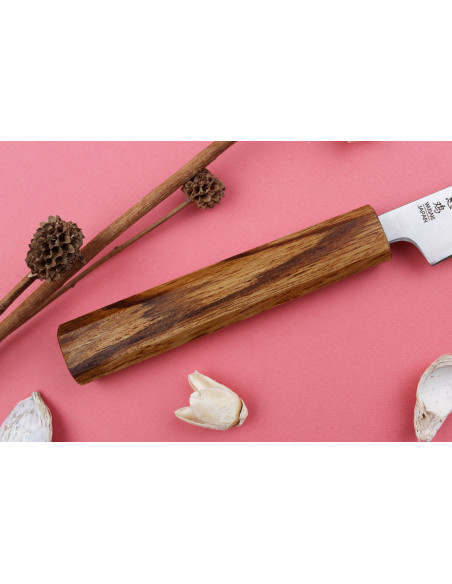
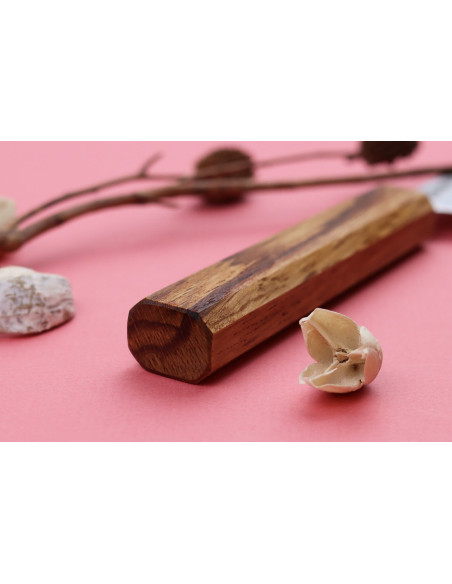
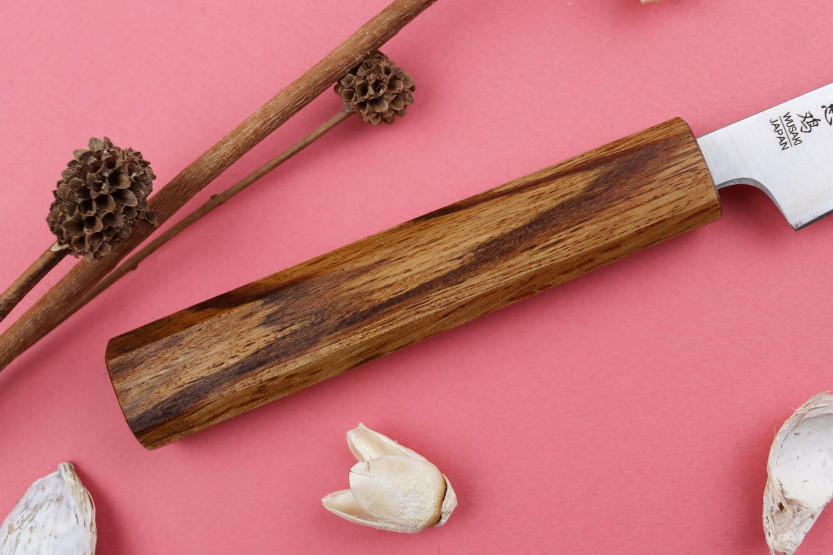
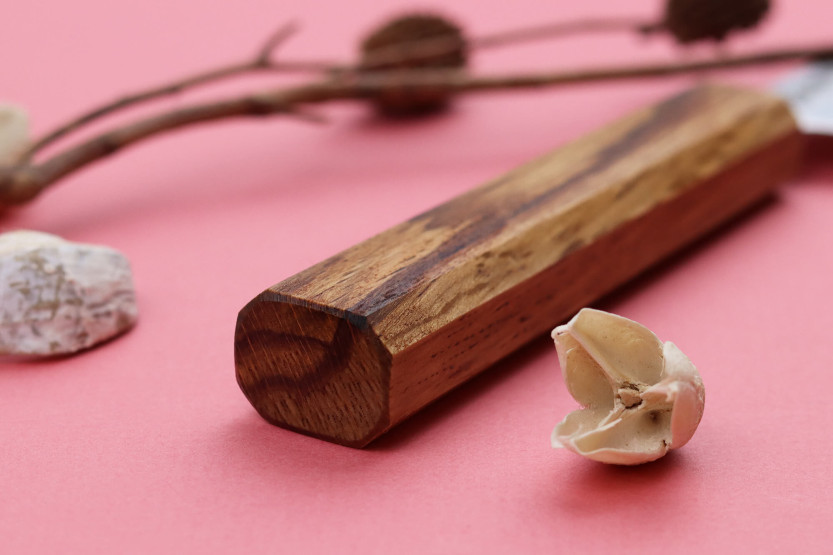
The handle is made of enju wood, which has warm tones without extravagance. This wood is a hardy Asian species with a unique grain. Its slightly glossy finish makes it even more elegant.
With its 8 sides, this octagonal handle is suitable for both right- and left-handed cooks. Lightweight and easy to handle, it's comfortable to use even when you're cutting in quick succession.
Finally, a bonding agent has been injected at the junction of blade and handle to guarantee the knife's watertightness and hygiene.
This hand-crafted knife should be washed by hand, without insisting on washing the handle under running water. The dishwasher should not be used, and the knife should not be left to soak in the sink. Once washed, simply wipe with a soft cloth and store, checking for any remaining traces of moisture.
Other Wusaki Migaki knives are available on our site!




 By buying this product you can collect up to